by Bogumil Pacak-Gamalski
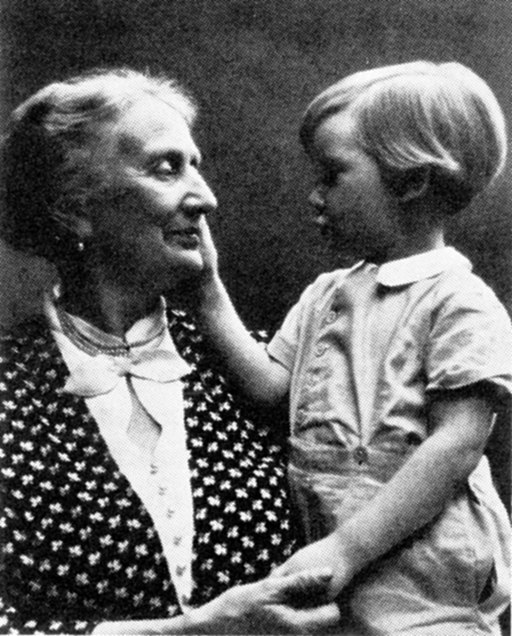
In my last article I have shared my reflections on the situation of seniors in our society during the coronavirus pandemic. How we, as a society, have to or ought to revise our responses to it; re-examine our ethical compass. More or less, I have challenged us to check if our own beliefs in our own societal, (but also individual) set of ethical and moral values holds the water. Or is it just a lofty goal fare removed from reality. The weakest are often the first ones we shamefully discard from our Decalogue of ‘do’s and don’ts’.
That was at the beginning of the epidemic and just on the edges of a serious crisis, when we heard of the tragedy in North Vancouver’s senior care home. And the full closure of all of them resulting in a practical lockdown.
But that was than. What followed in ensuing weeks, is just a full scale tragedy and collapse of the system. As Doctor Theresa Tam, our Chief Medical Officer, noted – almost half of our reported deaths were linked to care facilities or seniors homes.
In Quebec and Ontario we have learned of appalling, almost concentration camp-like lack of care and, practically speaking, an abandonment of the seniors by the operators of these centres.
There is no reason to hope that in other provinces the situation is very different and drastically better. To the contrary. Just today we learned of many cases and deaths in Nova Scotia seniors care centres. There is very strong argument to expect the same everywhere in these type of centres. If not worse. Why? Because it didn’t happened in a vacuum. It happened on our collective watch. Under the eyes of provincial regulators and government. As we found out, but should have known much earlier, these controls and ‘eyes’ of public health were most of the time closed. Or wilfully blind by design. Don’t see – don’t know. Therefore: if I don’t know, I can’t do anything about it nor to feel guilty or at fault.
But they should feel guilty. They are at fault. We all are. 40 years ago seniors full care centres were little known and not very numerous. But with the advance of modern medicine, extended life spans of all of us, that changed. Some of us (before we die) in an advanced old age loose gradually a lot of physical abilities to be independent or to require only basic care and help from family and friends. Some loose gradually mental capacity to take care of ourselves. That is even more dangerous. Advanced age means also that all of our children (if we have any) are not young either, by the time we become very old and in need of help. Majority of advanced age seniors children are … seniors themselves.
And let us not forget the various types of dementia, with Alzheimer being the most dangerous of them, that seem to spread like a wild fire in recent decades. These conditions and ailments require a specialized, non-stop medical and household care. The word ‘medical’ is paramount. Dementia and Alzheimer are medical ailments that require medical treatment. Not just the mundane cooking and laundry and help with personal hygiene. A progressive disease with no cure. Lethal. But the length of it often is very long – from mild form to almost vegetative state in some cases. Ugly. Robing the person of almost every shred of personal dignity. Shall I go on? No. A lot of you knows it, because someone close to you is going through it or went through it before dying, when one by one, every organ of your body stops working. Not like in a heart attack. That would be considered almost merciful. A majority of you, who never encounter it in a family setting – will know it.
Why am I writing about it in painful detail almost? To make you understand, that if not majority, a very sizable number of full care Centres they are there because they have no other choices. Not because it is just more convenient for them. You know – the food that someone else shops for and cooks, the plates and dishes that someone else cleans after you, the laundry, the cleaning of your room, changing of bedding, doing your hair, your nails, your showers and baths (at the end it is just wet sponge and wipes ), the moving you from bed to wheelchair and back. The list goes on. It is medically necessary. Like a hospital is not a hotel we choose to go to for fun. Like a hospital. That is another term I want you to remember.
So we have two terms now to pay attention to: 1) the reason for senior being in a centre like that is of medical nature, not simply an age or convenience;
2) the care, nurse and doctors check offs, adjusting and giving out medicine (pills, shots and the likes), medical treatment in general. At the end it also serves as a palliative care institution.
Again – as in hospitals. The difference is that hospital is an active medical trauma treatment centre, with vast array of diagnostic tools, and possibility of very decisive medical intervention. By nature designed for relatively short stay. Full care senior’s centres are designed to be a residence. Usually extending beyond one year, or close to it. Regular hospitals would be absolutely way too expensive to operate under such conditions. Hospitals offer acute treatment, with a goal of a cure for patient. Seniors homes offer light medical treatment (with no practical nor even idealistic goal for curing residents), safer environment and at the end of resident’s stay – palliative care. Unless when there is an unexpected accident that require hospital intervention or specific family’s requests for transfer to a hospital for more active intervention.
But let’s not make any wrong distinctions: both are of medical nature. One short term and expectation of curing patient (hospital); the other very long term stay (by nature – final) and no expectation of curing patient – just making her/him safer and relatively comfortable. Neither is an extension of home. They try to be as much as possible – but they are not. Governments spent huge amount of money to subsidize most residents stays there. Some can afford to pay it themselves, but it would be a minority as the costs are in thousands of dollars every month. All provinces decided many years ago that it is more economical to let the centres be in private hands, run as businesses, then in governments hands. And we let them. Yes, it would have been more expensive to run them by government. Just the labour cost by itself – in hospitals professionally trained staff is paid much higher rate, than similar staff in the centres. Of course other costs, too. For example continuing training and education of hospital staff versus very limited training of similar staff in the privately run centres. Hospitals are not run on a business model. And they shouldn’t be. The Centres – are. The operators/owners are running a business, not a charity.
The results, in an emergency situation of even lesser magnitude than the pandemic, are the way they are. Tragic. Shameful. Incomprehensible. Existing model is wrong and is not working under stress. Barely under normal circumstances. We are left powerless, not even knowing what is happening to our parents, aunts, family members and friends, who are locked behind these walls.
This can not be put squarely at the operators feet. It is a fault by design and if not equal, at least a partial blame is on the side of the government. The regime set-up to control and supervise the centres by province’s Health Authorities failed. Again – be design. By not making it robust and strong enough. By not following own rules, which by themselves are minimalist and weak.
If the provinces can’t guarantee a fast and permanent fixing of the oversight – it should take over the running of the establishments under its own umbrella and ownership. It is an extension of medical care.
If the model of having them in private hands is honestly believed as a more efficient one and better – than an extensive overhaul of the Health Authorities effective control and oversight needs to be undertaken almost immediately. With the public being clearly informed of the process, it’s goal and timetable for conclusion. Proper staff-resident ratio must be established by the province and remuneration for employees should mirror the importance and the professionalism that is expected of them. You can’t expect the staff to be paid near minimum wage and do properly the extremely hard work they do. Extremely hard and difficult – of that I know, for I have spent hundreds of hours in such facility. During daytime, at night, mornings, evenings. On purpose, as I wanted to make sure that ‘good’ things are not happening only during typical visiting hours. Helped them wash residents, change them, feed them. I can’t say: I wouldn’t do it for any money. No, I have done it for free. But if I was to work there, I wouldn’t under any circumstance be paid less than minimum twice as much as they were paid. None of the blame could be placed under their feet. Of that I’m certain.
The pictures in my mind of the neglected and left to their own inability to do almost anything residents in some of the Homes in Ontario and Quebec (I am also certain that they are like that in every other province) are seared in my brain and heart. Most of you probably listened or read the recent stories. I will not repeat the details here. Sufficient to say, they are horrific, inhuman pictures.
Something must be done and we (that means you too, dear Reader) must make sure that it will. Call, write to you MP, to your premier, minister of health, minister of social services, senior’s advocate. Please, do. Our mothers, fathers, aunts, uncles, cousins, grandparents, our friends – deserve better. You deserve better in the future, when you might (which is becoming increasingly common) become a resident in one of them.
 > > Pogwarki < <