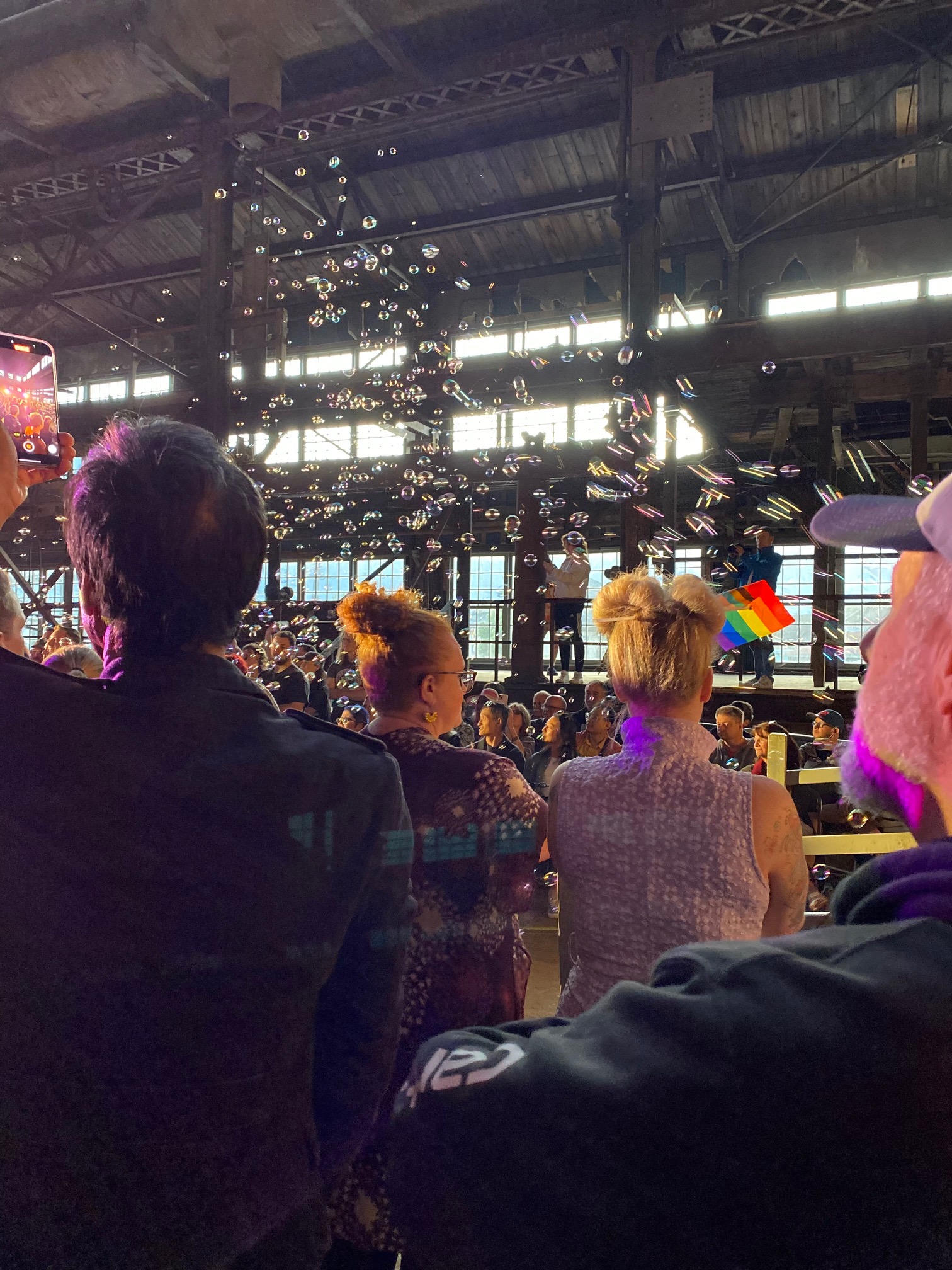
Andre Gide and the long trails he led me through

On Claude Mauriac Coversations with André Gide

Introduction:

Andre Gide as a guide – but to what light, what knowledge?

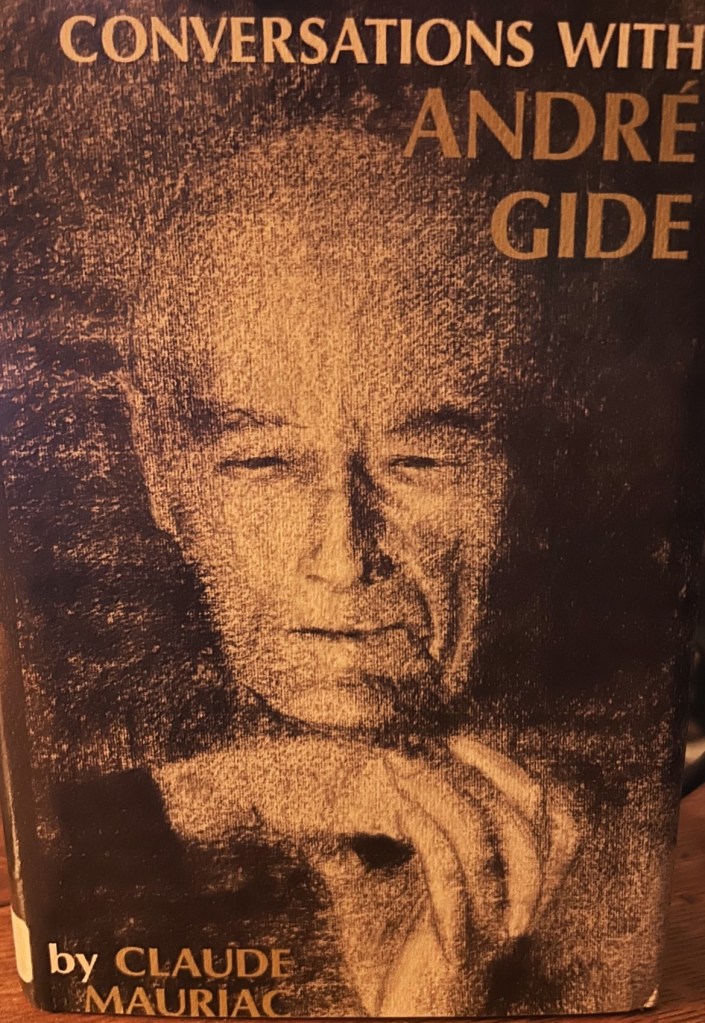
Andre Gide not himself with his books, his amazing literature, but Gide as seen in his twilight years through conversations and observations of a young Parisian, Claude Mauriac. No, no that more famous father, François Mauriac[i] (a writer, critic and member of French Academy and Nobel laureate in literature). Claude followed his father’s footsteps, who also interviewed Gide and wrote about him extensively.
All of it and all of them reminded me how amazingly important for continental Europe was the French literature since Moliere, and especially in revolutionary XIX and first half of XX century.  Italian, Spanish, or German literatures had its episodes, individual, singular writers, the same as English from across the Channel. But none of them had such an impact on literary styles, thought, as did French literature as a whole at the same time frame.

I remember vividly that right after I stopped reading Mickiewicz, Kraszewsk and Krasicki[ii]  – I went straight to Stendhal[iii].  I’m talking about a 10-12 year old boy in a peculiar cocoon called ‘Polish People Republic’[iv].  Yes, it meant communist.  France for us was modern Athens. Of course, I had to re-read a lot of it again in a two-three short years to better comprehend it – but by the time I was fifteen, I knew by memory all the streets of Paris, from Montmartre to Montparnasse. It was very helpful when I eventually ended up in Paris for a visit with Kot Jelenski[v] – a true bridge-navigator between French high culture and Polish literary/art achievements.

                The story with reading about Gide goes a few weeks back. I was trying (still unsuccessful) to get from our Library a book by Klaus Mann and his talks with Andre Gide. He was the last one to have this type of talk with the great writer. That book simply vanished from Vancouver Library – last time I was actually told that: disappeared. I went finally to get that book by older Mauriac –  François. Remembered seeing it on shelf of the Library, but this time that book was gone, too. LOL.  Machiavellian conspiracy?!

 But they had this book by the younger Mauriac and I took it. It might have been a good idea. He was very young and very much taken by Gide, and his own criticism was not blinded by arrogance or pre-conceived notions, as could have been the case with his father writings. Even more intriguing is the fact that older Mauriac was about the same age as Gide. Claude Mauriac, being more than generation younger, would not dare to contradict, or argue with Gide. I knew he would have listen and absorb – therefore his recollections would be more crystal, so-to-speak, taken with reverence.

While reading these ‘Conversations’[vi] in Moodswing Cafe[vii] a strange thought came to me or, more aptly – an observation. Strangely perhaps, because on the surface it is totally disconnected from that book and it’s subject. Somehow though, it feels that I need to include it in that short essay.

Here we go:

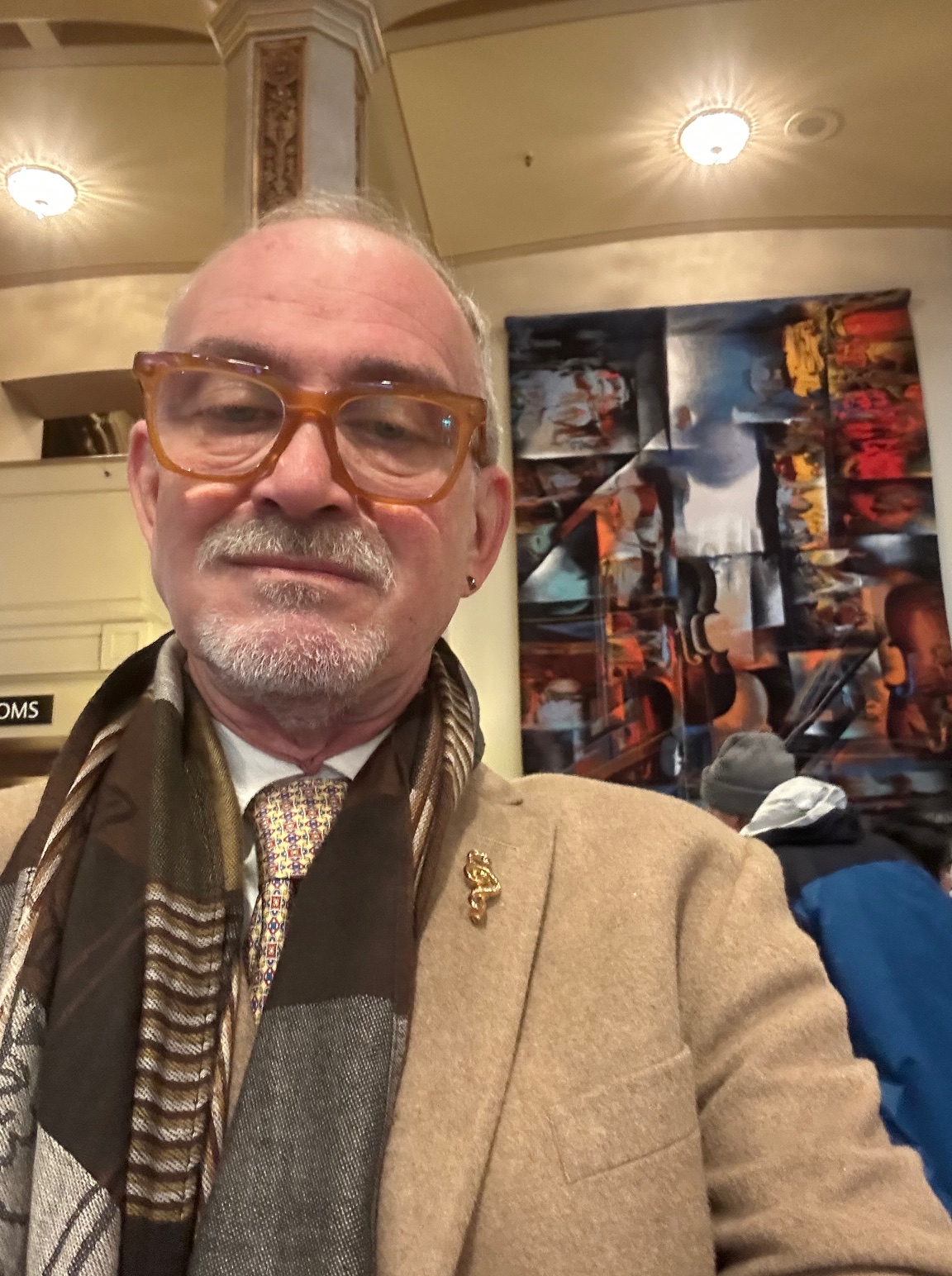
some people, mostly the artistic type, or at the very least working on some sort of public stage while doing it, dress very differently on that stage than off that stage. I am definitely not talking about actors, as these professionals play a role, not themselves. No, my observation is about any type of performer, who presents their own skill/art in a public space. They often dress very differently than they are off that stage. Why? Are they victims of ‘Dr. Jekyll and Mr. Hyde”[viii] syndrome? I doubt it.  Yet, it seems to me that they think as their artistic persona would be too peculiar, too extravagant for normal, ordinary life. Extravagant?! Obviously that ‘artistic’ part is very important and it shows that they are fuller, happier and more confident in that ‘stage attire’ than in ordinary, boring clothing.

They should allow themselves that freedom of dressing a bit differently simply because ‘it’ is them and ‘it’ would show confidence and joy. Being an artist does not make you better than others, but it does give you the privilege, the right to be a little bit of a peacock. Perhaps not with fully displayed tail – but a colorful peacock nonetheless.

I think that Gide helped me to have that thought, observation. Certainly monsieur Cocteau[ix], who comes up in Mauriac’s story very often would think that. I do not shy from this ‘perversion’ definitely.

(Next day in Melriches Cofee bar on Davie Street)

Well, back to the subject, the book of Claude Mauriac.

 As I said I wouldn’t have borrow that book if not for the simple fact, that the other, written by his famous father was not at the library.  Yet, being as it was, I have found out that it worked very well. That Claude, young aspiring critic and journalist did not come to Gide to discuss, analyze a famous writer style, body of work. He came timidly with open mind and heart to observe, to learn about Gide from Gide, without pre-conceived notions about Gide as a man. Obviously, the age difference added to his deference.

                Did he understand the peculiarity of aging Gide homosexuality? Yes, he knew of it very well, Gide never hid it, but did he knew the emotional price paid by an aging homosexual artist – even in liberal Paris of the 30ties – who was single, did not have a partner? Of course he did.

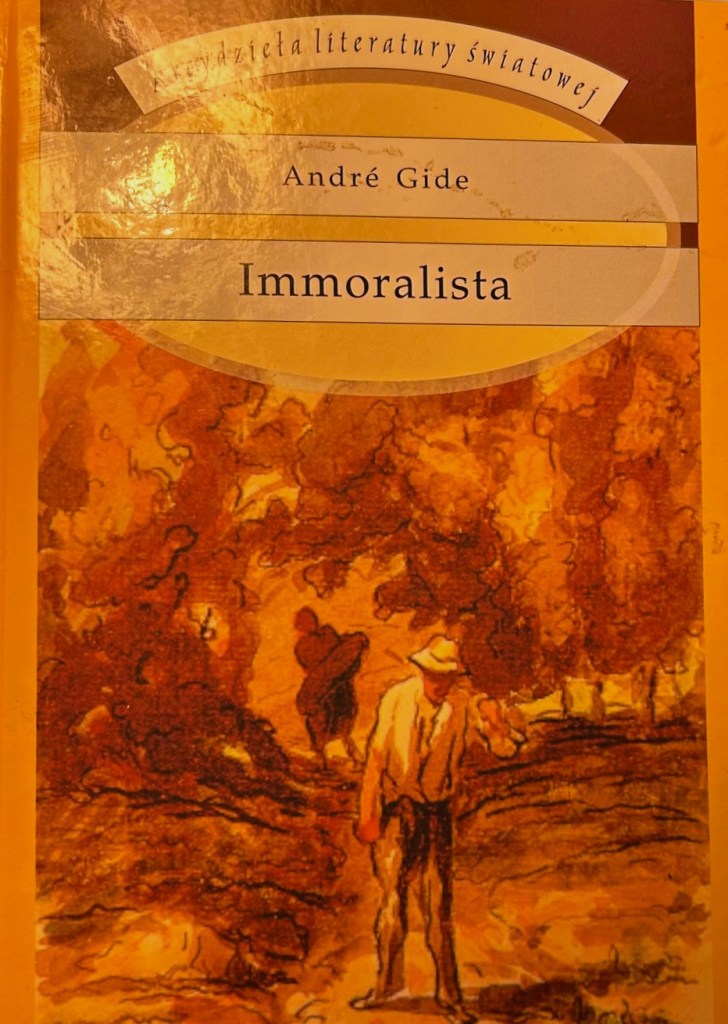
 Gide still analyzed, re-lived his tragically ended marriage ( her sudden death), a marriage never fully ‘consummated’. If you are not sure of the torture, perhaps you should read the gem of literature, the „Immoralist”[xi].  It had tremendous effect on me decades ago, when I read it first time.

Claude Mauriac was not only young (o, so very young!), he was (as his father) staunchly, almost fervently Catholic. But he did try very hard not to let himself be judgmentally opinionated in his dogmas, especially noticing that his own famous father (also fervently Catholic) did not allow himself to judge Gide writings through his sexuality or otherwise private conduct. Au contraire – he held him in high esteem.

Yet, I must say without a hint of trepidation, that I sensed very strongly, that Claude was drawn mysteriously not only to Gide’s admired writings but also to his suggestive handsome looks and his, at times, flirtatious behavior. And I also do remember the ancient times when I was at Claude’s age, and how intellectually attractive were my much older friends. One must assume that admiring these much older friends intellectual prowess easily translates into physical allure. It goes without saying that intellectually accomplished men (and women), who are artists or people formally associated with art ventures do age gracefully, and barring serious illness, they do retain physical attractiveness rather well. That ‘attractiveness’ should not be confused with just mere and banal ‘good looks’.

On p. 160 of that book Claude re-examines his feelings toward Gide and vice versa. He now recognizes Gide acting as a clever gamer, he sees his ‘perfidy’ to be friendly toward him – a boy, a budding young journalist. But is it a fair examination of Gide’s acting by Claude himself?  I don’t think so. I think and I assume it, because I believe that Claude wrote that book honestly. I also believe (although he doesn’t state it as an explice) that at times, through the extended vacation in southern France, he often was jealous of his father closeness and long friendship to Gide. Closeness that took away Gide attention to Claude only. That he might have been at times in the shadow of these two towering figures of contemporary French high culture. Granted – it offered him an extra security that the father might have offered just by being close, but it did steal the singular attention of Gide that might have been his otherwise. If he did not have these feelings, he would have been indeed very abnormal young man, and I don’t think that he was ‘abnormal’, LOL.  François Mauriac and Andre Gide were undeniably first class stars of French literary culture; they knew and admired each other accomplishments for decades. Hence, vis avis that Claude persona and personality fades into shades of words, of importance of their lively discussions.

(following day, back in Moodswing Café)

I have become more and more attune to Andre Gide again. Yes, it started with Claude Mauriac Journal , but it took me much farther. It is now me at times, who talks with Gide. Sometime I argue with him, sometime I adore him … and yes, sometime I just want to shout at him: shut up already, Andre. You are not god or, at the very least, you are not the only god of European Olympus! Another false claimant to Homer’s lyre.

Alas, truth to be told, I do love Andre. When Claude Mauriac takes him to visit deathly ill dear friend Paul Valery[xii] and he is not sure what his friend was whispering to him, I feel sorry for Andre. When he returns for a second visit … he is half an hour late. Valery is dead. Claude is overtaken by the look of broken, crying Gide. Was he crying for Valery? Undoubtedly, but mostly he was crying for their youth, for ‘that’ Paris. He was crying for himself. Selfishness? Perhaps … but truly, who is not selfish at the very core, the very center of our ego, our soul?  When you cry after dear lover’s death – you cry over your loss much more than the loss of another person (of course the ‘other person’ would be your lover, but the asserted ‘yours’ is the key to that loss: something, someone was yours, belonged to you and now was taken away).

Egotist? I remember years ago reading F. Scott Fitzgerald  “Short Stories”[xiii] and loved it so much. It was his greatest literary achievement and it prompted me to read his first full novel “This Side of Paradise”[xiv] from 1920. Many have called it an absolute portrait of the generation and its first section is titled The Romantic Egotist. How appropriate! These short stories and the novel portray a generation that just went through the unthinkable loss of millions in that devastating war of 1914-1918. Generation that was hungry for life, love, excess – ALL of it.

Dear Andre, did you know during your talks with this improbable youth called Claude Mauriac, that his world (as well as yours – once again) is just about to collapse under the pitiful actions of his admired earlier presidency of Maréchal Pétain, the Lion of Verdun, who become the Mouse of Vichy? No, of course you did not. After all you went to Tunis and Algiers. Did you enjoy the young bodies of the Arabian boys? Of course you did. After all it wasn’t the first time, was it? But you still should have told some of it to young Claude. He was naïve …

                Gide dies soon after Valery. I’m personally taken by these moments and his sad, somber realizations. Am I now waiting for my death? Is my return to Warsaw a Gide’s return to Paris after the war years in Africa? Return to die…

(following day, back in Melriches Café on Davie in Vancouver)

Ah, yes – it is very hard to leave this place again, these streets, buildings, even shops, stores. Perhaps it is most difficult leaving the parks and their trails. Everything is so dear for me there. Everything? If life is everything – than yes, it is.

Our love, that I will never find again, my writings. Despite many shorter and longer returns to Poland, my dearest Poland, the undeniable fact remains that I was twenty two years old boy, when I left her. Now I am close to Andre Gide’s age, when Claude Mauriac wrote his Journal and become emotionally attached to that famous French writer. Andre died in Paris few years later, in 1951.

Regrets? No, have I not left my dearest Poland, I would have never found him – My Boy, My Life, My Soul. Things like that do not happen twice. Yet – Poland is my first love of books, of literature, of poetry, music. When I finally landed in Canada (after a year in London and two years in Italy) I was a truly fully developed man spiritually and intellectually. Back in the old communist Poland young people had to develop fast and mature fast. Of course, there was time for first kisses and romances – but a romance is not That Love you dream of, when you are that young. That one was waiting for me here, in Canada. Do I believe that things are preordained somewhere for us?  That I don’t know and I am not going to be wasting time trying to answer such a theoretical question – cosmology was never my strength.

I do have one regret, though. Back in the 80ties I went to Paris to visit Kot Jeleleński[xv], an amazing intellectual and art lover. Art lover is one description – but of course he must have been a great lover romantically, too. After all, he was a lover of improbable Leonor Fini[xvi] and improbably beautiful Stanislao Lepri – an Italian aristocrat. He did, in pre-war Poland, had a friendship with Polish great poet Kamil Baczyński (a hero of Warsaw Uprising, where he died fighting German occupiers)  – I forgot to ask him if he ever made love to beautiful Baczyński? But I would like to think that they kissed at the very least, both of them were very handsome boys.  That is a side thought only, pleasurable but of no consequence. Yet, my regret is that I should have asked Kot to take me to the streets and cafes in Paris which Gide frequented. Kot was Parisian bare none. It is my great regret. You don’t ask just a tourist guide for places and stories like that. Stories like that could be told only by art lovers. Or artists themselves.

Who, if not Konstanty Jelenski  could have told me the true shades of Gide? Jelenski, the ever arbiter elegentiae, the guardian of Polish and European literature? How did he survived the death of his love – Stanislao, the gorgeous Italian?  I didn’t know that Kot at that time was dying himself of incurable cancer. Being as elegant in every meaning of the word, he never shown anyone his physical ailments. Let’s talk about art, not of something as ghastly as death – he would have probably answered.

Our lovers die too soon.

I have talked for a long time with Giedroyc[xvii] in Maisons-Laffitte near Paris, editor-in-chief of highly influential literary and political monthly “Kultura” – but our talk was all wasted on politics instead about literature. Those were the times, but we should have known that even during war, talking about art and love is more important than politics! One that could have put us back on these important tracks was another editor of ‘Kultura” – Józef Czapski. Tall as a skyline physically and intellectually, himself a lover of young Russian poet Nabokov and later of Ludwik Hering – but Czapski was not in Paris, when I visited Giedroyc. Maybe Czapski met Gide, he could have due to his aristocratic connections he mingled o lot in the ‘society’ circles of Paris. Eh, the occasions and talks we missed…

                When Oscar Wilde took Gide to a hotel in Algiers, Wilde rented two rooms and in both rooms was a local Algerian boy. Naturally, the boy was rented, too. They both delighted in their boys. Yes, I know my dear Reader that you are aghast – but trust me, I am certain that both of these writers delighted in these Algerian boys. They definitely were not terrified of these boys. Not only that – to your surprise  (no doubt) I must tell you that it was not illegal – the age of consent was not 18, not even 15. It was at that time …thirteen.  O tempora, o mores! Did you, dear Reader give a sigh?! Did you just say, with wiping sentimental tear off you check: the good, old times? No? You didn’t? I thought you did – because that is what you usually say, when you comment on current times, don’t you?

O, please spare me the debacle. I am not going to Algiers tonight, or any other time. And the age of consent in Algiers now is the same as in Poland or in Canada. Even in Paris, LOL. Not sure about Texas or the Temple in Utah – religions and individual states laws and customs are very different in the ‘land of the free’ south of the border. They are Christians, too (I think?) but they are the Later Saints … or is it Latter-day saints? Maybe it is just very special Latte or Cappuccino; it is all too complicated for a simple guy as me.

Thinking of Gide for few more days and thinking of him I wrote two pieces of poetry: one in Moodswing Café in New Westminster and one … sunbathing on nude beach and swimming in Mud Bay of South Surrey’s Crescent Beach.  I think it necessary to finish this essay, which no longer is an essay only about Andre Gide, with these poems. Maybe I should even dedicate it to his memory and talent.

 To you Andre, to the memory of great man of letters from France.

Winter time in a small village in Pyrenees.

Night comes quickly and darkness covers

the valleys and peaks. Suddenly, the windows

off a small stony church lights up in delicate

orange glow. From the top of the church steeple

comes the song of its bells: big bam! Big bam!

big!, big! big! Bam! Bam! Bam! Baaaam-mmm!

The air vibrates with each tone of the big bell

and sends  bronze-coloured sounds to the valleys.

Archangel Michael blows into long, golden trumpet.

The music envelopes the meadows, climbs up the hills.

The call of God, the call of the Shepherd: 

come and be enlighten in the mystery of life

 and promise of death merciful that claims us all.

They run – the tired travelers, the herds of goats.

They cry and hope, as the trumpet sounds again

and dies suddenly like the last drop of now empty goblet.

The church becomes a masjid and archangel becomes muezzin,

that intones to all: Allāhu ʾAkbar. In Pyrenees Hannibal’s army

stop their march and rise their tusks and trunks: they sense the pitch

of the hymn and the psalm as the far flung peaks of Alps slowly

cover the church, the mosque and streams in the valleys.

The curtain call of History. Birth and death of Love.

Moodswing Café, 29. 05.26

B. Pacak-Gamalski


It’s almost seven in the evening.

The sun just starts to burn its glory.

I talk to young Adonis I just met in the water,

when we were swimming close by.

Back on the hot rocks  of the beach

he asks me about a book I’m reading.

That book is about Andre Gide and young

 Claude Mauriac, who wrote that book.

No, I don’t suppose that my Adonis knows

who was Gide and I explain that he was seventy

at that time and fabulously-scandalously gay,

but Claude was barely twenty one and staunchly catholic.

Definitely believing being straight as an arrow,

straight as the priest, who presided piously over Holy Mass

in the church they attended with Gide and Claude’s father

in the southwestern France,  in Malagar, close to Garonne’s

fast moving waters and not far from Spain’s Pyrenees.

Not sure if all that did not scared him: Malagar, big river Garonne,

 close to Spain. A thought might have crossed his mind:

is he crazy per chance? And he moved few steps to the left.

Yet, he stroke a pose of Greek efeb to accentuate

his graceful, but  muscular body. I pretend

not to read his mind and just admire his statuesque’s

shapes. Like a monument in Louvre or in Athens.

Michelangelo must have painted or sculptured him.

Gide and Claude in France? Who are they?

And who cares on a nudist beach

in the company of Greek efeb?!

Crescent Beach in South Surrey, 30.05.26

B. Pacak-Gamalski


[i] François Mauriac | Nobel Prize-Winning French Author | Britannica

[ii] A. Mickiewicz – great Polish poet, author of national epopee “Pan Tadeusz; Jozef Kraszewski, a popular author of many historical novels in the late XIX century; Ignacy Krasicki, bishop and writer called a Polish La Fontaine, satirist and critic of an old feudal system, XVIII century

[iii] Stendhal (orig. name: Marie-Henri Beyle) French novelist, precursor of realism and psychological portrait

[iv] Quasi sovereign satellite of Soviet Union block of states created after the 2 w.w. (1944) – the most liberal and free from the entire soviet Block. It ended in 1989 by peaceful free election led by ‘Solidarity” movement.

[v] Konstanty Jelelenski – eminent Polish émigré in Paris after the end of 2 world war; one of the three founding intellectuals, who organized and run the famous Paris “Culture’ periodic – an extremely influential magazine among intellectual and literary elite and not only for Polish people in the West, but mostly for people in communist Poland, where it widely distributed  as ‘bibula’ (illegally)

[vi] Conversations with A. Gide; by Claude Mauriac; tr. M. Leback; pub. George Braziller Inc. New York 1965; s. 235

[vii] Services 4 — Moodswing Coffee + Bar

[viii] The Strange Case Of Dr. Jekyll And Mr. Hyde | Project Gutenberg

[ix] Jean Cocteau – a prominent French poet, performer and avant-garde style movement instigator

[x] Melriches Coffee, 1244 Davie St, Vancouver, BC. | Make that happy connection!

[xi] The Immoralist | French Novel, Existentialism, André Gide | Britannica

[xii] Paul Valéry – Wikipedia

[xiii] The short Stories of F. Scott Fitzgerald; pub. By Charles Scriner’s Sons, New York, 1989, p. 776

[xiv] https://www.ebsco.com/research-starters/literature-and-writing/side-paradise-f-scott-fitzgerald#this-side-of-paradise-by-f-scott-fitzgerald

[xv] Konstanty Jeleński — Wikipédia
[xvi] Leonor Fini at Weinstein Gallery

[xvii] Jerzy Giedroyc – Wikipedia

Thomas Mann in another part of the forest

Thomas Mann and Klaus Mann – father and son – have brought me back to reading novels. I have mentioned long time ago, that I have given up that old habit quite a few years ago. 

After you consume rather large amount of certain dishes – you got tired of it. You recognize the same sauces, the same spices and little culinary tricks repeated by all writers.

Granted, I am not very verse in all the current new titles – but it takes more than one generation and at least and epoch to change it substantially. I do still browse through the new titles a bit at the beginning, a bit in the middle, and the epilog. It is very predictable, even if put nicely together. 

But Klaus Mann, whom I have not read that much in years gone long ago, sparked my interest again in novel. I have written about it on these pages very recently, therefore I will not expand on it again.

Suffice to say, due to my own tragedy of immense Loss, his treatment and writing on the subject of love brought back to me the beauty of love, the sorrow of its end – and absolutely undisputable power of that amazing feeling. No loss is ever going to be greater than the experience of love, and no price is too big to pay for it later.

His stories in three short novels, of Alexander the Great and of two friends and the absolute and delicate way he wrote and composed it were exquisite.  His tenderness of portraying these feelings gave me strength to write about them from my own perspective, my own experience. Somehow Klaus Mann became my friend, my confidante. My writing about Love and Loss was like meeting him in a café in Berlin or in Paris, perhaps even in New York and just talking about it. About his searches and mine. Books (good books) do that sometimes to you. Hence my posts were not per se reviews of young Mann’s books, but a case of mutual conversation, in a manner of speech, naturally. Below are links to this texts of mine:

Sprawa zakochania się w tekście literackim – > > Pogwarki < <

Vancouver sunsetting, Vancouver’s English Bay – > > Pogwarki < <

Na szczytach Olimpu z moim Hefajstionem – > > Pogwarki < <

Our talks in Babylon – > > Pogwarki < <

That prompted me to look for his big volume of memoires “The turning point. Thirty-five years in this century”[i].  I went to our Main Library in Vancouver to get that book. They didn’t have it on the shelf but brought it to me from some sort of warehouse room were some books spent for some reasons a solitary life. Not for eternity, mind you, LOL. Maybe it needed some fixing, repairs?  It was not in the best shape. After all – that book was published … 84 years ago! Since I liked Thomas already and knew that he wrote about French writer Andre Gide, who happens to be my very much liked writer – I asked for that book, too. This time it was supposed to be on shelf not in some purgatory warehouse. I got the coded number, went to right spot – and the book wasn’t there. Returned to that young library assistant, who got me the big book of Mann memoires and ask him if he could find me that book. He said with a smile: of course, just follow me. I did. But he was going to big section called “English Literature”. So, I stopped him and asked why is going there, instead to were Mann’s book should be. His answer just astonished me and made me giggle a bit. The answer was: well, this book is in English in our catalogue.

God have mercy!  – I almost shouted.  Instead, I just explained to him –  My dear young man, you have that book in English language, but it is a German writer. Therefore it is, as it should be, in “World Literature “section. The same as Victor Hugo, Pablo Neruda, Dostoyevsky and hundreds of other writers, who were of other nationalities and wrote in other languages

Let me remind you again dear reader – that young and pleasant fellow was an assistant in the Main Library in a very big metropolitan city. O, tempora, o mores …

Back at the right section he did re-checked the shelves from top to bottom and the book really wasn’t there.  Too bad, but of course it was not his fault. We were just about to leave when he noticed a book at the bottom and happily announced: there it is! That book about your Gide!  I have noticed that book earlier. No, it was not written by Klaus Mann. That was the reason I went to him to help me searching for the right one. That one he pointed to was by another well known writer and  I have read his book many, many years ago, when I was working on series of articles about the history of gay-themed literature written often by gay writers or scholars.

By then I was truly tired mentally and physically and my leg was hurting. His jumping the gun and prematurely announcing that fateful: I know proved that he didn’t know and didn’t listen, arrogantly thinking that he did.

 Was he an arrogant? Maybe that would be too harsh a judgment. But I wish he listened more acutely and paid more attention to question being raised. After all, he was a library assistant. And I did ask him about a book by Klaus Mann. Not another (albeit very famous in his own right) author.

When I went home I reached to my bookshelves and retrieved from there my copy of Andre Gide “L ‘Immoraliste”[ii] and read it again. What a pleasure. 

At the end I was not angry. Actually, it was sort of amusing. I think that it was a good chance (remember – Main Library in major city) of him being a graduate of some university’s (or college, the very least) Humanities Faculty. My librarian in my Junior School was not the nicest lady. But she knew her stuff.  It meant she knew books. O tempora, o mores, my dear Cicero, LOL.

                Wouldn’t be myself if I have missed the possibility of being … arrogant about well know book. Yes, the very voluminous volume of Klaus Mann (with the help of his dear sister, Erika) autobiography “The turning point. Thirty-five years in this century”.  I have borrowed it and had to read it. Well, almost. I did huge portion of it, admittedly. Many scholars admire the book. I thought it was an awful way of writing autobiography. There are few ways to do it interestingly – he just mixed them all together, filled with thousands of totally unimportant details of country, cities he lived in (especially as a very young lad, well before becoming a writer), complicated  and not that influential on himself familial connections: just way too much to consume, page after page. I wish it was half as thick. All in a total contrast to a very concise way of writing his novels. There were certainly paragraphs, sections very important to know about him and his world, but at the end it was a dinner that had way too many side dishes. At times, you felt like a guest at a dinner, who just thinks o himself: is it ever going to end? If I still want to read his book about Andre Gide, it is for one reason only: Gide. Thomas was the last good writer (he was a good writer, as I said), who went to Paris and to spent time there and to get to know the great Gide. Gide was already very mature and older writer, decades older then young Mann.  Thomas told him, he will write a book about great Andre Gide. Gide, who knew Paul Verlaine and Arthur Rimbaud! All of it, young bisexual Klaus Mann, his adored French poet bisexual Andre Gide and his connection to scandalizing stars of homosexual Paris in XIX century of the decadent period.  A story from my forest, and a forest I spent many years of writing about and reading about all of them (except Klaus Mann, whom I just met his year, LOL).  Just like that absolutely glorious book published many years ago here in Canada: “Meanville , in another part of the forest”[iii].             


[i] “The turning point/thirty-five years in this century”, Klaus Mann, pub. by M.L.B. Fisher, New York, 1944

[ii] A. Gide, “Immoralista”, trans. by Izabella Rogozinska; wyd. Zielona Sowa; Krakow, PL, 2006

[iii] “Meanwhile in another part of the forest. Gay stories from Alice Munro to Yukio Mishima” edited by A. Manguel and C. Stephenson; pub. by Alfred A. Knoph Canada; 1994, Toront

Na szczytach Olimpu z moim Hefajstionem

Na szczytach Olimpu z moim Hefajstionem

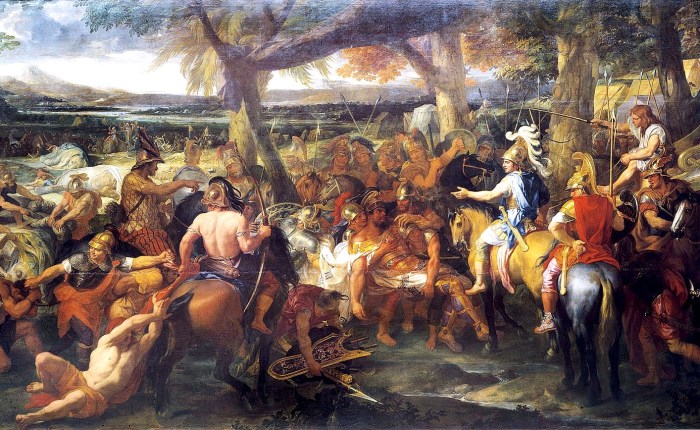
Moje nieustające fscynacje z historią Aleksandra Macedońskiego w wersji przekazanej nam przez Klausa Manna. Eh, Klaus, Klaus, coś ty mi narobił, narozrabial w tej głowie? Przecież znałem tą historię tak dobrze  od dziesięcioleci chyba już. A ty mi tu takie tam inne odcienie, półcienie, zamglenie we mgle sentymentu podsuwasz pod oczy, a z oczu naturalnie wciska mi się to w duszę.  /… /

(pisane w Craft Cafe na bulwarze nad rzeką Fraser w New Westminster)

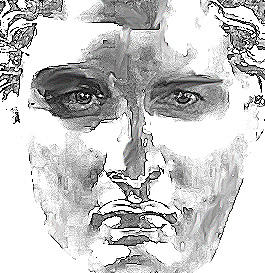
szkic Hefajstiona w muzeum w Madrycie (ze zbiorów Wikepdii)

Klaus, jak wiedzieć mogłeś, że Aleksander przez dni kilka okrywał całunem pocałunków miłości całe ciało Hefajstiona? Że nie pozwolił dworzanom i żołnierzom oderwać cię od tego ciała, które było strumieniem jego życia właśnie, tego samego niepokonanego nigdy Aleksandra? Aleksandra, który zwyciężył armie całego świata. Aż śmierć tego umiłowanego generała, przyjaciela, kochanka jego nie pokonała. Życiodajnym strumieniem płynącym z macierzyńskiej Pel[i]i? Które było kwiatami Babilonu? Które było złotem Gangesu i Brahmaputry? Które było kolumnami Persepolis[ii]?

Jak wiedzieć mogłeś, że wszystkie stolice świata, tobołki pełne pereł, diamentów, złota i szmaragdów nie mogły kupić biletu powrotnego dla Hefajstiona?

to nie to, czy ten co odszedł dał ci życie

to to, że on był życiem

pytanie jest czy oddałbyś swoje

bo kochałeś

i łzy milczące napłynęły,

bo znikąd rady ni pomocy

dostać nie mogłeś

i byłeś bezbronny i słaby,

jako najniższy z niewolników,

a łzy same popłynęły z oczu

/B. Pacak-Gamalski/

                I otworzyła się brama w ścianie mojego Czasu: bogowie, lub herosi za ich pozwoleniem, przenieśli mnie w te dni okrutne, dni żegnania mego Hefajstiona. Dni, kiedy kładłem się obok niego, podłączonego do sieci różnorodnych elektronicznych czujników wyświetlających na ekranach wykresy symboli przypominających starą grekę z dni Arystotelesa i jego ucznia, Aleksandra; przez usta wpuszczono długiego węża[iii] , który wśliznął się do jego płuc i w równomiernych odstępach wdychał w nie powietrze. Dwa dni i dwie noce byłam do tego łóżka przytroczony siłą niepojetą.  Opowiadałem mu wszystkie dni naszego życia, wszystkie dekady naszych domów i mieszkań, podróży kontynentalnych i lokalnych; wąwozy, góry, wybrzeża oceanów, nasze plaże i nasze balkony.

Próbowano, namawiano, tłumaczono, że muszę odpocząć, pojechać do domu przespać parę godzin. Na końcu do małego pokoiku  przy tej wielkiej sali ICU[iv] wniesiono  jakąś kozetkę i namówiono mnie bym dał sobie czas na krótki sen, obiecując zawiadomić mnie natychmiast o jakiejkolwiek zmianie sytuacji. Uległem namowie i położyłem się. Natychmiast zasnąłem. Gdy się obudziłem zerwałem się z przerażeniem, że spałem.  Pobiegłem błyskawicznie do pokoju mego Hefajstiona z wyrzutem wobec medyków, że pozwolili mi  tak długo spać. Uśmiechnęli się lekko i smutno, jeden z nich odpowiedział: spałeś niecałe piętnaście minut.

Potem zebrało sie konsylium. Poprosili bym siadł przy ich stole: kardiolog, neurolog, pulmonolog i doktor od psychologii. Pani psycholożka była dla mnie, choć nie sądziłem, że jestem chory. Reagowałem dość – zdaniem moim – normalnie  na sytuację w jakiej się znalazłem.

Mówiono ciepło i monotonnie, cicho ale stanowczo: twoje płaty mózgowe na moment nie drgnęły, zostało tylko ciało – bezbronne, że powinienem dać zgodę, by ciebie od tych próbek, od tych węży odłączyć, by twoje ciało mogło też usnąć, bo jest zbyt zmęczone. Pani psycholożka wyjaśniła, że twój duch był świadom życia ostatni raz w moich ramionach, gdy czekałem na karetkę wtulając cię w moje pocałunki, moje wdmuchiwanie w ciebie powietrze. I że wtedy, bez paroksyzmów niemocy odleciałeś w przestrzeń poza naszą.

Nie, nie zerwałem się tak, jak Aleksander i nie wymordowałem tych bezsilnych medyków od ciała i duszy. Rozumiałem, że nie mogę twojego pięknego ciała męczyć ponad miarę, że muszę się nad samolubność i egoizm własny wznieść. Dałem tą zgodę z jednym zastrzeżeniem: po odłączeniu od tych sączek, macek i próbek ja muszę tam wejść i sam z nim tylko pozostać. Co zrobiono i zasłoniono szczelnie kotary, by wzrok kogokolwiek nie ośmielił się mnie i ciebie, Hefajstionie widzieć.

Leżałeś piękny, spokojny, bez drżenia, bez wstrząsów, bez drgań. Łagodny – czekałeś. Położyłem się obok, wtuliłem w ciebie. Całowałem od stóp poczynając, w górę aż do ust, nosa, oczu. Byłeś znowu sobą – kolumną i filarem mojego spokoju. Nawet nie wzbraniałeś od pieszczot ostatnich. Jak dekady wcześniej, gdy oddałeś się kompletnie nad jakimś strumieniem u podnóża wielkich gór – grzbietu Ameryk. Nasza droga od naszej Macedonii do naszego Babilonu. Nasze piękne życie. Nie mogę swoim zwyczajem być zbyt dumny Hefajstionie, muszę za nie podziękować wszystkim bogom wszystkich czasów: archaicznego, antycznego i nowożytnego. Nawet jeśli tych bogów nie było.

Może bogami są wszystkie dusze, które po odłączenu się od ciał, zamieszkują na najwyższych szczytach Atlasu, Himalajów, Kaukazu, Kordylierów, Olimpu i Karkonoszy?


[i] Stolica Mcedonii w czasach Aleksandra Wielkiego

[ii] Stolica starożytnej Persji

[iii] Wąż był symbolem helleńskiego boga sztuki lekarskiej, Asklepiosa

[iv] Intensive Care Unit (oddział intensywnej terapii)

6 Symfonia Czajkowskiego w Orpheum w Vancouverze

6 Symfonia Czajkowskiego w Orpheum w Vancouverze

Bardzo dawno temu, bodaj w 2018 byłem z moim Johnem na koncercie Akademii Muzycznej[i].  w ‘Orpheum’ w Vancouverze Pamiętam świetnie, bo grali nie takie łatwe ‘Requiem”[ii]. W Akademii tej często wówczas gościłem i znałem wielu z młodych studentów z całego świata, wielu wykładowców. Wykładała tam wówczas (wykłada w dalszym ciągu w tej samej uczelni) dobra znajoma, pianistka polska Krystyna Tucka. I naturalnie zacny Kim Sun Lee, z którym prowadziłem często długie rozmowy.

Z przyjemnością więc poszedłem do tej naszej filharmonii posłuchać, jak się ci znajomi studenci na formalnym koncercie zachowają, czy nie ulegną zbyt dużej tremie. A nie ulegli, koncert był bardzo udany.

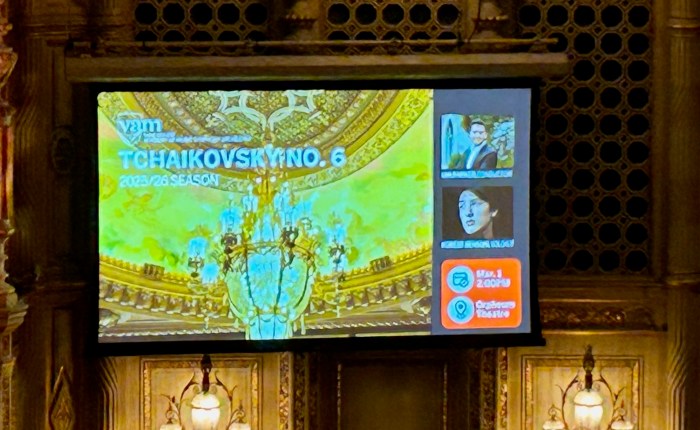
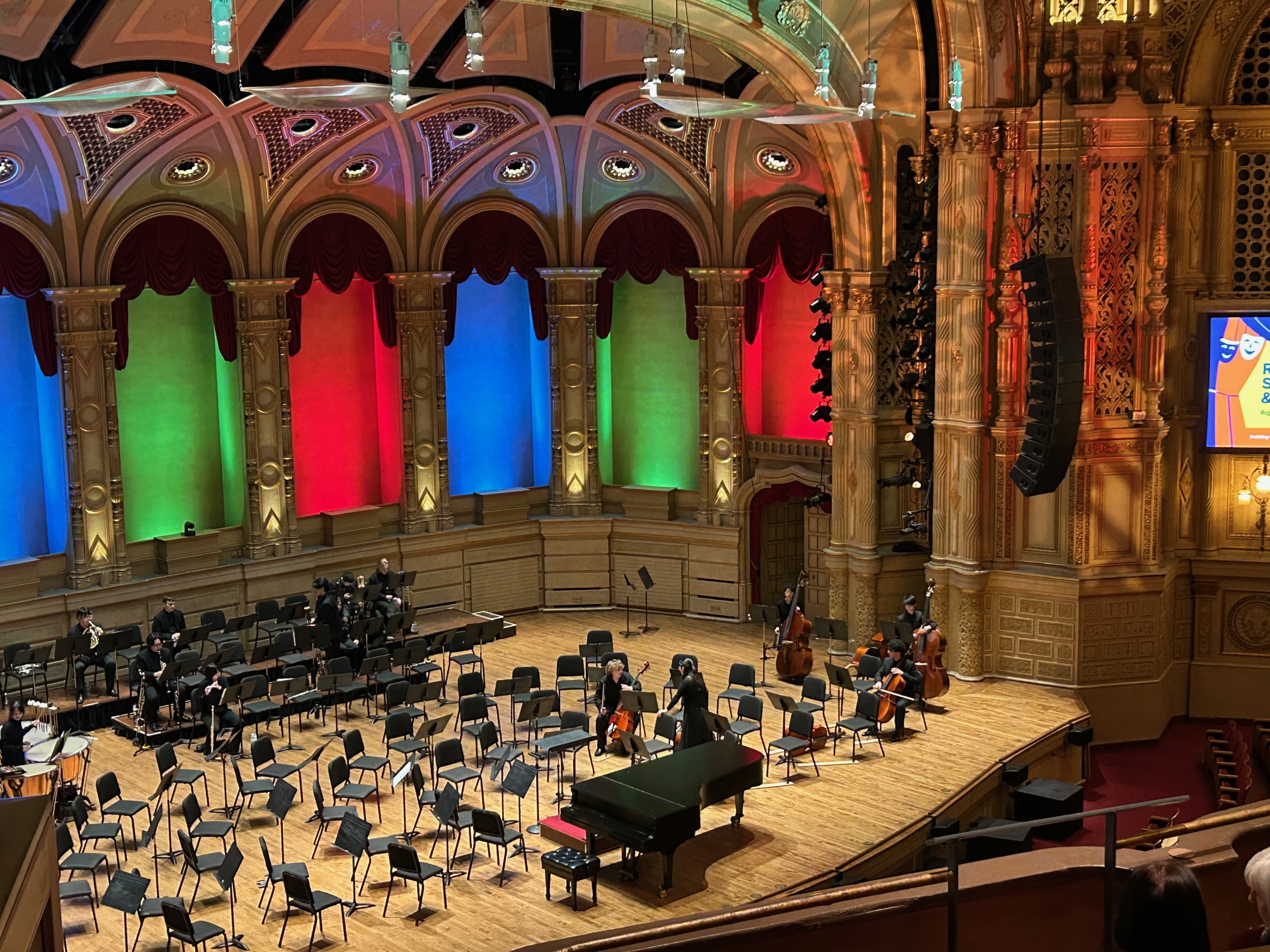
Minęło osiem lat i 1 marca 2026 w tymże samym Orpheum jestem znowu, by słuchać tegorocznych studentów Akademii Muzycznej. Tym razem program jeszcze trudniejszy, obejmujący różne style i epoki muzyki. I, naturalnie to jest już też następna generacja młodych muzyków.

Miejsce, swoim zwyczajem, zająłem na pierwszym balkonie w pierwszym rzędzie, na ostatnim fotelu. Stary zwyczaj, bo i widok całej sceny dobry i siedzą z boku mam możliwość robienia w trakcie swoich notatek, co później ułatwia spisanie wrażeń koncertowych.

Dodatkową miłą atrakcją była część pierwsza z pianistą Forestem Bensonem[iii]. Słyszałem o nim już coś, ale nigdy nie słyszałem jego gry.

Benson grał uroczą uwerturę z Magicznego Fletu Mozarta; Koncert Fortepianowy Nr5 F-dur, Op.103 Saint-Saensa.

Początek Uwertury Mozarta był zbyt delikatny, zbyt nieśmiały. Ale pianista szybko poczuł ducha tej radosnej muzyki, nadał jej właściwy nastrój i tempo.

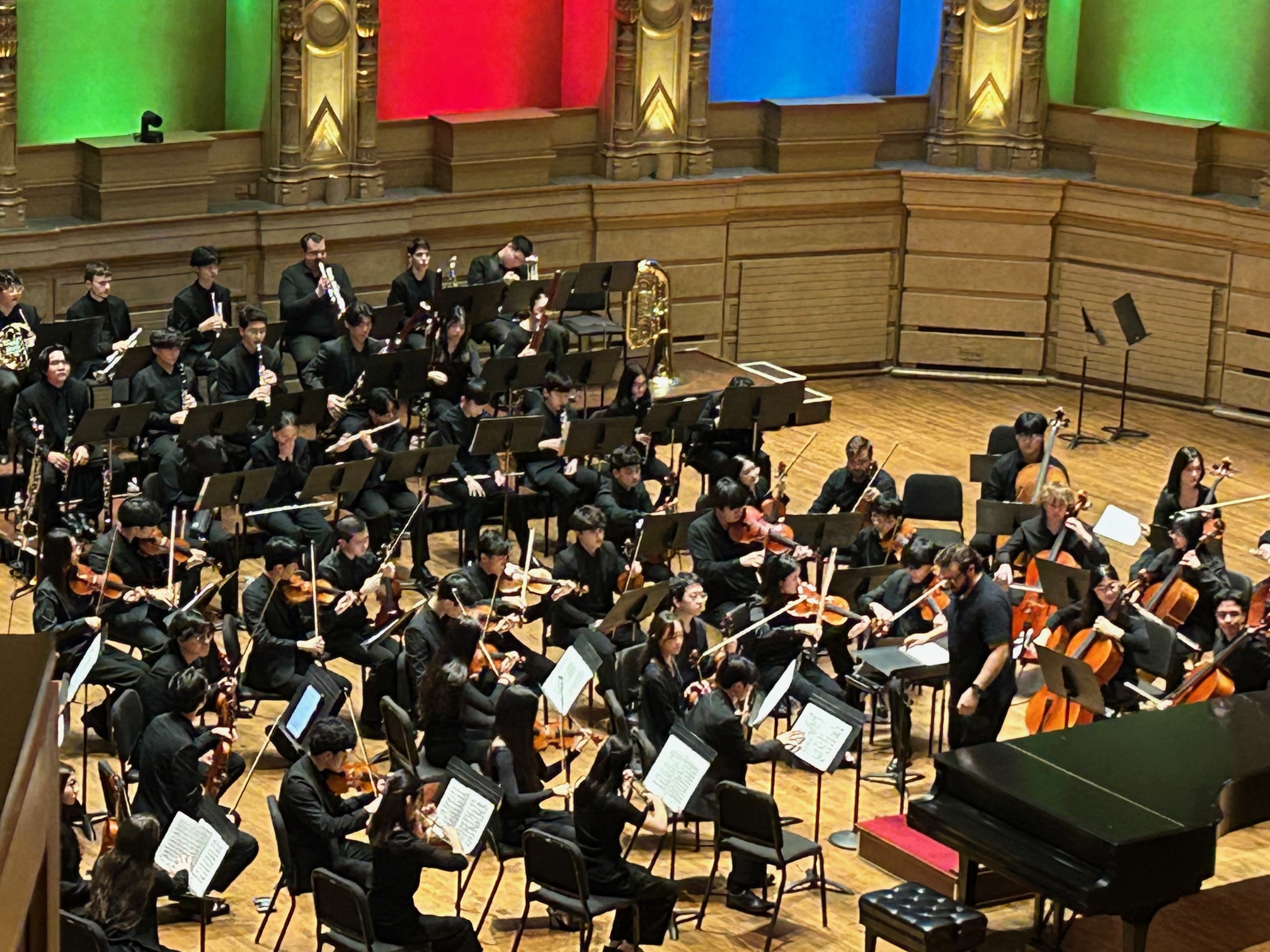
Muzyka Saint-Saensa nie jest łatwa, to przedział epok muzycznych, przechodzenie z jednej do drugiej. Pełny koncert pianistyczny, więc z całą orkiestrą. I robi to bardzo dobrze. Nie stara się być gwiazdą, a raczej częścią tej muzyki, wespół z orkiestrą. Co mnie trochę zaskoczyło, to prawie niewidoczny kontakt dyrygenta (Ian Parker, ntb. z bardzo dobrym i cenionym życiorysem prowadzenia orkiestr) z pianistą. Oczywiście, że są obok: pianista słyszy orkiestrę, dyrygent słyszy pianistę. Tylko czasem warto ten kontakt wzrokowy ułamkiem sekundy utrzymać, wzrokiem dać znać kiedy i jaki akcent podkreślić. Gdy się jest kapitanem okrętu nie należy zakładać, że Pierwszy Oficer czyta w myślach kapitana … .  Nie mogę powiedzieć, że wykonanie by było lepsze, gdyby ten kontakt był zauważalny. Po prostu nie wiem, bo nie istniał przez większość gry. Może to moje stare przyzwyczajenia jedynie. Na usprawiedliwienie dyrygenta należy jednak przypomnieć, że pianista – choć młody – już z pewnym uznanym dorobkiem, zaś cała orkiestra to … młodzież muzyczna i na pewno więcej kontroli i opieki wymagała niż fortepian. Z sekcji orkiestrowych zdecydowanie należało pochwalić waltornie i oboje, dobre były skrzypce i altówki, na właściwym poziomie wiole i kontrabasy. Szczególnie duże uznanie oddaje młodemu muzykowi za bębnami – świetnie operował młoteczkami i jego ‘divertissementa-kanonady’ były majstersztykiem.

         To było małe, urocze tête-à-tête przed daniem gównym, małe soirée zanim otworzą się wielkie drzwi do bogatego salonu jadalnego. Dziś serwują 6 Symfonię h-moll Czajkowskiego. Symfonię, nomen-omen, nazwaną ‘Patetyczną’. Kompozytor nie wiedział jeszcze, że będzie ona ostatnią większą kompozycją. Na jego niebie zbierały się już czarne chmury spisku potężnych przyjaciół samego kompozytora, ale i przyjaciół dworu carskiego. Romantyczna miłość do syna potężnego arystokraty rosyjskiego zakończyła się sfingowanym pojedynkiem, w którym Czajkowski zgodził się być zastrzelonym[iv]. Nie nawiązując do romantyczno-tragicznych przyczyn śmierci Czajkowskiego, Ian Parker bardzo ładnie w słowie wstępnym wyjaśnił, że nazwa ‘patetyczna’ w języku rosyjskim ma nieco inne brzmienie, bardziej smutne i tragiczne niż w rozumieniu popularnym, et winno być odczytane, jako wielka, wspaniała, podniosła. Chyba wystarczyło takie objaśnienie.

Pierwsze adagio –Allegro non troppo. Dobrze bardzo zagrane. Zwłaszcza solo klarnetu przejmujące; kotły utrzymują i poniekąd narzucają bardzo dobre tempo. Dobra synchronizacja całej orkiestry, zapomina się, że to orkiestra młodych studentów – to po prostu muzycznie dojrzała orkiestra. Równe granie jednej sekcji instrumentalnej udziela się pozostałym sekcjom instrumentalnym. Odnosi się wrażenie, że sami to doceniają i słyszą, dodaje im to skrzydeł, pewności lotu. Przez moment tylko odnosi się wrażenie, że trąbki i tuba opowiadają jakby inna historię, LOL. Ale to moment tylko.

         Allegro con grazia trochę słabsze, brak ‘łagodności’, czułości tej muzyki, choć nie jest zagrane nagannie. Może pomieszały się szyki kto i kiedy dźwiękowi pozwala, jak ptaku ulecieć? Na szczęście nadchodzi moment uroczego walca, który – jak to walc –  który wszystkie instrumenty łagodnie i tanecznie po sali balowej, niczym wodzirej elegancko prowadzi.

Przychodzi finał. Adagio lamentoso. Jak w każdej szanującej się symfonii te ostatnie allegro musi nawiązać muzycznie do części pierwszej, podjąć główny temat muzyczny.

Odniosłem wrażenie, że ta krótka pauza między molto vivace a adagio lamentoso zbyt była krótka. Nie można z walca radosnego ot tak, przeskoczyć do lamentu. To dwa odległe świata emocjonalne, dwa kosmosy uczuć. Być może niezbyt wyraźnie odczytali ruch ręki dyrygenta, pospieszyli się? Gdy jedna sekcja zacznie, wszyscy muszą kontynuować. To tylko drobna uwaga, bom bardzo wyczulony był na ten utwór i jego całą otoczkę historyczną. Przy tym adagiu-lamencie powróciła myśl o młodym Czajkowkim, jego tragicznym romansie… .

Wracajmy do muzyki wszak. Ten finał grany był bardzo dobrze. To była jakby zapowiedź, przepowiednia tragedii, która zawisła nad życiem kompozytora. Fatum płynące, jak jęk, płacz w cieniu kanonady rewolwerowej.

Młodszy brat Piotra, Modest Czajkowski miał powiedzieć, że ta symfonia była ‘elegią po zabitym kochanku’. O tym właśnie myślałem smutno, gdy słuchałem ostatnich taktów tej symfonii w Orpheum.

Czy tak było naprawdę? Teorie jedynie, pół-słowa, szczątki wspomnień rozsiane po carskich i sowieckich archiwach, tak, jak pół-słowa i pół-prawdy o kochanym Fryderyku i jego miłościach i miłostkach …  

Na samym końcu pozostaje muzyka: piękna, szlachetna, smutna i radosna, porywająca i powalająca. Ot, sztuka.

Po koncercie spacer sobie zrobiłem w kierunku naszej Galerii Sztuki. Muzyka musiała się wlec za mną, niczym rozwiana peleryna romantycznego kompozytora. Bo tu nagle inna kultura, inna cywilizacja i inna muzyka grana na elektrycznych organach. Japońska artystka, i to w kimono klasycznym, grała przeuroczo przed Galerią. Posłuchałem, podziękowałem grzecznie, grosik wdowca do puszeczki wrzuciłem i poszedłem dalej stukając kijkiem po chodniku.


[i]Vancouver Academy of Music

[ii]„Messa de Requiem:; G. Verdi; 1874

[iii] Forest Benson, piano

[iv] Historia i kultura: Piotr Czajkowski (1840-1893)

Koncert w Vancouver laureata ostatniego Międzynarodowego Konkursu im. Fryderyka Chopina w Warszawie w 2025.

Koncert w Vancouver laureata ostatniego Międzynarodowego Konkursu im. Fryderyka Chopina w Warszawie w 2025.

Kiedy w 2025 roku Eric Lu wygrał słynny Warszawski Międzynarodowy Konkurs Pianistyczny im. Fryderyka Chopina, strasznie chciałem usłyszeć go ‘na żywo’. Nic, jakiekolwiek idealne i wyczyszczone nagranie studyjne nie zastąpi bycia na koncercie. To atmosfera i przeżycie jedyne w swoim rodzaju. Słuchacz staje się, bezwiednie poniekąd, ‘częścią’ tego wydarzenia, tej muzycznej epopei.

Ale słuchając jego gry z nagrań właśnie, bardzo mnie zainteresował. Kogokolwiek i cokolwiek nie grał – grał trochę jakby inaczej, były rysy delikatne specyficznego rodzaju interpretacji utworów. Trudno nazwać takiego pianistę ‘dobrym’. Ktoś, kto doszedł już do ćwierćfinału tego Konkursu dobrym być musi. Koniec, kropka – inaczej w ćwierćfinale nie będzie.  O finale nie mówmy, tutaj pojęcie ‘dobry’ brzmi śmiesznie i nie adekwatnie. W finale pianista-interpretator musi uchylić rąbka i ukazać kawałek przynajmniej duszy artysty.

Na I Konkursie w 1927 nie przyznano V i VI miejsca; na XII w 1990 nie przyznano I (!) i powtórzyła się identyczna sytuacja na kolejnym w 1995; w 2005 na XV Konkursie odmówiono przyznania II i V miejsca; w 2010 nie przyznano VI miejsca. W kolejnych trzech Konkursach przyznano wszystkie czołowe nagrody.  I chyba słusznie. Ta ‘tradycja’ nie przyznawania trochę mi się nie podoba. Jeszcze I miejsce mogę zrozumieć – nikt ponad wszystkich się nie wyróżnił, nie był Primus inter pares.   Ale z tej kilkuosobowej grupy, którzy kolejne eliminacje przeszli nie wyłonić kolejnych szczebli finalistów wygląda bardziej na braki porozumienia wśród jurorów, a nie braki muzyczne uczestników. To raczej braki jurorów, które bywają często efektem zbyt nadmuchanego własnego ego.

Natomiast bardzo dobrą tradycją Konkursu jest dobieranie Jury spośród wybitnych światowych pianistów (w olbrzymiej większości), a nie muzykologów i akademików. Bardzo często są to byli finaliści poprzednich konkursów szopenowskich. O ile w latach wcześniejszych w samym składzie sędziowskim (głównie, jako Przewodniczący) zasiadali dyrygenci, teoretycy, muzykolodzy, o tyle od 1985 funkcje te pełnią wyłącznie znani pianiści, na ogół zawsze też finaliści tegoż Konkursu z lat wcześniejszych. Przewodniczącym jest zawsze polski pianista. Poza właśnie tym ostatnim XIX Konkursem, gdy Przewodniczącym był amerykański pianista Garrick Ohlsson. Ohlssona pamiętam do dziś z jego porywającej gry w 1970, a byłem wówczas ledwie początkującym nastolatkiem, smarkaczem w krótkich spodniach, LOL.

Innym wyjątkowym wydarzeniem z prac jury Konkursu, które świetnie pamiętam, był wielki skandal jurorów X Konkursu (1980), którzy usunęli (!) z finału Konkursu świetnego chorwackiego pianistę Ivo Pogorelića. Zwycięzcą tego Konkursu był znany wietnamski pianista Đặng Thái Sơn. Na znak protestu z Jury wycofała się wówczas argentyńska pianistka i wcześniejsza laureatka, wielka Martha Argerich. Lokalną ciekawostką jest, że tenże laureat X Konkursu, Dang Thai Son, mieszka obecnie u nas, w Kanadzie. A Pogorelić zrobił świetną karierę pianistyczną, w czym nagłośnienie tego skandalu X Konkursu niewątpliwie mu pomogło, LOL. Od siebie dodam, że bardzo mi się wówczas te jego interpretacje Chopina podobały. Tak jak masom melomanów wtedy w Polsce (otrzymał specjalną Nagrodę Publiczności).

Ale muzykę miałem wokół siebie w zasadzie od urodzenia. Olbrzymie pianino Steinway’a mieliśmy w głównym pokoju w Toruniu i jako berbeć uwielbiałem się pod nim bawić. Nie mam pojęcia, jak to mojemu dziadkowi Emanuelowi się udało, ale w czasie repatriacji z Wilna fortepian udało się załadować na jedną z furmanek i Sowieci pozwolili go zabrać, choć futra i widoczne kosztowności kradli, jak szaleńcy… .

A dziś koncertowy Steinway, to więcej niż 100 000 dolarów kanadyjskich i biedne Towarzystwo Chopina w Vancouverze[i] prowadzi zbiórkę na zakup własnego, bo w Orpheum[ii] w Vancouverze muszą wypożyczać ich instrument. No, dosyć wspomnień sprzed wielu, wielu laty z Filharmonii Warszawskiej lub sprzed czarno-białego telewizora, przed którym siedzieliśmy z babcią zapisując na karteczkach własne oceny poszczególnych pianistów.

Wracamy do starego Orpheum. Pogoda była podła, a kolejka do wejścia ciągnęła się spory kawałek (teatr przy głównym wejściu ma strasznie małe foyer i dostać się do środka zabiera sporo czasu) – ale warto było każdej zmarzniętej i zmokniętej chwili.  Jednocześnie umożliwiało to spotkane kilku znajomych, czasem chwilkę rozmowy: niezastąpiony Prezes Towarzystwa Chopinowskiego Patrick May, którego zawsze z radością spotykam, Iko Bylicki – menadżer tego Towarzystwa, jakże dla kultury muzycznej Vancouveru zasłużonego. Rozmowa z nimi krótka bardzo, bo jako organizatorzy koncertu naturalnie szalenie są zajęci. Wielką przyjemnością było spotkać starego dobrego znajomego, wychowawcy wielu pokoleń muzyków w Vancouverze, profesora Lee Kum Sing – Pamiętam szereg długich rozmów w korytarzach tej Akademii z tym zacnym pedagogiem młodych muzyków. Teraz właśnie słucham jego nagrania Largo z 3 Koncertu Beethovena i wydaje mi się, że odnajduję podobną subtelność gry, jaką wykazał się młody Eric Lu. Chyba sam się nieco starzeję, bo wolę dziś słuchać ‘muskania’ klawiszy niż puszczenie na klawiaturę tabunu koni …

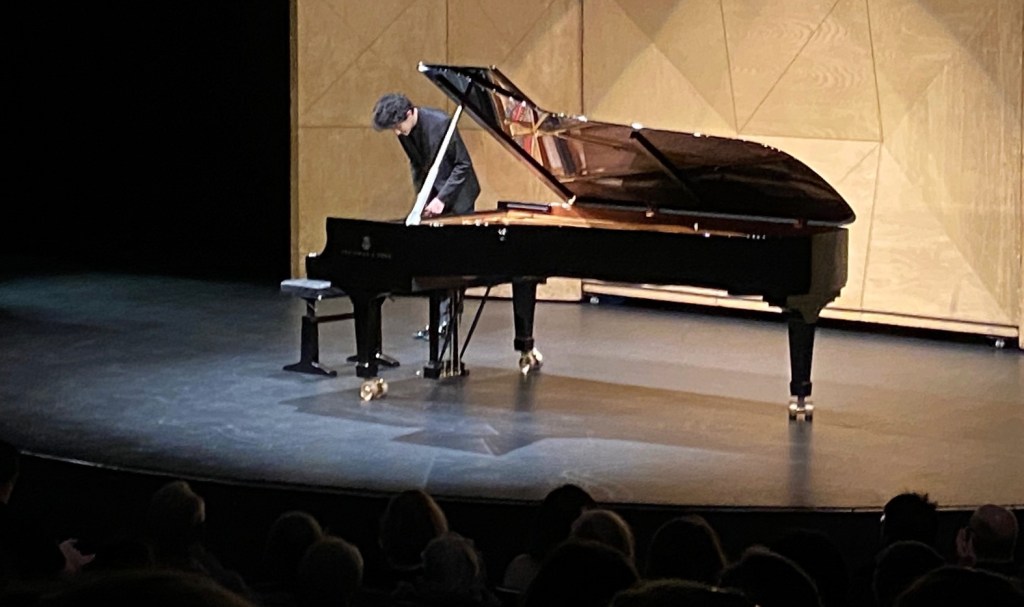
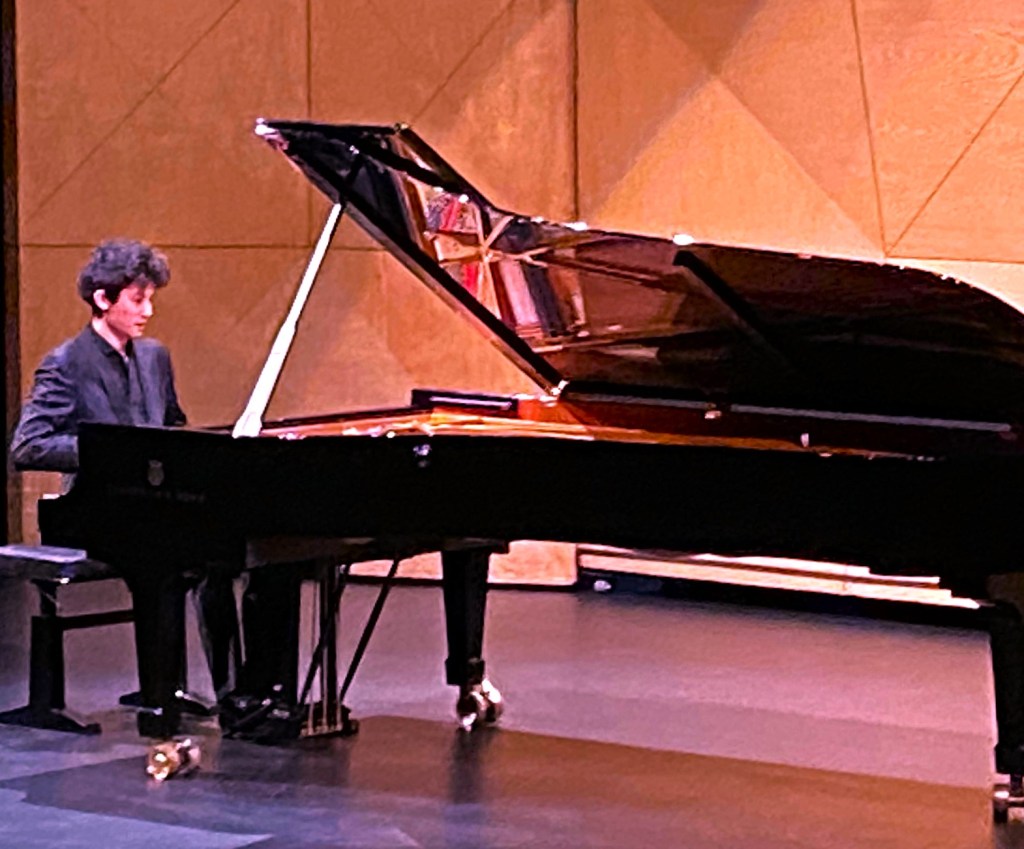
Ale czas siąść. Czas słuchać muzyki, która zaraz popłynie ze sceny. Właśnie wychodzi na nią młodziutki, szczupły pianista, kłania się publiczności, my go witamy brawami, on siada za fortepianem. Otwiera nieco innymi utworami niż się spodziewałem: dwa nokturny Schuberta, nr 1 f-moll, opus 142 i nr 2 As-dur , opus 142.  Nokturn w f-moll smutny, nostalgiczny – jakby adekwatny do deszczowego spaceru na ten koncert. Ten nokturn ukazuje jasno, jak grać będzie. On te klawisze pieści, muska – one mu czule odpowiadają dźwiękiem. Trochę zaskoczony, że pianista siada na krześle, nie na typowej ławeczce fortepianowej, która zdecydowanie nieco ułatwia używanie wszystkich mięśni, w tym tych wokół kręgosłupa, swobody ramion. Jako, że po nokturnach ławeczkę przystawiono do instrumentu, zachodzi podejrzenie, że zwyczajnie nie mogli jej zwyczajnie za kotarami znaleźć … To głupstwo jednak nieistotne.

Po nokturnach Lu gra jeden z wczesnych polonezów (fis moll, op.44) Fryderyka, skomponowany jeszcze w czasie studiowania w Warszawie. Brzmi w nim nieco modny wówczas styl brillant[iii], który w dojrzalszym okresie paryskim Chopin odrzucił.

Uczta zaczyna się jednak po nokturnach i polonezie – przepiękna, romantyczna Ballada nr.4, f-moll, op.52. To już romantyzm bez ogródek – au revoir barok i klasycyzm. Lu zaczął grać pięknie, delikatnie, dźwięki wyważone, pełne. W całkowitej unii z nogami lekko tylko muskającymi pedały. Nie było tu żadnego wbijania tych pedałów, maksymalnego przedłużania lub wyciszania dźwięku. Muzyka płynęła, jak strumień po łące nad ranem lub o zmierzchu. To ballada dość trudna: wiele tematów muzycznych, zmian tempa. Tą balladą kupił już mnie kompletnie. Słuchaj i to wszystko! Nie wypatruj czy gdzieś zauważalny błąd, zgubienie czegoś – słuchaj sercem a nie rozumem. Więc posłuchałem tej rady na szczęście. Po to w końcu na ten koncert poszedłem – słuchać, marzyć i śnić sen muzyki, a nie po to by ten tekścik pisać. Ale nie napisać nic nie mogłem. Nie mogłem, bo Eric Lu mnie oczarował swym stylem delikatnym, ale nie kruchym, nie słabym. To pianista, który na pewno jeszcze jest u początku swej drogi muzycznej. Wszak artysta, który zdecydowanie ma coś do powiedzenia, coś do przekazania słuchaczom. Nie jest zdecydowanie jednym z wielu dobrych pianistów. Słowo ‘dobry’ w ogóle tu nie pasuje. To artysta, który muzykę kocha, czuje. I to się udziela słuchaczowi. Tego typu spotkania muzyczne wykonawcy i odbiorcy, są zawsze wyjątkowe, są przeżyciem emocjonalnym.

W drugiej części grał jeszcze jednego Poloneza (op.71, nr 2) i Nokturn nr1, op.27. Jednak perłą najczystszej bieli była jego Sonata h-moll, op.58, tworzona z przerwami w Nohant w posiadłości George Sand. Iwaszkiewicz opisał ten moment jego życia przeuroczo w swej znanej sztuce[iv], wielokroć wystawianej i filmowanej.

ad endum:

drodzy i mili rodacy w Vancouverze – wspomóżcie zacne i zasłużone bardzo Towarzystwo Chopina w ich marzeniu zakupu koncertowego fortepianu godnego najlepszych pianistów. Po tylu latach ich pracy, tylu koncertach – warto ten prezent im dać w podzięce. Jeśli ktoś może 10 000 tysięcy – fantastycznie; jeśli ktoś może tylko 10 lub 100 – też fantastycznie. Pamiętacie starą średniowieczną bajkę/legendę polską o wdowim grosiku? Czasem te skromne 10 talarków bardziej wartościowe niż te 1000, bo dane z serca i potrzeby ducha. Lubimy tradycję, lubimy historię polską: więc powtórze za Janem Czarnoleskim w jego „Pieśni o spustoszeniu Podola”: dajmy, a najprzód dajmy! Poniżej podaję link do tej zbiórki. Jest tam oryginalna propozycja ‘kupienia’ jednego (lub więcej) klawiszy tego konkretnego fortepianu. Cena klawisza nie jest olbrzymia, ale nie jest też skromna. Dla skromniejszych darczyńców podaję, że można wpłacić każdy ‘wdowi grosik’ bez używając tych klawiszy a robiąc tradycyjną dotację (zwykły przelew lub czek) – kliknij tutaj : Support | The Vancouver Chopin Society. Dla oryginalnej propozycji zakupu ‘klawisza’ (tu donacja jest ustalona specyficzna ceną) link tutaj: Homepage – The Vancouver Chopin Society


[i] The Vancouver Chopin Society | Live classical music concerts in Vancouver area

[ii] siedziba vankuwerskiej Orkiestry Symfonicznej w stylu ‘północno-amerykańskiego baroku’ – uroczy teatr muzyczny przypominający mi trochę ‘bombonierkę’ toruńskiego Teatru im. W. Horzycy

[iii] Styl brillant – Wikipedia, wolna encyklopedia

[iv] „Lato w Nohant”, Jarosław Iwaszkiewicz, napisana w roku 1935/36

Brahms, Schumann and Beethoven in Vancouver

Brahms, Schumann and Beethoven in Vancouver

How do you begin to write your notes about a concert that three days later you still can’t shake off the emotions you were subjected to? Almost physical blows and assaults of the music onto your soul. A music you know so well and heard numerous times! At least you thought you did … Blows delivered not by some enormous pianist, internationally acclaimed, for many years on best stages of the universe … but by a … boy pianist (of course he is an adult, but only just by a thickness of the paper a musical score is printed on)?! I still struggle to find the right ones to describe to you the experience.

Sufficient to say, it proves that there is no musical score or concert that you can just take your seat among the audience and wait for familiar, soothing experience. For bourgeoisie vanity and eloquence. And thank gods for that.

Sunday, 26 of October in Vancouver Playhouse (Queen Elizabeth Theater) concert of Tony Siqi Yun with music of Johannes Brahms (Theme and Variations in D minor, Op.18b); Robert Schumann (Theme and Variations in E-flat major, Wo0 24 or Ghost Variations); by same composer Symphonic Etudes Op.13; Ludwig van Beethoven (Sonata “Appassionata” No.23 in F minor Op. 57); and Ferruccio Busoni (Berceuse from Elegies BV 249) – of the last composer and music I will not write beyond that point. Because … in was beyond the point to have this music played in that concert, sufficient to say in my arrogant opinion. Obviously not shared by the enormously talented pianist, Tony Siqi Yun.

Thanks to YouTube portal I was able to find Tony playing exactly the same Schumann’s Etudes Op.13. That was recorded from earlier concert elsewhere. You can see the physicality and the energy – trust me, but in in Vancouver it erupted like a volcano.

Did he made any mistakes, omissions? How would I know?! There was not a single second one could pay attention to the score – the pianist consumed you wholly, not letting go for a second.

I remember only once such a wonderful confusion while listening to a pianist. That was very, very long time ago. The year 1980, X International Chopin Festival, biggest piano competition in the world. The pianist was Ivo Pogorelić from Yugoslavia (today Serbia). He was so different than other pianista that the (at that time to the extreme) very conservative Jury did not awarded him any prize (the public did). I remember being taken by Pogorelić very much. Of course a bit jealous, too, LOL – he was exactly my age! But was very glad that great pianist (former finalist of that Competition) Martha Argerich felt the same. To the chagrin of the ultra-orthodox Jan Ekiert, who like many of his generation, saw Chopin more as a monument and Polish patriotic antiquity than the true romantic boy and young man, who had nothing to do with the official portrait/gorset assigned to him.

https://ivopogorelich.com/portfolio/home/: Brahms, Schumann and Beethoven in Vancouver

Lonsdale Avenue przy Quay w Północnym Vancouverze i Polski Festiwal

Lonsdale Avenue przy Quay w Północnym Vancouverze i Polski Festiwal

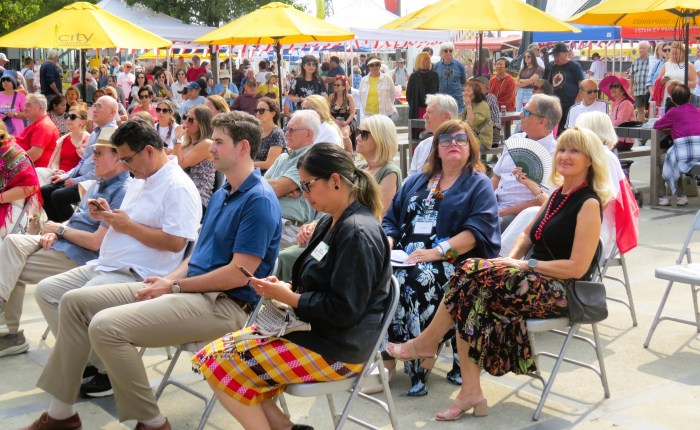
Od jedenastu już lat w prominentnym miejscu Północnego Vancouveru, u początków Lonsdale Avenue na nadbrzeżnych tarasach widokowych, organizowany jest Polski Festiwal. Od samego zarania robi to organizacja polonijna „Belweder” pod kierownictwem pani Urszuli Sulińskiej[i]. W latach ostatnich wspomaga ją w organizacji tego Festiwalu pani Iza Sobieska. Udział biorą też zacne członkinie Federacji Polek, Grupa Taneczna „Polonez”, organizacja „Barka” o charakterze pomocowym dla osób z uzależnieniami. Spotkałem z radością Patrika May – Kanadyjczyka o ‘polskim sercu’, wielkiego admiratora muzyki Szopena i organizatora Vancouver Chopin Society[ii].

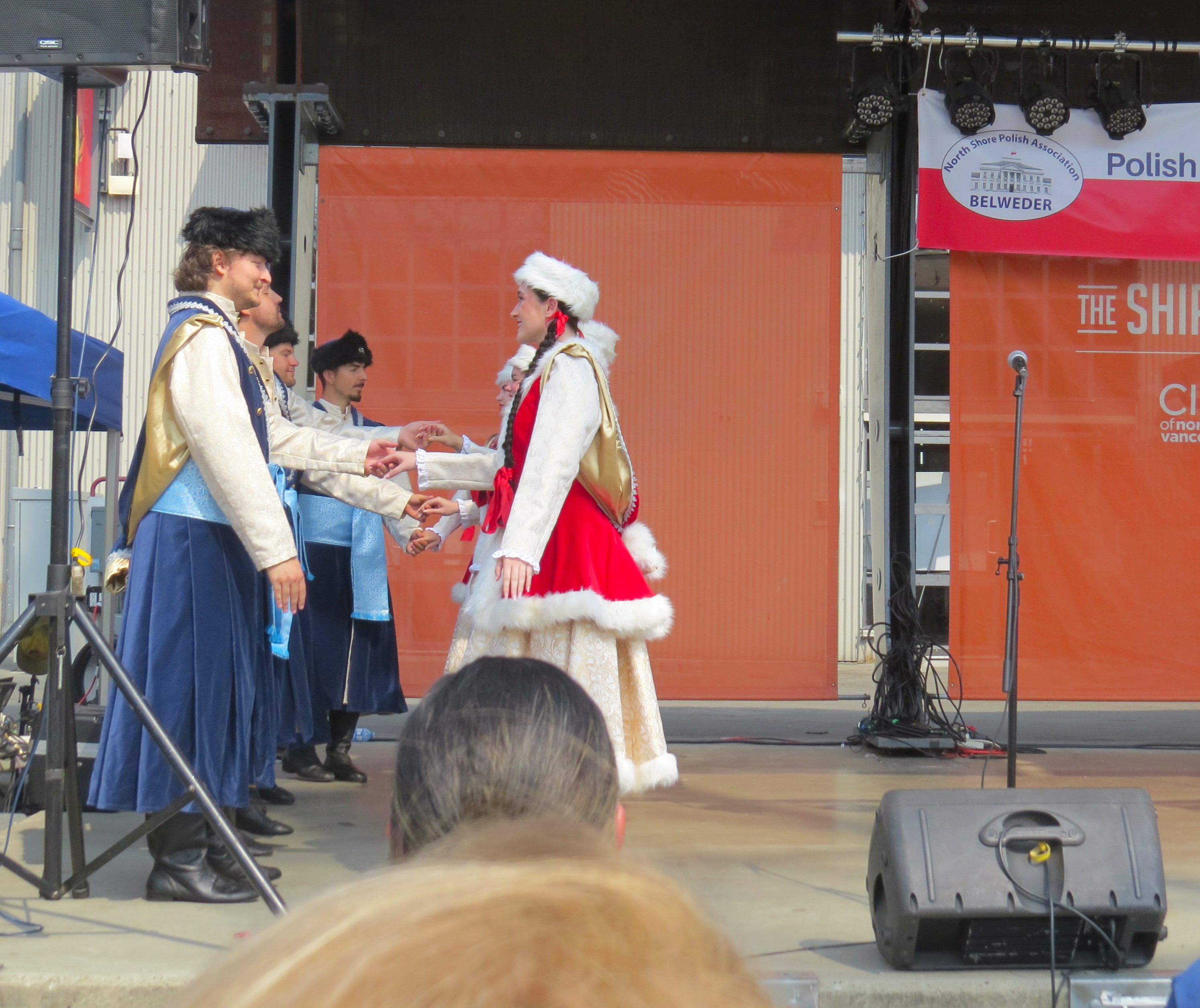
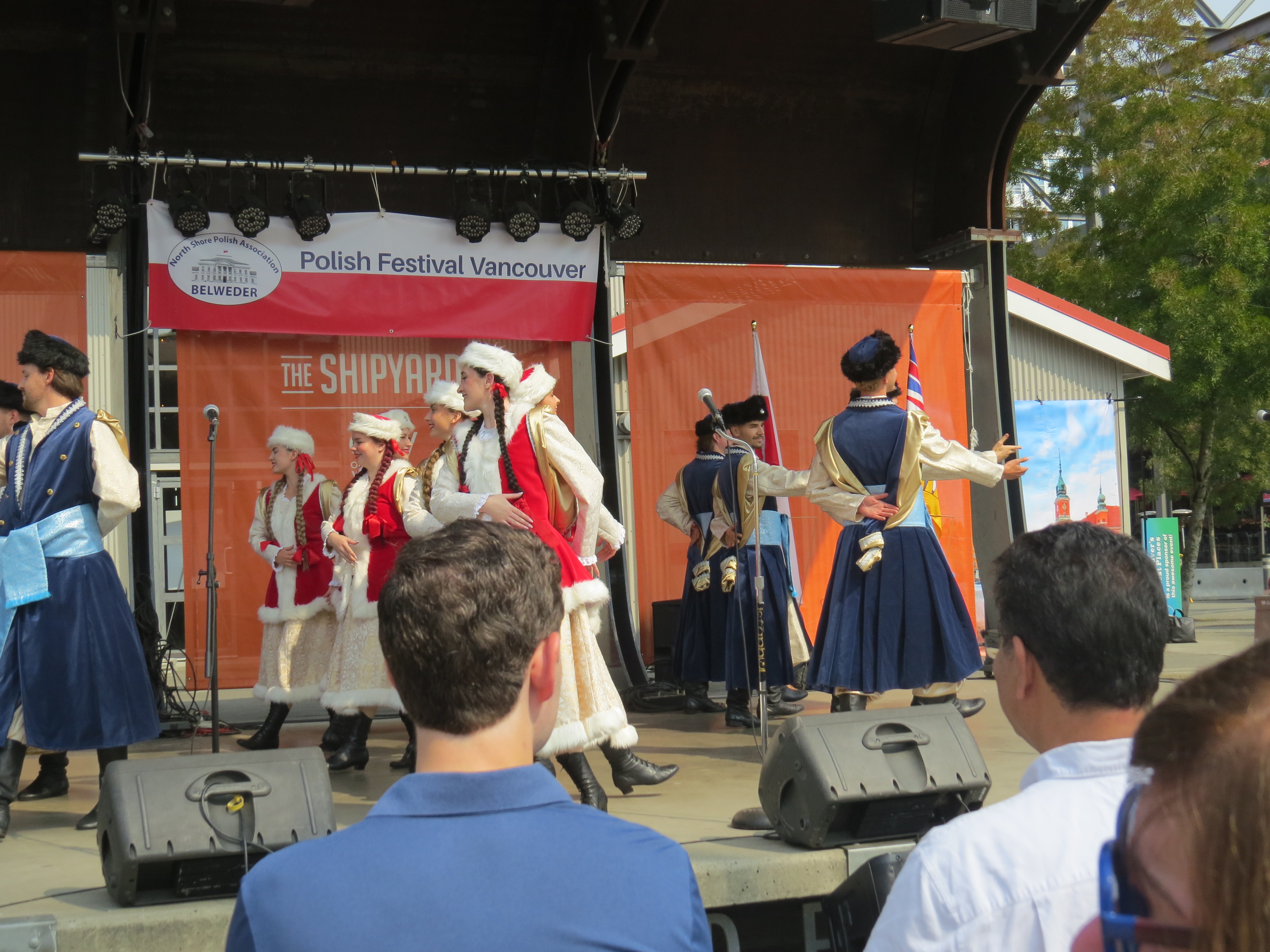
Bardzo udanym było włączenie do występów świetnego bułgarskiego zespołu tanecznego, który scenę ożywił w sposób znacząco lepszy niż zespól polonijny „Polonez”. Jeśli radzić mogę, to bym sugerował, aby „Polonez” nie zawsze i nie na każdej scenie tańczył … poloneza. Ten prosty z pozoru tylko taniec jest w sumie bardzo trudny dla małych scen i traci wówczas swoje dostojeństwo i powagę. O wiele lepiej by wypadł mazur, kujawiak czy nawet krakowiak. Każdy z tych tańców mógłby być tańczony nawet w kontuszach, jakie użyto dla niefortunnego poloneza.

Wśród zaproszonych gości na scenie przemawiali Mayor North Vancouver i pani Konsul Generalna RP. Potem wystąpił miły młody prezes Kongresu Polonii Kanadyjskiej oddziału BC. Na końcu kilka słów powiedziałem i ja w skrócie przypominając o znaczących osiągnięciach twórców i artystów polskich zamieszkałych w ostatnich dziesięcioleciach w Greater Vancouver i ich wkładzie dla Polski i Kanady.

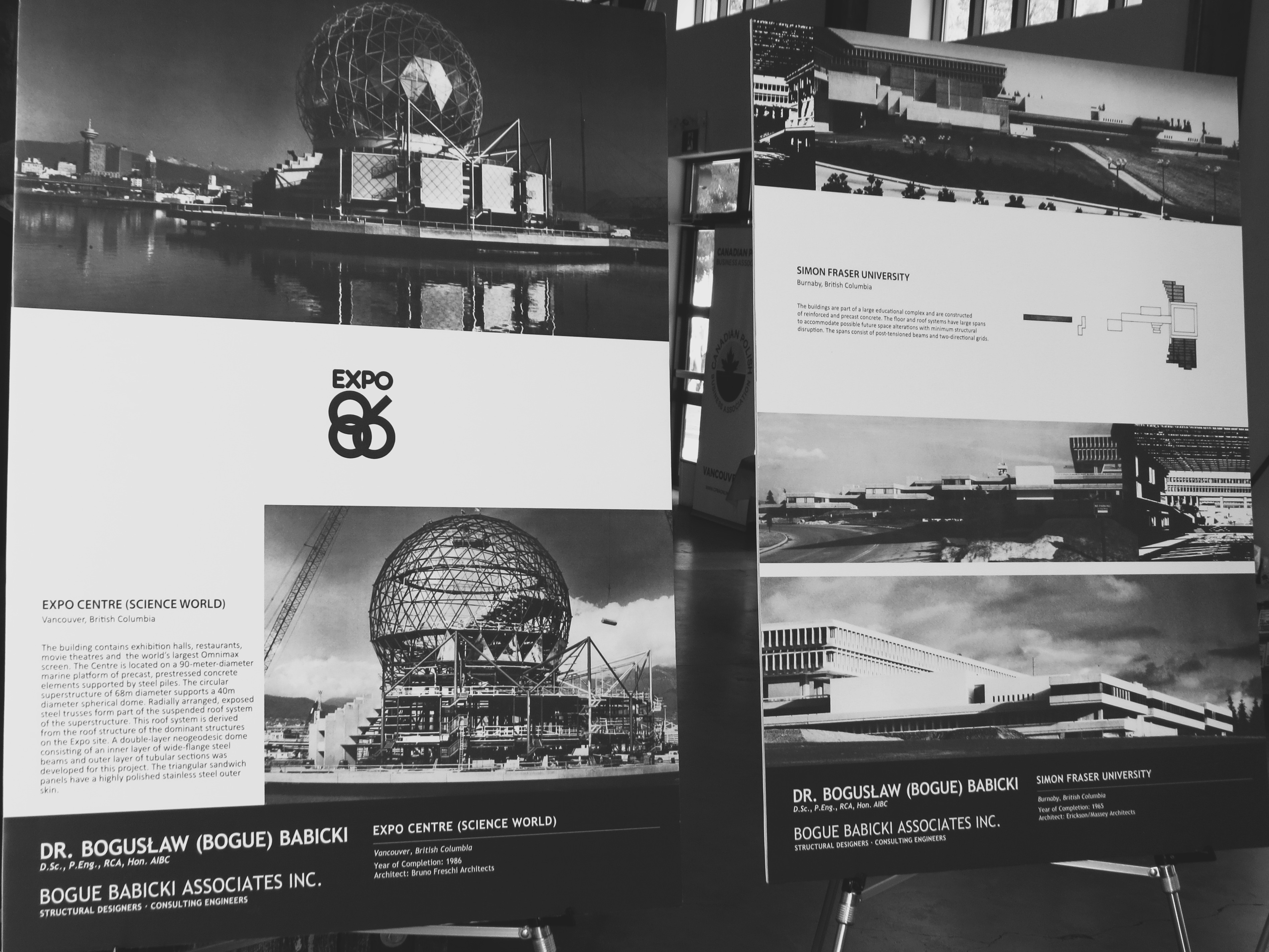
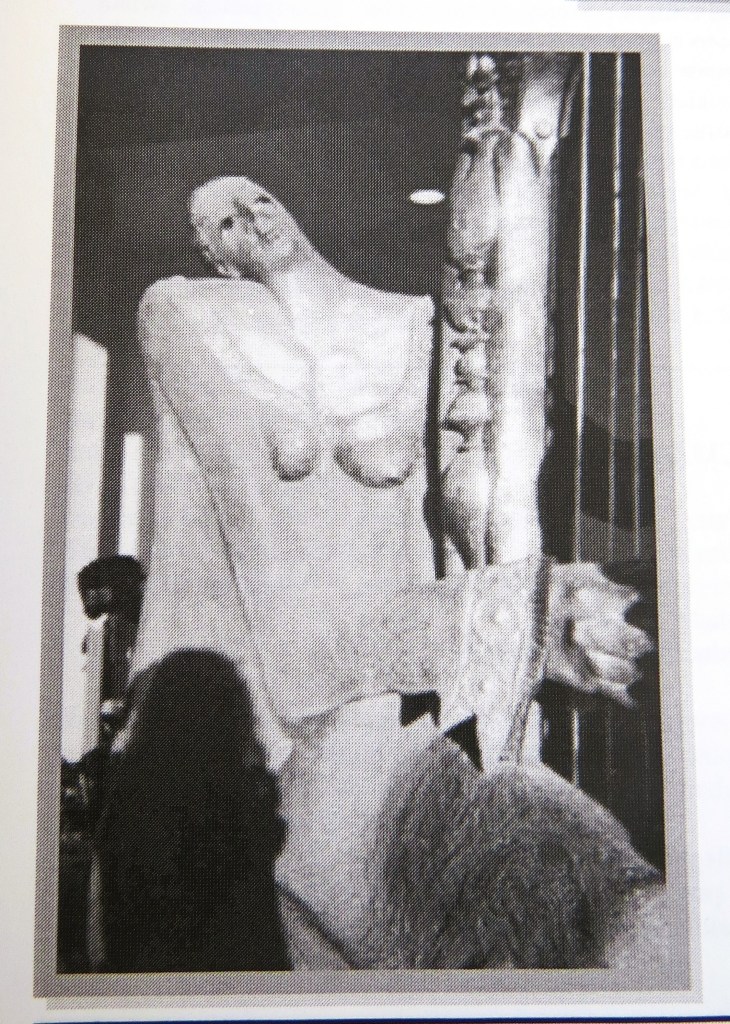
A to włąśnie rzeżba ‘Raphsody of the North’ Ryszarda Wojciechowskiego wykonana na zamówienie Rady Miejskiej North Vancouver. Stała kiedyś tuż nad miejscem, gdzie był Festiwal. Potem przeniesiono ją nieco dalej do budynku teatru na Lonsdale -przeszedłem całą tą ulicę i rzeźby już nigdzie nie widziałem.

A był znaczny, w każdej bodaj dziedzinie: kompozytorzy (Ryszard Wrzaskała), rzeźbiarze (Ryszard Wojciechowski); poeci (Grażyna Zambrzycka, Bogdan Czaykowski, Andrzej Busza, piszący te słowa Bogumił Pacak-Gamalski, Tomasz Michalak, Karolina Piotrowska, Ryszard Tylman, w mniejszej może skali Piotr Siedlanowski, Leszek Buczyłko, Ryszard Kryłowski, Edward Dornia, świetny tłumacz współczesnej literatury irlandzkiej Roman Sabo-Walsh; teatr (aktorzy i reżyserzy –  Jerzy Kopczewski, Anna Gradowska, Elbieta Kozłowska, Anna Ślązkiewicz, Julia Siedlanowska, Jerzy Koplinger, a zdecydowanie największe zasługi dla polskiej sceny teatralnej w Vancouverze należą się panu Czumie, aktorowi z bardzo popularnego serialu telewizyjnego „Beachcombers”, który przejął prowadzenia teatru, nota bene synowi bohaterskiego dowódcy obrony Warszawy w 1939, gen. Waleriana Czumy; malarze (Andrzej Brakoniecki, Dariusz Bebel, Ryszard Kiełb, Wiesław Repnicki; wydawnictwa: Rocznik Twórczości „Strumień” i piszącego te słowa redaktora naczelnego tego rocznika, tygodniki Andrzeja Jara, Elżbiety Kozar, Andrzeja Manowskiego.

Anna Gradowska była nade wszystko znawcą historii sztuki (była założycielką Wydziału Sztuk Pięknych na Uniwerytecie w Caracas w Wenezueli) i publikowała na łamach „Strumienia” cykl esejów o sztukach wizualnych.  Nie wolno też pominąć pracy i wydanych opracowań historycznych profesor Marri Jarochowskiej. Olbrzymią w tym temacie propagowania i rozwijania polskiej kultury miała organizacja ‘Pod skrzydłami Pegaza’ prowadzona przez Krystynę Połubińską; oraz powstała trochę później i równolegle z późniejszą działalnością grupy pegazowskiej działalność pani Ireny Gostomskiej i jej Grupy „Epizod”.  Dużą pomoc i wsparcie w prowadzenie wówczas tej całej działalności i aktywności kulturowej mieliśmy zawsze od kolejnych Konsuli Generalnych RP. W tym miejscu składam im wszystkim podziękowanie. Bliski współpracownik redakcji “Strumienia” z niezastąpiona edytorką, Ireną – jeden z ojców polskiego dezajnu (design), były rektor ASP w Warszawie – Andrzej Wróblewski. Tobie i Irence składam osobne i wielkie podziękowanie za rady, wspaniałomyślność i cierpliwość.

Mógłbym wyciągnąć ze szpargałów mojego własnego archiwum wiele jeszcze nazwisk i wydarzeń. Osób i grup, które utkały bardzo bogatą tkaninę kultury polskiej i jej osiągnięć w tym pięknym mieście nad Pacyfikiem. To by już poza oryginalne ramy tego tekstu zbytnio się rozlało. A i czasu już dla tych tematów kronikarskich nie mam. Pewnie ostatni raz na te tematy piszę. Ale warto wiedzieć skąd przyszliśmy i co zrobiliśmy.  Bo wbrew pozorom to nie spiże, nie stan kont bankowych i ilość nieruchomości tworzy najtrwalsze fundamenty historii człowieka i grup ludzkich – tworzy je Kultura, ta wyższa, z dużej litery.                                                                                                                                                                                                                                                                                                                                                                                                                                                                                                                                                                                                                                                                   


[i] Home | belweder

[ii] The Vancouver Chopin Society | Live classical music concerts in Vancouver area

Vancouver Chopin Society concert at VSO School for Young Musicians

Vancouver Chopin Society concert at VSO School for Young Musicians

What an interesting concert it was. Not often do I go listening to very young (I mean – kids, not even late teens) pupils of a musical school. Sometime maybe to very young prodigy – such was the case of Jan Lisiecki[i] (Jas – as I still call him, despite his international stardom), but not to entire group of really young kids. Remember going to recitals in an old Warsaw Conservatory of Music on Oczko Street or Vancouver Conservatory of Music – but they were young students in their late teens or early twenties, not kids by any means.

Truth being told, I was looking mostly to the second part with Zbigniew Raubo, whom I didn’t listen to for a long time. I mean in person, on stage, not from electronic recording.

But it was a very nice and happy surprise. They all sort of knew what they were doing by the keyboard, LOL. I’m sure they had to overcome a huge anxiety being in front of relatively big audience full of their teachers, parents, and some famous piano players. Part of their studies is certainly guidance for avoiding stage fright, but still – stage fright is a powerful foe.

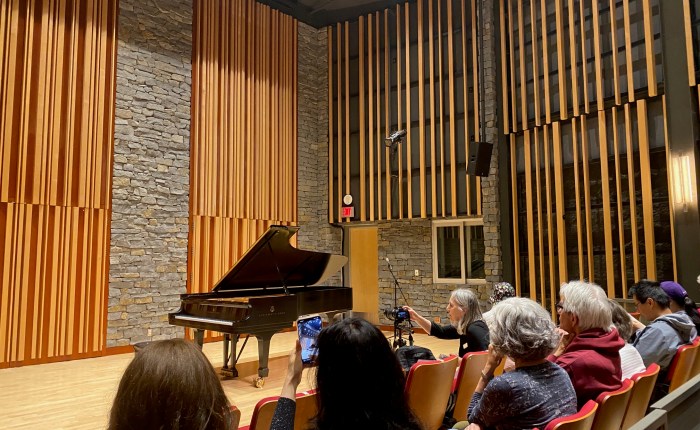
The School concert hall (on the back of the proper VSO “Orpheum” building) is very nicely designed. It is more long then wide and instead of acoustic paneling it plays on the original shape of the room. To assist the travelling of the sound and avoid echo (horror!) large wooden beams on the old masonry walls were attached aiding not only the harmony of sound, but also a pleasant visual effect. I would think of modest seating capacity circa 150 seats, maybe with added rows of chairs up to 200.

Of course it would be wrong to write a typical review and trying to be smart by pointing to minor mistakes, imperfections of the young students playing, especially if all of them were well prepared. Therefore these are just going to be general notes of what they played and overall impression how they did it. After all, music is just another way of writing a story. It just uses different alphabet, instead of letters it writes in notes; instead of grammar rules and signs, it uses its own grammar: crescenda, flats (skewed letter of ‘b’ ha ha), sharps (#), and on top of that there is different annotating for major and minor scale. Not to mention that composers sometime make their own personal written advice how a piece should be played. But enough of that, It is not a beginners course of music.

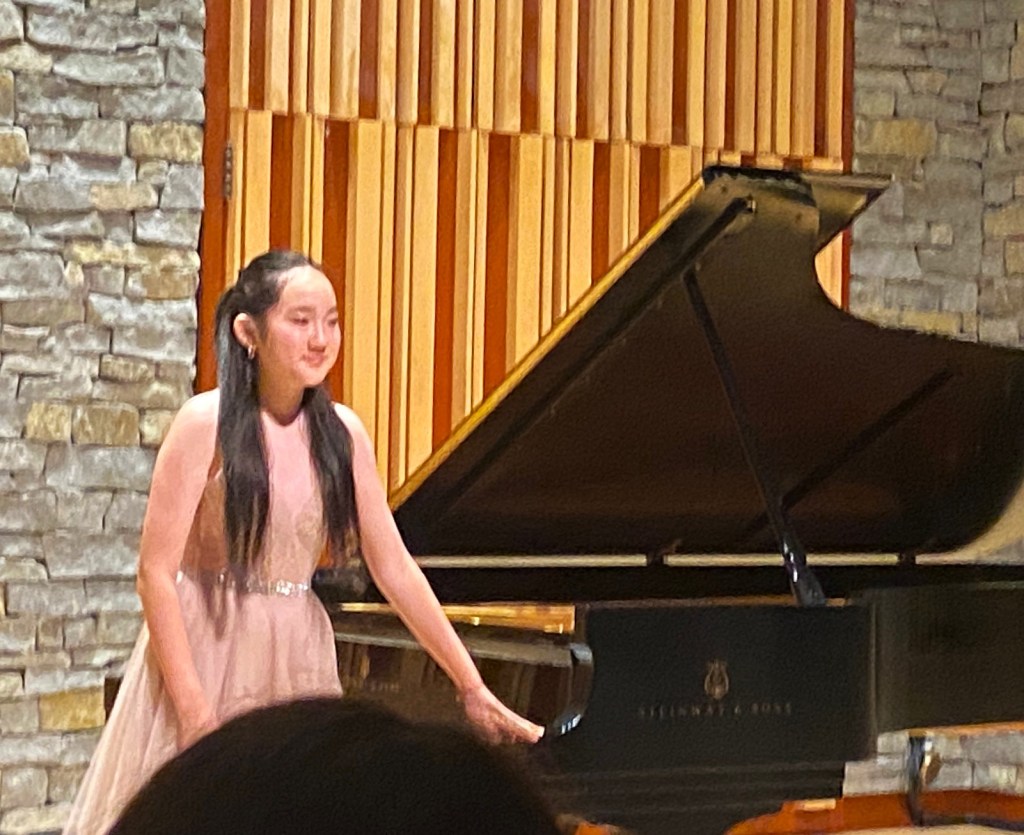
Sophie Meng was very first to perform, a diminutive frame of very young girl, perhaps the youngest of them all. The huge Steinway piano looked like a black mountain in front of her light figure – impenetrable and towering. I observed her hands as their traversed the keyboard and was wondering how much she has to stretched them to cover an octave! That observation leads to another: small-frame pianists play with their hands on the keyboard, full-sized (what a terrible description, LOL) use their fingers, which must be less exhausting and tiring. In more grueling concerts you will sometime find pianist submerging their swollen hands in icy water to remedy their muscle and joint stress.

She played very pleasant a Mazurka in C Major, Op.24. I let myself follow her play into the dream: like she was not playing – she was running on some green field with young Frycek (diminutive of Frederic).  That was a nice vision a young Chopin would certainly approve of. What was particularly worth noticing, was the way she kept a perfect harmony by keeping the main musical theme of the composition always in the background, always present. Even if not played at that moment – it still lingered in your memory.

Charlotte Deng played Scherzo in B-flat minor, Op. 31. Herself looking like a cherub, she easily displayed a maturity that surprised me, perhaps a dose of self confidence? These could be uplifting or dangerous emotions for a very young player.

Her physical control of the instrument was visible, as was her aura of confidence. At times maybe the music came a tiny bit too strong, too forte? I smiled – an ‘old hand’ in a body of a youngster. Her posture at the piano, the way she used physically her arms and hands on th keyboard again emanated maturity. Just that the ‘maturity/ was perhaps more a stage performance, not an inner feeling since at moments the music was overplayed on forte. Naturally the true poetic soul[ii] of the music returned fully with the arpeggios. The finale naturally goes back to first section, and was played very well with an elegant coda.

Stephanie Yueyou Liu presented the audience with Waltz in A-flat Major, Op. 34. Her keyboard skills were excellent. At times I thought I am loosing the smoothness of the waltz melody though, as the keyboard skill muted a bit the soul, yet – she re-paid in a very wonderful finale.

Brain Sun played Ballade in G minor, Op. 23.  I felt that he thought very deeply of the structure and meaning of the music he was going to play. Would like to listen to his interpretation once more, as for some reasons his intervals and use of pedals seemed a bit odd – and the full impression escaped me. Fackt that I nonetheless wanted to hear  him again simply meant that I liked it, That’s  easy – and at the very end that is all that matters.

Joshua Kwan played Barcarolle in F-sharp Major, Op.60. His play quickly established very strict control of the instrument, of timing. No rushing, no ‘elongation’ of notes. Smiling to myself, I thought that this guy does not need a metronome on the piano.

Brian Lee in Etude A minor, Op.25.  He would let his right hand in quick passages to overtake, or silenced his left hand leading the subject and tempo. It is a difficult composition for a young player. It provokes almost to fly too high, to shine in it’s sounds. Perhaps in its bravado-like finale it is hard to stress the last notes, as you mind is still overflowing with melodies of previous section. He played with full bravado. I must say that one must admire the guts of very young player (or teacher, who tells him to play it, LOL) choosing it. It is just about the most difficult technically etude Chopin composed. Frederic contemporaries in Paris didn’t like it that much exactly for that reason – for being technically challenging to play.

Thus ended the student’s part. After the intermission we were served full musical dinner with three very different and very popular dishes. Maestro Zbigniew Raubo, s’il vous plait.

               Zbigniew Raubo, although dedicated very much to his teaching of music, is an accomplished concert pianist himself, known to many of the best stages of the world both as a pianist and with an orchestras. He finished Katowice’s[iii] Karol Szymanowski’s Academy of Music, where he later become a pedagogue himself. During his career he took part and received top prizes and distinctions in many European music festivals.

Currently he teaches at the Vancouver Chopin Society associated with VSO School of Music. His partner in the teaching staff there is another great acclaimed Polish pianist Wojciech Świtała and last but not least by any means – young Polish-Swedish[iv] pianist, Carl Petersson.

I will not write a typical review of maestro Raubo concert in 2nd part of that evening. Would be unfair to the young participants – his and his colleagues’ pupils – to even try to draw any comparisons. That was an evening for the young ones. The ‘master class’ of Zbigniew Raubo was a glass of champagne to the audience for showing up to celebrate his students achievements.  Just a list of Chopin’s compositions he presented: Polonaise C-sharp minor, Op.26; Mazurka A-flat Major, Op. 50; Mazurka  C-sharp minor, Op. 50; Nocturne D-flat Major, Op. 27; Waltz A-flat Major, Op. 34, and Polonaise A-flat Major, Op. 53.

Yet, one distinction I must make. Chopin’s music and perhaps hundreds of concerts of his music I have listened to is in a way almost like some familiar songs you sing sometimes to yourself without even noticing it. It become sort of part of your nature, grows on you. Especially if it was a normal part of your very early childhood, when you don’t treat it with reverence, but as something normal, part of the routine. The reverence and deeper understanding of it comes later, as you grow up. It makes it a bit like a emotional but also intellectual luggage, not always very convenient. There are (very rare indeed, thank god) concerts you wish you didn’t buy the tickets for. There are (even more rare, phew!) concerts you just wait for the intermission to … leave and go home such is the disappointment. Because you know so many of the compositions, you heard them so many times. But I still find (not as often as many years ago) musician, who just takes my breath away. It has nothing to do with brilliant playing born out of amazing skills. On some level you expect it, too. No, it is the other part, one beyond the skill of playing. It is capturing the essence of the poetry of particular composition, the emotional part of it. The soul (yes, maybe not all humans have souls – but true art always does, without exemption).

Zbigniew Raubo did it to me with his interpretation of Chopin’s Nocturn in D-flat Major. I can’t remember when, was the last time I was touched by that composition so strongly. Music, like a poem, has a story to tell. At times it is not even the story the composer intended or thought of. No, it is your story, story getting life form as you listen to that music. I heard it that evening, intertwined between notes, phrases, and letters and words. Can’t remember the exact text of the story –  but remember hearing very clearly, as the music was played. Thank you, Zbigniew Raubo.

from top left:

pic. 04 -Patrick May one of the top organizer of Van. Chopin Society; pic. 06 – prof. Wojciech Świtała, famous Polish pianist; last picture – Board of Directors of Van. Chopin Society and from left: W. Świtała, Zbigniew Raubo and last Polish-Swedish pianist Carl Petersson.


[i] Jan Lisiecki – Classical Pianist

[ii] Robert Schumann compared it to ‘Byronic poem’

[iii] the capital of Silesia region in Poland

[iv] born In Lund, Sweden – his parents are Swedish (father) and Polish (mother). Graduated from Danish Royal Academy of Music.

When Drag Queens Celebrate – they do so in style

When Drag Queens Celebrate – they do so in style

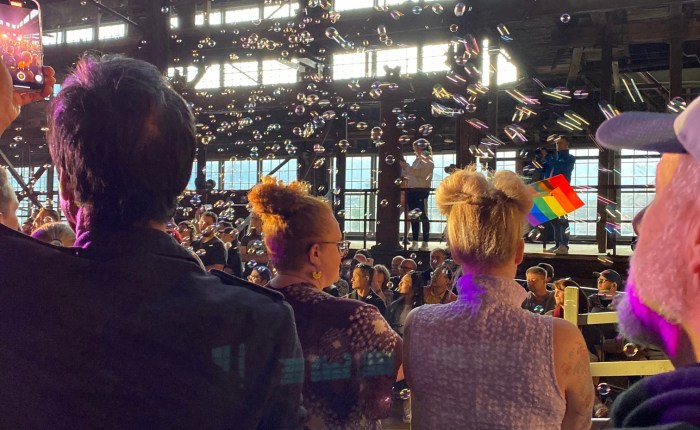
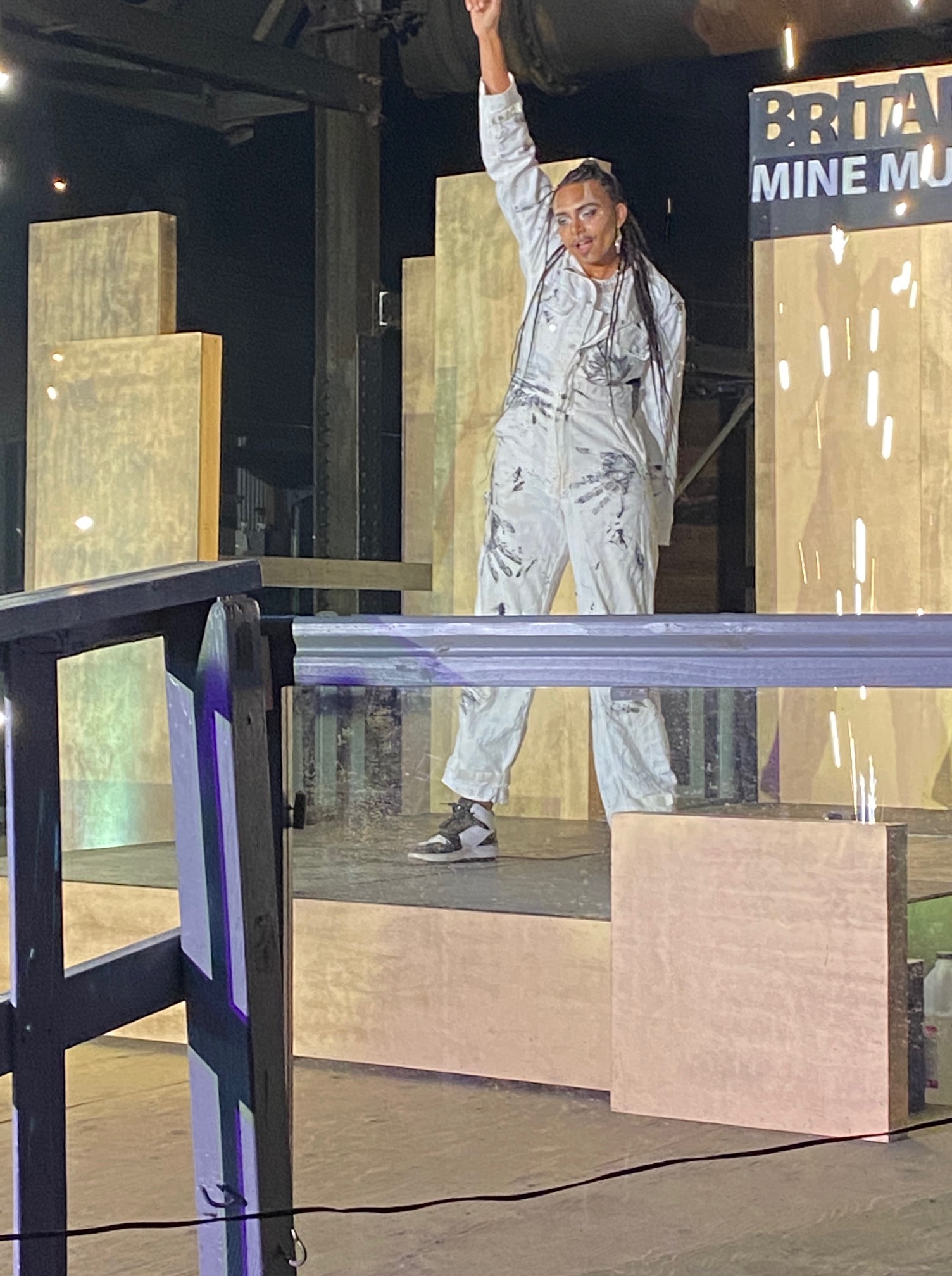
Few days ago in an old mining town of Squamish was a very unusual concert/happening. On the 14 of June Entire group of drag queens descended on that little town. Pandemonium! Out of all the places they choose … an abandoned, old ore mine that used to be the back bone of the community way back when. And it was glorious idea – spooky, very acoustic, with entire walls, where the ore was actually excavated, surrounded us on all sites. I am talking few stores high above the gathering platform for guests and artists. Strategically placed lights shown the intricate colours of the rocks – from most abundant copper, to nickel and even gold. As years gone by, resources dwindled and the mine was closed. Most of you know the town by the characteristic vertical massive mountain-rock used by hiking adeventure-seekers. Most would pass the the town on the way to Whistler. I used to do some hiking in this neighborhood toward the mouth of How Sound.

Definitely I was not wearing high heels during these hikes, LOL. Would have fort hat concert – but my injured leg would not allow me. Found a fun way to stress the drag tradition, LOL. Nothing like an old red Chinese woman dress. I am sure I will find some use for it later, too.

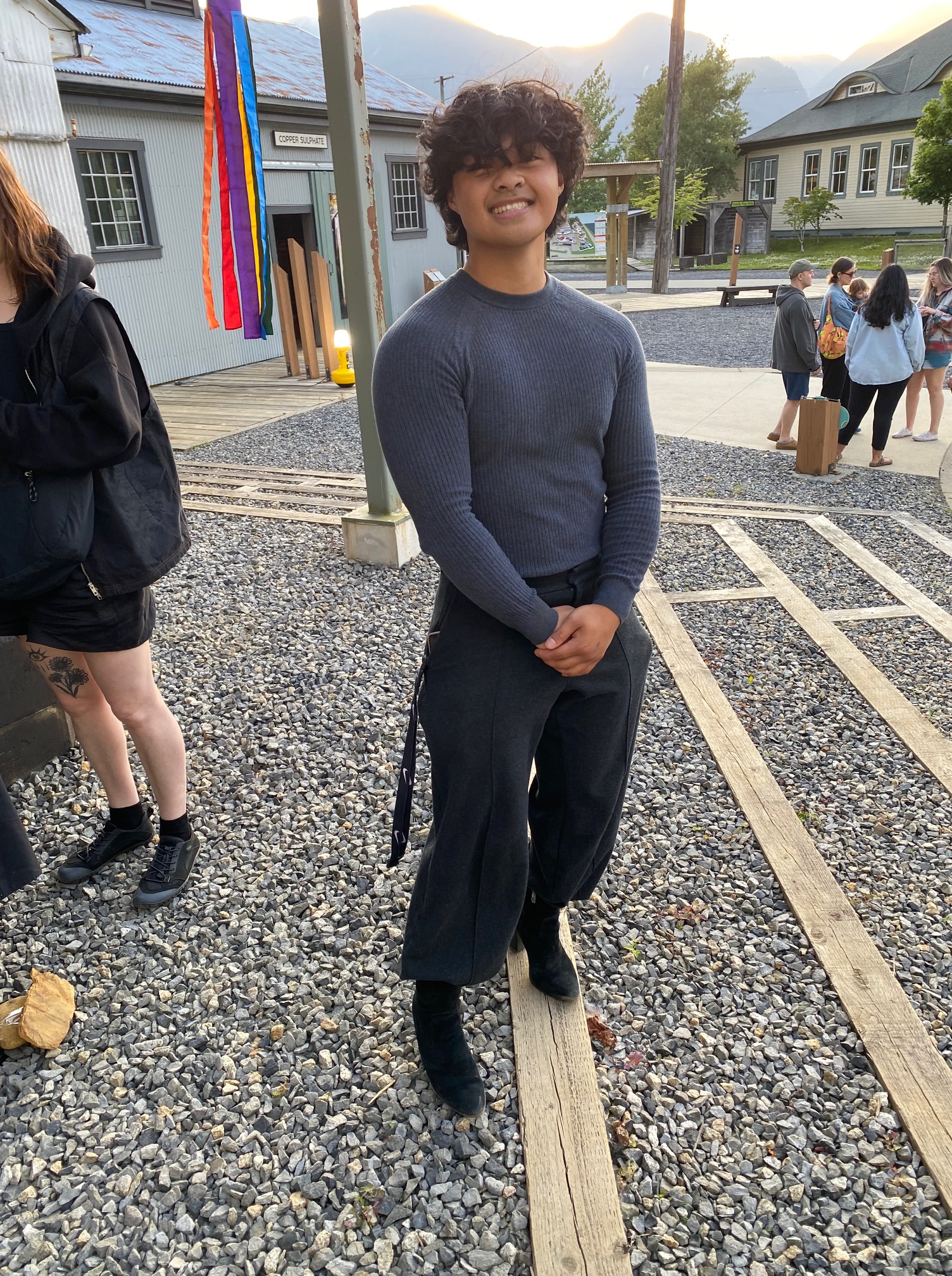
Here is some pictures and some short videos from my YouTube channel.