You all know that a lot of my own poetry a lot of times starts life in one of my notebooks in one of my favored cafes: in Vancouver’s “Melriches”, in New Westminster’s in “Moodswing”, In Halifax in “Trident Bookstore Cafe”, in Warsaw in “Miedzy nami” Cafe on Bracka Street. Sometime in cafes in Frankfurt, Berlin, Hamburg.
Of course between coffees and cakes I get to to know all my baristas and waitresses from these cafes. We talk about things. Sometime we talk about literature or just about life. After all – life is literature, that was not written in a book yet. Not entire life anyway, just a little tidbits of it.
But I have not known yet any barista from such cafe, who was a poet. I mean – I do understand that a lot of people sometime write a short poem here and there – that does not make them a poet, though, just the same as someone, who plays guitar or piano is not neccessarily a composer.
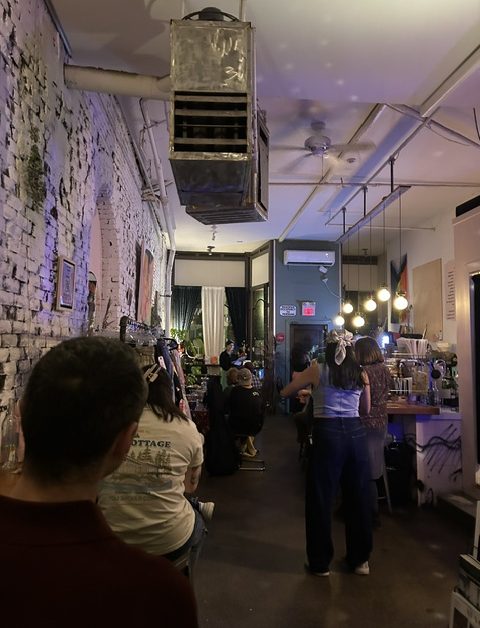
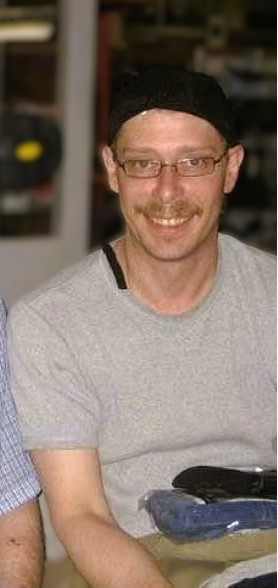
Ricky is my barista in the “Moodswing” cafe on the Front Street in New West. (clik for a link https://www.moodswingbar.com/)
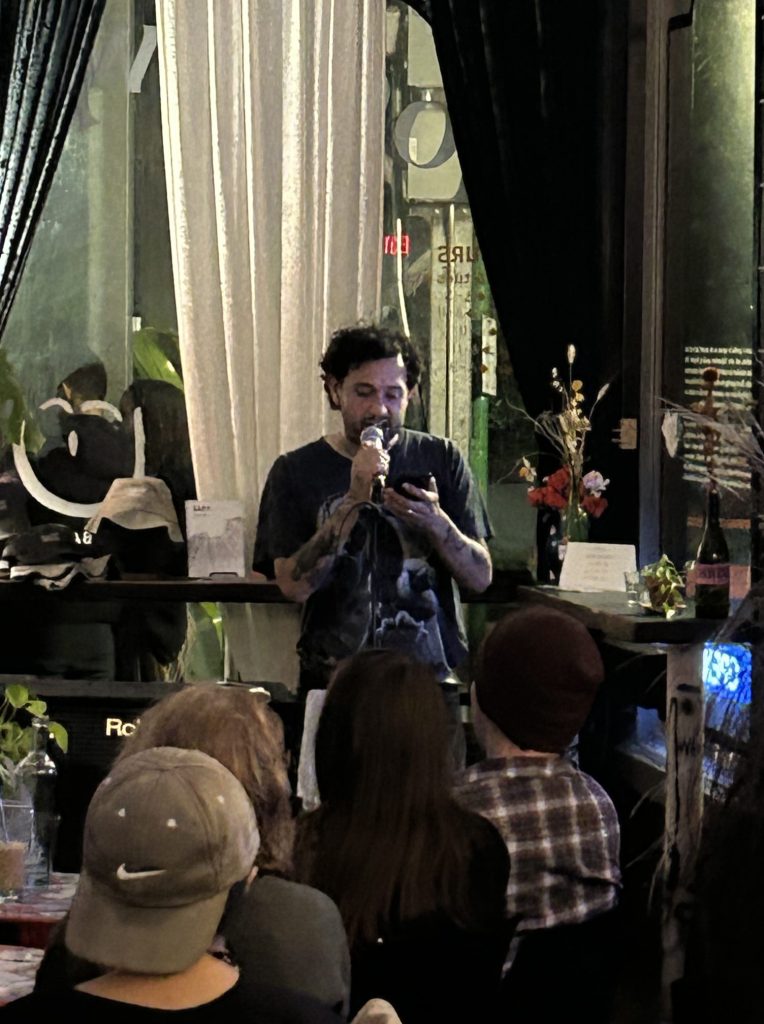
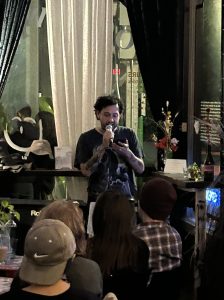
Sometime in these cafe some poets gather and have their poetry slam. Sometimes I partake. Well, the last one was a surprise for me since I didn’t expect it, just came for my daily coffee. At the end I did find on my phone one of my poems and recited it. But … the surprise came later. Ricky Castanedo Laredo, my barista, came to the mike and recited his. I liked it very much. I knew that he is a co-editor in one of local artistic magazines but never suspected that he also publishes his own poetry.
Therefore, ladies and gentlemen, without further ado, welcome to the poetry of Ricky Laredo
turn the world upside down
turn the world upside down press your hands through the pane the pain, unforgiving in it’s weight both in breath and titanic we must be afraid all of the time
unease, real as the slam of car doors in the woods the slice of metal against blood the ache of earthlings looking for a place to die a heaven, a place by the sea a place where I am not afraid all of the time
remembers your grandmothers hands and her last words pressure wash the memory turn the world upside down as the engine outside bellows the keys live in the cupboard should you ever need them
I can’t hold this all in mind like the light you emit that only invites the moths inside I want to erase the path that leads you back to me, and scuffs the traces of my exoskeleton
turn the world upside down I hope I don’t have enough time to do that for you to stabilize the illusion before they wipe the footage
shelf
I wanted a shelf for perdition for all the lint from my pocket a resting place from transition like keys and debt and death who’s lumbering outside? who peers through the window? we are surrounded every day you leave through the back door you bend out of frame wired like wind through the house at night I see you galloping proving me wrong for the last time yearning under darkness
Walks into yesterdays. Most of my walks lead to trails of the past. Truly, these are the only remnants of familiar vistas, touches, smells and shapes. I go through city parks and kick rotten molds of brown and yellow leafs. Maybe some zephyr will still rise them up – once in the air they will start again whirling round and round: let them feel the fresh air so different from the decayed air of autumn, be full of promise. Just yesterday they were still green, vibrating on the tiny branches of the trunks of their home tree. They rustled in unison with the flutes and clarinets of birds, sojourning on tree branches.
The autumn wind chased me from home, too. It led me to funny memories of my second happiest day of my life: the day of our wedding. The second, because the first one happened years earlier, when I saw you the very first time. A little gay pub, right by the bridge on 14 Street in Calgary. It was a slow evening. I sat on one end by the bar and two guys were sitting at the other end. No one else. I was overtaken by his face and kept looking at him. The other guy finally spoke to me: let me introduce you to my brother, his name is John. That was it. Never let him off my sight until he died in my arms decades later. It truly is just magical how you can recognize a soul mate right away, when you are lucky enough to meet him.
Years later we got formally married in Surrey. I wasn’t particularly excited about that ceremony. Was a bit angry at society that we couldn’t do it in the 80ties, although Canada truly was the first country to introduce (Holland, for procedural reasons, was able to beat us with their first official marriage license – ours didn’t pass the parliamentary procedures in time to be officially first, and took the formal second place in the world) marriage equality. Therefore I didn’t want the ceremony to overshadow our union that existed for many years already. But truth to be told: I was overtaken with emotions, when I had to say ‘yes’ to the City Clerk in front of my family, John’s family and so many friends. That was magical.
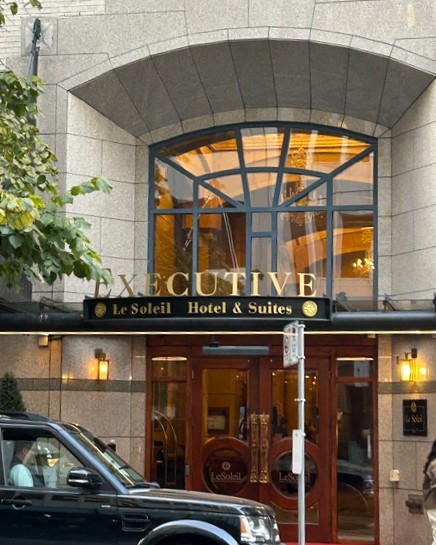
Right after our wedding we were send off by our families to special, beautiful boutique hotel right in centre of Downtown Vancouver, steps from Art Gallery on Robson.
So the autumn wind chased me today to that hotel. Our formal first night as a formally married couple happened there. It didn’t dampen or made less important our first meeting and years of being together. It made it somehow stronger, if possible.
After that I walked to our Davie Street through the Nelson Park and the little enchanted walkway on Mole Hill. Was I sad at times? I am sad and happy all the time. It is just the way it is. It took me a while to get to the point of not being just sad all the time, of actually despising being alive. I don’t cling to it, to that life of mine, but I don’t detest it anymore. I have learnt to love Love. From songs, from poems, movies, from observing couples walking together holding hands.
We walk through galleries of life:
a picture on the wall here,
a bust of lovely youth there.
We enter concert halls of life:
a longing cry of violin here,
bravado of mature pianist there.
What do we do at night,
between long lonely hours
from crimson dusk to pinky dawn?
We dream of kiss, of love.
We wait in our nightly sleep
for a white dove to sit on our pillow.
A dove that brings a song
of upheavals and song of peace.
Song dreamt of by cosmic
choir of see-trough angels,
who cry and rejoice in unison
For such is Cosmos: a star is born
when a star dies.
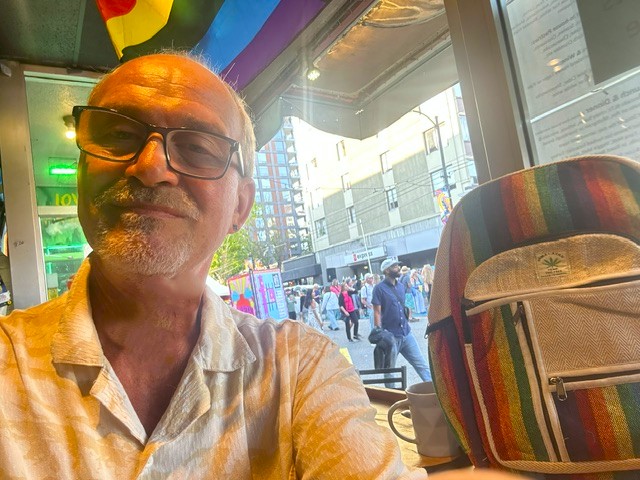
On y way back home I have stopped for my cup of Americano in ‘my’ café ‘Moodswing’ on Front Street in New Westminster. My second home, so to speak. A places where many my poems were written, many books read.
I was at first a bit disappointed: the narrow room was full of people. After searching a little bit, I have found a spot to sit right by the wall, by narrow shelf that can hold a cup. As I was sitting and looking through my back for my wallet, so I can go and order at least my coffee, Ricky the co-owner arrived with my hot coffee the way I like. Nice gesture, since I didn’t have to go through the throng to the ordering spot (there is no table service in there if you order just the coffee, which suits me fine) for it. A kind gesture, knowing that he must be very busy.
I thought it was some sort of meeting that happens there from time to time. But next thing I see there is a woman reciting poetry, than a young fellow goes to the mike and does the same. Than Ricky goes there himself and recites his poem! For all these months I was sitting there writing my things and our typical talks – he never mentioned that he writes poetry, too! Later I gave him a verbal lashing for hiding it from me, LOL. He promised me to show me more and I probably will publish it here, on my blog.
So, as it happens it was a poetry slam. I just never noticed any info about it – I hardly ever read the board with announcements. Just like to have small chats, drink my coffee and write in my notebook He asked me if I will read something mine. Didn’t have any with me, but than remember that I can search on my phone my blog and found something there. It was probably the very first time I read publicly my poem from … my phone screen, LOL. How modern, ha ha ha. Of course the first in English that I found and the one I read was rather long and difficult one, full of historical parables to of Hannibal and Alexander the Great, all dedicated to French genius Andre Gide. Hopefully it didn’t look like I was a pompous ass.
Below is the poem dedicated to Andre Gide.
Winter time in a small village in Pyrenees.
Night comes quickly and darkness covers
the valleys and peaks. Suddenly, the windows
off a small stony church lights up in delicate
orange glow. From the top of the church steeple
comes the song of its bells: big bam! Big bam!
big!, big! big!Bam! Bam! Bam! Baaaam-mmm!
The air vibrates with each tone of the big bell
and sends bronze-coloured sounds to the valleys.
Archangel Michael blows into long, golden trumpet.
The music envelopes the meadows, climbs up the hills.
The call of God, the call of the Shepherd:
come and be enlighten in the mystery of life
and promise of death merciful that claims us all.
They run – the tired travelers, the herds of goats.
They cry and hope, as the trumpet sounds again
and dies suddenly like the last drop of now empty goblet.
The church becomes a masjid and archangel becomes muezzin,
that intones to all:Allāhu ʾAkbar. In Pyrenees Hannibal’s army
stop their march and rise their tusks and trunks: they sense the pitch
of the hymn and the psalm as the far flung peaks of Alps slowly
cover the church, the mosque and streams in the valleys.
The curtain call of History. Birth and death of Love.
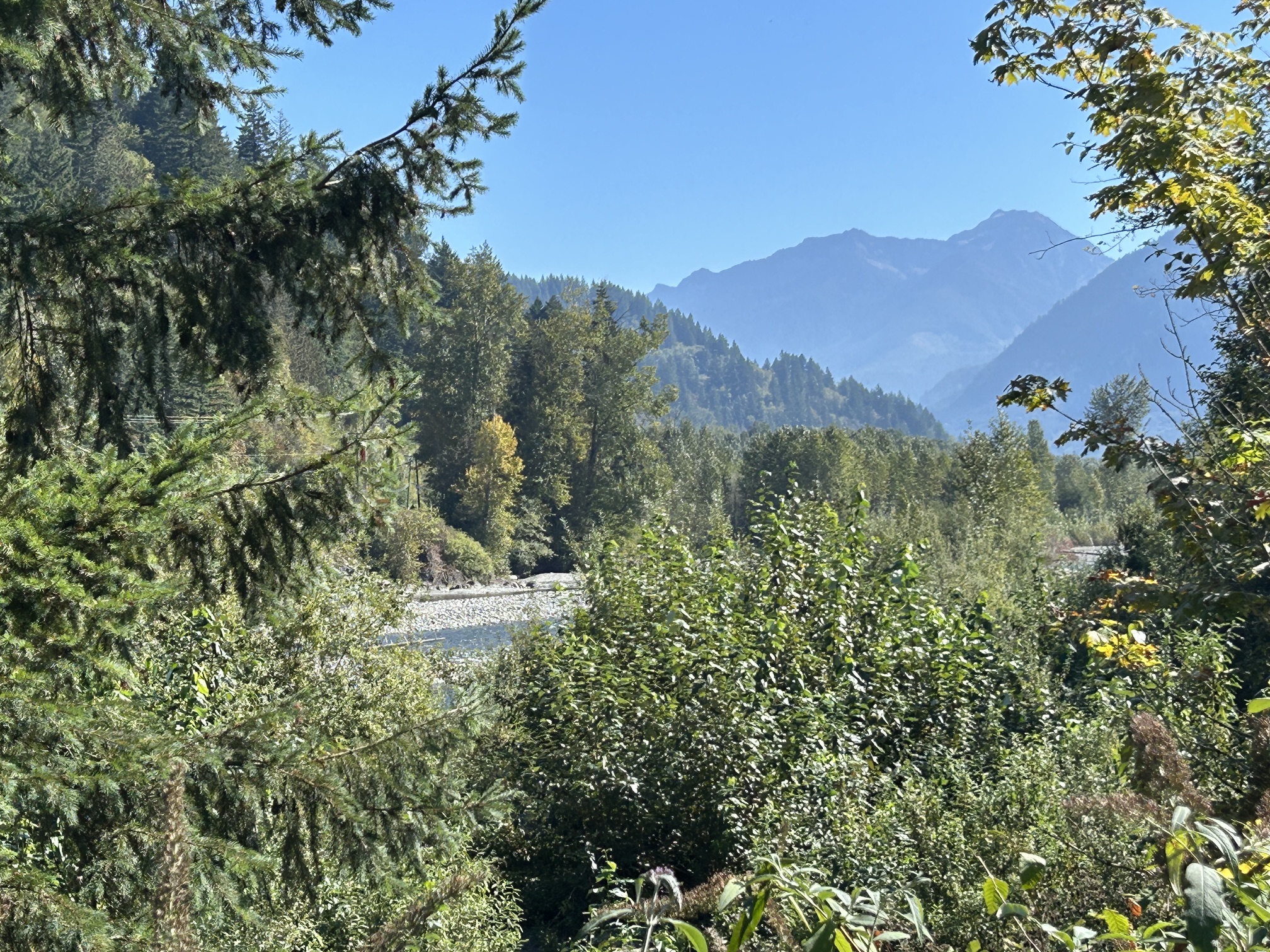
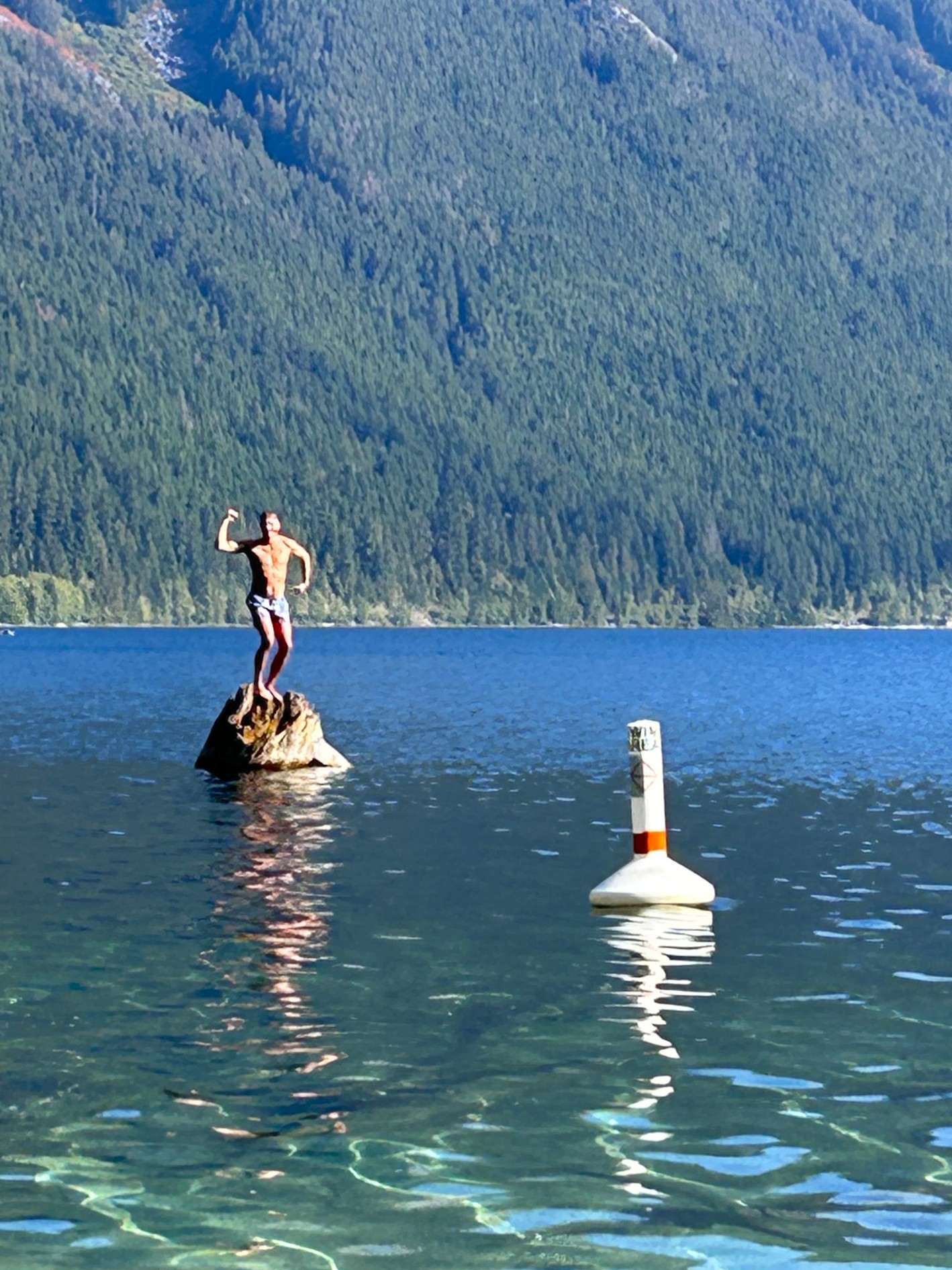
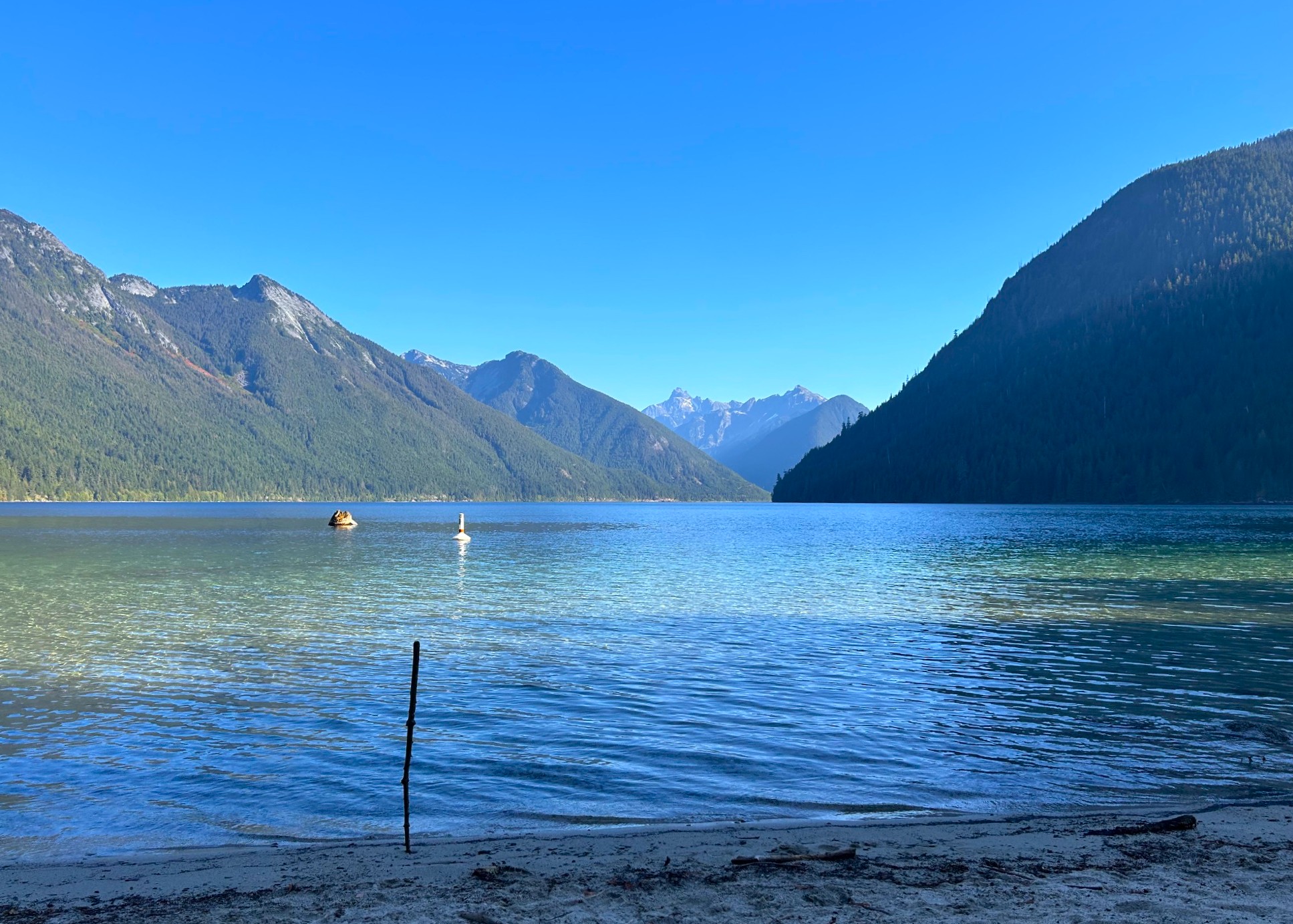
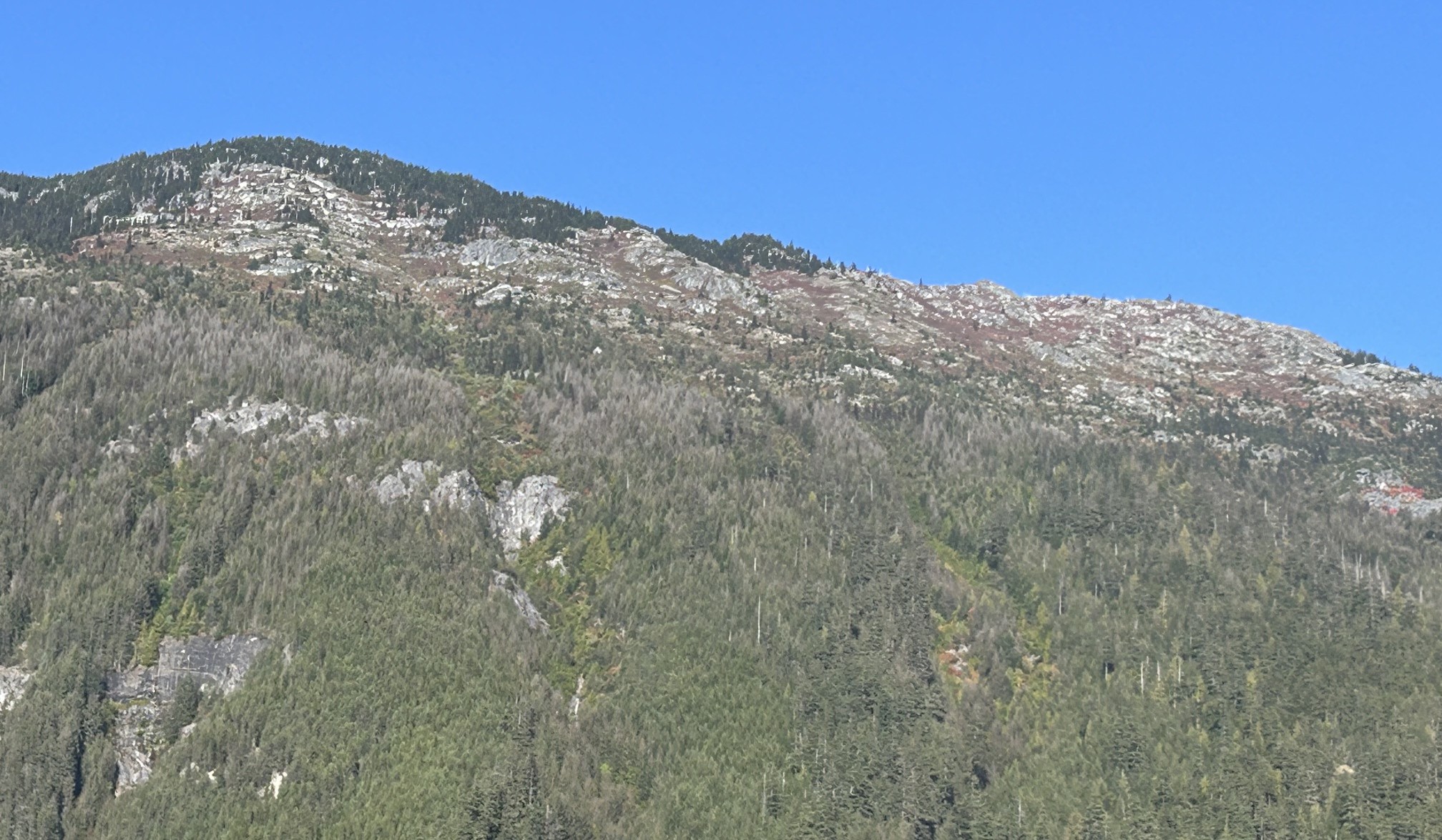
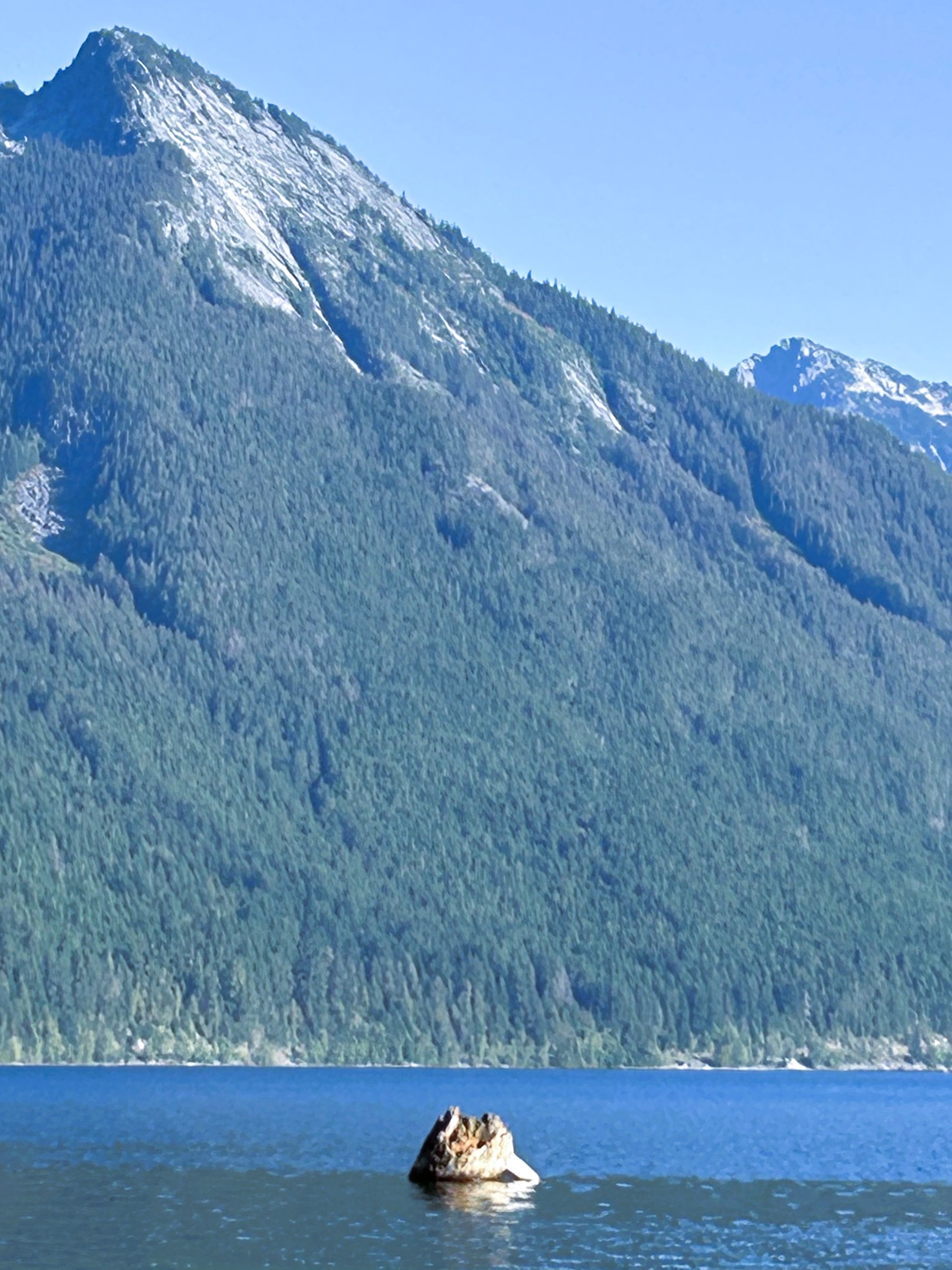
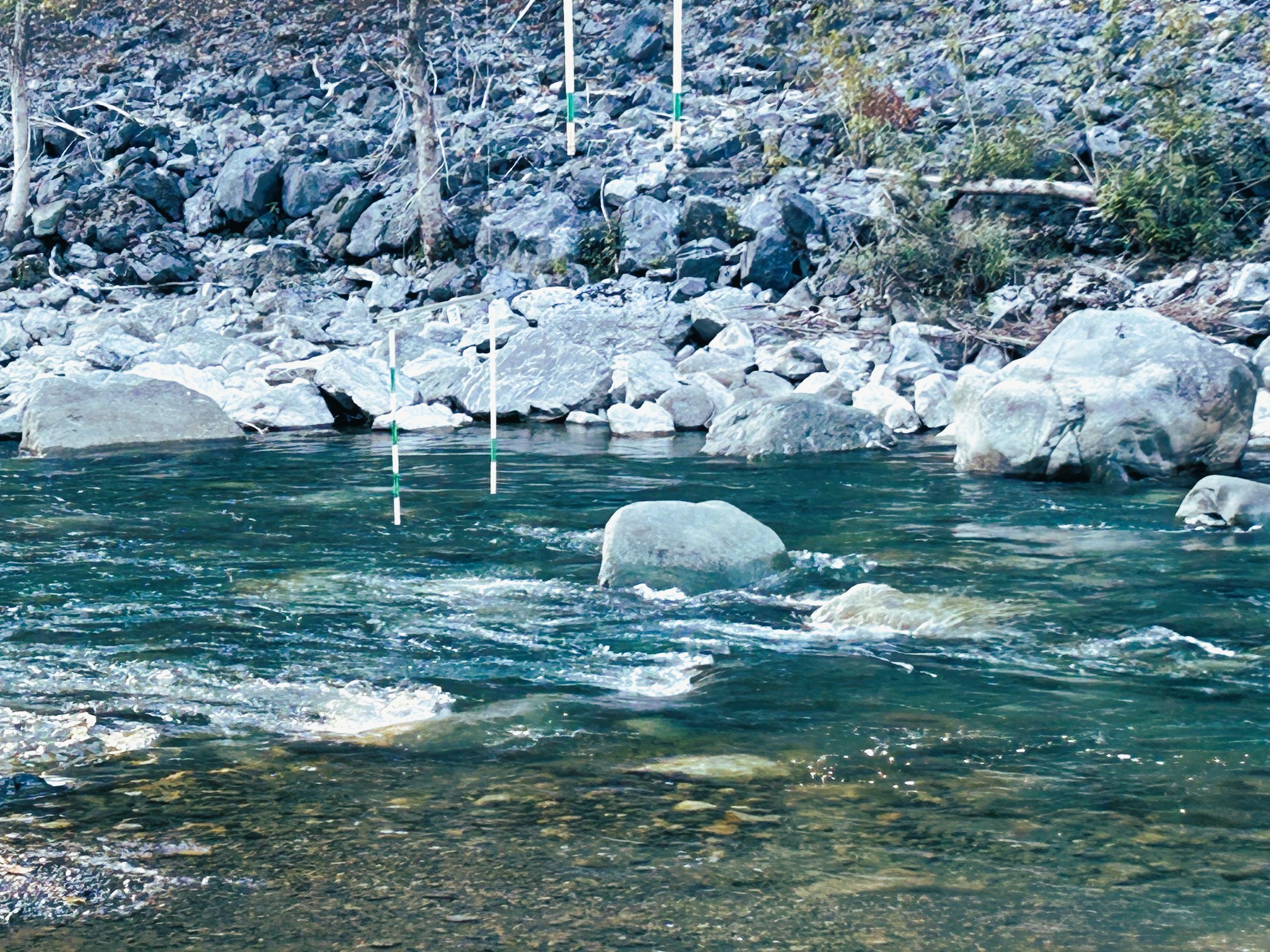
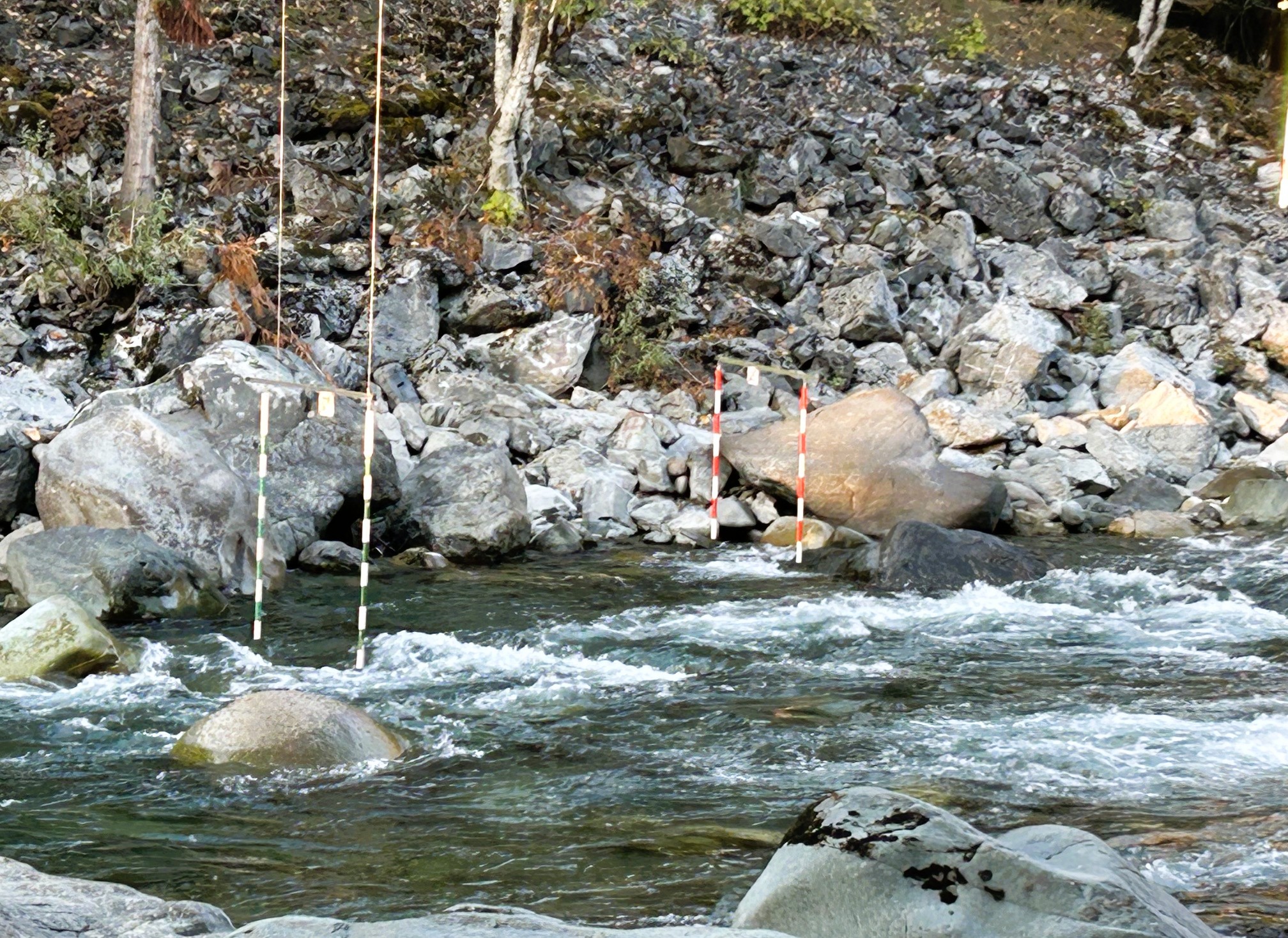
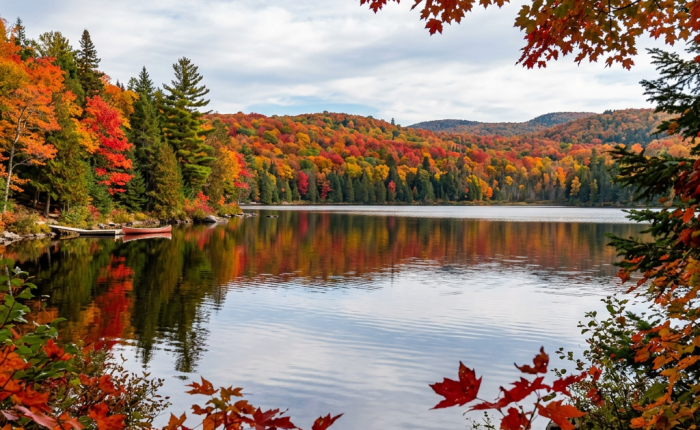
Taking advantage of a good weather few days ago we went to try our luck in mushroom picking and hoping for a good swim in Chilliwack Lake high in the hills.
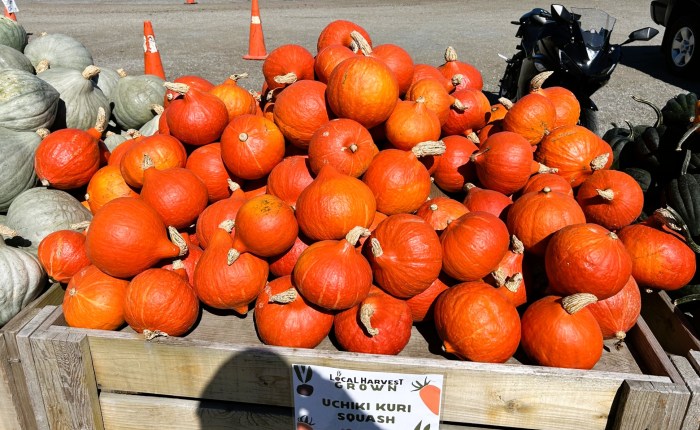
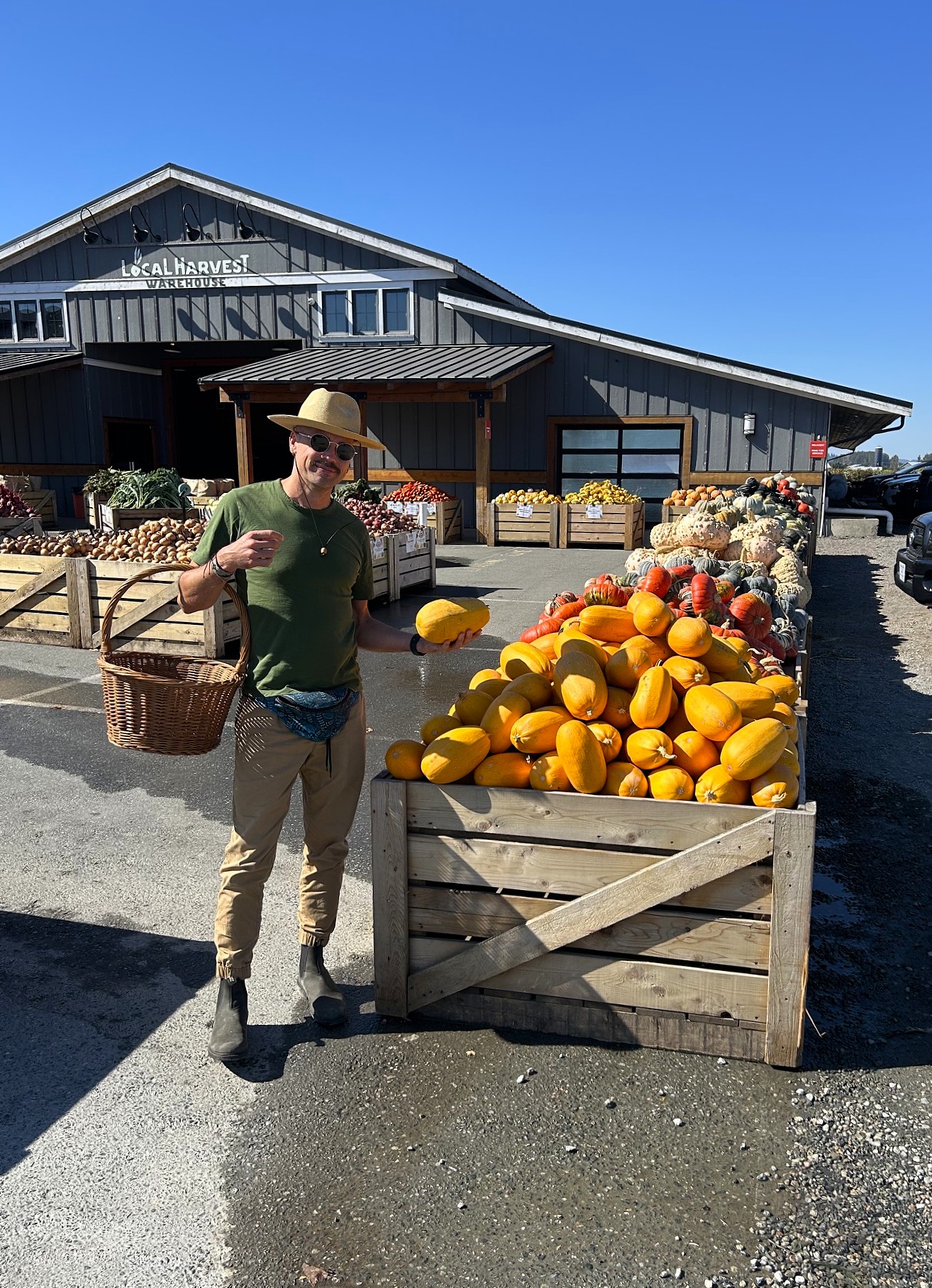
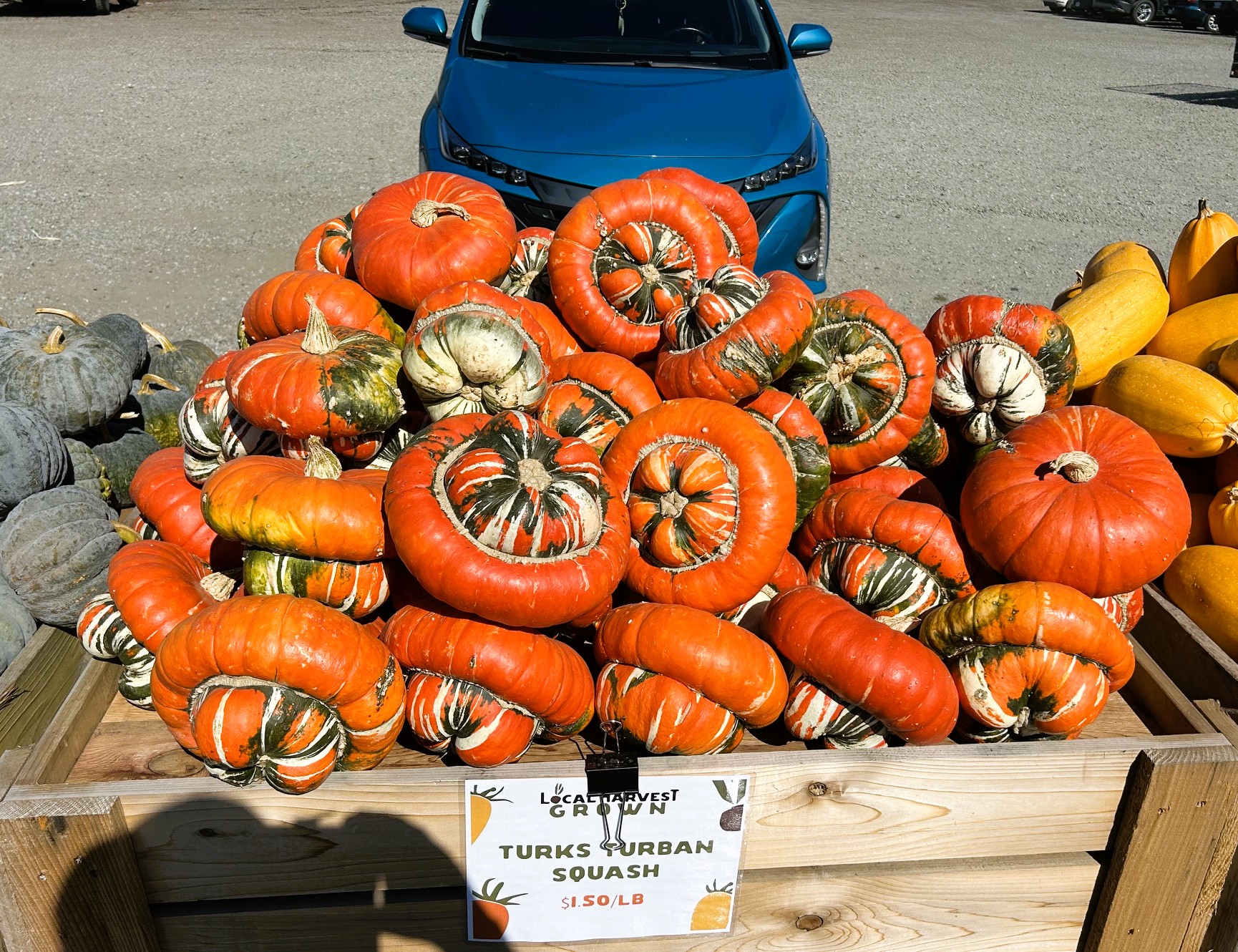
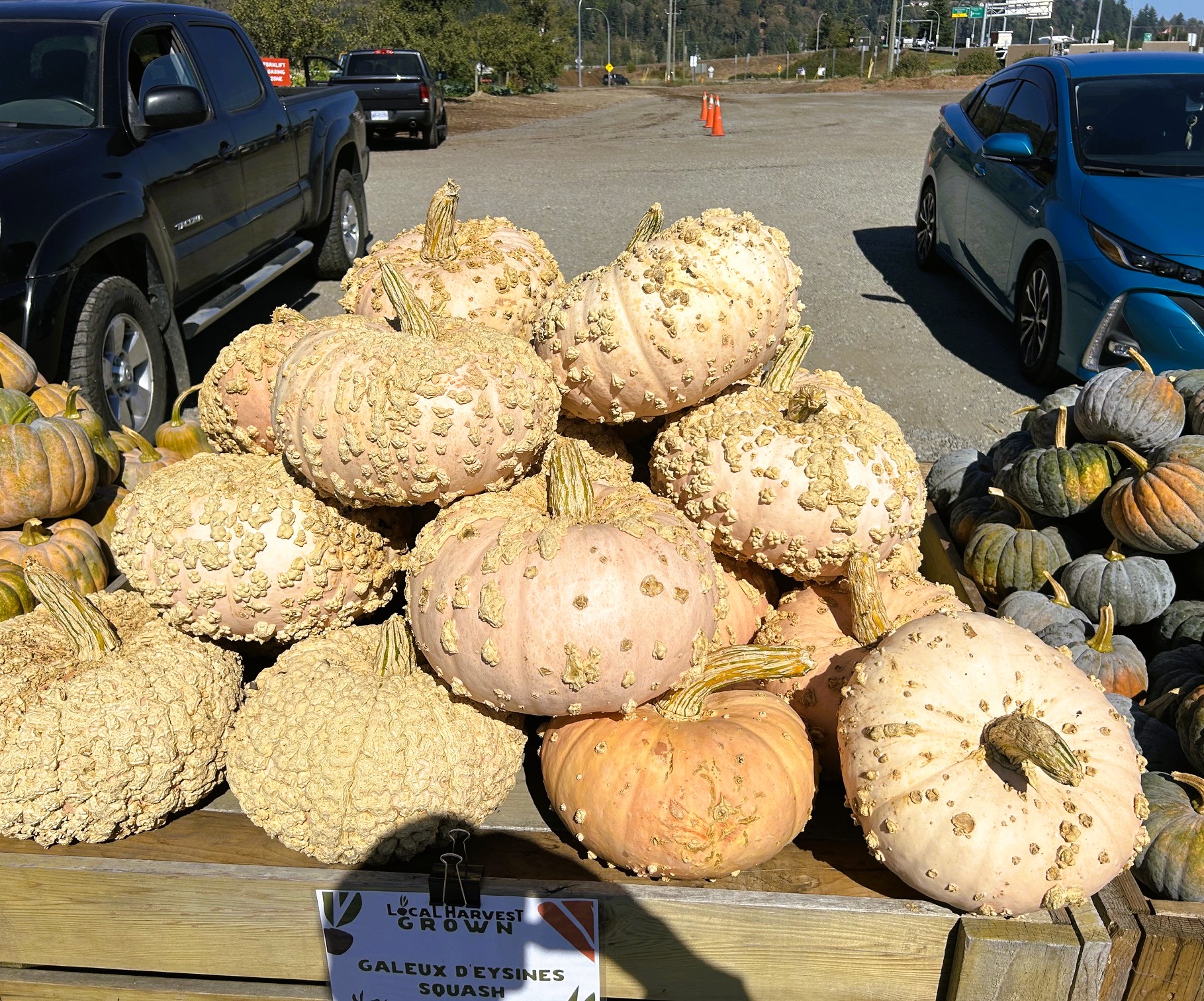
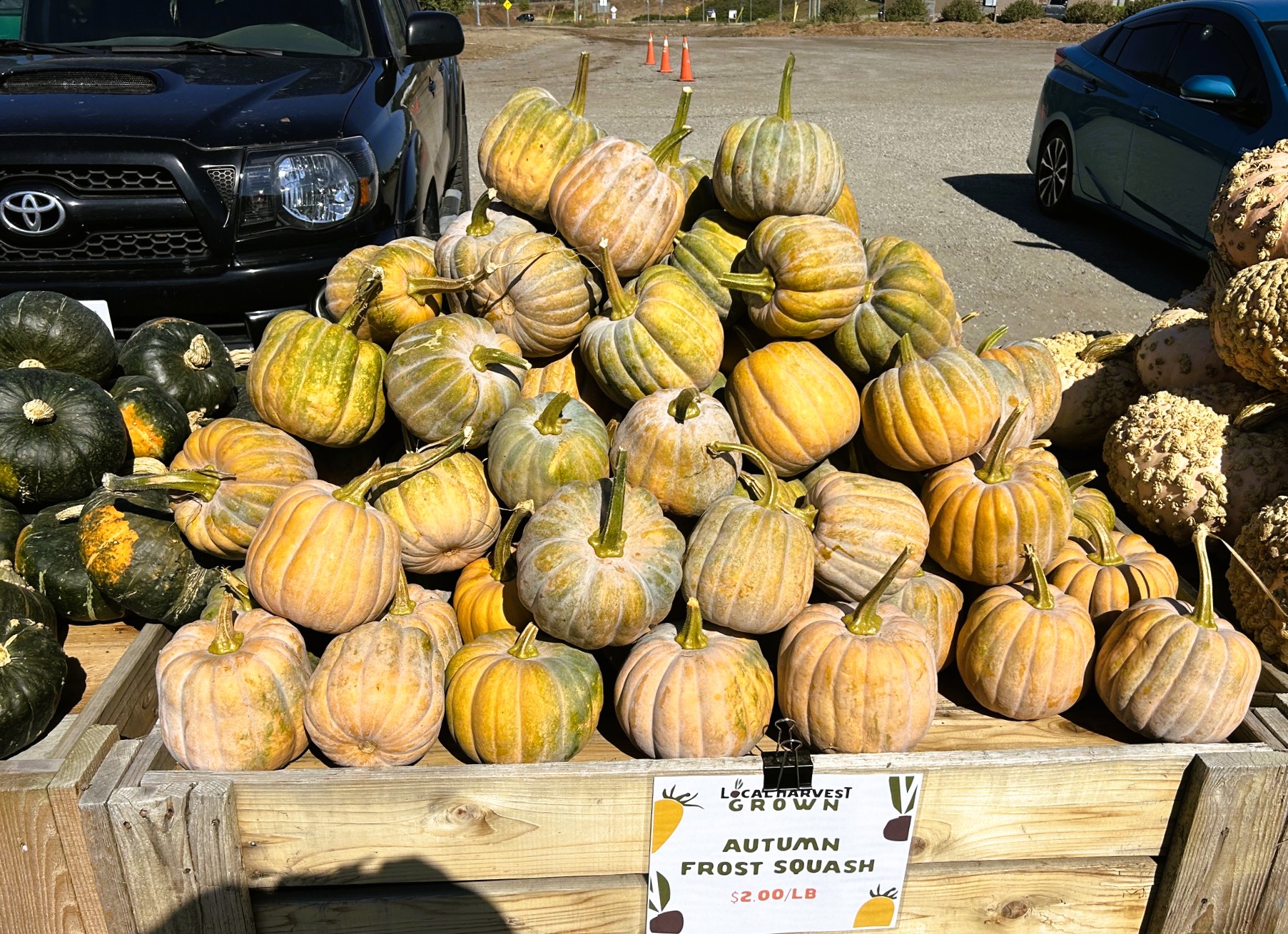
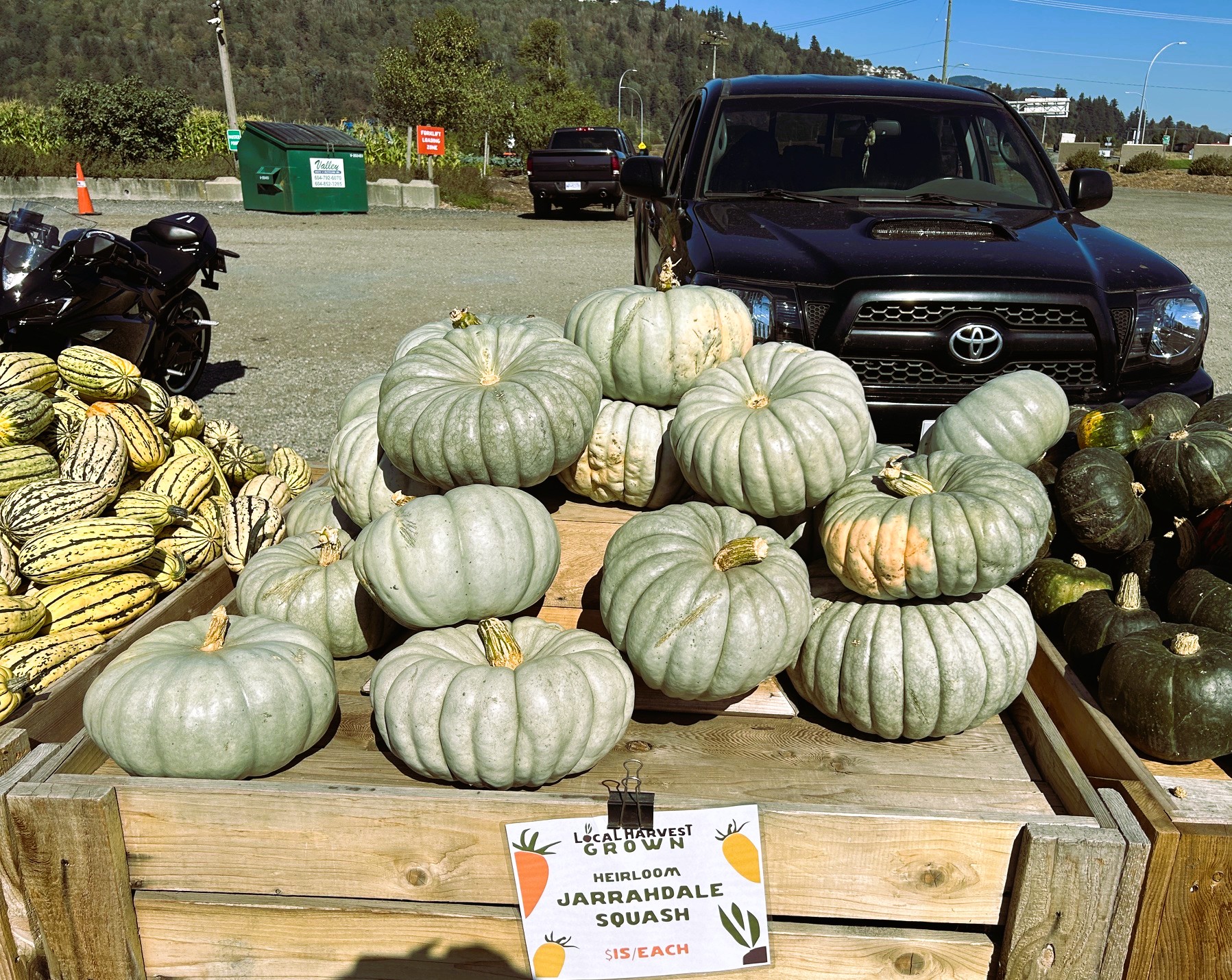
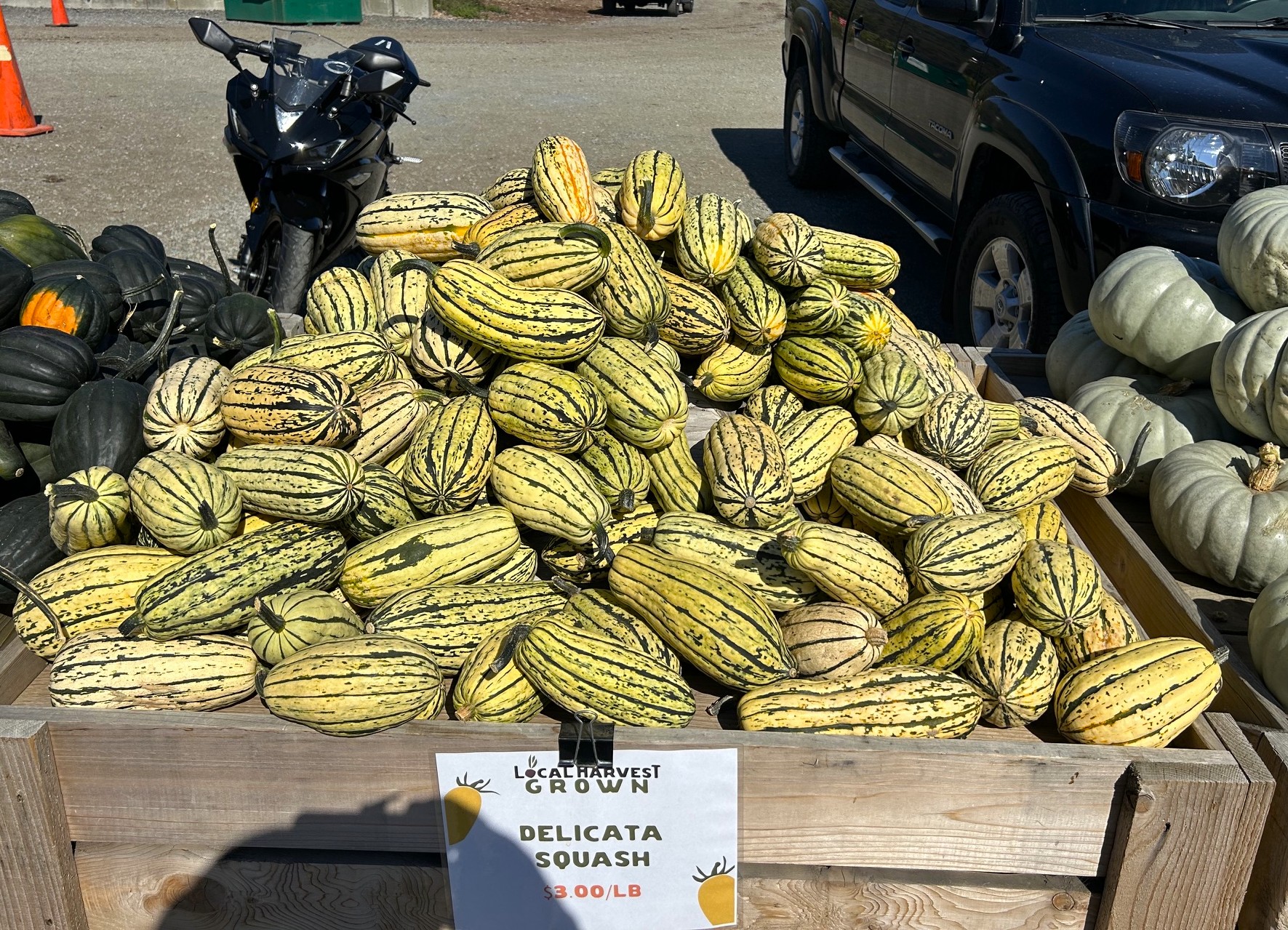
Before w went to the lake and forest there was a must t stop at Farmers Market on Lickman Road. What a rich exposition of Fall fruits and vegies! They almost look fake, just for show, LOL. Of course we went to the local bakery for few snacks for the way.
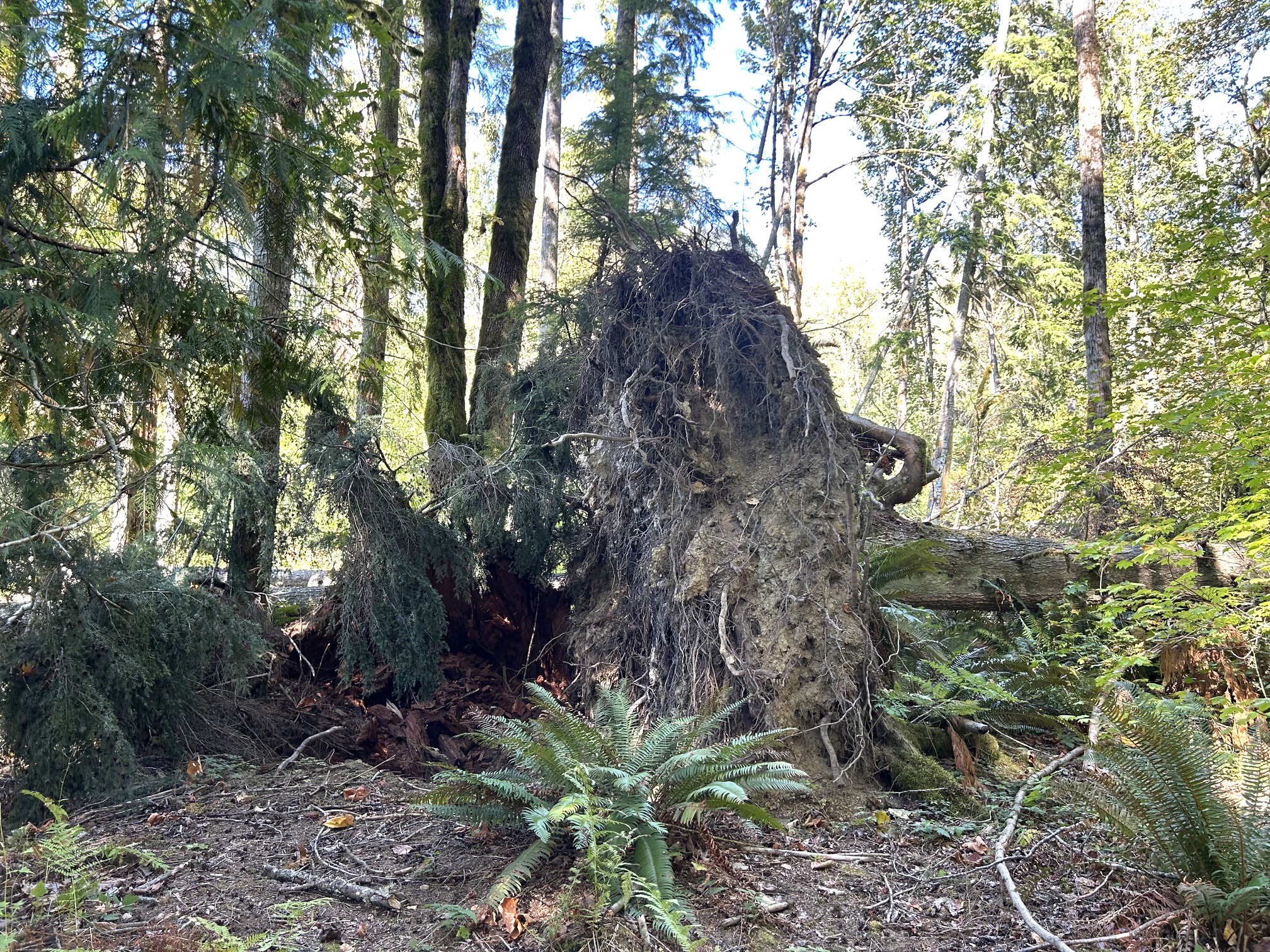
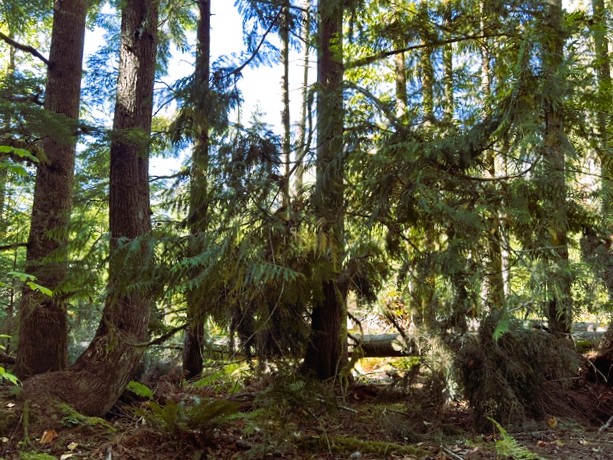
After the shopping we tok the ol’ Vedder Road up to familiar Chilliwack Road meandering alongside the Chilliwack River. We stop in two spots to try our luck in mushrooms. Sadly, it was so dry everywhere that at both attempts we just say few very dry and small eatable mushrooms – not enough even for a small pot of soup, and we gave up.
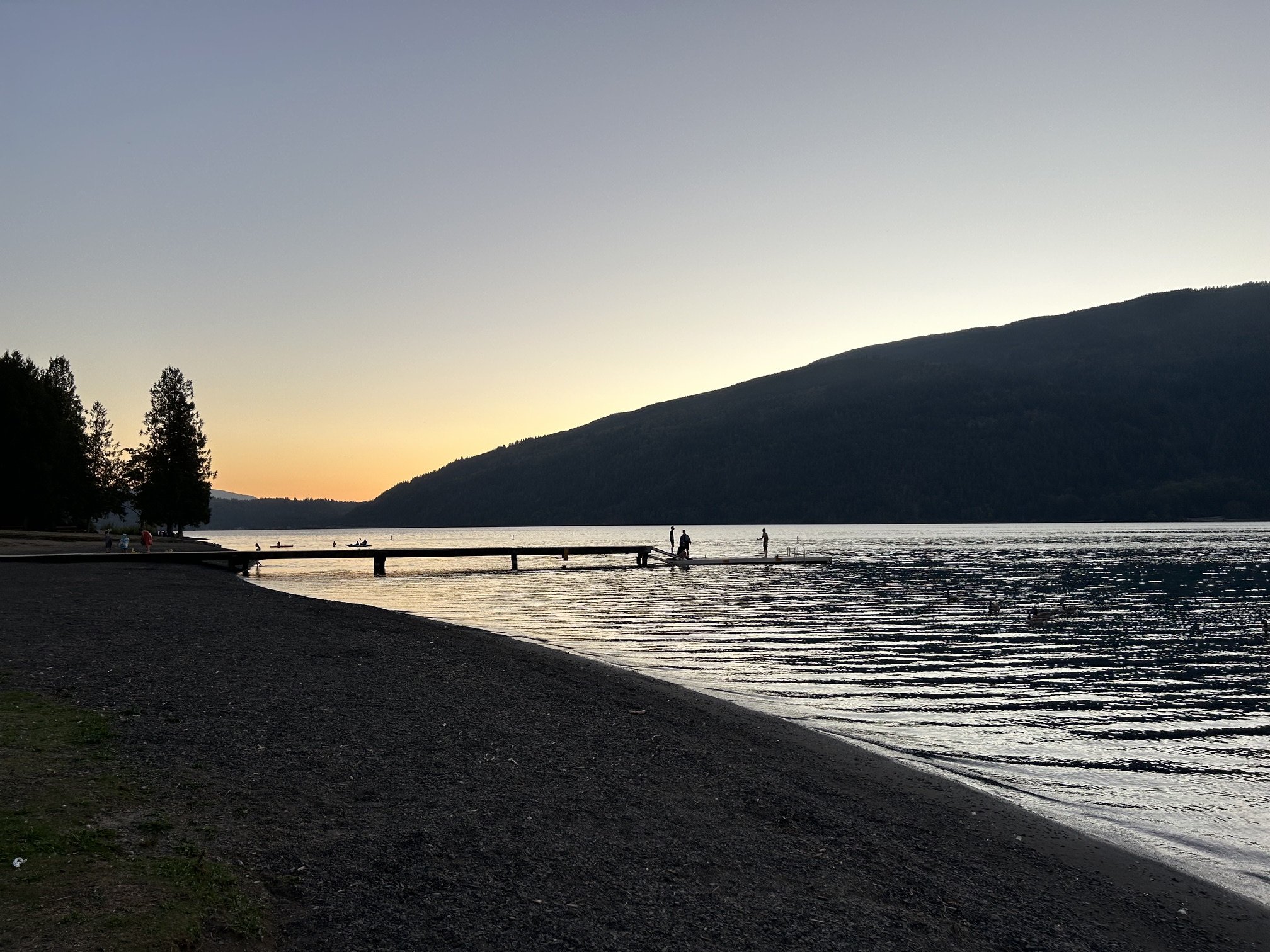
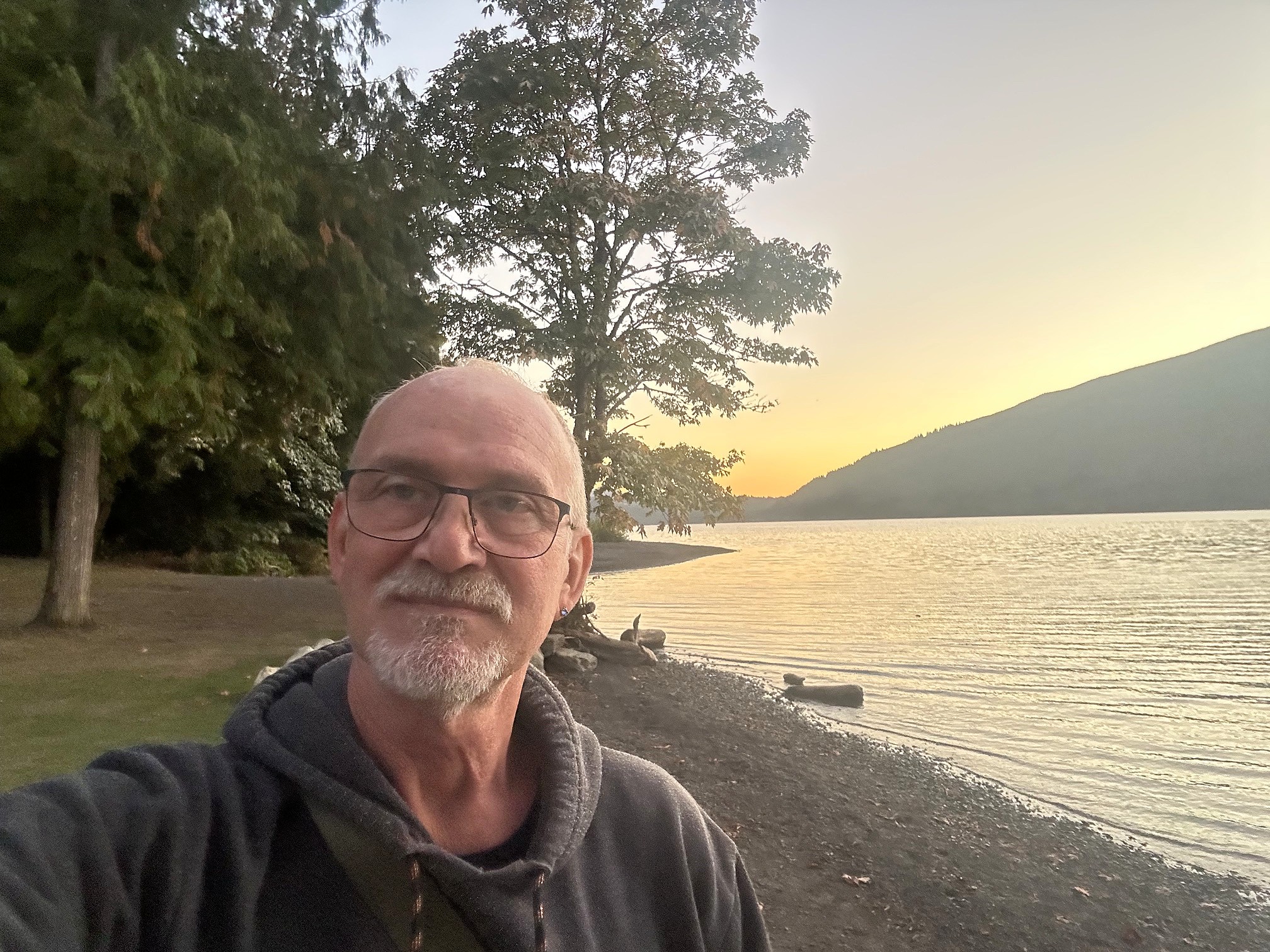
The lake – that’s a different story altogether. Hardly and wind bluse-green water smooth and inviting. Hardly anyone on the sandy beach. Since the lake originates in icefield I was thinking that it would be very cold. Not so! Water was wonderful and a refreshing swim gave us energy and washed away the dust from the forest. We stayed until there was no more sun and chilly mountainous air filled beach.
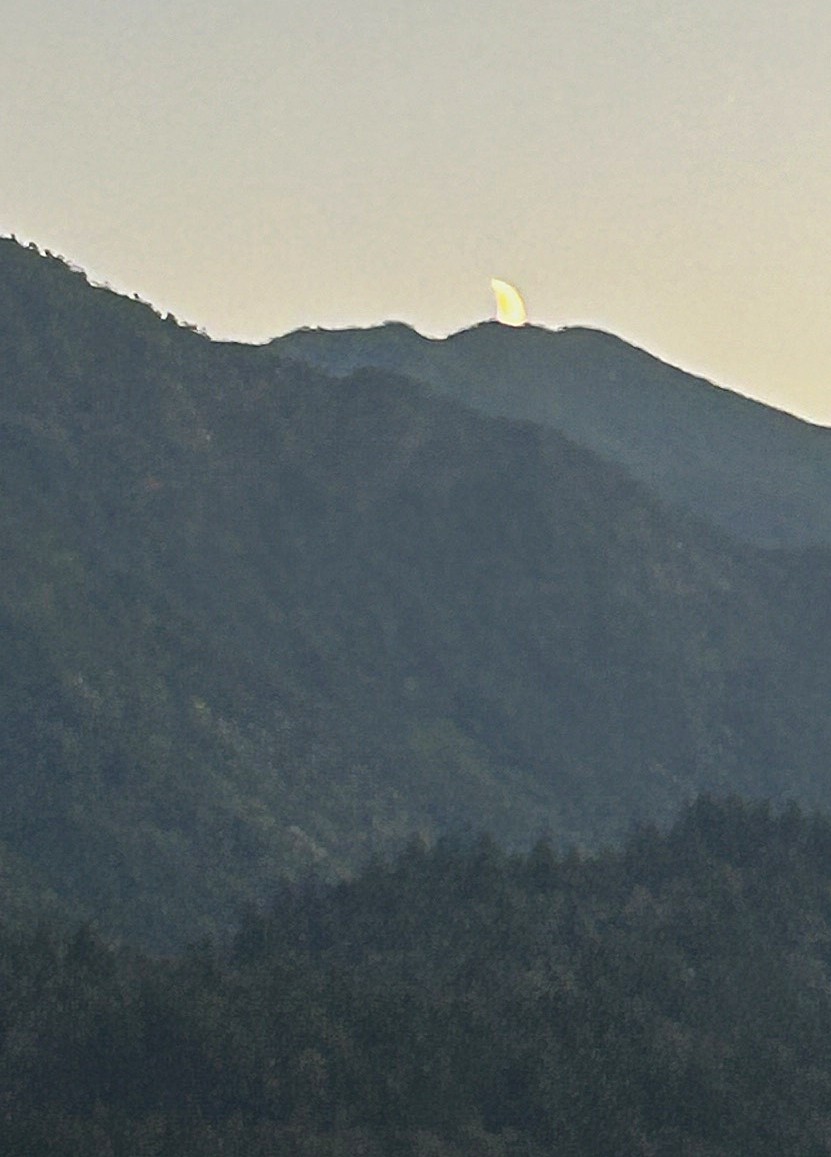
On the way back we took different route using o Yarrow for a nice evening walk on the beached of Cultus Lake. It was almost poetic – including the moon, which showed up from the peaks of the mountain and said: OK fellas, it is getting late and dark, and time for you to go home. And we did driving back through the very old community of Yarrow, which did not change that much (as everything else) in past few decades.
September marks a time of somber thoughts, reflections. I am a Pole, Canadian Pole, European Pole – but Pole to the core, through and through. September is not only about approaching fall, of yellow and brown leaves, flowers fading and days getting shorter every evening.
For a Pole of my generation September is reminiscence of great and terrible world war, the one with number ‘2’ attached to it. Always, for as long as I remember: the national martyrology, almost a quasi religion: dark, mournful, full of pain. Yet, it is a true heavy feeling, not something you do because it is polite or out of obligation. No, it is not faked and it is not just laying wreaths at the bottom of some cenotaphs. It is happening at homes and inside the deep crevices of your soul.
The war was still inside us, our parents and grandparent lived through. It is true that there were also official circuses and commemorations to impress someone, to score some political points. Nonetheless, even these theatrical motions were performed by these people, who after returning home still had to go themself through these somber and sad moments. No one could escape it. After all, they were not remembering some magnificent Middle Age battle or campaign. No, the Second World War was a private Loss for everyone. It was such a total war, it touched all who lived through it and it touched their children. When I was a child – it touched me, touched my sisters, my cousins, all my friends. Us, young people, who were not even alive during the years 1939-45. We were all born mostly in years 1947-65, the majority of us during the 1950’s.
For generations of my grandparents it was particularly tragic and painful memory. They lived through the Bolshevik revolution of 1917, through the rebirth of Polish state in 1918, the victorious Polish-Soviet war of 1920. Now they are all gone, the last one was my grandma Wanda, who died in 1972.
But the truth is that for my generation all these previous wars were an ancient wars. Yes, exciting (particularly the battles for independence and the heroic Warsaw Battle against the Bolsheviks, which save Western Europe from communist oblivion) but at the end it was an ancient history, like the Greeks battle of Troy.
Yet, that war, the last world war – was still alive everywhere; in my childhood not all cities and towns were fully rebuilt. Finding partial ruins or bombed house was not difficult, the same as partially rusted shells in forests, on shallow shores of rivers, streams. Nor was surprising finding every day fresh flowers on some streets, where Nazis did some executions by firing squad or public hanging. These flowers were a daily routine. They marked places were their friends, their lovers, sons or daughters perished. For our parents, and grandparents these people were their friends, lovers, husbands, wives and children.
By the time I was fifteen I used to go on my own need almost once a week to lay a flower (sometime stolen from a city flowers box – sorry, did not have always in my pocket an extra five or ten zlotych[i]) on an exact street corner in front of an enormous building of National Opera, where a young Warsaw poet was shot in 1944 – Krzysztof Kamil Baczynski[ii]. He was shot almost fifteen years before I was born. Yet for me, he was my slightly older friend, very dear and close. Now – I am old but still think of him as my friend. More, I think that I actually loved him as person. Is it possible to be in love with someone, whom you never met and who died years before you were born? I think – yes, it is. After all I am still in love with Alexander of Macedonia, and that boy-king died not centuries but millennia ago!
Back to the subject though, the subject of changing guard, of generational exchange. We are on the last leg of a run through life. Mind you, it is not yet the proverbial ‘one leg in the grave’. We are still running. No, it is not an Olympic sprint anymore. Some might still have a desire to dance and to fall in love with another person if they are single, some are still working – but almost all are in a official retired age, but we are also the next echelon of humanity that starts to leave the train of life on a regular pace. It is normal course, nothing tragic, part of the journey. The cycle of generations continues.
Of course there must be a caveat: It is true that there are still very few among us, who remember the war as seen through their eyes, but those were eyes of very young children. They are now in their late nineties or over a hundred years old. My oldest cousin was born still in Vilno (now capital of Lithuania, then a large Polish city) in 1944. But he is gone now, too. It is next to impossible that he could have remembered anything of the actual war and he never pretended that he did.
The reality and the fact is that for practical reasons people, who lived during that war are gone. Now it is us, the next echelon of humanity that’s starting to leave the train of life on a rather regular pace. It is normal cycle of the generations. In a few years, maybe a decade, we will cease to be intellectually and emotionally the engine of the society. Matter of fact we are no longer the main engine, just the extra smaller ‘enginette’. When we will stop being that canister of our memories of post-war reality a silent social revolution will take place, silent, yet very powerful change will occur.
We are the last ones, who were personally affected by the war. A war with silent battlefields, and silenced guns – a war, which long shadows still lingered on our streets; in our neighborhoods, in our homes and during family gatherings.
The next generation – our children, nephews and nieces are free from the shackles and chains of that trauma. There are even free for most part from the memory of the abnormal reality of about forty years of living in the grey and absurdly tragicomical reality of PPR – Polish People Republic, a quasi-sovereign state in the years 1945-199o. Mind you – that quasi independent state was the only Poland I knew, were I was born, went to school, had my first romances. At the same time it must be stressed that this Polish state was sort of abnormality among all other Soviet satellites. There were even officially sanctioned other political parties that were not ideologically communist (unheard of in other Soviet satellites), there was a powerful Catholic Church, which resisted and maintained its independence with very powerful Church hierarchy, to a shock of the very first non-Italian pope in hundreds of years who was … a Polish cardinal – Karol Wojtyla, better known later as John Paul II. Stalin must have turned in his grave, LOL. Polish universities were of high scientific standards and a place of vigorous political and ideological debates – if not during formal classes then certainly on the corridors and courtyards. It comes to no surprise that the amazing first free trade union called ‘Solidarity’ was born in that ‘communist’ country. I had a small part in it being this union organizer in Warsaw. Even more important is that we, Poles, spoke freely at homes and on the streets. With caution – but freely. It was our daily rejection of the absurdity and abnormality of the Soviet system. In some strange way I could say that to a certain degree my generation of that Poland was perhaps freer than young people on the other side of the Iron Curtain. Not in laws and privileges given to us, but in cherishing and clinging to our internal freedom.
We also believed in certain civic decency. At that time a young intelligent Pole could not and would not call himself/herself a fascist. That was a Rubicon we would never cross[iii], regardless whether you were even an ultra right in your political views. In our eyes fascism was synonymous with Hitlerism. That was as plain as the difference between night and day.
The II world war changed that word, that rightwing ideological view forever. It wasn’t, as in the pre-war times anymore that fascist view was tolerated. Before the last war fascism was interchangeable with ultra nationalism, with hurray type of patriotism. That changed after the experience with that total war. Just Italian Il Duce[iv], Spanish Franco or Portugal Salazar could not have achieved what Hitler achieved with that movement. He himself made it synonymous with crimes unspeakable, horror indescribably. It was an abandonment of humanity beyond any scale.
Fascism was the gate to the Factory of Death of Humanity. A Gate that had its name: Arbeit macht Frei. Auschwitz, Buchenwald, Dachau. All of these names, places have one denominator: fascism.
That what my generation knew, understood. It came as the biblical Commandment you shall not kill, that we knew instinctively, that those who do kill are fascists, as simple as that.
An individual thief, a murderer, rapist – that is not the same. Those are individual crimes against society, crimes that could be judged, adjudicated and punished. Aberrations that, by proper education, could be avoided or corrected, minimized.
Fascism was a symbol of Gates to Hell, to Hades.
What I wrote above comes from one’s plea, one’s need to exalt in the reader of the next, younger generation this simple truth of History: fascism must be stopped, must be ostracized, must be condemn eternally. We, my generation and the generation of my parents knew that by heart, by true experience of what it is if it will ever get a free ride in public life, in public discussions. Yes, it could be discussed and taught in schools, universities as a painful lesson of history – a very tragic lesson. But it has to be stopped of having a right to be part of any public political platform of dangerous propaganda.
There are all these fascist or semi-fascist parties, movements, fascinations all over in Europe now: in France, even in one Land in Germany (sic!), to my horror in my dear Poland – has all the world gone crazy?
Wake up my dear Citizen, wake up and stop this aberration, this sickness that will devour your heart and mind. Don’t’ listen to these lies about patriotism that these people constantly spew from their mouths. The love of one’s country also means the love of all citizens of your country. But they profess only love of these citizens, who represent their sick minds. Only the whites, preferably the tall, only those born in very particular geographic location. So on and so on, to the exclusion of everyone else. But we all came from one and the same seed: the short ones and the tall, the white and the black, the blond and the brunette (and the red-hired too, of course), them of whatever sexual orientation, left-handed and right-handed, poor or rich, weak or strong, the Jew and the Gentile, the Muslim and the Christian (and Buddhist, of course) and don’t forget the ever more numerous non-believer.
Once you start making distinctions, selections, you are giving a moral right for others to judge you, to deselect you – to cast you aside. For what reason, you may ask? Yes, I will answer that question. Remember – when I was mentioning that horrible place, the apogee of fascist thought: Auschwitz? When a train arrived to that Hell on Earth carrying hundreds, maybe thousands new prisoners there was a man there awaiting them. He was a medical doctor called The Angel of Death or simply Josef Mengele. He examined the prisoners and with one flick of his hand he decided, who will be killed instantly and who will live for a while. Thousands upon thousands of people went through that decision. Every time you start making these distinctions among other human beings – you start growing inside you a new Doctor Mengele – the Angel of Death. That is exactly what being fascist means.
post scriptum
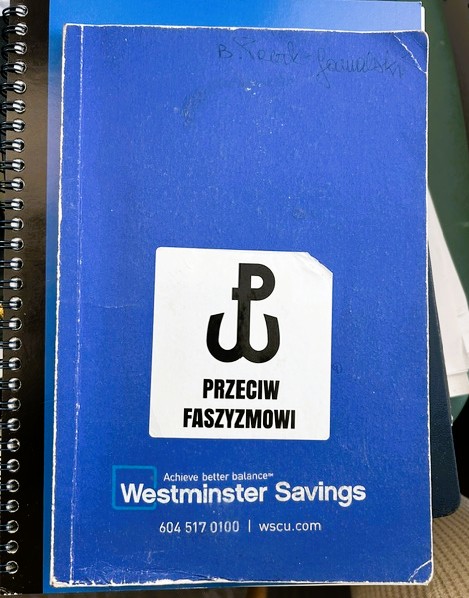
The picture that is attached to the article is somewhat symbolic. It is a simple exercise book, a typical ordinary school book to write in. I used it for some time now to write some of my texts, my poetry. I hardly ever leave home without carrying one of this type of notebooks. Have many of them laying around near my bed, my table. An old habit. That one is with the graphic symbol of Warsaw’s fighters in 1944 during Warsaw Uprising against fascism, the print below the graphic simply says: against fascism.
I started using that notebook around the time of first full term ultraright government in modern Poland in 2015. The first text in that notebook deals with growing dangers of far right politics and ideologies. This text you are reading now is the on the very last pages of that notebook. I think that the cover of the notebook is a fitting symbol of the same subject: protect freedom, protect rights of all. Otherwise a state becomes a gulag, prison.
The fought of going. The fought of leaving. Home? Love? Friends?
Not really – I gave it to all the subjects mentioned above all I had: my heart, my love, my cherishing of all of the things and all the people, the places that makes up this country – Canada.
Now the country has nothing more to offer to me, to give. It already did. Besides, it is just a half of me that’s leaving; the other half stays here forever. With him.
My dear Canada, I’m leaving with you the ashes of that other half of me: my Love Eternal, my John.
On a little hill in Pictou is a sadly-sweet old cemetery, with his parents, his brother. The cemetery, where I know the names of half of those buried there. Some are very old, ancient almost, with names of his cousins, grandparents, aunts and great aunts. Some of them I met decades ago, like great-aunt Theresa on the French, Cormier side, who was born on French speaking Les Îles-de-la-Madeleine[i]. The one, who visited your parents back in Priddis[ii] in the 1990’s and gave me the beautiful old book of the story of Evangeline[iii], her expulsion with thousands of other Acadians from Nova Scotia to the swamps of Louisiana, who gave Louisiana their ‘cajun’ character and French Quarters of New Orleans with its Cajuns/Creole[iv] language. Many years later, when I lived in Dartmouth in Nova Scotia, I have followed the trails of that expulsion, their towns, Catholic churches. I followed the entire Trail of Evangeline and her tragic return to Nova Scotia from Louisiana to her dying lover. Henry Longfellow wrote this famous long poem apparently under the spell of famous epic poem by Mickiewicz “Pan Tadeusz” (Sir Thaddeus)[v]. Sadly, Longfellow did not possess literary genius of Mickiewicz – but if he didn’t write it, I would have never known the story of Evangeline. Tragic and beautiful, and it is a testament of very important history of Nova Scotia and later entire Canada and the beginning of the long love-hate affair between the British and the French. Still very much alive, and treacherous as ever.
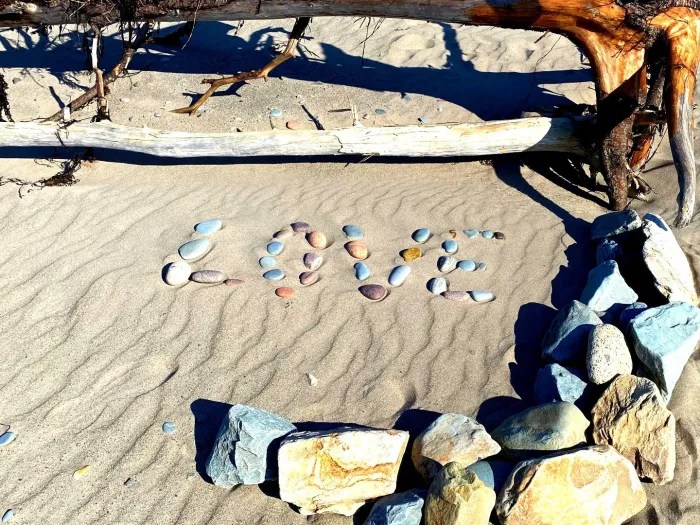
So, back on that little cemetery in Pictou, I have left your ashes in the familial embrace of generations of your family buried there. Part of my heart is buried there, too. That part will never leave my Canada, and will stay there till end of times. As the description I left on that gravestone (forever in my heart) will be the non omnis moriar of our Love in times, when no one will remember you or me. Just as I have build that Monument to Love from heavy rocks and dead tree brought to that deserted and secluded beach in Lower East Chezetcook. I have spent on this wild beach many days on end – just me and our Love. No names, just Love. Therefore it could be anyone’s love, as it should have been. Love belonging to those who had her, who lost her, and those who seek her. The only reason to simply ‘be’ that I had. The only thought, that I dreamt of, the only desire – and I had it here, in Canada: my Home, my country.
Now she has nothing to give, to grant me.
I’m going back to an older, original home. Across an ocean that I grew so fond of in Nova Scotia, to the old place, a place where my dreams and desires stronger than just my sheer will to live, begun. Place, where I still might catch the fleeting glimpse of that boy. Will I? I don’t know.
But I do know I owe it to the old country. Maybe there I will still recognize things that I can give to the old meadows, rivers, towns and cities, the tiny Baltic Sea? Maybe.
Idę Marszałkowską do Placu Konstytucji. Znajoma kawiarenka po lewej stronie. Stoliki na zewnątrz, ale ja idę na ulubione pięterko i siadam na szerokim parapecie okiennym. Nikt mnie tu nie zna i nawet gdyby ktoś, kogo znałem by się tu pojawił pewnie ani on/ona ani ja nie rozpoznalibyśmy się. Tak mi się wydaje, choć kto wie? Ludzie aż tak się nie zmieniają, zwłaszcza dorośli. Jest możliwe, że bym nie poznał jednak dalszego znajomego z lat jeszcze 70. i 80. poprzedniego stulecia. Tak po prawdzie nie pamiętam, nawet czy to było na Konstytucji czy kawiarnia ‘Charlotte’ na placu Zbawiciela? Ale jak wejdę, to rozpoznam bez wątpienia. Było też fajne miejsce na Brackiej, kafejka ‘Między nami’. To szczególnie lubiłem już w ostatnim 10-leciu. Miałem tam miłe spotkania z ciekawymi ludźmi ze świata literatury i sztuki. Czasem zaskakujące i nieprzewidziane, jak choćby te ze wspaniałym Omarem Sangare[vi] – aktorem, poetą, akademikiem i organizatorem słynnej Sceny i Festiwalu Jednego Aktora United Solo na Theatre Row (obok Broadwayu) w centrum Nowego Jorku. Poznaliśmy się bodaj sto lat temu na jego prezentacji własnej sztuki „Krytyk teatralny” podczas wizyty w Vancouverze. O ile pamięć mnie nie myli było to chyba na scenach Centrum Kultury Żydowskiej koło Oak Street (może jednak w teatrze na Granville Island? nie pamiętam, a nie chce mi się sprawdzać). Bardzo mi przypadł do serca. Po latach odnowiliśmy znajomość właśnie w Nowym Jorku. W międzyczasie opublikowałem w moim roczniku artystycznym[vii] odpowiednio przykrojoną do potrzeb publikacji, jego pracę magisterską na temat … Otella szekspirowskiego. A, przypomnę tylko, że Omar Sangare to z krwi i kości polski 100% czarnoskóry aktor, urodzony w Stalowej Woli. Tata jego pochodził zaś z Afryki, a w Polsce studiował. Otóż podczas mojej wizyty w Warszawie i on tam wrócił, zdaje się miał występować gościnnie w Teatrze Syrena. Chyba tam się właśnie przypadkowo spotkaliśmy. Ja zdaje się wychodziłem ze spotkania w polskim MSZecie (te ministerstwo jest zadziwiająco blisko … Trybunału Konstytucyjnego, LOL), a on wychodził z “Syreny” i prawie na siebie wpadliśmy. Umówiliśmy się naturalnie w tej uroczej kawiarence na Brackiej. Dużo opowiadań, wspomnień. Innym razem spotkałem się tam z dziennikarzem i pisarzem Krzysztofem Tomasikiem[viii] – ciekawą postacią, zajmującym się historią znanych osób z kręgów LGBTQ. Naturalnie miał masę pytań bardzo konkretnych, ale nie na wszystkie chciałem odpowiedzieć. Zwłaszcza o osobach z bardzo wysokiej i publicznej ‘półki’ kultury polskiej. Niektóre z tych osób pełniły bardzo wysokie oficjalne funkcje w znanych przybytkach sztuki, a publicznie same comnig-outu nie dokonały. On uważał, że powinienem, bo oni sami ‘nam to winni’. Ja mówiłem, że ‘ja’ to nie ‘’my’ i sytuacja każdego człowieka jest inna. Zawsze jestem i byłem przeciwny outowania kogoś bez zgody tej osoby. Ale Tomasika szczerze szanuję, bo to wyjątkowo zasłużony historyk, badacz i publicysta spraw związanych z historią osób i środowiska LGBTQ+ w Polsce. Moje ukłony dla niego.
Oczywiście zaraz obok była bardzo długo, (zdaje się już nie istniejąca), słynna kawiarnia ‘Alhambra’, gdzie podawano cudowną kawę ‘po turecku’ i było to jedyne znane i popularne miejsce schadzek gejów warszawskich, kiedy słowa ‘gej’ jeszcze nie było w polskim słowniku ani slangu. To były czasy mojej wczesnej młodości i pierwszy lokal, gdzie wchodziłem i siadałem za stolikiem z jedną ‘małą czarną’, którą niemiłosiernie długo piłem (na zamówienie drugiej nie było mnie stać przecież!). Tutaj kilka razy widziałem i z wielką czułością obserwowałem kultową postać polskiego baletu i już ciszej warszawskiego światka gejowskiego – kochaną, uwielbianą ‘Stasię’: pana Stanisława Szymańskiego, pierwszego solistę Baletu Opery Warszawskiej. To był tancerz par excellence – on żył baletem i oddał mu wszystko. Przez sam fakt, że w tamtych czasach był często pokazywany w TV polskiej – uwielbiany był przez masy Polaków w całym kraju. Jakkolwiek widziałem potem wielu technicznie po prostu fenomenalnych tancerzy ze światowych scen – nikt nie wydawał się żyć tak tańcem, jak wtedy Szymański. Dla nas był bogiem sceny, Apollem, który dla widza zszedł z Olimpu i tańczył dla nas, oczarowanych. I ja, młodziutki chłopak, szczeniak mogłem kilka razy obserwować tego Apolliona właśnie w tej ‘Alhambrze’. Wydaje mi się, że kilka razy się do mnie smutno, ale miło jednak, uśmiechnął. Do ‘Alhambry’ wszak raczej nie wrócę, bo nie mam umiejętności cofania czasu, ale na Bracką na pewno. Może jakąś inną cafe-dziupelkę też poznam nową, tej na Brackiej jednak nie zostawię.
Oczywiście mam pamięć Warszawy innej, wcześniej o wiele, wiele lat. Warszawy chłopca, potem młodzieńca: ‘Solidarności’, podkładania ulotek w Empiku przy Nowym Świecie w latach 70. ubiegłego wieku, ulotek wystukiwanych na rozklepotanej starej maszynie do pisania. Ale to było już tak dawno. Tamten chłopak to już historia. Ja bym go poznał, on chyba mnie nie. Może szybciej poznalibyśmy się i zrozumieli z dużo wcześniejszym chłopcem, który przyjechał z mamą parowym pociągiem do Warszawy Głównej. Miałem krótkie spodenki i pamiętam świetnie nieliczne ocalałe kamienice na Ochocie i w Centrum, gdzie ciągle były wyraźnie widoczne dziury po pociskach niemieckich, czasem połowa kamienicy była zamieszkana, a z drugiej połowy zostały tylko resztki ruin. Potem poszliśmy pod ten olbrzymi Pałac Kultury z tymi brzydkimi i straszącymi młodego chłopczyka figurami muskularnych robotników. Natomiast fontanny wokół tego Pałacu były cudowne. Z siostrą i innymi dzieciakami kąpaliśmy się w nich niczym w jakimś miejskim basenie. To była moja jedyna wizyta w Warszawie, kiedy jeszcze mieszkaliśmy w Toruniu. W bardzo krótkim czasie przenieśliśmy się w okolice Warszawy.
Potem to już nie dojeżdżałem WKD do przystanku Warszawa Ochota, ani Warszawa Centralna. Potem dolatywałem przez pół wieku samolotami z zupełnie innego kontynentu. Czterdzieści cztery lata, mickiewiczowsko to brzmi, prawda? LOL. Wszystko zresztą przez tego Mickiewicza po prawdzie. Do szkoły jeszcze nie chodziłem, a już ‘Świteziankę’ czytałem. Przez mamę, bo go kochała, jak wariatka. A takiego małego brzdąca, jakim wtedy byłem, szaleństwami łatwo było omamić. No i tym tułaczem zostałem. Ale – w przeciwieństwie do Adama – Zajazdu ostatniego ani pierwszego na Litwie nie opisałem.
Więc z tych późniejszych przyjazdów zza oceanu, tych wielokrotnych krótkich powrotów, Warszawę na dorosło, dojrzale już pokochałem. To moje miasto. Bo tam właśnie były te pierwsze szalone i najważniejsze lata wczesnej młodości. Marzenia, tęsknoty, pragnienia. Co zrobię więc i gdzie pójdę na mój pierwszy spacer po tym ostatecznym powrocie?
Na pewno pójdę na swoją ławeczkę na pagórku w Parku Ujazdowskim. Stamtąd dobrze widać i jeziorko obok i z daleka mogę pomachać ręką Perseuszowi wykutemu w czarnym marmurze. Ileż tam godzin spędziłem na drugiej ławeczce, na tyłach Ambasady Francuskiej, właśnie obok tego zgrabnego Perseusza[ix]. Uśmiechał się do mnie ladaco i zaglądał przez ramię w mój notes czytając com w nim nabazgrał. Więc dla przekory nic o nim nie pisałem. Niech się dąsa na swoją Andromedę, a nie na mnie. Ci dawni Grecy, to zawsze byli tacy kombinatorzy – żony ładne mieli, a za chłopakami latali, jak psy. Nawet w czasach najdawniejszych, długo przed wszystkimi Platonami i Sokratami. Przecież Perseusz sam był prapradziadem Herkulesa, a proszę mi wierzyć, że to już bardzo dawno temu, gdy Herkules w stajniach Augiasza się za sprzątającego podnajął.
Tamtemu człowiekowi, który opuścił Polskę czterdzieści ponad lat temu zawdzięczam bardzo dużo, ale ja dzisiejszy, to już nie ten sam człowiek. Ktoś inny i gdzie indziej zmienił mnie i ukształtował silniej niż nawet tamte marzenia, tęsknoty, romanse. Ktoś w Kanadzie – mój mąż, kochanek i przyjaciel miał na mnie wpływ najsilniejszy, najtrwalszy. Przez ten związek zaznałem ból największy i szczęście niewyobrażalne. Spełnienie kompletne.
.
Jesteś królem
Jesteś Pieśnią nad Pieśniami,
jesteś w szczytach Kaukazu,
gdzie Stary Anioł z długą brodą
podał ci rękę, byś mógł
bezpiecznie zejść żlebami
do dolin zielonych,dolin
z mruczącymi ruczajami,
które wiodły do domu
Persefony, domu światła
i dobroci. Mądrości i
ciepła, które płynęło z
twych oczu, jak te kaukaskie
strumyki. Jestem tylko twoim
cieniem, twoim towarzyszem
zbierającym gałęzie do
domowego ogniska, które
będzie nas chronić przed chłodem
nocy, gdy zapuka do drzwi.
Jesteś moją tęczą. Tęczą
z wodospadów Iguazu
chłodzącą twarz i plecy od
skwaru tropikalnych nieb.
Jesteś, gdy cię nie widzę. ale
czule czuję ciągle. Ostatnią
myślą przed snem, rano pierwszym
uśmiechem Zefira brzasku.
Ja jestem administratorem,
jestem dowódcą naszych wojsk,
jestem szambelanem dworu.
Ty tylko królem. Niczym więcej.
/dzień później/
To, co napisałem nie podoba mi się. Nie oddaje nawet połowy ani korzeni tej tęsknoty do powrotu, ani jej siły. Zasadniczy powód, to pewnie fakt, że … nigdy z tej ‘Polski’ nie wyjechałem. To ‘komunistyczna’ Polska wyjechała z ,mojej Polski’. Dlatego ta ‘moja’ Polska była ze mną bez przerwy: przez Włochy, Calgary, Vancouver i Nową Szkocję w Kanadzie; przez wszystkie wyspy zaczarowane Polinezji, jej atole, muszle, pochylone nad ciepłym Pacyfikiem tak samo, jak skromne wierzby pochylały się nad rzeczkami wałęsającymi się gdzieś w piaszczystych łąkach Mazowsza. Dnia chyba nie było, bym choć przez chwilę o niej, tej szarej Polsce nie wspominał. Aż stały się duże, kolorowe, piękne, zasobne. Bo tak się przeobraziła ta moja Polska, gdy ja odwiedzałem po 1990 roku.
Ale wtedy miałem już w tym olbrzymim kraju-kontynencie, który opierał się brzegami aż o trzy oceany[i] swój nowy Dom, mój Dom. Życie, pracę, działalność społeczną, pisanie, edytowanie, redagowanie, wydawanie. I coś jeszcze, najważniejsze. Miałem przede wszystkim Jego.
On był wszystkim. Był ‘moją Polską’, ‘moją Kanadą’, ‘moim wierszem’. Był o niebo lepszym moim alter ego. Tego, o którym marzyłem w mojej wczesnej młodości w Polsce. Więc może gdy wracam do Polski, wracam też do niego? Bo wracam do źródeł tych marzeń, które później on tu, w Kanadzie zrealizował, urzeczywistnił.
Przecież nie jest w pojemniczku szarych prochów na małym cmentarzyku Stella Maris nad cieśniną św. Wawrzyńca.
Jesteś we mnie. Na zawsze. A ja z tobą. Bo przecież gdzieś się jeszcze muszę odnaleźć. Jak tylko się pozbieram, spakuję i rozpakuję, zabiorę cię na spacer do Parku Ujazdowskiego, a potem do łabędzi w Łazienkach.
(pisane dnia następnego)
Następnego dnia pojechałem z wieczora do naszego ostatniego domu w Surrey, gdzie mieszkaliśmy do czasu wyjazdu do Nowej Szkocji. Szedłem powoli wzdłuż znajomego murku, dotykałem dłonią chropowatej powierzchni białego piaskowca. Siadłem cicho na narożniku murku, tuż przy metalowej furtce do naszego ogródka. Tam często rano piliśmy pierwszą kawę, której nikt lepiej niż ty nie zaparzał. Mnie do obrządku rannej zwłaszcza kawy nie wolno się było zbliżać. LOL. Siadaliśmy potem z tą kawą w naszym ogródku, nasz ‘synek-kotek’ Babu przychodził też, robił ranny obchód ogródka, ocierał z podniesionym ogonem o nasze nogi. Potem wracał z godnością, wchodził położyć się na kanapę w saloniku visa ‘vis kominka. Czekał cierpliwie, gdy skończymy kawę i w końcu podamy wielmożnemu księciu jego śniadanie. Potem wracał powoli po schodach do naszej sypialni, która była przecież i jego sypialnią, kładł się na swoim łóżku (nam po prostu było wolno spać też w tym jego łóżku) i zasypiał. No bo kto by pomyślał, by zrywać się tak wcześnie, jak ci jego służący-tatusiowie?
Więc w tym mroku tego wieczora posiedziałem tam trochę. Posłuchałem szeptu naszej brzózki sięgającej teraz dachu. Znalazłem ją kiedyś maleńką, wyrwaną z korzeniami na jakimś śmietniku wokół domków obok. Zasadziłem, czule dbałem, gadałem z nią też. I odżyła. przetrwała i jest w swoim domu, w którym nie ma już nas. Ale ona trwa.
Babu też już nie ma. Był naszym dziecka od drobniutkiego szkraba, który mógł się na dłoni zmieścić, gdy podarowała go nam jeszcze w Burnaby w 1994 roku moja kuzynka. Był z nami dwadzieścia lat. To kawał życia. Odszedł na naszych rękach po krótkiej, ciężkiej chorobie.
Potem byłem tą noc przy mamie, przytulałem ją, gdy zasnęła zmęczona w ten ostatni sen. Dziś rozumiem, że są momenty i czas, gdy tego snu wyczekujemy, gdy jesteśmy już zmęczeni i nie mamy już niczego do obdarowania, oferowania, najbliższym.
Ty jeszcze miałeś czas długi przed sobą i masę podarunków dla wielu, gdy kładłem moją głowę przy twojej, opowiedziałem szeptem do twojego ucha naszą długą i piękną przygodę życia. Potem musiałem w końcu pozwolić na wyłączenie tych okrutnych maszyn. Moje nienasycenie, mój głód ciebie i tak stawał się tylko spełnianiem żądań zachłannego kochanka, zbyt przecież dumnego by cierpieć, a jedynie godnego darowywania życzeń. A ty po prostu chciałeś już też zasnąć. Twoje ciało było już też zmęczone. Dopiero ciche słowa neurologa i psychologa, którzy spokojnie i taktownie wyjaśnili mi, żeś umarł jeszcze przed szpitalem, w moich ramionach, zanim dojechała karetka pod dom. Więc jednak w moich ramionach, tych które znałeś, kochałeś i które kochały ciebie.
Teraz nie ma ramion dla mnie.
A może to nie jest pełna prawda, może ciągle czuje przy sobie twoje ciepłe ramiona, twoje mądre spojrzenie, twą czułość? Mój Solomonie, mój Aleksandrze, mój Gilgameszu, moja Beatrycze…
(dwa dni później)
I czy to już wszystko, co mogę powiedzieć? Czy czara się wypełniła? Chyba jednak nie, wszak w każdej pełnej czarze, gdy ją dotkniesz kilka kropel ubywa. Robi się znowu miejsce na kilka nowych. W niczym to jednak nie zmienia faktu, że czara jest pełna. Tak było, jest i będzie. Tako było powiedziane przez przypadkowego boga Uta-Napiszita, który wykrzyknął w Ur mezopotamskim: znalazłem życie!
Przypadkowi bogowie, przypadkowi kochankowie, przypadkowi żałobnicy. Tylko poeci są prawdziwi, bo to wszystko zapisują, opowiadają. Tyle, że im nikt nie wierzy. A potem? Potem to i tak jest zawsze za późno.
Dziś jest ciepły wieczór jednego z późnych dni sierpniowych, koniec lata. Chciałbym by było to już moje ostatnie lato tu, w Kanadzie.
Nie mam już jej co dać, ona nie ma już nic mnie do ofiarowania. Wsiadłem w kolejkę i pojechałem do centrum Vancouveru, na moją Davie Street. Naszą cudowną, zaczarowaną Davie Street. Tu należeliśmy tylko do siebie. Nawet jeśli gdzieś, kiedyś jakaś zabawa, gra się zdarzyła, była to nasza zabawa, nasza gra.. Inni przypadkowi gracze byli tylko tym trzecim i czwartym do brydża. Ale to był tylko nasz brydż, przez całe życie. I ten dzisiejszy wieczór jest tylko nasz i tylko o nas. Ten ciepły, sierpniowy wieczór na naszej Davie z naszego Vancouveru. Uśmiecham się do tej myśli i jednocześnie łzy zbierały się pod powiekami. Bo to te same uczucie, nie ma radości i szczęścia bez bólu. Tak też ułożone. Chodzi o to, by ta radość zawsze wynagradzała każdy ból w dwójnasób. Moja wynagradzała.
[i] północną, zachodnią i wschodnią granicę Kanady wyznaczają oceany: Arktyczny, Pacyfik i Atlantyk
Canada and United States have been involved for many months with negotiating a new bilateral Trade Agreement or extending the still legally existing trilateral Agreement between Canada, Mexico and USA.
As we know USA (and vice versa Canada for USA) is our largest and most important trading partner. The USA has huge industrial base, huge – in comparison to Canada – population and therefore larger market for both domestic and imported goods. Our large and mostly undefended border stretching between two oceans provides for easy transport of goods and services. Canada has a vast quantities of numerous natural resources badly needed in the USA.
For many years huge numbers of Canadians and Americans would cross our border in almost unrestricted manner, efficiently. Bringing needed dollars to American grocery sellers and to Canadians from large Americans visitors.
History made us different politically – we are confederate monarchy, they are a confederate republic. They had slavery and very long racial segregation decades longer than we did. They are a military superpower involved constantly in some sort of conflicts all over the globe; we have neglected our military numbers and strength for a long time, yet being recognized internationally as a peacekeepers either in United Nations Blue Helmets or other peace-making missions.
Of course, there was always a big dose of competition between our countries and societies. But never to the point of outright hostility. Until now. Until the last Administration in Washington..
Now, two words of my private story as a Canadian. Spent here almost my entire life here. Definitely (except maybe early-5-6 years) my entire adult life, my working life and now retirement. To summarize – Canada is my home. Home I cherish a lot.
I lived here through many Canadian governments (starting here with last months of famous Pierre Trudeau till now very competent Mark Carney.
In my now long life I remember – when I was still a boy back in Poland – US President Kennedy making a speech about the US war in Vietnam, remember President Johnson ending that bloody war, remember pivotal visit of President Reagan in Poland; remember Nixon resigning his Office; both Bushes; improbable and extremely important Barack Obama, Jeff Clinton, George Bush.
Some I liked, some disliked. It was always plain that for all of them – for better or for worse – they were Presidents, leaders of their country, who believed in that country and in the old values of the republic.
Until Donald Trump. Nothing was the same, nothing is. I stopped crossing the border, which seems at times resembling a border between East and West Germany, when there was Soviet Union.
Laws, customs, norms – all of it stopped being obvious, certain. Diplomacy? What is it in current Administration? Nobody is sure anymore.
Friends among nations? Who needs friends if you can have puppets?
Sure, it is a subject of funny jokes, agitated conversations. But at the end it is … very sad. Sad and tragic because we need the old, familiar America. America needs the old, pre-Trum America. For better or for worse but societies do need stability, knowing what tomorrow might bring, progress (even if very small and slow).
You need a country, which is much more than Exchange, Auctions. Country starts with idea, grows with love and respect. Country is people. Much more than land it posses. People make a country and their leaders serve the people. In a democracy, anyway.
Sometime countries disagree with each other, but otherwise they still respect each other. There established mechanisms to resolve these disputes. Accepted, with frames, norms.
All these norms, these mechanisms formed incrementally after I and II world wars. So we can avoid the next gargantuan war. With the demise or kept for historical attachments of Kings – the people took the reins in their hands. By the people, for the people … .
Than comes Donald Trump. Nothing matters anymore, nothing is important, that cannot have the weight of gold , precious stones, or rare minerals.
Mark Carney walks away from this type of ‘talks’ and took with himself entire Canadian delegation. When there are no rules but just whims of the obviously stronger and bigger opponent, there is no sense engaging in any discussion. One person dictate is not a discussion.
Thank you Mr. Carney for representing me as a Canadian. I am glad you did, what we expected you to do.
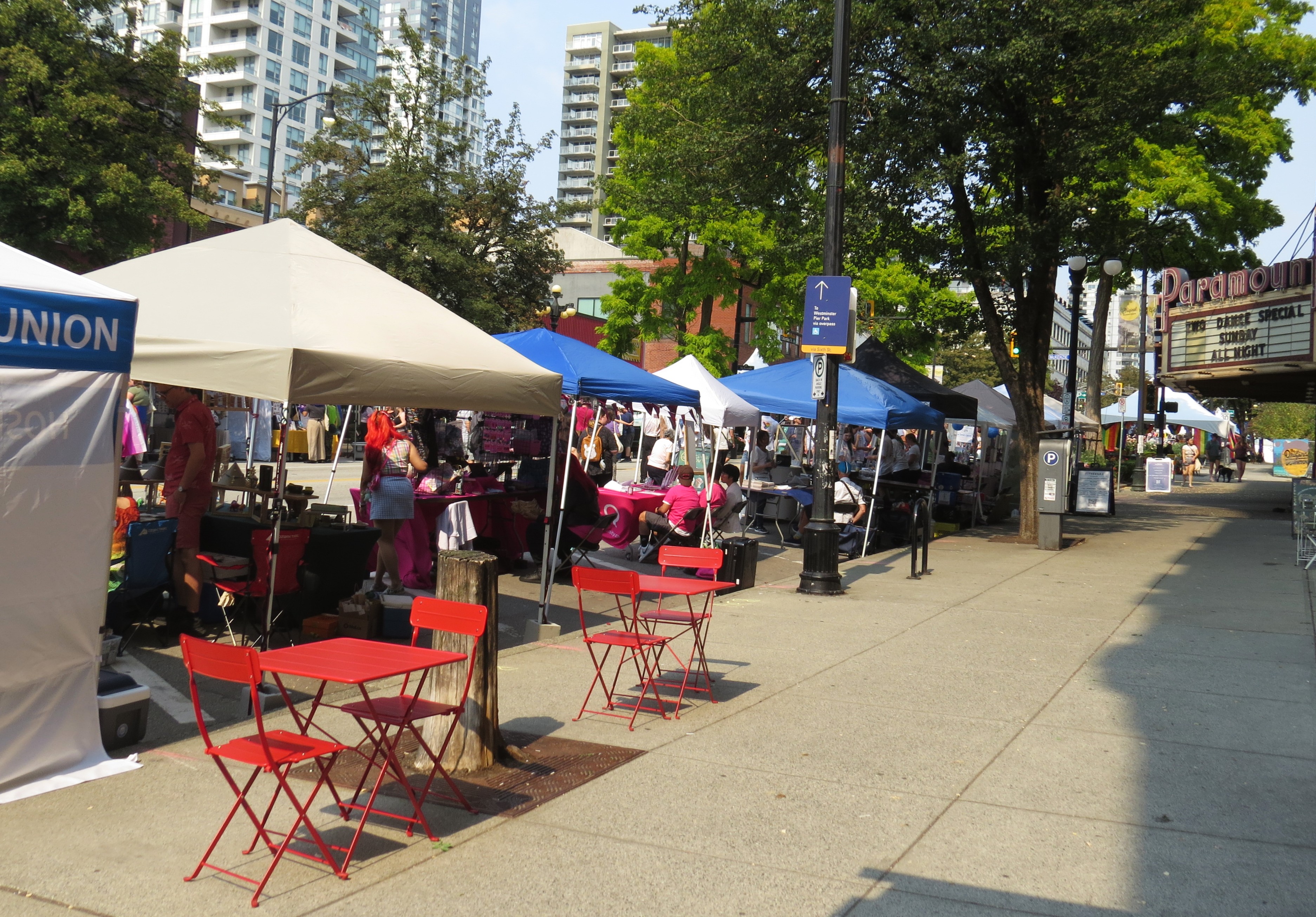
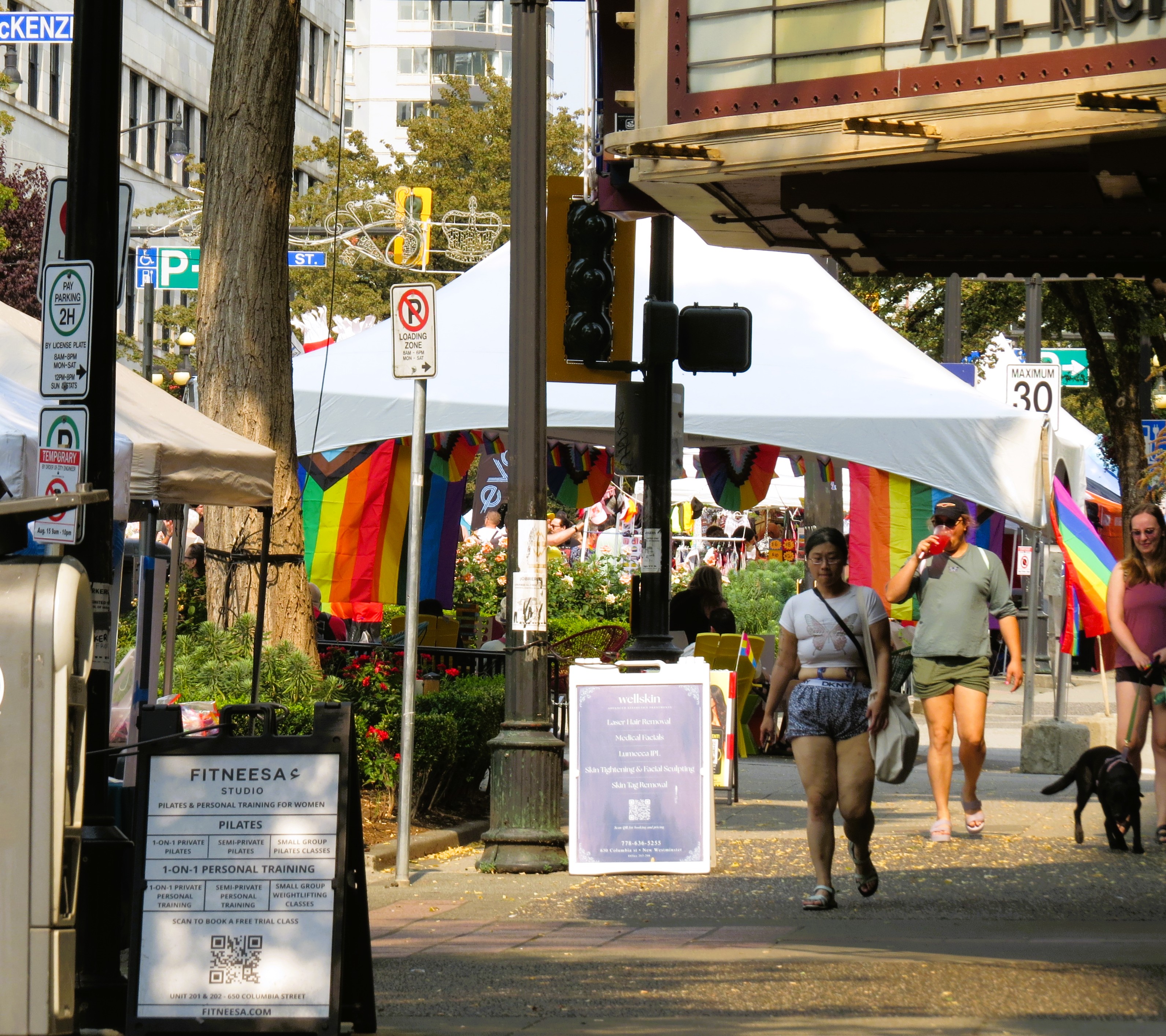
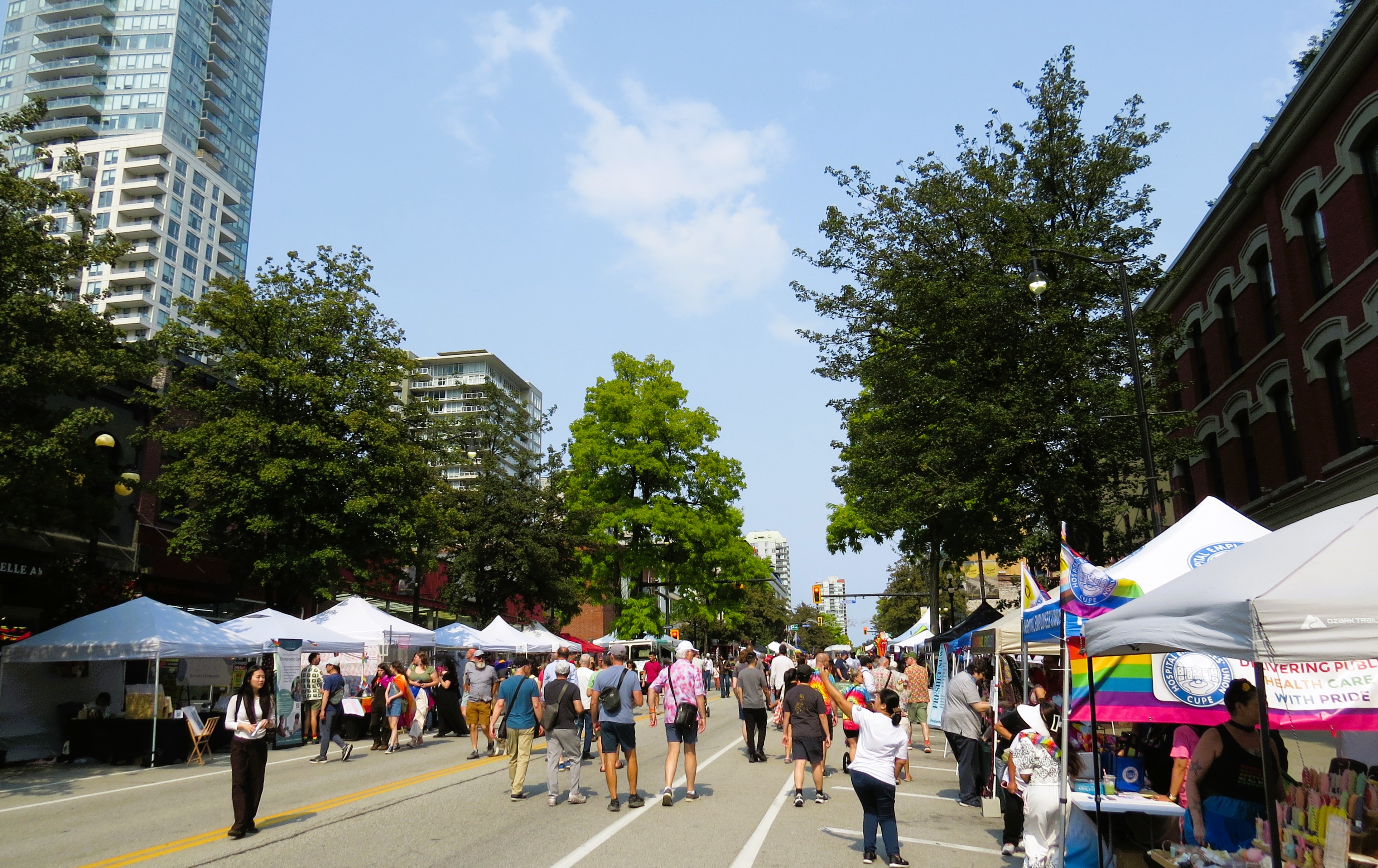
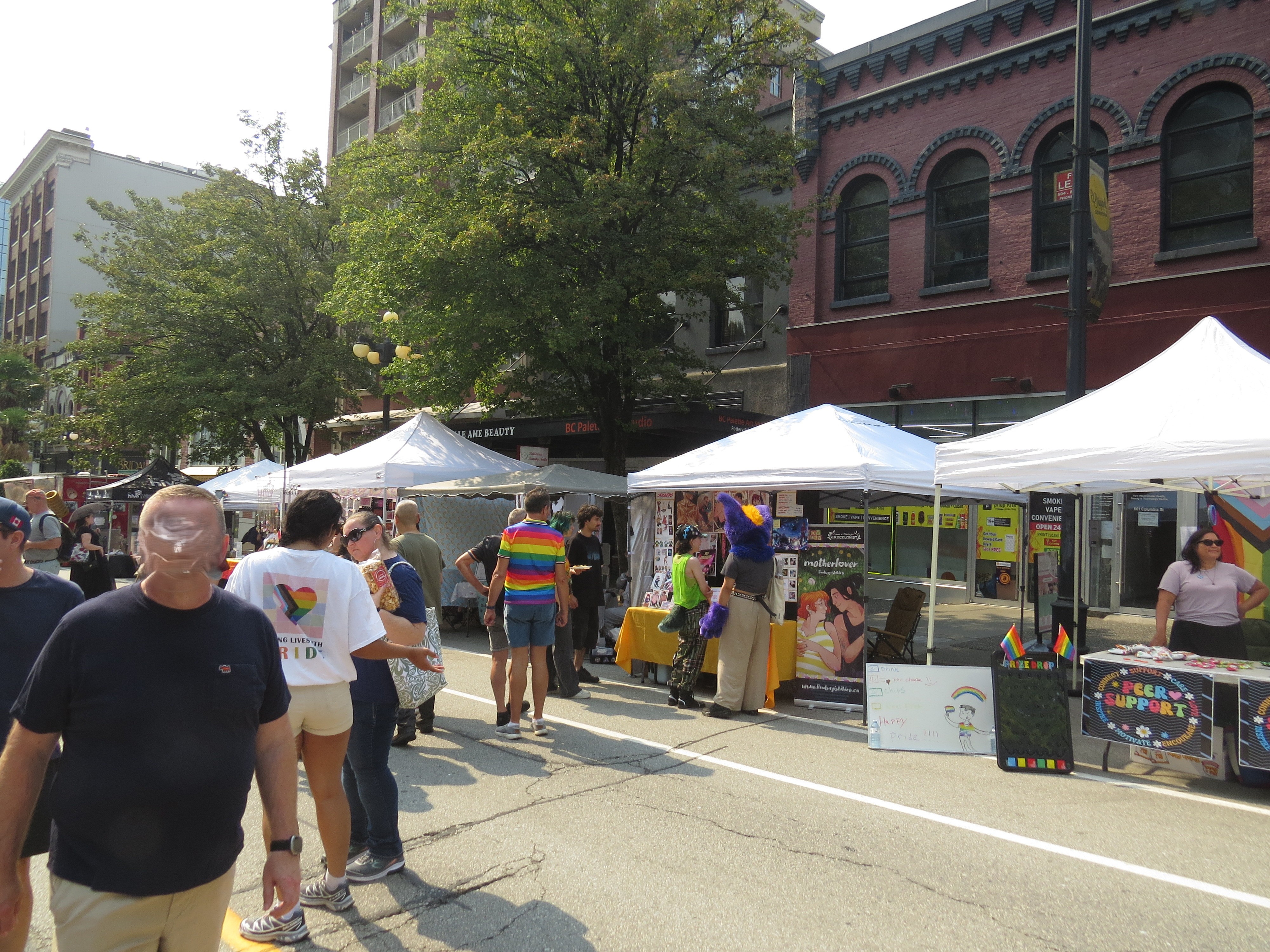
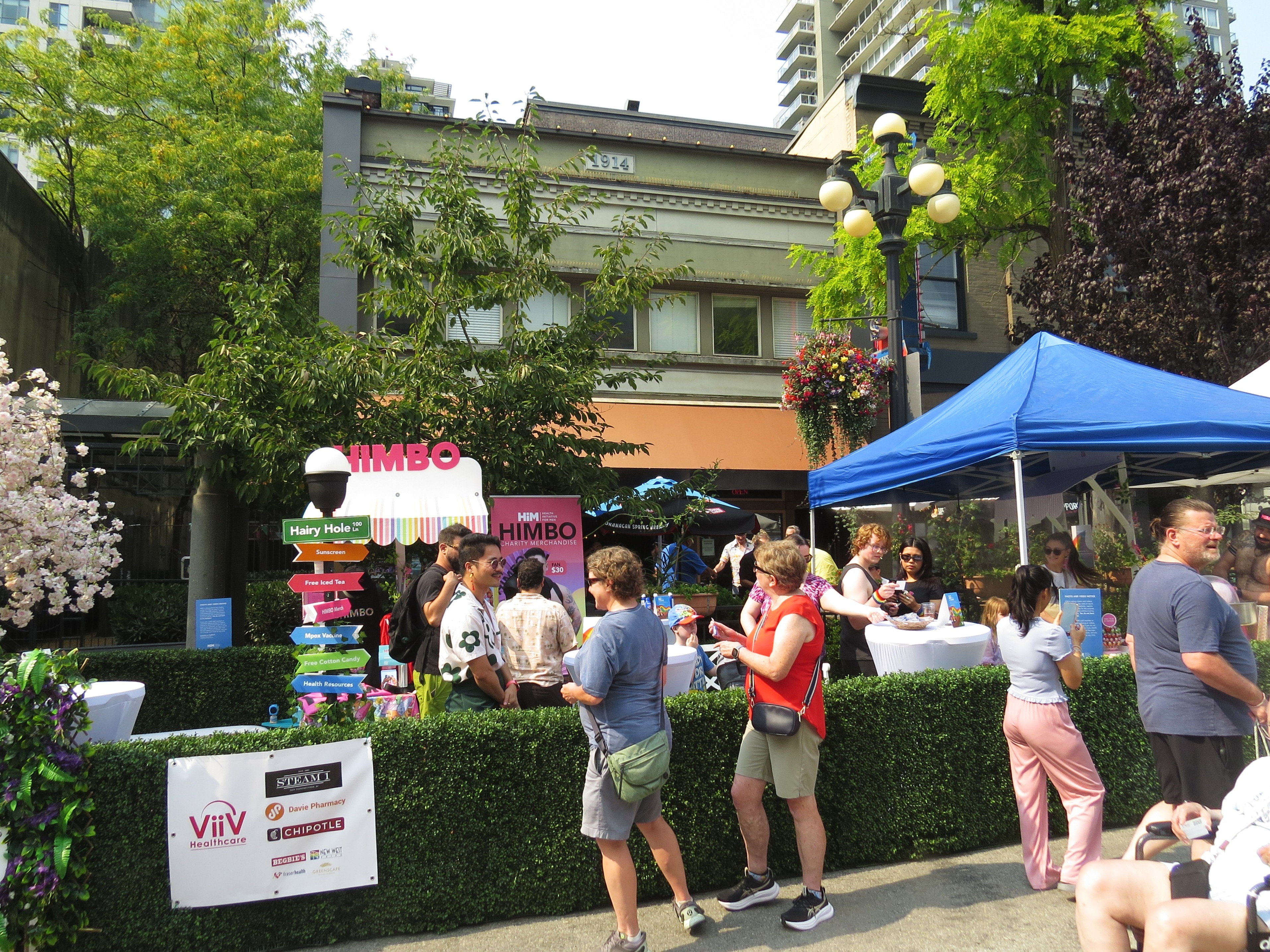
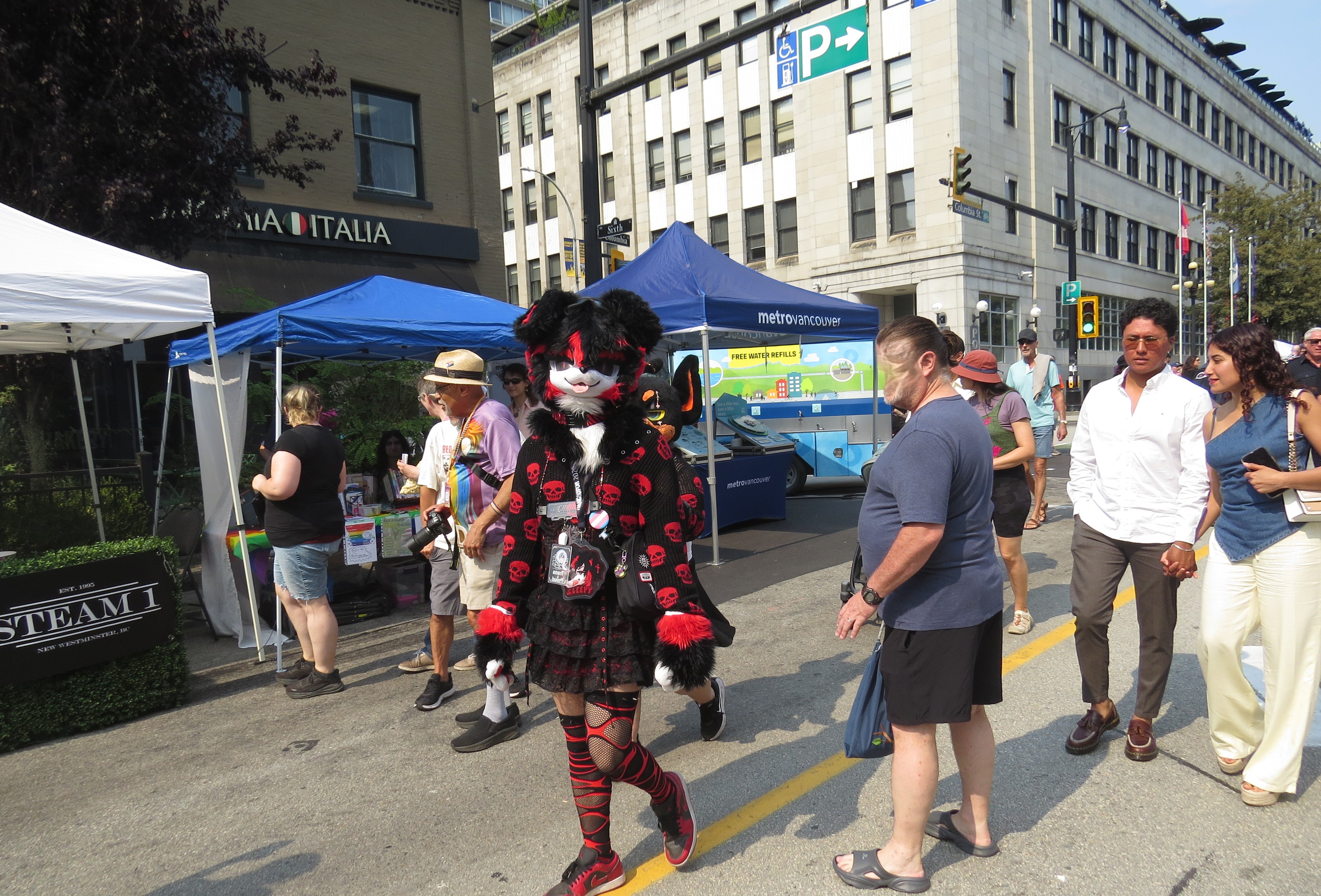
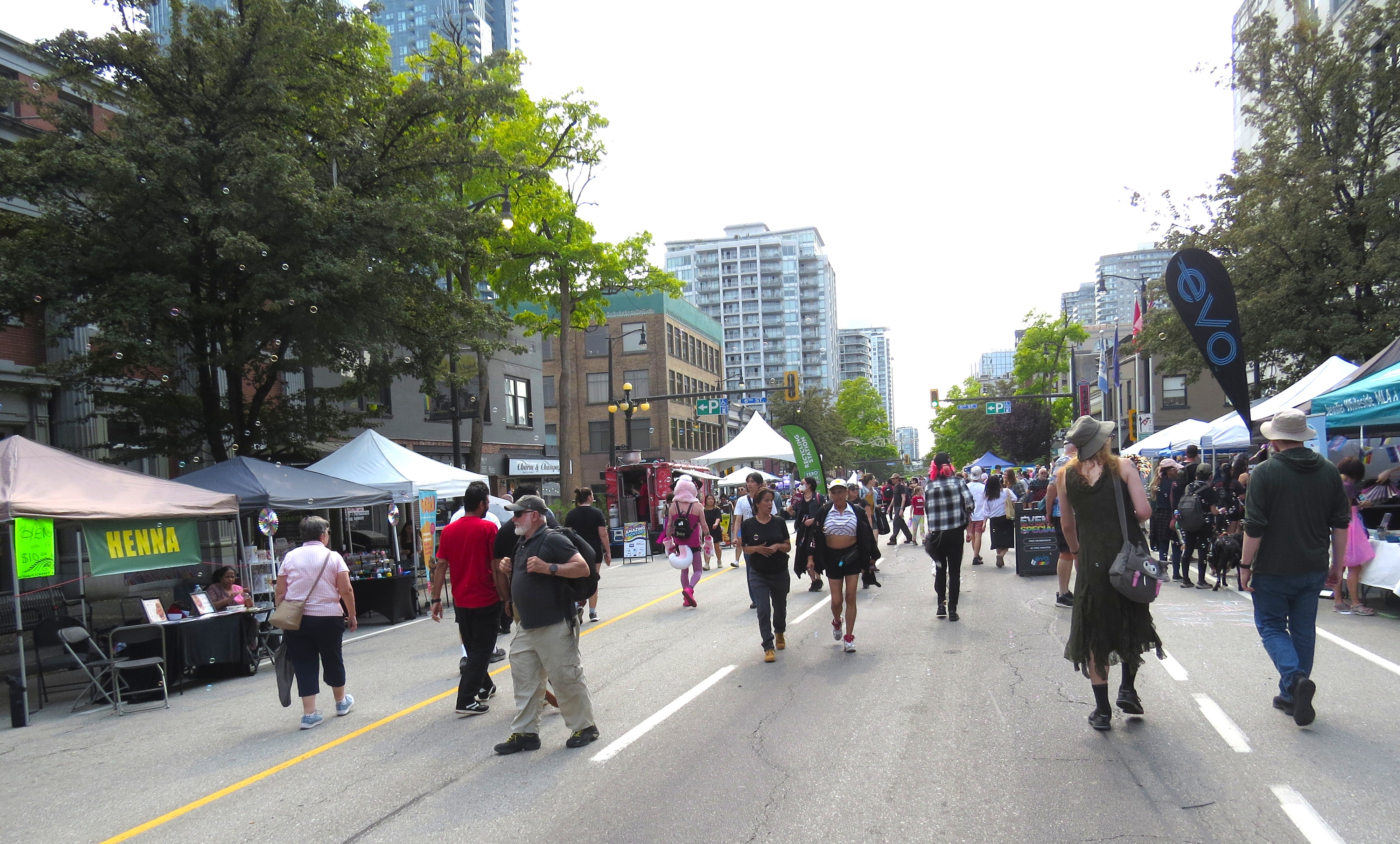
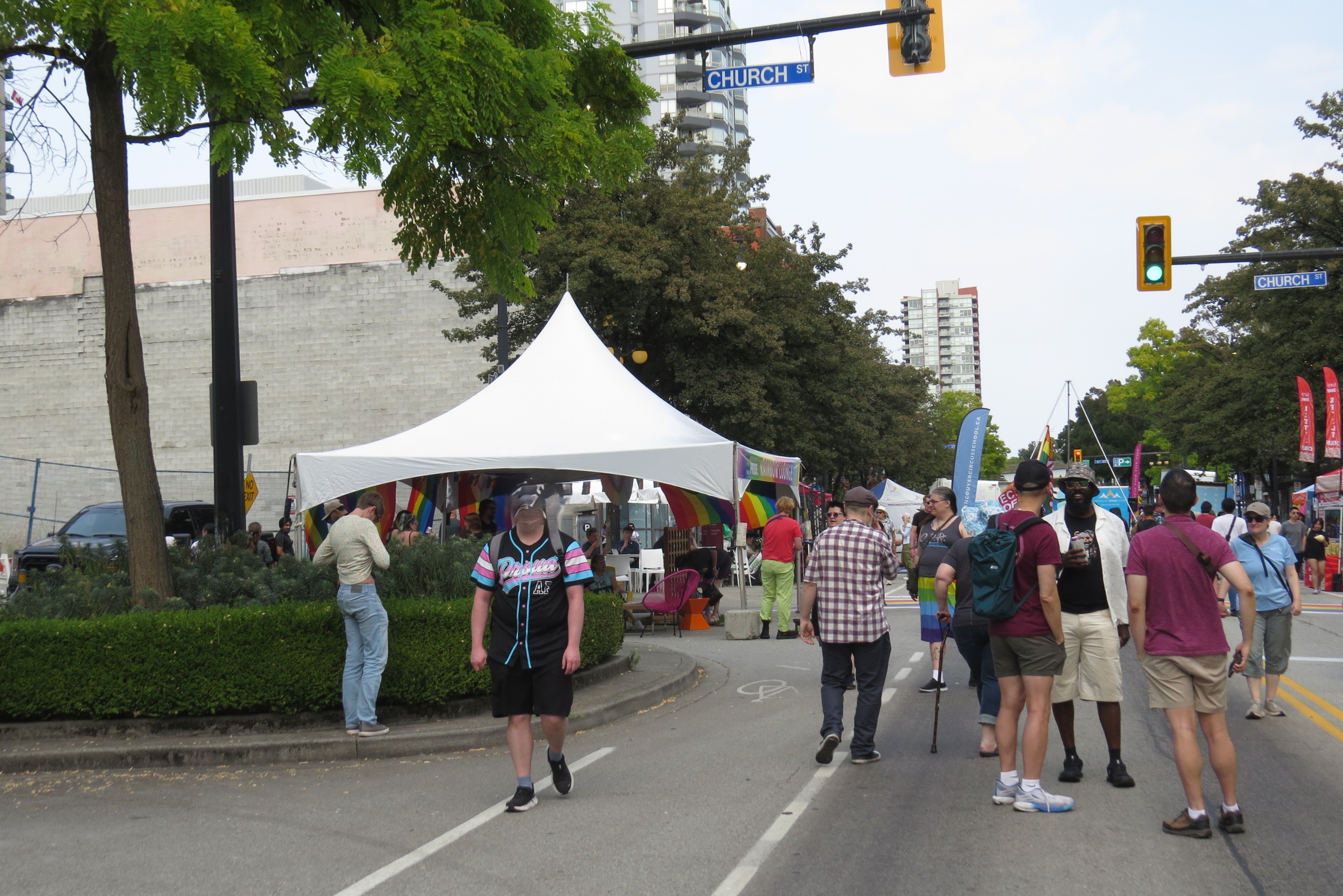
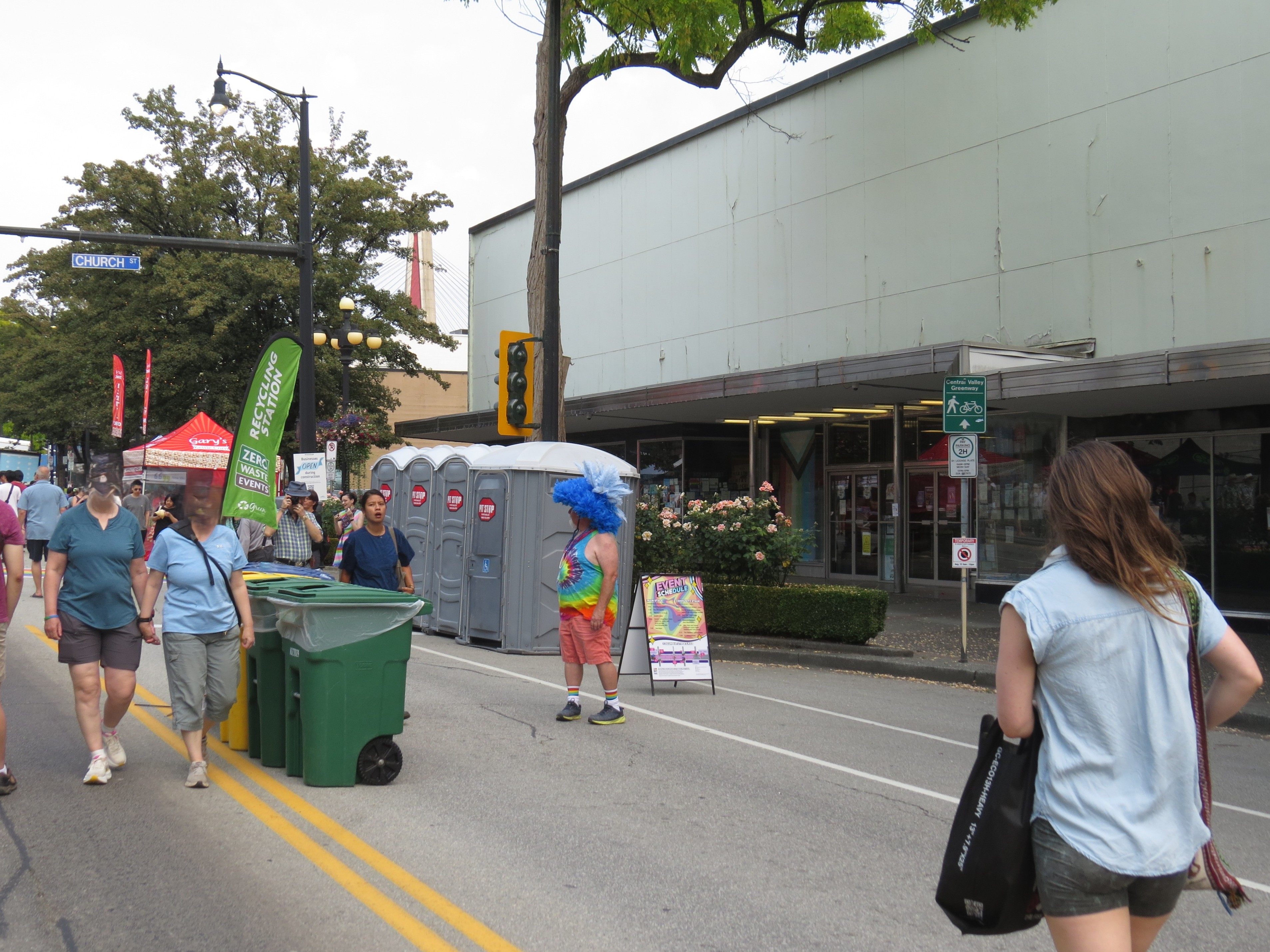
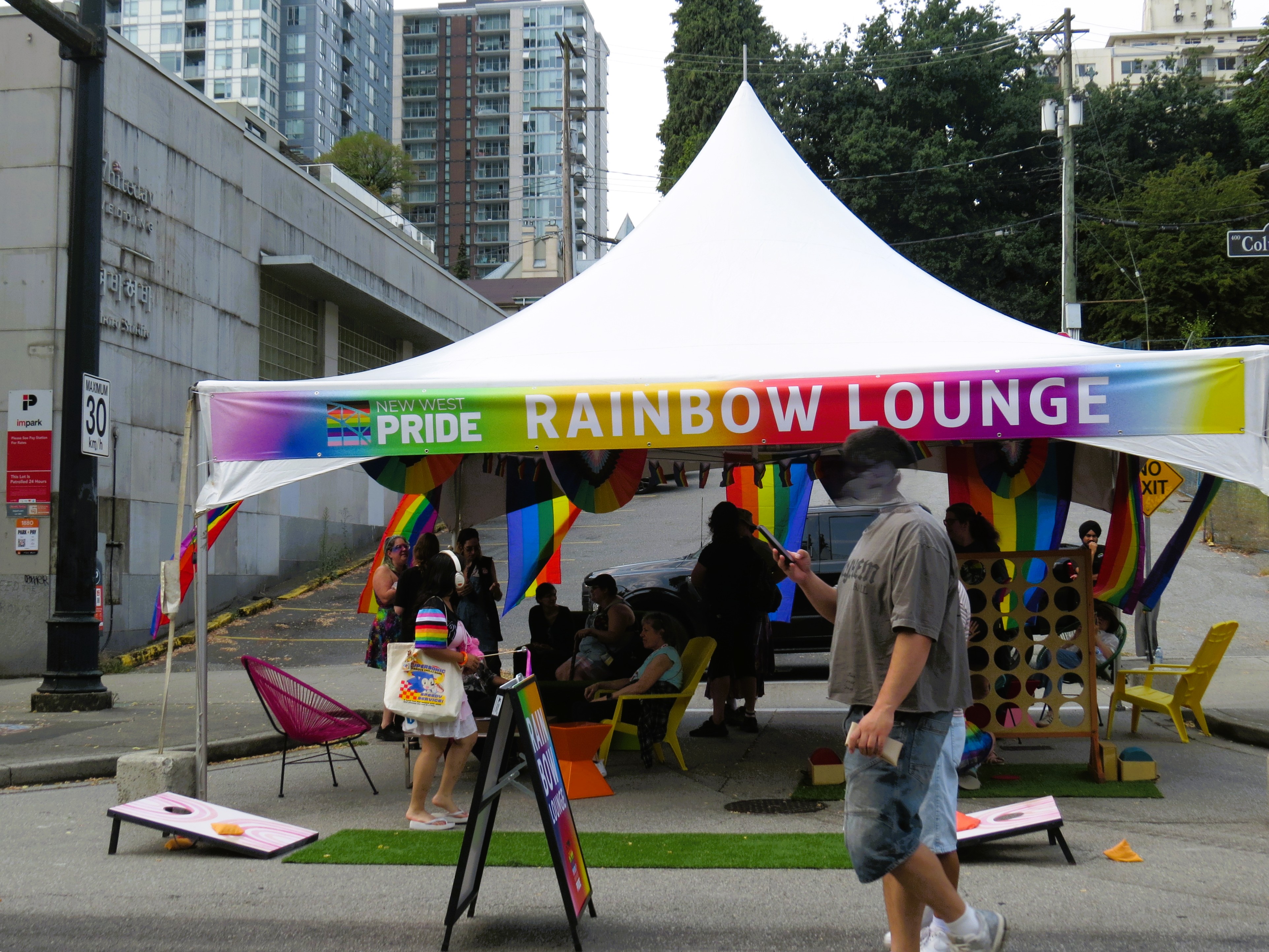
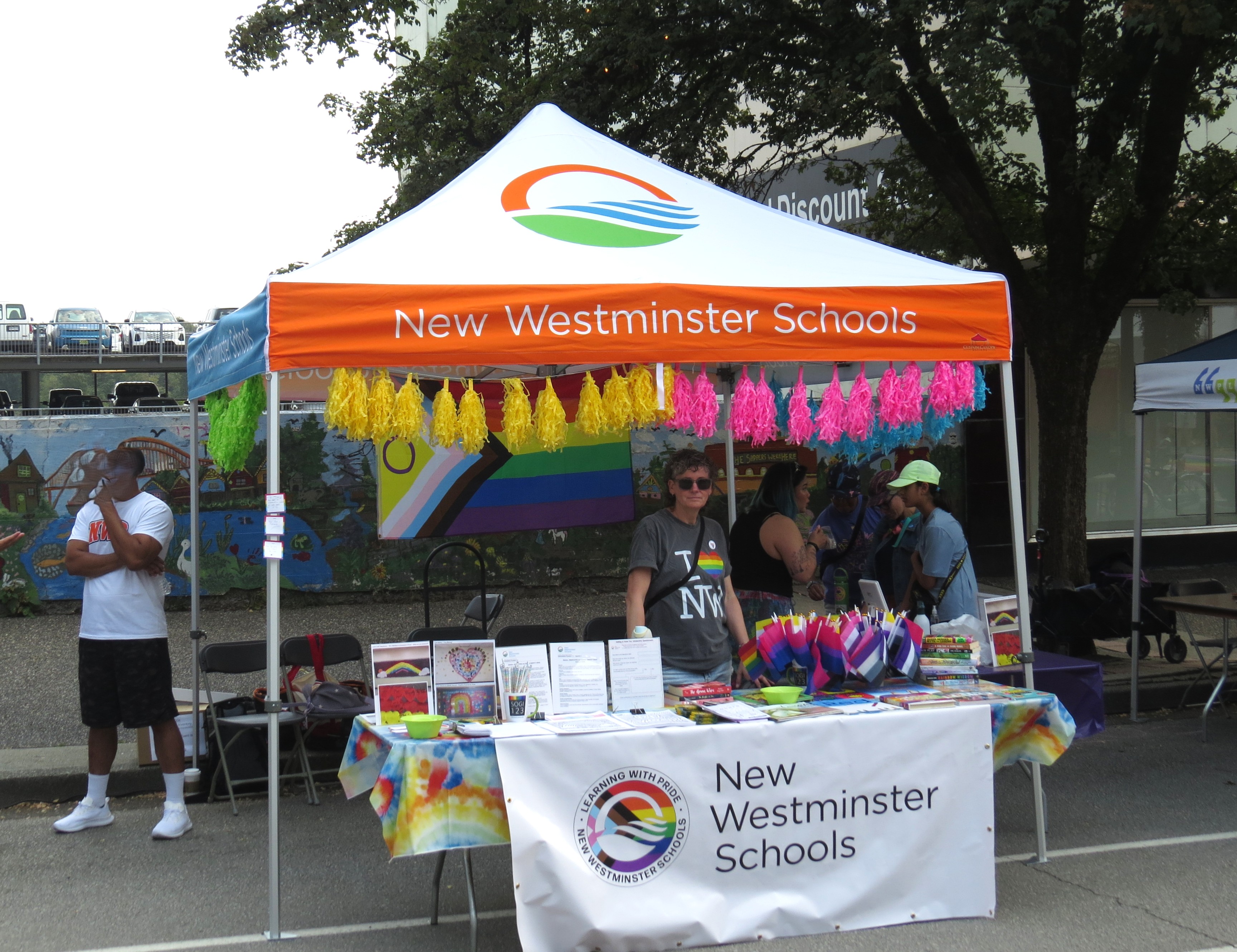
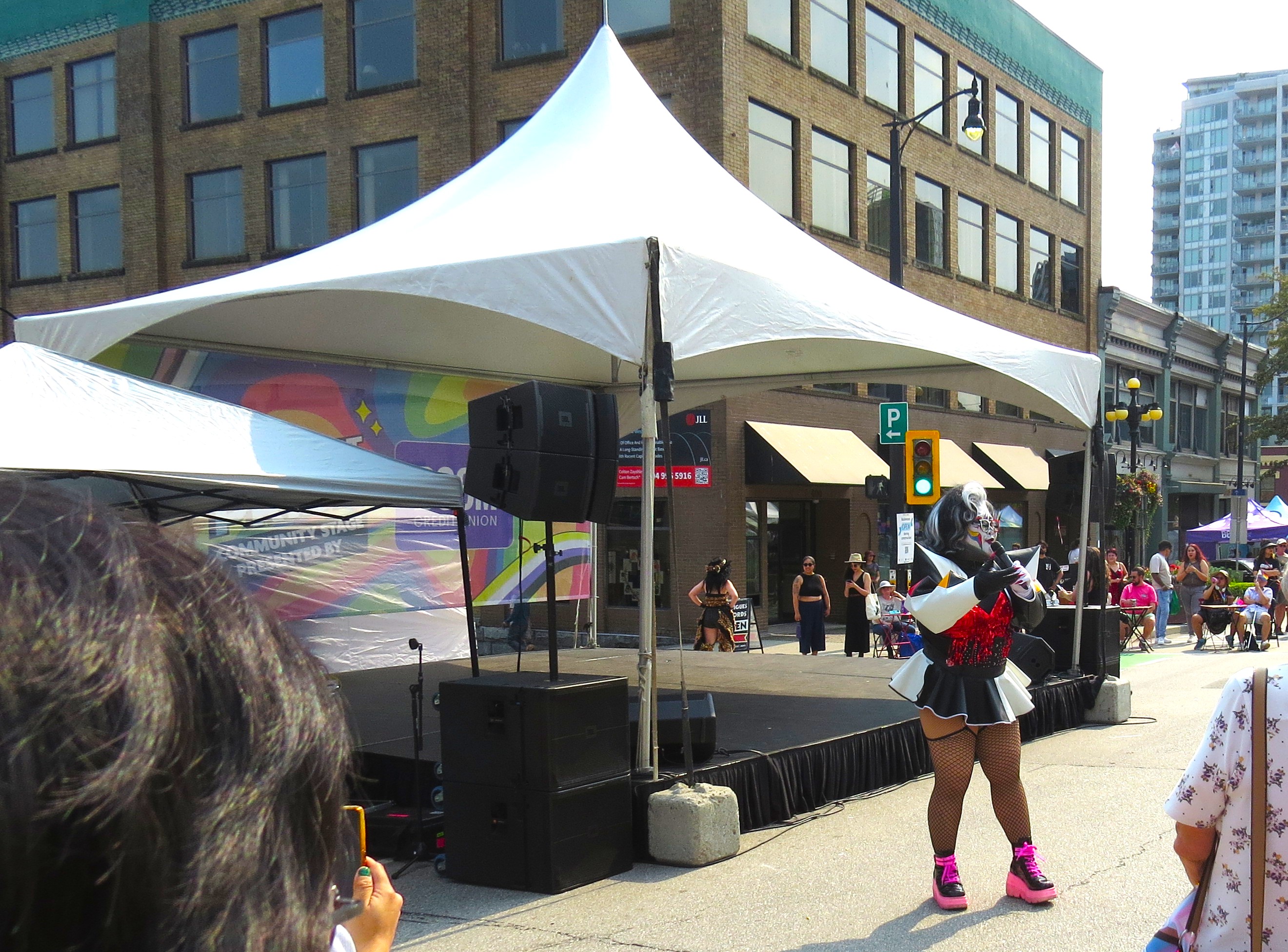
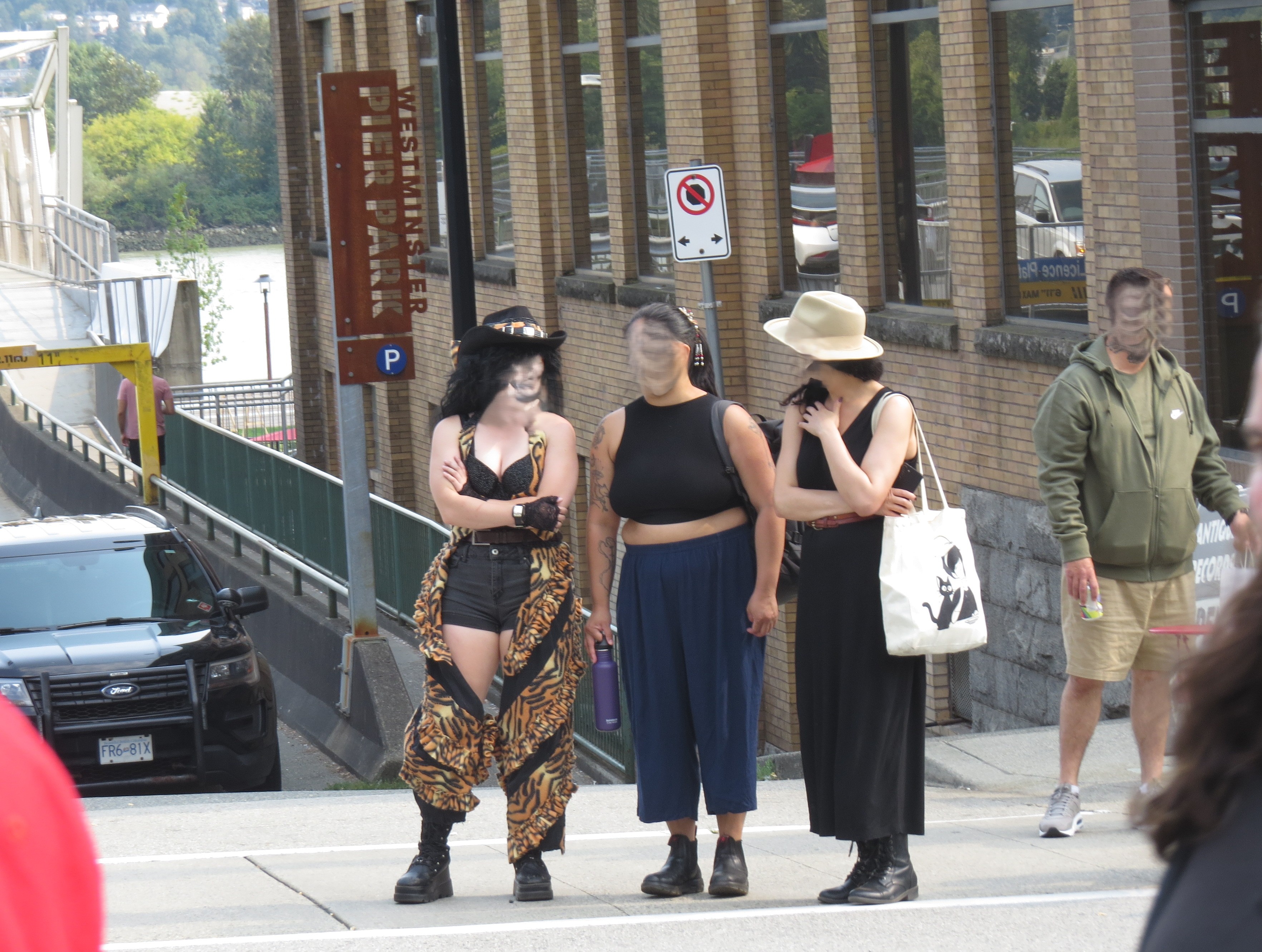
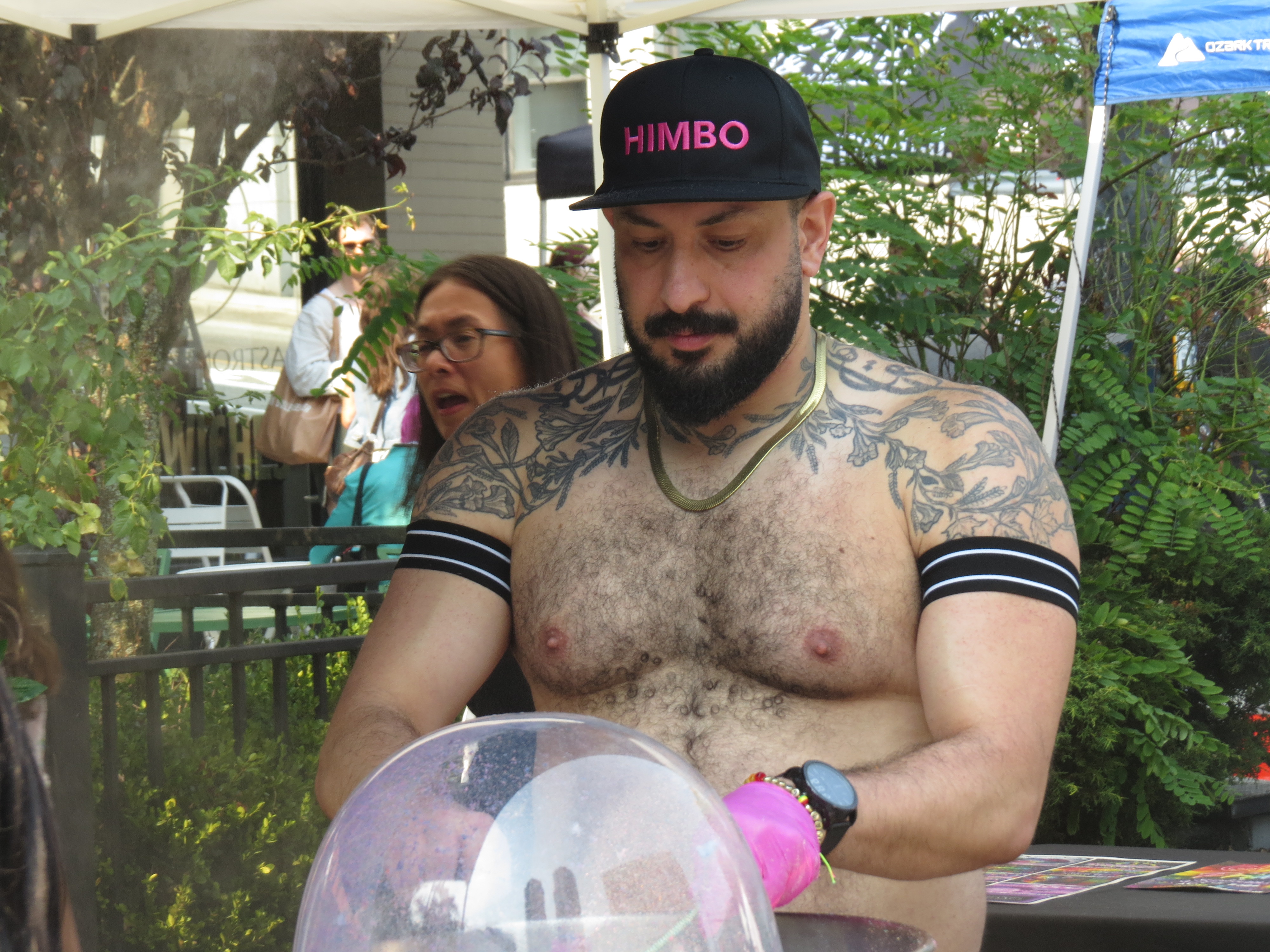
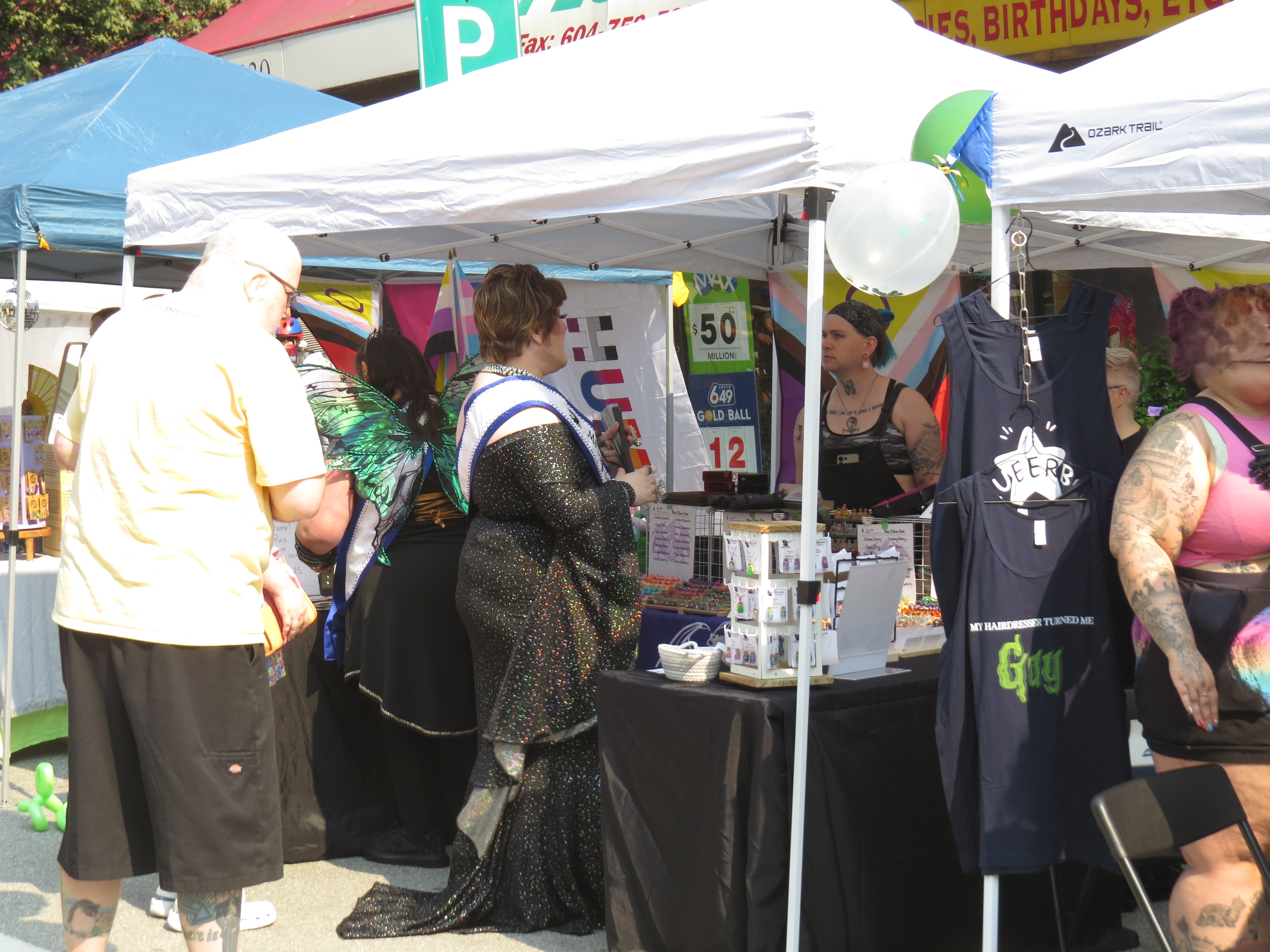
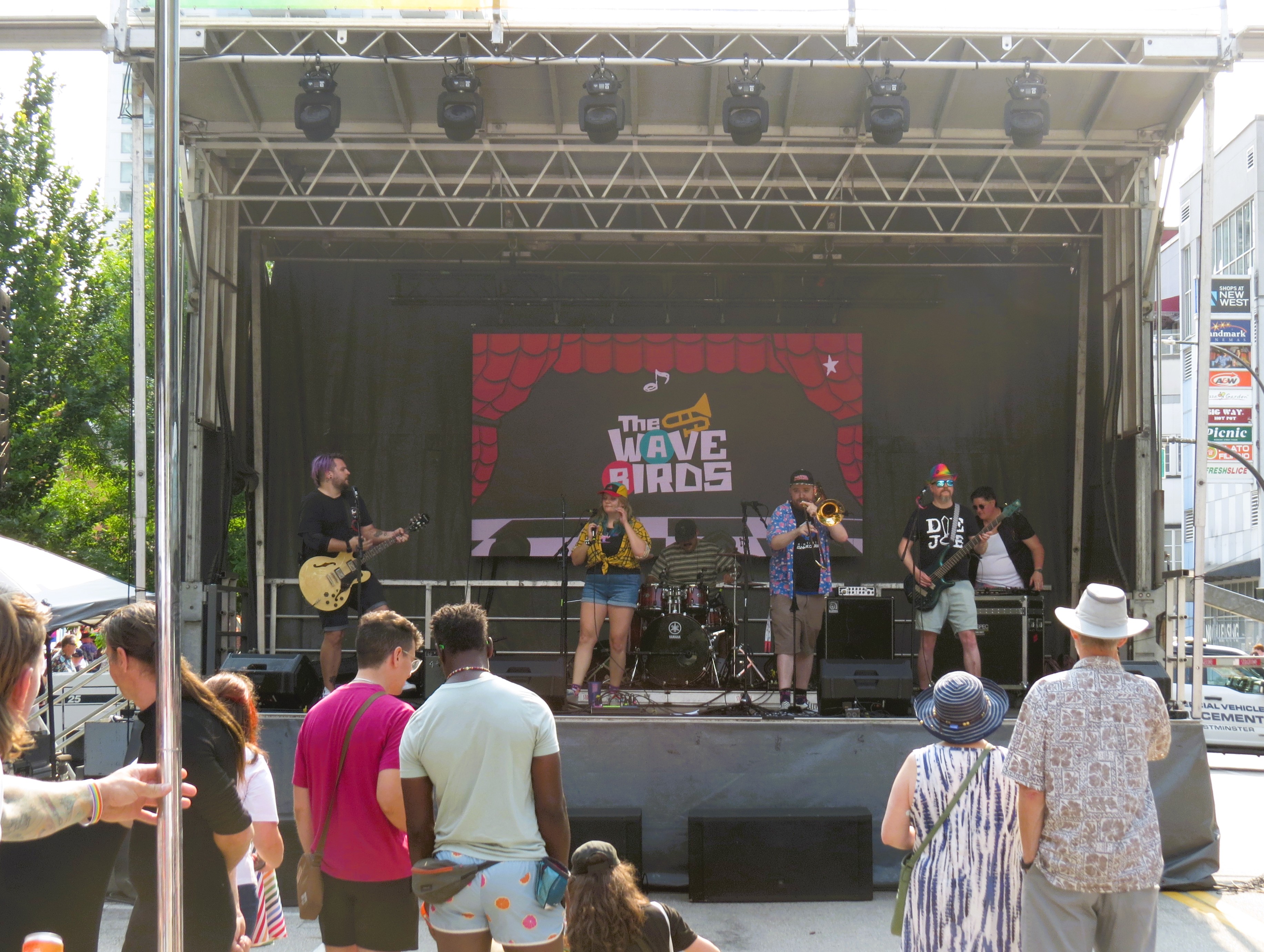
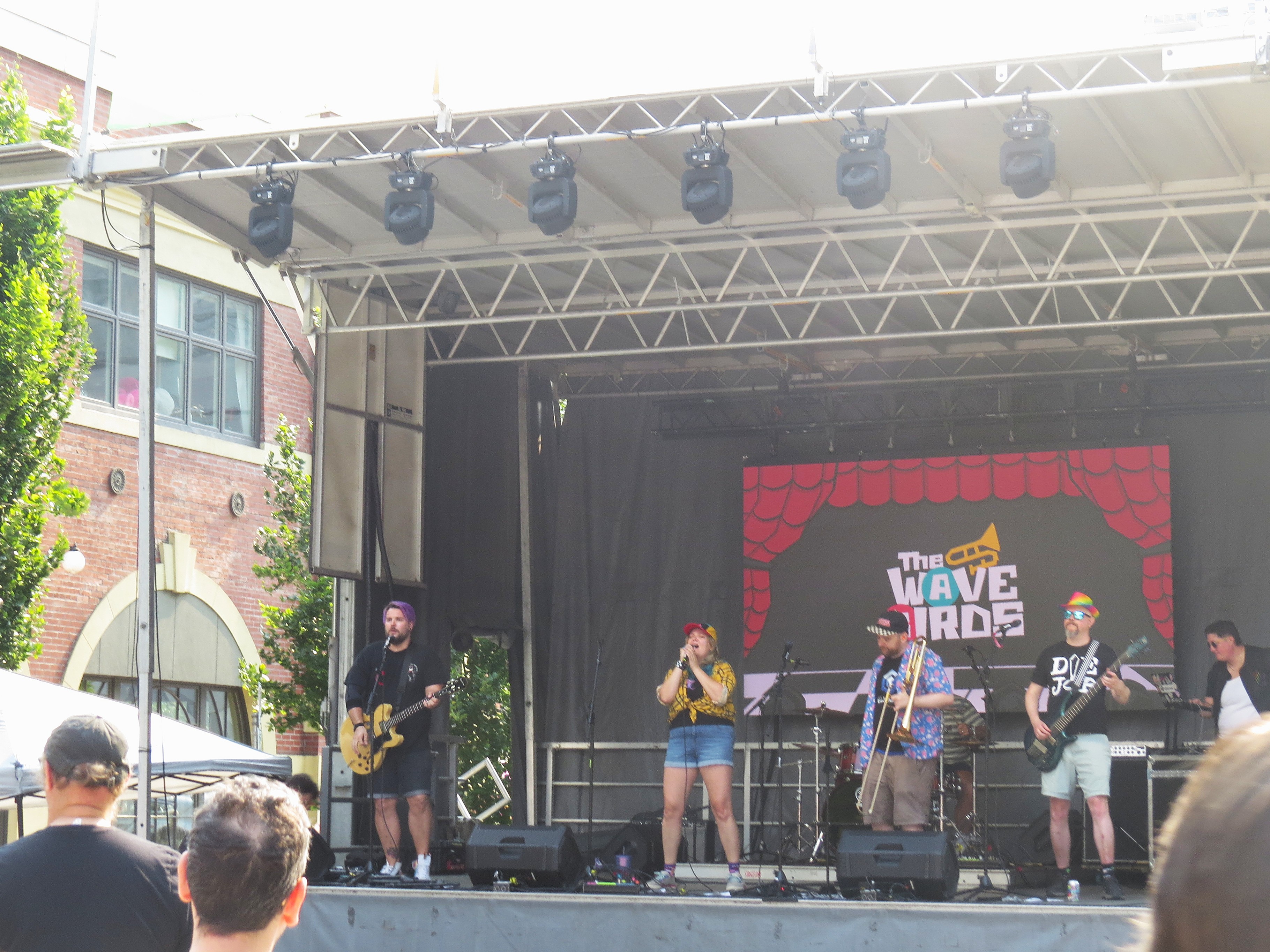
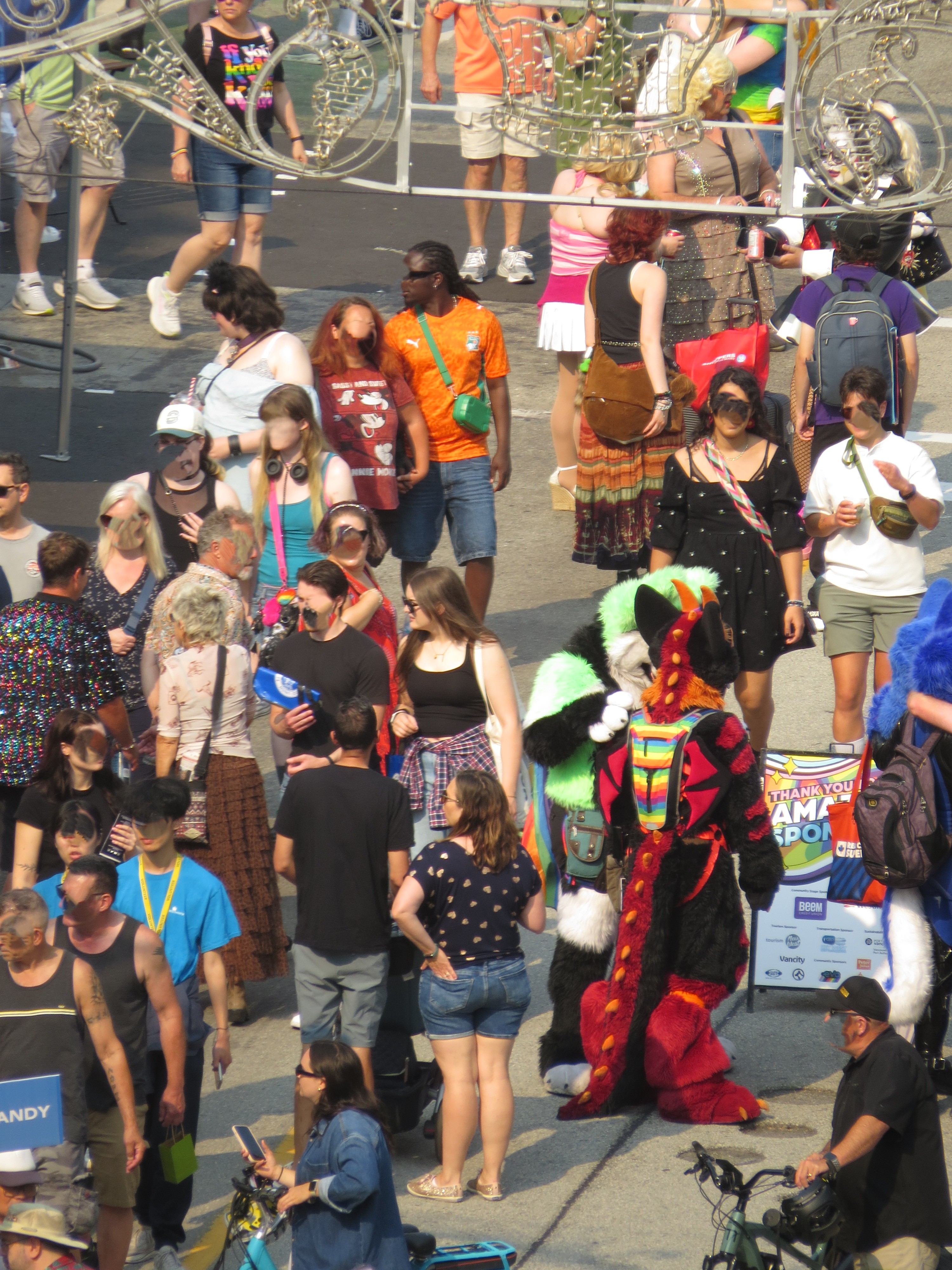
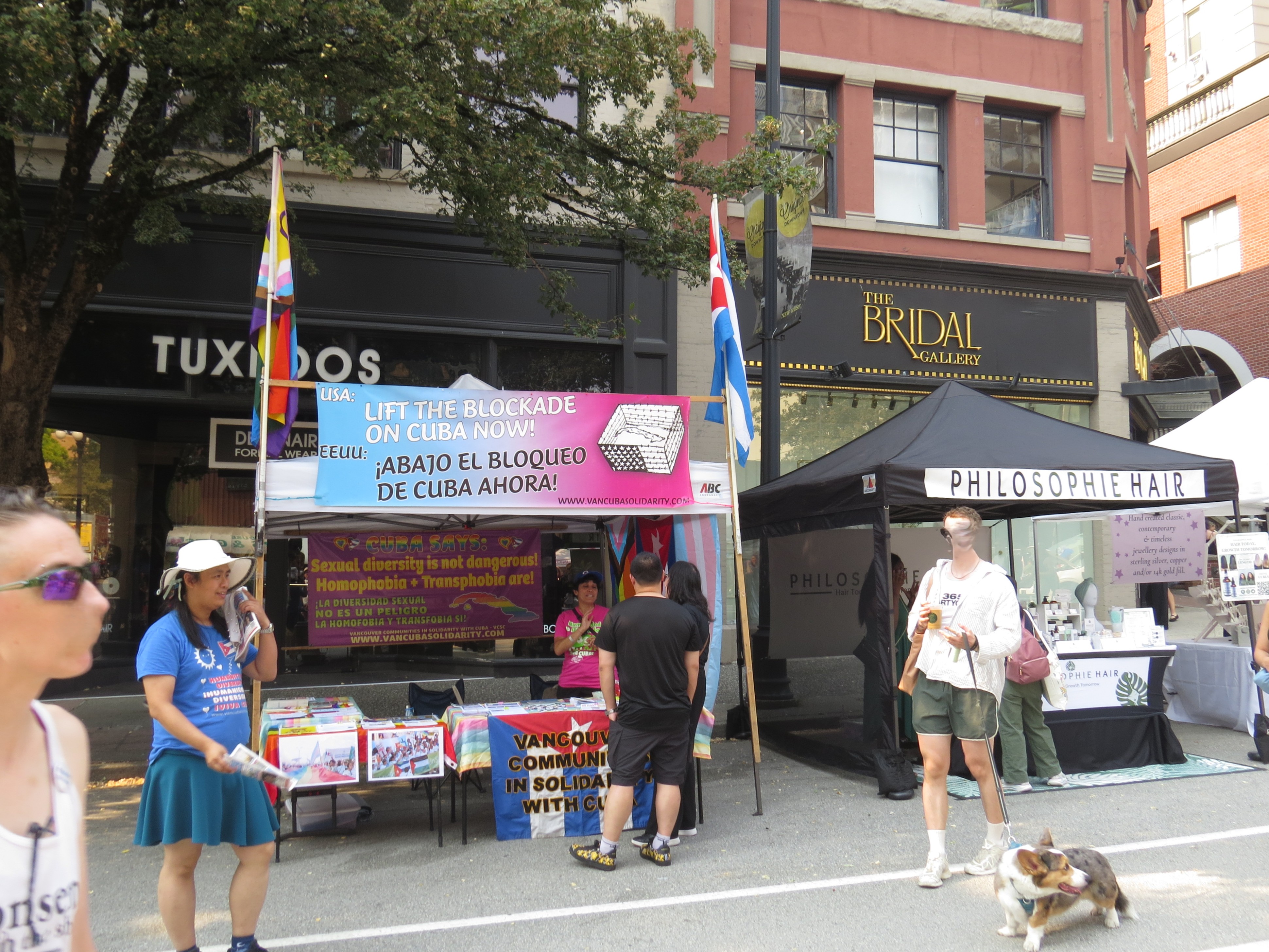
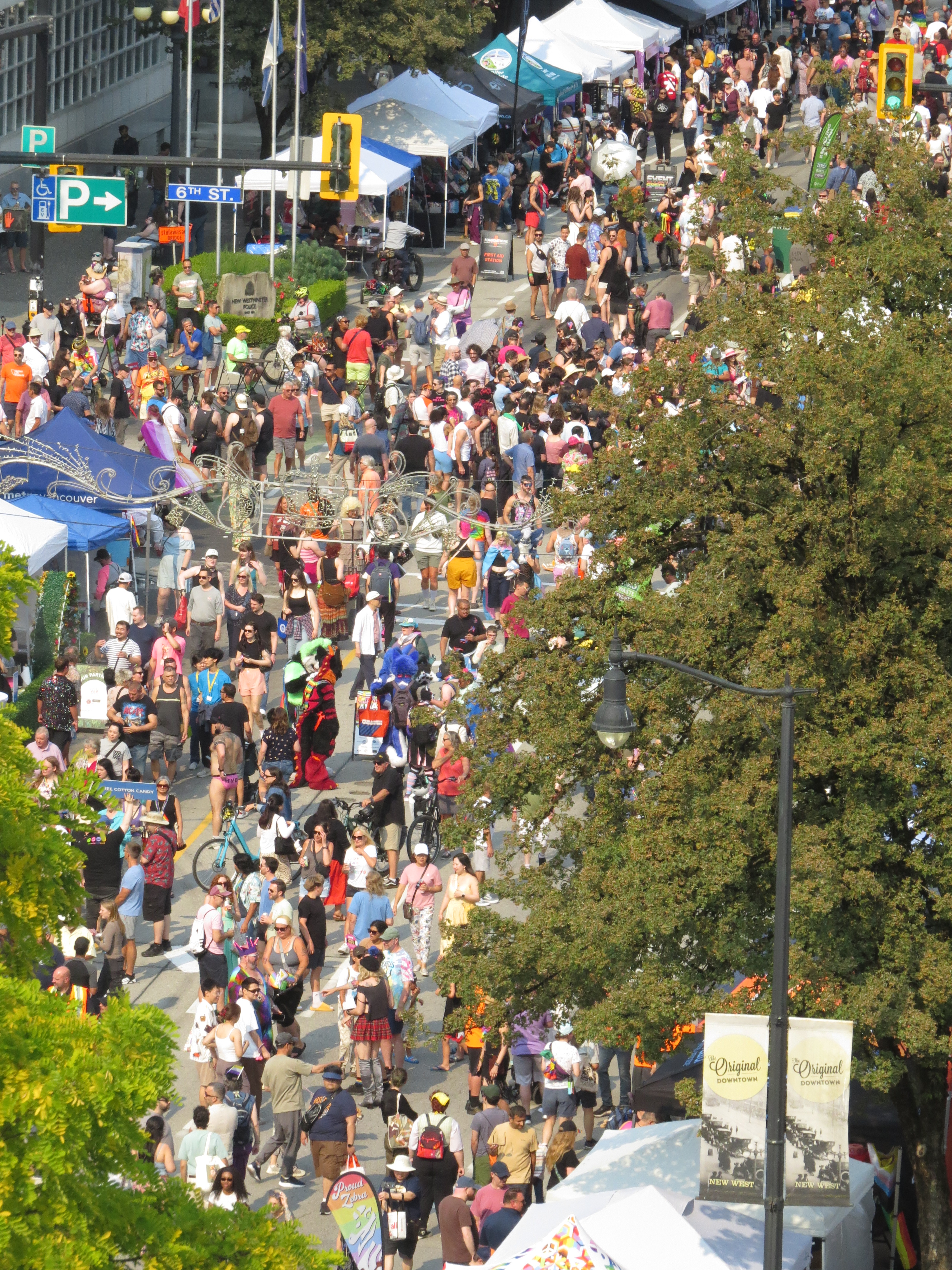
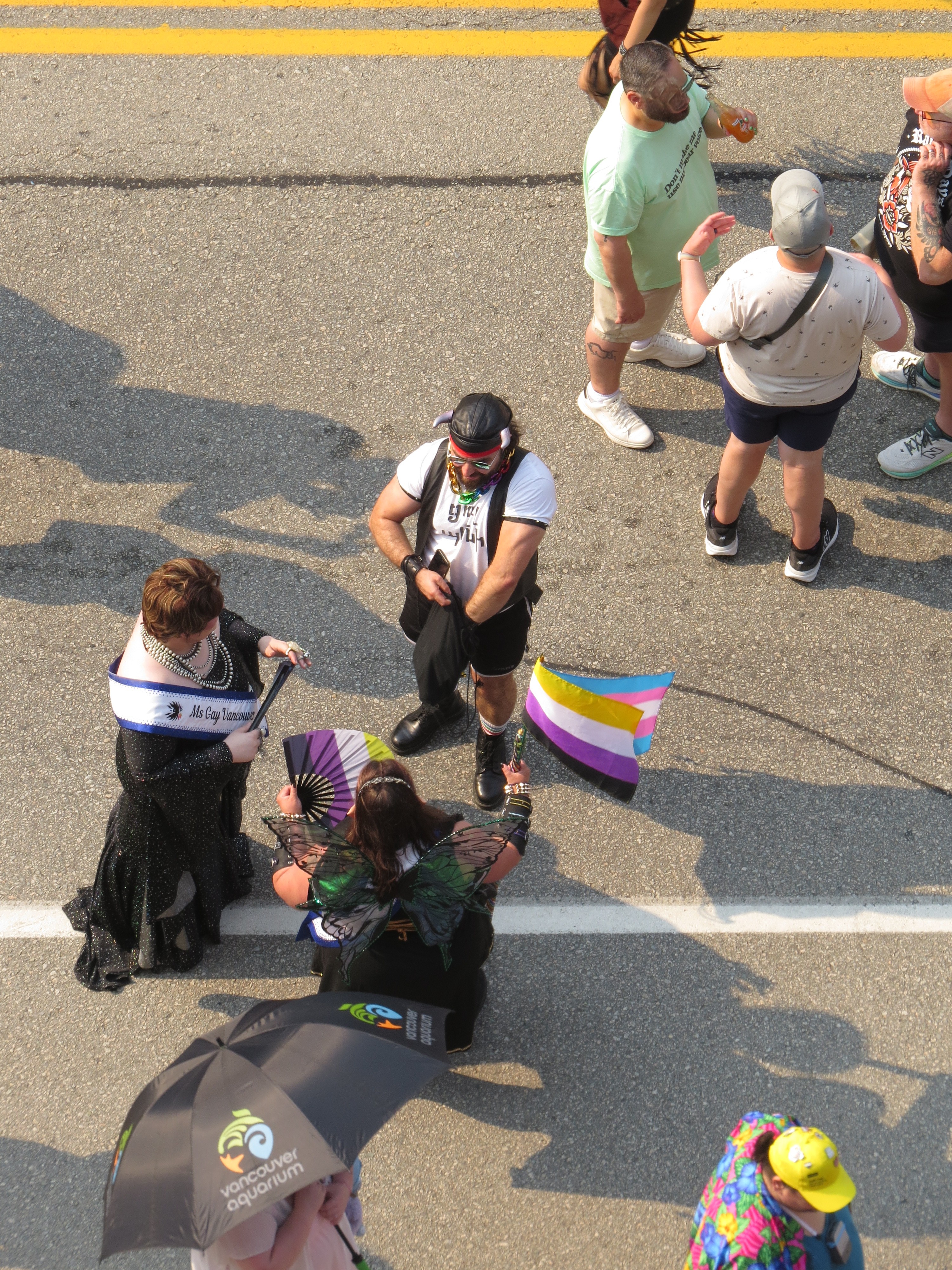
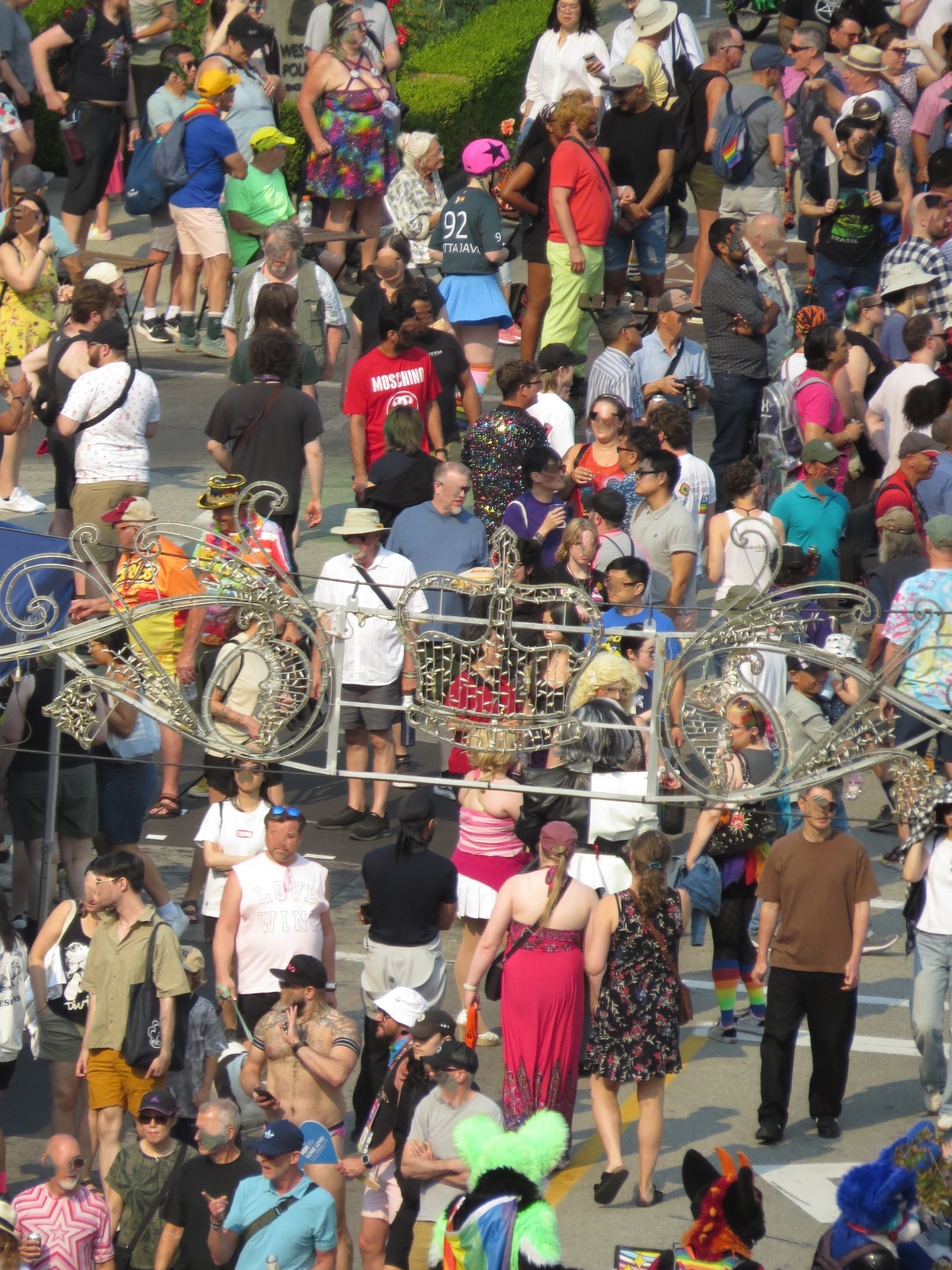
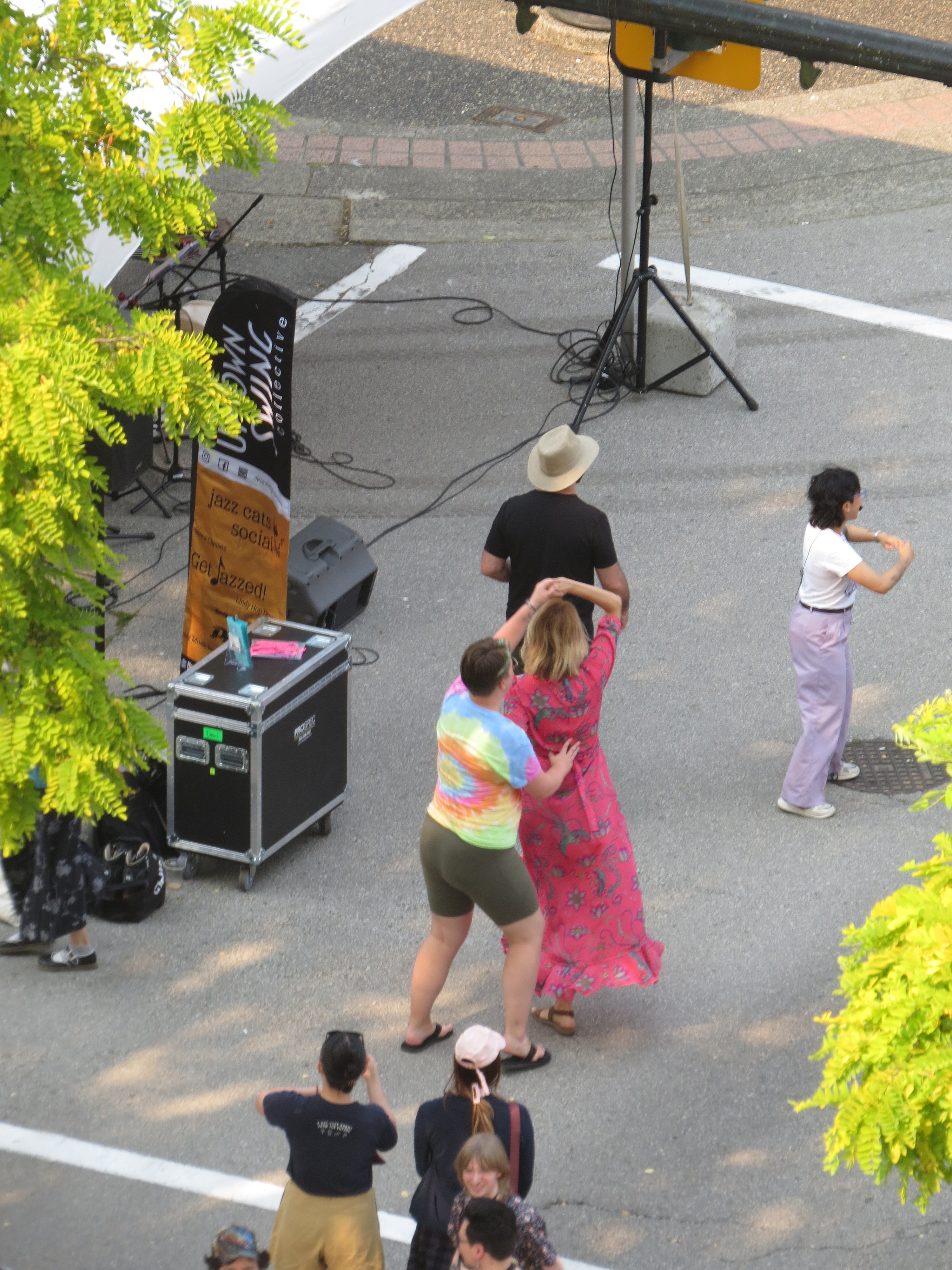
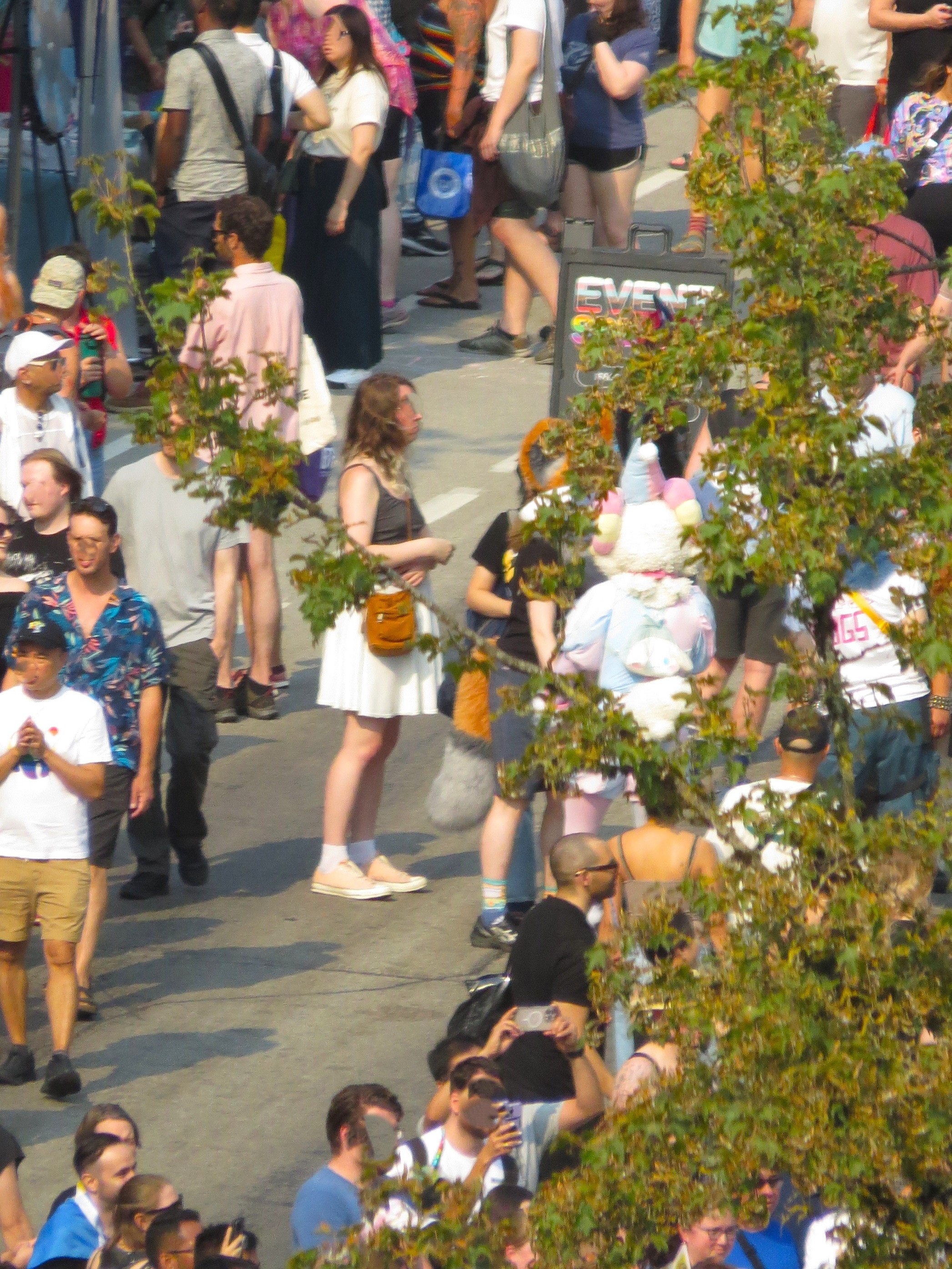
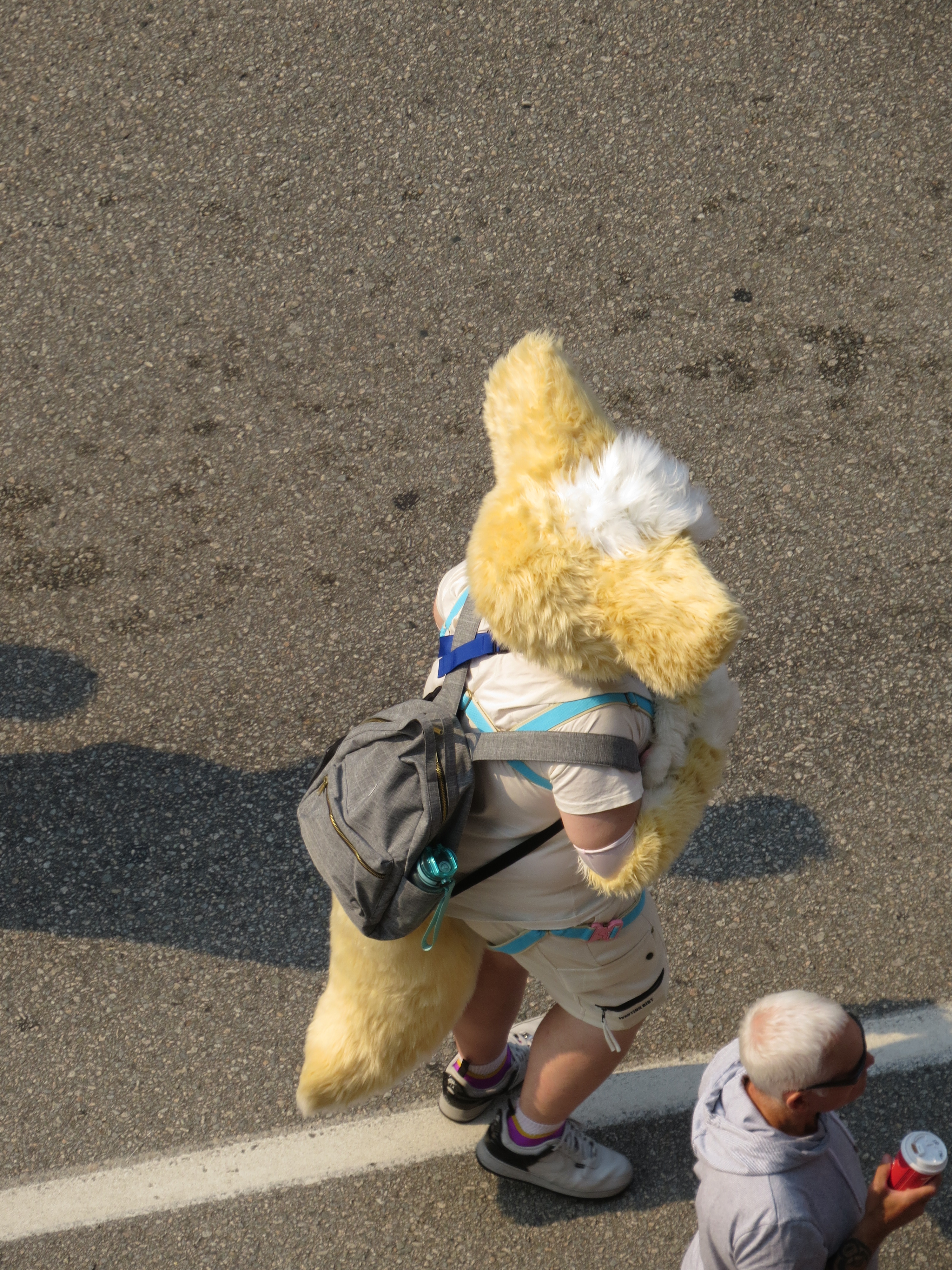
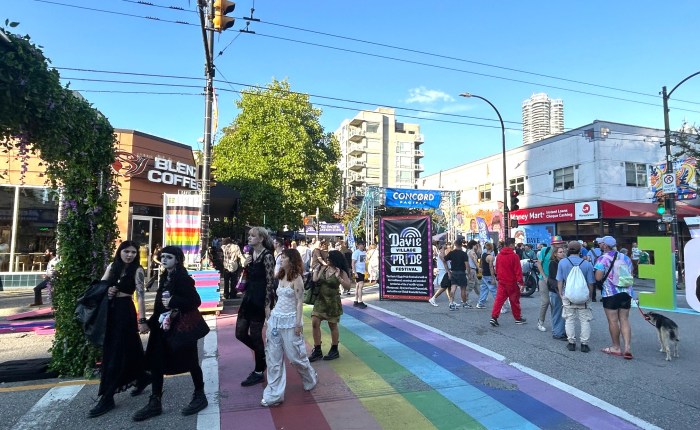
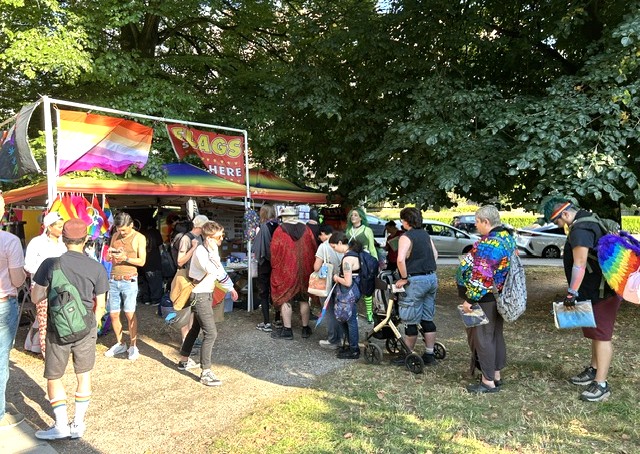
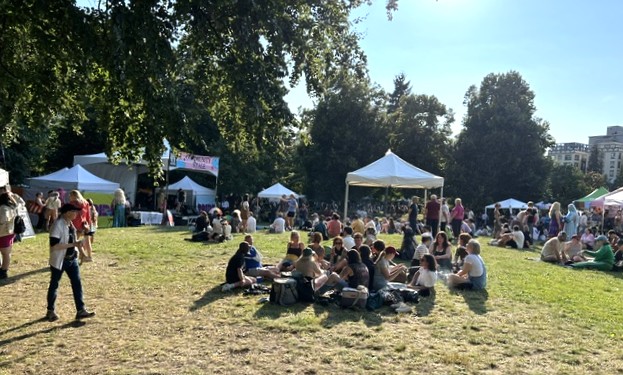
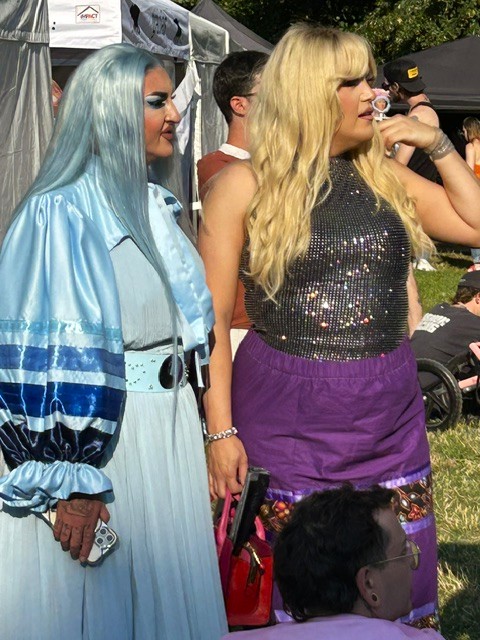
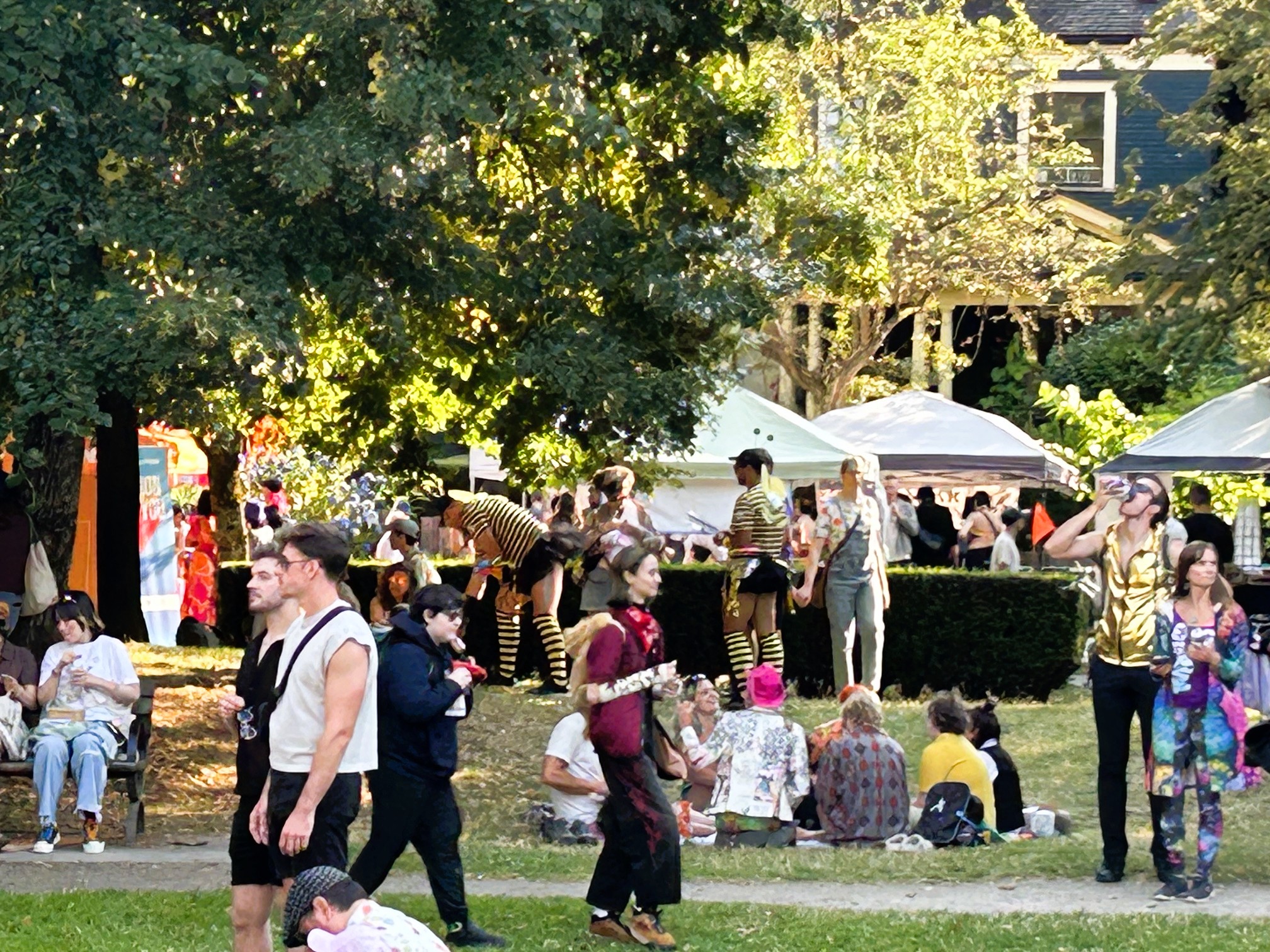
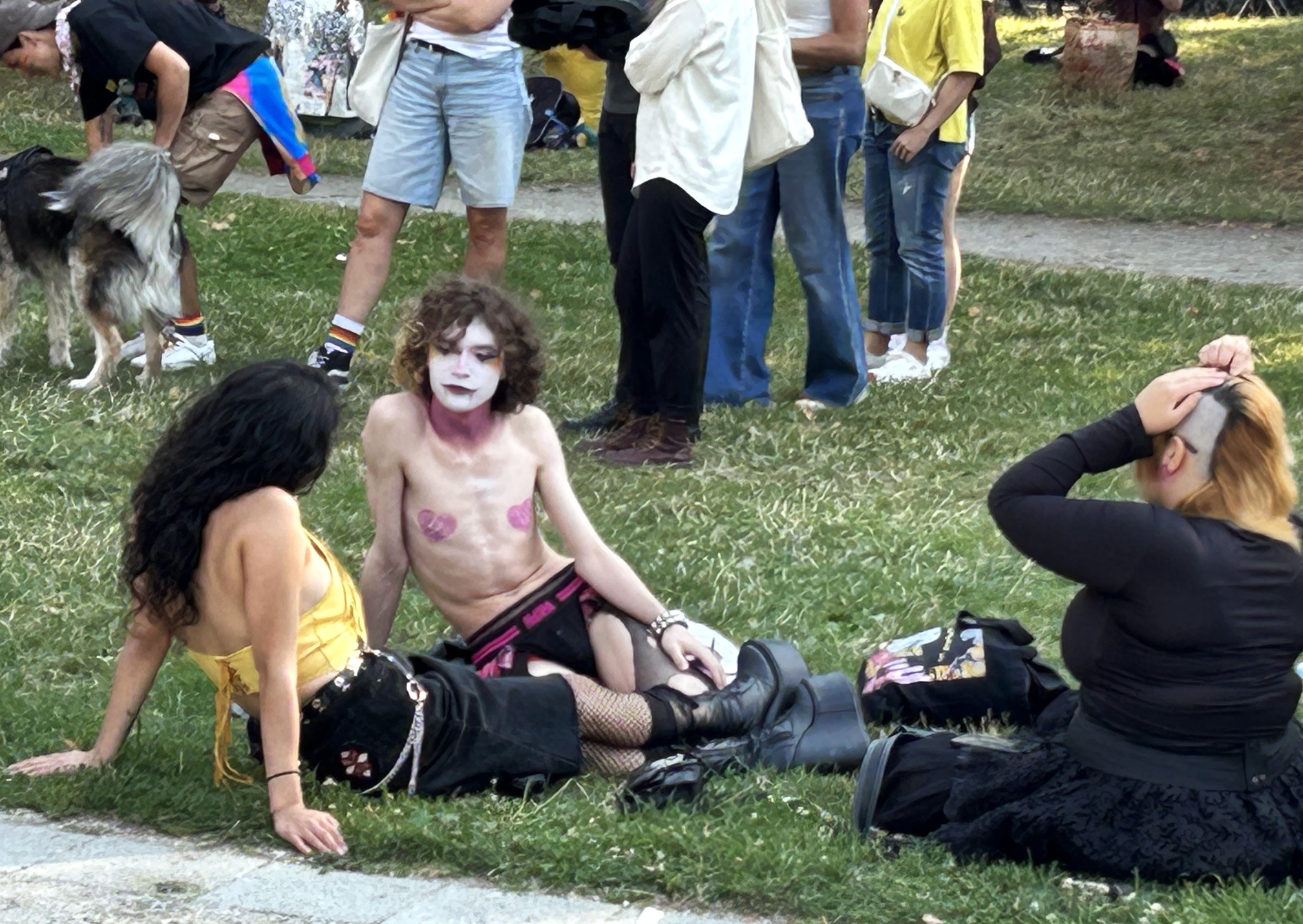
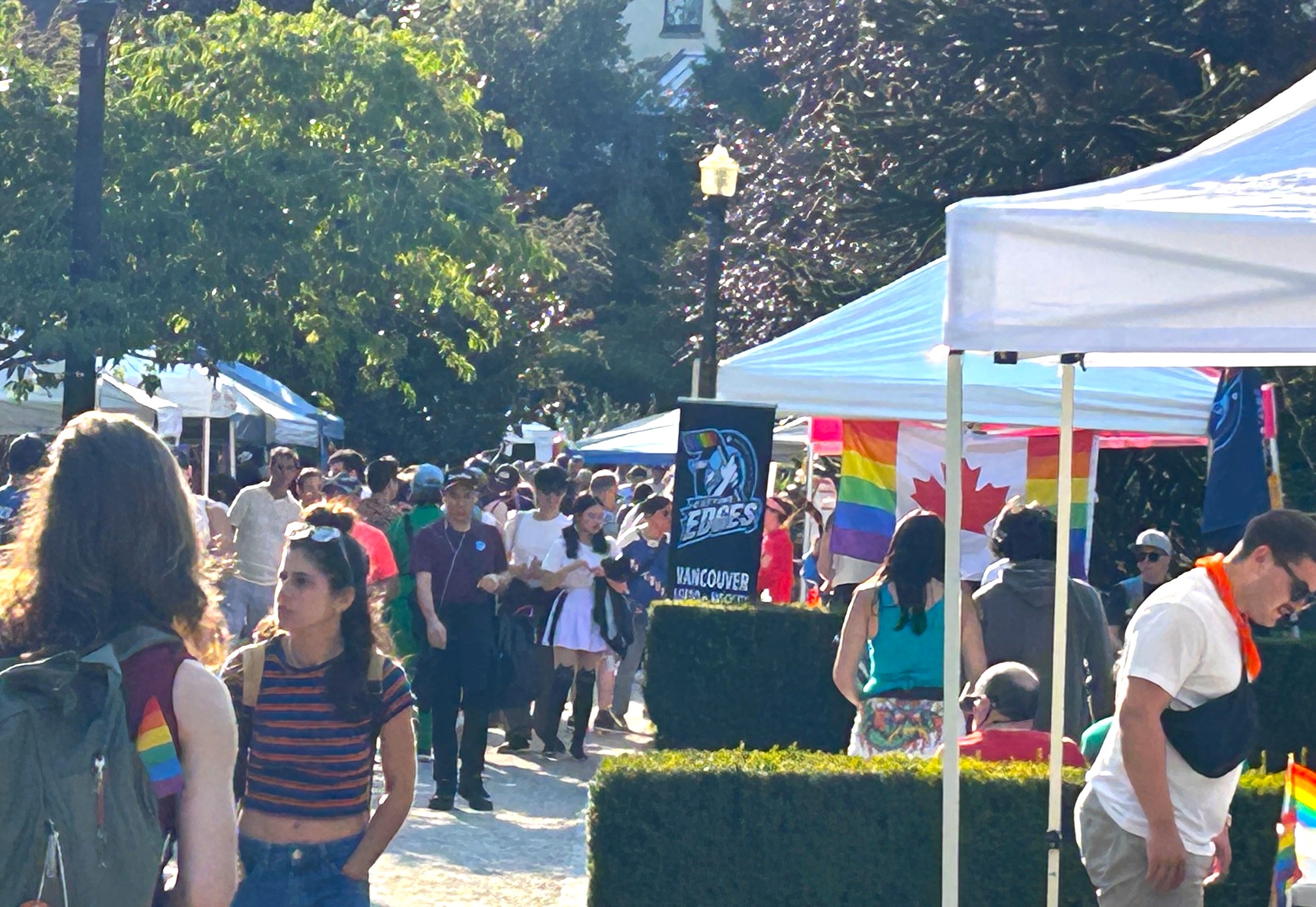
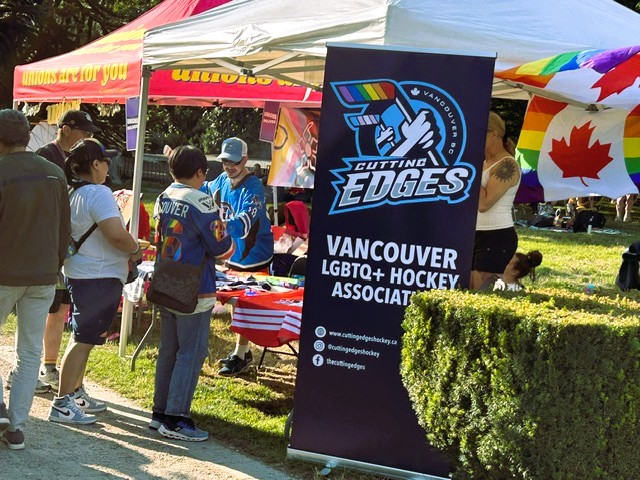
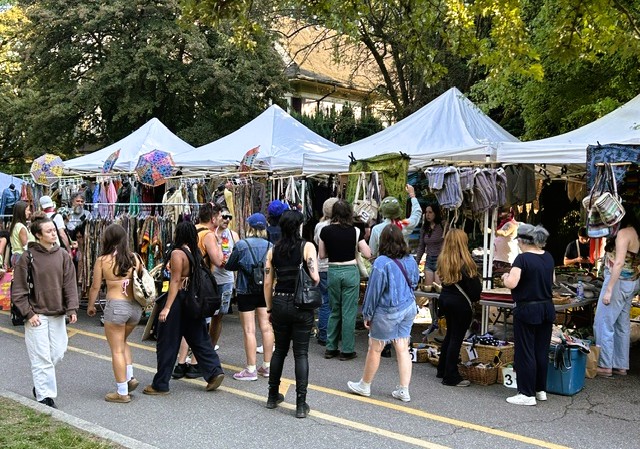
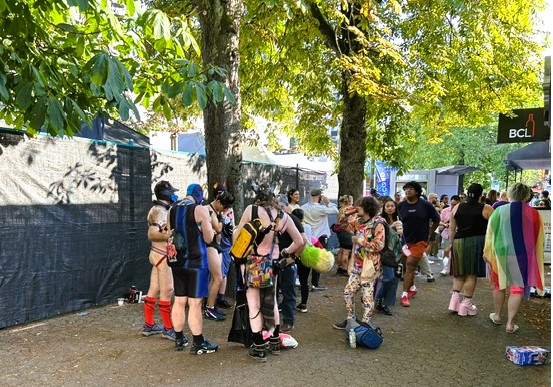
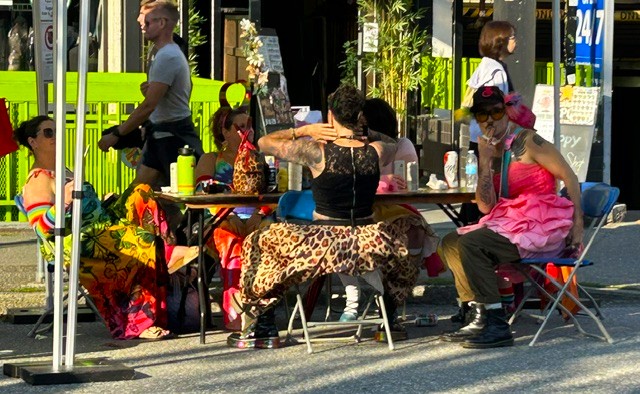
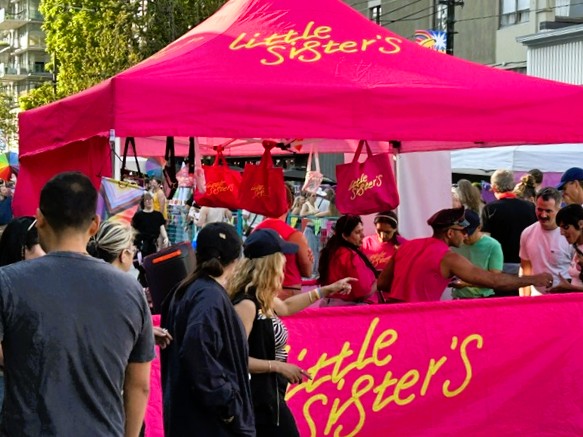
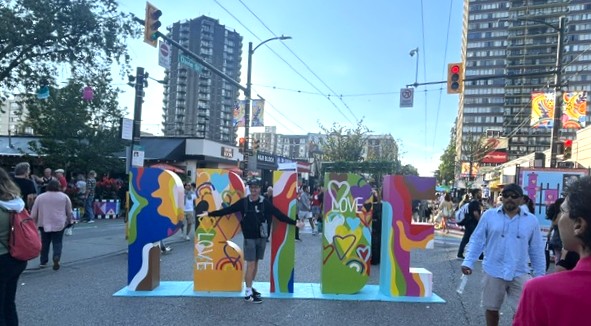
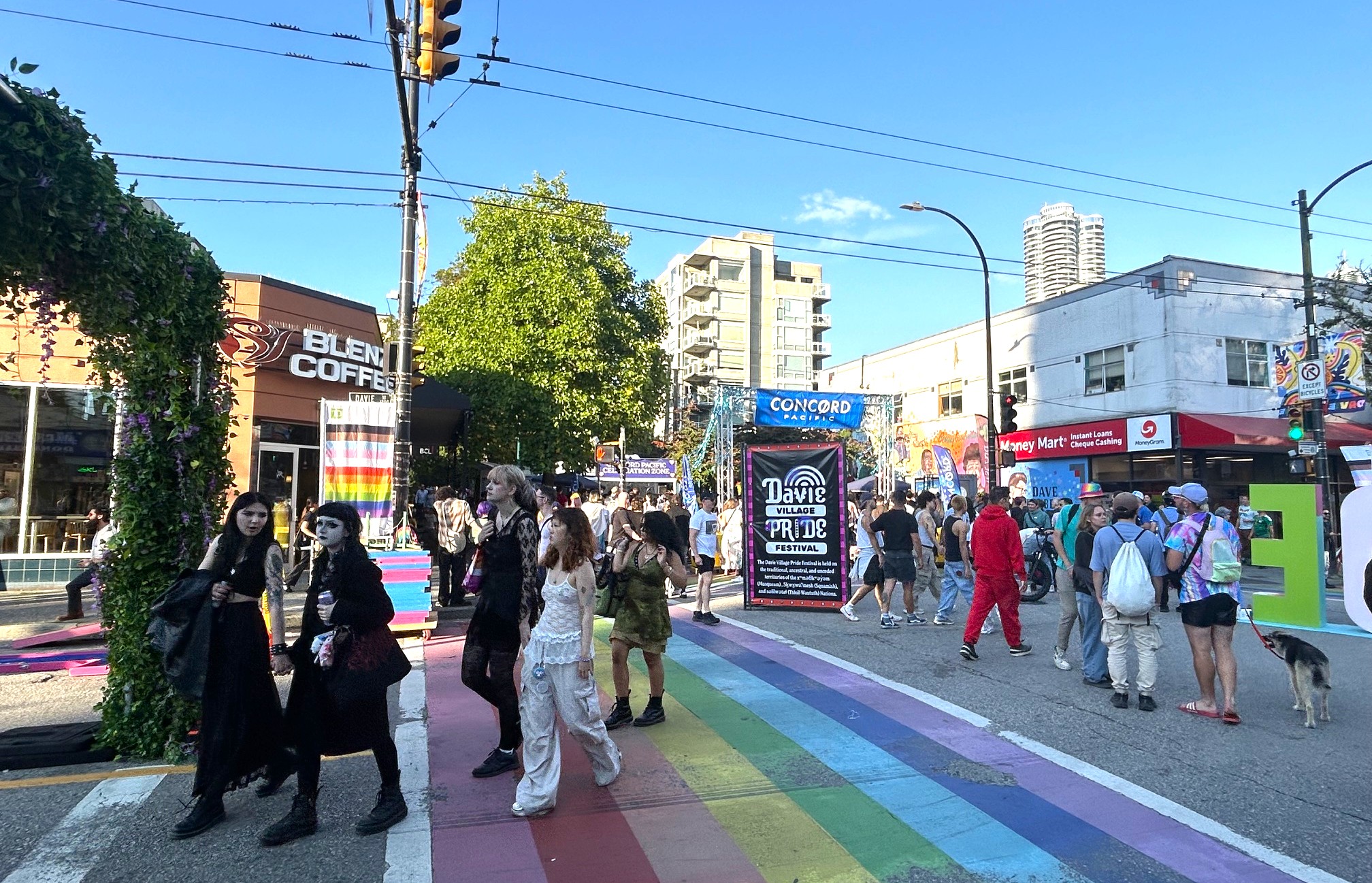
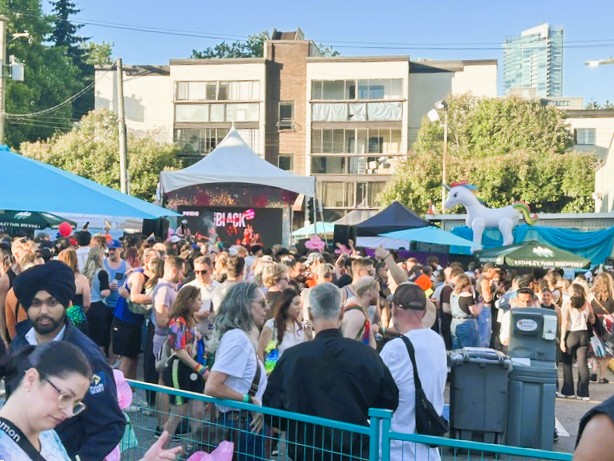
My second Pride Day in New Westminster. I like it because it is not really just an LGBTQ+ community. The entire main street (Columbia, where I live) is turn for entire afternoon-evening for a multitude of attractions, removed from car traffic, with stages for live music performances and dances, an open market with numerous kiosks selling everything (always with some cheap gay/lesbian trinket-touch, LOL) and offering some good social advise, information how to do this or that. That is sensible. Of course the commercial aspect of vendors is predominant, but I suppose that it is how things are these days with everything. What is most important is the fact that everyone and everybody is invited: gay, straight and everything in between. The street really turns into extra busy and extra friendly throngs of people. A lot dressed up for that occasion in funny and colorful attires, costumes, but also in traditional albeit a bit more for the occasion attire.
Three main music stages/dance spots did not disappoint me: music from old swing to modern pop and mechanical types was playing well and to my pleasure there was none of that ‘lubu-dubu-do’ of base that the other day made me tired. A good musician knows how to use the instruments. Loud is not an answer to musicality, au contraire my amigos.
Even the dogs were dressed (I mean really dressed up, LOL) for that occasion and to my delight appeared to be happy and enjoying themselves among the throngs. Local police wore proudly their badges in rainbow colours. I have always thought that New West police force was the handsomest in the entire Lower Mainland. About twenty years ago I remember I was crossed with them, when during some routine police check-stop they refuse to perform a proper body search on me. I even complained to them sternly that they don’t do their job properly and more thoroughly. They just laughed. Hmmm…
Of course I miss a bit the Pride Parades, Pride Marches and old fashion gay/lesbian only crowds. There is hardly anything anywhere like that anymore. The names and locales remained – but the clientele is just a regular mix of gay/straight. Mostly all over the world (civilized world). And the blame rests mainly on gay/lesbian/plus folks, who allowed it to happen. Moreover – they have welcomed it saying: now we are truly all the same. We are not. We are gay, they are straight. The difference is rather obvious, I think. It was nice in the old days to have a place you could call not only ‘my place’ but it was always a safe place. Now I feel always that have around a chaperon with me, who makes sure I act ‘appropriately’. Generation or two of young gay-lesbian-plus people don’t even know what they are missing. But that is a subject away from today musings and reporting.
The afternoon was loud a bit, but very nice, friendly. One of the reasons I maintain my affinity for Canada – it always was in the foreground of human rights, respect and diversity. And in some countries have seen a sad movement of pushing us back to the closet, so to speak. You have to be vigilant. Rights that are not cherished and protected could be taken away by an ideological and political change of attitude.We has seen things like that.
One more of my last ‘good bye’ in Vancouver. But such a happy and beautiful goodbye.
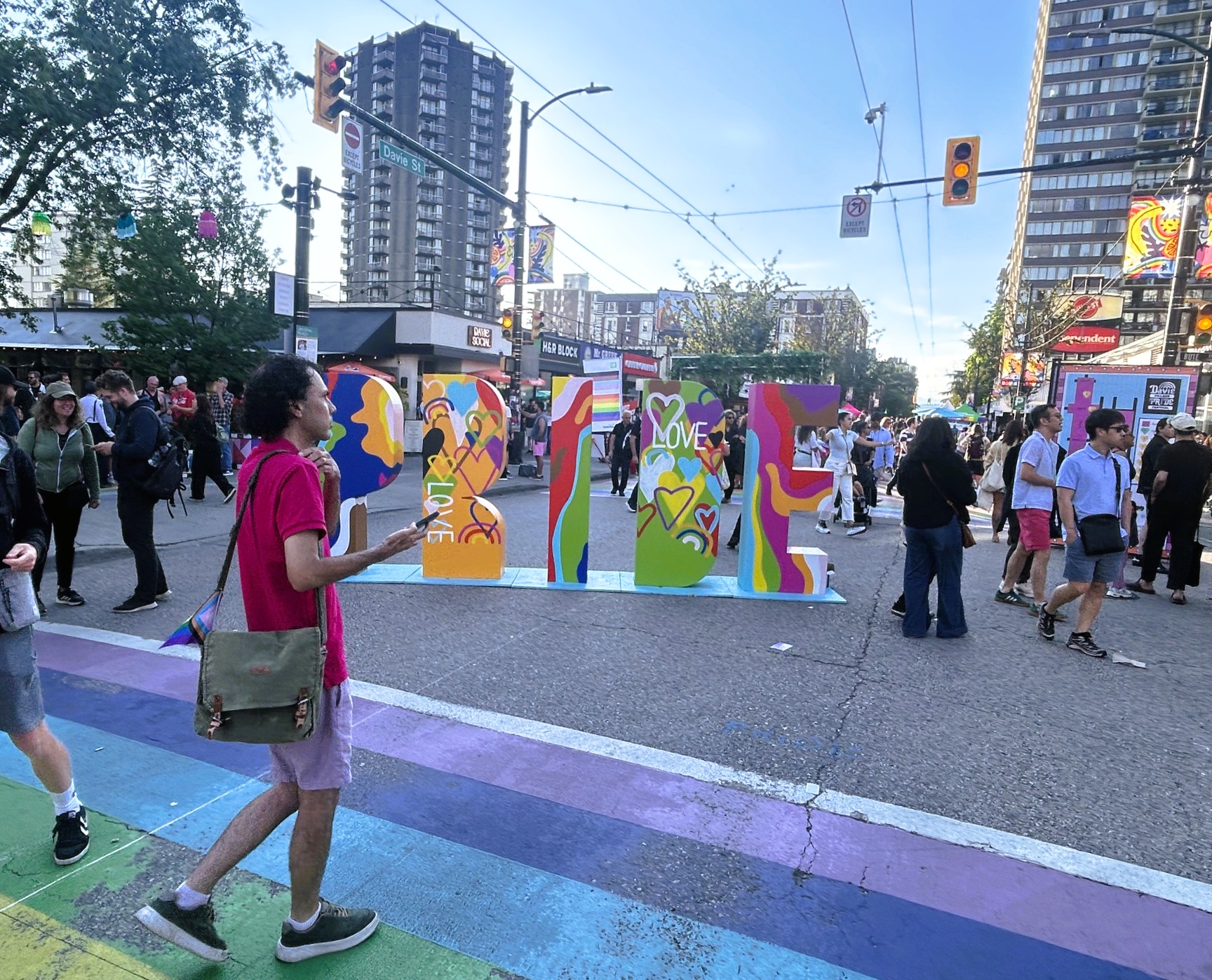
August 2 – famous and fabulous Vancouver Pride Parade and Pride Day. Still miss the old route through Robson and Denman to English Bay beach, for a night of live music and dancing. But maybe it did make sense, changes are good sometimes. As long as the spirit lives on. And it was very obvious that it does.
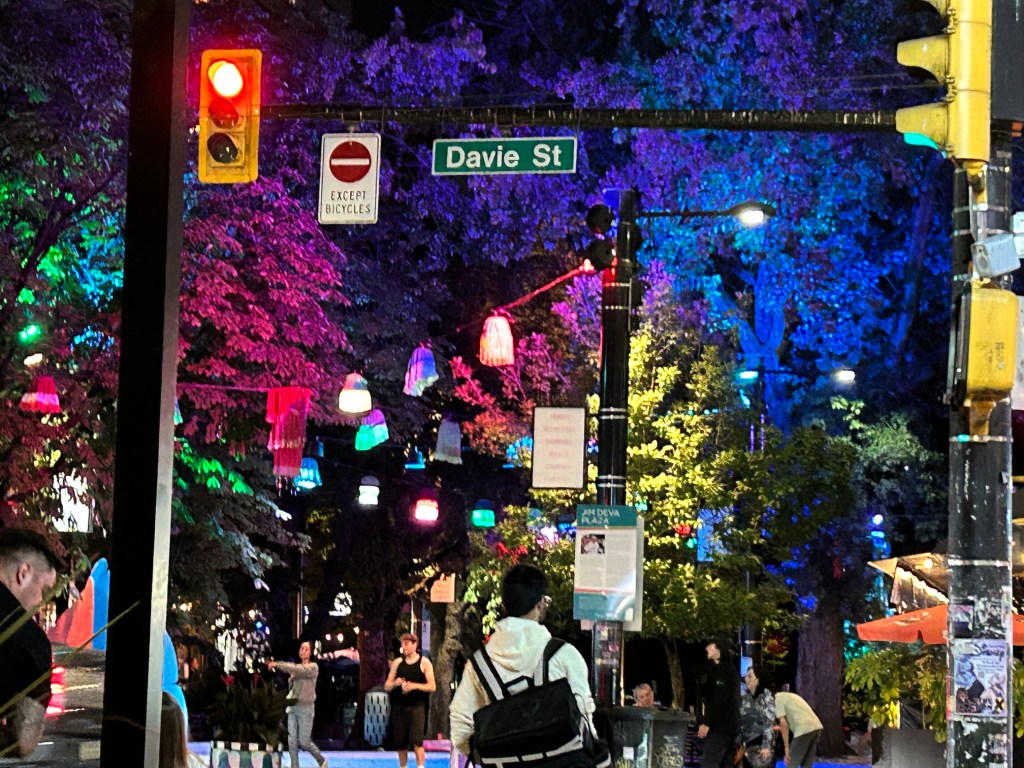
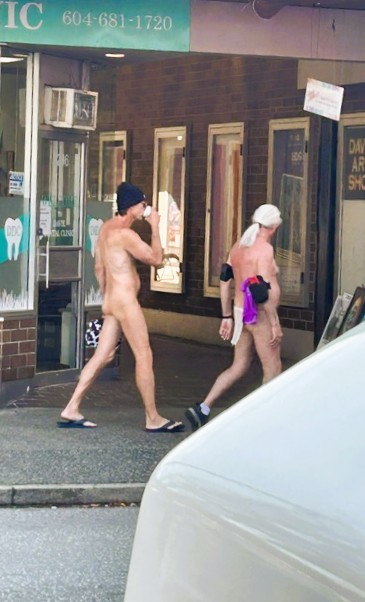
Nelson Park, Davie Street and indeed the entire Davie Village was bursting with celebrations, dances, little concerts and bars were full to the tilt. From ladies, who decided not to wear but to paint their bras – bravo! Same goes to some guys, who instead of underwear – just wrapped their members in a little piece of golden foil, LOL.
Most of all – smiles, laughter, happiness. The dresses, make-up, costumes were plentiful on board the Skytrain do Burrard Street, and than through the streets up to the Village.
Even I did partake in some impromptu dances (got some applause for my version of ol’ 50-ties swing, with my cane acting as my partner, LOL).
I did recognized, of course, some faces I have known – but forgotten their names since last time we met, so just exchanged hugs and smiles and avoided long talks.
Cała Davie Street i jej okolice były wczoraj jednym wielkim bankietem zabaw, tańców, drinków i stroi (lub ich kompletnym brakiem, ha ha ha). Naturalnie, wszak dopiero przeszła ulicami Vancouveru jego najwieksza parada, pochód, zgromadzenie. Większego wydarzenia od dziesiątków lat w Vancouverze nie ma. Parada Równości, tu nazywana zwyczajnie i bardziej adekwatnie – Paradą Dumy. Dumy z tego kim jesteśmy. Wszyscy i każdy z osobna. Przez lata dawniej (przed przeprowadzką do Nowej Szkocji) na każdej chyba byłem. Naturalnie z moim kochanym Johnem, ale i z przyjaciółmi, z bliskimi. Mama przez lata uwielbiała na nią chodzić. To taki specjalny dzień, gdzie nikt się niczemu i nikomu nie dziwi, nikt nie kręci głową lub nie wznosi oczu ku górze. To prawda, że wszyscy i każdy z osobna jesteśmy trochę inni, trochę dziwnie – więc czemu tego, tej inności nie celebrować?
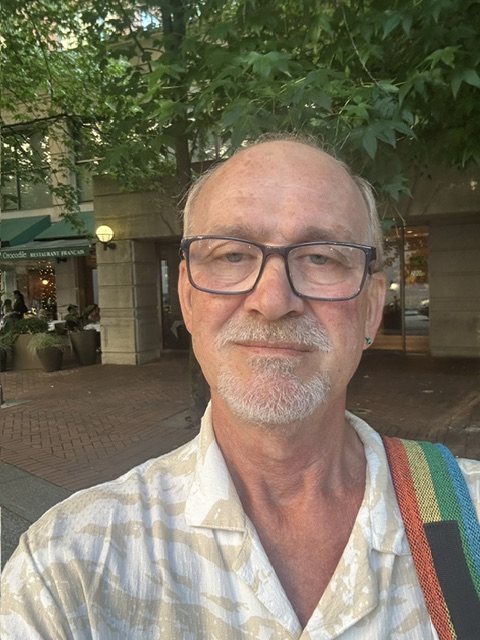
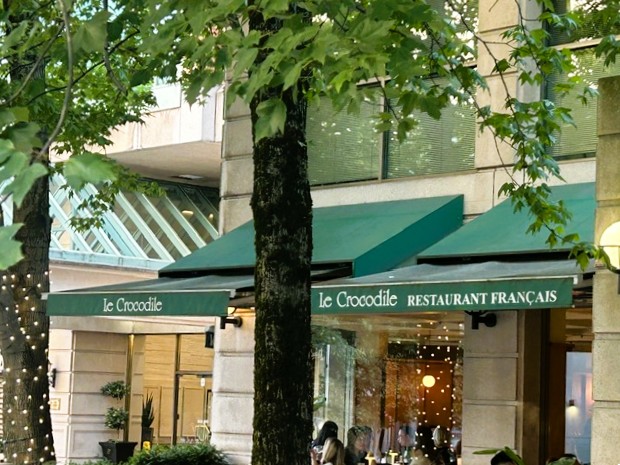
A wracając zmęczony ale zadowolony, idąc w dół Thurlow Street skręciłem w Haro i tuż przed Burrard zatrzymałem się przy Le Crocodille Restaurant. Dość droga, ale bardzo elegancka restauracja ze wspaniałym francuskim menu. To tutaj, po naszym formalnym ślubie, przyjaciele ze statku zamówili nam stolik i opłaconą kolację przy świecach, ze specjalnym weselnym torcikiem. Tylko my sami we dwoje. To było urocze. Po patrzyłem się przez szybę z daleka na siedzące wewnątrz pary, wydało mi się że ktoś położył mi lekko dłoń na ramieniu, że ktoś szepnął ‘I always do’ … Odpowiedziałem też cicho: I know you do, and I always will.
Parada Dumy zakończona dumą z ciebie, z nas, z tych wszystkich długich lat.
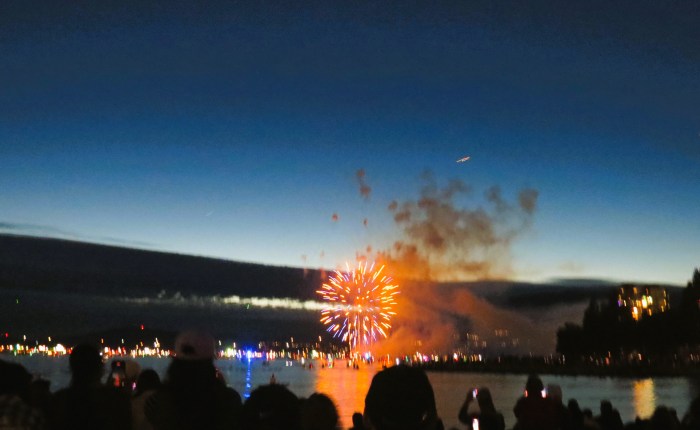
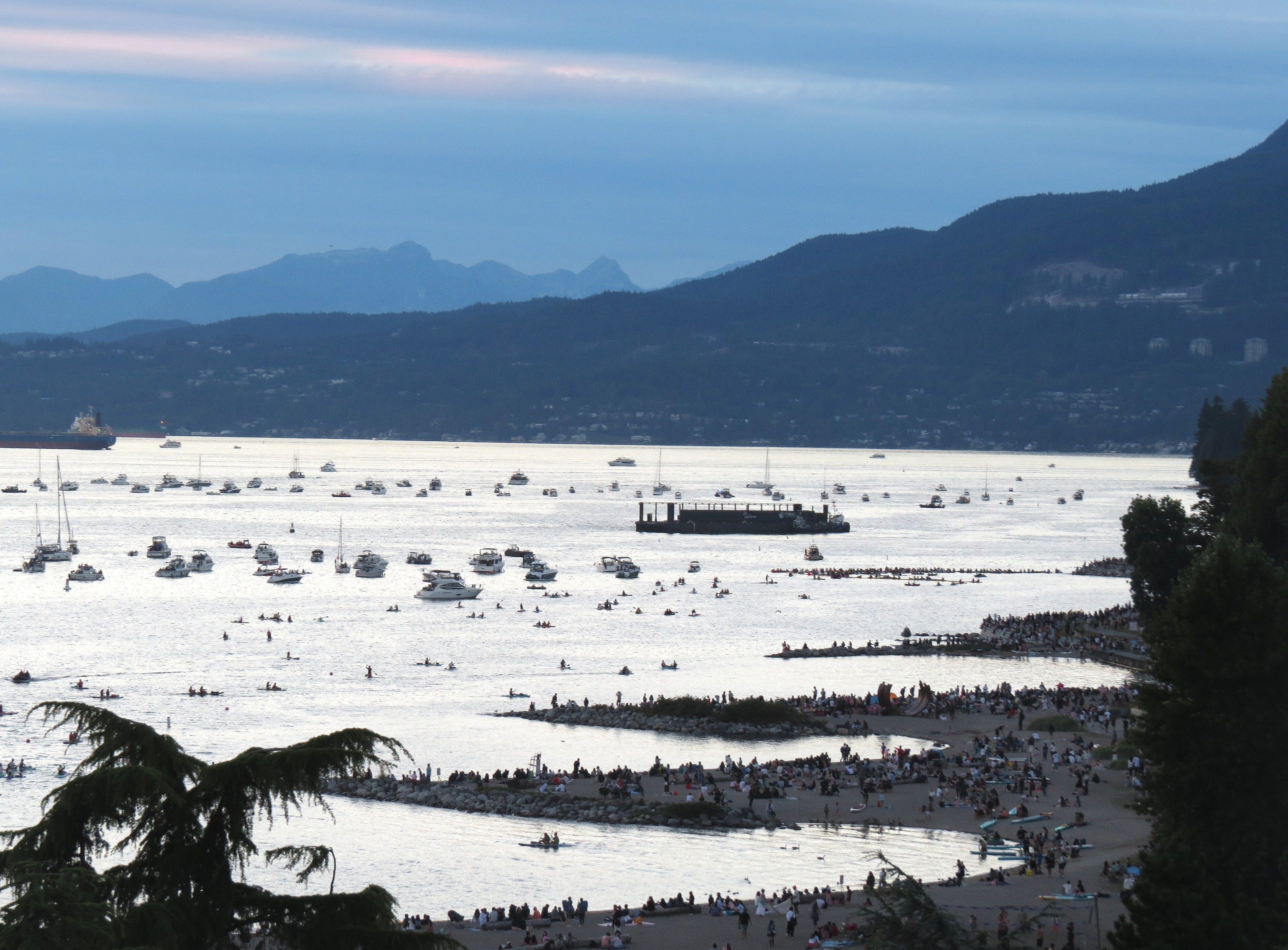
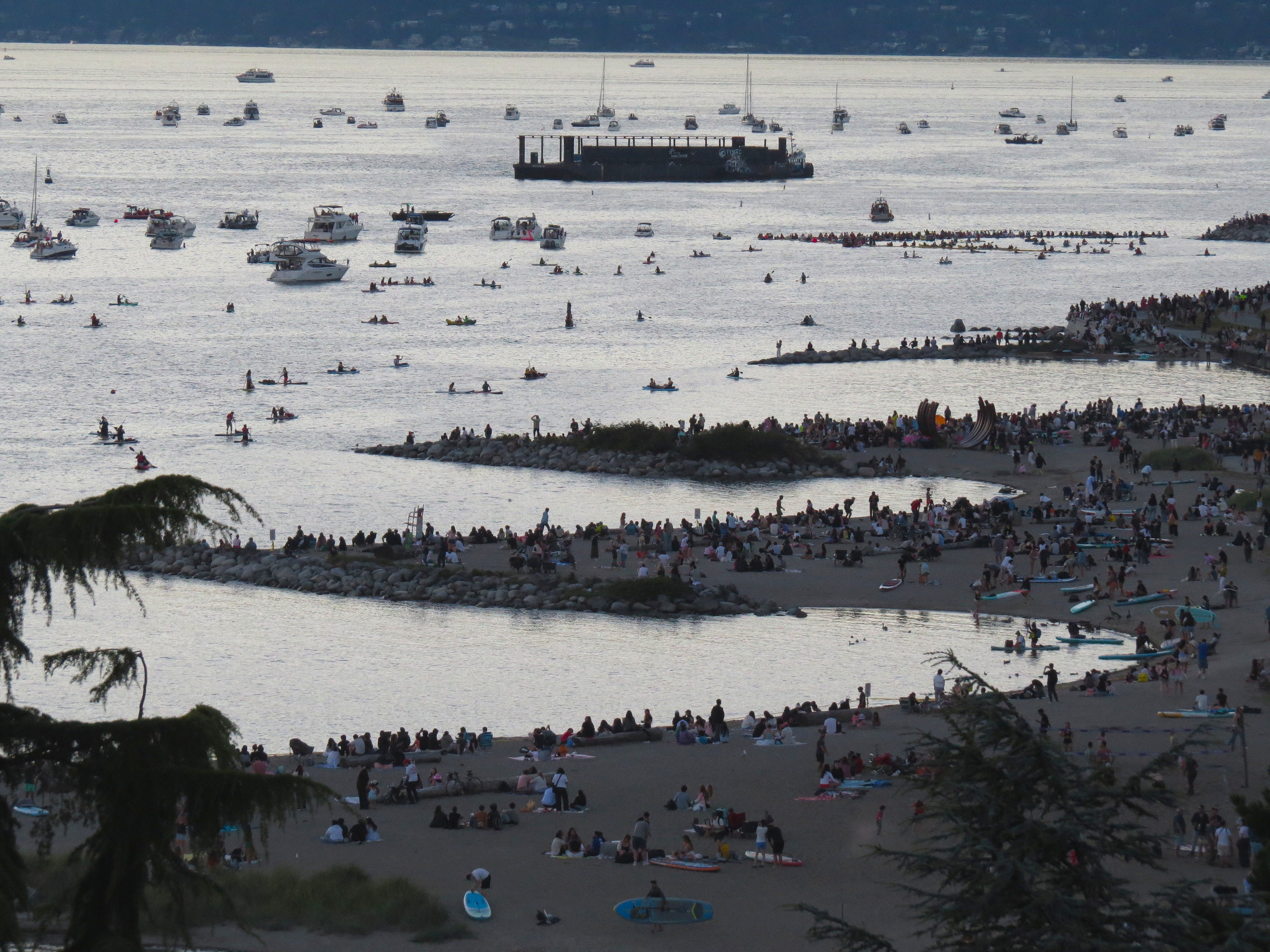
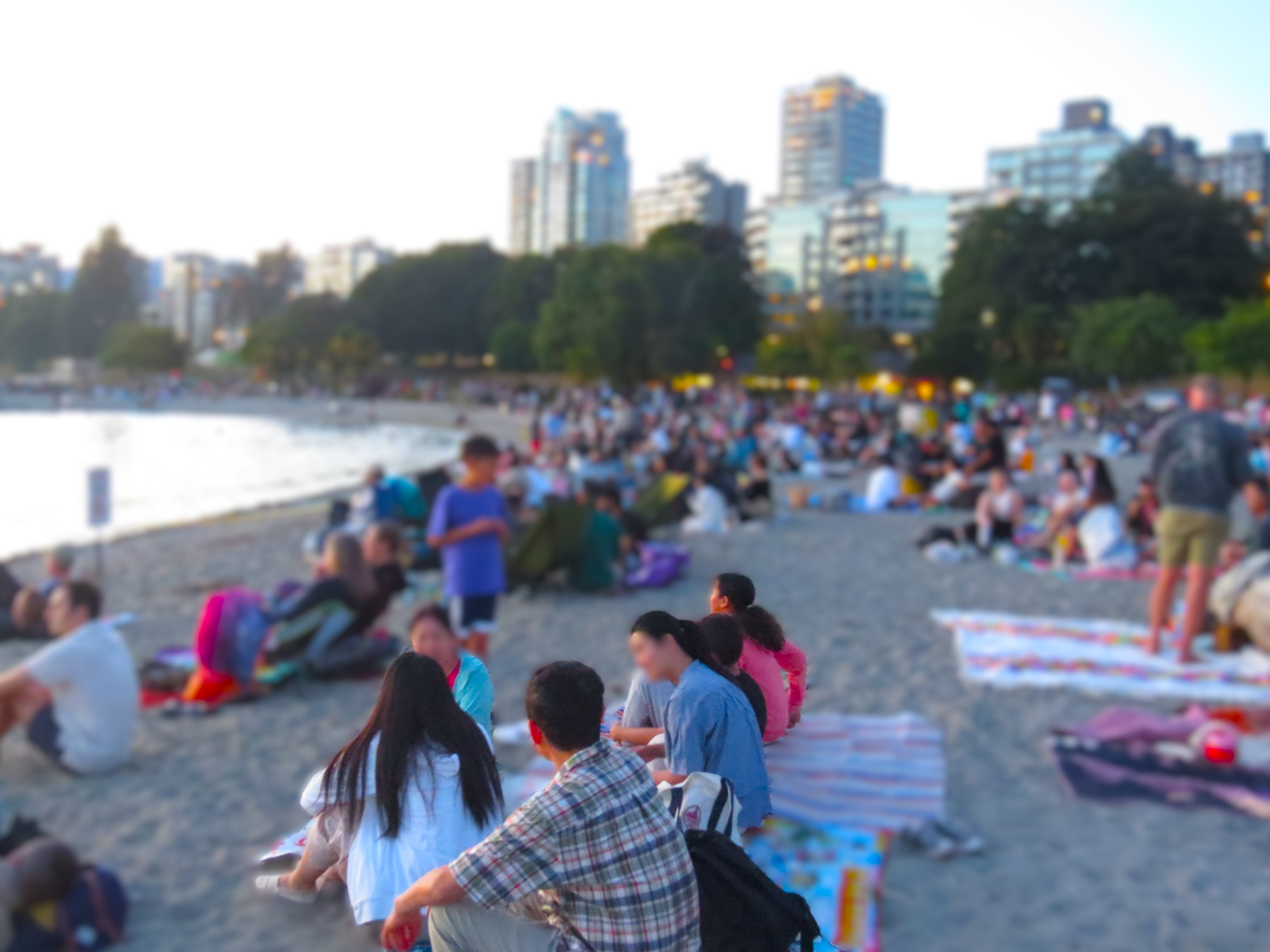
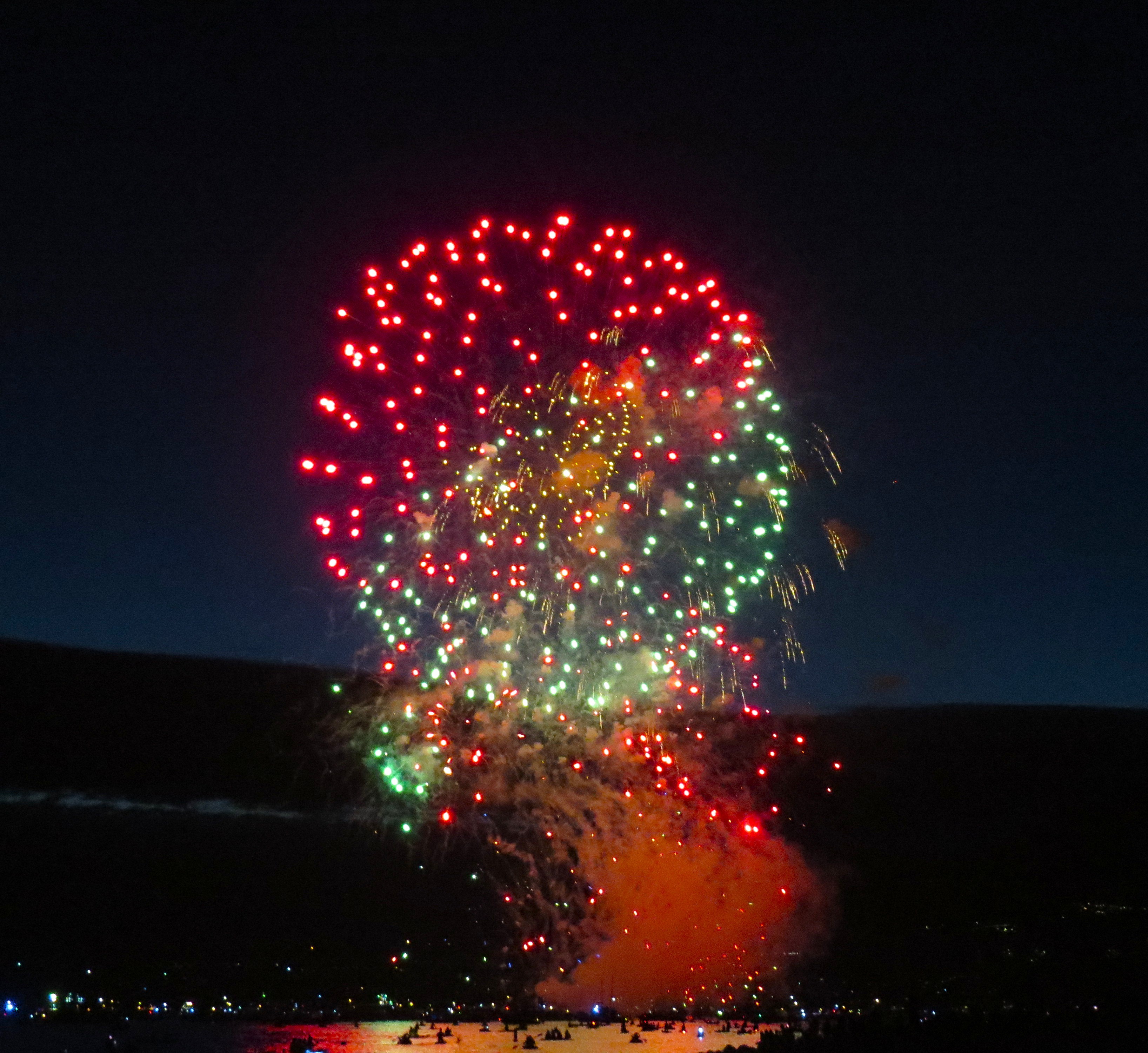
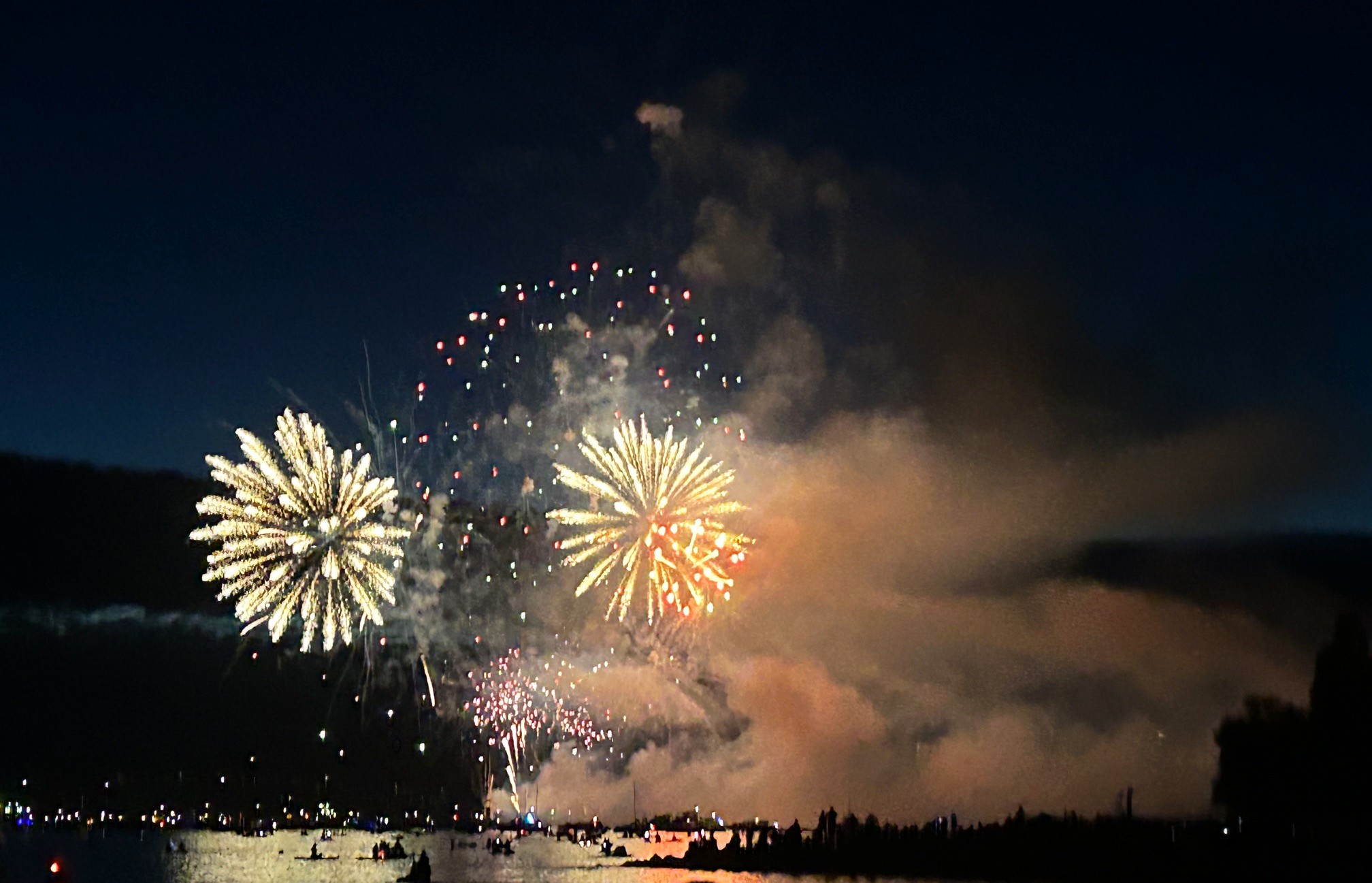
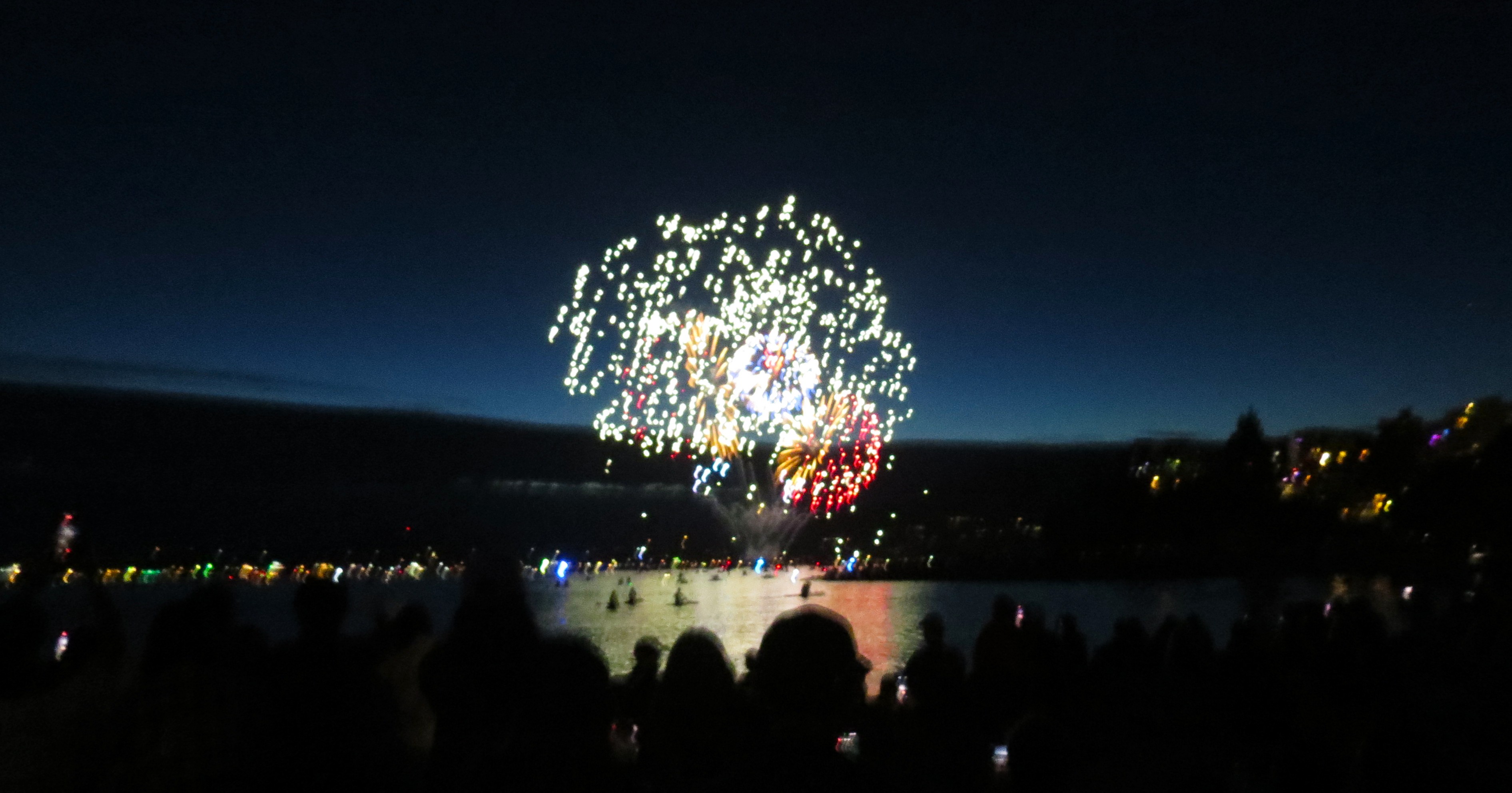
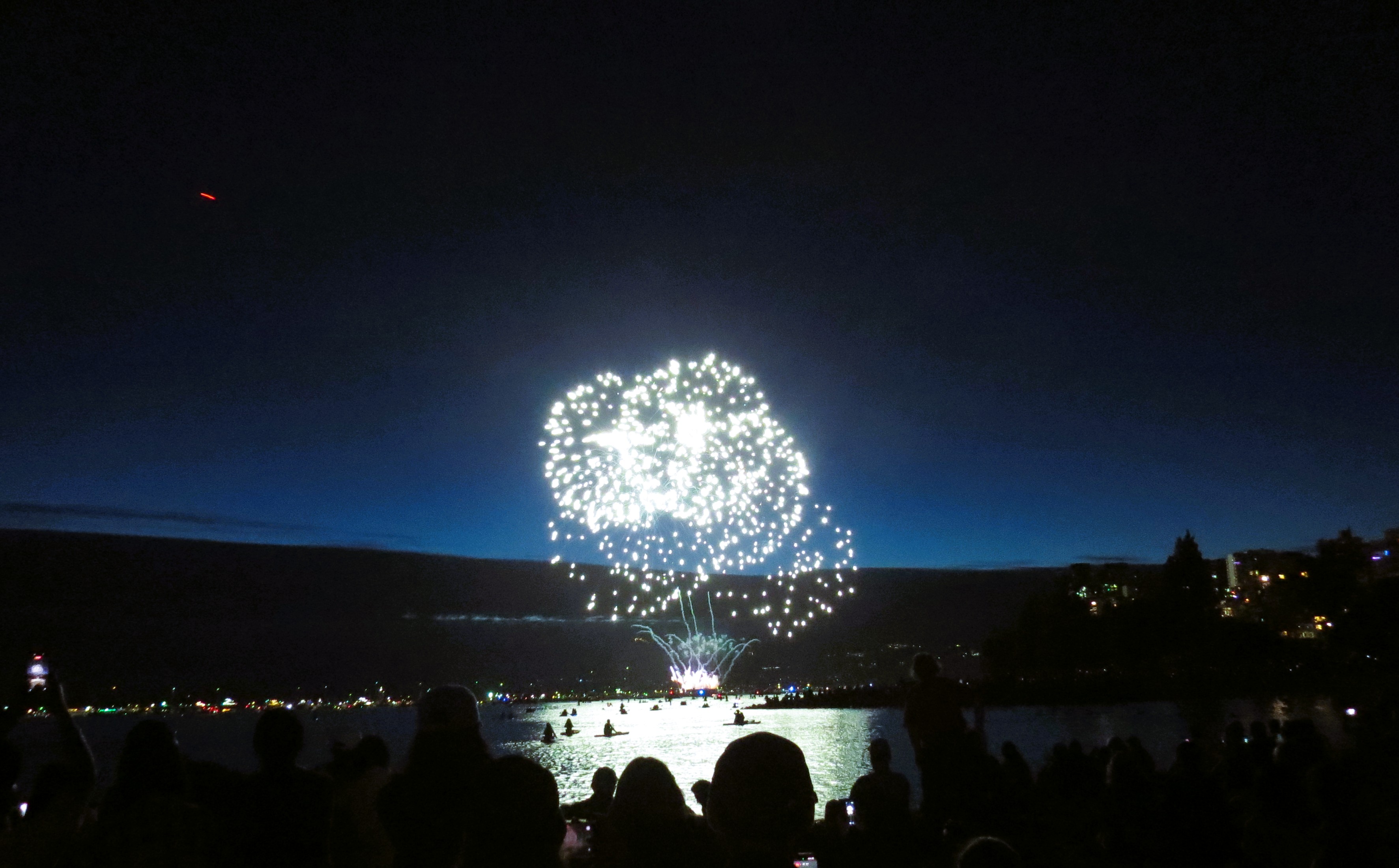
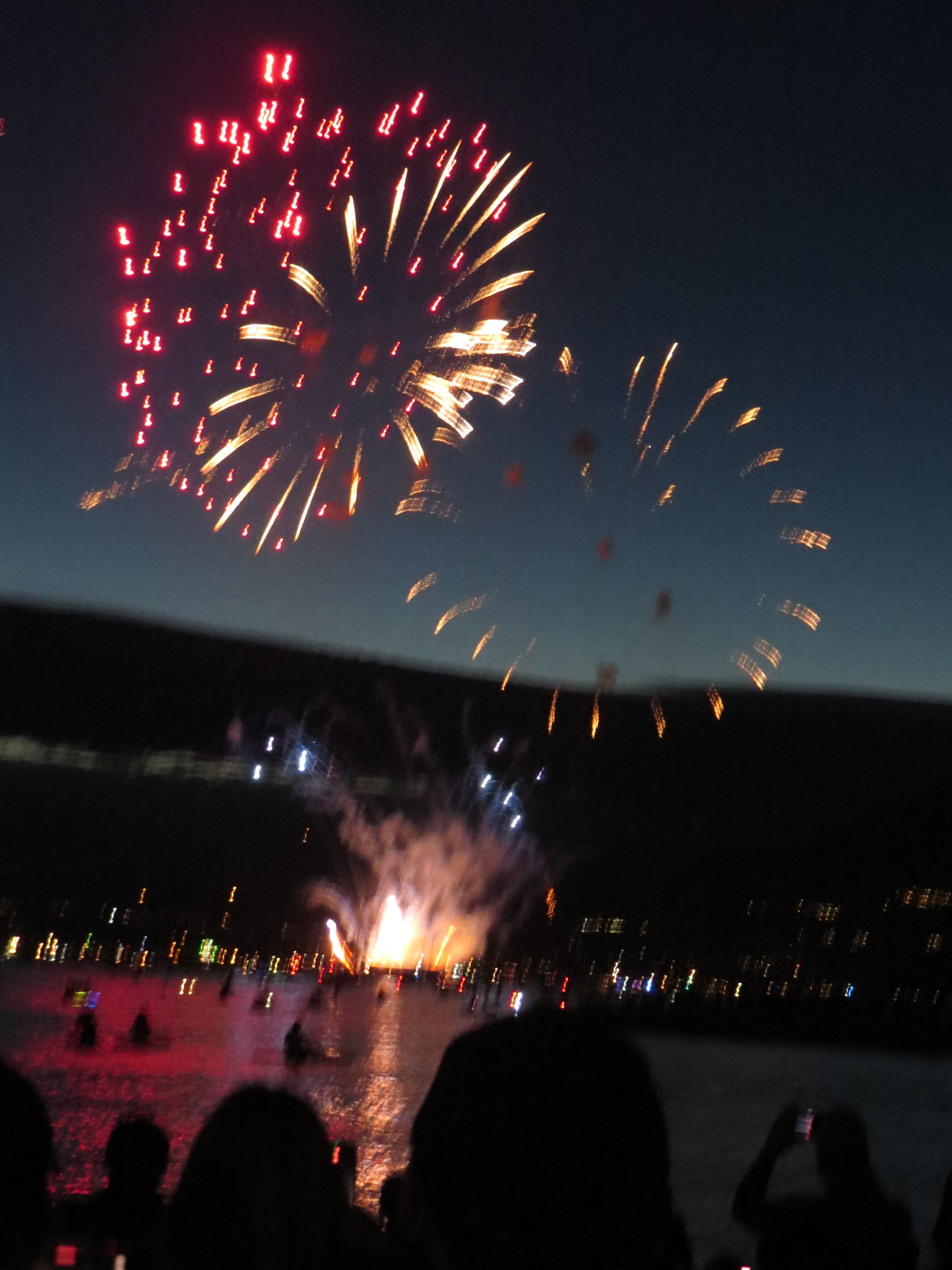
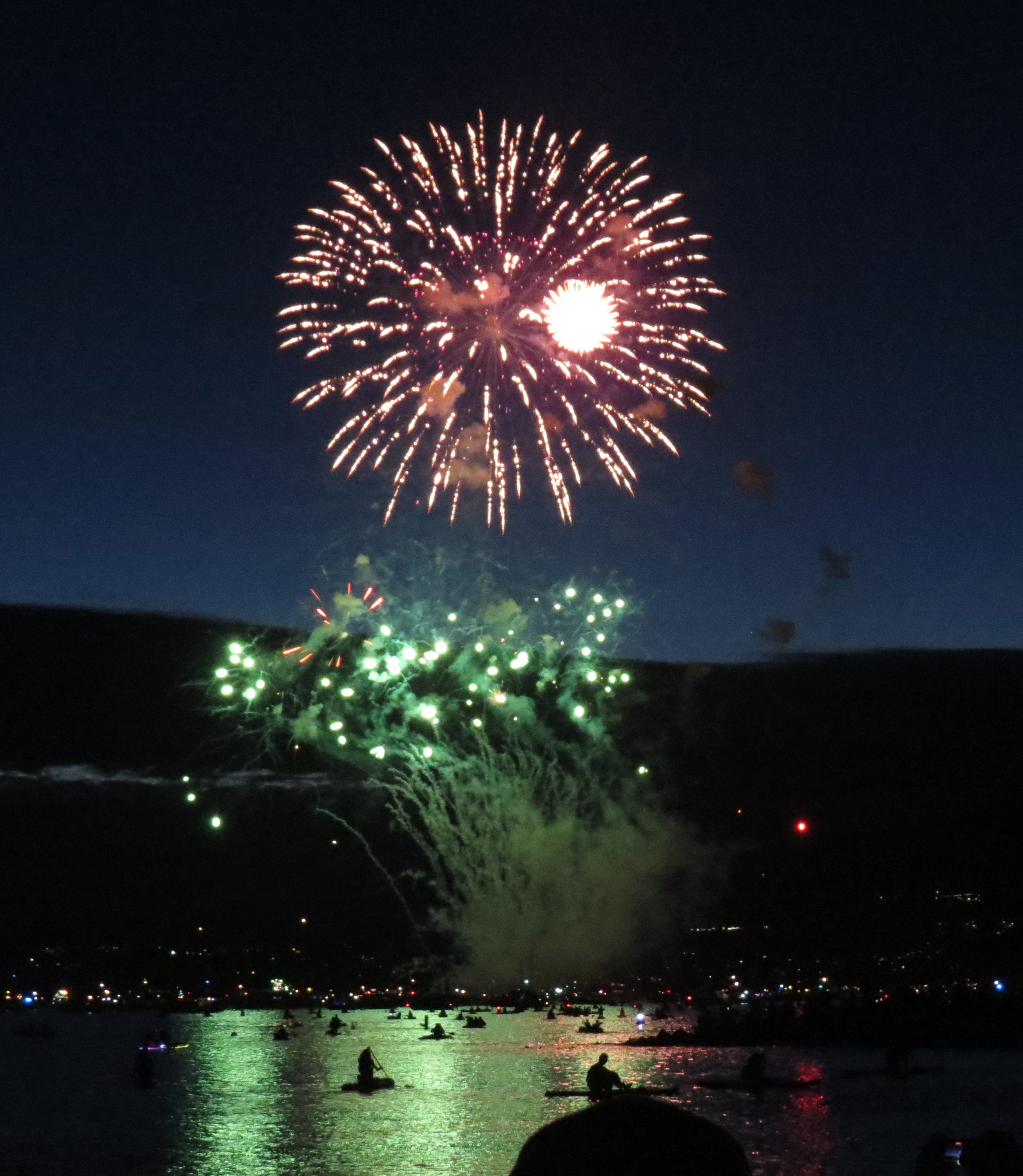
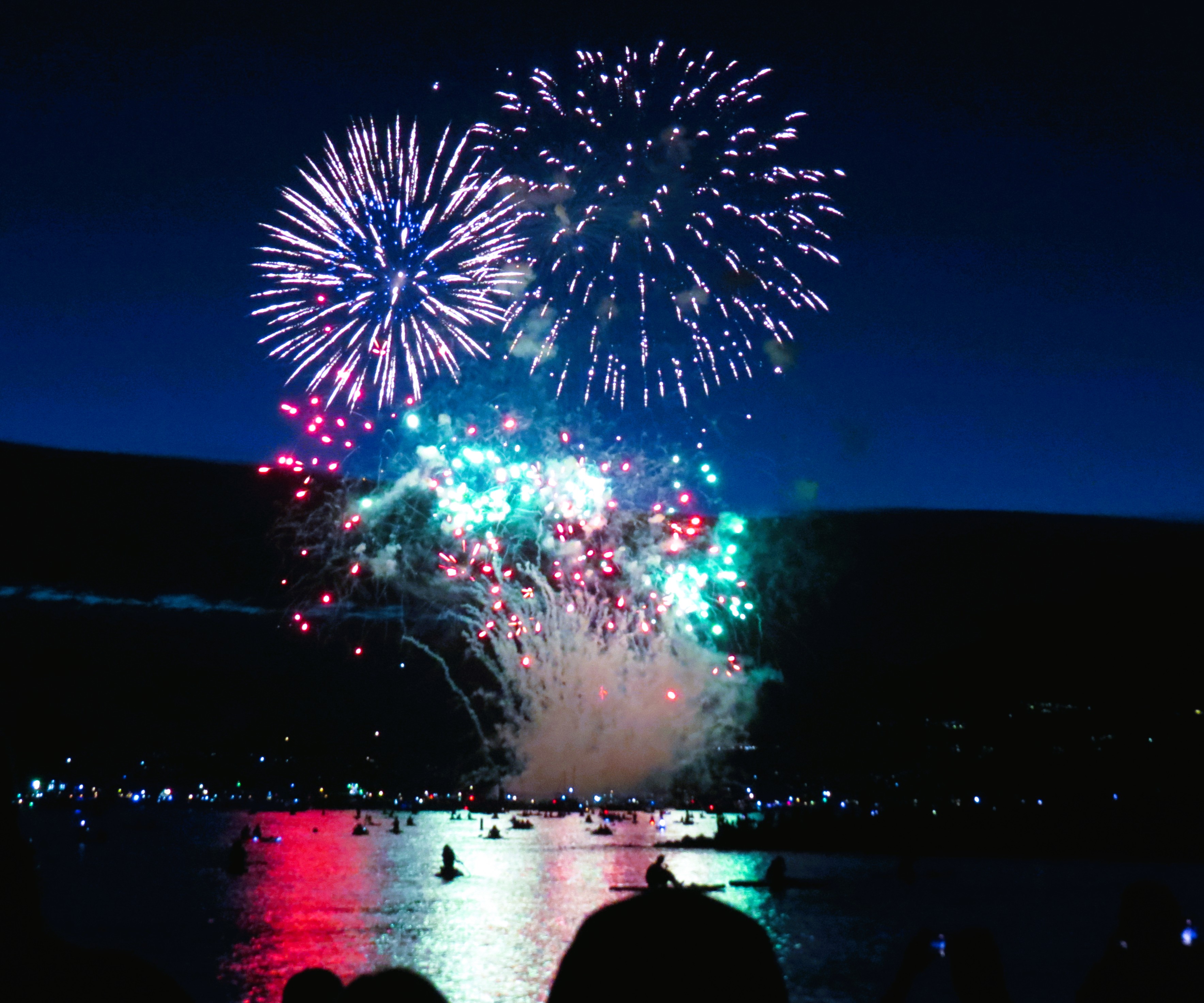
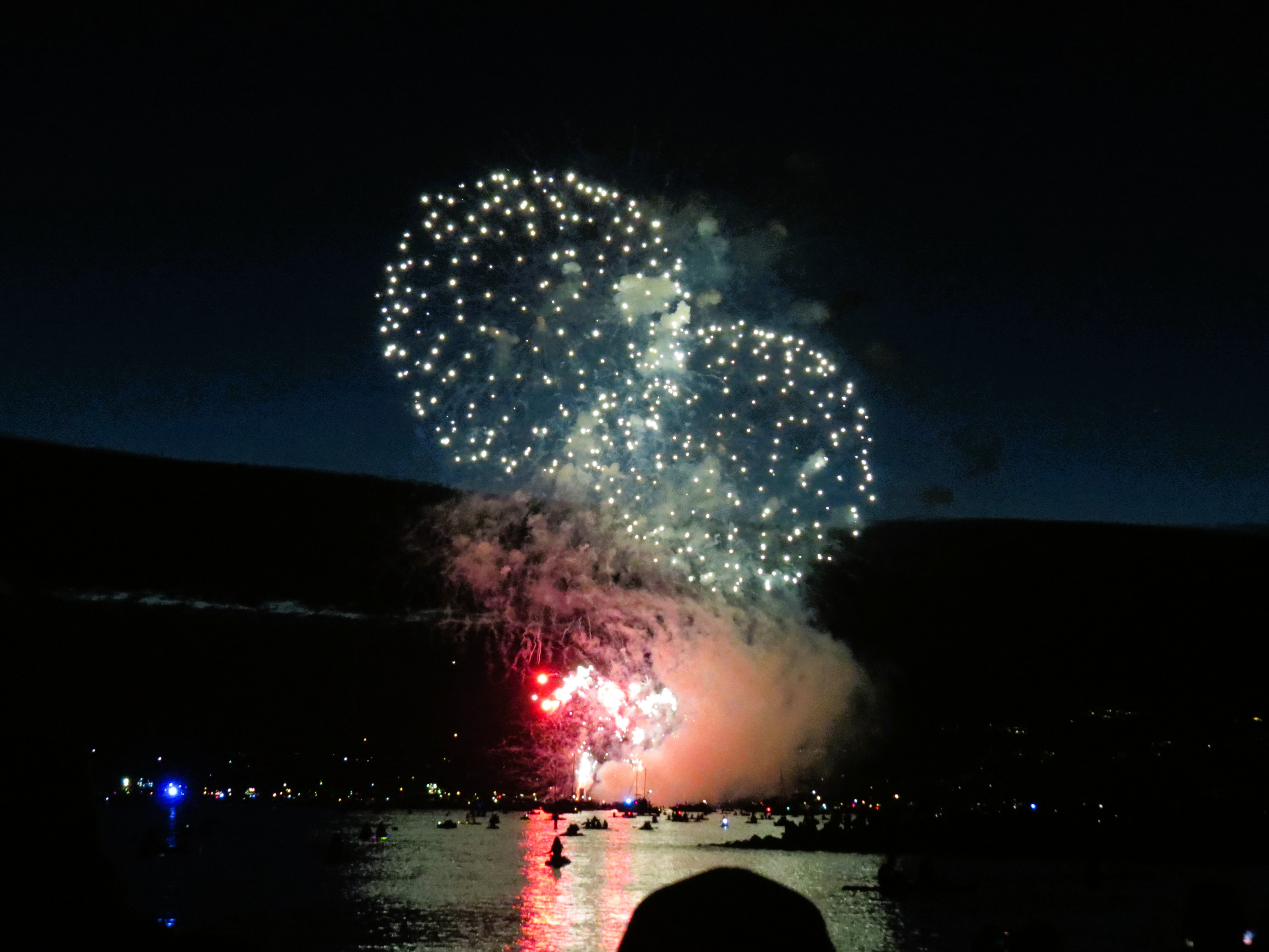
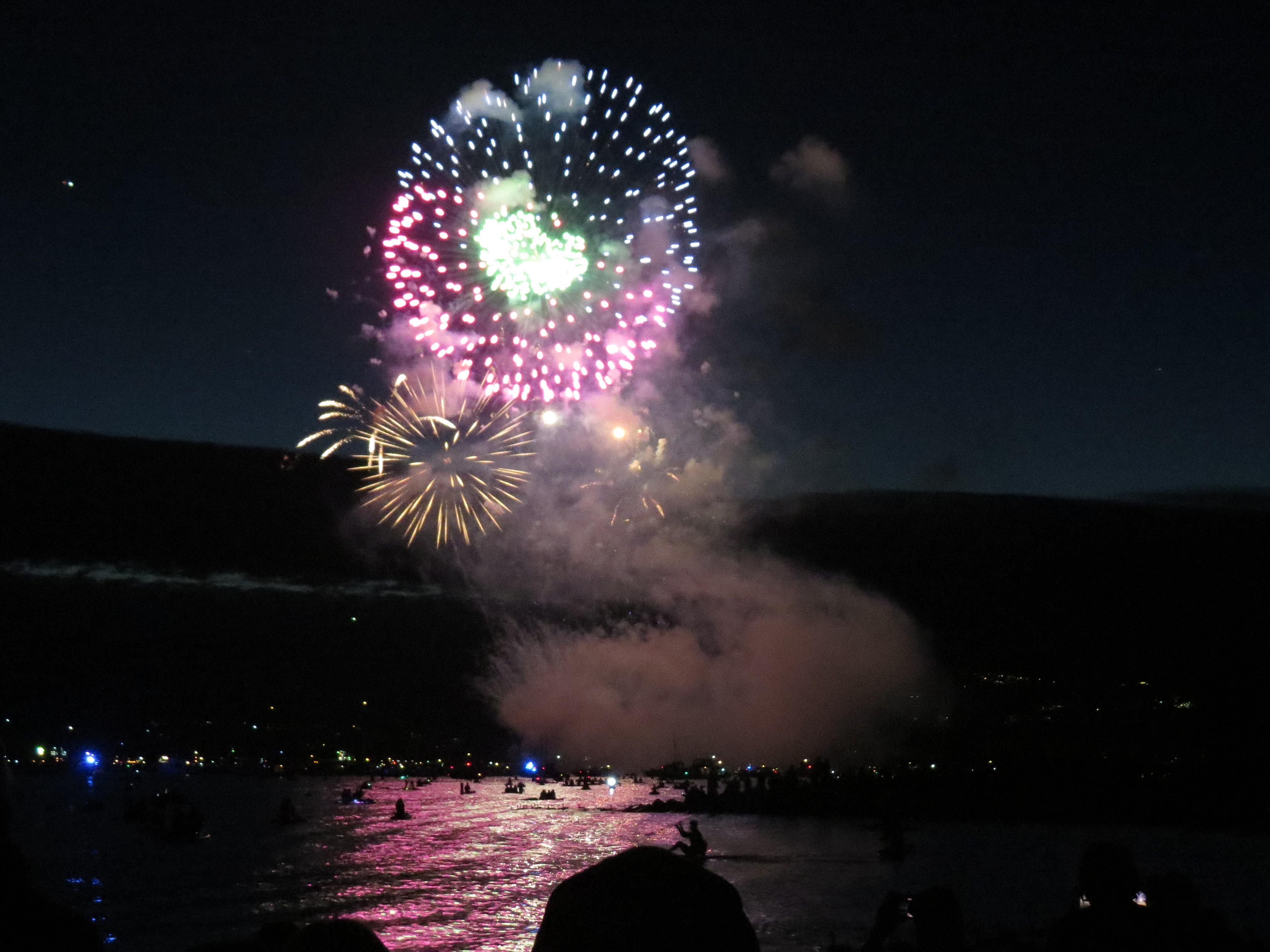
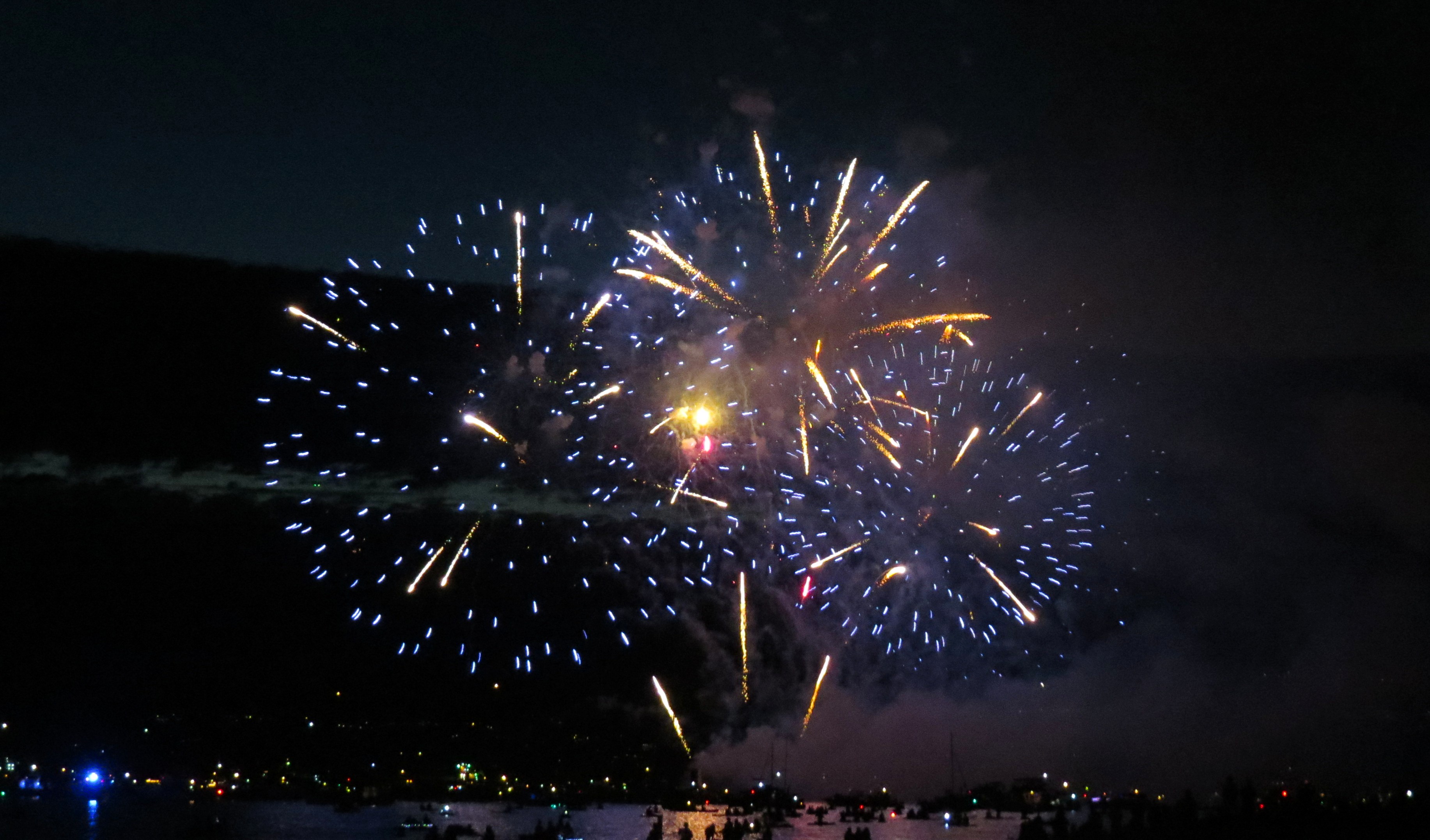
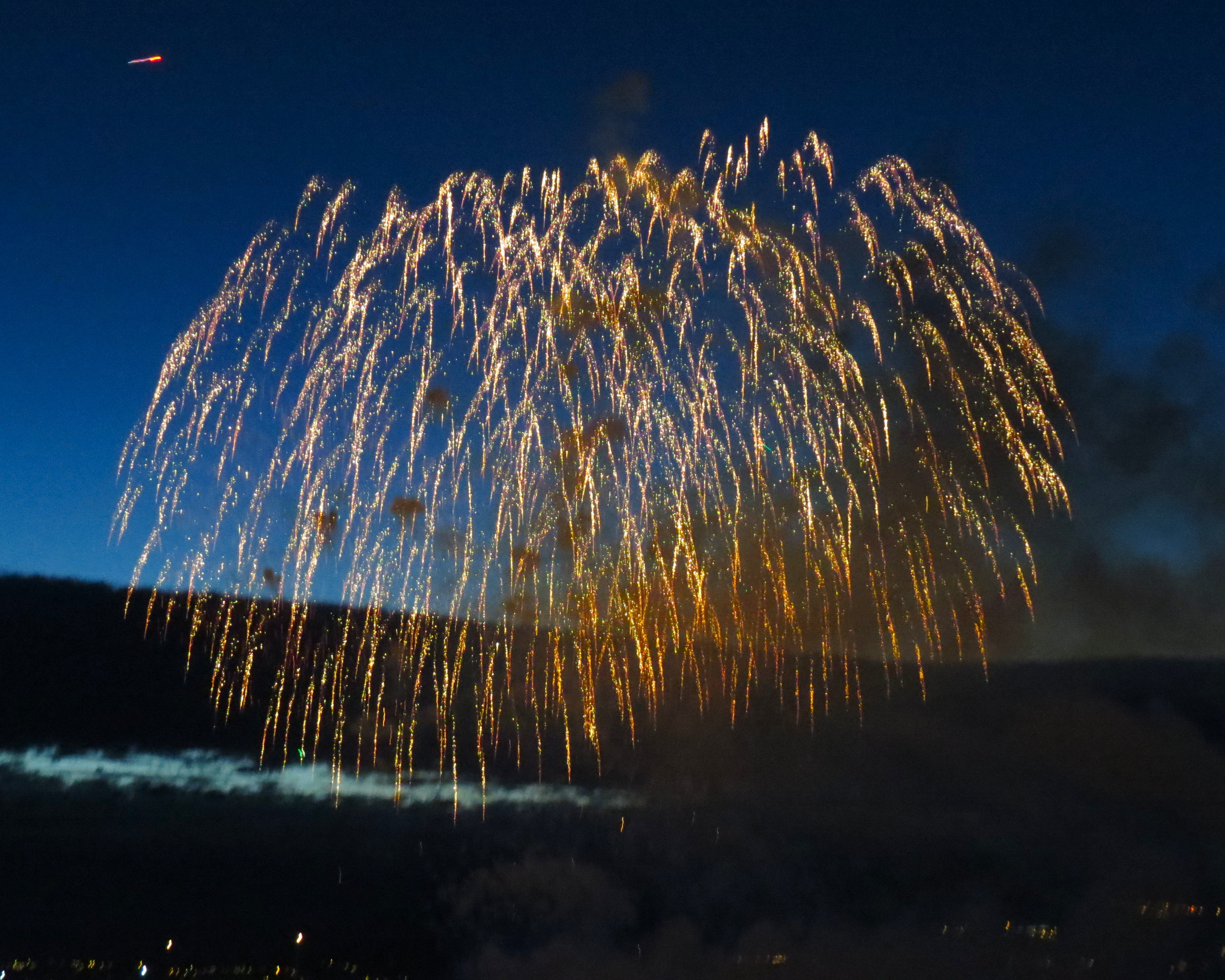
Traditionally Vancouver is saying goodbye to July on the last day of that month by having a big fireworks party in English Bay.
Have been to many in years gone by. With my husband, my Mom, with friends. I must admit that years ago the show was much more technical and intricate, where nations from other continents competed against each other. More than once I thought that the Chinese team was by fare the best technically and musically.
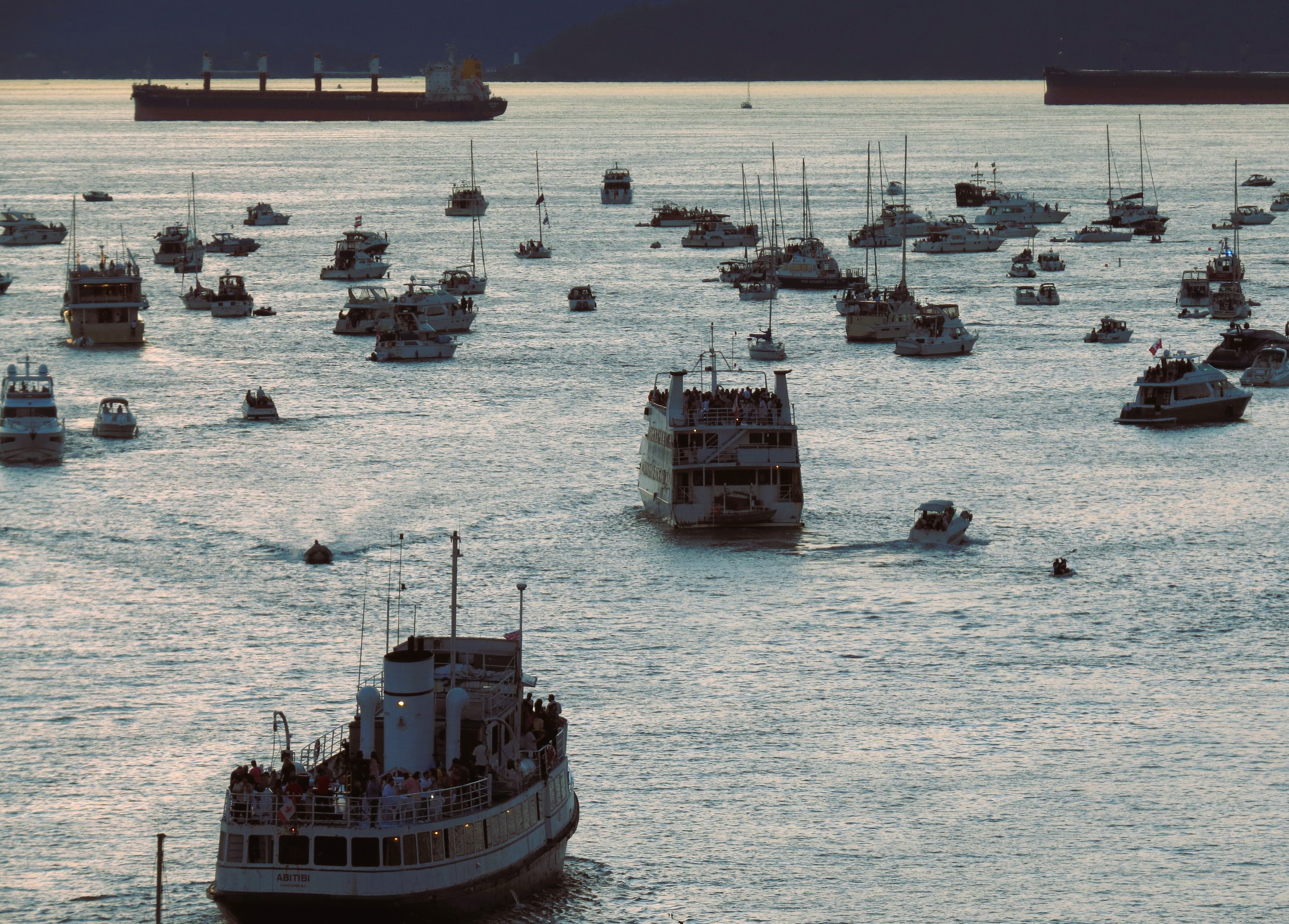
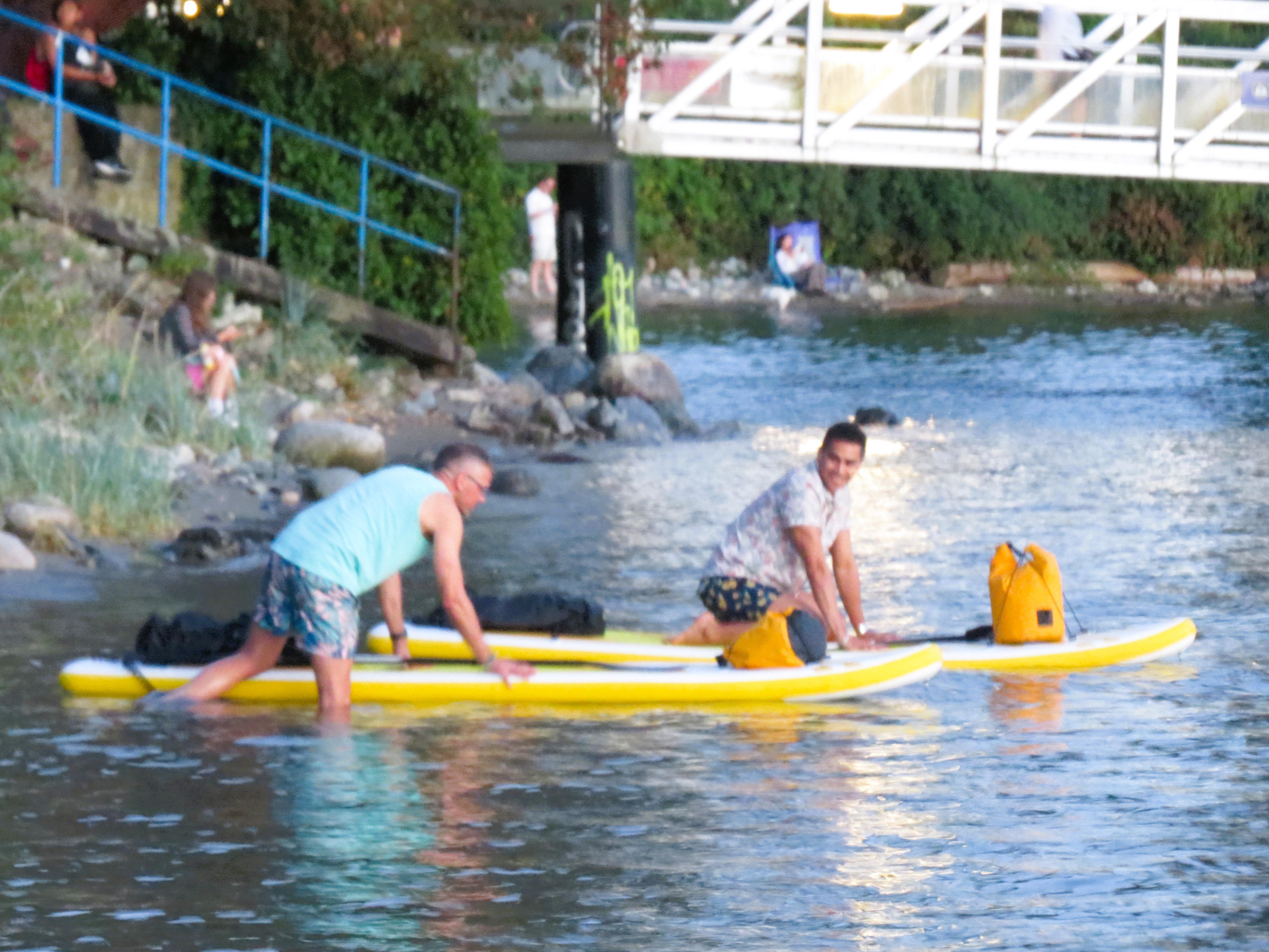
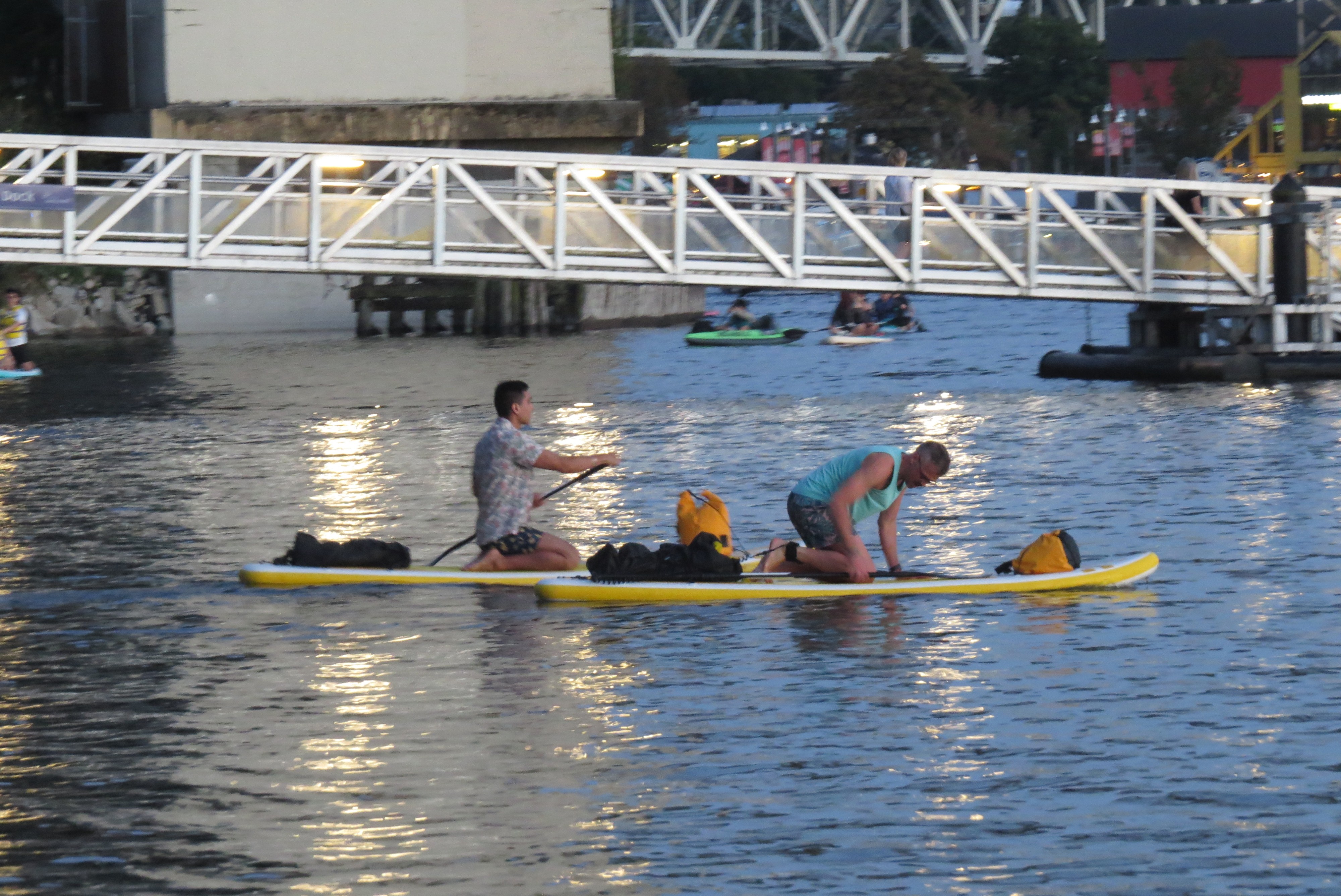
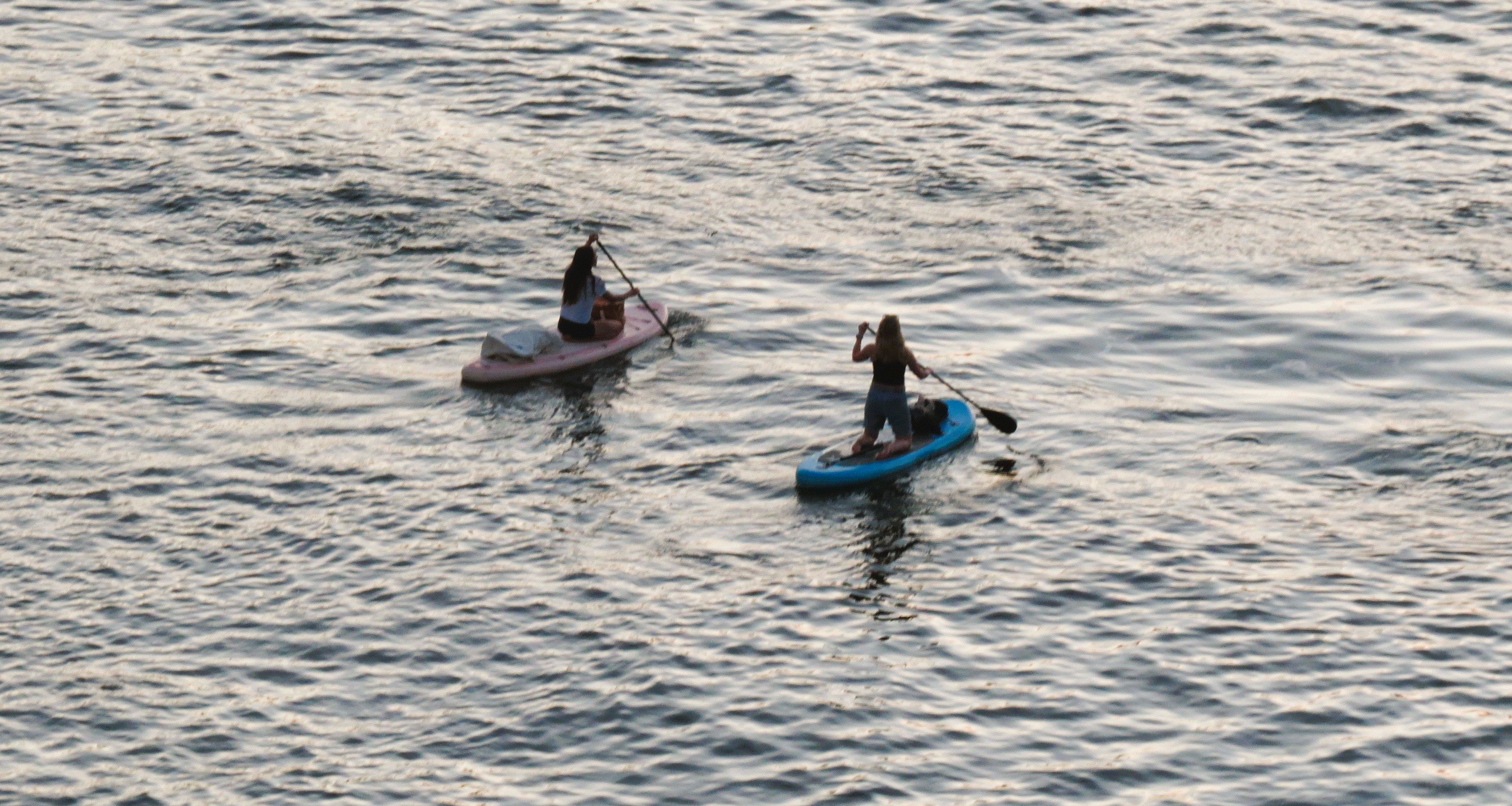
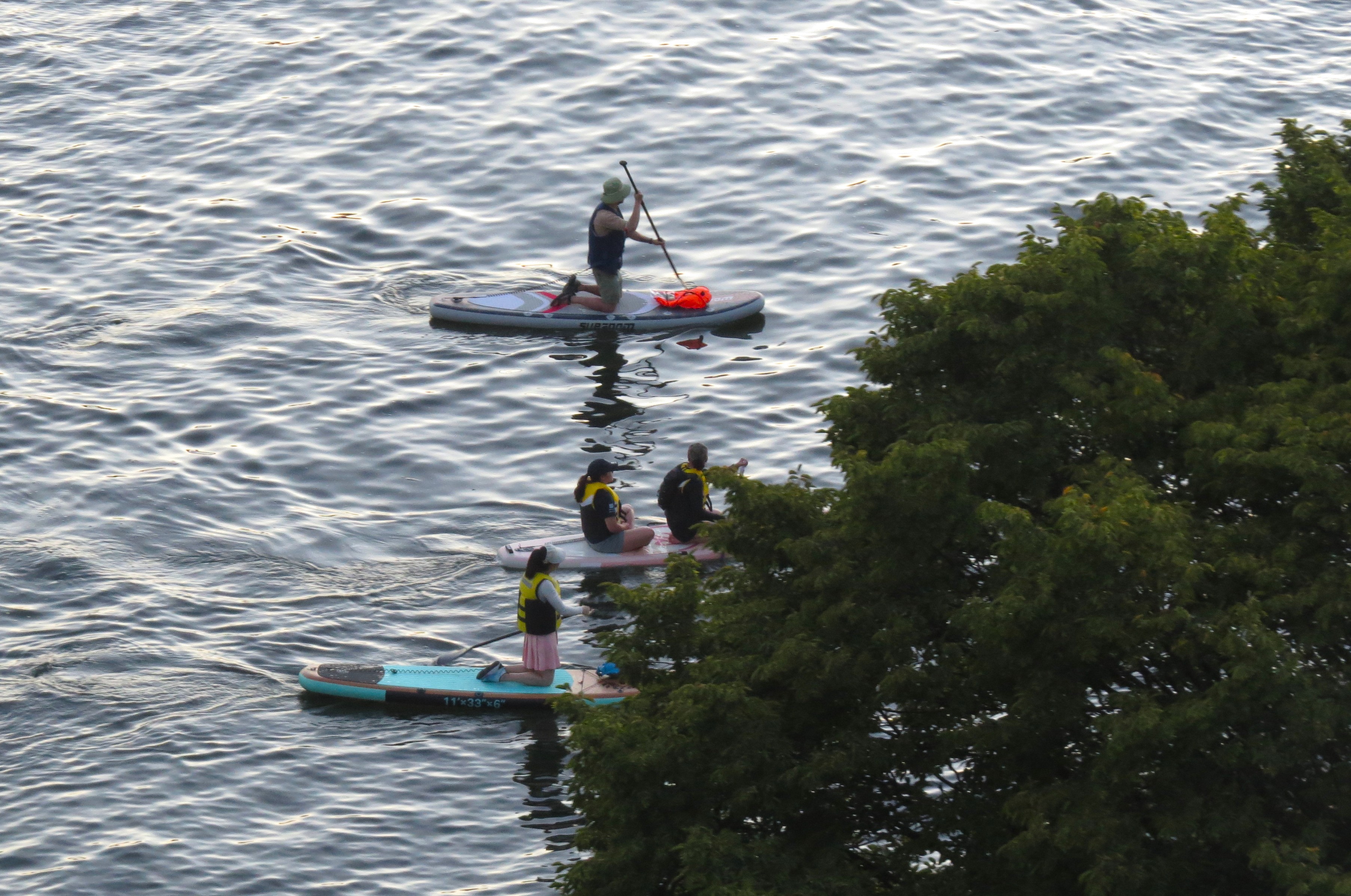
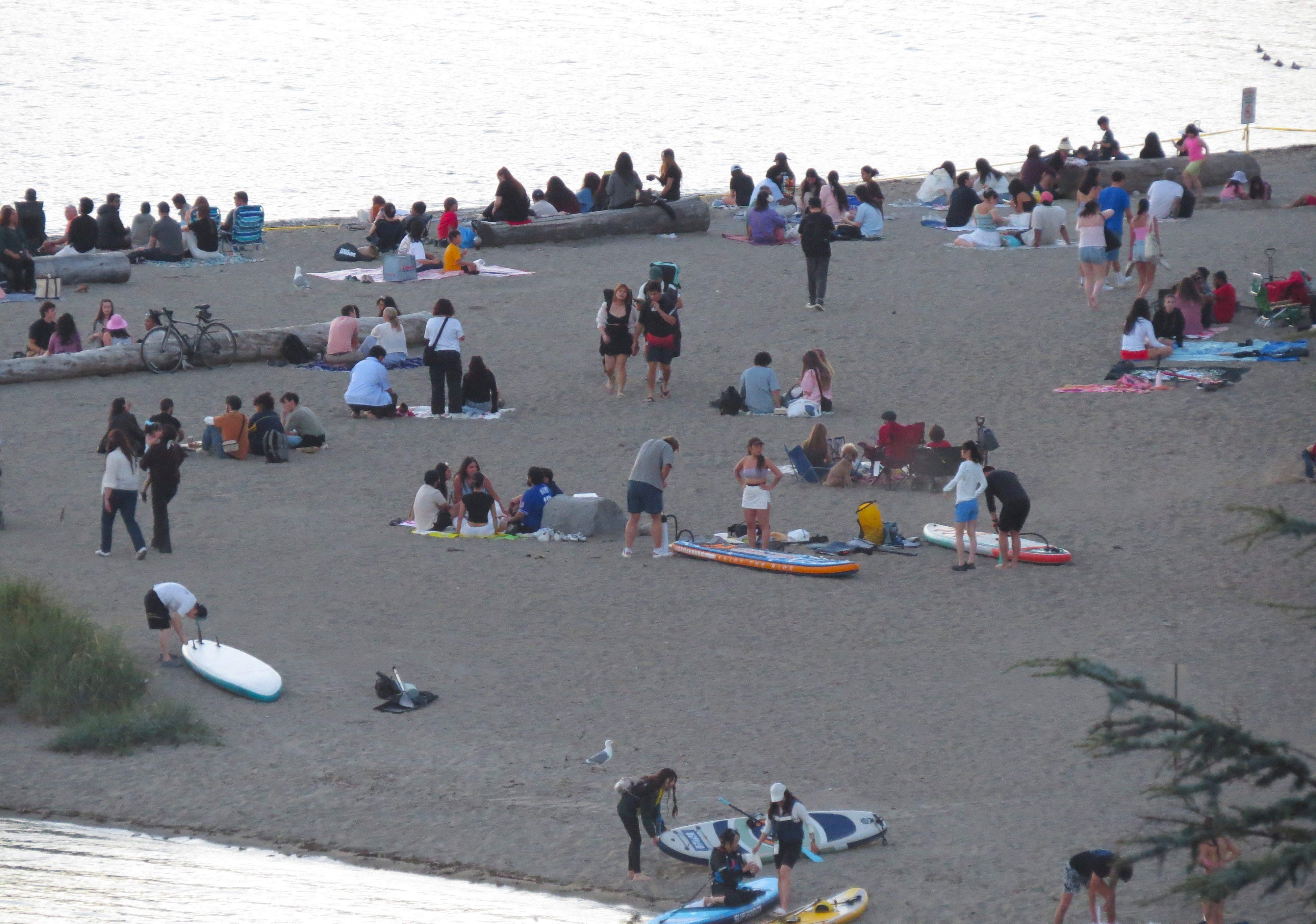
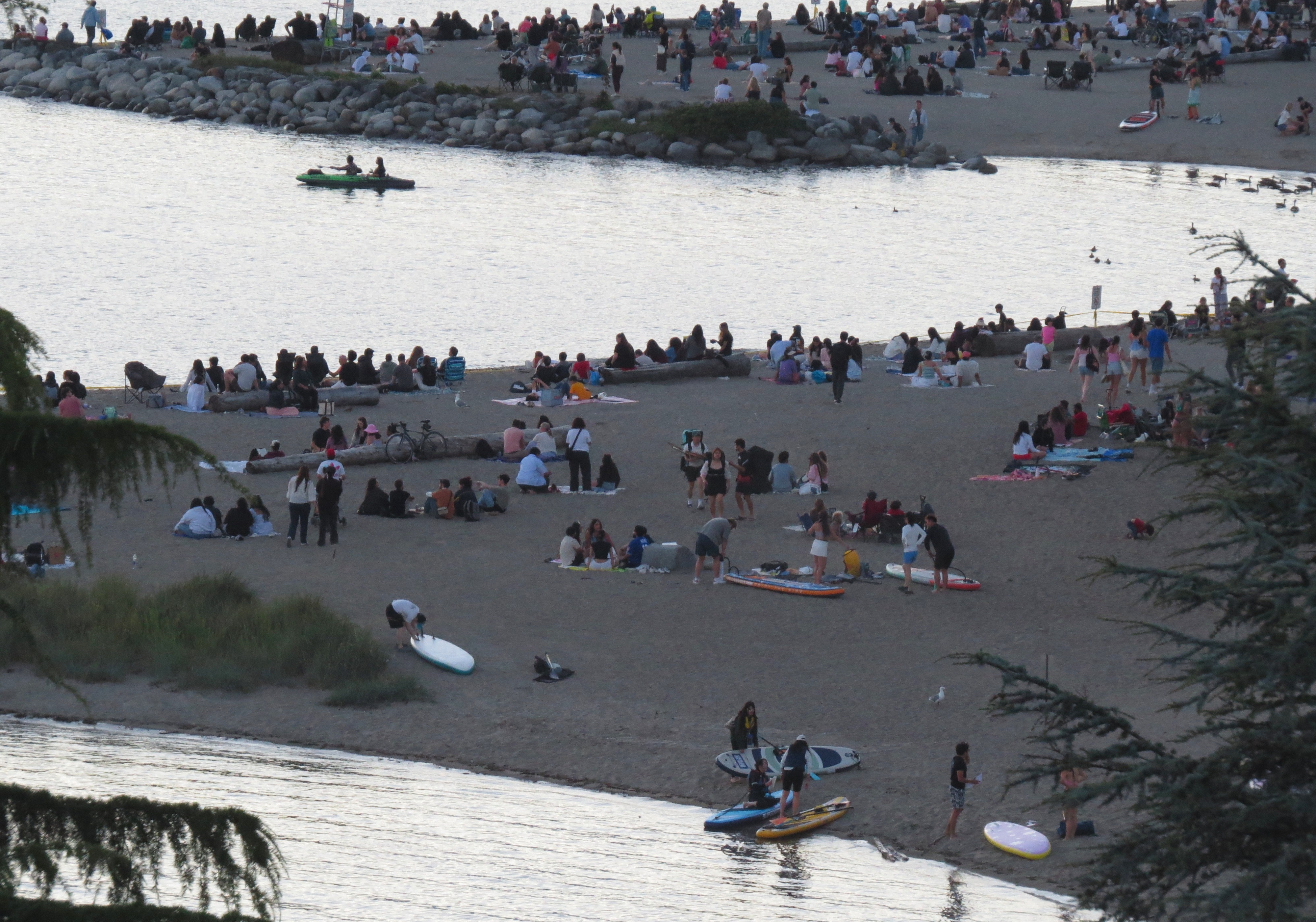
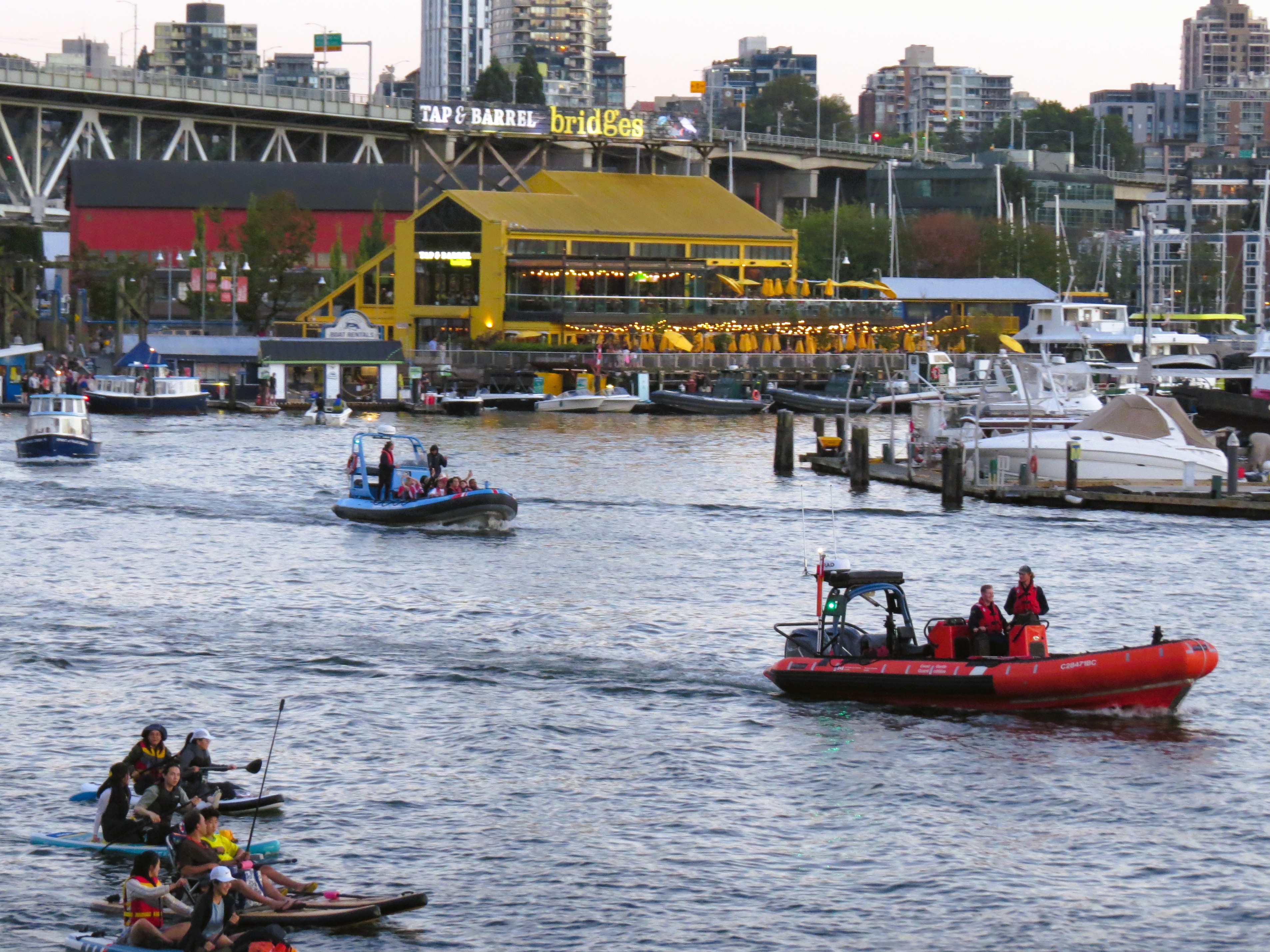
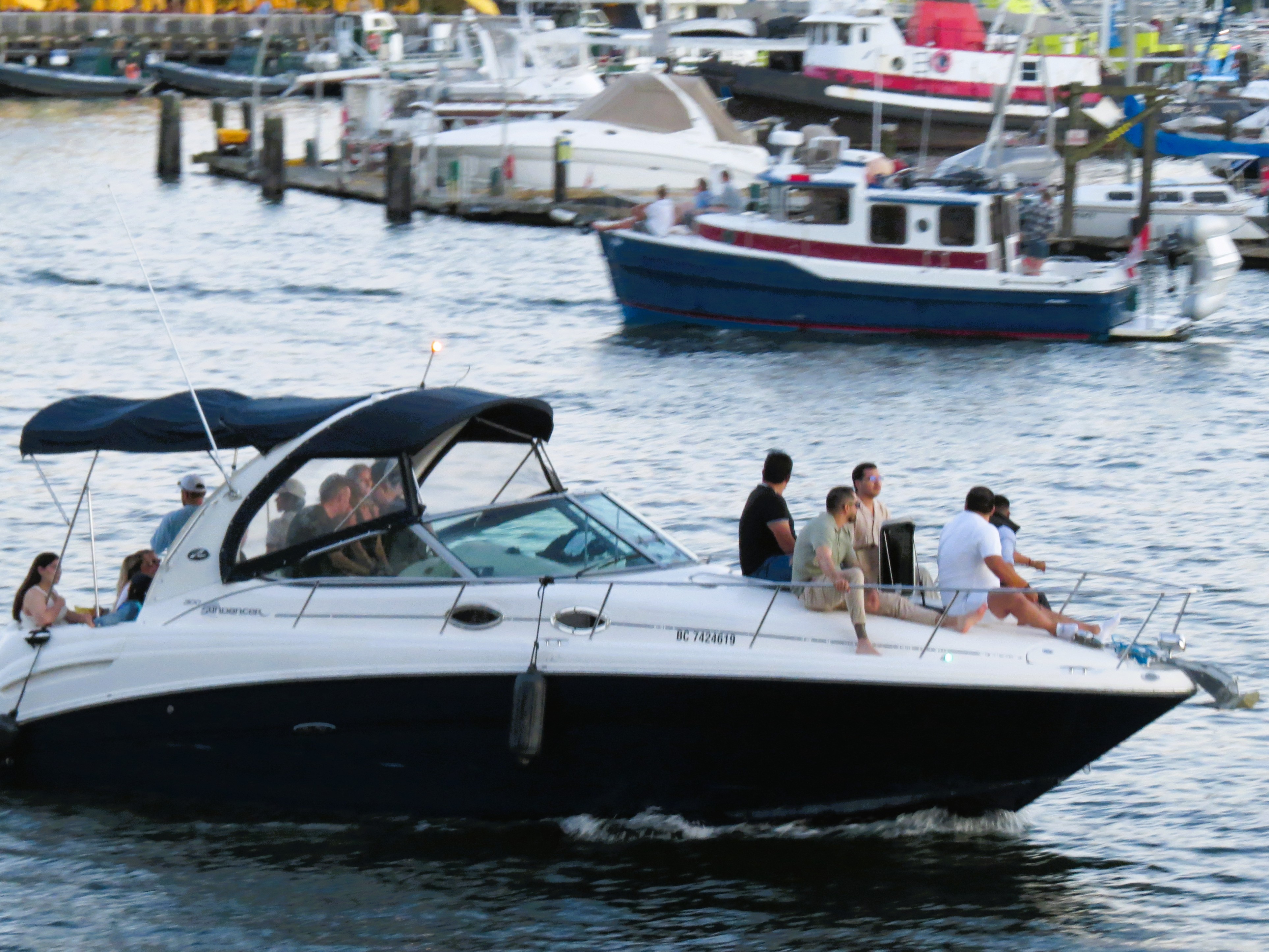
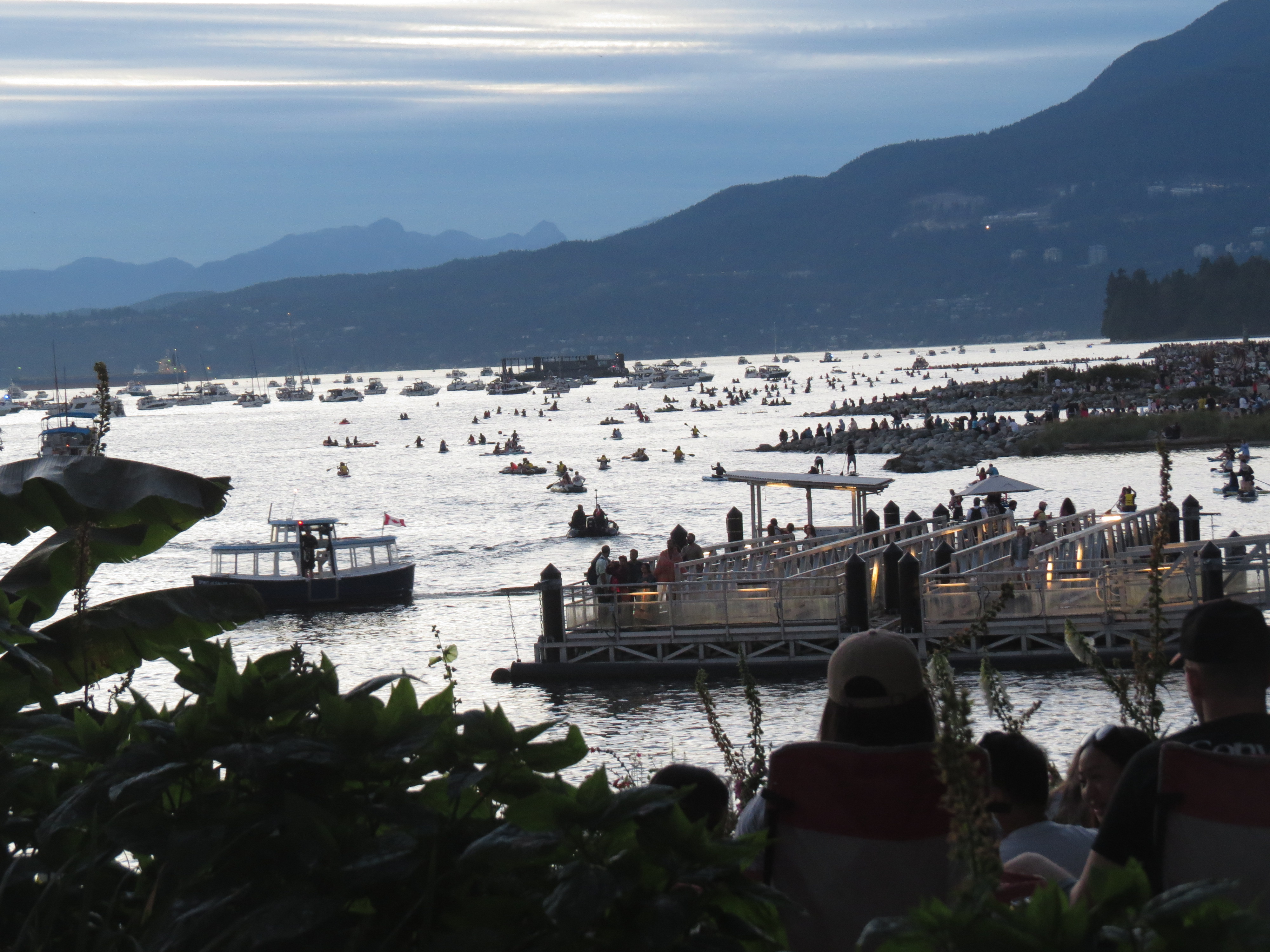
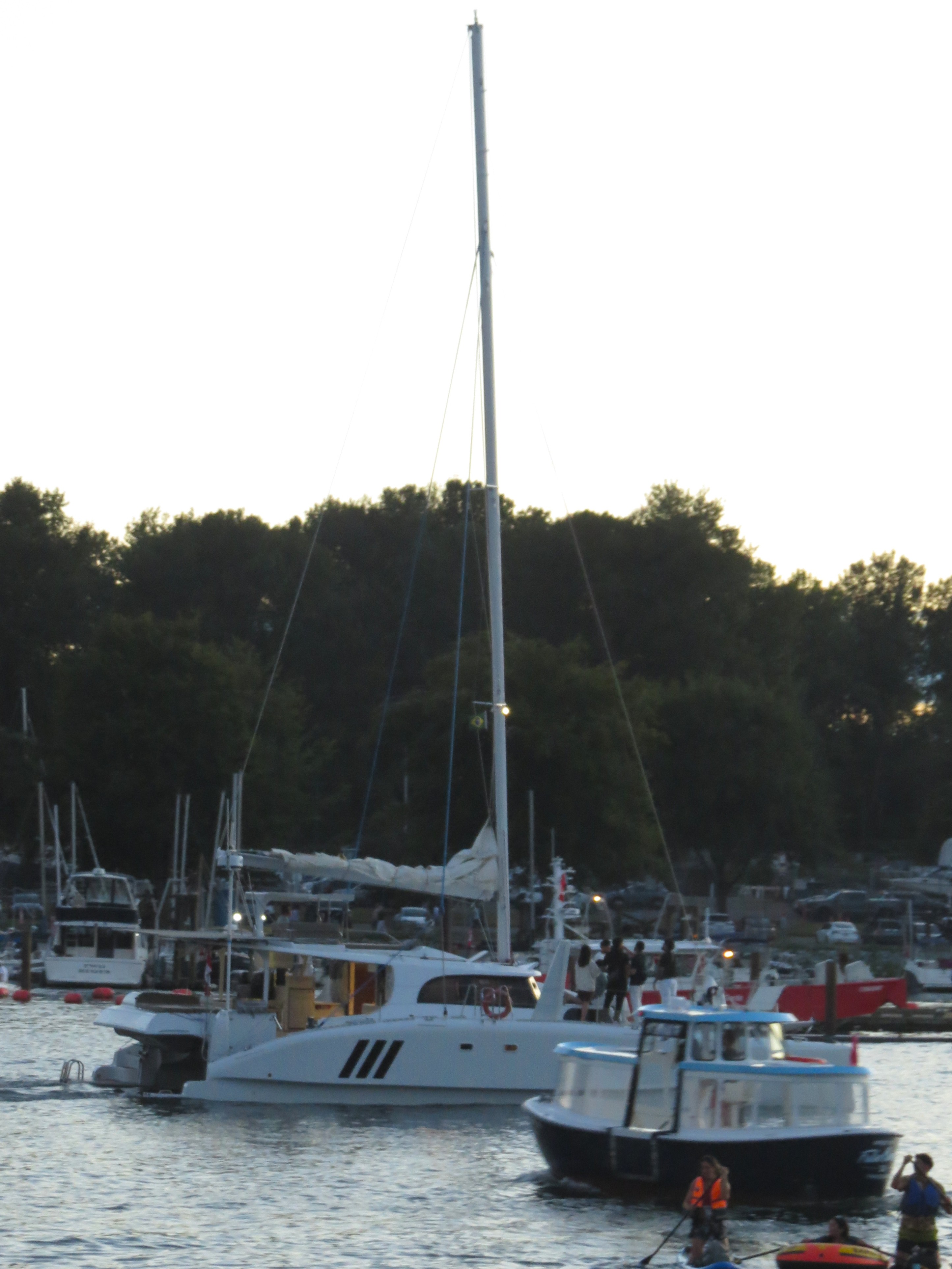
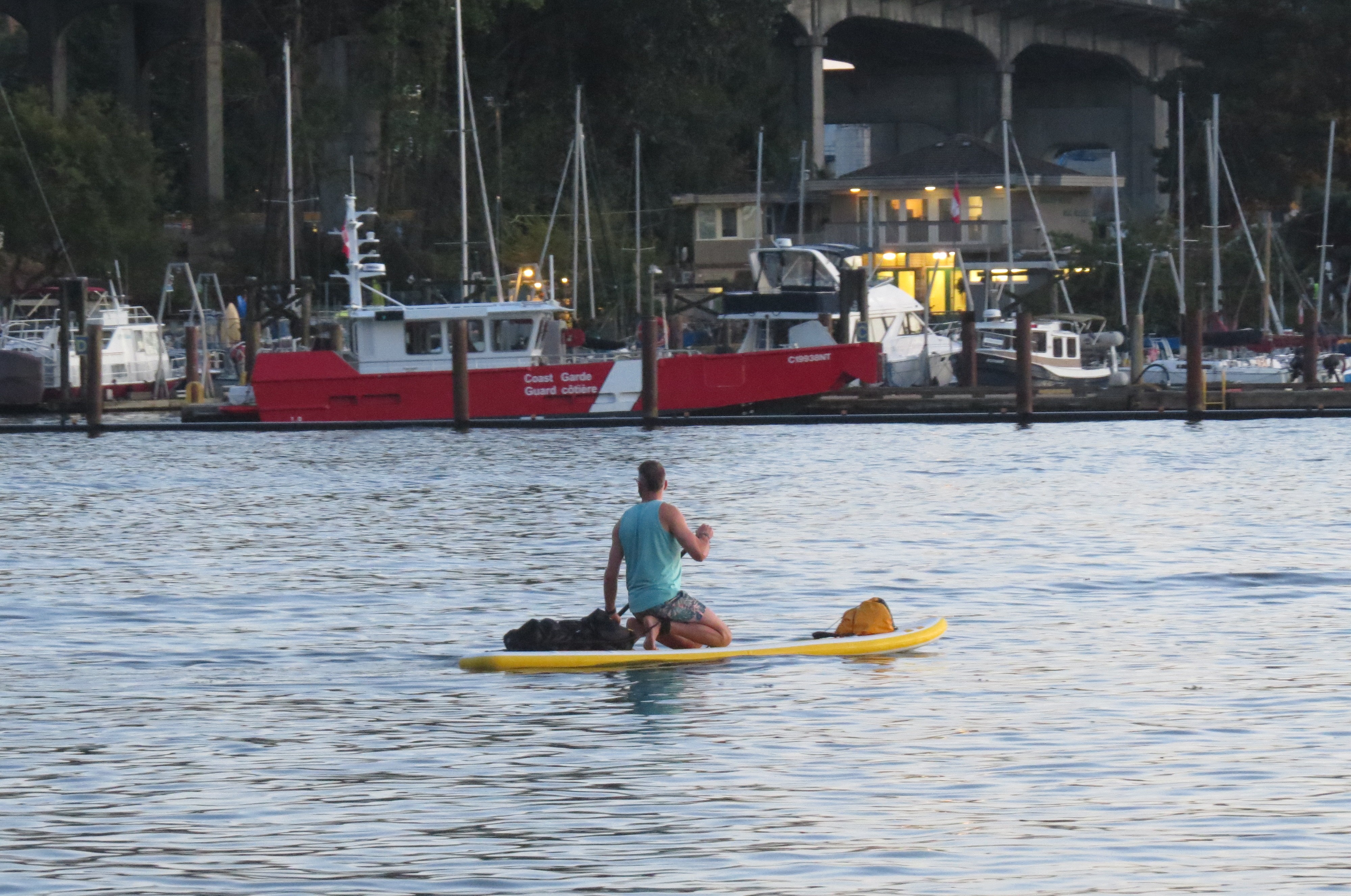
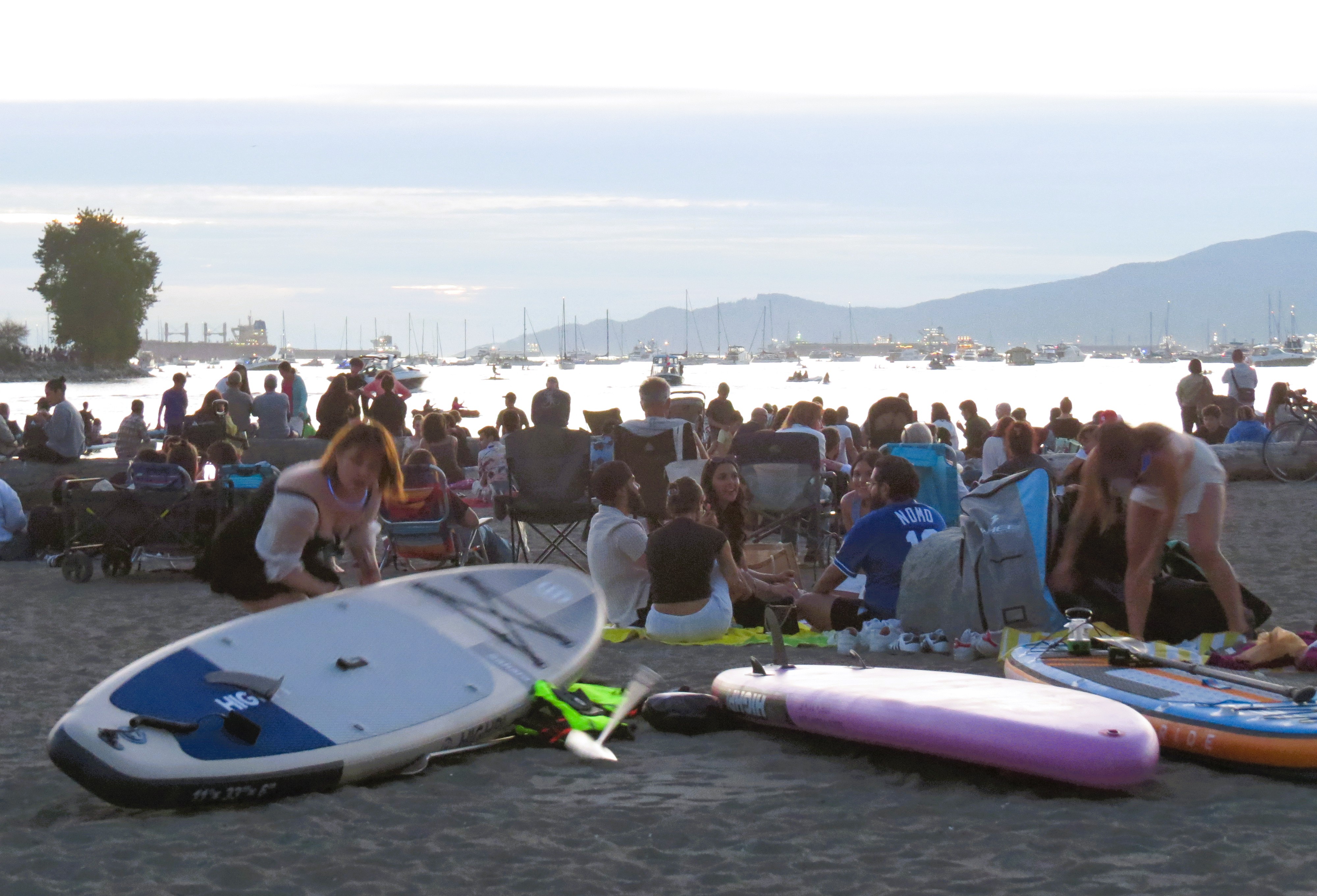
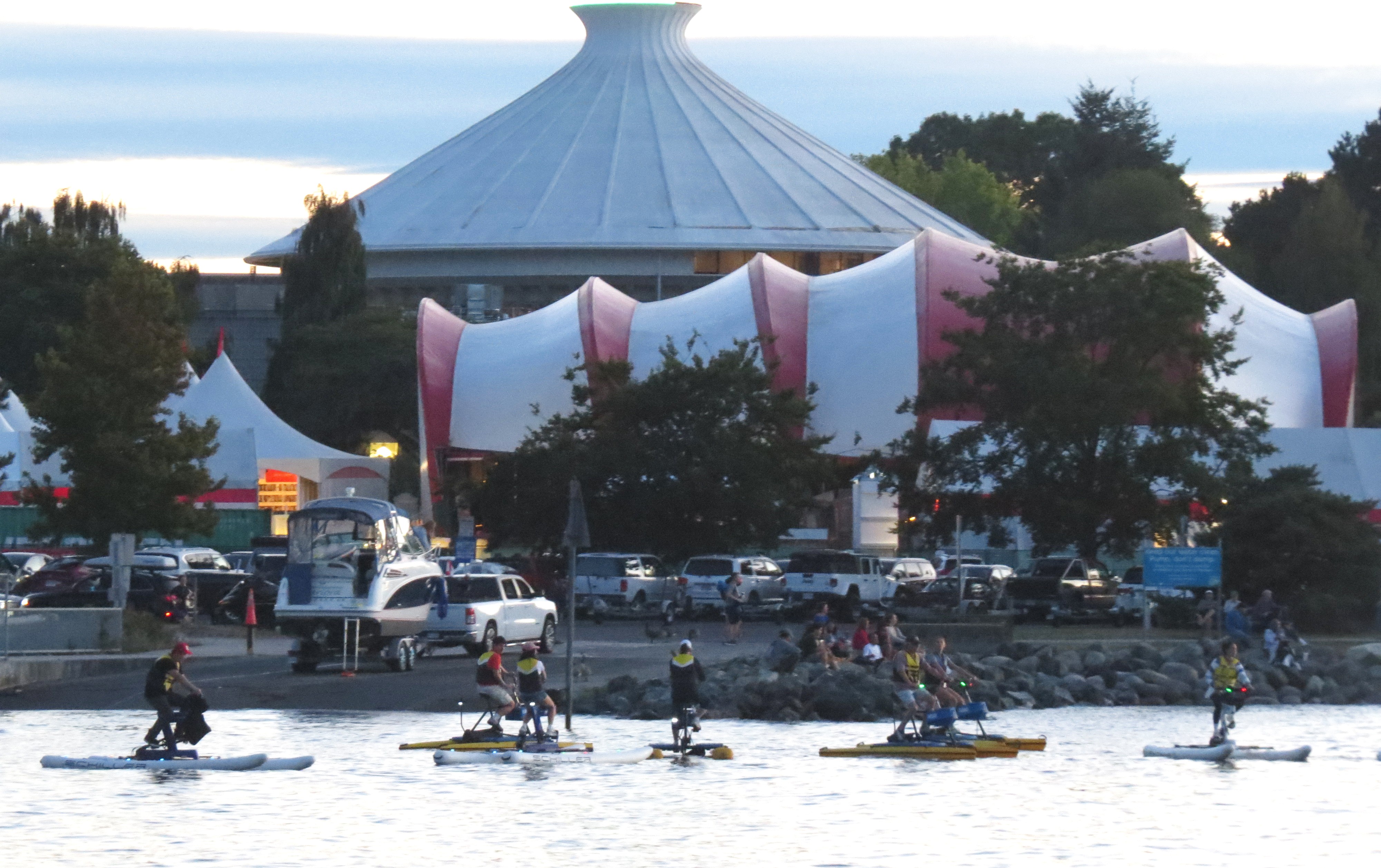
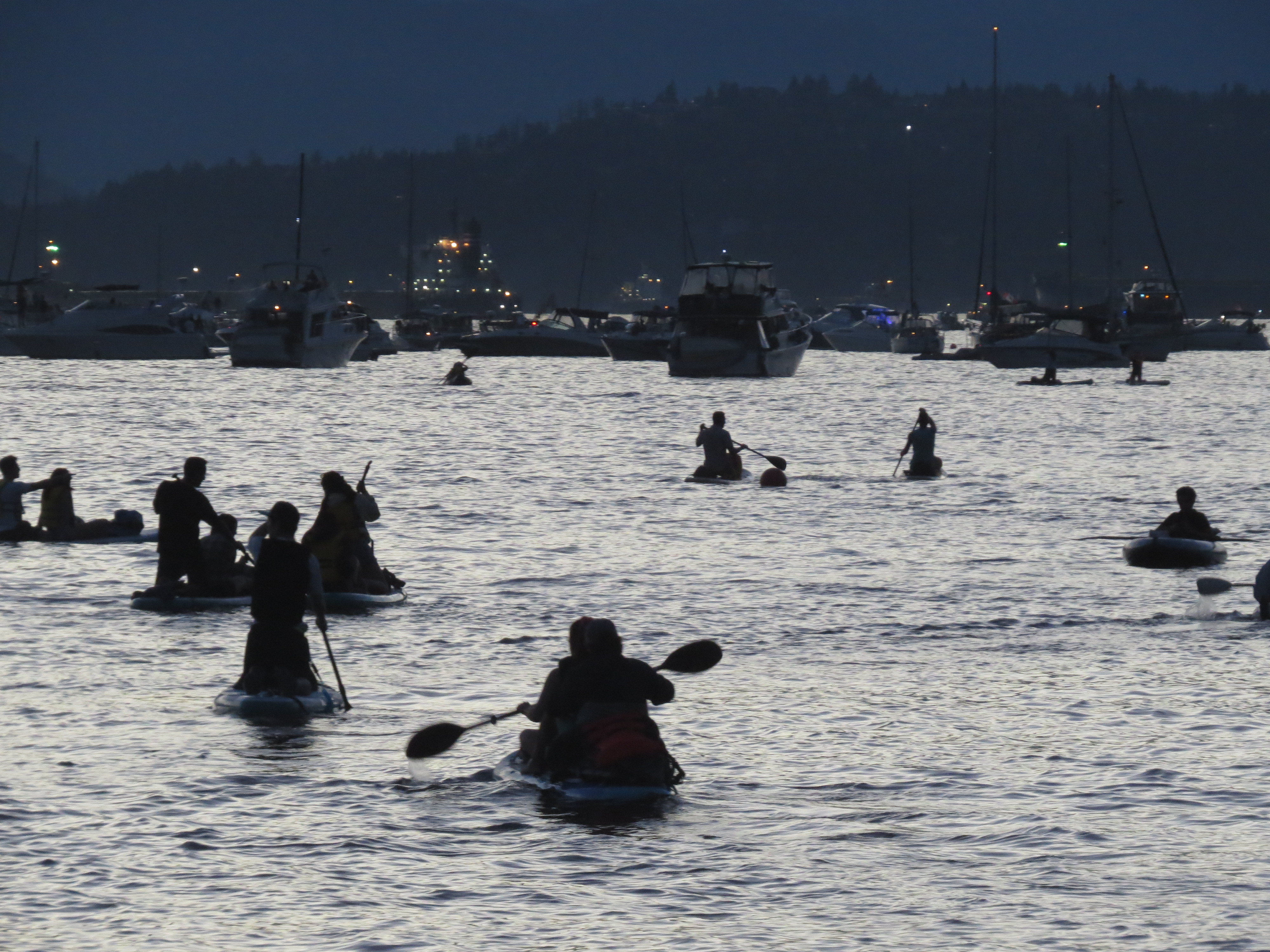
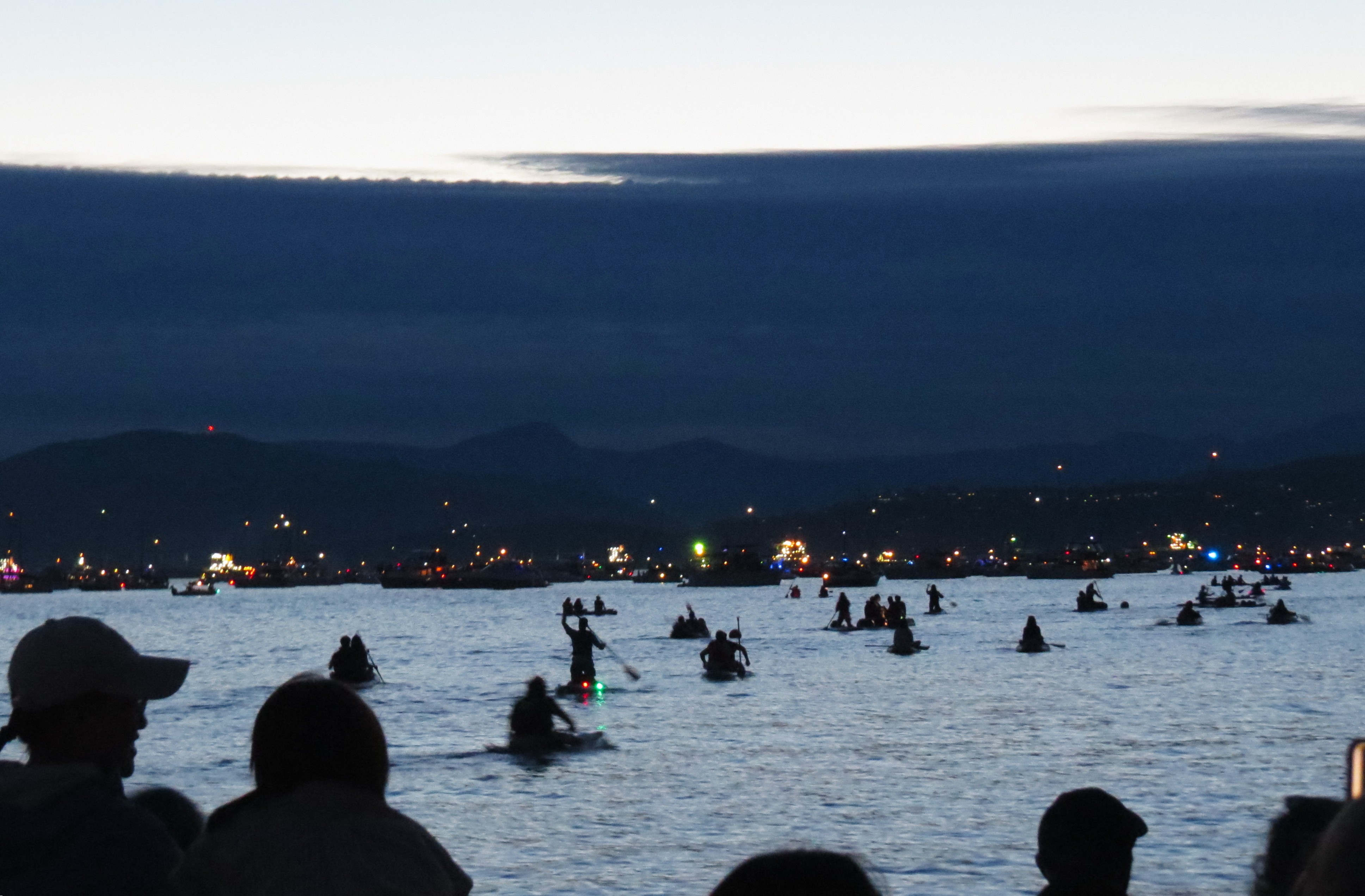
On the other hand, I have never seen so many watercrafts taking to the Bay to get close to it. I mean, the introduction of paddleboard makes it so easy now to bring it to Bay and make a splash in the waves. Also many drones – can’t remember seeing them in old times. Granted, it has been more than 10years likely since I went to the Fireworks.
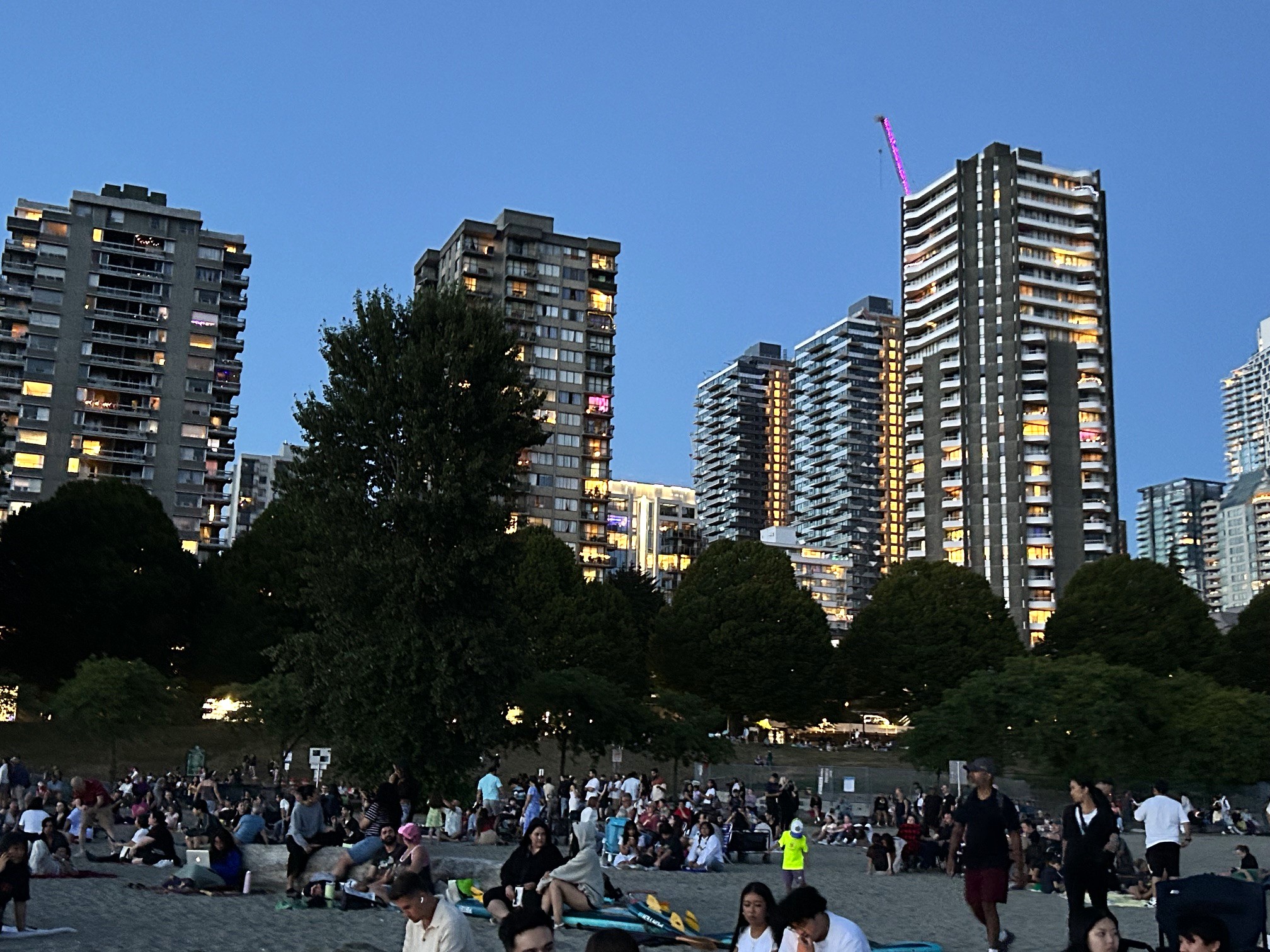
My two friends started properly under the Burrard Bridge on the their paddleboards. I used the old technique – my two legs to go to the beach and settle on a comfortable rock, right on edge of water.