Andre Gide and the long trails he led me through

On Claude Mauriac Coversations with André Gide

Introduction:

Andre Gide as a guide – but to what light, what knowledge?

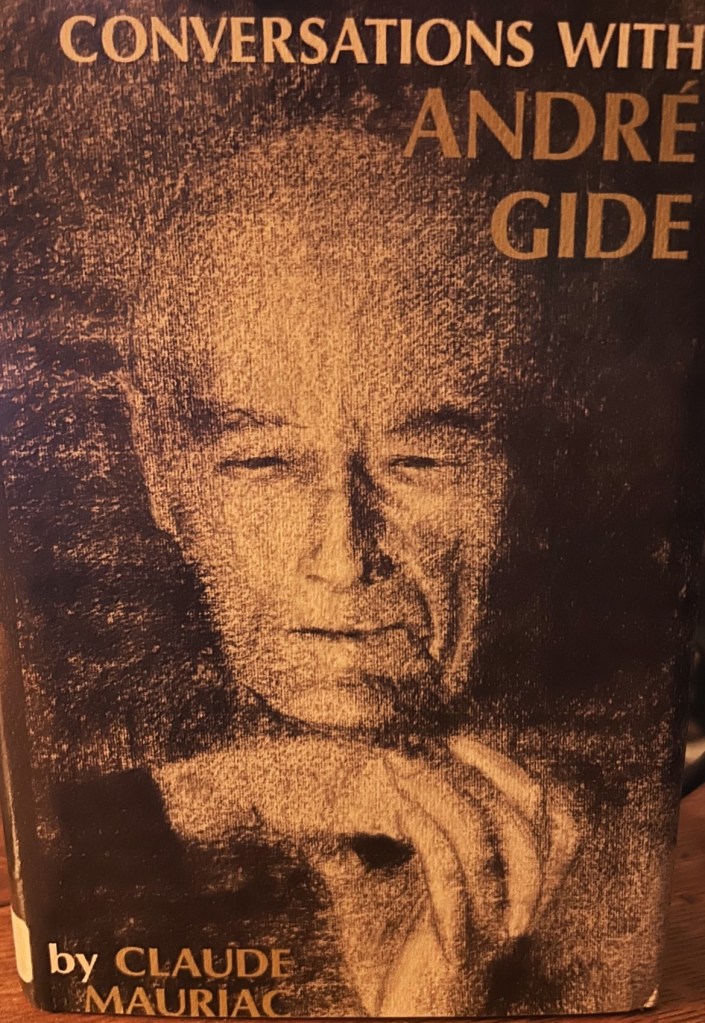
Andre Gide not himself with his books, his amazing literature, but Gide as seen in his twilight years through conversations and observations of a young Parisian, Claude Mauriac. No, no that more famous father, François Mauriac[i] (a writer, critic and member of French Academy and Nobel laureate in literature). Claude followed his father’s footsteps, who also interviewed Gide and wrote about him extensively.

All of it and all of them reminded me how amazingly important for continental Europe was the French literature since Moliere, and especially in revolutionary XIX and first half of XX century.  Italian, Spanish, or German literatures had its episodes, individual, singular writers, the same as English from across the Channel. But none of them had such an impact on literary styles, thought, as did French literature as a whole at the same time frame.

I remember vividly that right after I stopped reading Mickiewicz, Kraszewsk and Krasicki[ii]  – I went straight to Stendhal[iii].  I’m talking about a 10-12 year old boy in a peculiar cocoon called ‘Polish People Republic’[iv].  Yes, it meant communist.  France for us was modern Athens. Of course, I had to re-read a lot of it again in a two-three short years to better comprehend it – but by the time I was fifteen, I knew by memory all the streets of Paris, from Montmartre to Montparnasse. It was very helpful when I eventually ended up in Paris for a visit with Kot Jelenski[v] – a true bridge-navigator between French high culture and Polish literary/art achievements.

                The story with reading about Gide goes a few weeks back. I was trying (still unsuccessful) to get from our Library a book by Klaus Mann and his talks with Andre Gide. He was the last one to have this type of talk with the great writer. That book simply vanished from Vancouver Library – last time I was actually told that: disappeared. I went finally to get that book by older Mauriac –  François. Remembered seeing it on shelf of the Library, but this time that book was gone, too. LOL.  Machiavellian conspiracy?!

 But they had this book by the younger Mauriac and I took it. It might have been a good idea. He was very young and very much taken by Gide, and his own criticism was not blinded by arrogance or pre-conceived notions, as could have been the case with his father writings. Even more intriguing is the fact that older Mauriac was about the same age as Gide. Claude Mauriac, being more than generation younger, would not dare to contradict, or argue with Gide. I knew he would have listen and absorb – therefore his recollections would be more crystal, so-to-speak, taken with reverence.

While reading these ‘Conversations’[vi] in Moodswing Cafe[vii] a strange thought came to me or, more aptly – an observation. Strangely perhaps, because on the surface it is totally disconnected from that book and it’s subject. Somehow though, it feels that I need to include it in that short essay.

Here we go:

some people, mostly the artistic type, or at the very least working on some sort of public stage while doing it, dress very differently on that stage than off that stage. I am definitely not talking about actors, as these professionals play a role, not themselves. No, my observation is about any type of performer, who presents their own skill/art in a public space. They often dress very differently than they are off that stage. Why? Are they victims of ‘Dr. Jekyll and Mr. Hyde”[viii] syndrome? I doubt it.  Yet, it seems to me that they think as their artistic persona would be too peculiar, too extravagant for normal, ordinary life. Extravagant?! Obviously that ‘artistic’ part is very important and it shows that they are fuller, happier and more confident in that ‘stage attire’ than in ordinary, boring clothing.

They should allow themselves that freedom of dressing a bit differently simply because ‘it’ is them and ‘it’ would show confidence and joy. Being an artist does not make you better than others, but it does give you the privilege, the right to be a little bit of a peacock. Perhaps not with fully displayed tail – but a colorful peacock nonetheless.

I think that Gide helped me to have that thought, observation. Certainly monsieur Cocteau[ix], who comes up in Mauriac’s story very often would think that. I do not shy from this ‘perversion’ definitely.

(Next day in Melriches Cofee bar on Davie Street)

Well, back to the subject, the book of Claude Mauriac.

 As I said I wouldn’t have borrow that book if not for the simple fact, that the other, written by his famous father was not at the library.  Yet, being as it was, I have found out that it worked very well. That Claude, young aspiring critic and journalist did not come to Gide to discuss, analyze a famous writer style, body of work. He came timidly with open mind and heart to observe, to learn about Gide from Gide, without pre-conceived notions about Gide as a man. Obviously, the age difference added to his deference.

                Did he understand the peculiarity of aging Gide homosexuality? Yes, he knew of it very well, Gide never hid it, but did he knew the emotional price paid by an aging homosexual artist – even in liberal Paris of the 30ties – who was single, did not have a partner? Of course he did.

 Gide still analyzed, re-lived his tragically ended marriage ( her sudden death), a marriage never fully ‘consummated’. If you are not sure of the torture, perhaps you should read the gem of literature, the „Immoralist”[xi].  It had tremendous effect on me decades ago, when I read it first time.

Claude Mauriac was not only young (o, so very young!), he was (as his father) staunchly, almost fervently Catholic. But he did try very hard not to let himself be judgmentally opinionated in his dogmas, especially noticing that his own famous father (also fervently Catholic) did not allow himself to judge Gide writings through his sexuality or otherwise private conduct. Au contraire – he held him in high esteem.

Yet, I must say without a hint of trepidation, that I sensed very strongly, that Claude was drawn mysteriously not only to Gide’s admired writings but also to his suggestive handsome looks and his, at times, flirtatious behavior. And I also do remember the ancient times when I was at Claude’s age, and how intellectually attractive were my much older friends. One must assume that admiring these much older friends intellectual prowess easily translates into physical allure. It goes without saying that intellectually accomplished men (and women), who are artists or people formally associated with art ventures do age gracefully, and barring serious illness, they do retain physical attractiveness rather well. That ‘attractiveness’ should not be confused with just mere and banal ‘good looks’.

On p. 160 of that book Claude re-examines his feelings toward Gide and vice versa. He now recognizes Gide acting as a clever gamer, he sees his ‘perfidy’ to be friendly toward him – a boy, a budding young journalist. But is it a fair examination of Gide’s acting by Claude himself?  I don’t think so. I think and I assume it, because I believe that Claude wrote that book honestly. I also believe (although he doesn’t state it as an explice) that at times, through the extended vacation in southern France, he often was jealous of his father closeness and long friendship to Gide. Closeness that took away Gide attention to Claude only. That he might have been at times in the shadow of these two towering figures of contemporary French high culture. Granted – it offered him an extra security that the father might have offered just by being close, but it did steal the singular attention of Gide that might have been his otherwise. If he did not have these feelings, he would have been indeed very abnormal young man, and I don’t think that he was ‘abnormal’, LOL.  François Mauriac and Andre Gide were undeniably first class stars of French literary culture; they knew and admired each other accomplishments for decades. Hence, vis avis that Claude persona and personality fades into shades of words, of importance of their lively discussions.

(following day, back in Moodswing Café)

I have become more and more attune to Andre Gide again. Yes, it started with Claude Mauriac Journal , but it took me much farther. It is now me at times, who talks with Gide. Sometime I argue with him, sometime I adore him … and yes, sometime I just want to shout at him: shut up already, Andre. You are not god or, at the very least, you are not the only god of European Olympus! Another false claimant to Homer’s lyre.

Alas, truth to be told, I do love Andre. When Claude Mauriac takes him to visit deathly ill dear friend Paul Valery[xii] and he is not sure what his friend was whispering to him, I feel sorry for Andre. When he returns for a second visit … he is half an hour late. Valery is dead. Claude is overtaken by the look of broken, crying Gide. Was he crying for Valery? Undoubtedly, but mostly he was crying for their youth, for ‘that’ Paris. He was crying for himself. Selfishness? Perhaps … but truly, who is not selfish at the very core, the very center of our ego, our soul?  When you cry after dear lover’s death – you cry over your loss much more than the loss of another person (of course the ‘other person’ would be your lover, but the asserted ‘yours’ is the key to that loss: something, someone was yours, belonged to you and now was taken away).

Egotist? I remember years ago reading F. Scott Fitzgerald  “Short Stories”[xiii] and loved it so much. It was his greatest literary achievement and it prompted me to read his first full novel “This Side of Paradise”[xiv] from 1920. Many have called it an absolute portrait of the generation and its first section is titled The Romantic Egotist. How appropriate! These short stories and the novel portray a generation that just went through the unthinkable loss of millions in that devastating war of 1914-1918. Generation that was hungry for life, love, excess – ALL of it.

Dear Andre, did you know during your talks with this improbable youth called Claude Mauriac, that his world (as well as yours – once again) is just about to collapse under the pitiful actions of his admired earlier presidency of Maréchal Pétain, the Lion of Verdun, who become the Mouse of Vichy? No, of course you did not. After all you went to Tunis and Algiers. Did you enjoy the young bodies of the Arabian boys? Of course you did. After all it wasn’t the first time, was it? But you still should have told some of it to young Claude. He was naïve …

                Gide dies soon after Valery. I’m personally taken by these moments and his sad, somber realizations. Am I now waiting for my death? Is my return to Warsaw a Gide’s return to Paris after the war years in Africa? Return to die…

(following day, back in Melriches Café on Davie in Vancouver)

Ah, yes – it is very hard to leave this place again, these streets, buildings, even shops, stores. Perhaps it is most difficult leaving the parks and their trails. Everything is so dear for me there. Everything? If life is everything – than yes, it is.

Our love, that I will never find again, my writings. Despite many shorter and longer returns to Poland, my dearest Poland, the undeniable fact remains that I was twenty two years old boy, when I left her. Now I am close to Andre Gide’s age, when Claude Mauriac wrote his Journal and become emotionally attached to that famous French writer. Andre died in Paris few years later, in 1951.

Regrets? No, have I not left my dearest Poland, I would have never found him – My Boy, My Life, My Soul. Things like that do not happen twice. Yet – Poland is my first love of books, of literature, of poetry, music. When I finally landed in Canada (after a year in London and two years in Italy) I was a truly fully developed man spiritually and intellectually. Back in the old communist Poland young people had to develop fast and mature fast. Of course, there was time for first kisses and romances – but a romance is not That Love you dream of, when you are that young. That one was waiting for me here, in Canada. Do I believe that things are preordained somewhere for us?  That I don’t know and I am not going to be wasting time trying to answer such a theoretical question – cosmology was never my strength.

I do have one regret, though. Back in the 80ties I went to Paris to visit Kot Jeleleński[xv], an amazing intellectual and art lover. Art lover is one description – but of course he must have been a great lover romantically, too. After all, he was a lover of improbable Leonor Fini[xvi] and improbably beautiful Stanislao Lepri – an Italian aristocrat. He did, in pre-war Poland, had a friendship with Polish great poet Kamil Baczyński (a hero of Warsaw Uprising, where he died fighting German occupiers)  – I forgot to ask him if he ever made love to beautiful Baczyński? But I would like to think that they kissed at the very least, both of them were very handsome boys.  That is a side thought only, pleasurable but of no consequence. Yet, my regret is that I should have asked Kot to take me to the streets and cafes in Paris which Gide frequented. Kot was Parisian bare none. It is my great regret. You don’t ask just a tourist guide for places and stories like that. Stories like that could be told only by art lovers. Or artists themselves.

Who, if not Konstanty Jelenski  could have told me the true shades of Gide? Jelenski, the ever arbiter elegentiae, the guardian of Polish and European literature? How did he survived the death of his love – Stanislao, the gorgeous Italian?  I didn’t know that Kot at that time was dying himself of incurable cancer. Being as elegant in every meaning of the word, he never shown anyone his physical ailments. Let’s talk about art, not of something as ghastly as death – he would have probably answered.

Our lovers die too soon.

I have talked for a long time with Giedroyc[xvii] in Maisons-Laffitte near Paris, editor-in-chief of highly influential literary and political monthly “Kultura” – but our talk was all wasted on politics instead about literature. Those were the times, but we should have known that even during war, talking about art and love is more important than politics! One that could have put us back on these important tracks was another editor of ‘Kultura” – Józef Czapski. Tall as a skyline physically and intellectually, himself a lover of young Russian poet Nabokov and later of Ludwik Hering – but Czapski was not in Paris, when I visited Giedroyc. Maybe Czapski met Gide, he could have due to his aristocratic connections he mingled o lot in the ‘society’ circles of Paris. Eh, the occasions and talks we missed…

                When Oscar Wilde took Gide to a hotel in Algiers, Wilde rented two rooms and in both rooms was a local Algerian boy. Naturally, the boy was rented, too. They both delighted in their boys. Yes, I know my dear Reader that you are aghast – but trust me, I am certain that both of these writers delighted in these Algerian boys. They definitely were not terrified of these boys. Not only that – to your surprise  (no doubt) I must tell you that it was not illegal – the age of consent was not 18, not even 15. It was at that time …thirteen.  O tempora, o mores! Did you, dear Reader give a sigh?! Did you just say, with wiping sentimental tear off you check: the good, old times? No? You didn’t? I thought you did – because that is what you usually say, when you comment on current times, don’t you?

O, please spare me the debacle. I am not going to Algiers tonight, or any other time. And the age of consent in Algiers now is the same as in Poland or in Canada. Even in Paris, LOL. Not sure about Texas or the Temple in Utah – religions and individual states laws and customs are very different in the ‘land of the free’ south of the border. They are Christians, too (I think?) but they are the Later Saints … or is it Latter-day saints? Maybe it is just very special Latte or Cappuccino; it is all too complicated for a simple guy as me.

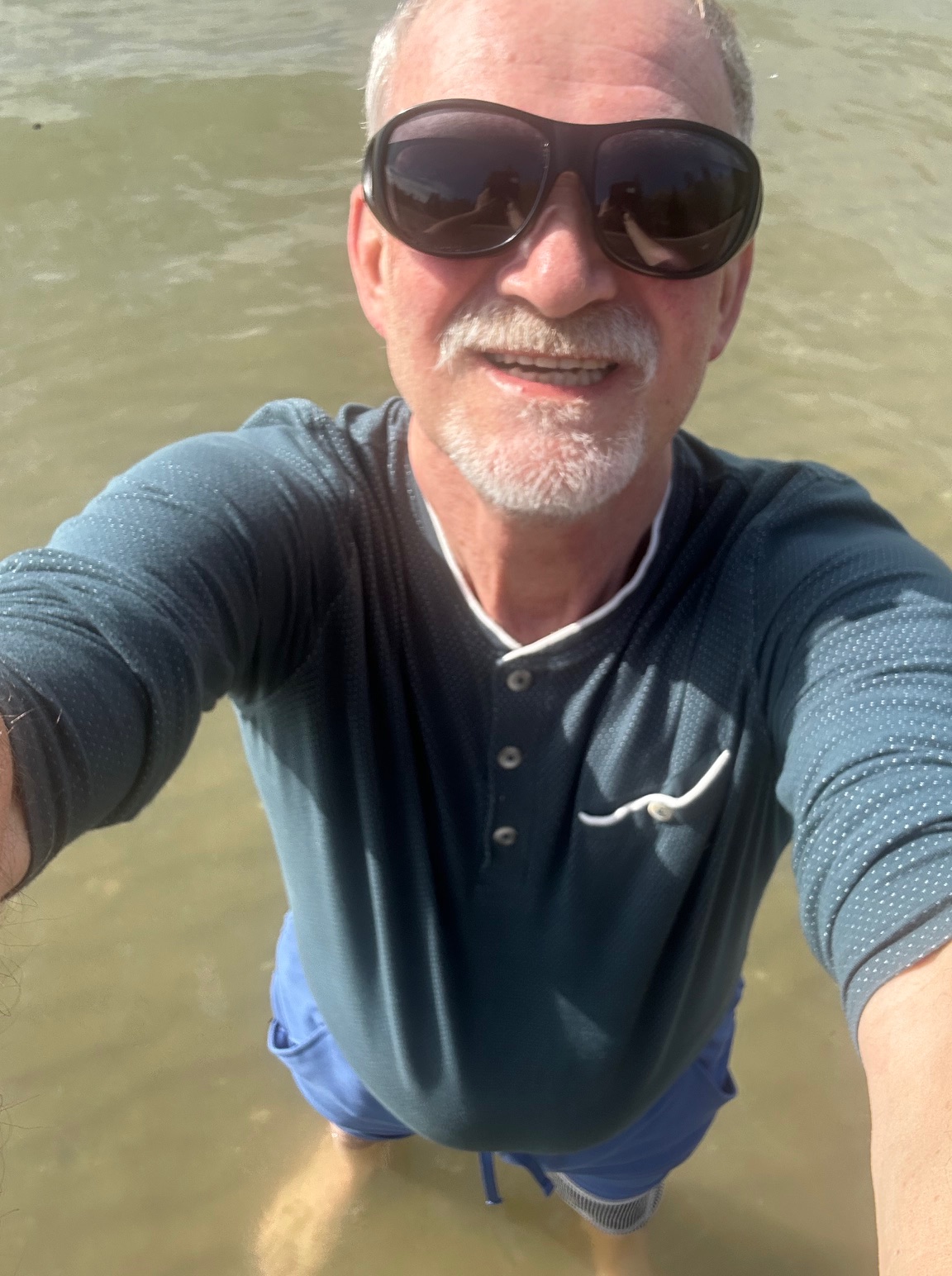
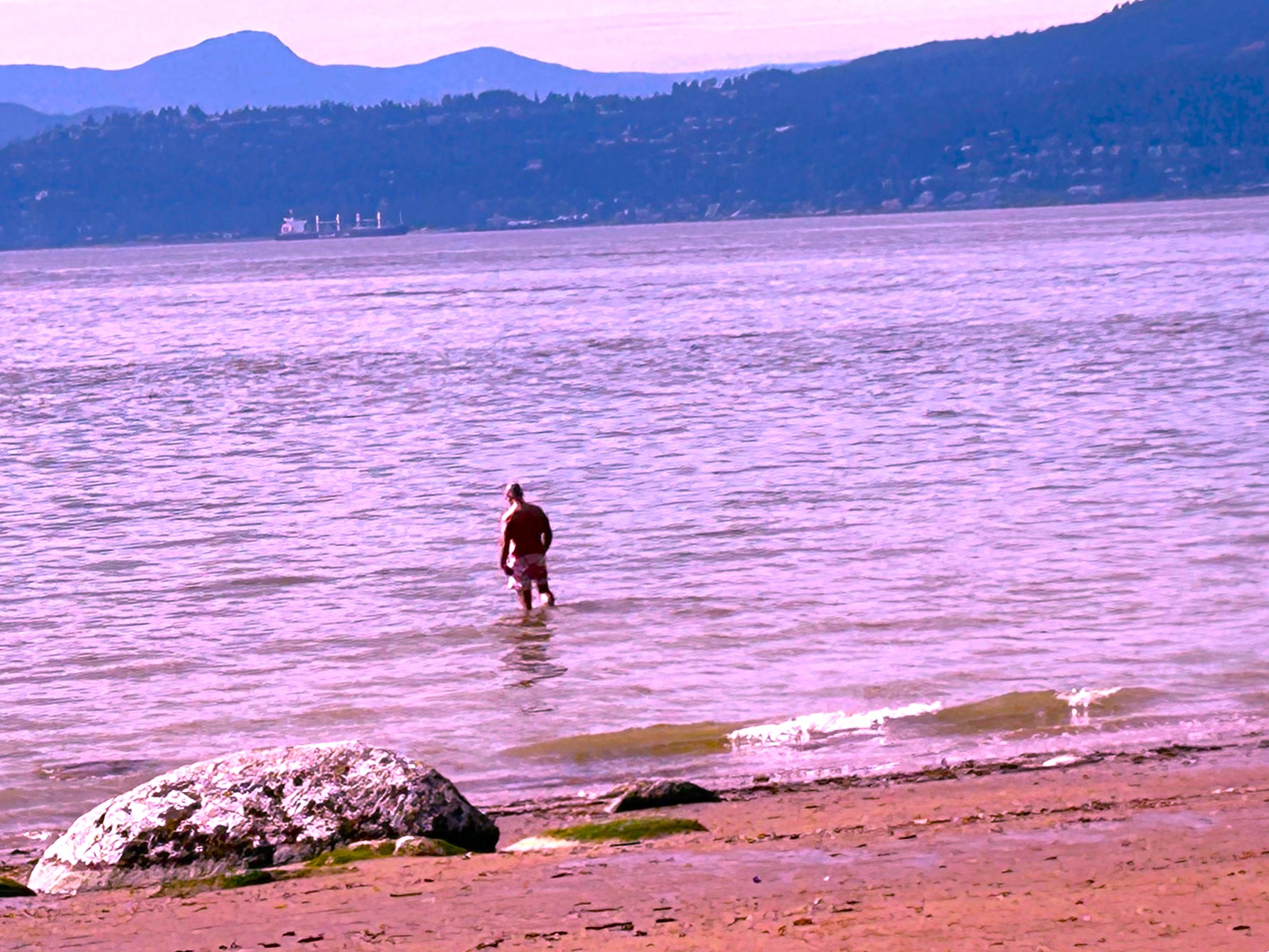
Thinking of Gide for few more days and thinking of him I wrote two pieces of poetry: one in Moodswing Café in New Westminster and one … sunbathing on nude beach and swimming in Mud Bay of South Surrey’s Crescent Beach.  I think it necessary to finish this essay, which no longer is an essay only about Andre Gide, with these poems. Maybe I should even dedicate it to his memory and talent.

 To you Andre, to the memory of great man of letters from France.

Winter time in a small village in Pyrenees.

Night comes quickly and darkness covers

the valleys and peaks. Suddenly, the windows

off a small stony church lights up in delicate

orange glow. From the top of the church steeple

comes the song of its bells: big bam! Big bam!

big!, big! big! Bam! Bam! Bam! Baaaam-mmm!

The air vibrates with each tone of the big bell

and sends  bronze-coloured sounds to the valleys.

Archangel Michael blows into long, golden trumpet.

The music envelopes the meadows, climbs up the hills.

The call of God, the call of the Shepherd: 

come and be enlighten in the mystery of life

 and promise of death merciful that claims us all.

They run – the tired travelers, the herds of goats.

They cry and hope, as the trumpet sounds again

and dies suddenly like the last drop of now empty goblet.

The church becomes a masjid and archangel becomes muezzin,

that intones to all: Allāhu ʾAkbar. In Pyrenees Hannibal’s army

stop their march and rise their tusks and trunks: they sense the pitch

of the hymn and the psalm as the far flung peaks of Alps slowly

cover the church, the mosque and streams in the valleys.

The curtain call of History. Birth and death of Love.

Moodswing Café, 29. 05.26

B. Pacak-Gamalski


It’s almost seven in the evening.

The sun just starts to burn its glory.

I talk to young Adonis I just met in the water,

when we were swimming close by.

Back on the hot rocks  of the beach

he asks me about a book I’m reading.

That book is about Andre Gide and young

 Claude Mauriac, who wrote that book.

No, I don’t suppose that my Adonis knows

who was Gide and I explain that he was seventy

at that time and fabulously-scandalously gay,

but Claude was barely twenty one and staunchly catholic.

Definitely believing being straight as an arrow,

straight as the priest, who presided piously over Holy Mass

in the church they attended with Gide and Claude’s father

in the southwestern France,  in Malagar, close to Garonne’s

fast moving waters and not far from Spain’s Pyrenees.

Not sure if all that did not scared him: Malagar, big river Garonne,

 close to Spain. A thought might have crossed his mind:

is he crazy per chance? And he moved few steps to the left.

Yet, he stroke a pose of Greek efeb to accentuate

his graceful, but  muscular body. I pretend

not to read his mind and just admire his statuesque’s

shapes. Like a monument in Louvre or in Athens.

Michelangelo must have painted or sculptured him.

Gide and Claude in France? Who are they?

And who cares on a nudist beach

in the company of Greek efeb?!

Crescent Beach in South Surrey, 30.05.26

B. Pacak-Gamalski


[i] François Mauriac | Nobel Prize-Winning French Author | Britannica

[ii] A. Mickiewicz – great Polish poet, author of national epopee “Pan Tadeusz; Jozef Kraszewski, a popular author of many historical novels in the late XIX century; Ignacy Krasicki, bishop and writer called a Polish La Fontaine, satirist and critic of an old feudal system, XVIII century

[iii] Stendhal (orig. name: Marie-Henri Beyle) French novelist, precursor of realism and psychological portrait

[iv] Quasi sovereign satellite of Soviet Union block of states created after the 2 w.w. (1944) – the most liberal and free from the entire soviet Block. It ended in 1989 by peaceful free election led by ‘Solidarity” movement.

[v] Konstanty Jelelenski – eminent Polish émigré in Paris after the end of 2 world war; one of the three founding intellectuals, who organized and run the famous Paris “Culture’ periodic – an extremely influential magazine among intellectual and literary elite and not only for Polish people in the West, but mostly for people in communist Poland, where it widely distributed  as ‘bibula’ (illegally)

[vi] Conversations with A. Gide; by Claude Mauriac; tr. M. Leback; pub. George Braziller Inc. New York 1965; s. 235

[vii] Services 4 — Moodswing Coffee + Bar

[viii] The Strange Case Of Dr. Jekyll And Mr. Hyde | Project Gutenberg

[ix] Jean Cocteau – a prominent French poet, performer and avant-garde style movement instigator

[x] Melriches Coffee, 1244 Davie St, Vancouver, BC. | Make that happy connection!

[xi] The Immoralist | French Novel, Existentialism, André Gide | Britannica

[xii] Paul Valéry – Wikipedia

[xiii] The short Stories of F. Scott Fitzgerald; pub. By Charles Scriner’s Sons, New York, 1989, p. 776

[xiv] https://www.ebsco.com/research-starters/literature-and-writing/side-paradise-f-scott-fitzgerald#this-side-of-paradise-by-f-scott-fitzgerald

[xv] Konstanty Jeleński — Wikipédia

[xvi] Leonor Fini at Weinstein Gallery
[xvii] Jerzy Giedroyc – Wikipedia

Miłośnicy Literatury

Ciekawa rzecz z literaturą i ludźmi, którzy ją tworzą lub tą zapisaną opisują. Kim są? Jak ich nazwać, jaki przydomek nadać? Pisarze? Twórcy? 

A może miłośnicy słów, historii? Może amatorzy? No właśnie amator, kto to jest? Jak podaje słownik  języka polskiego amator, to ktoś, co robi coś dla przyjemności, co lubi[i].  Czy tylko dyletant, czy jednak amator? Bo amator to miłośnik wszak.  Ogólnikowe stwierdzenie, że coś się lubi bardzo zakłada przecież a priori tezę pewnego umiłowania, zaangażowania pozytywnie emocjonalnego.

Skąd te dywagacje? Ano, winnym jest uroczy, młody (dla mnie coraz więcej osób jest ‘młodych’)  i bardzo zdolny doktor filologii i wykładowca literaturoznawstwa  w Instytucie Literatury Polskiej na Uniwersytecie Warszawskim, badacz w Instytucie Filozofii i Socjologii PAN-u, Piotr  Sadzik. Poznałem go ‘elektronicznie’ sporo już lat temu i zachwycony byłem jego pracą o  maranach literatury pogranicza kulturowego[ii]. Zainteresował się wówczas moim cyklem ‘lamentów po Stracie’ i dało to nam asumpt do kontynuowania rozmów o ‘bólu duszy’, który wypełnia całe twoje jestestwo.

 Mnie nie interesowała wówczas literatura per se, ani wartość poetycka lub krytyczna moich lamentów – one po prostu były wtedy mną całym. Były moimi rozmowami z tym, który tworzył moje życie przez dekady i nagle  … przestał być. Rozmowy te z Piotrem wydaje mi się, że mi pomagały.  Bez tłumaczenia, bez radzenia – a jednak wracały mnie mimochodem poniekąd do rozmów intelektualnych, nie tylko w skorupie emocjonalnej. A to było dużo. Potem, dość szybko przyznaję znaleźliśmy inną, bliska nam pasję literacką – Gombra[iii]. Więc i Jeleński się pojawił mimochodem i Giedroyć, z którymi miałem bliskie kontakty w Paryżu.
Przez kilka lat ostatnich te kontakty nie były już tak częste, ale obserwowałem i obserwuję jego fantastyczną pracę i energię niespożytą na wszystkich polach i ugorach literatury polskiej (nie tylko polskiej, to mnie jednak głównie interesowało) i masę innych poczynań krytycznych, filologicznych, aktywisty życia wydawniczego, kapituł nagród literackich. Gdzie on na to wszystko (a przecież ma jednocześnie pełną pracę wykładowcy uniwersyteckiego, swoich studentów, ich przewody naukowe magisterskie i doktorskie) czas znajduje – pojęcia nie mam. Pewnie więc nie dziwi, że ciągle wygląda jak chudziutki 20-latek-studenciak, a nie wykładowca, LOL.  Więc moja pywatna rada do czytających te słowa: warto mieć pasję szaloną, wtedy nie będziecie mieć czasu na starzenie się!

Wróćmy do tematu tego eseju. O co mi chodzi, czy tylko o portret lubianego krytyka i badacza literatury?  Absolutnie nie.  Ludzie lepiej i bliżej go znający zrobią to bez wątpienia lepszymi barwami i odcieniami.

Otóż bardzo niedawno na jakimś elektronicznym forum żalił się trochę (lub martwił), że jego prace krytyczne o nowych książkach, powieściach, tomikach poetyckich mogą w nim zabić zwykłą pasję i głód  czytelniczy, gdy bierze się do ręki nową książkę, nowy wydanie literatury beletrystycznej czy poetyckiej.

Powiedziałem mu dość obcesowo, że to absolutnie niemożliwe. Krytyk nie może, nie ma prawa tej miłości w sobie zabić. I jednocześnie zasugerowałem tezę, że ten krytyk jest też sam pisarzem. Pisarzem non fiction.

Tak – krytk literacki, który nie pisze powieści, opowiadań czy wierszy  może być w tej pracy nazwany pisarzem. Naturalnie mówię o pisaniu dużo szerszym niż kilka szpalt w gazecie, miesięczniku drukowanym, czy on-line.

Udowodnić to chcę używając przykładu i pasji krytycznej wielkiego poety argentyńskiego, Jorge Luisa Borgesa. Ale właśnie Borgesa non fiction, nie Borgesa-poety.

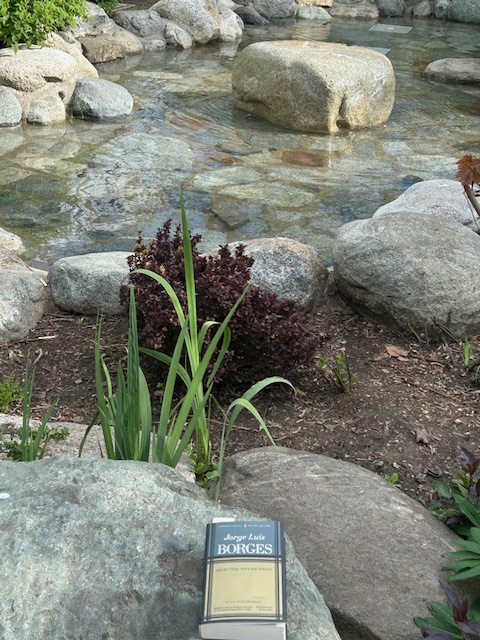
                W 2000 roku podczas jednego z moich częstych wyjazdów do Seattle w USA, poszedłem do czytelni wydawnictwa The Elliott Bay Company i kupiłem wspaniałą książkę przygotowaną przez Eliota Weibergera z bardzo obszernym wyborem tekstów non fiction Borgesa[iv].

I teraz, po wielu, wielu latach ponownie ją czytałem. Tak, nie mam wątpliwości: Borges-eseista i krytyk był miłośnikiem literatury. Takich krytyk o innych pisarzach się nie pisze o ile tych książek się nie kocha. O ile się nie kocha literatury. Koniec. Kropka. Non ulterius progredieris[v].

Wrzuciłem Borgesa do torby i uciekłem do centrum Vancouveru, do mojej ulubionej kawiarenki Melrriches na Westendzie. Zawsze, gdziekowiek nie mieszkam takie dziupelki sobie wynajduję, gdzie przy kawie czytam, robię notatki. Potem na swoim blogu je publikuję. Nie, nie z nudów. Z pasji do tych wierszy, nowel, opowiadań. Niezbyt wiele z powieści, bom w zasadzie nowe przestał już czytać. I tak nie nadążę zaległości nadrobić. Teraz czytam głównie pisarzy piszących o pisarzach, o ich twórczości i światach, jakie stwarzają, opisują. O człowieku.

Więc ten Borges –  jak Gombrowicz z kolejnej generacji – pisał w swoim ukochanym Buenos Aires. Przypomina czasem w tych swoich zapiskach o ulicach i dzielnicach, które i ja poznałem, którymi dawno temu chodziłem.  Nie szukałem po prawdzie specjalnie śladów ani Gombrowicza, ani Borgesa – ale byli tam, ich duchy wałęsały się tymi samymi uliczkami, potykałem się omalże o ich ślady.

Wyobrażam sobie Borgesa chadzającego wieczornymi ulicami starego Buenos, ulicami pełnymi domów schadzek, kobiet i chłopców w podcieniach bram. Jakże musiał być wtedy sfrustrowany, zagubiony emocjonalnie. On, człowiek wielkich wizji literackich wobec niemożliwości pełnego zrozumienia pasji ciała. Borges był klinicznym impotentem. Czy warto o tym pisać? Warto, należy wręcz, bo erotyka i seksualizm są nadspodziewanie olbrzymią białą plamą jego własnej twórczości. Ta tabula rasa[vi] Borgesa w zadziwiający sposób wpłynęła nie tylko na jego prywatne życie, ale wręcz na homofobiczne lęki i oceny innych pisarzy – nie oceny negatywne ich twórczości ale negowanie wpływu ich homoseksualizmu na ich twórczość. Ten wspaniały krytyk pisząc np. o Whitmanie … imputował, że ojciec poezji amerykańskiej pisząc o swojej pasji i konsumpcji tej pasji z czarnym  kochankiem tworzył wyłącznie figurę poetycką, a nie, że wpinał w osnowę swego słynnego poematu swoją autentyczną biografię. Takie rozumienie i taka interpretacja Whitmana może być jedynie możliwa właśnie przez zaślepienie homofobią Borgesa[vii].  Smutne, że ta fobia go tak okaleczyła – ale z pełnym przekonaniem poświadczam, że nie wpłynęła ona na ocenę twórczości ani Whitmana, ani Oscara Wilde’a (choć o tym zbyt wysokich opinii nie miał, ale nie sądzę by było to związane z biseksualizmem Wilde’a). Zastanawiam się, czy gdyby Borges żył w czasach współczesnych nie zmusiłyby go one do zarzucenia tej irracjonalnej fobii? Podejrzewam, że tak. Ciekawe co by był napisał o jednym z najlepszych pisarzy przełomu XX i XXI wieku, irlandzkim Colmie Tóibínie … nota bene autorze świetnego opracowania biograficznego wybitnych twórców sztuki (w tym pisarzy) ostatnich dwustu lat[viii]?  O, byłbym zapomniał – ci twórcy o których w tej książce pisał byli homo lub biseksualni.

Czas wrócić do tematu zasadniczego – Borgesa-krytyka kochającego książki.

Nie będę jednak tu pisał o Borgesie-poecie, a o Borgesie pisarzu non fiction, eseiście. Ktoś może się oburzyć: nie był więc pisarzem tylko eseistą. Takie stwierdzenie to bzdura, panie kochanku. Pisarzem się jest przez talent pisarski, a nie przez tabliczki informacyjne na rzędach półek w bibliotekach. Eseje literackie to poezja krytyki literackiej, w takiej samej mierze, jak autobiografie pisarzy, jak biografie pisarzy i poetów pisane przez innych pisarzy. Zagmatwane to nieco? Doprawdy nie jest. Zwłaszcza, gdy mówimy o pisarzach z górnej półki (naturalnie mam na myśli nie półkę popularności rynkowej, a wartości tekstu).

Wyobraźmy sobie, że gdzieś kiedyś żył sobie rzemieślnik, który szył ciżemki. Nie szył pantofli, butów ani kapci. Ciżemki. Czy był ‘ciżemkowcem’? Naturalnie, że nie – był szewcem. W ten sam sposób ci, którzy piszą książki o literaturze i jej autorach są też pisarzami. Nie muszą nawet być poetami  ani nowelistami sami. Nie zawsze ta zasada i nie wszędzie pasuje, gdyż same tylko suche akademickie przewody literatuznawczo-filologiczne badaczy do tej rangi pisarstwa zaliczyć nie mogą.

Wszak czytając Borgesa krytyki i eseje krytyczne o twórczości innych pisarzy czujemy jego niski ukłon i pocałunek skladany na dłoniach tych innych pisarzy. Rozpoznaje, wyczuwa każde wzniesienie, każdy skrawek zapisanej kartki. Dzieli włos na czworo?  Nie. W wybranej frazie, w składni odnajduje tony i półtony znaczeń, cienie, światło i wpływy przeszłości, echa mistrzów odległych epok.

Ciekawe i jakże prawdziwe są jego uwagi na temat powstawania czasowników z rzeczowników. W sposób szczególny jego elewacja i waga znaczenia rzeczowników rodem z teologii, ergo boskich. Tego sacrum, które trudno użyć w prozie, gdzie wydać się może zbyt pompatyczne, nie adekwatne. Ale nie w poezji, która sama w sobie jest sacrum spowiedzi emocjonalno-intelektualnej[ix].

Dalej zaś gdy przestrzega przed absurdem przemocy zadawanej treści przez przerost formy lub wręcz wyrastających z ograniczeń przyjętego porządku gramatycznego (w szerokim rozumieniu pojęcia ‘gramatyka’) , to chce mi się krzyknąć: nie przypominaj mi o tym, o tych marach i upiorach ‘techniki pisania’ wiersza, to budzi we mnie gniew wobec rzemieślników, którzy o akcie twórczym pojęcia nie mają, nie rozumieją go!

Jorge Luis Borges jest dzieckiem rewolucji XIX i ewolucji XX wieku. Wielkiej cezury filozoficznej, której pierwsze drożdże poczęly fermentować już w czasach Oświecenia. To wszystko, co przez wieki wrzało, gotowało się pod ciężka pokrywą moralności kołtuńskiej, niewolniczej, pańszczyźnianej.

Chyląc głowy przed Petrarką i Wergiliuszem nie wolno sobie pozwolić na zginanie kolan. Musimy jasno powiedzieć, bez okrzyków rewolucyjnych i sztucznego epatowania się gniewem nowej epoki: dziękujemy za piękne dary, bedziemy pamiętać i korzystać, ale możecie sobie odpocząć nieco, bo oto nadszedł czas człowieka wolnego. Poeta w XXI wieku musi być twórcą wolnym. Czasy przypisania ‘chłopa do roli’ minęły bezpowrotnie.  

Można wszak wrócić do brylantów pierwszej wielkości literatury polskiej, do ‘Bieniowskiego’ mistrza Juliusza. Wszak pada tam westchnienie-pragnienie ‘Chodzi mi o to, aby język giętki //Powiedział wszystko, co pomyśli głowa…’. Dla nas wszak, już w ćwierci XXI wieku, najważniejsze jest wezwanie z końcowych wersów tej zwrotki poematu Księcia poetów polskich: ‘Strofa być winna taktem, nie wędzidłem’. Drogi Księciu Poetów, Juliuszu –  byłeś był wyprzedził epokę o dwieście lat! Nawet jednak twój wspaniały poemat w warstwie językowej jest prawie tak ornamentalny, że trudno dziś strawny. Tak, jak ostrygi świeże i żywe mogą być niestrawne, jeśli jedzone w nadmiarze, co mnie się przed wielu laty zdarzyło na uczcie Maorysów nowozelandzkich. I tak bywa.

Borges ustawia się w szeregu gwardii Pzybosiów i Peiperów polskiej szkoły wierszowania pierwszej połowy XX wieku. Naturalnie, podobnie, jak nieco tylko wcześniejsi futuryści, jest w nich wielka fascynacja dżunglą miejską i nowoczesnością, transformacją z sielankowości wiejskiej w tryby maszyn wielkich aglomeracji miejskich. Sposób użycia metafory jest może wyolbrzymiony – wszak w dużym stopniu poezja jest metaforą rzeczywistości.

Wiek XXI przyniósł, wydaje mi się, zmęczenie tym stylem. Aglomeryzacja cywilizacji człowieka skłania nas właśnie do odwrotu, do ucieczki we własną, jednostkową i osobną indywidualność. Do ‘pojedyńczyzacji’ , jako formy obrony indywidualności jednostki. Zwłaszcza indywidualności i osobności doświadczenia poetycko-twórczego. Tym, co ja od lat nazywam cichą rozmową intymną dwóch tylko osób: poety i czytelnika.

                Wszystko to wszak wyrasta z miłości do literatury. Bez literatury i bez jej miłośników, adoratorów i wariatuńków cały postęp cywilizacji technologicznej jest przedsięwzięciem bezsensownym. Przemyślenia Borgesa umocniły mnie w tym przekonaniu jeszcze bardziej i można to łatwo przenieść na każdy inny rodzaj sztuki.

W różnych epokach różni twórcy, i krytycy tych twórców tłumaczący, przeprowadzali czytelnika/słuchacza/oglądającego przez te mosty przemian. Borges robił to w literaturze, Bach, Mozart i Mahler w muzyce, da Vinci, Michał Anioł i Picasso w sztukach wizualnych.

Sztuka generalnie jest emocjonalną próbą zrozumienia świata i drugiego człowieka. Rozumiejąc lepiej przestajemy się świata i człowieka bać. A gdy nie mamy już tego lęku przed obcym i zewnętrznym, możemy ten świat i człowieka pokochać. 

A krytyk literatury, sztuki, ogólniej mówiąc?  Krytyk opisując sztukę (symfonię, książkę, obraz) ułatwia ją nam odebrać, zrozumieć. Robi to z miłości wobec sztuki i piękna. A kochanek nigdy nie znudzi się miły Piotrze widokiem oblubieńca lub oblubienicy. Takie cuda nie zdarzają się w żadnej religii.


[i] „Słownik języka polskiego z frazeologizmami i przysłowiami”,  E. Dereń, T. Nowak, E. Polański; Arti Centrum, Warszawa; 2008

[ii] SADZIK: Regiony pojedynczych herezji | Esej | Wizje | Aktualnik

[iii] Witold Gombrowicz

[iv] “Jorge Luis Borges, Selected Non-fiction”; Penguin Books Ltd.; r 2000, Seattle, USA; s. 559

[v] łac. dalej nie pójdziesz

[vi] filozoficzny koncept Arystotelesa, iż człowiek rodzi się  bez jakiejkolwiek wiedzy, z ’pustym’ mózgiem

[vii] Walt Whitman w poemacie „The body electric” (z tomiku ”Selected Poems”; Dover Publication Ltd. New York, 1991)

[viii] Colm Tóibín, „Love in dark times”; pub. McClelland & Stewart Ltd; Toronto, 2001; s. 261

[ix] W tymże zbiorze esejów krytycznych, s.22

Thomas Mann in another part of the forest

Thomas Mann and Klaus Mann – father and son – have brought me back to reading novels. I have mentioned long time ago, that I have given up that old habit quite a few years ago. 

After you consume rather large amount of certain dishes – you got tired of it. You recognize the same sauces, the same spices and little culinary tricks repeated by all writers.

Granted, I am not very verse in all the current new titles – but it takes more than one generation and at least and epoch to change it substantially. I do still browse through the new titles a bit at the beginning, a bit in the middle, and the epilog. It is very predictable, even if put nicely together. 

But Klaus Mann, whom I have not read that much in years gone long ago, sparked my interest again in novel. I have written about it on these pages very recently, therefore I will not expand on it again.

Suffice to say, due to my own tragedy of immense Loss, his treatment and writing on the subject of love brought back to me the beauty of love, the sorrow of its end – and absolutely undisputable power of that amazing feeling. No loss is ever going to be greater than the experience of love, and no price is too big to pay for it later.

His stories in three short novels, of Alexander the Great and of two friends and the absolute and delicate way he wrote and composed it were exquisite.  His tenderness of portraying these feelings gave me strength to write about them from my own perspective, my own experience. Somehow Klaus Mann became my friend, my confidante. My writing about Love and Loss was like meeting him in a café in Berlin or in Paris, perhaps even in New York and just talking about it. About his searches and mine. Books (good books) do that sometimes to you. Hence my posts were not per se reviews of young Mann’s books, but a case of mutual conversation, in a manner of speech, naturally. Below are links to this texts of mine:

Sprawa zakochania się w tekście literackim – > > Pogwarki < <

Vancouver sunsetting, Vancouver’s English Bay – > > Pogwarki < <

Na szczytach Olimpu z moim Hefajstionem – > > Pogwarki < <

Our talks in Babylon – > > Pogwarki < <

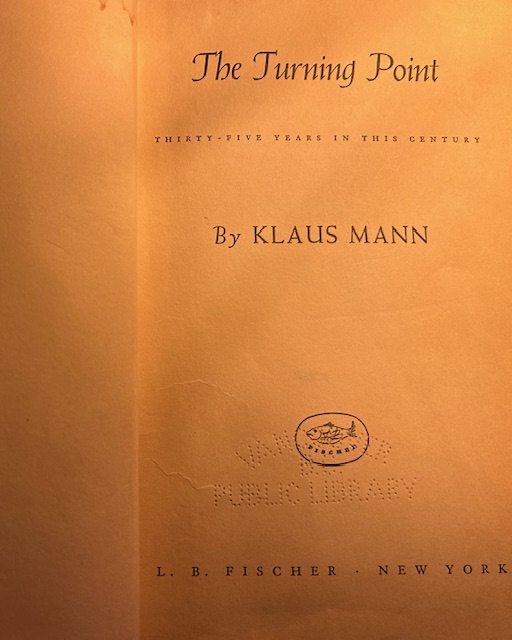
That prompted me to look for his big volume of memoires “The turning point. Thirty-five years in this century”[i].  I went to our Main Library in Vancouver to get that book. They didn’t have it on the shelf but brought it to me from some sort of warehouse room were some books spent for some reasons a solitary life. Not for eternity, mind you, LOL. Maybe it needed some fixing, repairs?  It was not in the best shape. After all – that book was published … 84 years ago! Since I liked Thomas already and knew that he wrote about French writer Andre Gide, who happens to be my very much liked writer – I asked for that book, too. This time it was supposed to be on shelf not in some purgatory warehouse. I got the coded number, went to right spot – and the book wasn’t there. Returned to that young library assistant, who got me the big book of Mann memoires and ask him if he could find me that book. He said with a smile: of course, just follow me. I did. But he was going to big section called “English Literature”. So, I stopped him and asked why is going there, instead to were Mann’s book should be. His answer just astonished me and made me giggle a bit. The answer was: well, this book is in English in our catalogue.

God have mercy!  – I almost shouted.  Instead, I just explained to him –  My dear young man, you have that book in English language, but it is a German writer. Therefore it is, as it should be, in “World Literature “section. The same as Victor Hugo, Pablo Neruda, Dostoyevsky and hundreds of other writers, who were of other nationalities and wrote in other languages

Let me remind you again dear reader – that young and pleasant fellow was an assistant in the Main Library in a very big metropolitan city. O, tempora, o mores …

Back at the right section he did re-checked the shelves from top to bottom and the book really wasn’t there.  Too bad, but of course it was not his fault. We were just about to leave when he noticed a book at the bottom and happily announced: there it is! That book about your Gide!  I have noticed that book earlier. No, it was not written by Klaus Mann. That was the reason I went to him to help me searching for the right one. That one he pointed to was by another well known writer and  I have read his book many, many years ago, when I was working on series of articles about the history of gay-themed literature written often by gay writers or scholars.

By then I was truly tired mentally and physically and my leg was hurting. His jumping the gun and prematurely announcing that fateful: I know proved that he didn’t know and didn’t listen, arrogantly thinking that he did.

 Was he an arrogant? Maybe that would be too harsh a judgment. But I wish he listened more acutely and paid more attention to question being raised. After all, he was a library assistant. And I did ask him about a book by Klaus Mann. Not another (albeit very famous in his own right) author.

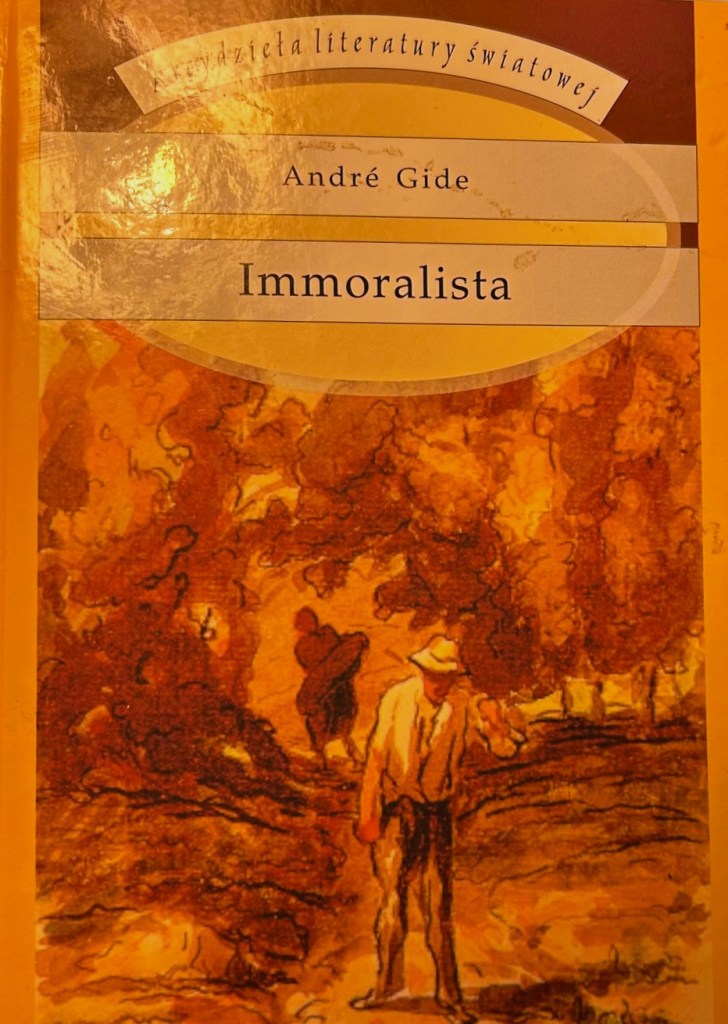
When I went home I reached to my bookshelves and retrieved from there my copy of Andre Gide “L ‘Immoraliste”[ii] and read it again. What a pleasure. 

At the end I was not angry. Actually, it was sort of amusing. I think that it was a good chance (remember – Main Library in major city) of him being a graduate of some university’s (or college, the very least) Humanities Faculty. My librarian in my Junior School was not the nicest lady. But she knew her stuff.  It meant she knew books. O tempora, o mores, my dear Cicero, LOL.

                Wouldn’t be myself if I have missed the possibility of being … arrogant about well know book. Yes, the very voluminous volume of Klaus Mann (with the help of his dear sister, Erika) autobiography “The turning point. Thirty-five years in this century”.  I have borrowed it and had to read it. Well, almost. I did huge portion of it, admittedly. Many scholars admire the book. I thought it was an awful way of writing autobiography. There are few ways to do it interestingly – he just mixed them all together, filled with thousands of totally unimportant details of country, cities he lived in (especially as a very young lad, well before becoming a writer), complicated  and not that influential on himself familial connections: just way too much to consume, page after page. I wish it was half as thick. All in a total contrast to a very concise way of writing his novels. There were certainly paragraphs, sections very important to know about him and his world, but at the end it was a dinner that had way too many side dishes. At times, you felt like a guest at a dinner, who just thinks o himself: is it ever going to end? If I still want to read his book about Andre Gide, it is for one reason only: Gide. Thomas was the last good writer (he was a good writer, as I said), who went to Paris and to spent time there and to get to know the great Gide. Gide was already very mature and older writer, decades older then young Mann.  Thomas told him, he will write a book about great Andre Gide. Gide, who knew Paul Verlaine and Arthur Rimbaud! All of it, young bisexual Klaus Mann, his adored French poet bisexual Andre Gide and his connection to scandalizing stars of homosexual Paris in XIX century of the decadent period.  A story from my forest, and a forest I spent many years of writing about and reading about all of them (except Klaus Mann, whom I just met his year, LOL).  Just like that absolutely glorious book published many years ago here in Canada: “Meanville , in another part of the forest”[iii].             


[i] “The turning point/thirty-five years in this century”, Klaus Mann, pub. by M.L.B. Fisher, New York, 1944

[ii] A. Gide, “Immoralista”, trans. by Izabella Rogozinska; wyd. Zielona Sowa; Krakow, PL, 2006

[iii] “Meanwhile in another part of the forest. Gay stories from Alice Munro to Yukio Mishima” edited by A. Manguel and C. Stephenson; pub. by Alfred A. Knoph Canada; 1994, Toront

Moje Wyznanie

Moje Wyznanie

CREDO

I to czas mój, moja chwla tu powoli dobiega kresu. Tu – na tym kontynencie, który przyjął mnie otwartymi na ościerz drzwiami. Drzwiami, przez które weszło życie i miłość, która ofiarowała niepojęte, upragnione szczęście spotkania człowieka, który dopełnił brakującą całość największych pragnień.

                Teraz muszę wracać tam, gdzie te pragnienia się narodziły. Muszę pójść ulicami, zaułkami wielkiego miasta nad starą rzeką. Nie, nie żądałem za dużo, nie sięgałem szczytów niedostępnych człowiekowi. Jeśli człowiek, stworzył bogów na Olimpie, to człowiek miał prawo do boskich marzeń.

A wtedy, w tamtym kraju, gdzie byłem chłopcem było szaro, było biednie, było po prostu brudno. Ale w tamtym biednym kraju grał w parkach Chopin, tam w bibliotekach czekały książki Platona i o Platonie, o tych olimpijskich bogach, ich tragicznych miłościach. Tam starzy aktorzy podszeptywali też ze scen, że może być inaczej, nie tak szaro-brudno. Stare ciotki mądre choć biedne, potwierdzały te mądrości.

Bez tego wszystkiego, bez tamtego tam dzieciństwa i młodości nie miałbym tak wielkich marzeń i pragnień. I być może bym nie pojął, nie poznał tego szczęścia, które tu później mnie spotkało.

Cóż zaś jest stałego w tych wielkich tragediach greckich? Upadek, utrata.  Wszyscy herosi, bohaterzy ludzcy i boscy tego doznają. Doznają największych zwycięstw, najwyższych wzlotów, najgorętszych miłości, by je potem stracić. Dlatego, że strata wielka i wielka klęska nie pozwalają tym marzeniom umrzeć, stracić wartość i znaczenie dla kolejnych pokoleń.

Dlatego muszę wrócić, by najmłodszym to potwierdzić, opowiedzieć o tym. Bo nie ma już starych, pięknych ciotek, nie ma profesorów, aktorów i pisarzy tej miary, którzy to we mnie zaszczepili. Ten święty ogień, któremu nie wolno zgasnąć. Pragnień i marzeń, którym nie wolno pozwolić usnąć, które dadzą ci szansę doznać szczęścia największego i straty najboleśniejszej.

Bez tego nie ma boskości, a człowiek jest stworzony do boskości.

Stań odważnie przed lustrem i pokłoń się odbiciu w zwierciadle. Dojrzyj, co ono pokazuje – oto on, bóg złamany, zasmucony, może rozczarowany przez moment. Ale bóg! On, potężny, godny łez i pocałunków. Ty.

Rower, ocean, słońce i wrona

Rower, ocean, słońce i wrona

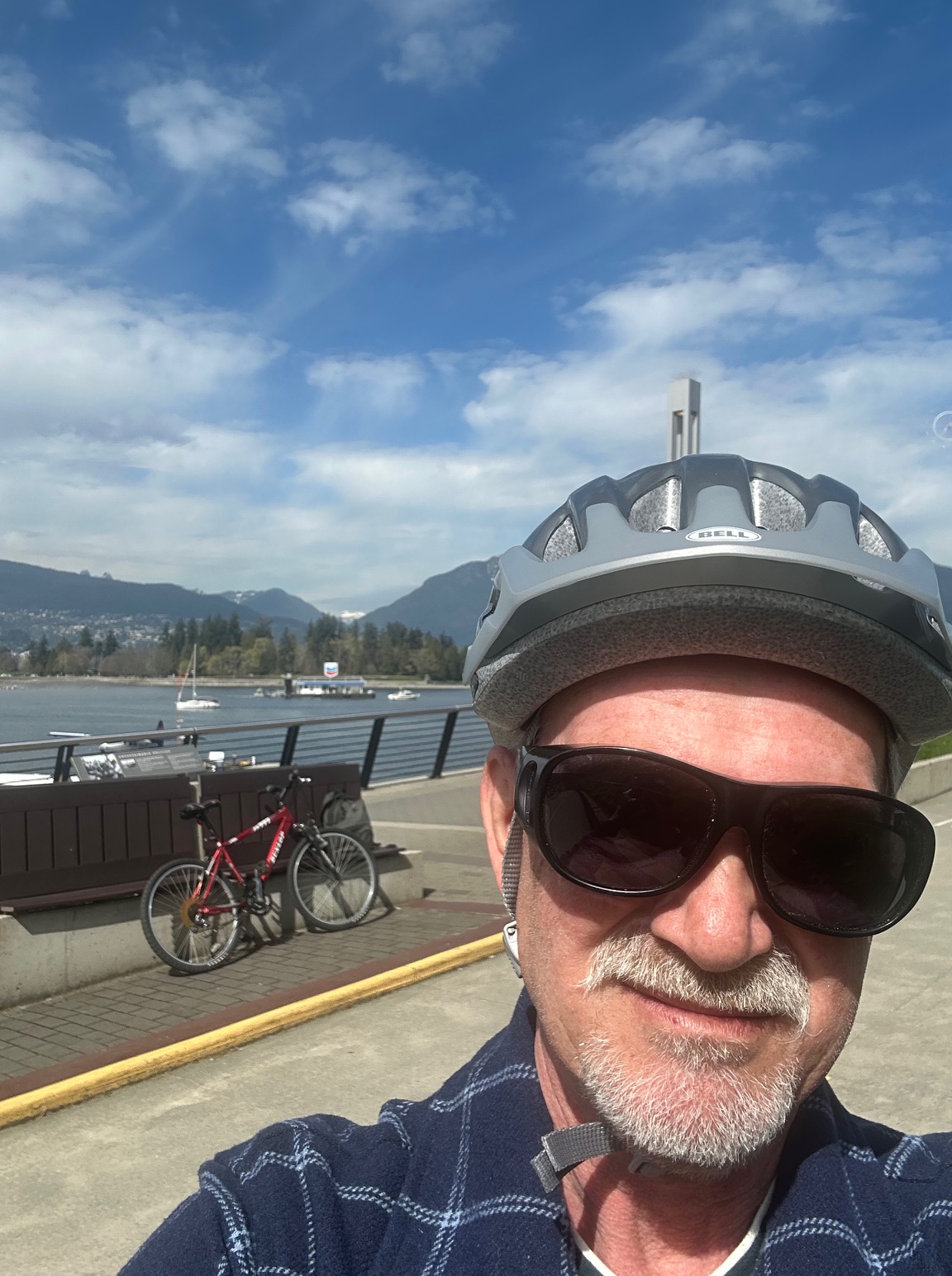
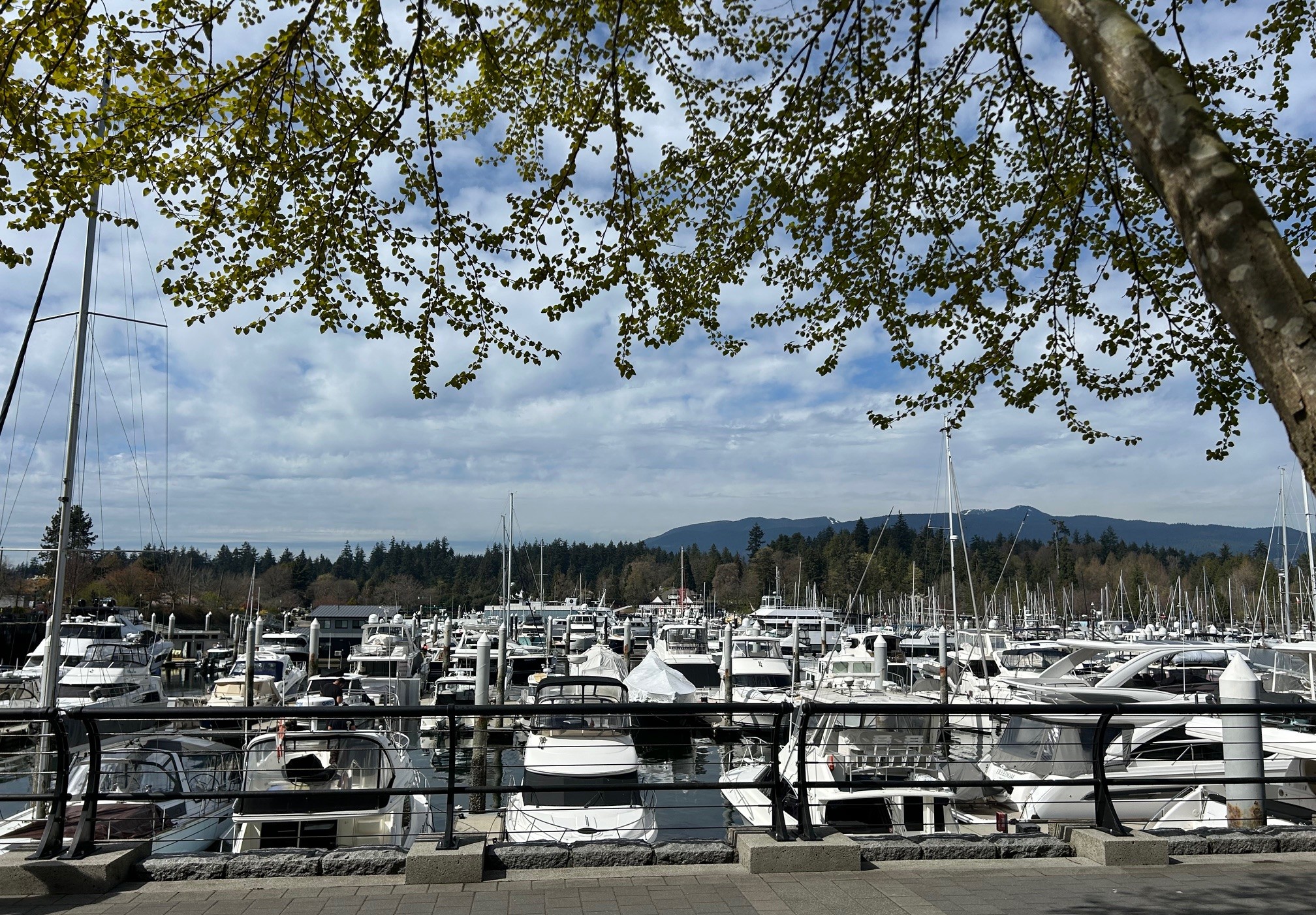
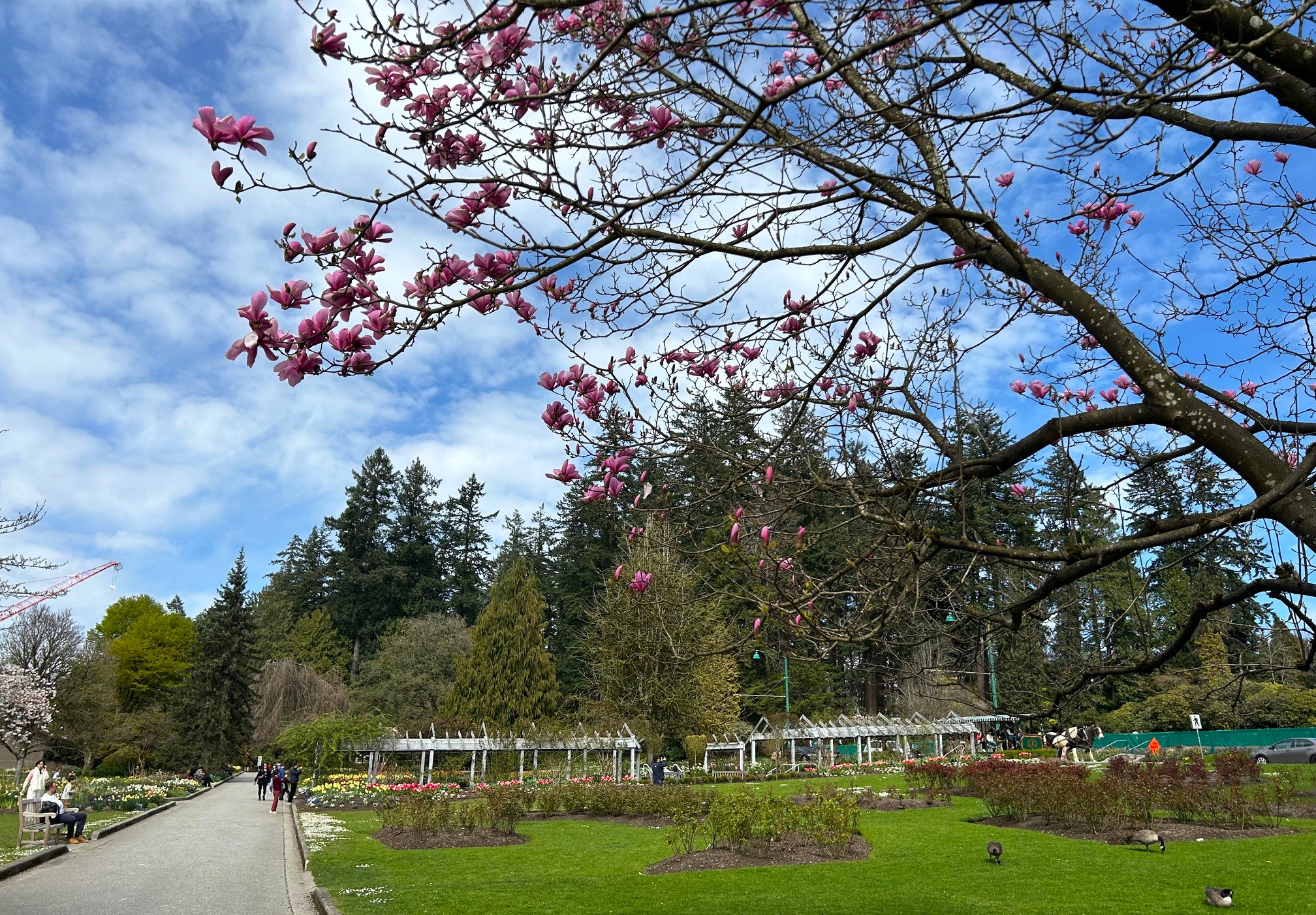
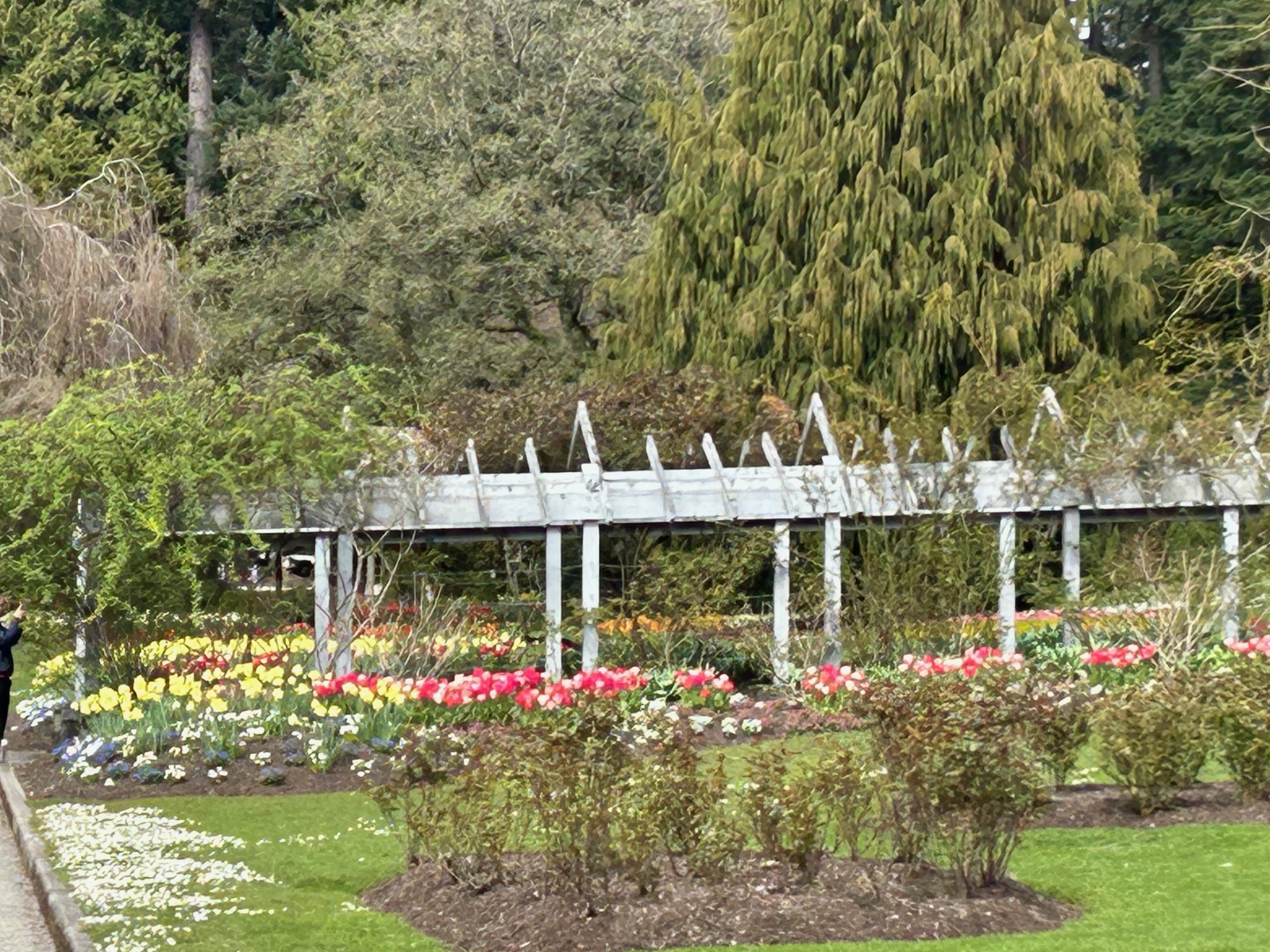
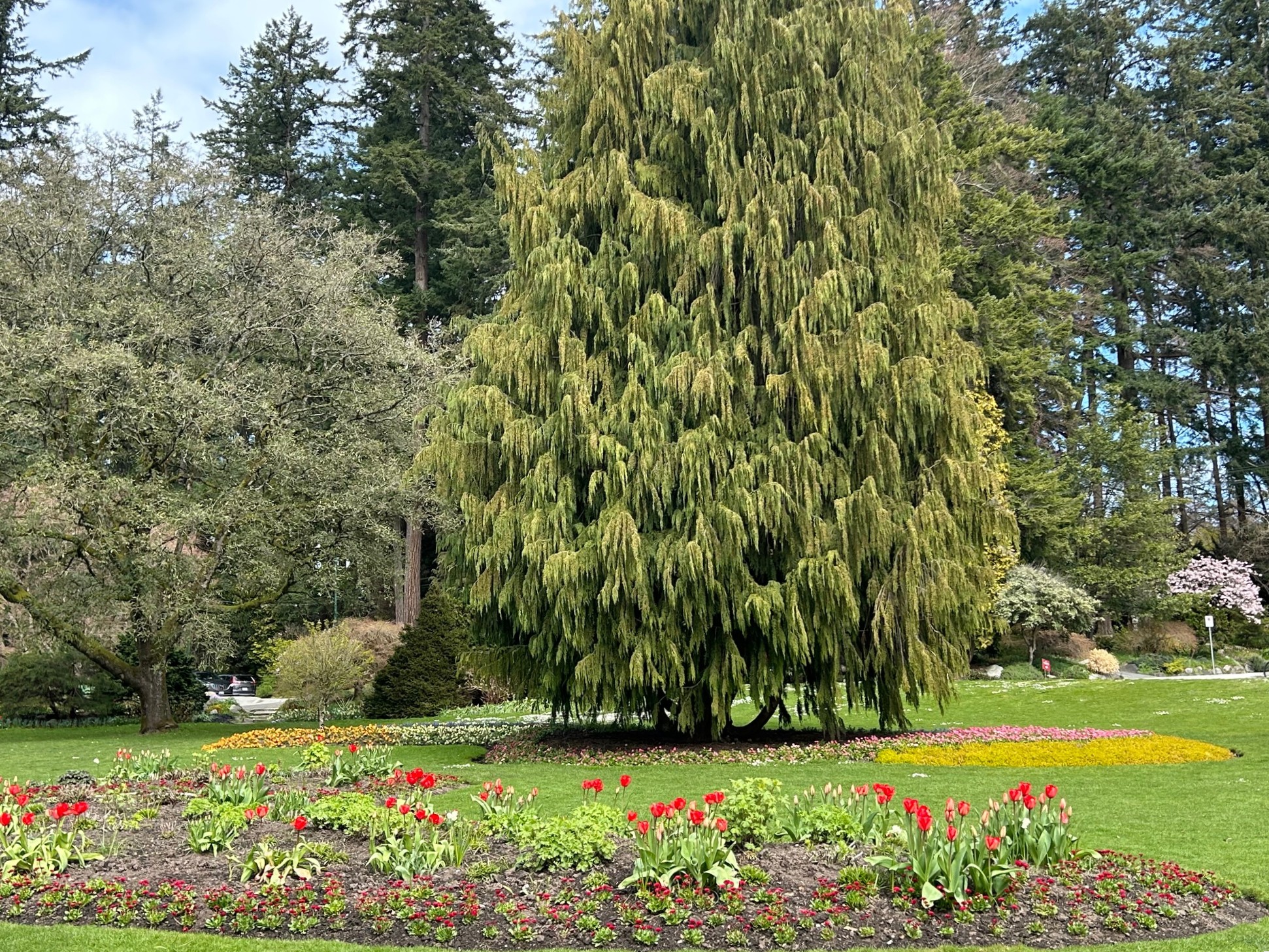
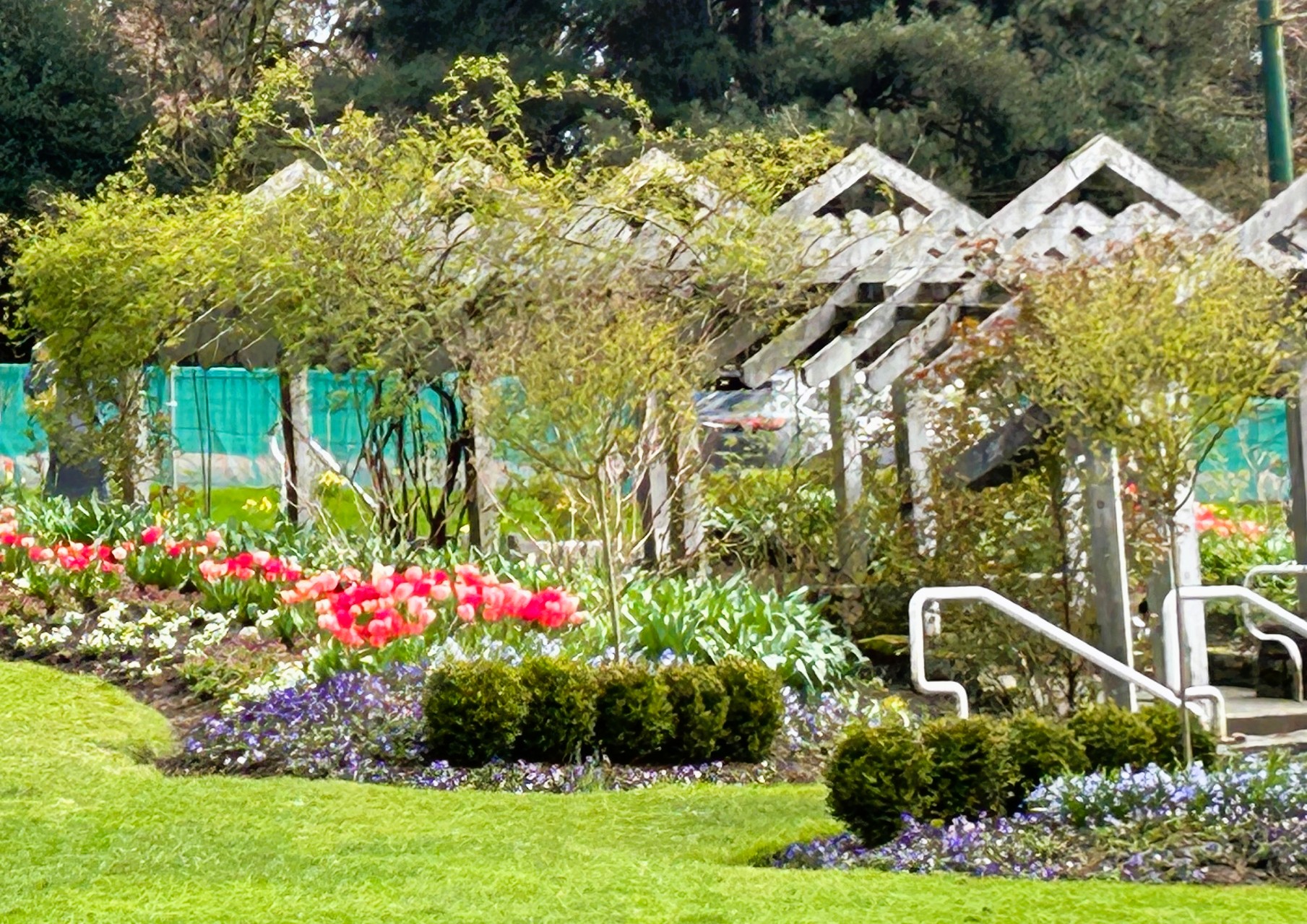
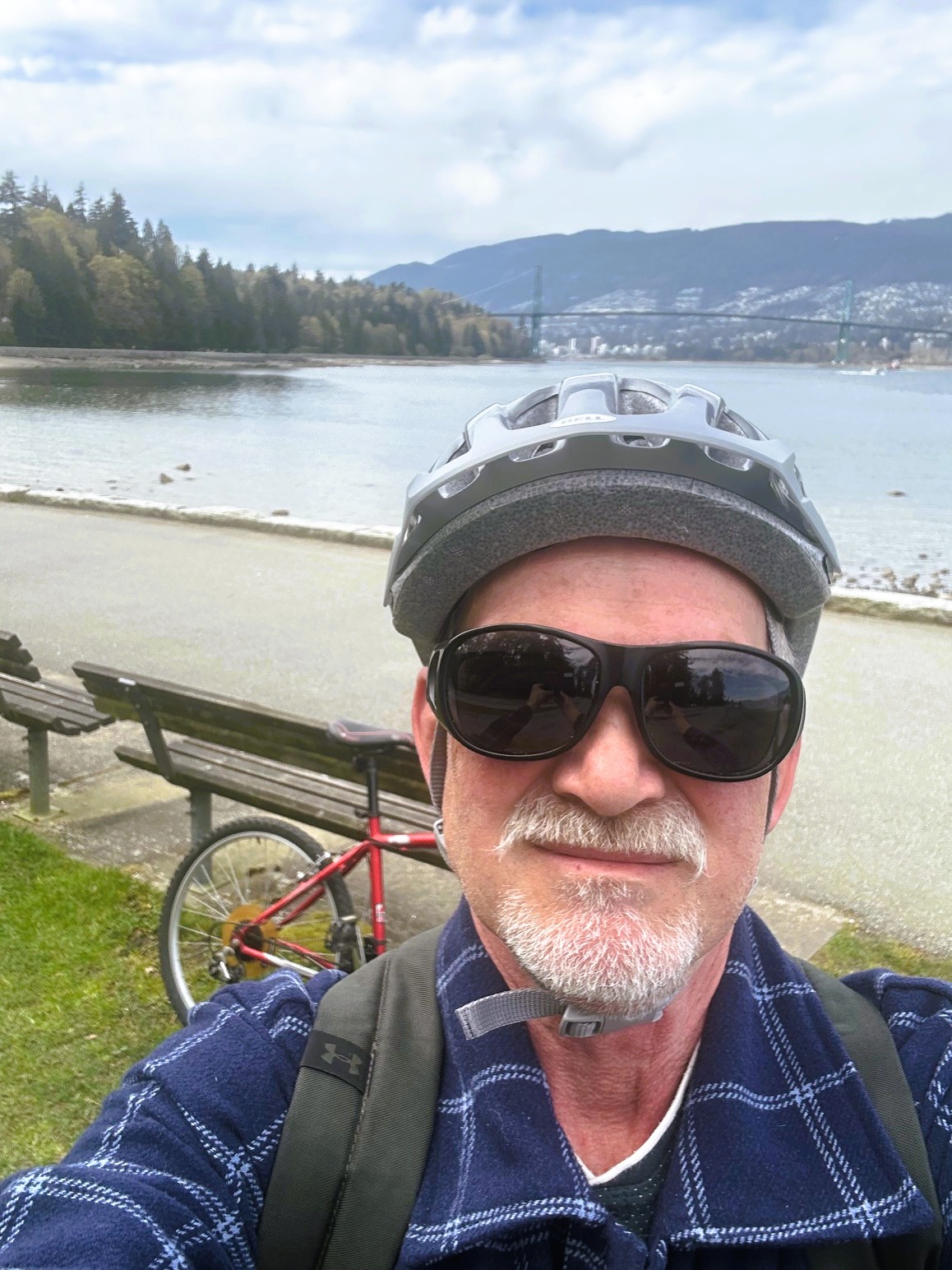
Długa wycieczka rowerowa do miejsc miłych i drogich. Nie pierwsza odkąd tu wróciłem, pewnie nie ostatnia. Tyle wspomnień z czasów bardzo odległych, z osobami bardzo drogimi, hen, gdzieś sprzed blisko dwudziestu laty. Od Waterfront rowerem wzdłuż wybrzeża w kierunku Stanley Parku. Ale zanim pojechałem tą trasą wzdłuż wody, tą pod mostem wiszącym – musiałem podjechać do Rose Garden. Tu mama z Irenką Kropińską podjeżdżały z Domu Kopernika, wzdłuż Kingsway trolejbusem #19. On pod sam Rose Garden właśnie pętlę robił. Robi dalej, tylko już nie ma tego Domu Kopernika, nie ma Irenki, i nie ma Mamy. A Ogród Różany pozostał…

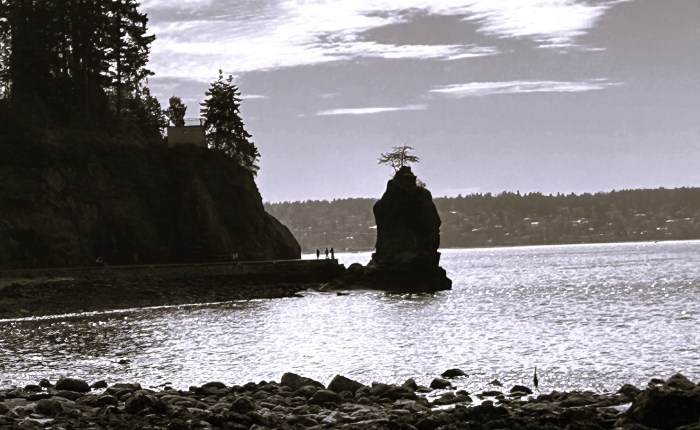
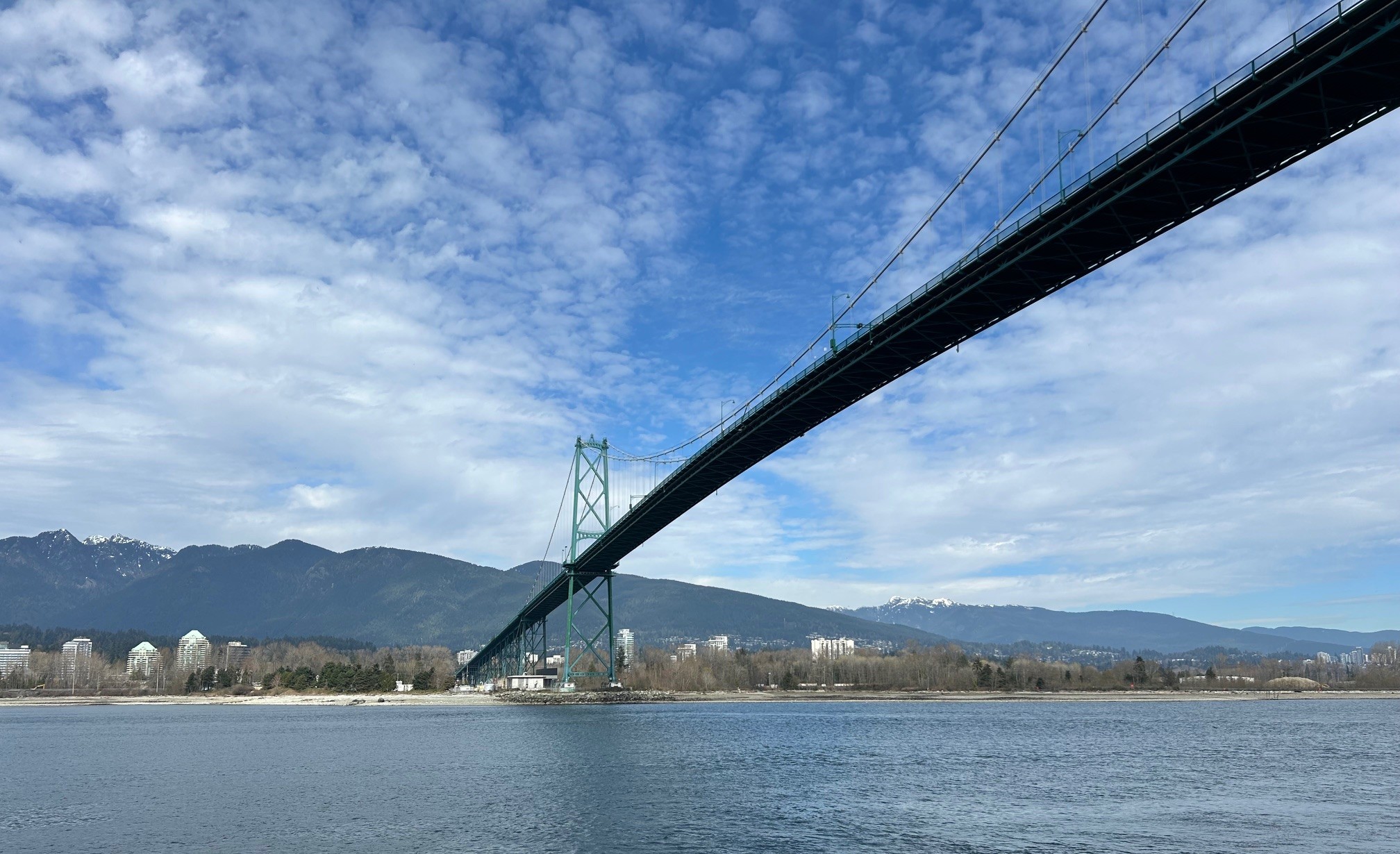
Z tego Ogrodu wróciłem na trasę ścieżką betonową wzdłuż początków Fiordu Burrard. Zatrzymałem się przy moim ukochanym Siwash Rock, rzuciłem okiem na wiszący nad nami mostem Lions Gate. Zaprojektowanym porzez tego samego architekta, który podobny bardzo zbudował między Dartmouth a Halifax – tamtym lubiłem chodzić na piechotę, jeśli miałem czasu więcej.

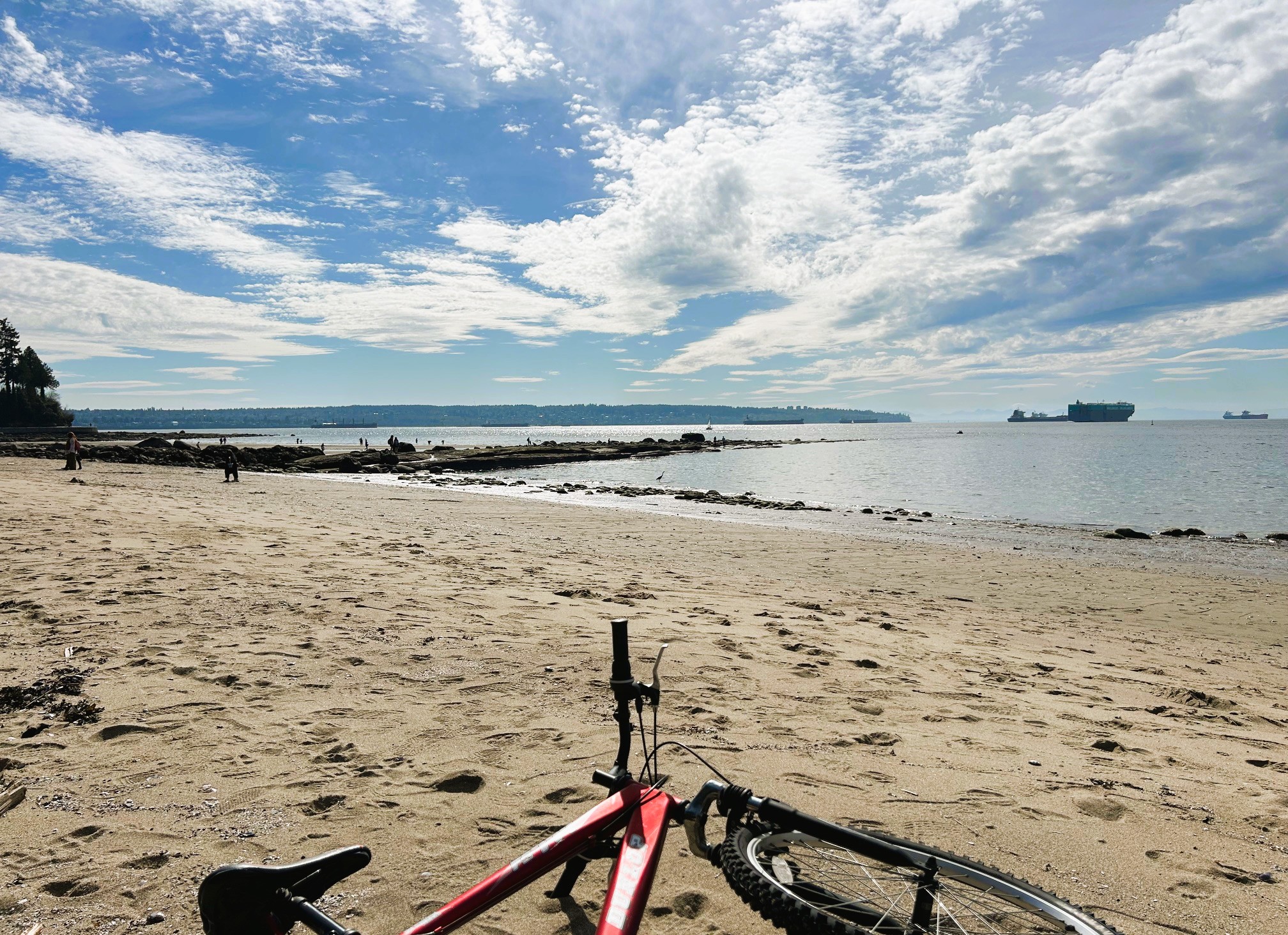
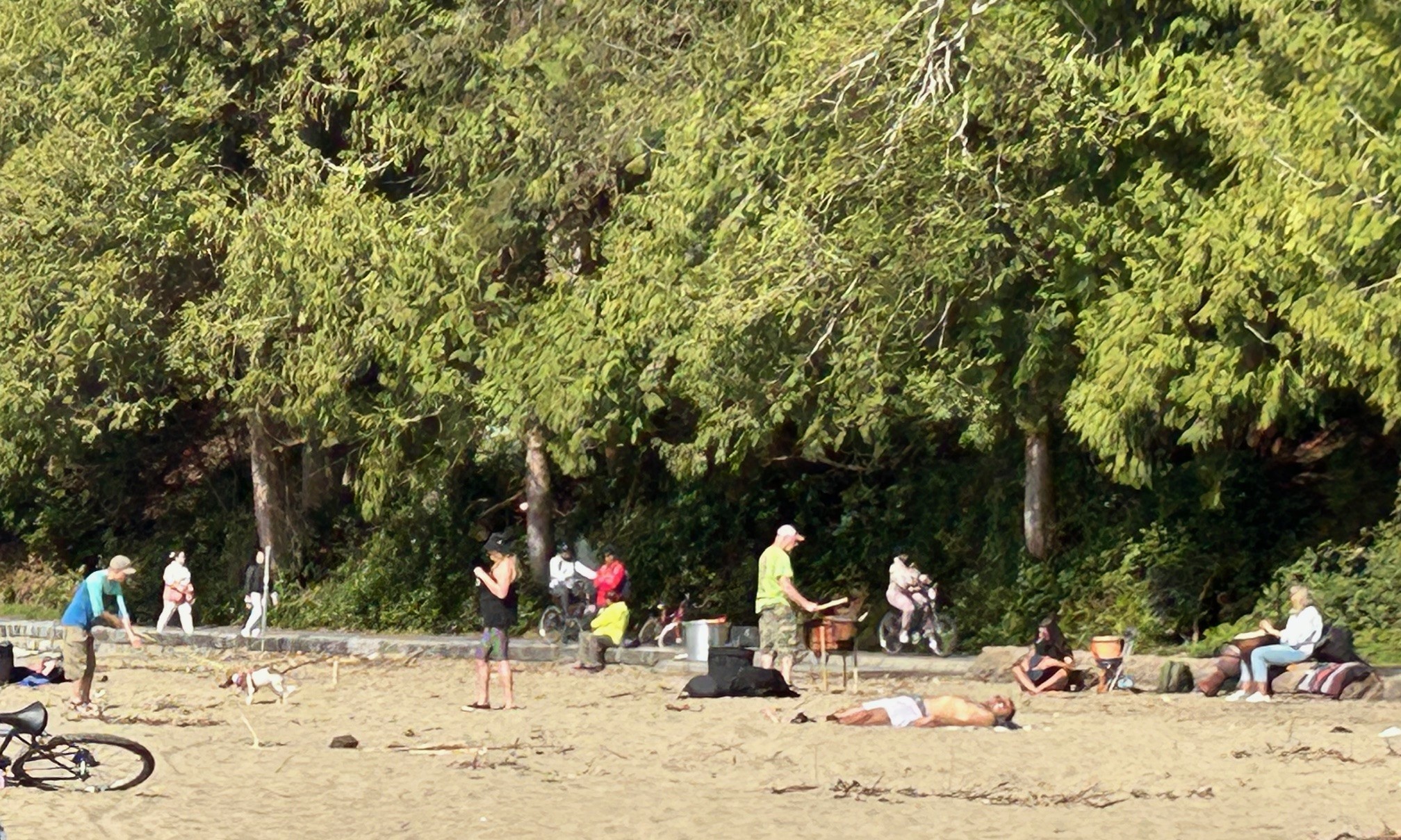
Tak, jak wczoraj w Central Park w Burnaby – ludzi co niemoc. Ale moc jednak znaleźli, grupami i pojedynczo. Dojechałem do Trzeciej Plaży, ulubionej mojej Mamy. Zdarłem z siebie wierzchnie ubranie, ległem na piasku i żałowałem, że kąpielówek na zmianę nie wziąłem. Ale do wody wlazłem. Zimna, brrr. Sporo ludzi na plaży się wylegiwało, nikt wszak do wody się nie skorzył. A ja łaziłem, brodziłem. Szkoda, że tch kąpielówek nie brałem, to bym jednak popływał chwilę. Dzieciaki zbierały muszle, mewy się wydzierały i kłóciły o jakieś rozgwiazdy, czapla opodal ze stoickim spokojem stała na swoich długich nogach niezbyt z tego harmidru zadowolona. Na drugim końcu plaży jacyś Meksykanie grali coś na bębenkach i coś na przenośnym rożnie smażyli.

Potem podjechałem do swojej kawiarni Melriches na słodki łakoć i na kawę. I coś tam skrobałem w brudnopisie.

Mamy nie ma, Irenki też, nie ma Johna. A ja jestem. Niby po co? Po prostu tak? Zwyczajnie? Bez sceny operowej, bez omdlewających hrabianek i książątek wybladłych, w perukach upudrowanych?

A tu jednak tak samo: mewy wrzeszczą strasznie i tłuką się o jakąś małżę, ta czapla stoicka niczym posąg Apollona. Jest jej kompletnie obojętnie czy to ja, czy Apollo, czy jakaś Baba Jaga choćby.

Podleciała wrona mądra, zakrakała ze zrozumieniem w te słowa: nie zwracaj na te idiotki uwagi. One są zwyczajnie patetyczne w tej swojej głupocie. Jedyny szczyt, jak w życiu osiągnęły to szczyt Ignorancji. Patrz na tych, co wiedzą – i dlatego najczęściej milczą: wrony właśnie, wieloryby i delfiny. Ponoć mrówki i szczury też. Te są jednak tak małe, że ich rozmowy są trudne do usłyszenia.

Czy jest tak samo w twoich wędrówkach? Nie, nie jest. Są te same skały, drzewa i plaże. One żyją dużo dłużej i ciekawiej; drzewa sięgają na przykład chmur i stamtąd widza dużo dalej; wieloryby i delfiny znają głębie oceanów olbrzymich i brzegi wszystkich kontynentów.

Człowiek? Człowiek jest też ciekawy. Ale nie jest stale ten sam, ważne jednak jest by pamiętał kim był wczoraj. I kim był dekady temu. Jest słabszy fizycznie z upływem czasu, ale silniejszy mentalnie z tym upływem lat. Jeśli tylko pamięta. Więc pamiętaj – zakrzyczała wrona i odleciała.

Wszyscy kiedyś odlatują, odlecimy i my. Tą naukę wrona zapomniała mi powiedzieć. Ale za te inne byłem jej wszak wdzięczny. I to by było na tyle dzisiaj. A dzień był ładny. To też warto docenić.   

Na szczytach Olimpu z moim Hefajstionem

Na szczytach Olimpu z moim Hefajstionem

Moje nieustające fscynacje z historią Aleksandra Macedońskiego w wersji przekazanej nam przez Klausa Manna. Eh, Klaus, Klaus, coś ty mi narobił, narozrabial w tej głowie? Przecież znałem tą historię tak dobrze  od dziesięcioleci chyba już. A ty mi tu takie tam inne odcienie, półcienie, zamglenie we mgle sentymentu podsuwasz pod oczy, a z oczu naturalnie wciska mi się to w duszę.  /… /

(pisane w Craft Cafe na bulwarze nad rzeką Fraser w New Westminster)

szkic Hefajstiona w muzeum w Madrycie (ze zbiorów Wikepdii)

Klaus, jak wiedzieć mogłeś, że Aleksander przez dni kilka okrywał całunem pocałunków miłości całe ciało Hefajstiona? Że nie pozwolił dworzanom i żołnierzom oderwać cię od tego ciała, które było strumieniem jego życia właśnie, tego samego niepokonanego nigdy Aleksandra? Aleksandra, który zwyciężył armie całego świata. Aż śmierć tego umiłowanego generała, przyjaciela, kochanka jego nie pokonała. Życiodajnym strumieniem płynącym z macierzyńskiej Pel[i]i? Które było kwiatami Babilonu? Które było złotem Gangesu i Brahmaputry? Które było kolumnami Persepolis[ii]?

Jak wiedzieć mogłeś, że wszystkie stolice świata, tobołki pełne pereł, diamentów, złota i szmaragdów nie mogły kupić biletu powrotnego dla Hefajstiona?

to nie to, czy ten co odszedł dał ci życie

to to, że on był życiem

pytanie jest czy oddałbyś swoje

bo kochałeś

i łzy milczące napłynęły,

bo znikąd rady ni pomocy

dostać nie mogłeś

i byłeś bezbronny i słaby,

jako najniższy z niewolników,

a łzy same popłynęły z oczu

/B. Pacak-Gamalski/

                I otworzyła się brama w ścianie mojego Czasu: bogowie, lub herosi za ich pozwoleniem, przenieśli mnie w te dni okrutne, dni żegnania mego Hefajstiona. Dni, kiedy kładłem się obok niego, podłączonego do sieci różnorodnych elektronicznych czujników wyświetlających na ekranach wykresy symboli przypominających starą grekę z dni Arystotelesa i jego ucznia, Aleksandra; przez usta wpuszczono długiego węża[iii] , który wśliznął się do jego płuc i w równomiernych odstępach wdychał w nie powietrze. Dwa dni i dwie noce byłam do tego łóżka przytroczony siłą niepojetą.  Opowiadałem mu wszystkie dni naszego życia, wszystkie dekady naszych domów i mieszkań, podróży kontynentalnych i lokalnych; wąwozy, góry, wybrzeża oceanów, nasze plaże i nasze balkony.

Próbowano, namawiano, tłumaczono, że muszę odpocząć, pojechać do domu przespać parę godzin. Na końcu do małego pokoiku  przy tej wielkiej sali ICU[iv] wniesiono  jakąś kozetkę i namówiono mnie bym dał sobie czas na krótki sen, obiecując zawiadomić mnie natychmiast o jakiejkolwiek zmianie sytuacji. Uległem namowie i położyłem się. Natychmiast zasnąłem. Gdy się obudziłem zerwałem się z przerażeniem, że spałem.  Pobiegłem błyskawicznie do pokoju mego Hefajstiona z wyrzutem wobec medyków, że pozwolili mi  tak długo spać. Uśmiechnęli się lekko i smutno, jeden z nich odpowiedział: spałeś niecałe piętnaście minut.

Potem zebrało sie konsylium. Poprosili bym siadł przy ich stole: kardiolog, neurolog, pulmonolog i doktor od psychologii. Pani psycholożka była dla mnie, choć nie sądziłem, że jestem chory. Reagowałem dość – zdaniem moim – normalnie  na sytuację w jakiej się znalazłem.

Mówiono ciepło i monotonnie, cicho ale stanowczo: twoje płaty mózgowe na moment nie drgnęły, zostało tylko ciało – bezbronne, że powinienem dać zgodę, by ciebie od tych próbek, od tych węży odłączyć, by twoje ciało mogło też usnąć, bo jest zbyt zmęczone. Pani psycholożka wyjaśniła, że twój duch był świadom życia ostatni raz w moich ramionach, gdy czekałem na karetkę wtulając cię w moje pocałunki, moje wdmuchiwanie w ciebie powietrze. I że wtedy, bez paroksyzmów niemocy odleciałeś w przestrzeń poza naszą.

Nie, nie zerwałem się tak, jak Aleksander i nie wymordowałem tych bezsilnych medyków od ciała i duszy. Rozumiałem, że nie mogę twojego pięknego ciała męczyć ponad miarę, że muszę się nad samolubność i egoizm własny wznieść. Dałem tą zgodę z jednym zastrzeżeniem: po odłączeniu od tych sączek, macek i próbek ja muszę tam wejść i sam z nim tylko pozostać. Co zrobiono i zasłoniono szczelnie kotary, by wzrok kogokolwiek nie ośmielił się mnie i ciebie, Hefajstionie widzieć.

Leżałeś piękny, spokojny, bez drżenia, bez wstrząsów, bez drgań. Łagodny – czekałeś. Położyłem się obok, wtuliłem w ciebie. Całowałem od stóp poczynając, w górę aż do ust, nosa, oczu. Byłeś znowu sobą – kolumną i filarem mojego spokoju. Nawet nie wzbraniałeś od pieszczot ostatnich. Jak dekady wcześniej, gdy oddałeś się kompletnie nad jakimś strumieniem u podnóża wielkich gór – grzbietu Ameryk. Nasza droga od naszej Macedonii do naszego Babilonu. Nasze piękne życie. Nie mogę swoim zwyczajem być zbyt dumny Hefajstionie, muszę za nie podziękować wszystkim bogom wszystkich czasów: archaicznego, antycznego i nowożytnego. Nawet jeśli tych bogów nie było.

Może bogami są wszystkie dusze, które po odłączenu się od ciał, zamieszkują na najwyższych szczytach Atlasu, Himalajów, Kaukazu, Kordylierów, Olimpu i Karkonoszy?


[i] Stolica Mcedonii w czasach Aleksandra Wielkiego

[ii] Stolica starożytnej Persji

[iii] Wąż był symbolem helleńskiego boga sztuki lekarskiej, Asklepiosa

[iv] Intensive Care Unit (oddział intensywnej terapii)

Our talks in Babylon

It is the most beautiful time of the year in Vancouver, particularly in the West End and around the Lost Lagoon, the charming gateway to Stanley Park. On a sunny day is all a song, a poem. The time of flowering umbrellas of rosy cherry trees, of majestic magnolias, and the tiny flowers of children sprouting from the soil in multitude of colours. The singing birds returned to their nests, their homes on the branches of massive trees. Their colossal migration almost done, they are back at home. A reflection comes to mind: just as my migration finishes. Back home, all the way from the shores of mighty Atlantic, across the vast continent.

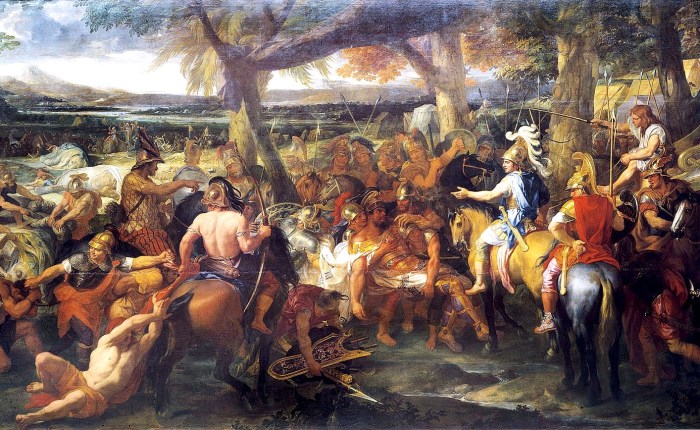
With a book in hand I read familiar story of another traveler: Alexander, the young king of Macedonia. I have read many accounts of the ancient story written by historian and writers. The story of conquests and of battles and a story of searching for love.

Yes, there were numerous battles small and great; there were many corpses of his soldiers and generals – but all of it does not matter. In the annals of history of man there are always battlefields and dead bodies strewn on the banks of some great rivers, on the shores of some seas.

But the quest for love is different than the quest for land, or hegemony. The quest for love is worthy of all and every battle and the only thing when murder and death are excusable. For what is greater than She after all? She gives meaning to live and She excuses death.

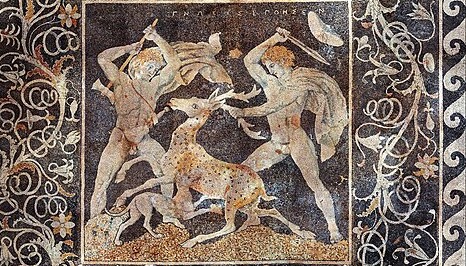
Alexander and Hephaestion

hunting a stag

                As I read the story again[i] – the battles and the fallen soldiers and generals do not matter to me. It is the travel through lands unknown bringing chances of love and romances that matters to me. How had it changed him? Each culture enriched him, each lovemaking, with a woman or man made him different, too. He was no longer Alexander of Macedonia, no longer even Macedonian nor Greek. He was the Great Alexander. Man, who could have had anyone and anything. Did he? Did he quenched his thirst, filled his hunger?

At the very end: was it one, big irony that his conquer had defeated him? Whom should I ask? Gilgamesh[ii] or the great poet Rumi[iii] of XCCC century Persia?

Indeed funny, that it brings me to these names. Not to Shakespeare, or even Dante Alighieri – they are just famous copiers of stories of ancient Love Immortal, or very much deadly indeed – Love Mortal.

The story, a tale perhaps, as told by no one other than Klaus Mann (himself a hunter of love) brings me my own memory. As he (Mann) of Alexander’s stay in Babylon – the cradle of civilization – he recounts the young king visit and tribute to Ishtar[iv], who was so instrumental for the fate of Gilgamesh.  Moreover, he mentions Alexander visit to the temple of Marduk [p. 89]. The temple was from the times of king Nebuchadnezzar[v] .

I have never been a sculptor. Yet, in the equally ancient time of my childhood, being maybe a boy of twelve, maybe thirteen, I did with my own hands sculpted from the red clay of Masovia a small figurine of Marduk sitting on a large throne, with his beard coiffure intricately in layers – the way the Bavylonians did in the time of Nebuchadnezzar. Ha! A friend of my father (who was, unlike me, a formally trained sculptor) grabbed that sculpture of mine, called it ‘marvelous’ and took it to some local small museum somewhere in or around Olsztyn in Masurian forest. Never seen it since, nor heard of it again, LOL. Perhaps it still is on some dusty shelf there (where exactly?), LOL. Sufficient to say I have never sculpted again. There is certainly enough of Rodins in Louvres of the world.

                The old gods of Syria and Mesopotamia did not touched me and Marduk wasn’t exactly a god of love, more a god of war and revenge. Nonetheless, a god. But let’s go to our Alexander. Our lovely, terrifying, amorous, beautiful and merciless Boy-King in his quest for love. Love – the only thing that is immortal in the lives of silly kings and heroes through our entire history.

Mann states: ‘He wanted to be loved, and nothing was more important to him.’ [p. 89] .

I am not a sculptor, I am just a poet. Let me try to say it clearly in versed form:

In the Gardens of Semiramis love grew

in rows on cascading steps  of all colours;

of aromas conquering their souls and hearts.

Was it forever mine to claim, cherish, to behold?

When my king will lead me to battle

and I will be slain by a sword or an arrow –

I will be happy to say: I have been loved

and I was in love. My destiny was fulfilled.

(by B. Pacak-Gamalski, March 2026)

Alexander galloping through Asia on his beloved Bucephallus comes to Egypt. There he wants his lover to be made a god. Immortal. Hephaestion is denied the transformation (as given previously for Alexander himself) and is forced to be contained with a lesser denomination as a hero. But it is of no use for him, he already was given the ultimate prize, the highest possibly – a love eternal from his Beloved himself – Alexander. When he dies Alexander weeps for days as he lays on the body of his friend and lover, when he dies. Soon after that tragic death, Alexander dies himself. Did he loved as much the young eunuch boy, so beautiful Bagoas? He did likely in the moment they were kissing, but his soul was already given totally to Hephaestion.

Gods are not very forgiving to people for their all-consuming great loves. It threatens the love and adoration they expect from men toward the gods, not other mortals. But gods are blind, too. They think too much of themselves, perhaps they love themselves too much? For everything is mortal: people, heroes and gods. The only thing immortal is Love itself.

I should know a bit about it, for I have met Love once in my short journey. Au Wiedersefen, Herr Mann, goodbye my dear god-like Alexander.   


[i] Klaus Mann “Alexander”, pub. Hesperus Press Ltd; London, 2007

[ii] Gilgamesh | Epic, Summary, & Facts | Britannica

[iii] Rumi – World History Encyclopedia

[iv] Ishtar | Goddess, Worship, & Facts | Britannica

[v] Nebuchadnezzar II | Biography, Accomplishments, & Facts | Britannica

Drogi do Banff

Drogi do Banff

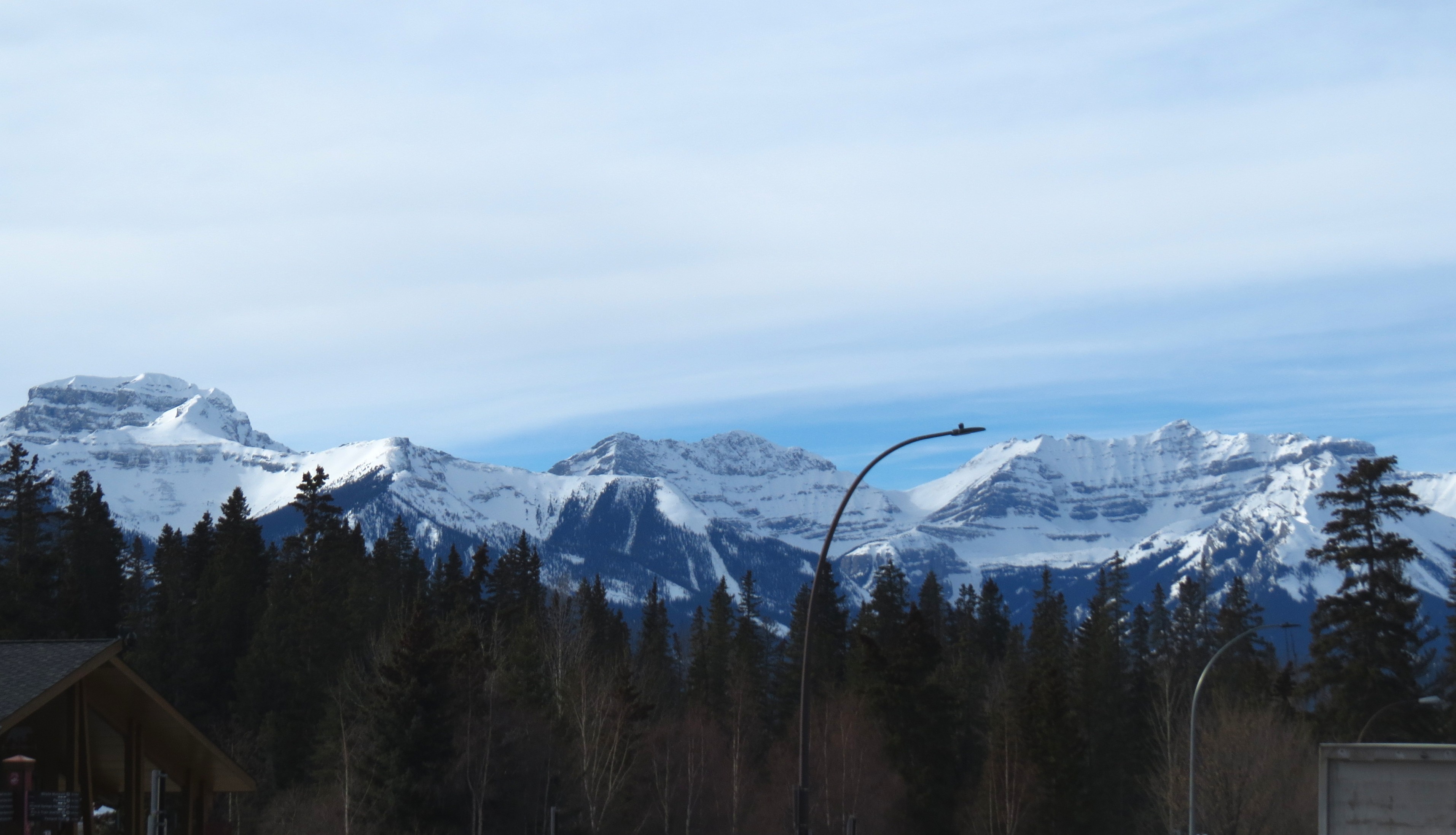
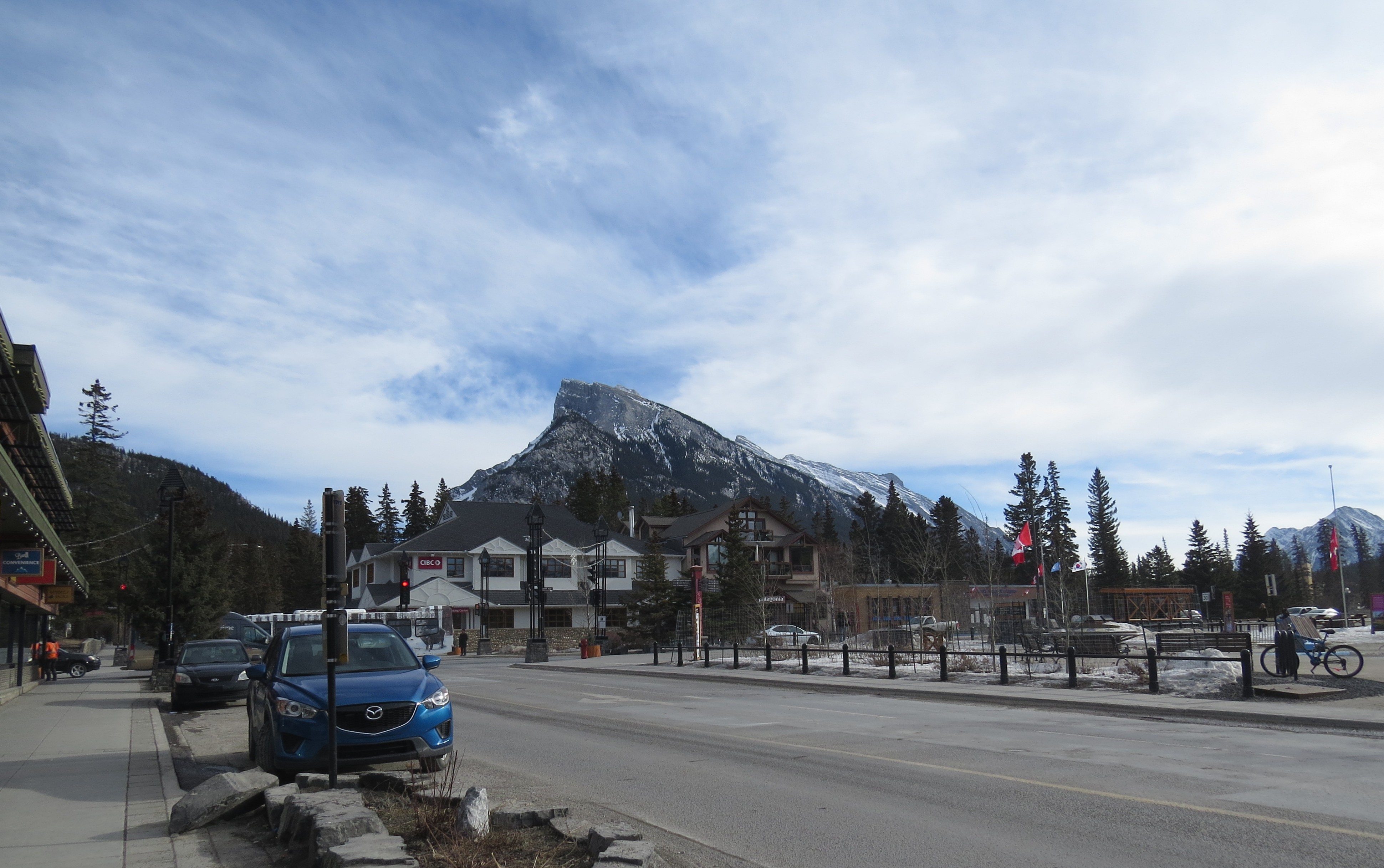
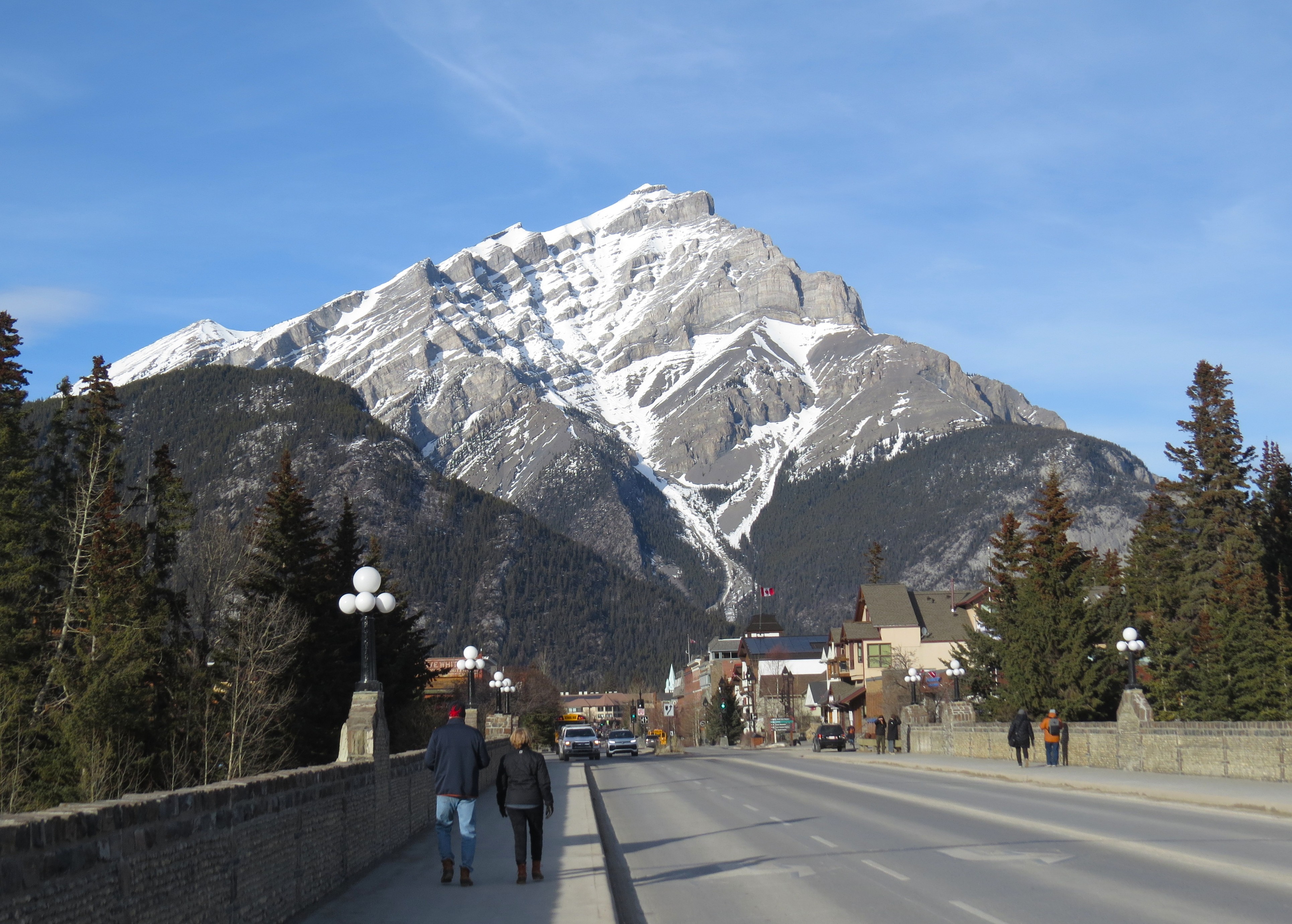
Droga do Banff. Droga z Vancouveru do serca Gór Skalistych; droga z Calgary z sercem pełnym pasji i miłości. Dwie drogi w dwóch bardzo różnych czasach i epokach.

Około czterdziestu lat temu jechaliśmy (ja i Mój Chłopak) pierwszy raz razem na Wigilię do hotelu w Panoramie koło Radium, mijaliśmy Banff po drodze. Długa, ale bardzo wygodna szosa #1 prowadziła prostą nitką do skrzyżowania z szosą 93 do tegoż hotelu. No właśnie – długa. Bardzo długa, gdy prowadzący i pasażer to dwóch młodych, zakochanych w sobie po uszy chłopaków. Trudno się przecież całować, gdy się prowadzi samochód na trasie szybkiego ruchu! Więc postojów było dużo. Oj …

Jakiś czas później, już porą letnią, jedziemy do Banff na dwa lub trzy dni łazikowania po okolicznych górach w uroczym wówczas małym Banff. Ba – jest ciepło na zewnątrz … a gorąco w samochodzie. No tak, też tych samych dwóch młodych, zakochanych po uszy chłopaków. W połowie drogi zjeżdżam w boczną, leśna drogę #64 do Sibbald Flats.  Znajdujemy cichy zakątek otulony młodym lasem świerkowym. Oczywiście, że się całujemy. I oczywiście, że na całowaniu się nie kończy. To tylko uwertura do całego Koncertu Pasji Młodości i Miłości.  Do Banff zajeżdżamy o zmroku, mimo, że normalnie jazda z Calgary, to nie dłużej niż godzina. Co zrobić – młodość i miłość to inne niż zwyczajne czasy. Inne zegary, inne doby.

Prawie cztery dekady później niespodzianie jadę do Banff z drugiej strony, znad Pacyfiku. Mój Chłopiec nie jest ani za kierownicą, ani na siedzeniu pasażera. Któregoś dnia, kiedy byliśmy na drugiej stronie kontynentu, nad Atlantykiem, uleciał mi w chmury. Zanim odleciał przypomniał mi jeszcze, że mnie kocha, ja wiedziałem, że jego kocham. No, ale uleciał. Jego czas się skończył. Też nie zupełnie jednak, bo po czarnych nocach rozpaczy zrozumiałem, że część jego została, zamieszkała we mnie. Tak długo, gdy mój czas odjazdu ostatecznego nie nastąpi. Może się wtedy spotkamy znowu, może nie. We snach, kiedy ze mną po odlocie rozmawiał, nie chciał mi tego jednoznacznie wyjaśnić. Więc nie wiem na pewno. Zobaczymy, lub właśnie może nie zobaczymy.  Póki jestem – to mam go stale w sobie. To mi wystarcza.

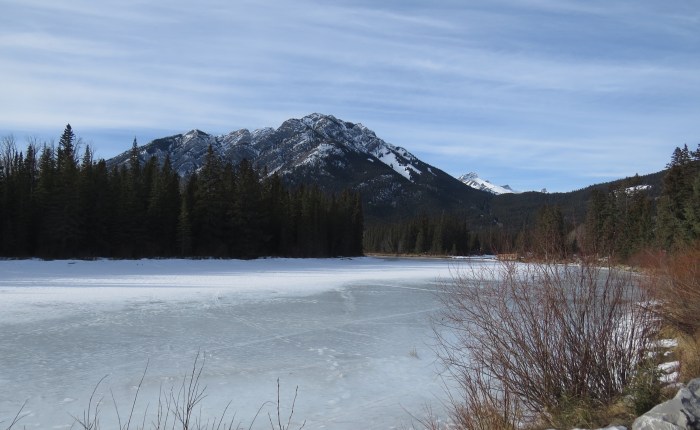
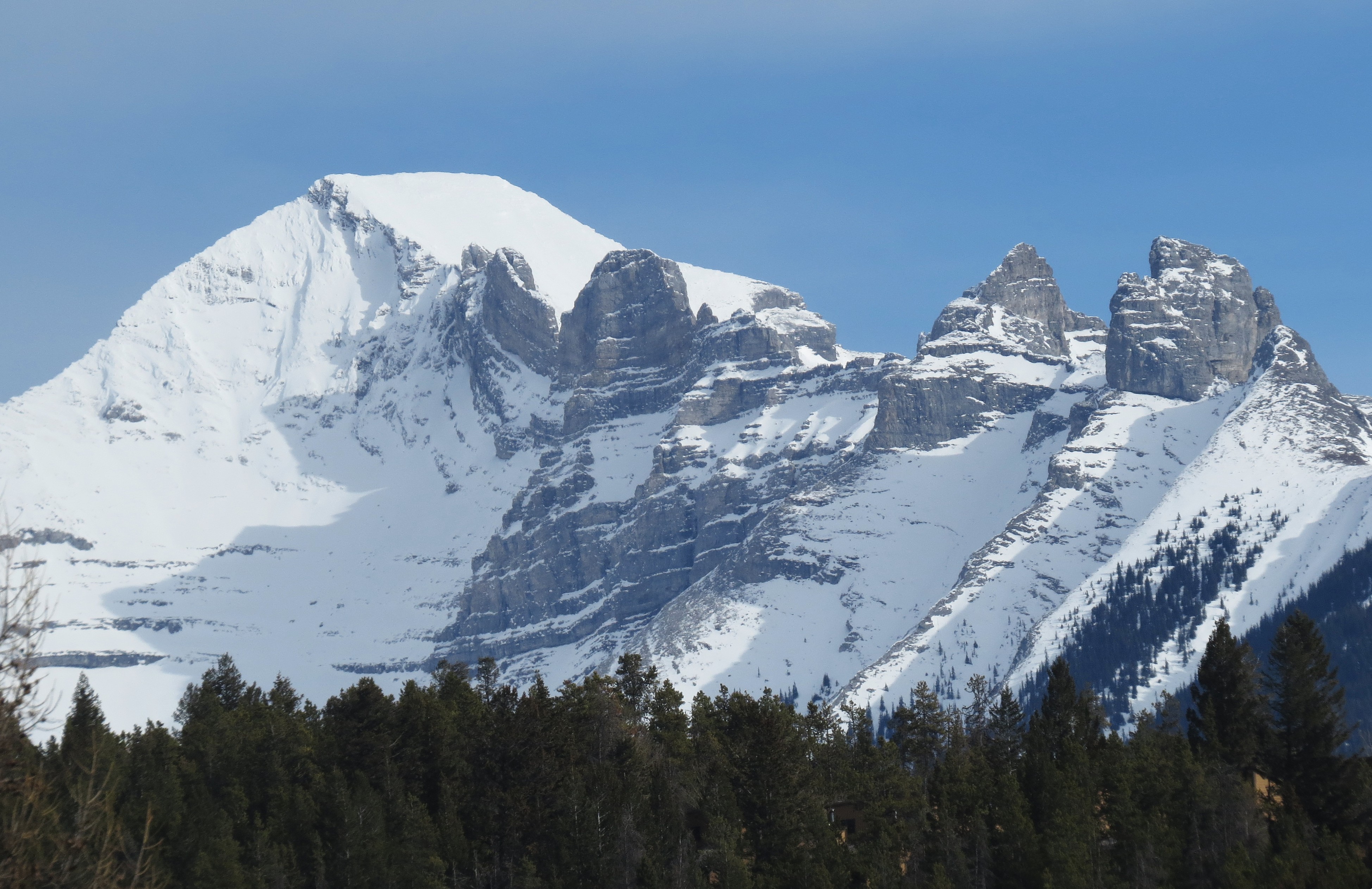
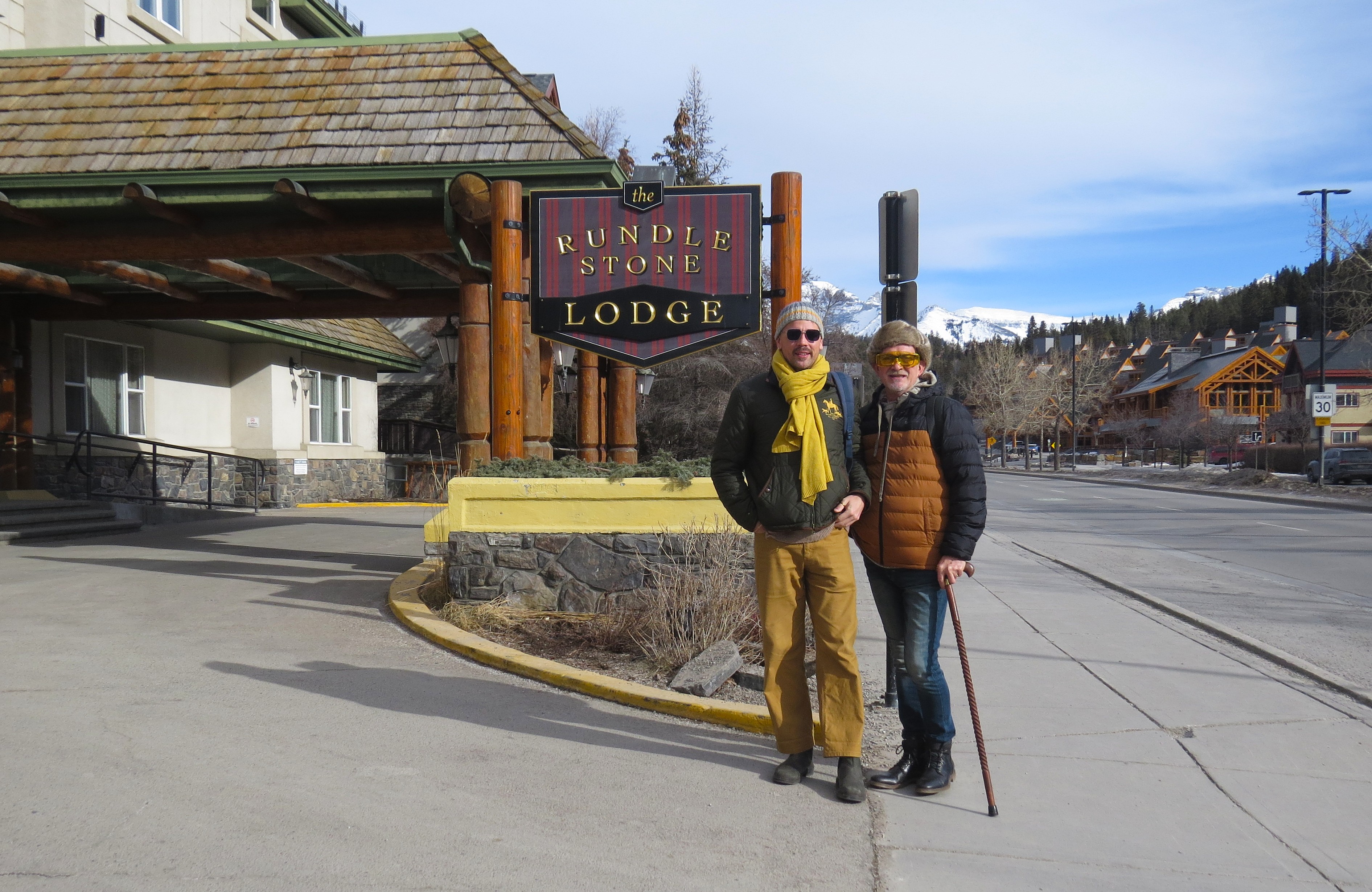
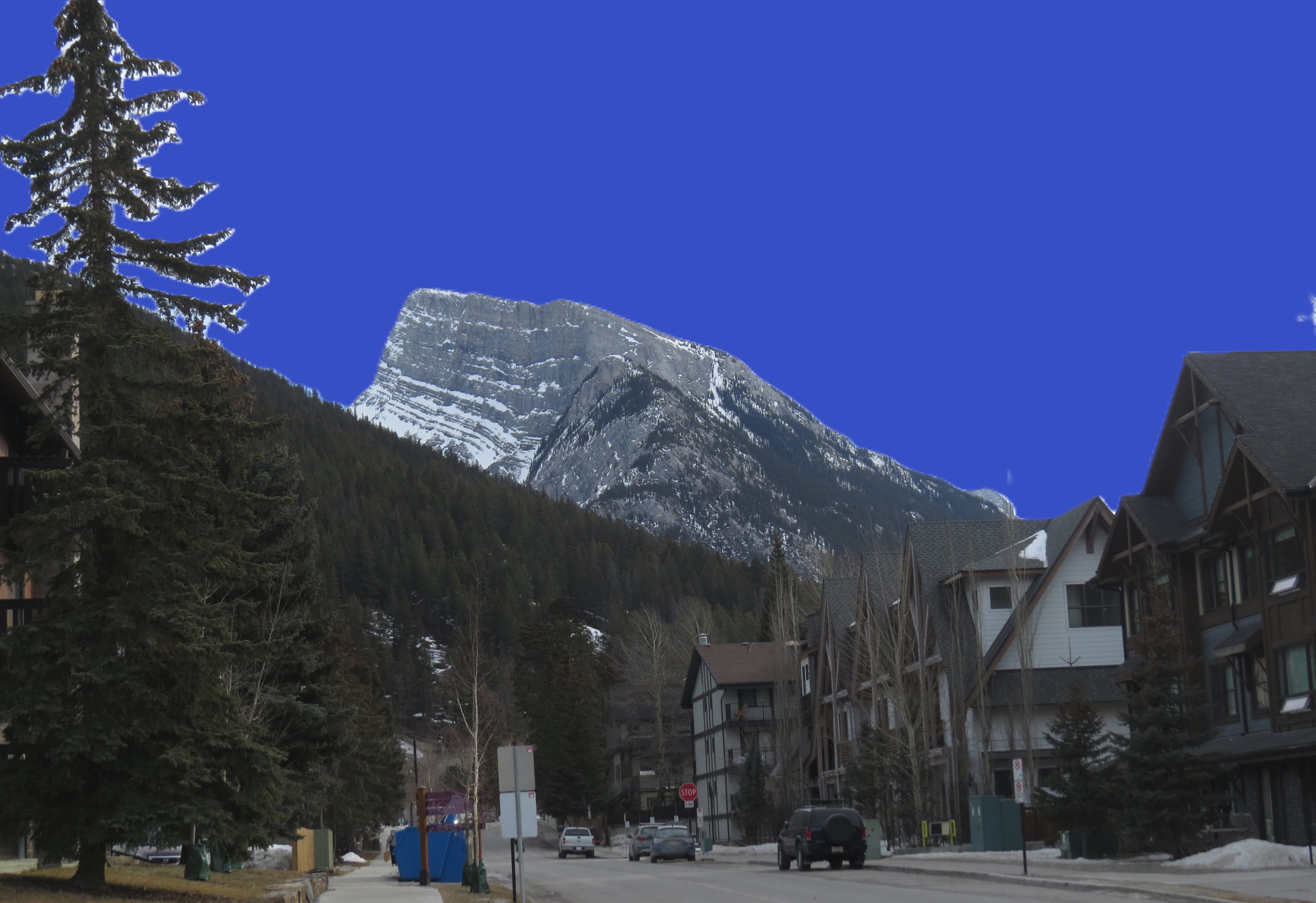
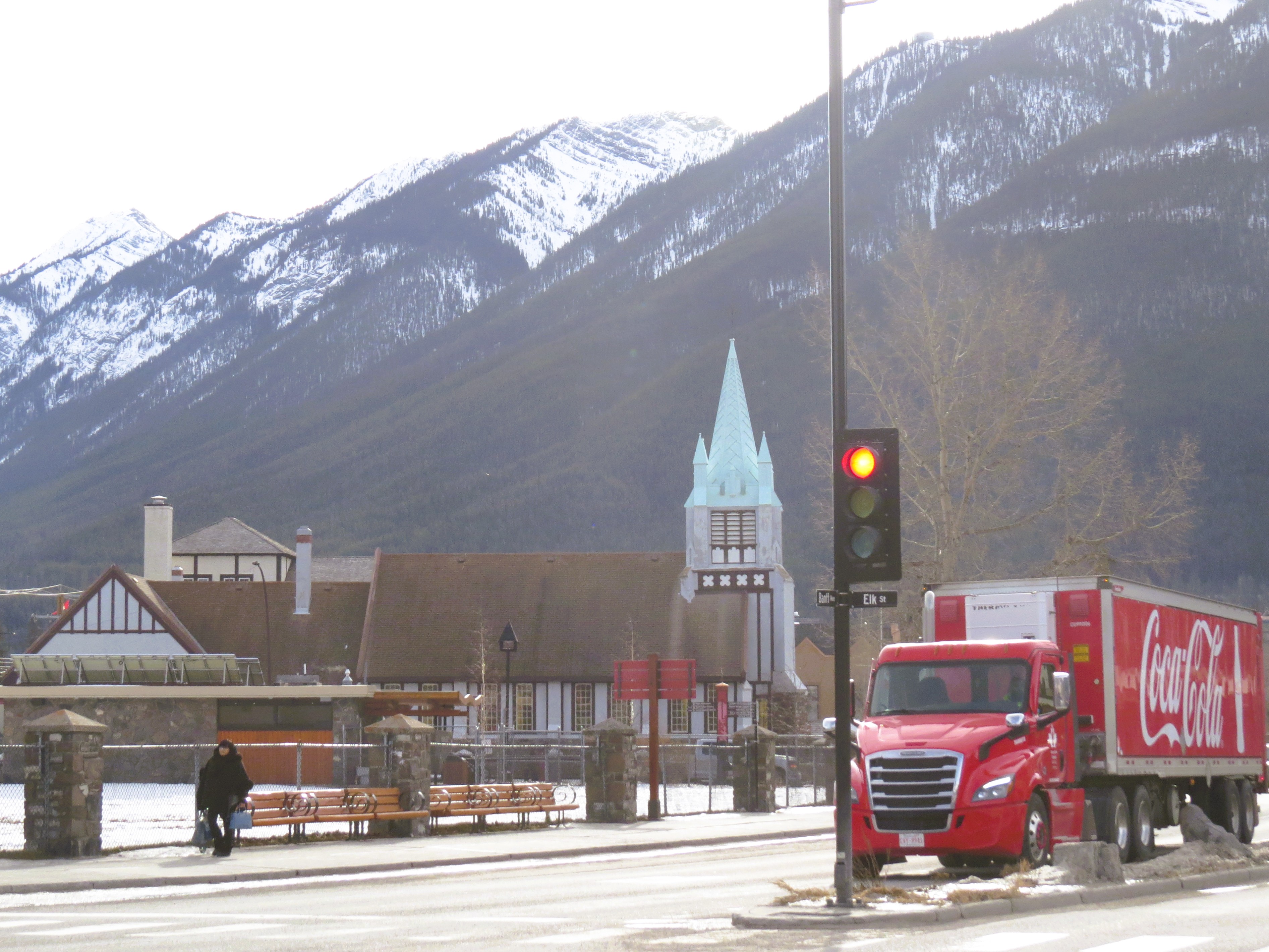
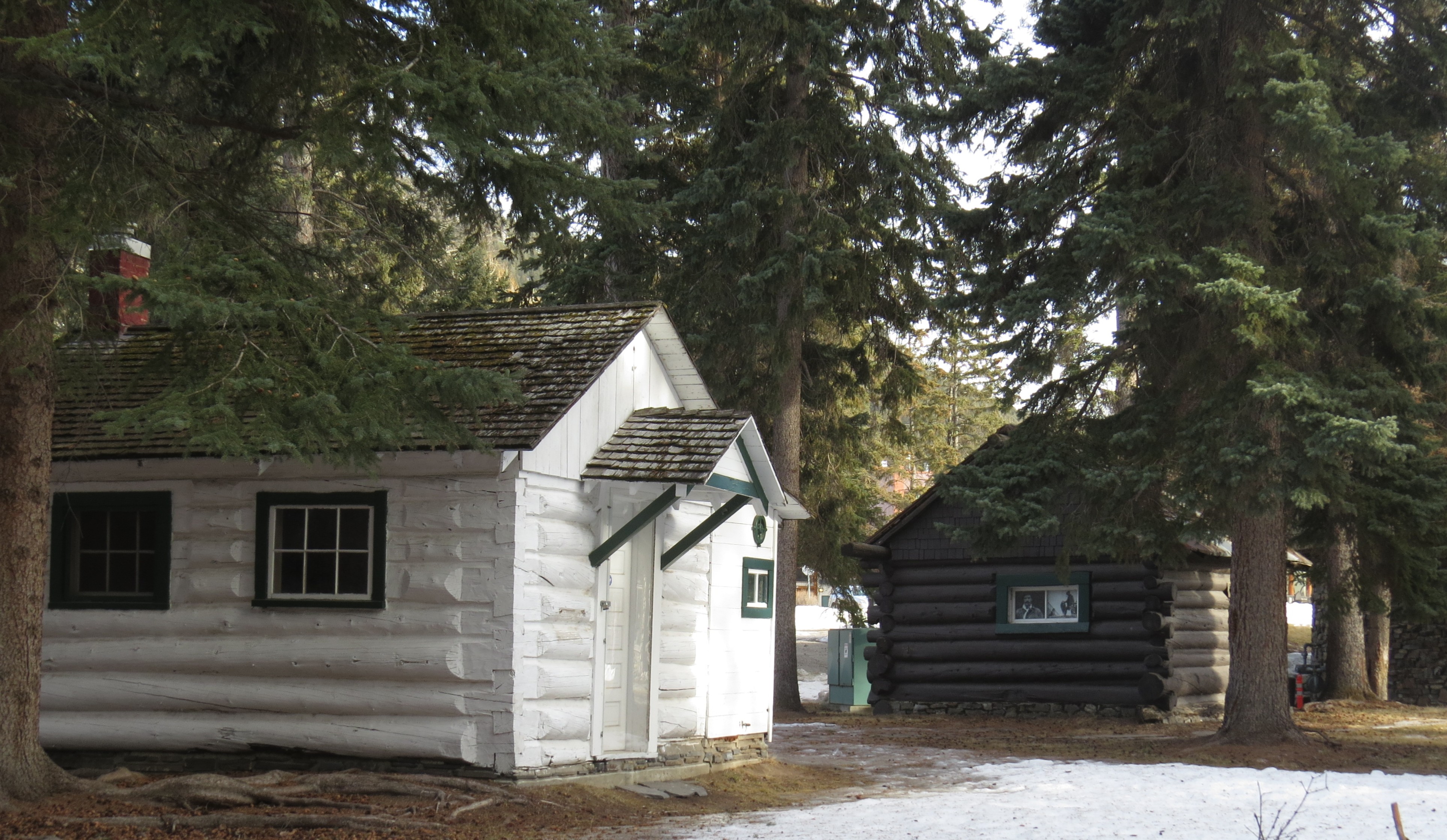
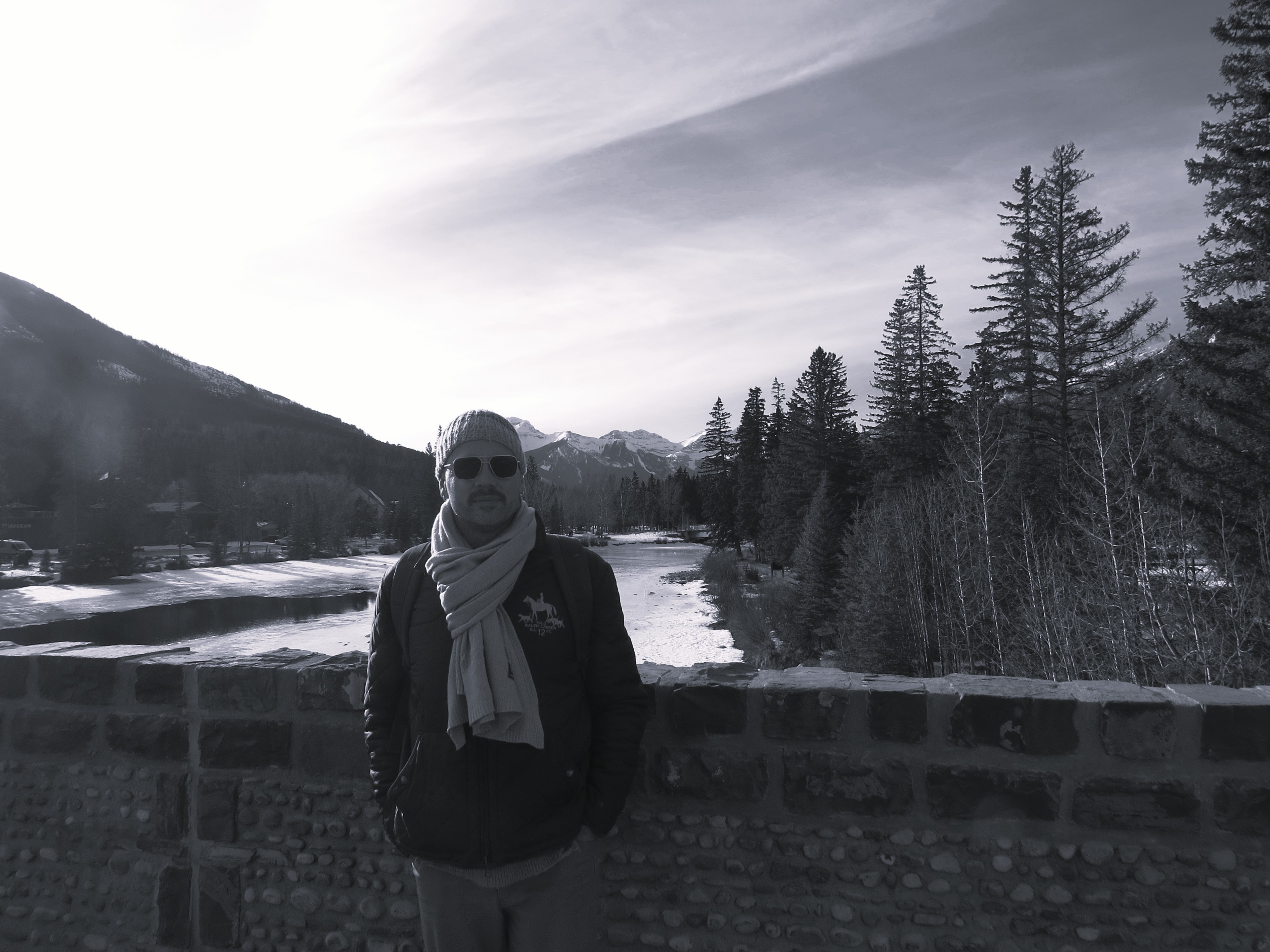
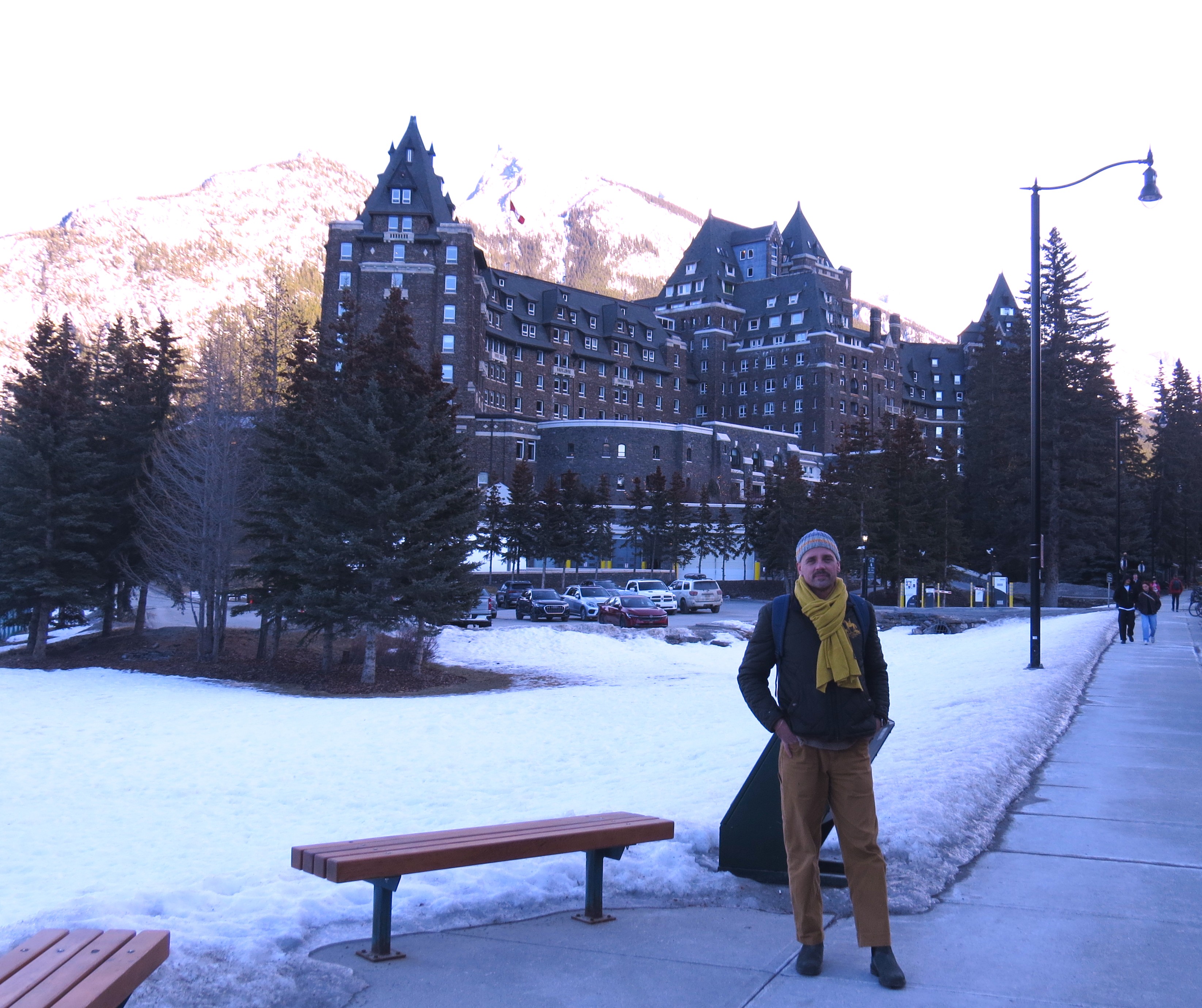
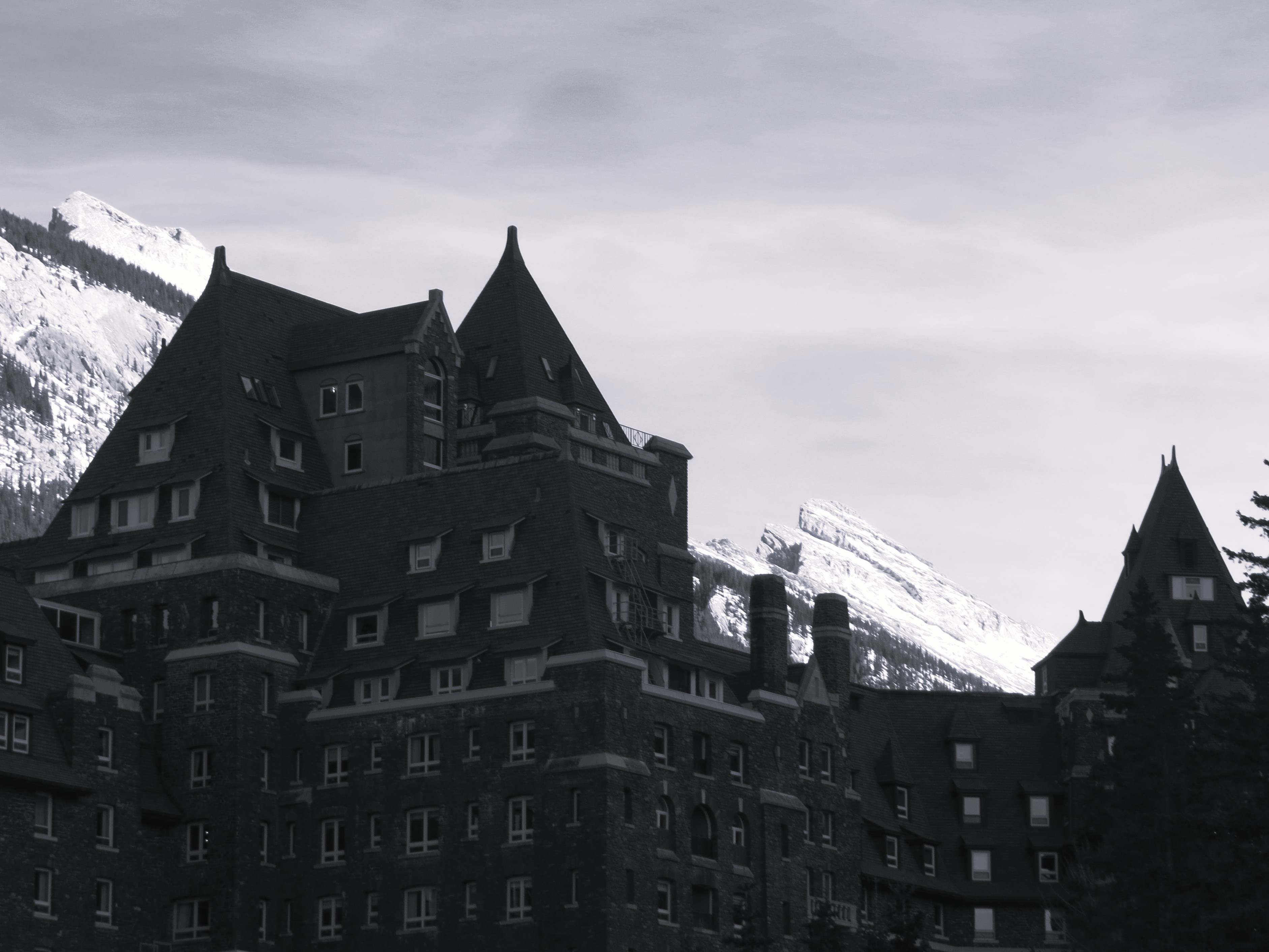
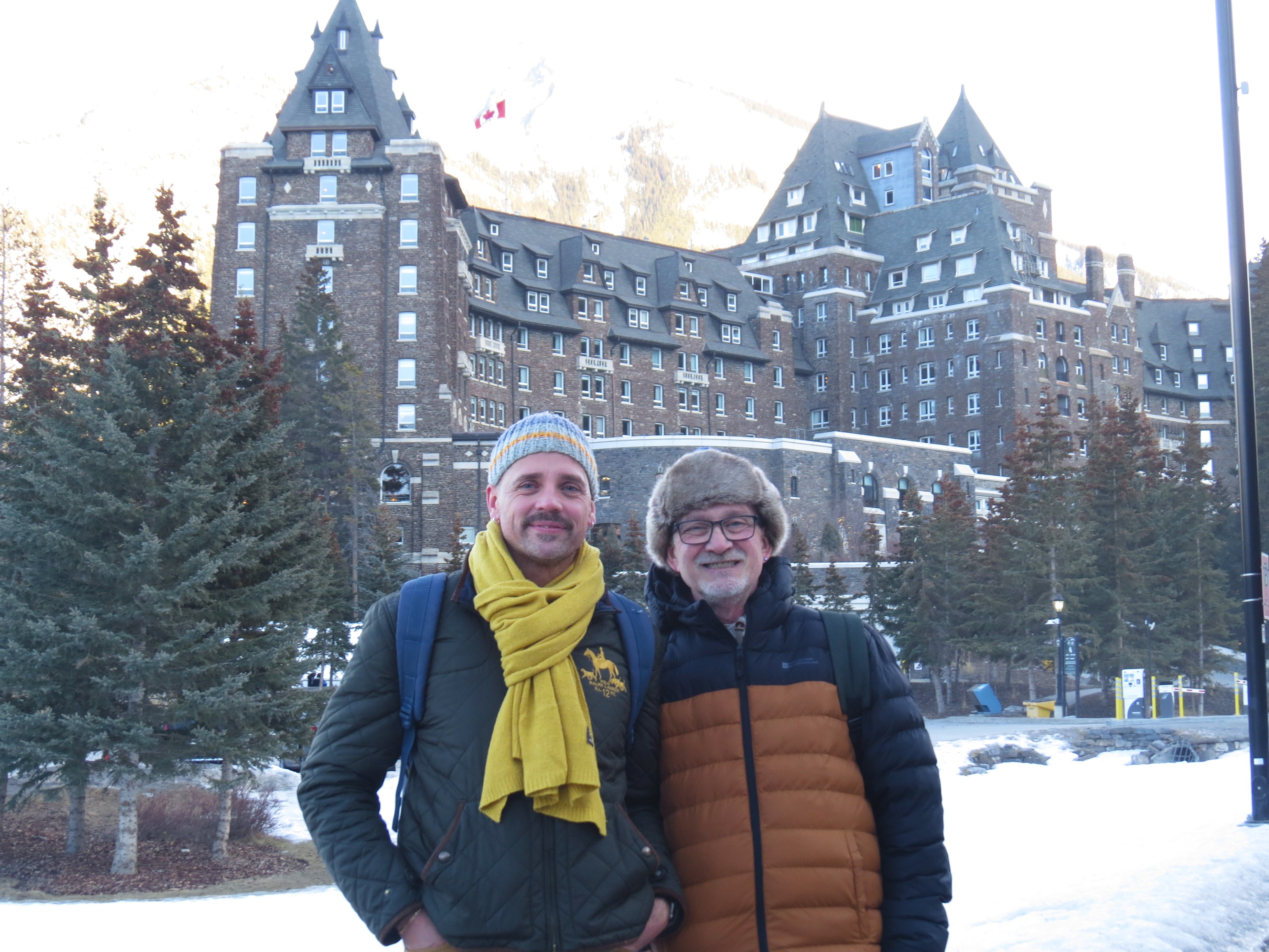
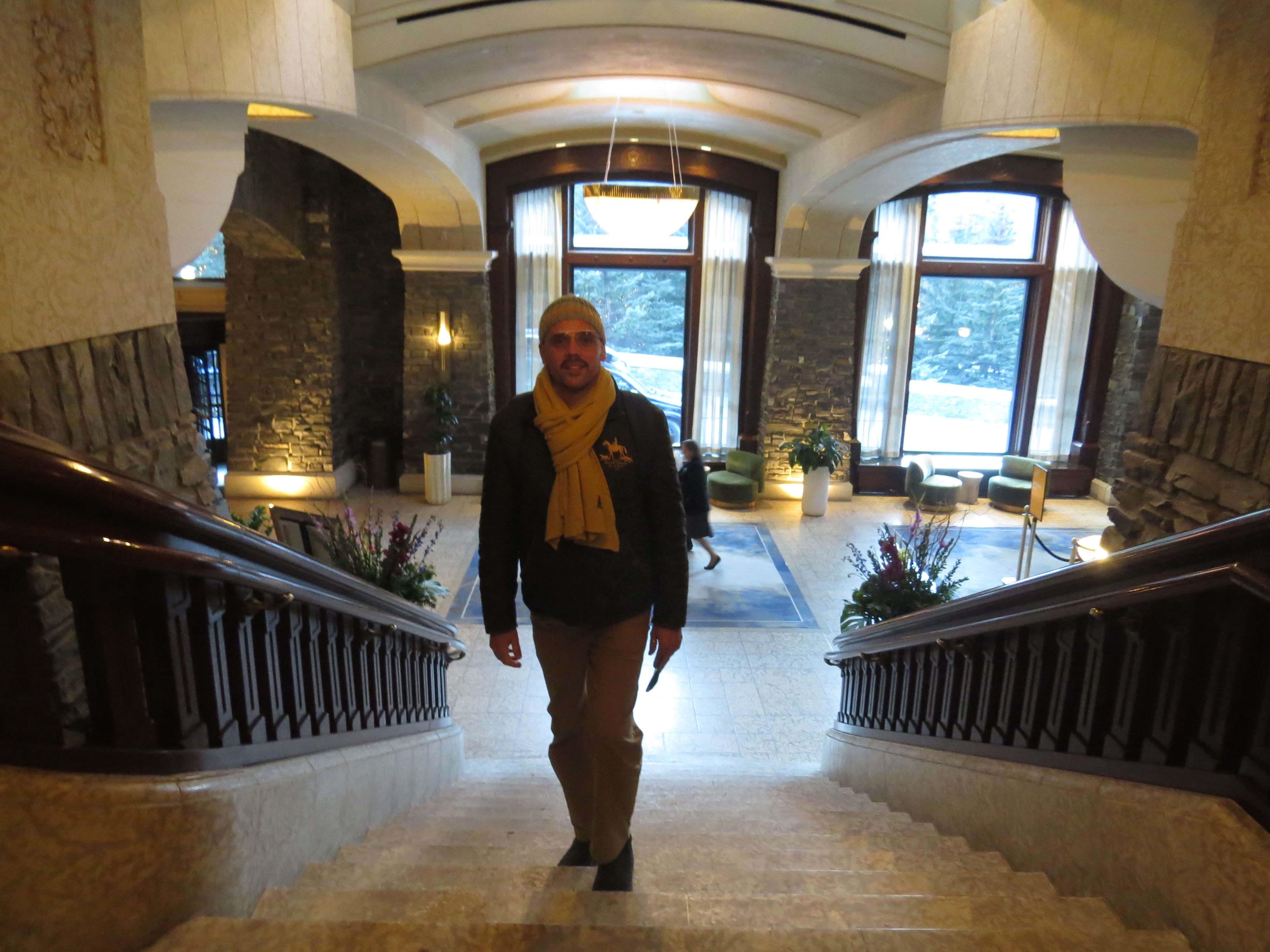
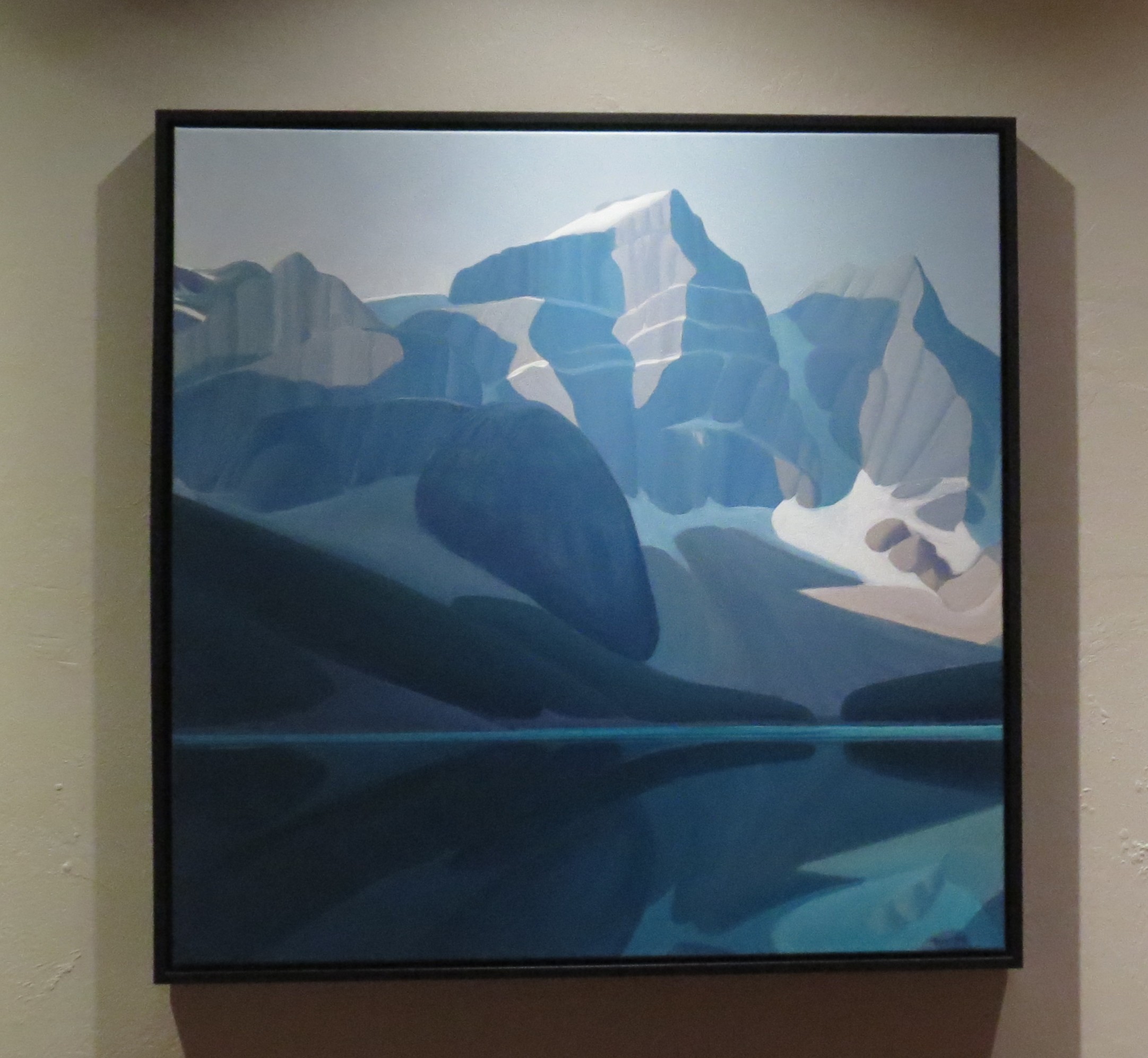
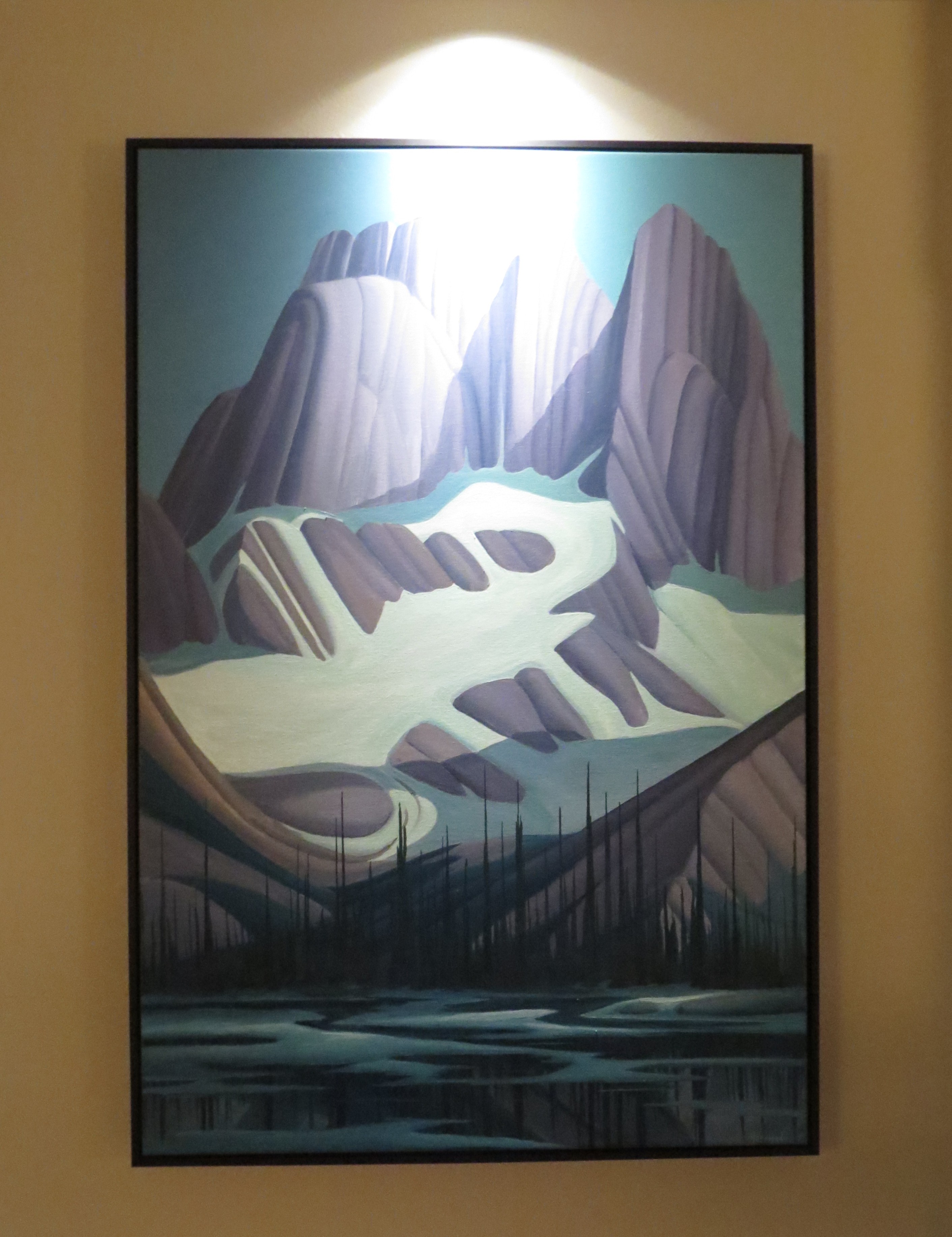
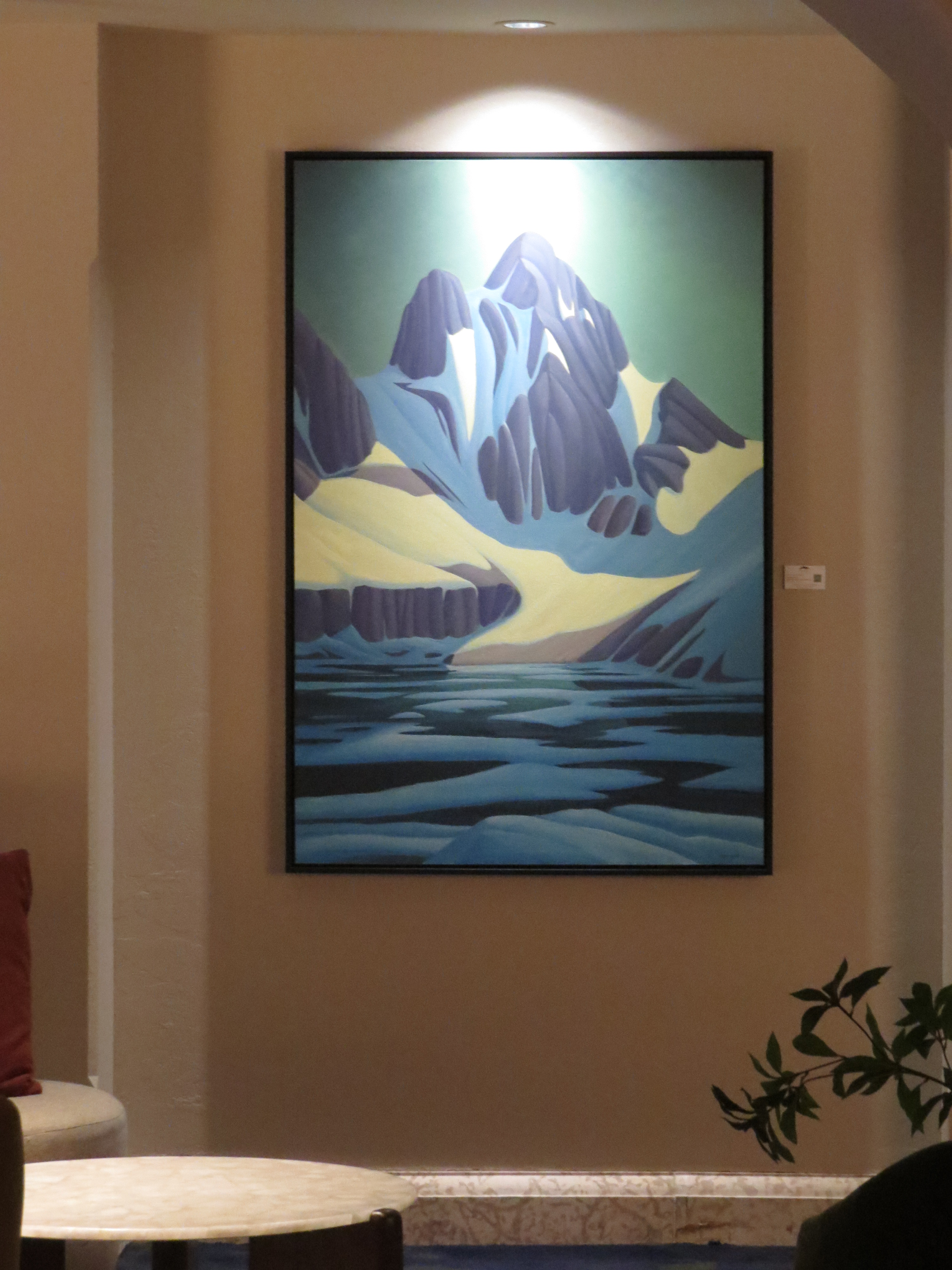
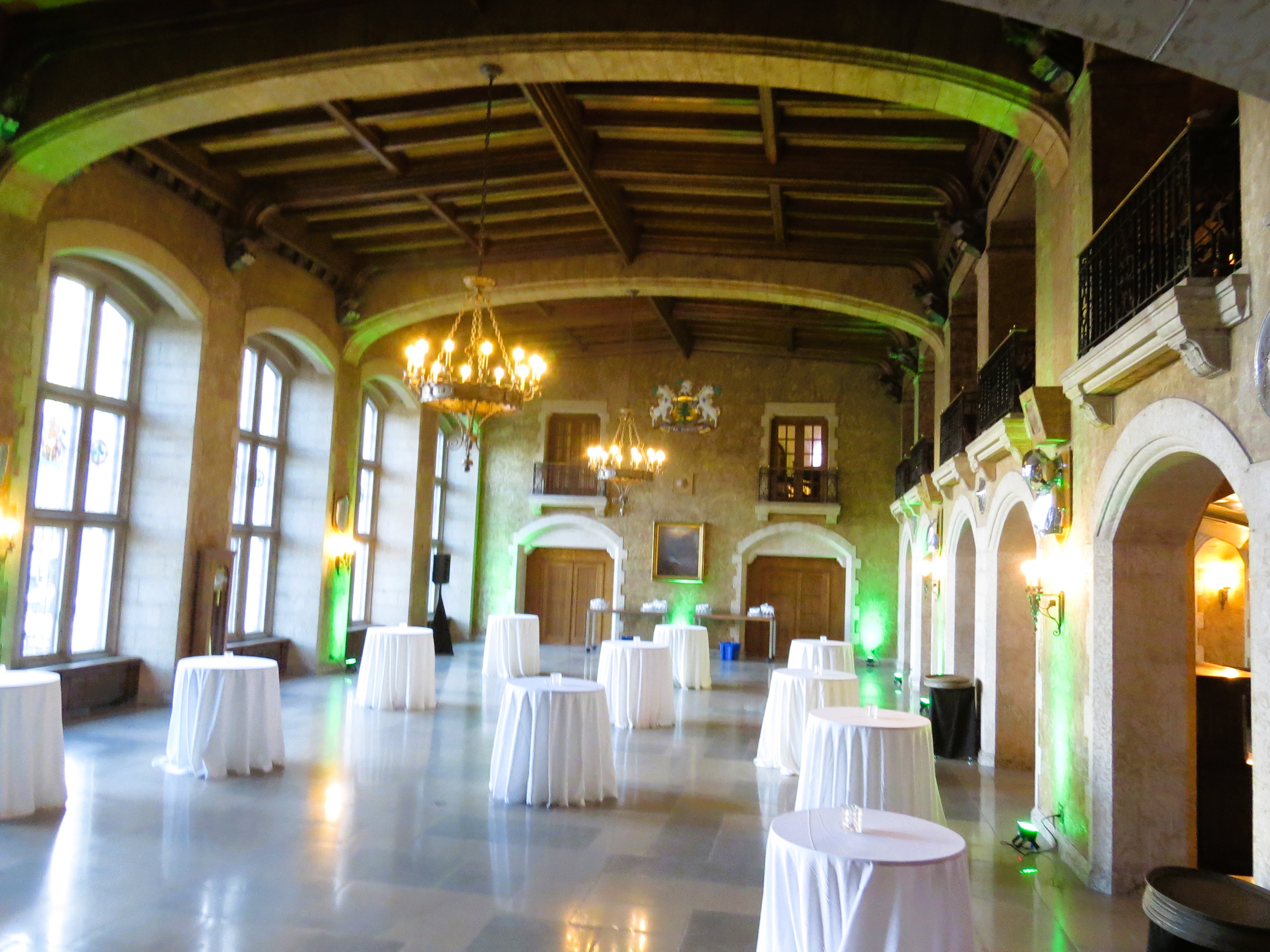
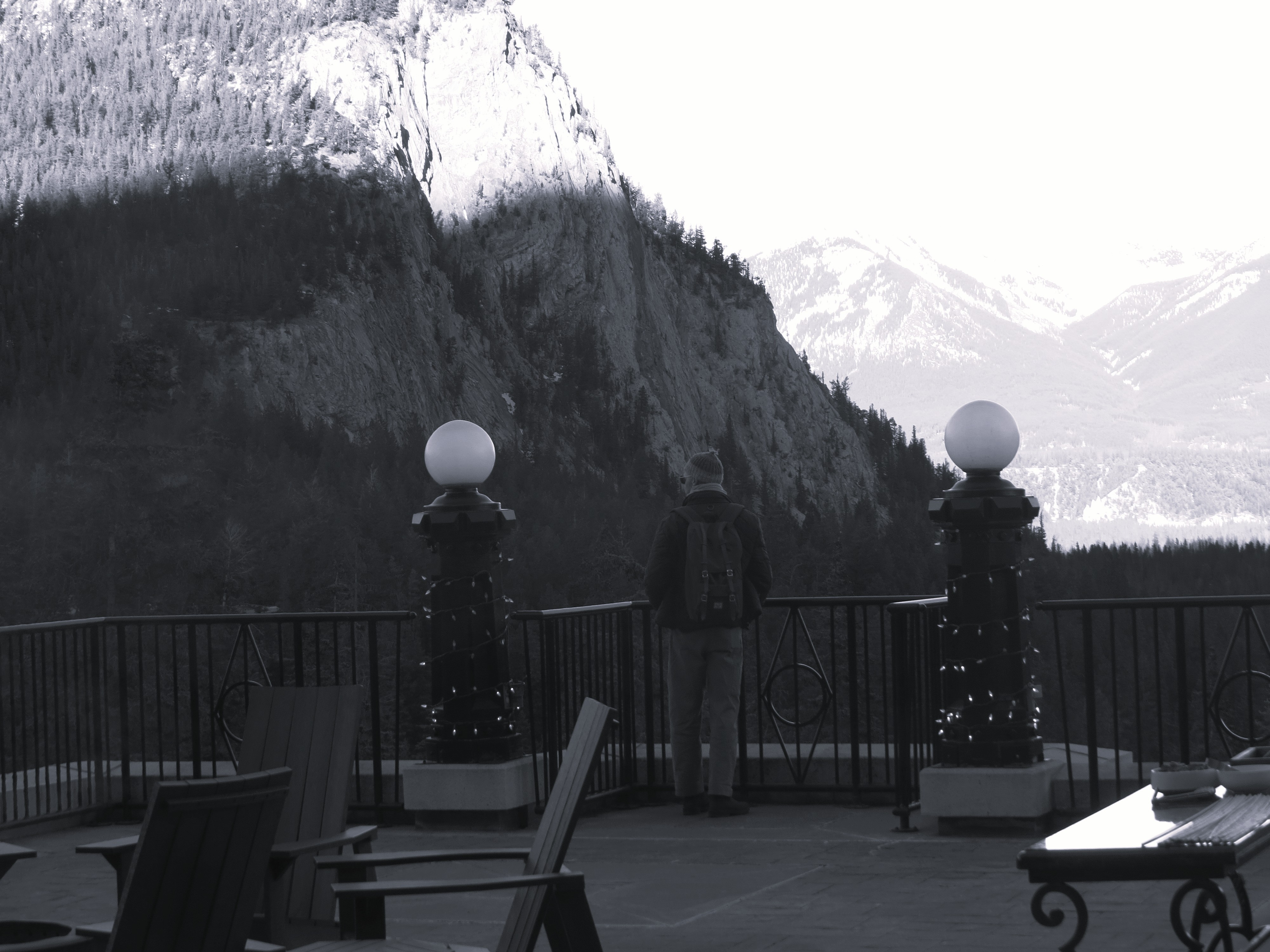
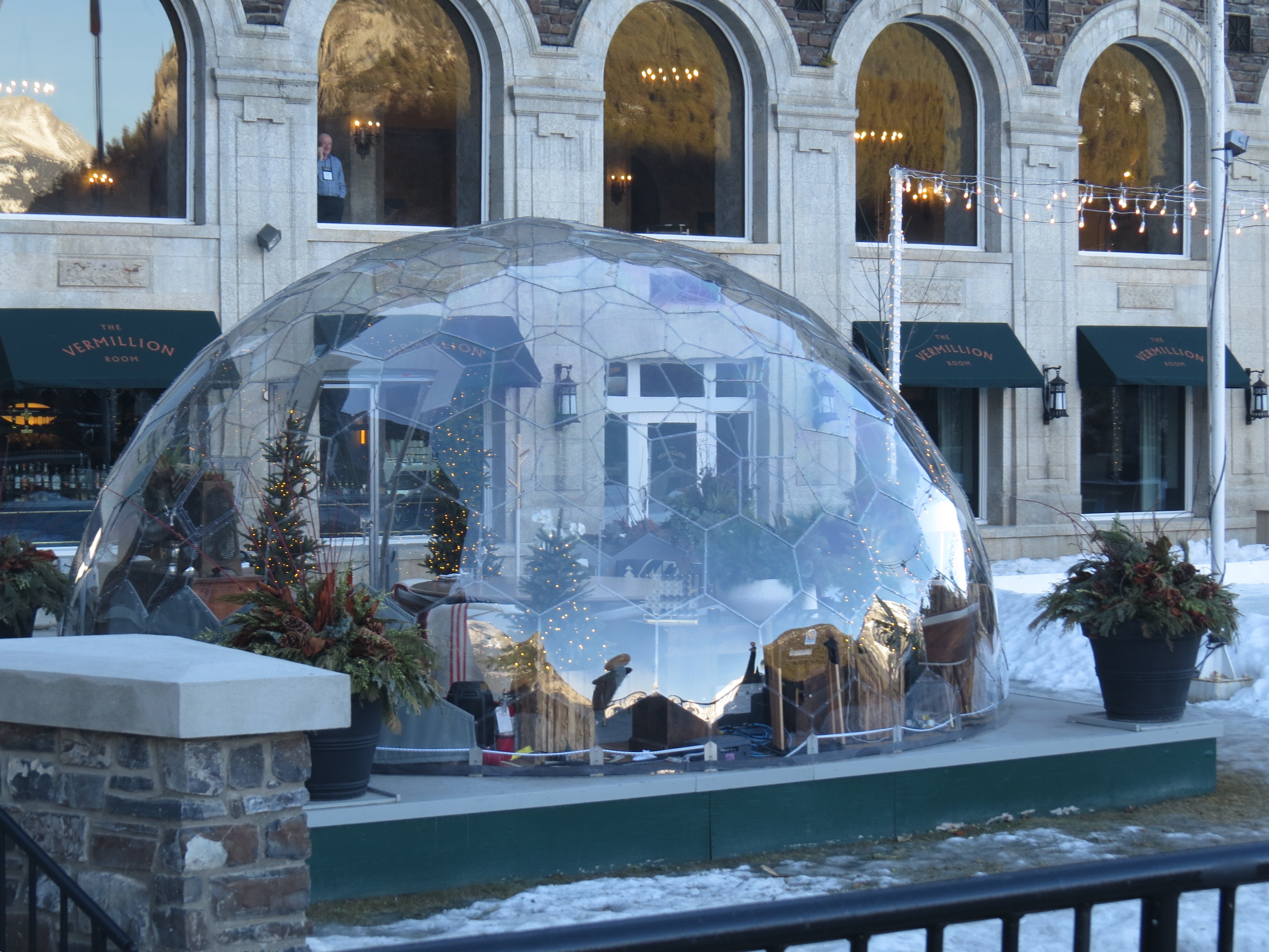
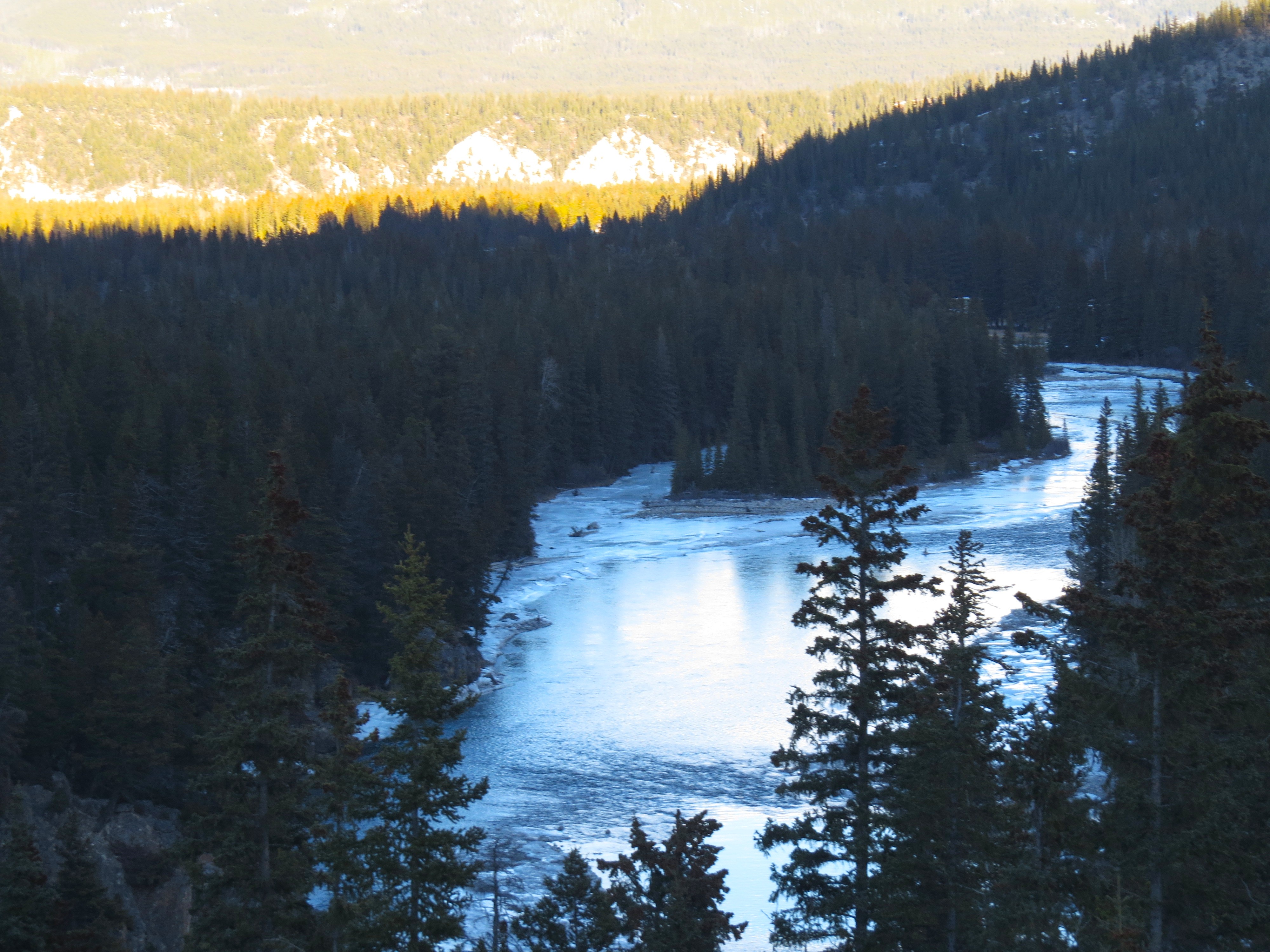
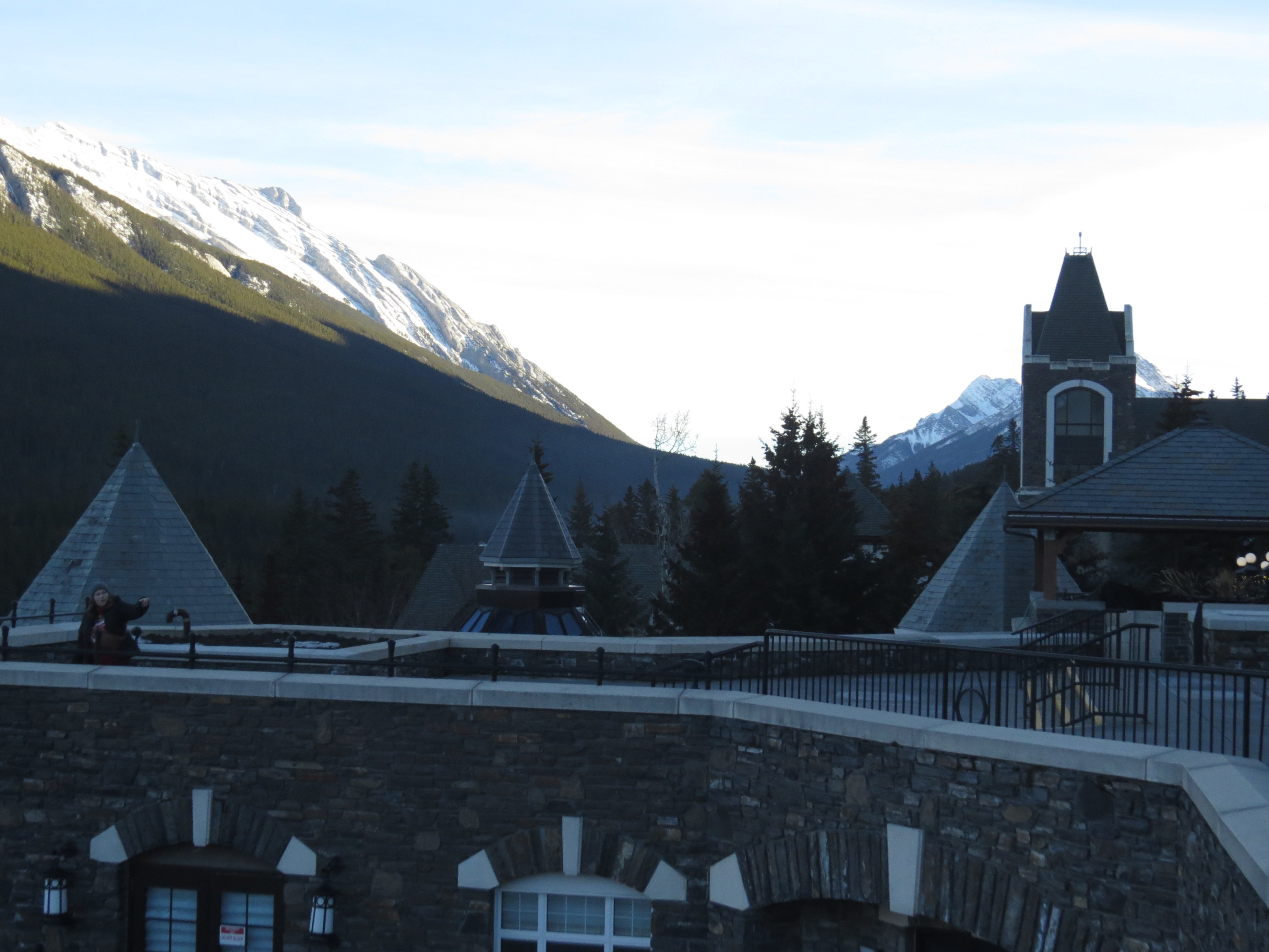
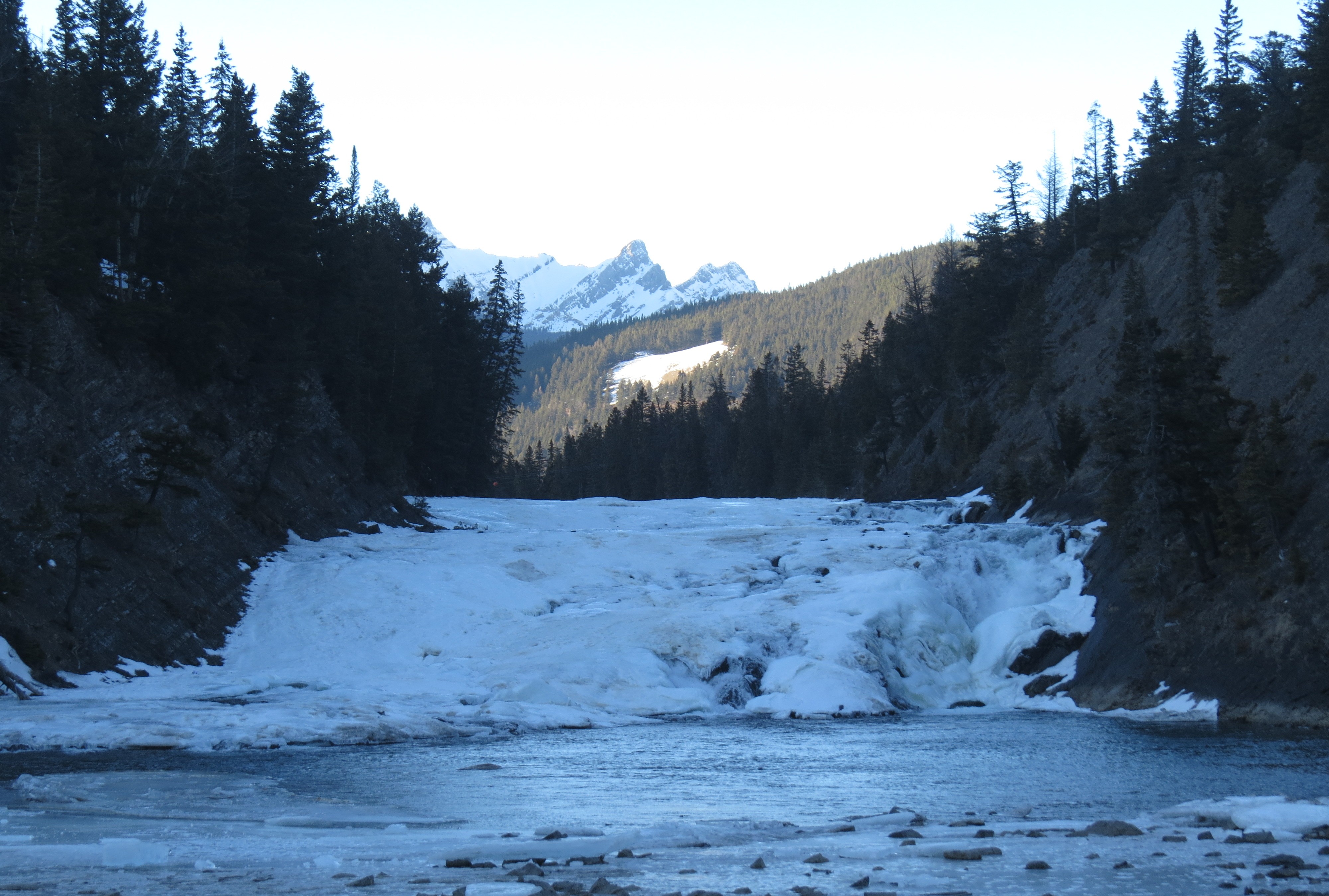
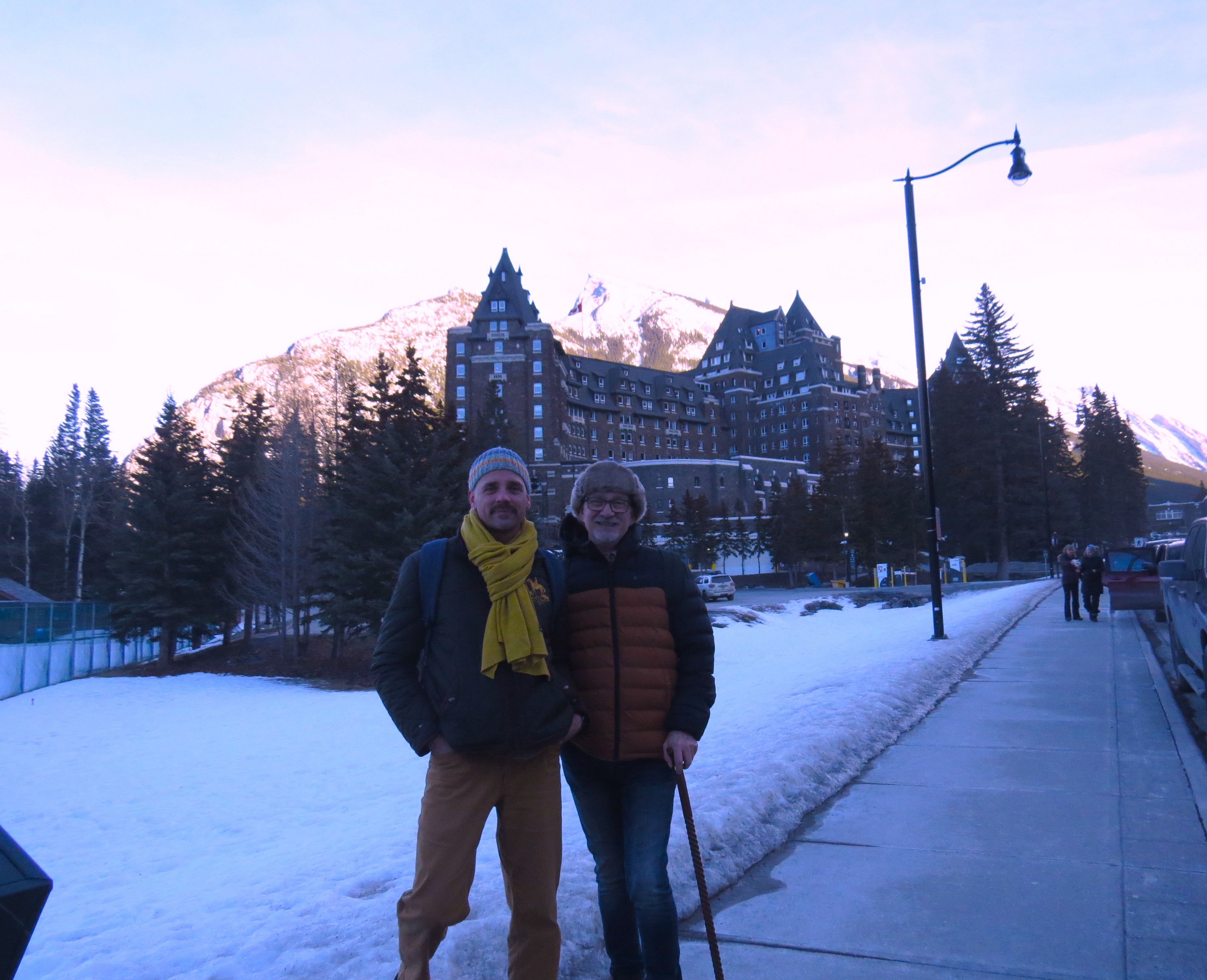
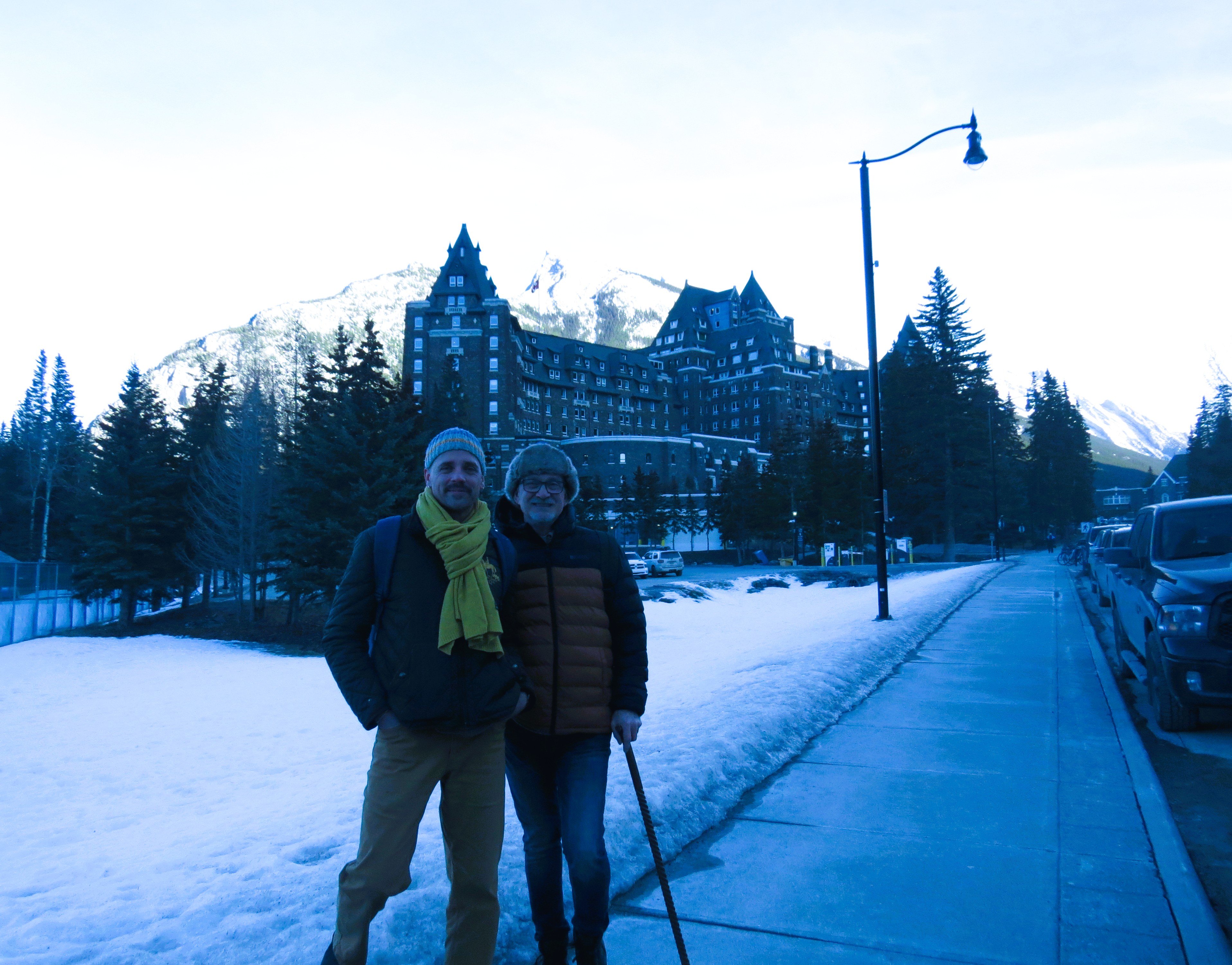
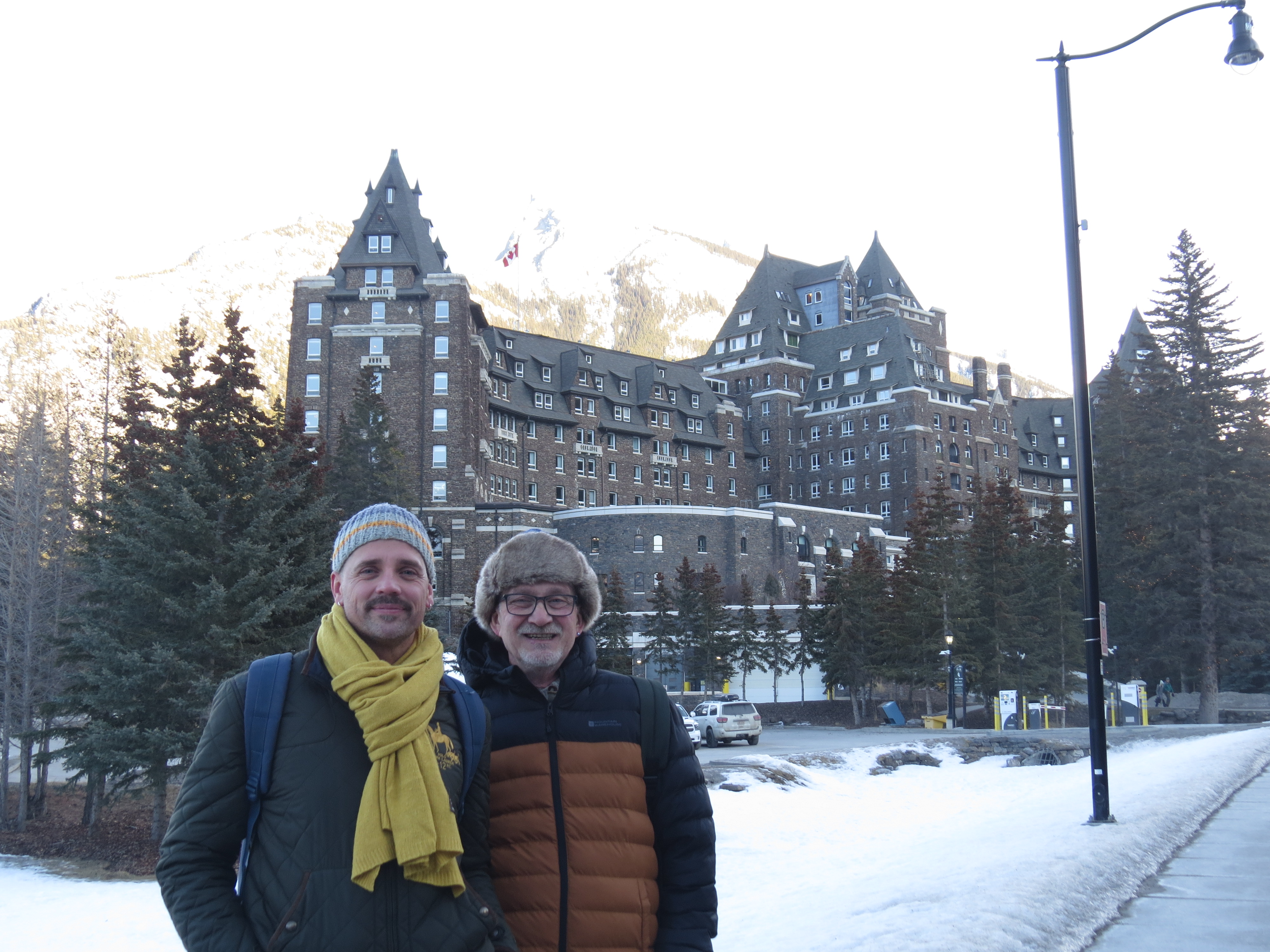
Jadę z przyjacielem, który ma się spotkać w Banff ze swoim przyjacielem z lat młodości jeszcze warszawskiej. Kiedyś był w Banff ale nie zna go aż tak dobrze, jak ja. Łazimy więc długimi kilometrami wokół zamarzniętej Bow River, wokół starego, monumentalnego Fairmont Hotel, gdzie kiedyś przed laty spotkałem i rozmawiałem z wielką gwiazdą Hollywood Jamesem Stewartem[i]. Idziemy do Banff School of Arts, gdzie kiedyś chodziłem na koncerty i gdzie bliski znajomy flecista Krzysztof Kaczka miał stypendium, gdzie kiedyś ja miałem dostać też swoje na pisanie – musiałem zrezygnować, bo inne wydarzenia w życiu nie pozwoliły na takie sabbatical.  Następnego dnia jedziemy do fantastycznego, mojego ulubionego w dawnych czasach, raju narciarskiego w Sunshine Village. Od czasu mojego wypadku samochodowego blisko rok temu moja lewa noga nie pracuje jak trzeba. W zasadzie spodziewałem się, że narty, zwłaszcza wysokogórskie, już nie są dla mnie. Aliści … nie ma lasu bez liści. Więc założyłem deski i … wio! Skłamałbym pisząc, że szusowałem, jakbym mógł rok temu. Ale radość jazdy mi zrobiły, mimo, ze chwilami bolesne i trudne. A potem kilka kilometrów do bazy już nie kolejka linową a droga w dół. Pierwszy i jedyny upadek miałem już przy parkingu, gdy się zatrzymałem by już odpiąć narty, źle chyba stanąłem i poleciałem na plecy, LOL. Następnego dnia pojechaliśmy nad Lake Louise i zamarzniętym na amen jeziorze złaziliśmy kilka dobrych kilometrów. Spoglądałem z ciepłym rozrzewnieniem na szczyty Mitry i Abberdeen, na lodowiec Victorii przy Lake Louise, hen po prawej ku Lake Agnes i przełęczy, którą kiedyś przechodziłem do Lake O’Hara i starego schroniska, gdzie przebywał kiedyś Jackson, jeden z malarzy słynnej Grupy Siedmiu; na moją ukochaną Mount Temple z bogami mieszkającymi na jej szczycie. Tym razem chyba naprawdę ostatni raz. Wiem, tyle już razy mówiłem, że gdzieś jestem ostatni raz … i nagle do tych miejsc wracałem. Ale tam już chyba faktycznie więcej nie pojadę. Ale jestem szczęśliwy, że pojechałem teraz. I w kompani serdecznej, dobrej.

A wracając zatrzymaliśmy się w Revelstoke na obiad w tym samym hoteliku, gdzie zawsze zatrzymywałem się z Moim Chłopcem, gdy jeździliśmy bardzo często z Vancouveru (mieszkaliśmy tu najdłużej) do Calgary odwiedzić jego rodzeństwo.

I to była historia moich podróży do Banff w Górach Skalistych.

poniżej link do historii malarzy z Grupy 7-miu

https://www.youtube.com/watch?v=7uSvO1PTbPY;


[i] James Stewart – Wikipedia – w Fairmont Hotel w Banff odbywają się od wielu lat Festiwale Filmów Telewizyjnych i na jednym z nich w latach 90tych Stewart zasiadał w jury festiwalowym.

Fog and Sun in Vancouver in February

Fog and Sun in Vancouver in February

A walk with glorious sun locked in a deathly battle with thick fog coming from English Bay over the beautiful little streets in Vancouver’s West End.

Battle of Light and Darkness? No, no, no! Nothing of that sort. Fog has nothing of darkness. Au contraire, mon ami. You see, fog is full of light, light that is powerfully condensed, weaved very tightly onto amazing arrases, where you can see all the shadows of shapes, a promise of something that might become. Reality not fully realized, not fully described. A poem, from which some of the ink evaporated, bleached out and you can see only some of the words – the rest of the lines, the stanzas are left to the reader’s imagination. Ha! You are being allowed to finish someone else’s poem; composing anew a song you remember only faintly, fleetingly, few cords perhaps?  Painting a picture that another painter only sketched with just few strokes of a pencil?

That is fog: a promise of shapes, colours. It asks you to be brave in your own creation, your own enormous palette of colours, sounds, and visions. To be a god! Creator! From dust to form. Not a mere believer, follower. Take the steering wheel in your own hands, follow your chart to navigate to lands and islands unspoiled, with birds made from rainbows, beaches with sand made of pure white pearls and fruits, that taste like lips of someone that you love.

               Fog – the master of deception or Demiurge of Land of Dreams?! 

Me? I will take my walk through my Mole Hill by Nelson Park in West End. But remember: a Mole Hill could easily be someone’s Mont Blanc. In a fog, of course.