Bogumil Pacak-Gamalski
The chorus of voices behind each of the chosen answer is deafening. And probably each equally wrong. For – in my opinion – the answer is simple: neither. And that opinion is not based on moral, ethnic, philosophical or political reasons. I base it on … demographics.
Just few years after my arrival in Canada, in 1986, European immigrants formed huge group of roughly 70% of all people born outside of Canada; second group, far behind, were immigrants from all Americas (15%); close to them were immigrants from Asia at 9%; people born in Africa represented 4%.
Now jump thirty years to the future, to 2016. Immigrants born in Europe were 33%; from Americas roughly unchanged, at 16%; born in Africa double in size to 9%. Asian born immigrants placed at record 40%, becoming the dominant new Canadians born outside of Canada.
Mind you, this numbers do not count Canadians of European, Asian or African heritage, who were born already in Canada. These are just first generation Canadians. Like me. Did you notice the huge change, though?
Yes, Canada is – and will become even more in coming years – a different country than it was when you were born here, definitely different than the country of your Canadian parents and grandparents. That also has a statistical effect on how all Canadians perceive our Canadian past, our judgment of that past. Our expectation for the future.
We will never know it, but I will risk assuming that if in 1982 (the year I arrived in Canada) some Royal Commission or National Inquiry discovered and truly showed to the public the story of Residential Schools, the huge damage it has inflicted on First Nations – there would have been no Parliamentary or Government acknowledgment of the crimes, no national ‘we are sorry’, as it happened in 2008 Apology delivered by PM Stephen Harper. Why would I assume it? Because in 1982 Canada was a different country as far as the fabric of our society. In that country it would have been wiser politically not to fully accept facts and issue ethical response. Settlements probably would have been paid (probably smaller) because the courts and independent Commissions would have established beyond doubt the harm and guilt of Canadian government and our Christian Churches. But the affair would have been called an old policy mistake, reparation paid, few still operational schools closed and that would have been the end of it. It was a different world. I remember it well. Not only in Canada.
But times changed. And so our country and the people, who live in here. This is not a judgment on descendants of French and Anglo-Saxon original settlers. Their values and their knowledge and sense of history was different, too. Their stories told by their parents and grandparents were the stories seen by their eyes, their understanding of the world around them, not by objective view. My story of my homeland, Poland, was different when I was 10, 15 or even 18 years old. Very different then my story of Poland now, 40 years later. Even those, who finished universities and colleges were taught from history books of previous generations. History glamorized, made heroic. It was needed to build and to make strong a very young nation. Nation, which just went through horrible experiences in First and Second world wars. How a nation that just sent thousands of young boys to die for freedom of nations far away, across an ocean, could have itself commit a crime against tiny nations of poor Indians?! That was beyond comprehension for many. It doesn’t change the facts of that terrible crime, doesn’t absolve the astonishing lack of morals of politicians and governments and Churches in good first half of XX century. But it was a time, when news and facts were not as easily noticed or reported as today. It does make it easier to understand the ignorance of that crime among general population.
And now, in 2021, on July 1, I am ashamed of the past of my history. My, because, as a Canadian, I have accept as mine also the history of my country. My country – Canada. I have never stopped being a proud Pole. Who is ashamed of some parts of Polish history. Parts of very anti-democratic and xenophobic temporary, today’s Poland. Because of that old knowledge, I can say as a proud Canadian, that any form of xenophobia is the worst national feeling that can be. That we should always fight it within ourselves. That feeling of being better than others is not a good feeling. It is a poison that seeps into healthy patriotism and makes it bitter and sour. Having these two alter egos – the Polish and the Canadian – makes me very aware of it.
I like stories. Often tell them myself. Do you know the difference between ‘telling a story’ and reminiscing? Both involve past and often are of personal experience (although story could be of other people’s experience, known to the teller, or even be of fictional characters and place). The main difference is that a story has an informative and educational message. What it used to be called: a moral. Reminiscing is mostly of sentimental value and reason.
My story of today takes place in time long ago and of time present. A visit to an Indian Reserve in the middle of 1980’ and visit to reserve on July 1st, 2021. On Canada Day.
In the 80’, after working for few years I got restless with my job (well paid unionized position in Catholic School Board) and quit. Needed something new, more challenging. It was first and only time in my almost 40 years now in Canada, that I was unemployed. Still knew very little of the system, of how it all works. Being young and a bit of a ‘smart Alex’, I felt above asking anyone for good advice. I will find my own way! Or so I thought. I found some intriguing ad about some insurance/financial/investing company looking for new ‘ambitious’ people. Knew nothing about that field. Zilch. After all investing and finances in communist system were really a totally different concepts from another planet. And that’s where I grew up and educated myself. What an opportunity to try myself in a truly capitalist field, I thought seeing that add. Of course it was an absolute scam, as I learnt quickly. The ’firm’ was telling us that the best to start and learn is through sales. Sales of anything. If you learn how to sell any product, you be good in selling serious product and services. Let’s go to do some ‘field work’. The manager and his assistant noticed that I have a new , good size car and suggested that they, myself and another promising applicant will drive to that experimental field. Right away I didn’t like the fact of using my, not the company’s car for such trip. Perhaps that was also part of the test and building of trust and finding an unorthodox way? Who am I to judge? My trunk was filled with heavy bags full of stuff. We drove just outside of city limits in Calgary and parked by the gates to Sarcee Indian reserve. The manager instructed us that once we park inside the reserve, each will grab a bag and spread out to find any single (the best) or group of young people and sell our product. Radios – 30 bucks, flashlights – 15, cassette players with speakers – 40. All the best imported from USA and Japan. Who sells the most – wins a special gift and an offer of employment. Let’s go! My head was spinning as I started the car and crossed the gate. We parked in central place, close to the entrance. I opened my bag – full of cheap and flashy Asian electronic junk. What the hell?! Did I move back in time and going to be traveling salesman with flashy junk to sell it to poor Indians?! I put the bag on the ground. The manager yelled at me – come on, faster, we don’t have much time before the Chiefs kick us out! That was enough. I threw the other bags to the ground and yell back: get the f… out of my car now. I am not a f… colonial trader in XVII century Africa. I am leaving now. He was shocked and confused. Locals started looking at us hearing my yells. He tried to calm me down and resigned said – ok, let’s go back to the office, we will talk there, I will explain it to you. I said that I am leaving. But alone and I don’t give a s… how they will get home. And I left.
That was my first encounter with Canadian Indian Reserve and Canadians perception of them. Today the Sarcee nation is known by their own historical name Tsuut’ina Nation. Since that time they have become powerful and resourceful tribe with strong social, economic and educational base. Instead of scamming traveling salesmen with cheap watches and other junk they are visited by Calgary’s mayors, premiers and economic ministers of Alberta, reps of powerful corporation, who want to deal with them and offers of contracts worth hundreds of thousands of dollars. But there are still, further form large urban centres, small secluded tribes living in abhorrent conditions. And still being subject to indecent and dishonest deals.
Few days ago I went again to First Nation Reserve. This time by myself, to celebrate Canada Day. How better to celebrate this country if not among it’s first, original inhabitants, guardians?
That decision came easily for me. Should I just pretend than nothing is happening, that there is an uproar of sadness, anger and discontent on this Day? What to do with it/ Some were cancelling the celebration, some were planning to organize protest, some wanted to say “I’m sorry”. But sorry doesn’t cut it anymore. Burning old churches doesn’t cut it, neither. Just get together and talk. We leave together, on the same land, none of us will disappear anywhere soon. Get to know each other. Specially Canadian, who are not from First Nations, should really try to get to know indigenous people. Don’t be ashamed, or to afraid. We can’t re-write history but we sure can write a better, respectful of each other, future.
Went to the largest reserve in Nova Scotia, located between Halifax and Truro. What used to be called Indian Brooke Reserve, but is actually Reserve of a tribe called Sipekne’katik, that is a part of people called L’nu (popularly called Mi’cmaq). All this names, starting with the stupid name “Indians”, is also an effect of our total ignorance and arrogance, lack of basic knowledge. All these tribes have names, they have history, language. Canada is a continent, for havens sake! People in Europe are called sometime Europeans – but each nation has its own name and language, sometime more than one! German is not a Pole and Italian is not Swede. Just as Korean is not Vietnamese. Our Haida people on Pacific shores are not Prairie Blackfoots or Maritime Mi’cmaq. It is really not that complicated. No more than the difference between ‘British’, ‘English’ and ‘Welsh’.
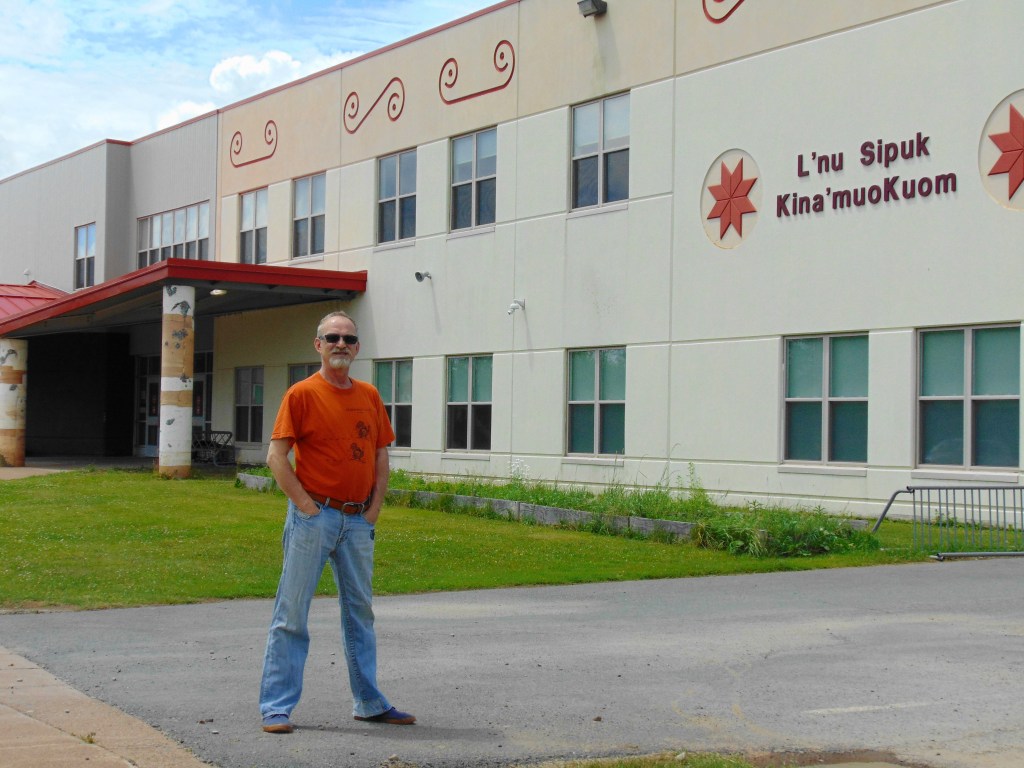
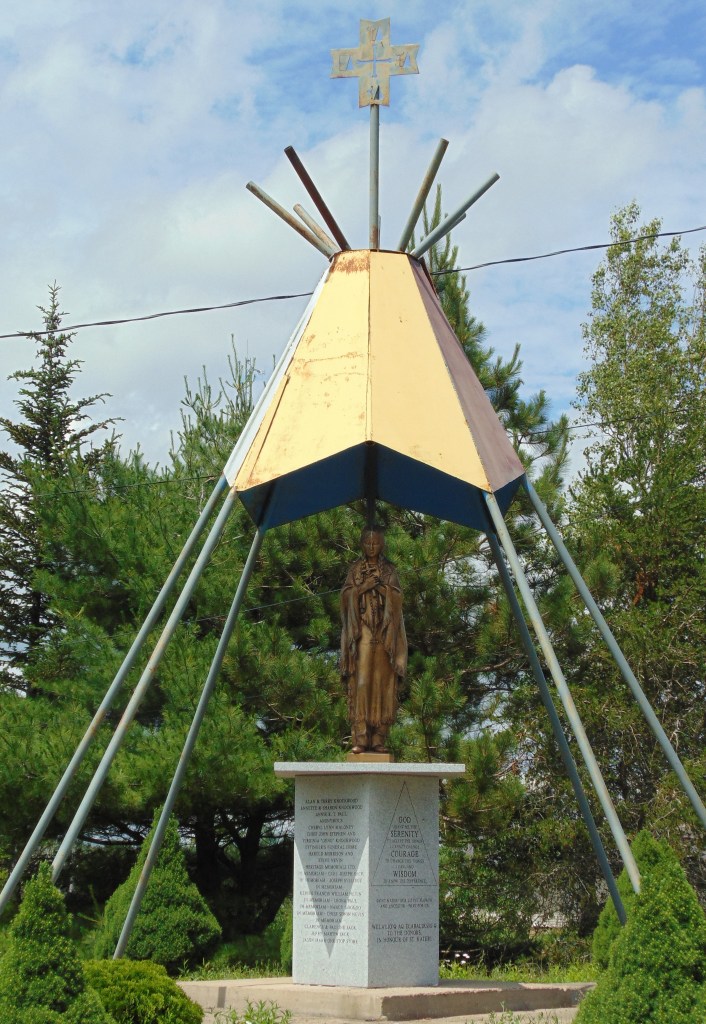
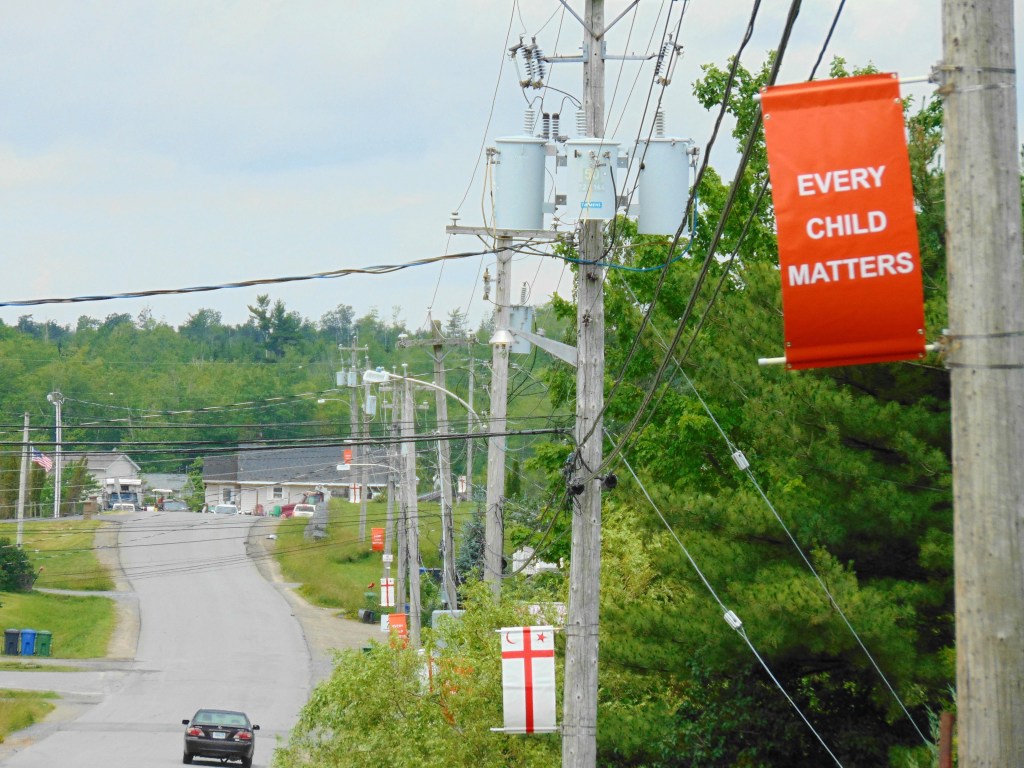
top left – author in front of L’nu Sipuk Kina School; entrance to the Village from Robinson Rd. ; Community Centre and Administration on Church St. ; bottom – St. Kateri Tekokwitha statue by the RC Church; view of Church Street toward Tuff St. and Sport Complex. (pict. by the author)
The Sipikne,katik village is large and well developed. Big church, large cultural and civic centre, beautiful school, few stores and businesses, relatively well maintained properties. One main road and few smaller ones interconnecting the territory. That special day was a huge motorized parade to remember the lost children – these days subject on everyone’s mind and weighing heavy on hearts. There was a special gathering on sport grounds with music and children. Specially the beautiful children, all (as adults) wearing the dark orange shirts, were making me very happy and extremely sad at the same time. Just as, when I went later to visit the grounds of former Residential School to pay my respect. I watched from a small hill, were the school used to be, as one family were leaving their car: parents in their twenties and three small children. And I imagined how the RCMP arrived with some cars and were pushing away the screaming, horrified parents and taking away the crying children in a wagon to some far away school. For many years to come. Some never saw the parents again. That image brought tears to my eyes.
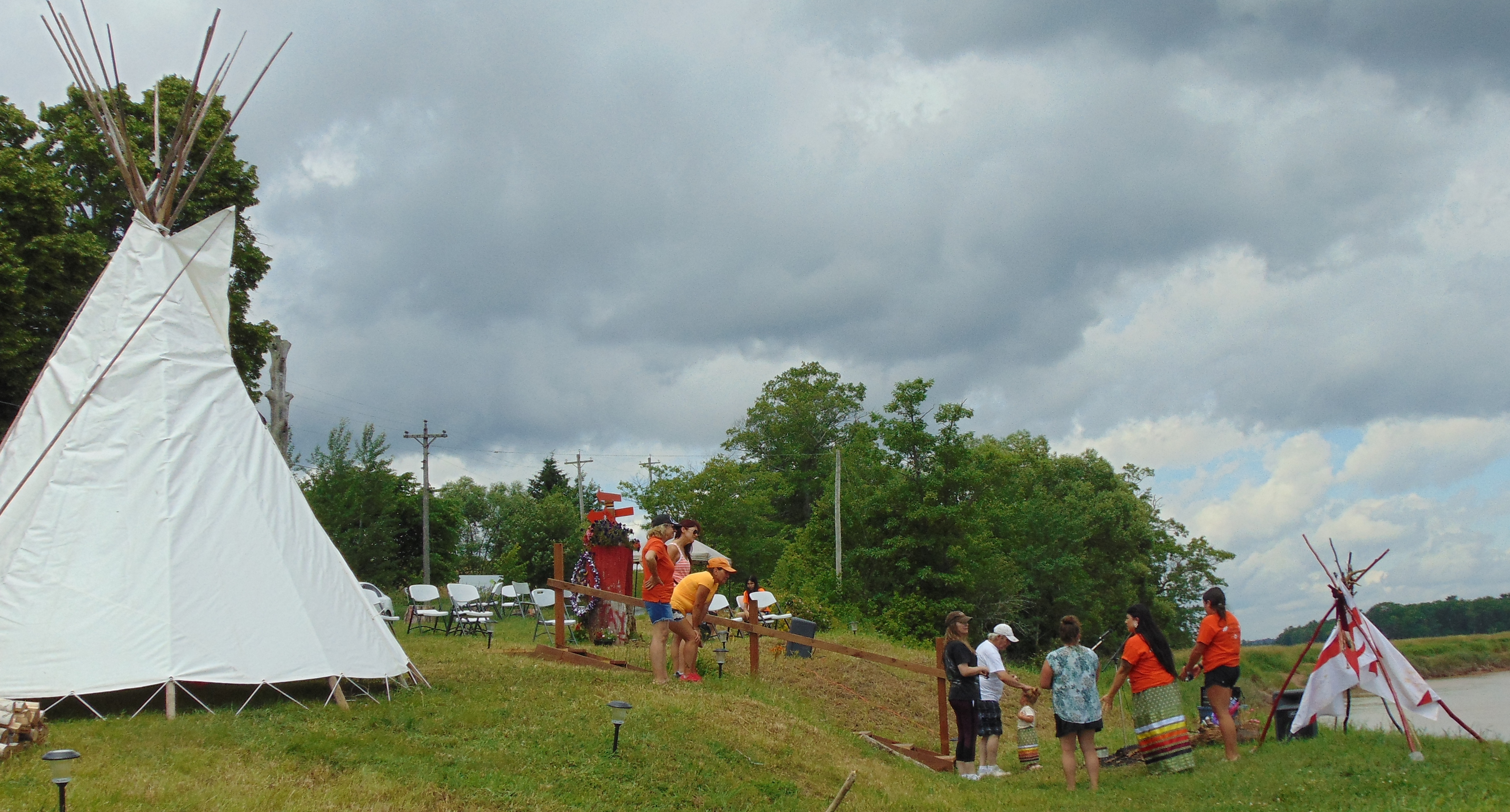
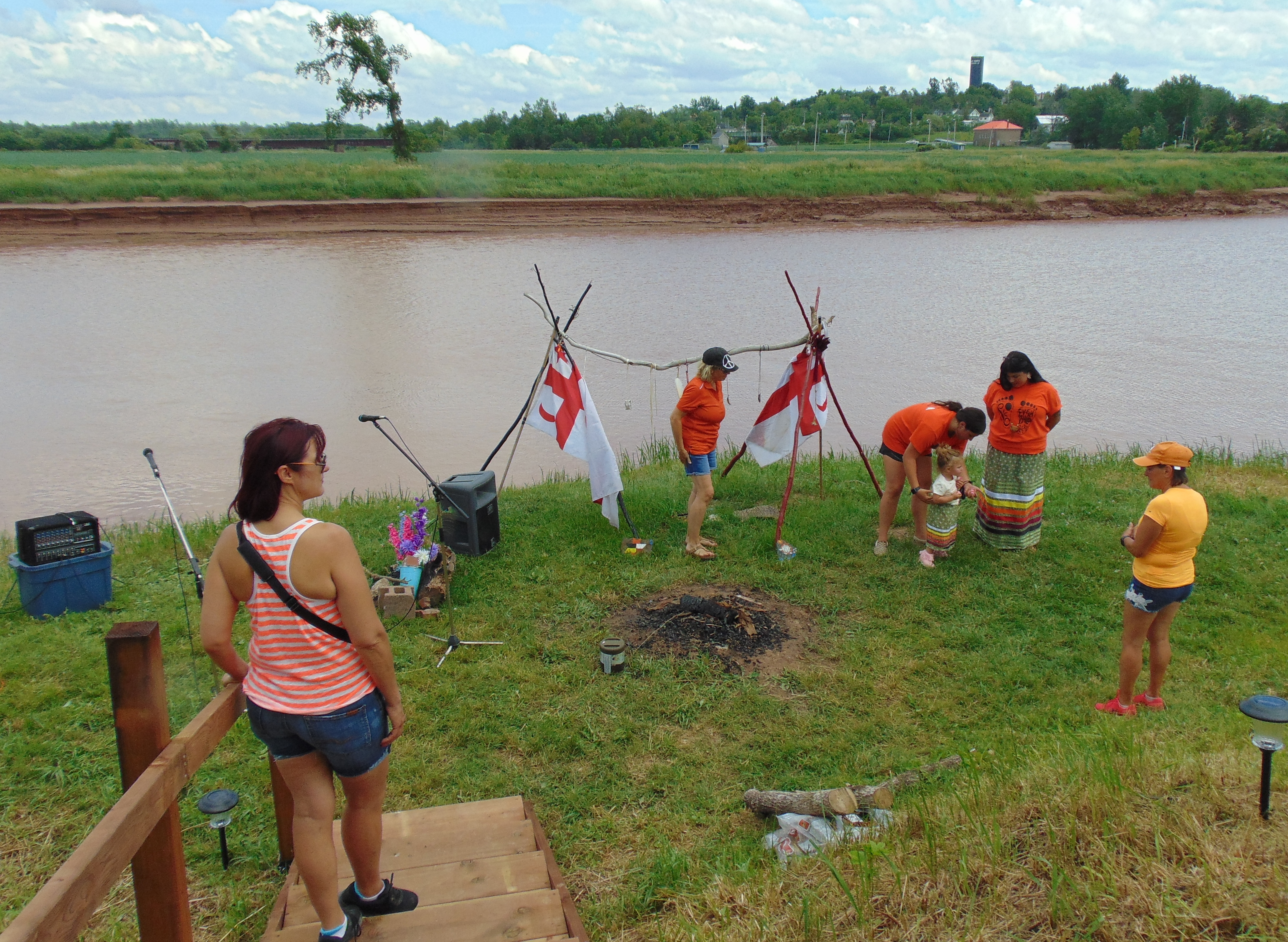
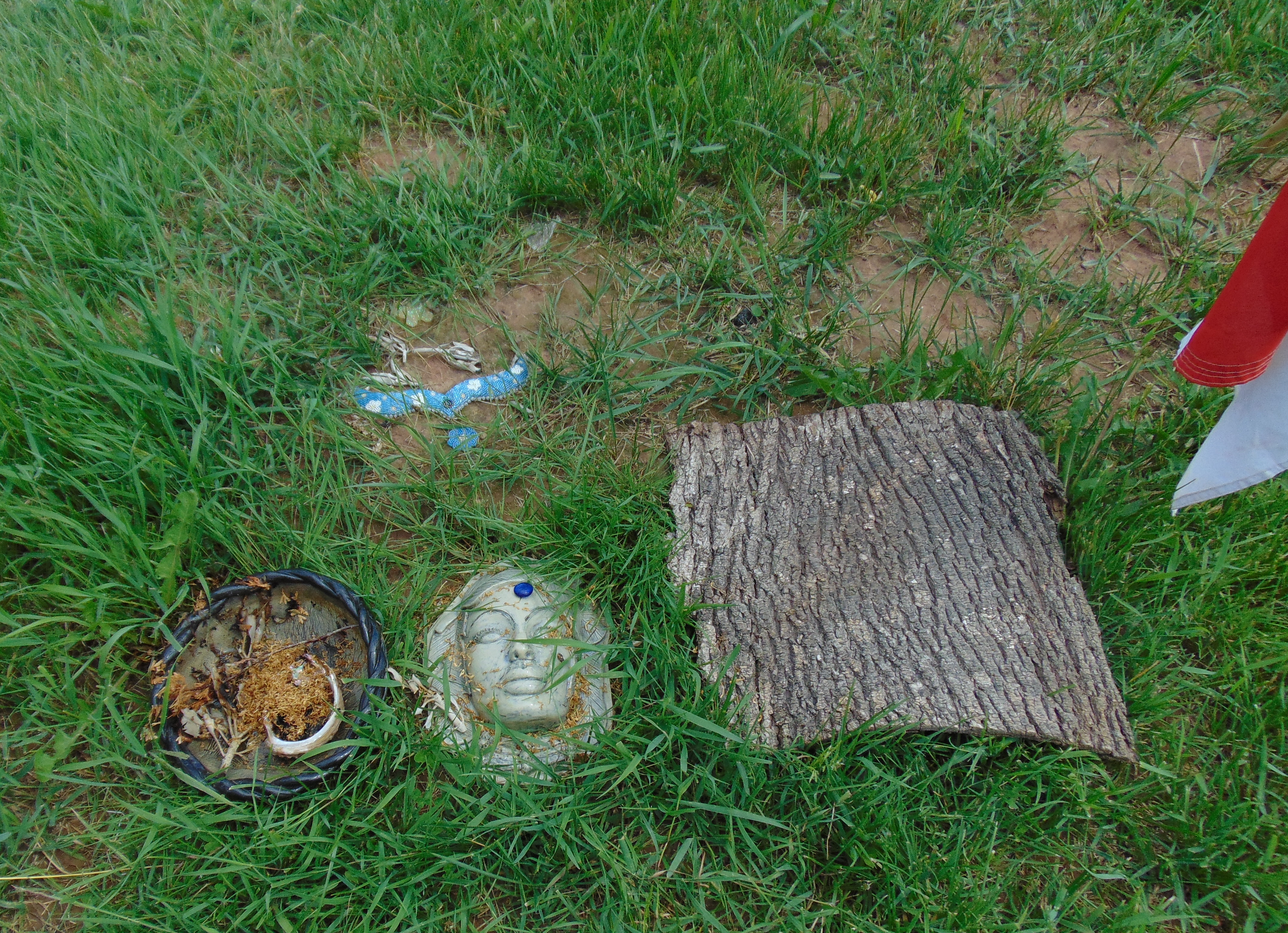
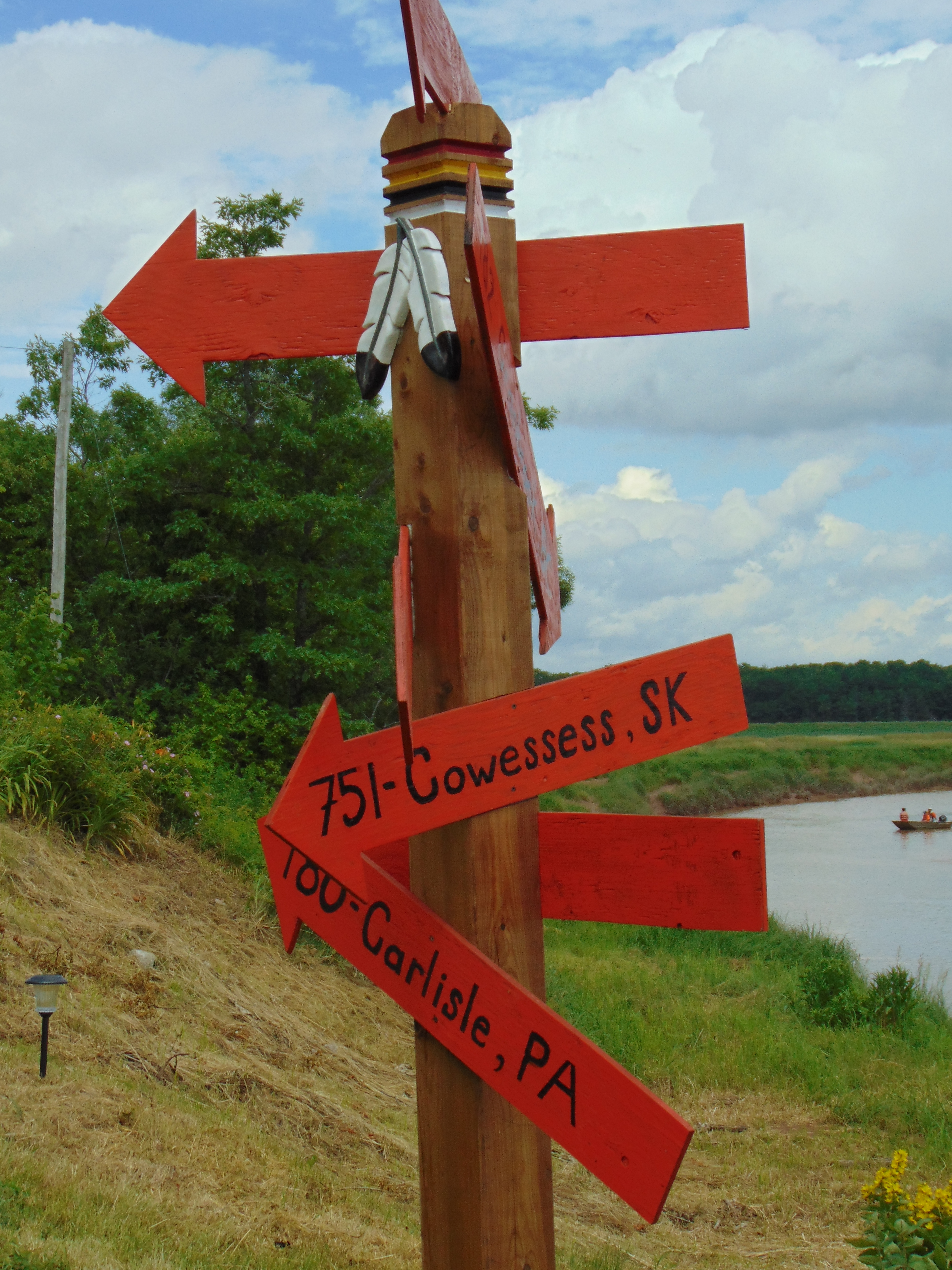
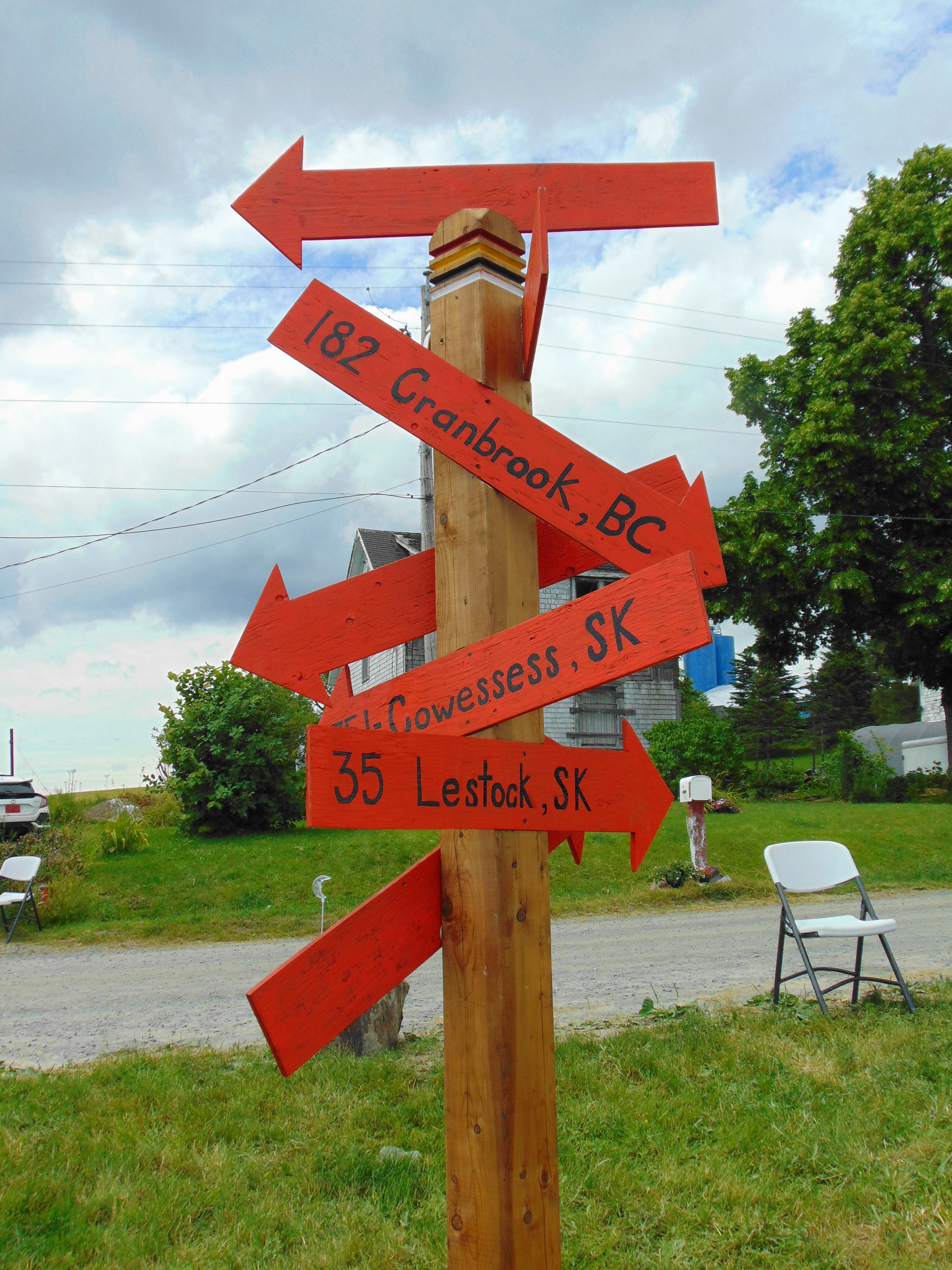
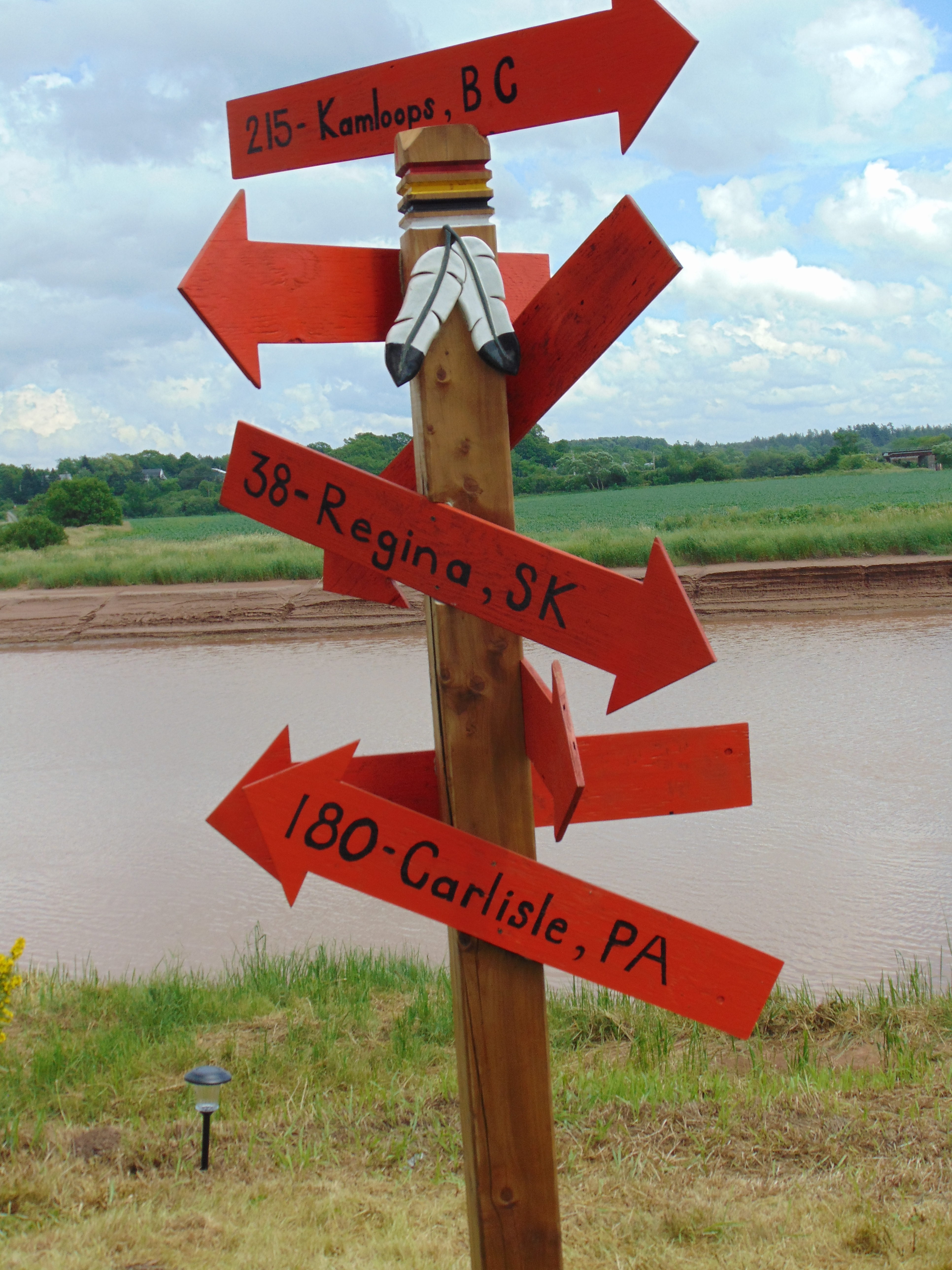
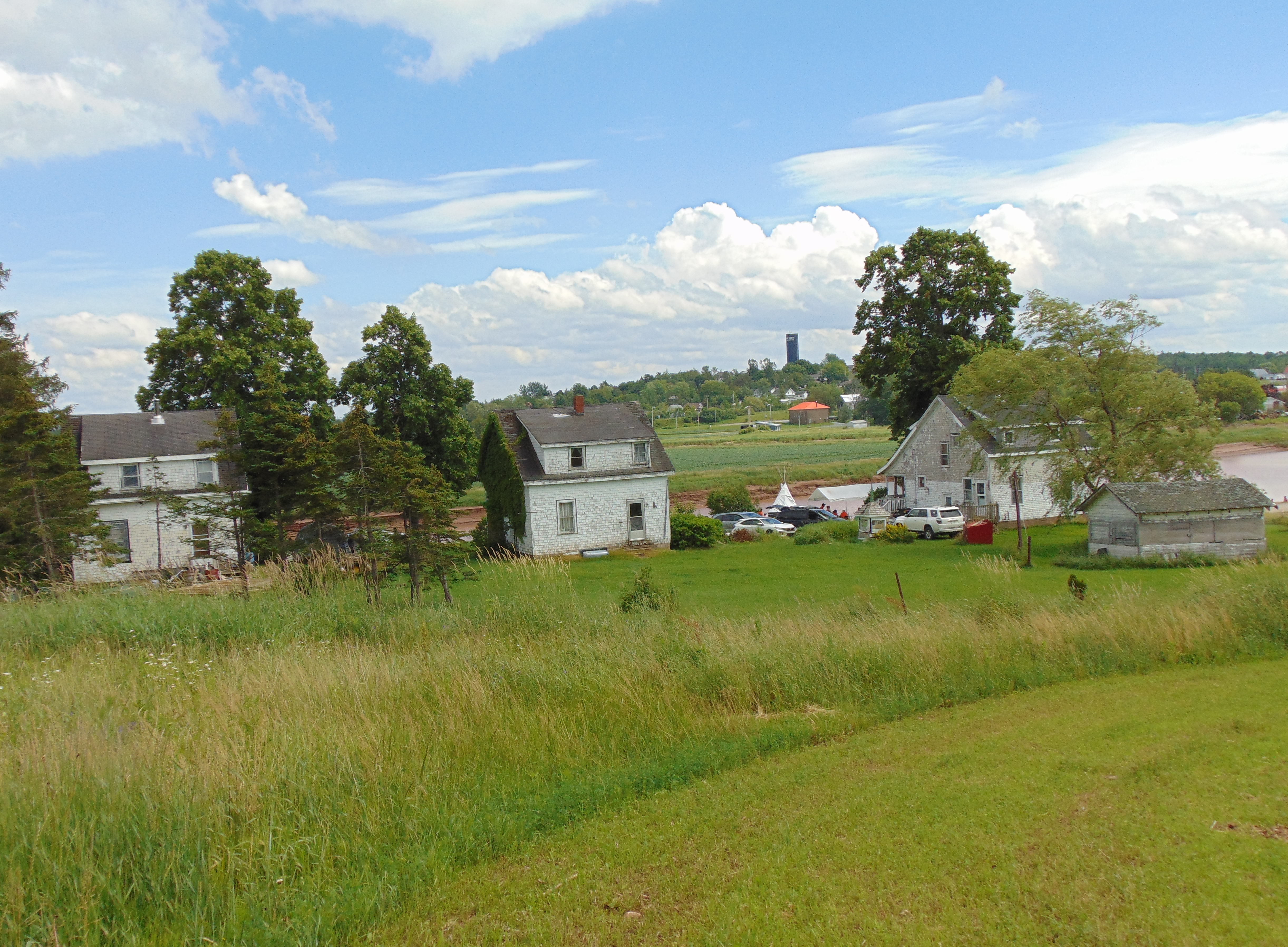
site of former Indian Residential School on the banks of Shubenacadie River (main building no longer exist, what’s left are three residential wooden buildngs of nuns, priest and caretaker). From top left – signs erected in of the old Nuns residence (#16 Indian School Rd); top two right pic – ad hoc prepared spot for burning of incent and sweet grass to honour lost children; next row – a place on the ground where you leave your offering and prayer; next three pictures of a post sign with arrows directing toward different locations of schools with recently discovered unmarked graves – notice the sign to Carlisle in Pasadena in USA, where number of boarding schools and number of Indian children confined to them is many times larger then Canadian numbers, yet the US Government never attempted a national investigation and full report of atrocities committed against US Indigenous People – ; bottom row: the only remaining part of the school building, a steeple from the school with one small room filled with children’s knickknacks; view from the hill were the school was toward the three remaining (unoccupied and in a state of disrepair) buildings; a young Mi’cmaq family on the nearby field (pic. by the author)
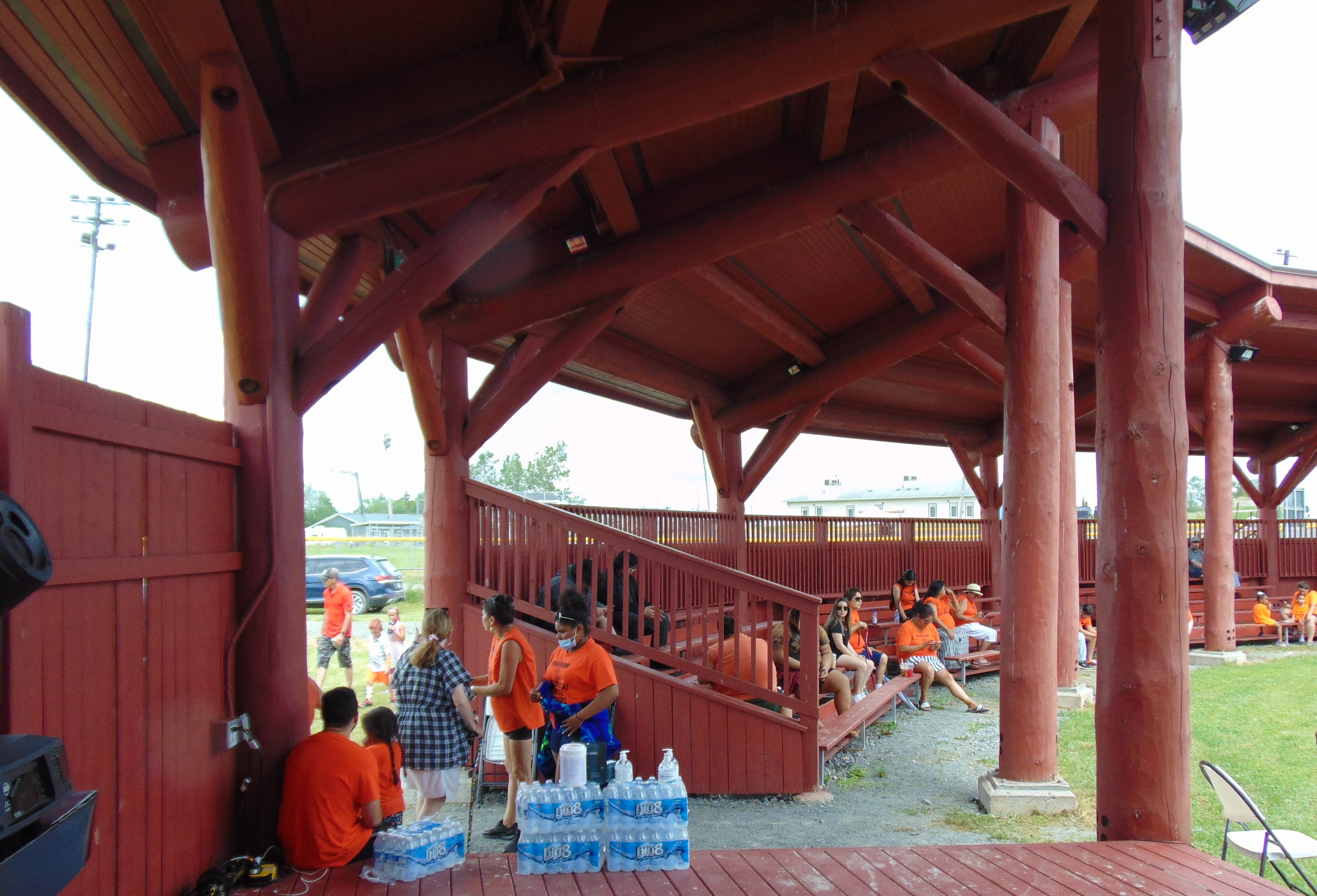
Back in the village, in the sport grounds, local young guys were sitting by a huge band drum. We exchanged few words, they gave me ‘v’ sign (when I was their age, we, “Solidarity’ activists in Warsaw, were giving ourselves the same sign full of hope and determination) and started playing the drum and sing. Amazing concert, so powerful, so touching. I didn’t need to understand the words – they were so plain in emotion. As you listen sometime to some amazing operatic aria sung in a language you don’t know – yet, you understand it so clearly. Because emotions: pain, happiness, sadness, longing, caring, love and friendship need no translations, no explanation. That moment I shared their pain and their hope and their pride. Therefore yes, I can say that I felt proud as Canadian on Canada Day. By sharing and understanding very raw and very clear emotions of my fellow Canadians from Sipekne’katik tribe.
pictures form the diamond sport field and the band drummers and singers; flag in front of the School
I don’t know if I ever had a such good and really proud Canada Day. It was mixed with sadness and hope. Like a true, on epic scale, story of human condition. All humans. From the beginning of times.
A nation that can accept it’s dark past is on a good way to bright future. Feeling sorry for wrongdoings of one’s ancestors does not equal assuming personal guilt. It equals understanding of harm done and naming a crime – a crime. Making sure that nothing like that will happen again.
notes to ponder …
Every social unrest, every protest movement, call for justice, for equality, is a long and arduous way. None are easy and easily achievable. Even when the general political atmosphere is amicable and open to find a solution. If the political will is antagonistic – it could lead to skirmishes, prison terms, police and even army interventions, bloodshed. It could take years, decades to achieve measurable change. In a short time it could lead to worsening, persecution. Even provocations. Just look at the Black Rights movement in the USA. It started in the 60. of last century. And is still not finished. If not for people like dr. Martin Luther King and his non-violent philosophy (based on Mahatma Gandhi movement in India during their struggle for independence) there would have been rivers of blood flowing like a torrent. King’s and Gandhi’s movements take years, are slow and based on moral superiority of argument against the argument of brute force. They seek not retribution but recognisance, equality not superiority. And even that slow and non-violent way does not guarantee success. Or the success would be bitter sweet (India ‘s independence ended up in breaking up the country, mass exodus of Muslim citizens, their persecution and executions from fellow Hindu majority – despite the fact that both groups have similar ethic heritage). There is always a more radical, more impatient or revolutionary segment of disadvantaged group: Black Panthers versus King’s movement in US; Fathah versus Hamas in Palestinian cause; and one of the oldest scourge of social hatred: traditional white Christian antisemitism in Europe and countries where European powers established new colonies that later become new, independent states. Yes, main Churches in last almost hundred years, specially after the horror of Holocaust, denounced the old tradition. Popes decried it. But old official Church policy and doctrine doesn’t change easily. It always lurks in the dark places and dark souls. People were shocked, when few churches were burnt in Canada. I wasn’t. Did not support it but wasn’t surprised. Apart from the State, which is responsible for setting up the system of these horrible schools and is responsible for not checking regularly how were they run by religious authorities – the Catholic Church acted the worst in the way they run it and are the worst in the way they responded and responding to Truth and Reconciliation Commission Report. Not by what the bishops and clergy are saying in public but in what actually are they doing. So I was not shocked that probably some angry young individuals or organized group set the few churches ablaze. It is still possible that it was even done by not Indigenous persons but by provocateurs seeking a strong negative reaction from general public. Roman Catholics still form a majority of religious denomination in Canada. Yet, I didn’t sensed a strong negative reaction to the news. To the contrary – a muted understanding. Of course, if actions like that persist – the feeling might change. I don’t thing we will see more of these burnings, though. A statement was made and was understood. As for the the so called ‘profanation’ of church walls by painting on them hands of young children – I am shocked that the press and news even used that term ‘profanation’. Harming and killing children was profanation. The act of paintings their hands on church doors and walls in my view is totally acceptable and has a very deep, just meaning. I applaud it. Building in Saskatoon a huge new cathedral for quarter million dollars, while arguing in front of court (successfully, sic!) that the Church can’t afford paying 24 millions dollars as reparation to First nations is a profanation. It is worth noting that despite all of it, the Indigenous people are very religious and by large part Catholics themselves. But that’s entirely different subject.










 > > Pogwarki < <