by Bogumil Pacak-Gamalski
Live music. On stage. Not through live stream or any other video, electronic, mechanical transmission. I had an immense need to be there again, missed it so much … .
Tierras Oscuras – Flamenco en Rouge
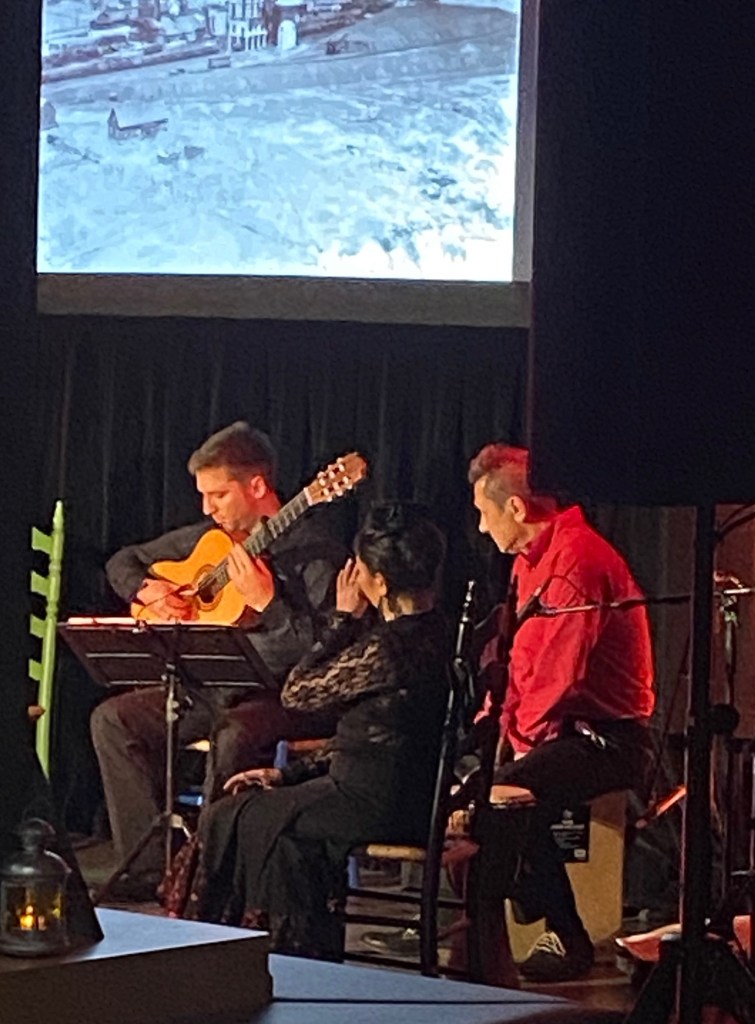
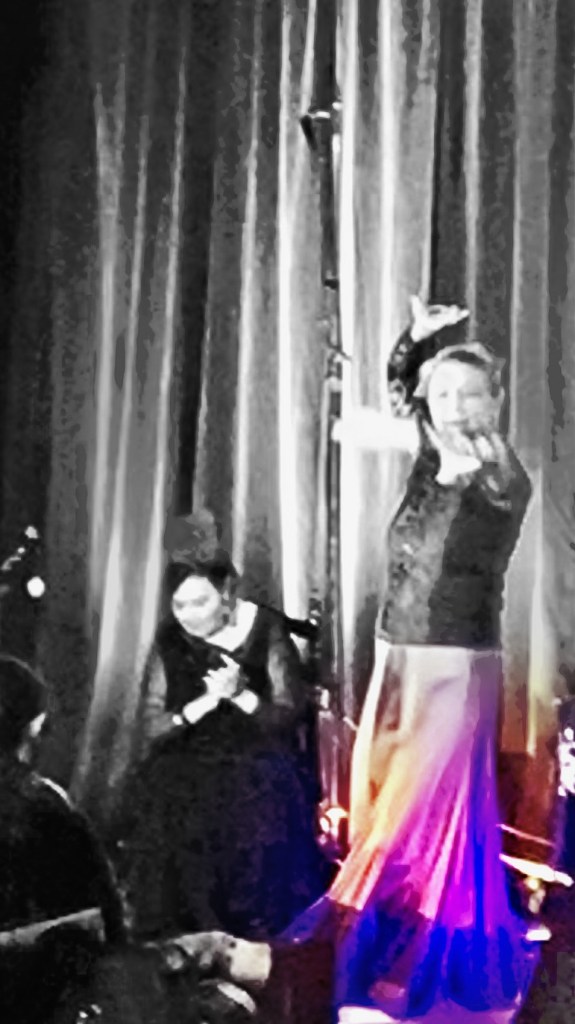
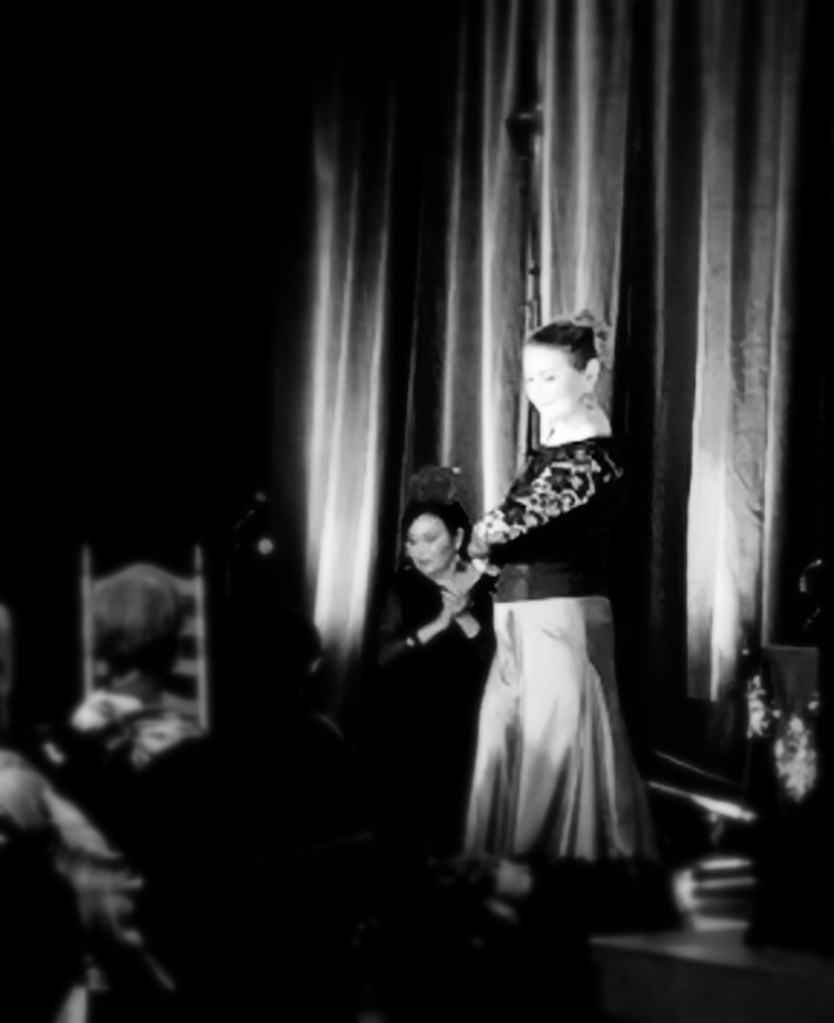
On November 16, 2021, during a timid opening of any live performances, I was able to attend a local (from Halifax and Cape Breton) performance of powerful storytelling mixing the musical fire of Andalusia and hard life of miners in times gone in Cape Breton. The audience at the Pier 21 Canadian Museum of Immigration was small, seats sparsely placed. There were no renowned, world class dancers, singers, players. But what a power, what a spirit of true flamenco! I was riveted, mesmerized and at the same time had a hard time not to join them on stage (after all – flamenco is an art of mature performer, who knows the taste of victory and defeat – not a juvenile, who knows only how to boast, not understanding the meaning of it all). After the performance I had a chance to chat with all of the performers and made sure they were aware how beautiful their storytelling was, how dramatic and well prepared. And, of course, a long chat about the history of flamenco, of Andalusia.


But it did not quenched my thirst for more formal setting and opportunity of listening to great music played by great artists and composed by geniuses.
It came finally with an opening of popular impresario, the Cecilia Concert organization responsible (for many years now) for organizing such events in Greater Halifax.
The concert of world renowned and one of the best Canadian pianist, Charles Richard-Hamelin and young cellist, but already recognizable and with growing musical prestige, Cameron Crozman.
There is some semblance in physique of Richard-Hamelin and the great winner of 1970 Warsaw Chopin International Piano Competition, Garrick Ohlsson. I think that there might be also a slight similarity in their style of piano playing (and such perceived connectivity would not be something to frown about, as Ohlsson is a giant among Chopin’s interpreters). The Warsaw Chopin Competition is indeed something very special among players. It serves as a spring board to fame of almost all of their finalists and definitely makes the winner career a fait accompli. Charles Richard-Hamelin is no exception. In 2015 he received Silver Medal at that Competition and very prestigious Krystian Zimerman (himself a former winner at the Competition and a player of enormous statue) Prize for best performance of Chopin’s sonata. The 2015 Competition was the first time I heard Richard-Hamelin. As I did (in Warsaw) in 1970 Olhsson playing. The next one, in 1975, was the triumph of Zimerman and I remember it as vividly as it would have been yesterday – he just mesmerized the audience. For a teenager (as myself at that time) that was as big as winning the Soccer World Cup. Speaking of Canadian pianist and the Warsaw Competition one can’t forget to mention the last one in 2021 and the amazing victory of another Canadian – Bruce Liu. I have wrote a bit about it on these pages in November 8, 2021.
Pianist are, undoubtedly, the top class in fame and splendour of all other instruments among classical music stars. In a way – the prima donnas of musicians. But that does not take away from other instruments. Especially if there is a good marriage between a good composition and a good player. Cello player is always in demand for transporting notes, that no other instrument can portray as good as that soft sound. Just listen to some recordings of unforgettable cellist, Pablo Casals. No other instrument can convey such an array of emotions as those venerable strings. The violin, its’ diminutive cousin, produces beautiful sound but lacks the depth of the tone coming from very limited resonance (due to the size difference).
Cameron Crozman, at age 26, is definitely the raising star in Canada among cello players. Not only in Canada, though. His talent was noticed and rewarded by many world-class orchestras and directors, especially chamber music ensembles. For me, the concert in Halifax was the first chance to hear him playing. I am very glad, I did.
Bach, Franck and Chopin
The first of compositions was one of only six cello suites composed by J.S Bach – the Suite No. 2 in D minor. Probably written after the death of his first wife, Maria Barbara in 1720. The Bach suites are among ones of most popular music played by cellists. But it wasn’t the case during his lifetime and after his death. They were almost completely forgotten and many musicians were not even aware that he wrote such music. It was not until great cellist, Pablo Casals, re-discovered them as a teenager in a second-hand shop in Barcelona in 1889. It wasn’t until 1936 when he recorded them in London for first time. Since then, they become one of the most popular solo pieces for cellists around the world. There is even dispute among scholars whether Bach originally wrote them not for cello da gamba but for smaller, over the shoulder, viola da spalla. Suite No. 5 was originally composed for lute.
As entire baroque music, they are strictly structured in prelude and a string of Renaissance/baroque dances. In this case: allemande, courante, sarabande, minuet and gigue.
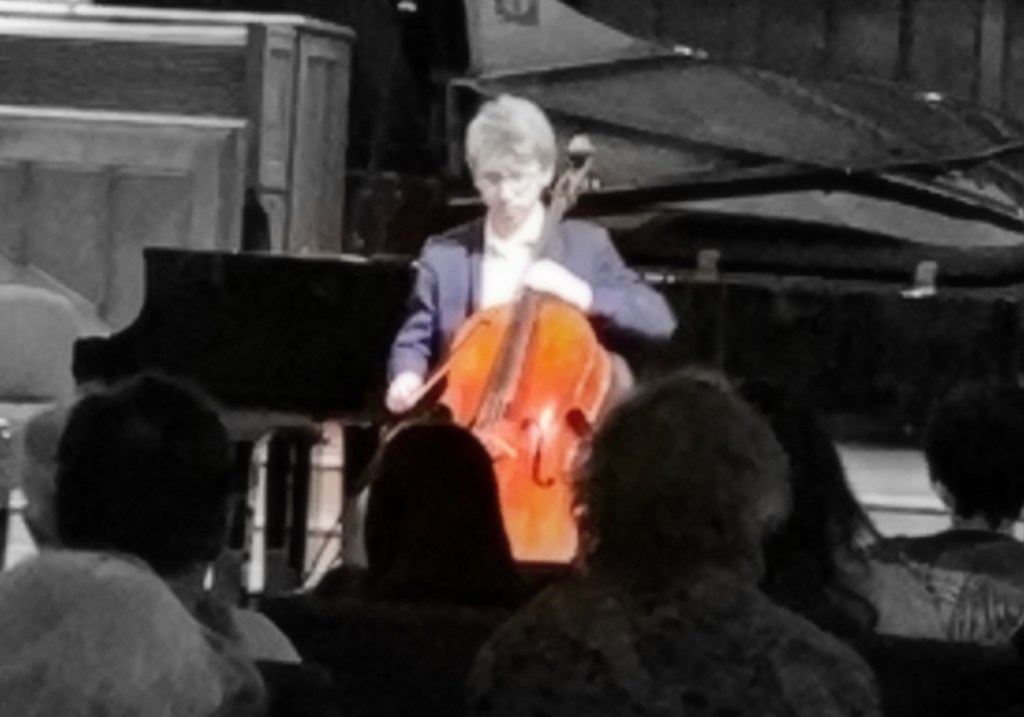
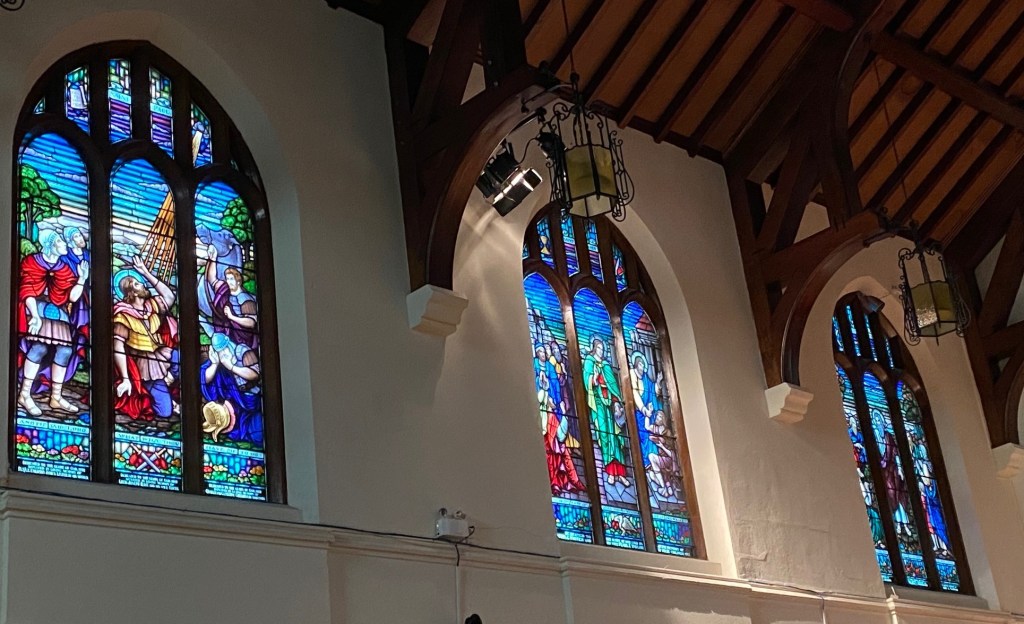
The slightly austere, neo gothic church of St. Andrew, with beautiful stained glasses on walls of the main nave and stained glass rosette behind the altar/stage provided perfect setting for this music. And the acoustic was wonderful as the young cellist with red hair sat to his instrument. The music flowed so nicely. His left hand showed the elegance of every note, tone and interval of this composition. I was specially taken by the fourth part, the Sarabande and the vision of evening stroll of Bach through the cobblestones of German city, remembering places he visited with his wife, reminiscing their time together. Formal, very courtly Minuet ensues as in saying that life goes on and times brings closure. Final part is in a form of Gigue and is a typical epilogue for typical baroque suite. Can’t understand that rigid formality from my perspective of XX century man, as Gigue is the last melody I would have used for this type of composition. Yet, it must be said that the Gigue in Suite No. 2 is far from lively dance of Italian gentry. Yes, it has the rhythm and melody – but used in such a way that it becomes a music of accepting life as it goes on. I thought that Crozman played that part superbly, more in a reflective than virtuosic style.
Belgian born but Parisian by choice composer Cesar Frank (1822-1890) is definitely not a canon of modern concert halls and performances. I know I have heard his music before – but if asked, I would have to strain myself immensely to remember that music. Although envisioned by his father as piano player (a solid career in Romantic times Europe) – he ended up playing organs in one of the big churches in Paris and later become a professor of organ music in Paris Conservatory in 1872. And finally had time to prove to the world that he is a talented composer. One of his monumental work (and monumental it is in its form, character and, let’s say – weight?) that I have never heard before (of that I am sure because it is really hard to forget such curiosity) is the Prelude, Aria et Final, Opus 23.
I am very glad that Charles Richard-Hamelin gave a very good explanation of this composition. It helped a lot. It consists of Allegro moderato a maestoso (Prelude); Lento (Aria) and Allegro molto ed agitato (Final). From these musical terms – allow me to offer less serious tone – two describe it the best: maestoso and agitato. The least one is moderato. It also shows that if you cook for many years Indian cuisine, when suddenly you make Beef Wellington, you add to it Indian spices. The result could be interesting, maybe even tasty – but it is not Beef Wellington. Specially in Paris. Franck played for many ears on huge organs at St. Clotilde Basilica. That colossal instrument could not only swallow many concert pianos of Paris, it also had so many leg and hand operated pedals, stops and keyboards (yes, the large ones have more than one keyboard) that the listener could really think that heavens opened up and filled the air with its’ own music. But Franck decided to do the same on the piano.

Thanks’ heaven the Yamaha grand piano C7X comes with the third, middle pedal called sostenuto. It is a version of the sustain (left) pedal but operates only on chosen string/notes. It gives the ability to produce a sound that resembles organ pipes. But one must not overuse it. In this case, Richard-Hamelin had to. To say it plainly – that composition is a colossus that requires not only amazing technique from the player, it also requires a big physical stamina. I am so grateful that he possess both. I have no idea what poetic purpose that composition serves – but it was amazing to listen to it. Enjoyed it very much just for the sheer sense of showmanship and absolute control of the instrument by the player. Now, thanks to Charles-Hamelin, I will always remember the music of Franck. Probably not choose to go to concert hall to listen to it again, but definitely remember it.
After a short intermission we were served the main course: beautiful sonata for cello and piano by lyrical master of Romanticism, Frederic Chopin. The opus 65 sonata in G minor was composed in 1846 and dedicated to Chopin’s close friend of many years, cellist Auguste-Joseph Franchomme.


Both of them collaborated and co-composed earlier a Grand Duo Concertant for piano and cello (in E major, numbered as B. 70) that received very favorable opinion of Schumann. The sonata is fully composed by Chopin and it’s cello part was not composed in any part by Franchomme, although it is more than likely that both Chopin sought advice and opinion of his dear friend. That might be the source of somewhat strange and not necessarily wise comment of our young cellist, Cameron Crozman, in an introduction, that the cello has stronger and weaker parts, the stronger being possibly composed by Franchomme. There is no musical literature that would support such strange assumption.
The sonata has special historical meaning in Chopin’s life: it would be the last composition of Chopin and the premiere in Salle Pleyel on Feb. 16, 1848 was his last public concert in Paris. Unfortunately, the Paris premiere omitted the first part (Allegro moderato). That was corrected by Franchomme shortly after his friend death, as the cellist returned to Salle Pleyel on April 6, 1853 and played (with Thomas Tellefsen, also Chopin’s friend and pupil, as pianist) the entire sonata. Louise Dublin, a world renowned cellist, wrote in her excellent blog on Aguste-Joseph Franchomme, that the second premiere was received enthusiastically and quotes respected and feared (by musicians) Paris critic of that time: “The main piece was a sonata by Chopin for cello and piano…the piece has something intimate and mysterious, everything in it is plaintive and melancholic… Franchomme, on his eloquent cello, found admirable expression, giving the beautiful melodies of Chopin a penetrating sweetness, full of religious poetry.” .
Of course, no recording of this prapremiere and premiere concerts exists, therefore it is impossible to compare that play with the performance of Cameron Crozman and Charles Richard-Hamelin in Halifax.
The only reflection could be my own satisfaction, pleasure or lack of it. And satisfied I was, very much indeed. It is worth mentioning that the duo of these two musician was a premiere in its’ own right. They have never played together before. But the partnership sounded very good and pleasant. Despite Crozman earlier spoken remarks, I have not noticed the ‘weaker’ and ‘better’ parts of his viola da gamba. All was played softly, poetically. In my short notes, that I tend to take at concerts, I wrote: what a beautiful conversation of two instruments! In scherzo and largo it was like a dance of two souls and such a nice, like echo, repetition of viola’s themes by piano. It all closes with very elegant marriage of the two scales: G minor and corresponding major in allegro. Sort of mini danse du triomphe.

 > > Pogwarki < <