I had a pleasure meeting Jason Gorber, a prominent Toroto-based movie critic, at the Green Border screening on Tuesday. Today, I have read his comment:
“A masterpiece from an underappreciated master of both big and small screen, Agnieszka Holland’s searing look at the refugee crisis on the border between Belarus and her native Poland is as profound as it is provocative.
The performances are astounding, the narrative horrifying, resulting in a story that’s deeply unsettling and emotionally raw.”
(below a Polish language version)
We wtorek, na projekcji Zielonej Granicy, miałem przyjemność poznać znanego krytyka filmowego z Toronto, Jasona Gorbera. Dziś przeczytałem jego komentarz:
“Arcydzieło niedocenianej mistrzyni dużego i małego ekranu Agnieszki Holland, jej wnikliwe spojrzenie na kryzys uchodźczy na granicy Białorusi z jej rodzinną Polską, jest tyleż głębokie, co prowokacyjne.
Gra aktorska wprawia w oslupienie, a narracja poraża, co skutkuje historią głęboko niepokojącą i emocjonalnie surową.
Of lovers and friends. Of the most unfortunate ones, who were friends and became lovers. Oscar Wilde once described that dilemma clearly. And trust me – he knew a thing or two about it. Yes, of course, I’m taking off that famous line from the Ballad of Reading Gaol. Yes, yes – that line: ‘Yet each man kills the thing he loves’, which is followed, by the end of that stanza, with: ‘The coward does it with a kiss, The brave man with a sword!’[i]. The year was 1898, he was just recently released from prison in England. Went soul, heart, and financially broken to France, to try to re-established himself. Of course, too late. Just the Ballad remained, a shadow of a once proud, elegant poet, a member of society. With the misfortune of falling in love with some rich boy. Who, with tears or glee (who knows) sold him to the gallows trying to save his own skin (and father’s money, naturally).
Thus, boys and girls alike, for heaven’s sake – do not fall in love with your friends. Rather, become friends with your lovers.
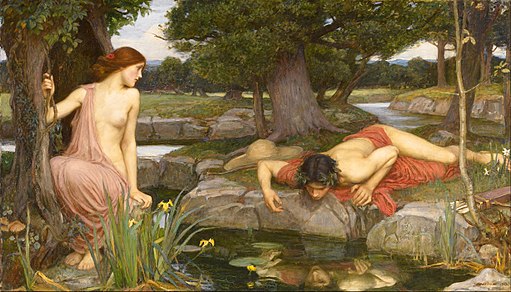
Narcissus and Echo by John. W. Waterhouse
In the Prologue to the “Alchemist”[ii], Paulo Coelho writes beautifully the story of Narcissus’s death. Of course, Coelho would not have been such an amazing writer, if he had merely repeated the thousands years old story told already hundreds of times by others. No, he added a sweet surprise at the end. So humanely grotesque (as all Greek gods stories were): when the goddesses of the forest came to the Lake, where gorgeous Narcissus drowned, they asked the Lake: Why do you weep? and expectedly the Lake replied I weep for Narcissus. The goddesses were understanding, they themselves chased the boy through the forest, trying to see his famous beauty, the beloved of Apollo himself. And they admitted to the Lake, with a hint of jealousy, that although they pursued the boy, the Lake alone could see his beauty the best. At that moment the old story takes a different, shocking turn when the Lake replies: But… was Narcissus beautiful? A conversation ensues, as expected. The goddesses explained that obviously since Narcissus so often admired his own reflection in the Lake waters, the Lake must have noticed his beauty. The Lake paused, thought, and after a while replied: I weep for Narcissus, but I never noticed that Narcissus was beautiful. I weep because, each time he knelt beside my banks, I could see, in the depths of his eyes, my own beauty reflected[ii]. What an amazing twist to the old tale! I love writers and poets, who tell us: oh, come on! don’t be timid – allow yourself to dream, to tell the secret and true thoughts, and desires. Mirror, mirror – tell me if I am … . LOL
Thus, be a friend of your lover. Avoid the terrible pitfalls of friends, who become lovers. There are really very few brave souls, who survived the utter honesty of true friendship in forming eroto-romantic union. Poor Andre Gide felt forced to explain his “Immoralist”[iii] by the timid (and so obviously false, LOL) words in the Preface to his little, yet so sweet book. Thank God at the very end he was able to utter the most powerful explanation in the history of art: To say the truth, in art, there are no subjects, which only sufficient explanation is the art itself[iii]. O! Little critics with overblown moralistic egos – be quiet already. You are not a philosopher but a scribe jealous of a writer.
The dilemma of choosing if a friend could be a lover was a paralyzing complexity for Jean Genet in his amazingly honest story of “Prisoner of Love”[iv]. More so even, because it is intertwined with the love and passion for the Palestinian cause. Did he consummate his love for the Palestinian boy or was it just a Platonic passion? The powerful novel/memoirs, written in France (his last work, shortly before his death), were treated as not very important literary achievements. Au contraire, mes amis – it is one of his best. Powerful, very deep psychologically, insightful. This book and a little (in size comparison) booklet “Out of Place”[v] by great intellectual Edward Said taught me much more than any historian about Palestine and its tragic People ever could. But it is a different subject.
How can you write about friends and lovers without mentioning three amazing people: Polish writer/intellectual and modus vivendi of Parisian art circles – Konstanty Jeleński; his wife, famous Spanish-Italian surrealist painter Leonor Fini[vi] and Italian aristocrat, painter and diplomat Stanislao Lepri. All of them lived happily and joyfully in sexual and friendship union until their deaths. How did they survive all the pitfalls of such a union? I personally believed that that Jelenski and Lepri were the primary lovers most of all, and Fini was their artistic, crazy, and much senior femme fatale.
In 1995 Jelenski invited me to visit him in Paris. But, when I finally arrived – his sprawling and beautiful apartment on rue de la Vrilliere was a circus in full swing. Leonor was just preparing her special exposition in the Senate of the French Republic. Paintings were everywhere: on sofas, on beds, on chairs. And people were constantly coming and going. Friends from all over Europe. Poor Kot felt so bad, I had a chuckle. He quickly rented me a room in a small hotel nearby, on rue Croix des Pettits Champs. I was happy, telling you the truth. My gosh, I was young then, and Paris and her evenings and nights were so … appealing? Appealing, for sure, LOL. This way he had more time to concentrate on the crisis at hand (Leonor’s Exhibition) and I could concentrate on things (shall we say?) not only intellectual. Hmmm. After all – late evening walks along the Seine could be very … exciting? Enough said.
But back to friends and lovers – Leonor, Konstanty (Kot or Kocik in Polish – sort of French un minou, which definitely would be a much more proper name for Jelenski, who was truly a very sweet guy), and Stanislao. How did they survive for so long? Especially that at the beginning there was one more constant female shadow – a true femme fatale of their ménage à trois: Konstanty’s formidable mother. Madame Rena Jelenska de domo Skarzynska, from very old Polish nobility. Rena couldn’t stand Leonor. She didn’t mind at all (was actually fond of him) Stanislao Lepri. But that old crazy Spanish whore?! Poor Kot. Even more tragic because he actually truly loved both women: his mother and Leonor. But on the subject of staying together till death – I think that Kot, Leonor, and Stanislao could because actually, they all slept with each other (separately at the beginning, I assume) before they became friends. They were the happy part of the equation: lovers, who become friends.
Last but not least here is a more modern case of brilliant Irish novelist Colm Toibin in his multi-layered novel “The Story of the Night”[vii].
The novel is truly a masterpiece of combining so many complicated subjects and themes without losing for a moment the personal story of its protagonist – Richard Garay. Richard leads many lives: English, Argentinian, artist, businessman, even (for a brief moment) politician. But most of all – gay in a very macho dominant male world of South America. Another constant is the presence of his dear friends: Susan and Donald.
The writer (himself an openly gay writer) does not shy from describing many of Richard’s lovers and one-night encounters. But it is the brief encounter of sexual attraction revealed by Richard toward his straight friend Donald that warrants mentioning. Encounter – which is important to note – planned by Donald. He ‘just’ wanted to check if, as he suspected, Richard was homosexual … . No sexual encounter ever happened. But, yes – it couldn’t be denied that Richard was aroused and willing. Even the fact that the act itself was never consummated – it changed their friendship dramatically. In some way, it wounded it mortally.
Therefore, my dear boys and girls, please take it as the wisdom of almost god (meaning me, naturally). If you must experience the forbidden truth and fornicate, please choose a stranger rather than a friend. With a stranger, you have nothing to lose (other than your presumed virginity). If you are lucky the experience will bring you a lot of joy and satisfaction, at worst – it will be a disappointment (first times often are, nothing to be ashamed of). With a friend, the stakes are much higher and sometimes lasting lifelong bitterness or guilt.
And do read a good book before. Not really educational. A good literary book. Like one of these mentioned above.
[i] Selected Poems of Oscar Wilde including the Ballad of Reading Gaol, by Oscar Wilde; CreateSpace Publishing Platform, 2017; p. 56
[ii] „The Alchemist”, Paulo Coelho; pub. Harper One, 1993; p. 197
[iii] “Immoralista”, Andre Gide, by Wyd. Zielona Sowa, Cracow, 2006 (Polish translation by I. Rogozinska)
[iv] „Zakochany Jeniec”, Jean Genet; wyd. W.A.B, Warszawa, 2012; p. 486 (Polish translation by J. Giszczak)
[v] „Out of Place”, Edward Said; Random House, 1999
These words often came to mind, seriously and in a playful mode, during my last Saturday visit to venerable Music Conservatory in Halifax.
First of all – finally something different than baroque music that seem to be in a bloodstream of Maritime musicians (or Cecilia Concerts – most popular, almost singularly exclusive organizer of musical performances). Who doesn’t love Vivaldi and Bach? We all do! No, not so much. Not all and not all the time, anyway. Specially in my case. The same canons and styles repeated thousand times with slightly different arrangement and these funny rococo dresses, white powder and astonishing wigs – could make you bit nauseating … .
Halifax venerable Conservatory of Music
No this time, no. That was the music at its most glorious times. The times of Beethoven and Brahms. An ornamental intermezzo with less known (for a good reason) English composer Frank Bridge separated the German giants of great music. Immortal music.
Whenever I am in Berlin and walk through the Tiergarten (Berlin’s Hyde Park), I like to go and sit on bench near the monuments of German’s giants of music: Haydn, Mozart, Beethoven. Only a short distance further is monument of Wagner. Never saw any of Brahms in Berlin. His famous and wonderful monument is in Vienna and modern, symbolic style sculpture in his native Hamburg – that one I have seen many times as it is located just a stone throw away from my favored walking park in Hamburg – Planten un Blumen. But enough of cities, monuments and parks I like to walk in. Back to music. In Halifax, not in Germany.
Let’s start with absolutely wonderful and musically very mature Gryphon Trio of Annalee Patipatanakoon (violin), Roman Borys (cello), Jamie Parker (piano). With addition of equally talented and very energetic Ryan Davis (viola) it made brilliant quartet.
It is such an immense pleasure to listen to musicians, who effortlessly play with such unison and harmony! Each could be and indeed is a soloist in her/his right. But as member of an musical ensemble they become one. All the strings combined sounded like they were played by one soul with many hands. No unnecessary showmanship but unity in sound, tempo and tone.
Pianist Jamie Parker and his style of playing was very familiar to me. By no accident, of course. Parker studied in Vancouver under the tutelage of no one other than Lee Kum Sing. I recalled many long chats with Lee Kum Sing about his method of preparing young pianists to stage career. And the many traps and very insidious mannerism that lurks for musicians hungry of applause. In early middle and conservatory level musical schools, teachers tend to tech how to play an instrument. But are very oblivious to the teachings of public expressions and stage unforgivable atmosphere. It is only in later years, if they are lucky enough, that they might found someone, who would teach them that. Someone, who has a stage/soloist experience. Typical music teacher in a conservatory or even an university is good theorist, good musician – but failed or couldn’t even begin a soloist career. It takes stamina, courage, perseverance and clear vision to become one.
In Halifax Conservatory the hall was full. I was pleasantly surprise that a large section of the audience was below the typical here custom of silvery hair covering age of substantial life experience. Not that there is nothing wrong with it. Especially if that composure still hides an eternal youth! No, it simply saddens me often that so many young people avoid such experience of good music. Chances are that if you don’t get that shot early in your life – you will never discover the beauty of so called classical music (I despise the term myself – music has only two genres: good and bad, period). And it is, for most part, a good music. Music that expands your horizons, your emotionality.
Anyhow – my luck this evening resulted in choosing my seat – between two empty seats. Alas, empty not for long. Just before the music started playing – two very young men sat on both sides of me, LOL. Probably below the age of twenty.
Music. How to begin? A good suggestion would be: play most likely the absolute god of all music. The incomparable Ludwig van Beethoven. And why not a composition, when The Great One was founding his totally unique, own musical style. The Piano Trio No.5 in D major, opus 70.
That composition (also known simply as a “Ghost’ – often combined with Macbethian origin) is superb on many levels. And is has been many years since I heard it full in a concert hall.
They began. The strings play the Allegro vivace wonderfully. Every note is essential, not replaceable. The cello seems to lead dancing guests, the tempo and direction of the troupe. You can see the dancing group of guests in some forest, some meadow. Very diminutive, quite sound of piano is somewhere, far away, only in moments yet it seems so constant. The sound of air around.
Then comes the Largo. Totally different in every aspect from I and 2 part. Ghostly indeed. My mind for split second jumps to memory of Ravel’s ‘Gaspar the la Nuit’. Naturally, my comparison would have been absolutely alien to Beethoven as he died many years before Ravel composed ‘Gaspar’. But the atmosphere is there. Specially in the piano parts. The piano plays here the leading part, the strings follow.
Presto returns to the happy yet, majestically vibrant procession like in Allegro, albeit in different melody and more robust tempo.
After that trio I was sold fully. Uncanny-funny side note: large city surroundings offer sometime surprises even for much more solid stages. It did during this concert in a perfect moment – during Largo. Distant noise of flying nearby helicopter. I noticed some listeners were petrified. I found it very amusing and … interesting. In Largo, that distant monotonous sound was like a military drums of funeral march. It fit the music very well.
After a short intermezzo the stage is taken by our pianist and the youngest but not lacking in talent, viola soloist, Ryan Davis. They both played a two short pieces of British composer from the turn of XIX and XX century, Frank Bridge. Bridge was , at his time and place, very well-known player of viola. These two compositions (Pensiero and Allegro Appossionato) are a good testament of his knowledge of the instrument. I see it mostly as an ornamental music, what we would call today: popular music. And I am sure it was popular in London’s salons of that time. It certainly allowed Davies to shine as an exceptionally musical viola player. In Allegro he was brilliant.
In music, the term pensiero would be closer to largo in character and meaning. It represents a heavy, uneasy thought, longing. The most brilliant representation of it would be, of course, no other than the music of Verdi in his unforgettable choir in Nabucco – Va , pensiero, sull’ali dorate . Frank Bridge composition definetly is not sull’ali dorate (… on golden wings). But it is pleasant to listen to.
Last but by any means not least, comes Johannes Brahms complicated Piano Quartet No. 1 in G minor. Brahms was so absorbed in his own prestige, in his almost neurasthenic fear of not living up to the greatest of greats in music, that he worked on his pieces over and over for years at a time. Changing note here, tempo there or even scale. The end was mostly brilliant composition but, at times (I think) it lacks soul. Music must be a story. A story of epic proportions, human story of struggle: in grief and in joy, despair and happiness. It is very original construction of musical subjects unfinished, un-ended. As sentence ending many times without a period. Sentence beautiful, nonetheless.
I think that it must pose a challenge for musicians to play it, to find the right pace and continuity. I thought that the Gryphon Trio with Ryan Davies played it splendidly.
You truly start to like it, to have sort of understanding of the music, in the middle of part two (Intermezzo – Allegro) and 3rd part (Andante con moto) brings some continuity and lyrical story to follow, to imagine.
Finally comes Rondo alla Zingarese. One of the most intense finale of the entire period in music. Let me use more precise, elegant terminology: it is insane, it is crazy. And it is wonderful. How does it end? It doesn’t! When you are sure that a powerful finale stopped playing and you are just about to jump to your feet with applause – the musicians play another finale, almost identical but not exactly. And again, and again … .
Even if you are not the greatest fun of the serious music – please go once to a concert of Johannes Brahms Piano Quartet N.1 in G-major, op. 25. And if you absolutely can’t stand this type of music – stay away for the first 3 parts – but, for Heaven’s sake, come back to listen to Rondo alla Zingarese. It will change your opinion of so called ‘classical music’! I guarantee it. You might even scream at the end: encore une fois, s’il vous plaît !
The Gryphon Trio with Ryan Davis concert in Halifax, April 29, 2023
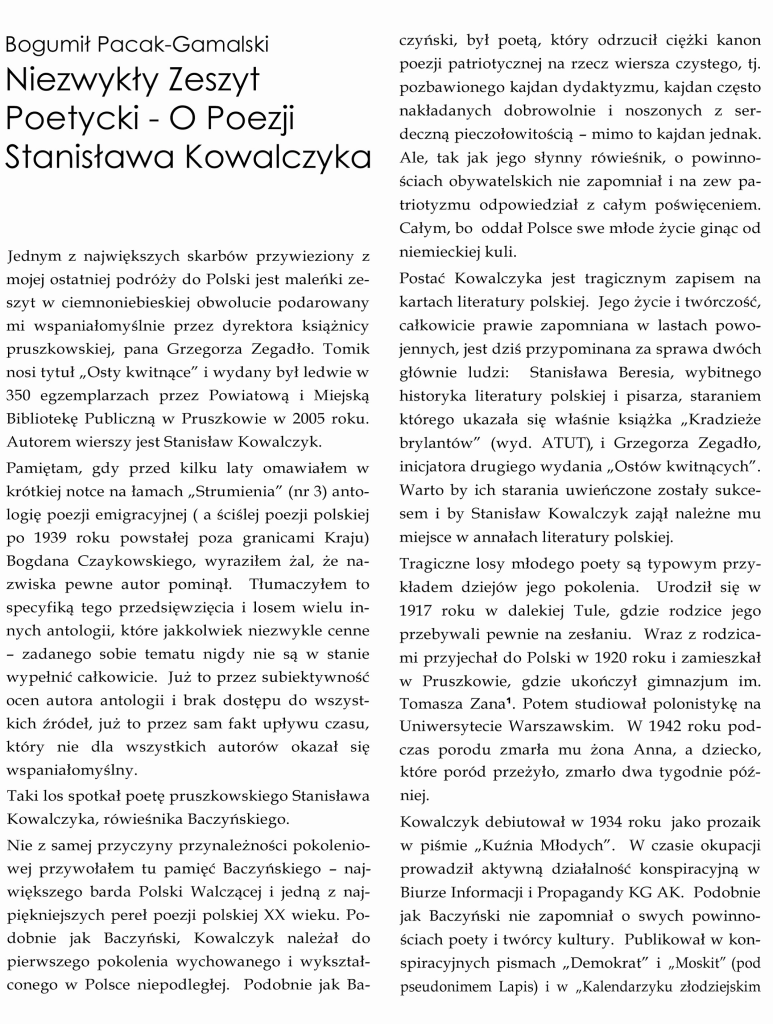
Każda wojna, każda rewolucja, każde powstanie jest brzemienne w mity, legendy chwały i bohaterstwa. Cmentarze ze szczerniałymi od starości krzyżami, z białymi brzozowymi krzyżami, małe kapliczki i tabliczki po lasach, na rogach ulic, tynkach kamienic. I wielkie pominiki z marmuru, granitu, stali. I nazwiska-symbole dowódców, żołnierzy. Ma też bardów. Zwłaszcza tych, którzy polegli w walce, jak Baczyński lub Gajcy. Każda wojna, walka na śmierć i życie ma też setki nieznanych lub bardzo mało znanych młodych poetów, twórców sztuki, którzy tej wojny, tej walki nie przetrwali, a przedwczesna śmierć uniemożliwiła im rozwój talentu, publikacje. Twórcze zaistnienie w historii swojego kraju. Więc, gdy rocznica już siedemdziesiata ósma Powstania Warszawszkeigo nadeszła – nic nie pisałem na jakichkolwiek forach i w jakimkolwiek formacie. Dajmy im już usnąć, bo ten ciągle powracający szmer i walka słów o sens tej hekatomby już zbyteczny. Historia. Teraz zwłaszcza, gdy nikt prawie z tch, co o tym opinie wydają w tamtym czasie nie istniał. Nawet w zamysle rodziców. Nawet Powstania Styczniowego i jego przywódców tak nie szarpano, jak tych z tego 1944.
Teraz, blisko dziesięć dni od tej daty wybuchu Powstania, od jego obchodów chcę jednak przypomnieć, poniekąd symbolicznie tych, o których w tych obchodach nie wspominano. Tych nie znanych lub prawie nieznanych, bardzo młodych żołnierzach-poetach Armii Krajowej. Skłoniła mnie do tego wymiana zdań z dyrektorem Książnicy Pruszkowkiej, który w tych obchodach w Pruszkowie pod Warszawą brał udział. Bo przypomniało mi to postać Stanisława Kowalczyka, wyjątkowo uzdolnionego poety, o którym bez wątpienia, gdyby tą wojne i ten rok 1944 przeżył, byśmy usłyszeli dużo więcej, a literatura polska miałaby nowy, piękny rozdział. 23 sierpnia 1944 ta nadzieja, ta szansa na nowe publikacje, nowe wiersze – zgasła.
Poniżej publikuję zdjęcie ze stron rocznika “Strumień” (wydanie z 2007) z moim esejem na temat jego twórczości.
Sam, w latach gdy w Pruszkowie mieszkałem (sypiałem raczej, bo mieszkałem de facto w Warszawie, gdzie żył cały mój świat) lubiłem tą drogę do Pęcic. I od tegoż, 2007 roku, na zawsze już mi się z Kowalczykiem będzie ona kojarzyć. Więc: non omnis moriar – dla mnie, Polaka całe życie z literaturą związanego, Stanisław Kowalczyk na zawsze tej literatury ważnym fragmentem pozostał.
When I was a young admirer of classical music, I sought well established, famous musicians. To be at a concert of someone known to be a master, virtuoso of an instrument. To listen to music played the way the music ought to be played. Orchestral or solo, chamber type or powerful experience of full orchestra in a symphony directed by an admired director! Ah, for young, hungry for excellence youth – that was the pinnacle. I am glad I did it. Solid base, fundament is very helpful. For as long as you are not too timid (I wasn’t) to allow yourself to freely like or dislike certain composition, specific type of music. Art is not a religion. Art is freedom foremost. Of course, it didn’t hurt that I lived in a big city, that was very well known for its affinity for music and no shortage of good concert halls, musicians – Warsaw. Even in communist times (or perhaps in spite of it), culture flourished in Poland. And (that must be acknowledged) it was affordable, fully supported by the government. The results were not always pleasant for the authorities but wonderful for the public. Art schools of all sorts and levels were also heavily subsidized by the communists. And art was our escape from the dreary and boring life around. There was no shortage of exceptionally talented people in every field of culture. The most difficult task was for writers, the easiest for musicians. Visual arts were somewhere in between. With written or spoken word your intentions (freedom, truth) were clearly visible, audible. So writers and poets had to manipulate, use so called ‘writing in between the lines’ technique. But musicians could escape they eye and furry of the censor much easier. Particularly (as often was the case) if the censor was not very perceptive or of more feeble then intellectual mind. As it is often the case with censors.
That solid base allowed me to be comfortable to change my tastes in music and musicians. With time I preferred live concerts with younger, knew players, voices, sounds. The masters, after all, are always within arm’s reach on the vinyl, CD’s, online.
It is a marvelous journey to observe a young player blossoming, becoming mature musician. How his playing changes and goes through a metamorphosis. It is thanks to these players that an old, sometime very old, sheet of music that you have heard so many times – becomes alive again, young, vibrant. As it should. The composer might be gone long time ago but the music must be kept alive, current. Otherwise a concert is like a visit in a museum – interesting, enriching but often too long, tiring at the end. Canons are important for technical reasons, not for spirited interpretation. The overwhelming desire must be always kept on the essence of art and being an artist: what story I have to offer to the listener? What is my commentary on beauty or philosophy, ethics and esthetics to a contemporary listener? Of course, the trick is to remain respectful and true to the notes written often very long ago. Being always aware that circumstances and habits change with epochs. But human soul, dreams, emotions remain the same for millennia. Therefore you must try to find in the composition and your study of the composer biography, that inner message, the emotion that should be immortal. The story of human condition. And you, the pianist, violinist, trumpeter, flautist, guitarist must tell the story in your own voice. We, the audience must believe that you are telling us your own story. Just like Hamlet on the theater stage should no longer belong only to Shakespeare – you must become that Hamlet and it must be a contemporary voice. It must be your desire, your despair or triumph that will move us.
Just playing good, properly adhering to the tempo, intervals, tonality, melody will not do much for art. It might be proper, might be even elegant. But it lacks creativity. Just because you go every Sunday to a church to attend mass, know the hymns, the prayers – does not make you pious. In this way art and religion are very similar indeed: they require fervor and passion in the ultimate consumption.
Have been lucky to observe, over the years, many carriers and artists. Known some of them personally, with some have even become friends (that is rewarding but also difficult for someone who writes about their art). Some exceptional, others less but still truthful to their search. Still, others have given up the stage for the safety of teaching careers in musical schools, in academia. Stage is not for everybody. It could be a terrifying place. But it also offers the freedom to fly, to soar. Just make sure that your wings are strong. Rewards could be amazing.
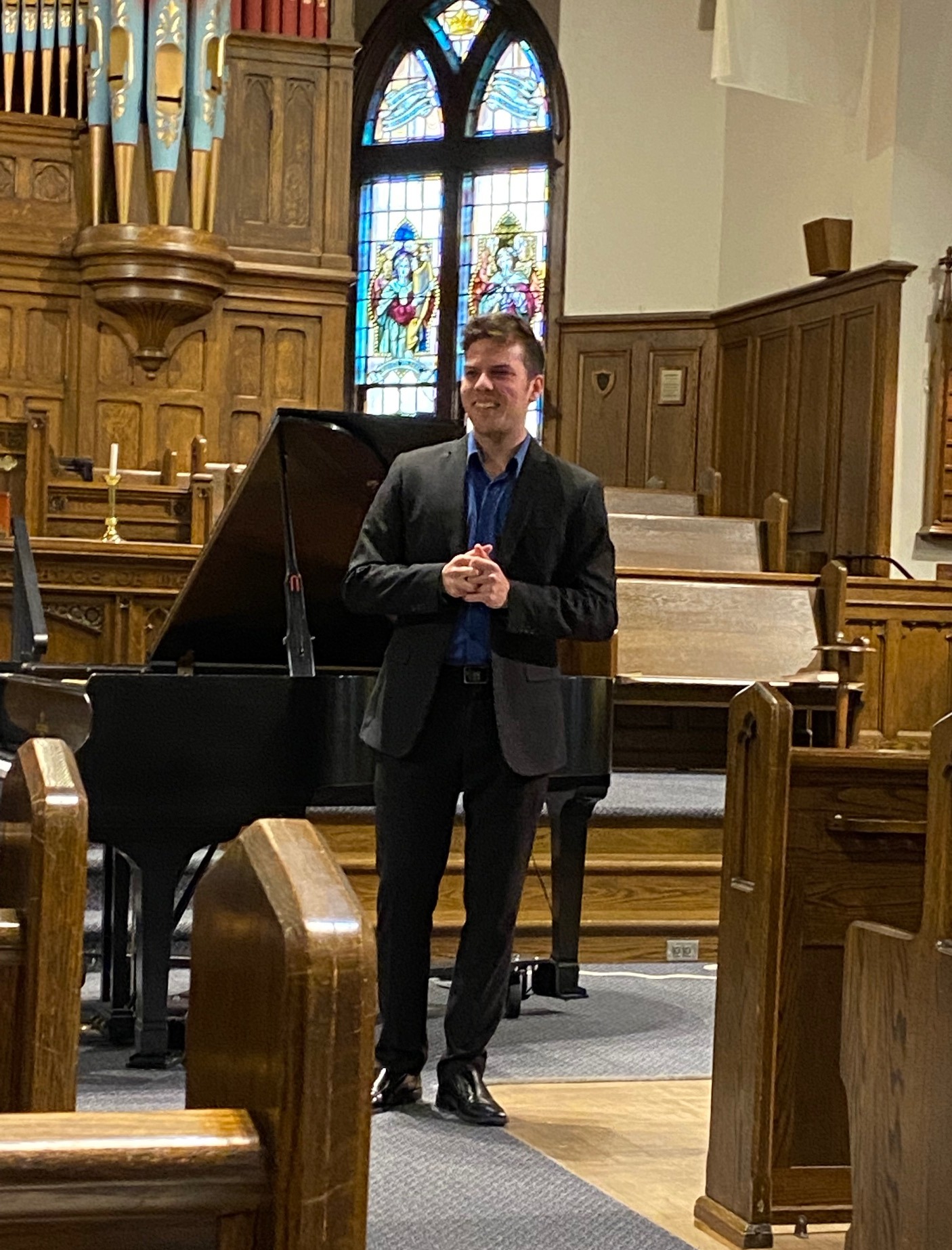
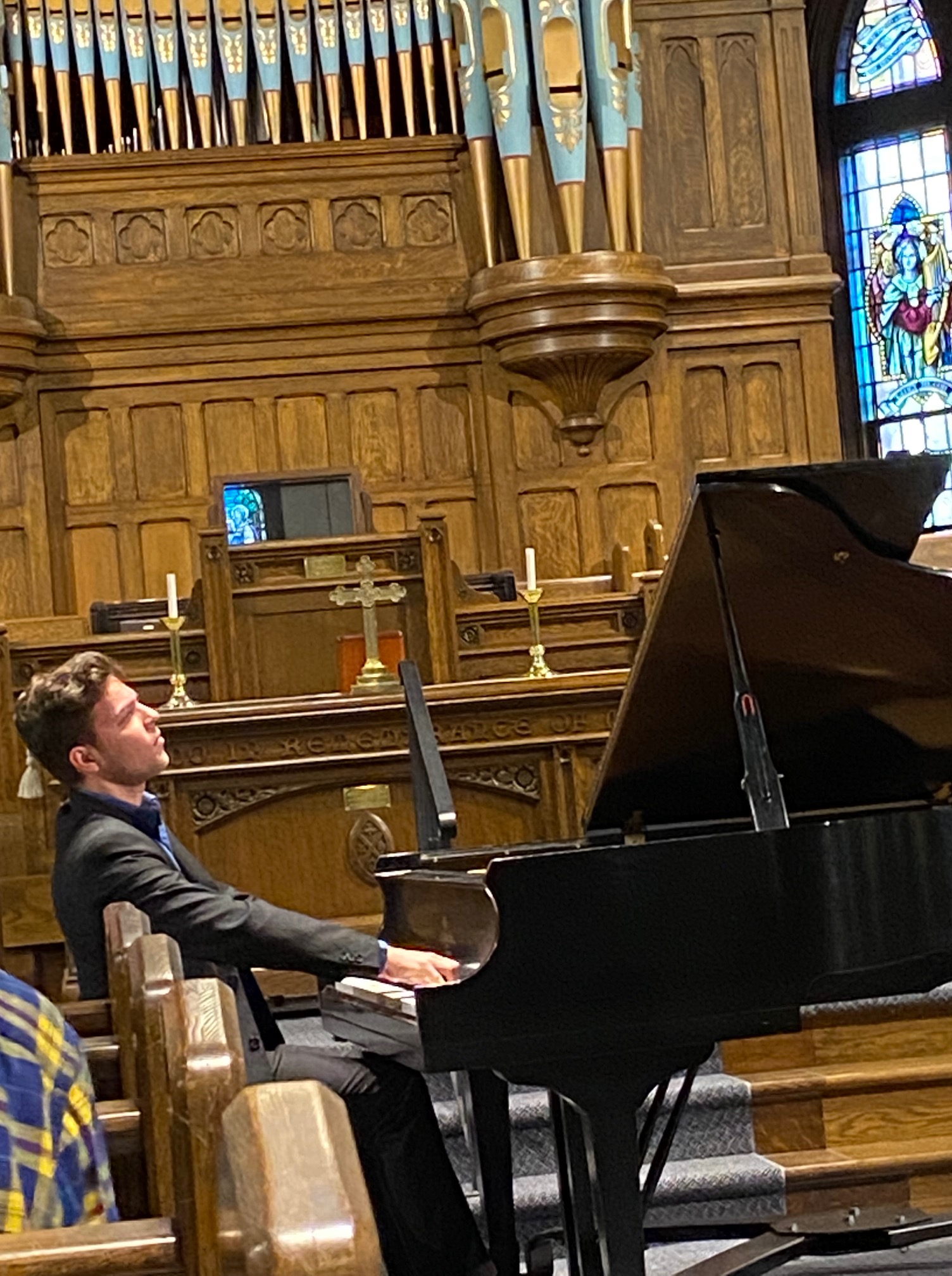
On April 30th, at the evening, I drove over hundred kilometres from Halifax to Lunenburg to listen to a young pianist, Jean-Luc Therrien. He was just about to end (except for one more concert in Antigonish) his tour of Debut Atlantic, well established artistic venue supported by Canada Council for the Arts. Afterwards, I planned to write a review of the concert. But life, at times, has other plans for us and I had to postpone writing it. To a point that typical review becomes obsolete. Your own memory and emotions are no longer as vivid as a day or two later. Yet, I wanted to mention it and the pianist, for it was a very good musical experience. Worth mentioning.
Alas, on that day I drove to Lunenburg in search of that young passion in music, for new musical meeting with new pianist. Almost like on a first date: with a bit of tension and trepidation but excited and looking forward to it.
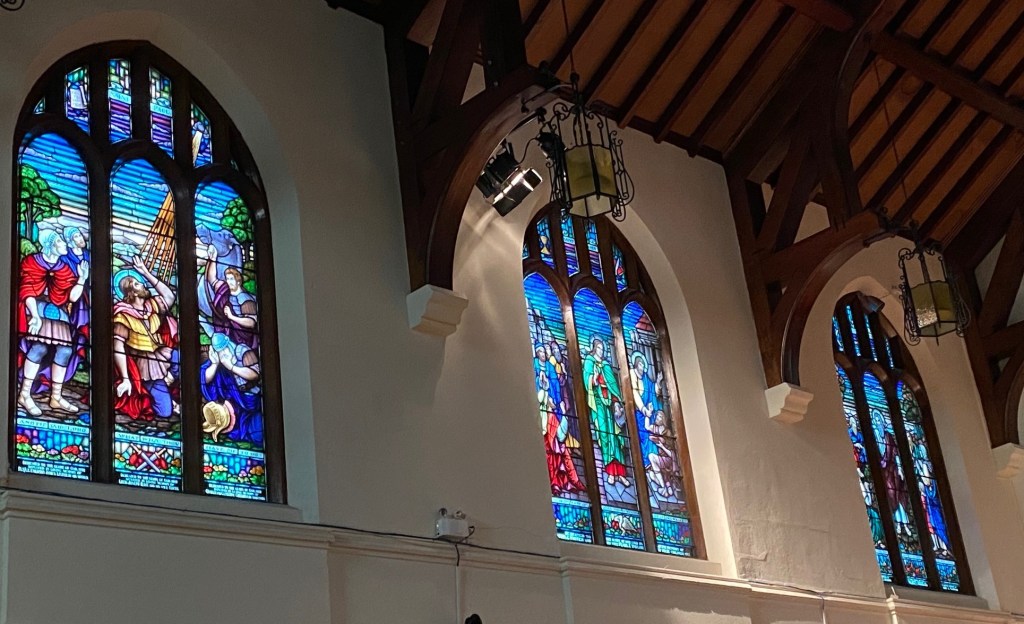
The setting was similar to my previous concert outing in Halifax, in St. Andrew United Church, with acclaimed pianist Richard-Hamelin and a young cellist Cameron Crozman. Again, Therrien concert was in an old, Central United Church, with beautiful stain glasses, settled in district filled with gorgeous old churches.
It was such a shame that the venue wasn’t either advertised properly to local community (considering the fact that Lunenburg and its neighbour, Mahon Bay, are small towns with densely populated smaller downtowns) or the locals are interested only in tourist dollars, not in supporting and admiring culture. The small audience that gathered inside was definitely not disappointed. And the young, smiling and very pleasant pianist did not show lack of enthusiasm for music or respect for listeners.
Perhaps the opening piece, Prelude et dance op.24 by Jacques Hétu was the most difficult to play. Not only for the fact that this Canadian (from Quebec) contemporary composer is probably not very popularly known. It is composed with extensive pedal work and requires a strong, modern piano. I’m afraid that the old, venerable grand piano of Heitzman (best Canadian piano maker in XX century) could not fully reproduce the sound that Hétu intended. Yet, definitely it was a very interesting composition and I listened to it with great interest.
The next part paid off any misgivings in multifold. Third part of great Suite bergamasque – one of the most played and loved Clair de Lune. Heard it so many times played by the greatest pianists. But chased away any thoughts of any comparisons, which would have been unfair. Let the young man play it the way he hears it in his soul. And he did. Maybe a bit timid at the very first phrases but the rest was beautiful. So poetic. With that interpretation he sold me. The rest of the concert I just enjoyed myself.
Jean-Luc Therrien is definitely an emotional pianist. His music comes not only through his fingertips but also from his heart and soul. It is not yet pristine and fully disciplined technically, but it flourishes by full emotional immersion of the pianist. You can always improve your technical skills if talent, luck and perseverance gives a long stage career. But that God’s given touch of emotionality cannot be learnt, it must reside in your soul from the very beginning.
That was seen also in somewhat diabolic prelude of Debussy: the F-sharp minor “What the west wind saw” – fast paced and full of arpeggios composition not for timid pianists.
Therrien finished this part by playing one of the giants of romanticism (Debussy personal hero) Franz Liszt Mefisto Waltz No.1. I must admit that I never liked that composition and do not see it as a musical achievement of this great Romantic pianist and composer. Therefore can’t offer my personal opinion on Jean-Luc Therrien play of it. It sounded proper – that’s all I can say.
Second part of the concert was difficult and challenging for any pianist. Introduction of modern Canadian composer from Alberta, David McIntyre in “A wild innocence“. It was very short and technically interesting. But in a whole – lacking artistic musical purpose. I suppose, since the entire tour is organized traditionally by Canadian Council of Arts – the repertoire must include domestic contemporary composers.
True challenge and musical artistic genius was brought by the final piece, Sergei Prokofiev Sonata no.2 op. 4. It is very transformative music composed in times of great upheavals and changes in artistic expression. It is also affected by personal sorrow of Prokofiev due to sudden and tragic death of his close personal friend. Yet, as a true artist, the composer packed the score with much deeper, philosophical discord of great changes on the horizon of humankind. It has parts that seem almost too easy, almost not worthy the title ‘classical music’. Somewhat reminds me of music by Gershwin on the other side of Atlantic at the same time. But it is all misleading. The ‘easiness’ of these parts underscores the other parts of the compositions. One compliments the other. It speaks in new language, different of languages of Debussy, of Liszt, Chopin and Mozart. I thought that Therrien played it splendidly. Emotionally and with great musicality. I could clearly see young Prokofiev overwhelmed with sadness of losing very close friend and escaping to memories and happy times, melodies and finding somehow peace in the finale were he brings all the rhythms, all the movements of previous parts into conclusion. With somewhat stoic understanding, even moments of lightness: nothing is forever, nothing is given in perpetuity. Neither in private life nor in world habits, styles, epochs.
It was very nice that the small group of listeners wanted to show the pianist how much they enjoyed his concert and did everything not to stop clapping and almost forced him for a bis. He definitely gave us all big joy and pleasure. The pianist obliged and play a small piece of Robert Schuman’s music. Elegant but not empty. In times of Schuman, in between musical epochs, compositions had to be formed elegantly, while a good composer still could enrich them with true meaning, thought or emotion. Many things could be said about Schuman as a composer – but never that his compositions were not a good music.
Therrien recorded two CD that are worth mentioning: Piano Preludes by American-Spanish label Orpheus Classical ( Claude Debussy Book 1 of Preludes and Franz Liszt Symphonic Poem no.3, S.97 (nota bene: Liszt was the father of this musical form). Therrien arranged it himself for solo piano.
Second of these recording is a CD produced by French label Klarthe. It contains an array of fantaisies by many composers played by duo of Jean-Samuel Bez (violin) and Jean-Luc Therrien (piano, of course).
Of these two recordings, I particularly liked the ‘Piano Preludes’ produced by Orpheus Classical.
Live music. On stage. Not through live stream or any other video, electronic, mechanical transmission. I had an immense need to be there again, missed it so much … .
Tierras Oscuras – Flamenco en Rouge
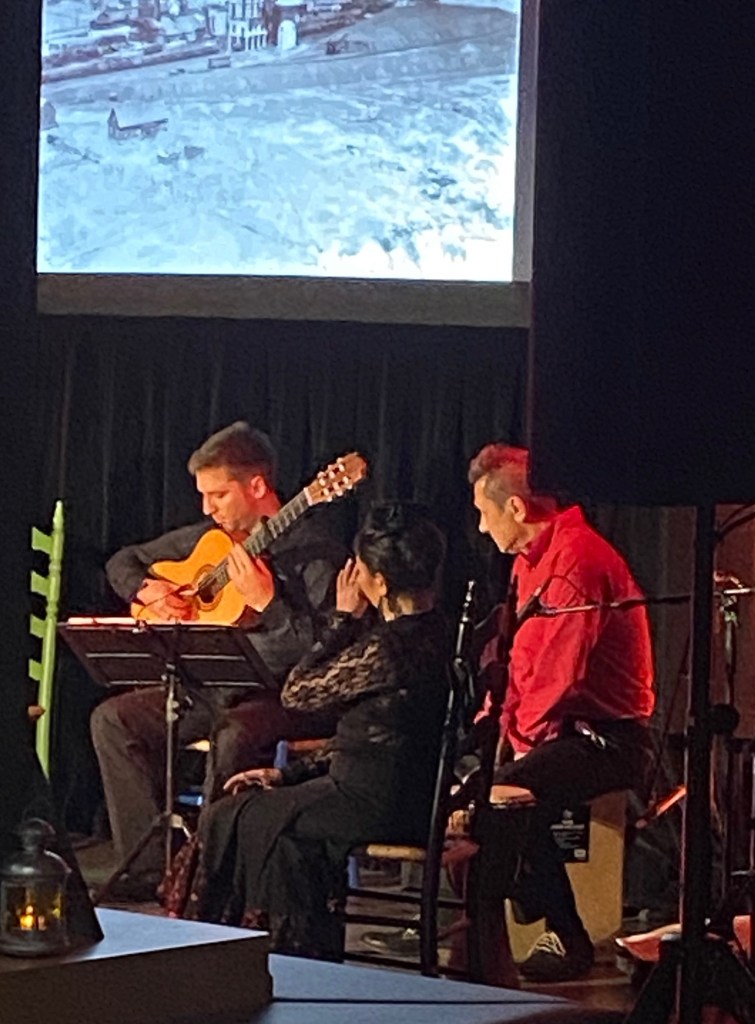
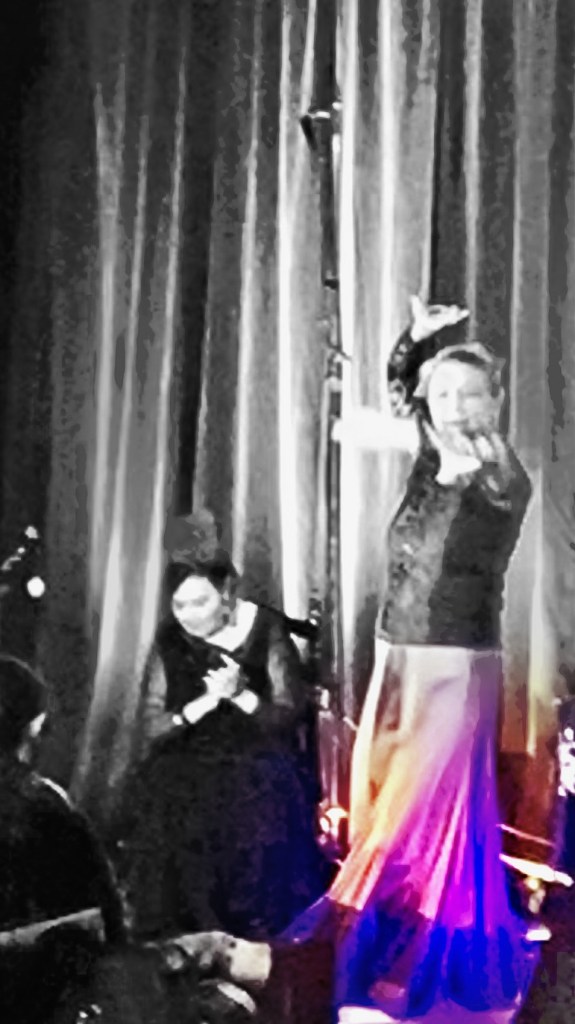
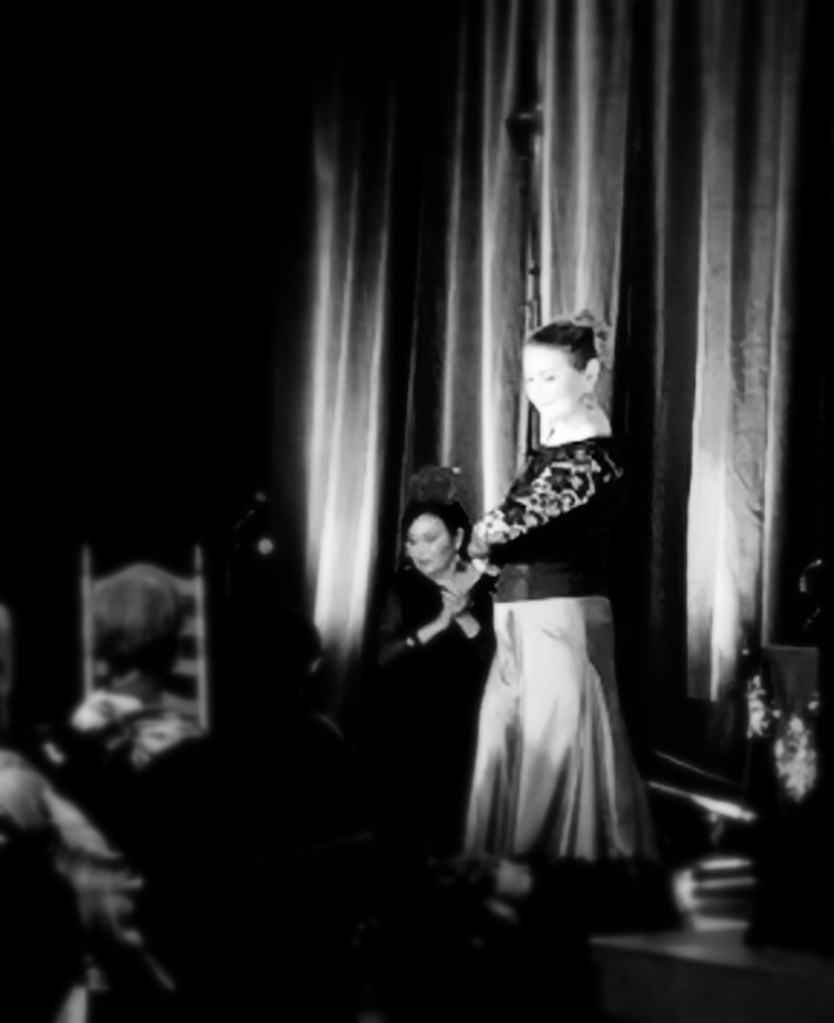
On November 16, 2021, during a timid opening of any live performances, I was able to attend a local (from Halifax and Cape Breton) performance of powerful storytelling mixing the musical fire of Andalusia and hard life of miners in times gone in Cape Breton. The audience at the Pier 21 Canadian Museum of Immigration was small, seats sparsely placed. There were no renowned, world class dancers, singers, players. But what a power, what a spirit of true flamenco! I was riveted, mesmerized and at the same time had a hard time not to join them on stage (after all – flamenco is an art of mature performer, who knows the taste of victory and defeat – not a juvenile, who knows only how to boast, not understanding the meaning of it all). After the performance I had a chance to chat with all of the performers and made sure they were aware how beautiful their storytelling was, how dramatic and well prepared. And, of course, a long chat about the history of flamenco, of Andalusia.
But it did not quenched my thirst for more formal setting and opportunity of listening to great music played by great artists and composed by geniuses.
It came finally with an opening of popular impresario, the Cecilia Concert organization responsible (for many years now) for organizing such events in Greater Halifax.
The concert of world renowned and one of the best Canadian pianist, Charles Richard-Hamelin and young cellist, but already recognizable and with growing musical prestige, Cameron Crozman.
There is some semblance in physique of Richard-Hamelin and the great winner of 1970 Warsaw Chopin International Piano Competition, Garrick Ohlsson. I think that there might be also a slight similarity in their style of piano playing (and such perceived connectivity would not be something to frown about, as Ohlsson is a giant among Chopin’s interpreters). The Warsaw Chopin Competition is indeed something very special among players. It serves as a spring board to fame of almost all of their finalists and definitely makes the winner career a fait accompli. Charles Richard-Hamelin is no exception. In 2015 he received Silver Medal at that Competition and very prestigious Krystian Zimerman (himself a former winner at the Competition and a player of enormous statue) Prize for best performance of Chopin’s sonata. The 2015 Competition was the first time I heard Richard-Hamelin. As I did (in Warsaw) in 1970 Olhsson playing. The next one, in 1975, was the triumph of Zimerman and I remember it as vividly as it would have been yesterday – he just mesmerized the audience. For a teenager (as myself at that time) that was as big as winning the Soccer World Cup. Speaking of Canadian pianist and the Warsaw Competition one can’t forget to mention the last one in 2021 and the amazing victory of another Canadian – Bruce Liu. I have wrote a bit about it on these pages in November 8, 2021.
Pianist are, undoubtedly, the top class in fame and splendour of all other instruments among classical music stars. In a way – the prima donnas of musicians. But that does not take away from other instruments. Especially if there is a good marriage between a good composition and a good player. Cello player is always in demand for transporting notes, that no other instrument can portray as good as that soft sound. Just listen to some recordings of unforgettable cellist, Pablo Casals. No other instrument can convey such an array of emotions as those venerable strings. The violin, its’ diminutive cousin, produces beautiful sound but lacks the depth of the tone coming from very limited resonance (due to the size difference).
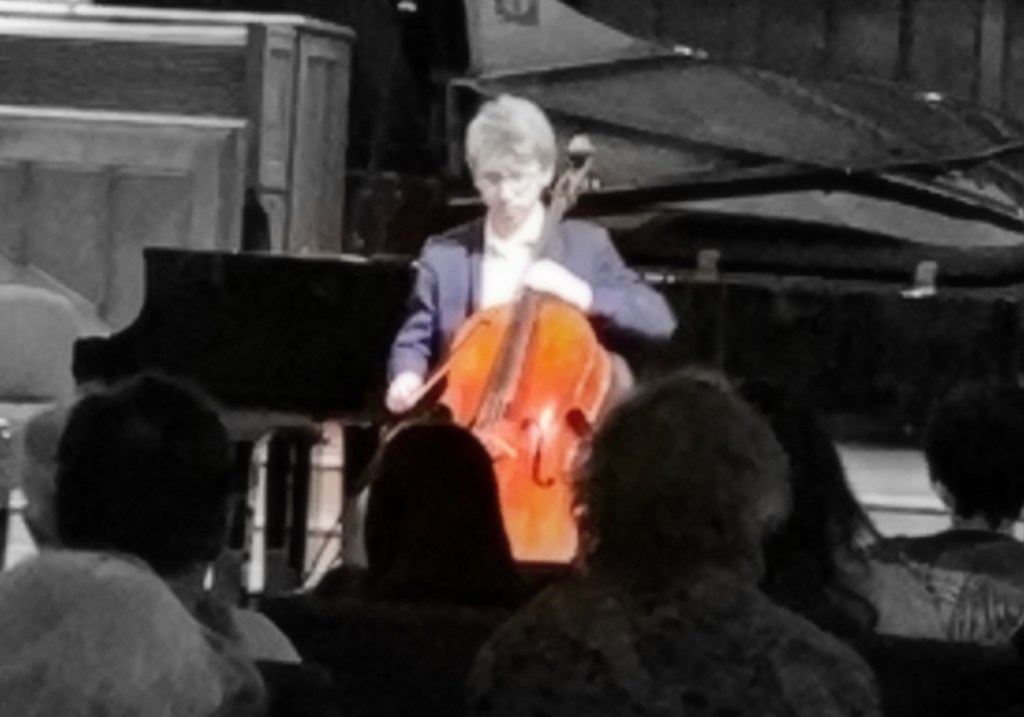
Cameron Crozman, at age 26, is definitely the raising star in Canada among cello players. Not only in Canada, though. His talent was noticed and rewarded by many world-class orchestras and directors, especially chamber music ensembles. For me, the concert in Halifax was the first chance to hear him playing. I am very glad, I did.
Bach, Franck and Chopin
The first of compositions was one of only six cello suites composed by J.S Bach – the Suite No. 2 in D minor. Probably written after the death of his first wife, Maria Barbara in 1720. The Bach suites are among ones of most popular music played by cellists. But it wasn’t the case during his lifetime and after his death. They were almost completely forgotten and many musicians were not even aware that he wrote such music. It was not until great cellist, Pablo Casals, re-discovered them as a teenager in a second-hand shop in Barcelona in 1889. It wasn’t until 1936 when he recorded them in London for first time. Since then, they become one of the most popular solo pieces for cellists around the world. There is even dispute among scholars whether Bach originally wrote them not for cello da gamba but for smaller, over the shoulder, viola da spalla. Suite No. 5 was originally composed for lute.
As entire baroque music, they are strictly structured in prelude and a string of Renaissance/baroque dances. In this case: allemande, courante, sarabande, minuet and gigue.
The slightly austere, neo gothic church of St. Andrew, with beautiful stained glasses on walls of the main nave and stained glass rosette behind the altar/stage provided perfect setting for this music. And the acoustic was wonderful as the young cellist with red hair sat to his instrument. The music flowed so nicely. His left hand showed the elegance of every note, tone and interval of this composition. I was specially taken by the fourth part, the Sarabande and the vision of evening stroll of Bach through the cobblestones of German city, remembering places he visited with his wife, reminiscing their time together. Formal, very courtly Minuet ensues as in saying that life goes on and times brings closure. Final part is in a form of Gigue and is a typical epilogue for typical baroque suite. Can’t understand that rigid formality from my perspective of XX century man, as Gigue is the last melody I would have used for this type of composition. Yet, it must be said that the Gigue in Suite No. 2 is far from lively dance of Italian gentry. Yes, it has the rhythm and melody – but used in such a way that it becomes a music of accepting life as it goes on. I thought that Crozman played that part superbly, more in a reflective than virtuosic style.
Belgian born but Parisian by choice composer Cesar Frank (1822-1890) is definitely not a canon of modern concert halls and performances. I know I have heard his music before – but if asked, I would have to strain myself immensely to remember that music. Although envisioned by his father as piano player (a solid career in Romantic times Europe) – he ended up playing organs in one of the big churches in Paris and later become a professor of organ music in Paris Conservatory in 1872. And finally had time to prove to the world that he is a talented composer. One of his monumental work (and monumental it is in its form, character and, let’s say – weight?) that I have never heard before (of that I am sure because it is really hard to forget such curiosity) is the Prelude, Aria et Final, Opus 23.
I am very glad that Charles Richard-Hamelin gave a very good explanation of this composition. It helped a lot. It consists of Allegro moderato a maestoso (Prelude); Lento (Aria) and Allegro molto ed agitato (Final). From these musical terms – allow me to offer less serious tone – two describe it the best: maestoso and agitato. The least one is moderato. It also shows that if you cook for many years Indian cuisine, when suddenly you make Beef Wellington, you add to it Indian spices. The result could be interesting, maybe even tasty – but it is not Beef Wellington. Specially in Paris. Franck played for many ears on huge organs at St. Clotilde Basilica. That colossal instrument could not only swallow many concert pianos of Paris, it also had so many leg and hand operated pedals, stops and keyboards (yes, the large ones have more than one keyboard) that the listener could really think that heavens opened up and filled the air with its’ own music. But Franck decided to do the same on the piano.
Thanks’ heaven the Yamaha grand piano C7X comes with the third, middle pedal called sostenuto. It is a version of the sustain (left) pedal but operates only on chosen string/notes. It gives the ability to produce a sound that resembles organ pipes. But one must not overuse it. In this case, Richard-Hamelin had to. To say it plainly – that composition is a colossus that requires not only amazing technique from the player, it also requires a big physical stamina. I am so grateful that he possess both. I have no idea what poetic purpose that composition serves – but it was amazing to listen to it. Enjoyed it very much just for the sheer sense of showmanship and absolute control of the instrument by the player. Now, thanks to Charles-Hamelin, I will always remember the music of Franck. Probably not choose to go to concert hall to listen to it again, but definitely remember it.
After a short intermission we were served the main course: beautiful sonata for cello and piano by lyrical master of Romanticism, Frederic Chopin. The opus 65 sonata in G minor was composed in 1846 and dedicated to Chopin’s close friend of many years, cellist Auguste-Joseph Franchomme.
Both of them collaborated and co-composed earlier a Grand Duo Concertant for piano and cello (in E major, numbered as B. 70) that received very favorable opinion of Schumann. The sonata is fully composed by Chopin and it’s cello part was not composed in any part by Franchomme, although it is more than likely that both Chopin sought advice and opinion of his dear friend. That might be the source of somewhat strange and not necessarily wise comment of our young cellist, Cameron Crozman, in an introduction, that the cello has stronger and weaker parts, the stronger being possibly composed by Franchomme. There is no musical literature that would support such strange assumption.
The sonata has special historical meaning in Chopin’s life: it would be the last composition of Chopin and the premiere in Salle Pleyel on Feb. 16, 1848 was his last public concert in Paris. Unfortunately, the Paris premiere omitted the first part (Allegro moderato). That was corrected by Franchomme shortly after his friend death, as the cellist returned to Salle Pleyel on April 6, 1853 and played (with Thomas Tellefsen, also Chopin’s friend and pupil, as pianist) the entire sonata. Louise Dublin, a world renowned cellist, wrote in her excellent blog on Aguste-Joseph Franchomme, that the second premiere was received enthusiastically and quotes respected and feared (by musicians) Paris critic of that time: “The main piece was a sonata by Chopin for cello and piano…the piece has something intimate and mysterious, everything in it is plaintive and melancholic… Franchomme, on his eloquent cello, found admirable expression, giving the beautiful melodies of Chopin a penetrating sweetness, full of religious poetry.” .
Of course, no recording of this prapremiere and premiere concerts exists, therefore it is impossible to compare that play with the performance of Cameron Crozman and Charles Richard-Hamelin in Halifax.
The only reflection could be my own satisfaction, pleasure or lack of it. And satisfied I was, very much indeed. It is worth mentioning that the duo of these two musician was a premiere in its’ own right. They have never played together before. But the partnership sounded very good and pleasant. Despite Crozman earlier spoken remarks, I have not noticed the ‘weaker’ and ‘better’ parts of his viola da gamba. All was played softly, poetically. In my short notes, that I tend to take at concerts, I wrote: what a beautiful conversation of two instruments! In scherzo and largo it was like a dance of two souls and such a nice, like echo, repetition of viola’s themes by piano. It all closes with very elegant marriage of the two scales: G minor and corresponding major in allegro. Sort of mini danse du triomphe.
/synopsis in English – full article in Polish below/
R. Blechacz, Vancouver, May 22, 2018 /photo: B. Pacak-Gamalski/
Vancouver Chopin Society presented on April 22, at the Playhouse Theater, a concert of Rafał Blechacz—one of the best pianists of his generation. It was not the first time Blechacz performed in Vancouver—the same society gave us the opportunity twice before: in May 12, 2013 and May 02, 2008. In 2013 (at Chan Centre) it was a special Gala Performance for the Society’s 15 Anniversary, this year it was the 20th Anniversary. Are we to conclude that next time Blechacz will play for us on the West Coast is going to be in May 2023, on the 25th Anniversary? If that’s the case—worth waiting for.
The last wonderful concert of this amazing pianist at the Vancouver Playhouse Theater was nothing short of a musical delight. The boyish, almost diminutive body hides a giant of the keyboard. Yet, his touch, the way he plays, seem to be effortless, ever so gentle and delicate. There is very seldom a dramatic gesture or a theatrical swoop of his fingers dropping down like a bird of prey on the black-white keys of the piano. It is much more like a delicate hovering just above them and almost willing them to produce a sound without a physical touch. But let be assured that when it comes to long and very exhausting passages of Schumann’s Sonata in G-minor – he does do the physical work perfectly. And so in the famous, grandiose theme in Chopin’s Polonaise No 6 in A-flat major!
Vancouver Chopin Society – you couldn’t have found a better gift for yourself and for us, Vancouverites, to celebrate your 20th Anniversary!
Rafał Blechacz took us on a chronological journey through the end of XVIII to the half of XIX century in music. Definitely most revolutionary 100 years in music development of Western Civilization. In perfectly scored, full of baroque charm of Mozart’s Rondo in A minor; and a full Sonata No 08 of the same Austrian genius. Followed by no other but arguably the greatest of composers, Ludwig van Beethoven ‘s Sonata No 28 in A major. Both composers in their sonatas heralded at moments the coming of end of both, the classicist and baroque style of music and gave hints of what was to be known in art as the Sturm und Drang—the protagonist to romanticism.
22 maja, w Playhouse Theater miał miejsce szczególny recital: Koncert Galowy 20-lecia Vancouver Chopin Society, jednej z czołowych organizacji muzycznych wyjątkowo zasłużonych dla kulturalnego milieu Vancouveru. Naturalnie ze szczególnym naciskiem na propagowanie muzyki Pana Fryderyka, wszak nie jedynie. Pięć lat temu, 15-lecie organizacji celebrowano w Chan Centre występem właśnie wschodzącej gwiazdy firmamentu pianistycznego, Rafała Blechacza. Koncert ówczesny był sukcesem. Więc dziwić się nie można, że postanowiono sukces powtórzyć i zaprosić pianistę ponownie w tym roku. Tym razem już zdecydowanie nie wschodzącą, a w pełni już widoczną gwiazdę muzycznego nieba. Co dało się wyraźnie zauważyć już od pierwszych taktów, które popłynęły z koncertowego Steinwaya ku widowni.
W spotkaniu i przyjęciu po-koncertowym znajomi zadawali mi pytania dlaczego taki a nie inny repertuar pianista wybrał, co jest lub może być powodem takich a nie innych wyborów muzycznych na koncertach? Zapewne bywa tych powodów wiele: od dość pragmatycznych (muzycy to wszak też ludzie i wolą grać utwory dobrze przez siebie opanowane), sytuacyjnych i wręcz geograficznych (u gospodarzy miło jest zagrać coś, z czego sami są muzycznie dumnie: w Budapeszcie Liszta, w Warszawie Chopina lub Szymanowskiego, w Niemczech—tu sporo do wyboru— Bacha lub Beethovena, itd..). Podobne pytanie skierowano do obecnego na koncercie cenionego komentatora muzycznego Vancouveru, Geofreya Newmana, który starał się najlepiej, jak potrafił to wyjaśniać. Mnie w doborze Blechacza na ten koncert uderzyła wyraźna chronologia utworów i kompozytorów. Wątpię aby przypadkowa. Mozart, Beethoven, Schumann i Chopin. Jeżeli Bachowska fuga i canon były filarami epoki przeszłej baroku i klasycyzmu, to właśnie Mozart i Beethoven, jedni z najbardziej uznanych geniuszy muzycznych czasów nowożytnych, byli heroldami nowego: romantyzmu. Romantyzmu, którego czołowym przedstawicielem był Schumann, a kwiatem najbardziej chyba z tą epoką związanym, właśnie Chopin.
Mozart był tego ‘przechodzenia’ ze starego w nowe chyba przykładem najlepszym. I stąd być może czysto barokowe Rondo c-moll było ukłonem wobec odchodzącej epoki salonowych kontredansów, menuetów i utworów ściśle sakralnych na rzecz tegoż nadchodzącego ‘nowego’ wyrazu muzyki. Blechacz zagrał rondo z wyjątkowa elegancją i starannością godną sztywnych reguł i zasad rządzących ówczesną muzyka salonową. Rondo Mozarta jest utworem tanecznym wedle ścisłych reguł spisanym i jakkolwiek nie do potańcówki go skomponował—ale tańczyć go bez przeszkody można. Raczej niemożliwością by było ‘normalne’ tańczenie szopenowskiego mazurka, gdzie melodia i tempo tańca były tylko luźnym szkicem, który posłużył Chopinowi do roztoczenia wizji muzycznej o skali wielokrotnie wyższej niż sam taniec spod wiejskiej chaty i małych dworków by świadczyć miał.
Grana po Rondzie Sonata a-moll, K310, była już zgoła innym utworem. Jakkolwiek w finale (Presto) łatwo odnaleźć melodie właśnie ronda o tyle Alegro maestoso i Andante cantabile już dają wyraźnie postrzec proto-romantyczne nastawienie na wyrażanie uczuć ludzkich w ich nagim, emocjonalnym kształcie. Jak choćby uczucia kompozytora spowodowane śmiercią matki w 1778. W nagłych, nie anonsowanych zmianach tempa i ustalonej tonalności. Cały ten, wypełniony omal ciemnym żalem pozorny chaos w sposób wyjątkowo czysty i wierny odtwarzał Blechacz bezbłędnie. Każdy dźwięk był wyraźny, niezagubiony i nie zagłuszony następnymi.
I w końcu sam wielki Ludwig van Beethoven. Sonata A-dur Nr 28, op. 101. Ilekroć jej słucham w wykonaniu innych pianistów, zawsze jakby inaczej brzmiała. W tempie pozornie tym samym ale jakby mniej lub bardziej ekspresywnie wyrażanym. Być może to jej ‘specjalność’. Sam kompozytor nie ukrywał pewnego rozczarowania, wewnętrznego smutku wynikającego z czekających Europę wielkich zmian politycznych, własnego zdrowia (zauważalna już utrata słuchu), starzenia się. Jest bardzo klasycznie zbudowana, ma echa fug, canonów bachowskich. Ale silnie emocjonalna. Blechacz, wydało mi się i tu, znalazł złoty środek. Być wierny każdej nucie. Bez pośpiechu i bez ukazywania własnych emocji, bez ulegania chęci zabłyśnięcia w trudnych figurach muzycznych, lub raczej bez chęci przygaszenia blasku muzyki blaskiem własnej techniki pianistycznej. A nie łatwo się tego wyrzec przy częstych i dość długich trylach … .
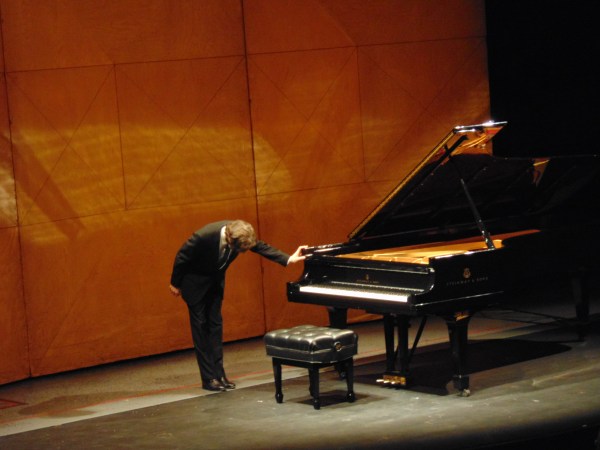

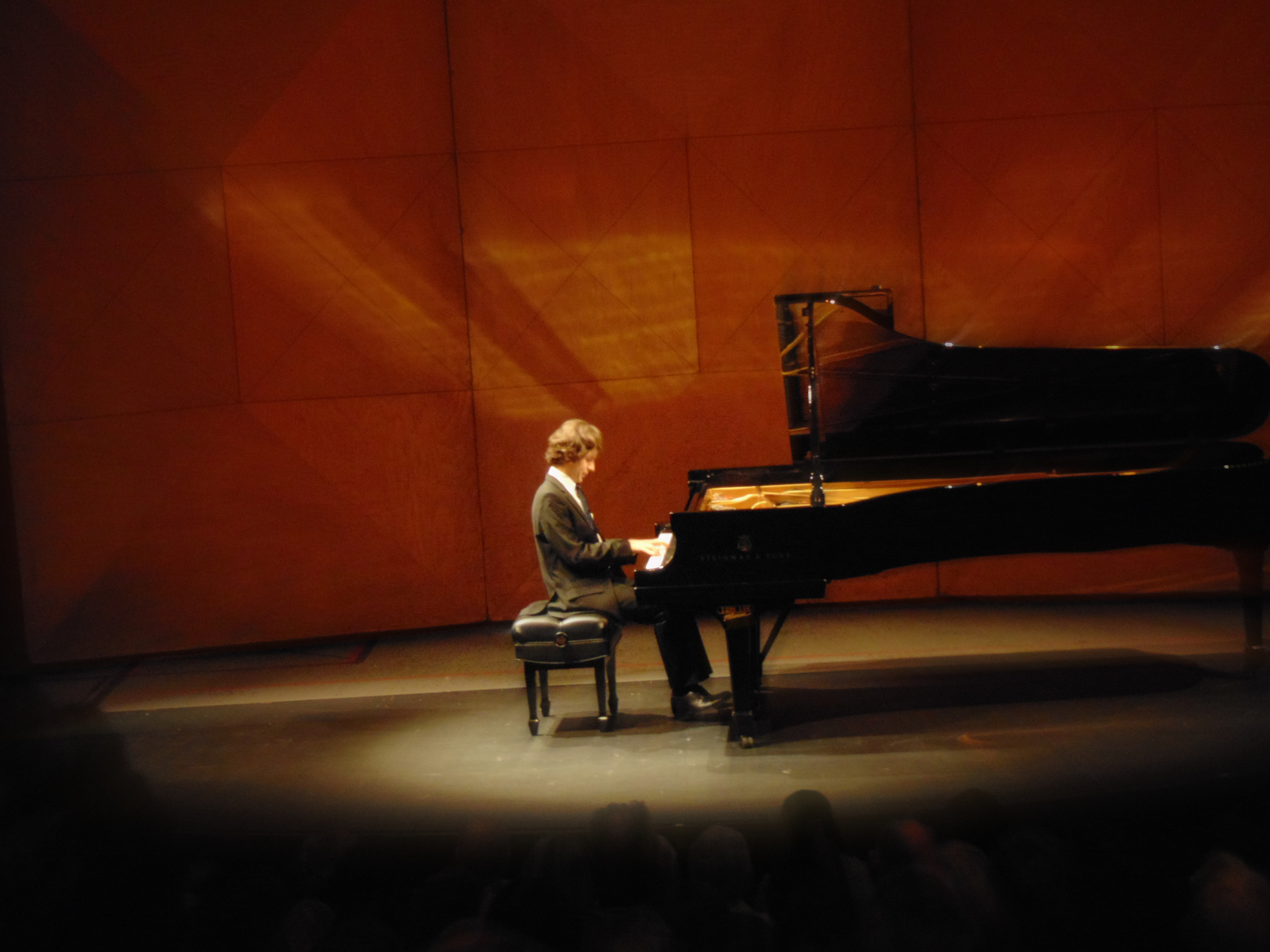
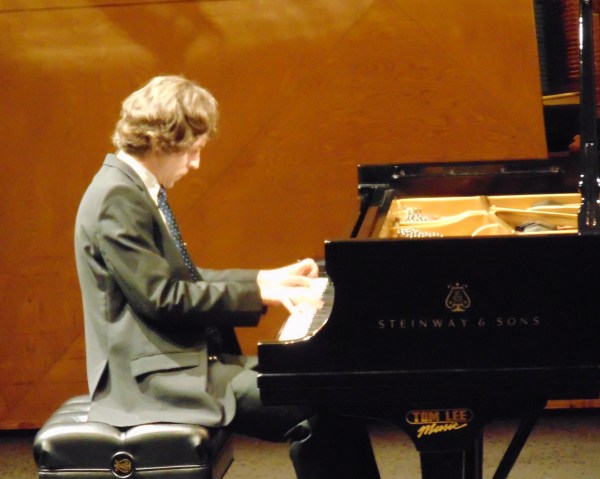
Część druga koncertu osiadła od razu silnie w muzyce romantycznej. Robert Schumann, przez wielu uznawany jeśli nie za ‘naj’, to jednego z największych kompozytorów Romantyzmu. Jego Sonata Nr 2 op. 22, często zwana ‘Wielką’, komponowana była przez artystę w okresie kilkuletnim, przy surowej asyście Klary Wieck, późniejszej żony kompozytora, zdolnej i popularnej pianistki niemieckiej. To właśnie Klara była finalnym edytorem pierwszej publikacji sonaty i miała duży wpływ na kształt ostatniej części sonaty: słynnego Presto. Ta pełna, czteroczęściowa sonata nie jest utworem łatwym do grania. Wymaga nie tylko wysokiej dyscypliny pianisty ale i dobrze opanowanej techniki. Zwłaszcza w pierwszej, określonej, jako ‘rasch wie moglich’ (możliwie najszybciej), by potem powrócić z wyższym jeszcze wymaganiem technicznym w końcowej partii (owe słynne presto) ostatniej części ronda. Końcowej edycji tegoż presto dokonał nie kto inny, jak Joachim Brahms, uznawany przez Schumanna za geniusza muzycznego.
Było wielka przyjemnością słuchać tą sonatę w wykonaniu Blechacza. wydawało się, że całkowicie zanurzył się w jej charakter i grał tak, jakby muzyka sama nadawała mu swoje brzmienie i treść. Znowu—zasko0czył mnie swa wewnętrzną dyscypliną, skupieniem się nad kompozycją, nie siedział na scenie przed setkami osób, a gdzieś w gabinecie, sam tylko z pianinem. Zapewne nie jest trudno wrażliwemu muzykowi wpaść w taki ‘trans muzyczny’ przy jakimś temacie, jakimś pasażu, figurze muzycznej—ale trwać w nim przez cały, długi utwór (lub takie wrażenie sprawiać) nie jest rzeczą częstą.
Gdy się pisze takie, jak te, wrażenia z koncertu, siłą rzeczy ma się ochotę wtrącić tu i ówdzie: ‘pamiętam, jak X grał to tak i tak a Y w tym miejscu przyspieszył tempo dla wrażenia’. Czasem jest to zwykła figura stylistyczna, ozdobnik do tekstu, czasem faktycznie czyjąś grę aż tak się pamięta . Dzisiaj jest to dużo łatwiej zrobić, bo wystarczy poszukać w swojej domowej muzycznej dyskografii lub zwyczajnie w Internecie danego pianistę i utwór odnaleźć, przesłuchać ponownie. Ale bez autentycznie idealnej pamięci i idealnego słuchu—któż spamięta , po latach, jak X czy Y grał tą czy inną sonatę, fugę czy mazurka? Natomiast pamięta się łatwiej nastrój koncertu, własne wrażenia z odbioru muzyki, urok … lub nudę. Co owszem, nie wstydźmy się przyznać, się zdarza. Otóż dla mnie, z całego koncertu (poza jednym szczególnym wyjątkiem, o czym na końcu wspomnę) ta właśnie sonata Schumanna zostanie jako kwintesencja tego wieczoru. I, podejrzewam, po latach jeszcze słuchając gdzieś Blechacza, z przyjemnością wspomnę jak grał Schumanna w Vancouverze, w 2018 roku.
Ostatnią część koncertu Rafał Blechacz poświęcił naturalnie panu Fryderykowi. Jego czarującym mazurkom i ukoronował finał majestatycznym Polonezem As-dur Op. 53.
Trudno, by nie wpadać w banały wielokroć przez (pewnie przeze mnie też czasami …) wielu powtarzane, silić się na opis gry Blechacza w tychże kompozycjach Chopina. Mało chyba z nas, Polaków, nie słuchało po wielokroć tychże utworów. Nawet ci z nas, którzy sal filharmonicznych nie zwykli odwiedzać. Chopin jest u nas wszak chlebem powszednim od kołyski prawie. Ktoś by musiał faktycznie tego biednego ‘polskiego’ Chopina niemiłosiernie maltretować, byśmy nie klaskali zachwyceni po każdym mazurku, polonezie. Zwłaszcza po TYM polonezie, którego przewodni temat muzyczny każde polskie dziecko potrafi chyba zanucić, nawet nie zdając sobie sprawy, że to właśnie Pan Szopen go skomponował. A przecież odniosłem wrażenie, że Blechacz i ten utwór grał nieco inaczej. Mniej brawurowo, subtelniej. Jakby za każdym razem przed pojawieniem się tego słynnego tematu-refrenu—pianissimo do granic ‘ssima’ zbliżał, wyciszał, by następujące nieuchronnie forte bez uderzenia silnego w klawisze wyodrębnić, zwielokrotnić efektem. Może był to wynik ‘przyzwyczajenia’ wszystkimi muzycznymi interpretacjami do tej ostatniej części koncertu? Może tak już Blechacz moje ucho wytrenował w partiach poprzednich, że nic innego się nie spodziewałem niż kolejnej precyzji i subtelności muzycznej pianisty? Fakt pozostaje faktem, że bez względu czy użył fortelu akustycznego czy grał z wyjątkowym wyczuciem— efekt końcowy taki, jaki zamierzył osiągnął: zachwyt słuchającego.
Takoż i zbliżyliśmy się do zapadnięcia kurtyny. Zwykle jednak, rozpieszczani przez muzyków, oczekujemy zawsze prawie na bis, na encore. I teraz mowy nie było by oklaski ucichły zanim młody, szczupły pianista nie zasiądzie ponownie do fortepianu. I tu, co zapowiadałem wcześniej. Ów moment czaru muzycznego. Spod palców popłynęło cudeńko muzyczne urzekające wszystkich. Tak byłem się w to wsłuchałem, że za nic potem w stanie nie byłem przypomnieć sobie kogoż ten klejnocik był autorstwa. Tak przecież znany, lubiany! Aż zły na siebie byłem. Jakby celowo tenże młody pianista tak mnie tą muzyką oczarował, żem o świecie zapomniał. Na szczęście w sukurs przyszedł sam odchodzący Prezydent Chopin Society, Iko Bylicki, podszeptując: Brahms. Ach! No właśnie, przez Shumanna już obwołany geniuszem, jeden z ostatnich wielkich niemieckich kompozytorów blisko 200 lat, od XVIII do początków XX wieku. Czasem właśnie geniusz nie po dziełach wielkich, monumentalnych poznać można , a od drobnych kwiatków, od pierścioneczka kunsztownego, a nie od kolii wielkiej. Intermezzo Nr 2, Op. 118. Perełka muzyczna najczystszej barwy. Widać było, że coś, co wytchnienie i radość sprawia samemu pianiście. A bez wątpienia słuchającym.
Po koncercie miał miejsce uroczy ‘wine and cheese’, możliwość spotkania i wymiany kilku (dla niektórych zwyczajem nie zawsze miłym: kilkuset) słów z pianistą, spotkań i wymiany wrażeń ze znajomymi od dawna nie widzianymi (lub widzianymi po raz pierwszy). Trochę śmietanki ,socjetowej’, typowej na takich spotkaniach. Miło było przedstawicieli Konsulatu Generalnego (zdaje się—nie od nich tą wiadomość dostałem–niezbyt już długo tu pozostającego, ale komuż potrzebna placówka w mieście-bramie z Ameryki Północnej do Azji?) spotkać, którzy Gala Koncert patronatem objęli. Miło było rozmowę dłuższą i mądrą z profesorem Lee Kum-Singiem uciąć. Zdań kilka zamienić ze znanym komentatorem życia muzycznego Vancouveru Geoffreym Newmanem (dobrze, że niezbyt długiej, bo dwie osoby o silnych przekonaniach o swojej racji nie najlepszymi są partnerami do rozmów, ha ha ha).
Zarząd Vancouver Chopin Society /photo: B. P-G/
Bardzo miłym akcentem było spotkanie całego, lub większości, Zarządu Stowarzyszenia Chopina, gdzie w sposób niezwykle miły podziękowano za wieloletnią pracę przewodzenia organizacji Prezesowi Iko Bylickiemu i przedstawienia nowego Przewodniczącego. Życzyć należy nowemu Zarządowi podobnych sukcesów, jakie do tej pory organizacja odnosiła.
Kanada, której dzisiejsza rzeczywistość nie zawsze przypomina wyidealizowaną Fiedlerowską wizję, wciąż jednak bezustannie fascynuje i magnetyzuje, zostawiając równocześnie swój ślad na ludziach, którym przyszło się z nią zetknąć. Dlatego nawet dziś, kiedy upłynęło ponad dwadzieścia lat od pamiętnego roku 1989, niwelującego bolesny podział literatury polskiej na krajową i emigracyjną, geograficzna kwalifikacja w odniesieniu do polskiej twórczości literackiej w Kanadzie nie powinna budzić zdziwienia. Kanada bowiem była i wciąż jest, obok Wielkiej Brytanii, Niemiec czy USA, krajem osiedlenia dość dużej grupy Polaków, która stworzyła tam prężnie działające i dobrze zorganizowane środowisko literackie (myślę tu na przykład o Polskim Funduszu Wydawniczym czy Fundacji Władysława i Nelli Turzańskich). Z kolei kanadyjska polityka wieloetniczności służy rozwojowi twórczości w językach innych niż oficjalnie obowiązujące angielski i francuski, a bezkresny Kraj Klonowego Liścia wciąż zachwycając i inspirując, ale często także prowokując do buntu i krytyki, niezmiennie odciska stygmat swojej obecności na dziełach literackich tam powstających. (“Strumień” nr 08, 2012)
Tym fragmentem artykułu dr. Bożeny Szałasty-Rogowskiej chciałbym zacząć kreślenie kilku refleksji nt. poezji Andrzeja Buszy. Artykuł krajowej badaczki literatury polskiej w Kanadzie opisuje okres ‘zjednania się’ literatur polskich : krajowej i emigracyjnej. Rok 1989 był cezurą, który te rozłączenie, trwające od lat 40.tych ubiegłego wieku, niweczył. Blisko półwiecze. Strasznie długi czas, który owocował na emigracji wielkimi dziełami, fascynującymi talentami, które w olbrzymiej większości były klejnotami ukrytymi przed licznymi rzeszami czytelnika krajowego. O ile ta literatura w bardzo wąskim zakresie istniała w krajowym środowisku literackim i badawczym – o tyle jej rzeczywisty udział w literaturze krajowej był w najlepszym wypadku minimalny i bardziej mityczny niż rzeczywisty. Nawet gdy mówimy o takich wielkich, jak Miłosz i Gombrowicz. Obaj istnieli, jako autorzy przedwojenni. Ich autentyczne, największe osiągnięcia literackie przypadały na lata powojenne, emigracyjne. I ogółowi czytelnika krajowego były nieznane. Mówienie inaczej jest fałszowaniem rzeczywistości historycznej. Indywidualne kontakty twórców krajowych przy okazji niezbyt częstych wyjazdów na Zachód, bardzo ograniczone funkcjonowanie przemycanych do Kraju wydawnictw emigracyjnych, wpływu na szeroka opinie czytelnicza nie miały. I znowu: czytelnik cos słyszał, czegoś się domyślał i nie wiele ponad to. Rosła mitologia bez towarzyszącej jej wiedzy.
Stąd tak ważne, nie do przecenienia, było stworzenie warunków funkcjonowania i samej instytucji ‘pisarza- twórcy’ i minimalnego choćby rynku czytelniczego. Tu należy bardzo nisko (dziś zwłaszcza, gdy rynek ten prawie całkowicie zanikł) pochylić głowy wobec poprzednich generacji emigranckich, które to zrobiły. To dzięki nim, ludziom, z którymi dane mi było jeszcze współpracować w latach 80tych ub. wieku i ich poprzednikom, polska literatura emigracyjna nie umarła, przetrwała. Przetrwała dzięki nim też w Kanadzie. Dzięki tym działaczom, organizatorom, wydawnictwom, pismom. Pisarz, poeta może w pewnych okresach czasu milczeć lub pisać ‘do szuflady’. Ale nie przez pół wieku. To dzięki nim powstawały świetne wiersze, powieści, dramaty autorów tej klasy, co Czaykowski, Śmieja, Iwaniuk, Busza, Tomaszewski, Jurkszus-Tomaszewska i inni. Jakąż wielka by było stratą dla literatury polskiej w całości, gdyby ich twórczość do Polski nie wróciła w całej pełni po roku 1989. A mogło tak się zdarzyć. Że się nie zdarzyło – wymagało to wielkiego wysiłku i zrozumienia roli kultury wśród rzesz emigranckich. I wysiłku, upartości pewnej, wiary w sens tego, co się robiło tychże twórców, pisarzy. Wielu wyrzeczeń i poświęceń.
spotkanie poetów z Czytelnikami w Seattle (od lewej: L. Chudziński, A. Busza, K. Piotrowska i B. Pacak-Gamalski)
Cały ten wstęp daje by uzmysłowić nam, ze ten rok, rok stulecia Niepodległości Polski jest wyjątkową okazją pamiętania i okazania wdzięczności tym twórcom, ich pracy na zagonie kultury narodowej. Mamy wyjątkowe szczęście, że w Vancouverze jest jeden z tych znanych i ważnych twórców literatury polskiej: Andrzej Busza. I jako działacz Stowarzyszenia “Pod skrzydłami Pegaza” od 20 lat już, z satysfakcją dużą cieszę się, że ta zacna Organizacja tak właśnie zaznaczy ten rok – spotkaniem z Andrzejem Buszą. I za Mikołajem z Nagłowic oświadczam, że narody postronne niechaj znają, iż Polacy w Kanadzie nie gęsi a swój język mają. By to podkreślić zacnym rodakom wszem ogłaszają: Stow. Artystów i Przyjaciół Sztuk „Pod skrzydłami Pegaza” organizuje kolejne ‘spotkanie z twórcami kultury polskiej’. Gościem, kolejny już raz, będzie wybitny poeta polski i literaturoznawca literatury angielskiej, conradysta, Andrzej Busza.
Profesor Andrzej Busza – “POLSKIE UPIORY I DUCHY JOSEPHA CONRADA KORZENIOWSKIEGO”
6 MAJA 2018, GODZ. 16:0 GUILDFORD RECREATION CENTRE 15105 105 AVENUE, SURREY, BC WSTĘP WOLNY
(ZA WEJŚCIEM DO BIBLIOTEKI W PRAWO)
Czytając tomik wierszy „Atol” Andrzeja Buszy…
Busza, który całe prawie życie spędził jako wykładowca i badacz literatury na katedrze uniwersyteckiej nie jest typowym przykładem literaty, pisarza. Jak w każdym zawodzie, powołaniu w czasach współczesnych, tak i pisarz swojej karierze zobowiązany jest (lub takie zobowiązanie narzuca mu i czytelnik, i wydawca) o dbanie o tą karierę, zabieganie o nią, o usilne i stałe ‘uczestnictwo’ w debacie literackiej. Słowem o to, co dziś określa się mianem PR – public relations.
Profesor Andrzej Busza, a zapewne i cechy własne charakteru, stał na przeszkodzie poety Andrzeja Buszy w robieniu tegoż ‘pi-aru’. Być może wychodząc z naiwnego przekonania, że dobra poezja sama świadczyć będzie o sobie, takowoż talent. Niestety, świat współczesny dawno był zarzucił te staroświeckie mrzonki. I owszem, częstokroć – podejrzewam – za namową i szturchaniem przyjaciół –literatów pokazywał się tu i ówdzie, jako poeta, zabierał głos. Mówił: jestem tu i mam coś na ten temat do powiedzenia. A miał i ma ‘na ten temat’ wiele do powiedzenia. I równie łatwo wracał do zacisza swoich książek, badań literackich, jakby chował do szafy na dłuższe okresy czasu garnitur ‘poety’. Do tego stopnia, że przez pewne okresy czasu w ogóle nie pisał. Z wielką stratą dla literatury polskiej. Lub rezygnował z pisania po polsku i pisał po angielsku. Zabawne jest to, że te właśnie jego ‘angielskie’ wiersze są wręcz przesiąknięte specyficzną wrażliwością polskiej tradycji poetyckiej. Nie w sposób nachalny, krzyczący: jestem Polakiem, vivat Polska! Nie wyobrażam sobie wręcz sytuacji, w której Busza potrafiłby być nachalny w czymkolwiek. Mimo to, parafrazując popularne porzekadło, można rzecz: Busza wyprowadzał się z literatury polskiej, ale literatura polska nigdy nie wyprowadziła się z Buszy.
Nie będę tłumaczył i polemizował z jego własną, autonomiczna decyzją zaprzestania pisania wierszy po polsku. Kilkakrotnie na ten temat dyskutowaliśmy i dość jasno i racjonalnie i to wyłożył. W typowy, ‘buszowski’, nad wyraz skromny i pełen szacunku wobec słowa pisanego i czytelnika sposób. I nigdy mnie do tej decyzji nie przekonał. Ale to jego suwerenne prawo poety, które uszanować należy. Na szczęści dobrzy tłumacze i jego świetna (z tego przymiotnika się nie wycofam, Panie Andrzeju) znajomość polszczyzny zaowocowały dziesiątkami wierszy Buszy, które w tłumaczeniach na polski wydają się nie tylko nie tracić, a być może wręcz zyskiwać. Co dziwić nie może. Jeśli ktoś oczekuje przeprowadzenia dowodu badawczego takiej supozycji – to odsyłam akapit wyżej, do parafrazy przytoczonego porzekadła.
Jeden z najlepszych badaczy poezji Buszy, prof. Janusz Pasterski z Uniwersytetu w Rzeszowie, z którym miałem możliwość dłuższych dyskusji o Buszy, najbardziej zdaniem moim zbliża się do rozwiązania ‘zagadki’ Buszy-poety pisząc : w cieniu poetyckiej dokładności kryje się ostra wizja, dramat intelektu zakorzenionego w nie do końca określonym sensie ciemności i bezradności (tłumaczenie własne, z eseju J.P.”Other fragrances. The poetry of Bogdan Czaykowski, Andrzej Busza and Florian Śmieja” „Strumień”, nr 08, s.43). Nie określa to charakteru jego poezji jako katastroficznej ale nadaje jej wymiar pewnego metafizycznego smutku, pogodzenia się z bezradnością człowieka wobec ‘losów’ życia, świata i kosmosu.
Trudno jest mi pisać o poezji Buszy. Mnie jest trudno. Nie dlatego, że go znam osobiście i bardzo cenię. Łatwiej mi to było z poezją innych autorów, których znałem, choćby niezapomnianego, wspaniałego Bogdana Czaykowskiego. Trudno, bo wiersze Buszy wrastały we mnie bardzo powoli, a przez to głębiej, przebijały się przez kilka warstw intelektualnych, racjonalnych, czysto literackich, by dotrzeć do czystej formy emocjonalnej. Gdy już dotarła – wrosła w nią, jak tkanka żywa, prawie genetyczna, własna. A opisywanie czegoś tak intensywnie emocjonalnego jest bardzo trudno. Kolejna ‘zagadka’ poezji Buszy. Filozoficznej, bogatej w całe pokłady tradycji kulturowych obszarów nie tylko polskich lub angielskich ale i śródziemnomorskich z klasyką i wcześniejszym antykiem – a tak w swym sednie, jadrze po prostu ludzkiej i mądrej. Mądrej nie przez to bogactwo kulturowo-literackie (jakim jest bezwzględnie nasycona) a przez głębokie człowieczeństwo. Którą pisze nie profesor, akademik i literaturoznawca a człowiek, który przysiadł na moment na wzgórku, gdzieś nad jakimiś polami, rzeczkami, patrzy na nie , jak stroskany gospodarz, uśmiecha się smutno niby, a z pełnym zrozumieniem kolei losów i życia. Widział już , jak rzeczki zamieniały się w potężne fale zalewając okoliczne łąki, widział, jak latem te łąki kwieciły się dywanem ziół i kwiatów i jak – nieuchronnie – bladły, brązowiały i przymierały jesienią. Jak drzewa od mrozu pękały zimą srogą, wiedział, że nie każde stworzenie i nie każdy krzak wiosny doczeka … Pamiętał (siebie może?) chłopaków i dziewki okoliczne ukradkiem się w trawach wysokich całujących. Wiedział, że jak te stworzenia, rośliny i oni nie wszyscy wiosny doczekają. Czy myślał, tak siedząc na wzniesieniu, o Persefonie, o Eurydyce? Zapewne. Wszak ważne było, nie to że boginką była lub ukochaną ulubieńca bogów. Ważny był ich los. Fatum może. Może ethos. Jak sam pisze w wierszu ‘Wiosna’: program miałem minimalistyczny / lecz całkiem wygodny / … / kiedy / marcową pogodą / wtargnęłaś w moje podwórza / z wiatru śpiewem syrenim / w pochodniach / rozjęzyczonych drzew / … .
Kto szuka spaceru z poezją, nie biegu, kto szuka dostrzeżenia Losu-etosu w chaosie i bezwzględności życia – niechże na spacer weźmie tomik wierszy Andrzeja Buszy. Spacery i tak długie, a zdecydowanie niekończące się, nie są, być nie mogą. Kiedyś, gdzieś kresu dobiegają. I tak było od początku, pewnie będzie i na końcu. Niechże i nadlecą nad ścieżkę muzy greckie, niech łacińscy dziejopisi wtrącą echa dziejów Rzymu i Petrarki – jakże podobni będą do tych chłopców i dziewczyn znad łąk przycupniętych u brzegów rzeczek i strumieni …
Z tym większym entuzjazmem i nadzieją spotkania w wami, czytelnikami, zachęcam do przybycia na spotkanie z Andrzejem Buszą w salce przy Bibliotece Miejskiej w Surrey, organizowane przez SAiPS ‘Pod skrzydłami Pegaza’.
Most “Monitor” pages are written in Polish. There were the occasional ones in English, though. So this time I will attempt a bilingual version in both languages. Not an exact translation, but the same story in both and commentary. Sort of editorial experiment.
Lukasz Mikołajczyk, concert “From Europe to Canada”, Vancouver, March 24, 2018
On March 24, I attended a small, chamber-like concert of Łukasz Mikołajczyk in a private residence at UBC. It was private residence, but it was organized by a group called “Music Friends’ as a public event , with paid tickets. Therefore it was and should be treated as a regular concert.
Yet, the size and particular quarters were reminiscent of time when baroque, than classical and romantic music were meant to be played. And not on opulent, powerful grand piano but somewhat diminutive ‘baby grand’. Which does create a different, more delicate and intimate sound. And what a gem it was. I have heard him (Mikołajczyk), by now, many times. On a grand stage and on stages truly not so grand at all. That one must have been perfect, for his play was delicate, so emotional and thoughtful that, at times, I was lost in different world of sounds and different reality. As in any concert there were better parts and regular parts. But parts of it was pure magic. Not often found in more official concerts.
Chopin’s last ballade, the one with number 52 in F major, was played exquisitely, poetically. The only way you can master it, as it is the most difficult of his ballades and not easily giving up to the pianist it’s secrets. It is the most abstract of his ballades, the most musical and not very clear of the story behind it. But story there is. So if you just give up on the meaning and simply follow the notes – it could be as flat as the paper Chopin used to write it down. Yet, if you create a world of images, feelings in your mind when you play it – it becomes alive. For the player and subsequently for the listener. Ballades are fully structured and developed musical compositions and offer the pianist a wide spectrum of play. They are often highly stylised. In my commentaries I try to avoid comparing two different pianist, as it is not really fair on certain level of technical and musical prowess. Nonetheless, we do have our private, individual tastes, likes and so on. As far as that Ballade is concern, for myself, I do have immense respect for the way it is played by phenomenal pianist Kristian Zimerman. I think that he just adds an extra level of sublime majesty to it. It becomes a music of heavenly experience. So if I add that comment, I must say that Mikołajczyk play was different. But different in a good way. Whether on purpose or just the atmosphere and the smaller sound of his piano – his version took me back to earth. And not in unpleasant way. To the contrary. The ballad suddenly become more real. Yes, it was a dream, but a real dream, a musical stroll toward concrete (even if we do not know that particular moment, the ‘thing’ that gave it an impetus for Chopin) – it was touchable, within listener’s grab. And that helped me to see the other level of the music. Another way of ‘feeling’ it. And I truly liked it a lot.
What followed were two Chopin’s nocturnes from the same opus 62 (no 1 and 2). Both, as intended by Chopin, played ‘note to note’, without interruption. Mikołajczyk played them with high respect for the musicality of it. As if he was trying to understand the still young, yet already weary and tired of life Chopin, as it was composed by emotion, not the strength of his hands. I thought that he used the tempo augmented by intervals not just to travel through time but actually to attempt to travel through space. To let the sound fully develope before it dies naturally or is shorten by mechanical way. It added an extra depth to the music, or rather showed the depth of it as surely intended by composer.
Franz Schubert music (Mikołajczyk played his two Impromptus: G-Flat Major, No 3 and E-flat Major, No 2) is very different than Chopin’s. An early, German romantic composer was still under strong influences of classical period and the way music was played in countless little Royal and Princely Houses (or Bishopric palaces) spread through Austria and German states and palatinates. The German style of romantic music was also different than Polish romanticism. It was more absorbed by elements of nature, certain darkness and mysticism of it, tragic love and old myths, following the footsteps of Goethe and Schiller. That early romanticism, coupled with somewhat ornamental music of the German courts is representative in his Impromptus. More an arte pro arte musical prowess than a deep spiritual experiment.
In second part we have heard how Canadian contemporary composers, of which Coulthard Piano sonata no 2 is another gem. Very well composed, combining audible parts of western musical tradition and modern music compositions. A marriage of descriptive music ( as classical music from renaissance till modernism used to be) to abstract musical forms. Considering the fact that it is very new composition for Mikolajczyk, he played it exceptionally well. I have heard it before and his interpretation did not fall behind it – to the contrary, perhaps. Maybe I’m a bit skewed in my praises, as I do like his style of playing, but I am also rather known (unfortunately) for being honest and not easily giving praise, were praise is not warranted. I said it, because I think that even in that short period of time since I heard him acutely the first time – Mikolajczyk’s play has already matured, become more refined and more confident. I have the feeling that he either already is in that moment or ready just to enter one, where a musician, an artist, can – without arrogance- say: I know what I’m doing here. Just give me the score and the instrument and there will be music. Let it be music, then. Ladies and Gentlemen.
I would be amiss, if I wouldn’t write about another, very special moment from that concert. Special moment, that touched me very much so. As we know Mikołajczyk is a young and talented pianist, who last year came to Canada, straight from Poland. The same generation as our Canadian Jan Lisiecki (of course, they have much more in
B. Pacak-Gamalski with Jan Lisiecki (Vancouver, Feb. 2018)
common, as Lisiecki – this year JUNO Awards recipient – was born in Calgary but has a very strong and dear to him connections to Poland, not only because of Chopin but mainly because he was raised as Polish Canadian and is proud of it). Generation that is future of Canadian, Polish and international music. But – before we take the flight into the future – we should never allow ourselves to forget about those, who cultivated music here in earlier generations. They were the ones, who toiled the soil. Toiled it also for the new, younger generations of musicians. As is the case of Richard Wrzaskała (ah, the Polish names, ha ha ha – how do they manage to spell it?!) – a prominent Polish born and educated composer and orchestra director, who moved to Canada many years ago. Richard, also a dear friend of mine, made a mark on our, Canadian musical stage.
Łukasz Mikołajczyk with Canadian-Polish composer R. Wrzaskala and the author B. Pacak-Gamalski
One of his popular composition is called ‘Mazurka Fantasie’ – it’s a play, a musical commentary of sort on his own connection and sources of musical inspiration in beloved Chopin’s musical heritage. Elegantly composed, uses the repeating main theme to stress the point of what is the central core of his own inspirations. I see it, whenever I listen to it, as a nostalgic nod to the past, as eloquent saying: thank you Monsieur Chopin, it has been a privilege to walk through my life with your music.
Mikołajczyk’s program for the concert did not contain Wrzaskala music. But, as the concert ended and the audience, as often expected, demanded an encore – the young pianist returned and played exactly that composition: Wrzaskala ‘Mazurka Fantasie’. And played it so tenderly, so soft that it moved me to the core. It is very obvious and beyond any need to explain, that Chopin’s music is at the heart of both Mikołajczyk and Wrzaskała musical heritage. By playing that piece he did pay homage to it. How elegant, Lukasz.
Finally, last but not least – not least by a huge margin under any circumstances. Very soon, thanks to Vancouver’s own classical music organizers and promotors, Vancouver Chopin Society, we will be treated to special event: piano concert of one of the best pianists of his generation, the incomparable Rafał Blechacz. Blechacz international fame could be only compared to his own talent and hard work. If nothing unexpected or tragic will happen, this 33 year old musician in 20 years’ time will be what Zimerman is now, what Garrick Ohlsson and Martha Argerich are, earlier Vladimir Ashkenazy, Daniel Barenboim and what Horowitz and Rubinstein were.
Rafał Blechacz (photo: By Michał Kobyliński – used under Wikipedia Commons Share Licence)
His star shot to fame right after winning the prestigious International Chopin Competition in Warsaw in 2005. Since than he received top prizes and accolades in many international competitions, festivals. In 2014 the New York based America Gilmore Artist Award (considered by many as the equivalent to ‘Nobel Prize” in music) named him the most outstanding pianist in the world.
His concert in Vancouver will take place on the main stage of Playhouse Theater, on Sunday, Aprill 22 at 3 PM. The program consists of A. Mozart Rondo in A minor, K. 511; Sonata in a minor, K. 310; L. van Beethoven Sonata in A Major, Op. 101; R. Schumann Sonata No. 2 in g minor, Op. 22; F. Chopin 4 Mazurkas, Op. 24 and Polonaise No. 6 in A-flat Major Op. 53.
It will also be a special, anniversary concert commemorating 20 years of Vancouver Chopin Society, which in that time has become a staple of our musical life here.
(note from an author: what follows is a Polish language musing on the same subject. However, at the very end of the review, there is a short rebuke of an unfortunate tirade of Vancouver well known musician and pianist, Robert Silverman. As it is not really a part of my review of Mikolajczyk concert, but very much part of the conversation on the subject of Chopin and his music – I decided to show you an excerpt of Mr. Sliverman’s strange diatribe and my response to it. So, please do scroll to the end and you will find the texts in English.)
24 marca, w prywatnej rezydencji na terenie Uniwersytetu British Columbia miał miejsce bardzo udany, kameralny koncert pianistyczny Łukasza Mikołajczyka. Organizatorami koncertu była grupa Music Friends, która podjęła się organizowania tego typu kameralnych, w tradycji dawnych Salonów Muzycznych, spotkań z ciekawymi muzykami z Vancouver i okolic. Zachęcam bardzo melomanów do śledzenia kalendarza koncertowego tej grupy – możliwość uczestnictwa w tak kameralnym wydarzeniu muzycznym jest nieporównywalna do wielkich sal koncertowych! Nastrój i specyficzna intymność, która łączy wykonawcę ze słuchaczem są przeżyciem specjalnym i wyjątkowym.
W programie Mikołajczyka (nazwanym bardzo ładnie: „From Europe to Canada with Lukas Mikolajczyk”) była muzyka Chopina (Ballada Nr 4 f-moll; Scherzo Nr 4 E-dur; i Nokturny Nr 1 i 2, B-dur i E-dur), Schuberta ( Impromptu Nr 3 Ges-dur i Nr 2 Es-dur), kanadyjskich kompozytorów współczesnych Paula Crawford (kompozycja, którą można określić ‘obrazkiem muzycznym’ pt. „Did you hear that winter’s over” z pogranicza muzyki poważnej i muzyki popularnej) oraz Jeana Coultharda (Piano Sonata Nr 2).
Pianista każdą część koncertu poprzedzał bardzo dobrze przygotowanym wprowadzeniem słownym. Posunął się nawet nieco dalej w opisie, ilustrując stosownym fragmentem muzycznym cechę lub specyficzność muzyczną utworu, który opisywał. Takie personalne wprowadzenie jest bardzo dobra i mile widzianą rzeczą. I choć czasem trudną do przeprowadzenia na wielkiej, formalnej scenie olbrzymich sal koncertowych – wyjątkowo przydatną właśnie w takich kameralnych warunkach. Olbrzymia większość z nas nie przychodzi na koncerty ze zwojem nut i bez względu na zasób wiedzy muzycznej nie jesteśmy w stanie znać szczegółowo większość utworów nam prezentowanych.
Ballada nr 4 f-moll jest ostatnią balladą Chopina i wyjątkowo bogatą w muzyczne ‘słownictwo’. To utwór wyjątkowo piękny a jednocześnie trudny dla pianisty. Gdyby tylko skupić się na jej technicznie idealnym wykonaniu – bardzo łatwo zagubić jej element poetycki, marzycielski. Jest zajęciem chybionym (na pewnym etapie talentu i umiejętności technicznych wykonawcy) porównywanie jednego pianisty do drugiego. Mimo to, wyjątkowo tylko, zrobię to by oddać własne, indywidualne sympatie muzyczne. Otóż do tej pory, ze współczesnych koncertujących teraz pianistów, za najlepsza jej interpretację uznaję sposób, w jaki robi to Krystian Zimerman. Jest to technicznie idealne a jednocześnie przekazuje jakąś dziwną majestatyczną tajemniczość tej ballady. Gra Mikołajczyka obudziła we mnie inne wrażenia. Wydała mi się podkreślać nie jej akcent majestatyczno-tajemniczy, a dużo lżejszy, poetycko-osobisty. I bardzo mi się to podobało. Dzięki temu otworzyło to dla mnie, tylko amatora muzyki a nie muzykologa, nowe pokłady tego pięknego utworu. Może była to też ‘wina’ kameralności, intymności tego koncertu? Nie wiem. Takie w każdym razie – dobre – wrażenie z tego odniosłem. Nie przysłoniło to w niczym wyjątkowości interpretacyjnej Zimermana ale pozwoliło na inne na nią (tej ballady) spojrzenie, zrozumienie jej wielowarstwowości. Gdyby wszyscy ‘najwięksi’ grali identycznie – jakiż sens byłoby chodzić na koncerty? Ostatecznie pianista, skrzypek czy wiolonczelista tylko siedzi lub stoi w miejscu przy instrumencie i gra. Nic więcej. Ani sztuczek nie pokazuje, ani skacze, biega, nie gimnastykuje się na drążku lub linach. Wystarczyłoby tą ‘najlepszą’ płytę kupić i grać sobie w domu na okrągło. Wszak ideału, raz osiągniętego, ulepszyć nie sposób.
W scherzu miał możliwość wykazania całej bogatej tkaniny temp, melodii. Podobnie, jak Ballada f-moll, te scherzo jest ostatnim scherzem Chopina. I trochę innym od pozostałych. Jest tematycznie (nie muzycznie) utworem najlżejszym, więc jakby nieco ukłonem wobec poprzedniej, barokowo-klasycystycznej tradycji. Trzeba generalnie zaznaczyć, mimo tego ukłonu wobec tradycji starszej, że scherzo , jako rodzaj muzyczny, dzieli się na dwa kompletnie odmienne etapy rozwoju: scherzo, jako gatunek muzyczny przed Chopinem i scherzo, jako gatunek muzyczny po Chopinie. Nie ma tu nawet cienia wątpliwości. Tak, jak astronomia dzieli się na przed-kopernikańską i po-kopernikańską, tak scherzo jest przed-szopenowskie i po-szopenowskie. Trochę zaczął iść w tym kierunku już Beethoven – ale dopiero Chopin zrobił z tego kompletnie nowa szkołę komponowania tego gatunku muzycznego. Z bardzo dobrej gry Mikołajczyka tą głębię i wielopłaszczyznowość scherza było łatwo rozpoznać i ją docenić.
Nokturny, zgodnie z życzeniem zresztą samego kompozytora, grał łącznie. I znowu – celował w ich materii poetyckiej, marzycielskiej.
Franz Schubert, niemiecki kompozytor przełomu między szkołą klasycystyczna a romantyczną, u schyłku swego życia skomponował kilka impromptu. Krótkiej, niezbyt rozbudowanej formy muzycznej, która właśnie u romantyków stała się dość popularna. Ale powiadają, że czym skorupka za młodu nasiąknie … Takoż i impromptu Schuberta stale w swej ornamentyce cofają się do czasów jego mistrzów i jego własnej wczesnej twórczości. Odnosi się czasem wrażenie, że słucha się ich w jakimś dworze niemieckiego królewiątka lub palatyna tudzież na dworze biskupim w Austrii lub Bawarii. Przy baroku kapiącym złotem z plafonów i ścian… Miłe uchu przerywniki muzyczne.
Schubert i kanadyjski kompozytor współczesny Paul Crawford były właśnie takim miłym i lekkim przerywnikiem muzycznym w koncercie Mikołajczyka.
Natomiast utwór ostatni, również kanadyjskiej kompozytorki z Brytyjskiej Kolumbii, Jean Coulthard, Piano Sonata No 2 był głęboki i bardzo ewokacyjny. Słuchający tego utworu mógł znaleźć tam wyraźnie zarysowane fragmenty całej opisowej, europejskiej tradycji muzycznej, by nagle wejść w obszary współczesne muzyki ‘czystej’, abstrakcyjnej. Skomponowana w formie pełnej sonaty kompozycja daje dobry przykład muzycznej wiedzy i zdolności Coulthard. We mnie Mikołajczykowi udało się obudzić zainteresowanie tą kompozytorką (tą że sonatę gdzieś kiedyś już słyszałem ale najwyraźniej nie była chyba tak dobrze grana, bo wrażeń z tego głębokich w pamięci nie zostawiła) i chęć poszukania jej muzyki, poznania więcej z jej spuścizny.
Na zakończenie tych muzycznych refleksji nie mogę pominąć ostatniego wydarzenia tego koncertu, poza-programowego. Na bis pianista przygotował utwór Ryszarda Wrzaskały, „Mazurka Fantasie’. Był to bardzo uroczy ukłon wobec pana Ryszarda, jego wszechstronnych talentów muzycznych i energii, z jaką się przez dziesięciolecia tymi talentami z nami dzielił. Tego mazurka Wrzaskały słuchałem wielokrotnie w licznych interpretacjach. I w licznych, nie zawsze idealnych, warunkach koncertowych. Mikołajczyka ‘ukłon muzyczny’ był bodaj najlepszym wykonaniem tej kompozycji. Pełen wdzięku, tęsknoty i oddający ducha tego mazurka. Mazurka Fantasie to utwór na wskroś nostalgiczny, to muzyczny, prosty i czysty w formie, spacer w przeszłość i podziękowanie Fryderykowi Chopinowi za muzykę, która towarzyszy Wrzaskale prze całe życie i jakże często jest źródłem jego własnych inspiracji muzycznych. Łukasz Mikołajczyk przekazał nam wizje tego ‘spaceru’ w sposób nader elegancki, lekki i ujmujący serce. Należy mu się za to ode mnie głęboki i wdzięczny ukłon.
Now, that subject of a strange diatrybe of Robert Silverman… Perhaps I would first quote a particularly strong fragment of his opnion and, at the end, offer you a link to the full text of Silverman. Right after the quote is my responce.
“Franz Liszt for instance, played Chopin with such virtuosity, brilliance and panache, not to mention his own emendations to the scores calculated to show off his unique skills, that he quickly spawned a crowd of emulators whose descendants existed well into the 20th Century. Rachmaninoff, Horowitz, and later, Nelson Freire and perhaps Argerich in her most frenetic moments come to mind. Chopin, however, could not stand the liberties Liszt took with his scores. (“He can’t keep his hands off ANYTHING!” he once said about Liszt. Still, the fact remains, audiences loved Liszt’s performances of Chopin. I’m sure I would too.
A couple of decades later later, the Russian pianist Anton Rubinstein found in his music a sense of world-weariness and romantic longing that gave it an undeniably attractive romantic aura that you’d have to be a cold fish not to like. And so another “Chopin Tradition” was born. Anton Rubinstein was unquestionably a great pianist, as were those who have followed in his footsteps, primarily Josef Hoffmann. That’s probably the style I feel most comfortable with.
But in the hands of lesser talents, that “Tradition”(usually pronounced with a rolled “r”) resulted in what would have given the composer nightmares: vulgar, undisciplined, technically sloppy exhibitions of how not to play Chopin, or for that matter, any other composer. But because Chopin’s music is so beguiling, so utterly effective, audiences who have not studied what’s actually on the page were and still are easily fooled. (Vancouver recently was treated to an exhibition of this sort of dilettantism at a church downtown several weeks ago. The final insult was that the guy played on a period instrument so that he could lay claim to “authenticity.”) Fortunately that style of playing has all but died out.” (Robert Silverman “Chopin at the piano“)
Robert Silverman, well known Canadian pianist and former Head of UBC School of Music, offers his , hmm, let’s say personal insights on the character of Chopin’s music. Of whom, as a musician and a pianist, he seems to be a big fan. And, as a music scholar, his insight is much appreciated and worthwhile. Especially when he talks about the way Chopin composed, wrote down his music. How meticulous he was in many directions he left on the score for other pianists to augment their playing of his compositions. One can argue about this or that in his opinions. One cannot refuse him his knowledge and reasons for such, though. But when he is giving, in a style of ex cathedra, very strong opinions on the way Chopin must an must not be played –that’s altogether different matter. His caesarian ’edicts’ on which school of playing Chopin is the right one and which is wrong are nothing but opinions of Mr. Silverman. One does not disavows with such a cavalier manner entire traditions going back to the time of his last students. And the students of their students. These were people, who heard Chopin playing. Not just written opinions about it. And when Mr. Silverman notices the recent concert in Christ Church Cathedral (or as he calls it: ‘in one of the churches Downtown), when Chopin was played on an epoch piano by very much internationally respected pianist (not a star by any means, but then neither is Silverman) without even using his name and referring to his play as ‘dilettantism’ – this is not only a sign of bad manners. It is a sign of overgrown ego. Or jealous player.
As to the accuracy of how Chopin wrote his compositions and how he wanted them to be played—I can’t even try to dispute his level of professional knowledge with mine—yes, dilettantism, on this matter. Only a side note: it is worth mentioning that it was Chopin well known practice of re-working his compositions ad nausea at times. Even after copying the last, final version (the ‘final’ was not an important word in Chopin’s vocabulary) of manuscript. To add to confusion—he regularly sent his ‘final’ editions to three different publishers in three different countries: France, England and Germany. And then, after a while, sending them some changes here and there in the composition. Not always the same changes to all three publishers. Sometime just to his French printers, forgetting about the others … . Sometimes, when his students were playing his printed/published composition … he would grab the score and cross out some melodies, or tempo, or change slightly a passage … . Indeed, he was very uniform, always clear of the concept and pianists always had the unchanged, final version of his music… yes, it is my slight attempt at sarcasm.
There are even unresolved disputes as to the use of tempo rubato in Chopin’s compositions. Case in study: Ignacy Paderewski, who was a star and most important of Chopin’s music pianist in his time. Today many say he used the rubato excessively. Did he? I have no opinion nor enough knowledge about that subject. On the other hand I know that Paderewski studied under professor Leszetycki, who in turn worked with Russian great musician Antol Rubinstein, who played for Chopin and for whom Chopin played. Perhaps they knew a bit how he played … Perhaps. Anyhow, that’s just my opinion.
How do we know what was Bach preference of playing his fugas? That goes for all art forms that need to be performed by others, by stage artists. We are so used to the way Shakespeare is spoken today, in a style of great actors like Gielgud and Olivier, which mimmicks that of XIX century British aristocracy, that only recently linguist scholars protested against it as totally innacurate and therefor making the plays way too long. Poor William (or was it Marlow?) would have been forrified hearing how it is spoken from stage today. Perhaps his ability of understanding the words would be constrained as often as ours is, when we read his plays.
As to the the pianist, who, according to Mr. Silverman, played Chopin so ‘dilletantly’ in that concert in Aglican Cathedral – it was was no other than Janusz Olejniczak. One of my personal favored. And another side note: I do write from time to time, here and there, my personal notes from concerts and musical performances. But they are what they are – personal reflections and opinions, not a formal musical reviews, I have no formal musical education to pretend to such a role. Classical music simply surrounded me from the cradle (and that is a fact as a huge concert piano towered above my baby bed and was often used by classical pianists and amateurs alike) till today. I just love it with a passion. Mr. Silverman, I am certain, possess far more theoretical knowledge about music that I ever will. And one assumes that knowledge goes with wisdom hand in hand. Unfortunately, not always …