Kanada, której dzisiejsza rzeczywistość nie zawsze przypomina wyidealizowaną Fiedlerowską wizję, wciąż jednak bezustannie fascynuje i magnetyzuje, zostawiając równocześnie swój ślad na ludziach, którym przyszło się z nią zetknąć. Dlatego nawet dziś, kiedy upłynęło ponad dwadzieścia lat od pamiętnego roku 1989, niwelującego bolesny podział literatury polskiej na krajową i emigracyjną, geograficzna kwalifikacja w odniesieniu do polskiej twórczości literackiej w Kanadzie nie powinna budzić zdziwienia. Kanada bowiem była i wciąż jest, obok Wielkiej Brytanii, Niemiec czy USA, krajem osiedlenia dość dużej grupy Polaków, która stworzyła tam prężnie działające i dobrze zorganizowane środowisko literackie (myślę tu na przykład o Polskim Funduszu Wydawniczym czy Fundacji Władysława i Nelli Turzańskich). Z kolei kanadyjska polityka wieloetniczności służy rozwojowi twórczości w językach innych niż oficjalnie obowiązujące angielski i francuski, a bezkresny Kraj Klonowego Liścia wciąż zachwycając i inspirując, ale często także prowokując do buntu i krytyki, niezmiennie odciska stygmat swojej obecności na dziełach literackich tam powstających. (“Strumień” nr 08, 2012)
Tym fragmentem artykułu dr. Bożeny Szałasty-Rogowskiej chciałbym zacząć kreślenie kilku refleksji nt. poezji Andrzeja Buszy. Artykuł krajowej badaczki literatury polskiej w Kanadzie opisuje okres ‘zjednania się’ literatur polskich : krajowej i emigracyjnej. Rok 1989 był cezurą, który te rozłączenie, trwające od lat 40.tych ubiegłego wieku, niweczył. Blisko półwiecze. Strasznie długi czas, który owocował na emigracji wielkimi dziełami, fascynującymi talentami, które w olbrzymiej większości były klejnotami ukrytymi przed licznymi rzeszami czytelnika krajowego. O ile ta literatura w bardzo wąskim zakresie istniała w krajowym środowisku literackim i badawczym – o tyle jej rzeczywisty udział w literaturze krajowej był w najlepszym wypadku minimalny i bardziej mityczny niż rzeczywisty. Nawet gdy mówimy o takich wielkich, jak Miłosz i Gombrowicz. Obaj istnieli, jako autorzy przedwojenni. Ich autentyczne, największe osiągnięcia literackie przypadały na lata powojenne, emigracyjne. I ogółowi czytelnika krajowego były nieznane. Mówienie inaczej jest fałszowaniem rzeczywistości historycznej. Indywidualne kontakty twórców krajowych przy okazji niezbyt częstych wyjazdów na Zachód, bardzo ograniczone funkcjonowanie przemycanych do Kraju wydawnictw emigracyjnych, wpływu na szeroka opinie czytelnicza nie miały. I znowu: czytelnik cos słyszał, czegoś się domyślał i nie wiele ponad to. Rosła mitologia bez towarzyszącej jej wiedzy.
Stąd tak ważne, nie do przecenienia, było stworzenie warunków funkcjonowania i samej instytucji ‘pisarza- twórcy’ i minimalnego choćby rynku czytelniczego. Tu należy bardzo nisko (dziś zwłaszcza, gdy rynek ten prawie całkowicie zanikł) pochylić głowy wobec poprzednich generacji emigranckich, które to zrobiły. To dzięki nim, ludziom, z którymi dane mi było jeszcze współpracować w latach 80tych ub. wieku i ich poprzednikom, polska literatura emigracyjna nie umarła, przetrwała. Przetrwała dzięki nim też w Kanadzie. Dzięki tym działaczom, organizatorom, wydawnictwom, pismom. Pisarz, poeta może w pewnych okresach czasu milczeć lub pisać ‘do szuflady’. Ale nie przez pół wieku. To dzięki nim powstawały świetne wiersze, powieści, dramaty autorów tej klasy, co Czaykowski, Śmieja, Iwaniuk, Busza, Tomaszewski, Jurkszus-Tomaszewska i inni. Jakąż wielka by było stratą dla literatury polskiej w całości, gdyby ich twórczość do Polski nie wróciła w całej pełni po roku 1989. A mogło tak się zdarzyć. Że się nie zdarzyło – wymagało to wielkiego wysiłku i zrozumienia roli kultury wśród rzesz emigranckich. I wysiłku, upartości pewnej, wiary w sens tego, co się robiło tychże twórców, pisarzy. Wielu wyrzeczeń i poświęceń.
spotkanie poetów z Czytelnikami w Seattle (od lewej: L. Chudziński, A. Busza, K. Piotrowska i B. Pacak-Gamalski)
Cały ten wstęp daje by uzmysłowić nam, ze ten rok, rok stulecia Niepodległości Polski jest wyjątkową okazją pamiętania i okazania wdzięczności tym twórcom, ich pracy na zagonie kultury narodowej. Mamy wyjątkowe szczęście, że w Vancouverze jest jeden z tych znanych i ważnych twórców literatury polskiej: Andrzej Busza. I jako działacz Stowarzyszenia “Pod skrzydłami Pegaza” od 20 lat już, z satysfakcją dużą cieszę się, że ta zacna Organizacja tak właśnie zaznaczy ten rok – spotkaniem z Andrzejem Buszą. I za Mikołajem z Nagłowic oświadczam, że narody postronne niechaj znają, iż Polacy w Kanadzie nie gęsi a swój język mają. By to podkreślić zacnym rodakom wszem ogłaszają: Stow. Artystów i Przyjaciół Sztuk „Pod skrzydłami Pegaza” organizuje kolejne ‘spotkanie z twórcami kultury polskiej’. Gościem, kolejny już raz, będzie wybitny poeta polski i literaturoznawca literatury angielskiej, conradysta, Andrzej Busza.
Profesor Andrzej Busza – “POLSKIE UPIORY I DUCHY JOSEPHA CONRADA KORZENIOWSKIEGO”
6 MAJA 2018, GODZ. 16:0 GUILDFORD RECREATION CENTRE 15105 105 AVENUE, SURREY, BC WSTĘP WOLNY
(ZA WEJŚCIEM DO BIBLIOTEKI W PRAWO)
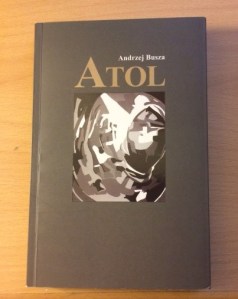
Czytając tomik wierszy „Atol” Andrzeja Buszy…
Busza, który całe prawie życie spędził jako wykładowca i badacz literatury na katedrze uniwersyteckiej nie jest typowym przykładem literaty, pisarza. Jak w każdym zawodzie, powołaniu w czasach współczesnych, tak i pisarz swojej karierze zobowiązany jest (lub takie zobowiązanie narzuca mu i czytelnik, i wydawca) o dbanie o tą karierę, zabieganie o nią, o usilne i stałe ‘uczestnictwo’ w debacie literackiej. Słowem o to, co dziś określa się mianem PR – public relations.
Profesor Andrzej Busza, a zapewne i cechy własne charakteru, stał na przeszkodzie poety Andrzeja Buszy w robieniu tegoż ‘pi-aru’. Być może wychodząc z naiwnego przekonania, że dobra poezja sama świadczyć będzie o sobie, takowoż talent. Niestety, świat współczesny dawno był zarzucił te staroświeckie mrzonki. I owszem, częstokroć – podejrzewam – za namową i szturchaniem przyjaciół –literatów pokazywał się tu i ówdzie, jako poeta, zabierał głos. Mówił: jestem tu i mam coś na ten temat do powiedzenia. A miał i ma ‘na ten temat’ wiele do powiedzenia. I równie łatwo wracał do zacisza swoich książek, badań literackich, jakby chował do szafy na dłuższe okresy czasu garnitur ‘poety’. Do tego stopnia, że przez pewne okresy czasu w ogóle nie pisał. Z wielką stratą dla literatury polskiej. Lub rezygnował z pisania po polsku i pisał po angielsku. Zabawne jest to, że te właśnie jego ‘angielskie’ wiersze są wręcz przesiąknięte specyficzną wrażliwością polskiej tradycji poetyckiej. Nie w sposób nachalny, krzyczący: jestem Polakiem, vivat Polska! Nie wyobrażam sobie wręcz sytuacji, w której Busza potrafiłby być nachalny w czymkolwiek. Mimo to, parafrazując popularne porzekadło, można rzecz: Busza wyprowadzał się z literatury polskiej, ale literatura polska nigdy nie wyprowadziła się z Buszy.
Nie będę tłumaczył i polemizował z jego własną, autonomiczna decyzją zaprzestania pisania wierszy po polsku. Kilkakrotnie na ten temat dyskutowaliśmy i dość jasno i racjonalnie i to wyłożył. W typowy, ‘buszowski’, nad wyraz skromny i pełen szacunku wobec słowa pisanego i czytelnika sposób. I nigdy mnie do tej decyzji nie przekonał. Ale to jego suwerenne prawo poety, które uszanować należy. Na szczęści dobrzy tłumacze i jego świetna (z tego przymiotnika się nie wycofam, Panie Andrzeju) znajomość polszczyzny zaowocowały dziesiątkami wierszy Buszy, które w tłumaczeniach na polski wydają się nie tylko nie tracić, a być może wręcz zyskiwać. Co dziwić nie może. Jeśli ktoś oczekuje przeprowadzenia dowodu badawczego takiej supozycji – to odsyłam akapit wyżej, do parafrazy przytoczonego porzekadła.
Jeden z najlepszych badaczy poezji Buszy, prof. Janusz Pasterski z Uniwersytetu w Rzeszowie, z którym miałem możliwość dłuższych dyskusji o Buszy, najbardziej zdaniem moim zbliża się do rozwiązania ‘zagadki’ Buszy-poety pisząc : w cieniu poetyckiej dokładności kryje się ostra wizja, dramat intelektu zakorzenionego w nie do końca określonym sensie ciemności i bezradności (tłumaczenie własne, z eseju J.P.”Other fragrances. The poetry of Bogdan Czaykowski, Andrzej Busza and Florian Śmieja” „Strumień”, nr 08, s.43). Nie określa to charakteru jego poezji jako katastroficznej ale nadaje jej wymiar pewnego metafizycznego smutku, pogodzenia się z bezradnością człowieka wobec ‘losów’ życia, świata i kosmosu.
Trudno jest mi pisać o poezji Buszy. Mnie jest trudno. Nie dlatego, że go znam osobiście i bardzo cenię. Łatwiej mi to było z poezją innych autorów, których znałem, choćby niezapomnianego, wspaniałego Bogdana Czaykowskiego. Trudno, bo wiersze Buszy wrastały we mnie bardzo powoli, a przez to głębiej, przebijały się przez kilka warstw intelektualnych, racjonalnych, czysto literackich, by dotrzeć do czystej formy emocjonalnej. Gdy już dotarła – wrosła w nią, jak tkanka żywa, prawie genetyczna, własna. A opisywanie czegoś tak intensywnie emocjonalnego jest bardzo trudno. Kolejna ‘zagadka’ poezji Buszy. Filozoficznej, bogatej w całe pokłady tradycji kulturowych obszarów nie tylko polskich lub angielskich ale i śródziemnomorskich z klasyką i wcześniejszym antykiem – a tak w swym sednie, jadrze po prostu ludzkiej i mądrej. Mądrej nie przez to bogactwo kulturowo-literackie (jakim jest bezwzględnie nasycona) a przez głębokie człowieczeństwo. Którą pisze nie profesor, akademik i literaturoznawca a człowiek, który przysiadł na moment na wzgórku, gdzieś nad jakimiś polami, rzeczkami, patrzy na nie , jak stroskany gospodarz, uśmiecha się smutno niby, a z pełnym zrozumieniem kolei losów i życia. Widział już , jak rzeczki zamieniały się w potężne fale zalewając okoliczne łąki, widział, jak latem te łąki kwieciły się dywanem ziół i kwiatów i jak – nieuchronnie – bladły, brązowiały i przymierały jesienią. Jak drzewa od mrozu pękały zimą srogą, wiedział, że nie każde stworzenie i nie każdy krzak wiosny doczeka … Pamiętał (siebie może?) chłopaków i dziewki okoliczne ukradkiem się w trawach wysokich całujących. Wiedział, że jak te stworzenia, rośliny i oni nie wszyscy wiosny doczekają. Czy myślał, tak siedząc na wzniesieniu, o Persefonie, o Eurydyce? Zapewne. Wszak ważne było, nie to że boginką była lub ukochaną ulubieńca bogów. Ważny był ich los. Fatum może. Może ethos. Jak sam pisze w wierszu ‘Wiosna’: program miałem minimalistyczny / lecz całkiem wygodny / … / kiedy / marcową pogodą / wtargnęłaś w moje podwórza / z wiatru śpiewem syrenim / w pochodniach / rozjęzyczonych drzew / … .
Kto szuka spaceru z poezją, nie biegu, kto szuka dostrzeżenia Losu-etosu w chaosie i bezwzględności życia – niechże na spacer weźmie tomik wierszy Andrzeja Buszy. Spacery i tak długie, a zdecydowanie niekończące się, nie są, być nie mogą. Kiedyś, gdzieś kresu dobiegają. I tak było od początku, pewnie będzie i na końcu. Niechże i nadlecą nad ścieżkę muzy greckie, niech łacińscy dziejopisi wtrącą echa dziejów Rzymu i Petrarki – jakże podobni będą do tych chłopców i dziewczyn znad łąk przycupniętych u brzegów rzeczek i strumieni …
Z tym większym entuzjazmem i nadzieją spotkania w wami, czytelnikami, zachęcam do przybycia na spotkanie z Andrzejem Buszą w salce przy Bibliotece Miejskiej w Surrey, organizowane przez SAiPS ‘Pod skrzydłami Pegaza’.
Most “Monitor” pages are written in Polish. There were the occasional ones in English, though. So this time I will attempt a bilingual version in both languages. Not an exact translation, but the same story in both and commentary. Sort of editorial experiment.
Lukasz Mikołajczyk, concert “From Europe to Canada”, Vancouver, March 24, 2018
On March 24, I attended a small, chamber-like concert of Łukasz Mikołajczyk in a private residence at UBC. It was private residence, but it was organized by a group called “Music Friends’ as a public event , with paid tickets. Therefore it was and should be treated as a regular concert.
Yet, the size and particular quarters were reminiscent of time when baroque, than classical and romantic music were meant to be played. And not on opulent, powerful grand piano but somewhat diminutive ‘baby grand’. Which does create a different, more delicate and intimate sound. And what a gem it was. I have heard him (Mikołajczyk), by now, many times. On a grand stage and on stages truly not so grand at all. That one must have been perfect, for his play was delicate, so emotional and thoughtful that, at times, I was lost in different world of sounds and different reality. As in any concert there were better parts and regular parts. But parts of it was pure magic. Not often found in more official concerts.
Chopin’s last ballade, the one with number 52 in F major, was played exquisitely, poetically. The only way you can master it, as it is the most difficult of his ballades and not easily giving up to the pianist it’s secrets. It is the most abstract of his ballades, the most musical and not very clear of the story behind it. But story there is. So if you just give up on the meaning and simply follow the notes – it could be as flat as the paper Chopin used to write it down. Yet, if you create a world of images, feelings in your mind when you play it – it becomes alive. For the player and subsequently for the listener. Ballades are fully structured and developed musical compositions and offer the pianist a wide spectrum of play. They are often highly stylised. In my commentaries I try to avoid comparing two different pianist, as it is not really fair on certain level of technical and musical prowess. Nonetheless, we do have our private, individual tastes, likes and so on. As far as that Ballade is concern, for myself, I do have immense respect for the way it is played by phenomenal pianist Kristian Zimerman. I think that he just adds an extra level of sublime majesty to it. It becomes a music of heavenly experience. So if I add that comment, I must say that Mikołajczyk play was different. But different in a good way. Whether on purpose or just the atmosphere and the smaller sound of his piano – his version took me back to earth. And not in unpleasant way. To the contrary. The ballad suddenly become more real. Yes, it was a dream, but a real dream, a musical stroll toward concrete (even if we do not know that particular moment, the ‘thing’ that gave it an impetus for Chopin) – it was touchable, within listener’s grab. And that helped me to see the other level of the music. Another way of ‘feeling’ it. And I truly liked it a lot.
What followed were two Chopin’s nocturnes from the same opus 62 (no 1 and 2). Both, as intended by Chopin, played ‘note to note’, without interruption. Mikołajczyk played them with high respect for the musicality of it. As if he was trying to understand the still young, yet already weary and tired of life Chopin, as it was composed by emotion, not the strength of his hands. I thought that he used the tempo augmented by intervals not just to travel through time but actually to attempt to travel through space. To let the sound fully develope before it dies naturally or is shorten by mechanical way. It added an extra depth to the music, or rather showed the depth of it as surely intended by composer.
Franz Schubert music (Mikołajczyk played his two Impromptus: G-Flat Major, No 3 and E-flat Major, No 2) is very different than Chopin’s. An early, German romantic composer was still under strong influences of classical period and the way music was played in countless little Royal and Princely Houses (or Bishopric palaces) spread through Austria and German states and palatinates. The German style of romantic music was also different than Polish romanticism. It was more absorbed by elements of nature, certain darkness and mysticism of it, tragic love and old myths, following the footsteps of Goethe and Schiller. That early romanticism, coupled with somewhat ornamental music of the German courts is representative in his Impromptus. More an arte pro arte musical prowess than a deep spiritual experiment.
In second part we have heard how Canadian contemporary composers, of which Coulthard Piano sonata no 2 is another gem. Very well composed, combining audible parts of western musical tradition and modern music compositions. A marriage of descriptive music ( as classical music from renaissance till modernism used to be) to abstract musical forms. Considering the fact that it is very new composition for Mikolajczyk, he played it exceptionally well. I have heard it before and his interpretation did not fall behind it – to the contrary, perhaps. Maybe I’m a bit skewed in my praises, as I do like his style of playing, but I am also rather known (unfortunately) for being honest and not easily giving praise, were praise is not warranted. I said it, because I think that even in that short period of time since I heard him acutely the first time – Mikolajczyk’s play has already matured, become more refined and more confident. I have the feeling that he either already is in that moment or ready just to enter one, where a musician, an artist, can – without arrogance- say: I know what I’m doing here. Just give me the score and the instrument and there will be music. Let it be music, then. Ladies and Gentlemen.
I would be amiss, if I wouldn’t write about another, very special moment from that concert. Special moment, that touched me very much so. As we know Mikołajczyk is a young and talented pianist, who last year came to Canada, straight from Poland. The same generation as our Canadian Jan Lisiecki (of course, they have much more in
B. Pacak-Gamalski with Jan Lisiecki (Vancouver, Feb. 2018)
common, as Lisiecki – this year JUNO Awards recipient – was born in Calgary but has a very strong and dear to him connections to Poland, not only because of Chopin but mainly because he was raised as Polish Canadian and is proud of it). Generation that is future of Canadian, Polish and international music. But – before we take the flight into the future – we should never allow ourselves to forget about those, who cultivated music here in earlier generations. They were the ones, who toiled the soil. Toiled it also for the new, younger generations of musicians. As is the case of Richard Wrzaskała (ah, the Polish names, ha ha ha – how do they manage to spell it?!) – a prominent Polish born and educated composer and orchestra director, who moved to Canada many years ago. Richard, also a dear friend of mine, made a mark on our, Canadian musical stage.
Łukasz Mikołajczyk with Canadian-Polish composer R. Wrzaskala and the author B. Pacak-Gamalski
One of his popular composition is called ‘Mazurka Fantasie’ – it’s a play, a musical commentary of sort on his own connection and sources of musical inspiration in beloved Chopin’s musical heritage. Elegantly composed, uses the repeating main theme to stress the point of what is the central core of his own inspirations. I see it, whenever I listen to it, as a nostalgic nod to the past, as eloquent saying: thank you Monsieur Chopin, it has been a privilege to walk through my life with your music.
Mikołajczyk’s program for the concert did not contain Wrzaskala music. But, as the concert ended and the audience, as often expected, demanded an encore – the young pianist returned and played exactly that composition: Wrzaskala ‘Mazurka Fantasie’. And played it so tenderly, so soft that it moved me to the core. It is very obvious and beyond any need to explain, that Chopin’s music is at the heart of both Mikołajczyk and Wrzaskała musical heritage. By playing that piece he did pay homage to it. How elegant, Lukasz.
Finally, last but not least – not least by a huge margin under any circumstances. Very soon, thanks to Vancouver’s own classical music organizers and promotors, Vancouver Chopin Society, we will be treated to special event: piano concert of one of the best pianists of his generation, the incomparable Rafał Blechacz. Blechacz international fame could be only compared to his own talent and hard work. If nothing unexpected or tragic will happen, this 33 year old musician in 20 years’ time will be what Zimerman is now, what Garrick Ohlsson and Martha Argerich are, earlier Vladimir Ashkenazy, Daniel Barenboim and what Horowitz and Rubinstein were.
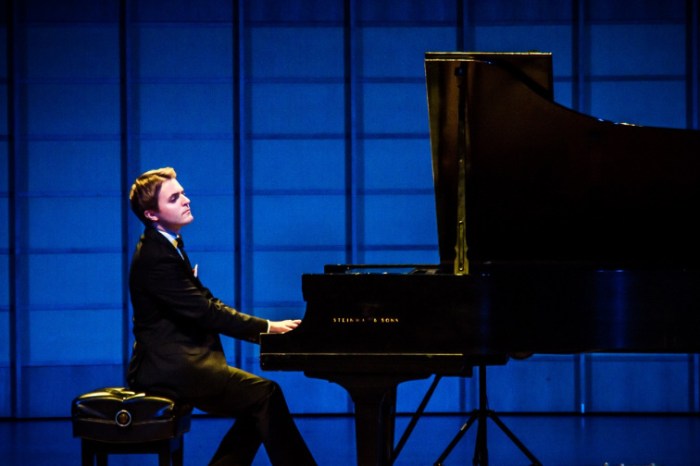
Rafał Blechacz (photo: By Michał Kobyliński – used under Wikipedia Commons Share Licence)
His star shot to fame right after winning the prestigious International Chopin Competition in Warsaw in 2005. Since than he received top prizes and accolades in many international competitions, festivals. In 2014 the New York based America Gilmore Artist Award (considered by many as the equivalent to ‘Nobel Prize” in music) named him the most outstanding pianist in the world.
His concert in Vancouver will take place on the main stage of Playhouse Theater, on Sunday, Aprill 22 at 3 PM. The program consists of A. Mozart Rondo in A minor, K. 511; Sonata in a minor, K. 310; L. van Beethoven Sonata in A Major, Op. 101; R. Schumann Sonata No. 2 in g minor, Op. 22; F. Chopin 4 Mazurkas, Op. 24 and Polonaise No. 6 in A-flat Major Op. 53.
It will also be a special, anniversary concert commemorating 20 years of Vancouver Chopin Society, which in that time has become a staple of our musical life here.
(note from an author: what follows is a Polish language musing on the same subject. However, at the very end of the review, there is a short rebuke of an unfortunate tirade of Vancouver well known musician and pianist, Robert Silverman. As it is not really a part of my review of Mikolajczyk concert, but very much part of the conversation on the subject of Chopin and his music – I decided to show you an excerpt of Mr. Sliverman’s strange diatribe and my response to it. So, please do scroll to the end and you will find the texts in English.)
24 marca, w prywatnej rezydencji na terenie Uniwersytetu British Columbia miał miejsce bardzo udany, kameralny koncert pianistyczny Łukasza Mikołajczyka. Organizatorami koncertu była grupa Music Friends, która podjęła się organizowania tego typu kameralnych, w tradycji dawnych Salonów Muzycznych, spotkań z ciekawymi muzykami z Vancouver i okolic. Zachęcam bardzo melomanów do śledzenia kalendarza koncertowego tej grupy – możliwość uczestnictwa w tak kameralnym wydarzeniu muzycznym jest nieporównywalna do wielkich sal koncertowych! Nastrój i specyficzna intymność, która łączy wykonawcę ze słuchaczem są przeżyciem specjalnym i wyjątkowym.
W programie Mikołajczyka (nazwanym bardzo ładnie: „From Europe to Canada with Lukas Mikolajczyk”) była muzyka Chopina (Ballada Nr 4 f-moll; Scherzo Nr 4 E-dur; i Nokturny Nr 1 i 2, B-dur i E-dur), Schuberta ( Impromptu Nr 3 Ges-dur i Nr 2 Es-dur), kanadyjskich kompozytorów współczesnych Paula Crawford (kompozycja, którą można określić ‘obrazkiem muzycznym’ pt. „Did you hear that winter’s over” z pogranicza muzyki poważnej i muzyki popularnej) oraz Jeana Coultharda (Piano Sonata Nr 2).
Pianista każdą część koncertu poprzedzał bardzo dobrze przygotowanym wprowadzeniem słownym. Posunął się nawet nieco dalej w opisie, ilustrując stosownym fragmentem muzycznym cechę lub specyficzność muzyczną utworu, który opisywał. Takie personalne wprowadzenie jest bardzo dobra i mile widzianą rzeczą. I choć czasem trudną do przeprowadzenia na wielkiej, formalnej scenie olbrzymich sal koncertowych – wyjątkowo przydatną właśnie w takich kameralnych warunkach. Olbrzymia większość z nas nie przychodzi na koncerty ze zwojem nut i bez względu na zasób wiedzy muzycznej nie jesteśmy w stanie znać szczegółowo większość utworów nam prezentowanych.
Ballada nr 4 f-moll jest ostatnią balladą Chopina i wyjątkowo bogatą w muzyczne ‘słownictwo’. To utwór wyjątkowo piękny a jednocześnie trudny dla pianisty. Gdyby tylko skupić się na jej technicznie idealnym wykonaniu – bardzo łatwo zagubić jej element poetycki, marzycielski. Jest zajęciem chybionym (na pewnym etapie talentu i umiejętności technicznych wykonawcy) porównywanie jednego pianisty do drugiego. Mimo to, wyjątkowo tylko, zrobię to by oddać własne, indywidualne sympatie muzyczne. Otóż do tej pory, ze współczesnych koncertujących teraz pianistów, za najlepsza jej interpretację uznaję sposób, w jaki robi to Krystian Zimerman. Jest to technicznie idealne a jednocześnie przekazuje jakąś dziwną majestatyczną tajemniczość tej ballady. Gra Mikołajczyka obudziła we mnie inne wrażenia. Wydała mi się podkreślać nie jej akcent majestatyczno-tajemniczy, a dużo lżejszy, poetycko-osobisty. I bardzo mi się to podobało. Dzięki temu otworzyło to dla mnie, tylko amatora muzyki a nie muzykologa, nowe pokłady tego pięknego utworu. Może była to też ‘wina’ kameralności, intymności tego koncertu? Nie wiem. Takie w każdym razie – dobre – wrażenie z tego odniosłem. Nie przysłoniło to w niczym wyjątkowości interpretacyjnej Zimermana ale pozwoliło na inne na nią (tej ballady) spojrzenie, zrozumienie jej wielowarstwowości. Gdyby wszyscy ‘najwięksi’ grali identycznie – jakiż sens byłoby chodzić na koncerty? Ostatecznie pianista, skrzypek czy wiolonczelista tylko siedzi lub stoi w miejscu przy instrumencie i gra. Nic więcej. Ani sztuczek nie pokazuje, ani skacze, biega, nie gimnastykuje się na drążku lub linach. Wystarczyłoby tą ‘najlepszą’ płytę kupić i grać sobie w domu na okrągło. Wszak ideału, raz osiągniętego, ulepszyć nie sposób.
W scherzu miał możliwość wykazania całej bogatej tkaniny temp, melodii. Podobnie, jak Ballada f-moll, te scherzo jest ostatnim scherzem Chopina. I trochę innym od pozostałych. Jest tematycznie (nie muzycznie) utworem najlżejszym, więc jakby nieco ukłonem wobec poprzedniej, barokowo-klasycystycznej tradycji. Trzeba generalnie zaznaczyć, mimo tego ukłonu wobec tradycji starszej, że scherzo , jako rodzaj muzyczny, dzieli się na dwa kompletnie odmienne etapy rozwoju: scherzo, jako gatunek muzyczny przed Chopinem i scherzo, jako gatunek muzyczny po Chopinie. Nie ma tu nawet cienia wątpliwości. Tak, jak astronomia dzieli się na przed-kopernikańską i po-kopernikańską, tak scherzo jest przed-szopenowskie i po-szopenowskie. Trochę zaczął iść w tym kierunku już Beethoven – ale dopiero Chopin zrobił z tego kompletnie nowa szkołę komponowania tego gatunku muzycznego. Z bardzo dobrej gry Mikołajczyka tą głębię i wielopłaszczyznowość scherza było łatwo rozpoznać i ją docenić.
Nokturny, zgodnie z życzeniem zresztą samego kompozytora, grał łącznie. I znowu – celował w ich materii poetyckiej, marzycielskiej.
Franz Schubert, niemiecki kompozytor przełomu między szkołą klasycystyczna a romantyczną, u schyłku swego życia skomponował kilka impromptu. Krótkiej, niezbyt rozbudowanej formy muzycznej, która właśnie u romantyków stała się dość popularna. Ale powiadają, że czym skorupka za młodu nasiąknie … Takoż i impromptu Schuberta stale w swej ornamentyce cofają się do czasów jego mistrzów i jego własnej wczesnej twórczości. Odnosi się czasem wrażenie, że słucha się ich w jakimś dworze niemieckiego królewiątka lub palatyna tudzież na dworze biskupim w Austrii lub Bawarii. Przy baroku kapiącym złotem z plafonów i ścian… Miłe uchu przerywniki muzyczne.
Schubert i kanadyjski kompozytor współczesny Paul Crawford były właśnie takim miłym i lekkim przerywnikiem muzycznym w koncercie Mikołajczyka.
Natomiast utwór ostatni, również kanadyjskiej kompozytorki z Brytyjskiej Kolumbii, Jean Coulthard, Piano Sonata No 2 był głęboki i bardzo ewokacyjny. Słuchający tego utworu mógł znaleźć tam wyraźnie zarysowane fragmenty całej opisowej, europejskiej tradycji muzycznej, by nagle wejść w obszary współczesne muzyki ‘czystej’, abstrakcyjnej. Skomponowana w formie pełnej sonaty kompozycja daje dobry przykład muzycznej wiedzy i zdolności Coulthard. We mnie Mikołajczykowi udało się obudzić zainteresowanie tą kompozytorką (tą że sonatę gdzieś kiedyś już słyszałem ale najwyraźniej nie była chyba tak dobrze grana, bo wrażeń z tego głębokich w pamięci nie zostawiła) i chęć poszukania jej muzyki, poznania więcej z jej spuścizny.
Na zakończenie tych muzycznych refleksji nie mogę pominąć ostatniego wydarzenia tego koncertu, poza-programowego. Na bis pianista przygotował utwór Ryszarda Wrzaskały, „Mazurka Fantasie’. Był to bardzo uroczy ukłon wobec pana Ryszarda, jego wszechstronnych talentów muzycznych i energii, z jaką się przez dziesięciolecia tymi talentami z nami dzielił. Tego mazurka Wrzaskały słuchałem wielokrotnie w licznych interpretacjach. I w licznych, nie zawsze idealnych, warunkach koncertowych. Mikołajczyka ‘ukłon muzyczny’ był bodaj najlepszym wykonaniem tej kompozycji. Pełen wdzięku, tęsknoty i oddający ducha tego mazurka. Mazurka Fantasie to utwór na wskroś nostalgiczny, to muzyczny, prosty i czysty w formie, spacer w przeszłość i podziękowanie Fryderykowi Chopinowi za muzykę, która towarzyszy Wrzaskale prze całe życie i jakże często jest źródłem jego własnych inspiracji muzycznych. Łukasz Mikołajczyk przekazał nam wizje tego ‘spaceru’ w sposób nader elegancki, lekki i ujmujący serce. Należy mu się za to ode mnie głęboki i wdzięczny ukłon.
Now, that subject of a strange diatrybe of Robert Silverman… Perhaps I would first quote a particularly strong fragment of his opnion and, at the end, offer you a link to the full text of Silverman. Right after the quote is my responce.
“Franz Liszt for instance, played Chopin with such virtuosity, brilliance and panache, not to mention his own emendations to the scores calculated to show off his unique skills, that he quickly spawned a crowd of emulators whose descendants existed well into the 20th Century. Rachmaninoff, Horowitz, and later, Nelson Freire and perhaps Argerich in her most frenetic moments come to mind. Chopin, however, could not stand the liberties Liszt took with his scores. (“He can’t keep his hands off ANYTHING!” he once said about Liszt. Still, the fact remains, audiences loved Liszt’s performances of Chopin. I’m sure I would too.
A couple of decades later later, the Russian pianist Anton Rubinstein found in his music a sense of world-weariness and romantic longing that gave it an undeniably attractive romantic aura that you’d have to be a cold fish not to like. And so another “Chopin Tradition” was born. Anton Rubinstein was unquestionably a great pianist, as were those who have followed in his footsteps, primarily Josef Hoffmann. That’s probably the style I feel most comfortable with.
But in the hands of lesser talents, that “Tradition”(usually pronounced with a rolled “r”) resulted in what would have given the composer nightmares: vulgar, undisciplined, technically sloppy exhibitions of how not to play Chopin, or for that matter, any other composer. But because Chopin’s music is so beguiling, so utterly effective, audiences who have not studied what’s actually on the page were and still are easily fooled. (Vancouver recently was treated to an exhibition of this sort of dilettantism at a church downtown several weeks ago. The final insult was that the guy played on a period instrument so that he could lay claim to “authenticity.”) Fortunately that style of playing has all but died out.” (Robert Silverman “Chopin at the piano“)
Robert Silverman, well known Canadian pianist and former Head of UBC School of Music, offers his , hmm, let’s say personal insights on the character of Chopin’s music. Of whom, as a musician and a pianist, he seems to be a big fan. And, as a music scholar, his insight is much appreciated and worthwhile. Especially when he talks about the way Chopin composed, wrote down his music. How meticulous he was in many directions he left on the score for other pianists to augment their playing of his compositions. One can argue about this or that in his opinions. One cannot refuse him his knowledge and reasons for such, though. But when he is giving, in a style of ex cathedra, very strong opinions on the way Chopin must an must not be played –that’s altogether different matter. His caesarian ’edicts’ on which school of playing Chopin is the right one and which is wrong are nothing but opinions of Mr. Silverman. One does not disavows with such a cavalier manner entire traditions going back to the time of his last students. And the students of their students. These were people, who heard Chopin playing. Not just written opinions about it. And when Mr. Silverman notices the recent concert in Christ Church Cathedral (or as he calls it: ‘in one of the churches Downtown), when Chopin was played on an epoch piano by very much internationally respected pianist (not a star by any means, but then neither is Silverman) without even using his name and referring to his play as ‘dilettantism’ – this is not only a sign of bad manners. It is a sign of overgrown ego. Or jealous player.
As to the accuracy of how Chopin wrote his compositions and how he wanted them to be played—I can’t even try to dispute his level of professional knowledge with mine—yes, dilettantism, on this matter. Only a side note: it is worth mentioning that it was Chopin well known practice of re-working his compositions ad nausea at times. Even after copying the last, final version (the ‘final’ was not an important word in Chopin’s vocabulary) of manuscript. To add to confusion—he regularly sent his ‘final’ editions to three different publishers in three different countries: France, England and Germany. And then, after a while, sending them some changes here and there in the composition. Not always the same changes to all three publishers. Sometime just to his French printers, forgetting about the others … . Sometimes, when his students were playing his printed/published composition … he would grab the score and cross out some melodies, or tempo, or change slightly a passage … . Indeed, he was very uniform, always clear of the concept and pianists always had the unchanged, final version of his music… yes, it is my slight attempt at sarcasm.
There are even unresolved disputes as to the use of tempo rubato in Chopin’s compositions. Case in study: Ignacy Paderewski, who was a star and most important of Chopin’s music pianist in his time. Today many say he used the rubato excessively. Did he? I have no opinion nor enough knowledge about that subject. On the other hand I know that Paderewski studied under professor Leszetycki, who in turn worked with Russian great musician Antol Rubinstein, who played for Chopin and for whom Chopin played. Perhaps they knew a bit how he played … Perhaps. Anyhow, that’s just my opinion.
How do we know what was Bach preference of playing his fugas? That goes for all art forms that need to be performed by others, by stage artists. We are so used to the way Shakespeare is spoken today, in a style of great actors like Gielgud and Olivier, which mimmicks that of XIX century British aristocracy, that only recently linguist scholars protested against it as totally innacurate and therefor making the plays way too long. Poor William (or was it Marlow?) would have been forrified hearing how it is spoken from stage today. Perhaps his ability of understanding the words would be constrained as often as ours is, when we read his plays.
As to the the pianist, who, according to Mr. Silverman, played Chopin so ‘dilletantly’ in that concert in Aglican Cathedral – it was was no other than Janusz Olejniczak. One of my personal favored. And another side note: I do write from time to time, here and there, my personal notes from concerts and musical performances. But they are what they are – personal reflections and opinions, not a formal musical reviews, I have no formal musical education to pretend to such a role. Classical music simply surrounded me from the cradle (and that is a fact as a huge concert piano towered above my baby bed and was often used by classical pianists and amateurs alike) till today. I just love it with a passion. Mr. Silverman, I am certain, possess far more theoretical knowledge about music that I ever will. And one assumes that knowledge goes with wisdom hand in hand. Unfortunately, not always …
Gaspar de la Nuit – Ł. Mikołajczyk, piano; B. Pacak-Gamalski, text
by Bogumił Pacak-Gamalski
Some twenty years ago, very young Polish actor decided to become a writer himself. First in poetry, then short stories and eventually he wrote and published a stage solo play “A true critic”. An actor writes about a theatre critic! A powerful friend or a foe of an actor, omnipresent shadow of actor’s art and stage.(*)
Sometimes our roles change. It is, I suppose, easier to be a critic. To give praise or to point mistakes. But it is easier only if you are nonchalant or arrogant in your task. When somehow you feel superior with your knowledge, experience . It is a very wrong way of being a critic. A true critic knows that he should be a part of the entire experience. That he is an extension of the stage. Is an ally of a stage artist. He is there to give support to the artist, so the next performance could be better. They both should work for the benefit of the audience: the ultimate judge. Therefore both of them should exercise a high degree of humility.
This golden rule applies to all type of artistic performance, on and off ‘stage’, whatever form the ‘stage’ might be. I have included the entire ‘foreword’ because I’m just about to write a review (a form of a critique) of musical performance in which I took small part (a spoken word, not playing on an instrument or singing). I have been asked by a pianist to help explain a particularly difficult composition based on a little known French poem. Because the three very distinctly different pieces of the composition reflect very specific fragments of the largely unknown text – an idea arose that the text should be perhaps read and slightly explained to the audience, thus allowing the audience to fully appreciate the effort of both the composer and the pianist. I thought of the idea as an excellent addition, and very helpful to the music and, most of all, to the listener. And that should be (often is not, since not only critics are sometimes nonchalantly arrogant – performers, too) always a paramount concept.
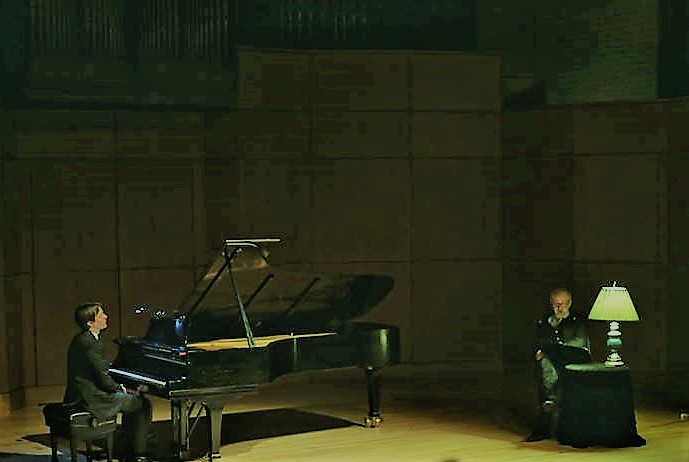
The Canada International Arts & Music Society invited music lovers to an evening with talented pianist Łukasz Mikołajczyk. The concert took place in the UBC School of Music ‘Roy Barnett Hall’.
Program consisted of Maurice Ravel’s Gaspar de la nuit (Gaspar of the night); Fryderyk Chopin’s Waltzes (A flat major, A minor, F minor) op.34, Polonaise A flat major, op. 34 and Sergei Rachmaninoff’s Prelude B flat major op. 23 no 2 and Prelude D major op. 23 no 4.
Ravel’s late composition of ‘Gaspar de la Nuit’ has three very distinctive and different parts. Some call it a suite and the term is used often. If it is, it is an atypical suite. But that is none consequential, suffice to say it is a three parts composition, which similarities (or connectivity) is based mostly on atmosphere and oneiric visions based on a poem by Aloysius Bertand of the same title.
First part, ‘Ondine’ is a story of siren-like beautiful creature, which woes a young man to her watery kingdom. Not unlike the famous sirens wooing Odysseus in his travels. It does pose a certain degree of technical challenges for a pianist: the fast repetition of short cord at the beginning and complex changing of different movements by the end. Yet, it should be presented to the listener as any easy, evocative of flowing water, composition. An attentive listener will easy find similarities to it in Ravel’s earlier composition, Jeux d’eau or even to music of Debussy.
Mikołajczyk played it splendidly, giving it time (despite fast movements, cords and multi melodies) to overtake the listener with vision of cascading water, waves and the apparition of Ondine spreading her charms and invitation to the surprised young traveller. In this type of composition the aim is to play the fast and changing parts without being noticed that it is a bit of virtuoso piece. The feeling has to be of the murmur of water, the flowing on its surface of a siren and her song-charming. And, I am certain, that the audience (in this particular piece) did not even notice the difficulty of the music, being instead overtaken by that magic vision and spell.
Despite the unusual fact that I was on the stage, not among the audience, and in a small way part of the performance, the pianist had my full attention and effortlessly took me inside that dream, the vision created by the music.
The second part – Gibet (to be understood not as normal gallows but an instrument, mechanism where, in old days, an already executed dead body of a criminal was exhibited, often for a very long time) – was composed more in the form close to a funeral march. It is , after all, a story of an apparition of a person, disguised as a monk or poet or philosopher, who was ‘inhabitant’ of a gibet, an ally of Satan, death incarnate. I think that Mikołajczyk was quite apt in playing the somber mode of the music. It took us to places dark and hidden. Full of death and decay.
And – finally! – the Scarbo. Third and last part of Gaspar de la Nuit. I said ‘finally’ for in this piece a technically excellent pianist has the chance (and does not have to conceal it) to be .. a star. A virtuoso. Extremely difficult score, not played that often for that reason, where the pianist has to be a bit of gymnast as far as his hands are concerned. The story is of a mischievous gnome perched upon a church tower or stony gate. Quite a bit of a rascal, who runs and jumps, laughs and spits at people causing havoc and despair. As it is composed to woe the listener with the pianistic virtuoso of a musician – I am not even sure that the story itself is that visible or noticeable to the audience. I think that everybody is just overtaken with the pace and overlapping passages and at certain moment just concentrates on the intricacy of the players hands than on the story. But that’s Ravel’s fault. The pianist often has no chance but to be a … star, not a storyteller. Personally I am in the definite minority, who thinks that it is too much of an l’art pour l’art (art for art’s sake). But Ravel, not unlike Chopin, Liszt or Mozart where soloist of the piano, too. And wanted to be the best, the most admired – to be star! They were the rock stars of their time. Don’t be afraid or too reverential to the somewhat patronizing term: classical music. There is only two types of music: good and bad one.
After intermission (and relocating myself to be among the audience, ha ha ha) Mikołajczyk played more known and popular pieces by Chopin and Rachmaninoff. There is really not much of a reason to talk about the music, it’s character and emotions of both of these immensely popular composers. What is worth stressing though, is the fact that despite a sharp difference in musical style (Chopin was a romantic period composer and Rachmaninoff definitely an impressionist) one could easily link their common emotional musical background. Unlike Ravel, a contemporary and a friend of Rachmaninoff, who was through and through French culture composer. Chopin and Rachmaninoff shared a somewhat similar culture of Polish and Russian Slavs. An innocently, almost child-like happy at moments and very brooding at other. Sentimental and romantic (romantic not in a musical sense but common language, conversational understanding) to the core. And that is often noticeable in both composer’s emotional tone. Their ‘storytelling’. I had a distinct feeling that Łukasz Mikołajczyk felt more attuned to their music, to its soul. Some things come naturally, and others you have to learn, study to understand.
The Waltzes of Monsieur Chopin that were flowing from under Mikołajczyk’s fingers, were so light, so sweet. It was good choice to show the differences of their atmosphere stemming from employing different scales: from major to minor.
Rachmaninoff’s Preludes (D major op. 23 no 4 and B flat major op. 23 no 2) are always a good choice for a pianist and listener. Detailed and intricate yet composed so brilliantly, bring such a joy to listen.
And, of course, how could he denied himself and us to listen again to his interpretation of the wonderful, sweeping music of Polonaise A flat major op.53. Composed in 1842 polonaise (translated literally: Polish dance) belongs to a canon of piano music world wide. It is majestic, heroic. Even the tempo from the very beginning is marked as Alla polacca e maestoso (a’la Polish and majestic). Its rapid cascading octaves, perfect intervals, thrills and the need to use more or less the entire keyboard makes it a class in itself. It is also a physical ‘killer’ for a pianist. If a Chopin’s waltz is a nice stroll through a park – that this polonaise is a ten miles run. If you are not physically prepared to play it – you will never achieve the effect that is required to show its glory. In music, for myself, I often compare it to two very distinctly different compositions having nothing in common with this piece in form and type: Handel’s Messiah and Verdi’s Requiem. All three have in common the feeling of grandiose majesty. Something eternal. The main theme of this Polonaise serves the same purpose for setting the tone of the composition as in Verdi’s Requiem does the Dies irae. Final victory, even through mortal death. Verdi’s and Handel’s is based on God’s glory, Chopin on nationalistic pride. But the victory is a triumph of freedom and evokes the feeling of heroism.
Mikołajczyk , I think, has made that piece his own. Which is difficult for one main reason: it is and was played many times by so many great pianists that it makes it almost impossible to escape comparisons. And for a young pianist it is not easy to be compared with the giants of the keyboard. So to make it your own, to achieve an emotional ownership of the way you feel it and play it seems to be the only logical choice. It does not mean making some sort of variations on the Polonaise, after all, let’s still keep Chopin – Chopin. But it allows you to play it the way you want to play as if it was never played by anyone. Otherwise the weight of it could be difficult to bear. I think that Mikołajczyk achieved that.
Let me go back to the paragraph, were I was writing about Ravel and the third part of Gaspar of the night, the Scarbo. When I said that there is not really a classical music and the non-classical music. There is good music and bad, period. I am satisfied beyond doubt that, on that evening in Roy Barnett Hall, I was listening to the good type.
*) Omar Sangare, “A true theatre critic” solo performance play. I have wrote an extensive review of the play for the Theater Institute of Romaszewski in Warsaw, after it was performed in Vancouver’s International Fringe Festival, where it was highly acclaimed.
Gdzieś chyba w 1975 lub 76 jechałem w Warszawie tramwajem przez Aleje Niepodległości z Centrum, ku ulicy Dąbrowskiego na Mokotowie. Dziś bym pewnie nie trafił do tego budynku, bo w tych okolicach, między Dąbrowskiego a Madalińskiego, większość z nich była bardzo podobna. Dość solidne bloki powojenne, wybudowane jeszcze na długo przed technologią ‘wielkiej płyty’ z lat 60. i 70. ubiegłego wieku. Te nowe z tejże płyty rozsypywały się jeszcze w trakcie budowy – te starsze wyglądają ładnie i porządnie nawet dziś. Aliści, nie o technologiach budynków mieszkalnych pisać miałem.
Otóż szedłem do kuzynki mojego serdecznego przyjaciela, Stefcia, na mała prywatkę. Niby nic nadzwyczajnego. Stale się gdzieś jakieś małe bibki robiło. Komuna nie komuna, a młodość ma swoje prawa! Wcześniej udało mi się zdobyć (w Polsce wtedy się nie kupowało, tylko załatwiało lub zdobywało) butelczynę węgierskiego Egri Bikaver (odmiana taniego merlotu) w delikatesach Instytutu Węgierskiego na Marszałkowskiej, koło Składnicy Harcerskiej. Więc czułem się jak nowojorczyk z butelczyną tego wina w torbie. Elegancko, nie z pusta łapą. A elegancko miało być, bo na spotkaniu miał się pojawić … młody, chudziutki Janusz Olejniczak. Był dobrym kolegą kuzynki przyjaciela (nie pamiętam już też i jej imienia nawet – choć pamiętam, że była ładną dziewczyną). A Olejniczak ciągle jeszcze chodził w nimbie laurów Konkursu Szopenowskiego z 1970, gdzie był najmłodszym w historii tego Konkursu finalistą! W Polsce wówczas, w moim środowisku w każdym razie, finalista Konkursu Szopenowskiego to brzmiało, jak finalista Oscara w Ameryce. Wyżej w sławie zajść nie można było. Wyobrażałem sobie, że jest szansa zawarcia fajnej znajomości i że na pewno się polubimy. Miałem przecież tylu muzyków w rodzinie, a historię Konkursu znałem nie gorzej niż warszawscy krytycy muzyczni! Halina Czerny-Stefańska i Barbara Hesse-Bukowska to były prawie, jak ciotki lub sąsiadki. Po każdym koncercie Łazienkowskim (gdzie nie było czymś nadzwyczajnym je słuchać) babcia ciągnęła mnie do nich na chwilę pogaduszki.
Ale nici z tej znajomości wyszły! Pamiętam, że Olejniczak był wyjątkowo cichy, nieśmiały jakby i dość zamknięty w sobie. O jego udziale w prywatce i wygłupach godnych naszego wieku – mowy być nie mogło. Mimo, że różnicy wieku aż tak wielkiej miedzy nami nie było. Zbyt długo zdaje się nie zabawił (co nam nie przeszkadzało, bo trochę krępował wszystkich z rozpoczęciem prywatki, ha ha ha) i ‘po angielsku’ szybko zniknął.
1970, Warszawa – Konkurs Chopinowski, Janusz Olejniczak (fot. Wikipedia Commons)
Mniej więcej w tym samym czasie miałem natomiast możność być na jego koncercie na Jasnej w Warszawie. I tym razem pamiętam, że nie byłem rozczarowany. Grał jak … Olejniczak. Świetnie.
I jaki świat mały. Kto przypuszczał, że spotkam go po czterdziestu latach w Vancouverze! Ale i tym razem rozmowa nie była długa i niemożliwa na prywatne wspomnienia w cztery oczy. Więc znajomość znowu się nie zawiązała! Ha ha ha! Widać tak pisane, panie Januszu. Na kolejną możliwość za czterdzieści lat chyba czekać nie ma sensu. Aliści ( i te Waldorffowskie słowo – widać o muzyce bez Waldorffa nie sposób) koncert i tym razem nie zawiódł. Ba, może i wartościowszy niż tamten w Warszawie, bo pierwszy raz miałem możliwość posłuchania ciekawego eksperymentu gry na dwóch bardzo różniących się od siebie nie tylko wiekiem, wyglądem ale przede wszystkim tonem, instrumentach: epokowym, pięknym fortepianem firmy Broadwood, które produkowano w Londynie w latach Chopina i na których w czasie jego późnej tury koncertowej w Anglii grał i na współczesnym królu sal koncertowych, hebanowo-czarnym Steinwayu.
Wielokroć słyszałem pianistów grających na odrestaurowanych pianinach i fortepianach epokowych. Nigdy nie miałem okazji na jednym koncercie usłyszeć oba, używane przez tego samego pianistę. Wtedy dopiero można faktycznie zorientować w bardzo chwilami wyraźnych różnicach dźwięku. Zwłaszcza w najwyższych i najniższych tonach skali. Oczywiście, przyzwyczajeni jesteśmy do tych większych i głośniejszych Steinwayów i Bechsteinów. Opanowały od dawna bardzo sale koncertowe.
A mnie zdało się, że mazurki i nokturn Chopina brzmiały lepiej i bardziej zbliżone były do stylu Olejniczaka na Broadwoodzie niż na Steinwayu. A zważywszy, że Chopin komponował głównie na jeszcze delikatniejszym Playelu, nie zdziwiłbym się, gdyby podobne wrażenie odniósł, gdyby tego dnia w Vancouverze mógł Olejniczaka słyszeć. Ciekawostką jest fakt, że sam Olejniczak zetknął się z pianem epokowym – i to nie byle jakim, bo własnie Playelem! – w 1991 roku współpracując z Andrzejem Żuławskim nad jego produkcją filmu La note bleue (o rozstaniu George Sand and Chopina) i jako aktor (grał właśnie Chopina) i jako pianista jego utworów na tymże starym, epokowym Playelu.
fot. A.I. Sobiescy
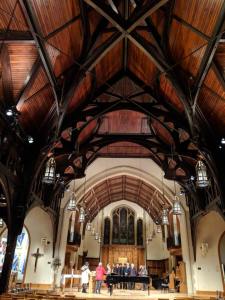
Atmosfera była bardzo kameralna, w czym niewątpliwie pomagała ‘ciepłość’ wnętrza katedralnego: drewniane, piękne sklepienie, łagodne witraże, spotkania ze znajomymi. Sam pianista nie należy do klasy wirtuozów-gwiazd. Raczej skromny nie tylko charakterem ale i sposobem zachowania. W jego koncertach dominuje zdecydowanie muzyka a nie postać pianisty. A bywa czasem nieco odwrotnie i publiczność często wpada w zachwyt nad pianistą-gwiazdorem… .
Szkoda, że w piątkowym wieczorze (w sobotę nie byłem, więc nie mogę mieć opinii) zabrakło może mikrofonu pod ręką dla pianisty, bo kilkakroć starał się coś wyjaśnić, powiedzieć (głównie po francusku, co bardziej jeszcze utrudniało) i w zasadzie nie docierało to do dalszych rzędów w ogóle. I ad hoc robione zmiany repertuarowe może były możliwe do ustalenia nieco wcześniej… Jest to ponoć trochę zwyczaj samego Olejniczaka, który gra to, co w danym momencie, w danej atmosferze i przy danym dźwięku instrumentu decyduje o finalnym wyborze. Bywało tak ponoć z samym Chopinem. W niczym to jednak nie padło cieniem na grę pianisty i szlachetność dźwięków, które spod jego palców wychodziły. Dodatkową perełką był podwójny bis, gdzie wydawało mi się, że słyszałem ze sceny, że będą to de facto prawykonania najnowszych utworów Jacka Kaspszyka, z którym Andrzej Olejniczak bardzo blisko współpracuje i łączy ich przyjaźń. Szczególnie zauroczony byłem cudownym wykonaniem (więc i kompozycją naturalnie) tanga. I zaskoczony, że Kaspszyk tak genialnie wyczuł ducha tego tańca argentyńskiego. Potem w krótkiej rozmowie, wydaje mi się (nie jestem już pewny, bo grupowo trudno rozmowę prowadzić), że powiedział mi iż zmienił zdanie i grał kompozycję Piazzolli. Co by odpowiadało moim wrażeniom – Piazzolla ze swoją szkołą tango nueva skomponował i aranżował cudowne tanga.
Poniżej mini foto-reportaż z koncertu piątkowego i (za sprawą niezawodnego kronikarza fotograficznego Andrzeja Sobieskiego i Jana Sowińskiego) sobotniego.
Łukasz Mikołajczyk, Andrzej Olejniczak (starszy mistrz przypomniał sobie Łukasza z ostatniego Konkursu Chopinowskiego)
autor, Ł. Mikołajczyk, J. Sowiński, A. Olejniczak
Ł. Mikołajczyk, A. Olejniczak i autor
A. Mikołajczyk, T. Bobrowska, (?) i I. Sobieska
Łukasz Mikołajczyk, Andrzej Olejniczak, autor
Vancouver Chopin Society (organizatorzy) i A. Olejniczak
Organizatorom: Vancouver Chopin Society i Early Music Vancouver serdeczne dzięki za to spotkanie muzyczne.
Łukasz Mikołajczyk with Canadian-Polish composer R. Wrzaskala and the author B. Pacak-Gamalski
I did write here in Polish already about new Polish musical talent emerging on Vancouver scene, Łukasz Mikolajczyk (pronounced: Lookash Mikolaytchick) in a post from October 25. So just very briefly an express summary of his bio: Mikajczyk came to Vancouver recently to further his musical studies and concert piano performance in broad sense of the subject. Almost immediately he become a persona musica in Vancouver entering the very first edition of new Canadian international music festival: 2017 International Music Competition in Vancouver. Where he came out as … no less than the grand award winner (‘Diamond 1st Prize’) in the piano section of the Competition. It is worth noting that very recently this young pianist was able to compete in the quarter- finals of the renowned and prestigious International Chopin Competition in Warsaw, Poland, being often called the Holy Grail of any talented pianist in the world and definitely Chopin’s music interpreters.
Of course – as any young and energetic musical performer he is eager to play almost anytime and anywhere. Hopefully with wise voice trying to temper him a bit and not to fall for the typical traps awaiting many young talents before him. Alas, youth has it’s own privileges and right to make mistakes, ha ha ha.
Very recently I received an invitation from him to attend premiere concert of just formed, new musical duo of him and Serb-born clarinetist, Marko Ivkovic. It was rather smartly organized in a small, familiar venue of one of the training rooms of Vancouver Music Academy – smartly, for it allowed them to ‘test the waters’ on familiar, not too official grounds.
It is not very often that we do see in classical music a piano and woodwind instrument and even less common a clarinet. Which is too bad, as clarinet makes amazing and interesting sound, a bit rasp one could say. So I was very glad of this ‘instrumental marriage’. They have chosen solo pieces intertwined with duet plays.
(from left) Marko Ivkovic and Lukasz Mikolajczyk
First was the Great Polonaise A-flat, op.53, Chopin’s masterpiece and one of his most played composition. It gives a pianist the ability to woe the audience and show his bravado, showmanship, so to speak. And it is the very composition Lukasz played during the finale of the 2017 Vancouver Music Competition! Obviously he decided to have the audience right on his side from the very beginning, ha ha ha. And the powerful grand Steinway filled every cranny of this old room of the Academy. The charge was done almost in cavalry style and the audience was won! There is, of course, few schools of how to play Chopin. Mostly it oscillates between a more robust and energetic , the other keen on the lyrical aspect of his music. Sometimes it even changes drastically within a lifetime of one player. The perfect example of it was no one else but the ultimate Chopin interpreter, Arthur Rubinstein. From the dramatic earlier style to later much more demure, lirical. I think that both are very valid and often it depends on external, in a way independent of soloist own style of play, circumstances. Sometime the atmosphere of the audience, atmosphere ‘of the street’, if I can use the term. I suppose, age of the pianist has something to do with it, too. It saddens me that we no longer have in Vancouver the original concert piano of great Ignatius Paderewski from his concerts in Vancouver at the turn of previous century. For a while it was in Faculty of Music on UBC (at the Cecil House), than confined to same dusty warehouse it was rescued from oblivion and slow death by the Polish Vancouverites and given temporary home at the Polish Consulate. At the end the only viable solution was gifting it to California, to town devoted to the memory of this great pianist where it is today in a local museum and is being still used for concerts. Would love to hear Mikolajczyk playing on this instrument. The funny thing is that the very Steinway Mikolajczyk was playing on was gift to the Academy by professor Lee – the very same musician and pedagogue, who was very instrumental in saving the Paderewski’s piano from slow death at UBC…
The second piece was 1st movement of Johannes Brahms Clarinet Sonata No 2, op. 120. Both soloists complemented each other very well. I was a bit afraid the sound of clarinet could be drown by the powerful piano. Not so. Not even in the second part of the movement, when they play the familiar, recurring subject together in forte. I was later telling Lukasz how that particular fragment almost simultaneously forced me to thing of much later music of Gershwin – there is a certain cacophony of sounds (both in clarinet and piano) in Gershwin compositions (“American in Paris” as a prime example) that evokes the echos of Brahms sonata. In nature nothing passes without leaving a mark. And so in culture, especially in culture …
The Prelude for solo Clarinet by Krzysztof Penderecki, another giant of contemporary music, gave an opportunity to show his mastery to Marko. The young Serbian soloist came out of it with flying colours (or sounds, more appropriately). This prelude is not particularly easy piece. As most of Penderecki’s compositions. And yet, the player kept our attention intakt and under control. And was able to produce notes and sounds we were surprise to hear.
The next composition was own work of Marko Ivkovic, played very nicely on an electric organs by young master of the keyboard, Lukasz Mikolajczyk. What a sweet composition, the one from the onomatopoeic variety, where musical notes mirror nature’s sounds. Ivkovic called it “Vancouver Rain Drops”. And, again the brain always doing it’s own, independent from mind, research – I was listening to it and at the same time comparing it to “Claire de lune” (famous movement form Suite bergamasque) by Debussy.
author and Marko Ivkovic
Later I inquired about some similarities of these two compositions (more in spirit than formally) and to his (not mine, ha ha ha) surprise, Marko recalled that he was working on Debussy just about the same time he composed his “Vancouver rain drops’. After we left the concert – the rain drops truly gave us a typical Vancouver shower, true to norm…
The last formal piece was ‘Fantasie for clarinet solo’ by Jorg Widman.
And this was the end. But we (the audience) would have none of it. We wanted more of this talented and energetic duo. And they obliged. With a wonderful rendition of none other than George Gershwin. They couldn’t have chosen more appropriate piece for the biss. After difficult and intellectual/philosophical Penderecki – Gershwin is like a glass of cool, refreshing Chardonnay! Now I wan to listen to them again and perhaps a small, limited edition of CD? Sometime it is nice to listen to good music not only in concert halls, but solo, by one’s own fireplace. With a glass of cool chardonnay in hand, of course…
Zaczęło się Galowym Koncertem pierwszego w Vancouverze Międzynarodowego Konkursu Muzycznego (2017 International Music Competition). Konkurs ma trzy kategorie: fortepianu, skrzypiec i wokalną. W klasie fortepianu pierwsze miejsce (Diamond 1st Prize) zdobył młody pianista z Polski, Łukasz Mikołajczyk. W klasie skrzypiec zwycięzcą był Takumi Taguchi reprezentujący USA i Japonię; w klasie wokalnej mezzo-soprano Yeeun Lee z Południowej Korei. Dla ciekawostki warto zaznaczyć, że laureatka 1 miejsca w kategorii ‘cash prize’, Tiffany Yeung z Kanady grała Poloneza Wieniawskiego z Koncertu Skrzypcowego D-dur.
Koncert Galowy 2017 VIMC. Przy fortepianie Ł. Mikołajczyk
Pianista na koncercie Galowym wykonał Poloneza A-dur, op 53 Fryderyka Chopina. Dojrzałość muzyczna pianista i jego skala poziomu technicznego gry spotkała się z zasłużonym uznaniem Jury i publiczności. Co dziwić nikogo nie powinno, choćby z tego ‘drobiazgu’, że Łukasz jest ćwierćfinalistą ostatniego Konkursu Szopenowskiego w Warszawie. Drobiazg, prawda? Nie bez kozery określanego, jako najtrudniejszy konkurs muzyki Chopina na świecie … . Nasze gratulacje dla pana Łukasza.
Nazwisko to będzie jeszcze w tym tekście kilkakrotnie powtarzane. A podejrzewam, że nie raz w przyszłości, gdyż Łukasz nie stroni od Polonii w Lower Mainland, czego dał już, w tak krótkim okresie pobytu, kilkakrotnie dowód.
14 października 2017, Vancouver Chopin Society zaprezentowało w sali koncertowej Vancouver Playhouse fantastyczny zespół muzyczny Marii Pomianowskiej z Warszawy.
Maria Pomianowska, profesor w Krakowskiej Akademii Muzycznej i solistka starych polskich instrumentów muzycznych przygotowała nie lada ucztę i niespodziankę muzyczną dla słuchaczy. Postanowiła przybliżyć nam genezę i źródła natchnienia muzycznego Chopina. I zrobić to nie tyle stylizowaną współczesną wersją muzyki ludowej (mazurków, kujawiaków, oberków, chodzonych) do jakiej jesteśmy przyzwyczajeni, ile muzyką taką, jaka najprawdopodobniej grana była za jego dzieciństwa i wczesnej młodości w Polsce. I na instrumentach, jakie wówczas były używane. A nie wszystkie nawet do czasów naszych przetrwały. Swoją godną mnisiej cierpliwości pracą i badaniami dokumentów historyczno-etnograficznych odtworzyła te instrumenty i znalazła mistrzów lutników, którzy na nowo przywrócili je do życia. Jednym z tych instrumentów była przecudownie brzmiąca ‘suka biłgorajska’, na której grały Maria Pomianowska i Aleksandra Kauf. Paweł Betley grał na duduku i flecie drewnianym, Hubert Giziewski na akordeonie, Patrycja Napierała na bębnach (perkusja) a świetny muzyk jazzowy (soul), Gwidon Cybulski zachwycał nas śpiewem, harmonijką, balafonem i digeridoo. Ach – i naturalnie djembe (nie będę tłumaczyć – ale brzmiał bardzo fajnie, ha ha ha). Na fortepianie akompaniował … Łukasz Mikołajski. No właśnie, mówiłem, że jeszcze z nim się tu spotkamy.
To było oryginalne i ciekawe, aliści (jakby mistrz recenzji muzycznych Waldorf, ongiś powiedział) nie zaskakujące. Przenieśliśmy się w świat muzyki, która fascynowała młodego Fryderyka w Polsce.
(Kapeli M. Pomianowskiej (pierwsza z prawej) nastrój muzyki tamtych lat wspomagali odtworzyć tancerze lokalnego zespołu “Polonez” z Vancouver)
Niespodzianka czekała nas po przerwie. Chopin na pięciu kontynentach. Profesor Pomianowska (tu już odezwała się silnie badacz muzyki, naukowiec) założyła, że jeżeli tak silny wpływ na Chopina miała muzyka ludowa w Polsce to niewątpliwie nie można odrzucić, że w tej muzyce przetrwały też elementy muzyki azjatyckiej z czasów najazdów tatarskich, mongolskich. Badacz łatwo odnaleźć może echa tej muzyki w muzyce ludowej. A co by się stało, gdyby Chopin żył w latach współczesnych? Gdyby, mieszkając w Paryżu – ostatecznie ciągle ważnym centrum kultury światowej (nie tylko francuskiej czy nawet europejskiej) – słuchał na przykład muzyki afrykańskiej, południowo-amerykańskiej, z innych regionów Azji? Czyż nie byłby nią zafascynowany, czy jest poza prawdopodobieństwem, że mógłby pod wpływem muzyki folklorystycznej gdzieś z Afryki skomponować utwór, który by zachował jej ducha, rytm, melodię?
I w taki własnie świat muzycznych peregrynacji nas Maria Pomianowska poprowadziła. Tym razem przy, bardzo wzbogacającym muzyczne doświadczenie, udziale Canada West Chamber Orchestra pod dyrekcją Kena Hsieha. Była to podróż niesamowita. Kiedy słuchałem zapowiedzi tej części programu – przyznaję, że opanowały mnie wątpliwości. Ileż to już razy słuchałem nadmiernych udziwnień muzycznych, które poza arte pro arte nic nie wnosiły i niczemu po prawdzie nie służyły. Maria Pomianowska przygotowując aranżacje muzyki Chopina do charakterystycznych rytmów wybranych regionów świata przekonała mnie do swego pomysłu w stu procentach. Fantastyczne widowisko muzyczne, z udziałem tancerzy, solistów oryginalnych instrumentów z danego kraju a nawet wokalisty throat singer. Jaką przyjemnością było odnajdywać echa znajomych kompozycji Chopina w rytmach afrykańskich, iberyjskich i południowo-amerykańskich, perskich, z głębokiej Syberii! Publiczność była tym wyraźnie zachwycona.
Ivan Tucakov, gitarzysta flamenco i Łukasz Mikołajczyk
Urszula Sulińska, Iza i Andrzej Sobiescy, Iko Bylicki – Prezes Vancouver Chopin Society
Bogumil Pacak-Gamalski i Łukasz Mikołajczyk
Kurai Blessing Mubaiwa – taniec afrykański
I pomyśleć, że gdy wchodziłem do Playhouse, z pewną zazdrością patrzyłem na długą kolejkę obok na “Turandota” w Queen Elizabeth Theatre … Chopina wszak tak często się słucha a “Turandota” nie oglądałem od parudziesięciu lat! Tylko gdybym uległ sentymentowi – to pewnie nigdy w życiu bym takiej wersji muzyki Chopina i takiego ‘muzycznego wykładu’ o jego twórczości nigdy nie zobaczył. Ze szkodą dla siebie. Marii Pomianowskiej, jej muzykom i gościom muzycznym z Vancouver jestem ogromnie wdzięczny za ten wieczór. A Vancouver Chopin Society oklaski za odnalezienie tej perełki muzycznej i udostępnienie jej słuchaczom nad Pacyfikiem.
Ledwie cztery dni później miałem znowu przyjemność słuchać Mikołajczyka i odbyć serdeczną rozmowę z kompozytorem Ryszardem Wrzaskałą. Tym razem dzięki przemiłemu wieczorowi muzycznemu w restauracji ‘Rodos’, za sprawa organizatora, Jana Sowińskiego. Fortepian, muzyka klasyczna i lżejsza (utwory wokalne Ryszarda Wrzaskały), znajomi od dawna nie widziani. Rzecz cała pomyślana właśnie, jako hołd i podziękowanie dla naszych muzyków znanych i mniej znanych. Z bogatą , kilkudziesięcioletnią karierą muzyczną (mistrz Ryszard), z krótką a jakże cenną (Łukasz) i początkującą mile (Monika Sowińska, sopran), z udziałem gościa, wokalistki Deany Zhdanowej.
Łukasz Mikołajczyk, Ryszard Wrzaskała, Bogumil Pacak-Gamalski
Powiadają, że muzyka łagodzi obyczaje. Dodam też, że podnosi na duchu.

 Busza, który całe prawie życie spędził jako wykładowca i badacz literatury na katedrze uniwersyteckiej nie jest typowym przykładem literaty, pisarza. Jak w każdym zawodzie, powołaniu w czasach współczesnych, tak i pisarz swojej karierze zobowiązany jest (lub takie zobowiązanie narzuca mu i czytelnik, i wydawca) o dbanie o tą karierę, zabieganie o nią, o usilne i stałe ‘uczestnictwo’ w debacie literackiej. Słowem o to, co dziś określa się mianem PR – public relations.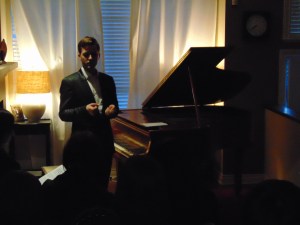
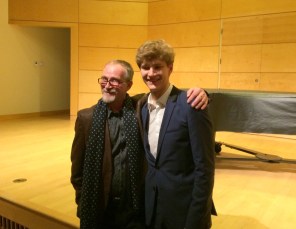
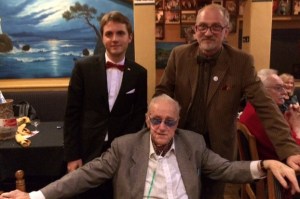


 After intermission (and relocating myself to be among the audience, ha ha ha) Mikołajczyk played more known and popular pieces by Chopin and Rachmaninoff. There is really not much of a reason to talk about the music, it’s character and emotions of both of these immensely popular composers. What is worth stressing though, is the fact that despite a sharp difference in musical style (Chopin was a romantic period composer and Rachmaninoff definitely an impressionist) one could easily link their common emotional musical background. Unlike Ravel, a contemporary and a friend of Rachmaninoff, who was through and through French culture composer. Chopin and Rachmaninoff shared a somewhat similar culture of Polish and Russian Slavs. An innocently, almost child-like happy at moments and very brooding at other. Sentimental and romantic (romantic not in a musical sense but common language, conversational understanding) to the core. And that is often noticeable in both composer’s emotional tone. Their ‘storytelling’. I had a distinct feeling that Łukasz Mikołajczyk felt more attuned to their music, to its soul. Some things come naturally, and others you have to learn, study to understand.
 Mikołajczyk , I think, has made that piece his own. Which is difficult for one main reason: it is and was played many times by so many great pianists that it makes it almost impossible to escape comparisons. And for a young pianist it is not easy to be compared with the giants of the keyboard. So to make it your own, to achieve an emotional ownership of the way you feel it and play it seems to be the only logical choice. It does not mean making some sort of variations on the Polonaise, after all, let’s still keep Chopin – Chopin. But it allows you to play it the way you want to play as if it was never played by anyone. Otherwise the weight of it could be difficult to bear. I think that Mikołajczyk achieved that.




 > > Pogwarki < <