Jesień. Więcej chyba jej w poezji i sztuce ogólnie niż innych sezonów. Jest coś i ciepłego i smutnego jednocześnie w niej. Jest świadomość przemijania, odchodzenia, umierania. Jest chwilą na wspomnienia szałów wiosny i osiągnięć lata. Ma kolorów, cieni i blasków więcej niż pozostałe okresy roku.
Otwiera bramy do skończoności, do nietrwałości wszystkiego, co ludzkie, co naturalne, co fizyczne. Co żywe. I ta realizacja, to pogodzenie się z nieugiętym prawem nietrwałości, tymczasowości, nadaje jej jakiś specjalny charakter transcendentnego smutku, smutku z lekkim uśmiechem na ustach. Nie śmiechu, a uśmiechu właśnie.
Był taki onegdaj poeta niegłośny a dobry, Stefan Gołębiowski. Dziś mało kto go pewnie pamięta. A ja lubiłem jego wiersze: krótkie formy, najczęściej dziesięciozgłoskowe, czasem 5-cio. Były ciepłe w dotyku, nie hałaśliwe. Coś stwierdzały, coś opisywały, ale bez wyroku, bez oceny. Mało w nich było zachwytu nad własną erudycją, tak strasznie popularnego wśród polskich poetów ostatnich chyba 100 lat. Trochę był w tym podobny do pisania Szymborskiej. Zdecydowanie był odwrotnością, zaprzeczeniem poetyki Barańczaka – poety kunsztem od niego o niebo wyższym, aliści przesiąkniętym takim parnasizmem i samozachwytem, e faktycznie w czołówce tych poetów polskich się znalazł.
Wiec tenże ‘mój’ skromny Gołębiowski tak sympatycznie ten rodzaj uśmiechu zarysował we fragmencie wiersza „Uśmiech”[i]:
Straciła nogi w powietrzu toczone
straciła dłoni światło różanopalce
——–\\——–
w konchach uszu sen zaprzepaścił świadomość
więc nic nie ocalało zapytał zgubiony uśmiech
morze westchnęło z niepamięci dobyty powstał
obłoczek piany i z konchy wychynął mięczak.
Więc rowerowo się na spotkanie z kolorami i widokami jesieni wybrałem. W miejsca, gdzie dawno już nie byłem. A gdzie z Johnem wspólnie chodzić lubiliśmy.
Ah, Fall … the mystique of the delicate fabric of fog rising from little lakes, and meadows. Sad but in a resigned and almost sweet type of sadness. The sad smile of accepting fate. The vigor of Spring is gone, although still strong in our memory; the mundane and mature things of Summer are gone, too. Thank god for that. Adulthood of summer of our life is too calculated, too measured. Too much of: but what if … . What if life happens?
Let it happen, then. Let it happen, enjoy the risks, the rewards, and the bitter failings.
Fall is so much more mature, so much more accepting and forgiving. C’est la vie, mon cheri. The timid smile of understanding, perhaps even resignation. Melancholic. Invisible John slightly squeezing my arm, my bike – we walked.
Mona Lisa’s smile of da Vinci? Or the smile Canadian Indigenous poet, Sarain Stump put on one of her short poems[ii]:
Gotta be the best
at the ball game
and hunt something
——–//——–
put together a few wise words
in front of the elder ones
all because she smiled at me
and her father said
he ain’t gonna give her
to who’s not a man
[i] Utwory poetyckie” Stefan Gołębiowski; wyd. LSW, Warszawa, 1975
[ii] “There is my people sleeping” Sarain Stump, pub. Gray’s Publishing, Sidney, BC, 1974
Stroll through the streets of Halifax. Could have been Vancouver, Toronto, or Montreal. The truth of it – it could have been any larger city in Canada. Yes, architecture would have been different, street names and their layout, too. Different parks and nature, maybe slightly an accent spoken by the majority. Maybe language altogether (Quebec, Arctic comes to mind).
It is such a vast country. Truly from ocean to ocean to ocean. And many mountain ranges, huge rivers. Traveled or visited most of it in the last forty years. I have seen it grow and expand in population in unprecedented numbers. Ever growing, ever more attractive, and open to thousands of new hopefuls from all over the globe. In a way – Canada is the envy of the world.
But with that important qualificator: in a way ….
It isn’t only the wide world that needs Canada. It is also Canada and Canadians that need the world, and it’s people. Who else does the cheap work in our country if not recent immigrants? Who else pays the salaries and otherwise makes up the budget of Canadian universities and university colleges if not foreign students? Yes – them. Not provincial or federal budgets. Recent studies revealed that the universities actually plan their budgets around the enormous fees they charge these students. It is their main source of income. How do they ensure that campuses and cities will house these students? They don’t. It is not only a big business for universities. It is also a huge business for homeowners and renters, who rent their rooms or apartments to these students. three, four, five per room? Why not. What were the words of the old movie “Cabaret”? O, yes: money, money, money!
Provinces and federal governments totally abandoned their responsibility for housing in Canada in the late 1970ies. All of a sudden the word ‘housing’ was renamed to ‘home ownership’. And that is a huge change. Of course, it was and is a dream and goal of many young Canadians. But home ownership is also clearly the responsibility of private citizen, not of government. Yes, there were here and there a few tweaks in regulations to help save some bucks for people, who planned to build their dream home. To put away, let’s say – five or twenty thousand dollars in RSA or specially created savings accounts in banks. Tax-exempt. Another miss moniker: they were not tax-exempt, they were simply tax deferred. Sooner or later you had to re-pay them back. But in the meantime, the young taxpayer was happy because he had five or ten thousand dollars in the bank, that he could use to purchase the home. Who cares about later! Let’s buy us a home! Totally obscured from the view and recognition were the families of poor Canadians, who couldn’t avail themselves of these ‘savings’. They were too busy paying the daily bills and rent for their apartments. Or scratching their heads about how they going to save a hundred or two hundred bucks for their child’s school trip next Saturday ….
It still worked somehow. Rents were expensive but were still manageable. Then suddenly something happened. The bubble burst. It was not, as many tried to portray it, the result of COVID and disruption in business. The virus doesn’t give a hoot about the dollar and interest rates. Baloney. It had nothing to do with it. It was the result of simple mathematics, a simple economics. And greed. Greed of corporations, greed of existing homeowners, and creeping up rates of borrowing. All of a sudden an average or even small house (typical bungalow) in Vancouver or Toronto was not 300 000 dollars but 3000 000 dollars. The Condo was not 200 000 but 800 000. Older owners were happy. Their retirement worries were solved – they were millioners! Often with very small pockets of cash but sitting on huge investments. New owners found themselves in a big crunch to pay the high mortgages. Two or three jobs were often not enough to pay for their dream. But there is a solution: use our existing (although not paid off yet) home/condo as collateral and buy one more! Easy. Then we will rent it out for 50% more than the mortgage and this way it will help us with our original mortgage. Or even better: use it as an Airbnb.
In all of these unsustainable calculations the renters, people, who couldn’t or just gave up the unreachable dream of homeownership – were left to their own devices. But the devices’ were no longer working. The system was broken. By wrong policies of all levels of all governments, by our own greed.
We, Canadians (apart from homeownership) have one more dream and holly tradition: camping! In motorhomes, in relatively cheap motels. But most of all the holy grail of being Canadian: in tents on the shores of wild lakes, rivers, on the foothills of our majestic mountains, by wild beaches of our oceans.
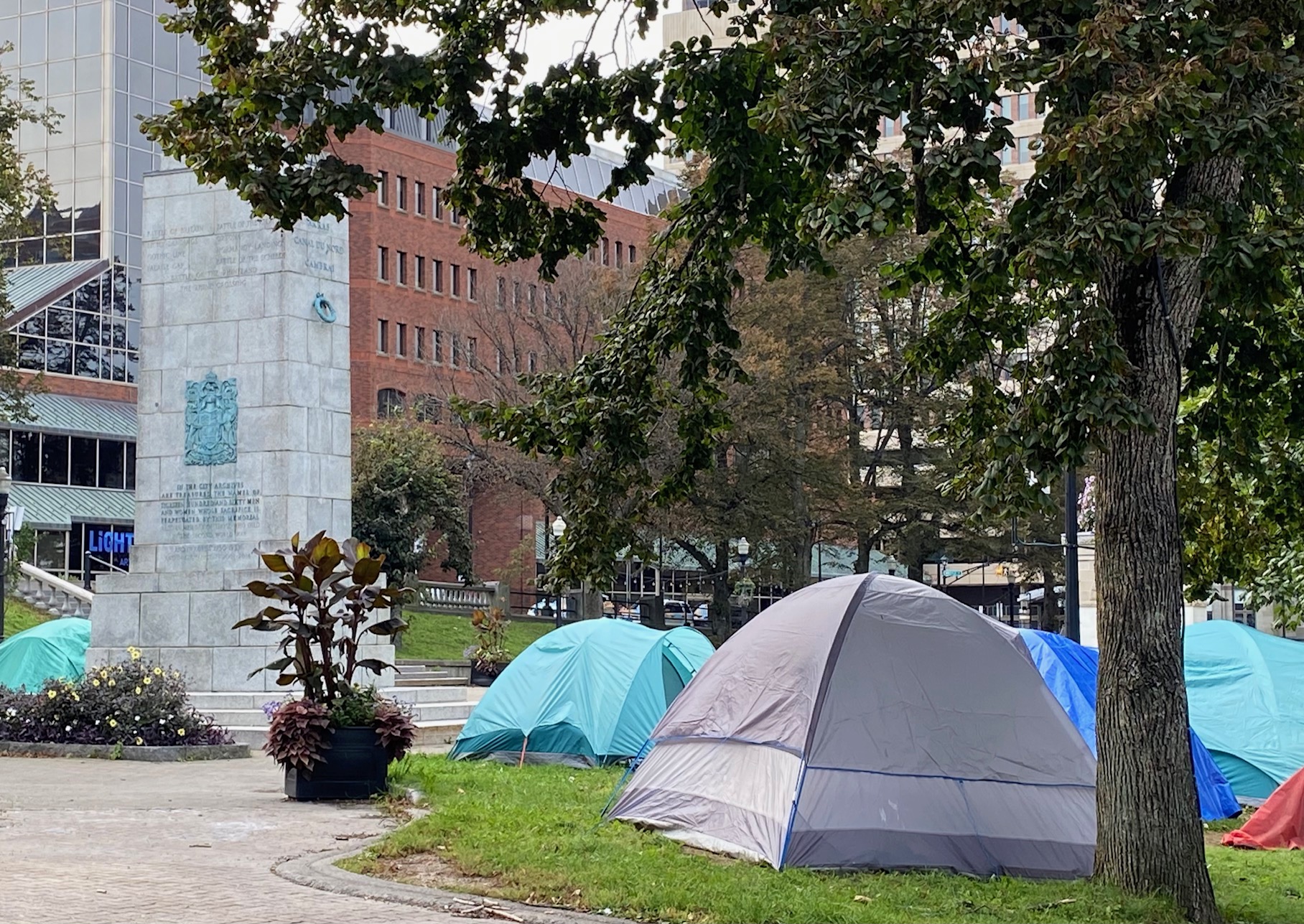
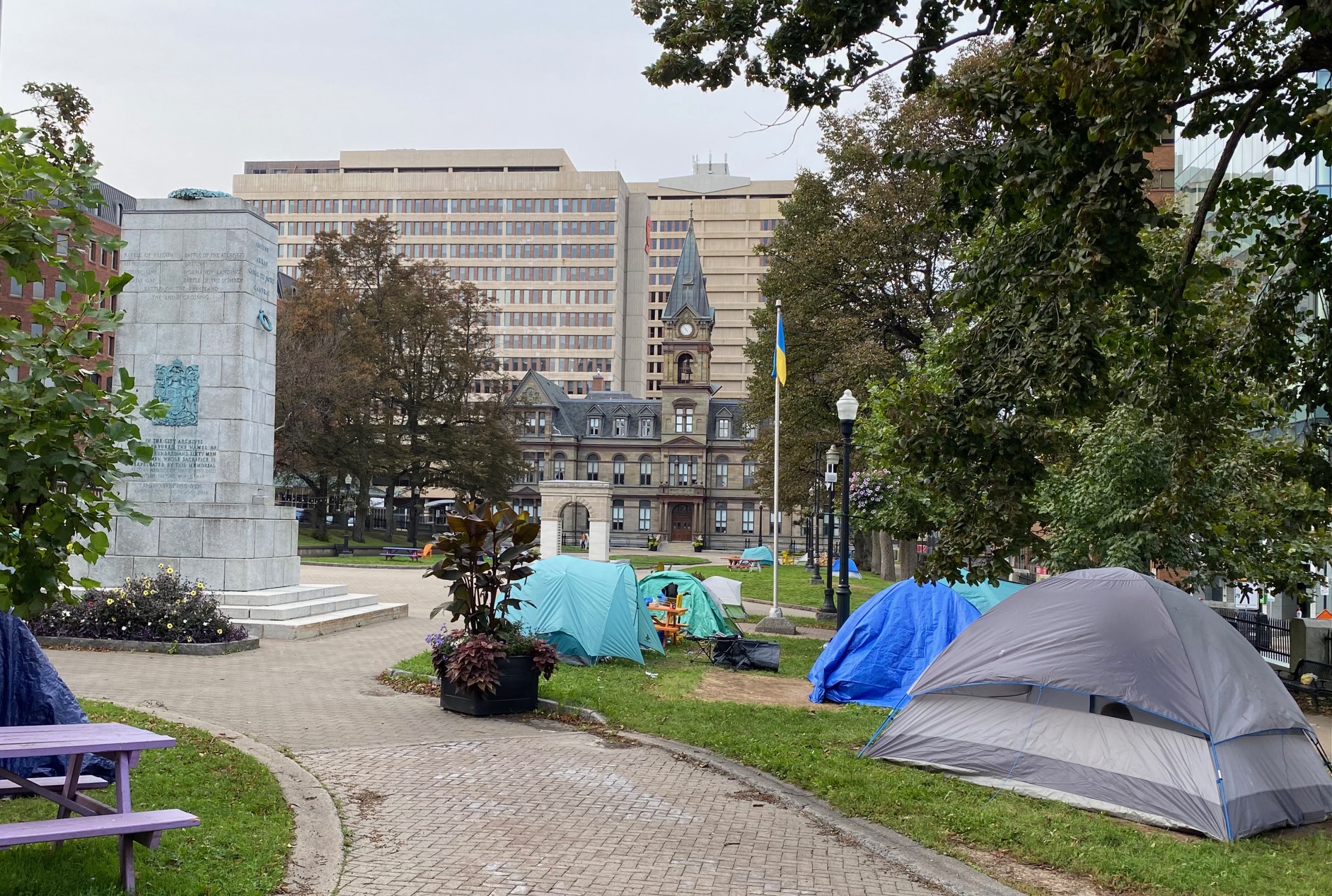
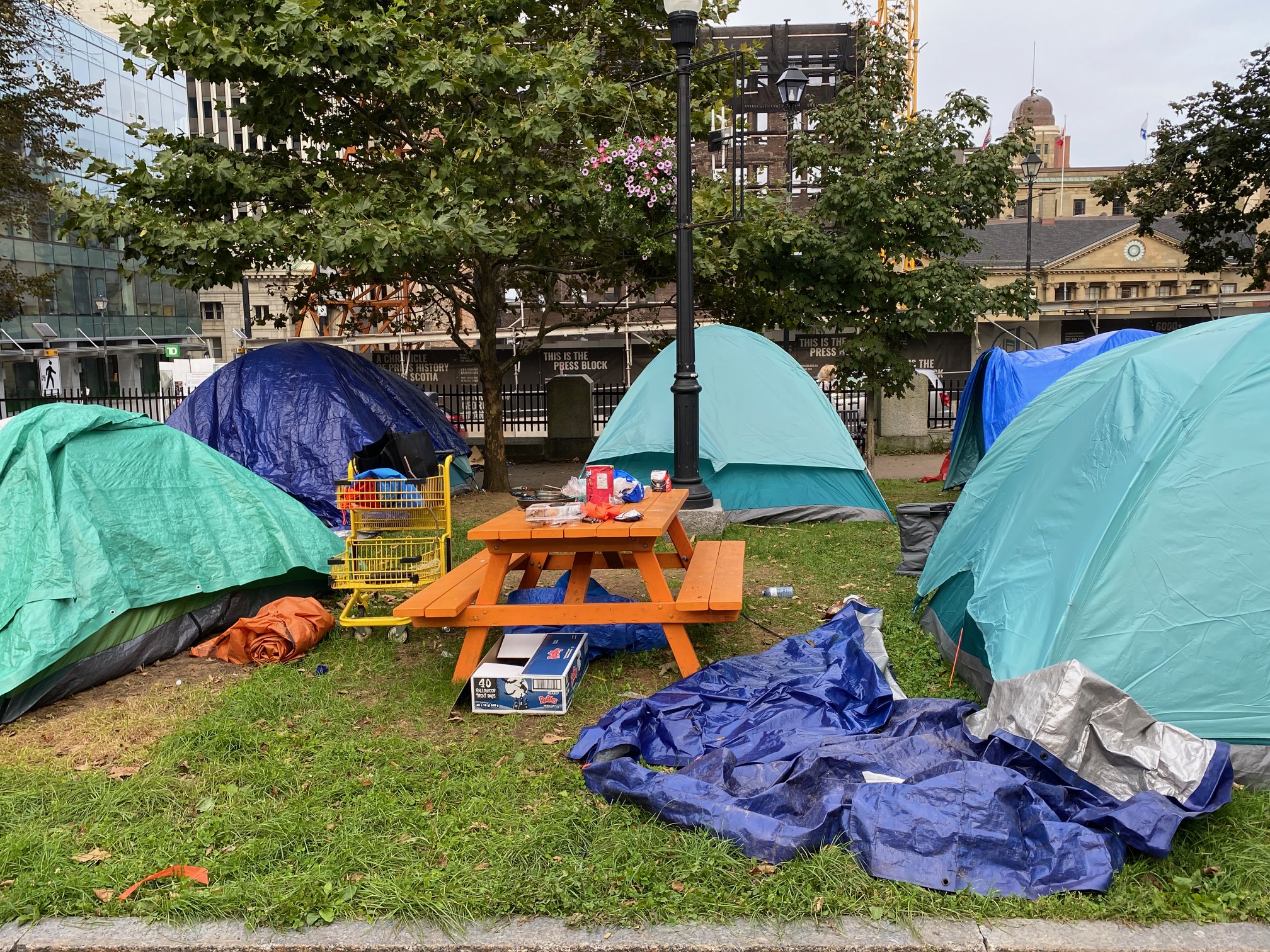
That dream was not abandoned, not lost. It is well and very much alive. It even found new spaces to set-up a tent. Or tent community. In cities. In parks or downtown streets. From ocean to an ocean to an ocean. What a majestic country and resourceful people we have!
Now, I know you could say angrily – why don’t they just find a job! These lazy bums! OK, you are right I suppose. After all, I did and obviously you did too. Wait a second though, it’s been a while since I applied for any job (had one my entire life) – but I seem to remember that when you apply you need a permanent address, phone number, even an account number as nobody pays cash anymore? Hmm. Ok, waiters, dishwashers, these simple, menial jobs for cash. But you can’t just show up unshaven, unwashed with layers of dirty clothes on your back for your interview on your first day of job, can you? No, not in real life.
Suddenly governments, especially the federal government, noticed that huge problem. The wording even changed. It is no longer ‘homeownership’, now it is called simply ‘housing’. Yes – that is correct. Homeownership is a dream, hard to achieve but still possible. Housing is not a dream – it is a minimum necessity. It is a must to function in life. If you live in your own home – you have a housing. If you rent – you have a housing. If you live in a tent – you don’t.
Building non-profit or municipal rental properties is a must. And taxpayer money should be spent only on solving this major problem. Expensive condos should be the worries of rich developers and people, who can afford to buy these condos. Even those of you, who can afford expensive city condos (and I hope most of you can) – do you want to see from your balcony a row of tents under this balcony or in a nearby small city park?
When I came to Canada over forty years ago, I landed within weeks a job paying over 15 dollars an hour. Rent for one bedroom in downtown was about $380. A nice two bedroom condo was between 50 000 and 60 000 dollars. A modest but comfortable 3 bedroom bungalow was 100 000 to 200 000 dollars. Today, forty years later, $15 an hour pay is not even legal minimum wage in many provinces. Just think of it. Something is terribly wrong with the picture. Unless you want the picture of Canada to be a tent of a homeless person.
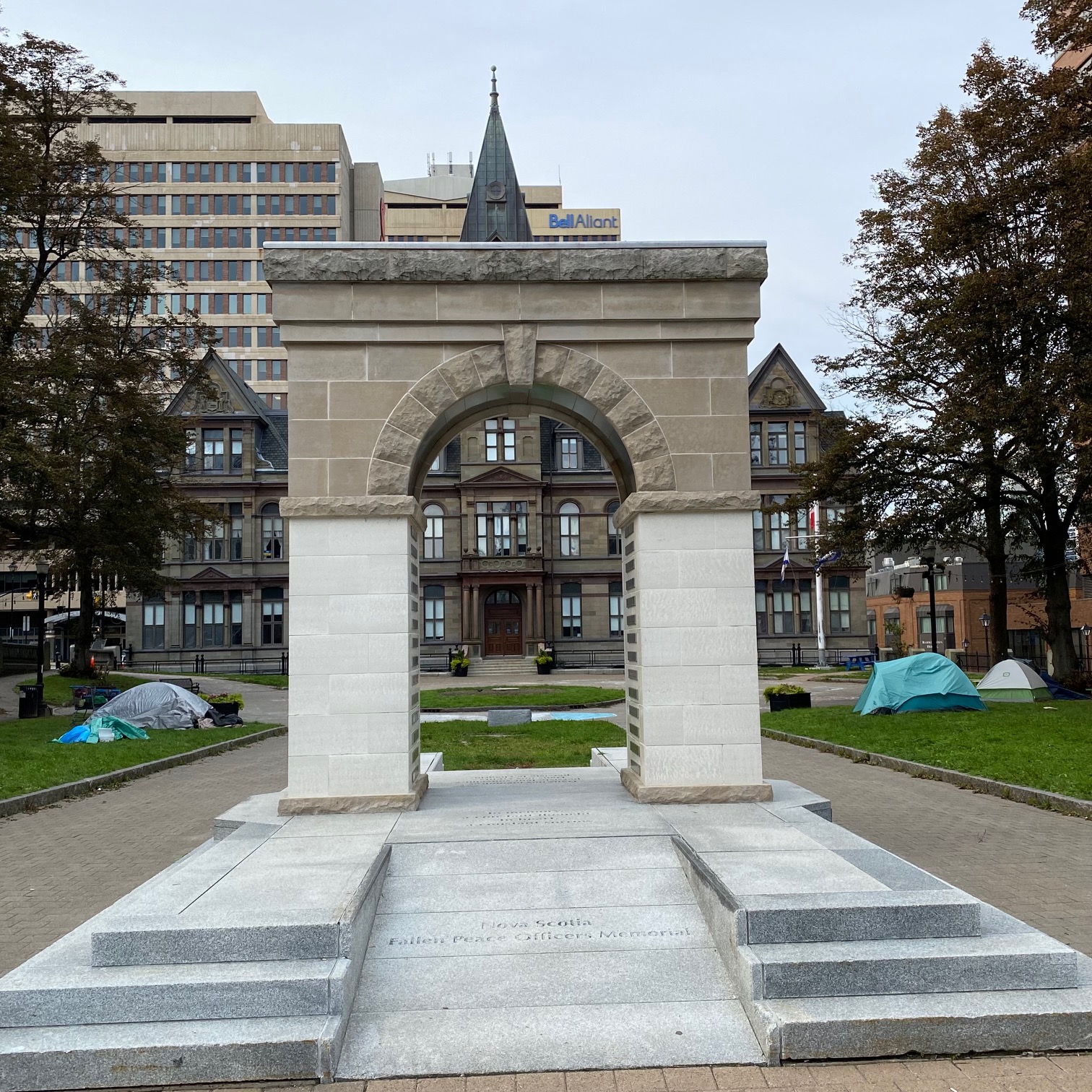
Picture above are from Halifax, NS. The tents are in one of most popular and important part of historic Dwontown: the Grand Parade piazza, nestled between historic, original first Anglican Cathedral and City Hall. It also contains two importand Centotaphs commemorating the fallen soldiers in two world wars.
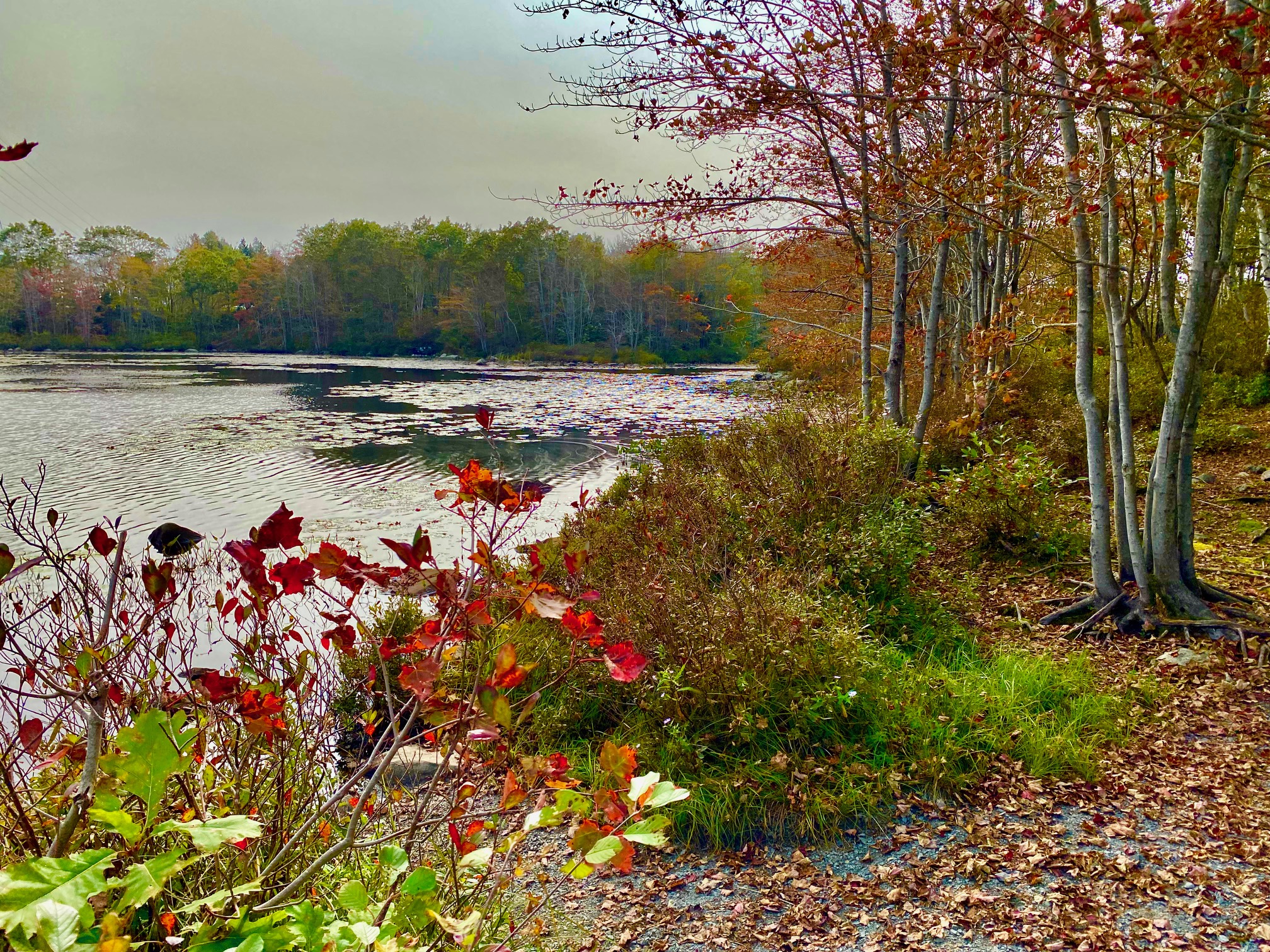
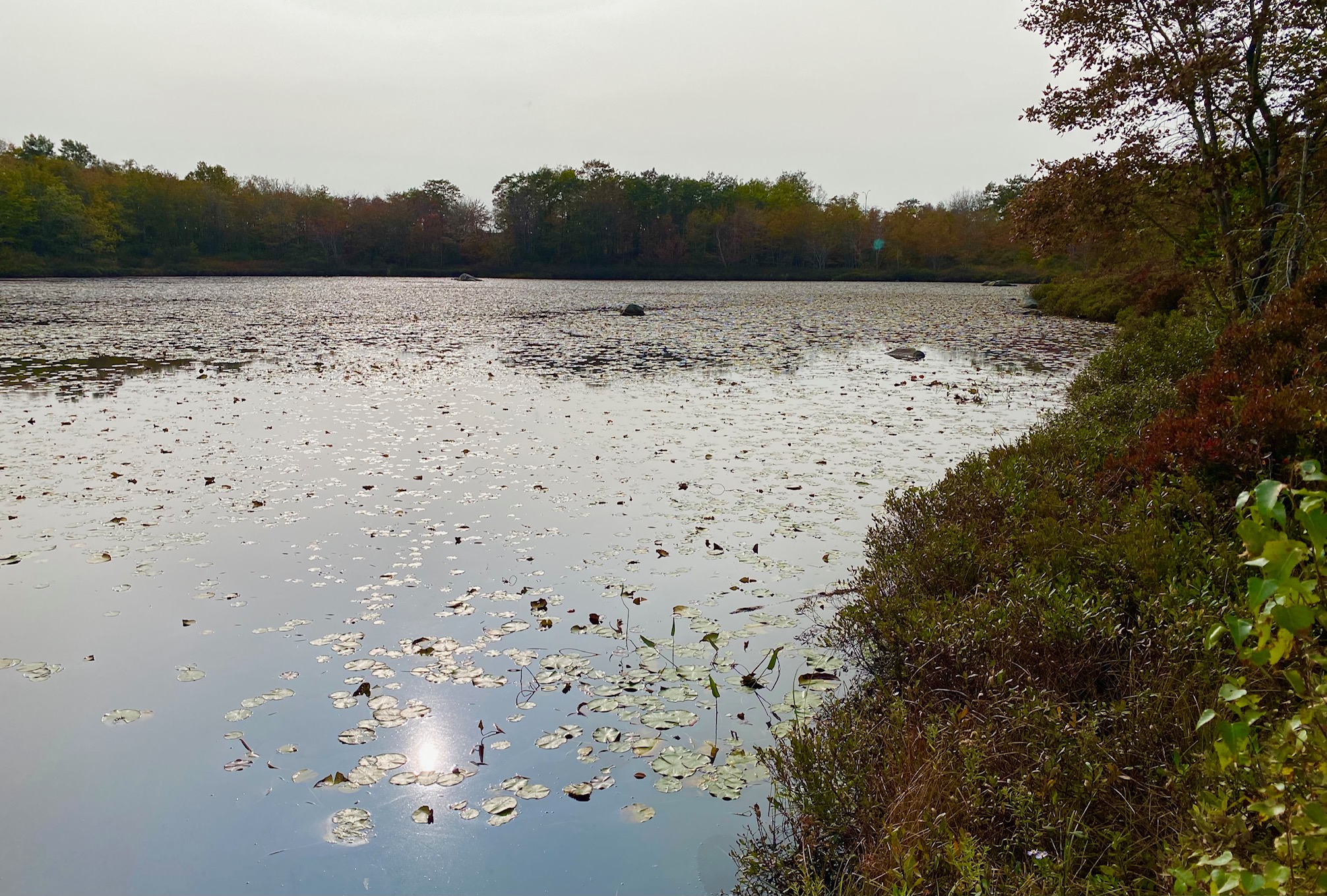
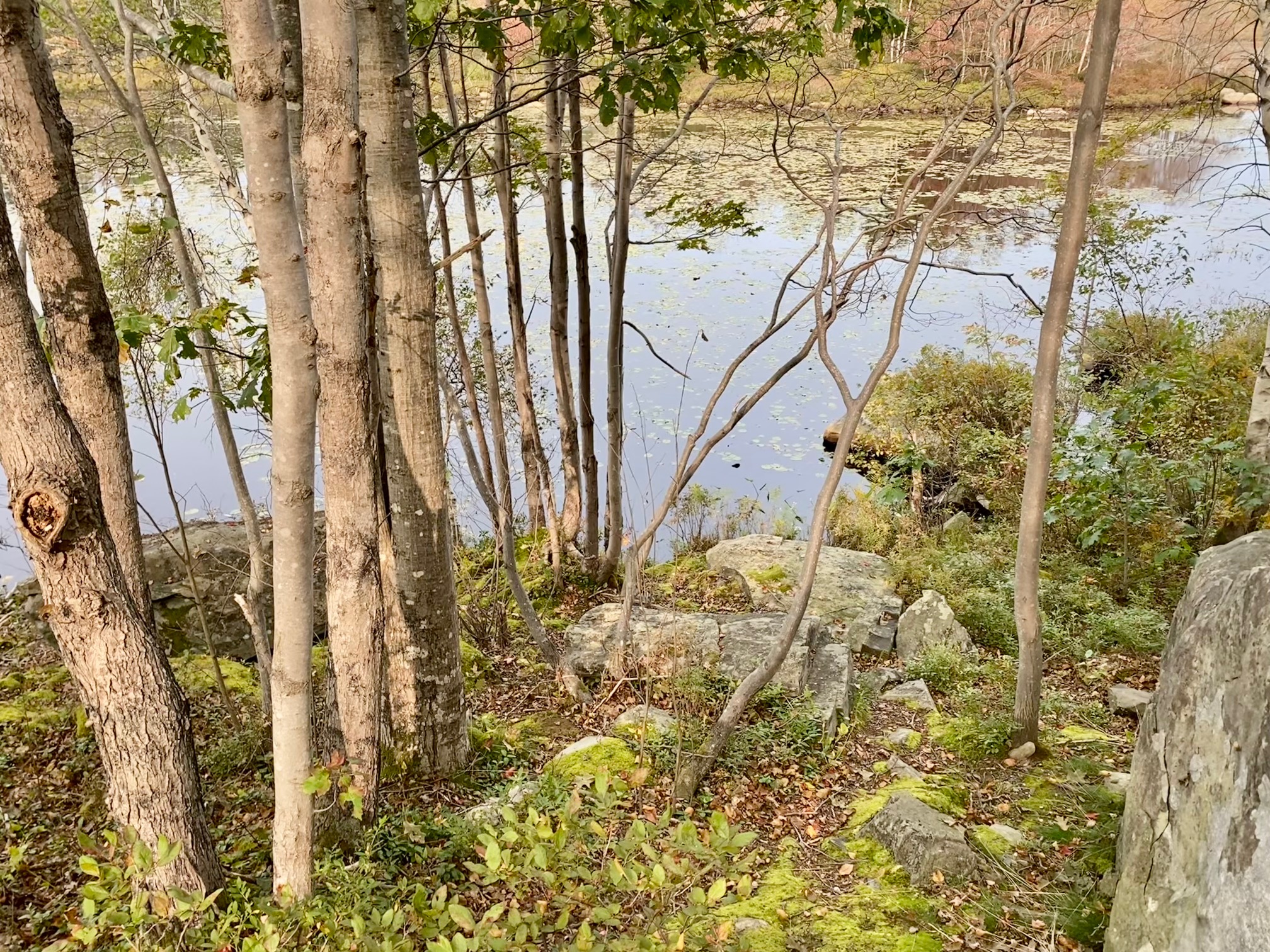
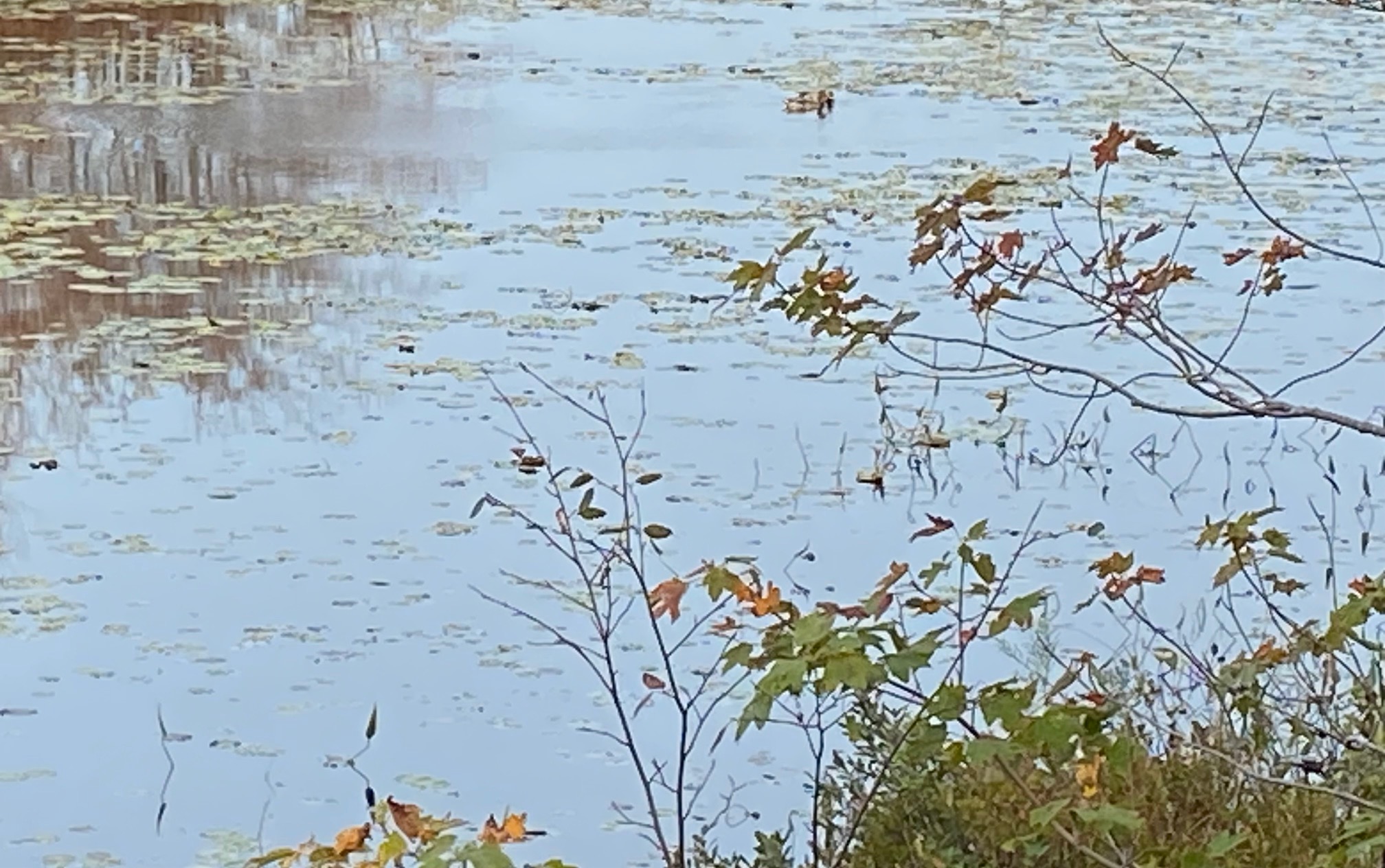
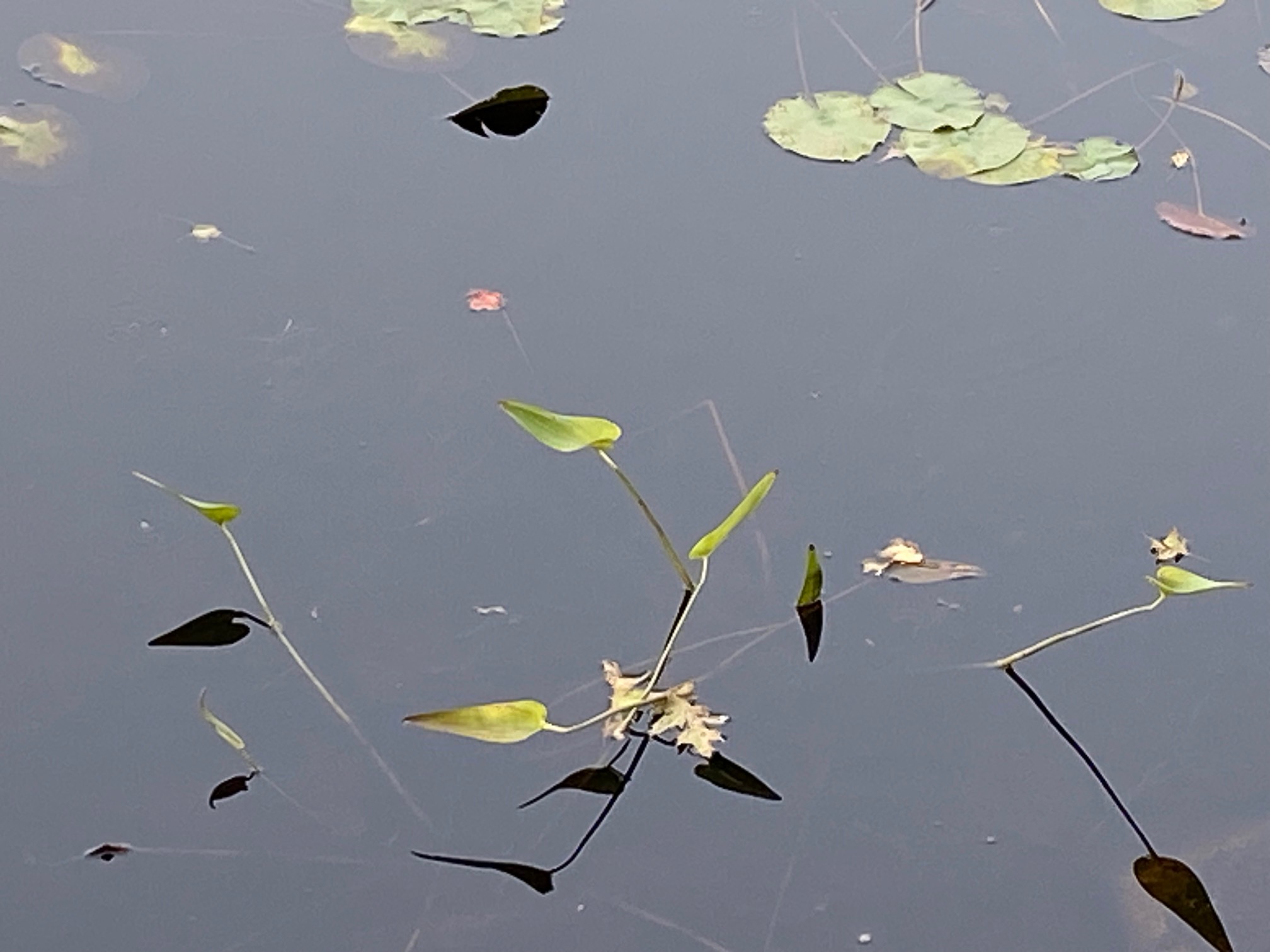
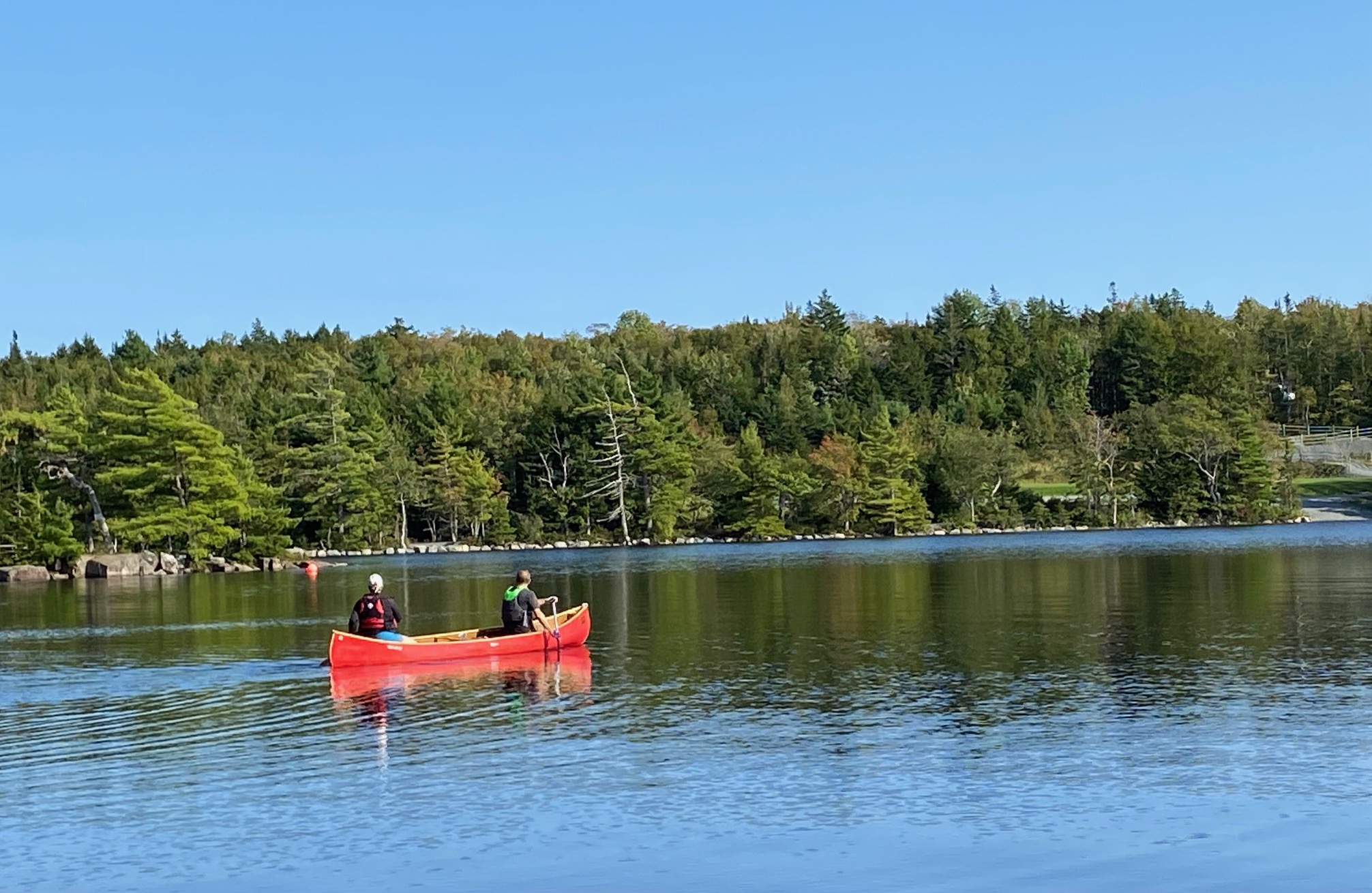
I have started the ‘Talks with John’ soon after His passing. Last place we went to, on our numerous journeys, was a little, tranquil lake called ‘Dollar’, in the midst of deep forest, half way between Highways No.102 and 107. I was the first place I returned to, after He was gone. It seems fitting it was a place I went to few days ago, closing that period of my search of Him. Here is the final letter. First part in Polish, second in English. Just a note to the Reader: both parts are a continuation of the entire text, not a translation. I could have write the entire piece in both languages – but that would not be honest to the emotional process of writing it down. My talkes with Him were bilingual and I want to preserve that aspect of it. The authenticity of the emotions. —– Polska i angielska część moich Rozmów z Johnem nie są po prostu tłumaczeniem jednej wersji na drugą. To osobne fragmenty jednego całego tekstu. Świadomie w takiej formie chce je pozostawić, gdyż taką formę rozmowy dwujęzycznej z Nim prowadziłem. Przepraszam jeśli komuś sprawi to kłopot w rozumieniu i znajomości obu języków. Ale takie są prawa oryginału.
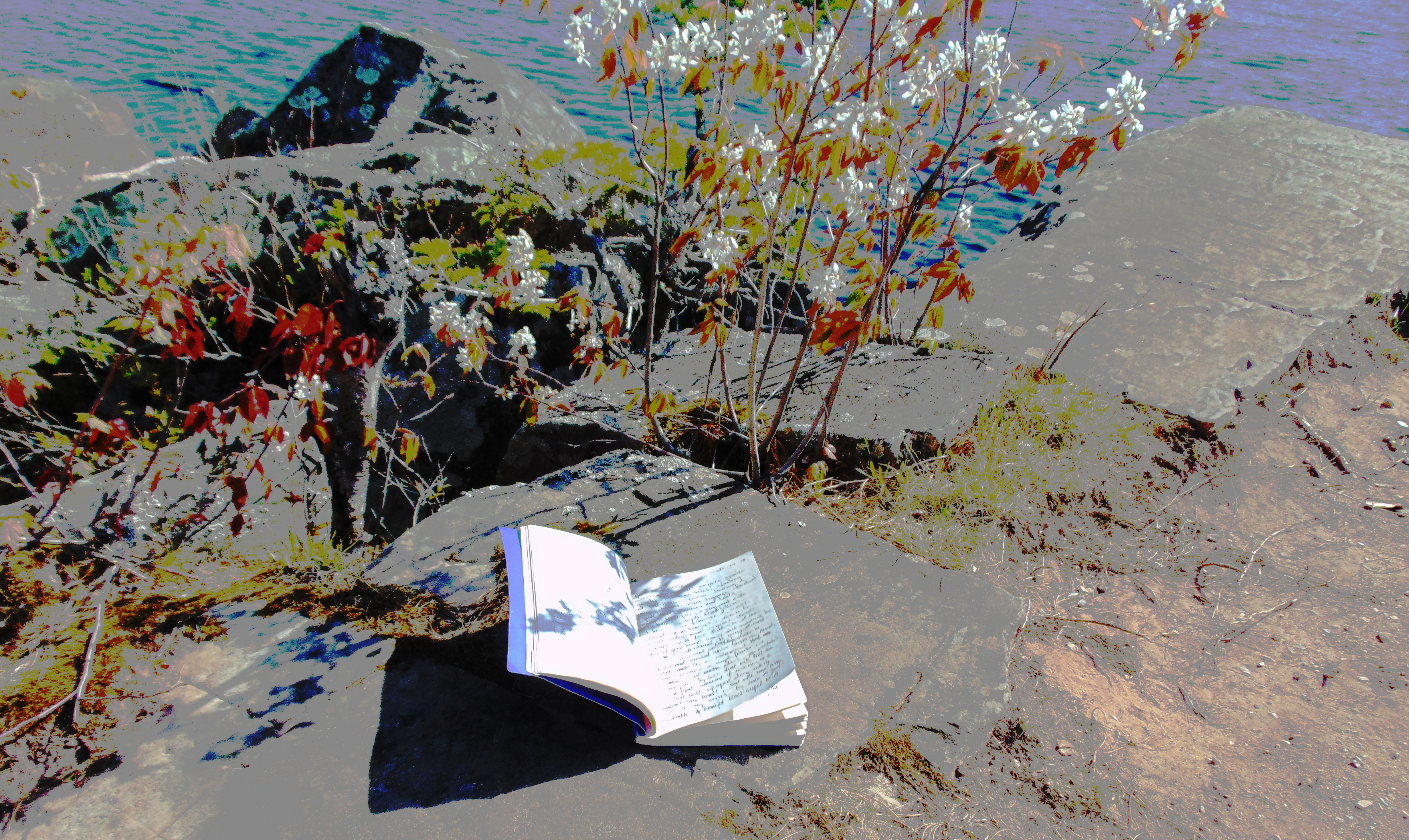
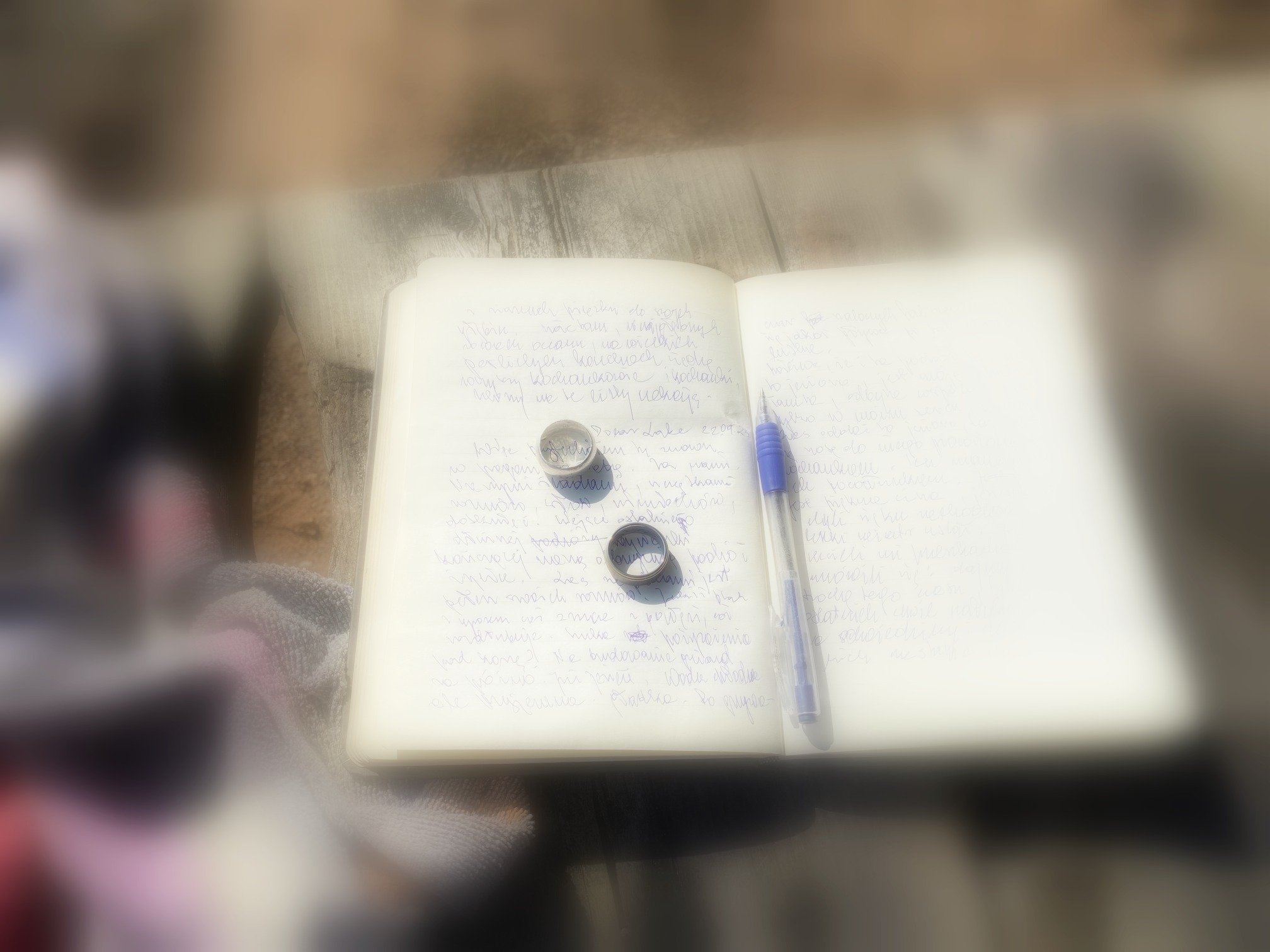
Posłuchaj raz jeszcze, wytłumaczę Ci moje zmagania. I moje klęski emocjonalne, moją słabość. To, że zapomniałem, że jestem Twoim Domem. Naszym Domem, że Ci to obiecałem i że tego ode mnie oczekiwałeś. Gdzieś tą pewność zagubiłem, gdzieś schyliłem plecy w jakimś bezgłośnym szlochu. Jeździłem po miejscach znajomych i nieznanych przedtem i szukałem Ciebie, wołałem Twoje imię. Tak, jakbyś odszedł. Wszędzie zabierałem ze sobą swój notes i te walki wewnętrzne opisałem.
Czas bym Ci złożył z nich sprawozdanie, bym te strony notesu otworzył. I obietnicę na nowo podjął, w pełni zrozumiał. Czas na powrót do Domu z podróżowania. Domu, którym jestem ja i w którym Ty mieszkasz. Na zawsze.
(Conrad Beach, 21.09.23) – Wszystko to jeden przeciągły krzyk. Jedno nieustanne wołanie, jak nieustanny szum fal. Jak ich huk, gdy rozbijają się o brzeg, gdy załamują się pod własnym ciężarem w dzikiej kipieli białej piany. Może dlatego do tych opustoszałych o tej porze roku plaż jeżdżę. By z nimi krzyczeć, by niosły ten krzyk daleko, topiły w swych głębinach i zamykały go w leżącej na dnie ciężkiej kryształowej szkatule.
Piszę do Ciebie na mokrym piasku list-poemat w archaicznym języku, którego sam nie znam, ale przeczuwam. Nadchodząca fala zbiera każdą literę, każdy znak runiczny i zabiera ten list. Zbiera delikatnie każde ziarnku piasku z każdej runy i niesie do swoich głębin. Może tam, w tej głębi największych rowów oceanów, na wielkich perlistych konchach siedzą wszyscy kochankowie i kochanki oczekujące na te listy.
(Dollar Lake, 22.09.23) – Więc przyjechałem tu znowu w pogoni za Tobą. Tu zaczynałem moje poszukiwania Ciebie, moje ucieczki z domu. Ucieczki do nas, w nas. Za naszymi śladami, szczątkami rozmów, słów, uśmiechów, dotknięć. Miejsca ostatnie dłuższej wspólnej wycieczki kończącej nasza wielką podróż życia.
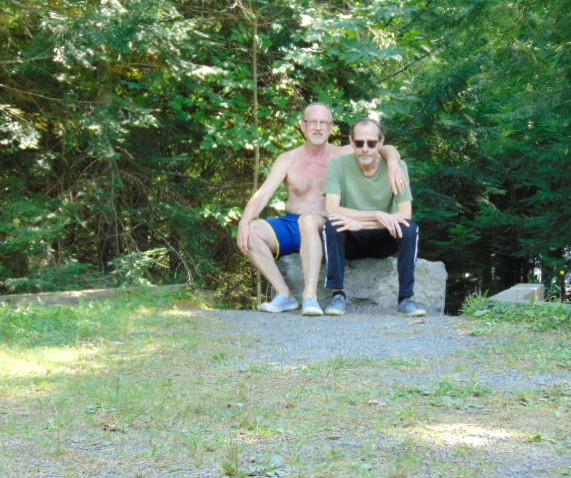
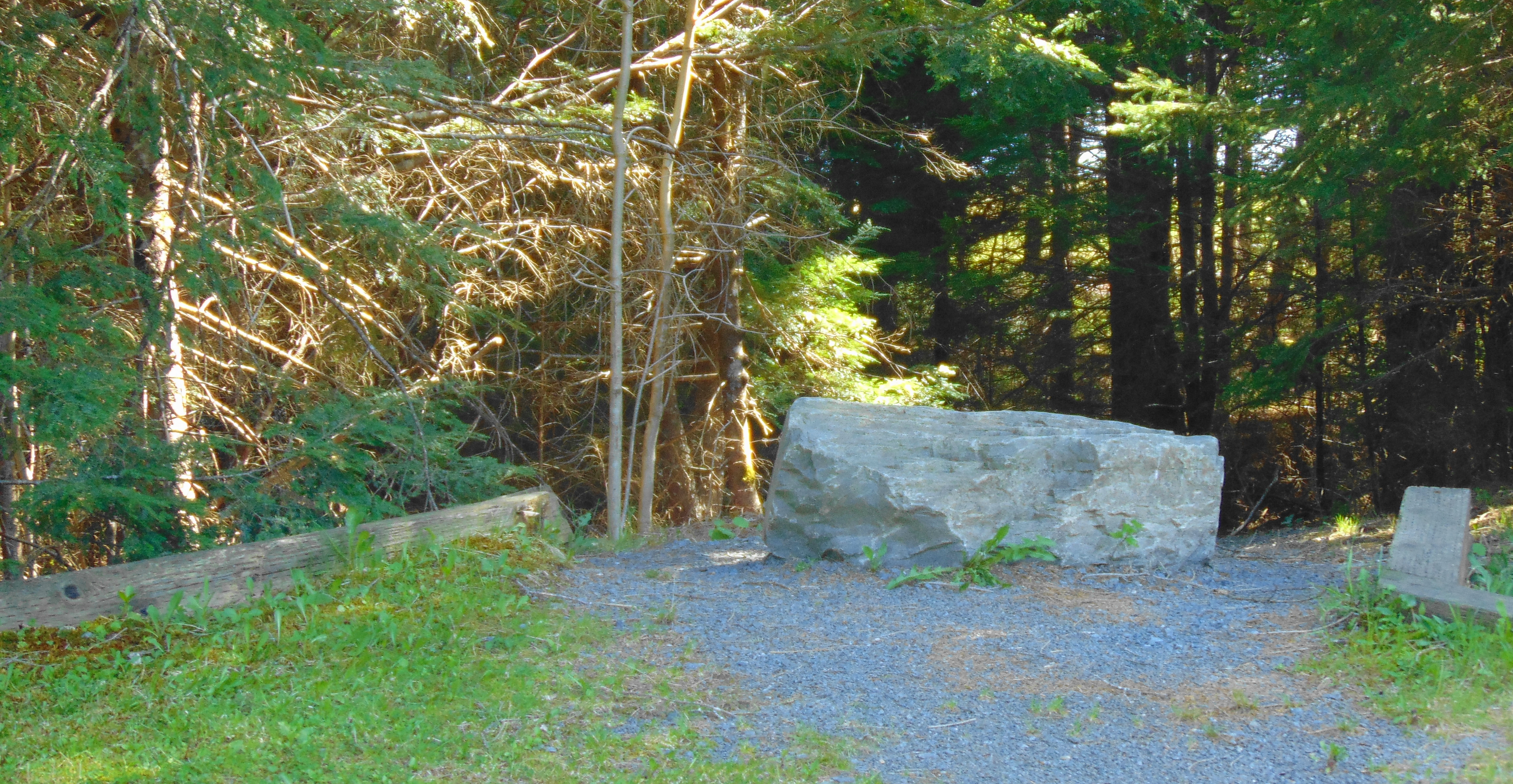
our first visit to the lake
Las za plecami jest pełen swoich rozmów. Jakiś ptak z uporem coś zrzuca z gałęzi, coś rozdłubuje. Szuka pożywienia pod korą? Na budowanie gniazd wszak już za późno. Nadeszła jesień. Woda jest chłodna ale przyjemna. Gładka jak powierzchnia lustra. Po grzywaczach szalonych fal oceanu dziwnie się jakoś pływa po takiej lustrzanej tafli.
Możliwe, że i ta podróż tu, nad to jezioro, jest moja ostatnią. Tamta pierwsza, odbyta wspólnie, istnieje tylko w moim sercu, w mej pamięci. Czas oddać te jezioro, ten las, tę szosę do niego prowadzącą, innym kochankom. Ich marzeniom, ich pocałunkom. Jest piękna cisza, jesienne słońce chyli się ku zachodniej ścianie lasu, nawet lekki wiaterek ustał. Jakby nie chcieli mi przeszkadzać, jakby umówili się: dajmy mu jeszcze chwilę, trochę czasu by się tych wspomnień nałykał.
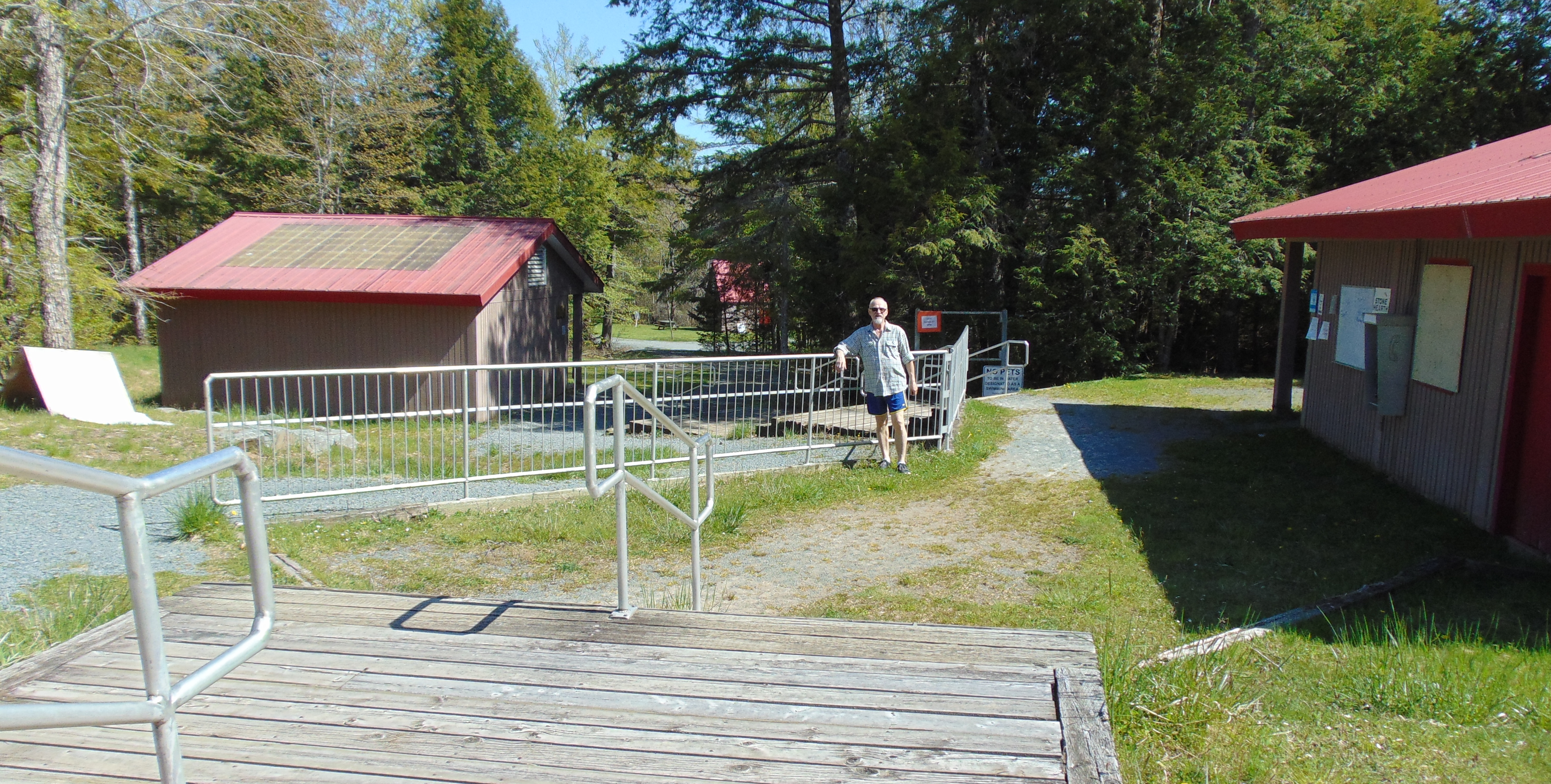
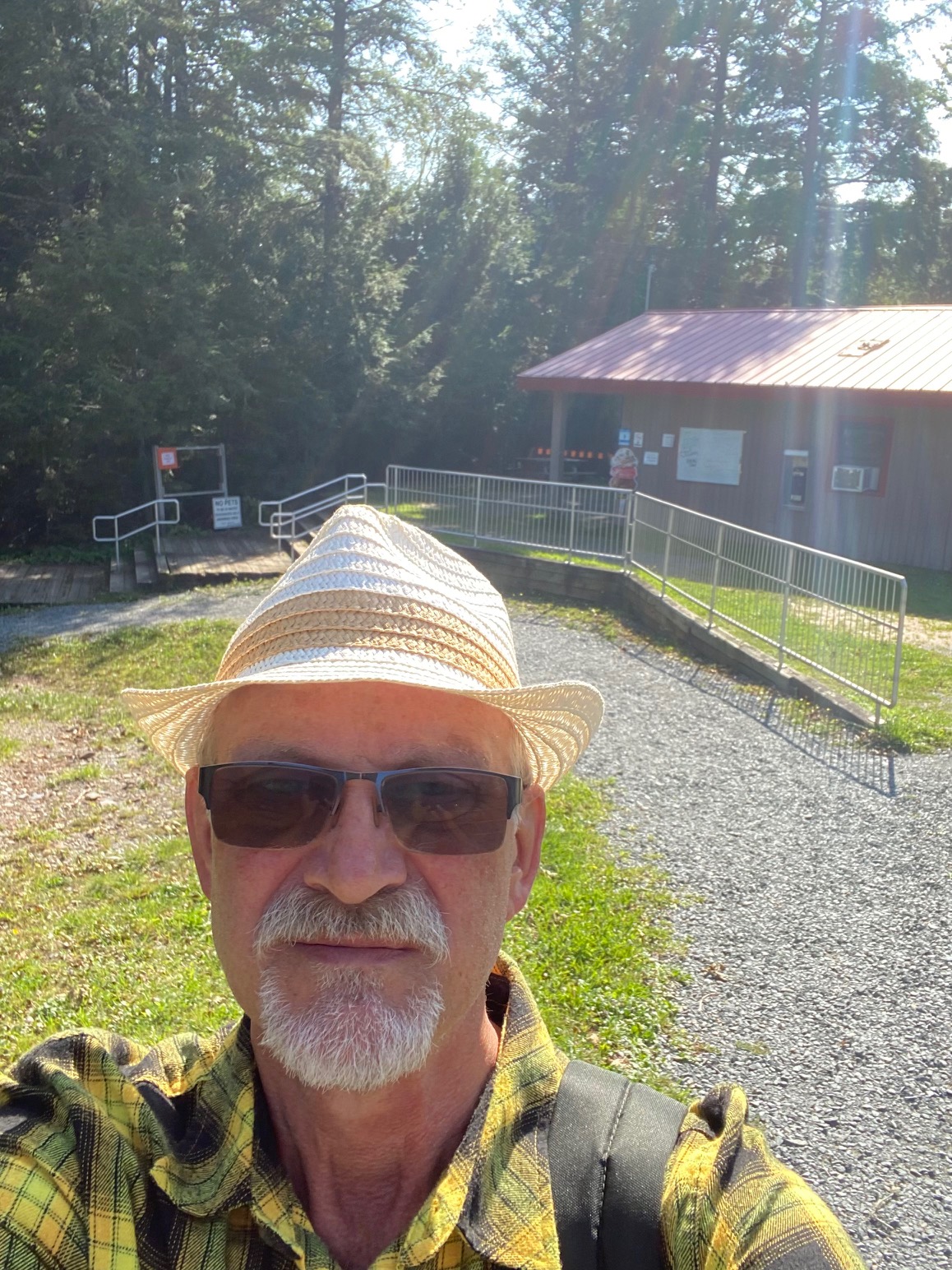
my first return to the lake, in May, 2023
Czasu na odwiedziny i czasu na pożegnanie. Niech nastanie już ta cisza.
To think of it, You were my Canada. My entire life here. My love for this country was my love for You. I went to Halifax today for this last recorded on-paper talk with You. At my favored spot in this city at the beginning of Coburg Street. In front of my favored church – St. Andrews United Church.
There are many reasons to like this spot: it is, in a way, an invisible border separating bustling and noisy Halifax of tourists and business from Halifax the quiet, the reflective. But it is also the church I have visited many times for musical concerts organized there. But above that there is one more thing, a small detail that I noticed and just love it. The administrative annex of the church is a very busy and noisy some sort of school/childcare facility. There are always many kids coming and going, laughing, joking, saying hi and goodbye. The entrance to this school is always adorned with some rainbow symbols of the LGBTQ+ community. What a most splendid idea! Remember? I showed it to You and You agreed. Introducing the kids to the reality, that love has no boundaries, that all are welcome and included. Just that visual effect is stronger and better than lectures could ever be.
That is why I came here to finish this letter to You. About our Canada, Canada You gave to me. Or Canada that made us.
Canada now is with me all the time. Your gift to me and Her gift to us. Wherever I go, She will go with me. She is part of me, like our love and You.
I will stop searching for You on the vast beaches in the majestic bosom of waves crashing on the shore. Stop looking for You on the tranquil trail and beach of Dollar Lake lost in the middle of an old forest. It is true – memories of us being there, are still there. But they are also inside my soul, imprinted there till the day I die.
I didn’t need to call Your name, You are not hiding in any of these places. You are within me. You are us, and I am us.
You once said: ‘wherever you are, there is my home’. I remembered it at the beginning of my immense grief. Over time that grief became so heavy, so strong, it started to overpower me. And I run to these places calling Your name, begging You to answer, to reveal Yourself.
But now it all came back. You are everywhere I go. At home, on my travels, my walks. You are my Canada. My true heimat. I can take it with me across any mountains and oceans. The entire world is that – our Canada. You have come back where You always belonged – to me. Let’s walk together the rest of the Journey, wherever it takes us.
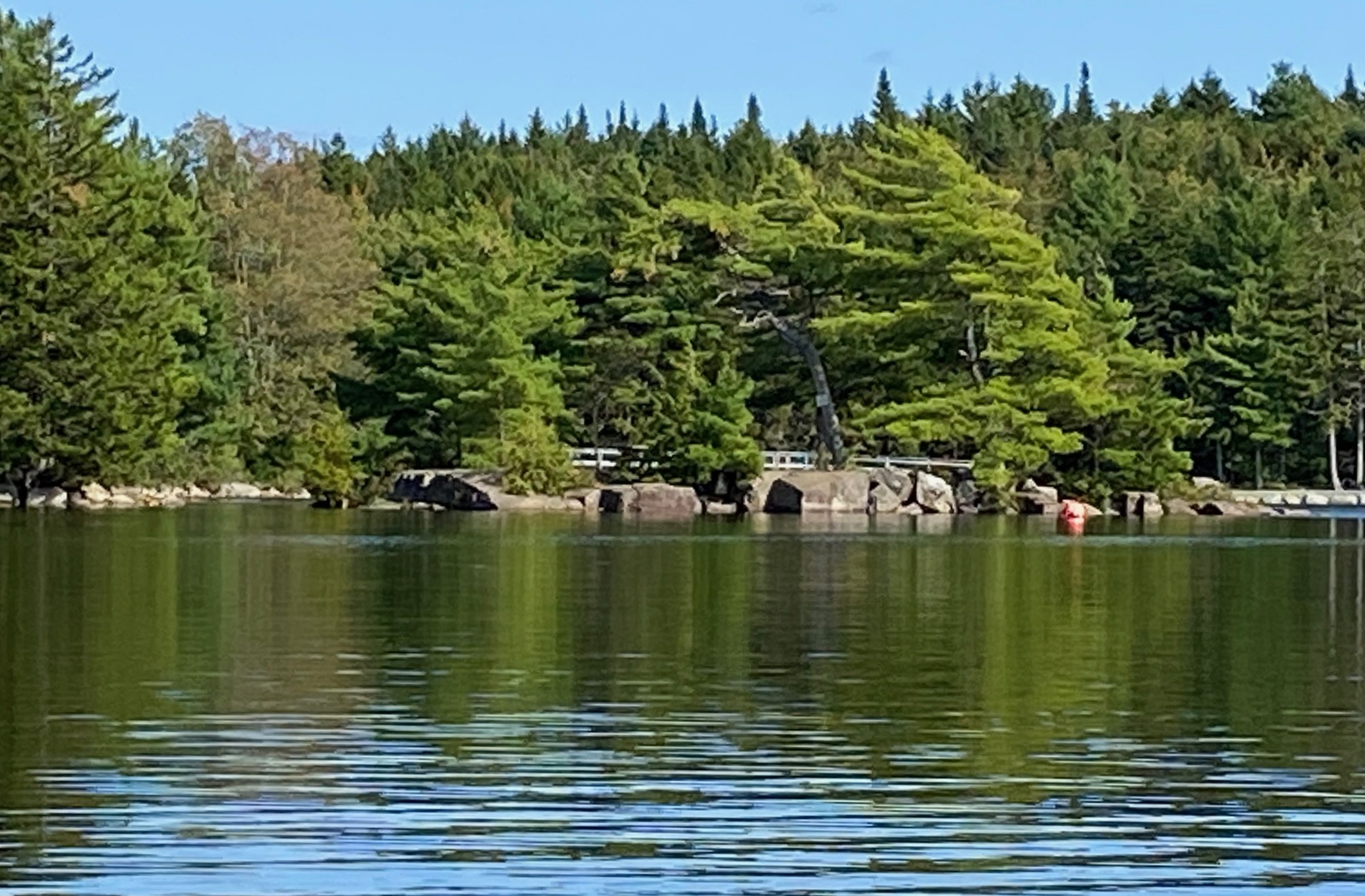
from my last visit to the lake in late September 2023
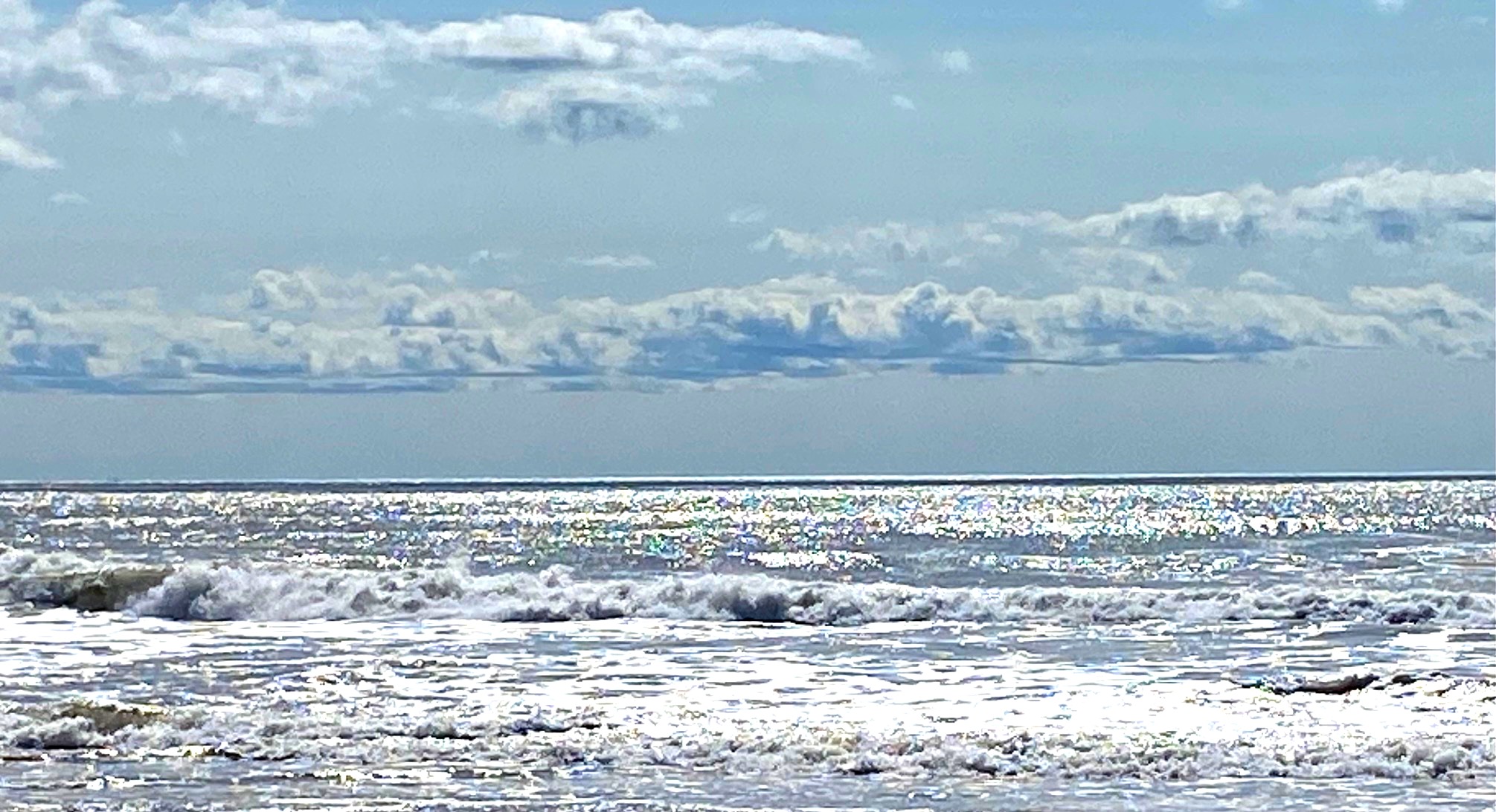
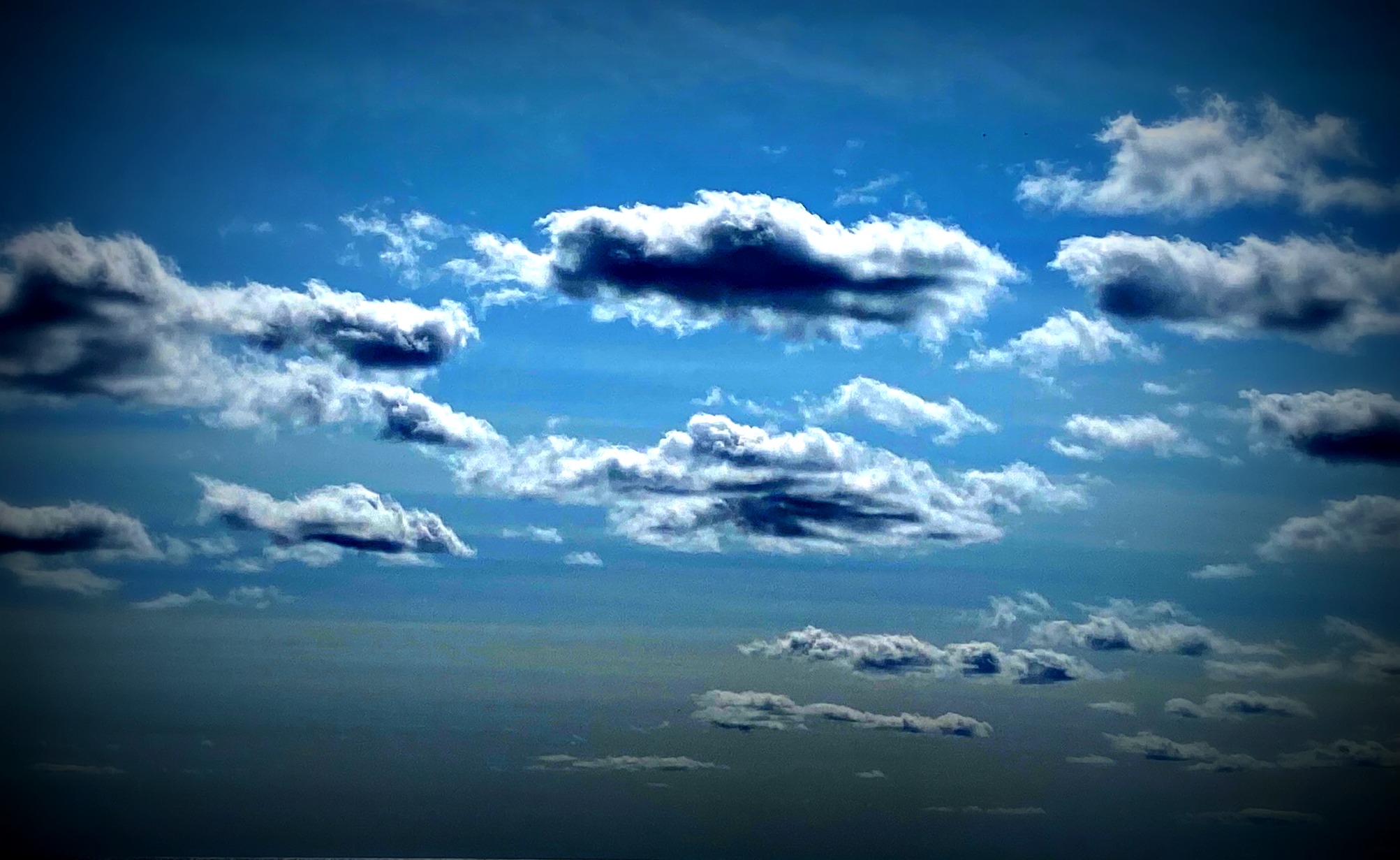
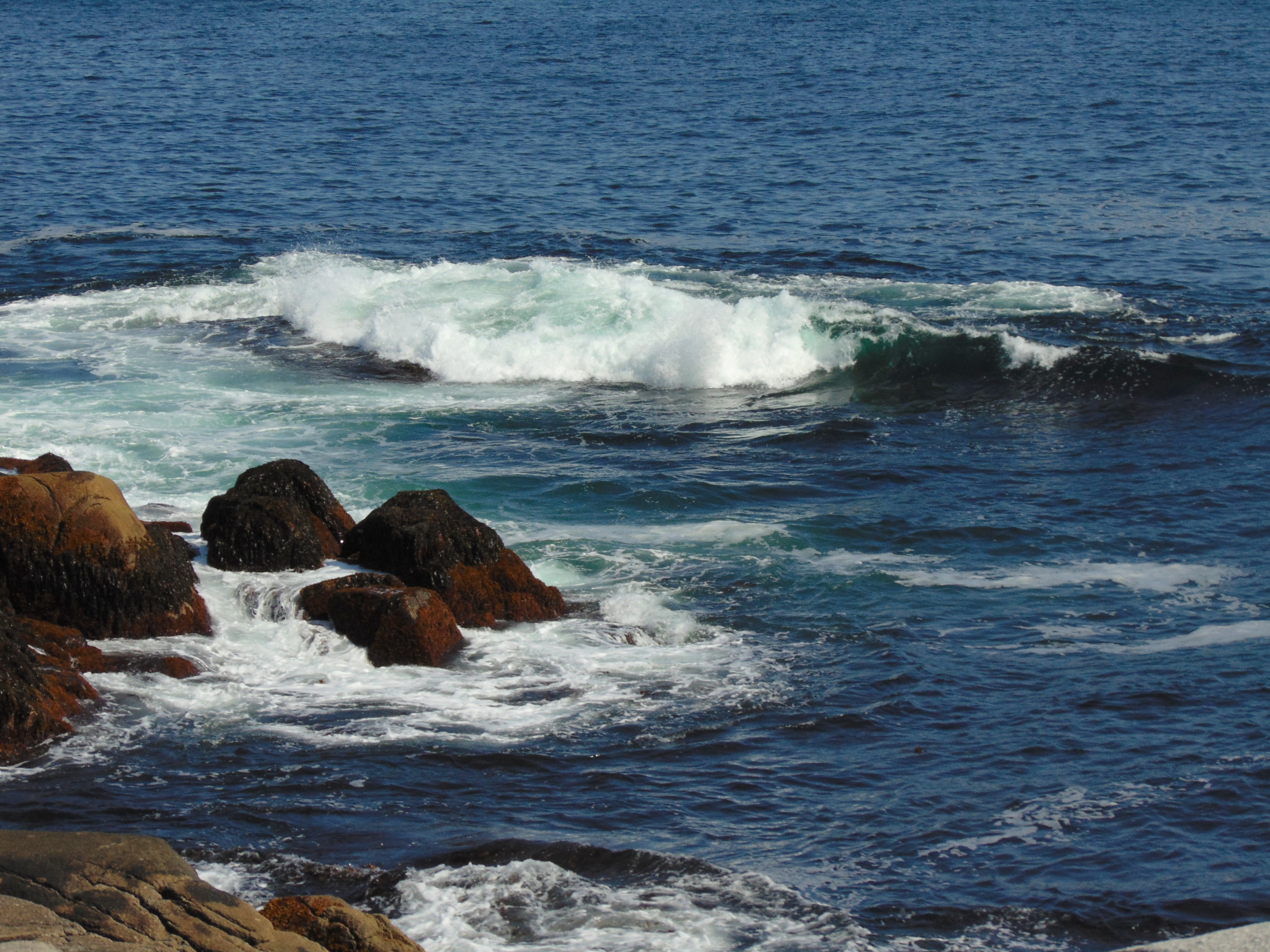
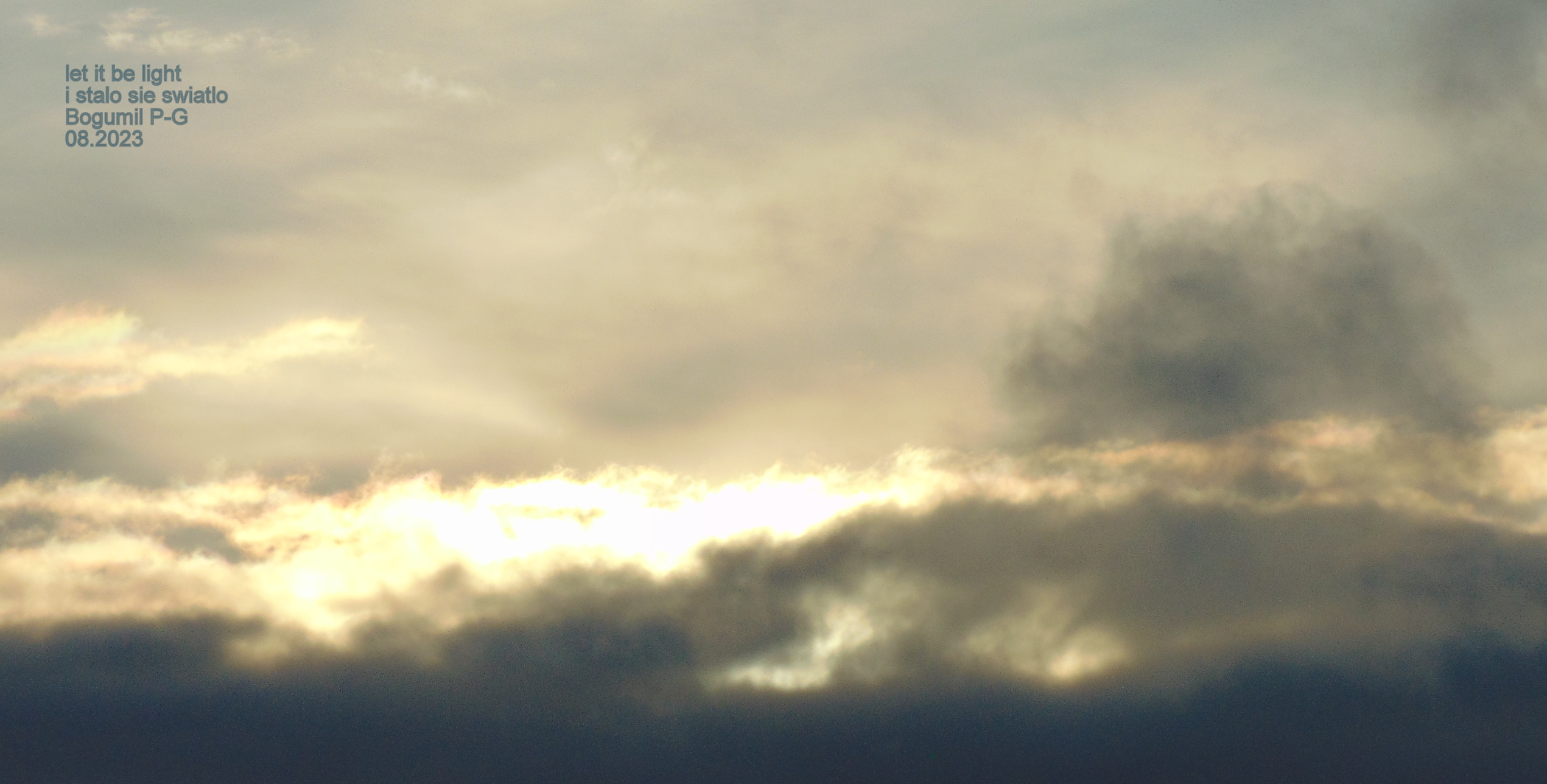
Of many travels this late summer I decided that today, on first day of Autumn, I will create a portrait of meeting two opposite worlds: the sky and the sea. The Northern Atlantic is famous for huge waves. As they rush toward the shore they create a cascade of white foam, as to compete with the white clouds above them. Observing them takes you to another dimension, another wold, when you realize how unimportant, insignificant you are. Just a speck of sand on a beach. Not unlike the little insect you are observing, as it tries to conquer small distances across the sand dunes. It seems like an impossible task: as the tiny insect climbs the the sandy wall, the sand constantly moves from under its tiny legs and the insect falls down. It looks like a monumental struggle through Sahara or Gobi deserts.
But to the ocean and to the sky all of these struggles seem trivial. It has been here before the man and before the insect. Probably will be here once we are gone again.
India – vast subcontinent with thousands of years of rich history. An underdeveloped country with nuclear weapons, an active and successful Space exploration program, and many more very advanced technological achievements. With huge social disparities, hunger, and homelessness. You can get there very cheaply an excellent medical treatment/procedure. If you are a ‘medical tourist’ from Europe, North America or a rich person living in India (I am certain there are many of them). The hope of the West that it will act as a counterbalance to China’s ambitions. Now this. News that stunned Canada. Canadian PM in our Parliament solemnly accuses India of a political assassination in Canada. Apparently, he tried to bring it to India’s PM Narenda Modi – a fervent Hindu xenophobe, during the G20 summit (9-10 September). But Mr. Modi would have none of it and snubbed Mr. Trudeau. Hence, the stunning accusation of the assassination in Surrey of Canadian citizen of Indian ethnicity. Both countries are recalling high-ranking diplomats in both countries. We, as Canadians, should be rightfully angry at India. No other country has the right and should never be allowed to conduct assassinations in other states. That is not Israeli Mosad hunting down Nazi war criminals decades ago. India is not supposed to be Putin’s Russia poisoning political opponents in other countries. India is a democracy, after all. All of the above is valid. But is it the whole story? Does it have a Canadian background from years ago? Yes, it does. It involves a terrorist act of terrible proportions. Hundreds of people were murdered. A full passenger plane went down by the shores of Ireland, en route from Canada to Europe. I remember it well. I lived at that time in Surrey. Close to the temple and organization that was accused of that terrorist act. Remember the names of the accused. Remember the long, botched CSIS (Canadian version of FBI) and prosecutorial investigation. Remember the ‘no guilty’ verdicts exactly because of the botched investigation and prosecution. Yes, the poorest and the smallest (in importance to the plot) of the accused was sentenced: Iderjit Singh Rejat. The other accused, Talwinder Singh Palmer was found not guilty. Even though RCMP believed he was the mastermind behind the entire horrifying terrorist act. In subsequent years he met his fate when he travelled to India and Indian agents assassinated him. There is one other name not mentioned here yet. A person everyone was talking about at that time. Ripudaman Singh Malik – a wealthy financier and businessman in the Surrey Sikh community. Especially the Khalsa Society, the leading Sikh Temple in North America. Widespread rumors were that he was the true instigator of that terrorist act. But no one would volunteer to testify against him. The only person in the huge Indian diaspora, who wouldn’t let go of the accusation against Mali was a popular Indian-language newspaper in BC and the host of his own radio station, Tara Singh Hayer. He was shot and paralyzed in Surrey in 1988. Ten years later he was murdered. The terrorist bombing of the Air India plane cost the lives of 329 Canadians, mostly of Indian origin. The massacre could have been even worse – a second plane en route to Japan was targeted, too. That bomb exploded prematurely and only two airport personnel were killed. Having said all of it, one must be absolutely clear. All of it is by any means an excuse for the inexcusable: an assassination of a Canadian citizen carried by a foreign state on Canada’s soil. But it must be also stressed – a free Canadian of whatever origin can support any cause she/he chooses. Likewise, it can oppose any ideas, causes, actions, states, and even religions. But it can not support or organize violent organizations, or terrorist cells. It puts Canadians at risk. It puts Canada at risk, a country that invited you here. Our intelligence agencies and law enforcement must pay attention to it and act, where evidence leads to such conclusion. Just ‘observing and gathering intel’ is not good enough. Recalling all of it would not be completed if I didn’t mention why these horrible acts were done by these people. It was a response to the massacre in Punjab (a part of India, predominantly Muslim) in 1-10 of June 1984 . It was ordered by revered India’s PM, Indira Gandhi, after unsuccessful negotiations in order to arrest leaders of armed rebellion against India. As a result of protracted battle with heavy armed militias many Sikhs fighters and pilgrims were killed. The Indian army also suffered high casualties. Another fallout of these rebellion was the assassination of Indira Gandhi by her own bodyguards, who were Sikhs. Often forgotten was also the plots and misleading information before the riots by Soviet KGB, that through secret channels (as planned by the Soviets) reached Delhi.
At the end a personal note from myself: a good democracy can’t function properly in any religious state by design. Not in Israel, not in Poland (formally a democratic republic, but a Catholic Church has there a huge power and sway), not in non-existent yet Khalistan, not in Iran or any of Muslim states, where Islam is constitutionally entrenched, not in India where current PM calls Hinduism a state religion, not even in the tiny Vatican, or in Buddhist states or any other religion. Whenever it does, it always means that some citizens are second-class only. I strongly believe in religious freedom. Yet equally strongly in the freedom from religion.
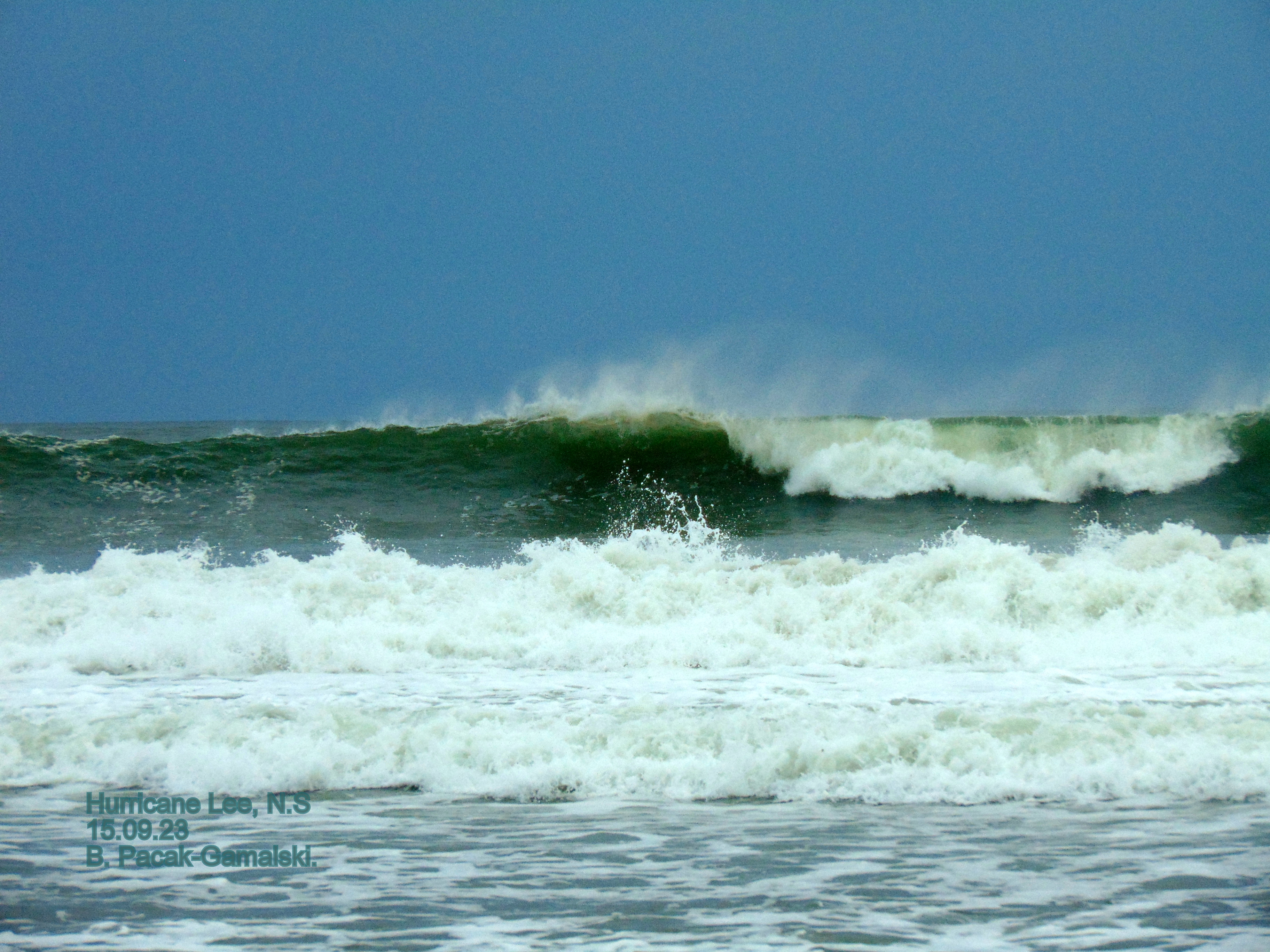
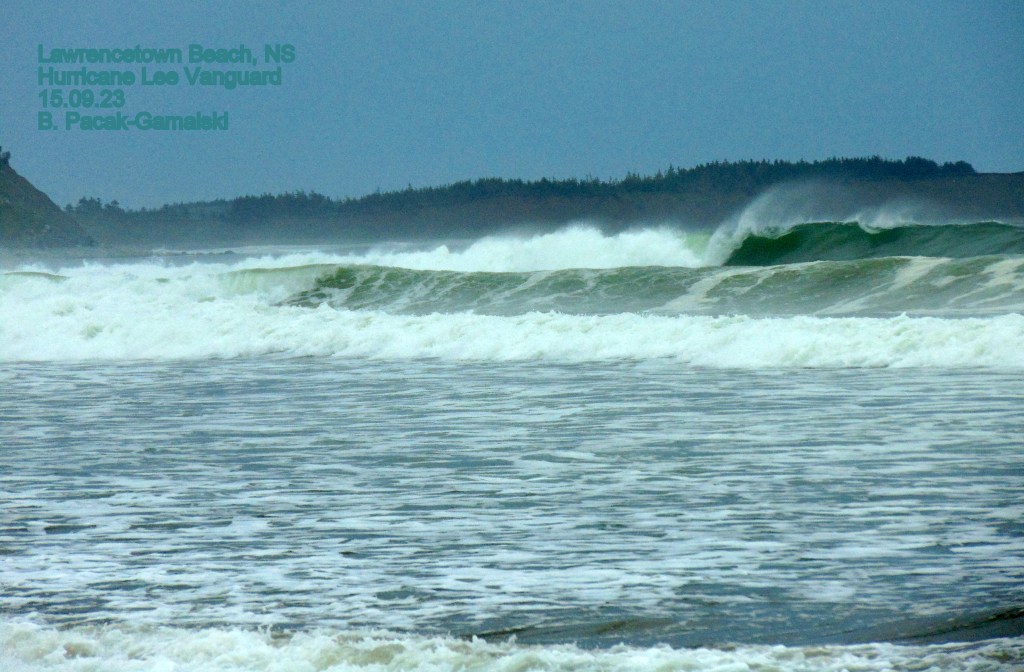
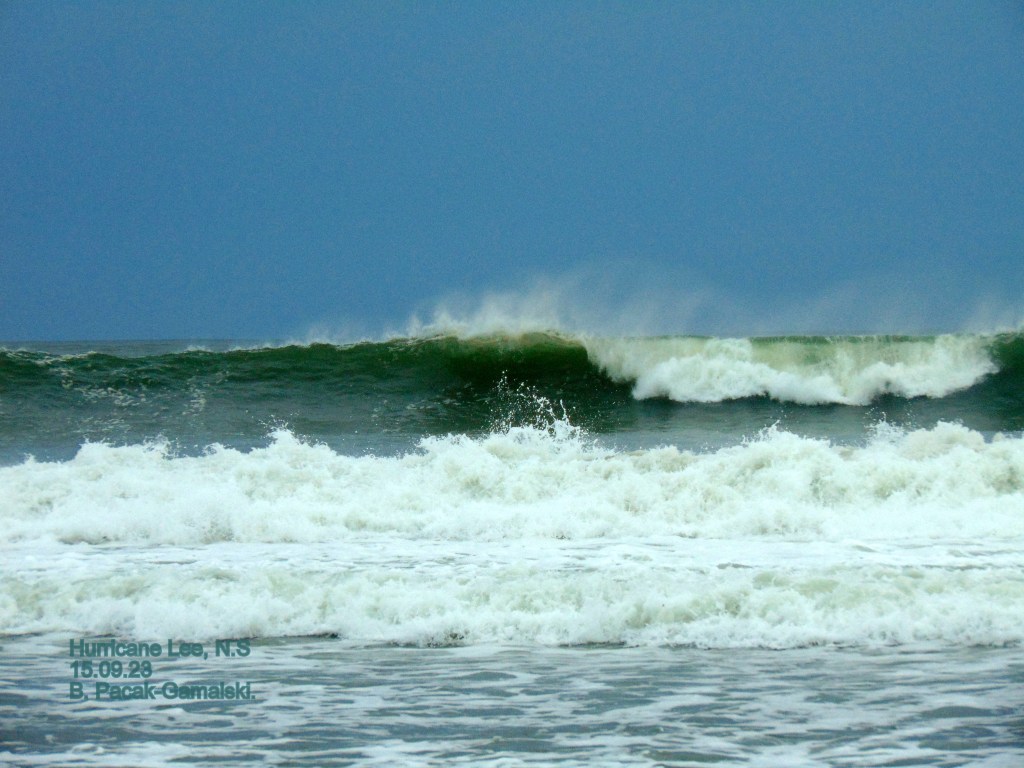
Na spotkanie z falami nadchodzącego Lee pojechałem na kamienistą plażę w Lawrencetown. Potem przez noc i dwa dni trzymałem szyby w domu, by nie poleciały, jak liście z sąsiednich drzew (niektóre leciały razem z gałęziami, LOL).
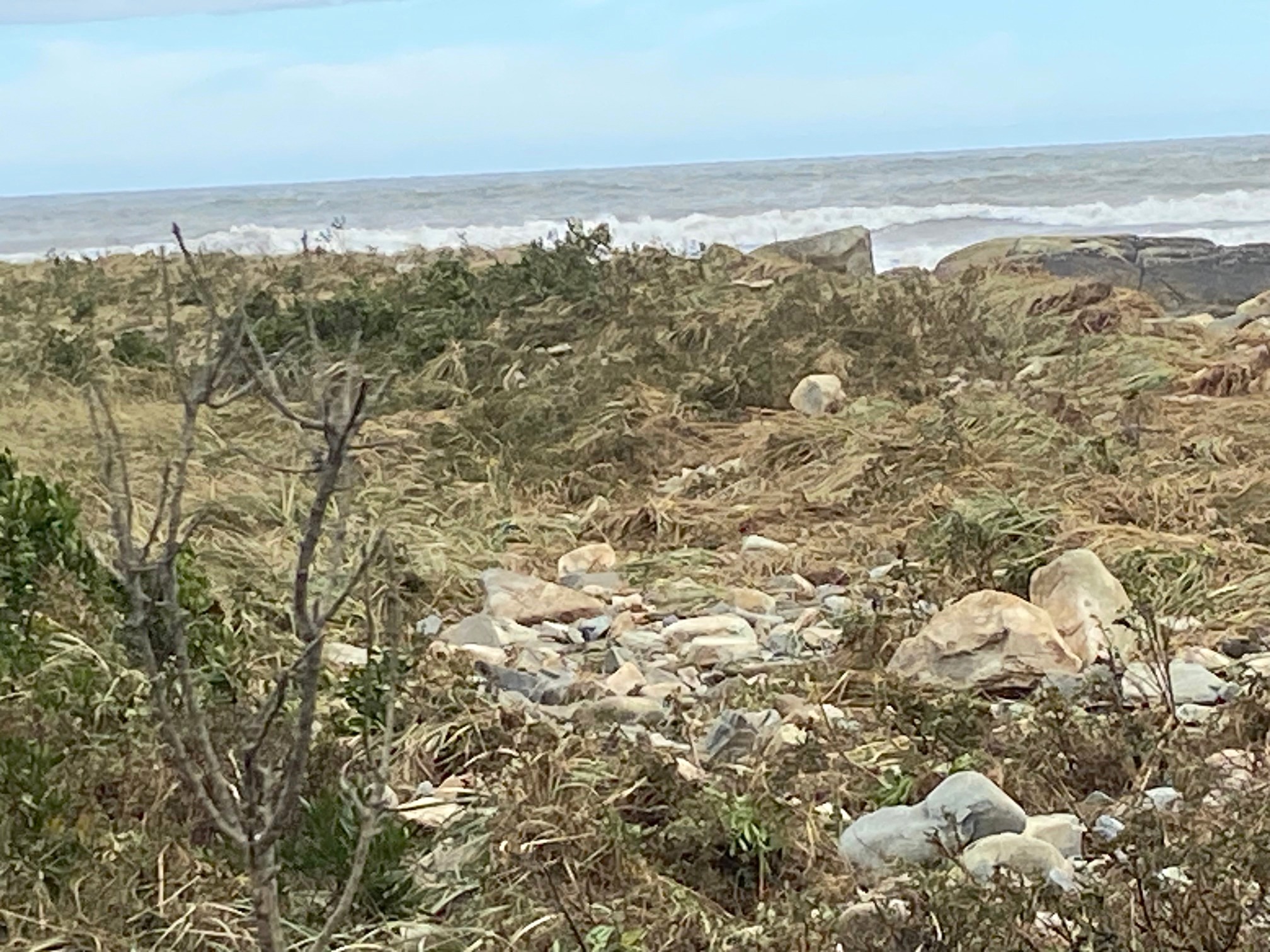
Ale, jak tylko gałęzie przestały fruwać pojechałem zobaczyć zniszczenia na moich ukochanych plażach. Tym razem dalej, szosą nr.10 do bajecznie długiej, piaszczystej plaży Martinique. Nie , nie na Martynice karaibskiej. Na tej w Nowej Szkocji. Koło Musquodoboit Harbour. Wiatry nie szalały, ale fale i ocean – tak. Z pływaniem było podobnie, jak w Lawrencetown: krótkie momenty nurkowania w nadchodzącą spienioną scianę wody i to wszystko. Za to często. Spacerowiczów po plaży było sporo, chyba głównie lokalnych, którzy przyjechali zobaczyc, jak wygląda po tym sztormie. Kilka osób wchodziło do pól-łydki na spacer. Ale poza mną nikt nie pływał. Chyba mądrze (mądrzejsi widać ode mnie, co nie jest zbyt wielkim osiągnięciem). Natomiast i tym razem była grupka surferów w kombinezonach, z deskami. Ci baraszkowali w tej pianie nieźle.
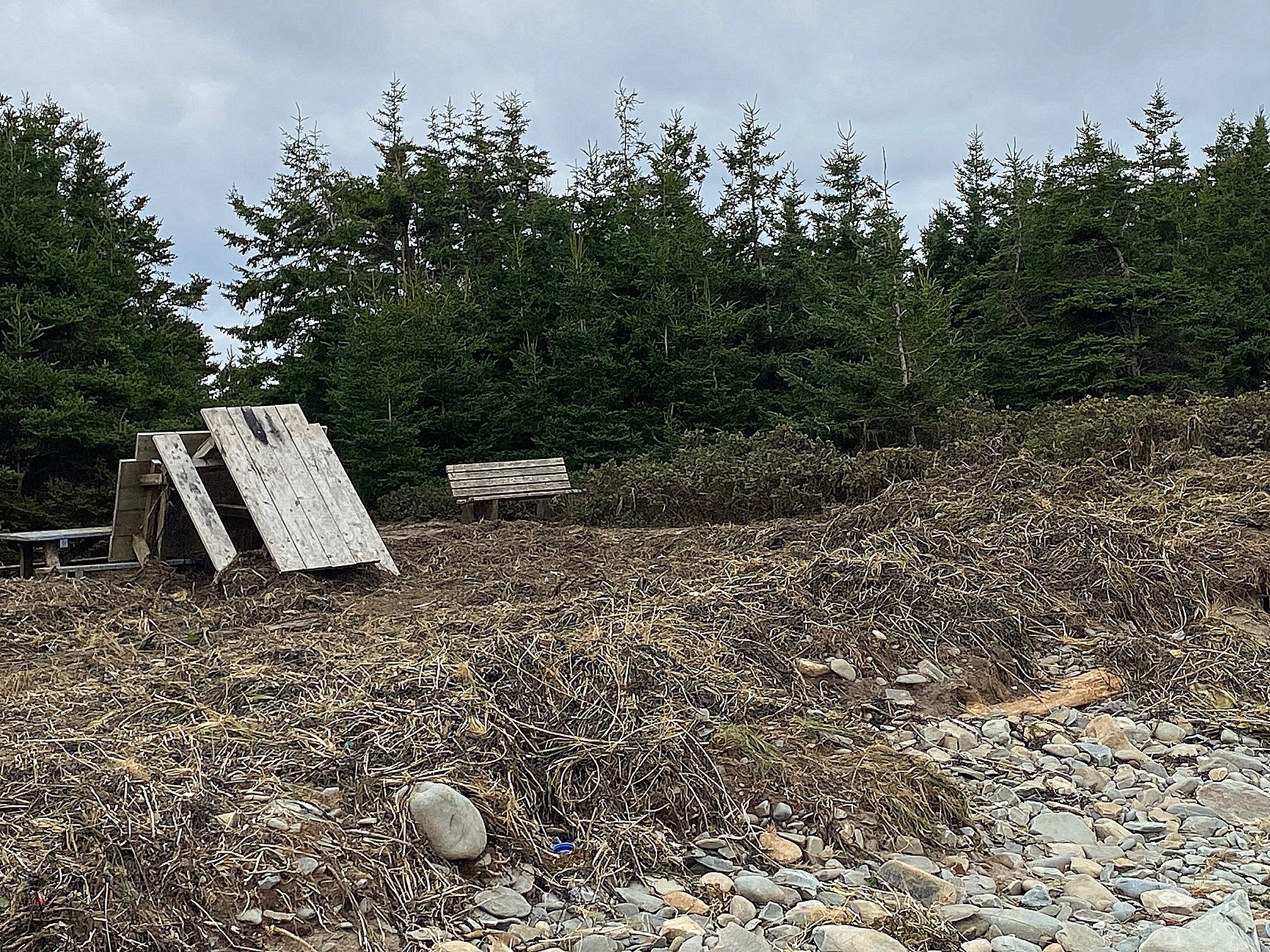
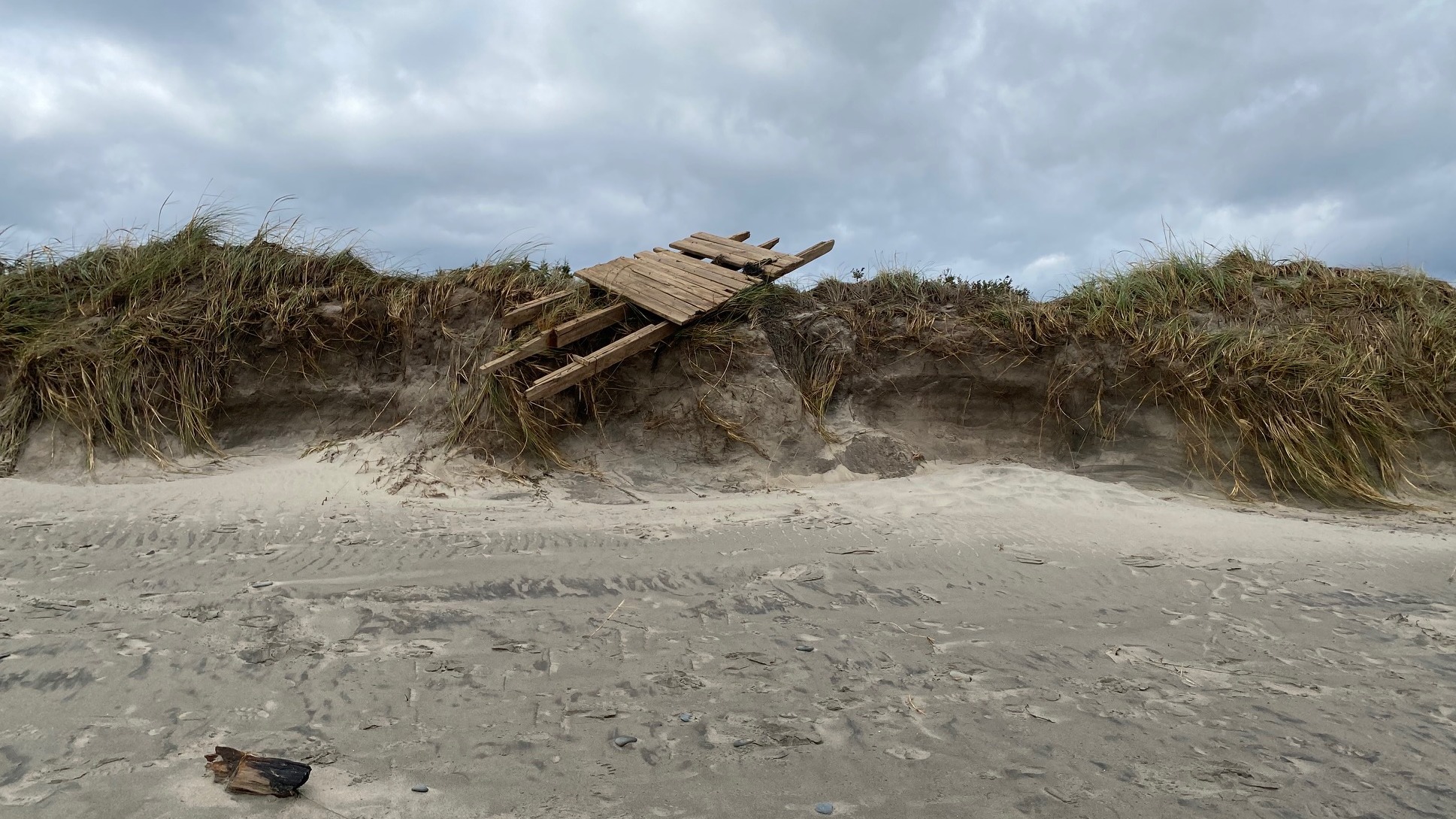
Wjazd był zamknięty (Martinique Beach jest bardzo duża i ma szereg parkingów) ze wzgledu na zniszczenia miejsc parkingowych, więc parkowałem na drodze dojazdowej, a reszta per pedes. Od razu widziałem poważne szkody. Kamienie, które ciężko by było podnieść, zawaliły ścieżki, drogi, na obrzeżach lasku za plażą. Wszędzie, gdzie woda i fale kilkunastometrowe znalazły dojście. A znalazły wszędzie. Sama plaża poszerzyła się o dobrych kilka metrów – kosztem spustoszenia, jakie fale zrobiły wydmom. Przypuszczam, że 3-4 metry wydm znikneło. Zabierze lata by może coś odzyskały. Zmiany klimatyczne raczej nie rokują takiej możliwości kilkuletniego spokoju. Wszystkie drewniane pomosty z plaży przez wydmy do parkingów – rozniesione lub poważnie uszkodzone.
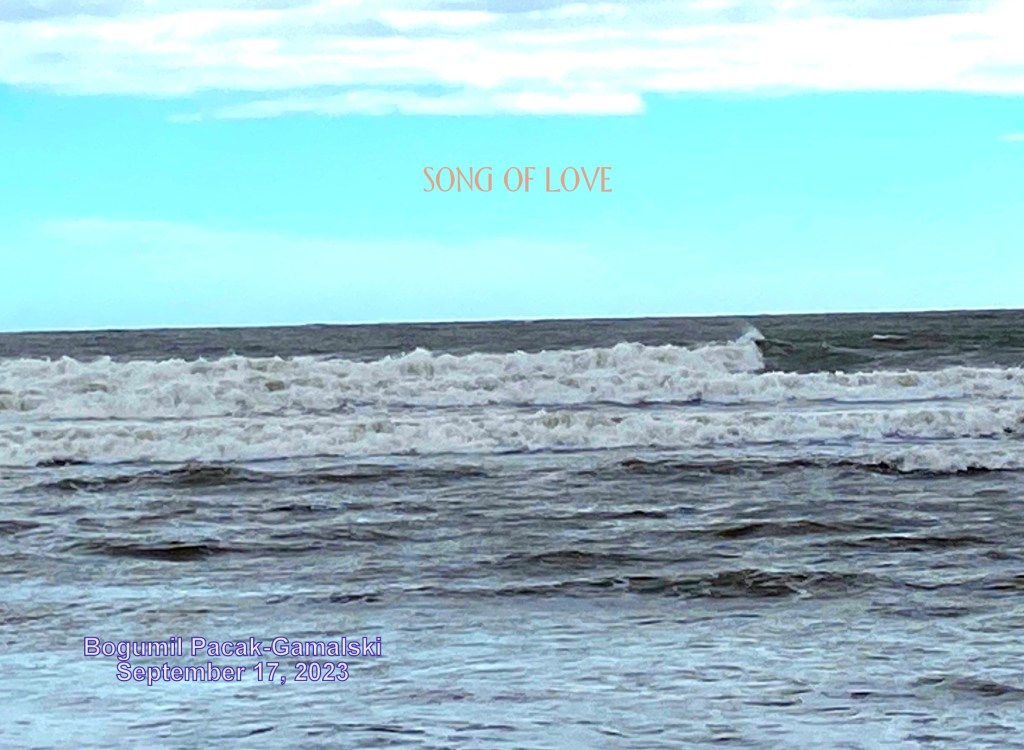
Song of Love

1
The waves are calling –
blue sky caressing white foam
of the sea, embracing the shape
of clouds taking bath in it.

Like you – your hips, your hand
in mine, your touch on my chest,
my fingers in your hair learning
the shape of the lobe of your ear.

The air is moist, fragrant,
the air is still around us.
And whispers, words quivering
with anticipation, expecting.

Longing anchored in our sight,
begging, trembling impatiently.
Eyes searching, touching, embracing.
The air dancing, pirouetting, flirting.

2
Memory. Your years of boyish youth.
Fear of rejection, of not finding
the answer you dreamt of. The torture of
that fear. The air is suffocating, dense.

Imperious impatience asking urgently:
is it? our love? Hey, boy! You promised
to find it – our love. You promised
that I will be in love. Our pact for life.

I! I! I must know how it feels! The air!
Must feel it myself: impatience, hungering.
Not tomorrow, not in some future. Now!
My youth not wanting innocence anymore.

I want to be guilty of stolen nights,
of jumping through the window
to magical streets leading to forbidden
dark pathways in dense parks.

Finding other eyes, other fingers
searching for me in the pantomime
parade of shadowy silent silhouettes.
In the dense air breathing heavy.
	3
Finding you waiting for me.
You finding me. We will know,
when our eyes will meet. We.
Not me, not you. We – lovers.
I had a pleasure meeting Jason Gorber, a prominent Toroto-based movie critic, at the Green Border screening on Tuesday. Today, I have read his comment:
“A masterpiece from an underappreciated master of both big and small screen, Agnieszka Holland’s searing look at the refugee crisis on the border between Belarus and her native Poland is as profound as it is provocative.
The performances are astounding, the narrative horrifying, resulting in a story that’s deeply unsettling and emotionally raw.”
(below a Polish language version)
We wtorek, na projekcji Zielonej Granicy, miałem przyjemność poznać znanego krytyka filmowego z Toronto, Jasona Gorbera. Dziś przeczytałem jego komentarz:
“Arcydzieło niedocenianej mistrzyni dużego i małego ekranu Agnieszki Holland, jej wnikliwe spojrzenie na kryzys uchodźczy na granicy Białorusi z jej rodzinną Polską, jest tyleż głębokie, co prowokacyjne.
Gra aktorska wprawia w oslupienie, a narracja poraża, co skutkuje historią głęboko niepokojącą i emocjonalnie surową.
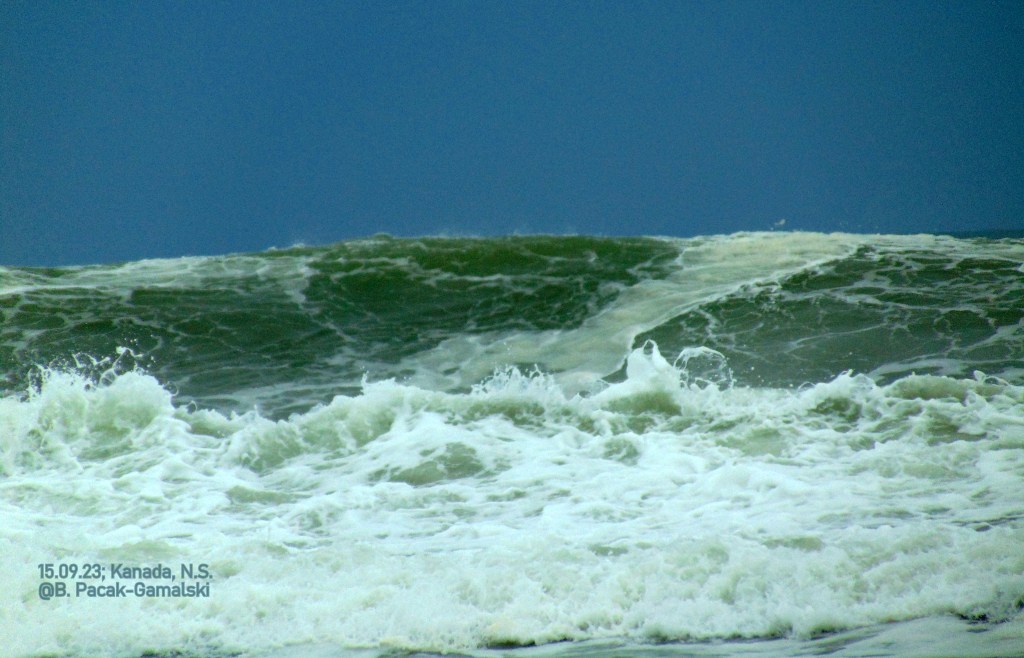
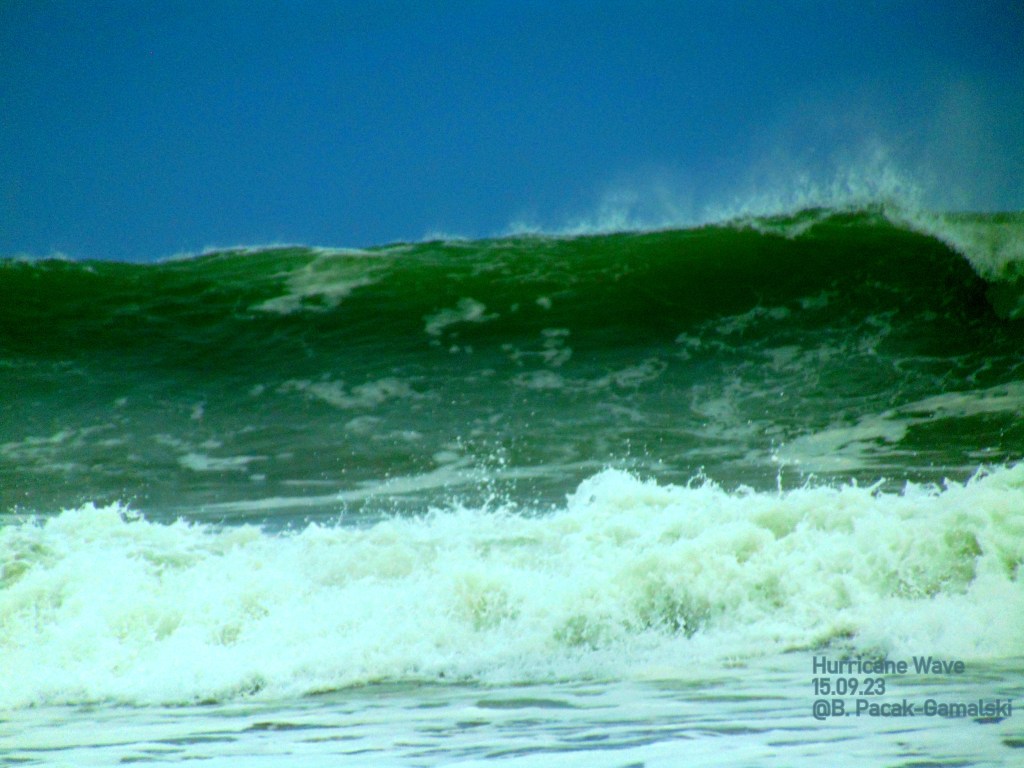
Wybrałem się wczoraj po południu w stronę kamienistej plaży w Lawrencetown oferującej otwarte, nie skryte w zatokach, wejście do oceanu. Zdecydowałem zrobić to dziś niż ryzykować jazdę szosą, która wije się bez przerwy wzdłuż wybrzeża i dziś może być miejscami zalana. Dodatkowym i pewnie pewniejszym ryzykiem może być niefortunne ‘spotkanie’ z fruwającą gałęzią lub konarem drzewa, a szosa 207 prowadzi bez przerwy wzdłuż ściany lasu. Huraganowe fale są zawsze dużo wcześniej, posuwając się szybciej niż skłębiona masa prądów powietrza.
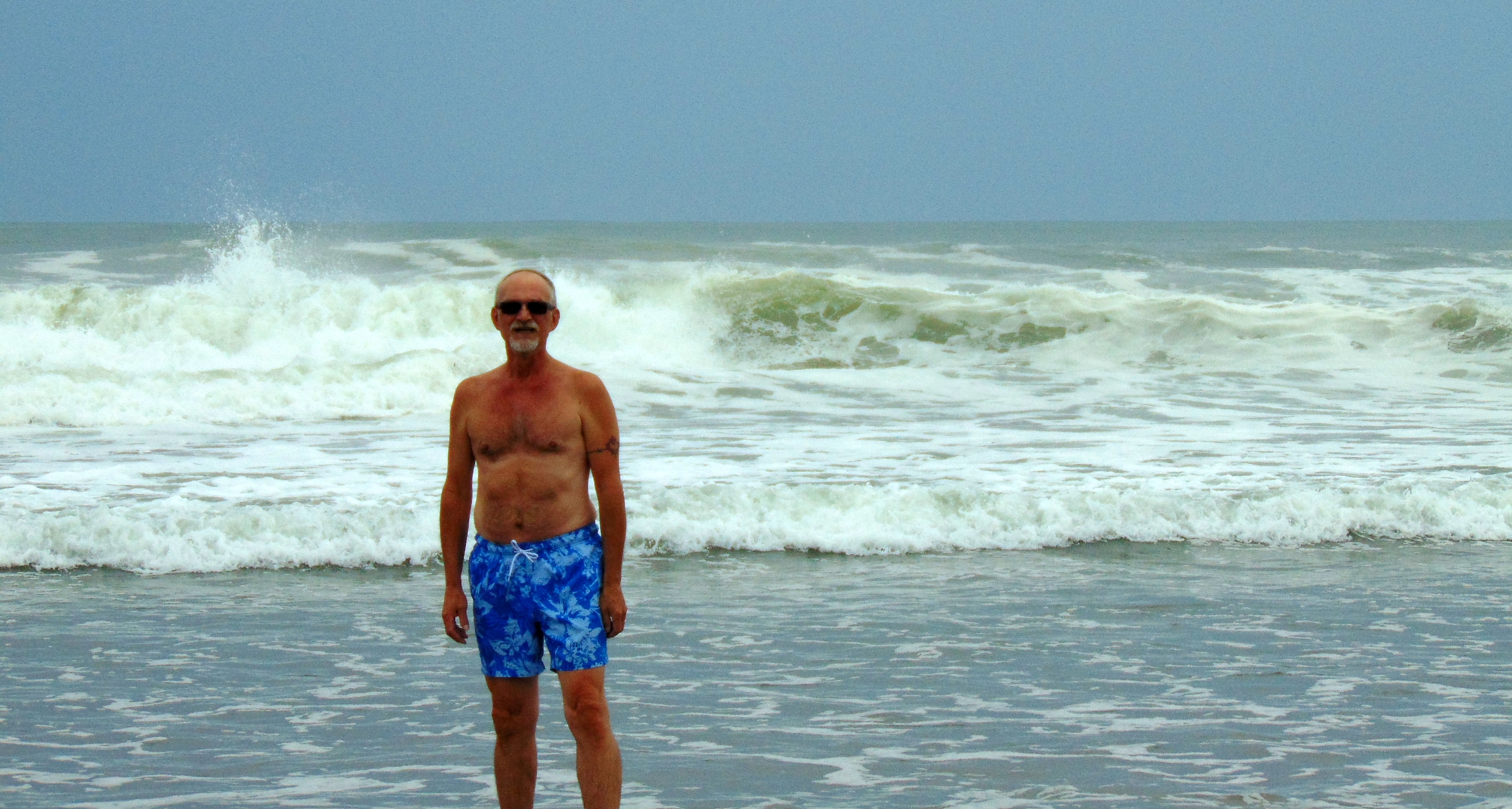
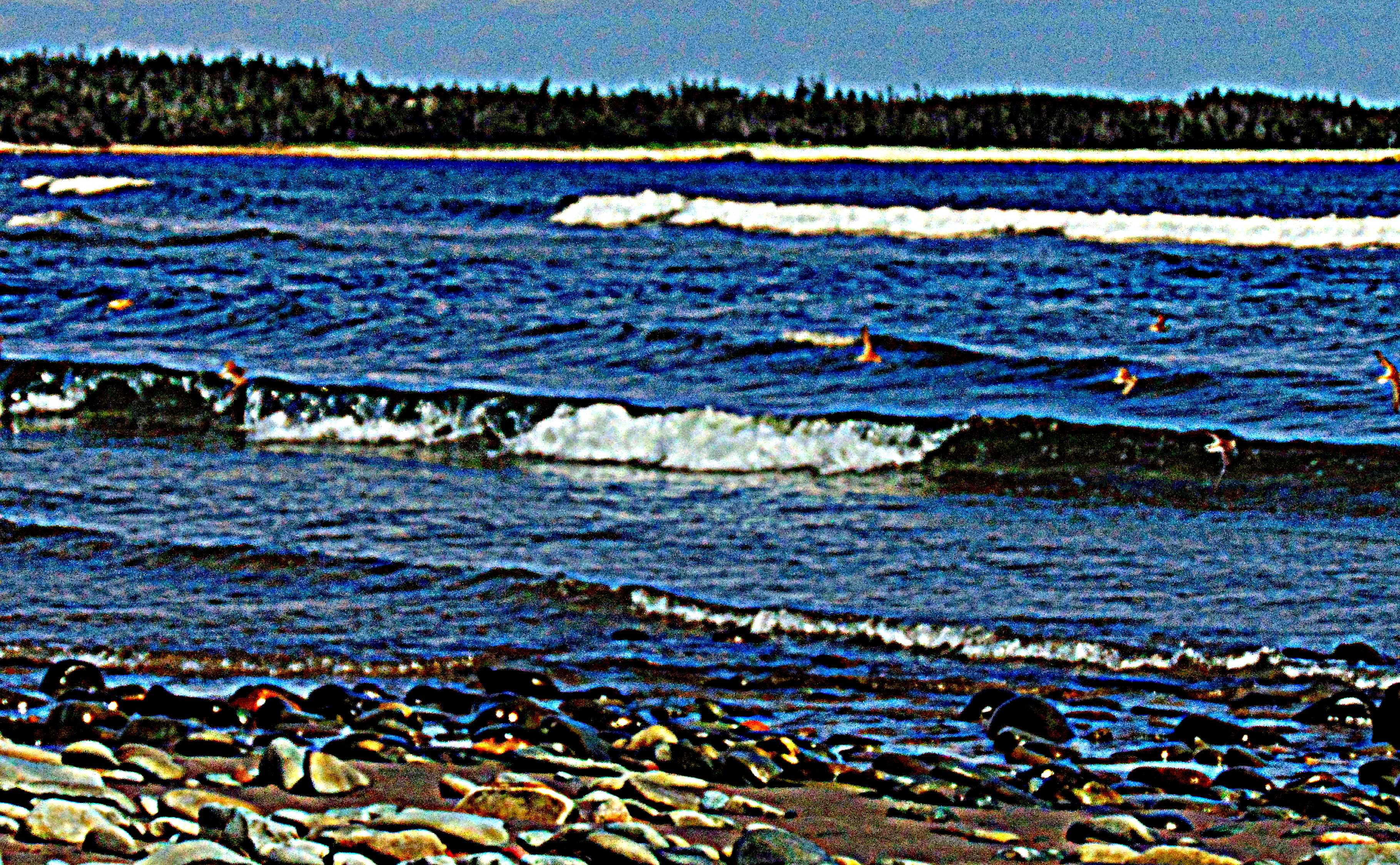
Na plaży było raczej pusto, ale na drewnianych schodach prowadzącej do niej stały grupki ludzi obserwujące szalony taniec morza. Zszedłem powoli ze swoim plecakiem i statywem na brzeg. Nie było silnego wiatru, temperatura powietrza dość niska, tylko 15 Celsjusza. Ale niesamowita, gęsta wilgotność nie była zimna, a raczej, jak ciepła kołderka. Zrobiłem kilkanaście zdjęć, ustawiłem statyw mocując go dość solidnie w ciężkim piasku kilkanaście metrów od linii, gdzie widać było wyraźnie ostatnia linię fale. Nikt się nie kąpał, ale spostrzegłem niedaleko dwóch surferów w swoich czarnych kombinezonach szykujących się z deskami do tańca z oceanem. Więc cóż robić? Morze i pływanie kocham. ‘Na oko’ fale nie były wieksze niż 7 do może 12-15 metrów niektóre. Zdecydowanie nie była to jakaś masywna wielka ściana wody. W tak dużym sztormie jeszcze nie pływałem chyba. Więc siup. Z ostrożnościa i szacunkiem wobec oceanu. Zabrało trochę czasu z orientowaniem się jaką stroną ciała mam się do fal ustawiać. Odniosłem wrażenie, że najbezpieczniej wybrać głębokość gdzieś do połowy ciała (normalnie nawet w dużych – ale nie takich jak dziś – nie zaczynam pływać póki woda nie sięga przynajmniej klatki piersiowej). Na zbyt płytkiej nie chciałem, bo zauważyłem, że uderzające mnie po nogach kamienie pędzone przez wracające fale nie były kamykami. Miały wielkość dobrej pięści i wolałem głową się z nimi nie spotykać. Ważne było by utrzymać pozycję stojącą i o ile możliwe zawsze bokiem, by opór ciała był minimalny. Inaczej i fale nadpływająca i powracająca zwalały cię z nóg. No i mogłaby zanieść za daleko, a nie wierzyłem sobie, że miałbym wystarczającą umiejetność i siłę by dać radę przebić się z powrotem do płytkiej wody. Udało mi się kilkanaście razy ,dosiąść’ samotnej wiekszej fali i na jej spienionym białą pianą grzbiecie przepłynąć z nią kilka -kilkanaście (?) metrów. O innym pływaniu mowy być nie mogło. Ale te sprawiło mi wielka radość. I porzyjemność. Naturalnie woda miała temperaturę tropikalną, przyjemną. W zimnej do szpiku kości topić bym się nie chciał. Nie lubię niewygód i jestem trochę sabarytą, LOL.
Wracając do brzegu widziałem z daleka coś wołająca do mnie parę. Naturalnie w huku fal ani słowa nie słyszałem. Stali przy moim plecaku. Poczekali aż wygramoliłem się na brzeg i wyjaśnili, że jedna z fal wypłyneła dużo dalej i zabrała plecak i statyw. Byli bardzo blisko więc podbiegli wyciągnąć z wody i odnieśli na kamienie. Podziękowałem serdecznie – bo w plecaku naturalnie były moje kluczyki do samochodu, LOL. Plecak miałem zamkniety na suwaki i materał jest dość solidnie nieprzemakalny. Więc nic w nim nia zamokło i Iphone też był suchy. Kamera jednak znaku życia dać nie chciała. Ciagle leży teraz na łożku cała otwarta i może wilgoć z niej wyjdzie. Ale zdaje się biedaczka wyzionęła ducha. Szkoda, bo służyła mi nieźle. No, ale co widziała, to widziała. Więc życie miała ciekawe. Od Pacyfiku, jego zachodów i wschodów słońca, wysepek, przez Góry Skaliste , ich doliny i szczyty, po podróż przez całą Kanade, aż do wybrzeża atlantyckiego i tutejszych tras.
A tych dwóch facetów z deskami większego szczęścia na dłuższe szybowanie na falach też nie miało, LOL. Co udało im się biedakom stanąć na desce, to jeszcze szybciej byli z niej zwalani. Podejrzewam, że nie tyle z braku umijętności ile z faktu, że fale pędziły bardzo gęsto jedna za drugą i ‘przewalały się’ w bardzo różnych odległościach od brzegu. No i ten bardzo silny prąd od brzegu też pewnie im to utrudniał. Ale na pewno mieli też radość i uciechę. Zaskoczony byłem jak silnie przebijało się słońce mimo bardzo gęstej powłoki chmur. Gdy wyjeżdżałem nie było jeszcze bardzo późno. Ale młodzi strażnicy już nikogo na parking nie wpuszczali i zamykali szlabany na kłódkę. Pewnie rozsądnie.





































 > > Pogwarki < <