Gdy słyszymy dźwięki starej (na ogół) sentymentalnej piosenki, uśmiechamy się nieco ironicznie. Naturalnie znamy tą melodie, słyszeliśmy nasze mamy i bacie jak je nuciły z łezką, niczym koronkowy baldachim pod ich powieką.
W rozmowach między sobą z tą ironią mówiliśmy słuchając stare przeboje: to takie śmieszne i ckliwe. Aż dnia pewnego obudziliśmy się z rana, poszliśmy do łazienki i spojrzeliśmy w lustro. I krzyk: Boże kochany, toż ja wyglądam starzej od babci! I faktycznie nie tylko ‘wyglądamy’, ale jesteśmy starsi, bo babcia zmarła już wiele lat temu i umierając była młodsza od nas obecnych. Co się zdarza.
Tak samo podśmiewają się z nas nasze dzieci i wnuki obserwując jak słuchamy i sami podśpiewujemy piosenki Niemena, Borysa, Sobczyk, Krajewskiego, German czy wiecznie żywej Rodowicz. I falujemy niezbyt falująco niezbyt gibkimi biodrami. Oczywiście pociechą jest to, że doskonale wiemy (i nie mylimy się w tym), że ich ten sam los i ironiczne spojrzenia młodszych też czekają.
Aliści, nie ma herbaty bez liści. Ja veto zakładam. Nie starzeniu się ani mało elastycznym biodrom, ale nazwie, terminologii stosowanych do tych piosenek. Dużo bardzo starych szlagierów ani ckliwymi ani śmiesznymi nie jest.
Ot, szedłem wczoraj spacerem po krętej uliczce na wzgórzu nad miastem w Brytyjskiej Kolumbii. Jesień była iście z żurnala: złota i brązy, fiolety, ciemne karminy, chmury bajkowe ponad mną pozaczepiane rogami o szczyty wzgórz tej doliny pode mną. Chodziłem tą uliczką zdaje się ledwie dni kilka temu z Tobą…. W czasie ostatniej mojej tu, przed tegoroczną, wizyty. Oczywiście byliśmy razem. Prawie wszędzie jeździliśmy razem. I wspomnienie tego otworzyło nagle jakąś straszną pustkę, tak przeraźliwie smutną, mimo tego piękna wokół. Niespodziewanie, nie zastanawiając się, nie szukając nic w pamięci, mimowolnie omal najpierw powiedziałem na głos: już nigdy … a potem popłynęły słowa całego refrenu – nie usłyszę kochanych twych słów … do swych ust nie przytulę cię znów… na zawsze pozostaną dni smutku, dni mąk, nie oplecie pieszczotą mnie w krąg płomień twych rąk, już nigdy…Już nigdy! Jаk okrutnie dwa słowa te brzmią!
I nie było w tym nic ckliwego, nie czułem się jakoś sentymentalnie ani melodramatycznie. Tkliwość? Tak. Naturalnie, że tkliwość. Jakże by mogło być inaczej. Za miesiąc ledwie minie dwa lata, gdy moje życie w zasadzie straciło wszelki sens. Gdy w brutalnej walce przegrałem pojedynek ze Śmiercią, która wyrwała Cię z moich ramion. Okres mojej walki z rzeczywistością, krzyku i odrzucania tej rzeczywistości też minął. Po prawdzie rzeczywistość, jako-taka mało mnie dziś interesuje. Jest wokół, wiem. I co z tego, że jest? Niech sobie będzie, niewiele mamy sobie do zaoferowania.
A ten refren? Ten refren i ta piosenka mają. Mówi mi: ja wiem, nic ci nie tłumaczę, – ale wiem. Potwierdzam, że tak jest. A te słowa pan Włast, popularny wówczas tekściarz, napisał dla kompozytora pana Petersburskiego w 1930. Nuciły je moje babcie też w tamtym czasie, czyli kiedy były młodymi kobietami a nie babciami.
Ckliwości i mazgajstwa nie znoszę. Irytuje mnie. Ale nie tkliwość – tą szanuję i cenię. Jeśli zna się i rozumie inny styl opisu uczuć, z innej epoki, która była i nieco egzaltowana i nieco przerysowana – to tekst tego tanga brzmi całkiem współcześnie prawie. Zresztą, wszyscy używamy języka, który jest adekwatny do naszego stanu emocjonalnego. Wtedy jest autentyczny i szczery. Zaś prawdziwa tkliwość i czułość jest przymiotem, a nie wadą.
Ze spaceru wróciłem, odpaliłem kompa i z YouTube słuchałem mistrzowskie wykonanie Edyty Geppert starego tanga ‘Już nigdy’ … . [i]Szalik ciepłego, serdecznego smutku otulił mnie swym czułym, tkliwym ciepłem. Tkliwym, nie ckliwym.
Sa podróże epokowe w życiu człowieka. I prawdziwie epokowe są przeprowadzki-podróże przez wielkie puszcze, nad wielkimi jeziorami, przez wysokie góry i przez płaskie prerie. Od oceanu do oceanu. Kłopot człowieka, który zamieszkał w takim kraju, który ma aż trzy oceany i część najdłuższego pasma gór: Kordylierów. Ba, jedna z pasji mojego życia to podróżowanie, więc – voila! Drugim nieodłącznym elementem wielkich podróży są pożegnania. Te mogą być bolesne. I w tym pomaga wiek i doświadczenie, które łagodzą te wstrząsy. Te też, niestety, już mam.
Pisałem bardzo niedawno na tych łamach o książce. Naturalnie o książce literackiej lub szerzej nieco, o książce ze świata kultury i wiedzy. Literatura bez wiedzy by istnieć nie mogła, ale jest też sprzężenie zwrotne: po cóż wiedza, jeśli do świata kultury (wiec literatury, sztuki ogólnie) nie prowadzi? Te dwie córy umysłu ludzkiego są poniekąd bliźniaczkami syjamskimi.
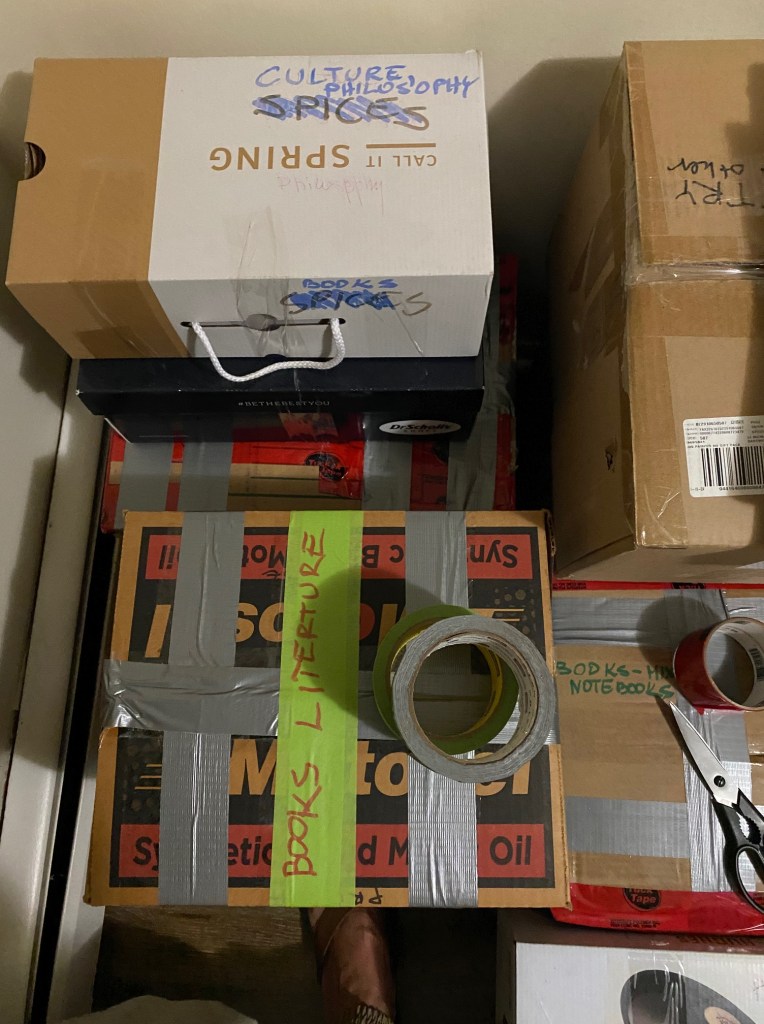
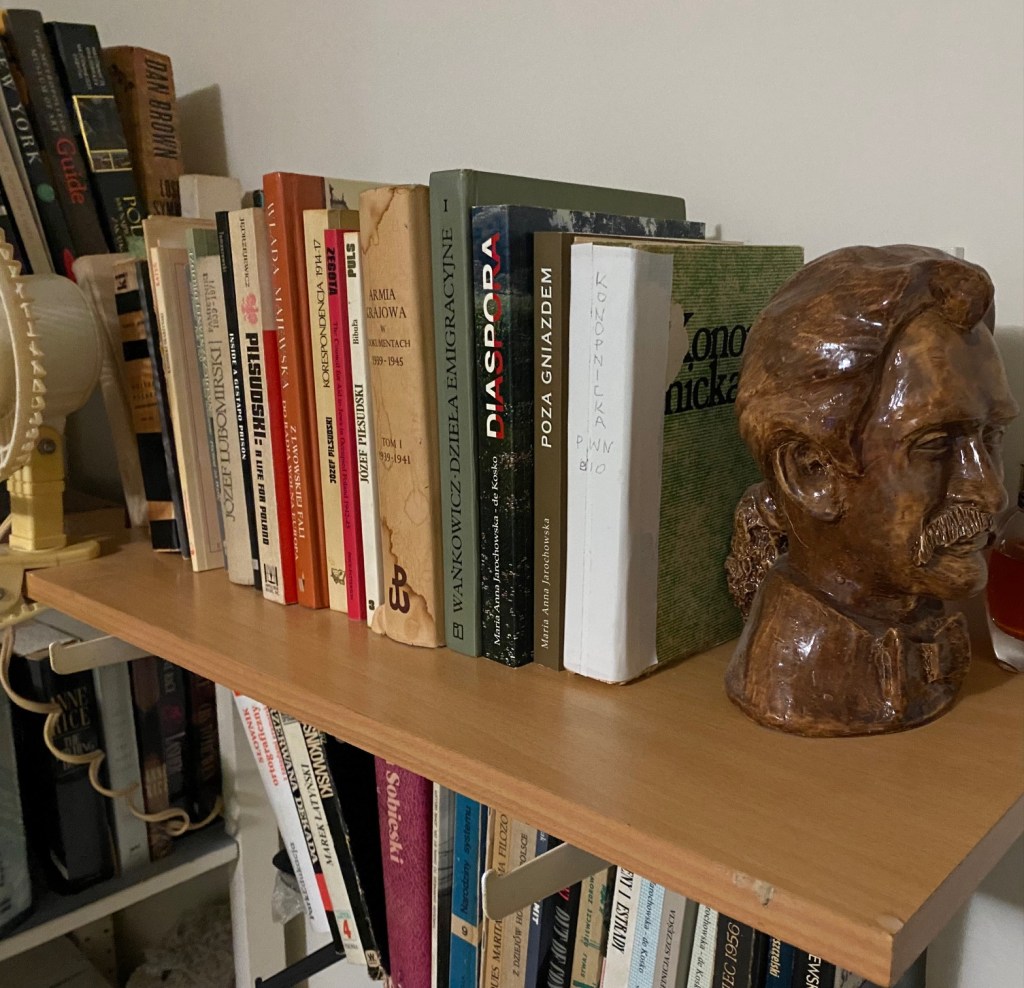
Więc związane z moją życiowa przeprowadzką przez epoki i kontynenty problemy pakowania i eliminowanie są okrutne. Ofiary jakieś być musiały. Pierwszymi były książki współczesnej literatury dużych nazwisk literatury polskiej. Ale znowu jest pewna cezura, dziś już zarzucona (i słusznie) literatury krajowej i emigracyjnej. Tu jest wiele niebezpieczeństw i zaskoczeń dla niektórych. W kraju czytelnik (i wydawnictwa) pamiętał tylko o tych, których znał z lat do (powiedzmy umownie) 1945. Tych którzy przed tym 45 już zaistnieli. A kurtyna komunistyczna była mimo wszystko dość szczelna i zawisła na kilka dziesięcioleci. Masa wspaniałych poetów i pisarzy polskich dorosła do ‘bycia’ poetą i pisarzem już poza granicami PRL. Tych nigdy na nowo przywrócić literaturze krajowej nie potrafiono. Może było to niemożliwe. Próbowano niektórych – głównie w sferach akademickich, badawczych. Aby żyć w świadomości czytelnika trzeba pisać, tworzyć i żyć ‘po sąsiedzku’, na następnej ulicy, przy kawiarnianym stoliku obok. Prowadzić aktualną rozmowę z tym czytelnikiem na temat pogody na ulicy, na temat miłości, wiary, patriotyzmu i ceny bochenka chleba w sklepie. Tak – były „Zeszyty Literackie” Barbary Toruńczyk, ale dla wielu już za późno, dla innych trochę zbyt oddalone rożnymi progami. A i w Polsce „Zeszyty Literackie” nie były „Życiem Literackim”[i] i większość ich trwania była wydawana poza Polską. Podobnie miało się z moim Rocznikiem Artystycznym „Strumień” wydawanym w Kanadzie w latach 1999-2012 – istniał w bibliotekach uniwersyteckich w Polsce, w archiwach literackich, ale nie ‘na ulicy’ miast polskich, gdzie spacerował krajowy czytelnik[ii]. Gorzej jeszcze było z wydawnictwami i autorami mniej znanymi a rozsianymi w różnych ośrodkach polonijno-emigracyjnych po całym Zachodnim świecie. Prawie każdy polski tygodnik wydawany w Londynie, Toronto czy Nowym Jorku prowadził też własne wydawnictwa poetów i pisarzy w tych krajach mieszkających. Mało kto z żyjących pamięta te wydawnictwa i tych autorów.
Więc tych zapomnianych i te zapomniane tytuły biorę. Ocalić od zapomnienia …
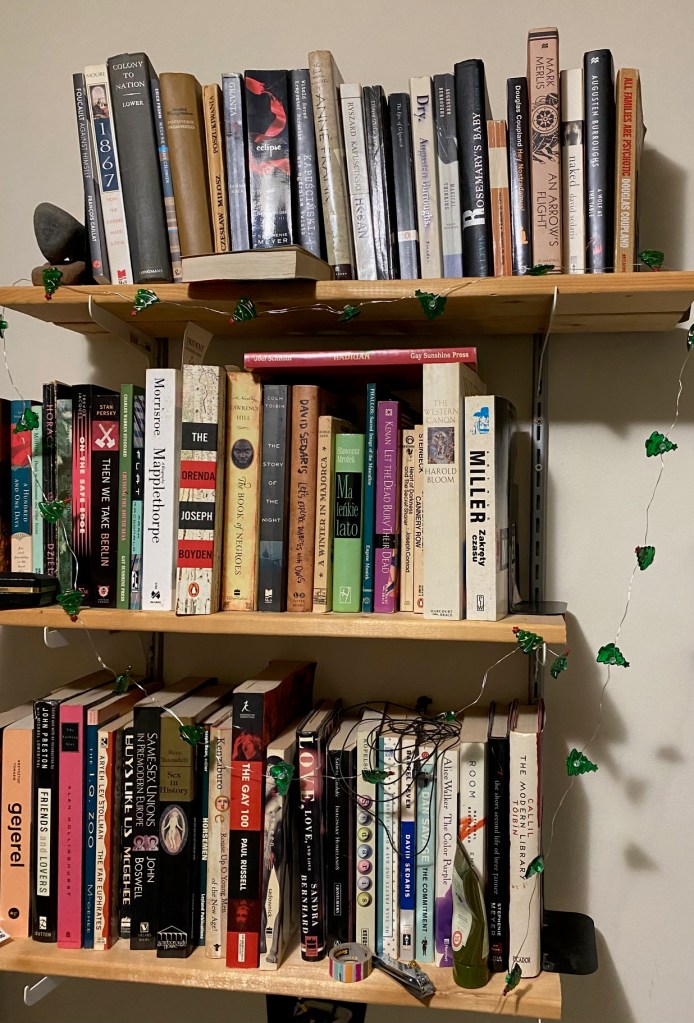
Dużo więcej będzie tytułów angielskich, które wyjątkowe dla mnie mają znaczenie literackie lub literaturoznawcze. Wśród z nich wyjątkowe ma gigant literatury Colm Toibin. Moim zdaniem jeden z najlepszych pisarzy kultury Zachodniej końca XX i początku XXI wieku. Genialny i jako pisarz i jako literaturoznawca.
I (bo koszula ciału bliższa i wiedzę na ten temat mam dobrą) biblioteczkę badań literacko-kulturowych społeczności LGBTQ+.
To książki tylko. A co z dugą pasją, z muzyką?! Nigdy w życiu nie myślałem, że dyskietki i DVD’s tyle ważą! Taka jedna płytka, to piórko. Dwadzieścia już waży – a 50 waży ho,ho. Jaką selekcję robić? Jakbym się ośmielił wyrzucić Callas czy Pavarottiego, Mozarta lub Beethovena, Madonnę (tu kłamstwo – akurat wielkim fanem Madonny nie byłem i nie jestem) lub Piaf, Ewę Demarczyk czy Marka Grechutę? A wyrzuciłem, całą masę. Odwrotnie od książek – współczesne systemy odbioru muzyki internetowo-elektronicznie są wielokroć lepsze niż te z dawnych CD. Więc tak długo, jak będę miał dostęp do Internetu i jakiś laptop – nie muszę mieć na licznych stojakach stojących pod ścianą z setkami tych dyskietek. Z nielicznymi wyjątkami: zachowam te od tych muzyków, którzy sami mi podarowali ze specjalna dedykacją. A szczęście miałem współpracować, czasem się przyjaźnić, z wieloma wspaniałymi muzykami. Czort wie czemu głównie z arystokracją muzyków-wykonawców: pianistami, LOL. Nie, no wiem przecież, bo jak tu porównać sceniczną widoczność pianisty ze swoim instrumencikiem a skrzypka ze skrzypeczkami?! Size matters, LOL.
Prócz tych wezmę specjalne edycje zrobione na wielu dyskietkach z okazji jakiejś wyjątkowej, niepowtarzalne i artystycznie – majstersztyk.
Nie zostaje nic innego, jak wyrzucić kolejne kilka worków własnych ubrań. Bo mimo wszystko książka jest przecież ważniejsza od gaci i spodni. A samochód, którym przez kontynent to będę wiózł – choć spory – za nic się nie rozciągnie. Przyczep żadnych przez puszcze i góry ciągnąć za sobą nie będę. Karawan ciągnąłem jadąc ponad sześć lat temu w tą stronę: od Pacyfiku do Atlantyku. Ale wtedy jechało nas dwóch: ja i mój John. Teraz wracam sam i pora roku dużo późniejsza. Dalej, z Zachodniego Wybrzeża, za kilka dobrych miesięcy powiezie to już statek. Po co ciągnąć to do Vancouveru, skoro z Halifaksu tyle bliżej, przez jedno tylko duże jezioro? Ano, to już inna para kaloszy, inna historia. Inny wiersz i powieść inna. Vancouver to mój Dom. Moja miłość i najpiękniejszy okres mojego życia, który już nie ma szans się powtórzyć. Jakbym mógłbym nie pojechać, uściskać go i podziękować za to, co mi dał? Z jednego miasta, które kochałem – Warszawę – wyjechałem blisko pół wieku temu nie żegnając się, bo nie przypuszczałem, że nie wrócę. Tym razem tego powtórzyć nie mogę, bo teraz wiem.
Music! Music is like a song of angels, like flower petals falling down in a slow pirouette. Music is …
Surely it is. Or that’s what you hope for, anyway. But sometimes … sometimes music is just a cacophony of noise. It is actually irritating to your sensory system.
I can’t believe that I’m writing these words. Do you know why? Of course, I will tell you, otherwise I wouldn’t write it. Because of one of the most talented, most popular composers that ever existed – Mozart! And because of two top piano players in Canada for many years now – maestros David Jalbert and Charles Richard-Hamelin. The darlings of the most prestigious stages of the world. I have heard both many times, been on numerous occasions to concerts of Hamelin, and listened to Jalbert’s CDs and CBC Radio performances.
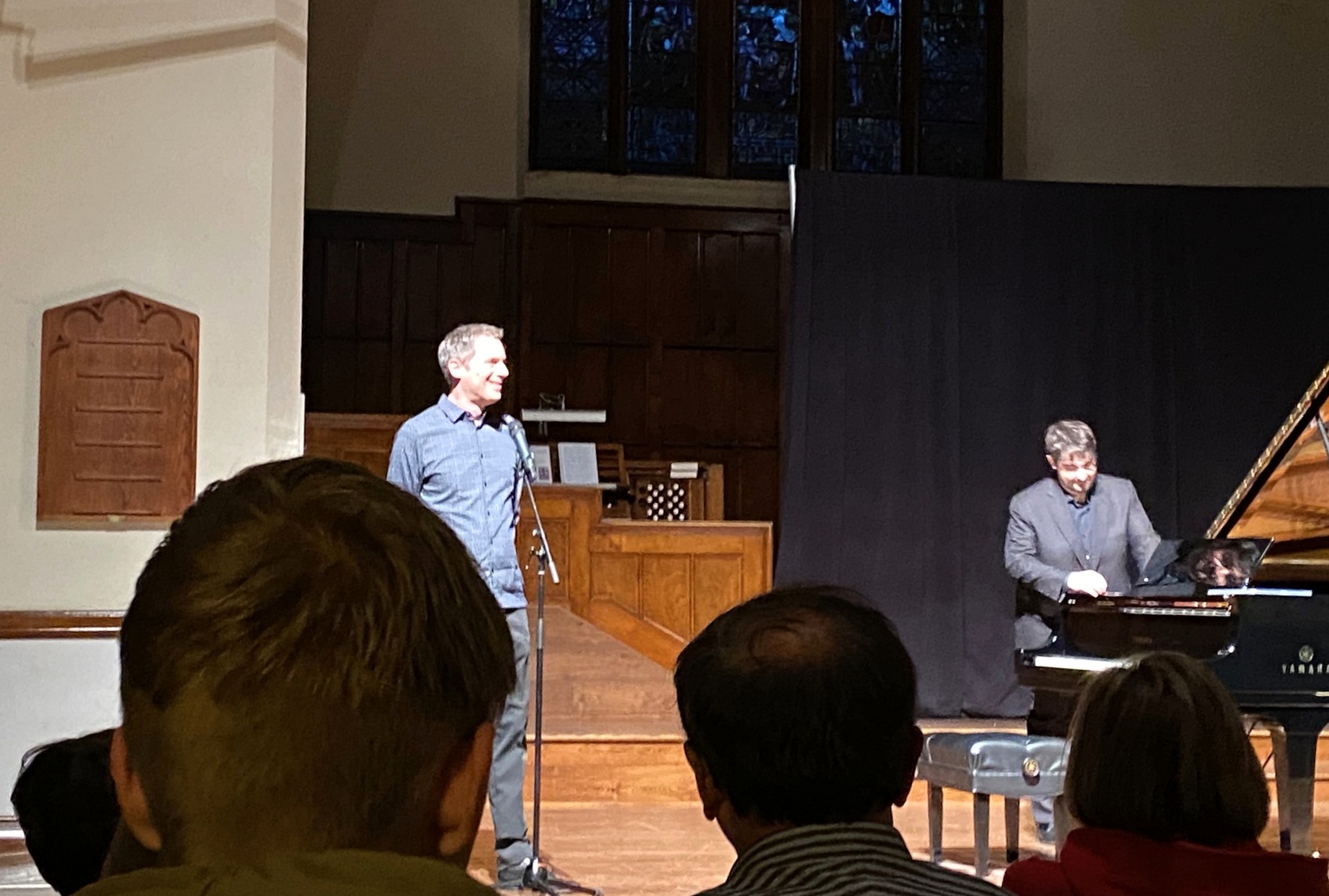
Last Saturday[i] they performed for the very first time together. Playing compositions not separate but composed for two pianos or a composition for four hands. I hoped they would have played separately, their own program of any choice.
And I hoped Mozart had never composed that awful cacophony of his Sonata For Two Pianos in D major, no. K.448.
Or otherwise, I hoped I never went to that concert.
There is my own rule that I’m breaking now: when you have nothing nice to say, then be silent. If it was a concert of a new, fledgling pianist or the first public performance of some young and unknown composer – I wouldn’t say a word. None of it applied in this case, though. It definitely doesn’t matter for Mozart. He is dead for about 250 years and doesn’t care anymore who and what is written about his music. Besides – he left us with many of the best-ever composed works (except this one! LOL).
For the pianists – Halifax is not Carnegie Hall or Warsaw Symphony concert hall (sorry Cecilia Concerts organizers, but let’s face reality; Jalbert and Richard-Hamelin can afford one bad review after many years of a string of good reviews).
One more thing – I will have a few much nicer things to say about the rest of the concert. In particular about absolutely beautiful Divertissement Andantino varié, no. D 823 and Fantasie in F minor, no. D 940, both of Franz Schubert.
I think that at times things just get wrong from the very beginning, before anyone touches a single key on any piano.
Originally the concert was planned for Richard-Hamelin and a young American pianist, Eric Lu. Was really looking forward to it. Very talented young star of the keyboard, Eric Lu is one of these musicians I really wanted to listen to in a live concert, not just recording. When I exchanged notes with him, I told him how much I was looking to this and promised to write my impressions from the concert. As recordings are usually musically perfect – they often lack the emotions, the exchange of the atmosphere between a live audience and an artist, impression insaisissable.
But, as in many ‘wants’, this happened to remain exactly that: inasaissable, unfulfilled. Sudden medical problems prevented him from coming to Halifax. Alas, the tickets were sold, the show must go on.
Richard-Hamelin and the organizers had to quickly find another player and talented David Jalbert agreed to oblige. It is one thing for two pianists to play different compositions in one concert, and totally different for them to play the same music composed for two pianos. Just because you choose two very well-known pianists doesn’t mean they will be the best tandem. One more thing we learned (meaning the audience) is that they … never played together before. Two best Chefs do not guarantee the best dinner cooked together, often it ends in culinary disaster.
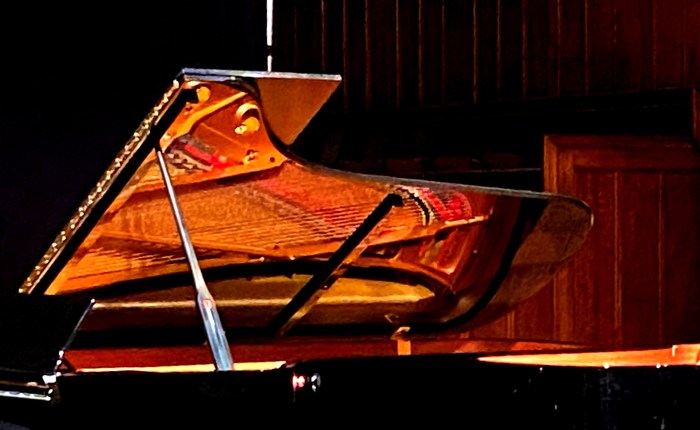
What was the original idea of starting the concert with this insane Sonata in D major K.448 by Mozart – I have no clue. There were really moments when I had to gather my willpower not to just get up and leave this musical nonsense. Noise. Yes, it did have allegro, andante and molto allegro and it was in D major. Could have been in ,Z minor’ as far as I am concerned – the effect would have been the same. The pianists did not help much, either. I thought there was a total disconnection between them. One was playing his own vision, the other – another vision. As you know, in classical music there are (in European instruments) no larger pieces of instruments than the grand piano. It seemed that the distance on that particular evening between these instruments was even larger than the length of these gigantic instruments.
Mozart was twenty-five years old when he composed it. At this age – despite or maybe because of already big popularity and fame – you are not mature enough to measure everything in the right emotions, true perspective. Maybe he felt the stress of the expectations that the young composer must constantly produce new pieces, constantly prove his genius? Not unlike many young artists these days. Sometimes the pressure proves to be too much.
Now, would it sound better if I felt the connection between the pianists? I don’t think so. Guess we will never know. Can’t recall if I ever heard that composition, and therefore can’t compare.
The Andante was at least musically much better. The lyrical melody, even some sort of peace, brought comfort. The best was the end, the Molto Allegro. For many reasons: primo – it was the end of it (LOL); secundo – the pianists finally noticed each other and began to speak in the same language of emotions; tertio – it was the best part of the entire sonata. Beautiful repetitions of the best melodies in the form of rondo.
Rachmaninoff’s ‘Russian Rhapsody’ was composed well and it was delivered much better, too. By that time the pianists made peace with each other and played together, not separately. But the choice was disputable, too. It is definitely not the best work of this brilliant composer. And not truly a full rhapsody, either. Of course – the amount of compositions for two pianos is limited, too. No complaints, though. Had I not been exposed to the fiasco of Mozart’s sonata – I probably would have enjoyed it more.
The best came next. Franz Schubert, whose music I adore. There is so much emotion, and yet so much elegance in it.
Poor Schubert died being very young. It was as he anticipated it – he composed constantly, often in the form of musical sketches, that later were supposed to become a full-fledged larger piece. As was the case of his ‘Lebenssturme’ (Storms of Life), Allegro in A minor, D.947 that he planned to expand to a full sonata. Sadly, he died the same year, never having the chance to expand this (and many other) composition.
Jalbert and Richard-Hamelin by now played in unison, and my dislike of their playing dissipated completely. They took me with Schubert on a wonderful walk, sometimes a run through some park in Germany. Run after love, after romance, after youthful life perchance? With all the desires and pitfalls of that tumultuous age. I so remembered it myself. And that is the pinnacle of a good concert – when the music transfers you outside of the concert hall to some faraway places, times perhaps.
But that was just a taste of the charm of his music … and the ability of both pianists to show if they fully trust and understand each other. The diminutive form of Divertissement on French motifs D.823 (three parts: Opus 63; Andantino varié and Rondo Allegretto. This gem was composed for piano for four hands. Similarly, the final Fantasie in F minor D. 940 was for piano and four hands. That was the cherry on the musical cake. Such ephemeral music! It felt like dancing with angels. The two pianists sitting by the same black and white keyboard melted together as one with four hands. Now everything was making sense, everything was in place and the music took us all to a sphere of magic.
And that is what you want from Art, my friend.
[i] Cecilia Concerts series, Halifax, in St. Andrew Unitarian Church, Apr. 06., 2024
Canadian Press is abuzz with stories about the Juno Awards, the Canadian version of US Grammy Awards. Well, not only the Press – the faithful public, too. Canadians have always been very loyal to our musical groups, and our singers. My John would have been delighted with it being hosted this year in Halifax and I would quietly bought a ticket for him a long time ago in advance of the event. He truly was a huge fan of our musical performers and knew them all. He was my teacher and my encyclopedia on this subject.
I must readily admit that I could easily name the best international operatic singers of the past hundred years. Starting with Caruso, Dame Nellie Melba from Australia at the turn of the XIX and XX century, incomparable diva Maria Callas (I am sure she is the reason the term ‘diva’ is still being used in popular culture to describe certain, shall we say, overly dramatic or tragic characters. Popular in LGBTQ circles, LOL. Even someone as timid and demure as myself was called that by few …. I know, hard to believe, LOL); great Joan Sutherland, Montserrat Caballe – forever associated in my memory with her wonderful performance with Freddie Mercury in their duet “Barcelona’, of course also Pavarotti, Domingo and Carreras – the original ‘three tenors’; Polish Ada Sari and great Teresa Żylis-Gara; our own Canadian mezzo-soprano Judith Forst, and Ben Heppner. Enough of that, otherwise I will never stop. But ask me the same about pop music names – the list might not be as long. I didn’t have to remember their names – I could just ask John! He shared that affection for popular music with his brother Roger, who is a good DJ’ and had his share of playing in the clubs. The two of them could talk about current music for a long time – and they did.
But back to business at hand – the Juno Awards in Halifax. The city is abuzz about it. Who and why should win and who shouldn’t. No, I will not tell you. That is a taboo to talk about rumors like that. You will find out in a few hours. Maybe you did already.
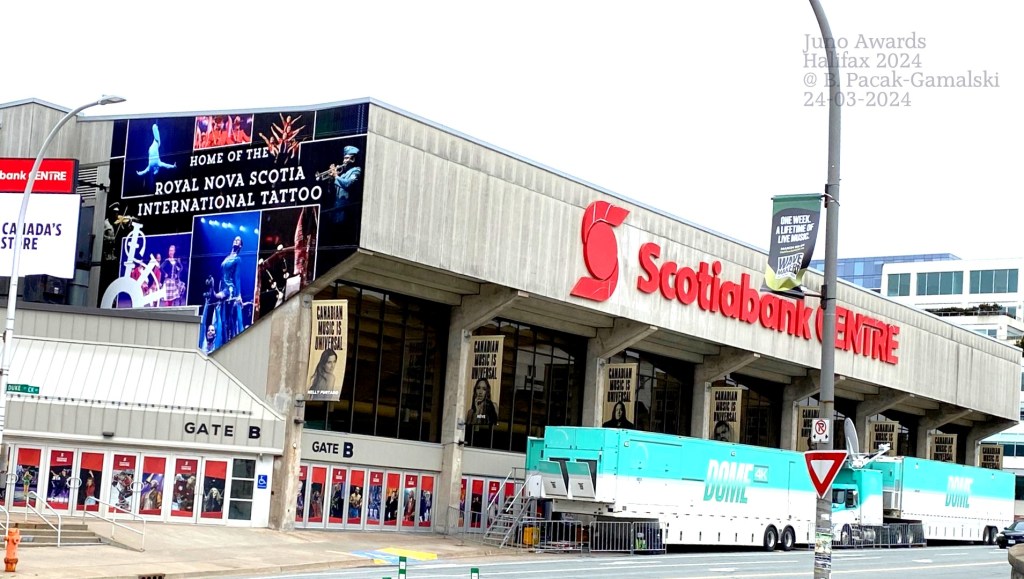
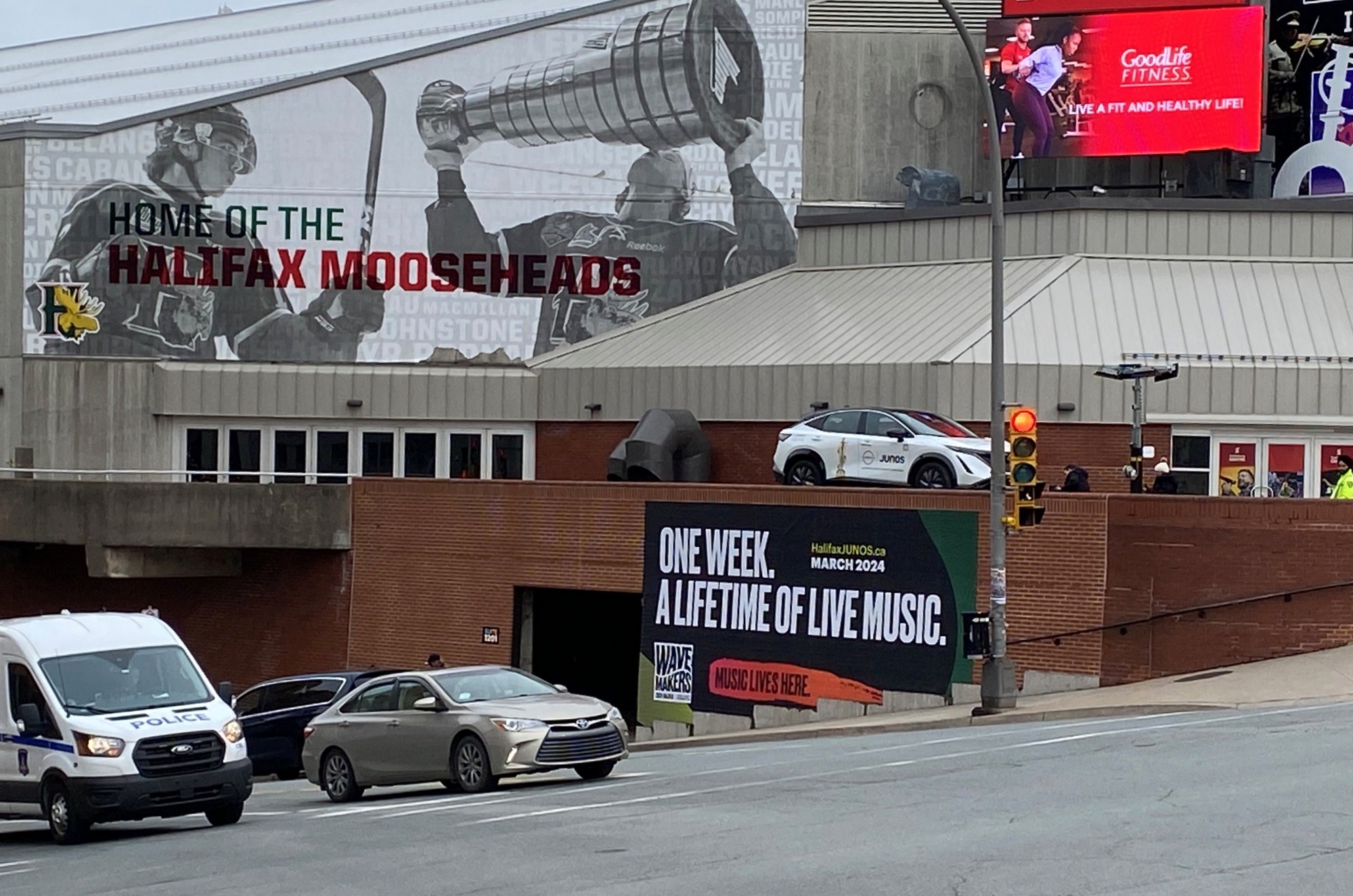
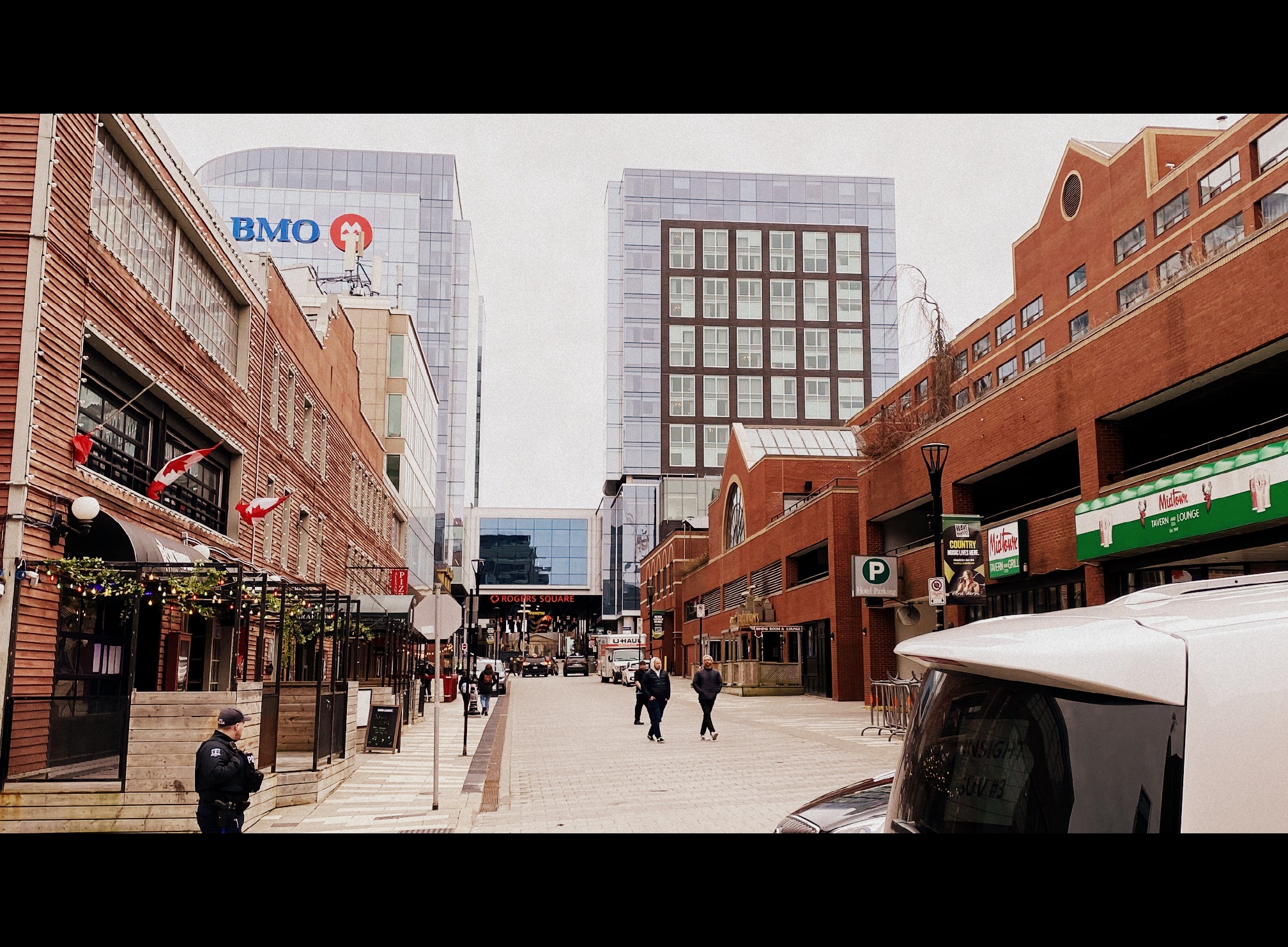
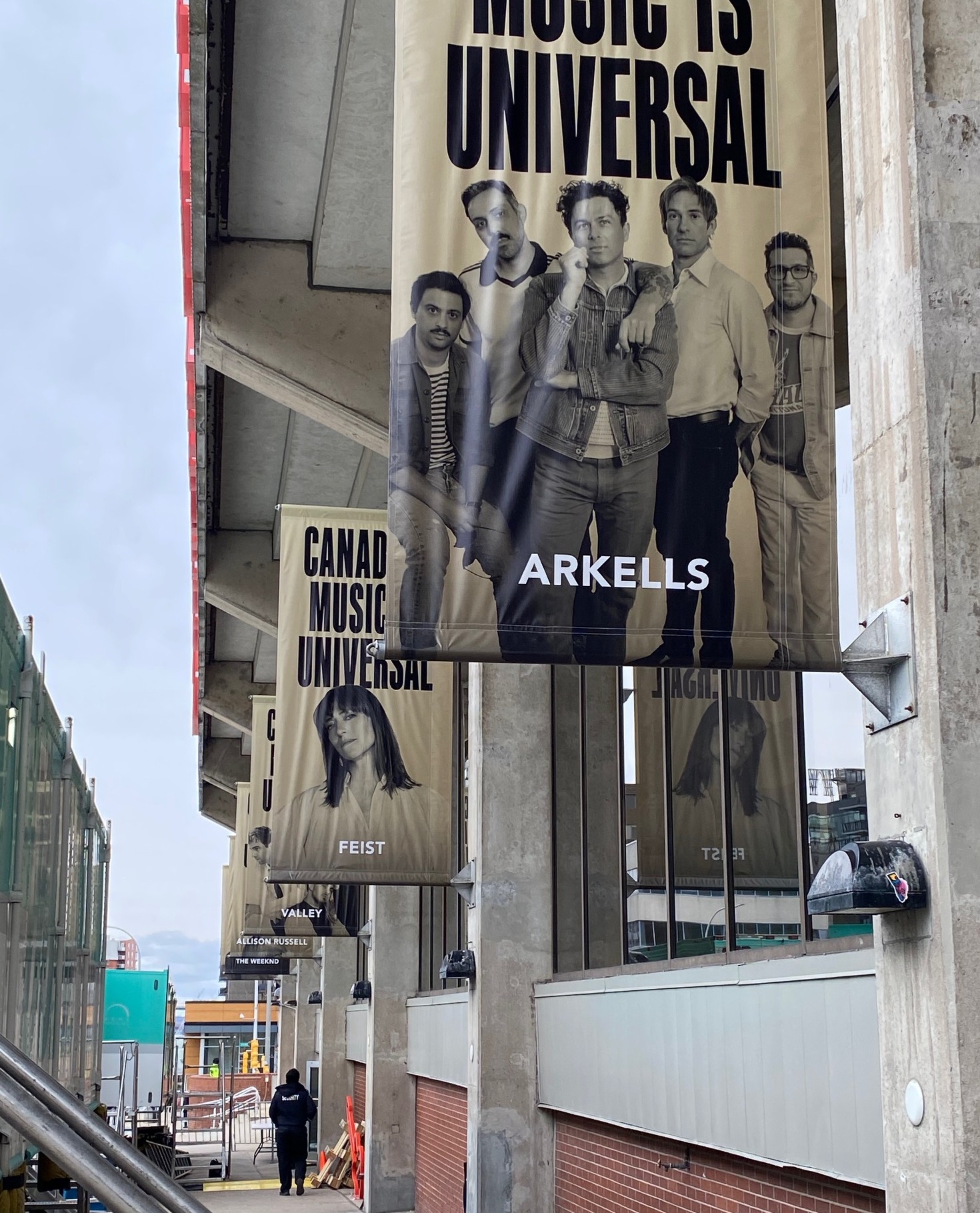
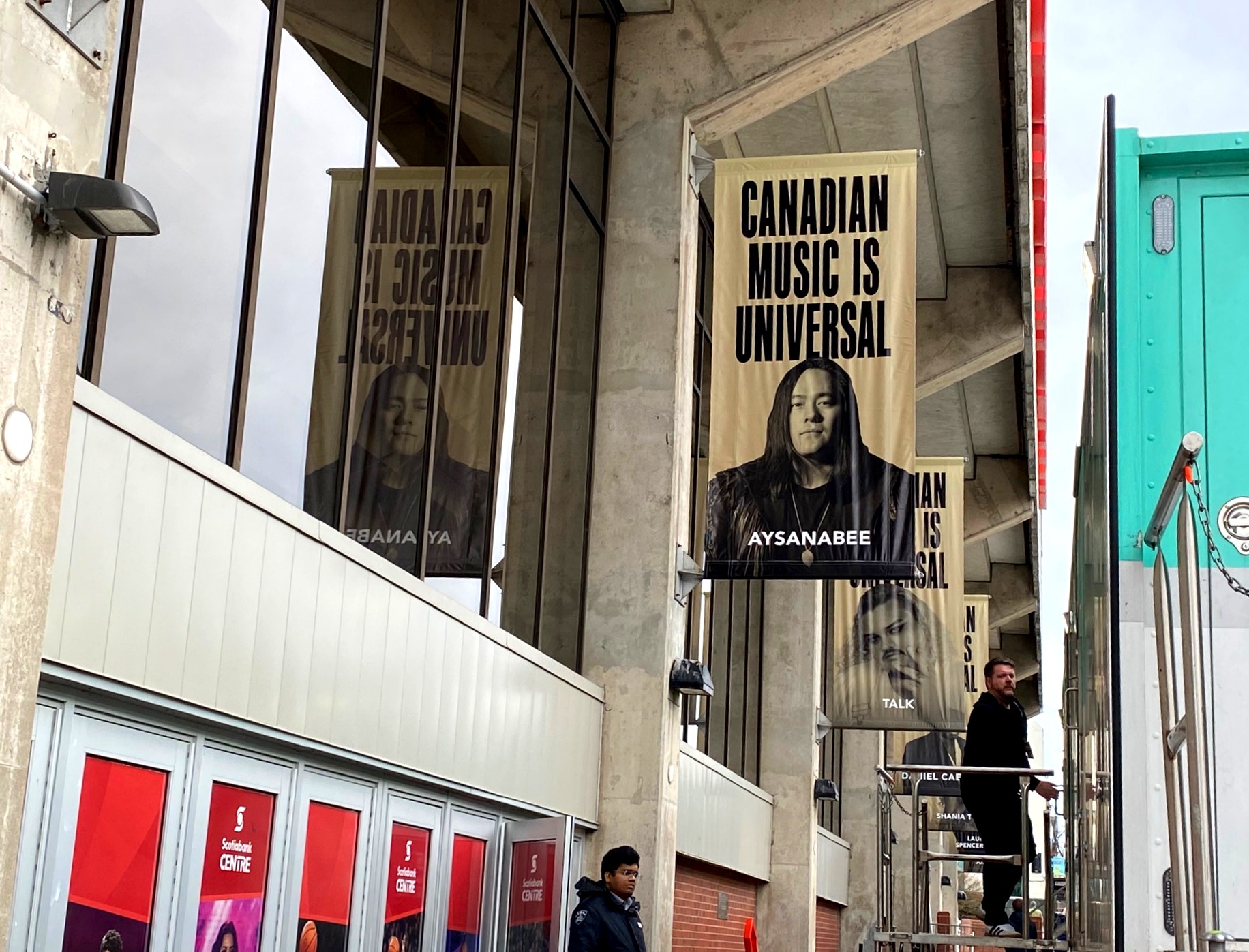
Well, the truth is … I simply have no idea, who is running this year and who should or shouldn’t. Ignoramus, tabula rasa. LOL. John is not here to educate me. But you are much better on this subject, anyway – I am certain. So – enjoy the Junos from Halifax! A few photographs on a very cold day in Halifax of the venue for the event – the Scotiabank Center.
Few words of personal explanation. Of my wonderful life with my beautiful husband, lover and partner, John. Life that tragically ended with John passing a year ago. Yet life worth every moment, every second. Music, music – it has been such an important part of our life. Through music – in all forms, shapes, and styles – we understood each other deeper, fully. Like the name given by German composer Felix Mendelssohn (1809-1847) to his ‘Songs without words’. Love truly does not need words. As in any true process of creation, words – if used – are only a mere ornament, part of the mechanical structure. True creation begins and ends in a sphere of senses: sound, smell, touch, feeling. Everything else is just a noise.
Therefore, when I walked that wintery evening from Henry Street to Coburg Street and to St. Andrew Church for my normal rendezvous avec la musique – he walked there with me.
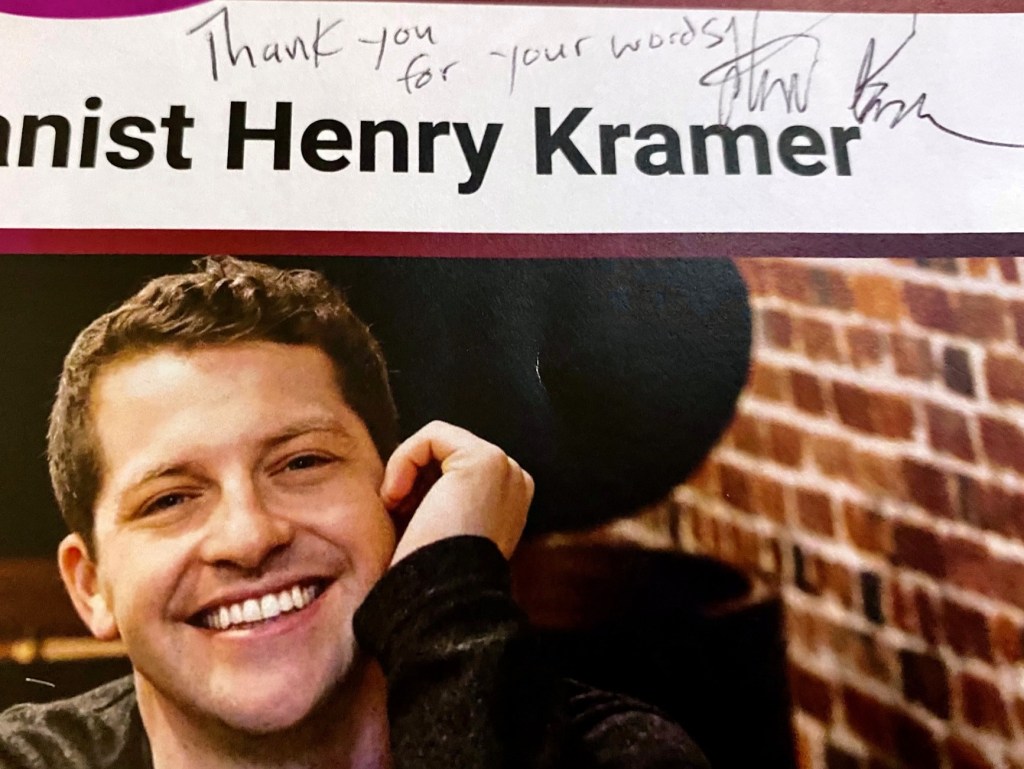
What a wonderful rendezvous it was! It was an immense pleasure to listen to the music played by the most gifted pianist, Henry Kramer. Kramer is an American musician recently being offered a teaching position in the Faculty of Music at Université de Montréal, and because of the proximity, he was able to come to Halifax and give us a taste of talent. What a treat, indeed.
One award (among many others) I have to mention is the American National Chopin Piano Competition in Miami, where he claimed the 6th spot in 2010 (the First Place automatically awards the winner a spot in the top piano competitions of the world – the Warsaw International Chopin Competition). But there was a connection to that famous Warsaw Competition: among his jurors was the former 3rd place winner of the said International Warsaw Competition, Piotr Paleczny. I was lucky enough to hear Paleczny playing many years ago during that Competition in Warsaw and to know him personally. He was, as a young fellow at that time, a very sweet guy. And truly fantastic piano player.
Henry Kramer missed that Warsaw Competition ticket – but he did not miss the 2016 prestigious and top-ranking Queen Elisabeth Competition in Brussels. And he got the Second Prize – that is a ticket to just about all concert halls in the piano world.
I was not in Miami to hear him personally there, but remember his concert in Seattle. Remember him well enough to make a note of his playing: don’t forget his name because you will hear of him.
Back to Halifax. Have a chance years later to do that. To be at his concert. How can I describe the overall feeling, reaction? I will use a term I don’t remember using before in any of my musical reviews:
Henry Kramer is a pianist of a very elegant way of playing. That it is. Elegant way of playing. You could say: bravado, astonishing, lively, emotional, technically brilliant. But after listening to him intently, paying attention to how he treats not only the music but the entire piece that makes a player, his arms and body and keyboard, pedals, and the entire massive instrument a one-piece, one symbolic union – that is the term that came to me: grace and elegance.
And what a good term, when you play music submerged in a very specific time of European chamber music of early romantics. Time of Shuberts, Mendelssonhs, and to a lesser degree even Liszts (Liszt belongs more to the next epoch – Romanticism). A time when musicians produce an extraordinary amount of compositions (almost in manufacture-like tempo) to appear in a multitude of salons of political, and Church dignitaries, aristocrats and extra-rich townsfolks. Time of Early Romantics. These were not huge concerthalls, or musical theatres (there were some in big cities – but that was a rarity, not a rule). The salon for chamber music was small, and the guests were not as plentiful. If you play the same music more than a few times – the opinion arises that you are done, finished. You emptied yourself and can’t compose anything anymore. So they did compose. A lot. Franz Schubert composed 20 sonatas (not all of them in a finished form) and a number of larger pieces: 12 (13?) symphonies; circa 10 Masses; over …. 1000 (that is one thousand, no mistake) songs with at least one instrument and many more occasional pieces in different form. No, he was not eighty years old, when died. He was … thirty-one. Show me a contemporary composer, who composed half of that volume, I dare you.
Was he a great composer? No, by any means. But he was an important composer and very talented. Had he lived decades longer, had he achieved financial independence and powerful support from powerful patrons – chances are he would have had time and space to compose a few timeless and extraordinaire pieces of music. It was also a time when music was composed in a very strict and form-fitting format. Just as poetry in classic times. The next generation started slowly to dismantle that construct. And then came Gustav Mahler, followed by Schoenberg with his Second Viennese School and music was never the same again, LOL.
The old Saint Andrew Church in Halifax was a perfect setting for Schubert’s music and for the elegant style of Henry Kramer. The main nave offers wonderful acoustic and being of Anglican (in Canadian, United Church form) type is not too ornate and void of the weight and ballast of Catholic big churches.
From the moment Kramer appeared on the stage with a short introduction to the music – he won the audience with his pleasant way of greeting and talking. There was no ‘pomp and circumstance’ – just a warm and subdued tone.
From the first keystrokes, he was very attentive to musical detail, to the phrasing. Schubert’s Piano Sonata in A Major seemed to be written for him. The Allegro Moderato at the beginning was lovely. It’s a relatively robust tempo but the two melodies and two distinctive themes lead to a lovely passage. And his brilliant way of slowing ‘things down’ in Andante is just that: have time to ponder, exclaim, and reflect. At a certain moment, a listener not familiar with this work might think – that it is, finite. Perhaps little annoyed that it happened so soon, LOL. Kramer used the intervals splendidly, they were very pronounced as the composer intended.
But forget the intervals, forget the delicacies, the sublime. Here comes the Allegro. Better check your seatbelts! This is a pianist (a good pianist) paradise: time to awe and conquer the audience. And he did. The bravura almost and brilliant style shine here with dances, and passages. The keyboard is used in its entire length and the pianist must grow two or three more fingers, LOL. But it is truly a pleasure to listen to it. Even if you are not an enthusiast of early Romantics (just like me) – I still can come and listen to the entire sonata again – just to enjoy the finale! Bravissimo for the artist!
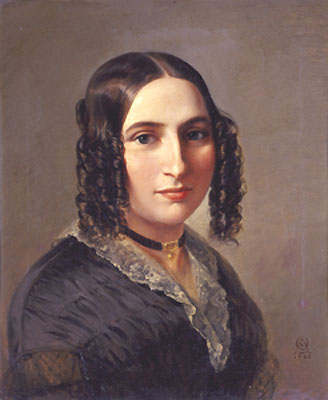
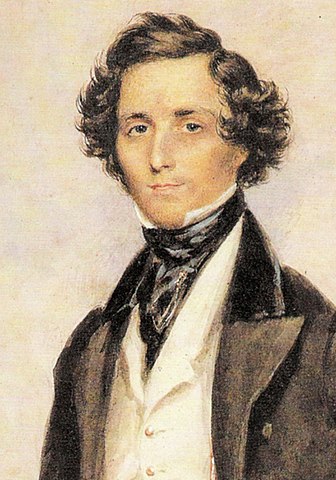
After Schubert music, Kramer opens to us the world of two siblings, contemporaries of Schubert: Fanny Mendelssohn – Hensel (1805-1847) and Felix Mendelssohn Bartholdy (1809 – 1847). Both siblings were very close to each other.
Fanny Mendelssohn
Felix was well well-known and very much accomplished composer in Berlin’s circle. His sister never (partly because of her father’s opposing views) accomplished such a fame during her lifetime but her compositions show a good measure of talent and ability. She was also very respected as a musician by her devoted brother, who often asked for her opinion and advice in his own works. As it happens from all their works the most famous ones often played even now are their songs. Or rather ‘songs without words’ (Lieder ohne Worte), as was the name Felix gave to his most famous composition. There is a story that at one-time friend of Felix offered him to write words for his ‘songs’. The composer is said to respond: “What the music I love expresses to me, is not thought too indefinite to put into words, but on the contrary, too definite.” What a lovely and indeed precise response!
Felix Mendelssohn
The pianist played Fanny’s 4 Lieder for Piano, Op. 8(no.2 Andante con espressione and No.3 Larghetto), and Felix’s Songs Without Words Op. 19 in E Major and Op. 67 in F-sharp minor. It was a pure musical pleasure. His elegant way of playing was at its best. The depth of emotions coming from the sound he was producing was truly touching. I remembered years ago when I listened to the incomparable Jan Lisiecki playing the extremely difficult and technically challenging piece of Ravel’s Gaspard de la nuit and I thought: how this very sweet and happy young man (I have known Jan Lisiecki since he was fifteen years old very sweet boy when I did my first interview with him) can evoke the atmosphere of pure horror and terror so plainly, so vividly? Talked after his play with him about my question. And his answer was as plain as it could be: it is not enough just to play – you have to feel it inside you, you have to take that symbolic journey to that place, that moment and then transfer it to the tips of your fingers. Just playing every note, in exact tempo is not always enough. And I understood that instance what he meant. Of course. It is so plain. The feeling, the emotion. Listen to famous, dramatic singers of opera! The words are almost comical often. If you just sing them – you could almost laugh, like a satire, not a tragedy. It is the emotion, the timbre of the note you play, and the spirit of the sound you produce that signifies emotions. This is exactly what Kramer achieved when he played the Songs Without Words. And I repeat: with that musical elegance.
But even the best of us must give up sometimes the comforts of elegance. When you deal with Franz Liszt’s Piano Sonata in B minor, S. 178 you really have no choice. When the Paganini of grand piano composes music that should rival Paganini’s Caprices – elegance and etiquette go away. I often compare him to Tina Turner and her singing career. Was it elegant? Heaven’s forbid, no! Was it great? Of course, it was a wonderful madness! Would Henry Kramer, that elegant musician be able to play such music, to forgo his comfort zone?
Oh, yes. He did it to my delight. That was not a summery evening stroll through the meadow. It was a full gallop! Not even of one horse – it was a herd of wild horses. What a choice for the finale and what a stamina to do it after already playing so many pieces.
Liszt’s sonata is one of his late compositions when he composed mostly for pleasure and not to gain popularity or earn money. It is in a way also a break with the established way musical forms were composed. Sonata, as a sonnet in poetry, has very strict rules. Three, sometimes four pieces. You state your musical subject in the first part, elaborate more freely on it in the middle, and finish with a recapitulation of the first statement. But Liszt decided to do away with two distinct pieces and used just one. Try writing sonnets in the form of elegies. In a way, he liberated composers from the strict and tight corset of existing musical architecture. Today everyone understands it. We have gone through modernity and postmodernity. But at that time … it received scorn from all the greatest composers. Clara Schuman (Liszt dedicated it to Robert Schuman) said it was ‘merely a blind noise’; Johannes Brahms apparently fell asleep while Liszt performed it; similar scorn was shown by Anton Rubinstein. The only exception was Richard Wagner. Yet, by the early XX century that ‘blind noise’ was recognized as the pinnacle of Liszt compositions. Times are changing.
I can’t tell how many times I heard that amazing, powerful compositions being played by many wonderful pianists. In a way, my favorite was the recording of it by Kristian Zimerman, one of the outstanding pianists of my generation in the entire world.
But the way Kramer played it was more than satisfied. I listened with full abandonment and total ecstasy of my sensory powers. No surprise that after that accomplishment the audience would not let him leave the stage. The standing ovation had no end. And fully earned. To no surprise, he had no choice but to thank the audience with two extra encores.
We finished with a nice chat and my congratulations for very well-presented program and excellent play. But I started the conversation by thanking him for transferring me that evening from Saint Andrew Church in Halifax to Carnegie Hall or to Vienna Philharmonics.
These words often came to mind, seriously and in a playful mode, during my last Saturday visit to venerable Music Conservatory in Halifax.
First of all – finally something different than baroque music that seem to be in a bloodstream of Maritime musicians (or Cecilia Concerts – most popular, almost singularly exclusive organizer of musical performances). Who doesn’t love Vivaldi and Bach? We all do! No, not so much. Not all and not all the time, anyway. Specially in my case. The same canons and styles repeated thousand times with slightly different arrangement and these funny rococo dresses, white powder and astonishing wigs – could make you bit nauseating … .
Halifax venerable Conservatory of Music
No this time, no. That was the music at its most glorious times. The times of Beethoven and Brahms. An ornamental intermezzo with less known (for a good reason) English composer Frank Bridge separated the German giants of great music. Immortal music.
Whenever I am in Berlin and walk through the Tiergarten (Berlin’s Hyde Park), I like to go and sit on bench near the monuments of German’s giants of music: Haydn, Mozart, Beethoven. Only a short distance further is monument of Wagner. Never saw any of Brahms in Berlin. His famous and wonderful monument is in Vienna and modern, symbolic style sculpture in his native Hamburg – that one I have seen many times as it is located just a stone throw away from my favored walking park in Hamburg – Planten un Blumen. But enough of cities, monuments and parks I like to walk in. Back to music. In Halifax, not in Germany.
Let’s start with absolutely wonderful and musically very mature Gryphon Trio of Annalee Patipatanakoon (violin), Roman Borys (cello), Jamie Parker (piano). With addition of equally talented and very energetic Ryan Davis (viola) it made brilliant quartet.
It is such an immense pleasure to listen to musicians, who effortlessly play with such unison and harmony! Each could be and indeed is a soloist in her/his right. But as member of an musical ensemble they become one. All the strings combined sounded like they were played by one soul with many hands. No unnecessary showmanship but unity in sound, tempo and tone.
Pianist Jamie Parker and his style of playing was very familiar to me. By no accident, of course. Parker studied in Vancouver under the tutelage of no one other than Lee Kum Sing. I recalled many long chats with Lee Kum Sing about his method of preparing young pianists to stage career. And the many traps and very insidious mannerism that lurks for musicians hungry of applause. In early middle and conservatory level musical schools, teachers tend to tech how to play an instrument. But are very oblivious to the teachings of public expressions and stage unforgivable atmosphere. It is only in later years, if they are lucky enough, that they might found someone, who would teach them that. Someone, who has a stage/soloist experience. Typical music teacher in a conservatory or even an university is good theorist, good musician – but failed or couldn’t even begin a soloist career. It takes stamina, courage, perseverance and clear vision to become one.
In Halifax Conservatory the hall was full. I was pleasantly surprise that a large section of the audience was below the typical here custom of silvery hair covering age of substantial life experience. Not that there is nothing wrong with it. Especially if that composure still hides an eternal youth! No, it simply saddens me often that so many young people avoid such experience of good music. Chances are that if you don’t get that shot early in your life – you will never discover the beauty of so called classical music (I despise the term myself – music has only two genres: good and bad, period). And it is, for most part, a good music. Music that expands your horizons, your emotionality.
Anyhow – my luck this evening resulted in choosing my seat – between two empty seats. Alas, empty not for long. Just before the music started playing – two very young men sat on both sides of me, LOL. Probably below the age of twenty.
Music. How to begin? A good suggestion would be: play most likely the absolute god of all music. The incomparable Ludwig van Beethoven. And why not a composition, when The Great One was founding his totally unique, own musical style. The Piano Trio No.5 in D major, opus 70.
That composition (also known simply as a “Ghost’ – often combined with Macbethian origin) is superb on many levels. And is has been many years since I heard it full in a concert hall.
They began. The strings play the Allegro vivace wonderfully. Every note is essential, not replaceable. The cello seems to lead dancing guests, the tempo and direction of the troupe. You can see the dancing group of guests in some forest, some meadow. Very diminutive, quite sound of piano is somewhere, far away, only in moments yet it seems so constant. The sound of air around.
Then comes the Largo. Totally different in every aspect from I and 2 part. Ghostly indeed. My mind for split second jumps to memory of Ravel’s ‘Gaspar the la Nuit’. Naturally, my comparison would have been absolutely alien to Beethoven as he died many years before Ravel composed ‘Gaspar’. But the atmosphere is there. Specially in the piano parts. The piano plays here the leading part, the strings follow.
Presto returns to the happy yet, majestically vibrant procession like in Allegro, albeit in different melody and more robust tempo.
After that trio I was sold fully. Uncanny-funny side note: large city surroundings offer sometime surprises even for much more solid stages. It did during this concert in a perfect moment – during Largo. Distant noise of flying nearby helicopter. I noticed some listeners were petrified. I found it very amusing and … interesting. In Largo, that distant monotonous sound was like a military drums of funeral march. It fit the music very well.
After a short intermezzo the stage is taken by our pianist and the youngest but not lacking in talent, viola soloist, Ryan Davis. They both played a two short pieces of British composer from the turn of XIX and XX century, Frank Bridge. Bridge was , at his time and place, very well-known player of viola. These two compositions (Pensiero and Allegro Appossionato) are a good testament of his knowledge of the instrument. I see it mostly as an ornamental music, what we would call today: popular music. And I am sure it was popular in London’s salons of that time. It certainly allowed Davies to shine as an exceptionally musical viola player. In Allegro he was brilliant.
In music, the term pensiero would be closer to largo in character and meaning. It represents a heavy, uneasy thought, longing. The most brilliant representation of it would be, of course, no other than the music of Verdi in his unforgettable choir in Nabucco – Va , pensiero, sull’ali dorate . Frank Bridge composition definetly is not sull’ali dorate (… on golden wings). But it is pleasant to listen to.
Last but by any means not least, comes Johannes Brahms complicated Piano Quartet No. 1 in G minor. Brahms was so absorbed in his own prestige, in his almost neurasthenic fear of not living up to the greatest of greats in music, that he worked on his pieces over and over for years at a time. Changing note here, tempo there or even scale. The end was mostly brilliant composition but, at times (I think) it lacks soul. Music must be a story. A story of epic proportions, human story of struggle: in grief and in joy, despair and happiness. It is very original construction of musical subjects unfinished, un-ended. As sentence ending many times without a period. Sentence beautiful, nonetheless.
I think that it must pose a challenge for musicians to play it, to find the right pace and continuity. I thought that the Gryphon Trio with Ryan Davies played it splendidly.
You truly start to like it, to have sort of understanding of the music, in the middle of part two (Intermezzo – Allegro) and 3rd part (Andante con moto) brings some continuity and lyrical story to follow, to imagine.
Finally comes Rondo alla Zingarese. One of the most intense finale of the entire period in music. Let me use more precise, elegant terminology: it is insane, it is crazy. And it is wonderful. How does it end? It doesn’t! When you are sure that a powerful finale stopped playing and you are just about to jump to your feet with applause – the musicians play another finale, almost identical but not exactly. And again, and again … .
Even if you are not the greatest fun of the serious music – please go once to a concert of Johannes Brahms Piano Quartet N.1 in G-major, op. 25. And if you absolutely can’t stand this type of music – stay away for the first 3 parts – but, for Heaven’s sake, come back to listen to Rondo alla Zingarese. It will change your opinion of so called ‘classical music’! I guarantee it. You might even scream at the end: encore une fois, s’il vous plaît !
The Gryphon Trio with Ryan Davis concert in Halifax, April 29, 2023
When I was a young admirer of classical music, I sought well established, famous musicians. To be at a concert of someone known to be a master, virtuoso of an instrument. To listen to music played the way the music ought to be played. Orchestral or solo, chamber type or powerful experience of full orchestra in a symphony directed by an admired director! Ah, for young, hungry for excellence youth – that was the pinnacle. I am glad I did it. Solid base, fundament is very helpful. For as long as you are not too timid (I wasn’t) to allow yourself to freely like or dislike certain composition, specific type of music. Art is not a religion. Art is freedom foremost. Of course, it didn’t hurt that I lived in a big city, that was very well known for its affinity for music and no shortage of good concert halls, musicians – Warsaw. Even in communist times (or perhaps in spite of it), culture flourished in Poland. And (that must be acknowledged) it was affordable, fully supported by the government. The results were not always pleasant for the authorities but wonderful for the public. Art schools of all sorts and levels were also heavily subsidized by the communists. And art was our escape from the dreary and boring life around. There was no shortage of exceptionally talented people in every field of culture. The most difficult task was for writers, the easiest for musicians. Visual arts were somewhere in between. With written or spoken word your intentions (freedom, truth) were clearly visible, audible. So writers and poets had to manipulate, use so called ‘writing in between the lines’ technique. But musicians could escape they eye and furry of the censor much easier. Particularly (as often was the case) if the censor was not very perceptive or of more feeble then intellectual mind. As it is often the case with censors.
That solid base allowed me to be comfortable to change my tastes in music and musicians. With time I preferred live concerts with younger, knew players, voices, sounds. The masters, after all, are always within arm’s reach on the vinyl, CD’s, online.
It is a marvelous journey to observe a young player blossoming, becoming mature musician. How his playing changes and goes through a metamorphosis. It is thanks to these players that an old, sometime very old, sheet of music that you have heard so many times – becomes alive again, young, vibrant. As it should. The composer might be gone long time ago but the music must be kept alive, current. Otherwise a concert is like a visit in a museum – interesting, enriching but often too long, tiring at the end. Canons are important for technical reasons, not for spirited interpretation. The overwhelming desire must be always kept on the essence of art and being an artist: what story I have to offer to the listener? What is my commentary on beauty or philosophy, ethics and esthetics to a contemporary listener? Of course, the trick is to remain respectful and true to the notes written often very long ago. Being always aware that circumstances and habits change with epochs. But human soul, dreams, emotions remain the same for millennia. Therefore you must try to find in the composition and your study of the composer biography, that inner message, the emotion that should be immortal. The story of human condition. And you, the pianist, violinist, trumpeter, flautist, guitarist must tell the story in your own voice. We, the audience must believe that you are telling us your own story. Just like Hamlet on the theater stage should no longer belong only to Shakespeare – you must become that Hamlet and it must be a contemporary voice. It must be your desire, your despair or triumph that will move us.
Just playing good, properly adhering to the tempo, intervals, tonality, melody will not do much for art. It might be proper, might be even elegant. But it lacks creativity. Just because you go every Sunday to a church to attend mass, know the hymns, the prayers – does not make you pious. In this way art and religion are very similar indeed: they require fervor and passion in the ultimate consumption.
Have been lucky to observe, over the years, many carriers and artists. Known some of them personally, with some have even become friends (that is rewarding but also difficult for someone who writes about their art). Some exceptional, others less but still truthful to their search. Still, others have given up the stage for the safety of teaching careers in musical schools, in academia. Stage is not for everybody. It could be a terrifying place. But it also offers the freedom to fly, to soar. Just make sure that your wings are strong. Rewards could be amazing.
On April 30th, at the evening, I drove over hundred kilometres from Halifax to Lunenburg to listen to a young pianist, Jean-Luc Therrien. He was just about to end (except for one more concert in Antigonish) his tour of Debut Atlantic, well established artistic venue supported by Canada Council for the Arts. Afterwards, I planned to write a review of the concert. But life, at times, has other plans for us and I had to postpone writing it. To a point that typical review becomes obsolete. Your own memory and emotions are no longer as vivid as a day or two later. Yet, I wanted to mention it and the pianist, for it was a very good musical experience. Worth mentioning.
Alas, on that day I drove to Lunenburg in search of that young passion in music, for new musical meeting with new pianist. Almost like on a first date: with a bit of tension and trepidation but excited and looking forward to it.
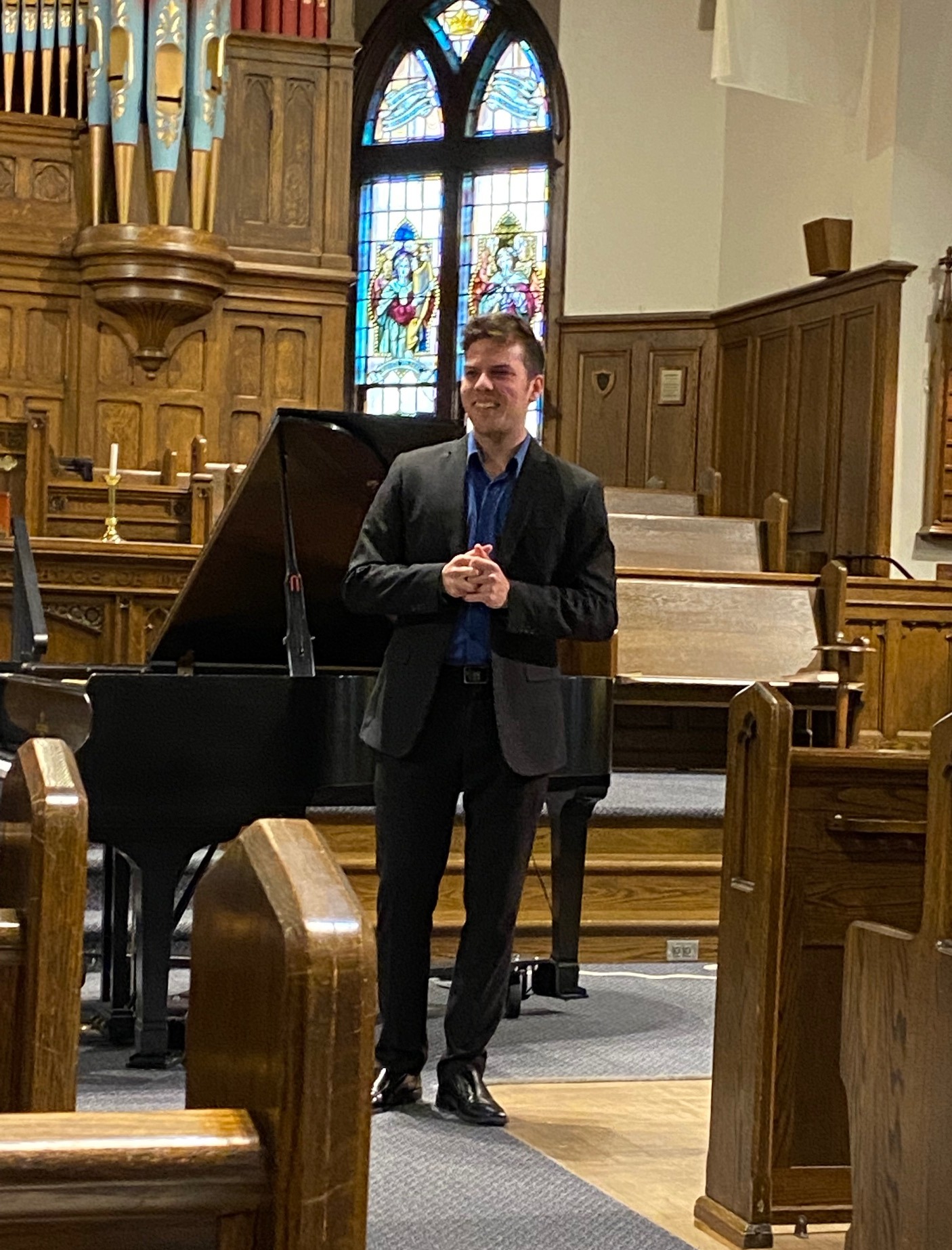
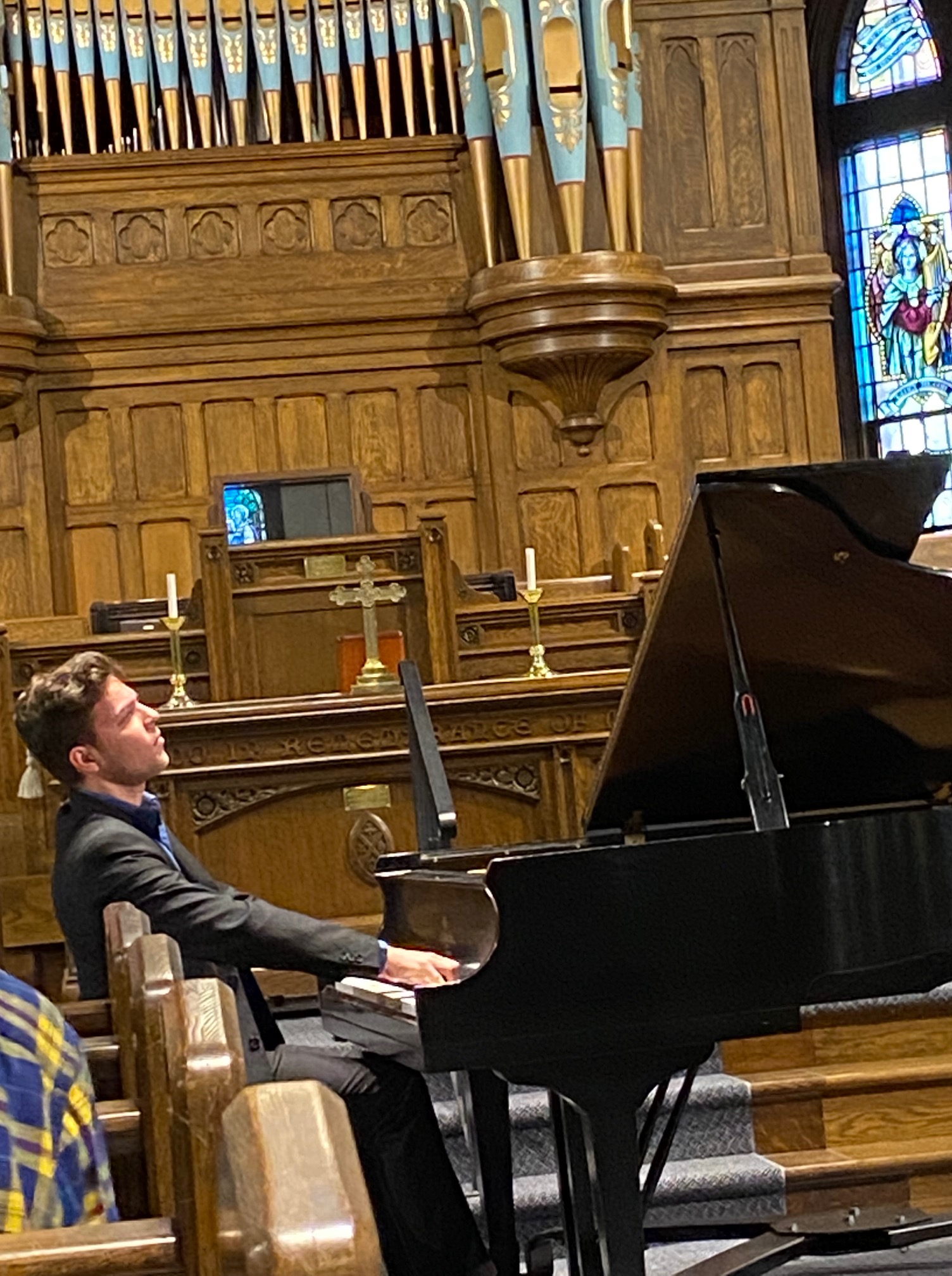
The setting was similar to my previous concert outing in Halifax, in St. Andrew United Church, with acclaimed pianist Richard-Hamelin and a young cellist Cameron Crozman. Again, Therrien concert was in an old, Central United Church, with beautiful stain glasses, settled in district filled with gorgeous old churches.
It was such a shame that the venue wasn’t either advertised properly to local community (considering the fact that Lunenburg and its neighbour, Mahon Bay, are small towns with densely populated smaller downtowns) or the locals are interested only in tourist dollars, not in supporting and admiring culture. The small audience that gathered inside was definitely not disappointed. And the young, smiling and very pleasant pianist did not show lack of enthusiasm for music or respect for listeners.
Perhaps the opening piece, Prelude et dance op.24 by Jacques Hétu was the most difficult to play. Not only for the fact that this Canadian (from Quebec) contemporary composer is probably not very popularly known. It is composed with extensive pedal work and requires a strong, modern piano. I’m afraid that the old, venerable grand piano of Heitzman (best Canadian piano maker in XX century) could not fully reproduce the sound that Hétu intended. Yet, definitely it was a very interesting composition and I listened to it with great interest.
The next part paid off any misgivings in multifold. Third part of great Suite bergamasque – one of the most played and loved Clair de Lune. Heard it so many times played by the greatest pianists. But chased away any thoughts of any comparisons, which would have been unfair. Let the young man play it the way he hears it in his soul. And he did. Maybe a bit timid at the very first phrases but the rest was beautiful. So poetic. With that interpretation he sold me. The rest of the concert I just enjoyed myself.
Jean-Luc Therrien is definitely an emotional pianist. His music comes not only through his fingertips but also from his heart and soul. It is not yet pristine and fully disciplined technically, but it flourishes by full emotional immersion of the pianist. You can always improve your technical skills if talent, luck and perseverance gives a long stage career. But that God’s given touch of emotionality cannot be learnt, it must reside in your soul from the very beginning.
That was seen also in somewhat diabolic prelude of Debussy: the F-sharp minor “What the west wind saw” – fast paced and full of arpeggios composition not for timid pianists.
Therrien finished this part by playing one of the giants of romanticism (Debussy personal hero) Franz Liszt Mefisto Waltz No.1. I must admit that I never liked that composition and do not see it as a musical achievement of this great Romantic pianist and composer. Therefore can’t offer my personal opinion on Jean-Luc Therrien play of it. It sounded proper – that’s all I can say.
Second part of the concert was difficult and challenging for any pianist. Introduction of modern Canadian composer from Alberta, David McIntyre in “A wild innocence“. It was very short and technically interesting. But in a whole – lacking artistic musical purpose. I suppose, since the entire tour is organized traditionally by Canadian Council of Arts – the repertoire must include domestic contemporary composers.
True challenge and musical artistic genius was brought by the final piece, Sergei Prokofiev Sonata no.2 op. 4. It is very transformative music composed in times of great upheavals and changes in artistic expression. It is also affected by personal sorrow of Prokofiev due to sudden and tragic death of his close personal friend. Yet, as a true artist, the composer packed the score with much deeper, philosophical discord of great changes on the horizon of humankind. It has parts that seem almost too easy, almost not worthy the title ‘classical music’. Somewhat reminds me of music by Gershwin on the other side of Atlantic at the same time. But it is all misleading. The ‘easiness’ of these parts underscores the other parts of the compositions. One compliments the other. It speaks in new language, different of languages of Debussy, of Liszt, Chopin and Mozart. I thought that Therrien played it splendidly. Emotionally and with great musicality. I could clearly see young Prokofiev overwhelmed with sadness of losing very close friend and escaping to memories and happy times, melodies and finding somehow peace in the finale were he brings all the rhythms, all the movements of previous parts into conclusion. With somewhat stoic understanding, even moments of lightness: nothing is forever, nothing is given in perpetuity. Neither in private life nor in world habits, styles, epochs.
It was very nice that the small group of listeners wanted to show the pianist how much they enjoyed his concert and did everything not to stop clapping and almost forced him for a bis. He definitely gave us all big joy and pleasure. The pianist obliged and play a small piece of Robert Schuman’s music. Elegant but not empty. In times of Schuman, in between musical epochs, compositions had to be formed elegantly, while a good composer still could enrich them with true meaning, thought or emotion. Many things could be said about Schuman as a composer – but never that his compositions were not a good music.
Therrien recorded two CD that are worth mentioning: Piano Preludes by American-Spanish label Orpheus Classical ( Claude Debussy Book 1 of Preludes and Franz Liszt Symphonic Poem no.3, S.97 (nota bene: Liszt was the father of this musical form). Therrien arranged it himself for solo piano.
Second of these recording is a CD produced by French label Klarthe. It contains an array of fantaisies by many composers played by duo of Jean-Samuel Bez (violin) and Jean-Luc Therrien (piano, of course).
Of these two recordings, I particularly liked the ‘Piano Preludes’ produced by Orpheus Classical.
Live music. On stage. Not through live stream or any other video, electronic, mechanical transmission. I had an immense need to be there again, missed it so much … .
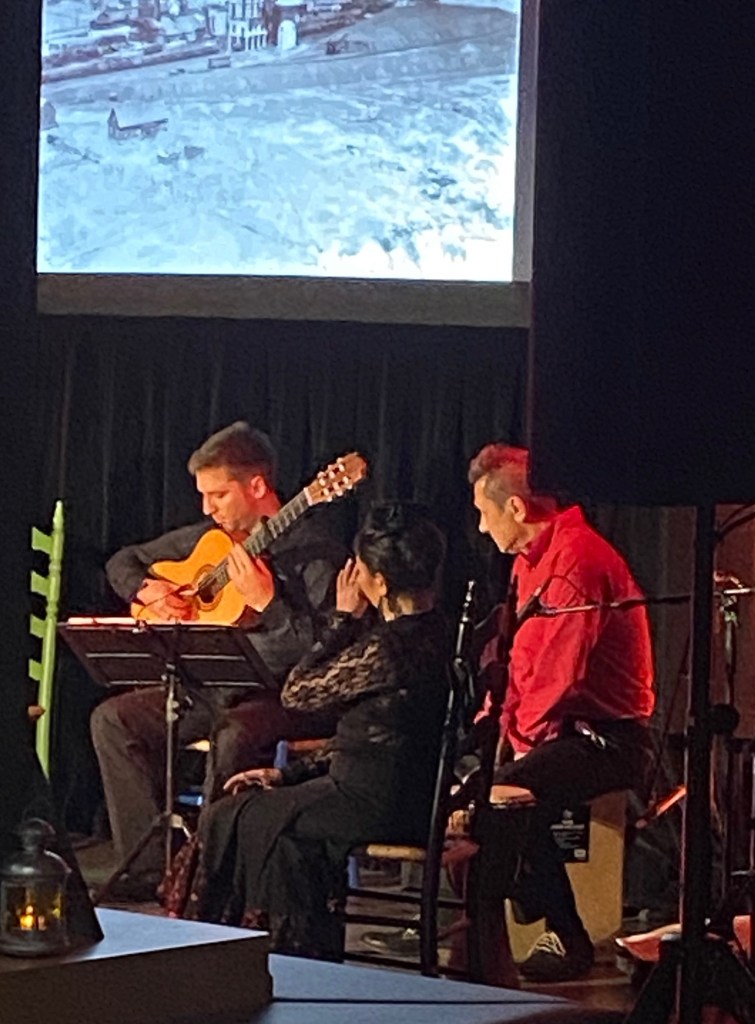
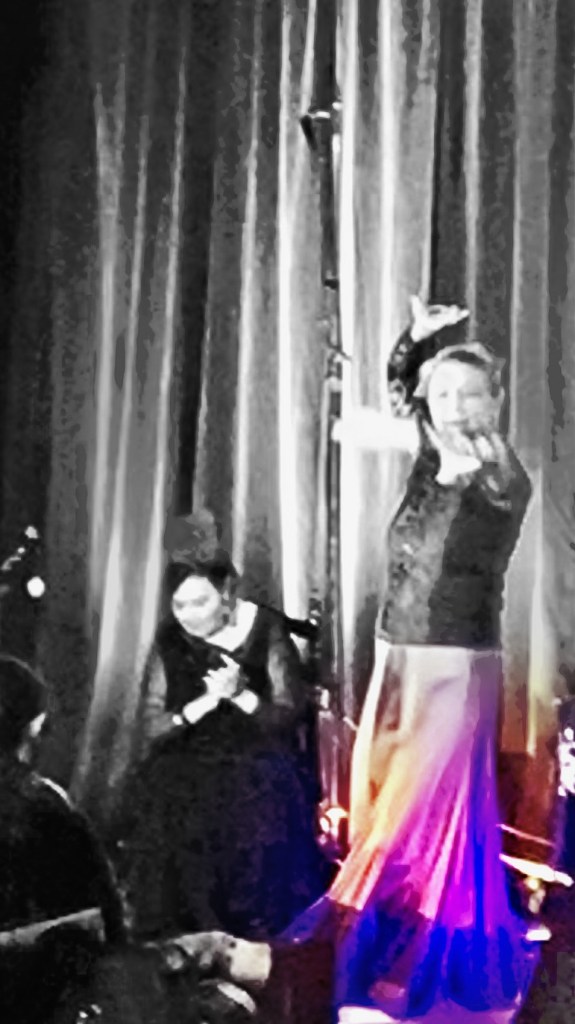
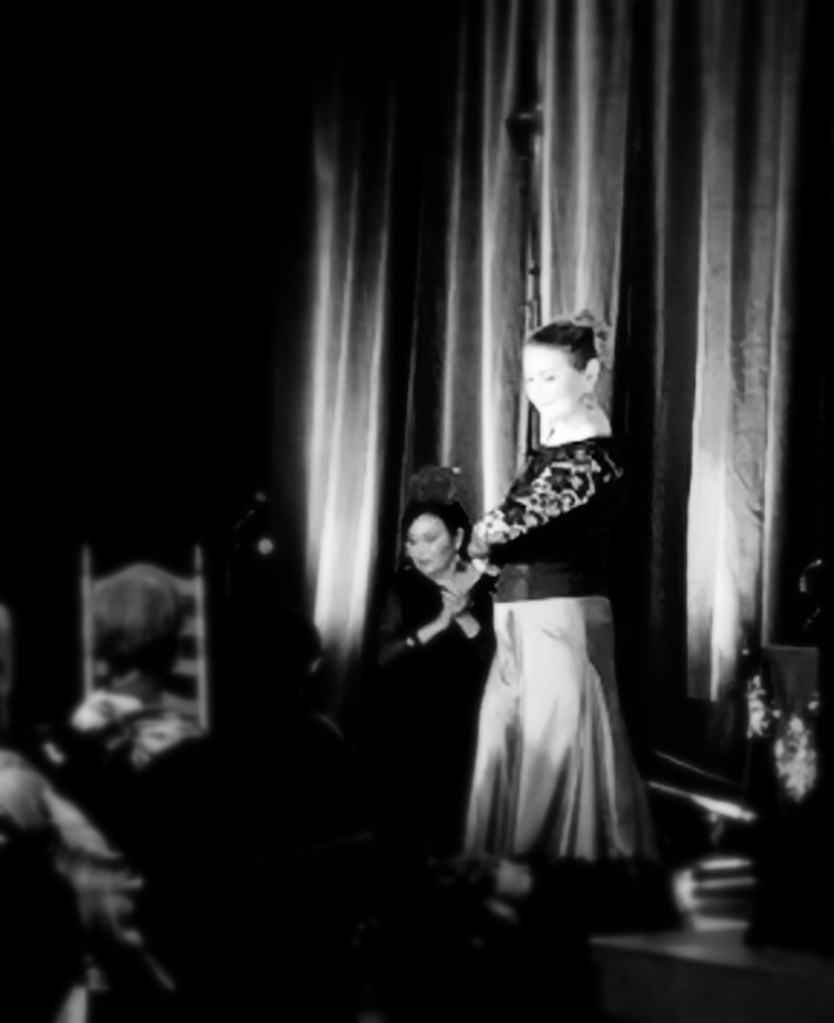
Tierras Oscuras – Flamenco en Rouge
On November 16, 2021, during a timid opening of any live performances, I was able to attend a local (from Halifax and Cape Breton) performance of powerful storytelling mixing the musical fire of Andalusia and hard life of miners in times gone in Cape Breton. The audience at the Pier 21 Canadian Museum of Immigration was small, seats sparsely placed. There were no renowned, world class dancers, singers, players. But what a power, what a spirit of true flamenco! I was riveted, mesmerized and at the same time had a hard time not to join them on stage (after all – flamenco is an art of mature performer, who knows the taste of victory and defeat – not a juvenile, who knows only how to boast, not understanding the meaning of it all). After the performance I had a chance to chat with all of the performers and made sure they were aware how beautiful their storytelling was, how dramatic and well prepared. And, of course, a long chat about the history of flamenco, of Andalusia.
But it did not quenched my thirst for more formal setting and opportunity of listening to great music played by great artists and composed by geniuses.
It came finally with an opening of popular impresario, the Cecilia Concert organization responsible (for many years now) for organizing such events in Greater Halifax.
The concert of world renowned and one of the best Canadian pianist, Charles Richard-Hamelin and young cellist, but already recognizable and with growing musical prestige, Cameron Crozman.
There is some semblance in physique of Richard-Hamelin and the great winner of 1970 Warsaw Chopin International Piano Competition, Garrick Ohlsson. I think that there might be also a slight similarity in their style of piano playing (and such perceived connectivity would not be something to frown about, as Ohlsson is a giant among Chopin’s interpreters). The Warsaw Chopin Competition is indeed something very special among players. It serves as a spring board to fame of almost all of their finalists and definitely makes the winner career a fait accompli. Charles Richard-Hamelin is no exception. In 2015 he received Silver Medal at that Competition and very prestigious Krystian Zimerman (himself a former winner at the Competition and a player of enormous statue) Prize for best performance of Chopin’s sonata. The 2015 Competition was the first time I heard Richard-Hamelin. As I did (in Warsaw) in 1970 Olhsson playing. The next one, in 1975, was the triumph of Zimerman and I remember it as vividly as it would have been yesterday – he just mesmerized the audience. For a teenager (as myself at that time) that was as big as winning the Soccer World Cup. Speaking of Canadian pianist and the Warsaw Competition one can’t forget to mention the last one in 2021 and the amazing victory of another Canadian – Bruce Liu. I have wrote a bit about it on these pages in November 8, 2021.
Pianist are, undoubtedly, the top class in fame and splendour of all other instruments among classical music stars. In a way – the prima donnas of musicians. But that does not take away from other instruments. Especially if there is a good marriage between a good composition and a good player. Cello player is always in demand for transporting notes, that no other instrument can portray as good as that soft sound. Just listen to some recordings of unforgettable cellist, Pablo Casals. No other instrument can convey such an array of emotions as those venerable strings. The violin, its’ diminutive cousin, produces beautiful sound but lacks the depth of the tone coming from very limited resonance (due to the size difference).
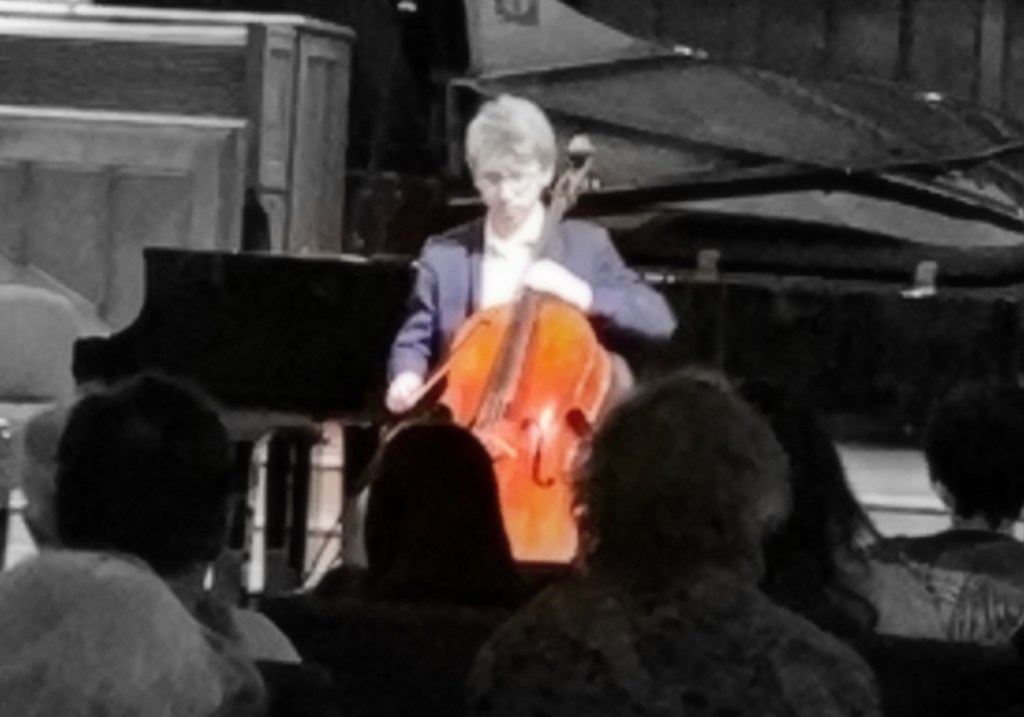
Cameron Crozman, at age 26, is definitely the raising star in Canada among cello players. Not only in Canada, though. His talent was noticed and rewarded by many world-class orchestras and directors, especially chamber music ensembles. For me, the concert in Halifax was the first chance to hear him playing. I am very glad, I did.
Bach, Franck and Chopin
The first of compositions was one of only six cello suites composed by J.S Bach – the Suite No. 2 in D minor. Probably written after the death of his first wife, Maria Barbara in 1720. The Bach suites are among ones of most popular music played by cellists. But it wasn’t the case during his lifetime and after his death. They were almost completely forgotten and many musicians were not even aware that he wrote such music. It was not until great cellist, Pablo Casals, re-discovered them as a teenager in a second-hand shop in Barcelona in 1889. It wasn’t until 1936 when he recorded them in London for first time. Since then, they become one of the most popular solo pieces for cellists around the world. There is even dispute among scholars whether Bach originally wrote them not for cello da gamba but for smaller, over the shoulder, viola da spalla. Suite No. 5 was originally composed for lute.
As entire baroque music, they are strictly structured in prelude and a string of Renaissance/baroque dances. In this case: allemande, courante, sarabande, minuet and gigue.
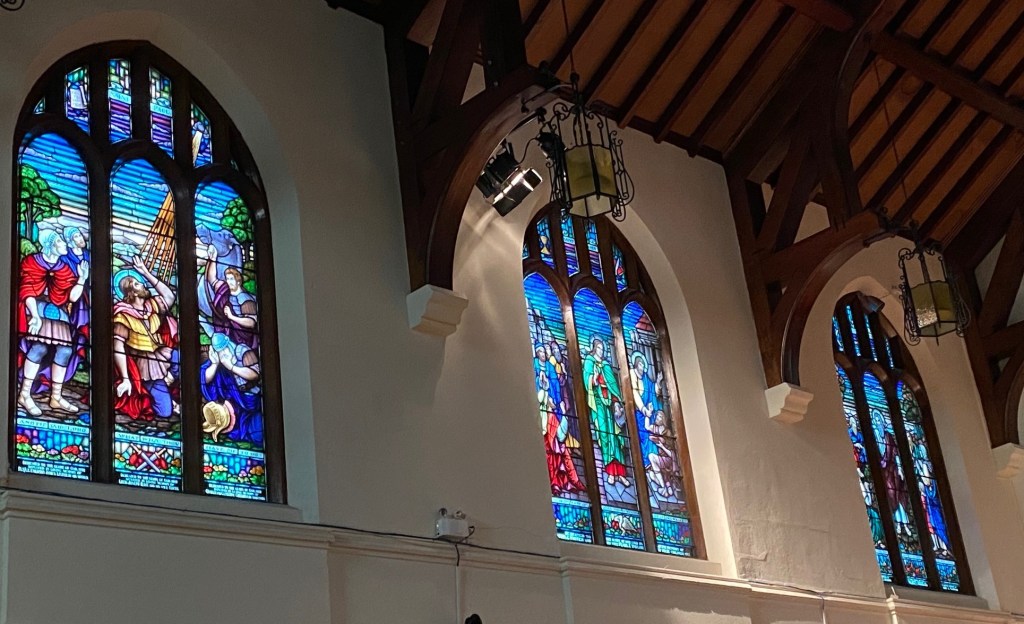
The slightly austere, neo gothic church of St. Andrew, with beautiful stained glasses on walls of the main nave and stained glass rosette behind the altar/stage provided perfect setting for this music. And the acoustic was wonderful as the young cellist with red hair sat to his instrument. The music flowed so nicely. His left hand showed the elegance of every note, tone and interval of this composition. I was specially taken by the fourth part, the Sarabande and the vision of evening stroll of Bach through the cobblestones of German city, remembering places he visited with his wife, reminiscing their time together. Formal, very courtly Minuet ensues as in saying that life goes on and times brings closure. Final part is in a form of Gigue and is a typical epilogue for typical baroque suite. Can’t understand that rigid formality from my perspective of XX century man, as Gigue is the last melody I would have used for this type of composition. Yet, it must be said that the Gigue in Suite No. 2 is far from lively dance of Italian gentry. Yes, it has the rhythm and melody – but used in such a way that it becomes a music of accepting life as it goes on. I thought that Crozman played that part superbly, more in a reflective than virtuosic style.
Belgian born but Parisian by choice composer Cesar Frank (1822-1890) is definitely not a canon of modern concert halls and performances. I know I have heard his music before – but if asked, I would have to strain myself immensely to remember that music. Although envisioned by his father as piano player (a solid career in Romantic times Europe) – he ended up playing organs in one of the big churches in Paris and later become a professor of organ music in Paris Conservatory in 1872. And finally had time to prove to the world that he is a talented composer. One of his monumental work (and monumental it is in its form, character and, let’s say – weight?) that I have never heard before (of that I am sure because it is really hard to forget such curiosity) is the Prelude, Aria et Final, Opus 23.
I am very glad that Charles Richard-Hamelin gave a very good explanation of this composition. It helped a lot. It consists of Allegro moderato a maestoso (Prelude); Lento (Aria) and Allegro molto ed agitato (Final). From these musical terms – allow me to offer less serious tone – two describe it the best: maestoso and agitato. The least one is moderato. It also shows that if you cook for many years Indian cuisine, when suddenly you make Beef Wellington, you add to it Indian spices. The result could be interesting, maybe even tasty – but it is not Beef Wellington. Specially in Paris. Franck played for many ears on huge organs at St. Clotilde Basilica. That colossal instrument could not only swallow many concert pianos of Paris, it also had so many leg and hand operated pedals, stops and keyboards (yes, the large ones have more than one keyboard) that the listener could really think that heavens opened up and filled the air with its’ own music. But Franck decided to do the same on the piano.
Thanks’ heaven the Yamaha grand piano C7X comes with the third, middle pedal called sostenuto. It is a version of the sustain (left) pedal but operates only on chosen string/notes. It gives the ability to produce a sound that resembles organ pipes. But one must not overuse it. In this case, Richard-Hamelin had to. To say it plainly – that composition is a colossus that requires not only amazing technique from the player, it also requires a big physical stamina. I am so grateful that he possess both. I have no idea what poetic purpose that composition serves – but it was amazing to listen to it. Enjoyed it very much just for the sheer sense of showmanship and absolute control of the instrument by the player. Now, thanks to Charles-Hamelin, I will always remember the music of Franck. Probably not choose to go to concert hall to listen to it again, but definitely remember it.
After a short intermission we were served the main course: beautiful sonata for cello and piano by lyrical master of Romanticism, Frederic Chopin. The opus 65 sonata in G minor was composed in 1846 and dedicated to Chopin’s close friend of many years, cellist Auguste-Joseph Franchomme.
Both of them collaborated and co-composed earlier a Grand Duo Concertant for piano and cello (in E major, numbered as B. 70) that received very favorable opinion of Schumann. The sonata is fully composed by Chopin and it’s cello part was not composed in any part by Franchomme, although it is more than likely that both Chopin sought advice and opinion of his dear friend. That might be the source of somewhat strange and not necessarily wise comment of our young cellist, Cameron Crozman, in an introduction, that the cello has stronger and weaker parts, the stronger being possibly composed by Franchomme. There is no musical literature that would support such strange assumption.
The sonata has special historical meaning in Chopin’s life: it would be the last composition of Chopin and the premiere in Salle Pleyel on Feb. 16, 1848 was his last public concert in Paris. Unfortunately, the Paris premiere omitted the first part (Allegro moderato). That was corrected by Franchomme shortly after his friend death, as the cellist returned to Salle Pleyel on April 6, 1853 and played (with Thomas Tellefsen, also Chopin’s friend and pupil, as pianist) the entire sonata. Louise Dublin, a world renowned cellist, wrote in her excellent blog on Aguste-Joseph Franchomme, that the second premiere was received enthusiastically and quotes respected and feared (by musicians) Paris critic of that time: “The main piece was a sonata by Chopin for cello and piano…the piece has something intimate and mysterious, everything in it is plaintive and melancholic… Franchomme, on his eloquent cello, found admirable expression, giving the beautiful melodies of Chopin a penetrating sweetness, full of religious poetry.” .
Of course, no recording of this prapremiere and premiere concerts exists, therefore it is impossible to compare that play with the performance of Cameron Crozman and Charles Richard-Hamelin in Halifax.
The only reflection could be my own satisfaction, pleasure or lack of it. And satisfied I was, very much indeed. It is worth mentioning that the duo of these two musician was a premiere in its’ own right. They have never played together before. But the partnership sounded very good and pleasant. Despite Crozman earlier spoken remarks, I have not noticed the ‘weaker’ and ‘better’ parts of his viola da gamba. All was played softly, poetically. In my short notes, that I tend to take at concerts, I wrote: what a beautiful conversation of two instruments! In scherzo and largo it was like a dance of two souls and such a nice, like echo, repetition of viola’s themes by piano. It all closes with very elegant marriage of the two scales: G minor and corresponding major in allegro. Sort of mini danse du triomphe.
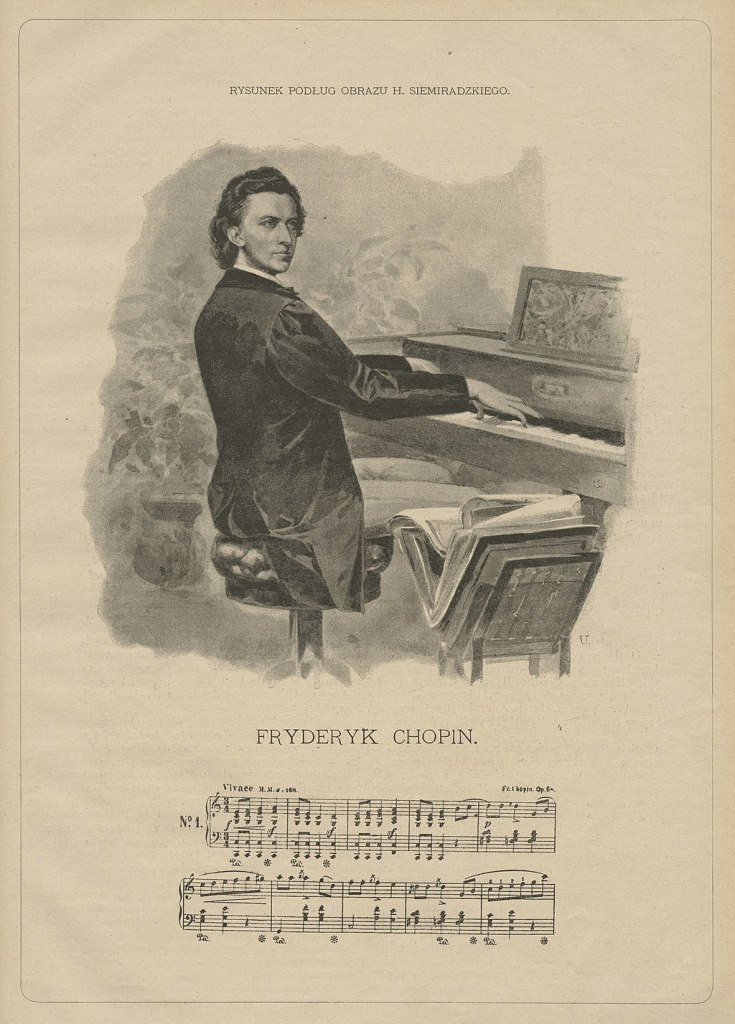
Więc miałem pisać o Szopenie. Nie, nie o Szopenie. Miało być o laureacie XVIII Konkursu Chopina w Warszawie, o Kanadyjczyku Bruce Liu i moich wrażeń z jego interpretacji Koncertu Fortepianowego e-moll op.11. I od razu kłopot ‘opusowy’. Czyli to, co w wydawnictwach literackich określa się mianem ‘rok wydania’. Kolejność kompozycji oznacza się właśnie numerem opusu, tj. pierwszej publikacji kompozycji. Nawet nie pierwszej publicznej prezentacji utworu, ale właśnie publikacji kompozycji. Otóż Koncert e-moll ma opus oznaczony numerem 11, a Koncert f-moll ma numer 21, czyli późniejszy. A jest akurat odwrotnie. To ten 21 był skomponowany wcześniej i był pierwszym Koncertem Fortepianowym z orkiestrą skomponowanym przez Chopina. W związku z czym nie jest aż tak dobrze zrobiony, co kompozytorowi wytknięto. Chodziło zwłaszcza o część orkiestralną, która jest do skromnie rozbudowana i stanowi jedynie tło dla partii fortepianowej. To jest zgodne z doświadczeniem i studiami muzycznymi Chopina w Warszawie. Uczeń Józefa Elsnera nie mógł oprzeć się wpływom popisowej i salonowej manierze gry zwanej brilliant. Czasem chodziło więcej o pokaz wirtuozerii niż muzyczną architekturę, która dźwiękiem miała opowiedzieć jakąś historię, wizję, ideę. Więc jeśli pianista, to pianino właśnie ma być początkiem, środkiem i końcem kompozycji, a reszta jest tylko tłem. Zapewne chęcią wykazania, że potrafi skomponować pełny Koncert z rozbudowaną orkiestracją, która jest aktywnym współaktorem przedstawienia, skomponował w krótkim czasie Koncert e-moll, który opublikował jako pierwszy.
I faktycznie przyznać trzeba, że tenże Koncert jest perełką muzyki romantycznej. Można go słuchać bez końca i bez znudzenia. A delikatny temat muzyczny pojawiający się w każdej z trzech części jest majstersztykiem rozpoznawalnym, gdy tylko go usłyszymy gdziekolwiek i kiedykolwiek. Oczywiście, gdy mówimy ‘Chopin’ to zaraz słyszymy słynny fragment Poloneza Es-dur lub temat muzyczny Marsza Żałobnego. A dla mnie właśnie ten nostalgiczny refren z Koncertu e-moll sercu jest najbliższy.
Słuchałem więc gry Liu i Orkiestry Symfonicznej Filharmonii Narodowej pod batutą Andrzeja Boreyko z olbrzymia przyjemnością.
Partie orkiestralne części pierwszej (allegro maestoso) są chwilami prawdziwie heroiczne w nastroju, tematy muzyczne podejmowane przez różne części orkiestry wspinają się i opadają na przemian, jak fale fale wiatru biegnące po łące. Brzmią echa subtelne poloneza. Te echa uwidoczni w swej części fortepian, uzupełniając je cieniami nokturnu. To właśnie ten fragment tego powracającego tematu muzycznego towarzyszyć będzie nam już do końca.
W części drugiej (romance. larghetto) i trzeciej (rondo. vivace). Wszystko to w atmosferze baśniowego rozmarzenia, nostalgii wspomnień. Ta nostalgiczność widoczna jest nawet w brawurowym rondzie vivace. Nawet tam, gdzie w wyśmienitej formie stylu brillant, pasaże na klawiaturze popędza tak, aż iskry poczną strzelać nad fortepianem. No, bo jakże by nie, jeśli w rondzie pobrzmią echa nie dostojnego dance la polonaise a skocznego krakowiaka? Ale i ten finał, przybrany niczym aria bell canta, jest podszyty słodkim wspomnieniem chwili, momentów. Uczuć.
Po wysłuchaniu Liu wiedziałem, że poruszył mnie do głębi. Sięgnął tam, gdzie artysta sięgnąć powinien. Coś mnie jednak zaniepokoiło, gdzieś jakąś pustkę odczułem i po zakończeniu nie wiedziałem już gdzie i co. Sięgnąłem po moją biblioteczkę CD i wyłuskałem nagranie z 2013 roku w Warszawie samej Akiko Ebi. Ebi w tym roku oceniała Bruce Liu, była jurorem XVIII Konkursu. A na ostatnim oglądanym ‘na żywo’ przeze mnie Konkursie w 1980, zdobyła 5 miejsce. Słuchałem więc wersji Ebi będąc wyczulony na szczegóły. Wiedziałem, że zagra dobrze (nagranie było zrobione na festiwalu ‘Chopin i jego Europa” w Studio Koncertowym Polskiego Radia). I tak zagrała. Bardzo dobrze, poprawnie. I ani razu nie odczułem wzruszenia, choć doceniłem technikę. I przez tą technikę dostrzegłem gdzie Liu, wydało mi się, zrobił błąd. Wróciłem do jego nagrania i posłuchałem raz jeszcze. Tak, część pierwsza, ‘Allegro maestoso’. Trema wzięła górę. Zmagał się z instrumentem, z orkiestrą. Kompozycja panowała nad nim a nie on nad kompozycją, parafrazując piękne słowa zmarłej miesiąc temu wielkiej śpiewaczki operowej, Guberowej.
Edita Gruberowa przygotowując się do roli Lukrecji Borgii w wieku 62 lat, roli w której bel canto jest u szczytu swego stylu, powiedziała, że od pierwszej nuty musi wiedzieć czy ta nuta ma ją, czy też ona ma tą nutę w swej kontroli. I tak właśnie słuchałem Bruce Liu, grającego w Warszawie Koncertu e-moll. Kto zapanuje? Orkiestra? Fortepian? Pianista?
I pamiętałem o słowach tak obszernie cytowanych w części I tego cyklu związanego z muzyką Chopina. Słowach Lidii Grychtołówny, że na Konkursie Chopina nie szuka się dobrych i bardzo poprawnych pianistów. To się zakłada z góry, skoro już eliminacje do Koncertu przeszli. Szuka się tych, którzy używając języka Chopina mają coś do powiedzenia. Coś nie tylko technicznego ale coś emocjonalnego, coś, co z ich duszy uniesionej skrzydłami nut kompozytora spod klawiatury wypłynie. I co nas dotknie. Czym będziemy poruszeni.
Bruce Liu nie mógł zapanować kompletnie na kawalkadą koni orkiestry ni nad swoim wierzchowcem w allegro. Nie dał się ani stratować ani w popłochu nie uciekł. Ale nie był hetmanem jazdy. Posłusznie wykonywał rozkazy, bojąc się wodza (kompozytora i dyrygenta). Dopiero w finale allegro, jakby się zbudził. Przechodząc w kłus liryczny larghetto był już wolny. Mógłby iść w cwał (co – jak należało – zrobił w rondo vivace), lub zwolnić do spaceru. Mógł puścić wodze swego wierzchowca, nad którym w pełni zapanował. Nawet wyraz jego twarzy uległ zmianie, pojawił się pewien uśmiech mówiący: ach, teraz cię mam i ty odczuwasz każde drgnienie moich mięśni, mojej woli, bieżysz tam i tak jak ja chcę. Reszta to już historia drogi Czytelniku. Cała opowieść pana Chopina, wszystkie jego wspominania ciepłe i serdeczne młodości polskiej, uczuć serdecznych, w tej muzyce granej przez Bruce Liu, w tym tańcu nutek i bemoli zobaczyć możesz. A o to chodzi. By obudzić wyobraźnię słuchającego. By zabrać ją lub jego w tą cudowna podróż. Podróż, która może się okazać niespodziewanie bardzo podobną do naszej podróży sprzed lat wielu lub kilku choćby. Bruce Liu zdecydowanie mnie w taką podróż, z maszynistą Andrzejem Boreyko, zabrał. A pani Akiko Ebi nie potrafiła, choć z przyjemnością jej słuchałem.
Fantastyczna pianistka kanadyjska, Janina Fijałkowska, na swojej stronie Facebooka przypomniała, jak kilka lat temu (2013) oceniała młodziutkiego Bruce Lee na Krajowym Konkursie w Halifaksie, który Bruce wygrał. Od tamtego czasu śledziła i brała czynny udział w rozwoju muzycznym młodego pianisty. Po wygraniu Konkursu warszawskiego pani Janina napisała : „Xiaoyu Liu potwierdził dla mnie ponownie przez wiele lat, że moja wiara w jego głęboki talent i moja adoracja tego talentu była słuszna … i teraz wygrał jeden z najważniejszych, jeśli nie NAJWAŻNIEJSZY (podkreślenie J. F.) Konkurs. Ważne jest podkreślenie, że ten młody człowiek jest też bardzo dobrym i uroczym człowiekiem, co nie jest zawsze tym samym w przypadku innych super-talentów”. (wpis z 21 października, 2021)
Co czyni oba Koncerty Fortepianowe Chopina pewnym wyjątkiem w jego twórczości? Czym różnią się od polonezów, nokturnów, mazurków? Intymnością przeżycia i silną indywidualnością kompozytora. Stworzeniem świata opartego na własnych emocjach ale jednocześnie uniwersalnego w eposie człowieka. Wydaje mi się, że zbyt różnią się od jego wczesniejszych prób orkiestralnych i zdecydowanie bardzo od nielicznych późniejszych. Jedyne podobieństwo znajduje tu w balladach. Tak, jak Koncert e-moll, podobnie zauroczyła mnie jego Ballada f-moll op 52 grana w skromnym saloniku muzycznym w Vancouverze w marcu 2018 przez ćwierćfinalistę Festiwalu Chopina w Warszawie, Łukasza Mikołajczyka. Wydobył wówczas z tego utworu całą głębię jego poetyki. Tego bardzo młodego wówczas muzyka, bez wątpienia posiadającego silny talent, poznałem ledwie kilka miesięcy przed moim wyjazdem z Vancouveru i starałem się wpłynąć na jego rozwój emocjonalny, jako muzyka. Wydaje mi się, że właśnie rozwój emocjonalny i wsparcie (czasem surowe ale zawsze szczere) jest elementem najtrudniejszym a często zapominanym wobec młodych, obiecujących artystów. Scena, publiczność, nawet poklask zbyt głośny potrafią zniszczyć młode kariery i charaktery. Bez względu na talent.
Wracajmy jednak do koncertów fortepianowych. Do tych poematów Chopina. Podróż nostalgiczna w czasie? Tak. Ale nostalgia za czym? Opis czego, jakich chwil drogich, serdecznych?
Moim kluczem do obu Koncertów Fortepianowych jest miłość. Nawet nie jakaś abstrakcyjna miłość. Jakieś marzenie o niej. Nie. Prawdziwa, młodzieńcza, niewinna być może, ale gorąca, szczera. Czyli Tytus. Tytus Woyciechowski, najpiękniejsza i najwierniejsza miłość Fryderyka Chopina. Mówienie o jakichś przelotnych i mało znaczących relacjach, nieistotnych ani dla kompozytora ani dla tych pań (Konstancja Gładkowska i Delfina Potocka), którym formalnie to dedykował (Delfina Potocka) lub o nich przelotnie wspomniał (Gładkowska) jest żałosnym wręcz kłamstwem historyków i badaczy. Zresztą trudno nawet o tej ‘formalnej’ dedykacji dla Delfiny mówić. Konserwatywni ojcowie Instytutu Chopina słowa dedykacji naciągają dość silnie i sami interpretują je tak, aby koniecznie pannę Potocką w to wcisnąć. A czytanie uważne i spokojne, bez wypieków na twarzy, korespondencji Chopina na to nie wskazuje. Czy wynika ze zwykłej homofobii czy przywiązania do mieszczańsko-katolickiej tradycji nie jest dzisiaj żadnym tłumaczeniem takiego oszustwa. Powiadają ci biedni badacze – taka była wówczas maniera pisania do przyjaciół. Drodzy panie i panowie smutni – popiardujecie cichutko a smrodek rozchodzi się po całym drobnomieszczańskim mieszkaniu. Gdy już w 1828 Fryderyk pisze do Tytusa: „Najdroższy!” to nie pisze „Drogi”; gdy podpisuje „teraz daj buzi najprzywiązańszemu” to nie pisze „pozdrawiam serdecznie”. Nawet egzaltowany Chopin nie mógł aż tak manierować. To z jednego tylko z wielu listów jakie wymieniali przez lata. To nie są listy chłopczyka 1o-cio letniego, tylko listy młodego mężczyzny. I tylko jeśli doceni się autentyczną, prawdziwą i szczerą miłość romantyczną Chopina do Woyciechowskiego, można prawdziwie ocenić i zrozumieć te dwa Koncerty. Ich głębię emocjonalną, autentyczność. A nie wypisywać bzdury o genezie utworów, które są wręcz śmieszne.
A jakież to maniery i zwyczaje panowały w XIX i przez większość XX wieku? Ano takie, jak wcześniej: młodzi mężczyźni (o kobietach nie wspomnę, bo rzadko miały możliwość jakiejkolwiek decyzji) homo lub biseksualni żenili się, by uniknąć wydziedziczenia i kompletnego ostracyzmu (w klasach powyżej biedoty miejsko-wiejskiej), ukrywali jak mogli swoje orientacje lub kończyli wcześnie i tragicznie. A już zabawne jest udawadnianie heteroseksualności Chopina jego małżeństwem z George Sand – pierwszą chłopczycą i biseksualistką Francji w tamtych czasach. Nawet jeśli łączył (na co wiele wskazuje) ich autentyczny krótkotrwały romans. Jedynym innym wyjściem dla młodych mężczyzn z ‘dobrych domów’ było pójść do klasztoru. Bo jak wiadomo: co się stało w klasztorze, pozostało w klasztorze.
Czekam z dużą niecierpliwością pierwszych nagrań Bruce (Xiaoyu) Liu już po wawrzynie Konkursu warszawskiego. Ten młody pianista ma niewątpliwie głębokie i subtelne wyczucie muzyki. I mam nadzieję nie zapomni Chopina (jaki pianista muzyki klasycznej mógłby?) i jemu właśnie poświęci swoje pierwsze nagranie.




















 > > Pogwarki < <