Paloma Negra

Piosenka ulicy, przedmieść. Folklor muzyczny w miastach i miasteczkach. Ten nurt miał olbrzymi wpływ na kształtowanie się popularnej muzyki estradowej, kariery muzycznej znanych wykonawców ‘od zawsze’ chyba. Najbardziej znanymi rodzajami muzyki popularnej, która z mrocznych barów i podejrzanych chodników przedmieść weszła na eleganckie estrady, do wytwórni płyt, do telewizji i radia były:

1) na kontynencie północno-amerykańskim: amerykańska muzyka murzyńska: jazzowa i negro spiritual. To wywołało prawdziwą rewolucję w sztuce i przemyśle muzycznym USA, a w krótkim czasie podbiło cały świat. Drugim takim elementem była muzyka country (tutaj wpływ najsilniejszy nie miały ośrodki miejskie, a przeciwnie – życie farmersko-kowbojskie i powstałe w jego tle ballady), której stolicą do dziś pozostało Nashville (tak jak ojczyzną jazzu jest New Orlean). Ostatnim wielkim (i po muzyce murzyńskiej – najbardziej kontrowersyjnym) wpływem na charakter muzyki popularnej w USA był styl rap – piosenka przedmieść kryminalnych, gangsterskich, często wulgarnych i mizoginistycznych. Z czasem te prądy muzyczne ulegały stylizacji artystycznej, oszlifowaniu. Nigdy nie zapominając o swych korzeniach i zachowując specyficzną symbolikę, charakter muzyczny i tekstowy.

2) w Europie muzyka folkloru wiejskiego raczej nie odniosła silnego wpływu na twórczość muzyki pop. Miała silny na muzykę klasyczną ale dość nikły na popularną. Odwrotnie było z folklorem miejskich przedmieść. Przykładem ‘domowym’ jest ‘ferajna warszawska’ – muzyka grajków, muzykantów podwórkowych, głównie lat 20-lecia. Przetrwała nie tylko okres wojny ale w formie już bardziej stylizowanej dalej odnosiła silny wpływ na piosenkarzy i kompozytorów profesjonalnych przez całe dziesięciolecia po 1945. Dwa zwłaszcza nurty były tu najsilniejsze: ballada przedmieść praskich i kapele (popularna Orkiestra z Chmielnej) Śródmieścia zawierające w sobie fragmenty żydowskiego folkloru zza Żelaznej Bramy. Silny wpływ na muzykę estradowo-popularną miała też tradycja batiarów lwowskich. Zwłaszcza dzięki popularnym stacjom radiowym  miedzy 1918 a 1939. Jakkolwiek podtrzymywana przez szereg lat po 45 przez środowiska emigracyjne – skutkiem odłączenia Lwowa od Polski, z biegiem lat pozostała tylko w formie pamiątkowo-wspomnieniowej. Ciekawie o tym bardzo pisała jedna z pracownic tych rozgłośni radiowych Włada Majewska, w wydanych w Polsce wspomnieniach w 2006 „”Z Lwowskiej Fali do Wolnej Europy”.  Chyba można, bez popełnienia wielkiego błędu, przyznać, że jedyna częścią Europy, gdzie muzyka folkloru miejskiego ale i wiejskiego miała silny wpływ na rozwój muzyki pop były kraje południowe: Grecja, Włochy i Hiszpania. Przykładami jest zdecydowania muzyka andaluzyjska i flamenco; we Włoszech folklor neapolitański. Folklor miejski (tych przedmieść właśnie) to głownie Paryż, akordeon paryskiego łobuziaka znad Sekwany lub przedmieść Montrmartu nieodmiennie związany z tragiczną miłością, pasją, zdradą. I naturalnie wielką Edith Piaf, która na tych przedmieściach i w tych tanich barach zaczynała swoją oszałamiającą karierę.

3) Zupełnie inna kategorie stanowią państwa Ameryki Południowej, Karaibów i jedyne państwo Ameryki Północnej, które w ten krąg kulturowy się wpisało, Meksyk. Folklor miejski, podmiejski – to oczywiście samba i nieco już stylizowana bossa nova w Brazylii. Ale najbardziej specyficzną odmianą, popularną od Jamajki, przez Kubę aż po Meksyk, jest folklor murzyńsko-hiszpańsko-indiański. Dziwna mieszanina negro spiritual, flamenco i ech Andaluzji. Z tych moim najbardziej ulubionym (poza stylem kubańskim) jest meksykańska odmiana canción ranchera – piosenki ranczerskiej. To rodzaj protest song biedoty przedmieść, która mówi o swoim życiu, pasjach i bólu odrzucając sztuczny, stylizowany na europejskiej i hollywoodzkiej wersji snobistycznej warstwy bogatych śródmieść i palatynowych ranch wielkich posiadaczy ziemskich. Jedną z mniej może znanych, a największych przedstawicielek tej muzyki była zmarła w 2012 Chavela Vargas. Postać nietuzinkowa, niezwykle oryginalna i silna w przekazie artystycznym. Vargas, z jej charakterystycznym, chropowatym głosem, męskim ubraniu (a sięgamy do czasów od końca lat 30. do początków XXI wieku) odrzucała heteronormatywność, ubierała się nie tylko po męsku – śpiewała wchodząc w rolę ‘mężczyzny-macho’. Jej kochanką we wczesnym okresie była kultowa malarka Frida Kahlo (zmarła w 1954) i wydaje się, że była to największa miłość jej życia. Później miała też romans z popularną aktorką Hollywood, Avą Gardner.

Frida Kahlo i Chavela Vargas

Ostatnim wielkim koncertem Chaveli był występ w Carnegie Hall w Nowym Jorku, w wieku 83 lat, w 2003. Był to jej debiut na tej scenie. Zakończony olbrzymim sukcesem.

Jedną z jej najbardziej znanych i przejmujących do samego środka duszy piosenką była „Paloma Negra”.  Kilka dni temu słuchałem w nocy jej interpretacji tej piosenki w wersji, sprzed wielu, wielu lat i w wersji właśnie z Carnegie Hall. Dziwne – ale ta druga wersja, kobiety ponad 80-letniej, kobiety, która przeszła nie tylko długie ale i trudne fizycznie życie (cygara, papierosy, alkohol, narkotyki) – wydała mi się piękniejsza. Głębsza. Muzycznie naturalnie gorsza, jej narzędzia głosowe były już w dużo gorszym stanie. Ale ‘narzędzia’ duszy jakby spotężniały, nabrały pełniejszego wymiaru. Tejże samej nocy napisałem wiersz o tej piosence i o Chaveli. Może wam to przybliży jej sens, treść.

osiemdziesięcioletnia Chavela Vargas

śpiewa Paloma Negra.

Wszystko pamięta, każde wzruszenie,

każde dotknięcie, dreszcz.

Słyszy przyspieszone bicie serca

Czarnego Gołębia sprzed lat.

Nie widzi sceny ni rzędów

krzeseł i siedzących w nich

słuchaczy nowojorskiej

socjety. Słyszy tylko gitarę

i słyszy szept: bądź moja.

Tej zabawy, tej nocy,

w tym tańcu i przez

ten pocałunek los negra.

Usta i dłonie Chaveli drżą,

tak jak drży jej głos.

Nie tylko wiekiem,

nie tylko wzruszniem.

Drżą smakiem głodnych,

gwałtownych ust Paloma Negra.

(3 październik, 2021, B.P.G)

Piosenka, ballada folkloru przedmieść. Paloma negra znaczy czarny gołąb. Czarny, bo artyści canción ranchera, ich kochanki i kochankowie mieli ciemne skóry. W Paryżu był szary wróbel czyli po francusku: piaf. Nie nazywano ich ani nie nazywali siebie pięknymi pawiami, kolorowymi papugami czy dostojnymi orłami. Gołąb, wróbel – szary ptak ulicy. Jej część nieodłączna. Od pozostałych mieszkańców tej ulicy różnili się tym, że mieli skrzydła, byli wolni i mogli wznieść się ku obłokom.

Residential Schools survivors and ‘heavenly math’

After many years of refusing to apologize to First Nations of Canada – the Catholic Bishops offered their ‘sincere apology’. It was neither an apology nor was it sincere. Actions speak louder than voice, dear bishops. You came short on the ‘action’ side by milestones. And years too late. You, who made the most money on that scheme called ‘Residential Schools’ of all others. You, who committed the most of all the heinous and unspeakable acts perpetrated against these children, forced into your ‘care’ by barbarous law of the land. No other entity (other than Canada as a state) came even close. All other Churches, much smaller and poorer than you – accepted their guilt, apologized and paid agreed upon compensation. You should have paid for, depending on the sources, between 60 to 70% of all the Churches, who run the schools, since you operated 60 to 70% of them. The United, Anglican and Presbyterian Churches paid their share years ago.

Let see how much you actually were assessed by the Courts to pay. Was it close to the 60 or 70%? And did you actually paid the survivors for the their pain and suffering?

Dr. Mike DeGagne, president of the Nipissing University in Ontario and recipient of the Order of Canada researched that problem rather well and that research become to be known as the “The Catholic Church Math” – an innovative ‘school of math’ very different from that taught at schools and universities. I would call it, appropriately, heavenly math. Very different from Earthly math known to humans from times much older than Catholic Church. 

It first started as a normal math and logic. Through consultation and court rulings it was agreed that out of all reparations owned to survivors the Government agreed that since the Schools were established by Government – it assumed responsibility for 70% of all damages. The Churches were assigned 30% of the settlement, out of which, logically, close to 70% was assigned to Catholic Church. All parties involved agreed. Again, logic was, as it should be, the prevailing argument. No, the State (Canada) did not committed such heinous, criminal acts as the Churches. Yet, the State gave the Churches  almost a free rein in running the schools and therefore it’s culpability is and should be the largest. The State was the proverbial gate  guard, who let the fox in and gave it control of the chicken coop. The ‘fox’ , of course, being the Christian Churches.  

After the reaching the agreement, the Catholic Church begun a big scheme. That would amount to hundreds of millions of dollars. Poor Catholic Church, despite being one of the richest institution in the world, could not stomach it.


XVI century, The Pope in triple crown, emperors holding his horse and kings as a vanguard at the front

Thus the Heavenly math begun.

Since this compensation would amount to hundreds of millions of dollars the Catholic Church argued their case. They brought in their fancy lawyers from the Vatican, who argued that the Vatican Holy Catholic Church as an organization did not exist in Canada. Even though the Vatican is one of the richest organizations in the world and have amassed trillions and trillions of dollars over the years, the Catholic Church refused to pay any compensation to First Nations Residential School Survivors. Instead the Church (the Vatican) left the blame to fall on the small components or entities of the Catholic Church that operated within Canada. In short the dioceses and parishes. The Vatican then shielded itself from these entities by insisting that these entities operated outside the Church so therefore the Vatican was not legally responsible for the actions committed by these entities.

Even though these so-called Catholic Church entities in Canada are controlled by the Vatican and send the majority of their money to the Vatican, the Vatican insist they operate outside the Church. Basically what the Catholic Church did was cut off their arm to save the body knowing that these entities in Canada would end up bankrupt before they could pay any substantial compensation to the Residential School Survivors.

Since the Vatican freed themselves of any damages suffered by First Nations people in Canada, any compensation would therefore have to come from these so called Catholic Church entities. After much debate the Catholic Church ‘entities’ in Canada argued down their contribution to the compensations for damages, and in the end the Catholic Church ‘entities’ agreed that they would pay $70 million in compensation to the Residential School Survivors. The Federal Government stated that the Catholic Churches contribution of $70 million should go to the Aboriginal Healing Foundation. This $70 million would go towards the healing aspect of the process.

  • $70 millions – $20 million (In Kind Contribution) = $50 million

However, before paying any of the $70 million, the Catholic Church in Canada argued that $20 million should come off the top for any and all services that were already provided by the Catholic Church across Canada since the Residential schools closed. These services, the Church argued, included funerals, baptisms, first communions, Sunday service, bible study classes, weddings etc., services that the Catholic Churches would have provided anyways. However, the Church now wanted to be compensated $20 million dollars for all the work they provided within Aboriginal communities across Canada. The Catholic Church called this $20 million, “In Kind Contribution!” This was accepted by the Court and therefore left $50 million of the original $70 million the Catholic Church had to pay to Residential School Survivors. Never mind that this amounts to publicly admitting that all sacraments should be treated as a business commodity with affixed price tag. But this comment I should leave for catholic consciousness to weigh. 

  • $50 million – $20 million (best effort) = $30 million

Next, the Catholic Church in Canada argued that they should have an opportunity to raise $20 million of the $50 million and promised they would make their best effort to raise the $20 million dollars. This was titled “Best Effort” and was accepted by the Court. However, the problem with this is that the Catholic Church’s entities in Canada have a hard time raising even one million dollars, let alone $20 million.

80% of the money that is raised by these Catholic Church entities through contributions and/or fund raising etc. has to go straight to the Diocese. The Diocese is basically the administration part of the Church run by Bishops, who in turn send a majority of the money they receive straight to the Vatican. Even though the Vatican argued the Catholic Church did not exist in Canada and left blame to the Canadian Church entities, the Vatican still continues to collect money from these entities. In the end zero dollars of this so-called “Best Effort” $20 million dollars were raised by the Church and thus sadly the Catholic Church never paid one single dollar of this $20 million of $70 million dollars they agreed to pay to the Residential School Survivors.

  • $30 million – $8 million (Previous Court Settlements) = $22 million dollars

Of the remaining $30 million, the Church argued, that $8 Million dollars needed to come off the top for previous court settlements that resulted when private individuals took the Catholic Church to court for wrongs that they as individuals suffered in Residential Schools prior to the class action lawsuit.

  • $22 million – $6 million (Future Services) = $16 million

Now, of this $22 million the Catholic Church argued that 20% needs to go to any future services the Catholic Church may provide for First Nation communities in Canada. These future services include funerals, baptisms, first communions, Sunday service, bible study classes, weddings etc. Although these services are services the Catholic Church would have provided anyways, the Catholic Church wants to be prepaid for these services they may provide. Furthermore, the Catholic Church wanted to have these so called future services subtracted from what they had to pay to Residential School Survivors, despite the fact that these services are paid for by the First Nations themselves since many community administrations include Church services within their budget. So even though the Catholic Church would receive payment for their future services through contributions made to them by First Nations, the Court allowed this 20% deduction from the remaining $22 million.

So here is the math. 20% of $22 million is $6 Million that will come off the top for future services the Church may provide in the future even though they provide these services anyways.

More legal skirmishes

After all these deductions, only $16 million dollars was left from the initial $70 million that was supposed to go to the Aboriginal Healing Process to help with the healing process of Residential School Survivors. However, before the Catholic Church handed over any of the remaining $16 million, the Church demanded that they have representatives on the board of the Aboriginal healing Process. These representatives, the Catholic Church argued, should have control over where the money is spent or where it is allocated. The Aboriginal Healing Process refused this demand, but stated that they would allow the representatives from the Catholic Church to sit on their Board. Moreover, the Aboriginal Healing Process would decide where the money is spent.

In response, the Catholic Church refused to pay any of the remaining $16 million of the original agreed $70 million to the Aboriginal Healing Process. The Catholic Church started campaigning other Indigenous organizations across Canada, offering the $16 million dollars to any organization that would allow the church to control where the money was spent.

Most of the Aboriginal organizations refused the Church’s offer. Finally the Assembly of First Nation (AFN) under Phil Fontaine agreed to accept the $16 million under the Catholic Church’s terms. However, Phil Fontaine resigned before AFN could receive the $16 million and when Shawn Atleo became National Chief, he immediately reneged on AFN’s previous agreement and refused to accept the $16 million. Instead, Shawn Atleo openly insisted that the $16 million must go to the Aboriginal Healing Process. When the Church again refused, the Canadian Federal Government finally intervened and forced the Catholic Church to pay the Aboriginal Healing Process.

However, the Catholic Church only paid $14.4 Million and kept $1.6 million. The Church insisted this $1.6 million was for administration cost. After evidence came in showing the Church lied, the Courts stepped in and forced the Catholic Church to pay the remaining $1.6 million. Finally, in December 2015 the Catholic Church paid the remaining 1.6 million.

There you go – according to (and approved by Canadian Courts and Government) ‘heavenly math’ of the Holy Roman Catholic Church (or the Canadian ‘independent entities’ of the Church) the unspeakable crimes of cultural genocide, rape, physical and mental abuses and finally death of many, inflicted on generations of First Nations Children is worth 16 million dollars.

Have you ever visited any of wonderful cathedrals of the Church in Canada? These ornate, grandiose buildings  in all type of architectural styles, adorned with rich tapestry of art? To any of its basilicas, oratories? Have you? No, not your local and often poor wooden church of your local parish. Have you seen the vastness of land the Catholic Church owns in Canada from sea to sea to sea? The properties in the middle of most expensive cities in Canada like Vancouver, or Montreal, or Toronto? Not even churches or other sacred places. There are hospitals (like St. Paul in downtown Vancouver), schools of all levels, businesses. I would not ask if you have visited Vatican City and seen the grandiose, stunning and overwhelming beauty and richness (bot spiritual and also very much material) of this place. There is not a single Imperial or Royal Court, Palace or castle anywhere in the world that can compare to Vatican’s splendour.

And that Church, that Religious Institution was able to gather only 16 million to pay as reparations to survivors of the hell called Indian Residential Schools. 16 years after many years of court battles and legal challenges. it took years for its Canadian bishops to utter ‘we are sorry’.

Your Eminences – I don’t trust you and I don’t believe you. As religious leaders, as shepherds, as administrators you have not only mislead First nations in Canada, you have mislead your flock – you mislead Canadian Catholics, who honestly believe in your message, your service and your honesty.  

Dokąd dzban wodę nosił?

Prawie natychmiast po wyborach parlamentarnych w 2015, nowy Rząd RP, Prezydent i Parlament (Sejm i Senat) polski znalazły się na kursie kolizyjnym z Unią Europejską. Początkowy nie były to sprawy ani zasadnicze ani nie niespotykane w dotychczasowej historii Unii Europejskiej. Tyczyły bardziej symboliki konfliktu liberalnej (w olbrzymiej większości) polityki państw europejskich z jednej strony a głośnych nawoływań władz RP do symboliki nacjonalistycznej, tradycjonalistycznej, skrajnie prawicowej. Mówiąc jeszcze bardziej ogólnikowo, zasadzało się to na różnicy między wizją państwa tolerancyjnego z jednej strony (większość partnerów europejskich), a państwa sztywnego, homogenicznego kulturowo, etnicznie i wyznaniowo, wrogiego wobec innych wpływów, z drugiej strony (Polska).

Do pierwszego konfliktu formalnego doszło już na przełomie 2015/16 roku. Tu w grę wchodziły już sprawy zasadnicze związane z praworządnością w Polsce oparte na fundamentalnym w Unii Europejskiej i cywilizacji zachodniej systemie ścisłego rozdziału władzy i pełnej niezależności tych trzech podstawowych filarów tejże władzy: wykonawczej (rząd, prezydent/głowa państwa); ustawodawczej (parlament); sądowniczej. Konkretnie w sytuacji w Polsce chodziło o Trybunał Konstytucyjny, jego skład i sposób (gwarantowany bezpośrednio w Konstytucji i pośrednio w Ustawie o TK) obsadzania sędziów i ich kadencji. Nie będę opisywał tu szczegółów sytuacji i detali konfliktu. Proponowane zmiany i przegłosowanie nowej ustawy zostało zaskarżone do Trybunału. Trybunał, w pełnym składzie i udostępnionym publicznie procesie umożliwił każdej stronie szczegółowe i wyczerpujące argumentacje. I wydał wyrok stwierdzający, że nowa ustawa jest w sprzeczności z polską Konstytucją i nie ma w związku z tym mocy prawno-wykonawczej. Rząd (kierowany ówcześnie przez premier Beatę Szydło) zdecydował nie wypełnić obowiązującego rząd ogłoszenia wyroku w Dzienniku Ustaw (Monitorze) i tym samym zdecydował, że wyrok nie jest prawomocny. A Minister Sprawiedliwości RP nazwał proces ‘spotkaniem przy kawie grupy sedziów’, którego władze nie muszą i nie będą traktować, jako pełnoprawnego wyroku. Nota bene wyrok ten do dziś nie został opublikowany.

Spowodowało to olbrzymie protesty publiczne w Polsce i początek poważnego opory społeczeństwa. Był to też początek formalnego już, nie tylko symbolicznego, zaniepokojenia władz Unii Europejskiej i narastającego w tej Unii stanowiska podjęcia kroków zapobiegawczych. Tak zaczął się trwający ponad pięć lat mecz ping-pongowy między Brukselą a Warszawą. W sukurs Jarosławowi Kaczyńskiemu przyszły historyczne zbiegi okoliczności: najpierw ponad dwa lata trwający skomplikowany proces Brexitu (wyjścia z Unii Wielkiej Brytanii) a potem trwająca blisko dwa lata pandemia.  Pewną pomocą dla Warszawy były też: 1) prezydentura Donalda Trumpa, którego (by użyć maksymalnie delikatnego określenia)  niekonwencjonalna dyplomacja wobec aliantów europejskich i awanturnictwo polityczne z Północną Koreą, Rosją, Iranem pochłaniało masę czasu dyplomacji EU i stolic europejskich; 2) kryzys emigracyjny i wojna syryjska oraz wojna z terrorystycznym kalifatem ISIS. Te olbrzymie problemy pochłaniały większość czasu tak UE, jak i Berlina, Paryża, Rzymu, Madrytu i mniejszych państw unijnych. Rosła atmosfera sporu i narastał konflikt ale brakowało politycznej jedności i siły na silne starcie w Warszawą. Były żądania, groźby, wizyty, dyskusje, posiedzenia. PiS przeprowadzał ustawy wobec kolejnych organów sądowych (Sądu Najwyższego, Sądów Powszechnych), potem zmieniał te ustawy, zyskiwał czas. Robił pięć kroków do przodu (często metodą faktów dokonanych) i dwa do tyłu. Generalnie można powiedzieć, że od kilku dobrych lat prezydent, rząd i sejm są w stanie nieustannej wojny z sądami polskimi.  Sukcesem (dla Polski raczej klęską) jest jednak fakt, że główne osoby głównych organów sądowych (Trybunału Konstytucyjnego, Sądu Najwyższego, olbrzymiej większości sądów wysokiego szczebla, a nawet najniższego) czyli ich prezesi i prezeski są nominatami rządu i mimo, że obsiadają te stanowiska w sprzeczności z prawem nie tylko konstytucyjnym ale nawet prawem ustawowym – mają wpływ na funkcjonowanie sądów, wyroki, obsady sędziowskie w procesach. Słowem władza sądowa w Polsce straciła w dużej mierze swą niezależność. Im dłużej ten proces trwa, tym trwalsze i bardziej niebezpieczne te zmiany są. Z każdym miesiącem prawie, naturalnym biegiem rzeczy, ktoś odchodzi na emeryturę, czyjaś kadencja się kończy a nowi sędziwie na ogół (dzięki tym zmianom) są blisko powiązani z partia rządzącą. Ale też wydaje się dobiegać kresu ciąg ‘szczęśliwych zbiegów wydarzeń’: pandemia się kończy, Trump przegrał kolejne wybory z kretesem; ISIS zostało rozbite, Biden wrócił do polityki pro-europejskiej, rozwód z Anglią zakończony. Zakończyła się też, wydaje się, cierpliwość polityków i władz Unii. Sprawa polskiej praworządności znalazła miejsce na wokandzie Trybunału Sprawiedliwości Unii Europejskiej. Padły tzw. wyroki zabezpieczające, pełny wyrok zapadnie za kilka tylko tygodni. Można powiedzieć, że sprawy w końcu stanęły na ostrzu noża. Co było do przewidzenia. Tym razem czas jednak jest mniej korzystny dla PiS i jego obozu koalicyjnego. Nie tylko ze względu na większą stanowczość i stwardnienie pozycji UE. Zmieniła się sytuacja polityczna w Polsce. Silna pozycja i popularność Rafała Trzaskowskiego i Szymona Hołowni, zjednoczenie się obozu Lewicy, powrót bardzo niedawno do Polski i aktywna rola, jaką przyjął, Donalda Tuska, bardzo silny spadek wpływów na społeczeństwo sojusznika PiS – Kościoła katolickiego – wszystko to stawia Jarosława Kaczyńskiego w pozycji osłabionej. Wybrał zbyt wielu przeciwników, wypowiedział wojnę zbyt wielu grupom społecznym. Ma też od miesięcy silne problemy wewnątrz własnej Koalicji, która wstrząsana jest stale jakimiś pałacowymi rewolucjami, groźbami, szantażami. Argument najważniejszy, jaki od 2015 roku powtarzany jest jak mantra pisowska – wygrana w wyborach powszechnych, a więc poparcie większości obywateli – traci na sile z dnia na dzień.

Trzeba zresztą pamiętać, że to kwestie wewnętrzne Polaków. Unia nie może i zdecydowanie nie chce narzucać kogo Polacy mają wybierać, nie może i nie chce narzucać jakie prawo aborcyjne lub jakie prawo małżeńskie obowiązuje w krajach członkowskich. Może prowadzić kampanie uświadamiającą, przekonywać do większej liberalizacji i tolerancji obyczajów i przez to praw – ale nie są to obszary prawa traktatowego Unii. Natomiast praworządność i ustrój urzędu sędziego – są. Bo każdy sędzia krajowy jest automatycznie sędzią Unii Europejskiej, więc prawom traktatowym Unii podlega. Jest bardzo możliwe, że Kaczyńskiemu i jego podpalaczom III Rzeczypospolitej ten szczegół uciekł uwadze. I może ich to drogo kosztować. W przenośni (politycznie) i dosłownie (w subwencjach). Nie rozumie też tego pani Przyłębska pełniąca czasowo (i niezgodnie z Ustawą) funkcję Prezesa Trybunału Konstytucyjnego RP. Ale to nie zaskakuje nikogo. Pani Przyłębska orłem nauk prawniczych nie jest. Jak wielu innych polityków Zjednoczonej Prawicy pełniących wysokie (i legalnie objęte) funkcje w państwie. Ale to już inny temat. Nie chodzi też o to czy Unia ma prawo ingerować w sposób organizacji funkcjonowania sądów polskich. To też gestia państw członkowskich a nie Unii. Są różne w różnych państwach członkowskich. Wynika to z danej, lokalnej tradycji. Tu chodzi o rzecz prostą: organizujcie, jak chcecie ale nie wolno wam w jakikolwiek sposób naruszyć niezależności indywidualnego sędziego europejskiego, a sędzia polski jest sędzią europejskim.

O tym przestrzegają w osobnych publicznych oświadczenia sędziowie w stanie spoczynku Trybunału Konstytucyjnego RP (w tym wszyscy byli Prezesi tego Trybunału) i cztery ogólno-europejskie organizacje profesjonalne sędziów i prokuratorów europejskich. Teksty tych Oświadczeń przytaczam in corpore. Sa jasne i nie ma sensu bym starał się je komentować czy tłumaczyć. Warto, by każdy obywatel je przeczytał.

Stawka jest wysoka. Może być początkiem opamiętania władz RP i przywrócenia porządku praworządności w Polsce. Może być początkiem (nawet jeśli nie formalnym) Polexitu. A tego, nawet elektorat pisowski, by chyba wolał uniknąć.

OŚWIADCZENIE SĘDZIÓW W STANIE SPOCZYNKU TK RP

„Od kilkunastu lat Trybunał Konstytucyjny, zarówno przed, jak i po przystąpieniu Polski do Unii Europejskiej, wypowiadał się jednoznacznie i konsekwentnie o nadrzędnym miejscu Konstytucji RP w systemie obowiązujących w naszym państwie źródeł prawa. Stanowisko to łączyło się przy tym ze sformułowaniem zasady przychylności RP dla integracji europejskiej. Potwierdzona i skonkretyzowana została konstytucyjna norma, stosownie do której Rzeczpospolita Polska przestrzega wiążącego ją prawa międzynarodowego.

 Stwierdzenie przez TK w wyroku z 14 lipca b.r. (P7/20) niezgodności z Konstytucją RP przepisów traktatów unijnych proklamujących zasadę lojalnej współpracy państw członkowskich oraz przyznających Trybunałowi Sprawiedliwości Unii Europejskiej kompetencje do zarządzania środków tymczasowych w rozpatrywanych sprawach oznacza nieuzasadnione odejście od dotychczasowej linii orzecznictwa.

Już niedługo, bo 3 sierpnia 2021 r. ma się odbyć przed TK w pełnym składzie rozprawa w sprawie K 3/21. Trybunał Konstytucyjny będzie rozpoznawać od początku wniosek Prezesa Rady Ministrów o stwierdzenie niezgodności z Konstytucją przepisów traktatów europejskich, które stwarzają dla instytucji unijnych podstawy traktatowe do badania, czy prawo państw członkowskich, w tym polskie, zapewnia podmiotom prawa skuteczną ochronę w dziedzinach objętych prawem Unii. W szczególności chodzi o zagwarantowanie niezależności sądów i niezawisłości sędziów.

Sędziowie TK w stanie spoczynku z głębokim niepokojem oceniają, że wydanie wyroku uwzględniającego wniosek w sprawie K 3/21 będzie równoznaczne z zakwestionowaniem mocy obowiązującej podstawowych przepisów prawa unijnego w Polsce. Wyrok ma być przy tym wydany na wniosek Prezesa Rady Ministrów, członka Rady Europejskiej, organu konstytucyjnego kierującego rządem, upoważnionego z mocy Konstytucji do prowadzenia polityki wewnętrznej i zagranicznej RP.

Sędziowie Trybunału Konstytucyjnego w stanie spoczynku stwierdzają, że nadrzędna rola Konstytucji RP nie zostaje w żadnej mierze naruszona, jeśli instytucje unijne żądają poszanowania niezależności sądów i niezawisłości sędziów. Żądania te nie wykraczają poza to, co zostało im przyznane w traktatach unijnych, ratyfikowanych przez RP i których zgodność z Konstytucją została potwierdzona przez Trybunał Konstytucyjny. Kompetencje instytucji unijnych nie dotyczą bowiem ustroju sądownictwa, lecz cech jakie muszą mieć sędziowie krajowi, aby móc orzekać w sprawach europejskich. Poszanowania zaś niezależności sądów i niezawisłości sędziów wymaga także polska Konstytucja (art. 4, art. 45, art. 78, art. 173, art. 178).

Sędziowie TK w stanie spoczynku apelują zatem do Prezesa RM o wycofanie wniosku, co jest możliwe do czasu rozpoczęcia rozprawy.

Coraz częściej wypowiadane są obawy, że nasze państwo znalazło się w krytycznym punkcie najnowszej historii i że m.in. od Trybunału Konstytucyjnego zależy, czy obrana w 1989 r. roku droga rozwoju opartego na zasadzie demokratycznego państwa prawa i integracji z Europą Zachodnią nie zostanie przerwana. Zabranie przez nas głosu wynika z wierności konstytucyjnej przysiędze, jaką składaliśmy przy powołaniu do stanu sędziowskiego i z przekonania, że polska racja stanu wymaga, abyśmy obecnie nie milczeli”.

Oświadczenie podpisali sędziowie TK w stanie spoczynku:

Stanisław Biernat; Teresa Dębowska-Romanowska; Kazimierz Działocha;

Lech Garlicki; Mirosław Granat; Wojciech Hermeliński; Adam Jamróz;

Stefan Jaworski; Biruta Lewaszkiewicz-Petrykowska; Wojciech Łączkowski;

Ewa Łętowska; Marek Mazurkiewicz; Andrzej Mączyński; Janusz Niemcewicz;

Małgorzata Pyziak-Szafnicka; Stanisław Rymar; Ferdynand Rymarz;

Andrzej Rzepliński, były prezes TK; Jerzy Stępień, były prezes TK; Piotr Tuleja;

Sławomira Wronkowska-Jaśkiewicz; Mirosław Wyrzykowski;

Bohdan Zdziennicki, były prezes TK; Andrzej Zoll, były prezes TK, były RPO

Marek Zubik

OŚWIADCZENIE ORGANIZACJI SĘDZIOW I PROKURATOROW EUROPEJSKICH

Cztery europejskie stowarzyszenia sędziów i prokuratorów z dużym niepokojem obserwują reakcję polskich władz na orzeczenia Europejskiego Trybunału Sprawiedliwości z 15 lipca 2021 r. (sprawa C-791/19) oraz z 14 lipca 2021 r. w toczącej się sprawa C-204/21 dot. tzw. „ustawy kagańcowej”.

– europejscy sędziowie i prokuratorzy solidaryzują się z polskimi kolegami stojącymi na straży praworządności i opierającymi się atakom polityków, pomimo prowadzonych przeciwko nim publicznych kampanii oszczerstw, gróźb postępowań dyscyplinarnych oraz gróźb uchylenia immunitetu w sędziowskiego w obliczu fabrykowanych i politycznie motywowanych zarzutów karnych;

– europejscy sędziowie i prokuratorzy potwierdzają jednoznacznie wiążący skutek orzeczeń Trybunału Sprawiedliwości zwłaszcza w odniesieniu do fundamentalnych wartości Unii Europejskiej;

– europejscy sędziowie i prokuratorzy są trwale oddani niezawisłości sądownictwa i praworządności.

Jean Monnet, jeden z architektów Unii Europejskiej, powiedział kiedyś, że „Europa będzie wykuta w swoich kryzysach”. Obecnie przeżywamy taki kryzys. Sposób, w jaki na ten kryzys zareagują obywatele i instytucje Unii Europejskiej określi jej przyszłość.

Biorąc pod uwagę niedawną decyzję Komisji Europejskiej o wyznaczeniu dla Polski terminu na zastosowanie się do orzeczeń Trybunału Sprawiedliwości dotyczących polskiej Izby Dyscyplinarnej, apelujemy do Komisji Europejskiej, Parlamentu Europejskiego i Rady Europejskiej o:

i) podjęcie instytucjonalnych działań wobec polskich władz państwowych, a w szczególności rządu polskiego zmierzających do natychmiastowego przywrócenia rządów prawa w Polsce;

ii) podjęcie wszelkich niezbędnych środków i uruchomienie wszystkich instrumentów zapisanych w traktatach w celu zagwarantowania poszanowania porządku prawnego Unii Europejskiej”.

List podpisali – Edith Zeller, Prezes Stowarzyszenia Europejskich Sędziów Administracyjnych (AEAJ), – Filipe Marques, Prezes Magistrats Européens pour la Democratie et les Libertés (MEDEL), – José Igreja Matos, Prezes Europejskiego Stowarzyszenia Sędziów (EAJ), – Tamara Trotman, Prezes Stowarzyszenia „Sędziowie dla Sędziów

Canada Day 2021. Shame or pride?

Canada Day 2021. Shame or pride?

Bogumil Pacak-Gamalski

The chorus of voices behind each of the chosen answer is deafening. And probably each equally wrong. For – in my opinion – the answer is simple: neither. And that opinion is not based on moral, ethnic, philosophical or political reasons. I base it on … demographics.

Just few years after my arrival in Canada, in 1986, European immigrants formed huge group of roughly 70% of all people born outside of Canada; second  group, far behind, were immigrants from all Americas (15%); close to them were immigrants from Asia at 9%; people born in Africa represented 4%.

Now jump thirty years to the future, to 2016. Immigrants born in Europe were 33%; from Americas roughly unchanged, at 16%; born in Africa double in size to 9%. Asian born immigrants placed at record 40%, becoming the dominant new Canadians born outside of Canada.

Mind you, this numbers do not count Canadians of European, Asian or African heritage, who were born already in Canada. These are just first generation Canadians. Like me. Did you notice the huge change, though?

Yes, Canada is – and will become even more  in coming years – a different country than it was when you were born here, definitely different than the country of your Canadian parents and grandparents. That also has a statistical effect on how all Canadians perceive our Canadian past, our judgment of that past. Our expectation for the future.

We will never know it, but I will risk assuming that if in 1982 (the year I arrived in Canada) some Royal Commission or National Inquiry discovered and truly showed to the public the story of Residential Schools, the huge damage it has inflicted on First Nations – there would have been no Parliamentary or Government acknowledgment of the crimes, no national ‘we are sorry’,  as it happened in 2008 Apology delivered by PM Stephen Harper.  Why would I assume it? Because in 1982 Canada was a different country as far as the fabric of our society. In that country it would have been wiser politically not to fully accept facts and issue ethical response. Settlements probably would have been paid (probably smaller) because the courts and independent Commissions  would have established beyond doubt the harm and guilt of Canadian government and our Christian Churches. But the affair would have been called an old policy mistake, reparation paid, few still operational schools closed and that would have been the end of it. It was a different world. I remember it well. Not only in Canada.

But times changed. And so our country and the people, who live in here. This is not a judgment on descendants of French and Anglo-Saxon original settlers. Their values and their knowledge and sense of history was different, too. Their stories told by their parents and grandparents were the stories seen by their eyes, their understanding of the world around them, not by objective view. My story of my homeland, Poland, was different when I was 10, 15 or even 18 years old. Very different then my story of Poland now, 40 years later. Even those, who finished universities and colleges were taught from history books of previous generations. History glamorized, made heroic. It was needed to build and to make strong a very young nation. Nation, which just went through horrible experiences in First and Second world wars. How a nation that just sent thousands of young boys to die for freedom of nations far away, across an ocean, could have itself commit a crime against tiny nations of poor Indians?! That was beyond comprehension for many. It doesn’t change the facts of that terrible crime, doesn’t absolve the astonishing lack of morals of politicians and governments and Churches in good first half of XX century. But it was a time, when news and facts were not as easily noticed or reported as today. It does make it easier to understand the ignorance of that crime among general population.

And now, in 2021, on July 1, I am ashamed of the past of my history. My, because, as a Canadian, I have accept as mine also the history of my country. My country – Canada.  I have never stopped being a proud Pole. Who is ashamed of some parts of Polish history. Parts of very anti-democratic and xenophobic temporary, today’s Poland. Because of that old knowledge, I can say as a proud Canadian, that any form of xenophobia is the worst national feeling that can be. That we should always fight it within ourselves. That feeling of being better than others is not a good feeling. It is a poison that seeps into healthy patriotism and makes it bitter and sour. Having these two alter egos – the Polish and the Canadian – makes me very aware of it.

I like stories. Often tell them myself. Do you know the difference between ‘telling a story’ and reminiscing? Both involve past and often are of personal experience (although story could be of other people’s experience, known to the teller, or even be of fictional characters and place). The main difference is that a story has an informative and educational message. What it used to be called: a moral. Reminiscing is mostly of sentimental value and reason.

My story of today takes place in time long ago and of time present. A visit to an Indian Reserve in the middle of 1980’ and visit to reserve on July 1st, 2021. On Canada Day.

In the 80’, after working for few years I got restless with my job (well paid unionized position in Catholic School Board) and quit. Needed something new, more challenging. It was first and only time in my almost 40 years now in Canada, that I was unemployed. Still knew very little of the system, of how it all works. Being young and a bit of a ‘smart Alex’, I felt above asking anyone for good advice. I will find my own way! Or so I thought. I found some intriguing ad about some insurance/financial/investing company looking for new ‘ambitious’ people. Knew nothing about that field. Zilch. After all investing and finances in communist system were really a totally different concepts from another planet. And that’s where I grew up and educated myself. What an opportunity to try myself in a truly capitalist field, I thought seeing that add. Of course it was an absolute scam, as I learnt quickly.  The ’firm’ was telling us that the best to start and learn is through sales. Sales of anything. If you learn how to sell any product, you be good in selling serious product and services. Let’s go to do some ‘field work’. The manager and his assistant noticed that I have a new , good size car and suggested that they, myself and another promising applicant will drive to that experimental field.  Right away I didn’t like the fact of using my, not the company’s car for such trip. Perhaps that was also part of the test and building of trust and finding an unorthodox way? Who am I to judge? My trunk was filled with heavy bags full of stuff. We drove just outside of city limits in Calgary and parked by the gates to Sarcee Indian reserve. The manager instructed us that once we park inside the reserve, each will grab a bag and spread out to find any single (the best) or group of young people and sell our product.  Radios – 30 bucks, flashlights – 15, cassette players with speakers – 40.  All the best imported from USA and Japan. Who sells the most – wins a special gift and an offer of employment. Let’s go! My head was spinning as I started the car and crossed the gate. We parked in central place, close to the entrance. I opened my bag – full of cheap and flashy Asian electronic junk.  What the hell?! Did I move back in time and going to be traveling salesman with flashy junk to sell it to poor Indians?! I put the bag on the ground. The manager yelled at me – come on, faster, we don’t have much time before the Chiefs kick us out! That was enough. I threw the other bags to the ground and yell back: get the f… out of my car now. I am not a f… colonial trader in XVII century Africa. I am leaving now. He was shocked and confused. Locals started looking at us hearing my yells. He tried to calm me down and resigned said – ok, let’s go back to the office, we will talk there, I will explain it to you. I said that I am leaving. But alone and I don’t give a s… how they will get home. And I left.

That was my first encounter with Canadian Indian Reserve and Canadians perception of them. Today the Sarcee nation is known by their own historical name Tsuut’ina Nation. Since that time they have become powerful and resourceful tribe with strong social, economic and educational base. Instead of scamming traveling salesmen with cheap watches and other junk they are visited by Calgary’s mayors, premiers and economic ministers of Alberta, reps of powerful corporation, who want to deal with them and offers of contracts worth hundreds of thousands of dollars. But there are still, further form large urban centres, small secluded tribes living in abhorrent conditions. And still being subject to indecent and dishonest deals.

Few days ago I went again to First Nation Reserve. This time by myself, to celebrate Canada Day. How better to celebrate this country if not among it’s first, original inhabitants, guardians?

That decision came easily for me. Should I just pretend than nothing is happening, that there is an uproar of sadness, anger and discontent on this Day? What to do with it/ Some were cancelling the celebration, some were planning to organize protest, some wanted to say “I’m sorry”.  But sorry doesn’t cut it anymore. Burning old churches doesn’t cut it, neither. Just get together and talk. We leave together, on the same land, none of us will disappear anywhere soon. Get to know each other. Specially Canadian, who are not from First Nations, should really try to get to know indigenous people. Don’t be ashamed, or to afraid. We can’t re-write history but we sure can write a better, respectful of each other, future.

Went to the largest reserve in Nova Scotia, located between Halifax and Truro. What used to be called Indian Brooke Reserve, but is actually Reserve of a tribe called Sipekne’katik, that is a part of people called L’nu (popularly called Mi’cmaq). All this names, starting with the stupid name “Indians”, is also an effect of our total ignorance and arrogance, lack of basic knowledge.  All these tribes have names, they have history, language. Canada is a continent, for havens  sake! People in Europe are called sometime Europeans – but each nation has its own name and language, sometime more than one! German is not a Pole and Italian is not Swede. Just as Korean is not Vietnamese. Our Haida people on Pacific shores are not Prairie Blackfoots or Maritime Mi’cmaq. It is really not that complicated. No more than the difference between ‘British’, ‘English’ and ‘Welsh’.

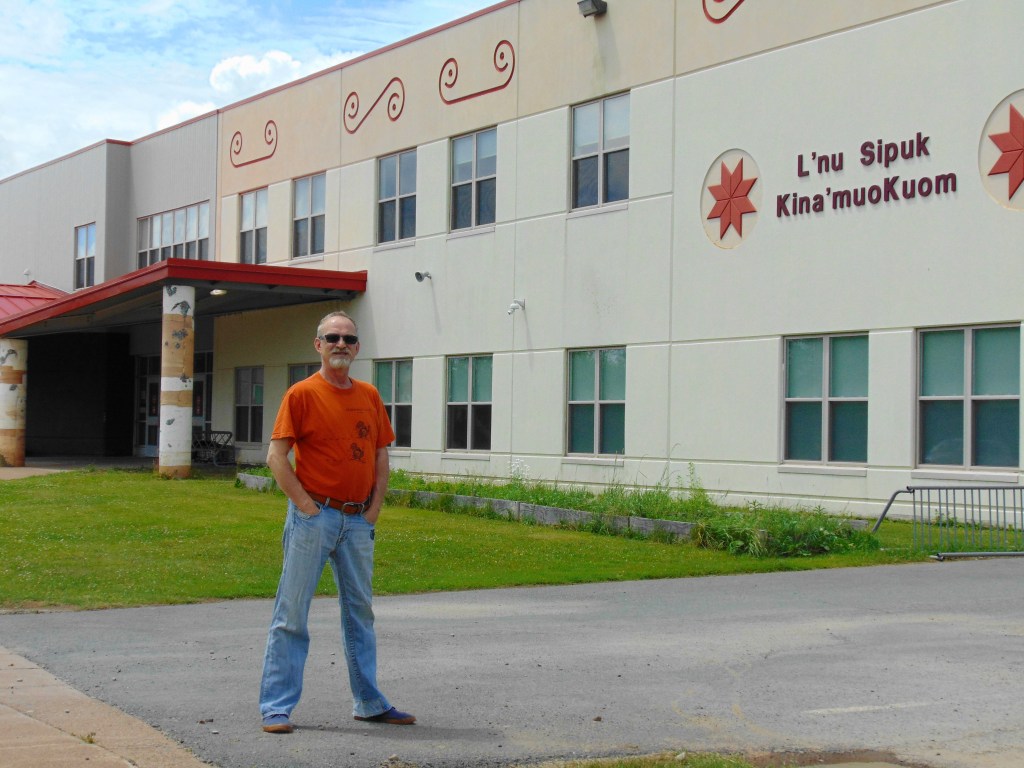
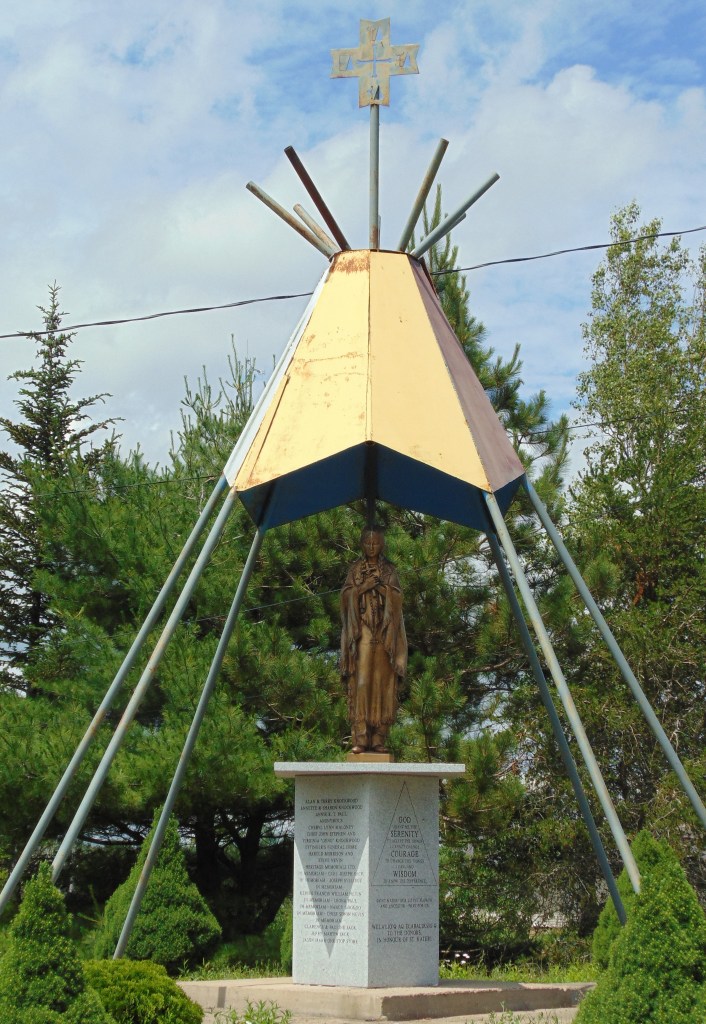
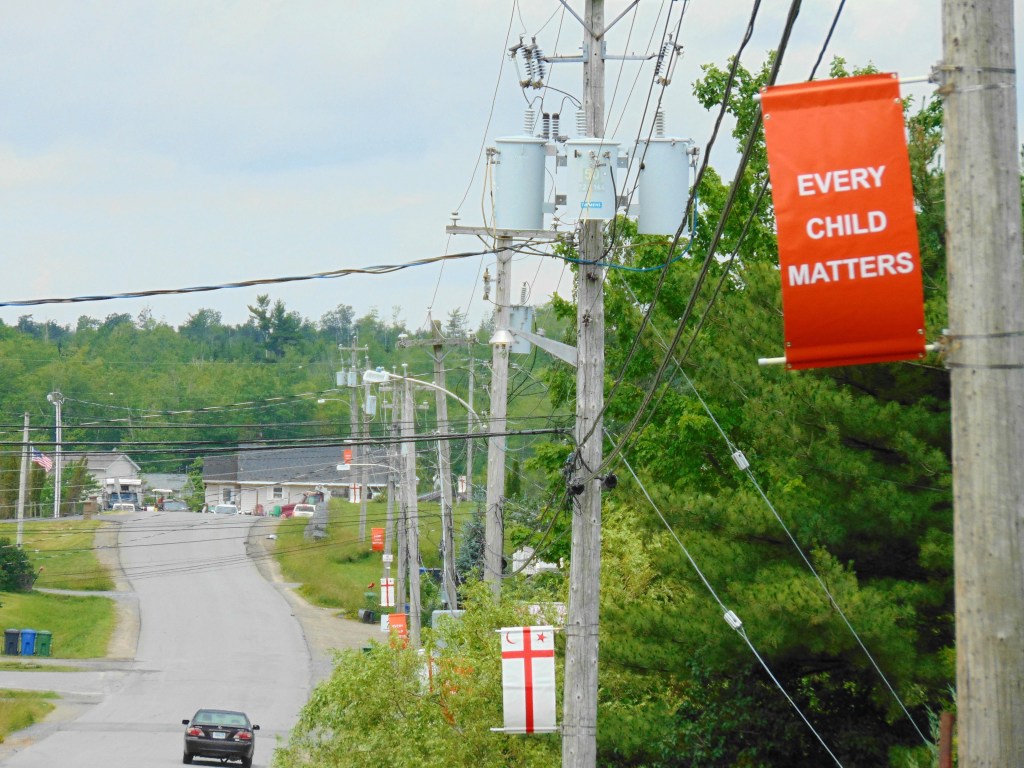
top left – author in front of L’nu Sipuk Kina School; entrance to the Village from Robinson Rd. ; Community Centre and Administration on Church St. ; bottom – St. Kateri Tekokwitha statue by the RC Church; view of Church Street toward Tuff St. and Sport Complex. (pict. by the author)

The Sipikne,katik village is large and well developed. Big church, large cultural and civic centre, beautiful school, few stores and businesses, relatively well maintained properties. One main road and few smaller ones interconnecting the territory. That special day was a huge motorized parade to remember the lost children –  these days subject on everyone’s mind and weighing heavy on hearts. There was a special gathering on sport grounds with music and children. Specially the beautiful children, all (as adults) wearing the dark orange shirts, were making me very happy and extremely sad at the same time. Just as, when I went later to visit the grounds of former Residential School to pay my respect. I watched from a small hill, were the school used to be, as one family were leaving their car: parents in their twenties and three small children. And I imagined how the RCMP arrived with some cars and were pushing away the screaming, horrified parents and taking away the crying children in a wagon to some far away school. For many years to come. Some never saw the parents again. That image brought tears to my eyes.

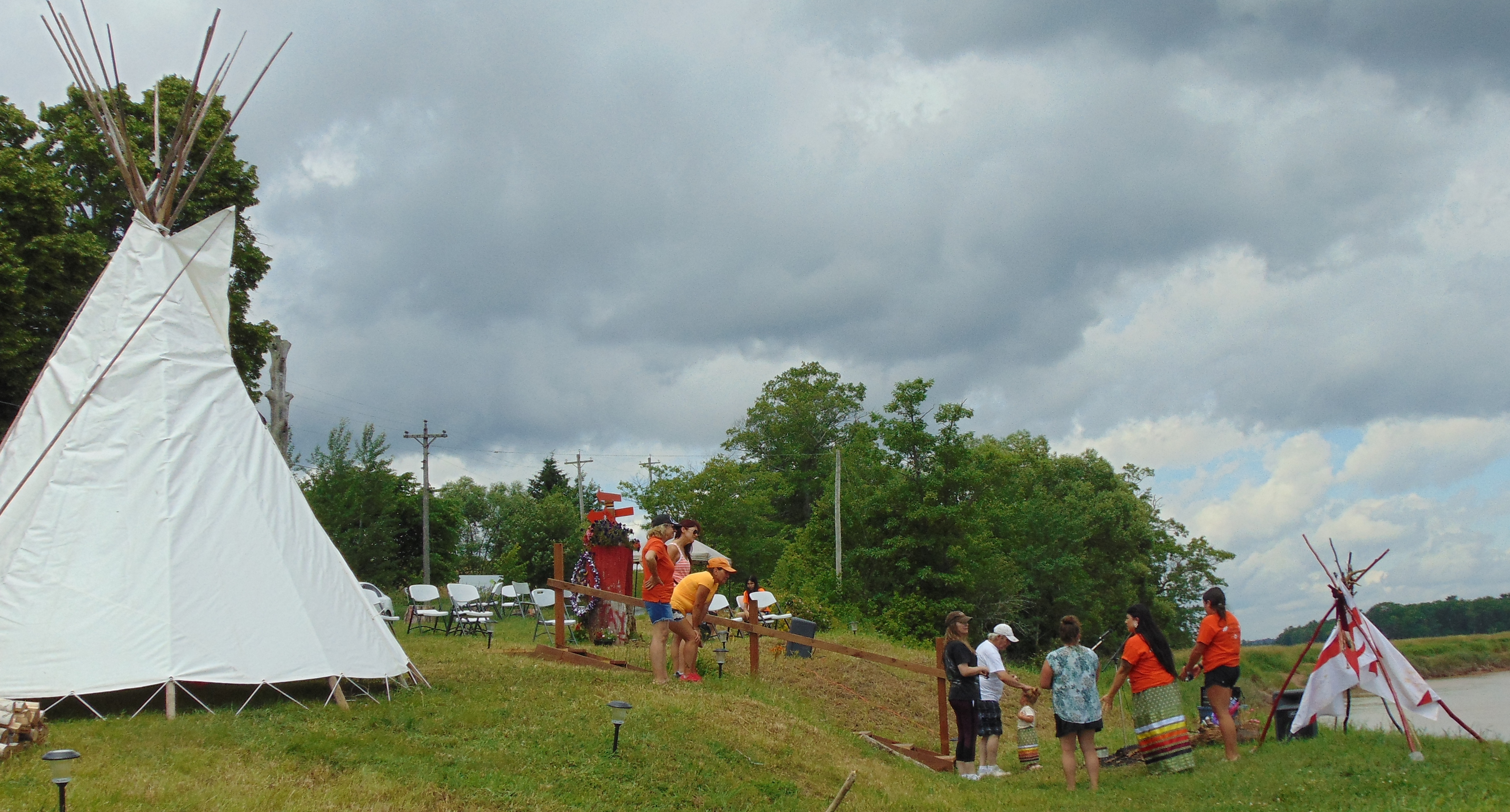
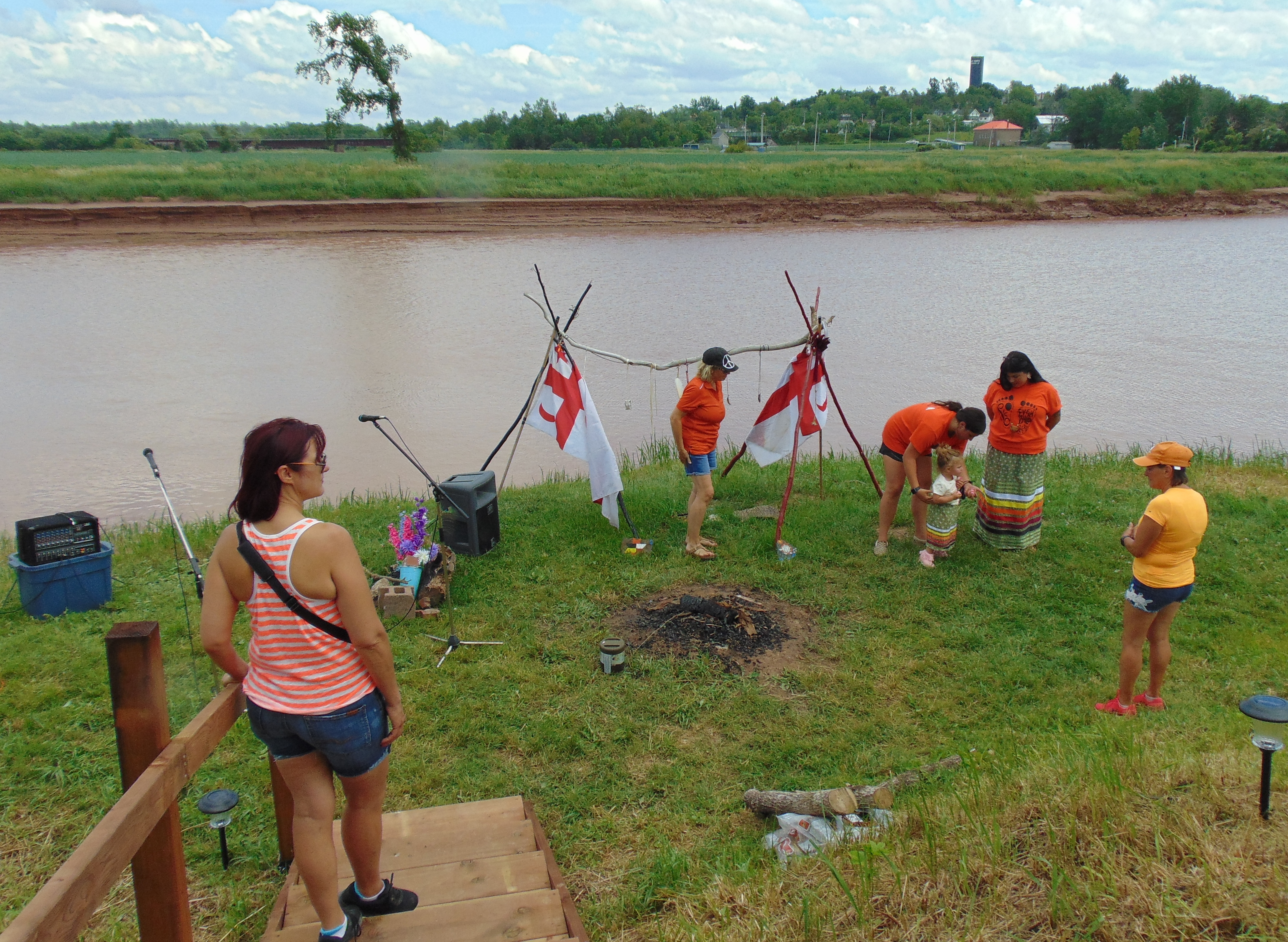
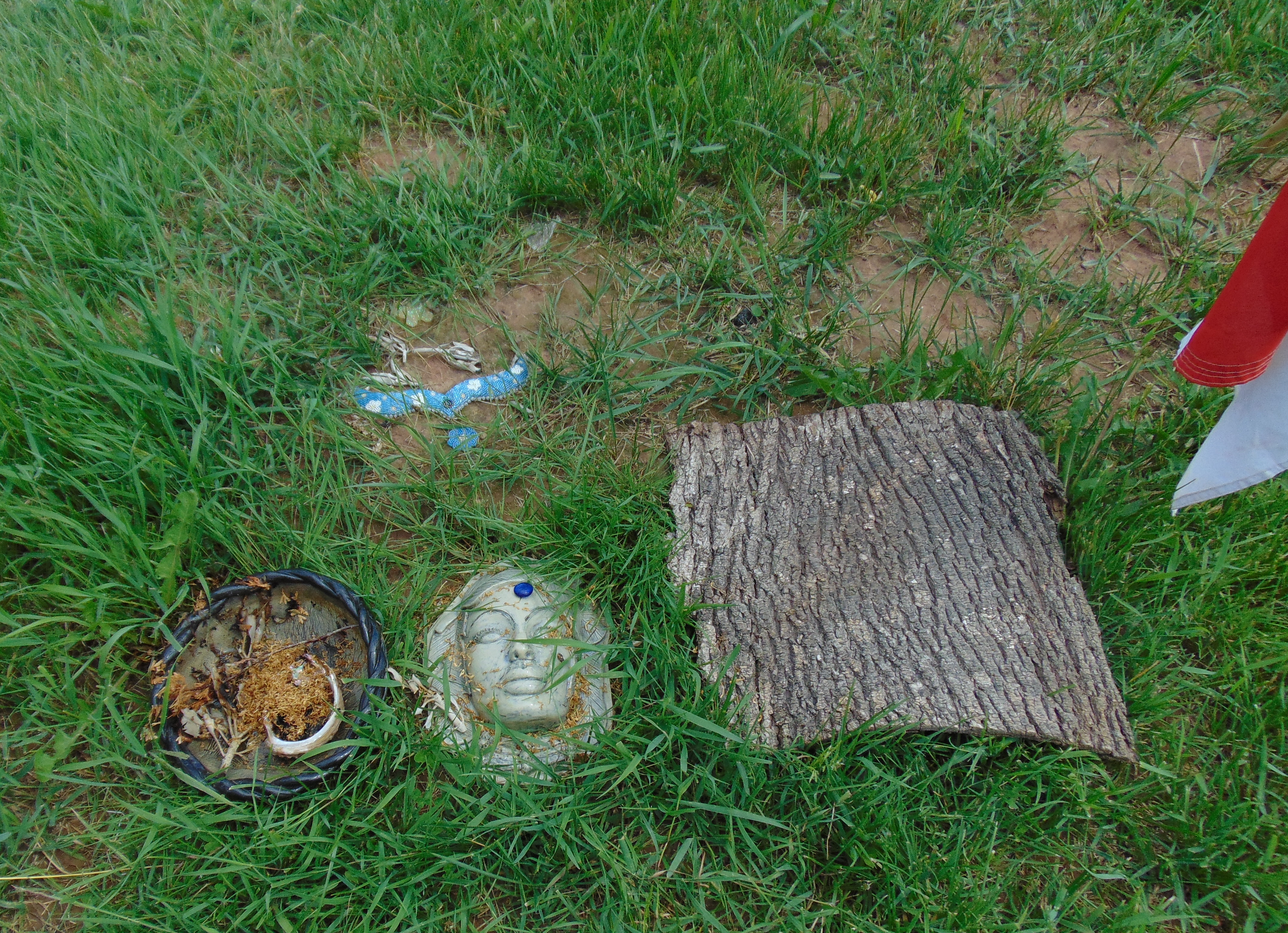
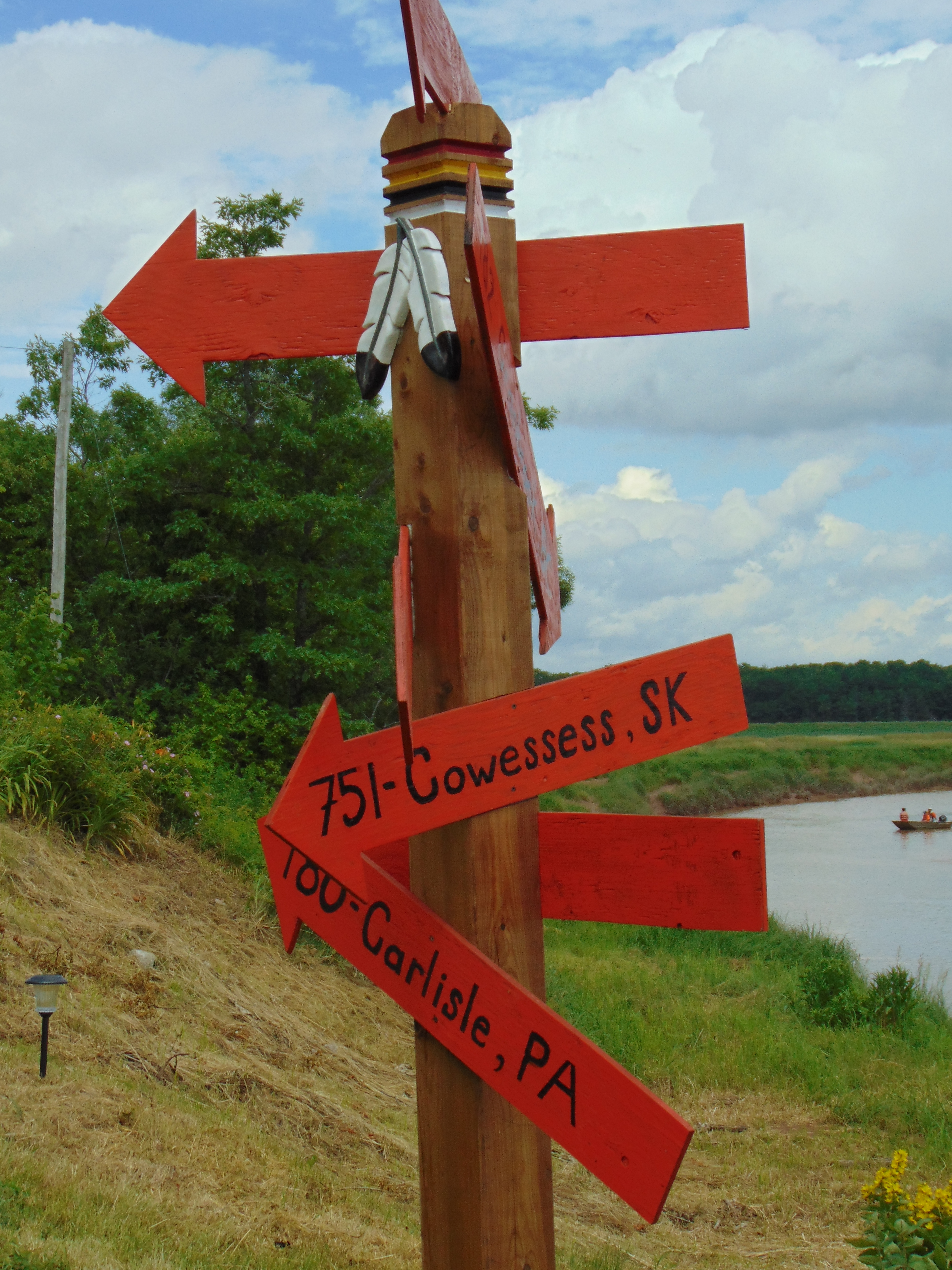
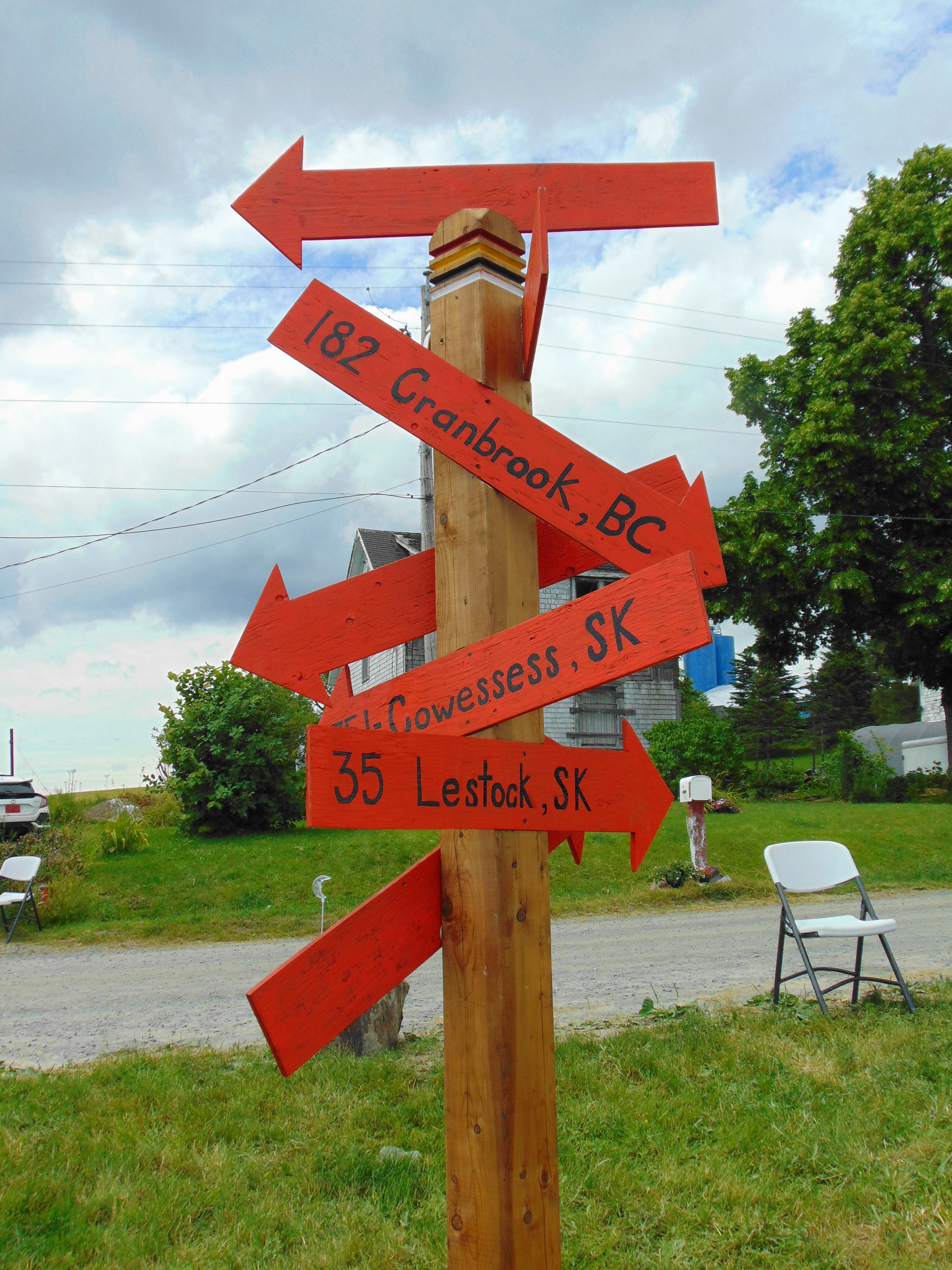
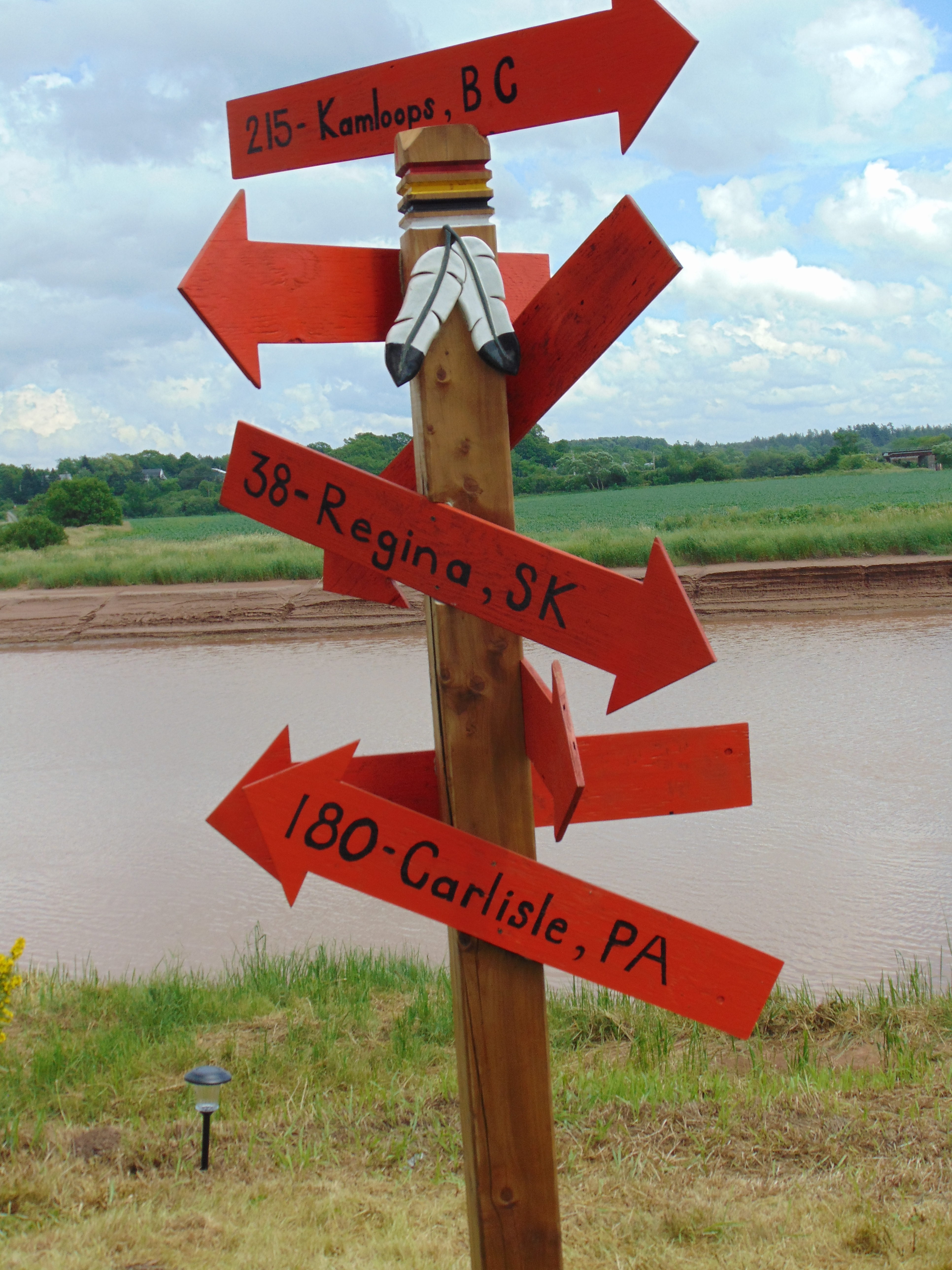
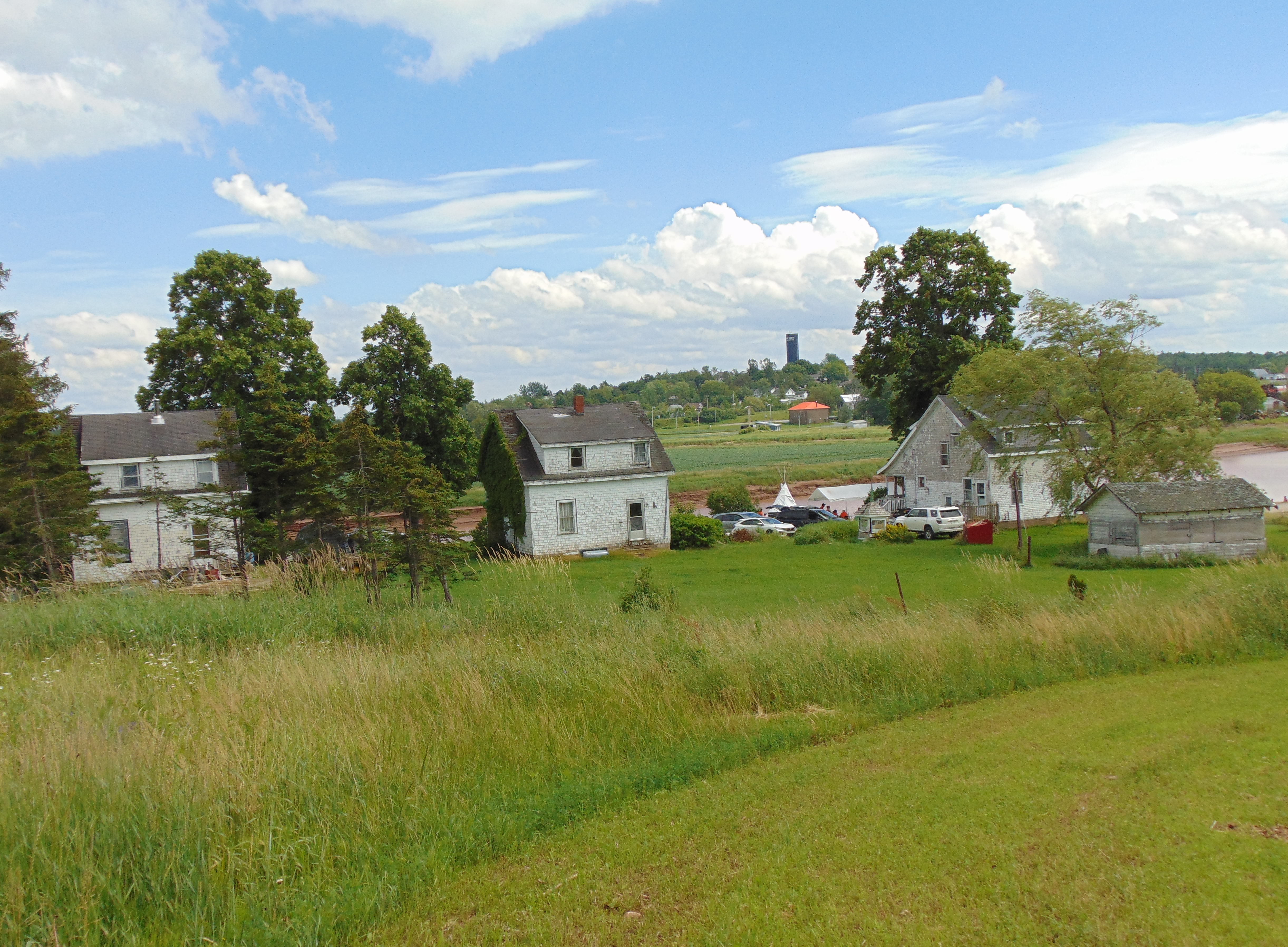
site of former Indian Residential School on the banks of Shubenacadie River (main building no longer exist, what’s left are three residential wooden buildngs of nuns, priest and caretaker). From top left – signs erected in of the old Nuns residence (#16 Indian School Rd); top two right pic – ad hoc prepared spot for burning of incent and sweet grass to honour lost children; next row – a place on the ground where you leave your offering and prayer; next three pictures of a post sign with arrows directing toward different locations of schools with recently discovered unmarked graves – notice the sign to Carlisle in Pasadena in USA, where number of boarding schools and number of Indian children confined to them is many times larger then Canadian numbers, yet the US Government never attempted a national investigation and full report of atrocities committed against US Indigenous People – ; bottom row: the only remaining part of the school building, a steeple from the school with one small room filled with children’s knickknacks; view from the hill were the school was toward the three remaining (unoccupied and in a state of disrepair) buildings; a young Mi’cmaq family on the nearby field (pic. by the author)

Back in the village, in the sport grounds, local young guys were sitting by a huge band drum. We exchanged few words, they gave me ‘v’ sign (when I was their age, we, “Solidarity’ activists in Warsaw, were giving ourselves the same sign full of hope and determination) and started playing the drum and sing.  Amazing concert, so powerful, so touching. I didn’t need to understand the words – they were so plain in emotion. As you listen sometime to some amazing operatic aria sung in a language you don’t know – yet, you understand it so clearly. Because emotions: pain, happiness, sadness, longing, caring, love and friendship need no translations, no explanation. That moment I shared their pain and their hope and their pride. Therefore yes, I can say that I felt proud as Canadian on Canada Day. By sharing and understanding very raw and very clear emotions of my fellow Canadians from Sipekne’katik tribe.

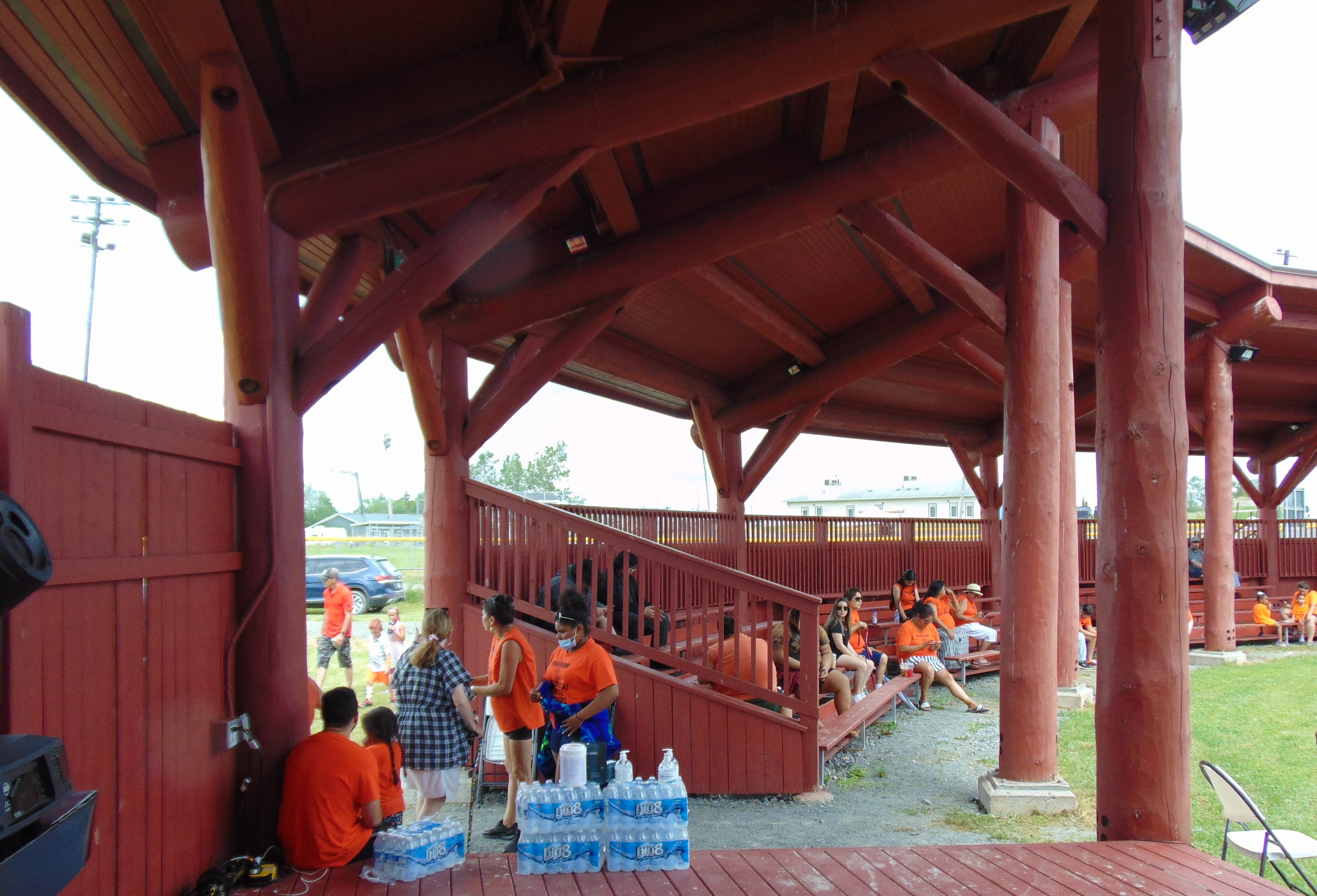
pictures form the diamond sport field and the band drummers and singers; flag in front of the School

I don’t know if I ever had a such good and really proud Canada Day. It was mixed with sadness and hope. Like a true, on epic scale, story of human condition. All humans. From the beginning of times.

A nation that can accept it’s dark past is on a good way to bright future. Feeling sorry for wrongdoings of one’s ancestors does not equal assuming personal guilt. It equals understanding of harm done and naming a crime – a crime. Making sure that nothing like that will happen again.

notes to ponder …

Every social unrest, every protest movement, call for justice, for equality, is a long and arduous way. None are easy and easily achievable. Even when the general political atmosphere is amicable and open to find a solution. If the political will is antagonistic – it could lead to skirmishes, prison terms, police and even army interventions, bloodshed. It could take years, decades to achieve measurable change. In a short time it could lead to worsening, persecution. Even provocations. Just look at the Black Rights movement in the USA. It started in the 60. of last century. And is still not finished. If not for people like dr. Martin Luther King and his non-violent philosophy (based on Mahatma Gandhi movement in India during their struggle for independence) there would have been rivers of blood flowing like a torrent. King’s and Gandhi’s movements take years, are slow and based on moral superiority of argument against the argument of brute force. They seek not retribution but recognisance, equality not superiority. And even that slow and non-violent way does not guarantee success. Or the success would be bitter sweet (India ‘s independence ended up in breaking up the country, mass exodus of Muslim citizens, their persecution and executions from fellow Hindu majority – despite the fact that both groups have similar ethic heritage). There is always a more radical, more impatient or revolutionary segment of disadvantaged group: Black Panthers versus King’s movement in US; Fathah versus Hamas in Palestinian cause; and one of the oldest scourge of social hatred: traditional white Christian antisemitism in Europe and countries where European powers established new colonies that later become new, independent states. Yes, main Churches in last almost hundred years, specially after the horror of Holocaust, denounced the old tradition. Popes decried it. But old official Church policy and doctrine doesn’t change easily. It always lurks in the dark places and dark souls. People were shocked, when few churches were burnt in Canada. I wasn’t. Did not support it but wasn’t surprised. Apart from the State, which is responsible for setting up the system of these horrible schools and is responsible for not checking regularly how were they run by religious authorities – the Catholic Church acted the worst in the way they run it and are the worst in the way they responded and responding to Truth and Reconciliation Commission Report. Not by what the bishops and clergy are saying in public but in what actually are they doing. So I was not shocked that probably some angry young individuals or organized group set the few churches ablaze. It is still possible that it was even done by not Indigenous persons but by provocateurs seeking a strong negative reaction from general public. Roman Catholics still form a majority of religious denomination in Canada. Yet, I didn’t sensed a strong negative reaction to the news. To the contrary – a muted understanding. Of course, if actions like that persist – the feeling might change. I don’t thing we will see more of these burnings, though. A statement was made and was understood. As for the the so called ‘profanation’ of church walls by painting on them hands of young children – I am shocked that the press and news even used that term ‘profanation’. Harming and killing children was profanation. The act of paintings their hands on church doors and walls in my view is totally acceptable and has a very deep, just meaning. I applaud it. Building in Saskatoon a huge new cathedral for quarter million dollars, while arguing in front of court (successfully, sic!) that the Church can’t afford paying 24 millions dollars as reparation to First nations is a profanation. It is worth noting that despite all of it, the Indigenous people are very religious and by large part Catholics themselves. But that’s entirely different subject.

Residential Schools side discussion – John A. Macdonald: a national hero or villain?

by Bogumil Pacak-Gamalski

Residential Schools and modern day placement of native children in the care of non-native families and system (provincially  mandated but with tacit support of federal authorities) is a drama without comparison to none other in Canada’s history and Canada today. It affected and affects everything that happened and that is happening to all First Nations. Abject poverty, lack of resources, lack of education, high unemployment, pervasive alcoholism and drug addiction. All of it was almost (an argument could be easily made that it was indeed) planned, arranged by local colonial powers and even more so,  by the new Canadian Confederation. The country we call our own.  To say the truth, I am having a lot of doubt if that system of full cultural genocide would have happened if Canada remained a fragmented colony for fifty or seventy years longer. Separate entities of Upper Canada ( present day southern Ontario), Lower Canada (Quebec and Labrador) and three Maritime Provinces. That would mean no creation of unified confederation and no strong federal executive and legislative power. With much stronger oversight and decision making from Great Britain and it’s Colonial Office.  The precursor to our constitution and the still important core of it, the British North America Act would have not happened.

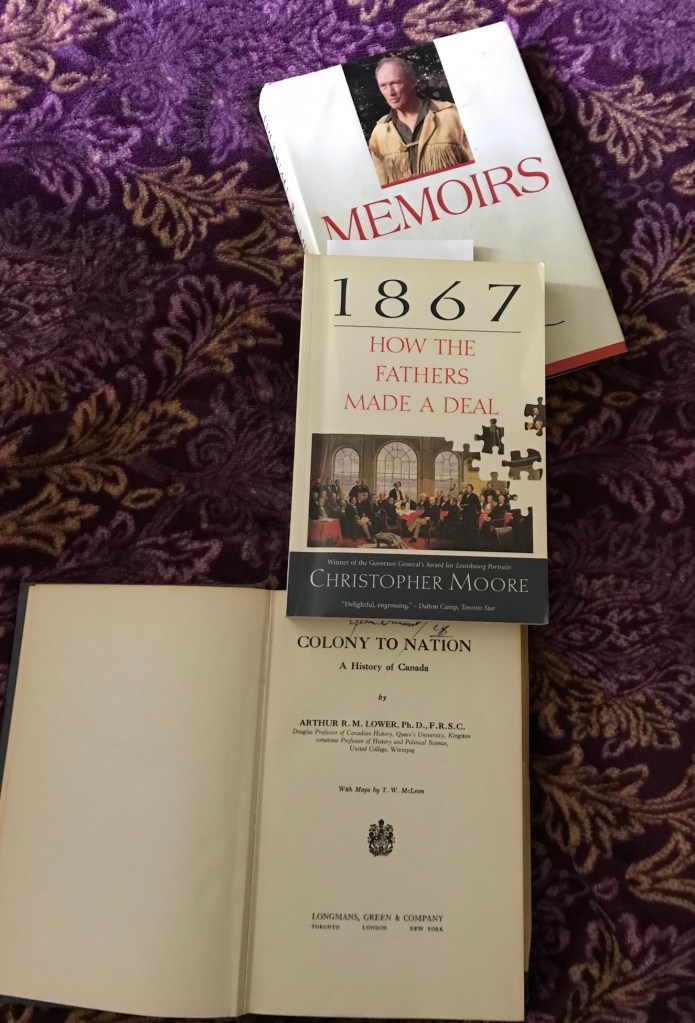
Our renewed  national discussion of our past ignited again the controversies of whom we admire, who is the hero of Canada’s history. More or less, who is the Father of the Nation? And centres very much so on the person of John Alexander Macdonald. Was he or wasn’t he? And if he was the Father – was he a good, wise father or a bully with drunken rages? Smart and competent to achieve his goals but bully nonetheless? Let’s go back a notch to remember what happened circa 1867.

Of course, as we know very well – history could be re-written many times but historical facts can’t.  Yes, there was a Maritime Conference in Charlottetown called by Tupper and Howe from Nova Scotia that was going to discuss possible unification of New Brunswick, Nova Scotia and Prince Edward Island. But delegates from Upper and Lower Canada asked for permission to come and observe. Such was granted and those guests quickly posed a question: why only Maritime Provinces? Perhaps we should unite all of Canadas into one confederation?  And that, ladies and gentleman, was the night that the conception of Canada happened.   

Why do I bother writing about the obscure tidbits of history if the text might suggest to be about the effects of Residential Schools and in general the planned and executed action of destroying political, economic and cultural base of First Nation? Also their biological existence, if not totally, than in numbers greatly diminished and easy to control.

The very recent discovery of hidden bodies of children buried deep in the ground by Residential School in Kamloops surprised and shocked many Canadians. Shook the nation to the core. A lot of us. Except … the First Nations themselves. They knew that many such hidden graves exist. They knew because that’s not an ancient history and old tales and myths. That’s now, very recent.  Their uncles, maybe even brothers and cousins, great aunts and great uncles. Those that everybody in the community knew they existed, were forcefully snatched  by raids from their petrified and crying parents, placed in the Residential School and never came back. Were never seen or heard of.  They were not the children of proud tribes  sought of, as a powerful allies, in the great struggle between the French and British empires and later in the struggle to maintain British territories during the US War of Independence. Those nations and tribes  the King and Queen in London signed treaties with. No, by the end of the first two decades of XIX century they become an obstacle to plans of the new settlers. The colonists, who wanted to wrestle more local control from the imperial Colony Office in London. These colonist had neither desire nor respect for the spirit and letter of these treaties.  The settlers wanted more land and control of natural resources and the religious leaders of these settlers couldn’t stand the savages, who would not recognize the new Christian god. The native gods and beliefs needed to be destroyed and the administration and interpretation of the Treaties needed to be wrestled from London political master and given to local legislative and executive powers in the new colonies.

Finally, the War of Independence, won by the new United States in 1812, forced the British and their Colonial Office to push for some form of political unity, some sort of federalism between separate colonies, hoping it will better protect the British territories and interests against the republicans from the south.  That push came in the form of uniting Upper and Lower Canadas into one Canada Province west of Maritimes. And in New Brunswick, Newfoundland, Nova Scotia and Prince Edward Island an attempt to unify them as one Maritime province or federation. Both interests – the Empire and the Colonist in North America – converged at convenient time at the very moment of history in the middle of XIX century.

On Canadian and Maritime side there were many politicians, regional or local leaders, opponents and proponents of unity in what become the Confederation. Almost all of them could be called Fathers of Confederation.  Generally we call it the Charlottetown Conference. But that was only preliminary discussion. It was followed by Conference in Halifax and Conference in Quebec, which by far was the most important. The Quebec accord spelled and crystalized the boundaries of political powers, the separation between British Parliament (and Colonial Office) and new confederation legislative, judicial and executive branches. And the ambition for importing from Britain the tenets of ‘responsible government’.  If Charlottetown and Halifax gave some general architectural idea of the new political structure – it was the Quebec Conference that produced first concrete drawings of the design.

All of it would have been in vain if there wasn’t a push for some sort of unification of the Provinces in Britain itself. The Colony Office in London could have and would have scuttled it at the bud. Probably without even a need for Parliamentary debate either by the Commons or by the Lords.

There were very few main architects of the entire project. Many others that helped and whose support was indispensable. But the main architects remained the true Fathers of Confederation.  Some of them, like Joseph Howe and  notably John A. Macdonald, were strong opponents to the idea at the beginning.

Other truly great leaders were  George-Etienne Cartier from Quebec, George Brown from Ontario and Charles Tupper from Nova Scotia. It was mainly thanks to strong support of Tupper, that Macdonald rose to prominence and took the reins of the debate (aside from Macdonald personal skills as shrewd politicians on almost Machiavellian scale). Tupper did not like George Brown (who was one would say the anti-thesis of Macdonald, as Brown believed in a democratic and ethical government)  and neither  liked nor understand Cartier and the intricacies of Quebec (Lower Canada) French culture and politics.

I would suggest that if not for the support of Tupper, it would have been very likely that Macdonald would never rose to the prominence that he achieved and that led him to become the first (and lasting) Prime Minister of the Canadian Confederacy.  In comparison to Cartier and Brown and their leadership – his star was of second category. Although it shone as superstar in category of shrewdness, lack of morals, thirst for power.

Enough of the annals and internal battles, debates of the articles of Confederation both in Canada and later in London, where the final birth of Canada happened. They were done, cooked and signed. New Federal Government of new (almost) independent state-dominion was formed. And victorious Macdonald become the first Prime Minister of Canada.  With the passing of times he become a legend. Monuments were build, streets and buildings of prominence named after him.  If there is a conscious afterlife – I am sure that John Alexander Macdonald soul is smiling in the glory.  But it probably gets a bit angry in the last decade or so.  Some begin to lose faith in that heavily colorized portrait.

After studying his life and carrier a bit more in detail and less from propaganda pages of some school texts and popular government pamphlets – I have some opinions and a bit more clear picture. Not a scholarly one by any means. I am not a Canadian historian by any stretch of imagination. Just a history buff at times.

Here is my sketch of Macdonald in a few movement of a pencil.

He was  a very intelligent and shrewd politician. Hungry for power. A good lawyer with ability to concentrate on minuscule detail to achieve the greater goal. Good debater with the talent to steal the moment and force others to notice him and pay attention to him. A drunkard, who could function rather well with his alcoholism. Scheming on the level akin to dangerous courtiers from a time of absolute monarchs.

His government introduced bribery, nepotism, patronage on a scale never repeated again in the history of Canada.  I would dare to say and dare to argue in any debate, that if John Macdonald won a majority in any general election in Canada in the past 30 years – he would end up in prison.  Or, at the very least – be kicked out into oblivion from political life. Even in the circles of Conservative Party. His great admirer recently, Jason Kenny of Alberta, would most likely scream in the Legislative Assembly in Edmonton: get him out of here right away!

Macdonald didn’t risk winning elections by giving people a chance to make their mind, by a true debate (in which he was very skilled after all). No. That’s like playing a roulette. A politician should not play roulette. So he would appoint every little government (state) position only to people, who would understand where their sympathies must stay. From every tiny post office, every railway station, everywhere that state employee or commissioner would and could affect the daily life of a citizen.

He would have been horrified of the Office of Election Canada and the fact that it is not stuffed from top to bottom with party patronages. In 1885 he forced a legislation that gave him (or any other Prime Minister at that time) the power to appoint (by strict party patronage) a federal Revising Officer to supervise elections in every riding! No wonder he could be seen by some modern prime ministers as a hero and saint – they could have only dream of it. He himself called it ‘the greatest triumph of my life’. Not the Charlottetown Accord and the British North American Act – but the obscene patronage that goes against every principle of good democracy. That also paved the way for party discipline and the death blow to parliamentarians independence. The golden standard of the day (in many ways still existing in many parliaments, including Britain) was a relatively broad independence of judgment of a single Member of Parliament . Governments did and do fall, when Cabinets fail to persuade their own party parliamentarians during a debate in House of Commons. Not in Canada anymore, thanks to Macdonald. Party leader is almost like a monarch itself. Members form the line or face political death. Some still valiantly protest. But very few survive the consequences.

 With one exception – Macdonald did resign as Prime Minister after the eruption of the details of enormous bribery scandal in giving the licence for Canadian Pacific Railway company. The amount of bribes his party and MP’s received and the bribes he took for himself is of no comparison to any other corruption scandal in Canada before and after.  

Many bad traits of today executive and parliamentary branches of Government in Canada could be traced back to John Macdonald.  As one British newspaper reported in 1891: “  For twenty three years, Sir John and his party had maintained themselves in power … by a colossal system of bribery”.

And since the Rapport of the Truth and Reconciliation Commission many years ago it become painfully clear that John A. Macdonald was the man responsible for creating the infamous system of Indian Residential Schools in Canada. Now we are just learning of even more horrid facts of these Schools.

Yes, the worst transgressions, crimes calling to Heavens, were perpetrated by  the Roman Catholic orders and clergy (overseen by Canadian bishops).  While Catholic institutions were the worst, other  (United and Presbyterian Churches) committed crimes, too. At least the others offered uncontested and unreserved apology and responsibility – the Catholic Church failed again. From the very top in Vatican to every diocese. In a way we are used to it – from scandals in Ireland, in Quebec in the 30., 40. and 50; in Newfoundland; in Poland; in the USA and many, many more countries. But here, in this article, I deal with the secular, the power that gives consent and institutes policies and rules.  And one particular, most powerful politician of that time.  The one, who factually could be called the Father of Indian Residential School System.  John Alexander Macdonald. Politician, who for a long time enjoyed the status of national hero, nation-building leader. Father of nation. Was he?

In my opinion not at all. In neither of these titles, epithets.  He does have a very prominent role in our history. Was a very skillful politician. But neither a hero nor a father. I will not miss his monuments, educational, cultural or administrative buildings named after him. He has a solid and permanent place in Canadian history. In history books. But it is not a place of great leadership and definitely not a place of public celebration.   

Black guy and me. What’s the difference?

by Bogumil Pacak-Gamalski

I was always drawn to the history and culture of Black people. Even as a young man in Poland, back in the 70. But – Poland had really very little tradition and history of Black culture and Black people.  Mainly, I suppose, for the reason of being rather far from Africa geographically and loosing it’s sovereignty by the end of XVIII century until end of I world war. More or less the time of major colonialism expansion of other European powers.  That was perhaps one of the very few – if not the only one – good part of losing our political freedom. Then came the upheaval of Polish Solidarity movement in which I took very active part – and with that, all other interests had to give way to the main focus of the fight with Soviet communism in Poland.

That involvement in Polish Solidarity resulted in my short visit to London (first ever beyond the Iron Curtain) were I was hoping to study the life of Polish independence hero (and my personal), Marshal Pilsudski and London had a major Institute devoted to the study of his life and works (the other being in New York). It was fateful journey. That year Martial Law was declared by communists in Poland, the communist militia came to my home to arrest me (thousands were interned) and, on the advice of my father (former Soviet labor camp prisoner), I decided not to return. My entire world was turned upside down.

I lived in London in Willesden, close to Harrow Road, renting one bedroom apartment form a Polish lady, daughter of one of thousands of Polish soldiers, who stayed in Britain, after Poland was assigned in Yalta to Stalin. It was a typical working class neighborhood, with its own pubs, barbers, shops. And, of course, rows upon rows of tightly connected two or three floors red brick townhouses. In the 70. and 80. that neighborhood was also witnessing a large influx of Black population.  That decade also witnessed the first of many large and often violent protests of Blacks in London. That tension and a bit of unease was palpable in Willesden. It must have been late summer, when the tension erupted again. At evening times normally busy Harrow Street, was void of white pedestrians.  I was coming home by double-decker as usually late evening. From the bus stop, I had to take a relatively short, yet long enough, walk to my apartment.  Suddenly a group of three or four young Black guys appeared walking toward me and looking uninvitingly at me. I was young, too. Perfect combination to avoid. Unless you were looking for a fight, which I was not. I moved to the side, as not to provoke them, but kept walking. They stopped me, don’t remember the exact words but the jest (and the hand on my chest) was:  ‘were the f..k you think you are going? It is our street now’.  I, truthfully, explained that I have no claim to that street whatsoever, that I am not British and just coming home from 10 hours shift. I also mentioned that I am a refugee from a communist regime. Few more exchanges, less and less angry and I ended up in our neighborhood pub sharing a pint with them.  They asked me a lot about Walesa and “Solidarity”. I told them more about the Soviet-style communism.   Some of it was surprising for them and they said that it looked like the Soviets are not that different from the colonials in their countries, back in Africa. At the end they offered (I accepted) to escort me to my door, so nobody harms me by mistaking me with other local whites.

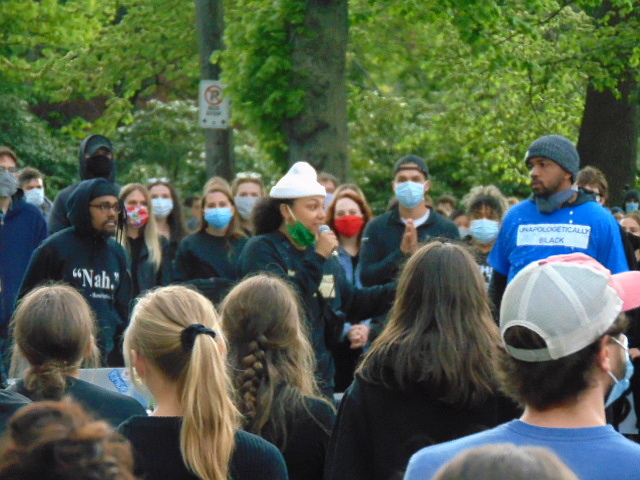
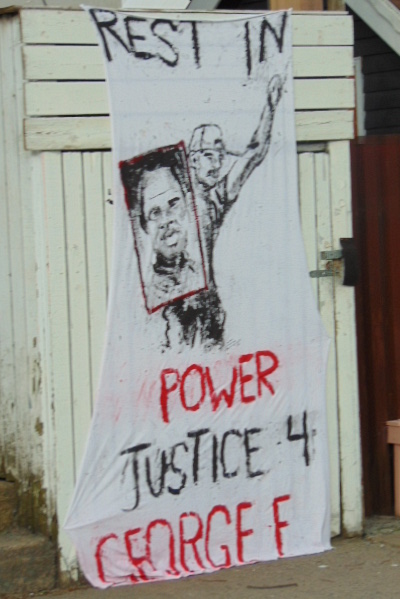
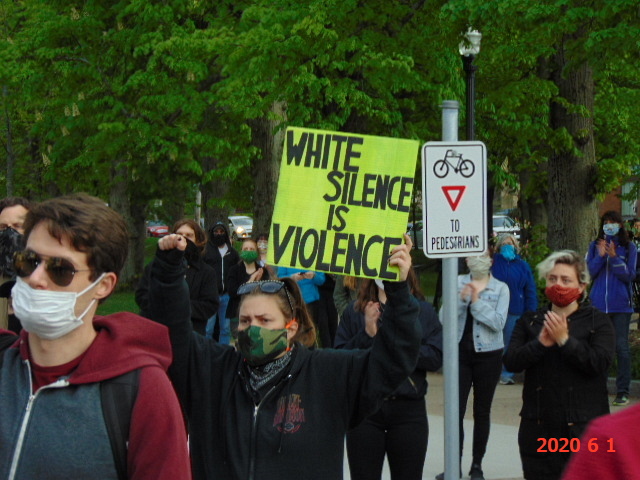
Why this reminiscing?  I watch (forcing myself, for it is very hard) for past week or so, the court trail of the murderer of George Floyd in USA.  Watched the video tapes several times and the image of the policeman knee suffocating George Floyd, killing him minute by minute, second by second is ingrained in my mind forever. Just as the hysterical, crazy female officer shooting the beautiful young  Black 20 year old boy in Minnesota yesterday.  It is beyond outrage, beyond anger. Two days after another handsome Black man, US Army officer, is taken out of the car and tasered as a hooligan or gangster. One wants to scream from the top of ones lungs: what the …ck is wrong with the Police forces in North America?! Particularly in US. That is not normal. It is sick. Your job is stressful, it is dangerous. But you are not solving or helping to solve the problem. YOU ARE THE PROBLEM.  You are the personification of the worst evil in America – the rampant racism. The Blue uniform become equivalent with the white robes of times by. When Floyd was murdered last year, the movement Black Lives Matter started. It spread beyond US borders rapidly. To Canada, to Europe.  In the middle of the first wave of pandemic.  Despite the pandemic, despite the risks, I thought that cause worthy enough of public support and joined my Black brothers and sisters in their march through Downtown Halifax. I watched their anger, their desperation – but most of all their sorrow. Deep, tiring sorrow, that follows them through their long history in the New World.

Let me take you through another short walk from my past. Year is about 85, maybe 86. My first visit with my partner to Florida. Few years after my life started anew in Canada.  We rented a car and were travelling from St Petersburg toward Orlando. I moved from the big interstate #4 to some quiet and deserted side road.  Not a single car in front, not a single one behind. Perfect.  Time to relax, enjoy the views. I think the speed limit was 60 miles and I was driving probably 70 or 75. Flat road, no traffic, safe.  Suddenly, I see in my rear view mirror characteristic flashing lights. Police. Resigned and knowing why, I slowed down, pulled to the side and stopped.  A blinding strobe light and very loud order from the megaphone: roll down your window, place your hands on steering wheel and don’t move!  Nothing like that would happen to me (at that time our Police was very well mannered and not confrontational from the getco, as it is popular now) in Canada. I was shocked and nervous. The policeman comes to my window (can’t see him, being blinded by his flashlight right into my eyes) and demands my driving licence.  I said that I’m Canadian tourist and try to reach the glove compartment for the papers. Next thing I remember  was being thrown from the seat with tremendous force face down to the asphalt, his knee on my back and the cold sensation of his gun barrel on my neck. Pressed to the point of pain.  I gathered all my senses and tried to explain that all my documents, including my passport are in the glove compartment, that it is normal in Canada to do what I did to show it to the officer. He yells at my petrified partner to hand them to him slowly. He checks them, his demeanor changes completely and explains that this not Canada, this USA. And I should be lucky that I am alive, because he was right to suspect that I might pull a gun from the compartment.  We chat a bit more, I apologise for my speeding and he wishes me a good night and good stay in Florida. I ask if I will get some ticket and he answers with a smile: no, just a verbal warning, it was a minor infraction. The end of story.  

Do you know why I am writing this story?  To make a point or to illustrate the subject of the article? No. I am writing it because I am alive. If that summer 1985 or 86 I was a young Black man, I wouldn’t write that story today. I would be dead most likely. But I was lucky. I am White man.  This is my privilege.  Not of coming from very wealthy family. For I‘m not.  Not from having top position in some industry, corporation. From the fact that I am alive today after that incident almost 40 years ago. Because I am white. I was not killed for driving ten or fifteen miles above the limit on an empty road. Because I am white. Floyd was not killed for passing (most likely totally unware of it) $20 bill in the store (most Americans and many Canadians have done it many times unknowingly, apparently there is more fake low denomination bills in circulation that real ones). He was killed because he was Black. The 20 year old boy in Minnesota was not killed for having some air deodorant attached to his rear view mirror (that was the infraction – seriously).  Nobody gets killed in the Stated for such minor issues.  He was killed because he was Black. Is it possible that white young guys would be killed in similar confrontations with the Police? It is, the Police is much more aggressive than it ever was – but highly unlikely. Because they would have been White. White and Blacks. Like Life and Death.  Think of it. And please, don’t tell me that you are not privileged, if you are white.  I know that I am. And down deep you know it, too.

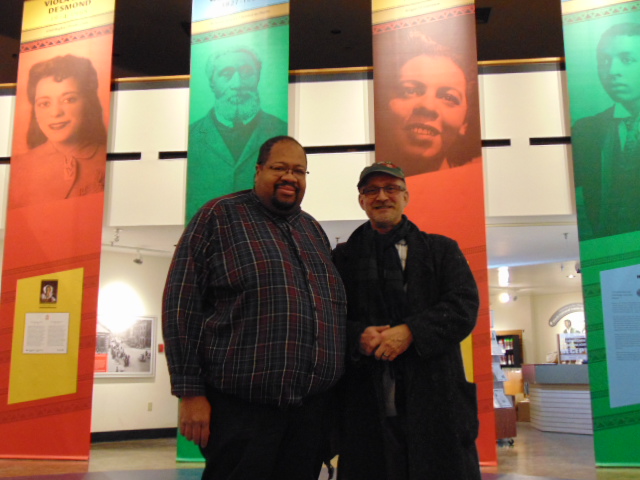
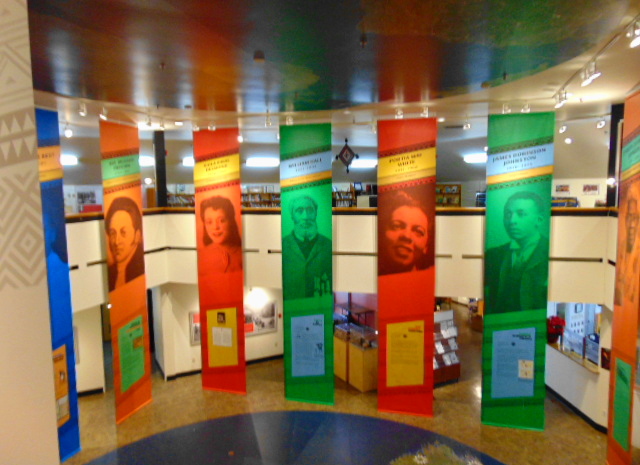
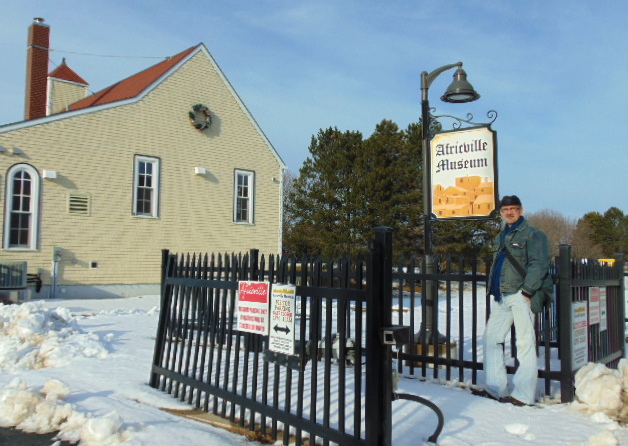
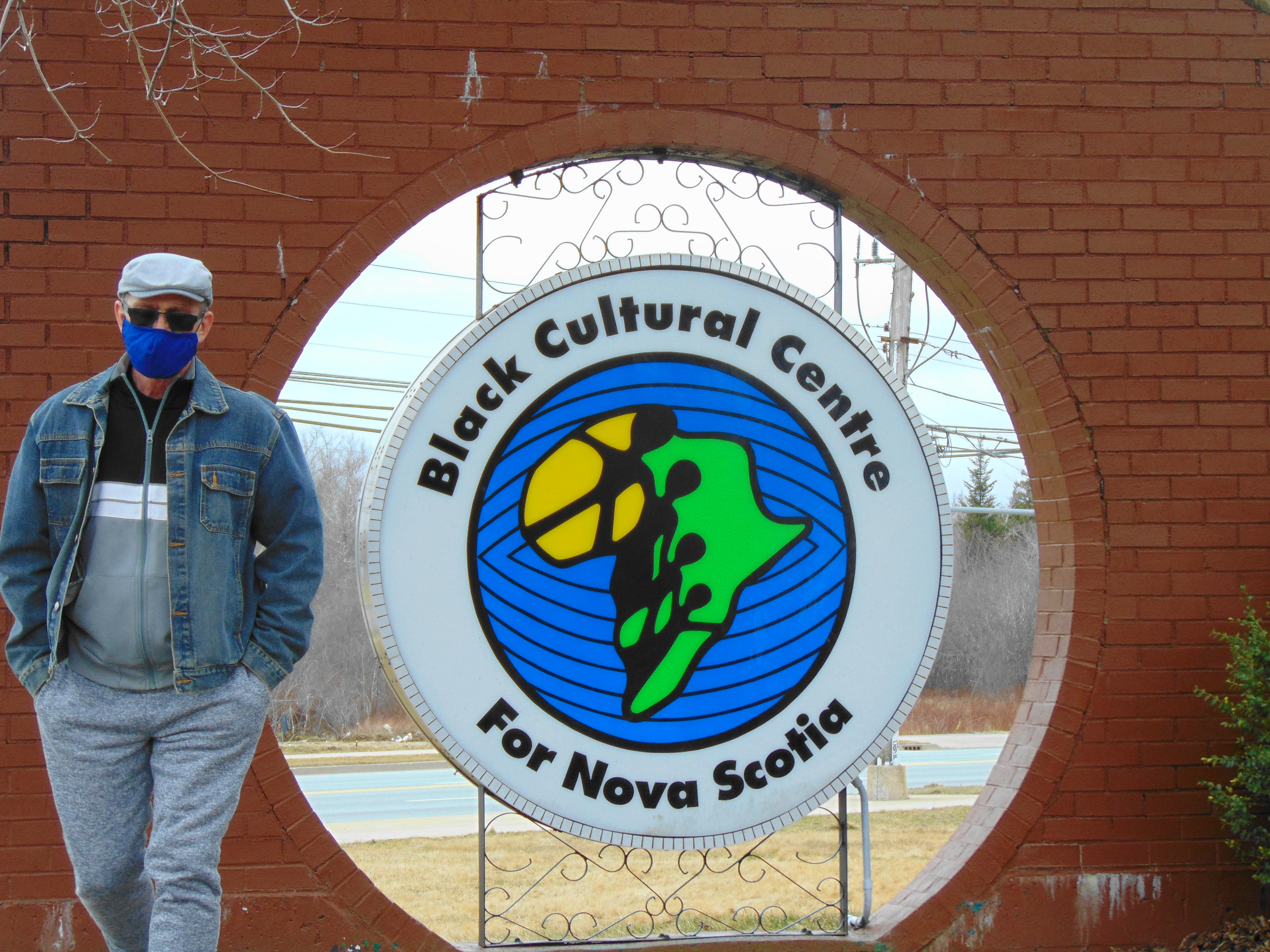
I have written here of some very interesting and not very well known history of Blacks in Canada. Particularly of Blacks in Nova Scotia.  Have posted pictures and journalistic account of the mentioned above march Black Lives Matter in Halifax in 2020. Recently I have visited again the Black Cultural Centre in Dartmouth on the occasion of celebrating the Black Battalion – little known Canadian Army unit from I world war and had a short chat about it with the Commander of Halifax own Prince Patricia Regiment. Will write about it very soon. It is important to know the rich and long history of Black settlement in Canada, their achievements and their failures. Only than their history will become our history. Common past.  Only then we will be able to see ourselves as one. As Canadian family. And only than their lives will truly matter as much as ours. For they must be worth as much. They are.    

Ah, the title. “What’s the difference?” – I think that I have explained it already. Let me repeat it: I am, therefore I am alive.

Arabeska nr 2 – Karol Szymanowski

7 marca opublikowałem na gorąco (?) wystukiwany na klawiaturze Facebook’a wiersz  ‘Parlez moi d’Amour, mon cher Paris’.  Wspomnienie nie odbytego (jeszcze) spaceru paryskiego do Ogrodów Luksemburskich i długiej rozmowie o miłości. I platonicznej i zmysłowej. Ostatecznie trochę już tych krzyżyków mam na plecach, więc sporo na ten temat powiedzieć mógłbym. Tylko osobie wyjątkowo bliskiej.  W obecnym stadium swojego życia dwie tylko takie osoby są. Wyjątkowo – i w wyjątkowo inny sposób – mi bliskie. A teraz wygrzebałem gdzieś stary erotyk Micińskiego „Noc majowa”:

Efemerydy,

lećcie w tan –

o kwiaty jezior, nereidy!

na multankach w dąbrowie gra Pan.

Czemu Micińskiego zapomniany jakiś wierszyk (jak i Miciński zapomniany dziś)? Ano, słuchałem dziś pana Karola Szymanowskiego I Koncert Skrzypcowy w wykonaniu Konstantego Kulki. Bajka. Zapomniałem, jakie cudowne poematy miłosne komponował Szymanowski. Właśnie takie poematy o miłości. Tenże koncert dedykował Pawłowi Kochańskiemu, genialnemu skrzypkowi tamtej epoki, który mu wiele tajników wirtuozerii skrzypcowej wyłuszczył. Potem zresztą Kochański grał ten koncert Karola Szymanowskiego w Nowym Jorku, w 1923 bodajże, z orkiestrą pod batutą samego Leopolda Stokowskiego. Szymanowski był dość kochliwym człowiekiem i młodzieńcowi żadnemu nie przepuścił. Więc gdy sam był jeszcze bardzo młody, w Zarudziu pod Zamościem, gdzie gościł we dworze Jaroszyńskiego, skomponował to cudeńko muzyczne. Wymaga delikatnego dotyku smyczka, który pieści jeno struny skrzypek. Tak, jak zrobił to Kulka na tym nagraniu, którego słuchałem. Pod bardzo dobrą dyrekcją Jerzego Maksymiuka i Orkiestry Symfonicznej Polskiego Radia. Ileż w tym pasji, ile tęsknoty. I ślady rozległego stepu dalekiego Podola, dzieciństwa i wczesnej młodości pana Karola i jego pełnej przygód późniejszej podróży po Północnej Afryce. Przygód i doznań, które dzielił z towarzyszem tej podróży Stefanem Spiessem, niewątpliwie jego ówczesnym kochankiem i mecenasem finansowym.

Karol Szymanowski w portrecie Witkacego (1930)

Ach, a czemu Miciński? Ponoć (nie ma pewności) pod wpływem tegoż wiersza Szymanowski ten brylancik muzyczny stworzył. Czemuż by i nie? Wieczory długie w starym dworze, może księżyc przez okno zaglądał, a w bibliotece dworskiej wykształconego przyjaciela pewnie bez problemu tomik Micińskiego ciągle jeszcze młody Szymanowski mógł znaleźć i czytać. Może i słyszał świerszcze za oknem otwartym i myślał, że to Pan na fujarce-multance gra … . Czy myślał o tym swoim wczesnym koncercie siedząc pod fontanna w Taorminie i podziwiając ciała młodych Sycylijczyków figlujących nieprzystojnie w tejże fontannie? Jak wspomina w swojej biografii Artur Rubinstein, ta wizja pięknych młodzieńców wprawiała Szymanowskiego w zachwyt.

Warto to pamiętać słuchając tegoż koncertu skrzypcowego.  Kontekst i odrobina wiedzy nie szkodzą, a przeciwnie – pomagają dzieło lepiej odebrać, rozumieć. Bo sztuka prawdziwa nie jest wysiłkiem jedynie intelektu i techniki. Tenże na nic bez wielkiej emocji i bez wielkiej miłości. I tej osobistej do człowieka i tej filozoficznej do Człowieka. Pasja jest wszystkim, co czyni sztukę autentyczną.  A nie znać lub ukrywać pod kluczem archiwalnym homoseksualizmu twórcy (zwłaszcza twórcy z lat dawno przeszłych)  jest po prostu gwałtem i zbrodnią na tej twórczości. Ona nie powstała z niczego, nie powstała w próżni. Te dzieła tworzyli ludzie żyjący. Kochający, tęskniący, cierpiący i zwycięscy.  A to wszystko miało wpływ na ich twórczość.  Ot, i arabeska druga. Arabeska – płochy, nietrwały rysunek, krótki utwór literacki lub muzyczny. I nazwa arabskiej prostytutki. Hmm… .  Jakby Tuwim zakończył filozoficznie: człowiek się jednak na niej rodzi i na niej umiera.

COVID anniversary. What next?

Bogumil Pacak-Gamalski

A year ago the World Health Organization (WHO) called the new pandemic in our world. This one was given the name Coronawirus-19, simply from the given name of the new, unknown to human organism, pathogen.

Now, after twelve months, we can come to some conclusions, reflections. It was the first world pandemic that truly and without any mercy affected every society, every corner of the world. It didn’t recognize any differences : alike to all humans. It is true, as we also learnt during that times, that certain groups of people were more likely to develop serious illness, that some were more prone than other to die from it. A lot still needs to be studied and decipher.  Not being an epidemiologist or even a biologist, I can rely only on the barrage of daily news and tidbits of scientific opinions offered to the public.

It was noticed, for example, that black and brown populations were more susceptible to it, also Native communities of North America. So far I take it with a very big grain of salt and think that some assumptions are way too hasty and unproven. Especially the ones based on skin colour (what used to be called ‘race’, which is false, for all human form one and the same race: the human race) or continental ethnicity. At the same time it was proven that old or very old people were the most likely to die from that illness caused by Covid19. Also proven more likely to fell ill, were people on the lower scale of economic ladder. Simply put it: the poorer you were the bigger were the chance of getting infected and developing the illness; and more infections in any particular group logically led to more deaths.

That, for me, suggest different picture, not based on the colour of your skin:  since  (on average) the brown and black population (also the Native one) in North America and in Europe has the largest percentage of underprivileged people – it seems clear that not a ‘race’ but poverty was the main culprit and ‘attraction’ for the virus. And, of course, very old age, which by itself makes us much weaker to combat the virus and much easier to succumb to it finally (death).

Argument that even wealthy black or brown or Native people got sick more often than white ones is rather unscientific. If you are black/brown/native you are much more likely to socialize with other people, who are black/brown/native, then an average white person. Therefor it is reasonable to assume that you chances of acquiring the virus are much higher.

The logical conclusion – again, for me – is that the actual predominant of Covid19 effectiveness was not ‘race’ but economic and social status.

And why that would be an important conclusion? Logic comes to guide me once more: that difference is possible to be eliminated or at least very effectively curbed by smart social policies and government actions. People are born black/white/brown because of nature, genetics. Any government or societal action can’t change it. The same people are born or become poor mainly because of lack of good social policies, not because of genes. And changing these policies would not only be smart but also economically good for society at large. I am not talking about lofty philosophical ideas: more education=smarter people; more business opportunities; less crime; wider horizons. No, very simple fact – poverty is extremely expensive for economy and society. Especially the latter. If majority (apart from very old residents of Seniors Care Centres – but that’s a subject I will return to later) of hospitalizations came from poor people – it translated to easily hundreds of millions of dollars in health spending. Just in Canada, a relatively (by population) small country.

If we want to avoid such catastrophic costs in the next pandemic (and it is coming soon, as all scientists in related fields are warning), we must fix that problem as soon as possible. Or we all are going to be left with the astronomical bill again.

The insanely low wages for menial or entry jobs (for poorer people the ‘entry’ is also their ‘exit’ job as they are unlikely to get much better one in their life); perennial lack of good social housing; increasingly higher prices for private rental apartments; still largely underdeveloped accessible and not overpriced public transport, makes their chances of escaping poverty even more elusive.  Totally different subject is the abnormal value of real estate properties (own house or condo). The four/five and seven hundred thousand dollars for home or condo in Halifax is just as big an absurd, as one/two or three million dollars house in Vancouver or Toronto. These are averaged prices, not the so called high value properties. When you compare what Vancouver has to offer vice versa the same offer in Halifax – both of the real estate markets are not based on reality. That market will collapse, sooner or later. And we will have another, not a biological but economical epidemic. But that’s a separate subject. Related but not entirely. After all, really not all people want to own a property. But all need affordable and safe housing.

That was my view today on that one year ‘pandemic anniversary’.  It has shown the true cost for society in economic terms. And the root causes of the cost in dollars and lives lost. Lost, in part at least, because of economic inequalities. Inequalities that could be fixed or better controlled. Again – the cost will fall on all of us. In that, I’m in full agreement with famous politician (very disliked by me and the one partially to be blamed for raising poverty in all western countries), Margaret Thatcher: the government uses your money, it doesn’t have any of its own.

I have written here few times in the past about the incomprehensible tragedy that happened in Seniors Care Centres. Not only in Canada. In many, if not all, developed countries. The Care Centres become the killing fields for Covid. People were not only dying en mass – they were dying in horrifying, hair raising circumstances. Sometimes from hunger, malnutrition, in their own feces. Forgotten by the world. By us.

As we were slowly becoming aware of it, our horror gave wave to our anger. The governments noticed. Help from outside was given, sometime in the form of Army personnel. At moments, I was comparing it to the dire situation of Jewish ghettoes in German-occupied Europe during last world war. I know, it seem like a stretch. But the pictures we were given, the stories we read or heard were just too much to understand. How did happen? How was it possible?  How can anyone explain it to us? They were our mothers, grandmothers, fathers,  our wives,  husbands, friends.  They were people. Old, fragile, often fragile mentally and not able to understand why it is happening to them, why no one helps them? I still can’t think of it without anger, without shame, without  overpowering sadness.  But we were told things will change. Only once we get a hand of it, once we start to control it. Once … . Few months later, when the second wave came it brought back the same terrible misery to many of the same places. Truly, I can’t comprehend it.  What the hell happened to the provincial governments, the ministers of health, social services, seniors services?! Have the old really become dispensable? Like a piece of old furniture left to elements in the shed or in some dark corner of the courtyard? I am still waiting for full public commissions of inquiry. Heads should roll, fines should follow (to private operators) and laws must be changed and applied (!). Effective controls established with strict follow-ups. Perhaps the time has passed to allow for profit Care Centres to operate at all? I think it did. But even if they were going to remain in that field – there has to be a fully new arrangement. And, of course, it goes back to the issues of economic  and just employment, of not paying low wages for staff tasked with the care of our old generation of Canadians. The overworked, underpaid people, who bath, change, feed  and give medicine to our parents and grandparents. For this we should insist on judging our provincial governments and our premiers. As they like to say: the buck stops there.  It does. That’s the price of leadership. Or the cost of lack of leadership.

A year after the start of the pandemic, we can finally see the beginning of the end of it. A very, very long and difficult year. Like no other for most of us. The vaccination arrives every week, massive inoculation will follow anytime now. Some provinces might see a big change even before summer ends. But we must, before we run to beaches, airports, restaurants, we must follow up on our collective resolve to fix things. To make it better. To be ready, when the next big one comes. We must demand that all governments do what is absolutely necessary to change things, the things that can and should be fixed. Or change the governments.  After all is said and done, we are still in our country the masters, the owners and the employers of all elected politicians. And we pay them much more, than they pay the caregivers of our parents, grandparents and old friends.  Perhaps we should offer them new pay scale, at par with the caregivers.

Arabeska w tutu

obraz Ine Veen przedstawiający Annę Pawłową w jej legendarnej roli z Jeziora Łabędziego (ze zbiorów Wikimedia Commons)

Nie wiem już nawet który jest rok dokładnie. Lata są 30. ubiegłego wieku. Warszawka. Paryż Północy. Kocik Jeleński, młodziutki, szczupły z charakterystycznym noskiem, idzie pod rękę z Krzysztofem Kamilem, też młodziutkim, romantycznym. Śmieją się jak typowi gimnazjaliści w tym wieku. Za nimi mała grupka przyjaciół wśród których są i „Zośka” (Tadeusz Zawadzki) i „Rudy” (Jan Bytnar). Potem zasiadają razem w szkolnych ławkach Gimnazjum Batorego. 

W klasie siedzą też inni koledzy szkolni.  Bractwo na ogół inteligenckie. Na przerwie ktoś rozpoczyna popularne wówczas wśród młodzieży nacjonalistycznej przepychanki i głupie antyżydowskie dowcipy i obelgi wobec chłopców wyznania mojżeszowego.

Twarz Krzysia Baczyńskiego oblewa się szkarłatem gniewu. Krzyczy żeby się zamknęli. Od słowa do słowa dochodzi do przepychanek.  Gimnazjum, chłopcy, temperamenty. Ale Krzysiu nie jest przykładem chłopca-osiłka i Kocik, pomny swego rycerskiego pochodzenia, pierwszy wymierza ostry cios pięścią w podbródek jakiegoś patrioty-antysemity.  Reszta wiadomo – popchnięcia, bijatyka szkolna, komuś pękła warga, komuś poleciało czerwonką z nosa … .   Woźny podbiegł z dzwonkiem w ręku, zrobił głośny raban, przyszedł nauczyciel i chłopców rozdzielono.

Po szkole wracają do domu zwartą paczką. Na wszelki wypadek, gdyby rozjuszeni dbaniem o etniczną czystość koledzy-patrioci, chcieli im spuścić odwetowe lanie.  

Kamil wkłada swoje ramię pod ramię Kocika, a „Zośka” śmiejąc się obejmuje ramieniem „Rudego”. Rozchodzą się na wysokości Alei Ujazdowskich. „Rudy” odchodząc woła do Kamila ze śmiechem: ‘uważaj żeby cię Konstanty nie uwiódł, bo bronił cię, jak lew!’. Krzyś rumieni się i sam siebie zaskakując odpowiada: ‘wiesz, że nie lubię, jak go nazywasz Konstanty, mów do niego Kot’. “Zośka” z zalotnym, filuternym uśmiechem wtrąca jeszcze na odchodnym: ‘no, Kot to taki mały lew, niby się łasi ale ma pazurki, uważaj’. Wszyscy wybuchają śmiechem i się rozstają. Jeleński i Baczyński idą jeszcze, przed pożegnaniem, na spacer  alejkami Parku Ujazdowskiego.

Siadają na ławce blisko pomnika ‘Gladiatora’ Welonskiego.  Kocik mówi niby do siebie, niby do nikogo ale bacznie obserwuje reakcję przyjaciela: ‘lubię patrzeć na tą rzeźbę, Welonski świetnie ujął w niej proporcje i piękno ciała męskiego’.  Młody Baczyński nie odpowiada, zapada milczenie. Ale po chwili jego głowa spocznie na ramieniu Kota. Nic nie powiedzą do siebie. Będzie im miło i dobrze ale będą się bać ten moment zepsuć jakimkolwiek słowem lub ruchem zbytecznym lub zbyt natarczywym.

Kilka lat później Baczyński będzie o tym momencie myślał, gdy tym samym gestem oprze swą głowę na ramieniu przystojnego, o kilka lat dojrzalszego od niego, Jurka Andrzejewskiego. Czy jeszcze kilka lat później wspomni ten moment Konstanty Jeleński składając swoją głowę w objęcia szczupłego i chłopięcego, jak jego szkolny przyjaciel, Stanislao Lepri?

Kto to wie. I czy tak było? Kto to wie? Sam pewnie o tym właśnie nie myślałem, gdy którejś nocy letniej, tuż przed świtem,  w 1978, poszedłem z przyjacielem złożyć kwiaty pod tablicą u wylotu ulicy Miodowej. Miejscu, gdzie Krzysztof Kamil zginął.  Byłem chłopakiem ledwie. Kochałem jego wiersze, więc kochałem jego. Wydawało mi się, że dostrzegałem go spoza tej tablicy cementowej, spoza tej zbroi kutej w spiżu polskiego patriotyzmu.  Ale czy to wszystko mogłem zrozumieć? Czy tylko przeczuwałem?

Czytałem tygodniowe zapiski “Dziennika” Andrzejewskiego w „Literaturze” Putramenta. Ale przecież mimo, że wolno mu było dziecinny prawie spór o ‘wielkość” z Miłoszem prowadzić – nie wolno mu było odbrązawiać tego nacjonalistycznego puklerza Baczyńskiego z Powstania Warszawskiego.

A pisał o tych sprawach mądrze bardzo młody badacz literatury onegdaj, wczoraj ledwie, w sierpniu 2019, Piotr Sadzik na łamach polskiego Newsweeka. Odłożyłem ten jego artykuł, by kiedyś wrócić. Ten jego tekst mi o tym przypomniał. Więc wodze fantazji spuściłem lekko, i dałem się samemu na ten spacer warszawski wybrać. W czasie i przestrzeni.

W latach 80. byłem w gościnie u Kota Jeleńskiego, mieliśmy długie rozmowy. Ale nie o Baczyńskim. To były lata 80. przecież. Tyle się działo w naszym, polskim świecie.  Tyle tematów bieżących. Trwała też właśnie wielka wystawa retrospektywna Leonor Fini, jego żony.  Były rzeczy ważniejsze. Jak zawsze w życiu. Wkrótce po moim wyjeździe z Paryża, Konstanty Jeleński zmarł. Już z nim nie porozmawiam. I czy jest mi to potrzebne i czy on więcej wiedział? Chyba tak.

Te hufce narodowe, te sztandary, te puklerze ciągle kładą się cieniem długim na pamięć i znajomość osobowości twórców kultury polskiej. Nie osobowości twórczej (te łatwiej badać w oderwaniu od rzeczywistości) ale twórcy właśnie.

Przecież i mnie, bezwiednie i bez trudu prawie, te puklerze, te napierstniki nacjonalizmu nałożono. Tez zatruto nimi moją młodość. Tak, jakby słowo patria musiało się łączyć ze słowem oszustwo lub milczenie.

Więc na moją, prywatna potrzebę, taką sobie arabeskę stworzę, skomponuję. Z rzeczy i spraw, których fragmenty znamy i rzeczy i spraw, które przeczuwamy jedynie. Będą w strojach baletowych tańczyć w tejże arabesce-choreografii i młodzi Baczyńscy i Jeleńscy, i „Zośki” z „’Rudym”, będzie wirować z wiankiem na głowie Narcyza Żmichowska, a nawet Marysia Konopnicka, będzie Andrzejewski z Gombrowiczem i jeszcze Białoszewski podpity. Za nimi cały zespól taneczny prowadzony przez Stasia Szymańskiego i Wacka Niżyńskiego.  Wszyscy będą młodzi, chłopcy ledwie. Muzykę napisze oczywiście dwudziestoletni Chopin. Czy przejdą korowodem roztańczonym, roześmianym z Opery Narodowej do Parku Ujazdowskiego?  Naturalnie! W końcu to moja arabeska. Kobiety będą w spodniach tańczyć i kapeluszach z wielkim rondem, a młodzi mężczyźni w tutu romantycznych, z tiulu białego.

Niech tych innych chłopców, tych narodowych, aryjskich, czystych, krew zaleje, gdy na ten kolorowy korowód patrzeć będą. Oni się już przez wieki  napili wystarczająco dużo cykuty zapomnienia, oszukania, zakrywania, fałszowania. I nas nią poili. Czas na tutu. Czas na spacer z Batorego do Parku Ujazdowskiego. Tym razem już nawet nie pod pomnik Gladiatora, a prosto pod kształtną figurę ‘Perseusza’ Gruyera. Niech się niewinne przyjaźnie i romanse platoniczne rumienią bez kolczugi kłamstwa.