Jest coś przerażająco pustego w naszej cywilizacji. W gruzach własnych kłamstw i pożarów runęły stare Kościoły, etyki, zasady. Nie, nie były szczere ani prawdziwe. Nie opierały się ani na dobrze ani na szacunku wobec innego, drugiego. Ale ofiarowywały pewną nadzieję, pewien schemat postępowania i oczekiwań, które czyniły życie znośniejszym. Małe cele możliwe do osiągnięcia, nawet ucieczkę w elizjum metafizyki służenia Czemuś, wartości przerastających szarą i nieruchomą egzystencję.
Dwa światy
Krótki spacer nad kanałem morskim oddzielającym Dartmouth od półwyspu na którym rozłożył się sąsiedni Halifaks. Dzień ponury, dżdżysta materia wisi w powietrzu i opończa wilgoci zamazuje kształty, kolory, rozmywa krawędzie. Zakątek na spacer wybrałem dość podły. Resztki rozwalających się starych zakładów małego przemysłu, jakieś nieczynne już, lub w poły tylko, magazyny. Ale te pół ruiny to fantastyczna, kolorowa i wiecznie zmieniająca się galeria murali/graffiti/fresków. Bez zwracanie uwagi na szczegół, bez prób rozszyfrowania języka twórcy – samymi tylko kolorami, wielkością, omal mahometańską tradycją graficzną – te ściany upiększają dość biedną rzeczywistość tego krótkiego zakątka, małej części kilkukilometrowej trasy spacerowo-rowerowej, miedzy dwoma przystaniami promów miejskich.
Ale w dzień, jak ten właśnie, sama atmosfera zmusza cię do ‘czytania’ tych graffiti. I wtedy słyszysz ich krzyk. Lub złość, protest. Rozczarowanie. Pokazanie kułaka zgiętego w łokciu, środkowego palca. To nie są piękne freski upiększające otoczenie (choć piękne są). To sztuka protestu. Gazeta ścienna. Manifest Komunardów? Nie, to też spaliło na panewce. Wszystko prawie. Każda obietnica. Każda rewolucja, która pożarła swoje dzieci i wymordowała swoich przywódców, którzy przedtem mordowali swoich wielbicieli. Lenin-Trocki, Robespierre-Danton. Wieczna dychotomia. Idee, które w imieniu człowieka i ludzkości tychże wyrżnęły na dudka. Lub po prostu wyrżnęły. Demokracje liberalne, które skończyły się nową formą pańszczyzny, wolności osobistej okiełznanej kolczastymi drutami ekonomicznego wyzysku tzw. wolnego rynku. Próbowano już wszystko chyba – i wszystko zawiodło. Zawiodły Kościoły stare i Kościoły nowe. Pozostał angst. I Banksy. Jego naśladowcy. Biedni, zdolni, naćpani może narkotykami, rozczarowani społeczeństwem, systemem. Człowiekiem. Ale nie milczący. Puszka farby w aerosolu nie jest taka droga.
Miasta, biznesy próbowały początkowo z tym walczyć. Sypały się groźne słowa świętego oburzenia: wandalizm, graficzne zaśmiecanie środowiska, brzydkość, wulgarność. Często z poparciem tej najgorszej, najbardziej przeciętnej i zaślinionej drobnej burżuazji (tak, tejże współczesnej dulszczyzny i wnuków bohaterów słynnego wiersza Tuwima o ‘strasznych mieszkańcach ze strasznych mieszkań’). Przeciętniaków, którzy ongiś żyli (i kształtowali swoje płytkie poglądy) sensacyjnymi tytułami popołudniówek, a teraz trwają, z wypiekami na twarzy, na swoich fejsbukowych forach, swoich tłiterach i instagramach. Pewien wpływ na tą twórczość graffiti miał niewątpliwie prąd w sztuce znany, jako konceptualizm i jego pochodne i późniejsze popularne i bardziej przystępne intelektualnie formy popartu. Ot, słynna Zupa Campbell czy wreszcie fenomenalna Puszka Coca Coli Warhola. Zwłaszcza Coca cola stała się wspaniałym otworzeniem na pastisz, na ironię, na ‘okazania nagiej prawdy, ‘prawdziwej twarzy’ społeczeństwa konsumpcyjnego. Bez względu na zamierzenia neurotycznego i zadufanego w sobie Warhola. Okazało się, że słynny druk Coca Coli można ukazać, jako nowy symbol Ameryki. Jej nowe godło narodowe. Nie żadne Deklaracje, dumny Orzeł, wolność. Bzdura – idealny symbol biznesu, robienia forsy bez skrupułów, sprzedawania (pardon moi) gówna nie wartego i nie kosztującego więcej niż pięć centów za dolara, w dodatku gówna szkodliwego (epidemia otyłości i cukrzycy jest pochodną tej fascynacji masy cukru i sprytnie dobranych, jak w kunsztownej mieszaninie używki narkotycznej, związków symulujących smakowitość): puszka Coca Coli. Nic więcej. Nowy sztandar patriotyzmu za który młodzi żołnierze maja oddawać życie. To wszystko miało bez wątpienia wpływ na ironię, szyderstwo, a w końcu wielki smutek subkultury, często określanej (i samookreślającej się tak), jako underground/podziemie. Choćby szwedzka mistrzyni Czon, która poszła dużo dalej niż Banksy i zerwała z dość ściśle przestrzeganą przez Banksy’ego zasadą wysokiej estetyki jego dzieł. Współczesne, podziemne graffiti to krzyk, złość – ale też coraz widoczniejszy ból, rozczarowanie, zagubienie. Angst. Dzieci Kierkegaarda, Sartre’a, Heideggera czy nawet Nietzschego? Rozpacz egzystencjalna?
Stracone pokolenie? Ale stracone dla kogo, dla czego? Tego, co podłe, co do desperacji i alienacji młodych doprowadza? Może to oni biją w dzwony jakiejś nowej, lepszej katedry, której jeszcze nie zbudowano?
Zastanawiało mnie to w ten dżdżysty ranek. Kiedy deszcz nie padał, a powietrze było deszczem samo w sobie. Kiedy piękno natury rozpływało się, gubiło kształty i kolory w tym deszczowym powietrzu, a brzydota cywilizacji, tuż obok, na wyciagnięcie ręki – gniła, rozpadała się, opadała tynkiem, brunatniała rdzą spływająca po ścianach, jak strużki stężałej krwi. I w tym wszystkim gorące, wyraźne murale, graffiti. Jak te w Kaplicy Sykstyńskiej. Która ostatecznie jest też czymś wiele większym niż tylko dziełem sztuki geniusza. Jest ówczesną alegorią ludzkości i komentarzem dziejów. Każdy czas ma swoich komentatorów.
(wszystkie zdjęcia wykorzystane w tekście są własnością autora)
Live music. On stage. Not through live stream or any other video, electronic, mechanical transmission. I had an immense need to be there again, missed it so much … .
Tierras Oscuras – Flamenco en Rouge
On November 16, 2021, during a timid opening of any live performances, I was able to attend a local (from Halifax and Cape Breton) performance of powerful storytelling mixing the musical fire of Andalusia and hard life of miners in times gone in Cape Breton. The audience at the Pier 21 Canadian Museum of Immigration was small, seats sparsely placed. There were no renowned, world class dancers, singers, players. But what a power, what a spirit of true flamenco! I was riveted, mesmerized and at the same time had a hard time not to join them on stage (after all – flamenco is an art of mature performer, who knows the taste of victory and defeat – not a juvenile, who knows only how to boast, not understanding the meaning of it all). After the performance I had a chance to chat with all of the performers and made sure they were aware how beautiful their storytelling was, how dramatic and well prepared. And, of course, a long chat about the history of flamenco, of Andalusia.
But it did not quenched my thirst for more formal setting and opportunity of listening to great music played by great artists and composed by geniuses.
It came finally with an opening of popular impresario, the Cecilia Concert organization responsible (for many years now) for organizing such events in Greater Halifax.
The concert of world renowned and one of the best Canadian pianist, Charles Richard-Hamelin and young cellist, but already recognizable and with growing musical prestige, Cameron Crozman.
There is some semblance in physique of Richard-Hamelin and the great winner of 1970 Warsaw Chopin International Piano Competition, Garrick Ohlsson. I think that there might be also a slight similarity in their style of piano playing (and such perceived connectivity would not be something to frown about, as Ohlsson is a giant among Chopin’s interpreters). The Warsaw Chopin Competition is indeed something very special among players. It serves as a spring board to fame of almost all of their finalists and definitely makes the winner career a fait accompli. Charles Richard-Hamelin is no exception. In 2015 he received Silver Medal at that Competition and very prestigious Krystian Zimerman (himself a former winner at the Competition and a player of enormous statue) Prize for best performance of Chopin’s sonata. The 2015 Competition was the first time I heard Richard-Hamelin. As I did (in Warsaw) in 1970 Olhsson playing. The next one, in 1975, was the triumph of Zimerman and I remember it as vividly as it would have been yesterday – he just mesmerized the audience. For a teenager (as myself at that time) that was as big as winning the Soccer World Cup. Speaking of Canadian pianist and the Warsaw Competition one can’t forget to mention the last one in 2021 and the amazing victory of another Canadian – Bruce Liu. I have wrote a bit about it on these pages in November 8, 2021.
Pianist are, undoubtedly, the top class in fame and splendour of all other instruments among classical music stars. In a way – the prima donnas of musicians. But that does not take away from other instruments. Especially if there is a good marriage between a good composition and a good player. Cello player is always in demand for transporting notes, that no other instrument can portray as good as that soft sound. Just listen to some recordings of unforgettable cellist, Pablo Casals. No other instrument can convey such an array of emotions as those venerable strings. The violin, its’ diminutive cousin, produces beautiful sound but lacks the depth of the tone coming from very limited resonance (due to the size difference).
Cameron Crozman, at age 26, is definitely the raising star in Canada among cello players. Not only in Canada, though. His talent was noticed and rewarded by many world-class orchestras and directors, especially chamber music ensembles. For me, the concert in Halifax was the first chance to hear him playing. I am very glad, I did.
Bach, Franck and Chopin
The first of compositions was one of only six cello suites composed by J.S Bach – the Suite No. 2 in D minor. Probably written after the death of his first wife, Maria Barbara in 1720. The Bach suites are among ones of most popular music played by cellists. But it wasn’t the case during his lifetime and after his death. They were almost completely forgotten and many musicians were not even aware that he wrote such music. It was not until great cellist, Pablo Casals, re-discovered them as a teenager in a second-hand shop in Barcelona in 1889. It wasn’t until 1936 when he recorded them in London for first time. Since then, they become one of the most popular solo pieces for cellists around the world. There is even dispute among scholars whether Bach originally wrote them not for cello da gamba but for smaller, over the shoulder, viola da spalla. Suite No. 5 was originally composed for lute.
As entire baroque music, they are strictly structured in prelude and a string of Renaissance/baroque dances. In this case: allemande, courante, sarabande, minuet and gigue.
The slightly austere, neo gothic church of St. Andrew, with beautiful stained glasses on walls of the main nave and stained glass rosette behind the altar/stage provided perfect setting for this music. And the acoustic was wonderful as the young cellist with red hair sat to his instrument. The music flowed so nicely. His left hand showed the elegance of every note, tone and interval of this composition. I was specially taken by the fourth part, the Sarabande and the vision of evening stroll of Bach through the cobblestones of German city, remembering places he visited with his wife, reminiscing their time together. Formal, very courtly Minuet ensues as in saying that life goes on and times brings closure. Final part is in a form of Gigue and is a typical epilogue for typical baroque suite. Can’t understand that rigid formality from my perspective of XX century man, as Gigue is the last melody I would have used for this type of composition. Yet, it must be said that the Gigue in Suite No. 2 is far from lively dance of Italian gentry. Yes, it has the rhythm and melody – but used in such a way that it becomes a music of accepting life as it goes on. I thought that Crozman played that part superbly, more in a reflective than virtuosic style.
Belgian born but Parisian by choice composer Cesar Frank (1822-1890) is definitely not a canon of modern concert halls and performances. I know I have heard his music before – but if asked, I would have to strain myself immensely to remember that music. Although envisioned by his father as piano player (a solid career in Romantic times Europe) – he ended up playing organs in one of the big churches in Paris and later become a professor of organ music in Paris Conservatory in 1872. And finally had time to prove to the world that he is a talented composer. One of his monumental work (and monumental it is in its form, character and, let’s say – weight?) that I have never heard before (of that I am sure because it is really hard to forget such curiosity) is the Prelude, Aria et Final, Opus 23.
I am very glad that Charles Richard-Hamelin gave a very good explanation of this composition. It helped a lot. It consists of Allegro moderato a maestoso (Prelude); Lento (Aria) and Allegro molto ed agitato (Final). From these musical terms – allow me to offer less serious tone – two describe it the best: maestoso and agitato. The least one is moderato. It also shows that if you cook for many years Indian cuisine, when suddenly you make Beef Wellington, you add to it Indian spices. The result could be interesting, maybe even tasty – but it is not Beef Wellington. Specially in Paris. Franck played for many ears on huge organs at St. Clotilde Basilica. That colossal instrument could not only swallow many concert pianos of Paris, it also had so many leg and hand operated pedals, stops and keyboards (yes, the large ones have more than one keyboard) that the listener could really think that heavens opened up and filled the air with its’ own music. But Franck decided to do the same on the piano.
Thanks’ heaven the Yamaha grand piano C7X comes with the third, middle pedal called sostenuto. It is a version of the sustain (left) pedal but operates only on chosen string/notes. It gives the ability to produce a sound that resembles organ pipes. But one must not overuse it. In this case, Richard-Hamelin had to. To say it plainly – that composition is a colossus that requires not only amazing technique from the player, it also requires a big physical stamina. I am so grateful that he possess both. I have no idea what poetic purpose that composition serves – but it was amazing to listen to it. Enjoyed it very much just for the sheer sense of showmanship and absolute control of the instrument by the player. Now, thanks to Charles-Hamelin, I will always remember the music of Franck. Probably not choose to go to concert hall to listen to it again, but definitely remember it.
After a short intermission we were served the main course: beautiful sonata for cello and piano by lyrical master of Romanticism, Frederic Chopin. The opus 65 sonata in G minor was composed in 1846 and dedicated to Chopin’s close friend of many years, cellist Auguste-Joseph Franchomme.
Both of them collaborated and co-composed earlier a Grand Duo Concertant for piano and cello (in E major, numbered as B. 70) that received very favorable opinion of Schumann. The sonata is fully composed by Chopin and it’s cello part was not composed in any part by Franchomme, although it is more than likely that both Chopin sought advice and opinion of his dear friend. That might be the source of somewhat strange and not necessarily wise comment of our young cellist, Cameron Crozman, in an introduction, that the cello has stronger and weaker parts, the stronger being possibly composed by Franchomme. There is no musical literature that would support such strange assumption.
The sonata has special historical meaning in Chopin’s life: it would be the last composition of Chopin and the premiere in Salle Pleyel on Feb. 16, 1848 was his last public concert in Paris. Unfortunately, the Paris premiere omitted the first part (Allegro moderato). That was corrected by Franchomme shortly after his friend death, as the cellist returned to Salle Pleyel on April 6, 1853 and played (with Thomas Tellefsen, also Chopin’s friend and pupil, as pianist) the entire sonata. Louise Dublin, a world renowned cellist, wrote in her excellent blog on Aguste-Joseph Franchomme, that the second premiere was received enthusiastically and quotes respected and feared (by musicians) Paris critic of that time: “The main piece was a sonata by Chopin for cello and piano…the piece has something intimate and mysterious, everything in it is plaintive and melancholic… Franchomme, on his eloquent cello, found admirable expression, giving the beautiful melodies of Chopin a penetrating sweetness, full of religious poetry.” .
Of course, no recording of this prapremiere and premiere concerts exists, therefore it is impossible to compare that play with the performance of Cameron Crozman and Charles Richard-Hamelin in Halifax.
The only reflection could be my own satisfaction, pleasure or lack of it. And satisfied I was, very much indeed. It is worth mentioning that the duo of these two musician was a premiere in its’ own right. They have never played together before. But the partnership sounded very good and pleasant. Despite Crozman earlier spoken remarks, I have not noticed the ‘weaker’ and ‘better’ parts of his viola da gamba. All was played softly, poetically. In my short notes, that I tend to take at concerts, I wrote: what a beautiful conversation of two instruments! In scherzo and largo it was like a dance of two souls and such a nice, like echo, repetition of viola’s themes by piano. It all closes with very elegant marriage of the two scales: G minor and corresponding major in allegro. Sort of mini danse du triomphe.
With these words on August 28, 1963, Martin Luther King, Jr., at the March on Washington addressed the gathered crowd, which numbered 200,000 people or more. These words become an iconic symbol of aspiration of any people, any nation. Aspiration to peace, respect, to dignity of people.
Visibly tired, almost resigned in his sorrow, Volodymyr Zelenskiy used these words to US Congress, to all Americans. He did thank USA (and the rest of democratic world, as he did in every address to every Parliament he addressed) for humanitarian and limited military help, for their moral and financial support. I am sure these thanks were sincere and coming from his heart.
But recently, and very clearly in that address, it is a different Zelenskiy, it is a different face of Ukraine. Gone are the days of brave and very much determined people and soldiers of great victory over aggressor, of war that will be won. Oh, yes – the brave and great leaders of USA and other democratic countries still proclaim with their bravado, that Putin can’t and will not win the war, that Ukraine will be victorious, that it was the biggest mistake and miscalculation of Russia. They are brave – but they do not fight. The fight is in Ukraine. Only in Ukraine. And Ukraine put and amazing resistance, truly beyond reasonable means. They still do. And we all applauded, we watch with awe. And we helped them to continue that tragically uneven fight. Without any real chance of winning. Not with that help we offered. And Ukrainian cities lay in destruction – as Warsaw did in 1944, Hiroshima in 1945, as Sarajevo in 1996, as Aleppo in 2016.
Since 2 World War, all modern war strategies, books on it and theories, are very clear: any effective attack, defence, counter offence of ground troops must be augmented by a strong air support. What used to be an old artillery barrage before infantry attack – become an air strikes before tank columns and mechanized units. In a war with actual armies, not guerilla strikes, which have different objectives and means. And we denied and continue to deny that help to Ukrainians. Sometime in most disgusting and arrogant way, as US President and his Administration saying that planes are not an effective tool in defence of Ukraine. That ridiculous statement is backed by supposedly America’s generals. Either these generals are stupid or the politicians are lying and lacking the fortitude of honesty, by saying: we are sorry, we know you need it but decided that we can’t and will not give them to you, as we decided to avoid any possible direct confrontation with Russia’s armies.
It is a tragically wrong policy, because it gives Putin more or less a free hand in choosing his tactical approach. And he does it skilfully. His generals have learned quickly the lesson from first week of the war. When it was clear that a ground offensive is costly, not very successful and extremely difficult due to very strong defence and fighting spirit of Ukrainians – he decided to lay waste to cities, army installations, airports, important industrial centres. And he does it mostly from air and long range rockets, which batteries lay often beyond the range of Ukrainian reach. It is supplemented by terrorizing civilian population with rockets and bomb from planes on residential districts, hospitals, electricity and water supplies, food storages. It is truly medieval tactic with modern technology. To lay waste.
Volodymyr Zelenskij, a modern day true hero for freedom loving people of the world, have come to accept it, to not deny the brutal reality of it. The Russians will withdraw eventually (in weeks partially, in few months perhaps fully); serious and not easy peace conference will be assembled and peace accord signed. Very different than the one we were calling for yesterday, at the beginning of the invasion. Zelenskiy already publicly resigned himself to one of the main demands of Putin. The one we, the West, so strongly condemned and opposed on the principium of freedom of countries to make any choice of alliances, organizations: the demand of guaranties that Ukraine never joins NATO. And, honestly – I don’t think that Ukrainian people would want to now. Would you, if you were Ukrainian?
For the safety of Europe and therefore of the entire West it is to make everything possible to allow Ukraine to negotiate from the position of relative strength. That means giving them serious (not token, guerilla style, armaments) military support. Time is not on our side anymore. As it wasn’t on the side of Russians at the beginning. Time is now actually on the side of Putin. Ukrainians do not have any time left. Their country is being destroyed as we watch helplessly. And as they watch in horror. After 1990, I have never thought that I will see such war in Europe so soon. I actually thought that in my lifetime – I will be spared that experience. How wrong I was … .
If Ukraine signs a peace deal with Russia (the chances of Russia just accepting defeat are nil – because they are not defeated) it must be strong enough to save as much as possible from Ukraine before the war. Territorially and politically. That is retaining it’s full, not cosmetic, sovereignty. Only than Europe will be safe from day to day risk of new, world war. When NATO would have to take part in and our soldiers would be dying in it, our cities will be bomb.
I don’t believe even for a moment that huge nuclear disaster would happen. I didn’t and don’t believe it would have happen if we acted much stronger in the defence of Ukraine. Nuclear disaster is not in the interest of Putin. Apart from his care or disdain for Russian people – it is not a way to re-create an old Tsarist or Soviet empire. He knows it. But that’s beside the point. That is just ‘if’s’ and ‘what would or would not’. The reality is that we need a sovereign Ukraine. Again – apart from our warm sentiments, feelings for Ukraine and Ukrainians – for very practical and paramount existential reasons: our own future.
In order to achieve it we must make last and brave, rational attempt before it would be too late. Give them jets as they need them to stop the terror of total destruction of Ukraine, to make them stronger at the negotiating table, to safe a country from not being able to welcome back at least a portion of the population that escaped so far. Give them the planes that Poland offered to USA (or other), give them the ability to fight back with more than ‘arrows and sticks’. Don’t send your troops, that is already accepted by Ukrainians. Putin must come to realization that prolonging the conflict will cost him again big losses and that his rocket and air forces can’t operate with impunity. Only than Zelenskiy (if he will be still alive) can have a chance of saving what must be safe. Otherwise no one will be safe. Give peace a chance. It is not only smart. It is called self-preservation.
Risks? Of course they are! But if you can’t, if you too paralyzed to take them – what the hell are you doing chanting ‘”Slava Ukraini!’? The world has changed February 24, 2022. Accept it and act accordingly.
I will not end it by saying ‘Glory to Ukraine’. Ukraine doesn’t need me to say it – it earned it on its own. With blood. I will say: I am sorry. I’m profoundly sorry that we couldn’t do more. But still hopeful that we will do what has to be done to ease your pain, your tragedy. And what you asked for, dear President Zelenskiy, is not too much. It could be done and should be. For You and for us.
note from author: texts in English and in Polish are not the same and offer different perspective; teksty po polsku i po angielsku nie są tłumaczeniami a osobnymi uwagami na ten sam temat, uwzgledniającymi specyfikę Czytelnika
What seemed possible and sensible ten days ago, at the beginning of Russian invasion of Ukraine, is no longer enough or practical nor possible. The war has changed, its’ possible outlook has changed, the situation and reality in Ukraine has changed drastically. The situation in bordering countries (Poland, Moldova, Romania) has changed dramatically. Especially in Poland, a country that has received and continues to receive the bulk of Ukrainian war refugees – now getting dangerously close to two million. No one in all NATO countries has even the slightest idea what it means to host, within a matter of ten days, such an overwhelming number of refugees and to house them, to offer them medical support, psychological care, education for hundreds of thousands of children. Even in Canada – a country of immigrants, nobody knows (including the government) what it means. Yes, I know, have heard all the heartwarming words of Canadian government in Canada and during his recent visit to Poland – but it almost sounds like a talk from another planet. Visas will be fast-tracked, process shorten … . No, Mr. Trudeau – we need now a massive airlift of thousands of people to Canada, you can house them in government approved and run facilities (a form of refugee camp) and you can then do all the paperwork and checking for as long as need to be. Large Polish cities literary run out of spaces, similarly in many smaller cities. You can’t built camps for millions of people. The same goes for Germany, France, Great Britain an other European countries. Where is USA?
Money given to Poland and other countries do not solve all the problems – they can’t stretch these countries. It is a serious social and political problem that needs serious long term solution – but also needs a fast practical means. Even if only temporary. It looks like within day or few days time we will face another huge wave – this time from Western Ukraine and possibly Lviv itself. The bombing of the airport just miles off Polish border and bombing of city of Sluck creates a sense of panic in parts of Ukraine that felt relatively safe so far. But Putin plans obviously changed. I thought myself that he would stop around the lines of the old, pre-war Polish border. Russia has no historical or any other claim to these territories. Obviously, I was wrong. Putin is a dangerous man. Time is not on his side (the economic sanctions do bite Russia very seriously and that he can’t changed no matter what) and he invested too much, in my opinion, to just stop the offensive. He will – but only when Kiev is taken and Ukraine as a country will loose any chance to militarily oppose his armies. By attacking more massively, with full terror to civilians and bombardments of Western Ukraine infrastructure – he will eliminate (already seriously weakened) any practical means of supplies to Ukraine of Western arms and equipment.
While being fully invested in economical war with Russia, supporting Ukraine defensive effort (supporting in a limited way, too limited to effectively change the outlook of the war – but I wrote on this subject before and will not repeat it here) and – most of all – strengthening the Eastern and Northern flank of NATO – we can’t overlook social and political destabilization of frontier NATO countries that this conflict might produce. Just before Russian invasion, another madman – Belarus ‘president’ Lukashenka, created a refugee crisis on border with Poland by ‘exporting’ Syrian and Afghan refugees. Polish government (to dismay and anger of many Poles and Polish NGO’) refused to accept these poor souls. But fear of new and dangerous ‘refugee corridor’ made the European Union to support Warsaw’s government in forcefully (in a way Trump did to Mexicans and Central Americans) stopping the immigrants. They were afraid of social and political destabilization of EU. Well – there was just a mere few thousands, certainly not even 100 000 refugees. What two, three or even four millions could do now? O, yes – Ukrainians are white, aren’t they? Did I say something not politically correct? O , my… . Just please, spare me your indignation. It would have been laughable. People are people and victims of state-sponsored terror and wars are victims. Regardless of their nationality and ethnicity. Therefore, if we (NATO) are still absolutely sure that we will not offer a substantial military support to Ukrainians (yes, I do mean a short military surgical strikes against Russian missiles, planes ) – you must do something very fast and tangible to avoid social dangers by strangulating Poland and other bordering countries with that massive wave of refugees. That truly would have been unintended gift to Putin-the-murderer.
Sytuacja Polski, jej południowo-wschodnich granic, przy których kłębią się czarne chmury wojny jest najtrudniejszą od czasów wielkich zmian w 1945 i zmian związanych ze stanem wojennym i powstawania zrębów nowego, demokratycznego państwa. Wymaga wysiłku, mądrości, rozwagi i odwagi. Społeczeństwo w dużej chyba większości wykazało te cechy. Zwłaszcza, gdy mówimy o monumentalnej, od czasów 2 wojny niespotykanej, ilości wędrującego tłumu przerażonych Ukraińców. W olbrzymiej większości kobiet z dziećmi, ludzi starszych. A więc generalnie w trudnej sytuacji i nie zawsze zdolnych dla podjęcia normalnych działań na rzecz mieszkania, pracy, zaradności. Morze biedy, przerażenia i łez. To jest ta część tej wojny, gdzie Polacy zdali każdy egzamin mądrości, spolegliwości. Nawet jeśli tu i tam zdarzają się (w pewnym stopniu zrozumiałe z ludzkich powodów) zgrzyty, narzekania lub hasła. Ta fala dotknęła Polskę najsilniej i ani Zachodnia Europa ani Północna Ameryka nie mają najmniejszego pojęcia, co to znaczy i jaki nadludzki wręcz wysiłek jest konieczny, by zapobiec sytuacji socjalnych tragedii nie tylko Ukraińców ale i Polaków. Władze państwowe do tej pory też zdają dość dobrze egzamin dojrzałości w postawach i realizacji tego, co władze administracyjno-polityczne robić powinny. I musi w tym być duża zgoda społeczna i balans pozytywny miedzy opozycją demokratyczną w Polsce a władzami PiS. Musi – bo wymaga tego sytuacja na świecie, wymaga tego pokój społeczny w Polsce. Podzieleni i skłóceni nie podołamy temu herkulesowemu wyzwaniu historii. Nie oznacza to zgody na konstytucyjne świństwa PiS, ani zgody na ich demontaż Polski, jako państwa europejskiego, państwa praworządnego.
Przypomnę – młodszym może ode mnie ale i starszym, którzy zapomnieli – pewnego poetę epoki przeszłej. Żołnierza Legionów Komendanta, żołnierza wojny polsko-sowieckiej 1920, w której dostał Virtuti Militari i Krzyż Walecznych, patriotę. Potem więźnia sowieckiej Łubianki w Moskwie, następnie żołnierza Korpusu generała Andersa. A, bym nie zapomniał w tej wyliczance: komunistę. Za tą działalność w KPP (Komunistyczna Partia Polski) rządy sanacyjne w latach 30-tych umieściły go w więzieniu politycznym. Surowym. Po wojnie wrócił z Zachodu do nowej Polski i poparł nowe władze. Chyba szczerze, ostatecznie był autentycznie komunistą. Ale był przede wszystkim Polakiem i patriotą. Domyślacie się, kto? Starsi już pewnie tak. Naturalnie Władysław Broniewski. Jak się zachował 1 września 1939? Miał prawo być wszak zgorzkniały, miał prawo wobec Rydza-Śmigłego i rządu Sanacji czuć wstręt. Otóż napisał wówczas słynny wiersz-apel „Bagnet na broń”. Przytoczę krótki a wymowny fragment (druga zwrotka): Są w ojczyźnie rachunki krzywd, / obca dłoń ich też nie przekreśli / … / … / Cóż, że nie raz smakował gorzko / na tej ziemi więzienny chleb? / Za tę dłoń podniesiona nad Polską – kula w łeb!
Można by jeszcze sięgnąć do – adekwatnego do sytuacji i wypadków – apelu Jana Kochanowskiego w „Pieśni o spustoszeniu Podola”. Ale wystarczy. Rządy Zachodnie nie mogą rozmawiać po prostu ‘z ludźmi’ i z nimi zawierać umowy, porozumienia. A nasze wewnętrzne spory polityczne nie powinny tego utrudniać. Uważam, że np. propozycja ‘lotnicza’ niejakiego Dudy w fantastyczny sposób obnażała dwulicowość polityki USA, a śmiech pani v-ce prezydent był dużo bardziej żenujący niż przejęzyczenie czy też zła wymowa pokracznego angielskiego tegoż pana. Który angielskiego nie musiał używać i chyba lepiej by nie używał poza grzecznościowym ‘welcome’ itp.
Stoimy wobec kolosalnego zadania związanego z ilością uchodźców. Wymagana jest współpraca, gdzie należy z administracją polityczną. Bez wybaczania czy rezygnacji ze słusznych, wewnętrznie polskich, oporów i przygotowań do kampanii wyborczej. Tysiąc, dwa czy 10 tysięcy, których litościwie zabierze Kanada i inne kraje niczego w sytuacji w Polsce nie zmieni. To kropla w morzu potrzeb. Nie zmienią też tego nawet dziesiątki milionów euro i dolarów. Nikt w kilka miesięcy nie zbuduje nowych miast, szkół i szpitali. By temu sprostać wymagana jest pewna współpraca, wzajemne wsparcie społeczeństwa i rządu. Za miesiąc, dwa nastroje Polaków mogą się diametralnie zmienić. I temu należy że wszelkich sił zapobiec. Bo może być źle. Musimy żądać od EU (tych państw, które nie leża przy granicy ukraińskiej), USA, Wlk. Brytanii i Kanady bardzo szybkiego przyjęcia olbrzymiej ilości uchodźców z Polski. Nie miesiącami trwającego procesu wiz, przesłuchań, aplikacji indywidualnych. Wszystko to mogą robić te kraje już u siebie. W sposób, jaki same uznają za najlepszy.
(Polish version – not translation – written from slightly different vantage point, will follow shortly at the end of English text)
Cicero would say: hic sunt casus historiae, hence, a short list of historical precedencies.
At the onset of the First World War, Canadian Parliament passed a bill called War Measures Act (in 1914). It was rather draconian legislature prepared to deal with subversion, insurrectionism and all sort of anti-state activities, that could or would pose a serious challenge to constitutional order or territorial integrity of Canada. It was used twice during world wars and only once at peacetime. The war usage of the Act was an unjust (but legal under the Act) overreach of the government, that resulted in interment of thousands of mostly Ukrainians, but also Poles and other ethnic groups that came to Canada from Galicia (western part of today’s Ukraine) and some part of Volhynia. Simply, because they emigrated from territories under Austro-Hungarian rule, which at that time was at war with British Empire. Notwithstanding the fact, that all these territories were taken by force by Austrian Empire and used to be part of Polish Commonwealth since Middle Ages, therefore the locals did not consider themselves loyal to Hapsburg’s empire.
During the 2 world war similar fate happened to Japanese Canadians and, to lesser extent, German and Italian Canadians.
These were the first and for a long time only usages of the War Measures Act. Both of these legal overreaches found their conclusion many years later: in 2008 Canadian Government reached a settlement with Ukrainian community and apologised for these actions. Earlier, in 1988, Prime Minister apologised to the Japanese-Canadians for their interment during 2 world war.
In contemporary history, the last usage of War Measures Act happened in October 1970. The October Crisis, was a political independence movement in Quebec, led by Front de libération du Québec. It culminated with kidnaping of Quebec Deputy Premier, Pierre Lapporte and British Trade Commissioner James Cross. Pierre Lapporte was found murdered; James Cross was liberated. Prime Minister (father of current PM, Justin) Pierre Trudeau saw it as an act of sedition, treason and violent action to overthrow the government and invoked the War Measures Act. Army was sent to Quebec, hundreds of people jailed.
That was the end of the Act. In ensuing years Parliament passed many statutes to govern various times of emergencies in Canada during peace time but never really repealed the War Measures Act, which was a relic of British Council directive from 1914, in a manner of speaking – a colonial legislature.
It was formally replaced in 1988 by current Emergencies Act. Not ever used until now.
Now, an ingression: what sort of act is in the title of this piece, called Martial Law? No, it is not a Canadian legislature. Although, I think, many Canadians, who were adults in 1980ties, were familiar with it. It was an act established by the communist Poland in December 1981 to destroy the independent “Solidarity” movement in Poland and it’s march to freedom, democracy. I write about it here for a reader to understand my viewpoint and my experience with these type of legislations and governments reasons for assuming extraordinary powers for temporary time. And whether history view them as necessary.
Some were, some were not. In most cases – even if the reasoning was rational and caused by urgency of situation – these powers were used excessively and proved to be unethical.
If the actions of actual or perceived protesters, insurrectionists and anti-government forces were truly justified and truly popular, with massive support from entire population – sooner or later the government would capitulate or be replaced either forcefully or by forced new elections.
The case of old War Measures Act in Canada and legislation introducing Martial Law in Poland in 1981 is no longer typical for any XXI century liberal democracy. The modern concept of State and exponential advance of individual rights and freedom protections would not allow truly democratic state to have such draconian laws under any situation (perhaps during a huge war with foreign enemy such legislation could be introduced – but not during peacetime) in modern times.
On the other hand – a reasonable form of temporarily giving the State extraordinary powers in some dangerous situations is a sensible mechanism. Especially in liberal democracy, prone to weaker and constrained form of governments. Constrained constitutionally by other powers (judiciary and parliamentary) independent of Government/Cabinet. In Canada, it is even much more complicated because of our confederate form of government and divisions of powers: provincial and federal. That is the reason our Parliament introduced the new Emergencies Act in 1988, replacing the old War Measures and many temporary, ministerial powers. It is formulated in such a way, that it should be truly treated with outmost caution and consideration and the political pitfalls for government are plentiful. That’s why it was never used until few days ago. It seems a history’s fate, that it is the son of former PM who last used the old Act, the current PM, Justin Trudeau. Justin had long talks with all provincial premiers, long session of entire Cabinet, emergency parliamentary debate and finally called a Press Conference, where he and all major ministers explained it to the press and answered many questions at length. His father, Pierre, had one short answer in 1970: famous ‘Just watch me’.
Was the Declaration necessary in February 2022? It is not for me to make that distinction in an objective and knowledgeable way. I can only answer that as a citizen of Canada and acute observer of political processes. I think it was. Was it politically a rational move? That we will know in a few days’ time. Especially in a minority situation. The government Declaration is only legally binding for seven days. After that time the Parliament must vote it in or out. If it does – the Government will prevail, if it fails – the Government will most likely fall. After the Emergencies Act ( 7 or 30 days maximum) stops being modus operandi, there will be Inquiry about its’ necessities, rationale and achievements/failures. And history will judge, regardless of contemporary verdicts.
There is few totally exclusive and excluding each other narratives to that protest/occupation/insurrection. Let’s look at some of them.
The first one lies at the very heart of the dispute if Emergencies Act must have been declared.
It is a democratic protest – and in a democracy people have a guaranteed rights to political protest. Granted. With one exception, sort of glaring and decisive, the word ‘peaceful’ is omitted. And ‘peaceful protest’ lies at the core of this right. There is a multitude of ways to have and maintain peaceful protest.
Just because one doesn’t shoot or drive a military tank, brings a cannon to that protest, doesn’t mean that it is peaceful or that it is not violent.
I listened intently to one reasonably looking, properly dressed, without horns on his head, protester at the border at Coutts in Alberta. Just few hours after police sized a truck full of military grade heavy guns, ammunition and arrested leaders of a group, who brought that truck. Not one or two crazies. No, organized group prepared and advocating the use of power to overthrow government.
The young man was resigned, sort of sad, his dream of his freedom has just died. He claimed not to have any knowledge of that paramilitary group that was part of the convoy. It is possible he was telling the truth. I hope so. And, in a tragic voice, almost like Hamlet, he said: ‘we came here in peace and we will leave in peace’. Like I said, he didn’t look like a crazy populist, Trump lover or evangelical devil. He even talked properly, in good literary English, suggesting that he possessed some form of proper education. And it fails me to comprehend how such a person cannot understand how he came to that protest. It was not peaceful act, by any means. He came with one reason and determination (apart from any ideological or idealistic convictions that he might or might not have): to prevent access to international border crossing to commercial and private drivers. Not by persuasion, by argument of a speech to those willing to listen and follow. No, he came to physically block that border with a large vehicle used as a barrier. That’s a definition of violent act – to stop someone against their will and right to go about their business. Bodily harm is only one of many acts that could be described as violence. I hope that he was allowed to leave in peace. It doesn’t give me any pleasure in seeing people thrown in jail. But that pleasantly looking young man was lying and lying purposefully: he did not came in peace. He came aggressively, with violence as means to achieve his goals. I choose this man and his sadly misleading statement as description of sizable portion of the insurrection in statu nascendi – an attempt at insurrection.
The second is hard to describe in a short piece (as this one) in a clear chain of actions leading to a goal. It is a religious component, shown very clearly by many members of the protest. The very common usage of words and terminology (‘God’s right’; supremacy of ‘God’s commandments’ over any state laws, et ceatera) coming straight from very orthodox Christian ideology and most visible in American-style Evangelical Churches. It is a terrifying message for any freedom-loving modern democrat. It terrifying for any descendant of European philosophy of Enlightenment and Reason. In short, it represents the Christian version of Islamic jihadist movement. It goes beyond any reason or any attempt of coming to some mutual agreement, some negotiations. It is only ‘us or them’, no middle ground. Orthodoxy defies logic and reason, is not flexible to any argument – hence no common ground could be found. One part of it though, particularly the American style Evangelicals, does require counteraction from democratic State and from society at large: it is the element of white supremacy and racism, central to some of their beliefs. It strikes at the core of modern liberal state of tolerance and inclusion. When the protesters on Parliament Hill starts the day (way too many days now) with their Jericho March – the symbolism is not lost on anyone. The Parliament, the heart of our democracy and state, is being viewed as “Jericho’ – biblical fortress and city that needs to be destroyed and (according to Bible) will be destroyed.
The third part – the most innocent and naïve, perhaps – is the no definable but understandable array of people tired of pandemic restrictions, of being told what and how you should conduct yourself, the medical restrictions. You name it and it is there. Some of it is (specially the medical, scientific facts and undisputable – albeit hastened and somewhat risky – research) difficult to understand for many. Others could be prone to smartly devised and distributed messages contrary to official federal, provincial and Public Health authorities policy. If these restrictions were for month only, even for a year – it likely would not create such a strong opposition. Because the virus doesn’t care about our policies or how people feel about them – it lasted much longer. Huge group of people in Canada, finishes the pandemic (still existing) poorer than it was prior to it. Yes, it is very true, that a sizeable group of lowest earners during the first wave of COVID19, was treated by the federal government with much more generous cheques that their pre-pandemic income. But by the end of 2021 – that generous amounts got smaller, more difficult to obtain and encroaching high inflation left them much poorer than earlier. At the same time – thanks to modern, aggressive capitalism, which is the scourge of liberal democracy – almost all corporations, their presidents and top executives made huge financial advances. Which was like a slap on the face of ordinary citizen. That group and their emotions are the easiest to understand, to sympathize with. The problem is that, for lack of clear distinctions, they were swallowed by the other groups and messages. Just by sharing the same ‘spot, time and pot’ – they co-signed the rest of the convoy insurgency. They never attempted to distinguish their grievances from other, more nefarious messages.
The fourth part is the most dangerous. One that truly pose the greatest risk to the stability of state, perhaps it’s survival. One that existed for many years in Canada and many times posed that threat. It is based on Western separation from Canada, living our Confederation and forming separate state. It is strongly rooted mainly in Alberta (to a smaller extend in Saskatchewan and very small parts in BC), with long tradition. The fundaments are based on Christian faith of evangelical persuasion, unfettered free enterprise, self-reliance, minimal role for state powers, antisemitism, Anglo-Saxon superiority. To name a few. Politically is to the right of the right. Part of their scenario to achieve its’ goals is clearly a slogan, that the road to freedom is marked by hail of bullets. True for most religious zealots and for French and Bolshevik revolutionaries alike.
One of the most prominent activist in that movement is no one other than Pat King. Yes, the same Pat King, who was arrested today in Ottawa. The same one, who was one of the main organizers of the Truck Convoy; who daily personally provided directions and directives to the huge group that occupies Ottawa; who regularly posted podcasts calling for harder stance until full victory. And one must assume that the victory would mean the abolition of the democratically elected Government of Canada, with Royal Assent from Governor General granting the Convoy leadership a new government/directorate introduced by Senate. At least those were the terms in an official letter to Governor General and Senate.
If this does not constitute a formal insurrection and sedition – I am at lost to what does.
In summary I have no clear answer to the question if the Declaration was necessary. Or, to say it more precisely if it could have been avoided. I think it could have been avoided by strong and decisive actions at the very beginning of the protest. Before it truly become insurrectionists and seditious. But nobody did. And by doing so, forced the hand of Federal Government.
I have listed here four main scenarios and narratives of the movement called ‘Truck Convoy’. These that are visible by naked eye, without the use of a microscope. There could be one more. Very sinister and far-reaching. I am sure one that is (or should be) contemplated and studied by national spy agencies and services. Not only in Canada. Here is my sinister, imaginary (?) theory of true conspiracy or unprecedented heavenly coincidences:
many years ago (therefore well remembered by me, as age gives the advantage of the vantage) Preston Manning launched in Alberta a movement to kill the old Progressive Conservative Party and return it to more western-based, Christian value-induced, fundaments. At that time the Conservative party was truly a pan-Canadian institution represented by staunchly pro-federalist leaders on national and provincial stages. They were the descendants of Charlottetown birth of Dominion of Canada.
Manning successfully wrestled the conservative movement in Western Canada from the hands of the progressive wing to more traditionalist, western-based and Evangelical bedrock. That split meant that there would never be a next federal conservative government as the two different factions of conservative movement would split the national vote giving victory to their arch-enemy – the Liberals. Reform Party was born.
Stage was set for young, intelligent and ambitious politician, Stephen Harper. He proposed that both party should form a new one, combining forces together. Thus a new, Conservative Party of Canada was born. Over time, the new party tended to start moving to the West and to more Reform style of politics and policies. The progressive element lingered in Eastern and Atlantic provinces. Strong regionally, weak federally. In 2015 Harper lost his re-election. He could have loose it, very possibly according to polls, to NDP. But a new star was born in Canadian politics. Son of no other than Pierre Trudeau – politician hated in the West with a passion. Justin Trudeau. His victory was stunning and overwhelming. He won subsequently two more elections – but none as huge and impressive as the first one. That means that Conservatists lost three elections in a row. Some understood the simple math – if the party does not move more to progressive policies it might become government-in-waiting permanently. Hence a flirt of last leader, Erin O’Toole, with more centrist policies, less of ultra-right. Unfortunately for the party, O’Toole was not a strong leader nor visionary. The Reform wing of the Western protest grew. Knives were sharpened. Leader, who just won leadership battle (but lost a national election) of the party, met his deathly fate. The date was February 2. Twenty days later a Convoy of Trucks starts driving toward Ottawa… Coincidences? In politics there are very few. The Interim Leader, Ms. Berger and staunchly ultra-right and first candidate for national leader, Mr. Pierre Poilievre, showed friendly and supportive gestures to the Convoy in Ottawa. Poilievre even broadcasted a message: “I’m proud of the truckers and I stand with them”. Perhaps a chance that the trucks would become his vehicle to leadership victory? Maybe my fantasy soars to high … but Machiavelli did not invented politics based on lack of ethics – he just described them in his book. Just read how many Russian tsars died of natural causes … . Just musing, that’s all.
Eh, speaking of tsars and Russia. The Convoy gathered huge financial support from many sources. Mainly from the US. No, not the federal government. From you-know-who and his camp. And gathered enormous international coverage. Some tried to have it repeated in Europe. Very seriously. Yes, during this February, February, when Russian armies congregate en masse on Ukrainian border. First as a serious military threat to international order and peace since the Cuban Crisis during Kennedy’s presidency. That would be convenient if capitals, railways and border connections were to be occupied by convoys, would it be, Mr. Putin? Yes, you Mr. Putin, you, who helped so much Mr. Trump to win the presidency. Just musing, that’s all.
February. Strange month. Exactly on February 2nd in 1982, I landed in Canada. Forty years ago. As a result of Martial Law in Poland. The day of the proclamation of it, I was no longer in Poland. Few months earlier I went to London (had to borrow 100 US dollars from friends to get the visa, and a 100 dollars was a huge amount for me) to study Polish Marshal Jozef Pilsudski documents preserved in London’s Institute by his name (the only military and state leader, who defeated the Soviet army and won war with them in 1920). Being there I was aching to go back to my work in ‘Solidarity” in Warsaw. But my contacts in Polish pre-war constitutional government-in-exile in London and constant talks with friends in Poland were clear that something terrible might happen at any moment. My father, who spent part of his youth in Soviet camp, implored me not to come back saying that one more dead body will not help Poland. I think it was a bit too dramatic, but I was only 20 years old! Dramatics work at that age. In a way he was right, though. Right after the declaration of Martial Law the communist police came for me to my parents’ apartment. But at that time I was already in Italy, waiting for my refuge ticket to Canada. Over the last 40 years my feelings and attachment for my new country grew immensely. I don’t know if they are stronger or even as strong as my feelings in 1982 for Poland. Probably not. When you are twenty years old, your love and passion is not comparable to any emotions in later years. But my love for Canada is a love of an adult, mature man. It is based on observations, judgments, even calculations. Emotions and logic combined. Ethical and practical. It grew much stronger in the last twenty years. Thanks to our strong commitments to tolerance, because of beautiful mosaic of more and more visible races, colours, shapes and traditions. Sometimes irritating, because we are creatures of habit and it is not easy to open oneself to different experiences. But I love it: the array, the choices, the multitudes. If humanity is to survive, I think that our model is the one to follow. Yet, I know that things like that do not happen by accident. They are result of policies, laws. Of choices. Polish national symbols, the flag, the White Eagle are forever enshrined in my soul. And so is the Maple Leaf (with colours was very easy: both are the same – one horizontally, the other vertically). But February is a strange month. In February 2022 I am sick of seeing Canadian flag and Maple Leaf. Of constant parades of this symbol next to vulgarity, next to hateful messages, on trucks glaring at night under the apartments of tired residents of my capital; on trucks and on shoulders of people blocking our border crossings and causing hundreds of millions of dollars losses and lost wages to countless victims of these actions, on back of hooligan dancing on grave of Unknown Soldier on Parliament Hill. In my Canada the Flag is treated with respect it truly deserves. My Canada earned that respect. Earned it the hard way, after many painful mistakes. And no achievement is worth more, no respect more admirable than the one learnt on own mistakes. It is the same emotion as the one young person feels, after getting the first earned wage. Not given but earned. I do hope that by the time most of you will read it – that Canada will be on its way back. We need Her.
Are we a nation divided, as some politicians are trying to tell us? Because nation truly divided has no alternative – it has to listen to one another and it must find solution, compromise, common ground. Otherwise, it has nothing. Mountains, rivers, plains, forests, oceans are not Canadian. Nature has no concept or need for ‘nationhood’ and ‘statehood’. If there is one for Nature – it is Earth, planet: a place to be, to exist. Mountains in one country crumble, its icefields melt and huge rivers in another die. The borders don’t change or protect anything. But not so for people. We need to depend on one another. That’s all that is required at the end. We might argue, might get angry at each other but deep down we do care for each other. If it is all just individualistic, just many I’s – it is perfectly good cosmopolitanism. Which is OK, as far as I am concerned. I like to hope and believe that I could live in any country, any that shares or displays my set of values. But in some I would do terribly. Therefore, my cosmopolitanism is not all encompassing, maybe even very narrow. My age, experience (I lived for short amount of time in two countries: England and Italy, for much longer and very formative – childhood and youth – in Poland and most of my adult live in Canada), being a member of very distinct minority, which was persecuted for a very long time, even during my youth makes me (I think and hope) a good judge of what country I could live in and share the responsibility for that country.
Therefore my cosmopolitanism is not all encompassing, maybe even very narrow. My age, experience (I lived for a short amount of time in two countries: England and Italy; for much longer and very formative – childhood and youth – in Poland; most of my adult life in Canada), being a member of very distinct minority, which was persecuted for a very long time, even during my youth makes me (I think and hope) a good judge of what country I could live in and share the responsibility for that country. There are countries, societies I would not do well in and would not want to add to their well-being because their well-being would add to my ill-being.
‘My’ country is like a garden – it requires care and some labour, some watering, pruning. Doesn’t have to be perfectly manicured like old French jardines royaux. That labour should bring you pleasure and allow later for time of idle relaxation. Otherwise, it could become a menace of overgrown weeds, branches. Something that scares you more than brings a smile.
But even in a country like that, there could be serious disputes, times of opposing visions, right to protest. Because what is the shortest definition of modern democracy? It is the government of majority that protects the rights of minority. Rights of majority are protected by the law of inertia, so to speak. Unless the government consists of suicidal maniacs, of course. Naturally, that tenet of democracy implies by itself that any minority does not mistake the protection for a right to forcing its view on the majority. A right to abortion, for example, does not imply that every pregnant woman must have an abortion. A right to marry by same-sex couples does not mean that heterosexual couples can’t get married. A separation of state and religion, even secularism of state, does not imply that citizen does not have a right to hold and practice his/her religious beliefs – it does imply, though, that she/he can’t impose these beliefs on others. In a word: a tree, flowers, grass and shrubs can grow and will be watered and cared for tenderly but it can’t become a jungle and overtake our house. Simple.
A minority can feel at times that their views are not protected or guaranteed. Thus, it has a right to ask for better protection, it can argue it in court, during political debates, during protest, demonstration – finally: during national or local elections. But it can’t and should never be allowed to disregard elections results and the rule of majority. It should never usurp the supreme right of Parliament and constitution. Actions like that are called revolution, insurrection, sedition. If these actions were to be successful it is an end of democracy and what would ensue is terror. The only way you can exercise power and control of majority by minority is through terror, sheer physical power. There is no other political possibility. You can’t persuade the rule of minority over a majority without the fear of persecution. End of story as old as any civilization of humankind.
This is exactly, without any unnecessary flowering of words and dancing around issues, what’s happening in Ottawa, in Coutts in Alberta. When a small minority of truckers and their supporters invade and occupy the centre of Ottawa – with huge trucks that are as menacing as military vehicles, when they make the residents feel like hostages in their own homes and places of work, worship and social gatherings, when the Mayor of the city pleads with them for days to leave, when the top City Police commander admits it is beyond his and his force’s capabilities to remove this illegal occupation of city’s core – it is not a protest. When big part of Alberta-US land crossing for business and commercial travel is shut – it is not a protest. When the demands are not for allowing for some accommodation and resolve of grievances but to reverse the policy of all levels of government (federal, provincial and municipal), policy supported by huge majority of Canadians, such as the public health regulations during pandemic and vaccination – it is not a protest. Finally – when the demand is to attempt to overthrow the government legally and lawfully elected in a very recent national election – it is not a protest. It is an attempt at sedition. No more no less.
I will not allow myself to get into an argument about pro or contra vaccination, about businesses closures or shut-downs. These issues were clearly discussed during federal election and during many provincial elections. The platforms offered clearly stated what the wining parties were prepared to do. They won and they did. End of story.
A federal politician, Member of Parliament of any party should be ashamed to offer support to these actions of the Truckers Convoy, which is so clearly not about truckers at all. It is a politically manipulated movement of extreme right wing groups, in cohorts with racists, trumpists and foreign, US-based Trump followers.
Therefore, when a Conservative party MP tells me that we must understand these people, we must listen to their arguments and find a solution because Canada is divided – my answer is that Canada is not divided at all. Huge majority of us followed the recommendations of provincial and federal leaders and health experts. We social distanced, we got vaccinated as soon as we could, we curtailed our social life. For two years almost. Awful, terrible years. I hated every day of that. But I understood, and so did most of my compatriots, that it was necessary. That, yes, I do have a responsibility to others and their lives. That it is the garden I agreed to tend to. That I have a social, binding contract.
It is not Canada that is divided. It is the conservative movement and Conservative Party that are divided. It just, in the middle of the huge occupation of Ottawa, revolted against its own leader and in a secret ballot ousted him. It is divided between more progressive, modern forces and extreme elements. And the extreme, to the right of the right groups staged a coup within the party. But the final word will belong to their own National Convention, not to 129 members.
No, Canada is not divided. We are united in our silent, strong majority. And we just about had enough of the antics. It is very telling that the Conservative members of Parliament – after kicking out their leader, choose as an interim leader Ms. Candice Bergen, known for publicly wearing a “Make America great again” hat in support of Donald Trump.
Ms. Bergen – did you have a dream that the Truck Convoy would really repeat the infamous January 6 insurrection on the Capitol Hill in Washington, this time on our Parliament in Ottawa? And with a success? Thanks, but no. We don’t want Canada ‘great again’. We just want it better than before.
Tak sobie pomyślałem przeglądając pierwszy raz od wielu, wielu lat niepokaźną objętością książeczkę-wybór felietonów Edwarda Zymana. Wydało ją wydawnictwo (chyba już nie istniejące) Andre Poray Book Publishing w Chicago w 1987 roku. Edward nadał zbiorowi tytuł „U Boga każdy błazen”. Jako, że czasy były jeszcze przed możliwościami e-booków, on-line publishing i wszystkim, co przyniósł magiczny internet, ten zbiór ukazał się dzięki przedpłatom Czytelników. Wśród Listy Subskrybentów dołączonej do wydania widniej też i moje nazwisko. Czasy były, gdy biedota pisarsko-dziennikarska na bożym ugorze tzw. życia polonijnego wspierała się zawsze w zacnych inicjatywach, które potem chętnie wskazywano jako osiągnięcia polonijne w dziedzinie kultury. Te ‘osiągnięcia’ były wszak prawie bez wyjątku wynikiem mozolnej pracy tych właśnie (i przez lata stale tych samych) bidaków-pisarczyków i im podobnych akolitów sztuk tzw. pięknych lub wolnych (w przeciwieństwie do mięsnych, które zdecydowanie większą popularność miały).
Zyman we wstępie wyjaśnia tytuł odwołujący się do Jana Kochanowskiego, który te słowa użył w jednej ze swoich Pieśni, konkludując za poetą czarnoleskim, że im bardziej się sili tym więcej się myli. Ale od siebie szybko wyjaśnia, że wszak nie mylą się tylko ci, którzy nic nie robią. A przyznaję od siebie, że Edward Zyman na tym ugorze polonijnym zrobił dużo i poświęcił mu połowę swojego życia.
Zmarł 18 listopada 2021 w Mississauga, w Ontario, gdzie od wielu lat mieszkał, w wieku 78 lat. O jego śmierci dowiedziałem się dość przypadkowo, w równie przypadkowej rozmowie internetowej z poetą z Calgary, Janem Wolakiem. Moje kontakty z Edwardem od blisko 20 lat były raczej sporadyczne. Choć w pierwszym 10-leciu jego pobytu w Kanadzie łączyła nas bardzo bliska znajomość i jeszcze bliższa współpraca literacko-publicystyczna. Odległość, jak i duże zmiany pokoleniowe, polityczne, socjologiczne, jakie zaszły w Polonii w latach 1991-2001 oddaliły nas od siebie. Gdzieś od tych lat poczynając wycofałem się świadomie i prawie kompletnie z tzw. życia polonijnego. Odmówiłem dalszej współpracy i publikacji w pismach polonijnych, nie chciałem mieć nic wspólnego z organizacjami polonijnymi. W czym bardzo pomogło mi przeniesienie się z Alberty do pięknego Vancouveru, w nowe nieznajome środowisko.
Naturalnie życie ma swoje dróżki. W krótkim czasie odnalazło mnie dwóch redaktorów/wydawców ówczesnego tygodnika „Takie Życie” ukazującego się lokalnie w Vancouverze, których wcześniej nie znałem. Nagabywano, zachęcano i naturalnie na końcu pozyskano. Aliści o tzw. sprawach polonijnych starałem się nie pisać. Po jakimś czasie, głównie ze względu na przyjazd na stałe do mnie mojej mamy – nawiązałem kontakt z zacną i wiele dobrego robiąca grupą artystów i przyjaciół sztuk „Pod skrzydłami Pegaza”. Efektem tego (długa historia) było podjęcie się wydawania rocznika twórczości polskiej „Strumień’, którego zasadniczymi adresatami były polskie placówki akademickie i archiwalne, biblioteki naukowe oraz główne ośrodki kultury polskiej (jak np. Biblioteka Paryska) poza granicami Kraju. Z góry zakładając, że nie jest to pismo nastawione na jakikolwiek dochód, nie zawracała mi głowy i czasu myśl o szukaniu indywidualnego czytelnika i nabywcy pisma (naturalnie kwestia jakiegokolwiek wynagrodzenia w ogóle nie była brana pod uwagę i było to wyjście zdrowe, bo unikało jakiegokolwiek uzależnienia mnie we wszelkich decyzjach edytorskich). Poza stałymi i regularnymi, raz w roku, spotkaniami z lokalnym czytelnikiem z Vancouveru i okolic, które były jednocześnie okazją do prezentacji autorów danego wydania, odczytów, wystawy sztuk wizualnych, czasem prezentacji muzycznej. Spotkania te miały miejsce w Miejskiej Bibliotece. Unikaliśmy korzystania z ‘gościnności’ lokalnych organizacji polonijnych.
Sytuacja Edwarda Zymana było zupełnie inna. Urodzony dobrze ponad dekadę wcześniej niż ja, przyjechał do Kanady już z interesującym doświadczeniem i bagażem jako autor, jako redaktor. Miał za sobą doświadczenia życia zawodowego i zarobkowego w środowisku redakcyjnym i chciał tego rodzaju pracę kontynuować tu. Różniły nas też środowiska z jakich pochodziliśmy, pewne tradycje. Wiek był, mimo to, pewnie czynnikiem decydującym. Moje doświadczenia z Polski były głównie doświadczeniami młodego, zapalonego działacza „Solidarności’ a od momentu wylądowania w Kanadzie – działacza niepodległościowego. Doświadczenia autorskie w Kraju miałem minimalne – kilka drobnych felietonów i tekstów rozrzuconych po różnych tytułach.
W ten sposób poznaliśmy się w jego pierwszych dniach pobytu w Kanadzie, w Calgary, gdzie wylądował z żoną w 1983. Zajął się szybko redagowaniem lokalnego biuletynu (z taką właśnie nazwą „Biuletyn Polonijny”), miesięcznej relacji z wydarzeń trzech środowisk finansujących to wydawnictwo: Stow. Kombatantów, Parafii i Stow. Polsko-Kanadyjskiego. Pisemko wartości większej nie miało ale ‘na bezrybiu i rak ryba’. Miało za to bardzo oddanych i regularnie subskrybujących miesięcznik od wielu lat czytelników. Edward był pierwszym, który Biuletyn nieco uporządkował graficznie, tematycznie. Był też pierwszym, który skłonił Dyrekcję Prasową (tak wypadało chyba nazwać osoby, które z ramienia wymienionych wyżej instytucji decydowały o finansach i charakterze pisma) do wypłacaniu mu miesięcznej tantiemy. Co uważam za jego pierwszy sukces. I pochwalałem to. Hydraulikowi się za usługi płaci bez zastanowienia. Natomiast wyrobnikom słowa nigdy się w polonijnej Kanadzie nie płaciło. Ano – bo każdy przecież umie pisać! Choć nie zastanawiano się, że każdy umie odkręcić i zakręcić kran, a mimo to hydraulikowi się jednak płaciło.
W tym samym czasie zorganizowałem w Calgary zjazd/kolokwium polskich intelektualistów, ludzi pióra i sztuki, akademików z Zachodniej Kanady. Nie było to łatwe, bo każdy miał swoje terminy, nie mogliśmy oferować zwrotu kosztów podróży, zakwaterowanie robiliśmy u siebie lub znajomych. Organizacje na takie ‘imprezy’ nie miały pieniędzy. Ale dzięki temu udało nam się poznać ciekawych i bardzo wartościowych ludzi, niektórzy mieszkający od wielu lat w Kanadzie a nie zawsze znający się osobiście. Te spotkanie bardzo pobudziło i dało energię Edwardowi. Zadzierzgnięcie stosunków środowiskowych jest niezmiernie ważne na polu kultury. Byli tam redaktorzy, profesorowie uniwersytetów, działacze kulturalni. Najważniejszym bodaj pokłosiem – i to była głownie zasługa nie moja, a Edwarda – była decyzja wydawania kwartalnika kulturalnego pod patronatem albertańskiego oddziału KPK. Redaktorem naczelnym został wybitny literaturoznawca prof. Edward Możejko (późniejszy dziekan Wydz. Literatury Uniwersytetu Alberty), a Edward wszedł w skład redakcji. Ja, popierający ideę, odmówiłem formalnego wejścia do redakcji nie wierząc w sukces przetrwania pisma. A przetrwało sporo dłużej niż obawiałem się, bo blisko cztery lata. Ale publikowałem tam eseje, krytyki literackie i zdaje się jeden lub dwa wiersze. Kwartalnik od początku do końca wydawano starannie pod względem graficznym i merytorycznym. Niestety nigdy nie udało się osiągnąć sukcesu finansowego ani wystarczającej liczby czytelników, a poruszane tematy wykraczały poza zainteresowania członków organizacji kongresowych, gdzie błędnie spodziewano się większego zainteresowania. Edward zrozumiał, że mimo poziomu czasopisma – nie ma mowy o jakimkolwiek wsparciu finansowym dla pracujących przy tym wydawnictwie. W Calgary też związał się lokalną polonijną redakcja telewizyjną, gdzie przygotowywano tygodniowy program na bezpłatnym kanale wielokulturowym. Program nosił tytuł Polish Kaleidoscop i Zyman bez wątpienia wpłynął na profesjonalny poziom tego programu. Stronę techniczna zapewniał inny młody uchodźca solidarnościowy, kamerzysta z Polski, niestety nazwisko nie przetrwało w mojej pamięci. Kilka razy byłem gościem tego programu. Wszystko to jednak nie dawało nadziei na możliwość znalezienia pozycji płatnej, zwykłego zarabiania na życie. Perspektywa polepszenia sytuacji była nikła, bliska zeru. Po prawdzie jedyny (poza pracą akademicką lub w kanadyjskim, angielskojęzycznym środowisku literackim do czego umiejętności ani kwalifikacji nie miał) sposób zarabiania na życie wówczas wiązać się musiał z pracą redakcyjną w jednym z kilku tygodników polskich: Winnipeg („Czas”) lub Toronto (tu było aż kilka gazet, w tym dwie najstabilniejsze finansowo: „Związkowiec” i „Głos Polski”). Tam też przeprowadził się w drugiej połowie 1984 i objął funkcję redaktora naczelnego „Głosu Polskiego”. Współpracowałem z nim dość regularnie w tym czasie stale publikując na łamach „Głosu” publicystykę polityczną, czasem recenzje literackie i zgodziłem się przenieść z tygodnika „Czas” periodyczne reportaże literackie ‘Pogwarki’.
1.E. Zyman z rodzicami autora, Fort Macleod, Alberta, 1984; 2. rodzice autora, E. Zyman i prof. I. Adel-Człowiekowski, W Letbridge, Alberta, 1984
Tu dopiero zaczął się najważniejszy okres jego działalności redakcyjnej, literackiej, organizacyjnej i – co chyba najistotniejsze – wydawniczej w ramach Polskiego Funduszu Wydawniczego.
Największym chyba talentem Edwarda Zymana była jego umiejętność właśnie organizacyjna skupiająca się na odnajdywaniu właściwych osób, we właściwym czasie i pozyskiwania ich dla swoich idei. Umiejętność perswazji, argumentacji i nie traktowaniu ‘nie mogę” lub ‘to niemożliwe’, jako decyzji ostatecznej. Olbrzymią pomocą dla niego było też poznania tam ludzi nowych z nowej fali emigracyjnej, którzy mieli podobne, jak on doświadczenia i język praktyczny wyniesiony z PRL. Zaś z drugiej strony umiejętność rozmowy, pewnej adoracji wręcz, wobec środowisk literacko-artystycznych starej emigracji. Z czasem rozpoczął szereg projektów, zaangażował się w licznych firmach, organizacjach związanych pośrednio lub bezpośrednio z życiem kulturalnym (z głównym naciskiem na dział literacki) Ontario i innych regionów Kanady.
Szczególnie znamienna dla niego była znajomość i przyjaźń z Adamem Tomaszewskim i pisarzami lub działaczami kulturalnymi związanymi z Polskim Funduszem Wydawniczym (PFL). Z biegiem czasu oczywistym stała się potrzeba wymiany pokoleniowej. Twórcy i zawładający Funduszem, naturalnym ciągiem losów, powoli schodzili z aktywnej sceny polonijnej. Zyman był gotów te miejsce zająć i wlać nową krew w tą zacną organizację. Wiązało się to też z okresem zmian politycznych w Polsce. I znowu – jego podtrzymywane i pielęgnowane z ośrodkami literacko-wydawniczymi i ludźmi w tych ośrodkach umożliwiły mu nowe plany współpracy. Był to początek wybuchu zainteresowania tzw. literaturą emigracyjną i jej twórcami w Kraju, nadrabiania blisko 50-letnich zaległości. Ale dzięki temu zainteresowaniu była to też okazja pokazania w Kraju (i pokazania w Kanadzie i innych krajach osadnictwa) dorobku nowej fali, tej post-solidarnościowej, którzy w kraju byli albo nie znani kompletnie lub z bardzo minimalnym dorobkiem. Edward potrafił te znajomości z nowymi autorami jego własnej fali emigracyjnej podtrzymywać, pielęgnować.
Był to już okres końca lat 90. ub. wieku i początku XXI wieku. Nasza współpraca w zasadzie zakończyła się. Mieliśmy może jeszcze, przy okazji jego wizyt w Vancouverze u Anny Lubicz dwa bodaj tylko spotkania prywatne. Zostały już chyba tylko pozory serdeczności i dawnej przyjaźni. Wydaje mi się, że pewnym zgrzytem, którego nie potrafił mi chyba darować była śmieszna sprawa wydania przez Fundusz jego książeczki „Metamorfoza Głębin Twoich” w 2003. Byłbym pewnie nigdy tej książki ani czytał ani o niej słyszał. Pisał w niej o autorach (no, niech będzie poetach, bo któż nas ma władzę nadawać lub odbierać te tytuły?) kilku tomików wierszy. Niektóre chyba z tych nazwisk znałem. Inne nie. Ale pewna para pisarska znała mnie, a o nich też mowa była w tej książeczce. I poprosili o spotkanie, o rozmowę. O wylanie żali gorzkich. Pożyczyłem od nich tą książeczkę, przeczytałem. Przeczytałem też ich tomik z ich wierszami, innego omawianego autora (z jego wiersza zapożyczył Zyman ten zabawny tytuł) czytałem na tyle na ile mogłem lata wcześniej, gdy przesłał mi tomik z dedykacją i prośbą o recenzję. Recenzji napisać nie mogłem, bo nie miałem serca, więc wyłgałem się kompletnym brakiem czasu. Język w książce Zymana był pozbawiony ‘metamorfozy głębin’ (LOL), był bardziej niż ostry – był bezlitosny. To nie była krytyka omawianych tomików, książek – to był pręgież egzekutora. Coup de grâce wymierzony przez Krytyka wobec złej poezji, lub wierszowania symulującego poezję. Nie zawsze chyba słusznie. Nie mnie ani Zymanowi (ni komukolwiek innemu) wypada takie publiczne wyroki bezapelacyjne ferować. A jeśli już – to nie w formie książkowej, może felietonik tu lub tam, może uwaga w adnotacjach. Nie wiem. Istnieje pojęcie złej poezji (czyli braku poezji) ale istnieje też poezja (lub wierszowanie, nie będziemy się sprzeczać o ‘przecinki’) pogranicza literatury, jej obrzeży. Ma zapotrzebowanie czytelnicze, oddaje pewien, na ogół jednoznaczny i pozbawiony ‘metamorfoz’ stan ducha, emocji. O ile złą lub wadliwą powieść, słaby wiersz lub dramat napisze znany autor – można i warto mu to zarzucić, wytknąć. To zupełnie inny obszar krytyki literackiej. O nieznanych lub istniejących na obrzeżach literatury autorach lepiej chyba nie pisać nic niż ich miażdżyć. Byłbym może i to pominął jednak. Odpowiedział tą samą wymówką braku czasu. Najbardziej wkurzyło mnie jednak, że to Edward, a nie oni własnym sumptem wydający taką czy inna książeczkę, zrobił występek. Co było wówczas (i mimo sytuacji lepszej niż 40 lat temu, jest i dziś) oczywiste to fakt, że publikacja, wydanie tomiku wierszy, powieści, zbioru opowiadań jest w środowisku polonijnym (nie tylko w Kanadzie) szalenie trudne. Te bardzo nieliczne ośrodki i instytucje polonijne, które to umożliwiały czasem, miały szalenie ograniczone możliwości finansowe, edytorskie, dystrybutorskie. Wiedziałem to ja, jako naczelny rocznika twórczości w Vancouverze, wiedział lepiej jeszcze ode mnie Edward Zyman, który z większością tego typu instytucji w Toronto był związany lub je prowadził. I użycie tych skromnych środków na wydanie własnej książeczki właśnie z tych zasobów Funduszu, która absolutnie niczego do literatury nie wniosła, było naganne, a nawet trochę megalomańskie. I taka była generalnie kwintesencja mojej recenzji książki Edwarda. Gwoli pewnej rzeczowości podałem tam przykłady kilku wierszy zdruzgotanych przez Zymana (nielicznych, przyznaję), które posiadały swą wartość (jakkolwiek nikłą) literacką, a znalazłem nawet takie, które poziomem zbyt daleko nie uciekały od szeregu wydawanych w Kraju (bo to był też moment wielkiej rewolucji w krajowym rynku wydawniczym, gdzie wydać było coś czasem łatwiej i taniej niż kupić porządny garnitur). Słabości innych nie ukrywałem ale się nad tymi słabościami nie rozpisywałem. I opublikowałem to w którymś z tygodników (trzy się chyba wówczas ukazywały w Vancouverze). Ani wilk był syty ani koza cała. Od znajomych dowiedziałem się, że Edward miał o to do mnie duży żal, a para pisząca wiersze w Vancouverze, która się do mnie o ratunek zwróciła też zachwycona nie była, bom pozytywnej kontr-recenzji ich tomiku nie wydał, zaś sprawy szersze ich nie interesowały.
Efektem było ochłodzenie naszych stosunków. Jako, że aktywnie (poza własnym podwórkiem redakcyjnym, które mi zabierało zbyt wiele co raz się kurczącego czasu) i tak w ogólno-kanadyjskim dyskursie przestałem uczestniczyć zbyt się o to nie troszczyłem. Z latami każdy z nas przyzwyczaja się do personalnych ubytków, strat, lub wręcz rozczarowań. Życie. Mojej pozytywnej bardzo opinii o osiągnięciach Zymana, jako wydawcy i animatora polonijnego życia literackiego to nie zmieniło. Spotykając się na uniwersytetach w Rzeszowie (‘Fraza’ i dział Biblioteki Uniwersyteckiej poświęcony literaturze emigracyjnej w Kanadzie), Toruniu (Archiwum Emigracji) – rozmawialiśmy często o Zymanie i Funduszu Wydawniczym. Choć zasadniczym tematem byli wielcy twórcy, jak Busza, Iwaniuk, Czaykowski, to naturalnie nie mogło zabraknąć rozmów o ogólno-kanadyjskim stanie literatury i pisarzy polskich. A w tym temacie nie mogło zabraknąć Zymana. Zasłużył na to w pełni.
Kilka lat temu Uniwersytet w Katowicach przysłał mi zaproszenie na specjalną sesję temu tematowi poświęconą. Miałem nadzieje przyjąć zaproszenie i pojechać. Zrobiłem nawet szkic o czym i o kim chciałem wspomnieć. Dwa nazwiska zajmowały w tym szkicu miejsce specjalne: twórczość Andrzeja Buszy, poety doskonałego moim zdaniem tak w tworzywie-formie, narzędziach poetyckich, jak i wyjątkowej, uniwersalnej treści i Edwarda Zymana, jako przykładu świetnego organizatora i animatora życia literackiego. Jeden jest zależny od drugiego. Twórca bez wydawcy-mecenasa, promotora istnieć nie może w świadomości czytelnika; najlepszy organizator, mecenas sztuki Sztuce służyć nie może bez twórcy. Niestety, ciężka choroba Mamy, której byłem jedynym opiekunem w Kanadzie uniemożliwiła mi już wówczas wyjazdy na dłużej niż dzień-dwa. Choć tym tekstem więc oddaję Edwardowi tu należny ukłon.
W pewnym sensie jest dość chyba znaczące, że z wydanych własnych prac Edwarda ta, która największą chyba wartość posiada i służyć będzie – daj Boże – pokoleniom badaczy literatury polskiej w Kanadzie nie są jego krytyki, wiersze, zbiory felietonów, a dokument: kronika Funduszu Wydawniczego ale i szerzej, polskiego życia literackiego w Kanadzie: „Mosty z papieru. O życiu literackim, sytuacji pisarza i jego dzieła na obczyźnie.” wydany w 2010. Jak każdy taki dokument – zwłaszcza jeśli nie pisany przez szeroki zespół, a przez indywidualnego autora – ma braki, nie jest pełny. Ale jest najpełniejszy, jaki do tej pory stworzono w Kanadzie.
Ostatnim naszym kontaktem było właśnie wysłanie tej książki na mój adres przez Edwarda. W dedykacji napisał coś, co gotów jestem dosłownie, bez jakiejkolwiek edycji skierować teraz do niego. Może mogliśmy jeszcze szczerze, spokojnie i bez żali czy niechęci porozmawiać. Ostatecznie temu samemu służyliśmy tutaj, między Pacyfikiem i Atlantykiem. W innej skali i możliwościach, może nawet z innych konieczności – ale cel ten sam. Utrwalić, ocalić od zapomnienia, umożliwić zaistnieć. I chyba pro publico bono. Więc Twoje słowa do mnie – kieruje teraz do ciebie, Edku:
„z nostalgicznym wspomnieniem wspólnych pomysłów i działań ‘w kulturze’ w pierwszych latach na Obczyźnie, która jawiła się (dziś to wiem) nazbyt optymistycznie, z dojrzałym dystansem do niemal wszystkich spraw tego świata, najserdeczniej … „
W przedostatnim tekście tutaj („Trzynastego grudnia czterdzieści lat temu – gdybym wówczas wiedział…” z datą 31 grudnia 2021) zastanawiałem się, w bardzo osobistej, intymnej prawie ‘spowiedzi niewierzącego’, co by ówczesny, młody ‘ja’ zrobił 30, 40 czy 45 lat temu, gdybym wówczas wiedział? Wiedział co? Gdybym wiedział, jaka będzie ta wymarzona wolna Polska, jakim będzie ten mój magiczno-niezłomny naród, który przetrwał 123 lata rozbiorów, a następnie (po krótkiej pauzie) pięćdziesiąt lat okupacji najpierw niemieckiej, potem bardzo długiej (choć łagodniejszej) sowieckiej? Ta nasza (moja?) solidarność, szlachetność, to przywiązanie do wolności, ta nasza ‘za naszą i waszą’? Plus kilka jeszcze innych krzepiących niezłomnego ducha mitów. Odpowiedzi jasnej nie znalazłem ani jej nie napisałem. Co najwyżej rzekę wątpliwości.
Nie, nie będę teraz tego tematu tu rozwijał. Odpowiedzi nie mam dalej. Wątpliwości co raz więcej.
Bieżące tematy, dzień dzisiejszy, u zarania nowego roku wymaga pytań mniej refleksyjnych, filozoficzno-historyczno-literackich. Pytań twardych – co w Polsce się dzieje? Politycy znienawidzeni przez jednych, uwielbiani przez drugich, szmatławcy i zbawiciele, skorumpowani ministrowie i ich podwładni, otoczeni aurą ‘zbawców narodu’ (wedle połowy tegoż narodu) politycy opozycji demokratycznej – cóż robicie? Jakie plany tworzycie by to społeczeństwo ratować w łapach tej straszliwej pandemii, jaka galopuje po świecie trzeci już rok? Wiem – protestujecie: za wolnością, za wolnymi sądami, za prawami kobiet i mniejszości socjalnych, za wolna sztuką, wolnymi mediami. Wszystko tematy szlachetne. Cóż, wszak szlachetnym narodem jesteśmy (z tym się nawet wasi przeciwnicy, ta druga połowa, zgadza).
A ludzie umierają. Tysiącami. Przejrzałem statystyki covidowe w Polsce. I ręce opadły. Szczęka też. Gdzie są posłowie opozycyjni każdego dnia, z każdej partii, domagający się od rządu powstrzymania tej fali kolejnych zakażeń, kolejnych zgonów? Gdzie jest wspólna strategia natychmiastowego i masowego zaszczepienia milionów osób, która zaszczepione nie są? Przestańcie biegać, jak nakręcane maszynki sterowane zdalnie przez Kaczyńskiego i jego dworu, z sikawką do każdego pożaru, które oni skutecznie podpalają, by utrzymać stałą linię wojny domowej, stałe zamieszanie. Jak to możliwe, że miliony osób wpadły w tą głupią pułapkę ‘ruchu anty-szczepionkowego’, w te żenujące bzdury spisku międzynarodowej farmy, zamachu na wolność, wstrzykiwania jakiś tajemnych przewodników-mini-tranzystorów i innych idiotyzmów, jakimi są karmieni i potem karmią się nawzajem bez skutecznego, racjonalnego i ostrego apelu o położenie temu kresu. O ratowanie ludzkiego życia. Dalej budujecie romantyczne mrzonki i twierdze Okopów Świętej Trójcy. Nie wiem, przed polskimi faszystami Bosaka czy ciemnogrodem PiSu? Bo Turków raczej nie widać…, nawet w okolicach Kamieńca Podolskiego.
O wolność trzeba walczyć, o prawdziwą demokrację też, o prawa ludzkie dla mniejszości, dla kobiet, o niezależnych od urzędasów i ich mocodawców sędziów. Ale te wielkie, piękne idee (rzeczywistość codzienna w normalnych krajach rozwiniętych) są przecież dla ludzi. Nie dla nagrobków. Wiec o ludzkie życie należy walczyć najpierw. Ta idea demokracji i praworządności wymaga byśmy ratowali też jednakowo życie tych, którzy z głupoty, z zaślepienia, z chciwości lub może nawet przekonań są wyborcami PiS czy nawet Bosaka. Tutaj kończą się granice różnic politycznych. Zaczyna się biologia.
Z nawyku pismaka przytoczyłem, jako alegoryczne porównanie, nieco historii, literatury. Wieszcz Zygmunt Krasiński, Okopy Świętej Trójcy na dalekim Podolu. Na jedną jeszcze wycieczkę was, politycy mądrzy i czytelniku, których ich wspierasz, zaproszę. Czasy starsze o setki lat. Nie na kresach Rzeczypospolitej a w jej sercu, w centrum. Na Mazowszu. W trójkącie trzech dużych rzek, Narwi, Bzury i Wisły, są trzy historyczne, zapomniane miasteczka. Uśpione prowincjonalnym snem. Ale mocno zakotwiczone w polskiej historii. Wyszogród, Zakroczym i Czerwińsk. Wiodły tędy stare szlaki handlowe i szlaki wojów polskich i litewskich. Jak i wojów wrażych, przed którymi te stare twierdze grodzkie broniły przepraw. A Czerwińsk mały był się całkiem poważnie zapisał w wielkiej wojnie Jagiełły z Zakonem Krzyżowym – to tu Jagiełło z Witoldem umówili się na spotkanie i połączenie wojsk, tu aż z odległej Puszczy Radomskiej spławiony Wisłą, dotarł inżyniersko-saperski majstersztyk w postaci tzw. mostu łyżwowego, którym polskie chorągwie i ciury piesze niespodziewanie i w tajemnicy przeszły na Kujawy i stamtąd w zwycięskim marszu pod Grunwald. Samochodem nie dalej niż godzina, dwie może z Warszawy. Polecam latem się wybrać i te, jak na Polskę, starożytne grody zwiedzić, poczytać o nich. Co to ma wspólnego z Covidem? Wszystko. Bo te miasta mogły w ciągu kilku dni zniknąć. Wyparować w powietrze, jak Pompea w Italii. Między 20 grudnia a 2 styczniem tego roku, w ciągu dwunastu dni ledwie, zmarło na COVID w Polsce 6107 osób. Tak, w okresie przygotowań świątecznych i zabaw sylwestrowych. Mam nadzieję, że panie i panowie politycy, rządowi i opozycyjni, mieli też udane sylwestry … . Tyle ile w przybliżeniu mieszka ludzi w tych trzech historycznych mieścinach: Wyszogrodzie, Zakroczymiu i Czerwińsku. Tak, jakby jakieś obce samoloty nadleciały i obrzuciły te miasteczka bombami fosforowymi. Gdyby tak się stało, gdyby jakieś obce samoloty zbombardowały i wymordowały ludność takich trzech polskich miasteczek – o czym byście panie i panowie posłowie i senatorzy Rzeczypospolitej na Wiejskiej w Warszawie mówili? Że nie szkoda róż, gdy płonie las?
Jeżeli nad niczym się autentycznie i solidarnie, jednogłośnie i jednomyślnie nie możecie zjednoczyć to spróbujcie nad tym. Stwórzcie wspólny, opozycyjny front anty-covidowy, pro-szczepionkowy. Koalicję Ratowania Życia. Nie czekajcie na rząd. Oni udowodnili swoją bezradność i brak elementarnej gotowości przygotowania kraju do pandemii. Nie czekajcie na poparcie biznesu i środowisk gospodarczo-ekonomicznych. Wytłumaczcie im jasno i prosto, że umarli nie będą chodzić do kawiarń, sal gimnastycznych ani na widowiska sportowe, muzyczne, teatralne. Nie ustawią się w kolejce do sklepów. Jedyny ruch będą mieć branże cmentarno-pogrzebowe. Jeżeli taka koalicja, taki ruch obywatelski się wam uda – to będzie szansa, że potraficie z tego doświadczenia, tej współpracy zbudować wielką koalicję wyborczą, gdy na wybory przyjdzie czas. I będziecie mogli z pełnym przekonaniem powiedzieć: ratowaliśmy wasze życie, gdy rząd tego robić nie potrafił.
W Polsce zaszczepionych (podwójną dawką) jest ledwie 55% społeczeństwa. To zatrważające. W Kanadzie jest to blisko 80%. W tym samym okresie dziesięciu dni od 20 grudnia zmarły w Kanadzie 304 osoby – to jest mniej niż 5% liczby zmarłych na COVID w Polsce w tych samych dniach. Przez całą pandemię w Kanadzie zmarło 30400 ludzi, z czego większość w pierwszej fali, gdy nikt jeszcze nie był zaszczepiony. W Polsce ta liczba jest 97590. Trzykrotnie wyższa. Omicron, najnowsza i najbardziej zakażalna odmiana wirusa, szaleje i zakaża tysiące ludzi w Kanadzie, podobnie, jak w Polsce. Nikt nie potrafił od tego uciec – chyba, że się mieszka w Nowej Zelandii, na środku oceanu i można zamknąć porty i przestrzeń powietrzną. To jest w końcu PANdemia, nie EPIdemia. Różnica między tymi dwoma krajami – Polską i Kanadą, które mają przybliżone zaludnienie – to różnica w ilości osób zaszczepionych.
To epidemiologiczny elementarz. Ale w czasach strasznej pandemii winien to być również elementarz polityczny. O moralnym pisać nie będę. Może to nie fair. Zresztą, co jest ‘fair’, gdy na stoisz nad trumną człowieka?
Wilno i ja – echa, cienie, literatura, mit i zaułki.
by Bogumił Pacak-Gamalski
Miasto, które kochałem, zanim je poznałem. A poznałem późno, bo w wieku 22 lat. Poznałem? Nie, naturalnie to kłamstwo. Z przyzwyczajenia językowego niechlujstwa polszczyzny powojennej, tak tylko bez zastanowienia rzucone na papier. Wilno znałem od dzieciństwa. Od pierwszych wierszy, jeszcze przed pierwszą ławką szkolną, umianych na pamięć, o tej, co w Ostrej Świeci Bramie, o tej gruszy na miedzy, tej dzięcielinie. Wiec poprawię: miasta, które odwiedziłem fizycznie pierwszy raz w wieku już dwudziestu dwu lat. Ale Wilno w domu było obecne bez przerwy. Nawet, gdy się o nim nie mówiło. Wilno, potem świadomość Wileńszczyzny, Grodzieńszczyzny, Mińszczyzny, a w końcu całego olbrzymiego Wielkiego Księstwa Litewskiego – najpierw samodzielnego, potem w unii z Królestwem Polskim.
Bezpośrednią winą tych wspomnień, refleksji obarczam Tadeusza Konwickiego. Konkretnie jego „Zorze wieczorne” opublikowane w 1991. A konkretnie z wydania 2, poprawionego, w 2010. Oczywiście dużo tam Wilna. Konwicki pochodził z Kolonii Wileńskiej, położonej między Nowa Wilejką i Rossą. Był tylko trzy lata młodszy od mojego ojca i jego losy okupacyjne były bardzo podobne: gimnazjum, działalność w Szarych Szeregach i udział w walkach. Powstanie Wileńskie i Akcja ‘Burza’ rozdzieliła ich drogi – Konwicki przetrwał ukrywając się w lasach z odziałem AK aż do przełomu 1944/45. Ojca i jego zgrupowanie płk. Wilka, wbrew umowie o współpracę w walce z Niemcami, Sowieci otoczyli podstępnie czołgami w okolicach Puszczy Rudzkiej i wywieziono do Miednik, a stamtąd do Kaługi w Rosji. Konwicki pozostał w lasach Wileńszczyzny w ramach resztek Brygady Oszmiańskiej i w nowych okolicznościach kolejnej okupacji sowieckiej prowadzili dalej walkę partyzancka z Litwinami i Sowietami. Ojciec uciekł z grupą innych kolegów z obozu pod Kaługą i dotarł ponownie do Wilna, gdzie panowały już rządy sowieckie. Nawiązał natychmiast kontakt z konspiracją AK. Tu ponownie ich drogi (Konwickiego i ojca) się skrzyżowały. Ze wspomnień Konwickiego wiem o tym czasie więcej niż od ojca. Bardzo mało mówił na ten temat. Nawet w wywiadzie-rzece, jakiego mi udzielił podczas wizyty u mnie w Kanadzie w drugiej połowie pod koniec lat 80. To były trudne czasy. Często krwawe, w tym bratobójcze. Podobnie, jak Konwicki, uzyskał lewe dokumenty na nazwisko Tadeusz Mickiewicz (sic!) i w ramach repatriacji wyjechał do nowej, nieznanej Polski. Nie o tym rzecz jednak. To nie opowieść wojenna. To opowieść o języku, o sposobie mówienia, o fleksji, o traktowaniu słowa. O gawędzie.
Bo język i sposób jego używania decyduje o tym, jak widzimy świat i siebie. Jakoś rzeczy, uczucia, idee musimy ubrać w słowa, nazwać. Inaczej istnieją, jak bezkształtne bryły. A język Wielkiego Księstwa, a już zwłaszcza język Wilna i Wileńszczyzny jest zupełnie inny od języka Polski centralnej. Warszawy i Mazowsza – terenów, gdzie de facto prawie całe życie krajowe spędziłem, gdzie chodziłem do szkół, zacząłem pisać, pierwsze publikacje jakieś tam miałem. Tylko, że Wilno, mili moi, można odebrać Wilniukom ale nie sposób im tego Wilna zabrać z duszy. Jest, jak mech. No i w tej Warszawce też obracałem się ciągle w kręgach kresowych. To tym mchem obrosłem głęboko. Zawsze zazdrościłem Sławkowi, najstarszemu z mojej generacji bratu stryjecznemu, który ostatni się w Wilnie urodził w 1944. Nic z niego nie pamiętał co prawda, bo niemowlęciem do nowej Polski z rodziną się repatriował. Ale co to za radocha by była mieć wpisane w paszporcie: urodzony w Wilnie! Nie, nie wstydzę się ani nie brak mi sentymentu do grodu Kopernika, gdzie ja się urodziłem, ba! mam nawet skłonność i umiejętność mówienia po i z akcentem pomorskim i używam go kiedykolwiek w tym mieście nadwiślańskim jestem. Lubię te regionalizmy, te sposoby mówienia, zwroty oryginalne – nie cierpię współczesnej polszczyzny dużych miast, gdzie wszyscy stukają zębami tak samo, uderzają językiem jak werblem w podniebienie, bezbarwnie i bezdusznie. Najgorzej to brzmi na Marszałkowskiej, niestety. To nawet nie język starej Warszawki, to jakiś wypłukany w chlorku, wyprany z wszelkiej żywej tkanki nowo-polski. Owszem, poprawny. Ale poprawnie to umierały stare ciotki-panny i starzy wujowie-kawalerowie. Nigdy w życiu nie wyjący z zachwytu i nie płaczący ze straty kochanek i kochanków, naturalnie. Seksu, orgazmu, kopulacji – czyli zaglądania do nieba i piekła przed śmiercią. Językiem kresowym, mili moi, te wszystkie stany, uwikłania, subtelności, wulgarności nawet można opowiedzieć. Od tyłu i od końca, w opowieści-przypowiastce, w takiej sylwie właśnie. Nie trzeba od razu zaczynać od środka, od sedna. To może być przykre. Dopiero, gdy kolory opiszesz, nadasz smak sentymentowi, jaka pogoda tego dnia była – wtedy rzecz staje się zrozumiała. Tak, można jednym zdaniem lub słowem nawet. No i co z tego? Nic. Dalejś kiep. Dlatego Niemen mruczy, Wilja się wije. Byś miał czas posłuchać o czym mruczy; by za kolejne zakole zajrzeć, nowy widok zobaczyć. Dlaczego coś albo ktoś? Można powiedzieć: dlatego. Koniec pieśni. Dosadnie, po chamsku. To w końcu też jakaś odpowiedź. Na Kresach się tak nie mówiło. Tam były setki możliwych odpowiedzi. Bo na Kresach nigdy nie było jednej prostej. I chwała bogom pogańskim z puszcz bałtyckich, z jezior Polesia. Biorę do ręki piękny almanach Wilna Tomasa Venclowy („Wilno” wyd 11, R. Paklio leidykla, Vilnius, 2015). Stare Wilno, Vilnius. Uliczki w dzielnicy żydowskiej z podwyższonymi drewnianymi chodnikami – by nie chodzić w błocie i ściekach. Fantastyczne! Tłok oczywiście przy jatkach, gwarno. Szeroka ulica Niemiecka – skąd? No bo w średniowieczu tu mieszczan niemieckich dla rozwoju miasta sprowadzono. Kościoły (masa), sobory, bożnice, zbory kilku wyznań protestanckich, uniwersytet wspaniały, uczeni talmudyści, język polski, litewski, jidysz, rosyjski, białoruski, niemiecki, łotewski, karaimski i kilka jeszcze narzeczy i odmian. I teraz nazwij to jednym słowem lub zdaniem. Bez sensu. Dużo używało się czasowników, a mało rzeczowników. No bo nazwać po imieniu trudno rzecz, gdy imion wiele posiada. Lepiej nazwać z przymiotów, które rzecz posiada.
W 1980, gdy wysiadłem z Dworca Głównego od razu językiem używanym bez problemu wszędzie był polski. Nie przez wszystkich, zwłaszcza przez ludzi w moim wieku już dużo mniej. Ale starsi bez problemu, czasami musiałem sobie pomagać rosyjskim. W 2018 lingua franca już był angielski. Którym młodzi wszyscy swobodnie operowali. W centrum trudno już było porozumieć się po polsku. W pewnych dzielnicach (np. na Rossie, Śnipiszkach, Zwierzyńcu) dużo łatwiej.
Siedzimy późnym wieczorem (wczesnym ranem?) przy stoliku jakiejś kawiarenki w uroczym zaułku Literackim. Siostry mówią ze śmiechem: czy ty zauważyłeś, że odkąd wysiedliśmy w Wilnie mówisz nawet z nami, gdy jesteśmy sami, zaciągając, jak cholera? Powietrze? Geny, ha ha?
Jak czytam Mickiewicza, nawet do siebie tylko, tu, w Kanadzie – też zaciągam. Na co dzień – nie. Nie zaciągam w Warszawie, ani we Wrocławiu (tam powinienem, bo Wrocław to ostatecznie … miasto kresowe! tyle, że bardziej lwowskie). Nie zaciągam generalnie nigdzie. Ale kocham samogłoski no i uwielbiam historyjki opowiadać. Tak, jak na Kresach się je opowiadało. Bo nic wcale nie jest takie proste. I nic faktycznie nie jest. Wszystko jest właśnie heraklitejskie, płynne. Owszem, może być ‘to’. Nie zawsze musi.
Tak, jak idąc krętymi uliczkami, zaułkami starego Wilna nigdy na sto procent nie wiesz, gdzie cię poprowadzą. I czy przypadkiem, niezauważalnie, nie skręciłeś już w inną myśląc, że idziesz tą samą.
Więc o czym miałem pisać? O Konwickim? Nie. O Venclovie też nie. Miałem pisać o opowiadaniu, o historyjce. O języku nie ulegającemu kajdanom norm na ołtarzu poprawności. To nie jest tylko kwestia stylu, ten jest tylko ornamentem. To kwestia widzenia świata i rzeczy. Gdzie jeden wątek jest początkiem drugiego. A wszystko otwiera okna na niezliczone możliwości. I tak myślę sobie – ileż szczęścia miałem, że skoro w Wilnie mieszkać nie mogłem – mieszkam w Kanadzie. Gdzie tych ,Karaimów’, ‘Żydów’, ‘prawosławnych’ i ‘katolików’ jest taka masa i taka różnorodność. Gdzie też ludzie często mówili bzdury używając jednego, poprawnego języka. A nie znali historii swojego sąsiada. Mówili o nim, jakby go znali, a nie mieli pojęcia. Na szczęście jest to co raz większa rzadkość. I raczej odstęp niż norma. I stąd może sposób mówienia, opowiadania od końca lub od środka czasem jest lepszy niż w od ‘a’ do ‘z’. W alfabecie A jest pierwsze a na Z się kończy. Ale nie w mowie, nie w opowieści o kimś lub o czymś. Nie można ot, tak, wziąć kubek wody z oceanu i powiedzieć: to jest ocean. Ani to woda z głębokich czeluści ani woda z wszystkich zatok, ani pokryta lodem ani ciepła od słońca podzwrotnikowego. Nie może być w tym kubku wieloryba ani mgławicy śledzi. A to wszystko jest w oceanie.
A może po prostu chciałem powspominać Wilno i szukałem pretekstu? Może to nie koniec opowieści a jedynie jej środek? Nie wiem już (jeszcze?) sam. Zaczyna świtać prawie za oknem. Nad brzegiem oceanu. Drugiego już oceanu, gdzie wypadło mi mieszkać. I tak bywa. Ah, no jeszcze warto dodać, że jutro już będzie nowy rok. W gregoriańskim kalendarzu. Bo w juliańskim zwykły, kolejny dzień tygodnia. W koptyjskim jeszcze inaczej. Starczy.

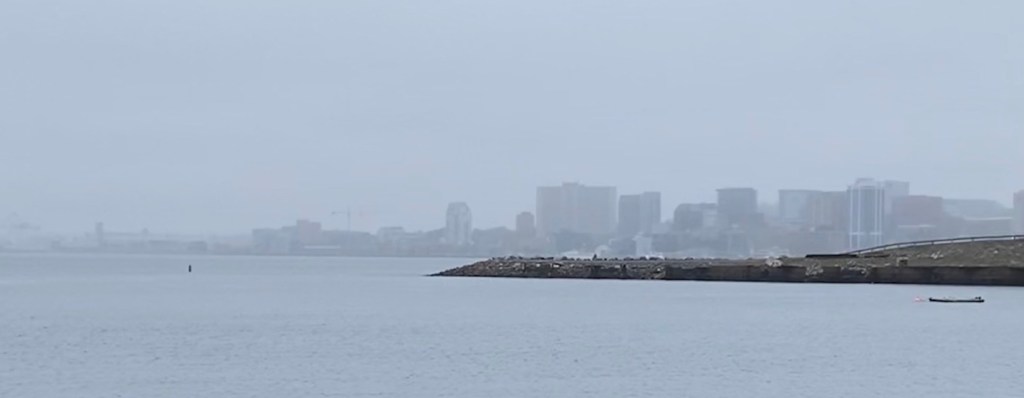

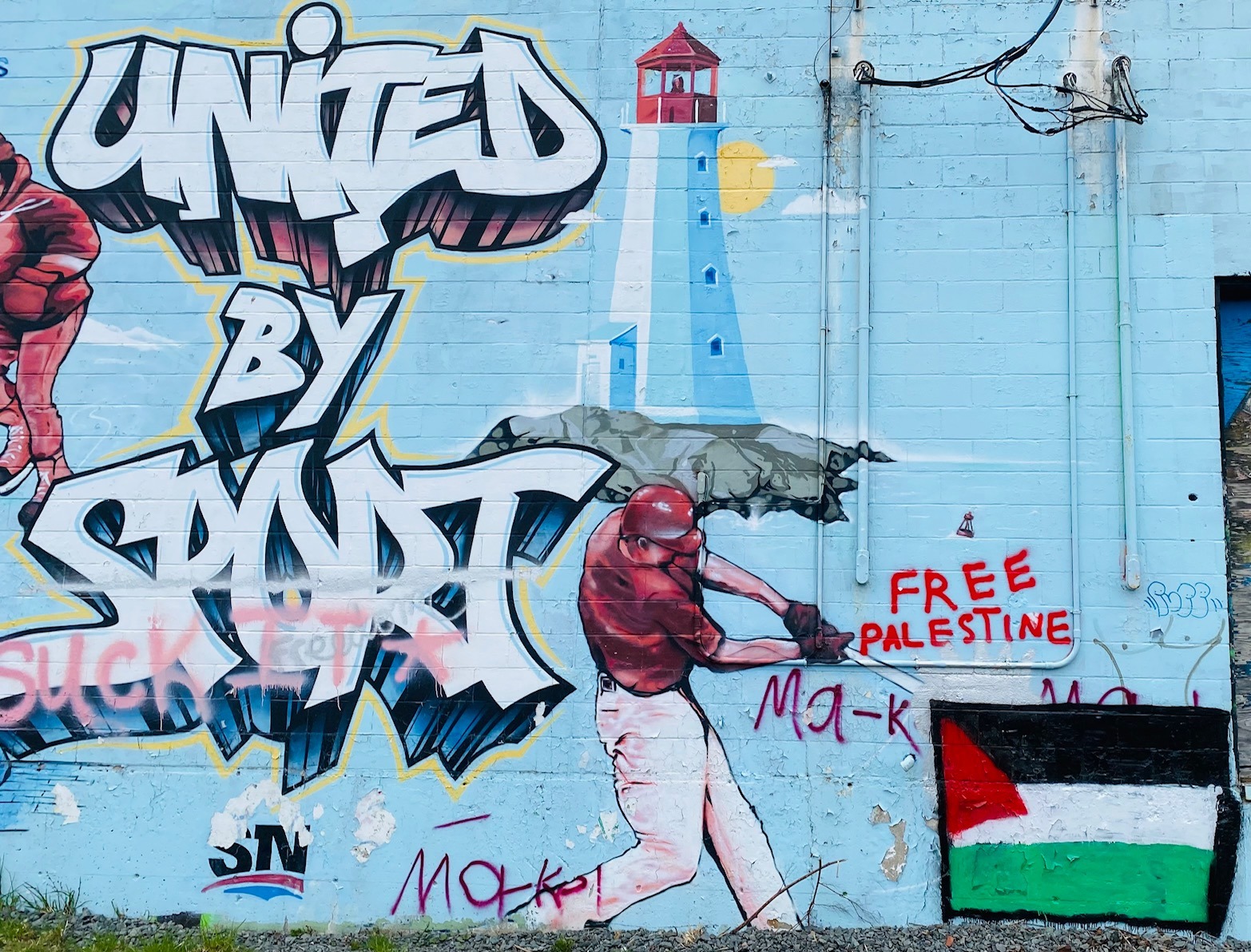

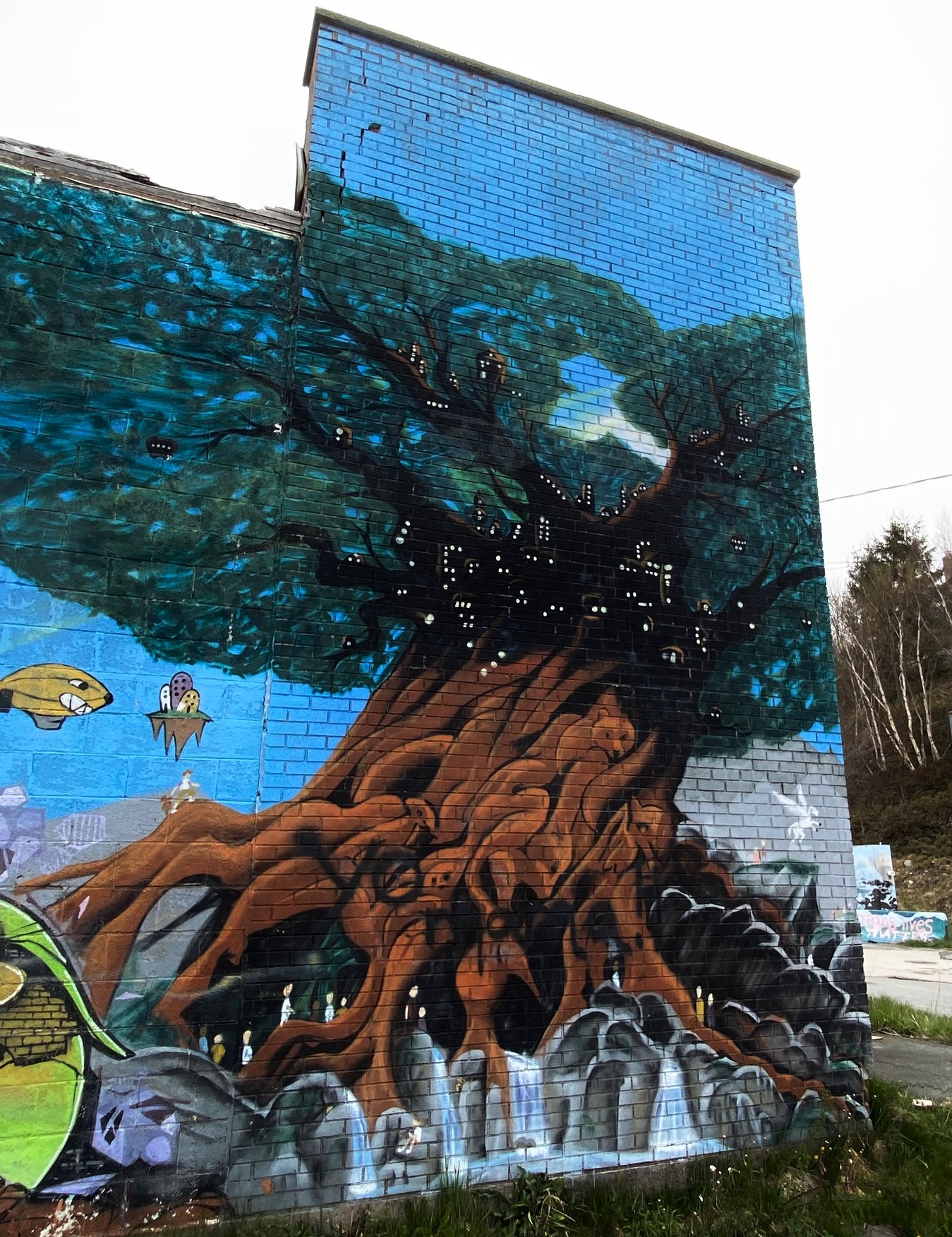
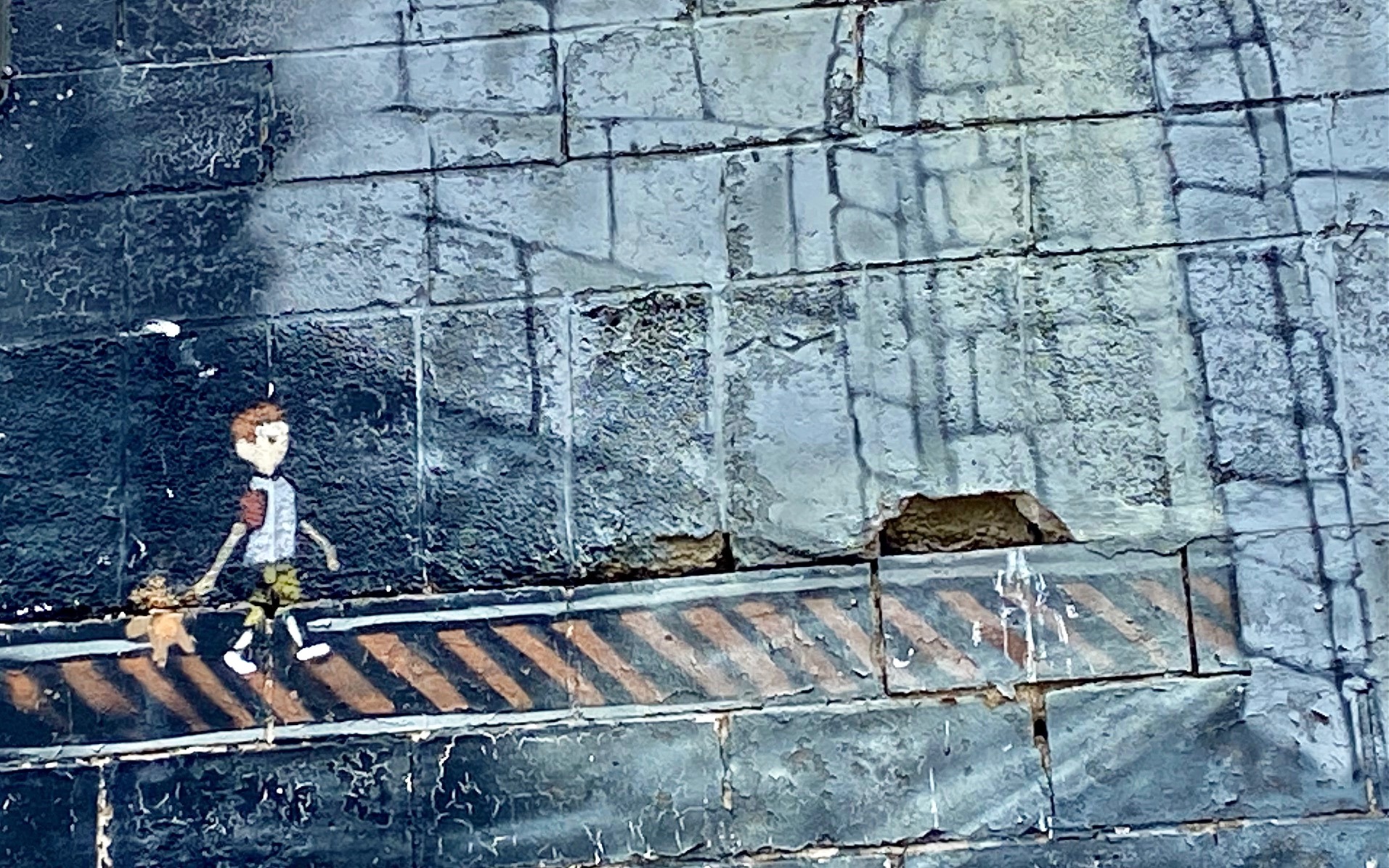
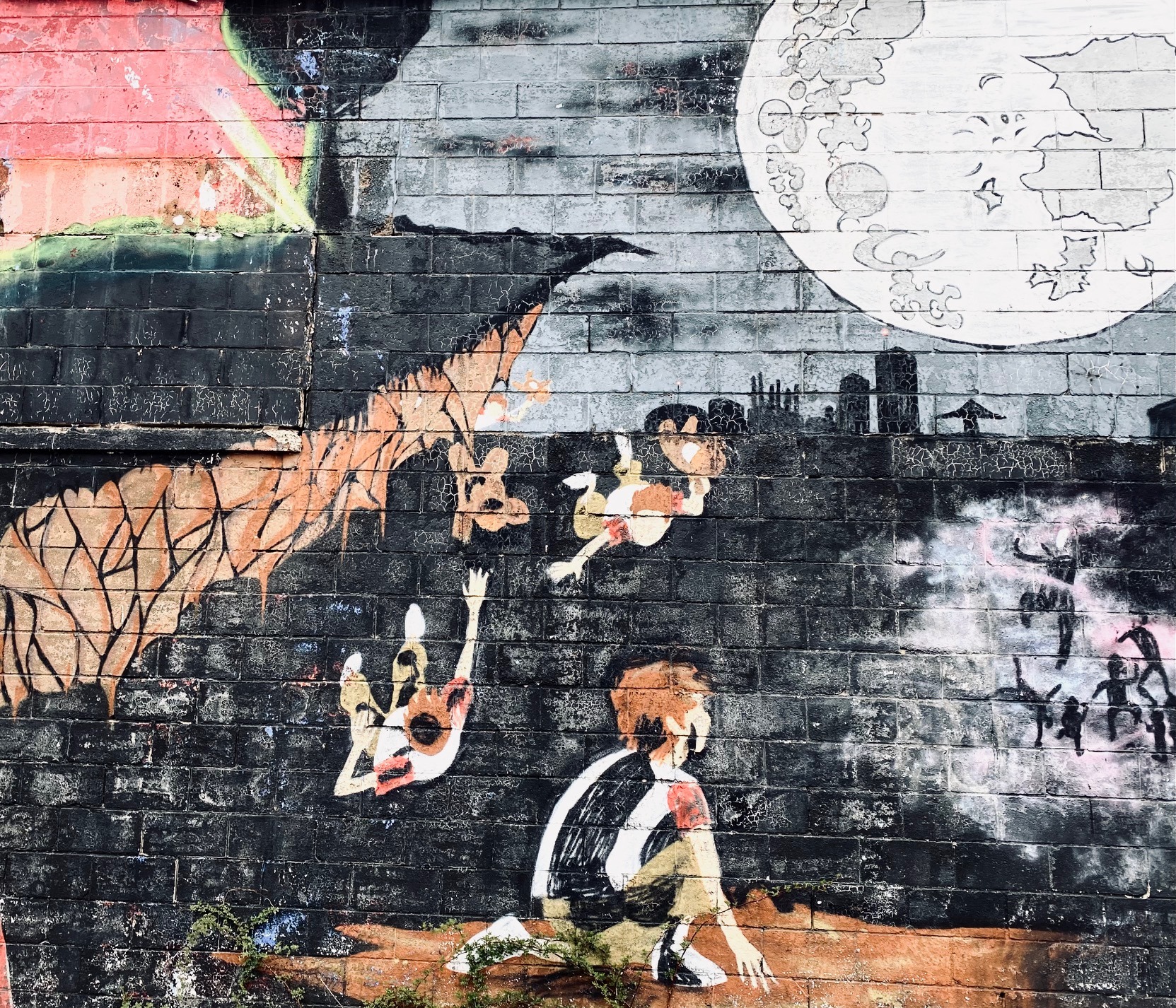


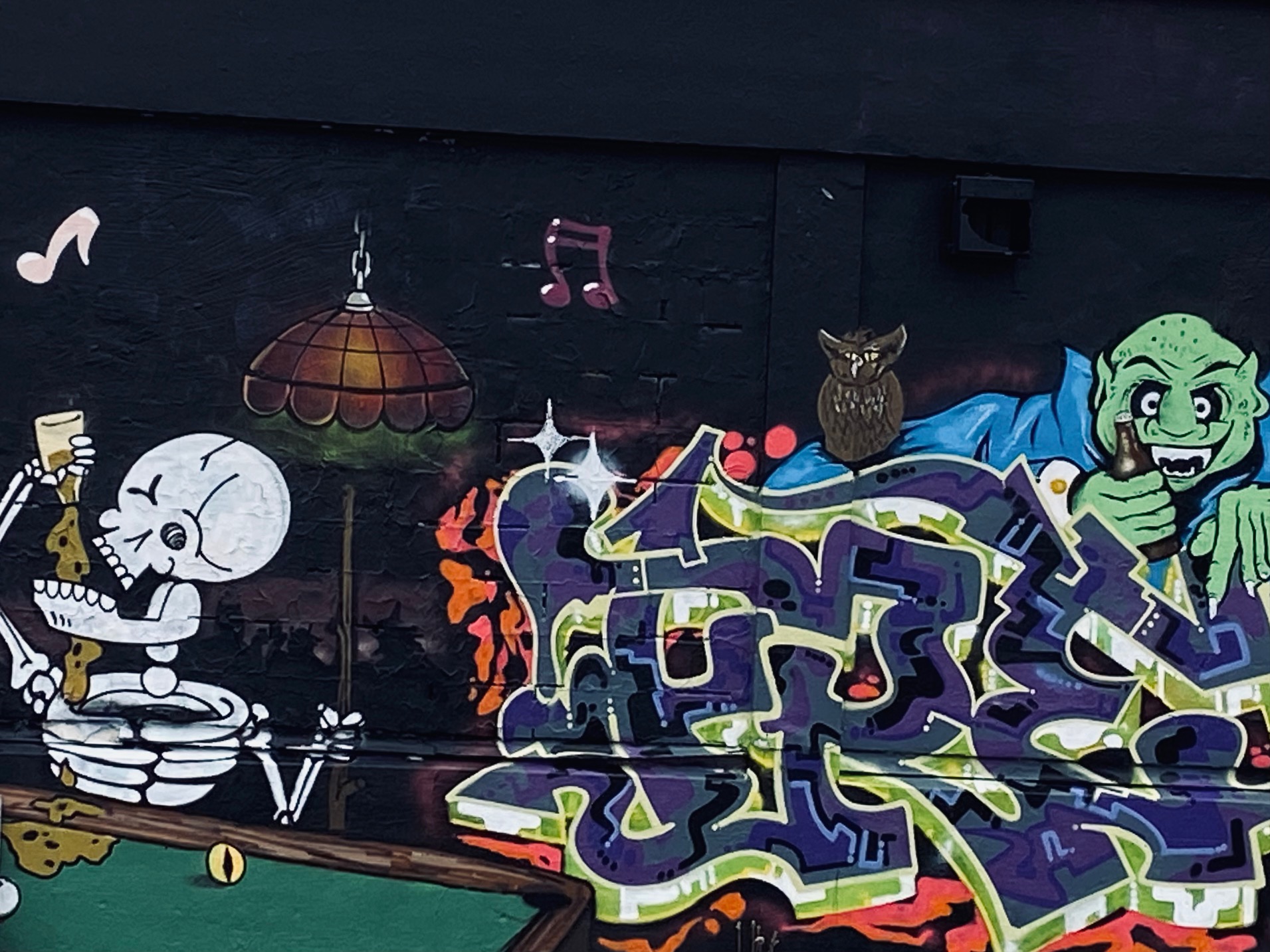

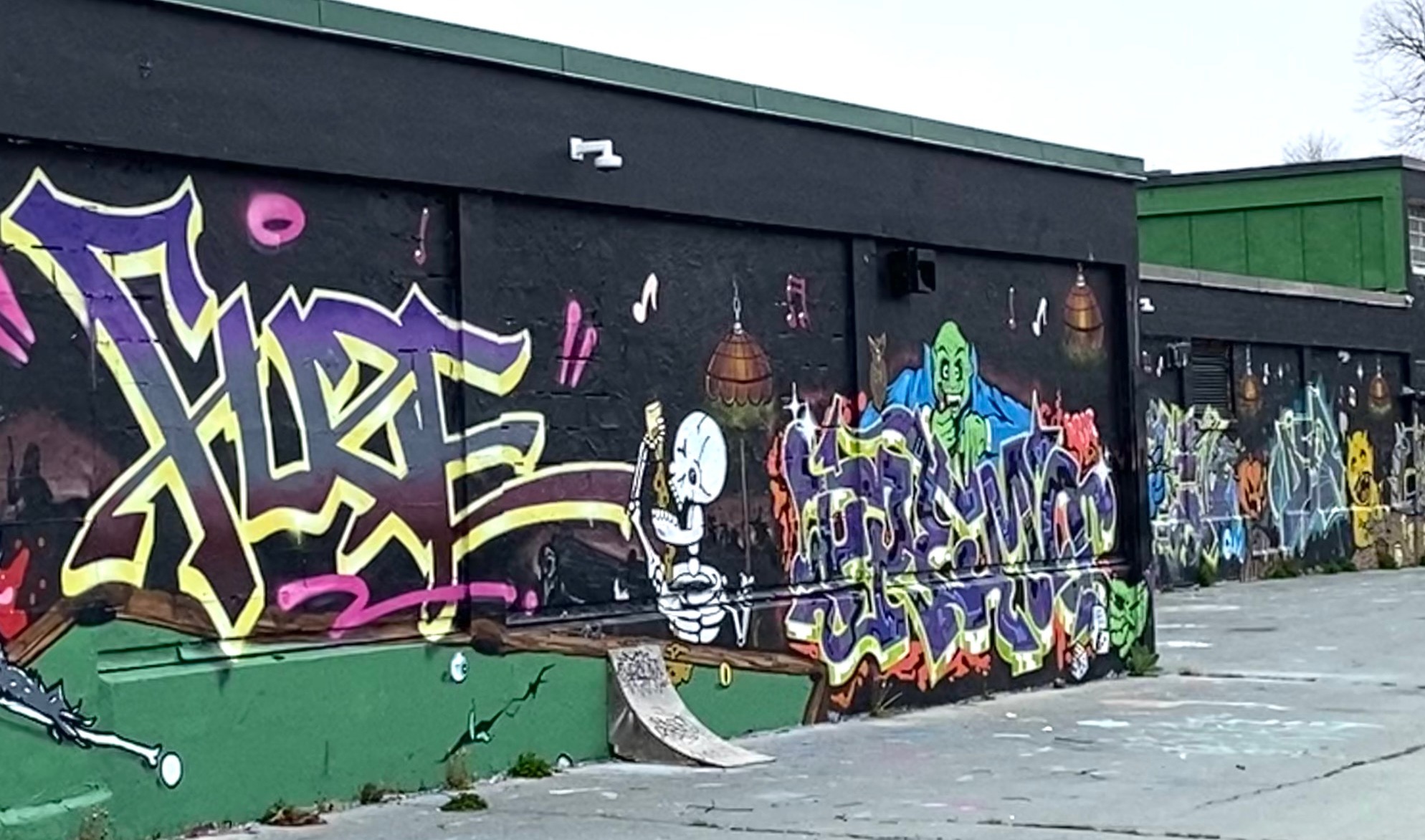

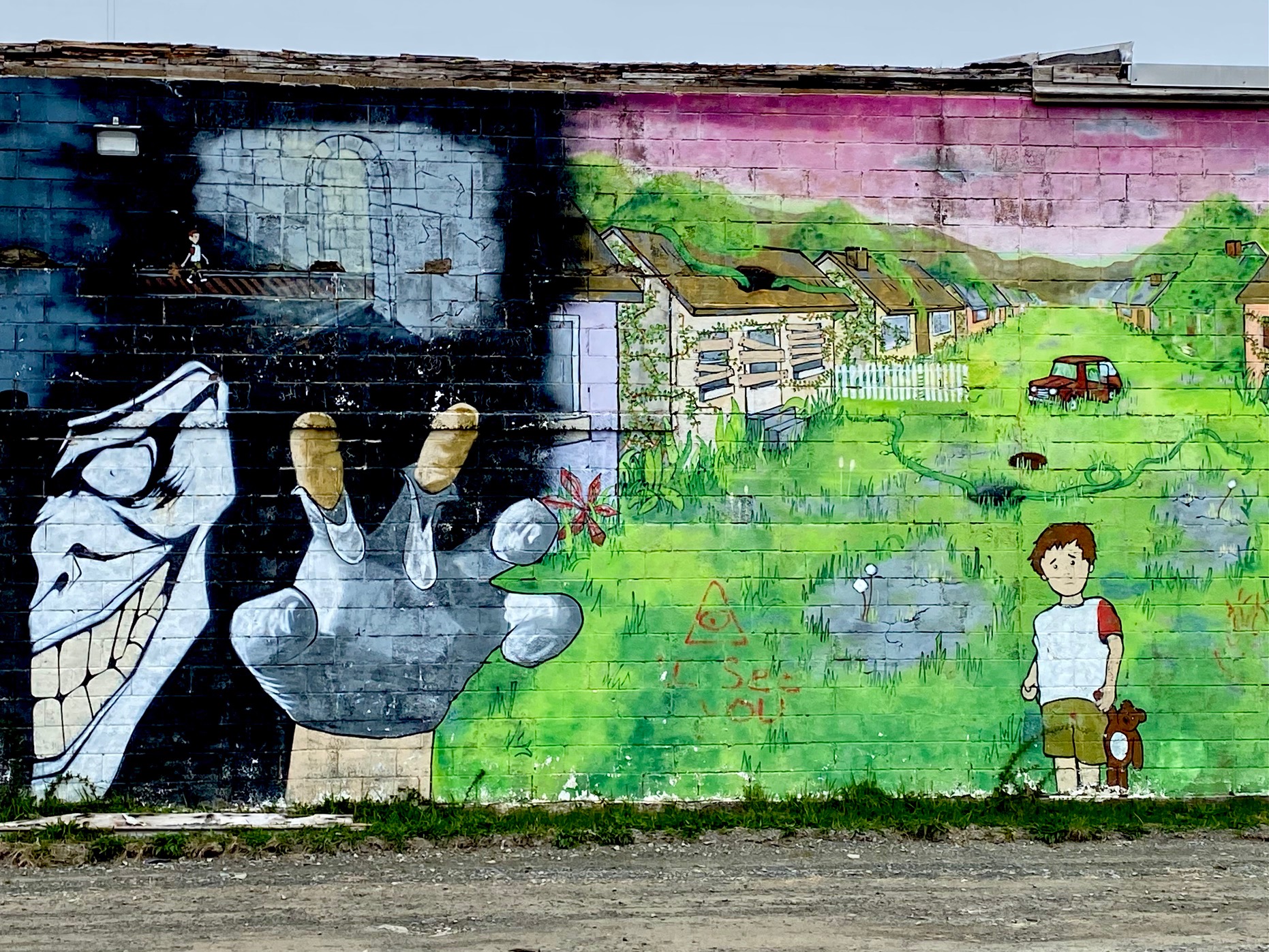

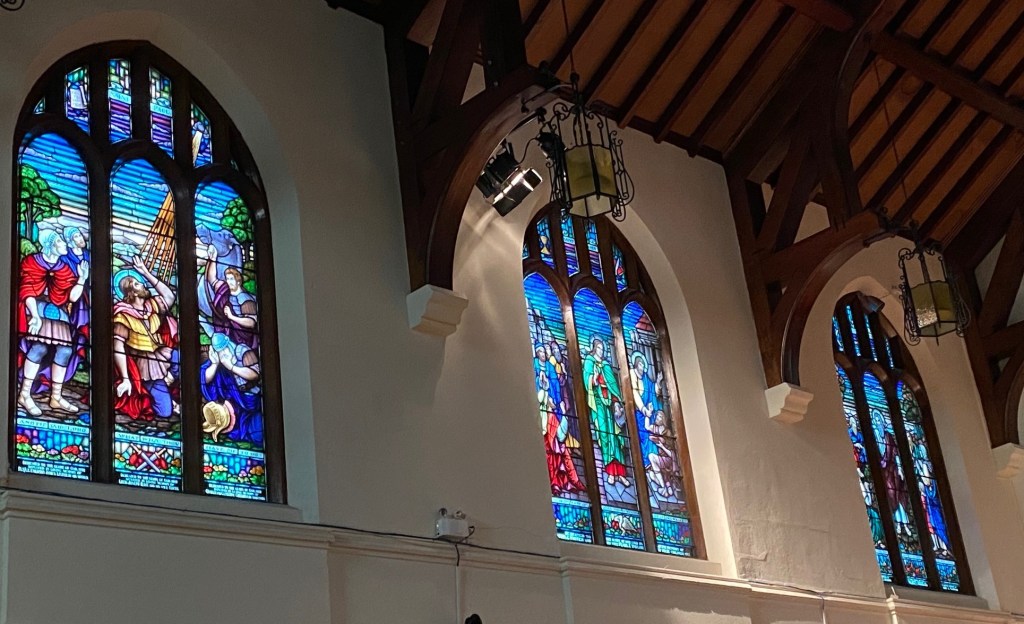

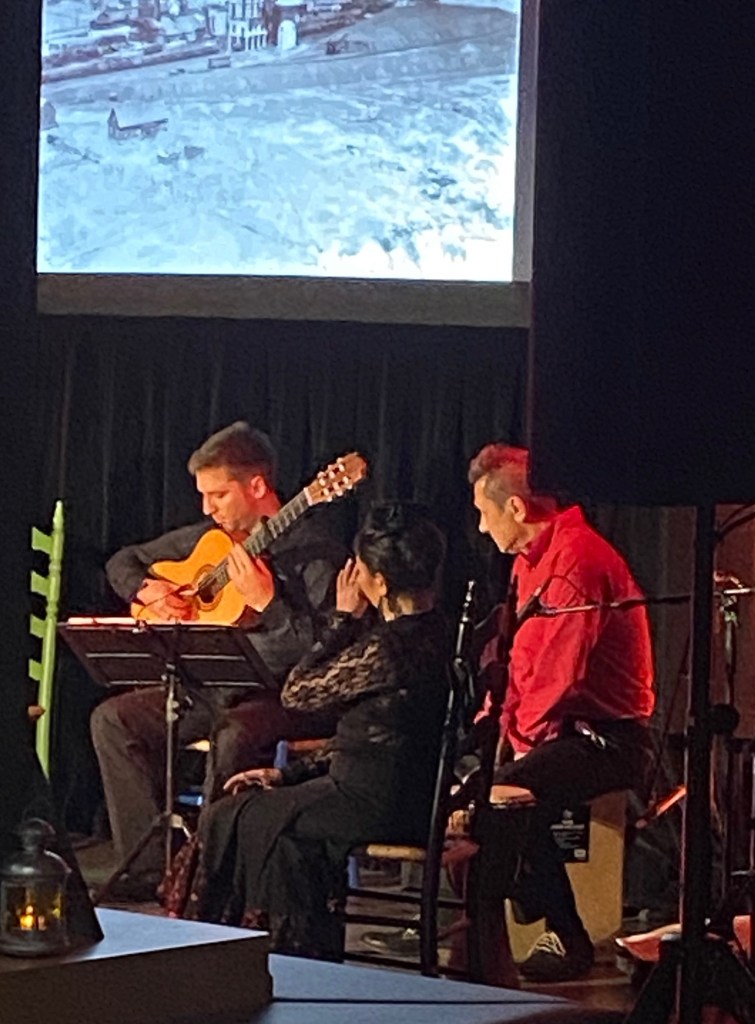
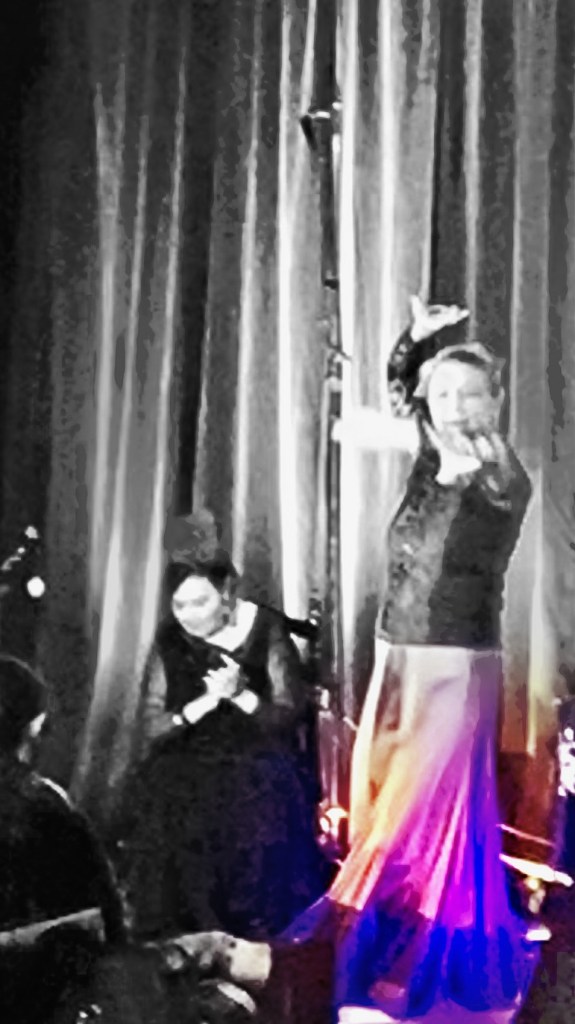


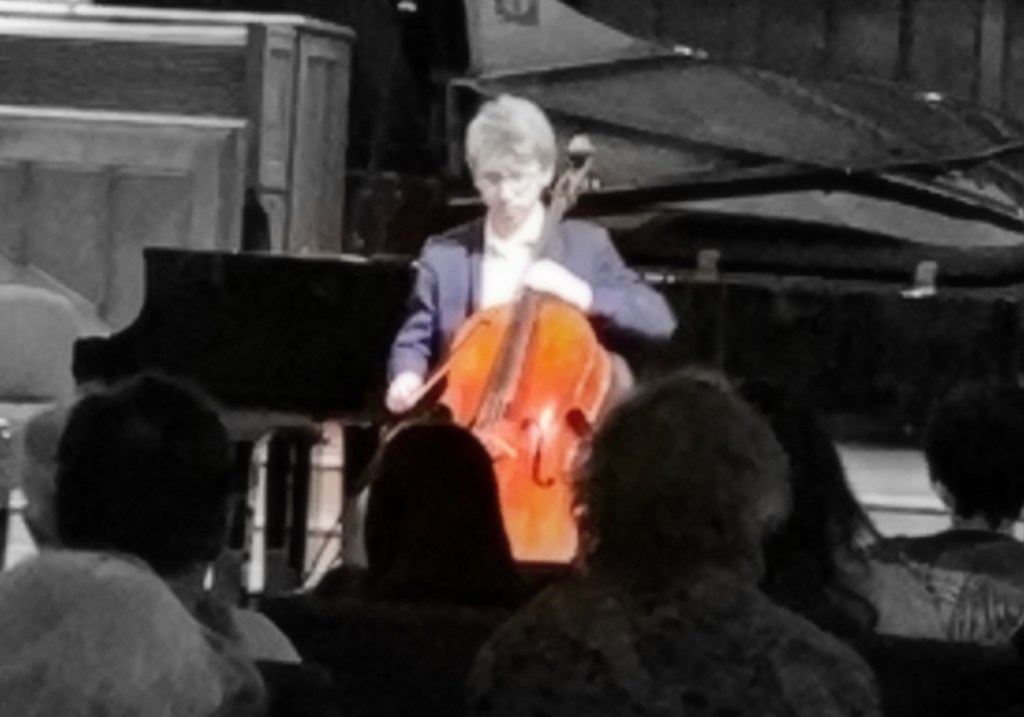


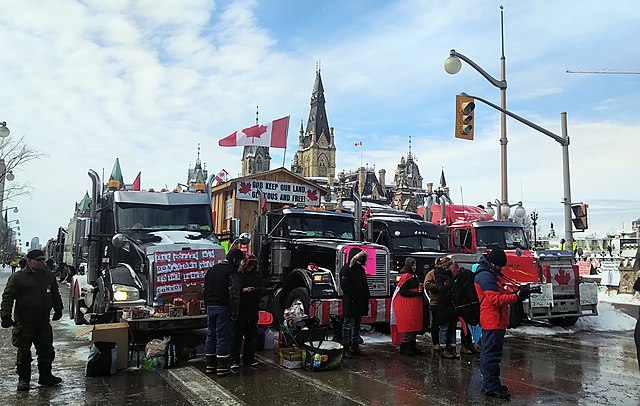

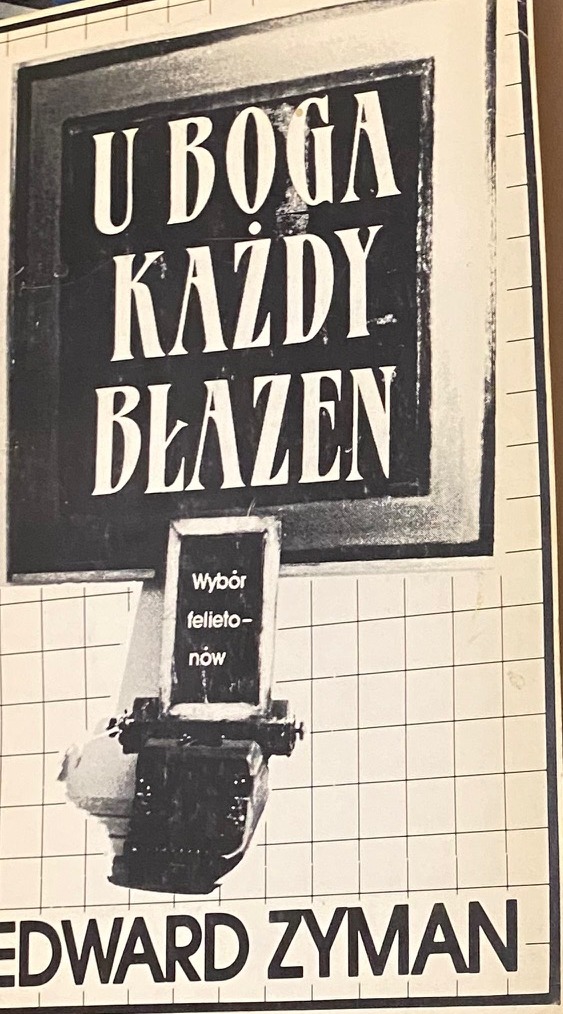

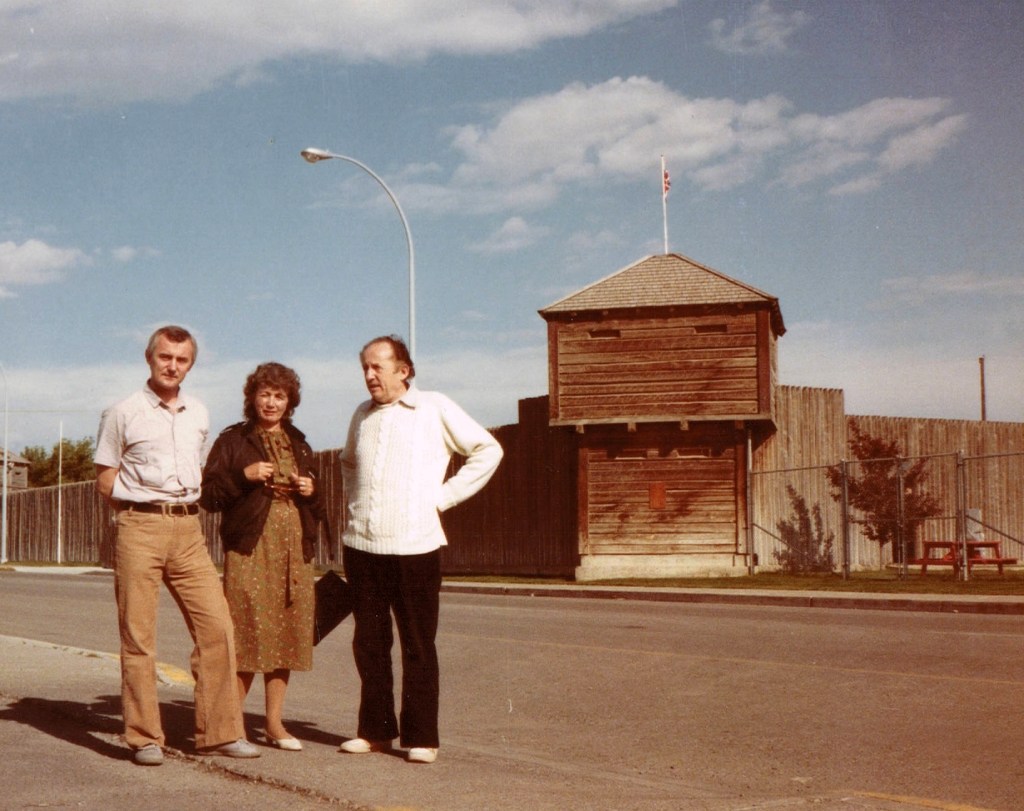


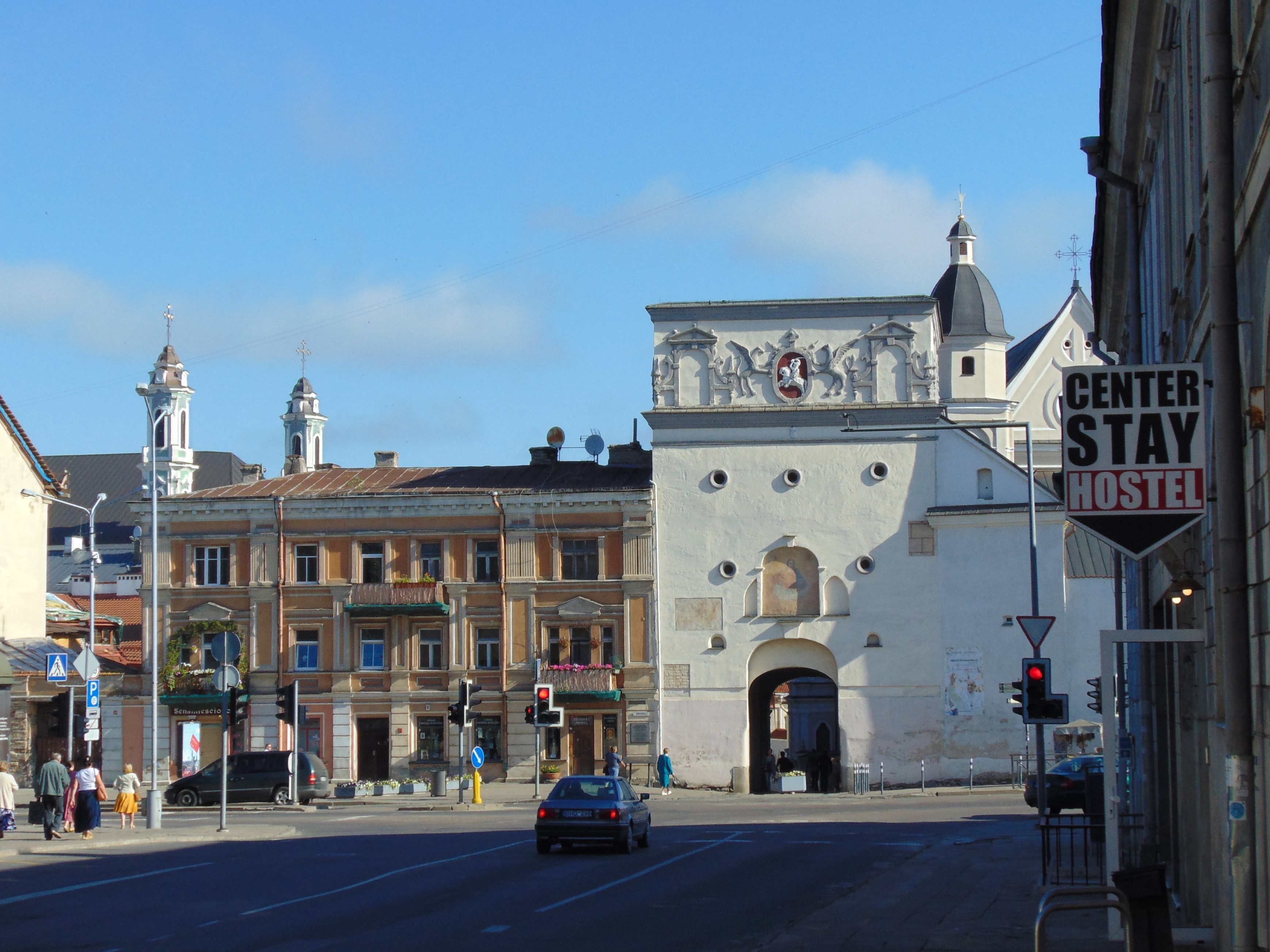


 > > Pogwarki < <