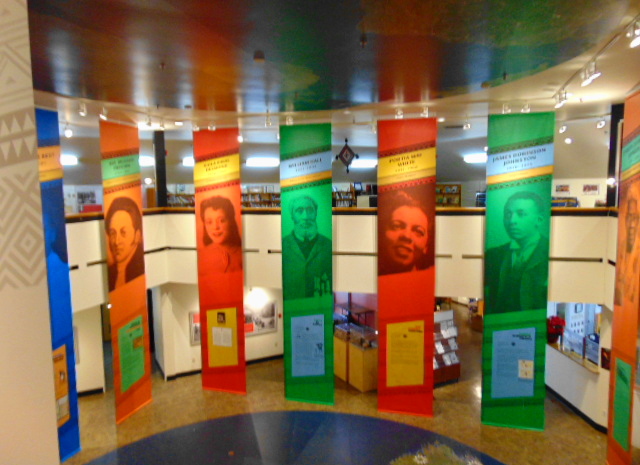
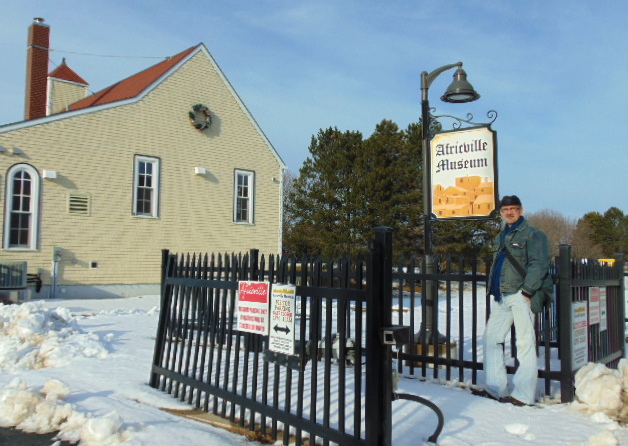
Chopin, Konkurs, Bruce (Xiaoyu) Liu … i … miłość

cz.II

Więc miałem pisać o Szopenie. Nie, nie o Szopenie. Miało być o laureacie XVIII Konkursu Chopina w Warszawie, o Kanadyjczyku Bruce Liu i moich wrażeń z jego interpretacji Koncertu Fortepianowego e-moll op.11. I od razu kłopot ‘opusowy’. Czyli to, co w wydawnictwach literackich określa się mianem ‘rok wydania’. Kolejność kompozycji oznacza się właśnie numerem opusu, tj. pierwszej publikacji kompozycji. Nawet nie pierwszej publicznej prezentacji utworu, ale właśnie publikacji kompozycji.  Otóż Koncert e-moll ma opus oznaczony numerem 11, a Koncert f-moll ma numer 21, czyli późniejszy. A jest akurat odwrotnie. To ten 21 był skomponowany wcześniej i był pierwszym Koncertem Fortepianowym z orkiestrą skomponowanym przez Chopina. W związku z czym nie jest aż tak dobrze zrobiony, co kompozytorowi wytknięto. Chodziło zwłaszcza o część orkiestralną, która jest do skromnie rozbudowana i stanowi jedynie tło dla partii fortepianowej. To jest zgodne z doświadczeniem i studiami muzycznymi Chopina w Warszawie. Uczeń Józefa Elsnera nie mógł oprzeć się wpływom popisowej i salonowej manierze gry zwanej brilliant. Czasem chodziło więcej o pokaz wirtuozerii niż muzyczną architekturę, która dźwiękiem miała opowiedzieć jakąś historię, wizję, ideę. Więc jeśli pianista, to pianino właśnie ma być początkiem, środkiem i końcem kompozycji, a reszta jest tylko tłem. Zapewne chęcią wykazania, że potrafi skomponować pełny Koncert z rozbudowaną orkiestracją, która jest aktywnym współaktorem przedstawienia, skomponował w krótkim czasie Koncert e-moll, który opublikował jako pierwszy.

I faktycznie przyznać trzeba, że tenże Koncert jest perełką muzyki romantycznej. Można go słuchać bez końca i bez znudzenia. A delikatny temat muzyczny pojawiający się w każdej z trzech części jest majstersztykiem rozpoznawalnym, gdy tylko go usłyszymy gdziekolwiek i kiedykolwiek.  Oczywiście, gdy mówimy ‘Chopin’ to zaraz słyszymy słynny fragment Poloneza Es-dur lub temat muzyczny Marsza Żałobnego. A dla mnie właśnie ten nostalgiczny refren z Koncertu e-moll sercu jest najbliższy.

Słuchałem więc gry Liu i Orkiestry Symfonicznej Filharmonii Narodowej pod batutą Andrzeja Boreyko z olbrzymia przyjemnością.

Partie orkiestralne części pierwszej (allegro maestoso) są chwilami prawdziwie heroiczne w nastroju, tematy muzyczne podejmowane przez różne części orkiestry wspinają się i opadają na przemian, jak fale fale wiatru biegnące po łące. Brzmią echa subtelne poloneza. Te echa uwidoczni w swej części fortepian, uzupełniając je cieniami nokturnu. To właśnie ten fragment tego powracającego tematu muzycznego towarzyszyć będzie nam już do końca.

W części drugiej (romance. larghetto) i trzeciej (rondo. vivace). Wszystko to w atmosferze baśniowego rozmarzenia, nostalgii wspomnień. Ta nostalgiczność widoczna jest nawet w brawurowym rondzie vivace. Nawet tam, gdzie w wyśmienitej formie stylu brillant, pasaże na klawiaturze popędza tak, aż iskry poczną strzelać nad fortepianem. No, bo jakże by nie, jeśli w rondzie pobrzmią echa nie dostojnego dance la polonaise a skocznego krakowiaka? Ale i ten finał, przybrany niczym aria bell canta, jest podszyty słodkim wspomnieniem chwili, momentów. Uczuć.

Po wysłuchaniu Liu wiedziałem, że poruszył mnie do głębi. Sięgnął tam, gdzie artysta sięgnąć powinien. Coś mnie jednak zaniepokoiło, gdzieś jakąś pustkę odczułem i po zakończeniu nie wiedziałem już gdzie i co. Sięgnąłem po moją biblioteczkę CD i wyłuskałem nagranie z 2013 roku w Warszawie samej Akiko Ebi. Ebi w tym roku oceniała Bruce Liu, była jurorem XVIII Konkursu. A na ostatnim oglądanym ‘na żywo’ przeze mnie Konkursie w 1980, zdobyła 5 miejsce. Słuchałem więc wersji Ebi będąc wyczulony na szczegóły. Wiedziałem, że zagra dobrze (nagranie było zrobione na festiwalu ‘Chopin i jego Europa” w Studio Koncertowym Polskiego Radia). I tak zagrała. Bardzo dobrze, poprawnie. I ani razu nie odczułem wzruszenia, choć doceniłem technikę. I przez tą technikę dostrzegłem gdzie Liu, wydało mi się, zrobił błąd. Wróciłem do jego nagrania i posłuchałem raz jeszcze. Tak, część pierwsza, ‘Allegro maestoso’. Trema wzięła górę. Zmagał się z instrumentem, z orkiestrą. Kompozycja panowała nad nim a nie on nad kompozycją, parafrazując piękne słowa zmarłej miesiąc temu wielkiej śpiewaczki operowej, Guberowej.

Edita Gruberowa przygotowując się do roli Lukrecji Borgii w wieku 62 lat, roli w której bel canto jest u szczytu swego stylu, powiedziała, że od pierwszej nuty musi wiedzieć czy ta nuta ma ją, czy też ona ma tą nutę w swej kontroli. I tak właśnie słuchałem Bruce Liu, grającego w Warszawie Koncertu e-moll. Kto zapanuje?  Orkiestra? Fortepian? Pianista?

I pamiętałem o słowach tak obszernie cytowanych w części I tego cyklu związanego z muzyką Chopina. Słowach Lidii Grychtołówny, że na Konkursie Chopina nie szuka się dobrych i bardzo poprawnych pianistów. To się zakłada z góry, skoro już eliminacje do Koncertu przeszli. Szuka się tych, którzy używając języka Chopina mają coś do powiedzenia. Coś nie tylko technicznego ale coś emocjonalnego, coś, co z ich duszy uniesionej skrzydłami nut kompozytora spod klawiatury wypłynie. I co nas dotknie. Czym będziemy poruszeni.

Bruce Liu nie mógł zapanować kompletnie na kawalkadą koni orkiestry ni nad swoim wierzchowcem w allegro. Nie dał się ani stratować ani w popłochu nie uciekł. Ale nie był hetmanem jazdy. Posłusznie wykonywał rozkazy, bojąc się wodza (kompozytora i dyrygenta). Dopiero w finale allegro, jakby się zbudził. Przechodząc w kłus liryczny larghetto był już wolny. Mógłby iść w cwał (co – jak należało – zrobił w rondo vivace), lub zwolnić do spaceru. Mógł puścić wodze swego wierzchowca, nad którym w pełni zapanował. Nawet wyraz jego twarzy uległ zmianie, pojawił się pewien uśmiech mówiący: ach, teraz cię mam i ty odczuwasz każde drgnienie moich mięśni, mojej woli, bieżysz tam i tak jak ja chcę. Reszta to już historia drogi Czytelniku. Cała opowieść pana Chopina, wszystkie jego wspominania ciepłe i serdeczne młodości polskiej, uczuć serdecznych, w tej muzyce granej przez Bruce Liu, w tym tańcu nutek i bemoli zobaczyć możesz. A o to chodzi. By obudzić wyobraźnię słuchającego. By zabrać ją lub jego w tą cudowna podróż. Podróż, która może się okazać niespodziewanie bardzo podobną do naszej podróży sprzed lat wielu lub kilku choćby. Bruce Liu zdecydowanie mnie w taką podróż, z maszynistą Andrzejem Boreyko, zabrał. A pani Akiko Ebi nie potrafiła, choć z przyjemnością jej słuchałem.

Fantastyczna pianistka kanadyjska, Janina Fijałkowska, na swojej stronie Facebooka przypomniała, jak kilka lat temu (2013) oceniała młodziutkiego Bruce Lee na Krajowym Konkursie w Halifaksie, który Bruce wygrał. Od tamtego czasu śledziła i brała czynny udział w rozwoju muzycznym młodego pianisty. Po wygraniu Konkursu warszawskiego pani Janina napisała : „Xiaoyu Liu  potwierdził dla mnie ponownie przez wiele lat, że moja wiara w jego głęboki talent i moja adoracja tego talentu była słuszna … i teraz wygrał jeden z najważniejszych, jeśli nie NAJWAŻNIEJSZY (podkreślenie J. F.) Konkurs. Ważne jest podkreślenie, że ten młody człowiek jest też bardzo dobrym i uroczym człowiekiem, co nie jest zawsze tym samym w przypadku innych super-talentów”. (wpis z 21 października, 2021)
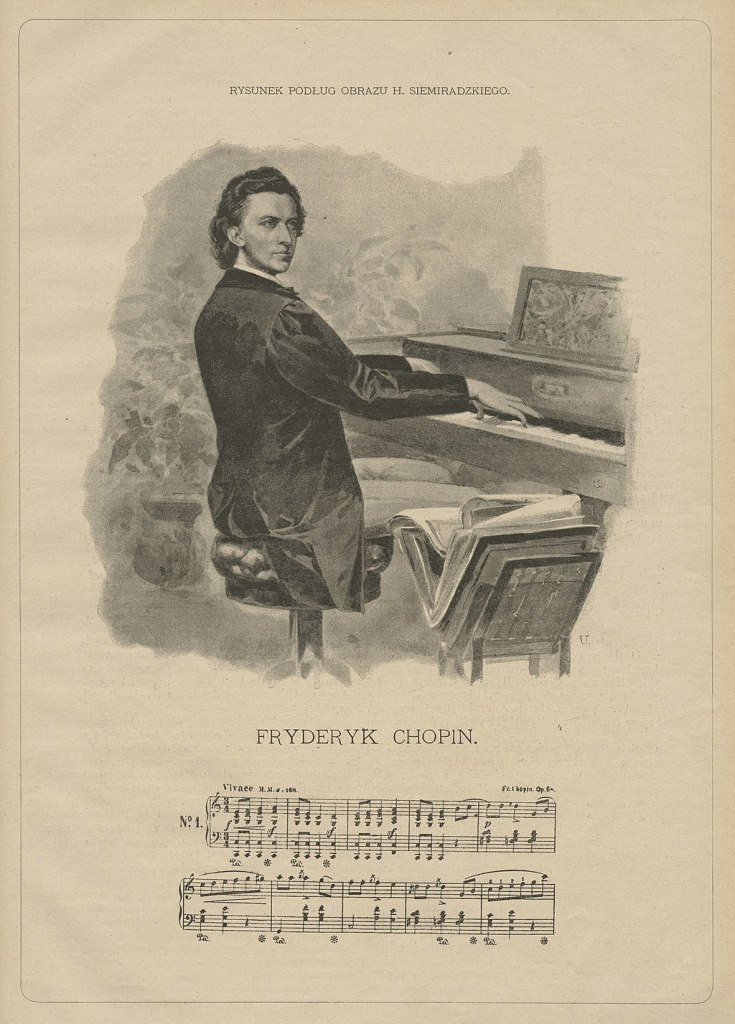
Co czyni oba Koncerty Fortepianowe Chopina pewnym wyjątkiem w jego twórczości? Czym różnią się od polonezów, nokturnów, mazurków? Intymnością przeżycia i silną indywidualnością kompozytora. Stworzeniem świata opartego na własnych emocjach ale jednocześnie uniwersalnego w eposie człowieka. Wydaje mi się, że zbyt różnią się od jego wczesniejszych prób orkiestralnych i zdecydowanie bardzo od nielicznych późniejszych. Jedyne podobieństwo znajduje tu w balladach. Tak, jak Koncert e-moll, podobnie zauroczyła mnie jego Ballada f-moll op 52 grana w skromnym saloniku muzycznym w Vancouverze w marcu 2018 przez ćwierćfinalistę Festiwalu Chopina w Warszawie, Łukasza Mikołajczyka. Wydobył wówczas z tego utworu całą głębię jego poetyki. Tego bardzo młodego wówczas muzyka, bez wątpienia posiadającego silny talent, poznałem ledwie kilka miesięcy przed moim wyjazdem z Vancouveru i starałem się wpłynąć na jego rozwój emocjonalny, jako muzyka. Wydaje mi się, że właśnie rozwój emocjonalny i wsparcie (czasem surowe ale zawsze szczere) jest elementem najtrudniejszym a często zapominanym wobec młodych, obiecujących artystów. Scena, publiczność, nawet poklask zbyt głośny potrafią zniszczyć młode kariery i charaktery.  Bez względu na talent.

Wracajmy jednak do koncertów fortepianowych. Do tych poematów Chopina. Podróż nostalgiczna w czasie? Tak. Ale nostalgia za czym? Opis czego, jakich chwil drogich, serdecznych?

Moim kluczem do obu Koncertów Fortepianowych jest miłość. Nawet nie jakaś abstrakcyjna miłość. Jakieś marzenie o niej. Nie. Prawdziwa, młodzieńcza, niewinna być może, ale gorąca, szczera. Czyli Tytus. Tytus Woyciechowski, najpiękniejsza i najwierniejsza miłość Fryderyka Chopina.  Mówienie o jakichś przelotnych i mało znaczących relacjach, nieistotnych ani dla kompozytora ani dla tych pań  (Konstancja Gładkowska i Delfina Potocka), którym formalnie to dedykował (Delfina Potocka) lub o nich przelotnie wspomniał (Gładkowska) jest żałosnym wręcz kłamstwem historyków i badaczy. Zresztą trudno nawet o tej ‘formalnej’ dedykacji dla Delfiny mówić. Konserwatywni ojcowie Instytutu Chopina słowa dedykacji naciągają dość silnie i sami interpretują je tak, aby koniecznie pannę Potocką w to wcisnąć. A czytanie uważne i spokojne, bez wypieków na twarzy, korespondencji Chopina na to nie wskazuje.  Czy wynika ze zwykłej homofobii czy przywiązania do mieszczańsko-katolickiej tradycji nie jest dzisiaj żadnym tłumaczeniem takiego oszustwa. Powiadają ci biedni badacze – taka była wówczas maniera pisania do przyjaciół. Drodzy panie i panowie smutni – popiardujecie cichutko a smrodek rozchodzi się po całym drobnomieszczańskim mieszkaniu. Gdy już w 1828 Fryderyk pisze do Tytusa: „Najdroższy!” to nie pisze „Drogi”; gdy podpisuje „teraz daj buzi najprzywiązańszemu” to nie pisze „pozdrawiam serdecznie”.  Nawet egzaltowany Chopin nie mógł aż tak manierować. To z jednego tylko z wielu listów jakie wymieniali przez lata. To nie są listy chłopczyka 1o-cio letniego, tylko listy młodego mężczyzny. I tylko jeśli doceni się autentyczną, prawdziwą i szczerą miłość romantyczną Chopina do Woyciechowskiego, można prawdziwie ocenić i zrozumieć te dwa Koncerty.  Ich głębię emocjonalną, autentyczność. A nie wypisywać bzdury o genezie utworów, które są wręcz śmieszne.

A jakież to maniery i zwyczaje panowały w XIX i przez większość XX wieku? Ano takie, jak wcześniej: młodzi mężczyźni (o kobietach nie wspomnę, bo rzadko miały możliwość jakiejkolwiek decyzji) homo lub biseksualni żenili się, by uniknąć wydziedziczenia i kompletnego ostracyzmu (w klasach powyżej biedoty miejsko-wiejskiej), ukrywali jak mogli swoje orientacje lub kończyli wcześnie i tragicznie. A już zabawne jest udawadnianie heteroseksualności Chopina jego małżeństwem z George Sand – pierwszą chłopczycą i biseksualistką Francji w tamtych czasach. Nawet jeśli łączył (na co wiele wskazuje) ich autentyczny krótkotrwały romans. Jedynym innym wyjściem dla młodych mężczyzn z ‘dobrych domów’ było pójść do klasztoru. Bo jak wiadomo: co się stało w klasztorze, pozostało w klasztorze.

Czekam z dużą niecierpliwością pierwszych nagrań Bruce (Xiaoyu) Liu już po wawrzynie Konkursu warszawskiego. Ten młody pianista ma niewątpliwie głębokie i subtelne wyczucie muzyki. I mam nadzieję nie zapomni Chopina (jaki pianista muzyki klasycznej mógłby?) i jemu właśnie poświęci swoje pierwsze nagranie.

Residential Schools survivors and ‘heavenly math’

After many years of refusing to apologize to First Nations of Canada – the Catholic Bishops offered their ‘sincere apology’. It was neither an apology nor was it sincere. Actions speak louder than voice, dear bishops. You came short on the ‘action’ side by milestones. And years too late. You, who made the most money on that scheme called ‘Residential Schools’ of all others. You, who committed the most of all the heinous and unspeakable acts perpetrated against these children, forced into your ‘care’ by barbarous law of the land. No other entity (other than Canada as a state) came even close. All other Churches, much smaller and poorer than you – accepted their guilt, apologized and paid agreed upon compensation. You should have paid for, depending on the sources, between 60 to 70% of all the Churches, who run the schools, since you operated 60 to 70% of them. The United, Anglican and Presbyterian Churches paid their share years ago.

Let see how much you actually were assessed by the Courts to pay. Was it close to the 60 or 70%? And did you actually paid the survivors for the their pain and suffering?

Dr. Mike DeGagne, president of the Nipissing University in Ontario and recipient of the Order of Canada researched that problem rather well and that research become to be known as the “The Catholic Church Math” – an innovative ‘school of math’ very different from that taught at schools and universities. I would call it, appropriately, heavenly math. Very different from Earthly math known to humans from times much older than Catholic Church. 

It first started as a normal math and logic. Through consultation and court rulings it was agreed that out of all reparations owned to survivors the Government agreed that since the Schools were established by Government – it assumed responsibility for 70% of all damages. The Churches were assigned 30% of the settlement, out of which, logically, close to 70% was assigned to Catholic Church. All parties involved agreed. Again, logic was, as it should be, the prevailing argument. No, the State (Canada) did not committed such heinous, criminal acts as the Churches. Yet, the State gave the Churches  almost a free rein in running the schools and therefore it’s culpability is and should be the largest. The State was the proverbial gate  guard, who let the fox in and gave it control of the chicken coop. The ‘fox’ , of course, being the Christian Churches.  

After the reaching the agreement, the Catholic Church begun a big scheme. That would amount to hundreds of millions of dollars. Poor Catholic Church, despite being one of the richest institution in the world, could not stomach it.


XVI century, The Pope in triple crown, emperors holding his horse and kings as a vanguard at the front

Thus the Heavenly math begun.

Since this compensation would amount to hundreds of millions of dollars the Catholic Church argued their case. They brought in their fancy lawyers from the Vatican, who argued that the Vatican Holy Catholic Church as an organization did not exist in Canada. Even though the Vatican is one of the richest organizations in the world and have amassed trillions and trillions of dollars over the years, the Catholic Church refused to pay any compensation to First Nations Residential School Survivors. Instead the Church (the Vatican) left the blame to fall on the small components or entities of the Catholic Church that operated within Canada. In short the dioceses and parishes. The Vatican then shielded itself from these entities by insisting that these entities operated outside the Church so therefore the Vatican was not legally responsible for the actions committed by these entities.

Even though these so-called Catholic Church entities in Canada are controlled by the Vatican and send the majority of their money to the Vatican, the Vatican insist they operate outside the Church. Basically what the Catholic Church did was cut off their arm to save the body knowing that these entities in Canada would end up bankrupt before they could pay any substantial compensation to the Residential School Survivors.

Since the Vatican freed themselves of any damages suffered by First Nations people in Canada, any compensation would therefore have to come from these so called Catholic Church entities. After much debate the Catholic Church ‘entities’ in Canada argued down their contribution to the compensations for damages, and in the end the Catholic Church ‘entities’ agreed that they would pay $70 million in compensation to the Residential School Survivors. The Federal Government stated that the Catholic Churches contribution of $70 million should go to the Aboriginal Healing Foundation. This $70 million would go towards the healing aspect of the process.

  • $70 millions – $20 million (In Kind Contribution) = $50 million

However, before paying any of the $70 million, the Catholic Church in Canada argued that $20 million should come off the top for any and all services that were already provided by the Catholic Church across Canada since the Residential schools closed. These services, the Church argued, included funerals, baptisms, first communions, Sunday service, bible study classes, weddings etc., services that the Catholic Churches would have provided anyways. However, the Church now wanted to be compensated $20 million dollars for all the work they provided within Aboriginal communities across Canada. The Catholic Church called this $20 million, “In Kind Contribution!” This was accepted by the Court and therefore left $50 million of the original $70 million the Catholic Church had to pay to Residential School Survivors. Never mind that this amounts to publicly admitting that all sacraments should be treated as a business commodity with affixed price tag. But this comment I should leave for catholic consciousness to weigh. 

  • $50 million – $20 million (best effort) = $30 million

Next, the Catholic Church in Canada argued that they should have an opportunity to raise $20 million of the $50 million and promised they would make their best effort to raise the $20 million dollars. This was titled “Best Effort” and was accepted by the Court. However, the problem with this is that the Catholic Church’s entities in Canada have a hard time raising even one million dollars, let alone $20 million.

80% of the money that is raised by these Catholic Church entities through contributions and/or fund raising etc. has to go straight to the Diocese. The Diocese is basically the administration part of the Church run by Bishops, who in turn send a majority of the money they receive straight to the Vatican. Even though the Vatican argued the Catholic Church did not exist in Canada and left blame to the Canadian Church entities, the Vatican still continues to collect money from these entities. In the end zero dollars of this so-called “Best Effort” $20 million dollars were raised by the Church and thus sadly the Catholic Church never paid one single dollar of this $20 million of $70 million dollars they agreed to pay to the Residential School Survivors.

  • $30 million – $8 million (Previous Court Settlements) = $22 million dollars

Of the remaining $30 million, the Church argued, that $8 Million dollars needed to come off the top for previous court settlements that resulted when private individuals took the Catholic Church to court for wrongs that they as individuals suffered in Residential Schools prior to the class action lawsuit.

  • $22 million – $6 million (Future Services) = $16 million

Now, of this $22 million the Catholic Church argued that 20% needs to go to any future services the Catholic Church may provide for First Nation communities in Canada. These future services include funerals, baptisms, first communions, Sunday service, bible study classes, weddings etc. Although these services are services the Catholic Church would have provided anyways, the Catholic Church wants to be prepaid for these services they may provide. Furthermore, the Catholic Church wanted to have these so called future services subtracted from what they had to pay to Residential School Survivors, despite the fact that these services are paid for by the First Nations themselves since many community administrations include Church services within their budget. So even though the Catholic Church would receive payment for their future services through contributions made to them by First Nations, the Court allowed this 20% deduction from the remaining $22 million.

So here is the math. 20% of $22 million is $6 Million that will come off the top for future services the Church may provide in the future even though they provide these services anyways.

More legal skirmishes

After all these deductions, only $16 million dollars was left from the initial $70 million that was supposed to go to the Aboriginal Healing Process to help with the healing process of Residential School Survivors. However, before the Catholic Church handed over any of the remaining $16 million, the Church demanded that they have representatives on the board of the Aboriginal healing Process. These representatives, the Catholic Church argued, should have control over where the money is spent or where it is allocated. The Aboriginal Healing Process refused this demand, but stated that they would allow the representatives from the Catholic Church to sit on their Board. Moreover, the Aboriginal Healing Process would decide where the money is spent.

In response, the Catholic Church refused to pay any of the remaining $16 million of the original agreed $70 million to the Aboriginal Healing Process. The Catholic Church started campaigning other Indigenous organizations across Canada, offering the $16 million dollars to any organization that would allow the church to control where the money was spent.

Most of the Aboriginal organizations refused the Church’s offer. Finally the Assembly of First Nation (AFN) under Phil Fontaine agreed to accept the $16 million under the Catholic Church’s terms. However, Phil Fontaine resigned before AFN could receive the $16 million and when Shawn Atleo became National Chief, he immediately reneged on AFN’s previous agreement and refused to accept the $16 million. Instead, Shawn Atleo openly insisted that the $16 million must go to the Aboriginal Healing Process. When the Church again refused, the Canadian Federal Government finally intervened and forced the Catholic Church to pay the Aboriginal Healing Process.

However, the Catholic Church only paid $14.4 Million and kept $1.6 million. The Church insisted this $1.6 million was for administration cost. After evidence came in showing the Church lied, the Courts stepped in and forced the Catholic Church to pay the remaining $1.6 million. Finally, in December 2015 the Catholic Church paid the remaining 1.6 million.

There you go – according to (and approved by Canadian Courts and Government) ‘heavenly math’ of the Holy Roman Catholic Church (or the Canadian ‘independent entities’ of the Church) the unspeakable crimes of cultural genocide, rape, physical and mental abuses and finally death of many, inflicted on generations of First Nations Children is worth 16 million dollars.

Have you ever visited any of wonderful cathedrals of the Church in Canada? These ornate, grandiose buildings  in all type of architectural styles, adorned with rich tapestry of art? To any of its basilicas, oratories? Have you? No, not your local and often poor wooden church of your local parish. Have you seen the vastness of land the Catholic Church owns in Canada from sea to sea to sea? The properties in the middle of most expensive cities in Canada like Vancouver, or Montreal, or Toronto? Not even churches or other sacred places. There are hospitals (like St. Paul in downtown Vancouver), schools of all levels, businesses. I would not ask if you have visited Vatican City and seen the grandiose, stunning and overwhelming beauty and richness (bot spiritual and also very much material) of this place. There is not a single Imperial or Royal Court, Palace or castle anywhere in the world that can compare to Vatican’s splendour.

And that Church, that Religious Institution was able to gather only 16 million to pay as reparations to survivors of the hell called Indian Residential Schools. 16 years after many years of court battles and legal challenges. it took years for its Canadian bishops to utter ‘we are sorry’.

Your Eminences – I don’t trust you and I don’t believe you. As religious leaders, as shepherds, as administrators you have not only mislead First nations in Canada, you have mislead your flock – you mislead Canadian Catholics, who honestly believe in your message, your service and your honesty.  

O literaturach polskich poza Polską

Przez pokolenia istniał w polskiej przestrzeni literackiej obszar zwany ‘literatura emigracyjną’. Odzyskanie przez Polskę suwerenności na przełomie 1989/90 i nowe sytuacje socjo-polityczne, nowe koncepcje indywidualizmu i niezależności twórczej mogą czasem utrudniać zrozumienie tegoż konceptu (lit. emigracyjnej) i jej miejsca w w szeroko rozumianej literaturze polskiej. Wydajac przez szereg lat rocznik twórczości polskiej w Kanadzie (“Strumień”) właśnie w przełomowej dla tego zagadnienia dekadzie, często tym tematem się zajmowałem. W 2012 wydaliśmy numer specyficznie temu poświęcony. Jakkolwiek było to związane siłą rzeczy z konkretami literackiej twórczości polskiej w Kanadzie, można śmiało powiedzieć, że poruszane w tym numerze problemy, nolens volens, można przenieść na cały obszar globalny tego ewenementu. Tekst poniżej jest całością artykułu wstępnego (edytorialu), który wówczas napisałem.

obwoluta “Strumienia”, nr 8, 2012

Zmieniają się sposoby nie tylko widzenia świata, zmienia się sposób patrzenia nań. Andrzej J Wróblewski pisał w nr 4 Strumienia o tym w eseju „Sztuka widzenia”. Z dużym zainteresowaniem oczekuję na ukazanie się jego książki na ten temat. W olbrzymim skrócie myślowym sztuka ta (lub umiejętność), to uwarunkowania kulturowe, psychologiczne i emocjonalne pa-trzącego z jednej strony, a stan fizyczny, materialny przedmiotu lub zdarzenia oglądanego z drugiej.
Można chyba zupełnie bezpiecznie przenieść tą koncepcję uwarunkowań na obszar o wiele szerszy, na obszar obserwacji nie tylko rzeczy i zjawisk fizycznych, ale i sztuki percepcji świata i umieszczonego w nim człowieka. Coś, co było najważniejsze kiedyś i co kształtowało naszą wizję postrzegania i rozumienia świata otaczającego (a więc nasze zachowania, naszą twórczość) dziś stać się mogło mniej istotne lub jedną (a nie jedyną) z opcji tłumaczenia człowieka i świata. Może więc to być wolność wyboru. Może to być zmiana obiektywna, niezależna od własnej woli lub chęci. Co nie jest możliwe, lub raczej, co jest ograniczaniem siebie do przestrzeni zamkniętej i kurczącej się, to jest trwanie w tym samym punkcie obserwacyjnym. Dostrzeganie tych samych wartości i rzeczy w tym samym świetle etycznym i estetycznym. Bez względu na porę dnia, roku i życia.
W ostatnim wydaniu Strumienia (nr 7) Anna Gradowska w obszernym eseju poruszyła zagadnienie symboliki, ikonografii używanej na przestrzeni dziejów przez myślicieli i twórców. Symboliki, która umożliwiała czytelność abs-trakcyjnych pojęć społeczno-kulturowych, wręcz cywilizacyjnych, szerokim rzeszom odbiorców, tj. społeczeństwu. I jak, skutkiem właśnie zachodzących powoli acz systematycznie i nieodwołalnie zmian, cechy i zewnętrzna opisowość tej symboliki były dostosowywane do nowych sytuacji. Do nowego sposobu widzenia.
Zbieżnością obu tekstów dla mnie, piszącego ten ósmy już ‘wstępniak’ rocznika, jest możliwość dostrzeżenia płynności i niestałości odniesień formalnych dla opisu twórczości polskiej poza granicami kraju.
Od czasów de facto końca XVIII wieku istniał (zwłaszcza w literaturze polskiej) fenomen literatury emigracyjnej. Twórczości wygnańców lub uciekinierów. Twórczości trwania i przetrwania. Świadków, obrońców, strażników. Niekoniecznie wyłącznie w kontekście wspomnieniowo-sentymentalnym. Była to często twórczość najwyższego rzędu artystycznego, tak pod względem formalno-estetycznym, jak i filozoficzno-etycznym. Wydaje mi się, że można ryzykować stwierdzenie, że nie zniknęła ona nawet w Dwudziestoleciu międzywojennym. Ostatecznie wojna 1920 w psyche polskiej nie zakończyła się Bitwą nad Niemnem, a Traktatem Ryskim dopiero w 1921. Skutkiem tego fatalnego Traktatu setki tysięcy obywateli polskich znalazło się ponownie poza granicami nowego państwa. Podobnie, jak dwadzieścia pięć lat później skutkiem układów jałtańsko-poczdamskich. Repatrianci byli wszak też swego rodzaju uchodźcami, uciekinierami w pomorskich i mazurskich „amerykach” i „kanadach”. To dopiero rok 1989 przyniósł sy-tuację nową, odmienną. Po raz pierwszy nie uległy zmianom granice państwa, nie nastąpiła kolejna wędrówka ludów. Wbrew podobieństwom (a są takie bezsprzecznie w sferze symboliki historiozoficznej) istnieją bardzo zasadnicze i widoczne różnice nawet między eposami Solidarności z jednej strony, a eposami powstań narodowych, Legionów, Września i AK z dru-giej.
Wszystko to zadecydowało, że o polskiej literaturze ( i polskiej twórczości szerzej) emigracyjnej po roku 1989 mówić nie można. Zmienił się punkt widzenia. Należy dopisać nowy system ikonograficzny, nowy sposób opisu.

Ciekawym spojrzeniem na ten temat w kontekście historycznym (Maria Jarochowska de Kosko) i współczesnym (Mark Węgierski) są dwa zamieszczone w tym wydaniu Strumienia teksty: Podglądani zza między. O polskich poetach w Nowym Jorku (M. Jarochowska de Kosko) oraz Is there a distinctive English-language Polish-Canadian writing? In search of a fragmentary tradition (M. Węgierski).

Jarochowska pisze o powstawaniu nowego rozdziału epopei Emigracja Polska, tym razem nad brzegami Hudson, w latach 40 ub. wieku. Porównuje też różnice adaptacyjne i życiowe do podobnej fali emigranckiej w Kanadzie. Świat nam znany, narzędzia badawcze też, punkty odniesienia, wyznaczniki sukcesu lub porażki zrozumiałe. Świat kultury emigracyjnej: uchodźcy, uciekiniera, ale i strażnika, bojownika, świadka krzywdy narodowej. Polskiego inteligenta, intelektualisty – wyspianskiewiczowskiego Pana Poety .

Węgierskiego interesuje zgoła inne zagadnienie. I owszem, Pan Poeta polski, Pan Pisarz. Ale co dalej? Jaki ślad zostawił w kraju osiedlenia? Jaki przykład, oparcie, wzór dla Kanadyjczyków polskiego pochodzenia? Nie dla przejezdnych – dla stałych i świadomych tej stałości mieszkańców tego kraju. Pytania trudne, proponowane odpowiedzi nie zawsze miłe oku i sercu.

Stąd i w formie językowej w wydaniu tym odbiegam od przyjętych wcześniej założeń. Dużo materiału w tym numerze jest tylko w języku angielskim. Wielokrotnie sam i w gronie współpracowników nad tym zagadnieniem się zastanawialiśmy. Czy tylko po polsku; czy mieszane teksty, czy z tłumaczeniami, czy z krótkim streszczeniem tekstu oryginalnego? Lata temu, współpracując z profesorem Edwardem Możejko, wybitnym znawcą literatur wschodnioeuro-pejskich, przy kwartalniku „Dialogi”, (którego był redaktorem naczelnym) z niechęcią patrzyłem na podawane tam krótkie streszczenia polskiej eseistyki w języku angielskim. Nie tworzyło to, zdaniem moim, nawet namiastki dwujęzyczności, a dla czytającego dawało jakąś dziwną, quasi-encyklopedyczną ‘ściągawkę’ studencką. A ‘streszczane’ teksty w oryginale polskim były bardzo ciekawe i dobre. Z drugiej strony, w podtytule redagowanego przeze mnie Strumienia jest wszak napisane wyraźnie: rocznik twórczości polskiej, a więc po polsku. Pomny jednak, o czym pisałem wyżej, owej zmienności i płynności postrzegania i rozumienia zjawisk – robię tu wyjątek. Nie pierwszy raz, wszak pierwszy tak obszerny i w samej eseistyce.

Rozumiem też zaniepokojenie Marka Węgierskiego milczeniem lub szeptem ledwie słyszalnym polskich ech w literaturze kanadyjskiej. Język jest tu na pewno barierą wielką. Chyba jednak nie jest barierą nie do przebicia, a na pewno nie jedyną.

Być może główny jej powód jest zgoła poza lingwistyczny. Być może sednem tegoż jest hermetyczność właśnie tej starszej formuły twórczości emigracyjnej. Twórczości wygnańca, uciekiniera, który przez ten fakt nie może być do końca wolny. Nie jestem przekonany, że jest to możliwe dla mojego pokolenia. Ostatniego, które opuściło kraj w sytuacji zniewolenia. Ale jest to już widoczne wśród tych, którzy wyjechali, jako małe dzieci. A będzie nową normą dla tych, którzy wyjechali z kraju po 1989. Stąd i mój ukłon dla polskich Kanadyjczyków, których narzędziem tak twórczym, jak i poznawczym jest język angielski.

Natomiast bardzo pozytywnie i z wielka radością można zauważyć rosnące zainteresowanie badawcze nad twórczością polską w Kanadzie w ośrodkach naukowych w Kraju. Zwłaszcza wyjątkowo skuteczne i ciekawe prace podejmowane w Rzeszowie i Katowicach. Co dawniej było dość wyjątkową domeną nielicznych pism literackich („Fraza” i Akcenty”) stało się w ostatnich latach przedmiotem szerszych badań i opracowań. Duże zasługi położyli tu badacze literatury: Bożena Szałasta-Rogowska, Magdalena Rabizo-Birek i Janusz Pasterski.

Bogumił Pacak-Gamalski

Canada Day 2021. Shame or pride?

Canada Day 2021. Shame or pride?

Bogumil Pacak-Gamalski

The chorus of voices behind each of the chosen answer is deafening. And probably each equally wrong. For – in my opinion – the answer is simple: neither. And that opinion is not based on moral, ethnic, philosophical or political reasons. I base it on … demographics.

Just few years after my arrival in Canada, in 1986, European immigrants formed huge group of roughly 70% of all people born outside of Canada; second  group, far behind, were immigrants from all Americas (15%); close to them were immigrants from Asia at 9%; people born in Africa represented 4%.

Now jump thirty years to the future, to 2016. Immigrants born in Europe were 33%; from Americas roughly unchanged, at 16%; born in Africa double in size to 9%. Asian born immigrants placed at record 40%, becoming the dominant new Canadians born outside of Canada.

Mind you, this numbers do not count Canadians of European, Asian or African heritage, who were born already in Canada. These are just first generation Canadians. Like me. Did you notice the huge change, though?

Yes, Canada is – and will become even more  in coming years – a different country than it was when you were born here, definitely different than the country of your Canadian parents and grandparents. That also has a statistical effect on how all Canadians perceive our Canadian past, our judgment of that past. Our expectation for the future.

We will never know it, but I will risk assuming that if in 1982 (the year I arrived in Canada) some Royal Commission or National Inquiry discovered and truly showed to the public the story of Residential Schools, the huge damage it has inflicted on First Nations – there would have been no Parliamentary or Government acknowledgment of the crimes, no national ‘we are sorry’,  as it happened in 2008 Apology delivered by PM Stephen Harper.  Why would I assume it? Because in 1982 Canada was a different country as far as the fabric of our society. In that country it would have been wiser politically not to fully accept facts and issue ethical response. Settlements probably would have been paid (probably smaller) because the courts and independent Commissions  would have established beyond doubt the harm and guilt of Canadian government and our Christian Churches. But the affair would have been called an old policy mistake, reparation paid, few still operational schools closed and that would have been the end of it. It was a different world. I remember it well. Not only in Canada.

But times changed. And so our country and the people, who live in here. This is not a judgment on descendants of French and Anglo-Saxon original settlers. Their values and their knowledge and sense of history was different, too. Their stories told by their parents and grandparents were the stories seen by their eyes, their understanding of the world around them, not by objective view. My story of my homeland, Poland, was different when I was 10, 15 or even 18 years old. Very different then my story of Poland now, 40 years later. Even those, who finished universities and colleges were taught from history books of previous generations. History glamorized, made heroic. It was needed to build and to make strong a very young nation. Nation, which just went through horrible experiences in First and Second world wars. How a nation that just sent thousands of young boys to die for freedom of nations far away, across an ocean, could have itself commit a crime against tiny nations of poor Indians?! That was beyond comprehension for many. It doesn’t change the facts of that terrible crime, doesn’t absolve the astonishing lack of morals of politicians and governments and Churches in good first half of XX century. But it was a time, when news and facts were not as easily noticed or reported as today. It does make it easier to understand the ignorance of that crime among general population.

And now, in 2021, on July 1, I am ashamed of the past of my history. My, because, as a Canadian, I have accept as mine also the history of my country. My country – Canada.  I have never stopped being a proud Pole. Who is ashamed of some parts of Polish history. Parts of very anti-democratic and xenophobic temporary, today’s Poland. Because of that old knowledge, I can say as a proud Canadian, that any form of xenophobia is the worst national feeling that can be. That we should always fight it within ourselves. That feeling of being better than others is not a good feeling. It is a poison that seeps into healthy patriotism and makes it bitter and sour. Having these two alter egos – the Polish and the Canadian – makes me very aware of it.

I like stories. Often tell them myself. Do you know the difference between ‘telling a story’ and reminiscing? Both involve past and often are of personal experience (although story could be of other people’s experience, known to the teller, or even be of fictional characters and place). The main difference is that a story has an informative and educational message. What it used to be called: a moral. Reminiscing is mostly of sentimental value and reason.

My story of today takes place in time long ago and of time present. A visit to an Indian Reserve in the middle of 1980’ and visit to reserve on July 1st, 2021. On Canada Day.

In the 80’, after working for few years I got restless with my job (well paid unionized position in Catholic School Board) and quit. Needed something new, more challenging. It was first and only time in my almost 40 years now in Canada, that I was unemployed. Still knew very little of the system, of how it all works. Being young and a bit of a ‘smart Alex’, I felt above asking anyone for good advice. I will find my own way! Or so I thought. I found some intriguing ad about some insurance/financial/investing company looking for new ‘ambitious’ people. Knew nothing about that field. Zilch. After all investing and finances in communist system were really a totally different concepts from another planet. And that’s where I grew up and educated myself. What an opportunity to try myself in a truly capitalist field, I thought seeing that add. Of course it was an absolute scam, as I learnt quickly.  The ’firm’ was telling us that the best to start and learn is through sales. Sales of anything. If you learn how to sell any product, you be good in selling serious product and services. Let’s go to do some ‘field work’. The manager and his assistant noticed that I have a new , good size car and suggested that they, myself and another promising applicant will drive to that experimental field.  Right away I didn’t like the fact of using my, not the company’s car for such trip. Perhaps that was also part of the test and building of trust and finding an unorthodox way? Who am I to judge? My trunk was filled with heavy bags full of stuff. We drove just outside of city limits in Calgary and parked by the gates to Sarcee Indian reserve. The manager instructed us that once we park inside the reserve, each will grab a bag and spread out to find any single (the best) or group of young people and sell our product.  Radios – 30 bucks, flashlights – 15, cassette players with speakers – 40.  All the best imported from USA and Japan. Who sells the most – wins a special gift and an offer of employment. Let’s go! My head was spinning as I started the car and crossed the gate. We parked in central place, close to the entrance. I opened my bag – full of cheap and flashy Asian electronic junk.  What the hell?! Did I move back in time and going to be traveling salesman with flashy junk to sell it to poor Indians?! I put the bag on the ground. The manager yelled at me – come on, faster, we don’t have much time before the Chiefs kick us out! That was enough. I threw the other bags to the ground and yell back: get the f… out of my car now. I am not a f… colonial trader in XVII century Africa. I am leaving now. He was shocked and confused. Locals started looking at us hearing my yells. He tried to calm me down and resigned said – ok, let’s go back to the office, we will talk there, I will explain it to you. I said that I am leaving. But alone and I don’t give a s… how they will get home. And I left.

That was my first encounter with Canadian Indian Reserve and Canadians perception of them. Today the Sarcee nation is known by their own historical name Tsuut’ina Nation. Since that time they have become powerful and resourceful tribe with strong social, economic and educational base. Instead of scamming traveling salesmen with cheap watches and other junk they are visited by Calgary’s mayors, premiers and economic ministers of Alberta, reps of powerful corporation, who want to deal with them and offers of contracts worth hundreds of thousands of dollars. But there are still, further form large urban centres, small secluded tribes living in abhorrent conditions. And still being subject to indecent and dishonest deals.

Few days ago I went again to First Nation Reserve. This time by myself, to celebrate Canada Day. How better to celebrate this country if not among it’s first, original inhabitants, guardians?

That decision came easily for me. Should I just pretend than nothing is happening, that there is an uproar of sadness, anger and discontent on this Day? What to do with it/ Some were cancelling the celebration, some were planning to organize protest, some wanted to say “I’m sorry”.  But sorry doesn’t cut it anymore. Burning old churches doesn’t cut it, neither. Just get together and talk. We leave together, on the same land, none of us will disappear anywhere soon. Get to know each other. Specially Canadian, who are not from First Nations, should really try to get to know indigenous people. Don’t be ashamed, or to afraid. We can’t re-write history but we sure can write a better, respectful of each other, future.

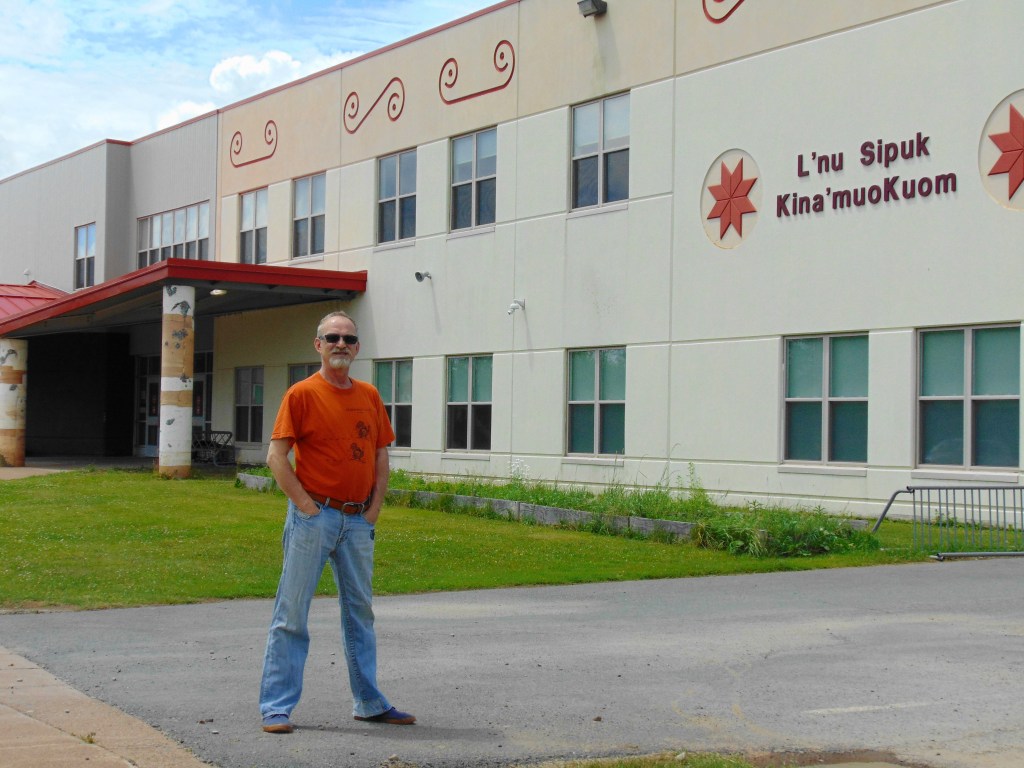
Went to the largest reserve in Nova Scotia, located between Halifax and Truro. What used to be called Indian Brooke Reserve, but is actually Reserve of a tribe called Sipekne’katik, that is a part of people called L’nu (popularly called Mi’cmaq). All this names, starting with the stupid name “Indians”, is also an effect of our total ignorance and arrogance, lack of basic knowledge.  All these tribes have names, they have history, language. Canada is a continent, for havens  sake! People in Europe are called sometime Europeans – but each nation has its own name and language, sometime more than one! German is not a Pole and Italian is not Swede. Just as Korean is not Vietnamese. Our Haida people on Pacific shores are not Prairie Blackfoots or Maritime Mi’cmaq. It is really not that complicated. No more than the difference between ‘British’, ‘English’ and ‘Welsh’.

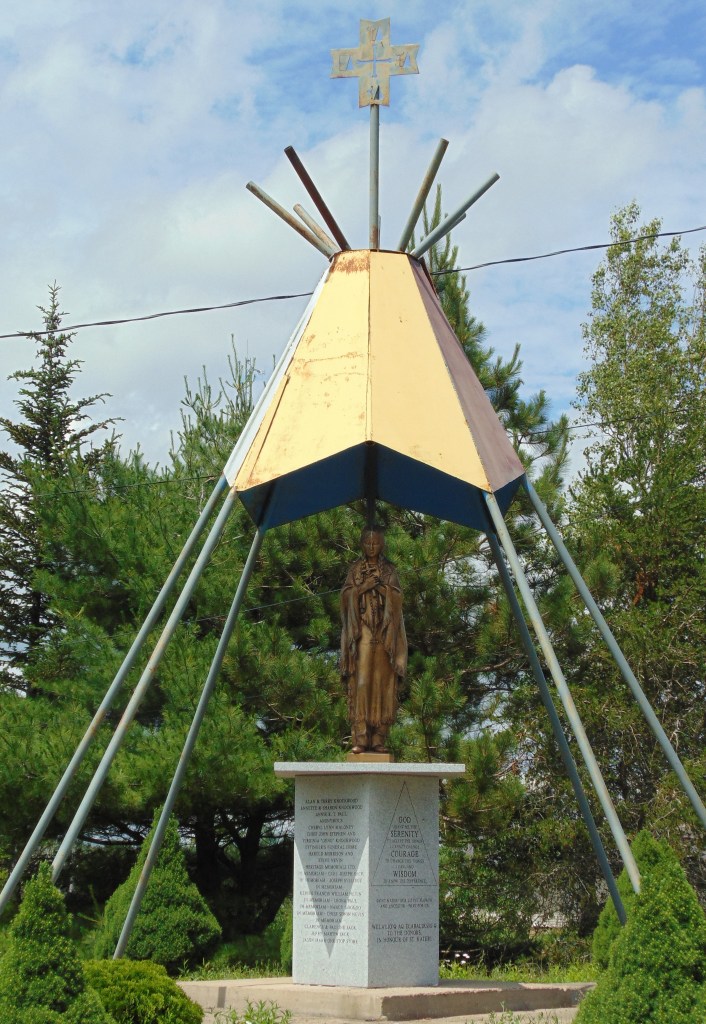
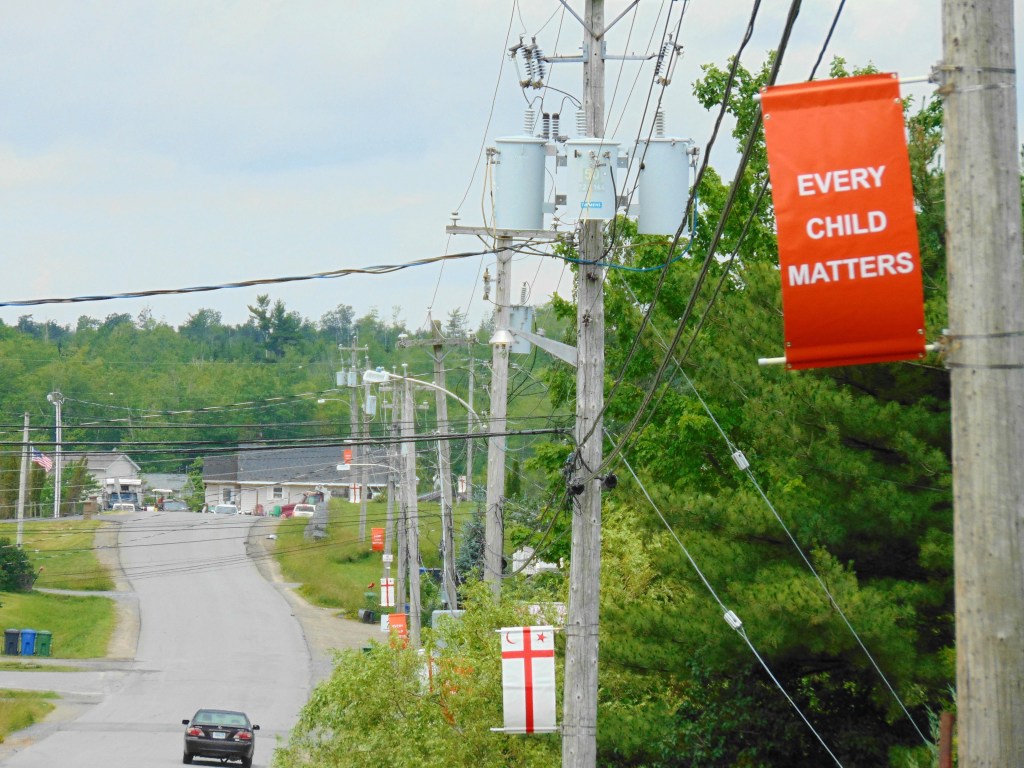
top left – author in front of L’nu Sipuk Kina School; entrance to the Village from Robinson Rd. ; Community Centre and Administration on Church St. ; bottom – St. Kateri Tekokwitha statue by the RC Church; view of Church Street toward Tuff St. and Sport Complex. (pict. by the author)

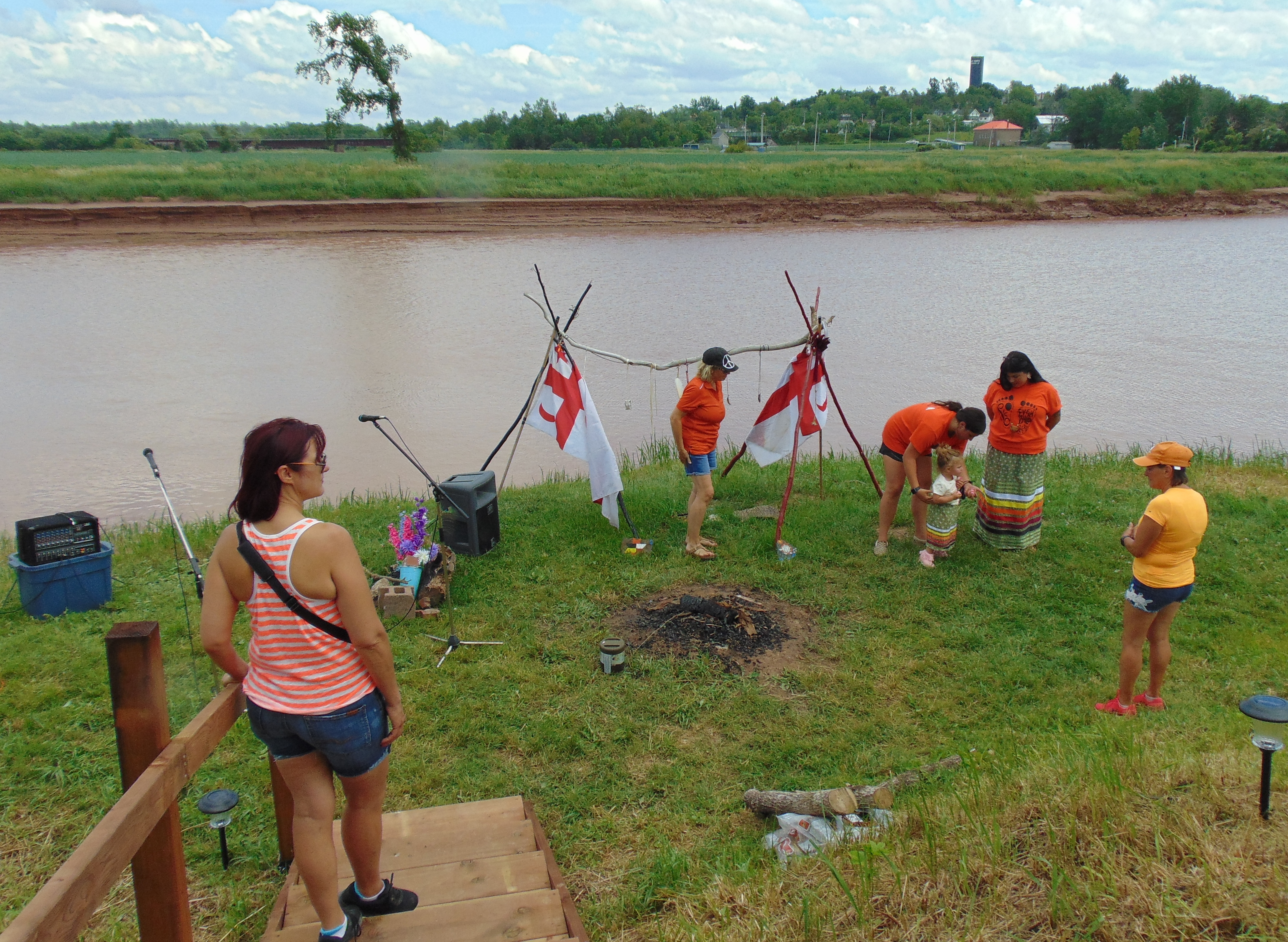
The Sipikne,katik village is large and well developed. Big church, large cultural and civic centre, beautiful school, few stores and businesses, relatively well maintained properties. One main road and few smaller ones interconnecting the territory. That special day was a huge motorized parade to remember the lost children –  these days subject on everyone’s mind and weighing heavy on hearts. There was a special gathering on sport grounds with music and children. Specially the beautiful children, all (as adults) wearing the dark orange shirts, were making me very happy and extremely sad at the same time. Just as, when I went later to visit the grounds of former Residential School to pay my respect. I watched from a small hill, were the school used to be, as one family were leaving their car: parents in their twenties and three small children. And I imagined how the RCMP arrived with some cars and were pushing away the screaming, horrified parents and taking away the crying children in a wagon to some far away school. For many years to come. Some never saw the parents again. That image brought tears to my eyes.

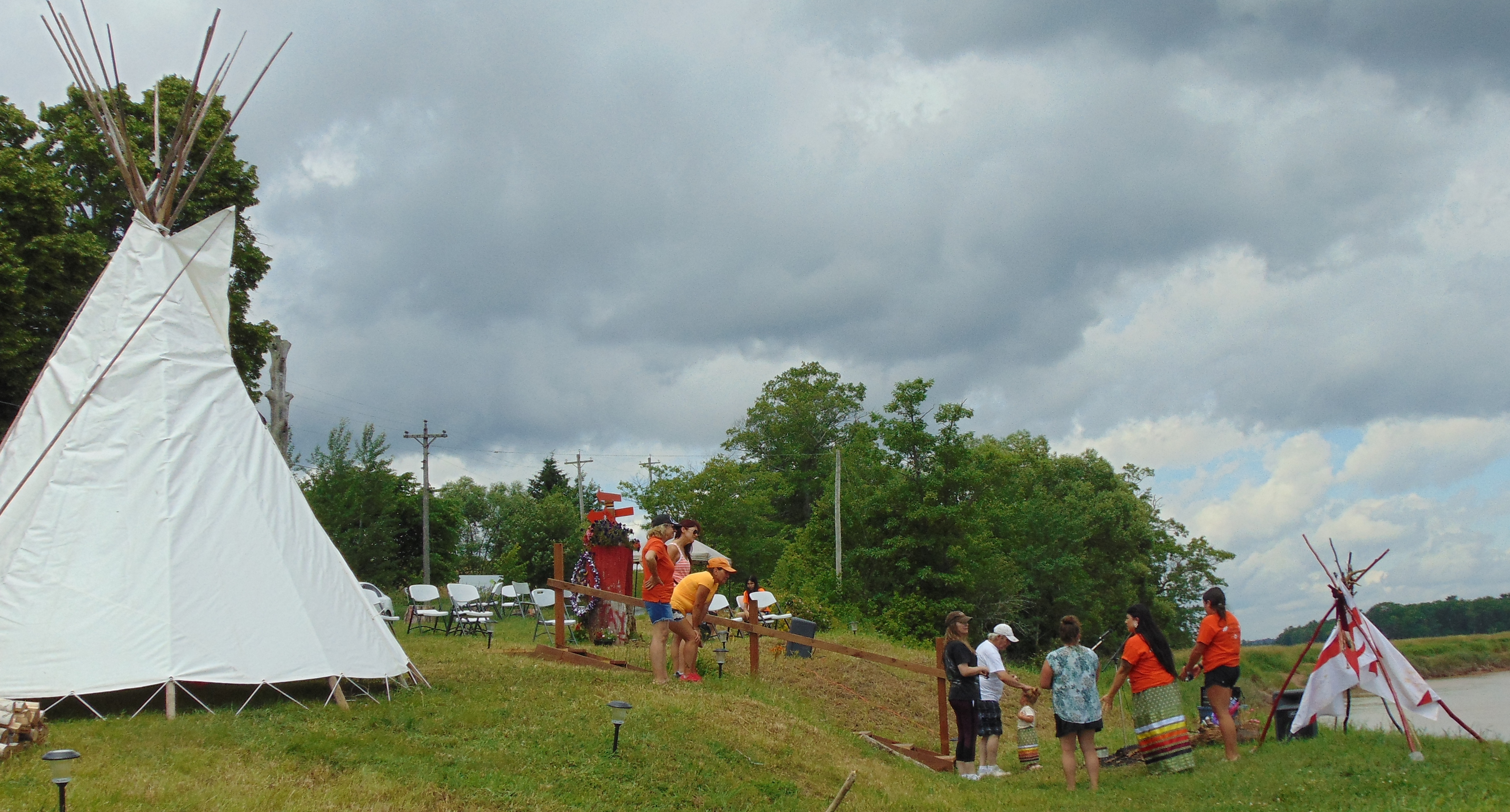
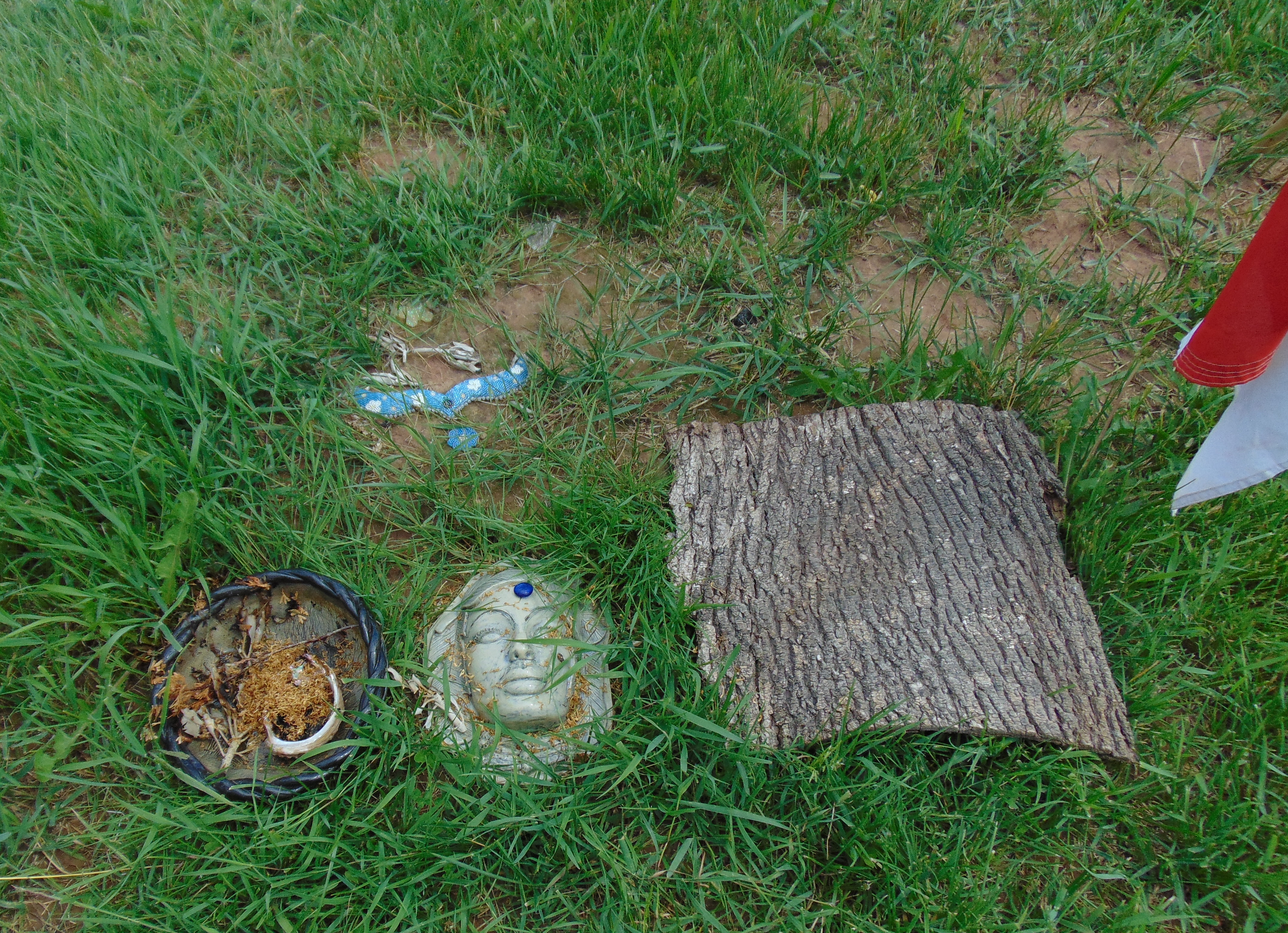
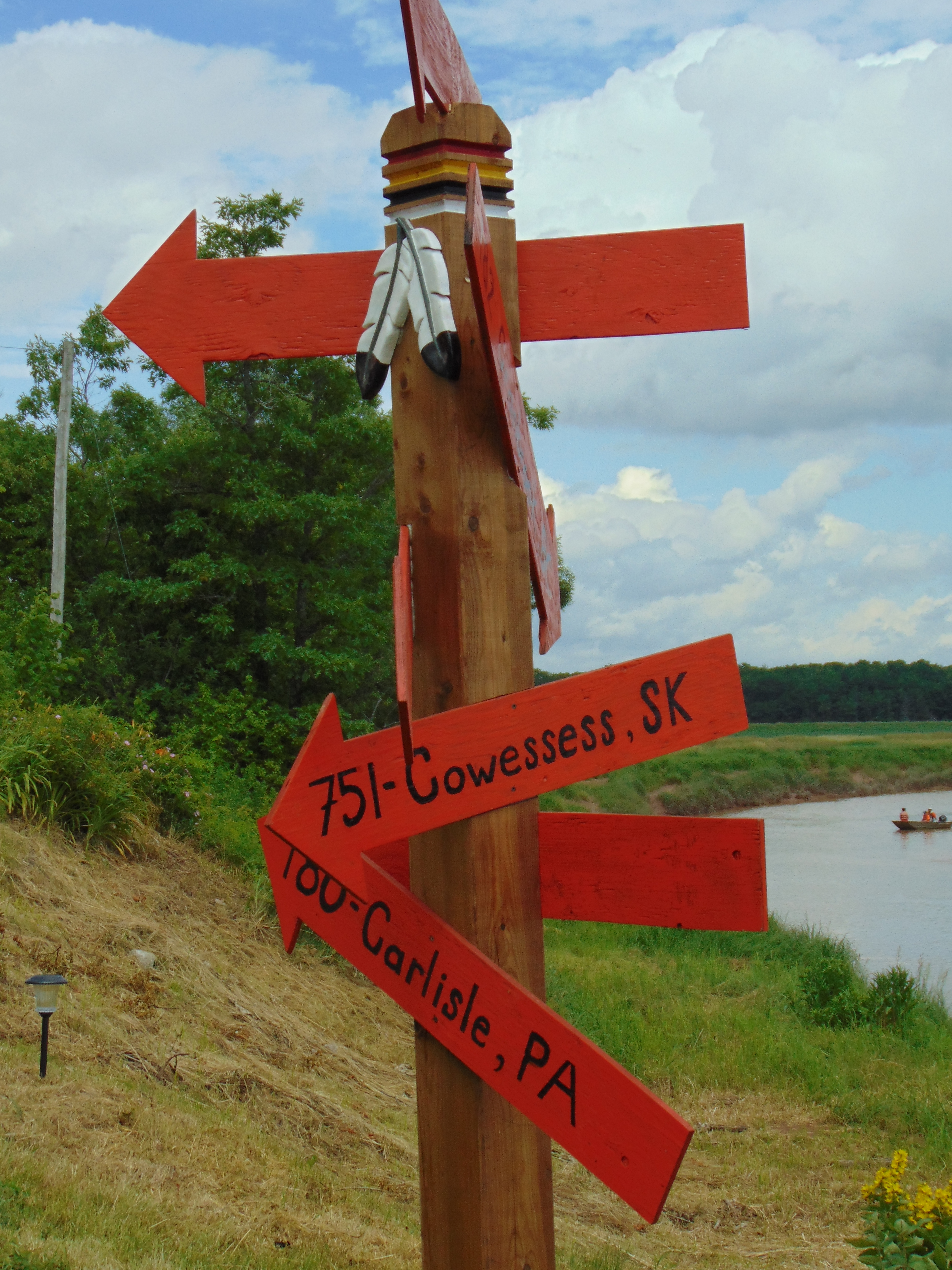
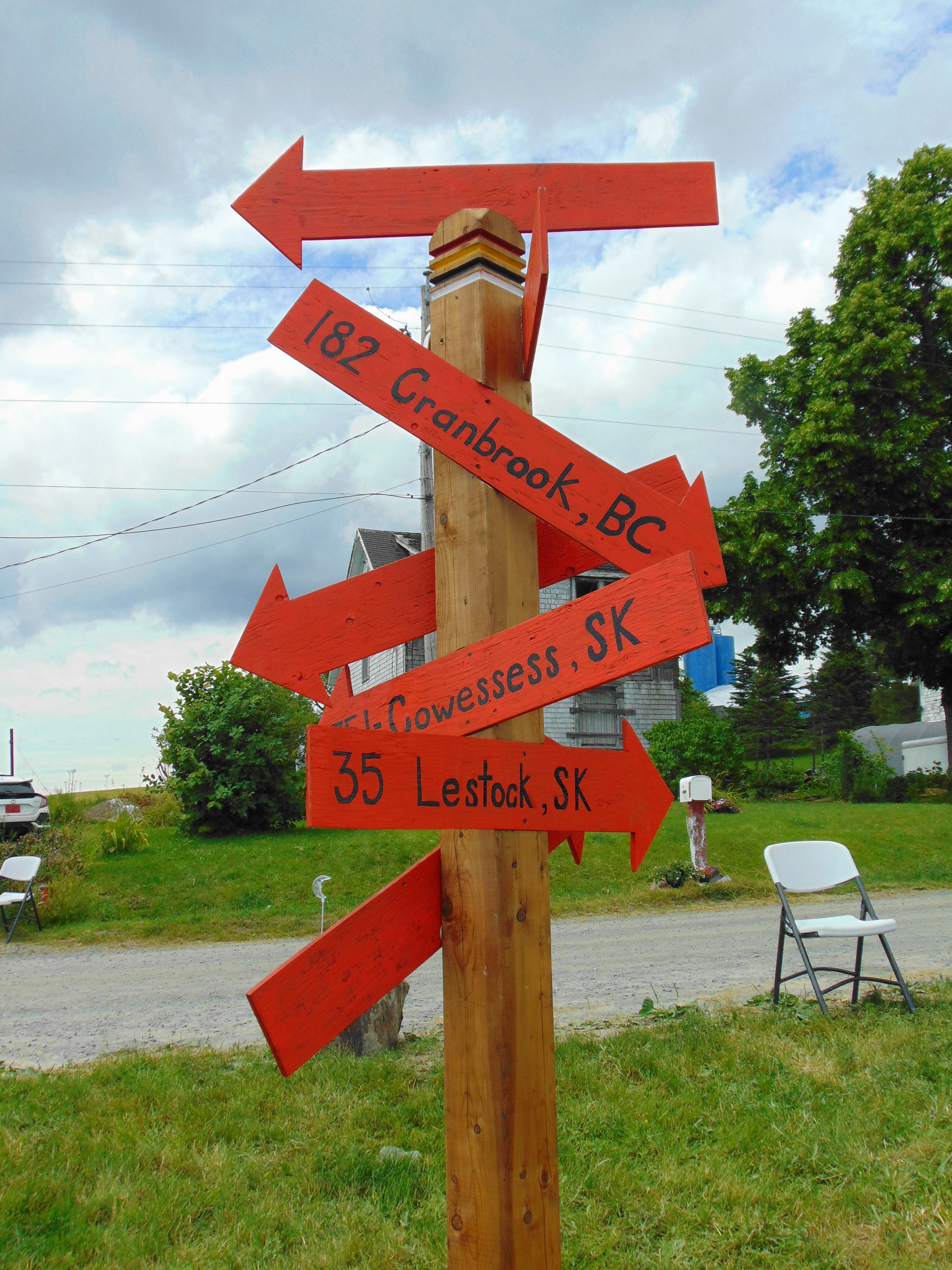
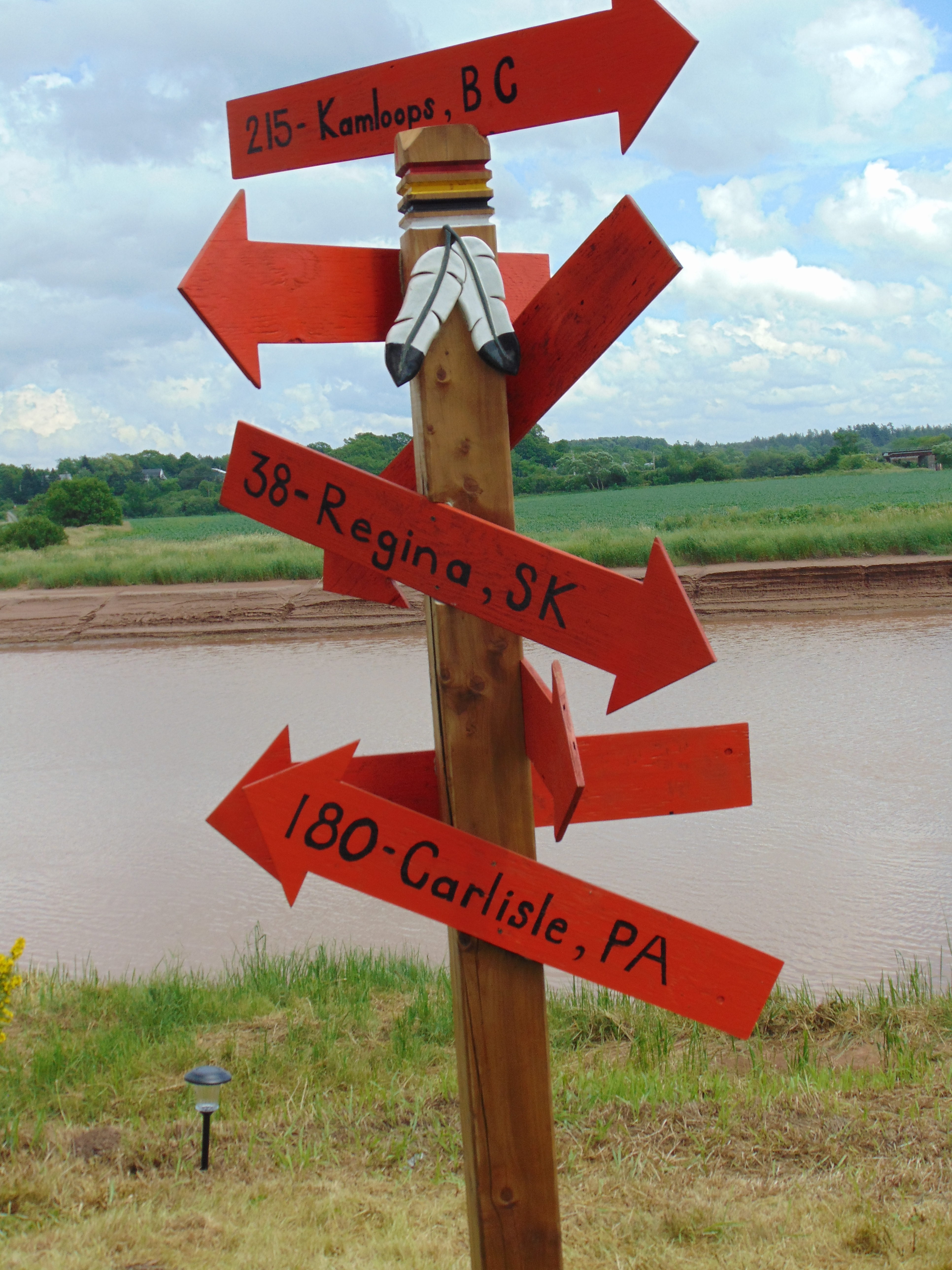
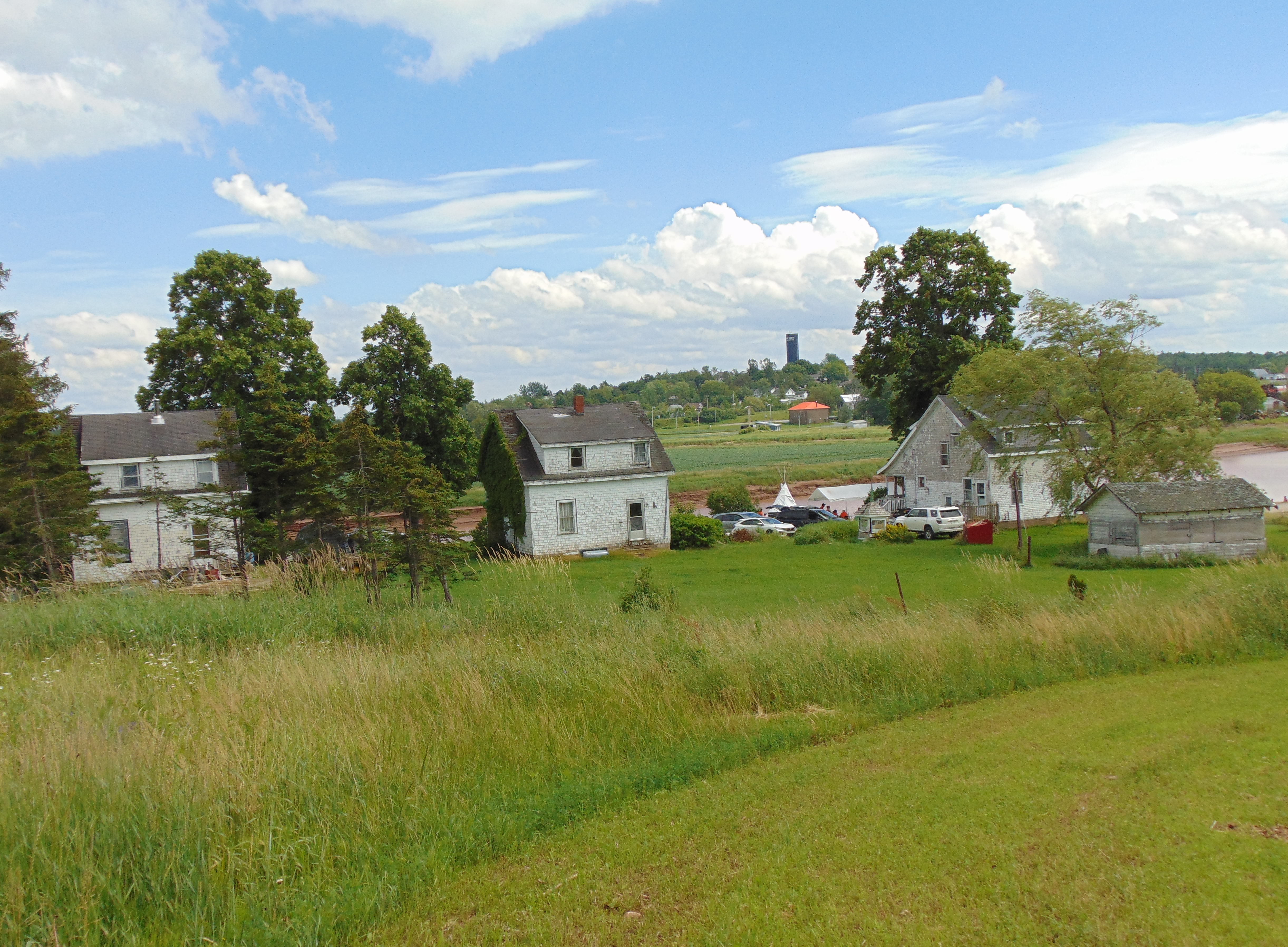
site of former Indian Residential School on the banks of Shubenacadie River (main building no longer exist, what’s left are three residential wooden buildngs of nuns, priest and caretaker). From top left – signs erected in of the old Nuns residence (#16 Indian School Rd); top two right pic – ad hoc prepared spot for burning of incent and sweet grass to honour lost children; next row – a place on the ground where you leave your offering and prayer; next three pictures of a post sign with arrows directing toward different locations of schools with recently discovered unmarked graves – notice the sign to Carlisle in Pasadena in USA, where number of boarding schools and number of Indian children confined to them is many times larger then Canadian numbers, yet the US Government never attempted a national investigation and full report of atrocities committed against US Indigenous People – ; bottom row: the only remaining part of the school building, a steeple from the school with one small room filled with children’s knickknacks; view from the hill were the school was toward the three remaining (unoccupied and in a state of disrepair) buildings; a young Mi’cmaq family on the nearby field (pic. by the author)

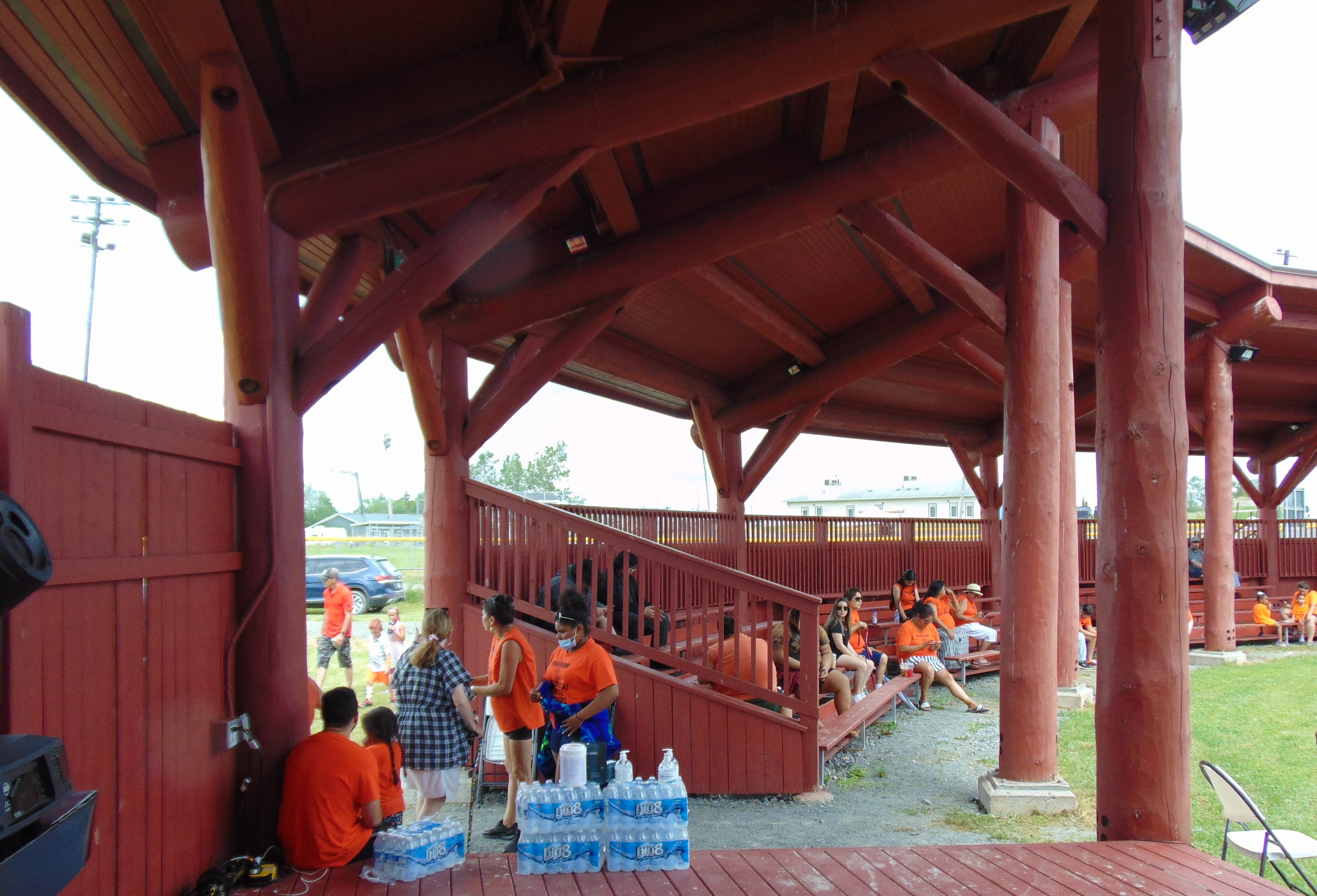
Back in the village, in the sport grounds, local young guys were sitting by a huge band drum. We exchanged few words, they gave me ‘v’ sign (when I was their age, we, “Solidarity’ activists in Warsaw, were giving ourselves the same sign full of hope and determination) and started playing the drum and sing.  Amazing concert, so powerful, so touching. I didn’t need to understand the words – they were so plain in emotion. As you listen sometime to some amazing operatic aria sung in a language you don’t know – yet, you understand it so clearly. Because emotions: pain, happiness, sadness, longing, caring, love and friendship need no translations, no explanation. That moment I shared their pain and their hope and their pride. Therefore yes, I can say that I felt proud as Canadian on Canada Day. By sharing and understanding very raw and very clear emotions of my fellow Canadians from Sipekne’katik tribe.

pictures form the diamond sport field and the band drummers and singers; flag in front of the School

I don’t know if I ever had a such good and really proud Canada Day. It was mixed with sadness and hope. Like a true, on epic scale, story of human condition. All humans. From the beginning of times.

A nation that can accept it’s dark past is on a good way to bright future. Feeling sorry for wrongdoings of one’s ancestors does not equal assuming personal guilt. It equals understanding of harm done and naming a crime – a crime. Making sure that nothing like that will happen again.

notes to ponder …

Every social unrest, every protest movement, call for justice, for equality, is a long and arduous way. None are easy and easily achievable. Even when the general political atmosphere is amicable and open to find a solution. If the political will is antagonistic – it could lead to skirmishes, prison terms, police and even army interventions, bloodshed. It could take years, decades to achieve measurable change. In a short time it could lead to worsening, persecution. Even provocations. Just look at the Black Rights movement in the USA. It started in the 60. of last century. And is still not finished. If not for people like dr. Martin Luther King and his non-violent philosophy (based on Mahatma Gandhi movement in India during their struggle for independence) there would have been rivers of blood flowing like a torrent. King’s and Gandhi’s movements take years, are slow and based on moral superiority of argument against the argument of brute force. They seek not retribution but recognisance, equality not superiority. And even that slow and non-violent way does not guarantee success. Or the success would be bitter sweet (India ‘s independence ended up in breaking up the country, mass exodus of Muslim citizens, their persecution and executions from fellow Hindu majority – despite the fact that both groups have similar ethic heritage). There is always a more radical, more impatient or revolutionary segment of disadvantaged group: Black Panthers versus King’s movement in US; Fathah versus Hamas in Palestinian cause; and one of the oldest scourge of social hatred: traditional white Christian antisemitism in Europe and countries where European powers established new colonies that later become new, independent states. Yes, main Churches in last almost hundred years, specially after the horror of Holocaust, denounced the old tradition. Popes decried it. But old official Church policy and doctrine doesn’t change easily. It always lurks in the dark places and dark souls. People were shocked, when few churches were burnt in Canada. I wasn’t. Did not support it but wasn’t surprised. Apart from the State, which is responsible for setting up the system of these horrible schools and is responsible for not checking regularly how were they run by religious authorities – the Catholic Church acted the worst in the way they run it and are the worst in the way they responded and responding to Truth and Reconciliation Commission Report. Not by what the bishops and clergy are saying in public but in what actually are they doing. So I was not shocked that probably some angry young individuals or organized group set the few churches ablaze. It is still possible that it was even done by not Indigenous persons but by provocateurs seeking a strong negative reaction from general public. Roman Catholics still form a majority of religious denomination in Canada. Yet, I didn’t sensed a strong negative reaction to the news. To the contrary – a muted understanding. Of course, if actions like that persist – the feeling might change. I don’t thing we will see more of these burnings, though. A statement was made and was understood. As for the the so called ‘profanation’ of church walls by painting on them hands of young children – I am shocked that the press and news even used that term ‘profanation’. Harming and killing children was profanation. The act of paintings their hands on church doors and walls in my view is totally acceptable and has a very deep, just meaning. I applaud it. Building in Saskatoon a huge new cathedral for quarter million dollars, while arguing in front of court (successfully, sic!) that the Church can’t afford paying 24 millions dollars as reparation to First nations is a profanation. It is worth noting that despite all of it, the Indigenous people are very religious and by large part Catholics themselves. But that’s entirely different subject.

Kwesta o miłość dla Fayeza Afzaala

Napięta, jak łuk wiatrem  z oceanu, flaga

kanadyjska faluje, unosi się i drży.

W pół masztu. Znowu w pół, jakby bała się szczytu.

Miała być dumna,  jest  smutna, zawstydzona cicho.

Obok, w płytkiej wodzie, po piaszczystym dnie biegają wesołe dzieci. Chlapią, tupią, nawołują się wzajem okrzykami,gestami, wiecznie niecierpliwe. Ale Fayez Afzaal nie biega z nimi. A tak bym chciał by tupał o dno, by krzyczał na całe gardło: tata! no chodź tu, patrz! Znalazłem muszlę! Mama, powiedz tacie, żeby przyszedł!

Wiatr na chwile milknie, znika, flaga na maszcie zwisa zmęczona, jakby oklapła z tego rwetesu. Nie lubię tych flag, które stale trzeba spuszczać do połowy. Tak, jakby maszt był za wysoki, jakby dziurawił chmury swym szczytem.

Chciałbym Fayeza otulić ramionami i sercem, jak szeroką peleryną. Przekonać, że go kocham i że kocha go świat i miliony ludzi. I że nigdy nie będzie sam, że nigdy więcej już … . I milknę pamiętając ilekroć już mówiliśmy: nigdy więcej.

Zbiegną się ludzie z sąsiedztwa, z regionów, ze świata na czuwanie i będą szli w marszach, protestach, będą zapalać świeczki w oknach i na skrzyżowaniach pełnych wiązanek kwiatów, pocztówek, manifestów. Mamy powiedzą dzieciom, by położyły obok tych kwiatów swoje pluszowe misie, swoje lalki. Dzieci zrobią to niechętnie, z pewnym żalem za ukochanym pluszaczkiem. No bo niby co zawiniły w tym ich zabawki?  Zostawią je tam jednak posłusznie, bezradne w tym strasznym dniu.

Potem ktoś rzuci kamieniem słowo: Rodezja;

ktoś oskarży innych o gwałt na Palestynie;

ktoś lament podniesie o Holokauście. Ściana

Płaczu zaszlocha, trąby zabrzmią pod Jerycho.

Przypomni się słoneczna Langwedocja, która spłynie niewinną krwią katarów, albigensów. Morduje się wszak  nie tylko obcych. Jeszcze krwawiej tępi się własnych, na ich nieszczęście nieco innych. Są jak ziarnka piasku w trzewiku. Niby nie zagrażające życiu ale jakże niewygodne, uparcie uwierające.

Satanael, spoglądając zza murów swego zamczyska na szczycie Arafatu, ściśnie w dłoniach wodze Eufratu i Tygrysu, łypnie okiem na zielone szczyty gór Küre i pomyśli: póki te lasy nie podejdą pod moje bramy, nic mi z waszych bratobójczych mordów. Cóż obchodzić mnie może nieszczęście jednego chłopca lub całych narodów? Nic. Łzy wasze  spuszczam z Anatolii warkoczem Eufratu, a wasz ślinotok klątw strumieniem Tygrysa. Ślę je ku wodom Perskiej zatoki. Namawiać was do niczego nie muszę ni chcę.  Sami usłaliście swe łoża, które nie są moim, a waszym przekleństwem.

Tak myślał Satanael zawarowany w boskiej twierdzy Araratu. Podobnie, jak królobójczy król Makbet w twierdzy na wzgórzu Dunsinane w Szkocji. Póki u bram jego twierdzy nie pojawił się rząd drzew z lasu Birnam.

I mnie was już nie żal. Ale żal mi tego chłopca. Dziewięcioletniego Fayeza. Z pięknymi, smutnymi oczami. Czy ten smutek też kiedyś zastąpicie nienawiścią?

Bogumił Pacak-Gamalski

Anioł Śmierci, Pomnik Zbrodni Katyńskiej
we Wrocławiu

od autora: ten krótki utwór pisałem przez kilka dni, zaczynając drugiego dnia po strasznym morderstwie w London, mieście prowincji Ontario w Kanadzie. Tego dnia młody, dwudziestoletni biały chłopak, powodowany nienawiścią w stosunku do mahometan, świadomie i celowo wjechał w spacerująca chodnikiem rodzinę Afzaal, rozpoznając w nich po ubiorze, ich wyznanie religijne. Na miejscu zginęli: babcia, małżeństwo Afzaal i ich dwie córki. Najmłodszy syn, dziewięcioletni Fayez, bardzo ciężko ranny, został zabrany do szpitala, gdzie lekarze uratowali go przed śmiercią. Jedyny, który pozostał z tej rodziny. Z całą Kanadą przeżywałem ten szok, poruszony do głębi okrucieństwem tego zamachu, a jednocześnie jego niezwykłą absurdalnością w objawieniu zła doskonałego. Ale nic mnie tak nie zasmuciło, jak wizja tego chłopca, Fayeza. Ci, którzy giną wydają się czasem (w porównaniu być może okrutnym) wybrańcami losu – ich już ból żaden nie sięgnie, żadna zbrodnia nie dotknie. Ci, którzy zbrodnie przeżyją, śmierci umkną – skazani są na cierpienia wielokrotne, na przeżywanie tej zbrodni, tego momentu setki, tysiące może razy. A cóż dopiero, gdy mówimy o dziecku? Dziecku wystarczajaco dorosłym, by mieć za sobą całe bogactwo ( w tym wypadku te bogactwo stać się może ciężarem niemożliwym do udźwignięcia) pamięci najbliższych i pamięci momentu zbrodni.

Niesamowity patos, tragedia na skalę mitologiczną omal, postaci tego chłopca i tej zbrodni stały się dla mnie syntezą zbrodni nienawiści człowieka w całym ciągu naszej wspólnej historii. Niemożliwym do opisania językiem innym niż język poezji. Ale każda forma tradycyjna wiersza też kłóciła się ze współczesnym spsobem opisu i odczuwania tragedii. Zgrzytała pod ołówkiem kreślącym litery na papierze. W sukurs (mam nadzieję) przyszła proza poetycka, z dwoma tylko ustępami trzynastozgłoskowca. Ten utwór, jak zreszta jasno wskazuje tytuł, jest niczym innym jak moją jałmużną kwestą o dar miłości dla Fayeza. Tylko ten jeden dar może chłopca i nas uratować.

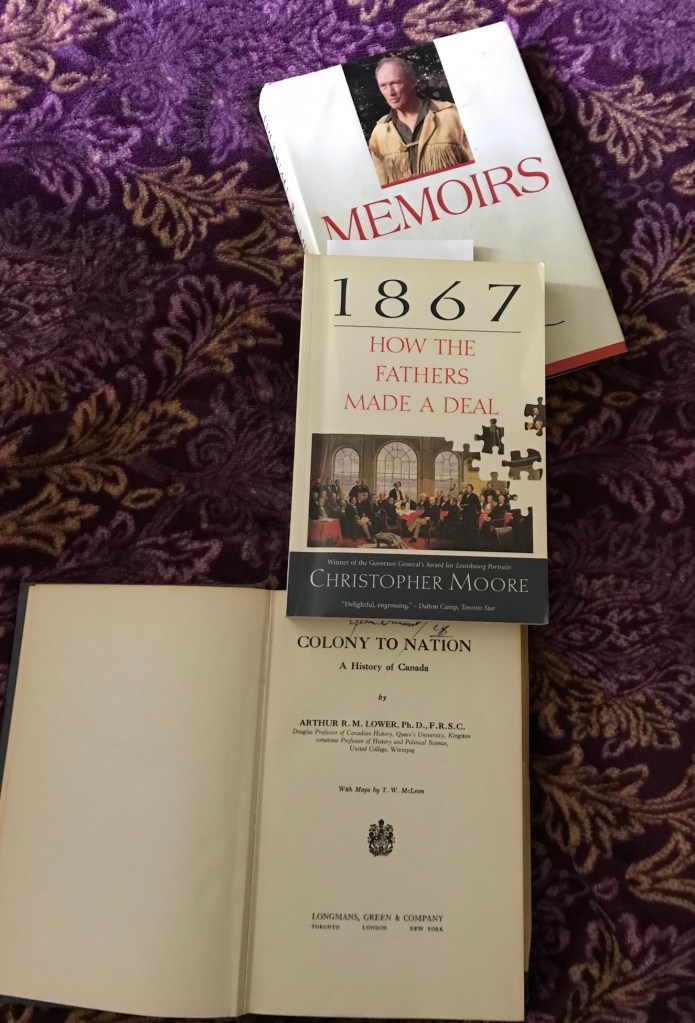
Residential Schools side discussion – John A. Macdonald: a national hero or villain?

by Bogumil Pacak-Gamalski

Residential Schools and modern day placement of native children in the care of non-native families and system (provincially  mandated but with tacit support of federal authorities) is a drama without comparison to none other in Canada’s history and Canada today. It affected and affects everything that happened and that is happening to all First Nations. Abject poverty, lack of resources, lack of education, high unemployment, pervasive alcoholism and drug addiction. All of it was almost (an argument could be easily made that it was indeed) planned, arranged by local colonial powers and even more so,  by the new Canadian Confederation. The country we call our own.  To say the truth, I am having a lot of doubt if that system of full cultural genocide would have happened if Canada remained a fragmented colony for fifty or seventy years longer. Separate entities of Upper Canada ( present day southern Ontario), Lower Canada (Quebec and Labrador) and three Maritime Provinces. That would mean no creation of unified confederation and no strong federal executive and legislative power. With much stronger oversight and decision making from Great Britain and it’s Colonial Office.  The precursor to our constitution and the still important core of it, the British North America Act would have not happened.

Our renewed  national discussion of our past ignited again the controversies of whom we admire, who is the hero of Canada’s history. More or less, who is the Father of the Nation? And centres very much so on the person of John Alexander Macdonald. Was he or wasn’t he? And if he was the Father – was he a good, wise father or a bully with drunken rages? Smart and competent to achieve his goals but bully nonetheless? Let’s go back a notch to remember what happened circa 1867.

Of course, as we know very well – history could be re-written many times but historical facts can’t.  Yes, there was a Maritime Conference in Charlottetown called by Tupper and Howe from Nova Scotia that was going to discuss possible unification of New Brunswick, Nova Scotia and Prince Edward Island. But delegates from Upper and Lower Canada asked for permission to come and observe. Such was granted and those guests quickly posed a question: why only Maritime Provinces? Perhaps we should unite all of Canadas into one confederation?  And that, ladies and gentleman, was the night that the conception of Canada happened.   

Why do I bother writing about the obscure tidbits of history if the text might suggest to be about the effects of Residential Schools and in general the planned and executed action of destroying political, economic and cultural base of First Nation? Also their biological existence, if not totally, than in numbers greatly diminished and easy to control.

The very recent discovery of hidden bodies of children buried deep in the ground by Residential School in Kamloops surprised and shocked many Canadians. Shook the nation to the core. A lot of us. Except … the First Nations themselves. They knew that many such hidden graves exist. They knew because that’s not an ancient history and old tales and myths. That’s now, very recent.  Their uncles, maybe even brothers and cousins, great aunts and great uncles. Those that everybody in the community knew they existed, were forcefully snatched  by raids from their petrified and crying parents, placed in the Residential School and never came back. Were never seen or heard of.  They were not the children of proud tribes  sought of, as a powerful allies, in the great struggle between the French and British empires and later in the struggle to maintain British territories during the US War of Independence. Those nations and tribes  the King and Queen in London signed treaties with. No, by the end of the first two decades of XIX century they become an obstacle to plans of the new settlers. The colonists, who wanted to wrestle more local control from the imperial Colony Office in London. These colonist had neither desire nor respect for the spirit and letter of these treaties.  The settlers wanted more land and control of natural resources and the religious leaders of these settlers couldn’t stand the savages, who would not recognize the new Christian god. The native gods and beliefs needed to be destroyed and the administration and interpretation of the Treaties needed to be wrestled from London political master and given to local legislative and executive powers in the new colonies.

Finally, the War of Independence, won by the new United States in 1812, forced the British and their Colonial Office to push for some form of political unity, some sort of federalism between separate colonies, hoping it will better protect the British territories and interests against the republicans from the south.  That push came in the form of uniting Upper and Lower Canadas into one Canada Province west of Maritimes. And in New Brunswick, Newfoundland, Nova Scotia and Prince Edward Island an attempt to unify them as one Maritime province or federation. Both interests – the Empire and the Colonist in North America – converged at convenient time at the very moment of history in the middle of XIX century.

On Canadian and Maritime side there were many politicians, regional or local leaders, opponents and proponents of unity in what become the Confederation. Almost all of them could be called Fathers of Confederation.  Generally we call it the Charlottetown Conference. But that was only preliminary discussion. It was followed by Conference in Halifax and Conference in Quebec, which by far was the most important. The Quebec accord spelled and crystalized the boundaries of political powers, the separation between British Parliament (and Colonial Office) and new confederation legislative, judicial and executive branches. And the ambition for importing from Britain the tenets of ‘responsible government’.  If Charlottetown and Halifax gave some general architectural idea of the new political structure – it was the Quebec Conference that produced first concrete drawings of the design.

All of it would have been in vain if there wasn’t a push for some sort of unification of the Provinces in Britain itself. The Colony Office in London could have and would have scuttled it at the bud. Probably without even a need for Parliamentary debate either by the Commons or by the Lords.

There were very few main architects of the entire project. Many others that helped and whose support was indispensable. But the main architects remained the true Fathers of Confederation.  Some of them, like Joseph Howe and  notably John A. Macdonald, were strong opponents to the idea at the beginning.

Other truly great leaders were  George-Etienne Cartier from Quebec, George Brown from Ontario and Charles Tupper from Nova Scotia. It was mainly thanks to strong support of Tupper, that Macdonald rose to prominence and took the reins of the debate (aside from Macdonald personal skills as shrewd politicians on almost Machiavellian scale). Tupper did not like George Brown (who was one would say the anti-thesis of Macdonald, as Brown believed in a democratic and ethical government)  and neither  liked nor understand Cartier and the intricacies of Quebec (Lower Canada) French culture and politics.

I would suggest that if not for the support of Tupper, it would have been very likely that Macdonald would never rose to the prominence that he achieved and that led him to become the first (and lasting) Prime Minister of the Canadian Confederacy.  In comparison to Cartier and Brown and their leadership – his star was of second category. Although it shone as superstar in category of shrewdness, lack of morals, thirst for power.

Enough of the annals and internal battles, debates of the articles of Confederation both in Canada and later in London, where the final birth of Canada happened. They were done, cooked and signed. New Federal Government of new (almost) independent state-dominion was formed. And victorious Macdonald become the first Prime Minister of Canada.  With the passing of times he become a legend. Monuments were build, streets and buildings of prominence named after him.  If there is a conscious afterlife – I am sure that John Alexander Macdonald soul is smiling in the glory.  But it probably gets a bit angry in the last decade or so.  Some begin to lose faith in that heavily colorized portrait.

After studying his life and carrier a bit more in detail and less from propaganda pages of some school texts and popular government pamphlets – I have some opinions and a bit more clear picture. Not a scholarly one by any means. I am not a Canadian historian by any stretch of imagination. Just a history buff at times.

Here is my sketch of Macdonald in a few movement of a pencil.

He was  a very intelligent and shrewd politician. Hungry for power. A good lawyer with ability to concentrate on minuscule detail to achieve the greater goal. Good debater with the talent to steal the moment and force others to notice him and pay attention to him. A drunkard, who could function rather well with his alcoholism. Scheming on the level akin to dangerous courtiers from a time of absolute monarchs.

His government introduced bribery, nepotism, patronage on a scale never repeated again in the history of Canada.  I would dare to say and dare to argue in any debate, that if John Macdonald won a majority in any general election in Canada in the past 30 years – he would end up in prison.  Or, at the very least – be kicked out into oblivion from political life. Even in the circles of Conservative Party. His great admirer recently, Jason Kenny of Alberta, would most likely scream in the Legislative Assembly in Edmonton: get him out of here right away!

Macdonald didn’t risk winning elections by giving people a chance to make their mind, by a true debate (in which he was very skilled after all). No. That’s like playing a roulette. A politician should not play roulette. So he would appoint every little government (state) position only to people, who would understand where their sympathies must stay. From every tiny post office, every railway station, everywhere that state employee or commissioner would and could affect the daily life of a citizen.

He would have been horrified of the Office of Election Canada and the fact that it is not stuffed from top to bottom with party patronages. In 1885 he forced a legislation that gave him (or any other Prime Minister at that time) the power to appoint (by strict party patronage) a federal Revising Officer to supervise elections in every riding! No wonder he could be seen by some modern prime ministers as a hero and saint – they could have only dream of it. He himself called it ‘the greatest triumph of my life’. Not the Charlottetown Accord and the British North American Act – but the obscene patronage that goes against every principle of good democracy. That also paved the way for party discipline and the death blow to parliamentarians independence. The golden standard of the day (in many ways still existing in many parliaments, including Britain) was a relatively broad independence of judgment of a single Member of Parliament . Governments did and do fall, when Cabinets fail to persuade their own party parliamentarians during a debate in House of Commons. Not in Canada anymore, thanks to Macdonald. Party leader is almost like a monarch itself. Members form the line or face political death. Some still valiantly protest. But very few survive the consequences.

 With one exception – Macdonald did resign as Prime Minister after the eruption of the details of enormous bribery scandal in giving the licence for Canadian Pacific Railway company. The amount of bribes his party and MP’s received and the bribes he took for himself is of no comparison to any other corruption scandal in Canada before and after.  

Many bad traits of today executive and parliamentary branches of Government in Canada could be traced back to John Macdonald.  As one British newspaper reported in 1891: “  For twenty three years, Sir John and his party had maintained themselves in power … by a colossal system of bribery”.

And since the Rapport of the Truth and Reconciliation Commission many years ago it become painfully clear that John A. Macdonald was the man responsible for creating the infamous system of Indian Residential Schools in Canada. Now we are just learning of even more horrid facts of these Schools.

Yes, the worst transgressions, crimes calling to Heavens, were perpetrated by  the Roman Catholic orders and clergy (overseen by Canadian bishops).  While Catholic institutions were the worst, other  (United and Presbyterian Churches) committed crimes, too. At least the others offered uncontested and unreserved apology and responsibility – the Catholic Church failed again. From the very top in Vatican to every diocese. In a way we are used to it – from scandals in Ireland, in Quebec in the 30., 40. and 50; in Newfoundland; in Poland; in the USA and many, many more countries. But here, in this article, I deal with the secular, the power that gives consent and institutes policies and rules.  And one particular, most powerful politician of that time.  The one, who factually could be called the Father of Indian Residential School System.  John Alexander Macdonald. Politician, who for a long time enjoyed the status of national hero, nation-building leader. Father of nation. Was he?

In my opinion not at all. In neither of these titles, epithets.  He does have a very prominent role in our history. Was a very skillful politician. But neither a hero nor a father. I will not miss his monuments, educational, cultural or administrative buildings named after him. He has a solid and permanent place in Canadian history. In history books. But it is not a place of great leadership and definitely not a place of public celebration.   

Black guy and me. What’s the difference?

by Bogumil Pacak-Gamalski

I was always drawn to the history and culture of Black people. Even as a young man in Poland, back in the 70. But – Poland had really very little tradition and history of Black culture and Black people.  Mainly, I suppose, for the reason of being rather far from Africa geographically and loosing it’s sovereignty by the end of XVIII century until end of I world war. More or less the time of major colonialism expansion of other European powers.  That was perhaps one of the very few – if not the only one – good part of losing our political freedom. Then came the upheaval of Polish Solidarity movement in which I took very active part – and with that, all other interests had to give way to the main focus of the fight with Soviet communism in Poland.

That involvement in Polish Solidarity resulted in my short visit to London (first ever beyond the Iron Curtain) were I was hoping to study the life of Polish independence hero (and my personal), Marshal Pilsudski and London had a major Institute devoted to the study of his life and works (the other being in New York). It was fateful journey. That year Martial Law was declared by communists in Poland, the communist militia came to my home to arrest me (thousands were interned) and, on the advice of my father (former Soviet labor camp prisoner), I decided not to return. My entire world was turned upside down.

I lived in London in Willesden, close to Harrow Road, renting one bedroom apartment form a Polish lady, daughter of one of thousands of Polish soldiers, who stayed in Britain, after Poland was assigned in Yalta to Stalin. It was a typical working class neighborhood, with its own pubs, barbers, shops. And, of course, rows upon rows of tightly connected two or three floors red brick townhouses. In the 70. and 80. that neighborhood was also witnessing a large influx of Black population.  That decade also witnessed the first of many large and often violent protests of Blacks in London. That tension and a bit of unease was palpable in Willesden. It must have been late summer, when the tension erupted again. At evening times normally busy Harrow Street, was void of white pedestrians.  I was coming home by double-decker as usually late evening. From the bus stop, I had to take a relatively short, yet long enough, walk to my apartment.  Suddenly a group of three or four young Black guys appeared walking toward me and looking uninvitingly at me. I was young, too. Perfect combination to avoid. Unless you were looking for a fight, which I was not. I moved to the side, as not to provoke them, but kept walking. They stopped me, don’t remember the exact words but the jest (and the hand on my chest) was:  ‘were the f..k you think you are going? It is our street now’.  I, truthfully, explained that I have no claim to that street whatsoever, that I am not British and just coming home from 10 hours shift. I also mentioned that I am a refugee from a communist regime. Few more exchanges, less and less angry and I ended up in our neighborhood pub sharing a pint with them.  They asked me a lot about Walesa and “Solidarity”. I told them more about the Soviet-style communism.   Some of it was surprising for them and they said that it looked like the Soviets are not that different from the colonials in their countries, back in Africa. At the end they offered (I accepted) to escort me to my door, so nobody harms me by mistaking me with other local whites.

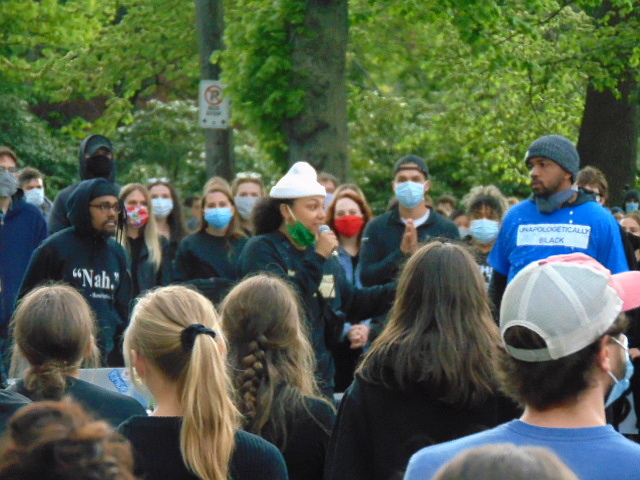
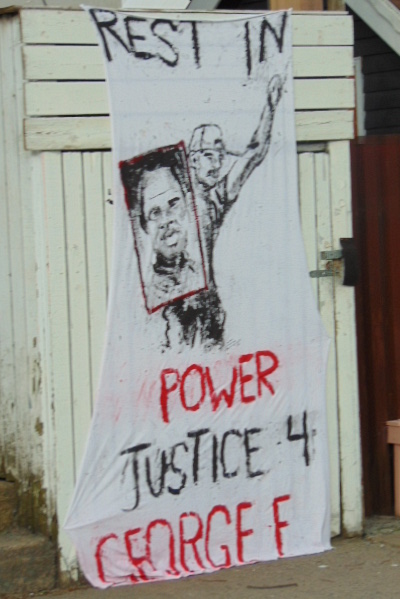
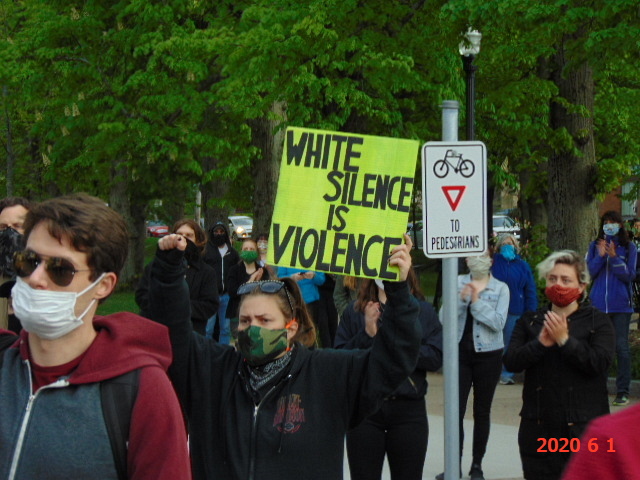
Why this reminiscing?  I watch (forcing myself, for it is very hard) for past week or so, the court trail of the murderer of George Floyd in USA.  Watched the video tapes several times and the image of the policeman knee suffocating George Floyd, killing him minute by minute, second by second is ingrained in my mind forever. Just as the hysterical, crazy female officer shooting the beautiful young  Black 20 year old boy in Minnesota yesterday.  It is beyond outrage, beyond anger. Two days after another handsome Black man, US Army officer, is taken out of the car and tasered as a hooligan or gangster. One wants to scream from the top of ones lungs: what the …ck is wrong with the Police forces in North America?! Particularly in US. That is not normal. It is sick. Your job is stressful, it is dangerous. But you are not solving or helping to solve the problem. YOU ARE THE PROBLEM.  You are the personification of the worst evil in America – the rampant racism. The Blue uniform become equivalent with the white robes of times by. When Floyd was murdered last year, the movement Black Lives Matter started. It spread beyond US borders rapidly. To Canada, to Europe.  In the middle of the first wave of pandemic.  Despite the pandemic, despite the risks, I thought that cause worthy enough of public support and joined my Black brothers and sisters in their march through Downtown Halifax. I watched their anger, their desperation – but most of all their sorrow. Deep, tiring sorrow, that follows them through their long history in the New World.

Let me take you through another short walk from my past. Year is about 85, maybe 86. My first visit with my partner to Florida. Few years after my life started anew in Canada.  We rented a car and were travelling from St Petersburg toward Orlando. I moved from the big interstate #4 to some quiet and deserted side road.  Not a single car in front, not a single one behind. Perfect.  Time to relax, enjoy the views. I think the speed limit was 60 miles and I was driving probably 70 or 75. Flat road, no traffic, safe.  Suddenly, I see in my rear view mirror characteristic flashing lights. Police. Resigned and knowing why, I slowed down, pulled to the side and stopped.  A blinding strobe light and very loud order from the megaphone: roll down your window, place your hands on steering wheel and don’t move!  Nothing like that would happen to me (at that time our Police was very well mannered and not confrontational from the getco, as it is popular now) in Canada. I was shocked and nervous. The policeman comes to my window (can’t see him, being blinded by his flashlight right into my eyes) and demands my driving licence.  I said that I’m Canadian tourist and try to reach the glove compartment for the papers. Next thing I remember  was being thrown from the seat with tremendous force face down to the asphalt, his knee on my back and the cold sensation of his gun barrel on my neck. Pressed to the point of pain.  I gathered all my senses and tried to explain that all my documents, including my passport are in the glove compartment, that it is normal in Canada to do what I did to show it to the officer. He yells at my petrified partner to hand them to him slowly. He checks them, his demeanor changes completely and explains that this not Canada, this USA. And I should be lucky that I am alive, because he was right to suspect that I might pull a gun from the compartment.  We chat a bit more, I apologise for my speeding and he wishes me a good night and good stay in Florida. I ask if I will get some ticket and he answers with a smile: no, just a verbal warning, it was a minor infraction. The end of story.  

Do you know why I am writing this story?  To make a point or to illustrate the subject of the article? No. I am writing it because I am alive. If that summer 1985 or 86 I was a young Black man, I wouldn’t write that story today. I would be dead most likely. But I was lucky. I am White man.  This is my privilege.  Not of coming from very wealthy family. For I‘m not.  Not from having top position in some industry, corporation. From the fact that I am alive today after that incident almost 40 years ago. Because I am white. I was not killed for driving ten or fifteen miles above the limit on an empty road. Because I am white. Floyd was not killed for passing (most likely totally unware of it) $20 bill in the store (most Americans and many Canadians have done it many times unknowingly, apparently there is more fake low denomination bills in circulation that real ones). He was killed because he was Black. The 20 year old boy in Minnesota was not killed for having some air deodorant attached to his rear view mirror (that was the infraction – seriously).  Nobody gets killed in the Stated for such minor issues.  He was killed because he was Black. Is it possible that white young guys would be killed in similar confrontations with the Police? It is, the Police is much more aggressive than it ever was – but highly unlikely. Because they would have been White. White and Blacks. Like Life and Death.  Think of it. And please, don’t tell me that you are not privileged, if you are white.  I know that I am. And down deep you know it, too.

I have written here of some very interesting and not very well known history of Blacks in Canada. Particularly of Blacks in Nova Scotia.  Have posted pictures and journalistic account of the mentioned above march Black Lives Matter in Halifax in 2020. Recently I have visited again the Black Cultural Centre in Dartmouth on the occasion of celebrating the Black Battalion – little known Canadian Army unit from I world war and had a short chat about it with the Commander of Halifax own Prince Patricia Regiment. Will write about it very soon. It is important to know the rich and long history of Black settlement in Canada, their achievements and their failures. Only than their history will become our history. Common past.  Only then we will be able to see ourselves as one. As Canadian family. And only than their lives will truly matter as much as ours. For they must be worth as much. They are.    

Ah, the title. “What’s the difference?” – I think that I have explained it already. Let me repeat it: I am, therefore I am alive.

COVID anniversary. What next?

Bogumil Pacak-Gamalski

A year ago the World Health Organization (WHO) called the new pandemic in our world. This one was given the name Coronawirus-19, simply from the given name of the new, unknown to human organism, pathogen.

Now, after twelve months, we can come to some conclusions, reflections. It was the first world pandemic that truly and without any mercy affected every society, every corner of the world. It didn’t recognize any differences : alike to all humans. It is true, as we also learnt during that times, that certain groups of people were more likely to develop serious illness, that some were more prone than other to die from it. A lot still needs to be studied and decipher.  Not being an epidemiologist or even a biologist, I can rely only on the barrage of daily news and tidbits of scientific opinions offered to the public.

It was noticed, for example, that black and brown populations were more susceptible to it, also Native communities of North America. So far I take it with a very big grain of salt and think that some assumptions are way too hasty and unproven. Especially the ones based on skin colour (what used to be called ‘race’, which is false, for all human form one and the same race: the human race) or continental ethnicity. At the same time it was proven that old or very old people were the most likely to die from that illness caused by Covid19. Also proven more likely to fell ill, were people on the lower scale of economic ladder. Simply put it: the poorer you were the bigger were the chance of getting infected and developing the illness; and more infections in any particular group logically led to more deaths.

That, for me, suggest different picture, not based on the colour of your skin:  since  (on average) the brown and black population (also the Native one) in North America and in Europe has the largest percentage of underprivileged people – it seems clear that not a ‘race’ but poverty was the main culprit and ‘attraction’ for the virus. And, of course, very old age, which by itself makes us much weaker to combat the virus and much easier to succumb to it finally (death).

Argument that even wealthy black or brown or Native people got sick more often than white ones is rather unscientific. If you are black/brown/native you are much more likely to socialize with other people, who are black/brown/native, then an average white person. Therefor it is reasonable to assume that you chances of acquiring the virus are much higher.

The logical conclusion – again, for me – is that the actual predominant of Covid19 effectiveness was not ‘race’ but economic and social status.

And why that would be an important conclusion? Logic comes to guide me once more: that difference is possible to be eliminated or at least very effectively curbed by smart social policies and government actions. People are born black/white/brown because of nature, genetics. Any government or societal action can’t change it. The same people are born or become poor mainly because of lack of good social policies, not because of genes. And changing these policies would not only be smart but also economically good for society at large. I am not talking about lofty philosophical ideas: more education=smarter people; more business opportunities; less crime; wider horizons. No, very simple fact – poverty is extremely expensive for economy and society. Especially the latter. If majority (apart from very old residents of Seniors Care Centres – but that’s a subject I will return to later) of hospitalizations came from poor people – it translated to easily hundreds of millions of dollars in health spending. Just in Canada, a relatively (by population) small country.

If we want to avoid such catastrophic costs in the next pandemic (and it is coming soon, as all scientists in related fields are warning), we must fix that problem as soon as possible. Or we all are going to be left with the astronomical bill again.

The insanely low wages for menial or entry jobs (for poorer people the ‘entry’ is also their ‘exit’ job as they are unlikely to get much better one in their life); perennial lack of good social housing; increasingly higher prices for private rental apartments; still largely underdeveloped accessible and not overpriced public transport, makes their chances of escaping poverty even more elusive.  Totally different subject is the abnormal value of real estate properties (own house or condo). The four/five and seven hundred thousand dollars for home or condo in Halifax is just as big an absurd, as one/two or three million dollars house in Vancouver or Toronto. These are averaged prices, not the so called high value properties. When you compare what Vancouver has to offer vice versa the same offer in Halifax – both of the real estate markets are not based on reality. That market will collapse, sooner or later. And we will have another, not a biological but economical epidemic. But that’s a separate subject. Related but not entirely. After all, really not all people want to own a property. But all need affordable and safe housing.

That was my view today on that one year ‘pandemic anniversary’.  It has shown the true cost for society in economic terms. And the root causes of the cost in dollars and lives lost. Lost, in part at least, because of economic inequalities. Inequalities that could be fixed or better controlled. Again – the cost will fall on all of us. In that, I’m in full agreement with famous politician (very disliked by me and the one partially to be blamed for raising poverty in all western countries), Margaret Thatcher: the government uses your money, it doesn’t have any of its own.

I have written here few times in the past about the incomprehensible tragedy that happened in Seniors Care Centres. Not only in Canada. In many, if not all, developed countries. The Care Centres become the killing fields for Covid. People were not only dying en mass – they were dying in horrifying, hair raising circumstances. Sometimes from hunger, malnutrition, in their own feces. Forgotten by the world. By us.

As we were slowly becoming aware of it, our horror gave wave to our anger. The governments noticed. Help from outside was given, sometime in the form of Army personnel. At moments, I was comparing it to the dire situation of Jewish ghettoes in German-occupied Europe during last world war. I know, it seem like a stretch. But the pictures we were given, the stories we read or heard were just too much to understand. How did happen? How was it possible?  How can anyone explain it to us? They were our mothers, grandmothers, fathers,  our wives,  husbands, friends.  They were people. Old, fragile, often fragile mentally and not able to understand why it is happening to them, why no one helps them? I still can’t think of it without anger, without shame, without  overpowering sadness.  But we were told things will change. Only once we get a hand of it, once we start to control it. Once … . Few months later, when the second wave came it brought back the same terrible misery to many of the same places. Truly, I can’t comprehend it.  What the hell happened to the provincial governments, the ministers of health, social services, seniors services?! Have the old really become dispensable? Like a piece of old furniture left to elements in the shed or in some dark corner of the courtyard? I am still waiting for full public commissions of inquiry. Heads should roll, fines should follow (to private operators) and laws must be changed and applied (!). Effective controls established with strict follow-ups. Perhaps the time has passed to allow for profit Care Centres to operate at all? I think it did. But even if they were going to remain in that field – there has to be a fully new arrangement. And, of course, it goes back to the issues of economic  and just employment, of not paying low wages for staff tasked with the care of our old generation of Canadians. The overworked, underpaid people, who bath, change, feed  and give medicine to our parents and grandparents. For this we should insist on judging our provincial governments and our premiers. As they like to say: the buck stops there.  It does. That’s the price of leadership. Or the cost of lack of leadership.

A year after the start of the pandemic, we can finally see the beginning of the end of it. A very, very long and difficult year. Like no other for most of us. The vaccination arrives every week, massive inoculation will follow anytime now. Some provinces might see a big change even before summer ends. But we must, before we run to beaches, airports, restaurants, we must follow up on our collective resolve to fix things. To make it better. To be ready, when the next big one comes. We must demand that all governments do what is absolutely necessary to change things, the things that can and should be fixed. Or change the governments.  After all is said and done, we are still in our country the masters, the owners and the employers of all elected politicians. And we pay them much more, than they pay the caregivers of our parents, grandparents and old friends.  Perhaps we should offer them new pay scale, at par with the caregivers.

Bitwy warszawskie

W ostatnim stuleciu o Warszawę toczyły się dwie wielkie bitwy, których rezultaty oznaczały obronę i wzmocnienie wolności Polski, lub utratę tej wolności.

Pierwsza Bitwa Warszawska miała miejsce między 13-25 sierpnia 1920. Popularne stało się określania jej, jako ‘cudu nad Wisłą’, co jest kompletna bzdurą.  Te określenie ‘cudu’ zaczęło się pojawiać w kilka lat pod tej bitwie w środowiskach katolicko-kościelnych, by odwrócić uwagę od osoby Wodza Naczelnego, Józefa Piłsudskiego. Oczywiście zwycięstwo w tej bitwie było wynikiem tylko i wyłącznie wypracowanej długimi dyskusjami i sporami strategii i celu bitwy i jej bezwzględnemu wykonaniu przez wiele wielkich jednostek bojowych rozrzuconych na przestrzeni setek kilometrów.  Celowi bitwy służyły aż trzy potężne i rozległe w terenie i oddaleniu od siebie fronty Armii Polskiej, szereg zdolnych ale bardzo zróżnicowanych wyszkoleniem (taktyką, strategią) i tradycją wojskową dowódców. Wymagało to nie tylko olbrzymiej dyscypliny tych wszystkich dowódców ale i pełnego oddania sprawie ich podwładnych. Być może była to najtrudniejsza walka, bo tyczyła nie tylko terytorium i suwerenności ale bezpośrednio była walką światów, cywilizacji. Walką o ducha. Starcie cywilizacji turańskiej i łacińskiej, jakby to określił historyk i filozof ( w rzeczy samej był on historiozofem) polski z tamtej epoki, Feliks Koneczny.

Ta bitwa zakończyła się wielkim polskim zwycięstwem. Warszawa nie padła, a Rosjanie musieli się cofnąć na rubieże starej Rzeczypospolitej. Nie jest winą żołnierzy i ich dowódców, że Traktat Ryski tą wojnę kończący, przyniósł Polsce tak mierne korzyści terytorialne. Rosjanie porażeni rozmiarem klęski byli gotowi, zdaje się, nawet uznać granice I Rzeczypospolitej – w każdym razie na terenach ziem witebskich, mścisławskich i połockich, a na pewno całą Mińszczyznę.  Endecja bardzo tego się bała i Grabski (reprezentujący w Rydze Polskę) przyczynił się do znacznych ustępstw na rzecz pokonanej Rosji bolszewickiej. Abstrahując od tych dywagacji historycznych – ta bitwa była przykładem zwycięskim dla Polski w historii bitew warszawskich (było ich naturalnie więcej w tejże historii, ale nie tak brzemiennych w skutkach).

Druga bitwa warszawska, którą chcę wspomnieć, określana jest w zasadzie, jako bitwa obronna Warszawy we Wrześniu 1939 roku przed nadciągającymi armiami niemieckimi. Trwała faktycznie nieprzerwanie od 1 września aż do 28 września, dnia kapitulacji stolicy Polski.

Szanse obronienia stolicy splecione były nierozerwalnie z szansami całej wojny polsko-niemieckiej w 1939 roku. A jaki był wynik tej wojny – wiemy.  Warszawa (która nigdy nie była twierdzą wojskową) i jej wojskowi i cywilni obrońcy, wykazali się wyjątkową odpornością, walecznością.  Ale miażdżąca przewaga militarna sił niemieckich, wzrastające straty wśród ludności cywilnej (głównie skutkiem osobistego rozkazu Hitlera o bombardowaniu Warszawy nalotami dywanowymi) i brak nadziei na jakąkolwiek odsiecz lub pomoc z zewnątrz, zmusiły wojskowe i cywilne władze do podpisania kapitulacji. Tak ta bitwa obronna w 39 jak i epilog całej II wojny światowej, który w Warszawie miał straszny epizod Powstania Warszawskiego, zniszczyły miasto prawie kompletnie.  Zimą 1945 roku miasto wyglądało, jak jeden wielki zbiór gruzu i wypalonych szkieletów budynków.  A Polska nie odzyskała pełnej suwerenności przez kolejne 45 lat.

Przypomniałem te dwie bitwy ze względów symbolicznych, a nie wspominek czysto historycznych.  Powiedziałbym więcej – ze względów cywilizacyjnych, kulturowych.  A Warszawa, stolica kraju, symbolizuje tego kraju losy. Czy zasiada tam I sekretarz partii komunistycznej z nadania satrapy moskiewskiego, czy gubernator Fischer z nadania faszystowskiego Berlina czy też wybrany przez Polaków prezydent.  Oczywiście, Warszawa jest siedzibą dwóch prezydentów: stolicy i państwa. 

Jesienią 2018 roku Warszawa wybrała prezydentem stolicy Rafała Trzaskowskiego. Kilka lat wcześniej, w 2015, prezydentem Polski wybrano Andrzeja Dudę.  Obaj politycy (nie użyję słowa ‘przywódcy’, bo co najmniej do jednego z nich absolutnie ono nie pasuje …, gdyż mimo że wyborach w 2015 wygrał koronę, to zadowolił się czapką nadwornego lokaja) reprezentują też sobą właśnie te wielkie różnice kulturowe, wręcz (tak, nie zawaham się powiedzieć) cywilizacyjne w kategoriach filozoficznych. Podobne tym (choć nie tak krwawym i nie decydowanym przez dywizje wojskowe), jakie charakteryzowały te dwie bitwy warszawskie. Wojna nie tylko o terytorium – wojna o Ducha tego terytorium i ludności na nim zamieszkującej.

I teraz tych dwóch polityków z siedzibami swych prezydentur (państwowej i miejskiej) w tym mieście, staje do bitwy o Polskę. A obaj mają swe siedziby i Urzędy dosłownie na rzut kamieniem z balkonu.  Z wieży Ratusza widać wyraźnie i blisko dach Pałacu Namiestnikowskiego, a z górnych okien Pałacu, prezydent Duda może lornetką bez problemu widzieć prezydenta Trzaskowskiego. Walka zaczęła się natarciem i kontruderzeniem 28 czerwca. Bitwę walną wydano na 12 lipca.

Wielu żołnierzom tej bitwy wydaje się, że chodzi tylko o menażki, o kuchnie polową, o to który dowódca obieca cieplejsze lub wygodniejsze mundury, onuce, o prycze w koszarach. No i o żołd – czy będzie dostawał go 12 razy w roku, czy może 13, a kto wie – może nawet czternaście razy. I w tego typu ‘bitwach’ wyborczych to pytania naturalne i oczekiwania naturalne i zdrowe. W końcu, jaki obywatel krzyknie: domagam się zwiększenia podatków, obniżki pensji i tylko 10 emerytur w roku?! 

Ale to naturalne i zdrowe w normalnych czasach i normalnych warunkach. Nie w 2020 roku w Polsce. Bo ta ‘bitwa warszawska’  zadecyduje czy, podobnie jak ta w 1920, przechylimy się bardziej ku cywilizacji ‘turańsko-bizantyńskiej’  czy ‘ łacińsko-zachodniej’.  Czy będziemy mogli chodzić w laczkach i sandałach, jak będziemy mieć na to ochotę, czy będziemy musieli stukać obcasami na zawołanie. Czy będziemy ze sobą rozmawiać ze śmiechem przy kawiarnianych stolikach na Nowym Świecie czy krzyczeć na siebie na Bazarze Różyckiego. I nie czekać na łaskawe da-albo-nie-da ’13-tkę’  a może i ‘14’ emeryturę – ale po prostu dostaniemy godziwe, zgodne z potrzebami dwanaście normalnych emerytur.  Bo te ‘łaski pańskie’ i ‘ochłapy z pańskiego stołu’ autentycznie na pstrym koniu jeżdżą.  Dziś spadną jeszcze może z tego stołu pańskiego ale  jutro ani okruszka może. Bo z próżnego i Salomon  nie naleje … . Nie chodzi też o elyty i elity. Nie o “Polskę Pańską’ i ‘Polskę Fornalską’. Chodzi o Polskę Wolnych Obywateli opartą na absolutnej wolności każdego indywidualnie lub Polskę Lepszego i Gorszego Sortu, podzieloną.

No i ta zwykła, taka codzienna, nie niedzielna świadomość, że się mieszka w porządnym, lubianym przez sąsiadów kraju. Kraju, gdzie wszyscy nie mają co prawda takich samych pensji i emerytur  (no wiecie, takie same to próbowano już po 1917 w Rosji, po 1945 w Chinach, w latach 70. w Kambodży, ostatnio niejaki Chavez w Wenezueli – na nic dobrego to nikomu nie wyszło) ale mają takie same prawa. Wyżsi i niżsi, grubsi i cieńsi, męscy i żeńscy, o różowej i o czarnej cerze, dziewczyny chodzące z chłopakiem objęci i te chodzące z dziewczyną objęte; jedni idący rano do kościoła na modlitwę, inni do bożnicy, a jeszcze inni na ławkę do parku lub małą czarną do kafejki.  Normalnie. Jak w normalnym kraju i mieście.  Niemożliwe marzenie? Możliwe. W większości krajów tej właśnie europejskiej cywilizacji.  Europejskiej nie geograficznie licząc od Uralu może, ale licząc kulturowo. Gdzie ta kultura będzie mieć granicę? Zależy od losów bitwy 12 lipca 2020. Albo na Bugu, albo na Odrze.
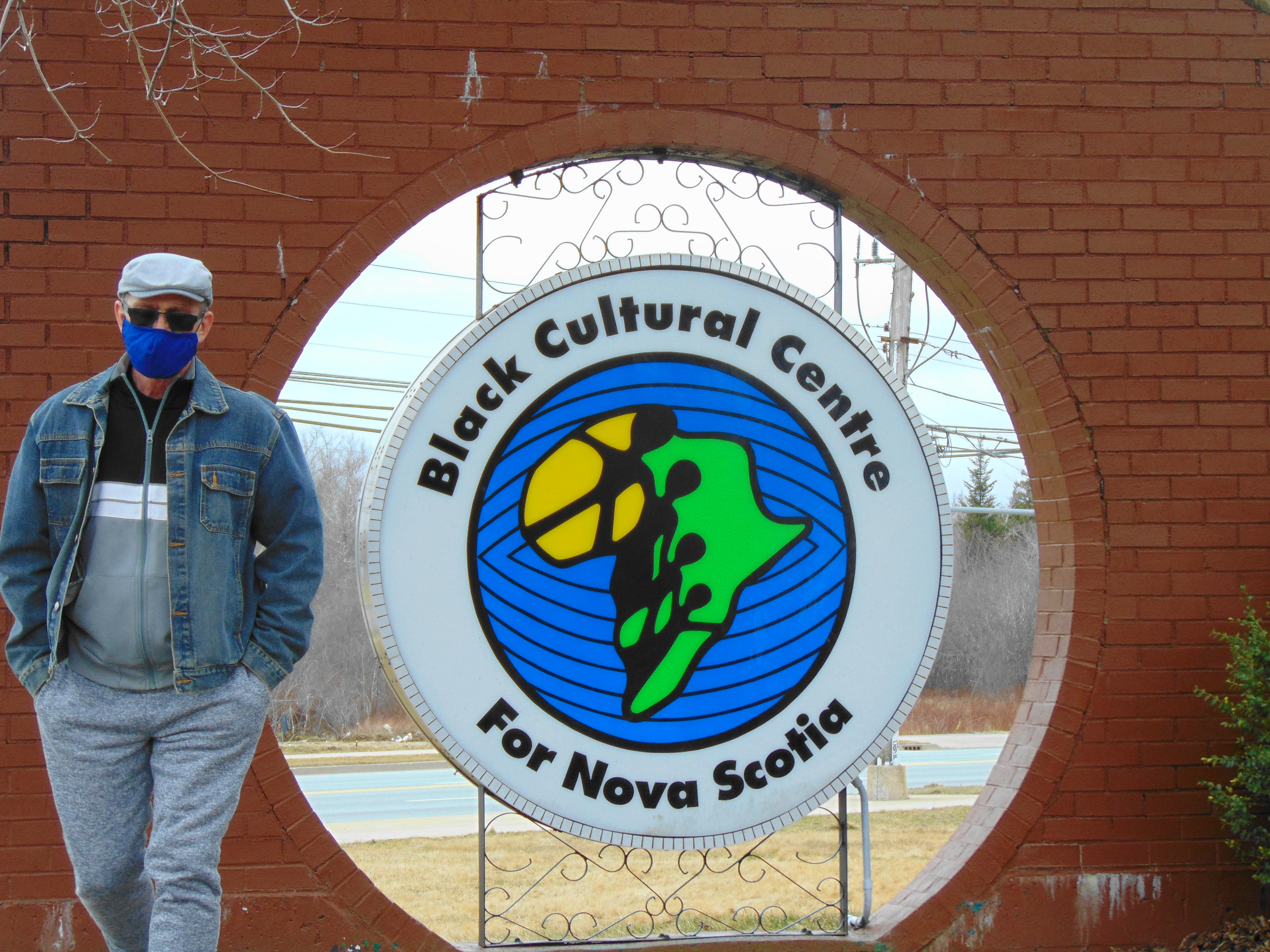
Oczywiście, punkt widzenia zależy od punktu siedzenia. Ludzkie, normalne. Takie mamy horyzonty myślowe, jakie mamy horyzonty widzenia, postrzegania.  Jedni siadają, prawie bez zastanowienia się, gdzie mają ochotę, bo wolność jest dla nich czymś naturalnym, prawie automatycznym – inni stoją zakłopotani aż im ktoś wskaże, gdzie usiąść mogą.

A w tym temacie już widzimy zmiany w Polsce i poza jej granicami. Andrzej Duda reprezentuje raczej dość wyraźnie tą inną ‘cywilizację turańsko-bizantyjską’, ten inny sposób myślenia, który postrzega granice cywilizacyjną i kulturową na Odrze. To nie może ulegać wątpliwości dla nikogo. Również dla tych głosujących za niego. I czas by się do tego sami sobie przyznali. By przynajmniej wiedzieli dlaczego taki wybór robią. Niech nie oszukują znajomych i rodziny, a tym bardziej siebie samych.

Spójrzmy na te ‘granice’:  Polacy między Bugiem a Odrą w I turze dali Andrzejowi Dudzie najwięcej głosów.  Za mało na pokonanie przeciwnika, ale tą potyczkę wygrał. Dostał 43.5 procent tych głosów. Prezydent Warszawy dostał 30.46 procent, na trzecim miejscu był Szymon Hołownia z blisko 14 procentami.  Lub trochę inaczej: na 16 województw, Trzaskowski wygrał tylko w trzech, a w 13 pan Duda. 

Natomiast, co zrobili Polacy spoza Bugu i Odry? Może być ciekawe, bo właśnie ten ‘inny punkt widzenia’ dający inną perspektywę i inny horyzont.  Na aż 84 państwa, gdzie Polacy głosowali, Andrzej Duda poniósł klęskę w … 76 państwach.  Zremisowali w dwóch. A Trzaskowski uzyskał najwięcej głosów w 75 państwach.  Procentowo przekłada się to na: Rafał Trzaskowski dostał 48.13 procent oddanych głosów, a Andrzej Duda tylko 20.86%. Jeszcze inaczej – Trzaskowski w ani jednym kraju nie spadł poniżej drugiej pozycji (czyli nawet w tych kilku gdzie wygrał Duda, Trzaskowski miał silną drugą pozycje).  Zaś Andrzej Duda spadł poniżej drugiej lokaty aż w 36 krajach, czasami aż do 5 (piątego) miejsca: za Hołownią, Biedroniem i Bosakiem. Szymon Hołownia był na drugim miejscu (za Trzaskowskim) w 32 państwach, a Robert Biedroń w 4 państwach.

I teraz kilka ciekawych spostrzeżeń z tych głosowań zagranicznych. Otóż najwięcej głosów dla Trzaskowskiego a najmniej dla Dudy padło w krajach, gdzie jest najwięcej Polaków, którzy wyjechali ostatnio z Polski, już z tej nowej, suwerennej Polski. Czyli tych, którzy maję najlepszą znajomość tej Polski, najbliższy z nią stały kontakt. I odwiedzając ją lub o niej rozmawiając z rodzina i przyjaciółmi z Kraju-zauważają różnice jakie w ostatnich pięciu latach w Polsce zaszły. Różnicę, która nie wypada dla Polski korzystnie. Bardzo wielu z nich traktuje ten pobyt zagraniczny, jako czasowy a Polskę widzą, jako docelowy punkt powrotu i zamieszkania.  Różnica miedzy nimi a tymi, którzy teraz mieszkają w Polsce polega tylko na widocznym horyzoncie postrzegania, na owym punkcie widzenia. Jak widać z podanych wyżej statystyk wyborczych , ta różnica jest bardzo duża.

Natomiast w kilku krajach licznej bardzo, ale tzw. starej Polonii – padło więcej głosów dla Andrzeja Dudy. Są to środowiska bardziej konserwatywne, przyzwyczajonej przez długie lata do stanowczej obrony tzw. dobrego imienia Polski. Gdzie każdy (czasem nawet zasłużony) krytycyzm Polski postrzegany był, jako próba oczerniania ukochanej ojczyzny. Choćby te popularne w Ameryce Północnej żarty o ‘Polaczkach’. I silne przyzwyczajenie do polskich kościółków i parafii, które historycznie były centrami spotkań nie tylko religijnych ale i politycznych, polskich szkółek dla dzieci prowadzonych na ogół przy tych kościółkach. A Kościół jest, jak wszyscy wiemy, instytucjonalnie bardzo związany i silnie finansowany przez partie Andrzeja Dudy i obecny rząd PiS.  Tak się głównie dzieje w USA i w Kanadzie. Tutaj też jest stosunkowo najwięcej (nawet więcej niż w Polsce, procentowo patrząc) zwolenników Konfederacji i pana Bosaka, który w Kanadzie np. uzyskał więcej głosów nawet od Szymona Hołowni.  Ale Szymon Hołownia, często widziany, jako działacz katolicki, reprezentuje katolicyzm współczesny, bardziej postępowy. A Kościół polski obecnie reprezentuje katolicyzm zbliżony do idei pana Bosaka – skrajnie na prawo, czasem wręcz w kolorze brunatnym (tak określam wczesny, przed hitleryzmem, faszyzm niemiecki Rhoma i jego SA).

Inne, dość zaskakujące ( mimo to zgodne z generalnym opisem podanym wyżej o Kanadzie i USA) to skrajnie różne wyniki w różnych Komisjach Wyborczych/Konsulatach. W Kanadzie wybory miały miejsce w: Montrealu, Ottawie, Toronto, Vancouverze.  Wyjątkowo krótkie okienka czasowe na wysłanie pakietu wyborczego do Konsulatu połączone  z olbrzymimi obszarami, jakie te cztery miejsca obsługiwały – de facto uniemożliwiły tysiącom osób oddania głosu.  Setki, jeśli nie tysiące, osób dostało pakiety w piątek (wybory były w sobotę poza Polską), lub dostały już po terminie wyborów.  Nie ma powodów ani dowodów, że było to efektem celowego opóźniania i dywersji samych Konsulatów RP. Jest natomiast jasne, że było to efektem świadomego przeforsowania takich a nie innych przepisów w sprawie tych wyborów korespondencyjnych (tylko takie mogły się , ze względu na pandemie odbyć w innych krajach), które wyraźnie ograniczały konstytucyjne prawa wyborcze obywateli polskich zamieszkałych poza Polską.

Ale wracając do szczegółowych wyników w Kanadzie:  Rafał Trzaskowski zajął zdecydowanie pierwsze miejsce w wyborach w Vancouverze, w Ottawie, w Montrealu. Andrzej Duda zajął pierwsze miejsce tylko w Toronto.  Ale w tym jedynym Toronto – jego przewaga głosów była miażdżąca i zmieniła tym samym efekt wyborczy na całą Kanadę. Dlaczego?  Trudno w kilku zdaniach dać głęboką analizę. Podam tylko kilka faktów i spostrzeżeń człowieka, który zna środowisko polskie w Kanadzie dość dobrze na przestrzeni blisko 40 lat. Toronto polonijne było i jest  pewnym odbiciem Chicago polonijnego w Stanach (zresztą bliskie sobie geograficznie też).  Bardzo duża ilość Polaków tam, lub w okolicach, się osiedliła, od czasów bardzo dawnych.  To wielkie miasto oferujące emigrantom dużo więcej możliwości niż ośrodki mniejsze.  Nie tak odległe i dobrze przeze mnie pamiętane były czasy gdy idąc od Bloor St. do Roncesvalles Avenue i w dół – wyglądało, jak spacer na chicagowskim Jackowie: polskie napisy, polski język, polskie kościoły. I zdecydowanie nie było to ‘miasteczko akademickie’, pod jakimkolwiek względem … . Patriotyzm był tam zawsze dość silny. Tylko właśnie ten typu ‘hurra’ lub wręcz tzw. kibolski. Patriotyzm refleksyjny, krytyczny – wiązał się już w tej polskiej dzielnicy z poważnym ryzykiem.  No i nie ma w całej Kanadzie, od Atlantyku po Pacyfik, ani jednej polskiej parafii, która by była takim potentatem finansowym, jak parafia św. Kazimierza (na ,polskim Ronceswilu’ właśnie). Skromna kasa pożyczkowa  w formie  credit union w ciągu lat urosła do rozmiarów niezłego banku.  Nie zawsze metodami legalnymi. Pamiętam, jak odwiedziłem niezłych rozmiarów … bank św. Kazimierza w Warszawie, obok Operetki Warszawskiej (teatr ‘Roma’). Dziś już w tej formie nie istnieje. Ta i inne inwestycje torontońskiej parafii stały się centrum poważnego dochodzenia kryminalnego Biura Nadzoru Bankowego prowincji Ontario.  Efektem było zamknięcie (unikając  skrzętnie zbyt dużego nagłośnienia sprawy) tych gałęzi bankowych skromnej kasy pożyczkowo-zapomogowej. Czemu o tym piszę w tym kontekście? Bo wydaje mi się, że gdy się ma rząd dusz (religia) i rząd sakiewki (credit union/bank spółdzielczy z głębokimi kieszeniami), to ma się bardzo silny wpływ na społeczność, w której się funkcjonuje.  Może się mylę, nie jestem z wykształcenia antropologiem ani nawet socjologiem, a zwykłym gryzipiórkiem-publicystą.  Takie (oczywiście na dużo mniejszą skalę) kasy pożyczkowo-oszczędnościowe istniały (istnieją?) prawie przy wszystkich polonijnych parafiach w Kanadzie.  Podobnie, jak szkółki dla dzieci polonusów. Takie będą Rzeczypospolite, jakie będzie ich młodzieży chowanie, panie Kanclerzu Wielki Koronny, Ordynacie Zamoyski? Może się mylę … .

 O tym, czy były systemowe, zaplanowane sposoby supresji  prawa wyborczego Polaków przebywających poza granicami Polski pisze inny mój kolega-bloger, były Koordynator KOD_USA-West, https://dobek.org/2020/duda-a-niewazne-glosy/

Przez fakt, że w wyborach, mimo wszystko, liczy się tylko głos indywidualny, łatwo się zorientować, że wygrana w trzech lub czterech okręgach, gdzie jest niska ilość głosujących, może być łatwo zniwelowana tylko jedną wygraną w jednym okręgu, gdzie uprawnionych do głosowania  jest wielokroć więcej.  Stąd jest ważne by głosujący w tych małych liczebnie ośrodkach, jeśli chcą by ich głos się liczył i miał wpływ, mobilizowali się silniej i liczniej. Ważne tu są silne związki koleżeńskie, socjalne. Stały kontakt lokalny. Zwłaszcza w czasach pandemii, która wszystko to utrudnia.

Cóż, na zakończenie wracam do mojej symboliki stołecznej. Bitew warszawskich. Lub bitew dwóch prezydentów – Miasta i Państwa zamieszkałych w Warszawie. To są autentycznie dwie kardynalnie sobie obce i przeciwne wizje Polski: jedna Trzaskowskiego, druga Dudy (lub dokładniej tego, który Dudą steruje, Jarosława Kaczyńskiego). Teraz już nie ma innych żołnierzy w turnieju (chciałem użyć bardziej adekwatnego porównania (w turnieju są rycerze) ale znowu ręka się zawahała …), tylko ta para. Nie ma już znaczenia umiarkowany czy skrajny prawicowiec, lewicowiec, liberał, czy socjaldemokrata, zielony czy czerwony. To detale tu mniej istotne na finiszu. Istotna jest wizja Polski i jej miejsca w cywilizacjach, kulturach: w którym związku kulturowo-cywilizacyjnym chce być?  Takie sobie postawcie pytanie i szczerze na nie odpowiedzcie.  Wybór (jakikolwiek by nie był) będzie wówczas łatwy i prosty, bo różnice są bardzo wyraźne.