
Bogumił Pacak-Gamalski
The day we wear the red poppies attached to our other clothing. Why? Because on Flanders fields in Europe the red blood form thousands of young Canadian and Commonwealth countries soldiers saturated the fields so much, that a carpet of red poppies covered the dead ones mercifully and gave them peace. The final peace.
Did you know that the last soldier killed in that awful war was a Canadian boy from Saskatchewan? He was shot few seconds before the clock on the town’s square struck the 11 th hour. The armistice was signed already, the big guns were silent. That boy just went from his trenches to that little village/town to look around. Near by, stood a German soldier, a sharpshooter. He saw the allied soldier from far away, check the clock on the town’s tower and seeing that the large needle did not reach ’11’ yet – he aimed, pulled the trigger. The Canadian boy fell down instantly. Nothing was gain by it, not a single inch of land moved hands. By the time he gave his last breath – the war was over. The German soldier stopped being his mortal enemy, he stopped being the enemy of the German soldier.
The impossible stupidity of all wars. I remember I wrote a poem about that Saskatchewan boy many, many years ago. Now, every November 11 I remember some of the names of some of the great commanders of the massive armies, remember some of the huge battlefields on the Maginot Line, the gases used to kill silently hundreds of them, the awful swamps red-brown from the blood of the soldiers, who were ordered to climb over the trenches and mount another useless attack on foot and being instantly cut down by first submachine guns. Being cut like flowers by stroke of scythe. Later, after the guns stopped, the war ended – the fields were red not from blood, but from the poppies.




And I remember that lonely boy from Saskatchewan, who never really knew why they were fighting, probably knew from some small school near his town the name of the British king, the one he was going to die for. But why? He ever saw any big town or city in Canada – until he was on the train and saw the stations of Winnipeg, Toronto, finally Montreal, where he boarded a huge ship with hundreds of other boys and went across the huge and cold ocean. I’m sure he become seasick many times.
A boy from the prairies on a ship in the middle of Atlantic! He would have many stories to tell family and friends for many years to come! But he didn’t. He died, in that strange village. After being told by his officer or sergeant that the war is over. He did not tell stories his parents or grandparents. By now his parents are dead, his grandparents are dead, too. If he had any siblings and his siblings had children – they are dead, too. Many years, more than a hundred have passed.
But I remember him, more than any other king, general or Prime Minister from that time in the Commonwealth and Great Britain. Just by now, I am myself so much older than he is. I suppose by now, I am his grandfather?
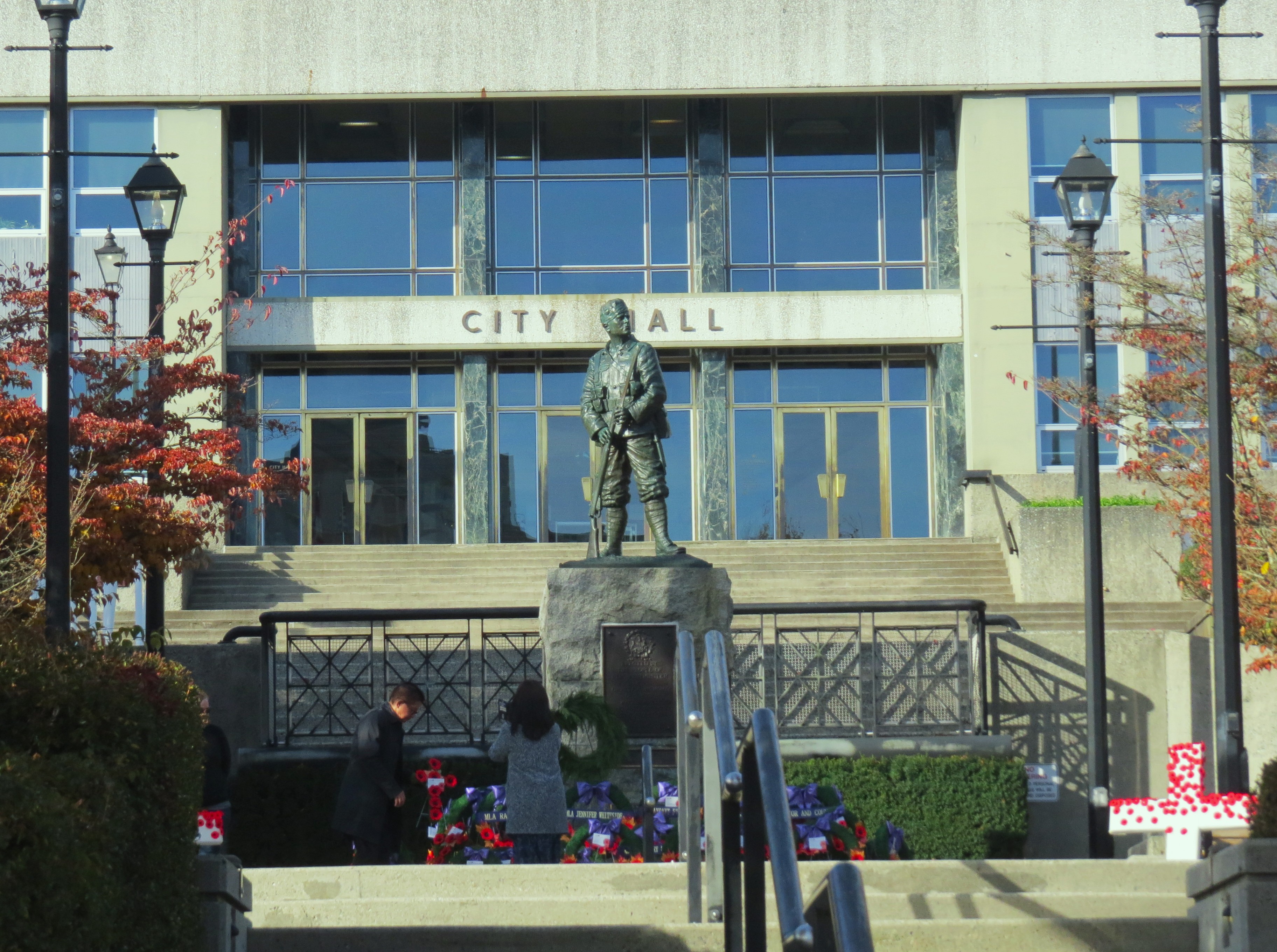
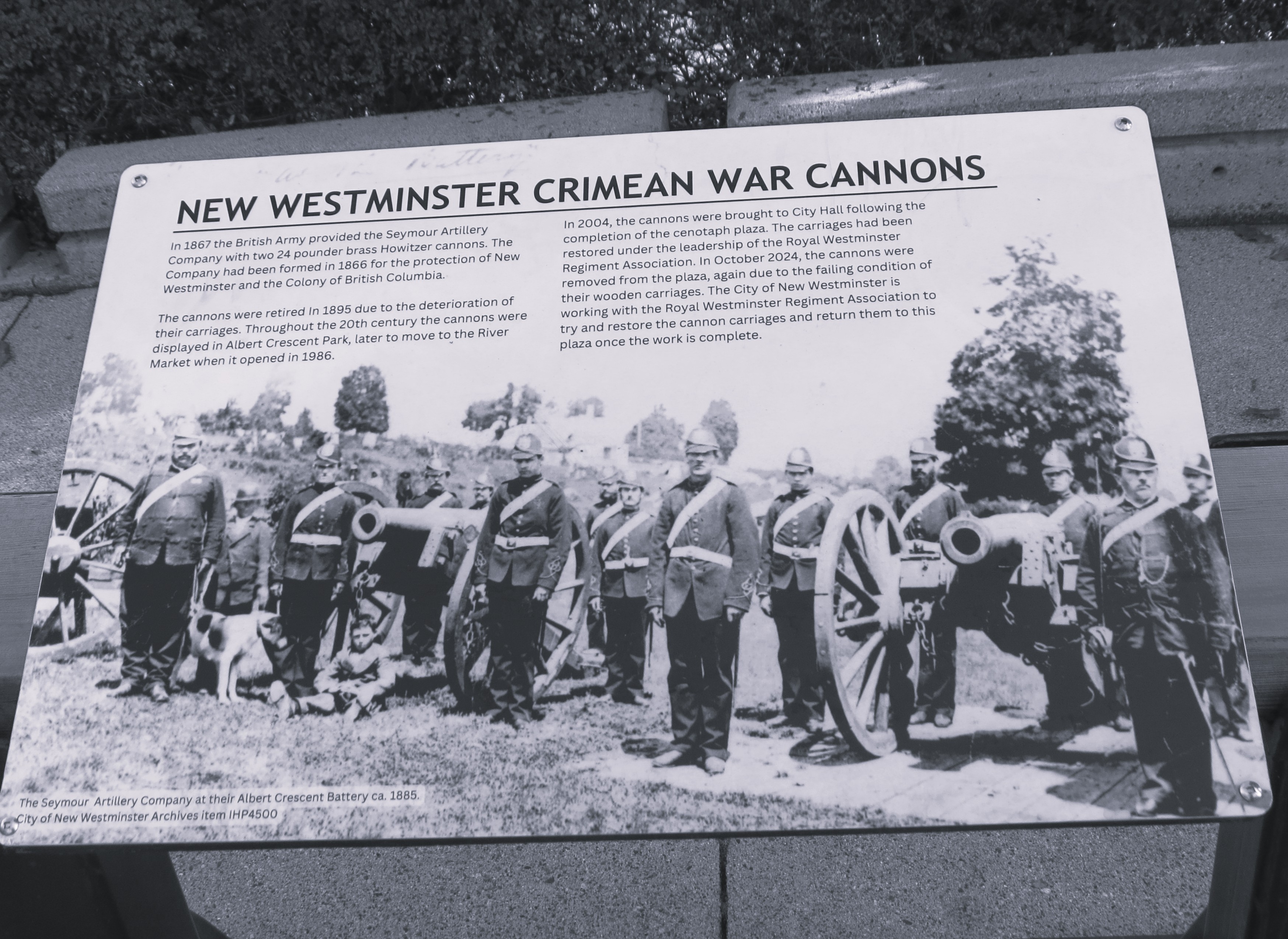
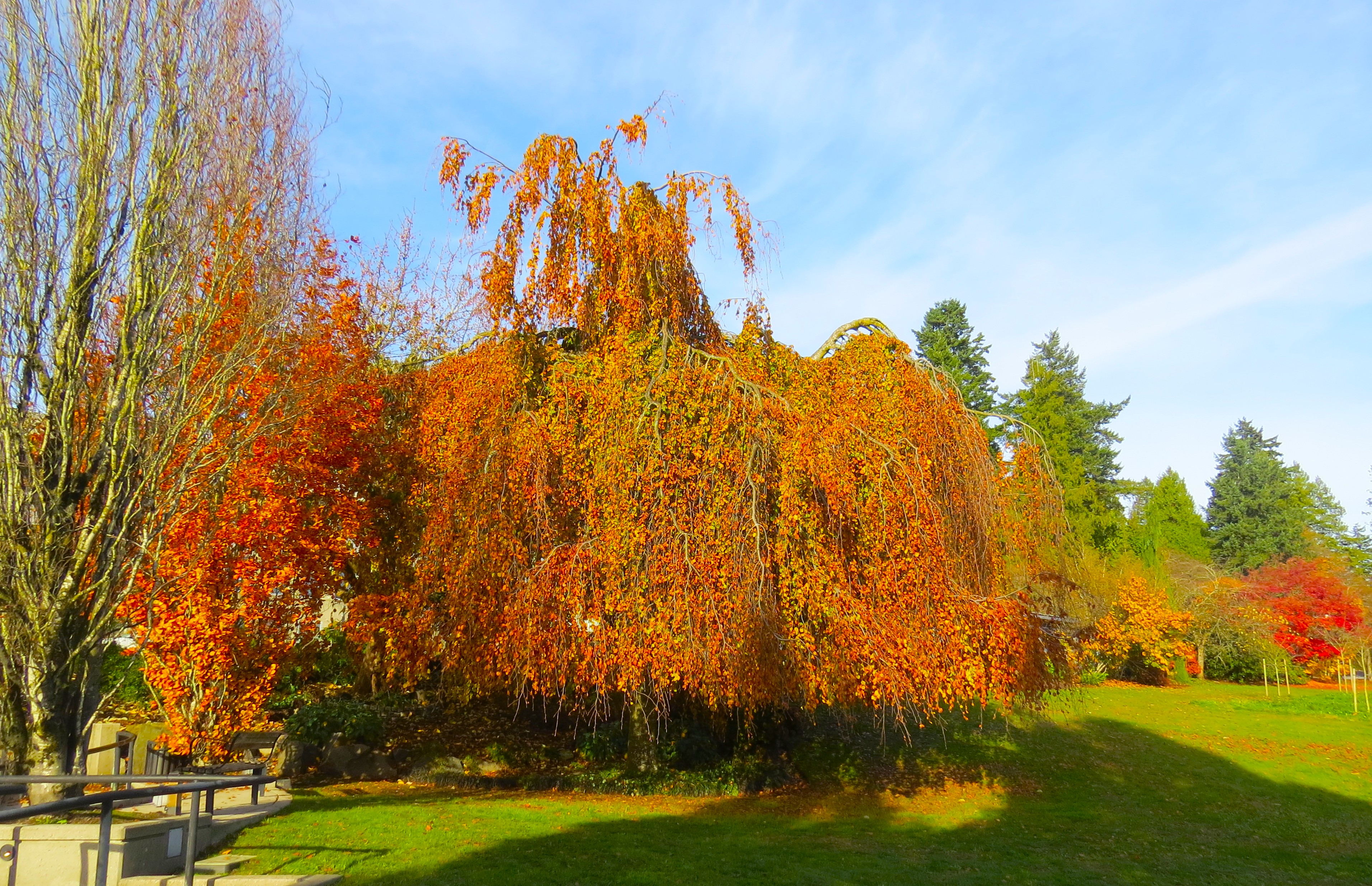
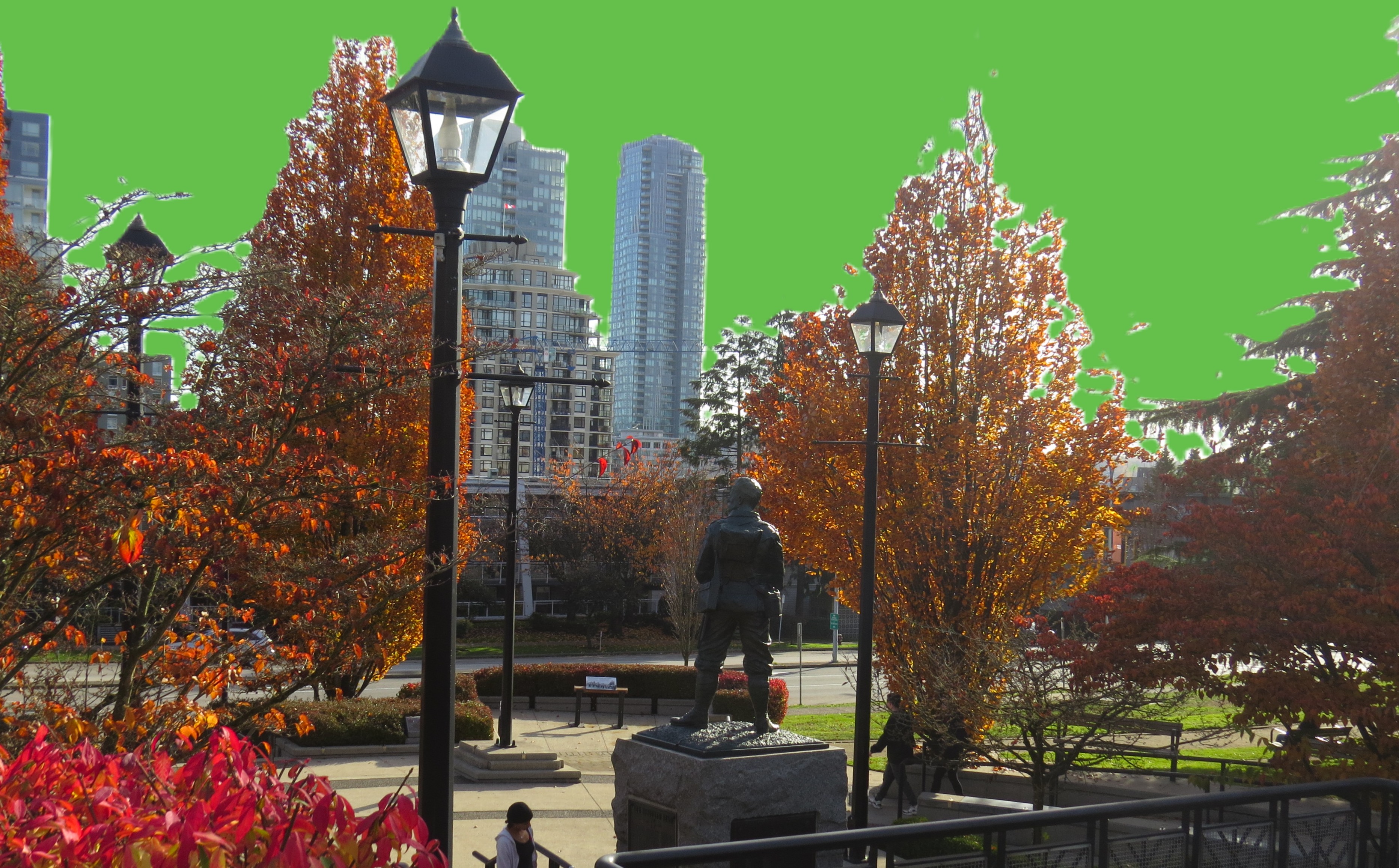
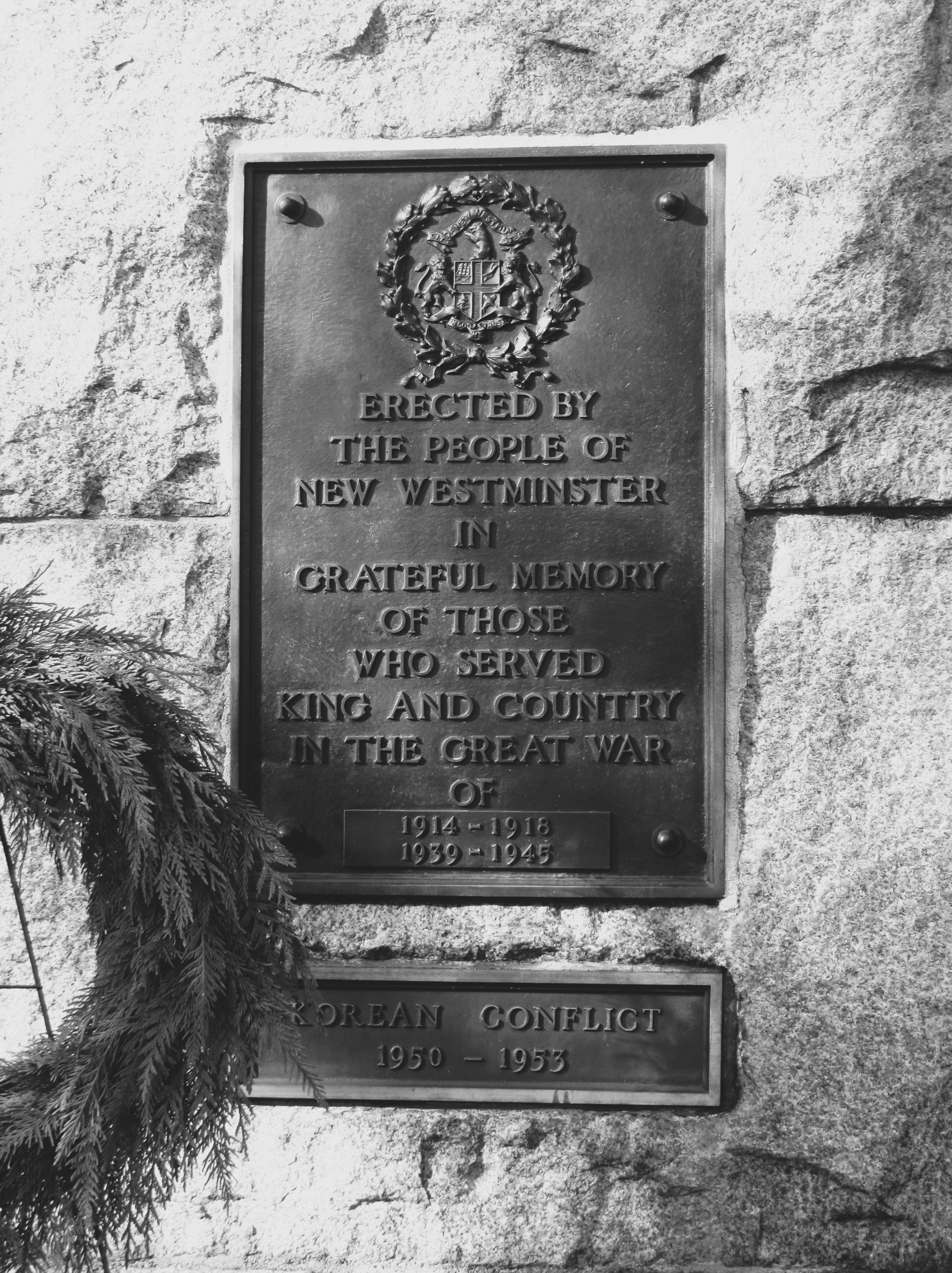
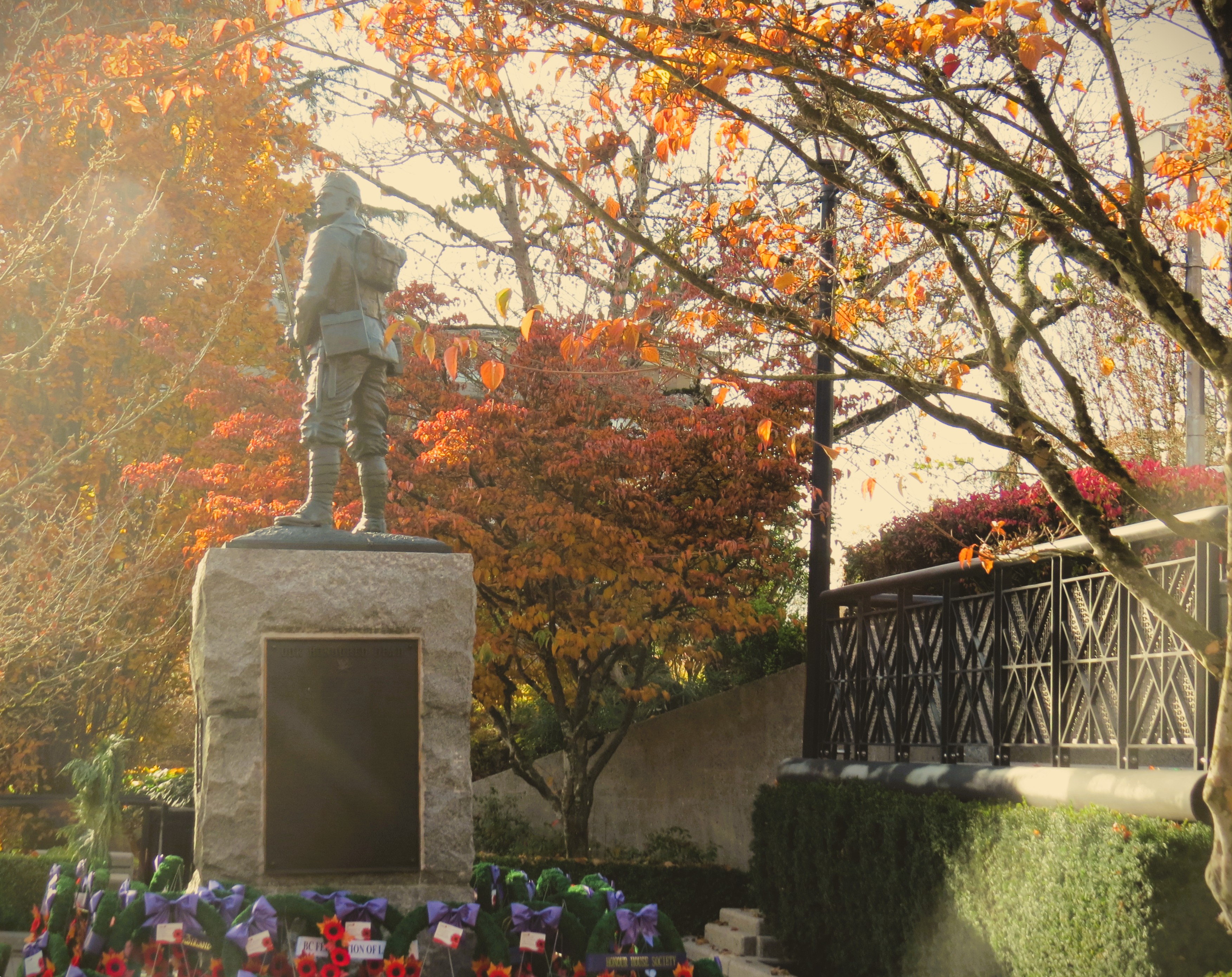
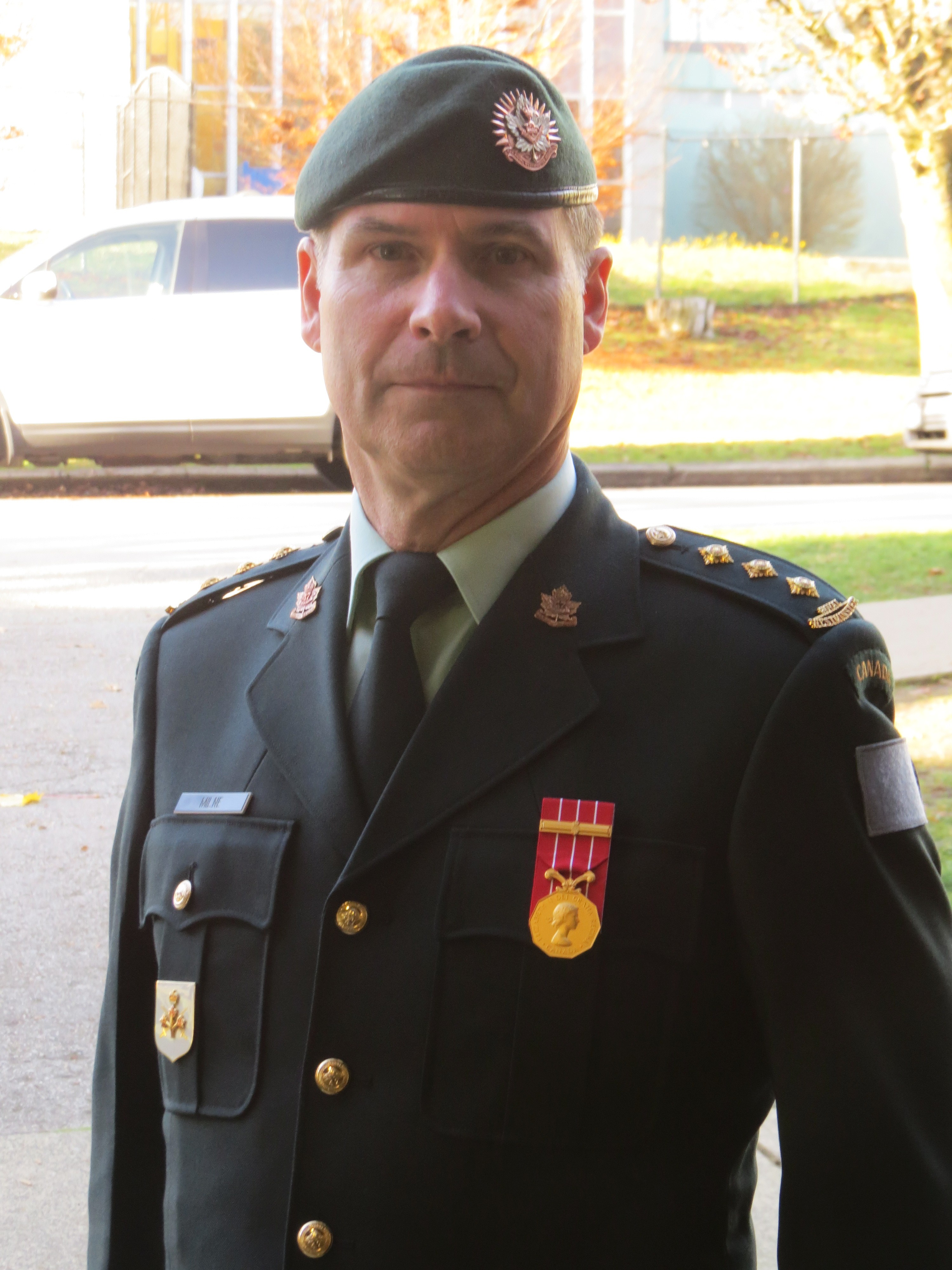
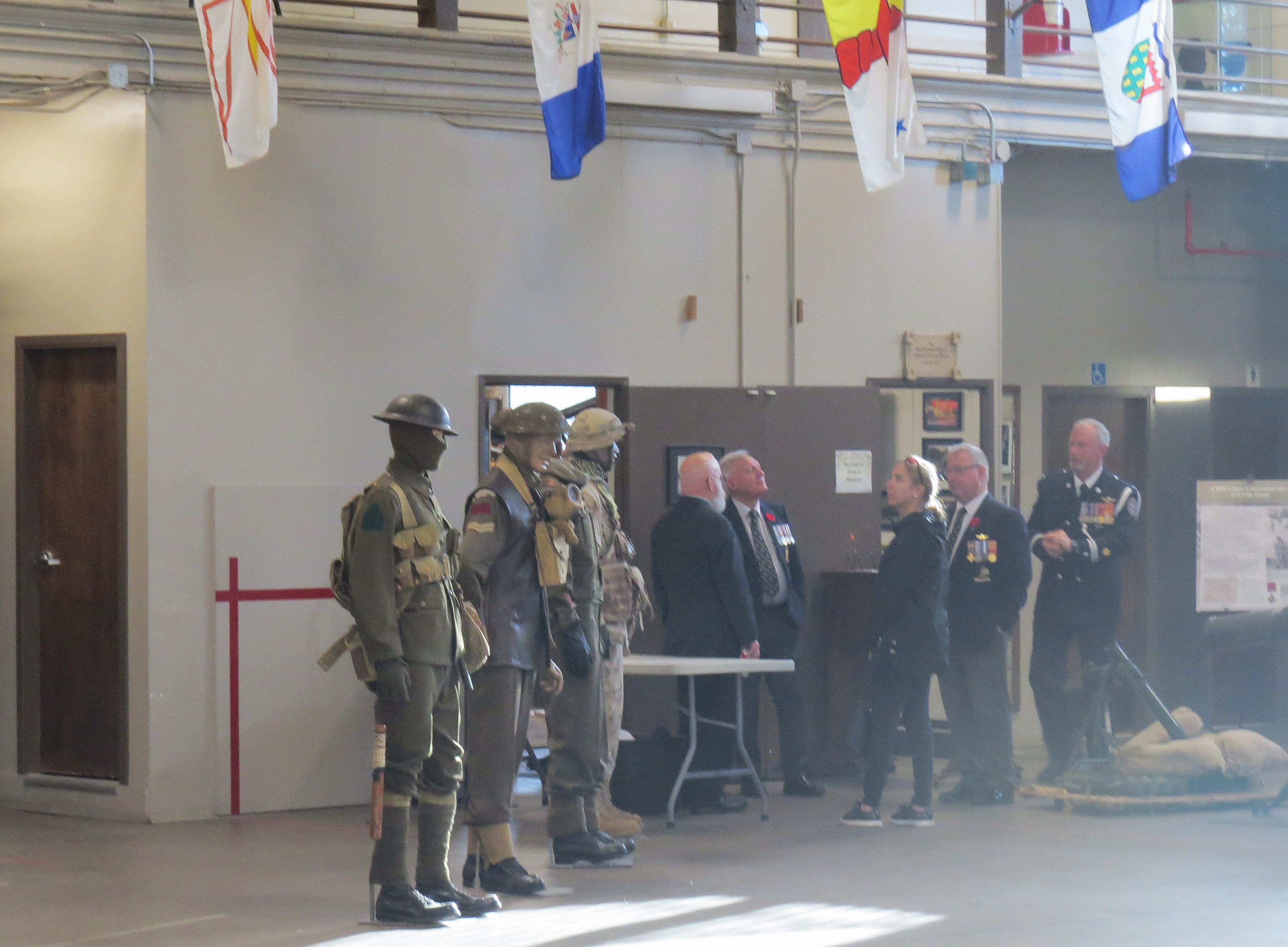
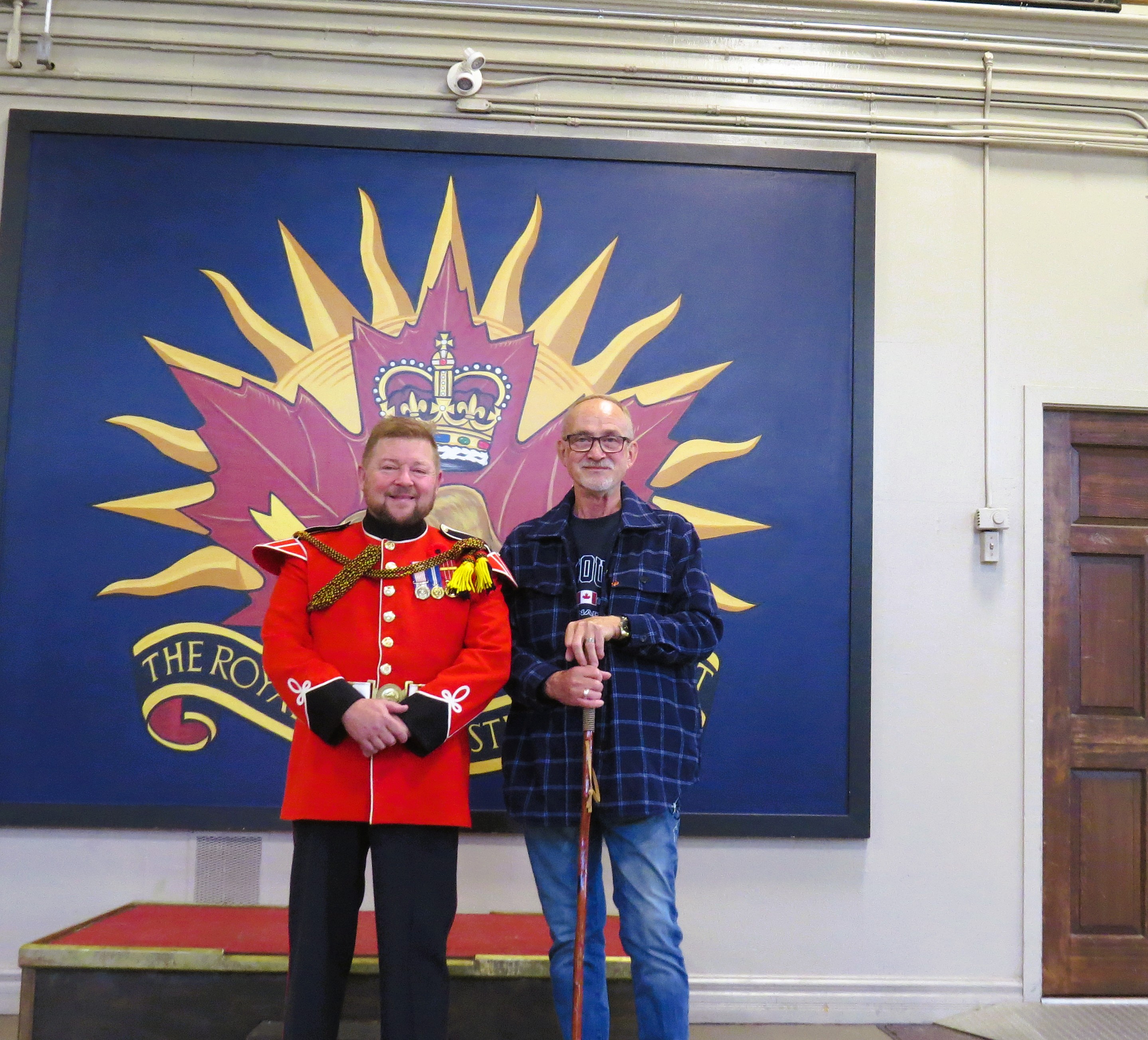
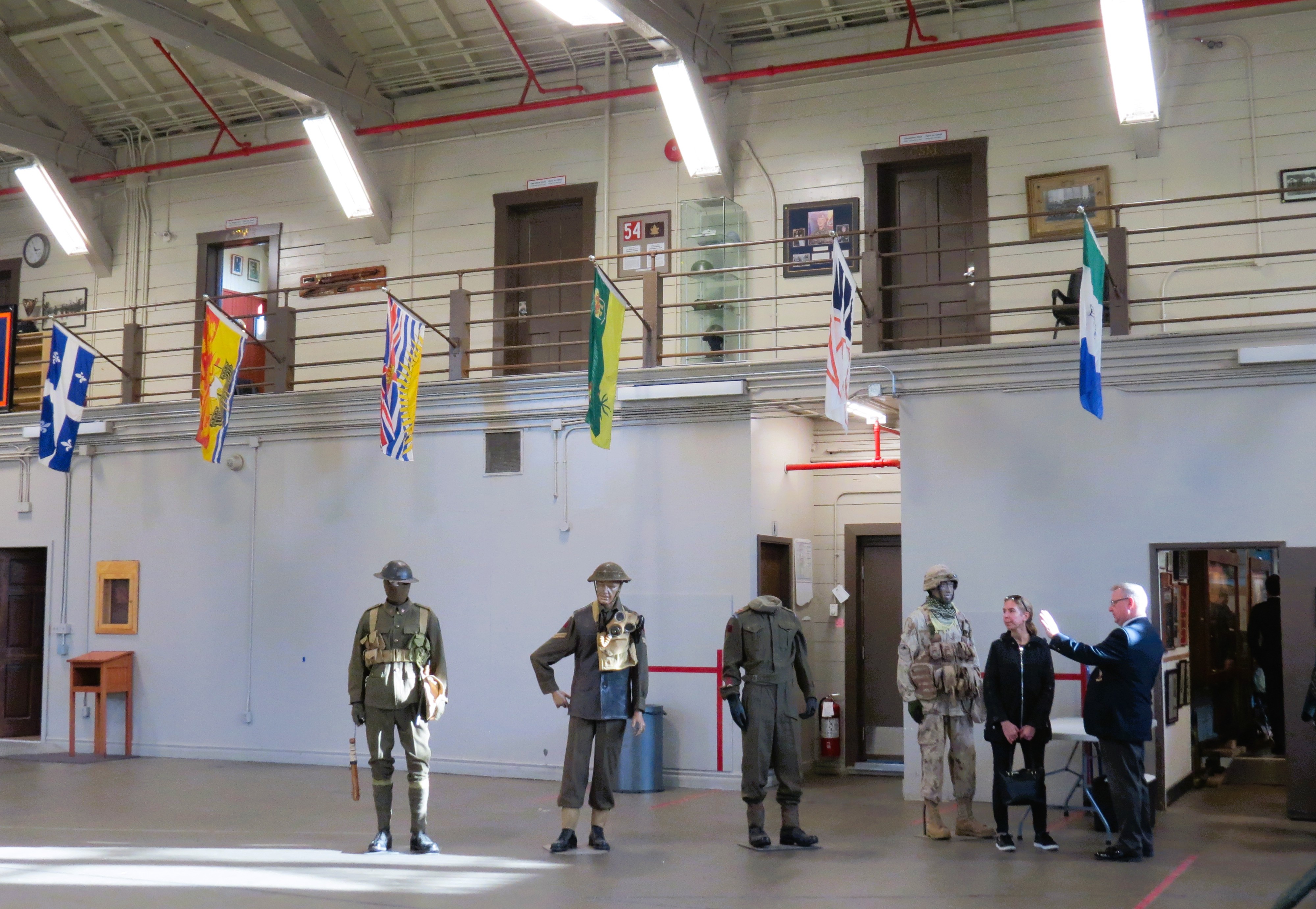
These were my thoughts on a sunny, colourful Fall’s day, as I walked to the City Hall and our Cenotaph in New Westminster. Later, a short walk through the park to the Armory, a chat with a Captain, who was in command of the troops, who organized the short parade and laying of wreaths. His father (or was it grandfather?) served in the 2nd world war and took part in landing across the Ardens, near Falaise Pocket. I told the captain that my personal friend, Ted Kaminski was a parachuter in the 1st Polish Airborne Division and was dropped along his many friends to support the advance of a tank divisions of allied forces (among them the Canadian 1st Army of general Harry Crerar and the Polish Tank Division of general Stanislav Maczek). The Polish paratroopers were able to encircle major German forces in a Falaise Pocked, thus definitely eliminating a great many casualties of the marching allied tank formations. And I was able many years after the war to meet personally that Polish general of the Armored Division in that battle. I met him In London, I think must have been in 1982. We had nice chat. Therefore the young captain of the Canadian soldiers, whose father fought during the last world war near Falaise, had an invisible connection with my life and people I knew. Through events eighty years ago. Indeed a strange chance encounter.
But most of all, I thought of you, my young boy from Saskatchewan, who died when the clock in some village in Europe struck the 11th hour. When the guns went silent and when you took your last breath.









post scriptum:
just as a side note: over the last forty odd years I observed Remembrance Day every year. Sometime by just solitary or with my husband, individual visit to many Cenotaphs. Once in Calgary, in the late 1980s very officially: in the company of Mayor of Calgary, Canadian general, Commander of the large garrison in Calgary and the President of Polish Combatants Association in front of the Cenotaph, by the 3rd Street, in front of the old Library.
This year is the very first year that, to my shock I must admit, a majority of passers bye on the street did not wear a poppy. It was so noticeable. It shows a tremendous lack of respect to the memory of the people, who gave their life for us to be free in our country. I actually felt angry that these people showed such a cowardly indifference to my boy from Saskatchewan. No more on that subject, but just so you know what I think of you. And it is not much.
 > > Pogwarki < <