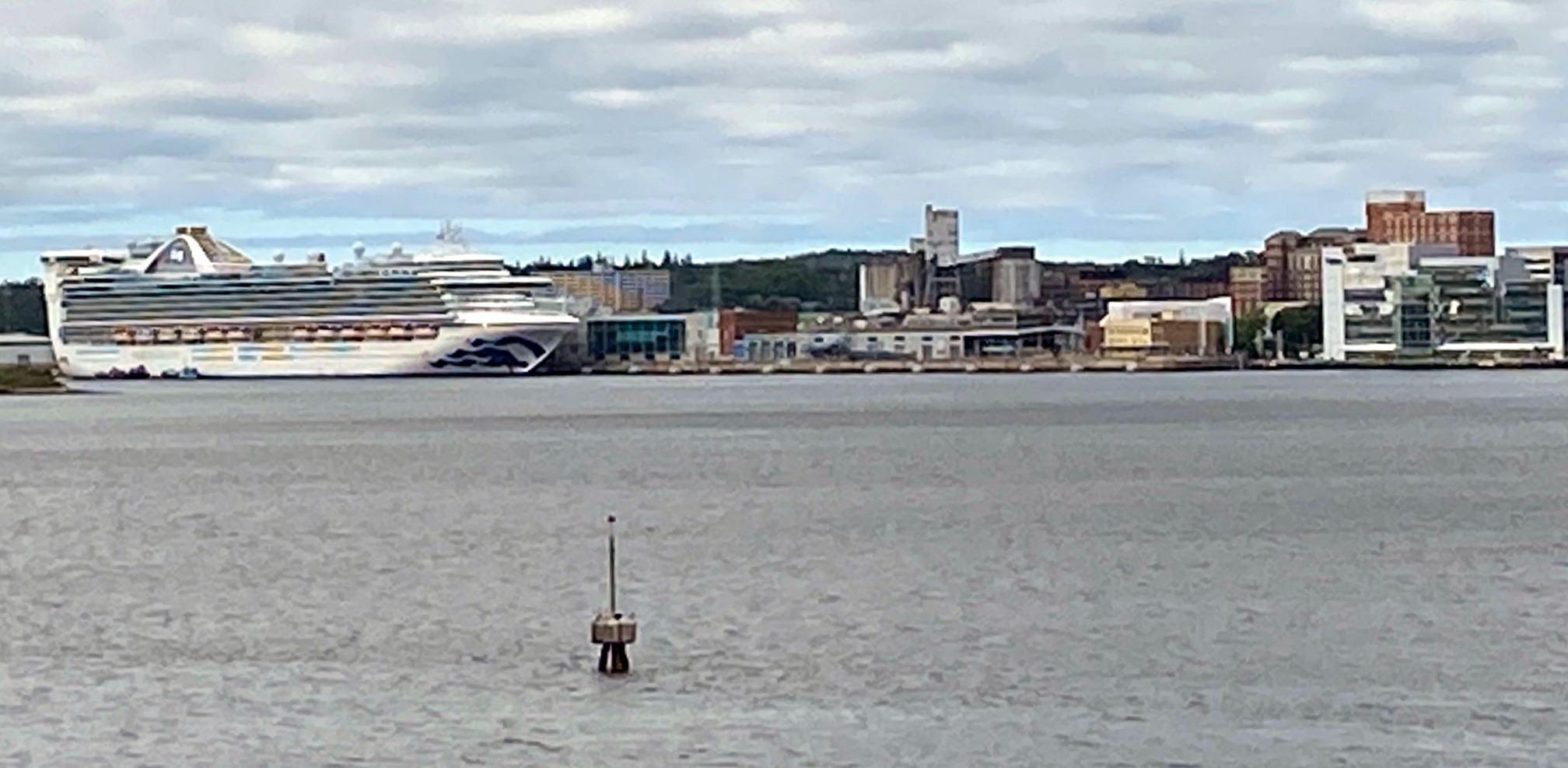
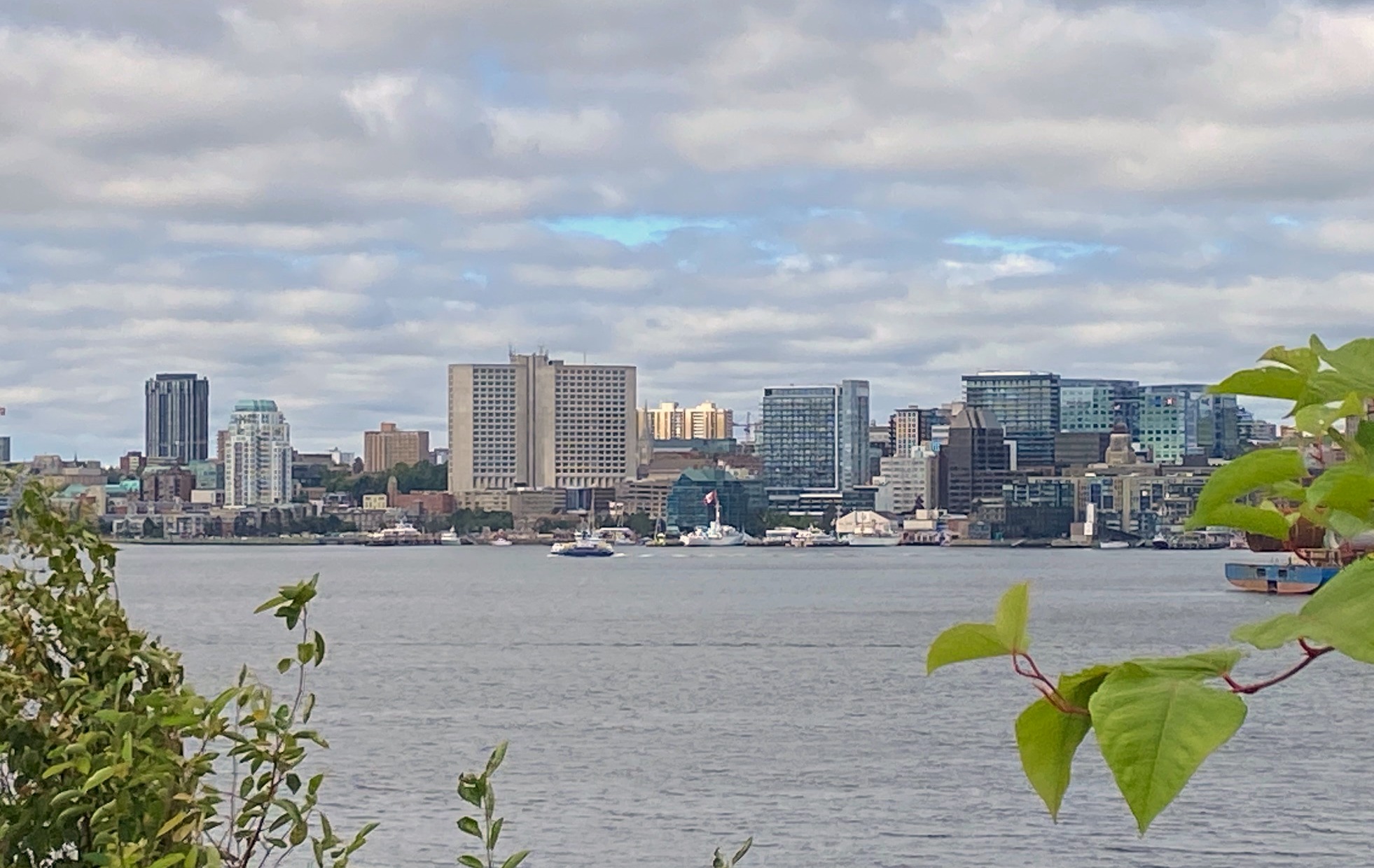
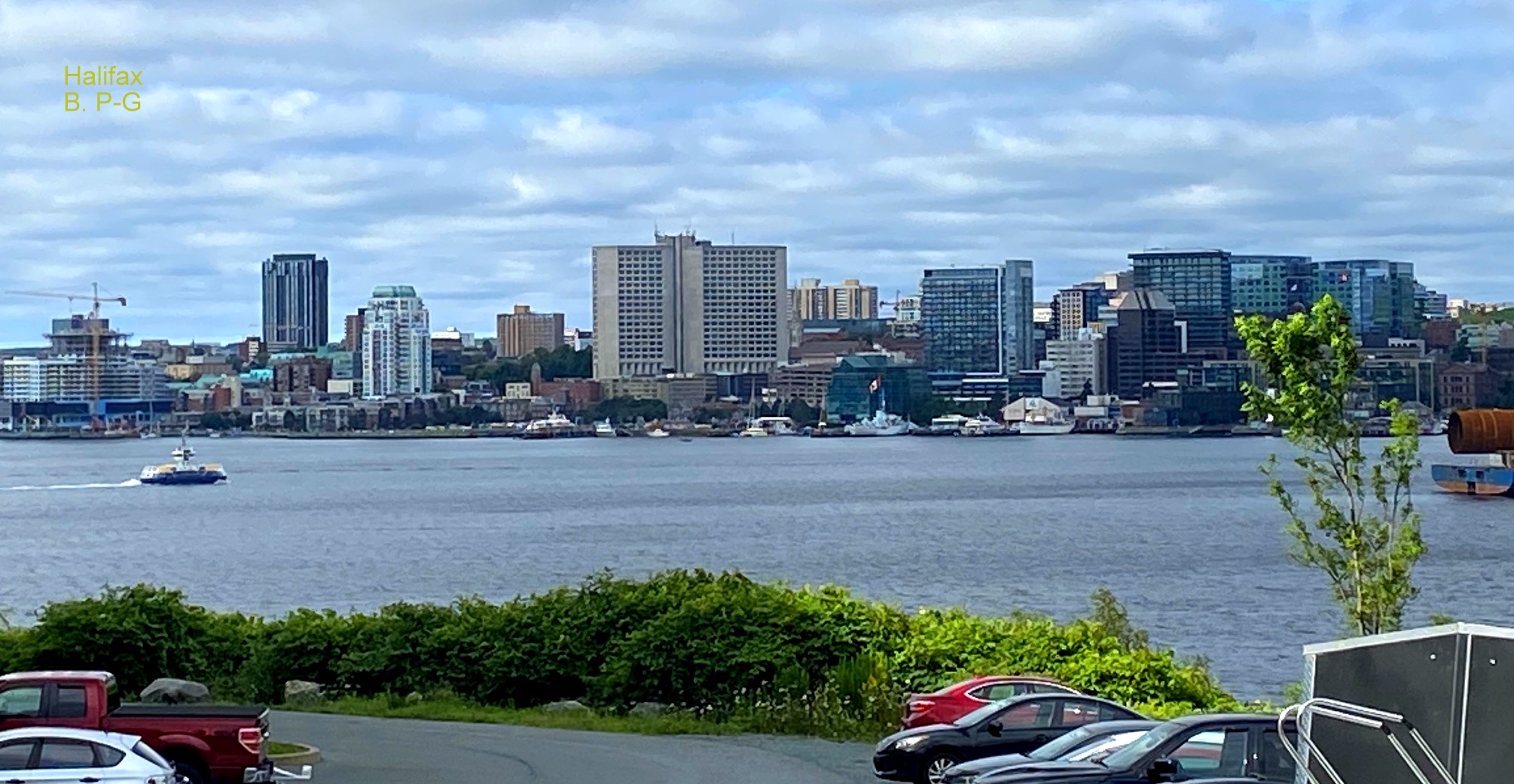
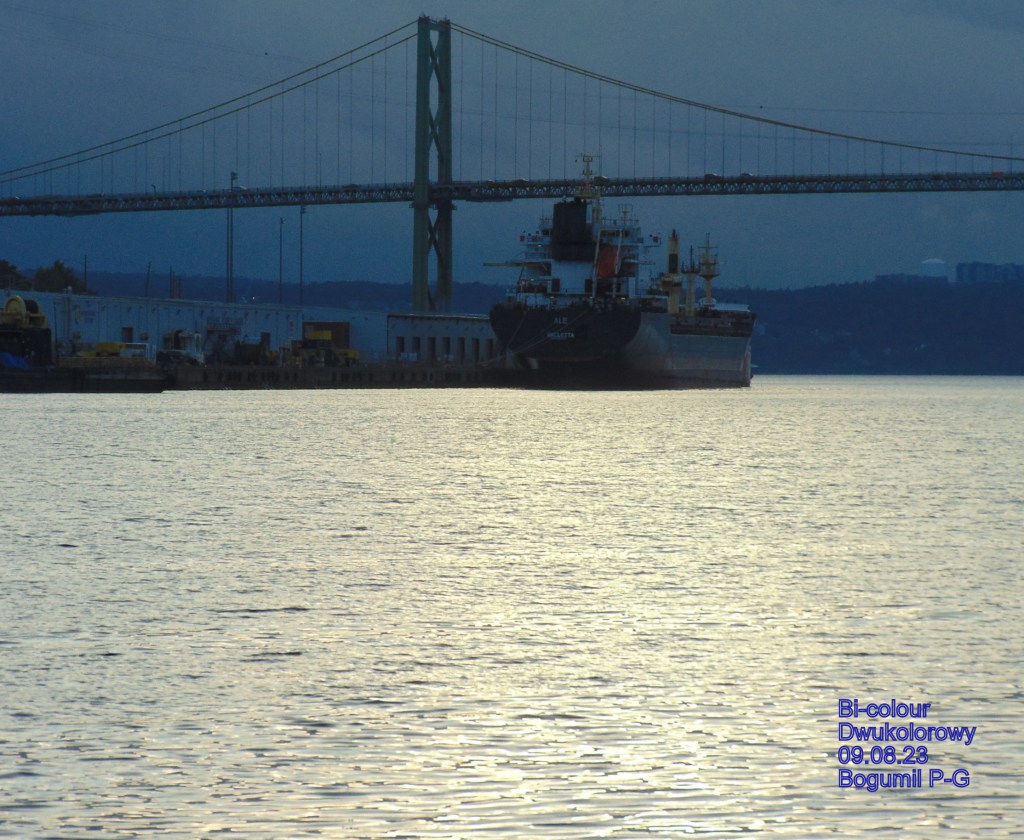
The only way you can really appreciate the view of the entire downtown of Halifax – is to drive across the bridge. You can go on My Rocks to North Dartmouth. The view is very nice but you can see it only at an angle. If you want to snap a few pictures en face – the only and truly wonderful is to take the Trans Canada Trail from the Cove. The walk is splendid. There are benches to take a rest and … enjoy! Go ahead, take a few snaps. I stopped there this morning, on the way back from the hospital.
View of the Cove on Dartmouth side – where the Trail starts.
The shores of the Atlantic in Nova Scotia offer unparalleled vistas. Both: natural, not needing any augmentation or adjustments, and some that just beg to be transform into another realm of possibilities. What we see and what we imagine. Which is true?
In my walks, I never forget to take my camera. Not that we really need one these days – after all, we all have smartphones.
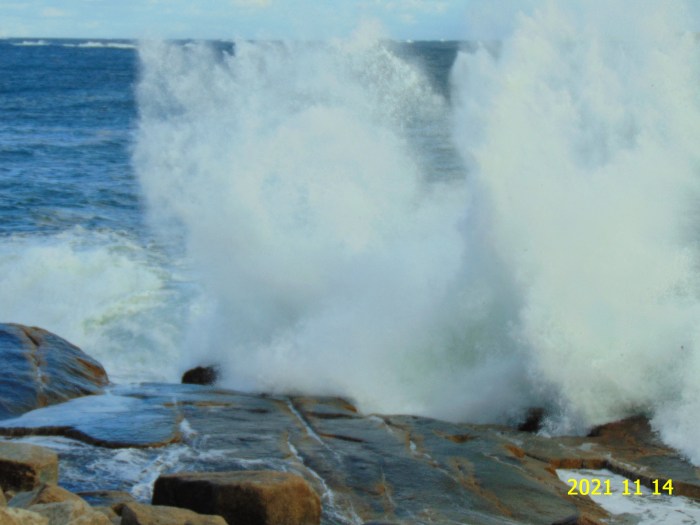
Many of these ‘travels’ are just under my nose, on My Rocks next to home. But even there – I always find something that is or seems to be different. Light? The hour of the day or night? The season? The variants are plentiful.
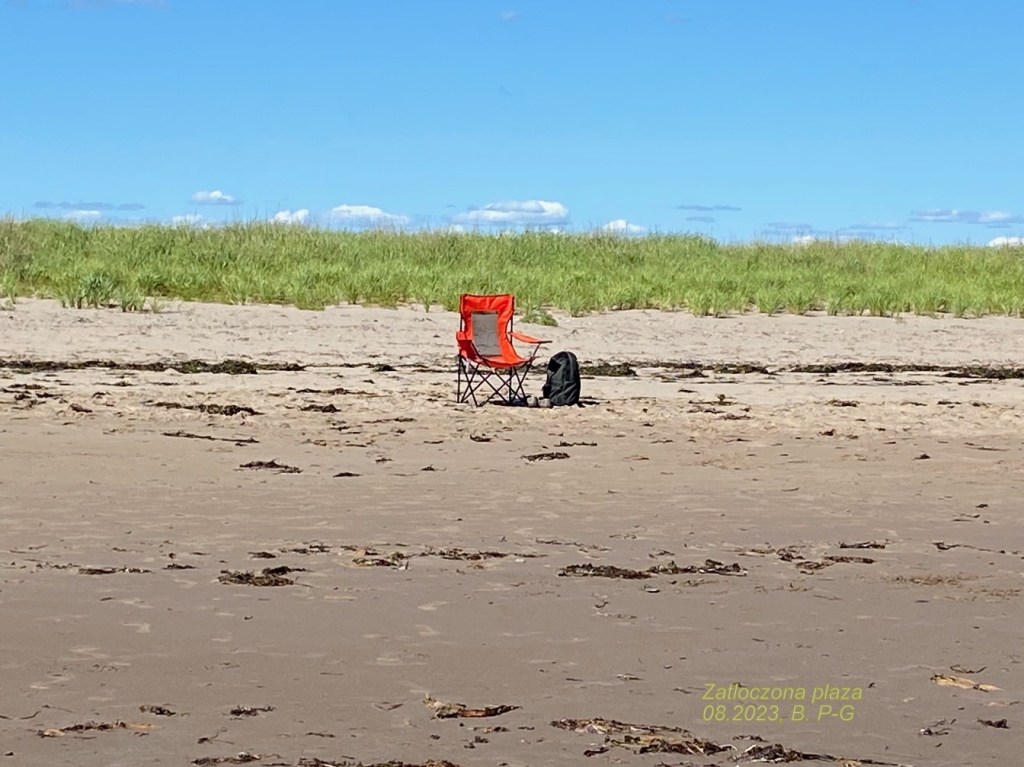
Plaże i lato. Pierwsze bez Ciebie. Tak, wiem. Nie byłeś ani plażowiczem ani amatorem opalania się i pływania. Jeżeli już to w basenie, a nie w miejscach z żywymi stworzeniami. Mimo to jeździłeś ze mną. Bo wiedziałeś, że to dla mnie ważne. Kocham morze i pływanie w nim. A ty kochałeś mnie. Braliśmy więc jakieś parasole i ochraniacze dla Ciebie, nigdy (prawie nigdy, LOL) nie namawiałem Cię do kąpieli. Ale czasem i to robiłeś kiedy woda była spokojna, przejrzysta i mogłeś widzieć, czy coś w niej nie pływa, nie czyha na Ciebie. I pod groźbą zabójstwa kategorycznie zabraniałeś robić mi zdjęć w tych momentach. Ale czasem zapominałeś się i spacerowaliśmy razem po pas w wodzie chodząc długo wzdłuż brzegu, zwłaszcza gdy nie było obok świadków tego przestępstwa. Kochałem te Twoje dziwactwa. Wobec moich występków były zaiste urocze. Ale kochałem jeszcze bardziej, gdy rzeczy robiliśmy razem: spacery, podróże, i tak – czasem nawet kąpiele w morzu razem. Bo gdy robiliśmy rzeczy razem było nam najlepiej, były najpiękniejsze, najciekawsze.
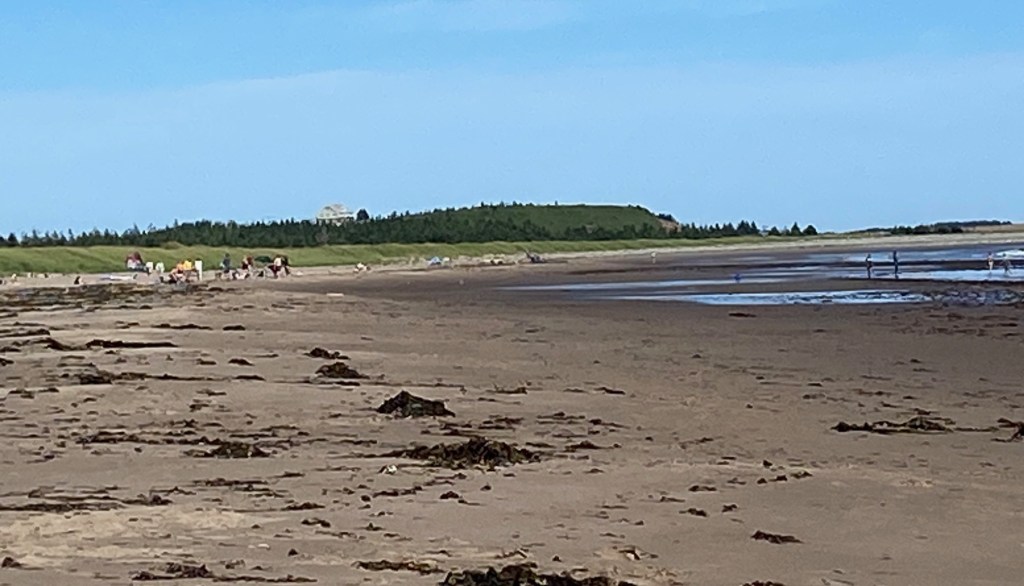
22 lipca byłem na plaży w Taylor’s Head Provincial Park. Skreśliłem siedząc na piasku kilka słów:
Tak, poznaję twój słony zapach, poznaje głęboki błękit wody, mieniące się niczym otwarta szkatuła dno twojej zatoki. Puszyste pierzynki chmur zawieszone nad skałami twych brzegów. Poznaję. Kiwam głową na przywitanie. Ze wszystkich moich miejsc tutejszej ziemi byłeś chyba mi najbliższe, najserdeczniejsze. Zawsze dawałeś spokój i ukojenie.
Tu zatrzymaliśmy się na odpoczynek wiosną w 22 roku. W czasie naszej ostatniej już długiej podróży z Halifaksu do uroczego Antigonish i potem szosą przez środek półwyspu, do Sheet Harbour. Nie wiem czy bardziej cieszyły mnie nowe widoki i miejsca, czy sam fakt długiej podróży z Tobą. Bo podróżowanie z Tobą było jedną z największych przyjemności mojego życia.
Więc tu, w Taylor’s Head Park, zatrzymaliśmy się na odpoczynek. Nie było już nikogo na plaży. Tylko my, ja i Ty. I ona – woda wieczna, woda śpiewająca pieśń głębin. Dzięki Ci za to.
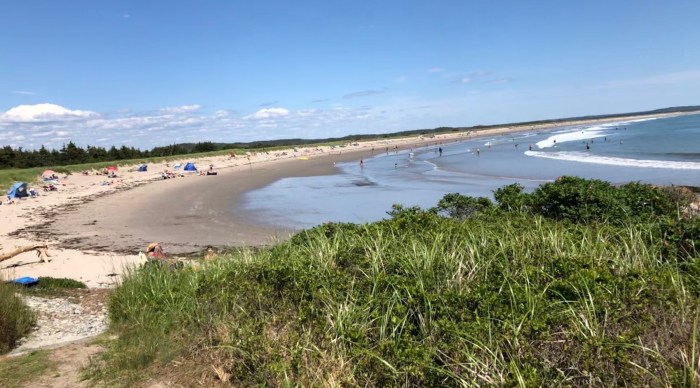
23 lipca pojechałem na Martynique Beach. Spisałem i tam myśli o Tobie.
Piękna , długa plaża. Chodzę po niej i raduje się wodą nadzwyczajnie w tym roku ciepłą. Fale przynoszą błogi chłód nagrzanej od słońca skórze. Kradnę radość życia.
Kradnę, bo wszystko we mnie krzyczy, że nie mam prawa. Że skoro nie ma Ciebie tu ze mną, nie powinienem. Bo chodziliśmy tu razem. Że kładąc się na ręczniku tak starałem się ułożyć, by dotykać Twojego ramienia. Taka śmieszna, dziecięco-szczenięca potrzeba dotyku ciała osoby bliskiej. która czyni świat bezpiecznym, znajomym, dobrym. A teraz nie mogę się do Ciebie przytulić, wiec świat nie może być dla mnie bezpieczny, znajomy.
Myślę często też (co mnie zaskakuje, że ku temu myśli biegną w czasach smutno-złych) o życiu ogólnie. Długie już dla mnie było, więc coś tam można wydedukować, zrozumieć. Szedłem onegdaj tymi wysokimi skałami koło Penant, tam gdzie trasa zaczyna się łagodnie od Crescent Beach, a potem idzie stromo w górę na głazy-olbrzymy i wąskie, zarośnięte ścieżki w kosodrzewinie. Gdzieś, na jakimś zakręcie-wykrocie potknąłem się. Agnieszka, która była ze mną, obsztorcowała mnie zaniepokojona: uważaj, patrz pod nogi, bo się potkniesz! No to się potknę, może nawet się wywrócę, i co z tego moja droga? To prawda, że patrząc stale pod nogi, w dół, idzie się bezpieczniej. Ale nie zauważysz nieba i pędzących po nim marzeniach. Więc warto iść z zadartą do góry głową, biec za marzeniami. Nawet kosztem stłuczonego kolana i siniaka na czole.
Kilka dni temu robiłem notatki z wyjazdu na Conrad Beach 2 sierpnia.
Przyjechałem sam. Wyjątkowo dziś trudno było w domu. Wszystko i wszędzie mi przeszkadzało, upokarzało złośliwością mebli, podłóg, przedmiotów. Nie mogłem sam z sobą rozmawiać, nie mogłem, rozmawiać z Tobą.
Zostałem tu z tysiącem papierów, dokumentów, które mnie świadomie oskarżały o to, że jestem, że przetrwałem. O to, że … żyję. Najdokuczliwsze w tym było uczucie masochistycznej satysfakcji: tak! Powinieneś źle się czuć. Powinieneś żałować, że nie poruszyłeś wszystkiego, co możliwe i nawet tego, co było niemożliwe, by nie dopuścić tej śmierci!
Mój dom stał się dziś więzieniem całej mojej beznadziejnej egzystencji. Celą skazanego na życie bez Ciebie. Życie, którego nie uratowałem.
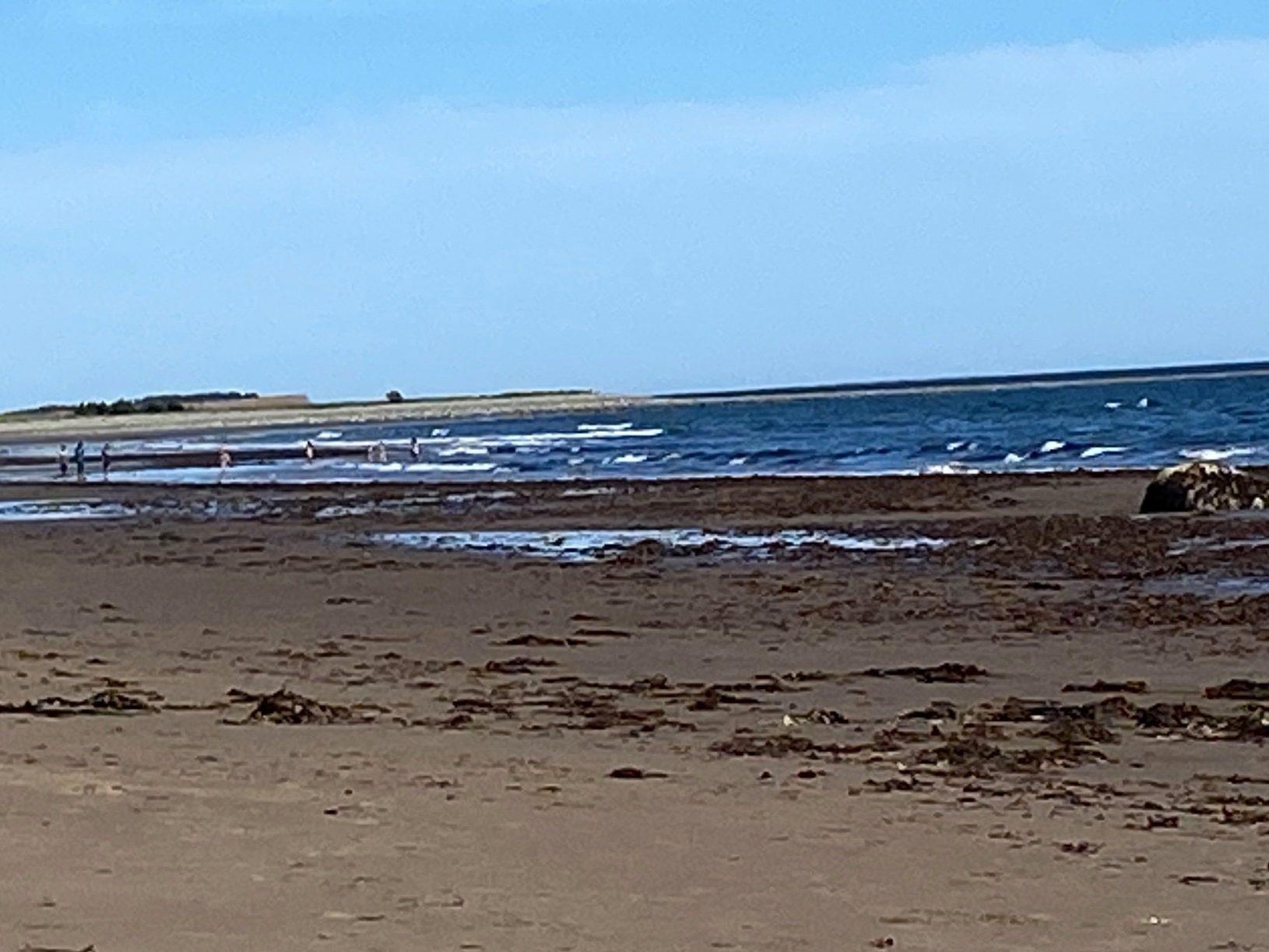
Uciekłem więc na moją ulubioną plaże. Było już późne popołudnie, bez tłumów. Cała jej zachodnia część była pusta, bez ręczników, bez namiotów i parasoli. Rytmiczny huk fal rozbijających się na piaszczystym brzegu wyciszył wszystkie niepokoje. Mogłem z Toba spokojnie rozmawiać.
Czy pamiętasz te śmieszne uczucie, gdy idziesz boso brzegiem morza i nadpływające fale wypłukują spod twych stóp piasek? Jakbyś spacerował po jakiejś pustyni z ruchomymi piaskami, które mogą cię pochłonąć. Tak dziś się czułem. Ziemia usuwała mi się spod nóg. Miałem nawet cichą nadzieję, że mnie pochłonie. Oczywiście – nie pochłonęła. Ale miałem nadzieję. A nadzieja to takie miłe uczucie. Takie, jakie się ma stojąc na peronie oczekując na kogoś. Spodziewając się, że ten ktoś za chwile wysiądzie i rzuci ci się na szyję. Chciałbym pojechać na taką stację, chodzić po takim peronie wypatrując w dali czy pociąg już nie nadjeżdża…
Są dni, że bycie samemu w naszym domu jest jak puchar ambrozji w gorące popołudnie. Słyszę i widzę Cię wszędzie. Wszystko mi Ciebie przypomina. Każda szklanka ma odciski Twoich palców. Poduszki ciągle pachną Twoja skórą. W pudełeczku dziesiątki karteluszek z Twoimi zapisami różnych przepisów kulinarnych. Staram się tak rzeczy uprane, wymyte, wyprasowane lub odkurzone układać i ustawiać, jak Ty je ustawiałeś i układałeś. Uśmiechasz się do mnie ciepło, gdy to robię. W takie dni nie lubię ani telefonów, ani odwiedzin, ani wychodzenia na spacery. Ledwo mogę ścierpieć wtedy te codzienne jeszcze moje wizyty w szpitalu. Chce być wtedy w domu, który jest w te dni ciągle naszym Domem.
I są dni, gdy te same ściany, te same przedmioty zieją pustką, wrogością, obcością. Gdy mnie duszą ciszą nie do zniesienia. Wtedy nasza sypialnia to cela, a mieszkanie – więzieniem.
Od młodości wczesnej miałem dziwne zauroczenie śmiercią. Jakieś romantyczne, poetyckie wizje Starszej Dobrej Pani, która sen przynosi znużonym, lub pięknego Skrzydlatego Anioła otulającego muskularnym skrzydłem znużonego.
Dziś nią gardzę. Jest nieczuła i obojętna wobec nas. Jej żniwo nie ma nic z troski i dbania. Nie oczekuje jej ale i jest mi też zupełnie obojętnie kiedy stanie przy moim oknie. Może przyjść jutro i nie zrobi na mnie żadnego wrażenia. Teraz, gdy zabrała mi prawie wszystko – fakt że pozostawiła mnie jest jakimś makabrycznym żartem pijanej ladacznicy, która drwi z napotkanych o zmroku przechodniów.
W swoim słynnym tomiku „Pan Cogito” Herbert w wierszu ’Matka’ kończy go samotnym wersem:
Wyciągnięte ręce świecą w ciemności jak stare miasto.
Visitors coming from afar to Halifax are familiar with typical marching routes: the Waterfront, of course, next to it is the core of old historic Halifax stretching from the Citadel, all the way down to Morris Street (which is more or less the length of the pedestrian waterfront). Uphill, it goes not much further than South Park Street or Public Gardens. There is typically few short excursion if you use a taxi or other private transportation: likely the Fort Needham Memorial Park commemoration of the great Halifax Explosion, next to the cemetery with gravesites of Titanic passengers and possibly (in the same neighborhood) the Africville Park. Frankly, there is not that much more to see (from the tourist point of view).
One that should be seen much more and should be mentioned in all tourist info is the wonderful Point Pleasant Park. It offers beautiful trails and few very historical (like Prince of Wales Tower) stops and a visit to the shoreline with important monuments to those, who perished at sea. To get there would likely require also some sort of public or private transport, although it is not an impossible feat to walk to it using comfortable South Park Street, starting right from under the gate to Public Gardens.
But one most often forgotten is a pearl of architectural designs, a maze of walkways, and very historical on a continental, or even international scale. Many visitors see small tidbits of it throughout Downtown Halifax. But it truly should be viewed as a whole, separate excursion.
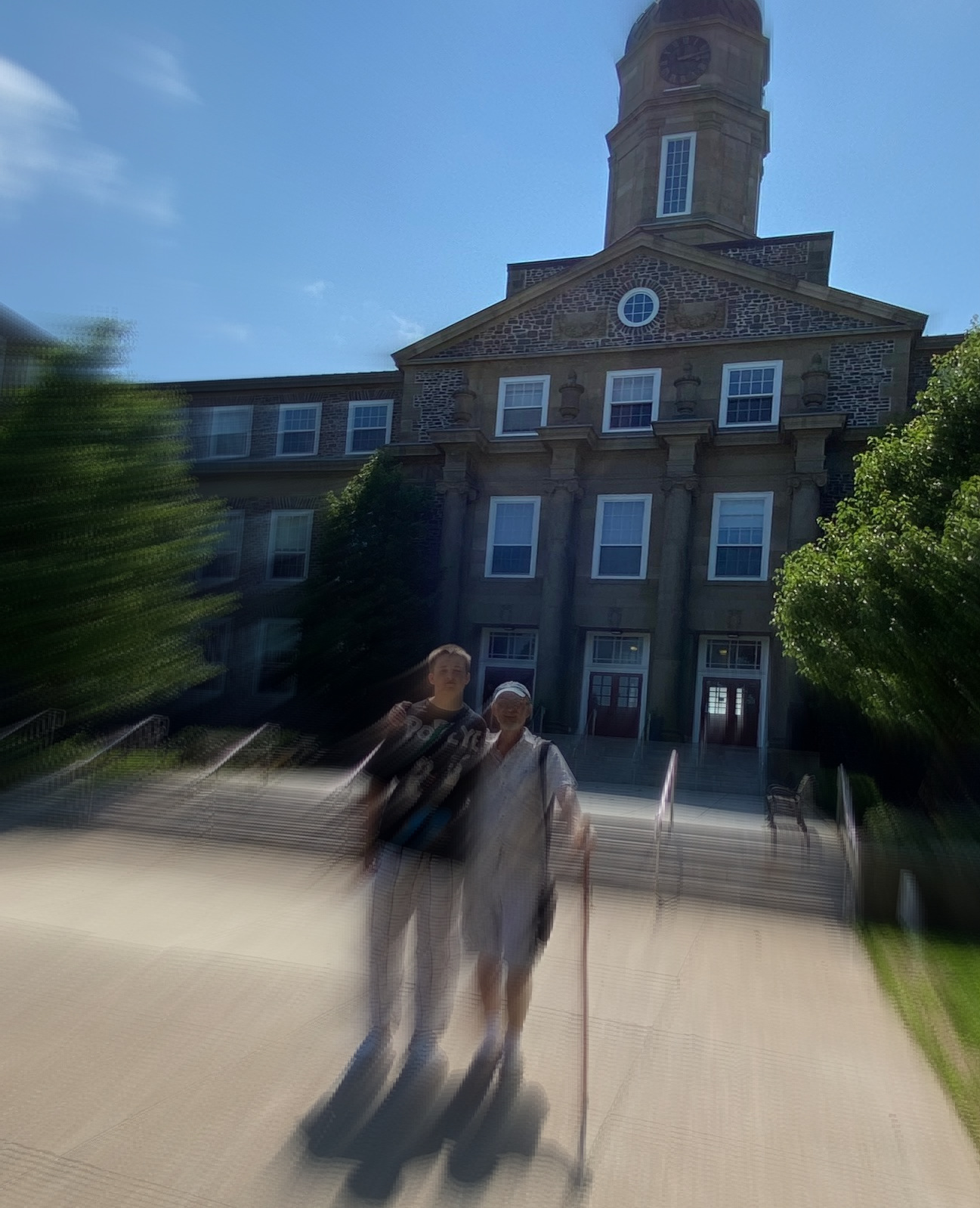
I am talking about the main campus of Dalhousie University. The west side starts alongside Coburg Road, the east on South Road, the south ends on Oxford Street, and the north side ends on Robbie Street. And between them are many smaller streets and pathways. All of it is well designed, well visible, and offers a unique perspective.
There are not many universities in any city in the world that are grouped altogether, in one large spot, tight in the center of a city. Usually, you would have the main campus (often behind some sort of wall or fence) near downtown, and the rest scattered all over the city in separate buildings.
In Halifax, it seems that the entire university, being almost a town of its own, is all in one spot. I often think of Oxford as a similar (bigger and older) comparison. But, of course, Oxford in… Oxford. Not in London. A much closer example and more alike is Boston with Cambridge and Harvard Universities. Much larger and more internationally renowned but being concentrated in a condensed part of a city. In some ways, it actually is a separate city next to Boston.
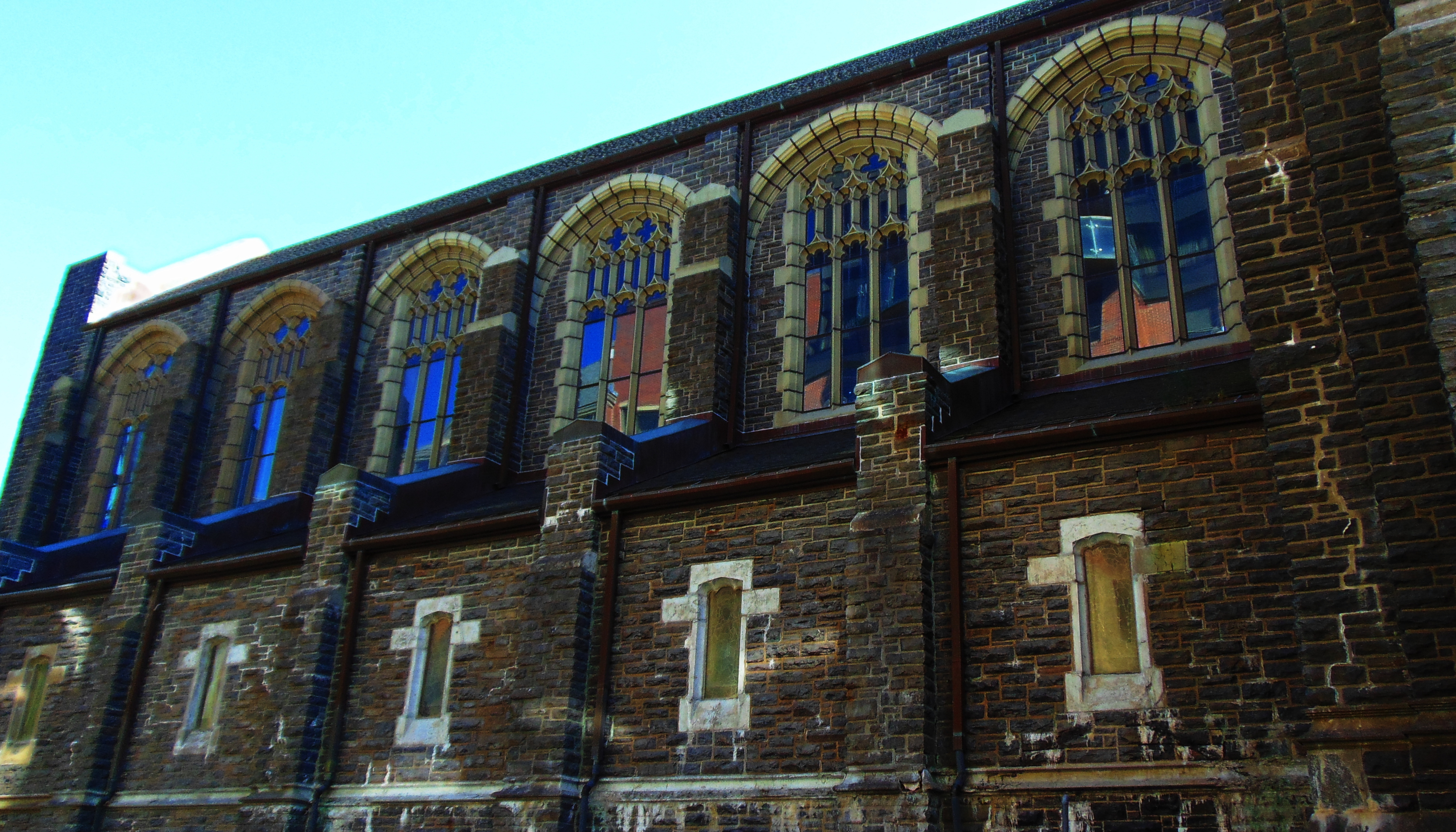
As far as Halifax is concerned – I would strongly recommend it to anyone to explore. It could be a lovely and leisurely stroll. You could easily start it from either end: either from a little park opposite the Public Gardens, right where there is a nice statue of the famous Scottish poet Robert Burns. Don’t forget to enjoy the wonderful architecture of Anglican Cathedral in front of it and pay attention to its enormous stained glass neo-gothic windows. From there take College Street and just continue. You are now in the middle of Dalhousie. My preferable starting point is from the other end. Starting at the corner of Coburg and Oxford streets. It also marks the historical beginning of Dalhousie University – Kings College (or more accurately – Kings University, the first university in what now is USA and Canada).
That walk and exploration could be done in less than two hours or it could be easily your entire afternoon. Depending on how much time you have.
There are sovereign states. Some are very powerful, with hundred or more millions of inhabitants. And the majority of states; the medium and small size. Some are poor, some are very developed, and definitely not poor. Among the last category is Canada – huge in land size, but not in population or economic output.
And there are corporations. International, spanning the globe. No land, no natural resources, no population. But huge in profits. Mega corporations. Did I say ‘mega’? Yes, mega in size and Meta in the name. Facebook for example. Or Google comes to mind also. These corporations rely on the internet, there is business model is quite literally un in the cloud. You know, the internet cloud. Yet their earnings are kept in banks on Earth. Earnings that are bigger than many of the medium and small size countries.
We all know how important to our everyday life Google and Facebook become. Google is the main source of all our information. If you are not an academic (and even they use Google) – you ask Google all your questions. I mean truly, on every conceivable subject. It is you largest mall in the world containing information: about the average size of a penis to information about nuclear fusion. It knows more about your family genealogy than your grandma.
Facebook has become what gossip in the neighborhood used to be, it is the largest gallery of pictures of your garden and the gardens of all Royal Houses in the world; it contains links to articles from just about all the newspapers and magazines in the world. It also contains a lot of false articles about the so-called ‘Earth is flat’ theories. The conspirators’ myth, the anti-abortionists, the religious zealots. All your escapades to exotic beaches in your and your wife’s collection of skimpy beachwear. Even you stupid faces, when you were dancing totally drunk and one of your friends took that photo. Remember? No to so much? Don’t worry – Facebook remembers. Hey, some of the pictures I took and didn’t save anywhere are not lost, either. They are most likely somewhere in my old posts on Facebook, LOL. Tsss…, don’t worry, I didn’t post any of the nudes I took of you at that party, remember?
Now, why do I write about Google and Facebook? As I said these companies make gazillions of dollars by providing free access to sources of information. Mainly newspapers and magazines. Magazines, newspapers, and public TV programming as we know is doing rather badly in recent years. Hundreds of titles just evaporated. After all, if you can get free access to an article through these links on Google and Facebook – why would you want to pay for it? I do it, too. Used to buy every day at least one newspaper and some weekly editions, some monthly and quarterly journals, regularly. Now a lot less. A lot. And we need good, old-school journalism. Not some wacko’s opinions. Sometimes not being informed is less dangerous than being fed false information instead of good checked and rechecked facts.
Our, Canadian Government recently introduced (not signed into law yet, but our prime minister promised today, that his government has every intention of adopting that legislation) new legislation that will require both of these internet giants to pay small dividends to Canadian newspapers for using their links to magazines for free. Both Google and Meta (Facebook) reacted angrily that they will not do it and will simply block Canadian content from their platforms. That is as plain ‘hostage taking’ as I have ever seen.
Google’s threat is less dangerous. Yes, it is by far the largest search engine, but hardly the only search engine available. If you want access to Canadian sources, you can easily do it through Yahoo, Mozilla, Safari, or simply Microsoft Edge browser, or Open Source browser. It is just a click away on your keyboard. Facebook is hard to replace and we are very used to it. At this moment I don’t think there is as popular and widely accepted other platform that offers the same services.
Let me make a statement of personal nature at the very beginning: I always was and still am a big proponent of labor unions. It is the only defense of workers against the corporate greed. Technically, apart from an obvious owner everyone else is a worker. But when I use the term ‘workers’ I do mean employees below the senior management level, were the norm most likely is individual negotiations of pay and working conditions.
Having said that, I can continue to the issue at hand. Vancouver Port strike.
I have lived through one in Vancouver 2014. At that time the strikers were not Port employees per se, but truckers. But the effect and result were the same: the Port was out of business. Both governments (Provincial and Federal) worked together day and night to resolve the issue. Tremendous pressure was put on both the Unions involved and the Port Authority. Shutting down second largest oceanic port in Canada (after the Montreal ports) is not the same as shutting down one – even large – factory or another however big or small business. Shutting down Canada’s gateway to Pacific is extremely dangerous. In a way – in itself it could shut down the aforementioned factories and businesses elsewhere in Canada.
It is very serious business on national scale and involves many international entities and partners. We are talking about international shipping lines, which either risk losing their cargo and clients or will choose another port of entry. In this case ‘another’ means eager US ports to the south of Vancouver. It also means that cargo intended for the US that was going to be shipped by trains from Vancouver to the US – will not get on time to the US. It means clogging Canadian railways with massively long trains full of containers sitting by the entrance to Vancouver. And we know that apart from Montreal-Toronto-Ottawa corridor we really don’t have a lot of railway tracks in Canada. One is blocked and the domino effect starts working.
From strictly financial cost it is a disaster for the country. Vancouver Port daily shipping and receiving of goods is worth 800 million dollars. Yes, that is an eight with eight zeros. It translates roughly to anywhere from 4.5 to 5.5 billion dollars per week. Billions. Lost to the Canadian economy. The entire dental care insurance for children and seniors announced with fanfare by Liberals and NDP is worth 4 billion. The much anticipated and badly needed federal plan for affordable housing budgeted 4.5 billion … over the span of four years. Roughly the same we can lose in one week of the strike.
Jugmeet Singh, Leader of federal NDP, in his interview, said that he is against any government intervention other than putting pressure on Port Authority to offer better package for strikers. He vehemently opposes any ‘back-to-work’ legislation. In some way I understand him. But Mr. Singh – do you realize how many much worse paid Canadian workers might lose their job anywhere in Canada due to that strike? Or have their paid hours seriously reduced? Do you understand that that strike and resulting shortages in many commodities on the market will in itself raise inflation and raise already extremely high prices for many things we buy everywhere? Of course, you do know that people, who suffer the most from high prices are the poor and lower middle-class workers, don’t you?
I am against back-to-work legislations. It is a sledgehammer used too often instead of an absolute last resort where the health or safety of others might be at risk. But in this case, all options should be open. The Federal minister already suggested the preferable (in this case) option of binding arbitration. The Union rejected it instantly. If there are no serious offers on behalf of the Port Authority that could be seen as reasonable, I think that the Federal Government (there should be the backing of the Provincial BC Government) would be right to offer that Arbitration again with a caveat, that if the Union rejects it, the legislation will be introduced. If the Port Authority rejects it, the Government should very plainly explain to them, that the Minister will seriously review all subsidies and taxations level of the Vancouver port and will find ways to make them more costly for the port. Sometimes plain talk is the best talk. [1]
Polska to dziwny kraj, zaiste. Piękny geograficznie i sentymentalnie. Ta piękność geograficzna naturalnie ma się nijak do oszałamiającego piękna Kanady, mojego obecnego kraju – ale Kanada ma niewiele więcej niż 2.5 miliona mieszkańców od Polski, a powierzchnia Kanady jest większa o … 9671000 km kwadratowych. Bagatelka. Tylko 30 razy większa. Więc na jedno ładne jezioro – w Kanadzie jest 100 takich ładnych. Na jeden szczyt – w Kanadzie jest pięćset takich, na kawałek brzegu małego morza – w Kanadzie są tysiące kilometrów wybrzeża trzech … oceanów (gdy ma się trzy oceany, kto sobie będzie głowę zawracał morzami? LOL).
Ale sentyment właśnie nie patrzy na ilość i wielkość: rzeczkę znajomą w Polsce mogę tylko do jednej rzeczki w Kanadzie porównać, Orlą Perć tylko do tych szczytów i grzbietów, którymi w Kordylierach kanadyjskich ponad czterdzieści lat temu łaziłem (głównie w ich paśmie Gór Skalistych). Prawda mimo to trochę to bogactwo (jak w banku wspomnień) pod uwagę brać musi. Wiec tego piękna geograficznego jest w Polsce sporo mniej niż w Kanadzie.
Piękno sentymentalne? Poza pięknem dzieciństwa i kilkoma laty ledwie wczesnej młodości, które są niepowtarzalne jakiekolwiek by nie były (a były) trudne – i tu Kanada pierwszeństwo bierze. Cóż, kochani – całe życie dorosłe, dość już długie, w Kanadzie przeżyłem. Większość przyjaźni wspaniałych, miłość mego życia i małżeństwo wieloletnie, szczęśliwe z tym mężczyzną. Ano właśnie – z mężczyzną. Gdybym był pozostał w Polsce i gdybym wygrał loterię życia po raz drugi i znalazł w niej miłość mojego życia – o jakim małżeństwie moglibyśmy mówić? O żadnym. Nie istnieje coś takiego w Polsce. Więc tak czy inaczej z tej Polski musiałbym schrzaniać do jakiejś Francji, czy Hiszpanii, do jakiegokolwiek normalnego kraju. Bojownikiem o Sprawę trudno być całe życie. Bo obok jest życie normalne właśnie, które biegnie dość szybko, mija. Namaszerowałem się i pobiłem o co trzeba w końcówce lat 70 i pierwszych kilku tych znamiennych osiemdziesiątych. W 1990 okazało się, że większość rodaków, która ze mną maszerowała – biła się o inną Polskę. Moją mieli w dupie.
A jednak. Mimo wszystko. Tak, przyznaję – mam do tego małego kraju nadwiślańskiego serdeczne uczucia. Gdyby tylko tak trochę wymieszać, trochę tamtych gdzieś przenieść, trochę tych tam zawieźć … . Ech, leży chłopak na łące w leniwe popołudnie, w gębie żuje jakiś kwiat mleczu lub chabru i gapi się w obłoki i marzy. Wypisz-wymaluj, jak u Chełmońskiego. I tyle z tego.
Może jednak wrócę, tak na pół tu – pół tam. Może. I znowu trzeba będzie tumanom w jakimś Urzędzie tłumaczyć, że nie, nie mam ‘stanu wolnego’, że jestem wdowcem. Nie, nie po żonie a po mężu. I tak w koło Macieju. Ale raz już im kilka lat temu w Urzędzie Wojewódzkim tłumaczyłem, wykład zrobiłem. To mnie nawet trochę bawi, gdy trzeba oczywistą rzeczywistość biedakom tłumaczyć: nie, Słońce nie kręci się wokół Ziemi, proszę pana. Trzeba tylko pomyśleć, niech pan spróbuje, to tylko na początku wydaje się straszne.
Więc jaka jest lub niedługo jaka będzie ta Polska, do której mógłbym się ewentualnie częściowo przenieść? Ano popatrzmy, zbadajmy.
Pamiętacie ledwie wczoraj ten wspaniały Marsz w Warszawie zwołany na prośbę Donalda Tuska, te falujące tłumy uśmiechniętych twarzy od Ogrodu Botanicznego aż do Placu Zamkowego? Naturalnie, że pamiętacie. A przecież za kilka miesięcy, tuż-tuż, będą wybory parlamentarne. Notowania PO i Tuska wzrosły, notowania ‘ciemniaków, spadły. Niewiele, ale spadły w końcu. Polska 2050 (tak, tej grupy nazwanej przez warszawiaków – od nazwiska założyciela *ujownią …) w zasadzie poza poprzeczką wyborczą, tzn. raczej bez jednego nawet mandatu. Nawet PSL podobnie – partia chłopska w Polsce, kraju chłopów! Witos się chyba w grobie przewraca. Cóż – lokalny klecha wiejski ważniejszy niż polityczny zmysł dumy włościanina-chłopa. Okazało się, ze ten chłop nie taki dumny. Za to chytry i przekupny. Oj, pozmieniał ludzi ten PRL. A te ‘chłopstwo’ dzisiejsze to nikt inny, jak dzieci chłopów PRL.
Lewica swoja działkę (poniżej 10 mandatów) dostanie. Więc wedle badan ostatnich PiS ma autentycznie szansę … przegrać! O włos ledwie lub na równi z PO. Ale wtedy Lewica bez wątpienia poprze PO i zrobią rząd koalicyjny. Demokracja to demokracja. Pan Duda (oby tylko nie robił żartów po angielsku …) będzie musiał zaprzysiąc. Wola parlamentu. Prawda? Guzik.
Tusk (choć nie z winy Tuska, LOL) rządu nie powoła, premierem nie będzie. Jak? Skąd? Dlaczego?! Popatrzcie na sondaże. Jednej partii dotąd nie wymieniłem. A ta partia ma wyraźna szansę na ponad 20 mandatów. Której? Naprawdę nie wiecie, czy rżniecie durnia? Faszystów. Tak, Konfederację Wolność i Niepodległość. Ta od Falangi, od Młodzieży Wszechpolskiej, od Korwin-Mikkiego, od Bosaka (ten, jak był młodszy zawsze przypominał mi czysto aryjskiego chłopca, gdzieś w Bawarii w mundurku harcerskim Hitlerjugend …). Otóż ta partia, w Polsce (sic!) ma poważne szanse zebrać dobrze ponad 20 mandatów, może i trzydzieści kilka. Jak sądzicie – będą niezależni w Sejmie czy wejdą w koalicję z PiSem? Albo inaczej – pozwolą Lewicy (sic?) współrządzić z PO czy też natychmiast wejdą w układ koalicyjny z Kurduplem? Tajemnica niezbadana … nie. Równanie bardzo proste. Cuda są może na koncie bankowym księdza Rydzyka – w polityce cudów nie ma. Nawet w polityce partii bardzo katolickich. W polityce są układy i długie noże (szczerzonego pan bóg szczerze).
Le Pen nie udało się we Francji, Konfederacji udać się może w Polsce. I w Polsce może być gorzej, bo demokracja francuska jest dość stara i zakorzeniona. I nawet wygrana pani Le Pen, by tego nie potrafiła zmienić. A na ile Kaczyński w takiej ewentualnej koalicji pozwoli liderom Konfederacji? Na bardzo dużo. Bo Kaczyński szczerze, od serca, serdecznie nienawidzi Tuska. Polaków chyba też (ale nie aż tak silnie), bo nigdy mu serca i miłości na jaką zasłużył nie okazali. A przecież on mógłby był tyle dla Polski zrobić! A nie zrobił, bo mu niewdzięczni rodacy nie zaufali. Wiec niech teraz maja Korwina i Bosaka, zasłużyli na to.
To tyle mili moi na dziś. Powodzenia życzę. Tak tylko, mimochodem jedynie podszepnę: to przewidywania. Bardzo realne, ale przewidywania. Sondaże to ciągle nie wybory. Na kartce sondażowej (lub przez telefon) można różne dawać odpowiedzi. To nic nie kosztuje. Dopóki karta wyborcza nie wpadnie do skrzynki wyborczej. O ile wszyscy będziecie głosować (w tym najmniej elektoralnie czynne a największe środowisko ludzi w wieku 18-30 lat) to nawet jest szansa zniwelować ilość głosów na Konfederacje i jednak rząd PO i Lewicy wprowadzić. Ale musielibyście rzeczywiście stanąć na wysokości zadania. Wszyscy. Czy potraficie? Nie wiem, historia współczesna udowadnia, że nie potraficie, że macie to wszystko w dupie. Miejcie, OK. Ale wierzcie mi, że jest zasada od jakiej do tej pory nikomu się uciec nie udało – jeśli masz w dupie polityków i na nikogo głosować nie będziesz, to ci politycy rządząc będą ciebie mieli w dupie też. A ten, który rządzi ma dużo większe możliwości spieprzyć ci życie, niż ty jemu.
Czy to wszystko i czy ci wszyscy się mylili? Po co to było, jeśli tego nie obronimy, nie odbudujemy?
Yesterday was Canada’s birthday. A country set between three oceans. Amazing in size and in natural glory. A country now covered in a thick and dense fog of smoke. Smoke from huge fires from coast to coast. Just one generation and so much has changed. It makes me sad. I remember Canada from many years ago: splendid in its natural glory.
The monumental Rocky Mountains with glaciers feeding three rivers ending in three different oceans – there is no other country in the world that one huge glacier does it, the Columbia Icefields. It was immense – and my last journey through it with my husband about eight years ago, it was so much smaller. In one generation …
Calgary, the Rockies was my first home here. I was mesmerized by its majesty. The swaying fields of the prairies in Saskatchewan and the antelopes jumping over the fences along the highway. Eventually, we moved across the Rockies to Vancouver, to the shores of the Pacific.
What can I say? The city, the ocean with many islands and islets – it was just magic. And I worked on the sea, crossing every day for over twenty years the Salish Sea (it used to be called Georgia Strait prior to the just policy of returning to old native names existing before the white man arrival) on the way to Victoria. Vancouver Island. Tofino and Long Beach, the holy grail of cedar giants and Sitka spruce, and my magic tree – the poetic arbutus. How I mourned, when an old arbutus tree in front of the monumental Empress Hotel in Victoria, died…
From there, from the unique Stanley Park in Vancouver, we took the journey of our life and cross the continent to the shores of the Atlantic. The beginning of Canada, it’s birthplace.
Everywhere I had my secret places of magical force, places I went to gather thoughts, to sing joy and grief.
Stanley Park in Vancouver – popular tourist (and locals, too) attraction, yet it was so big, so dense in foliage, had so many little creeks, its own lake, unknown to many narrow trails, lost in the bushes – that you could spend the entire day there feeling like you are alone, far away from civilization. Pure magic. I went there just a few days before we left Vancouver to say goodbye to the trails and trees – my friends.
In Alberta’s Rockies, it was the Paradise Valley leading from Lake Louise to Moraine Lake and a much higher hike, from Lake Louise to Lake O’Hara, on the other side of Lake Agnes. The hike to Lake O’Hara takes you to an elevation of about 2300 meters – that is only 200 meters less than the highest peak of Rysy, the tallest mountain in Poland, my old homeland, where I climbed as a very, very young man.
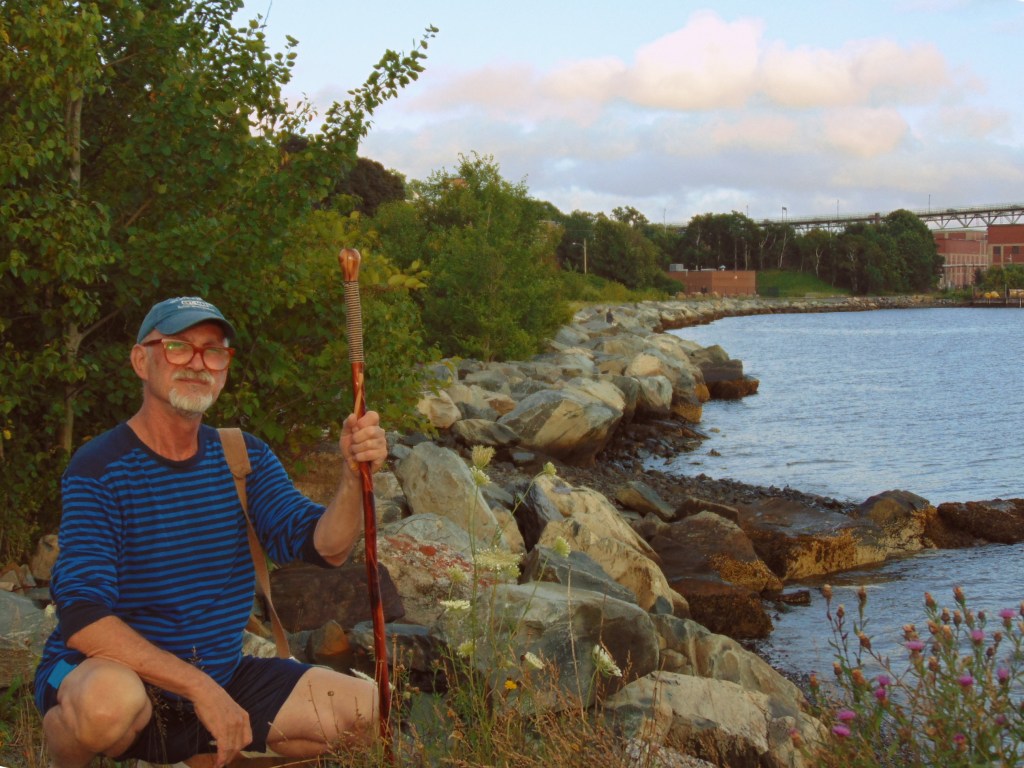
In Halifax, my magic spot is just steps away from my home. Much smaller, and not as adventurous. Of course – all these travels and hikes from Long Beach, Alberta’s Rockies to the Atlantic take time. A few decades more or less. But that’s OK. Every season in nature and life alike offers different possibilities. That smaller place here I call My Rocks. The good thing is that I can go there any time of the day or night. I know probably every rock, its shape, and colour between two huge bridges: MacDonald and MacKay that span the length of the trail. I think they know me, too. And so I went today there. First time in many days, as my health took a severe beating recently. Probably I shouldn’t. But I could not to go. In many ways, my story in Nova Scotia is the story of rocks. I fell in love with them during my travels there. I know them, I remember where they are, and how they look at different times of day and seasons. They are my friends.
The walk today was full of memories: of places. And of people, who are no longer with me. It was also sad – the air and sky were full of smog-filled fog. But in that fog, I saw their faces very clearly. Felt very alone and yet, very grateful that I had them all, and that I loved them dearly.
That’s a gift one can’t shrug off. Them and Canada. And I smiled again.
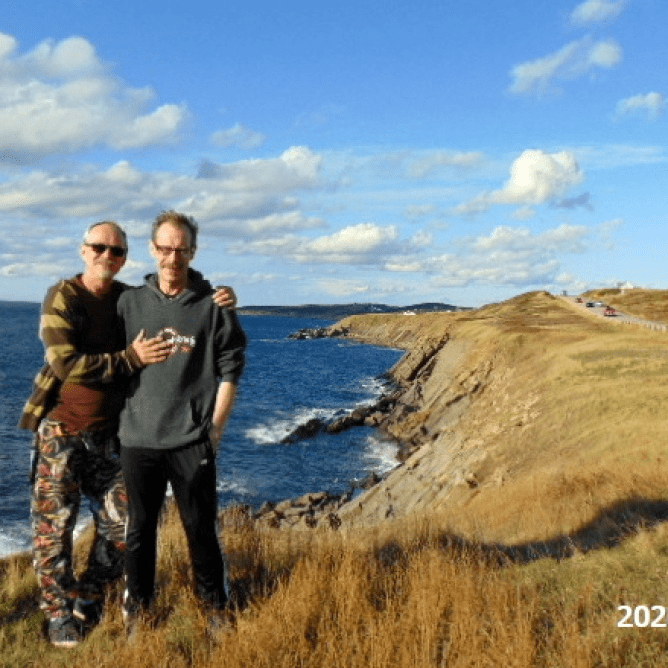
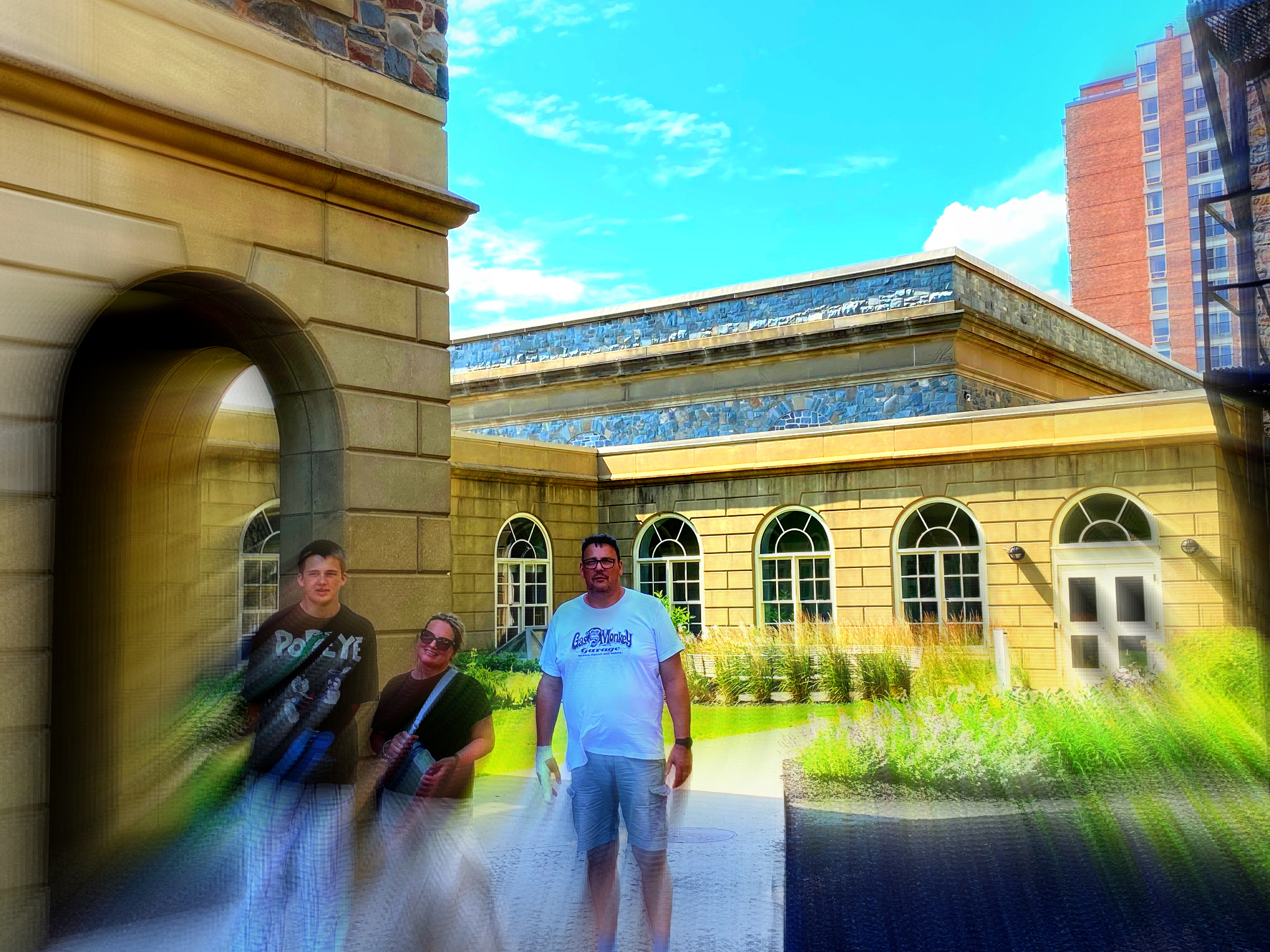
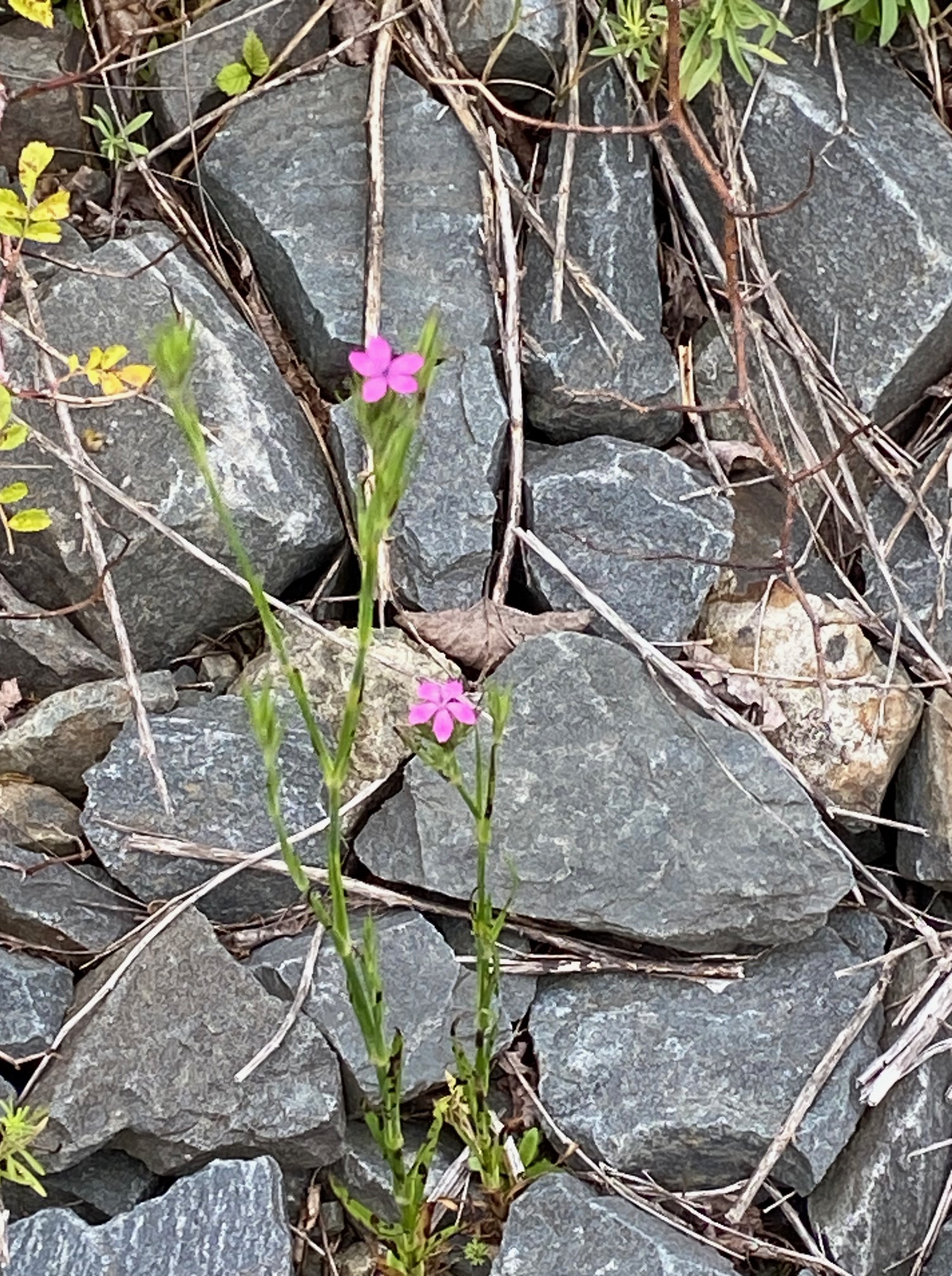
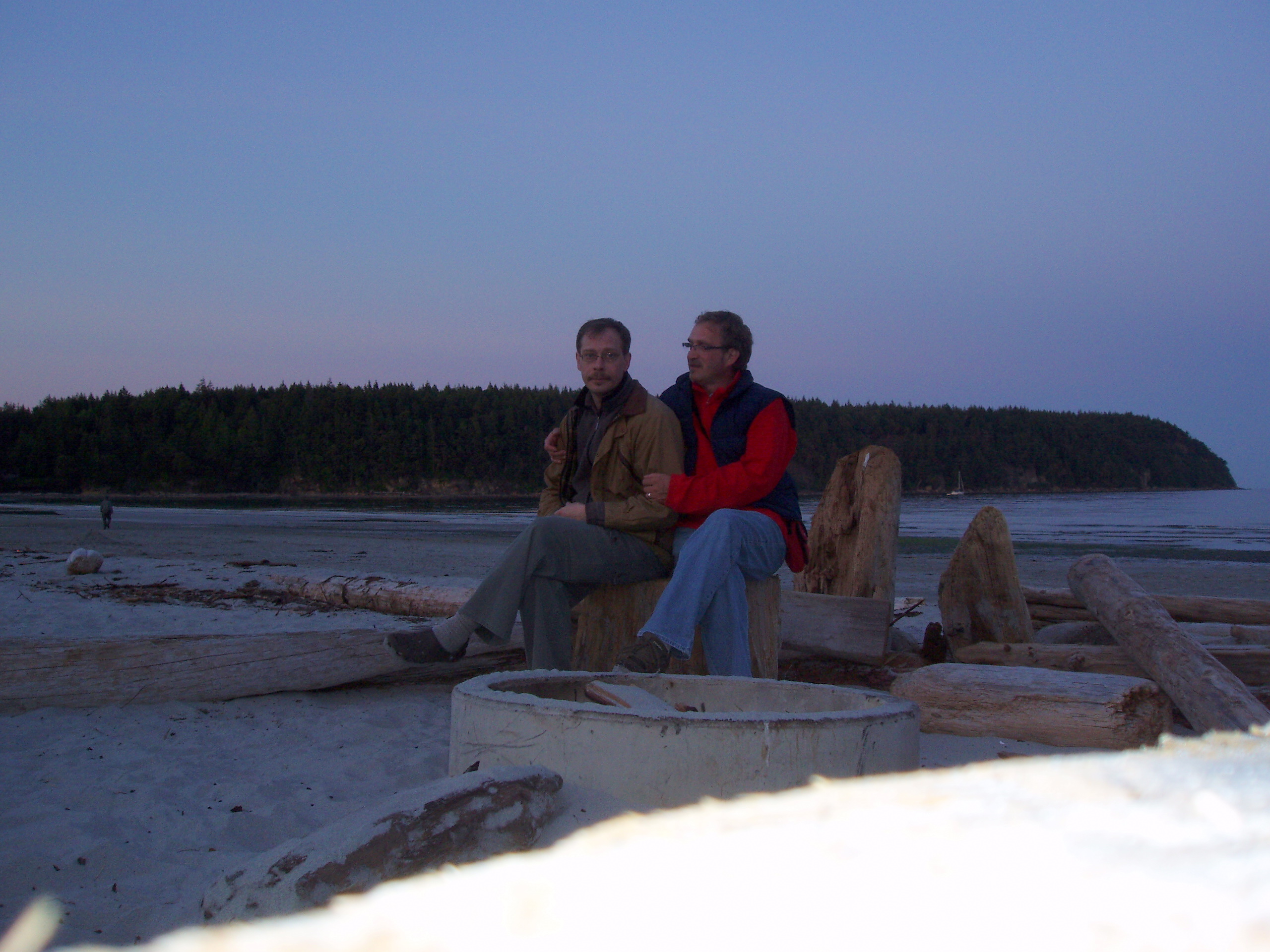
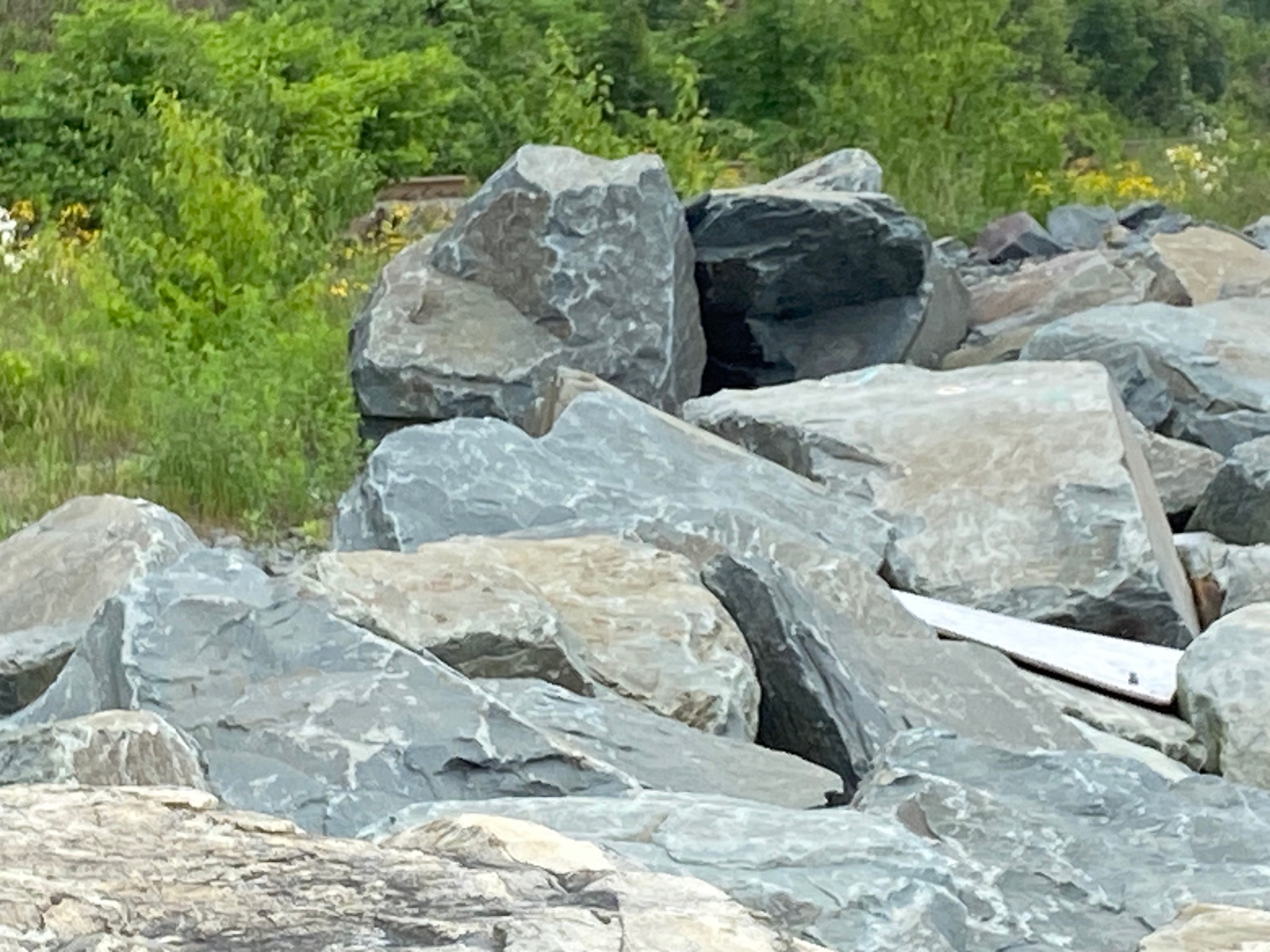
From top to bottom, left to right: first four pictures are from My Rocks in NS; me and my husband in Long Beach, Vancouver Islan; me and my sister visiting my very first apartment in Canada (Calgary, the building no longer exists); Dartmouth rocks, NS; My Rocks in Dartmouth, Canada Day walk; me and my sister in the Rockies (Spiral Tunnel near Field, in 2005); view of the McDonald Bridge connecting Halifax and Dartmouth.
Let’s talk again, Babycake. This time in English. Not that it does make a difference for you now. You know every language now, and you always knew the language of Love. Without uttering a single word. When I looked at you, it felt like looking at an open book of Petrarch sonnets of love. When I inhaled the sweet scent of your body, it was like smelling a meadow full of honeysuckles.
Tears, bitter tears fall in a bitter rain,
And my heart trembles with a storm of sighs
When on your beauty bend my burning eyes,
For whose sole sake the world seems flat and vain.[1]
But, as Polish is my language of first words, English is yours. So, let’s talk again, Babycake. I am so used to calling you by that name, it seems so natural. Do you remember when and how you become my Babycake? It brings such a sweet smile to my lips. Of course, Armistead Maupin and his “Tales of the City”! The year was 1994, PBS played it on TV in US and Canada. And we watched it in a cozy apartment on Howard Avenue in Burnaby glued to TV, crying like every other gay man in North America. Mouse used it all the time speaking to Mona or Mary Ann. 1994 – our first year in our first own apartment At that time there was hardly any serious movie, let alone a long series on every TV screen in Canada and USA about us – the Queer community. With wonderful, amazing Gloria Dukakis as one of the leading characters[2]. It could be hardly called a literary phenomenon, Maupin was not a genius – but it was a series that changed a lot. The viewership was massive. It seemed that entire young North America watched it with us, regardless of sexual orientation. And every one cried, of course. For my generation, it was the same tear-jerker as Segal’s “Love Story”[3] with Ali MacGrow and Ryan O’Neal, which I watched twice in a movie theater twenty years earlier. Of course, the entire theatre cried and everybody inside was in their early twenties. Ah, to be young and romantic …. That movie gave us a famous fraze: ‘love means never having to say you’re sorry’. It does mean it. I never was, you never were. I never will. Not for our love.
In 2014, on the first anniversary of our formal wedding (over twenty years after our love was born), I wrote :
To John – my dearest husband on our first formal Anniversary
(unfinished, on May 19, 2014)
Hold me, hold me tight
as the river of nights flows by
Hold me don’t let go
even when I do you wrong
As I bare my soul and cry
do not leave do not run
For this moment when it comes
for the day wet and cold
for the barren night of black
/ gold
for the poem with wrong
/rhymes
I will stay even if you go
Although the thought of the promise alluded to the idea that one day you might live, not to the possibility of your death before mine, I kept it nonetheless. I did stay, Babycake. I will.
I have spent the past few days and nights in and out of the Emergency Department at our hospital in Dartmouth. One of the nights I came home, to our bed. Not even a full three hours to get some rest, told them I will be back in the morning.
I saw you there, in our bedroom, we talked – remember? You were sad, you begged me to be careful, to look after myself. It made me almost angry, I replied: how can you ask me that? I am coming to you Babycake, I want to be with you, to touch you again, to feel you! I am not leaving, I’m coming to you! You told me that you are with me but you don’t want me to leave this reality yet, that I still have to take you to some trails, some towns, you smiled and said that you will even go with me to some sunny beaches on the ocean, lakes. And I promised you again. I stayed. Forgive me for that short argument. I was tired, and couldn’t see clearly. I will ‘hold the fort’. Our fort. The Fort of Our Love. Forgive me the tears as I write it – yes, you were right, when you said many years ago that I am a sentimental fool. A sucker for melodrama, LOL. But I will keep you for your word: you can’t ever say that you don’t want to go to the beach today. Remember.
[1] Petrarch, Sonnet XV; trans. by Joseph Auslander
[2] TV mini-series based on A. Maupin trilogy by the same title. Aired onChannel4 in theUK in 1993 and by PBS in NorthAmerica in 1994. It received the highest-ever viewership in the history of PBS at that time.























 > > Pogwarki < <