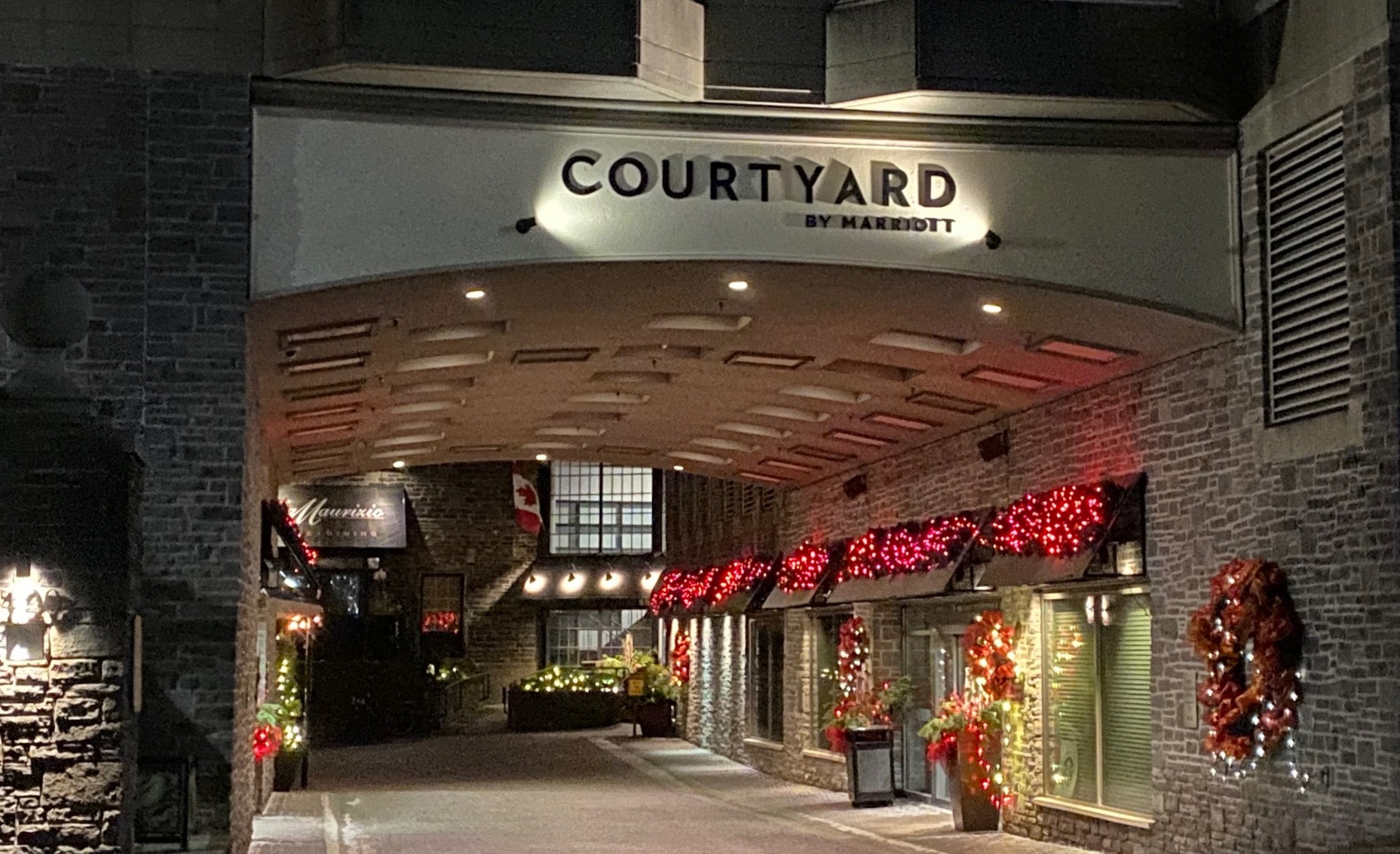
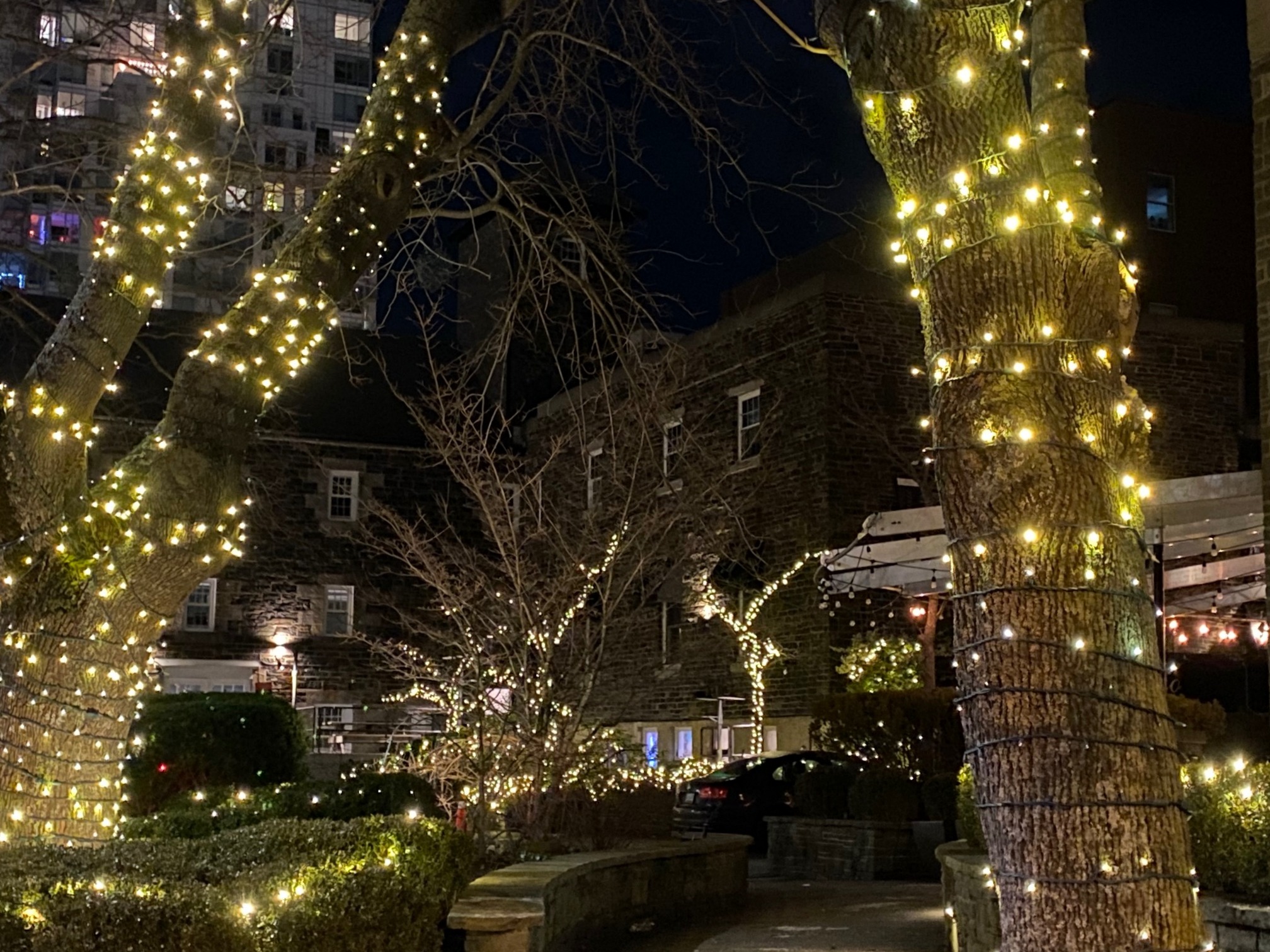
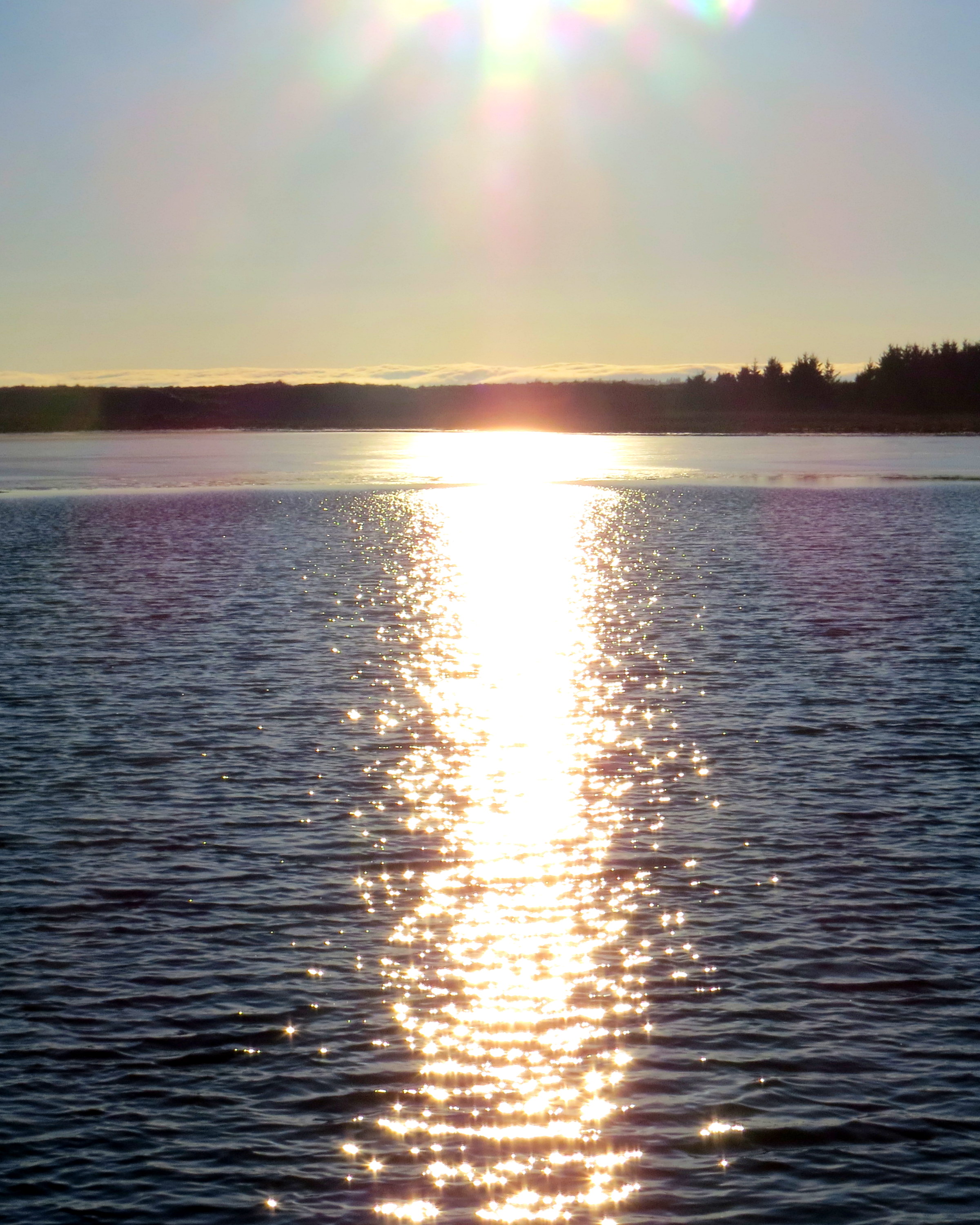
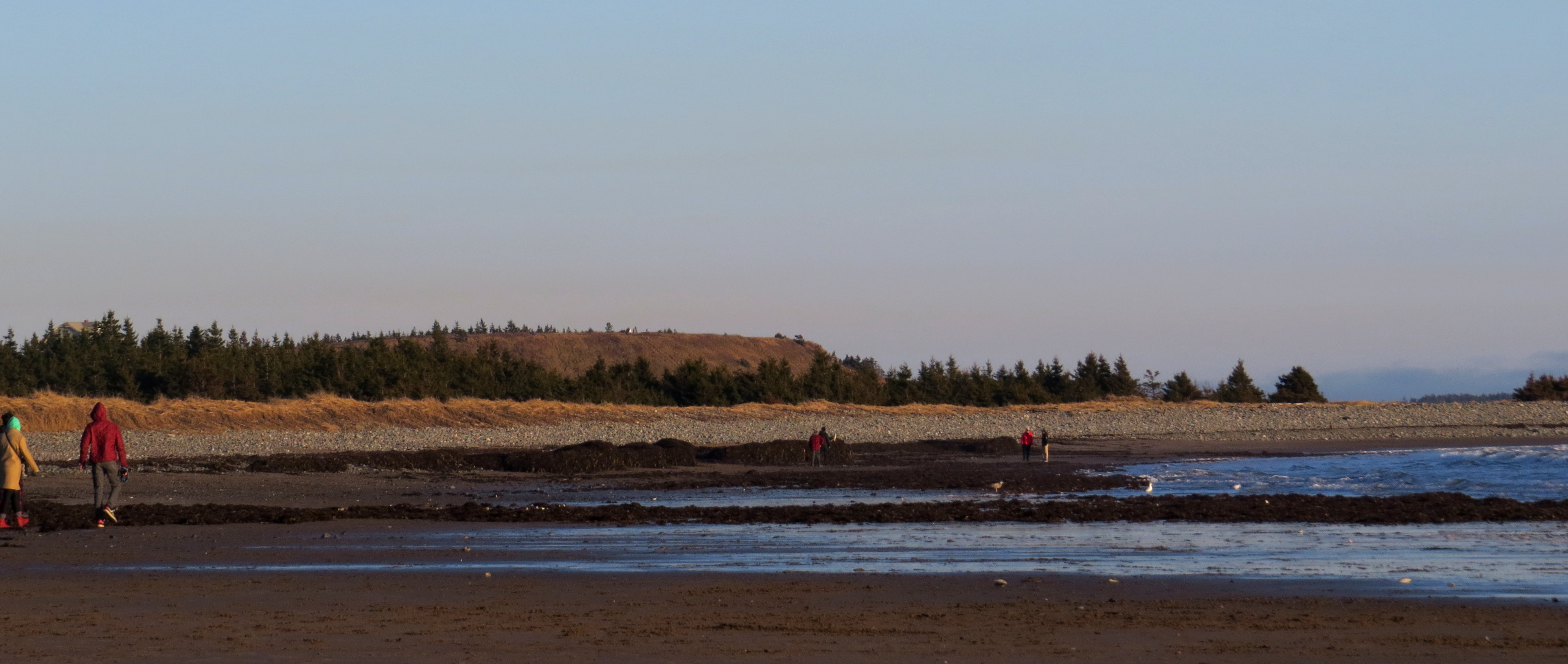
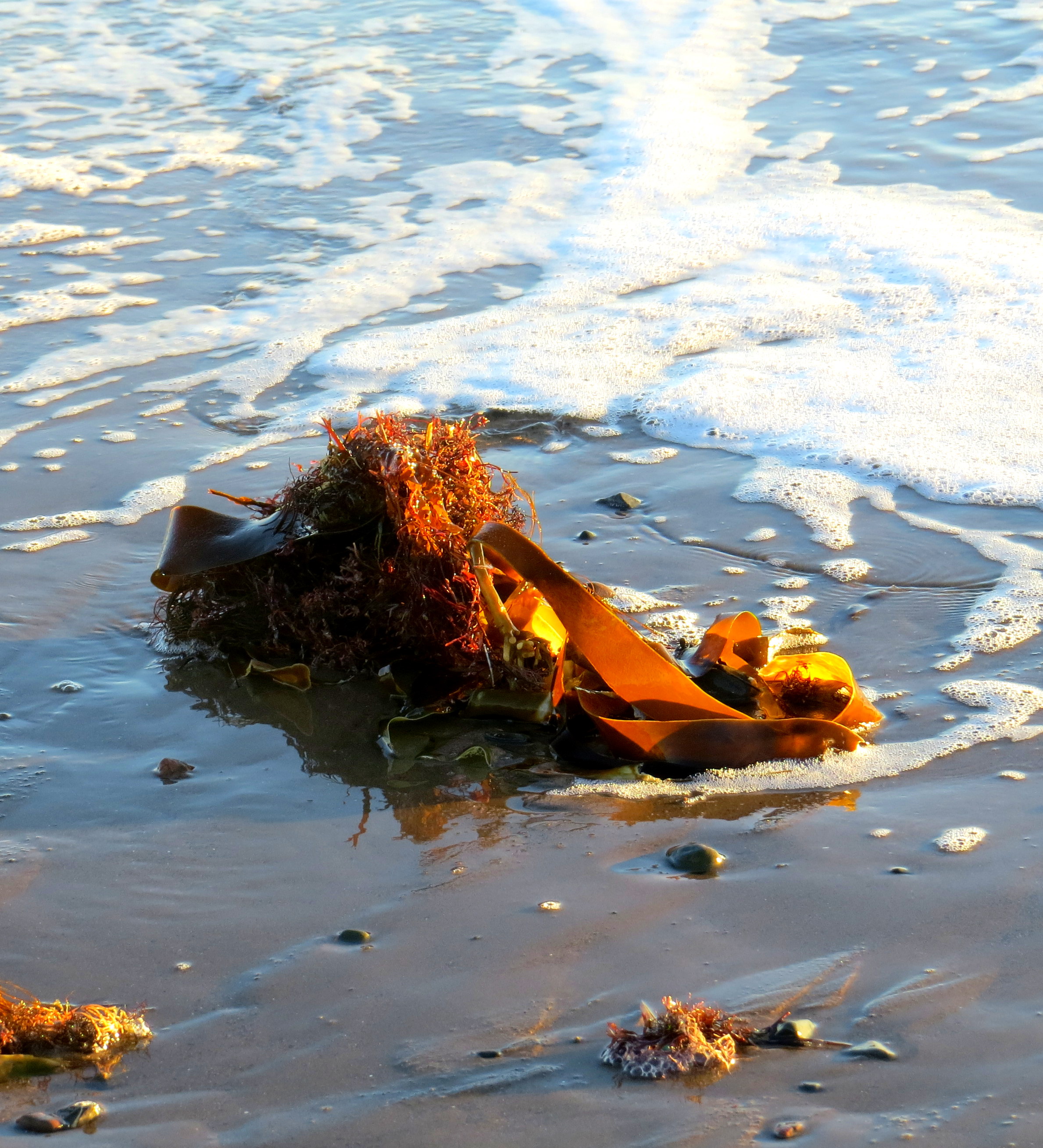
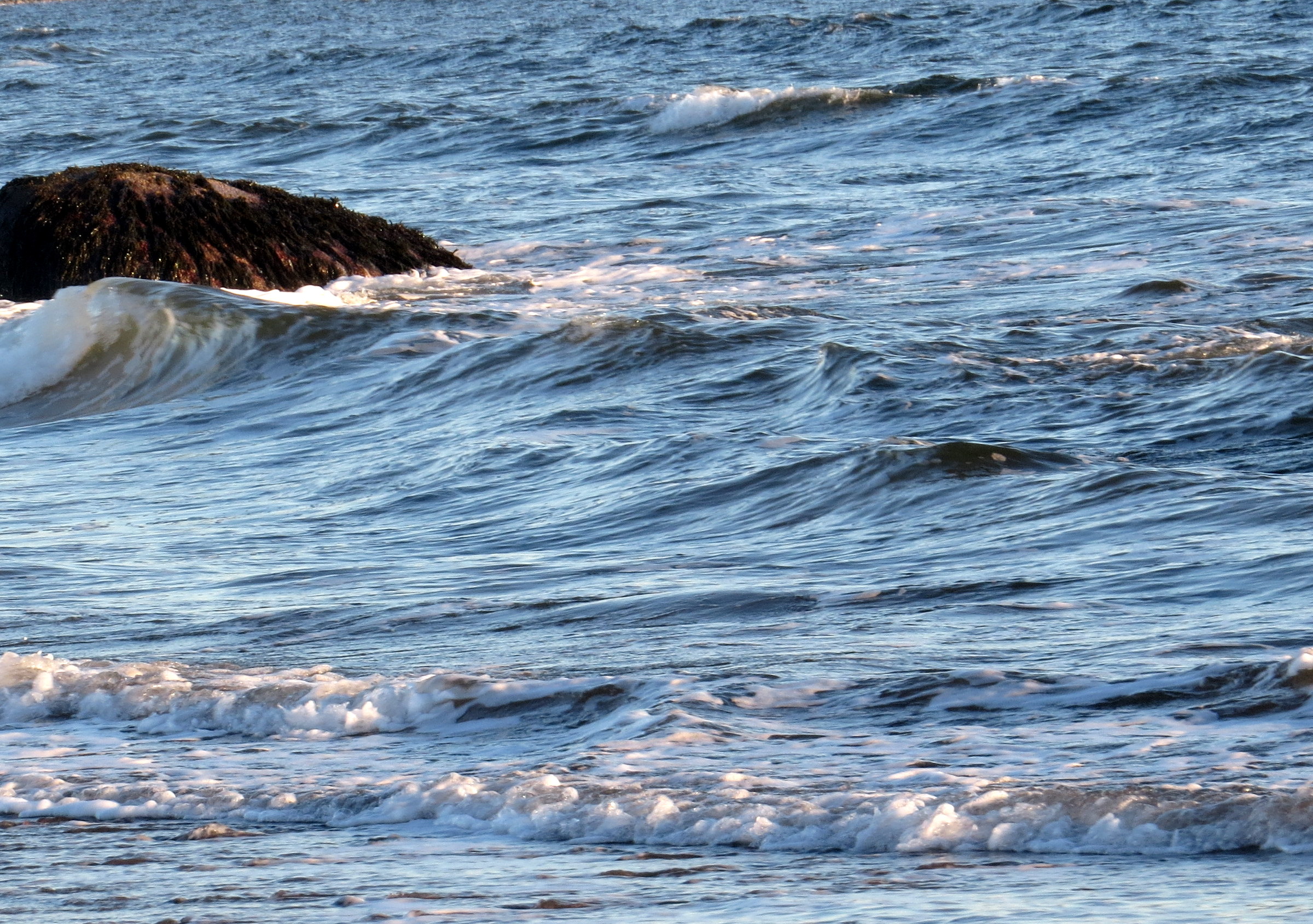
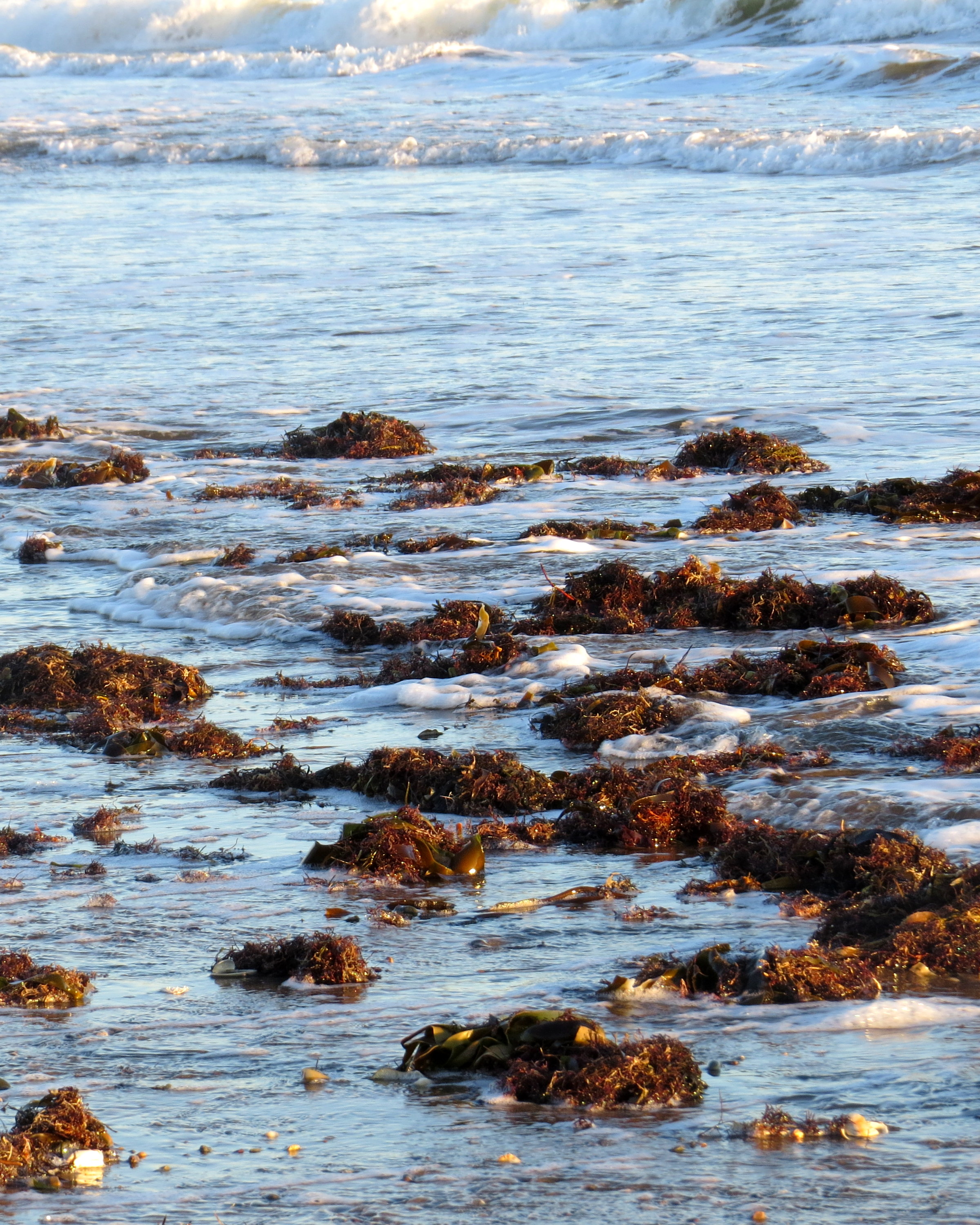
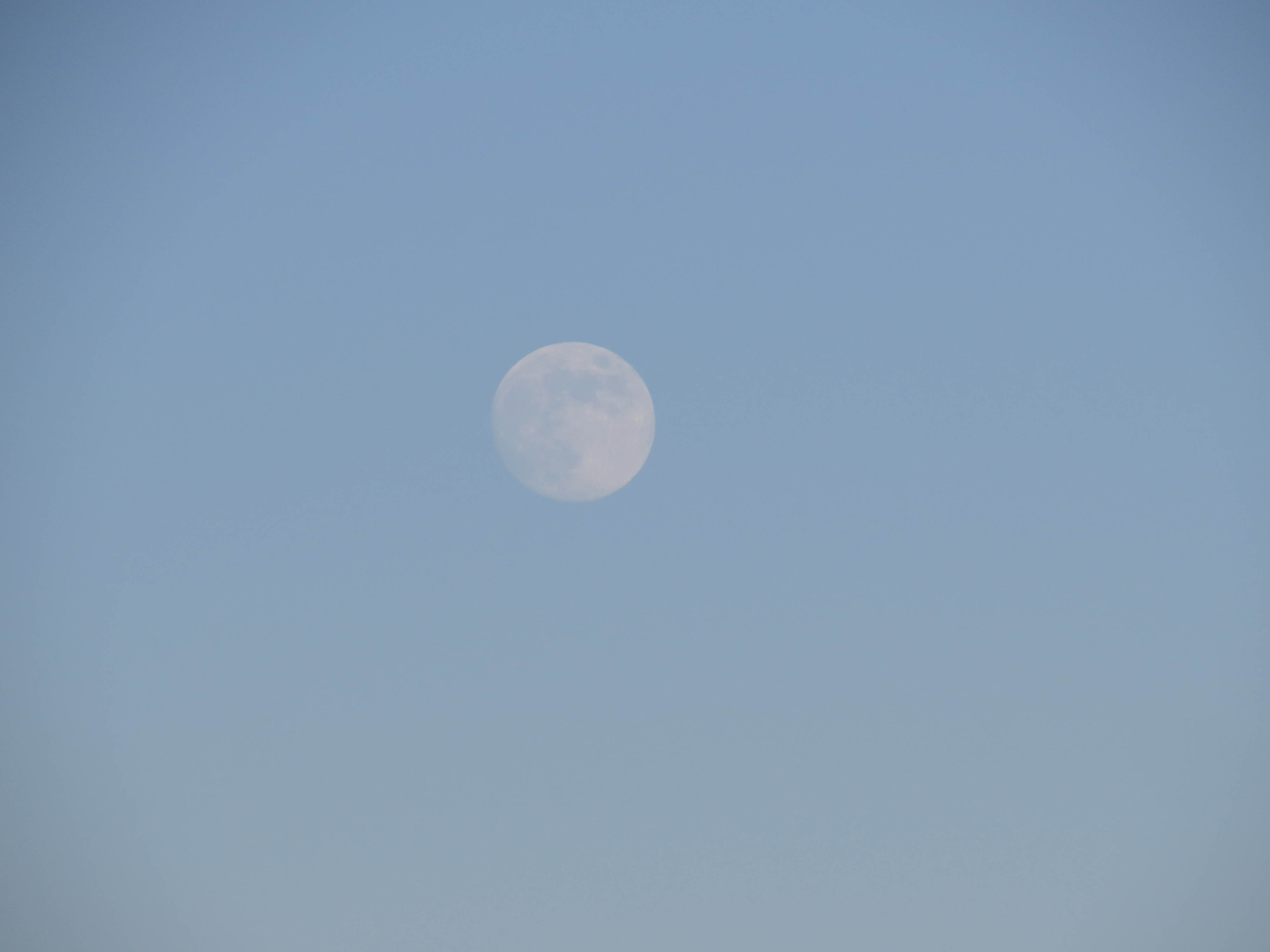
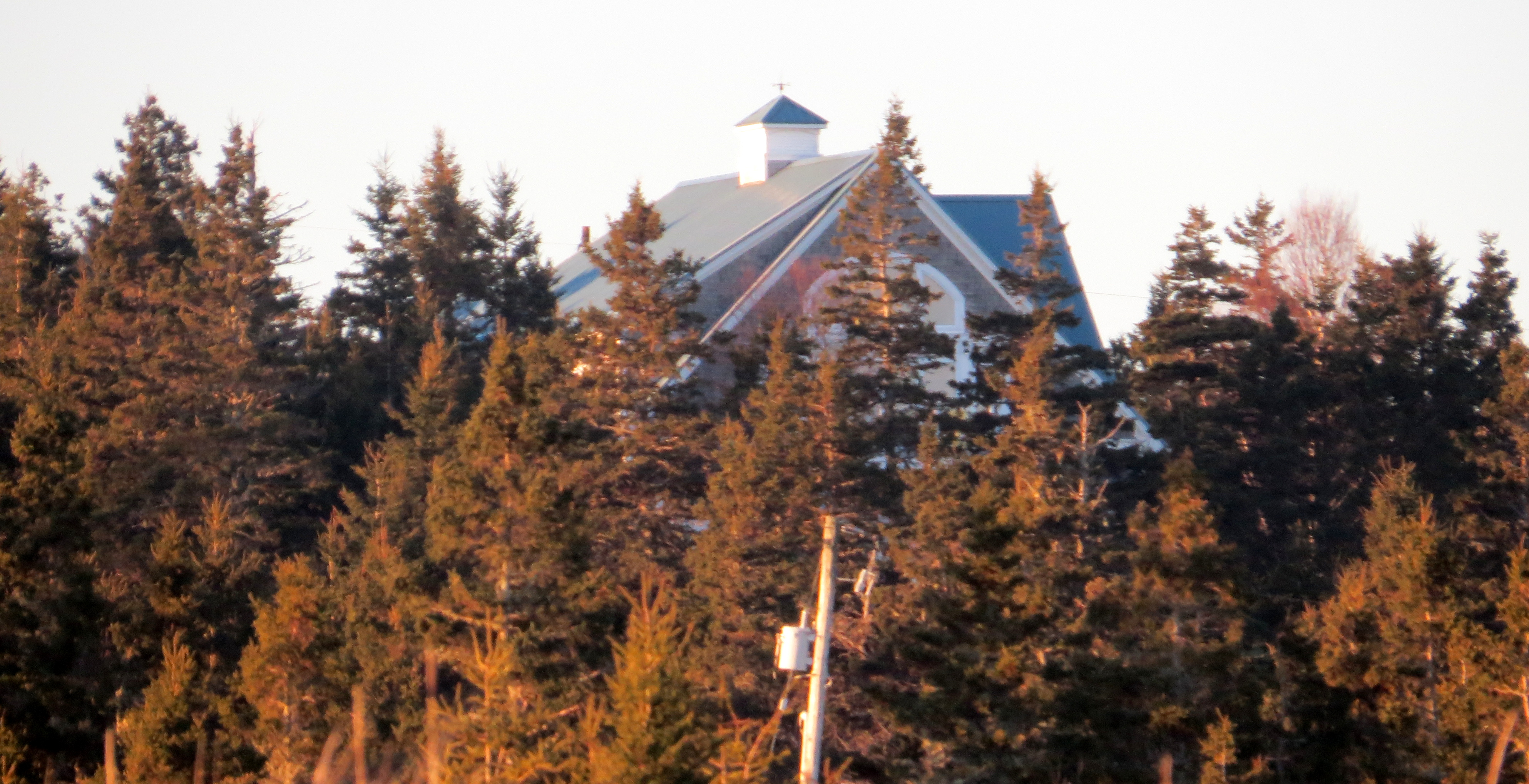
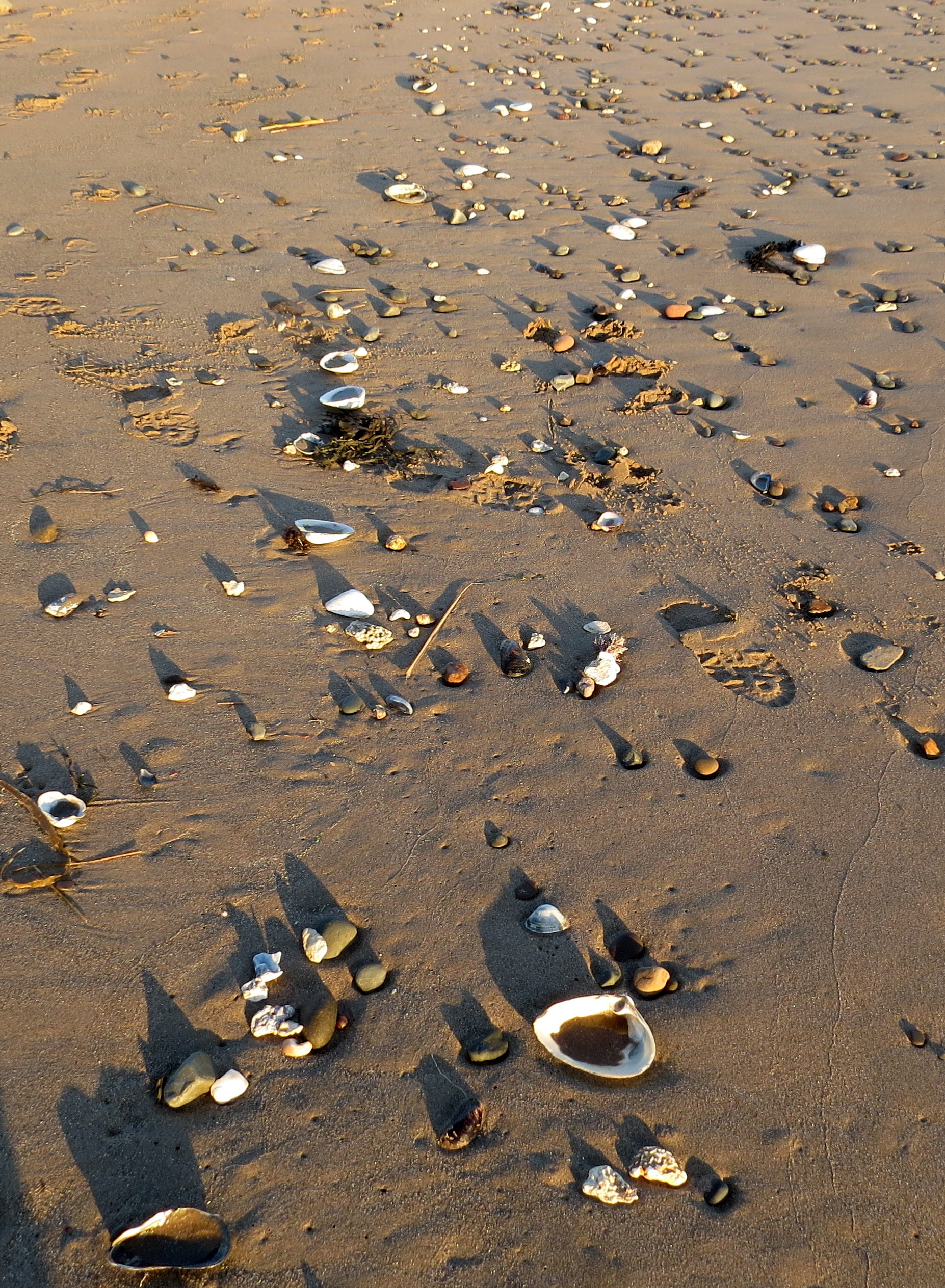
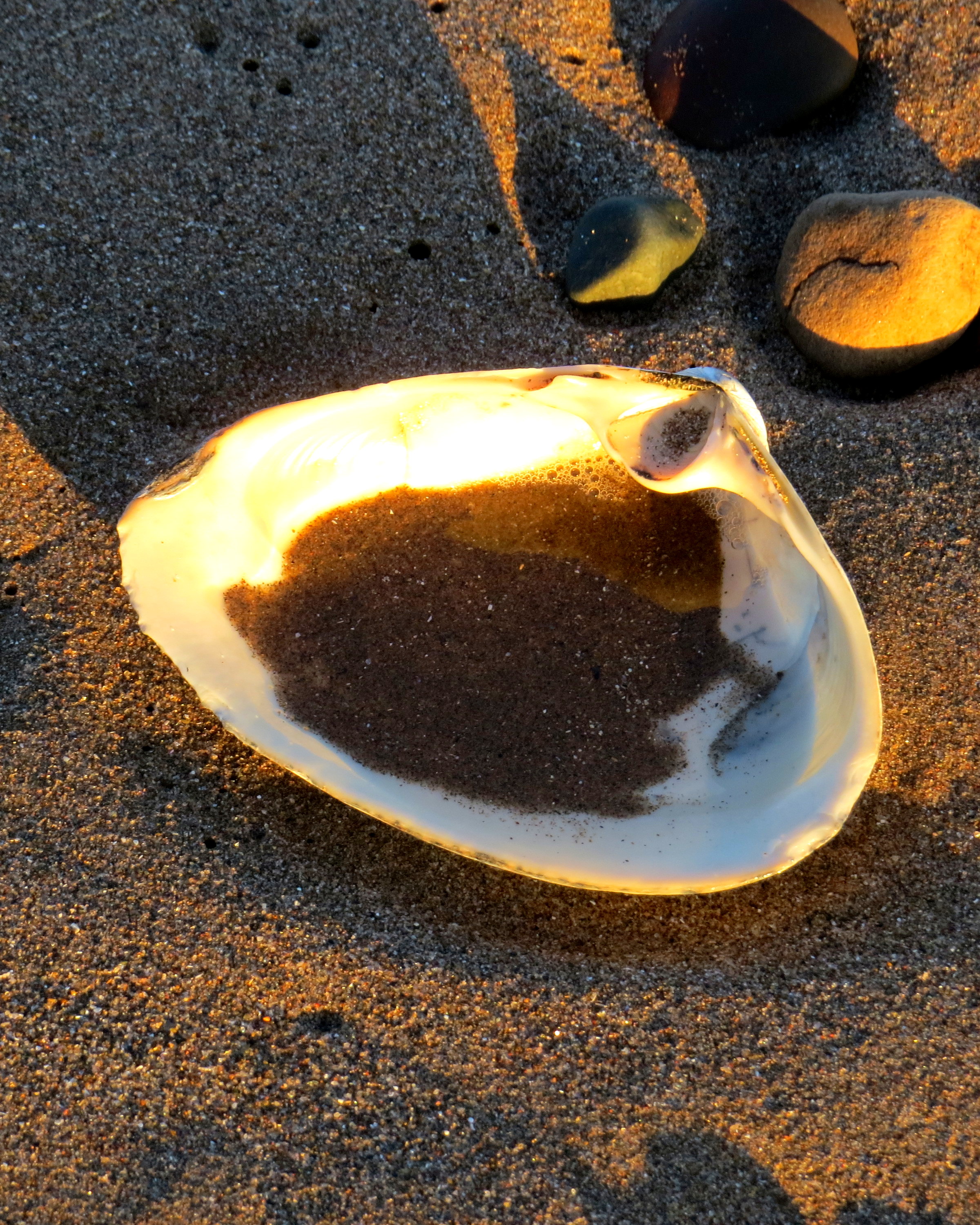
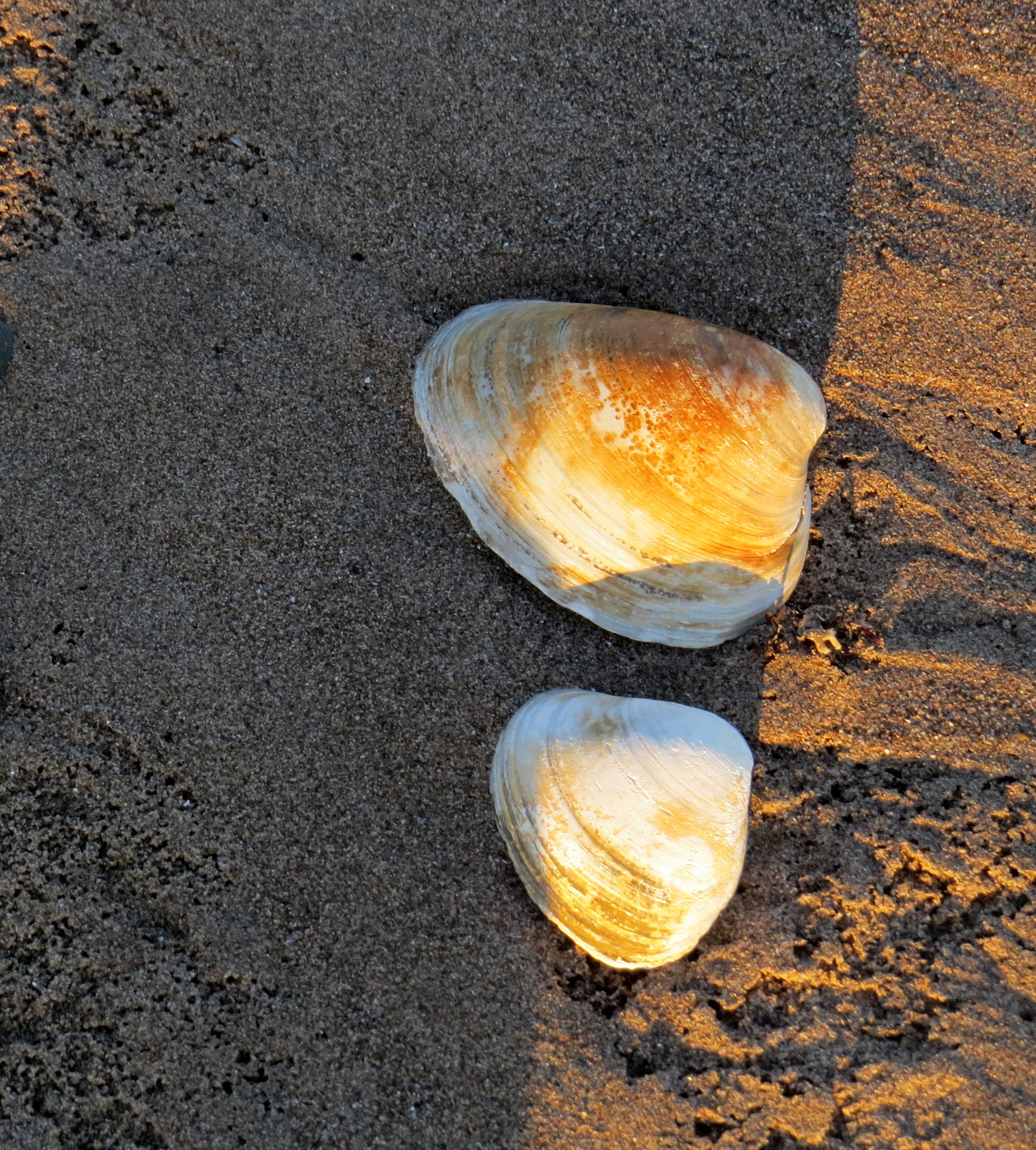
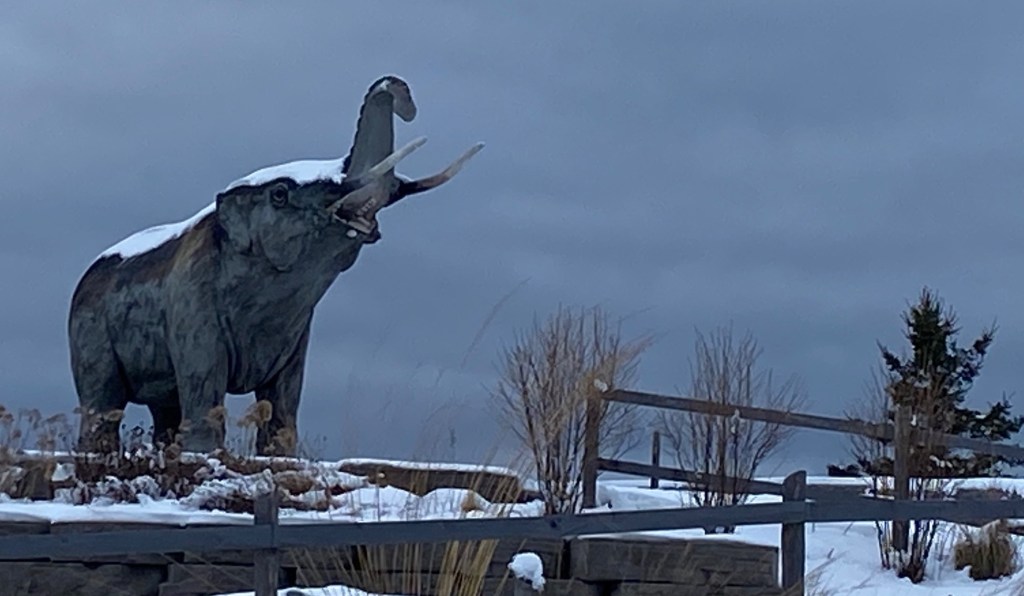
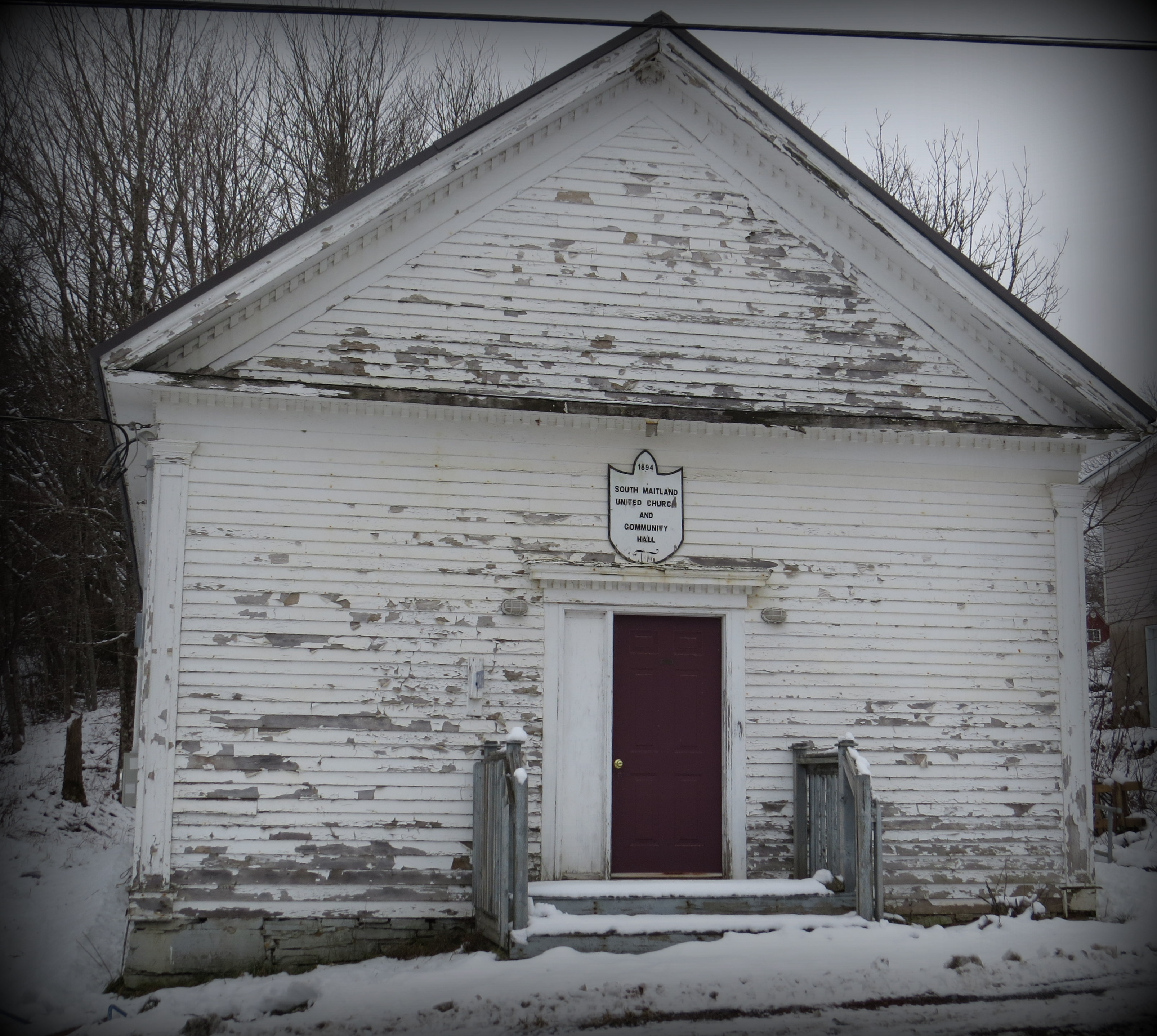
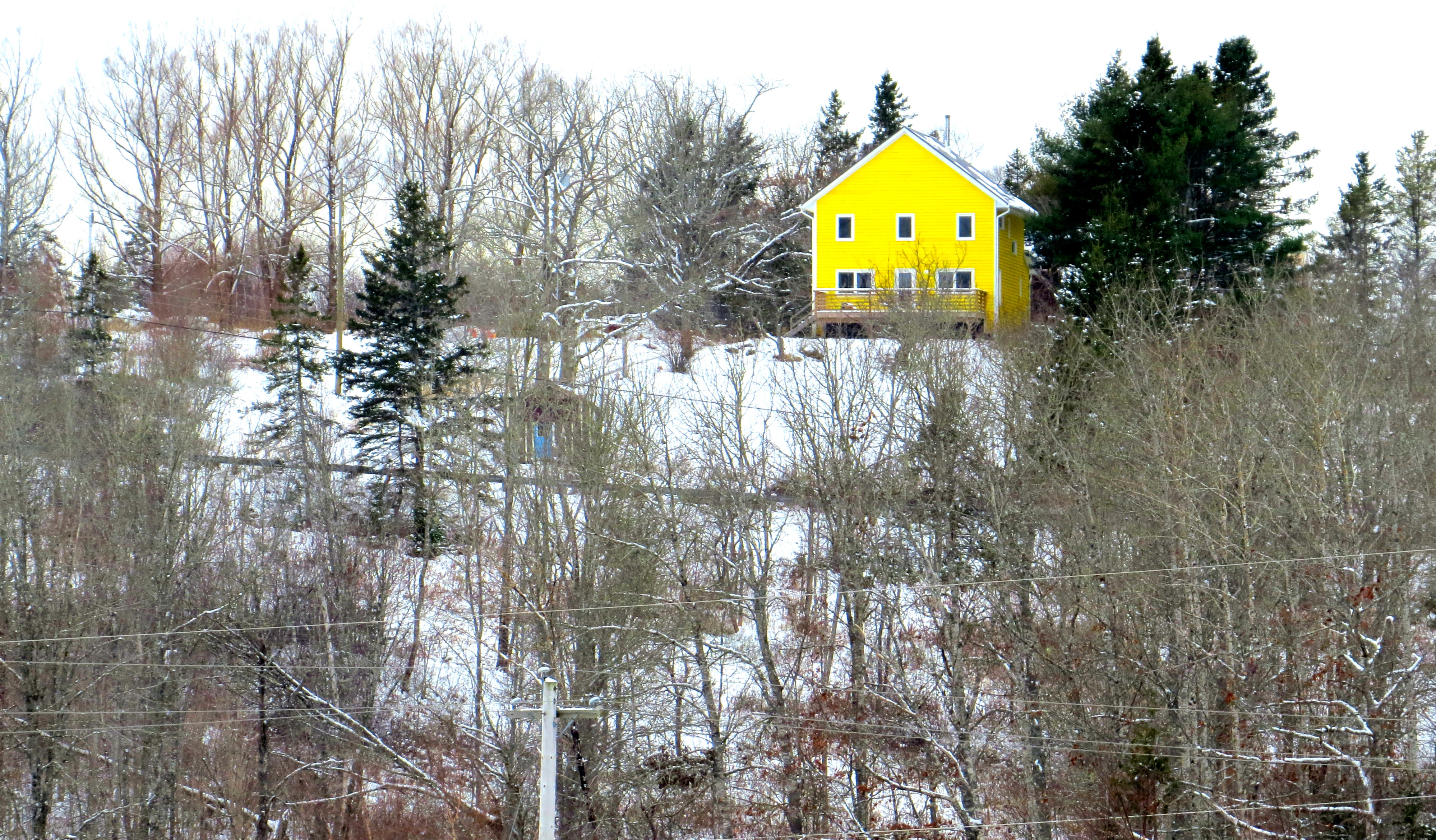
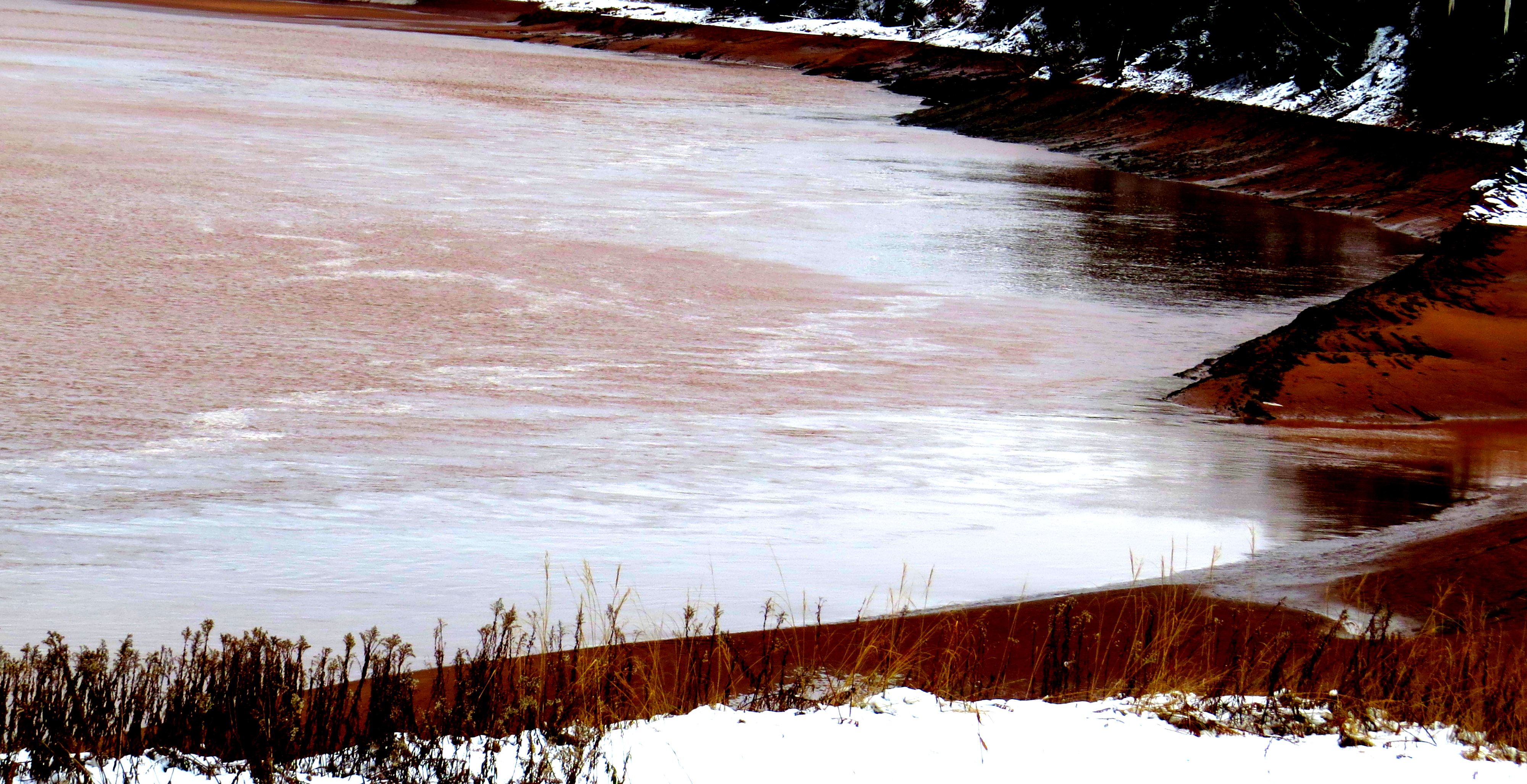
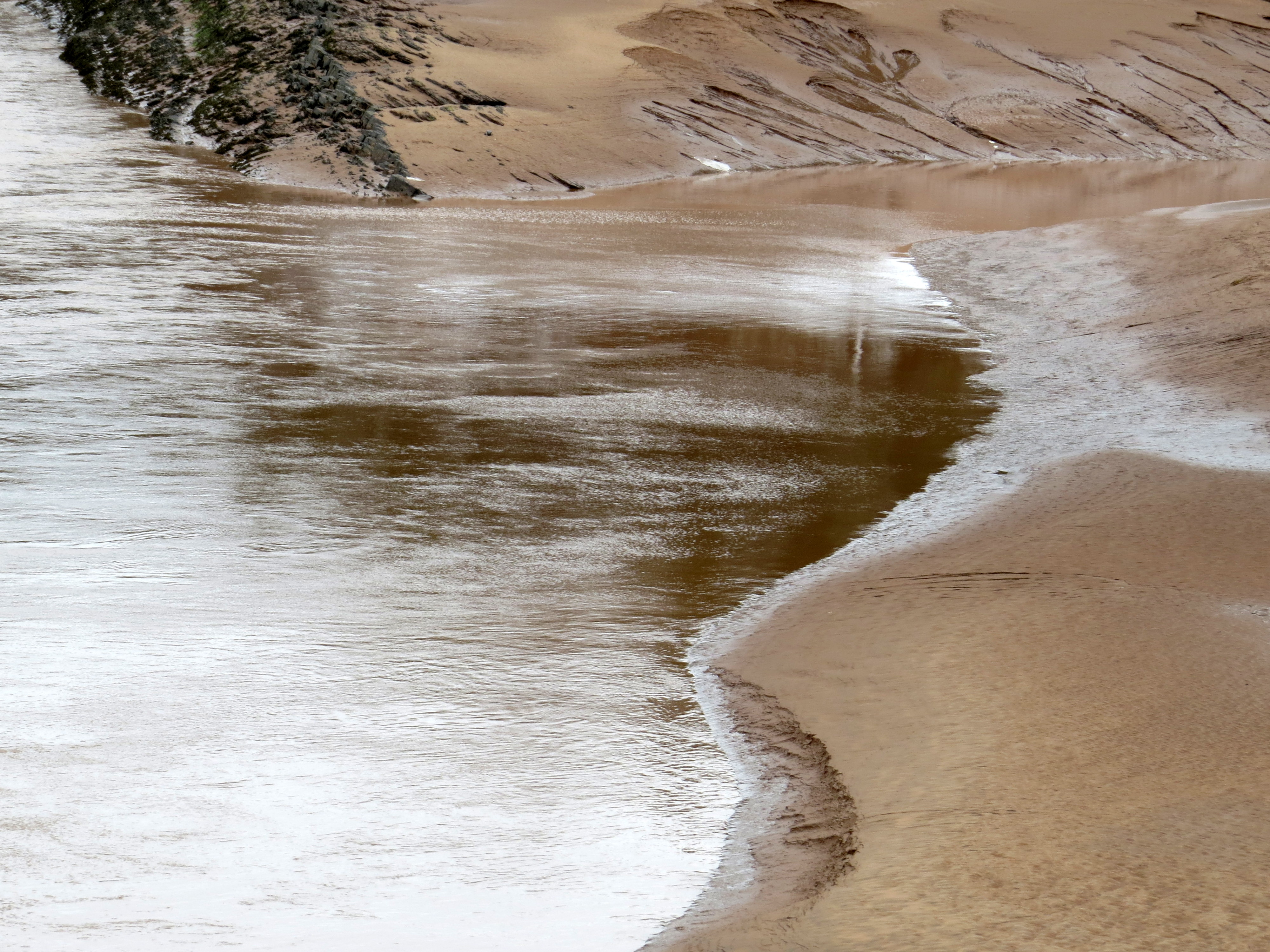
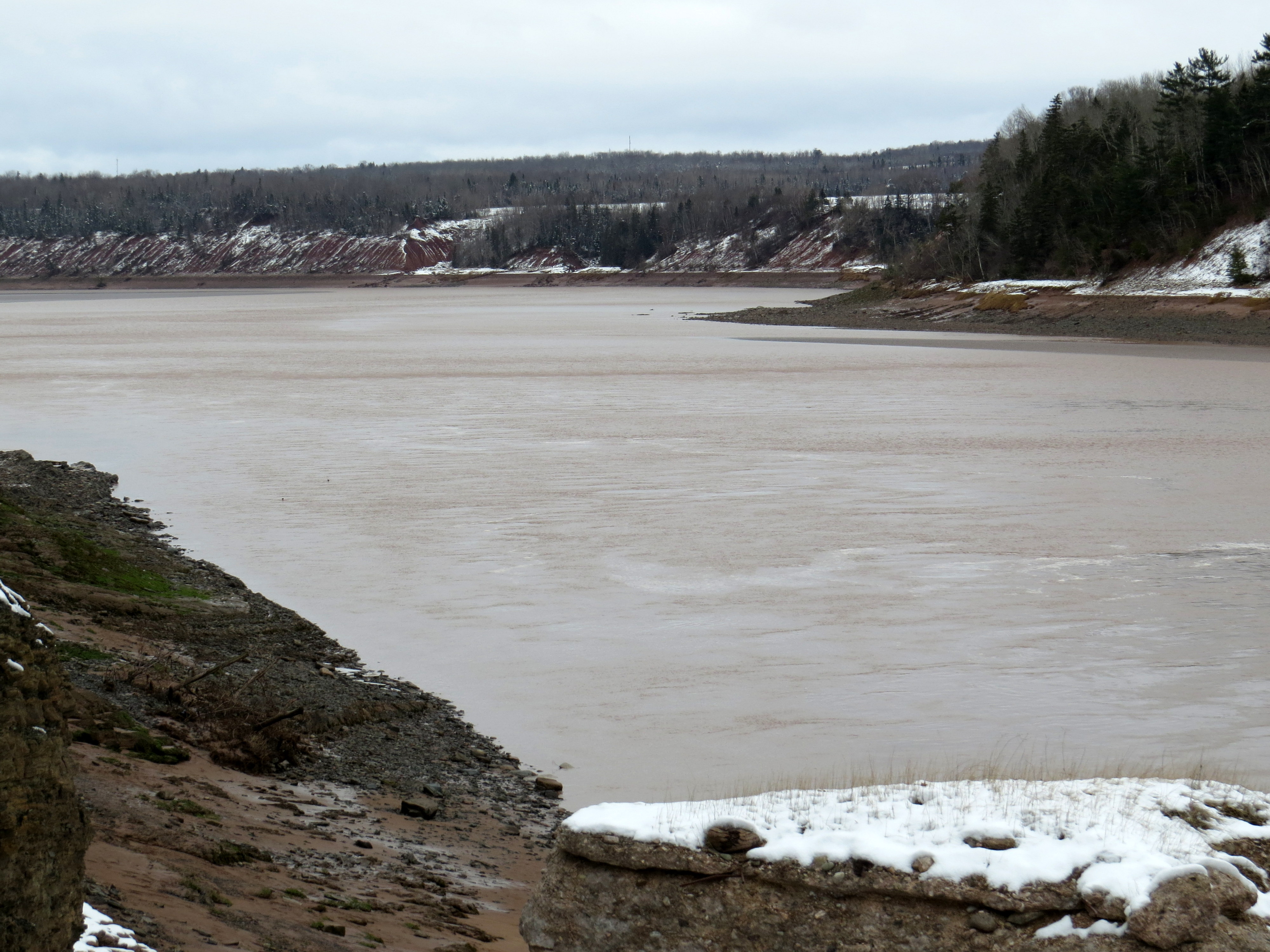
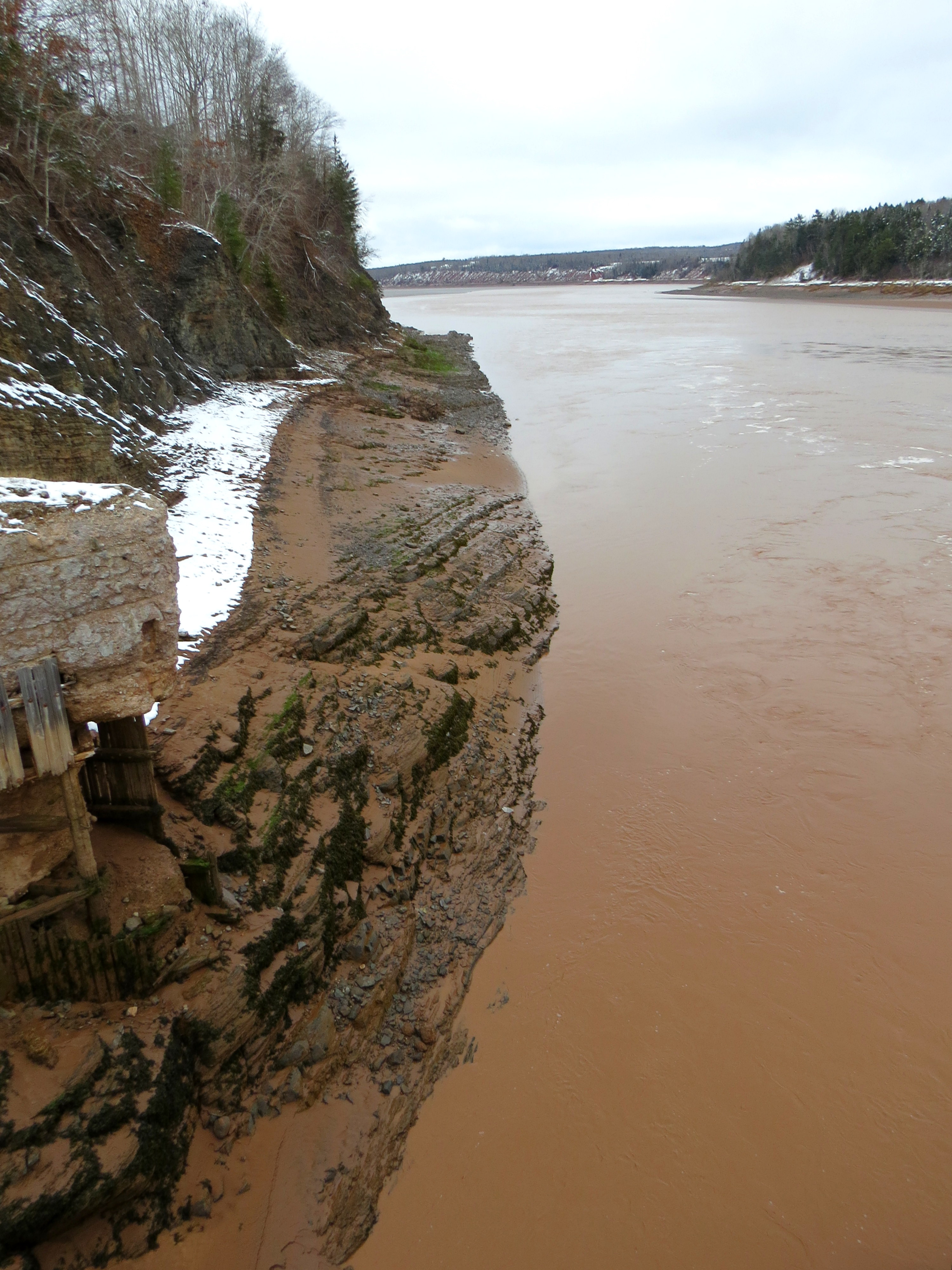
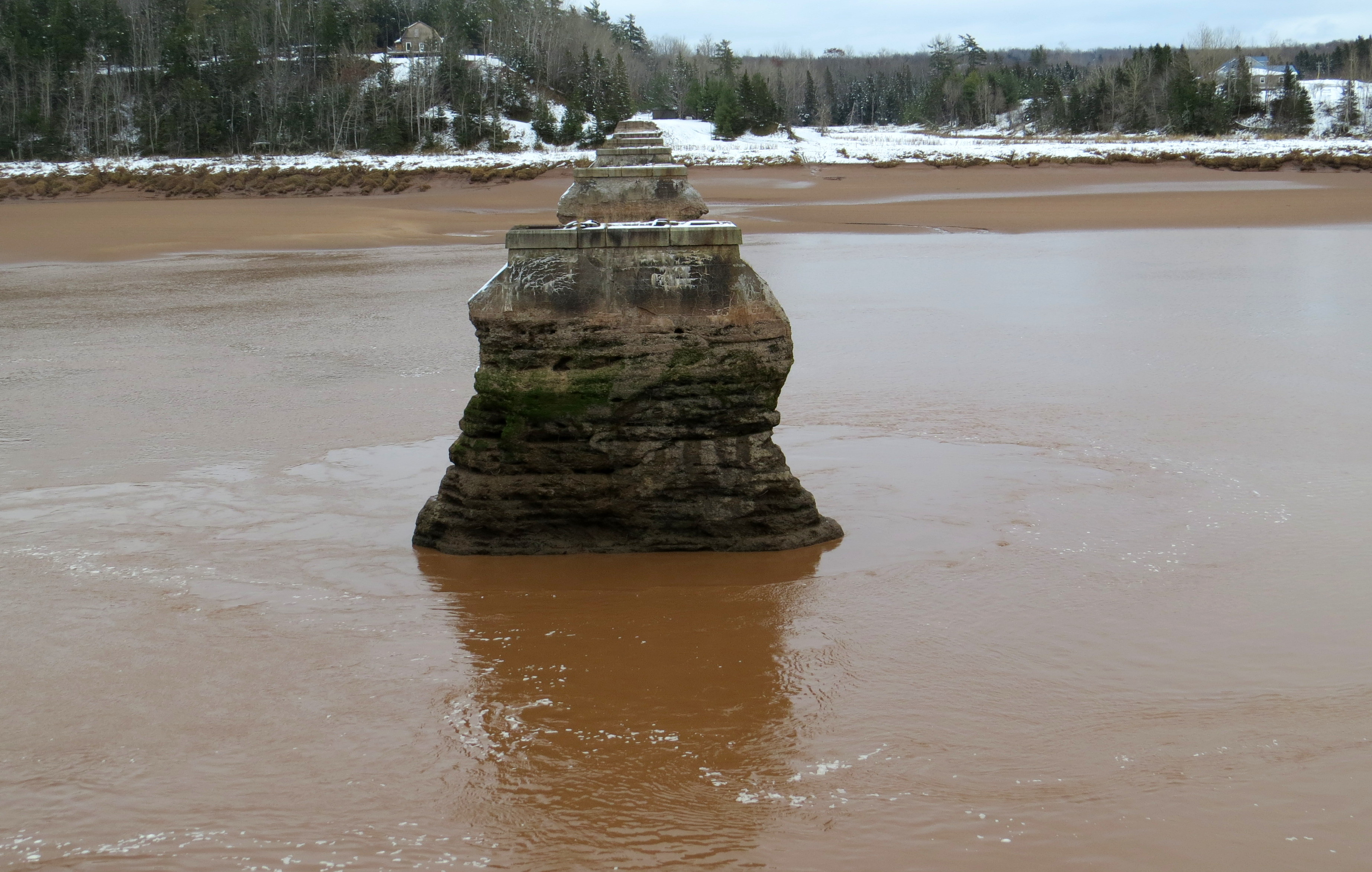
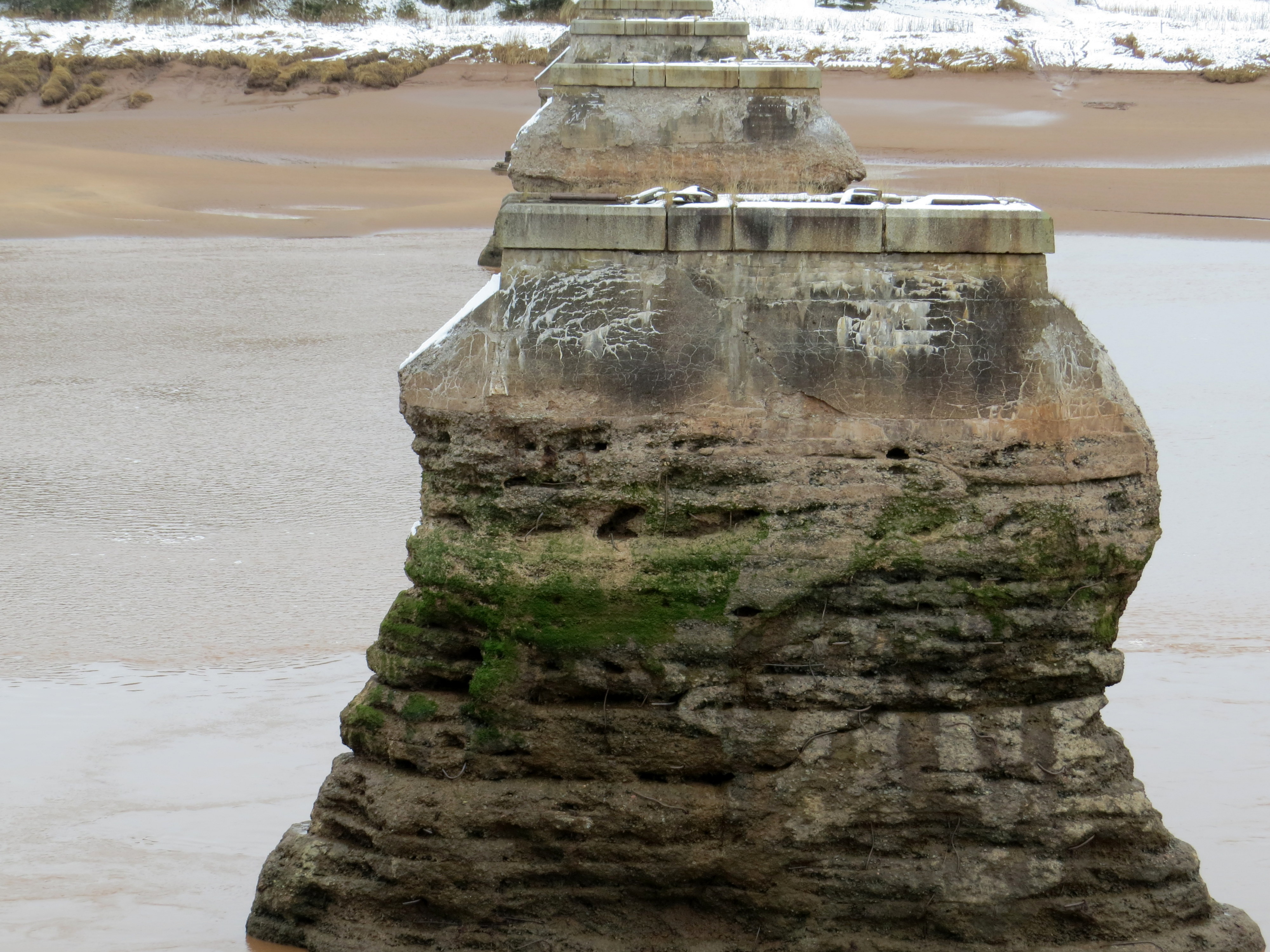
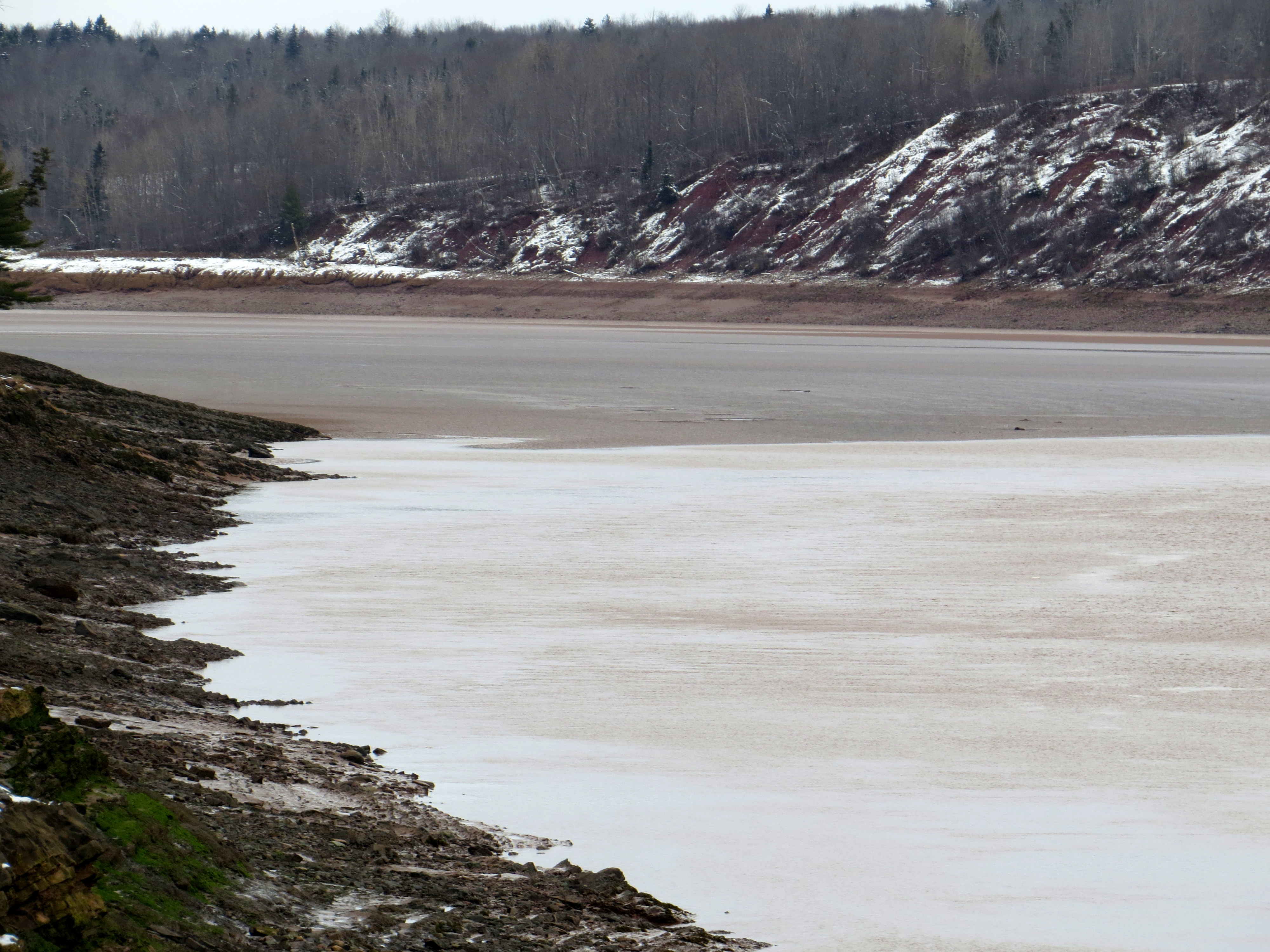
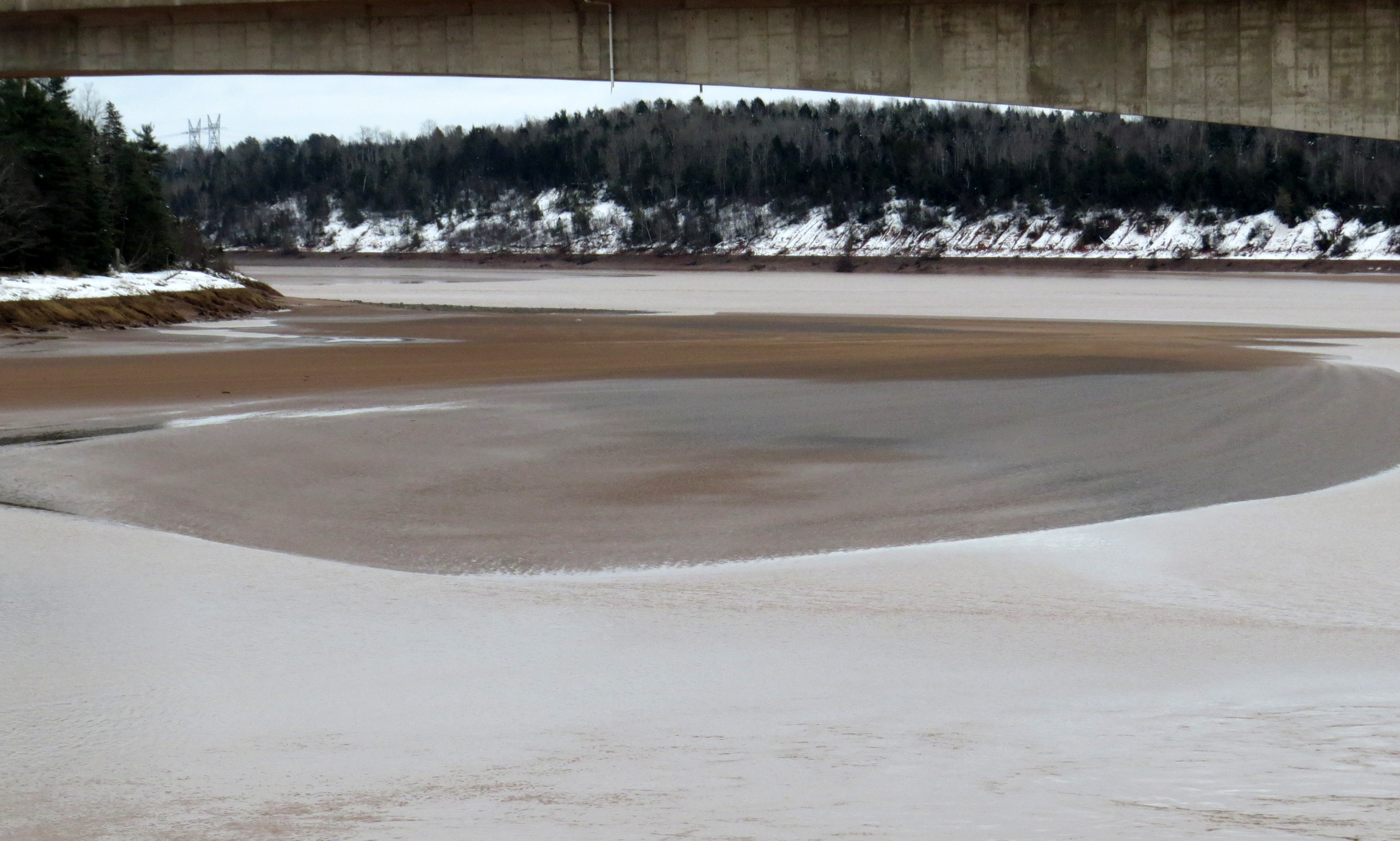
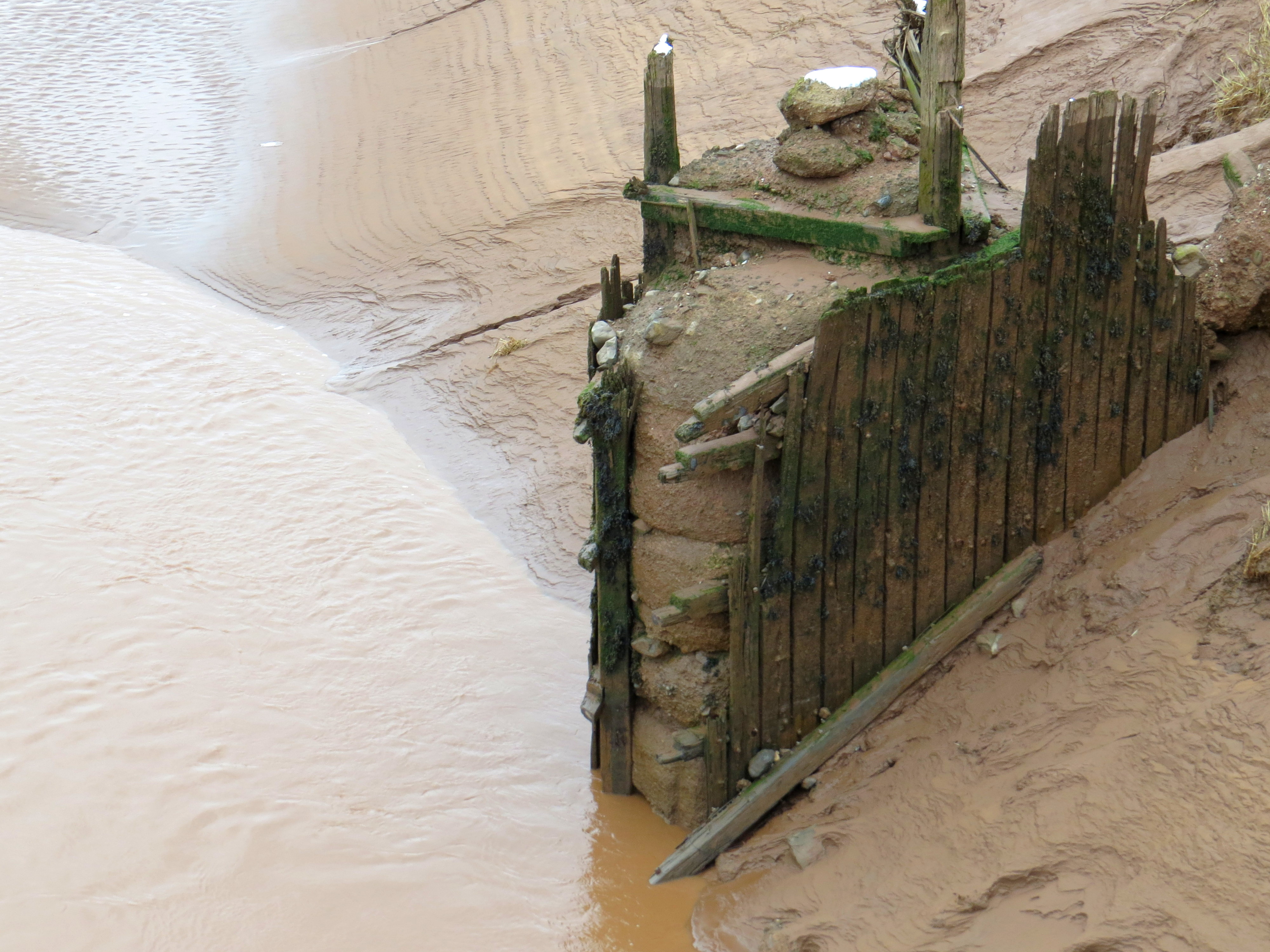
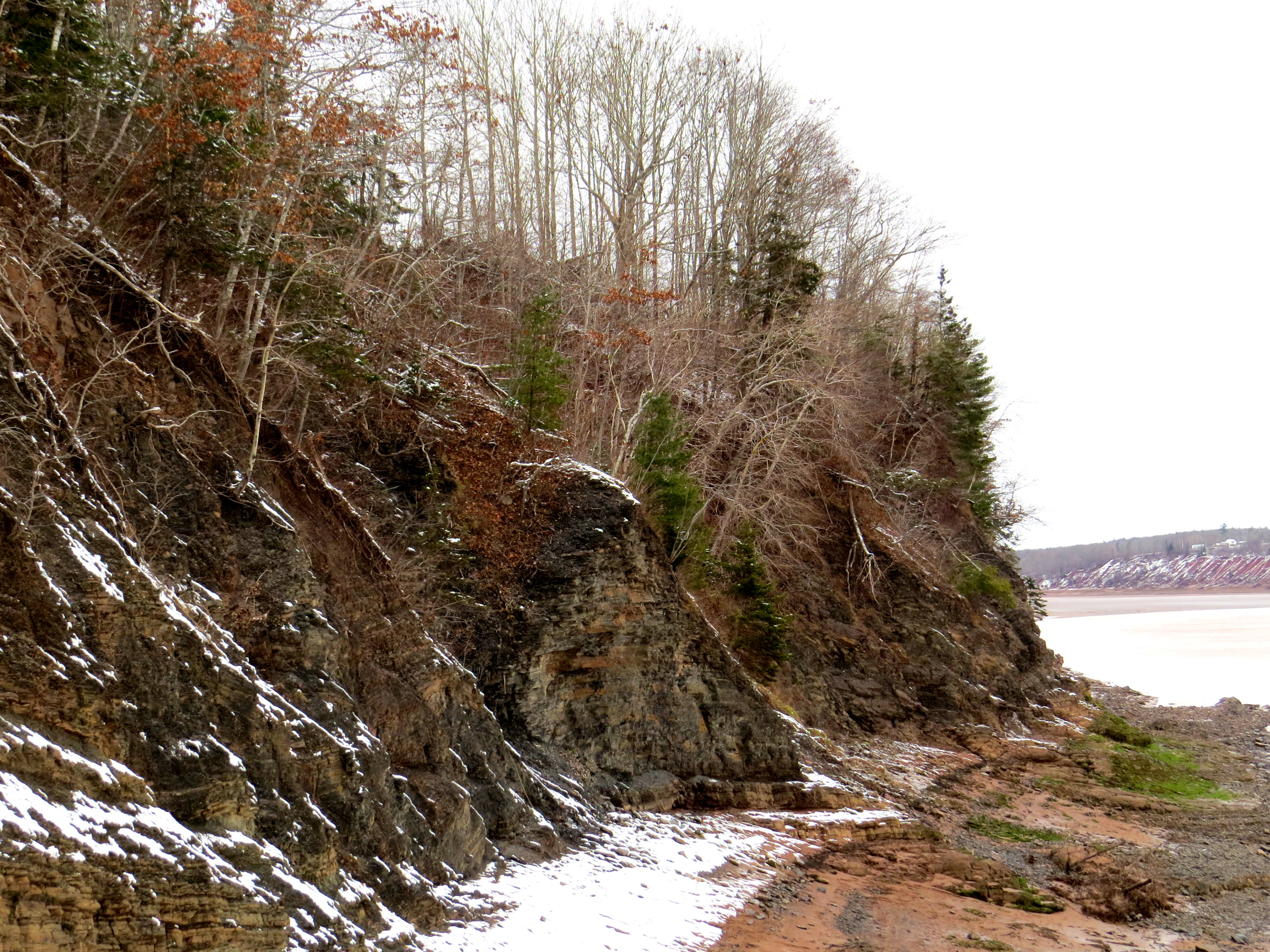
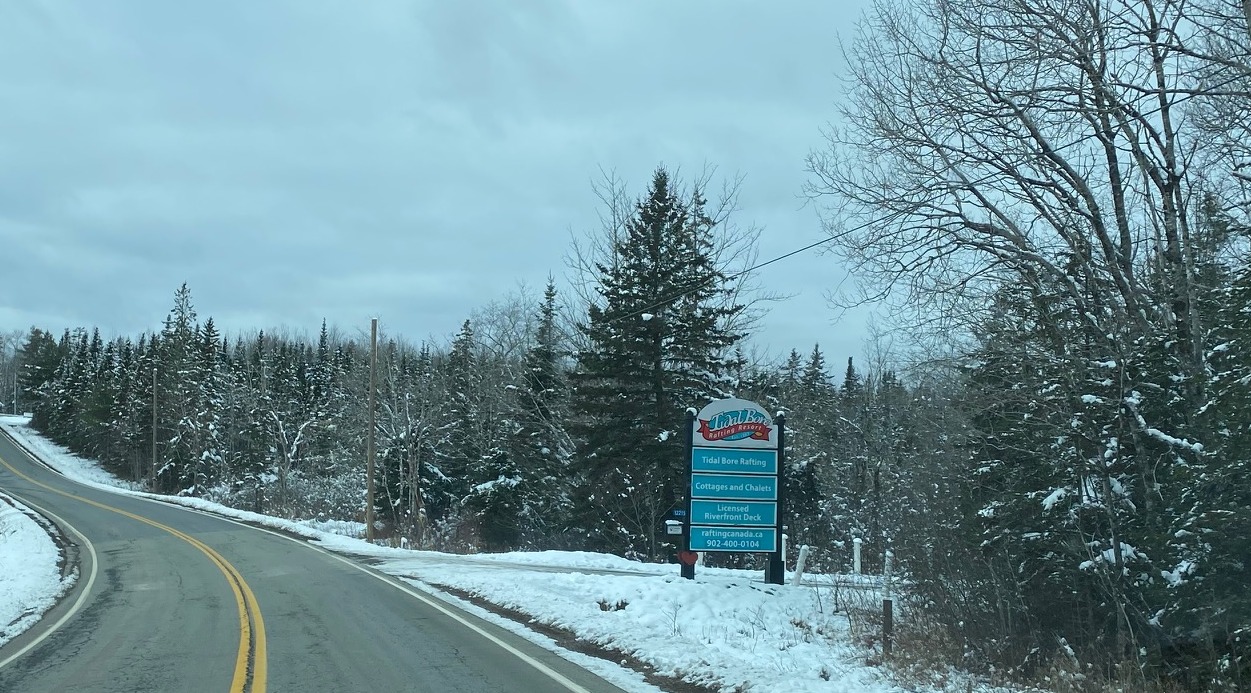
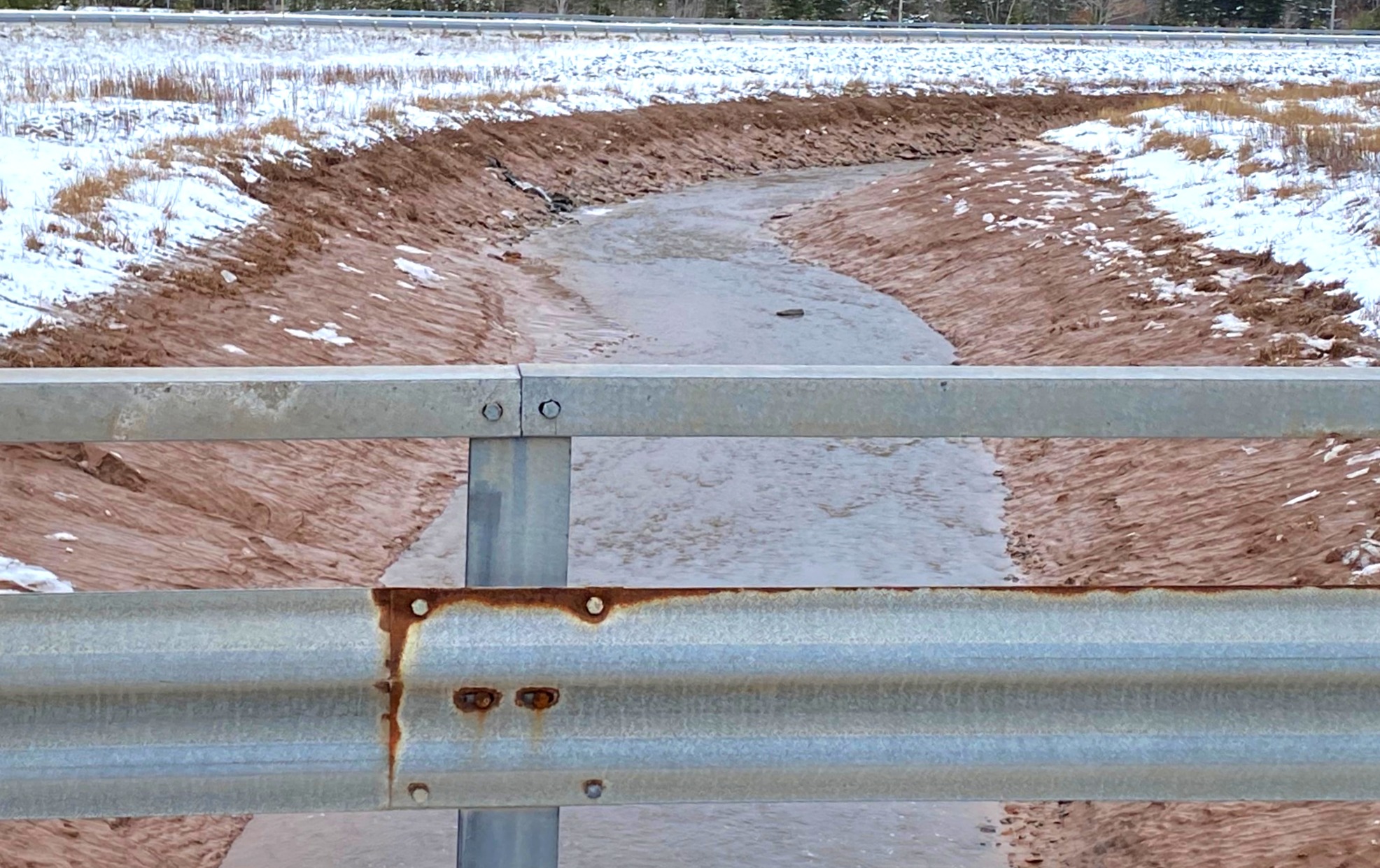
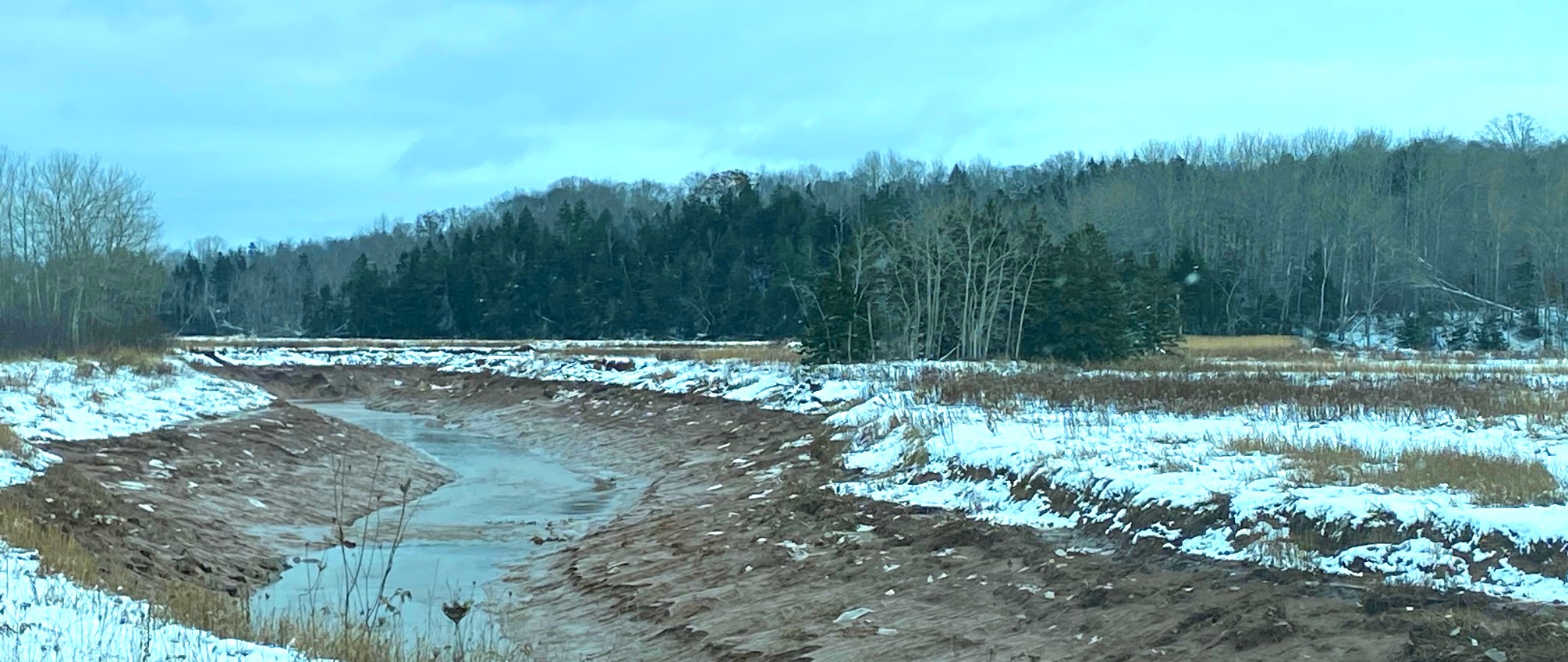
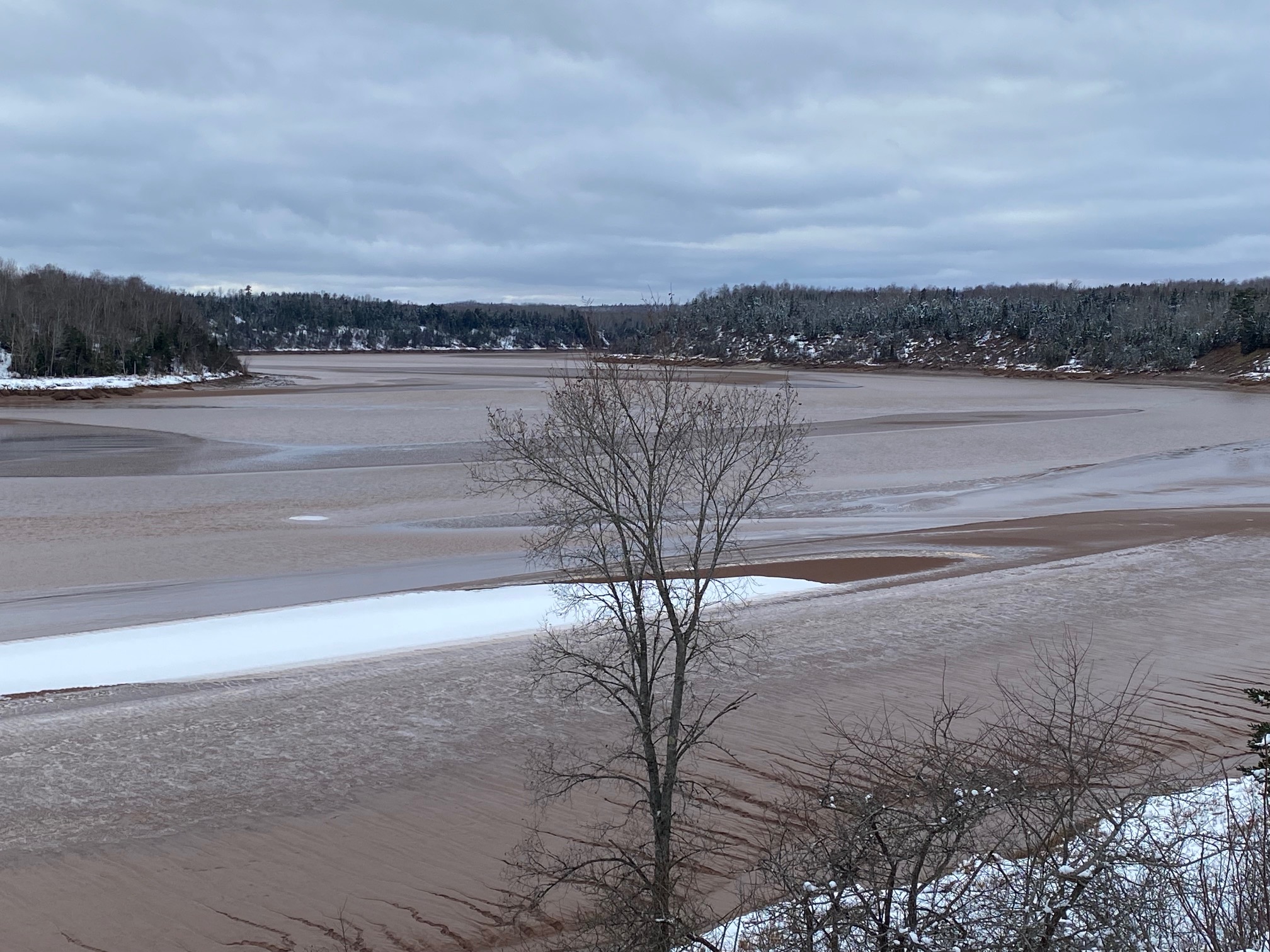
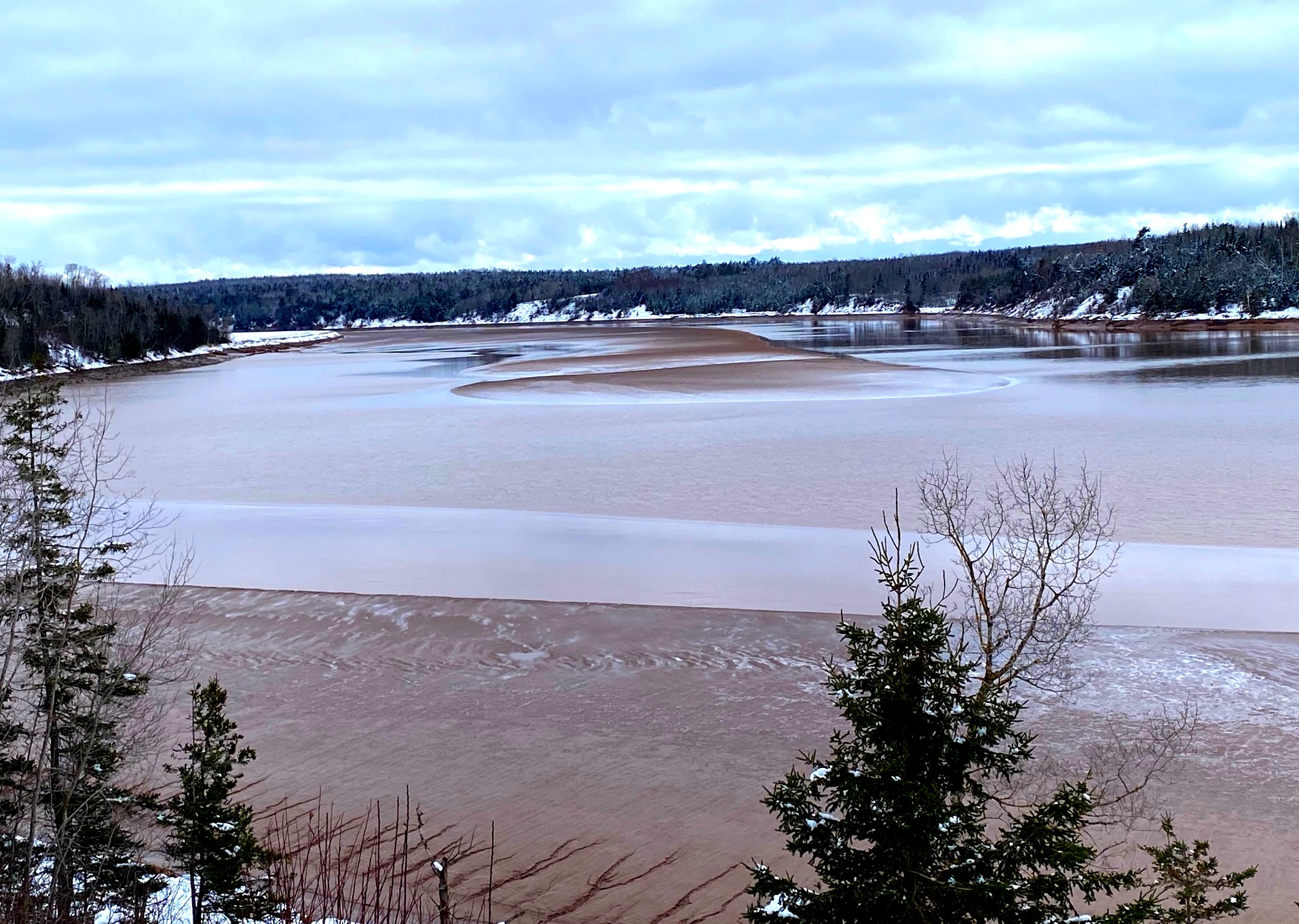
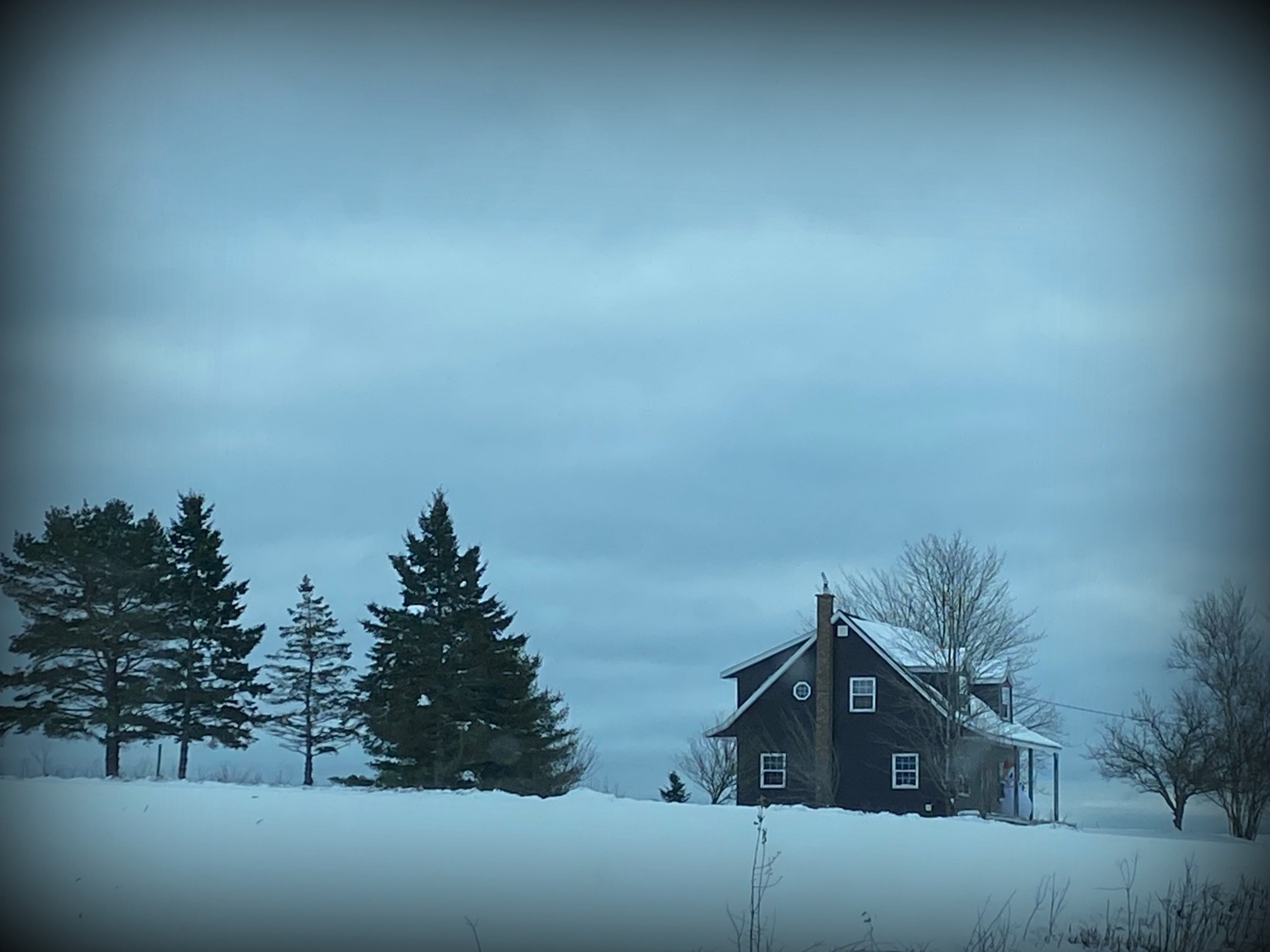
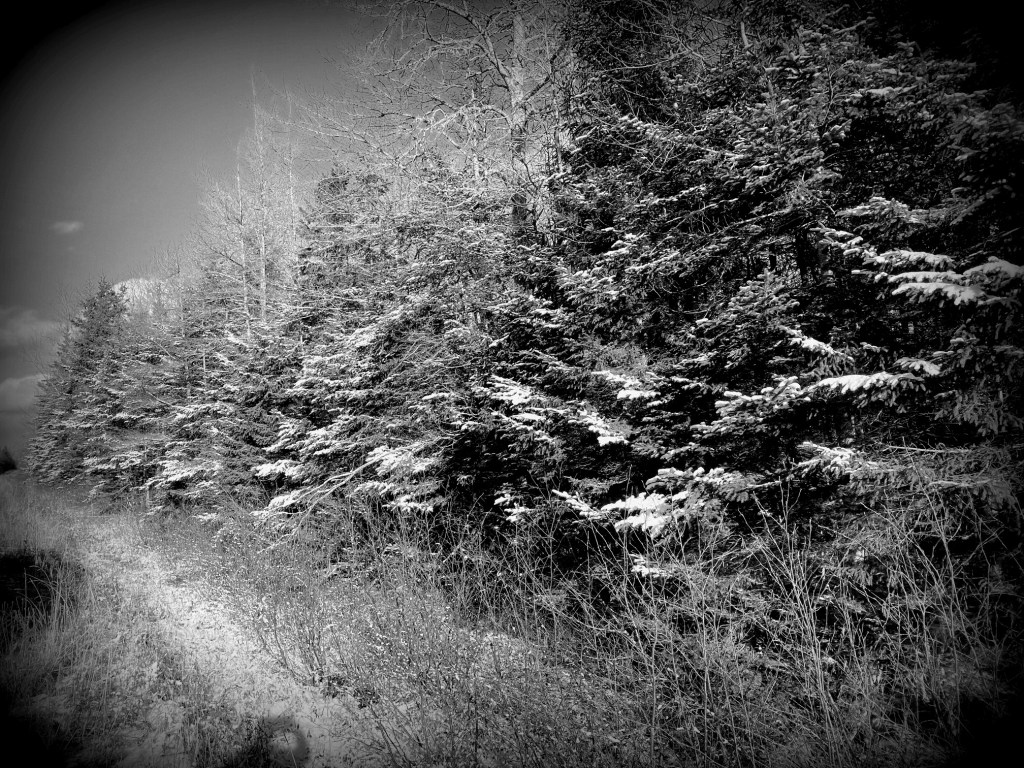
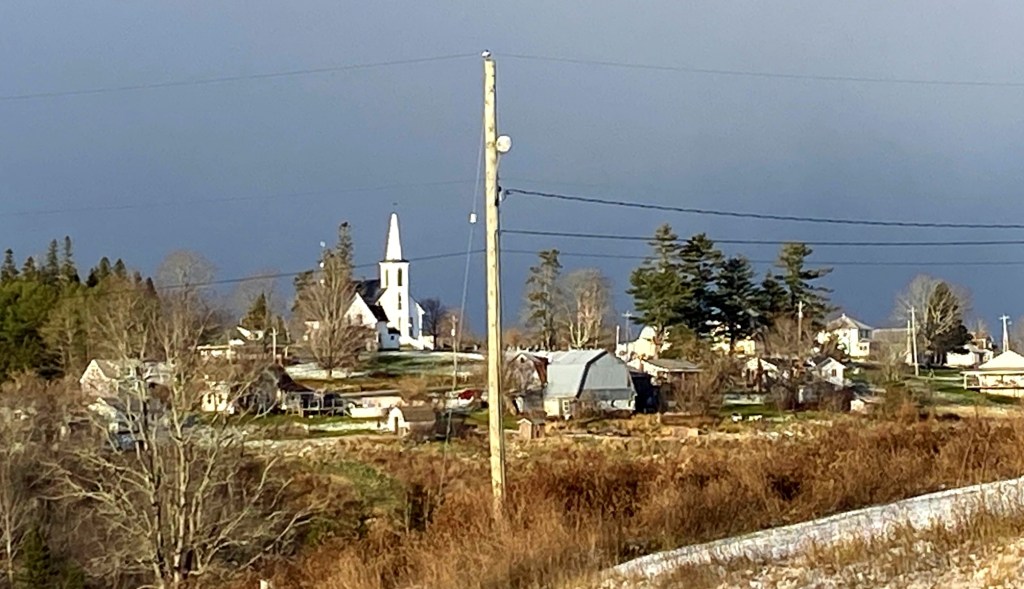
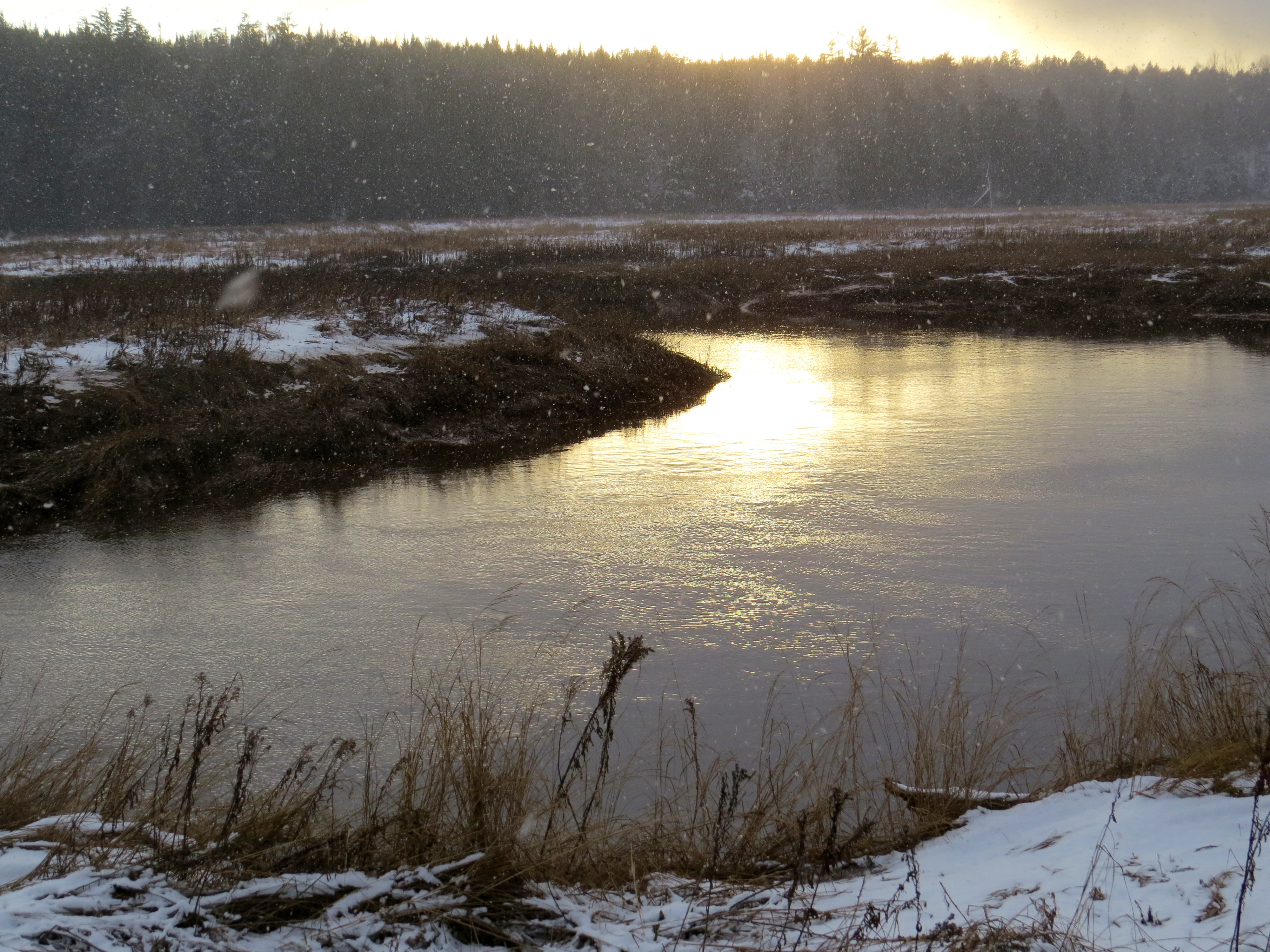
At the end of my journey, this fellow met me in Stewiacke
Pamiętacie poprzednią próbę wycieczki śladami potężnego wiertła oceanu, które boruje sobie kanały wzdłuż Nowej Szkocji? Tak po prostu. Włazi sobie w ląd, wyrywa pewnie miliony metrów sześciennych ziemi, boruje kanały i wlewa się swoim żółto-brunatnym mułem. Pamięta skubany, że kiedyś mógł tu skutecznie łączyć się z cieśninami North Cumberland i św. Wawrzyńca i nie był żadną ‘zatoką’ a też cieśniną, nie był zamulony a czysty, jak świeża woda. Nagle wody opadły i Nowa Szkocja z wyspy stała się półwyspem zamykając swobodną wędrówkę wody oceanicznej. No to ta Fundy Bay, która ‘bay’ nie chciała być, pcha się w ten ląd swoją starą drogą. Boruje. Zaczyna to się w okolicach miejscowości Maintland i drąży ziemię. Raczej wiadomo, że wydrąży. Woda , panie dobrodzieju, zawsze była silniejsza od najtwardszych skał. Uparta, ot co. Skała to taka trochę zarozumiała jest. No bo silna, twarda, niewzruszona. Więc siedzi tak sobie nieruchomo pewna swej mocy. A woda to żywa, jak rtęć. Smyk, smyk i już miejsce znajdzie. I zacznie drążyć aż tak wydrąży na około twardej skały, że skała sama się zawali w proszek.
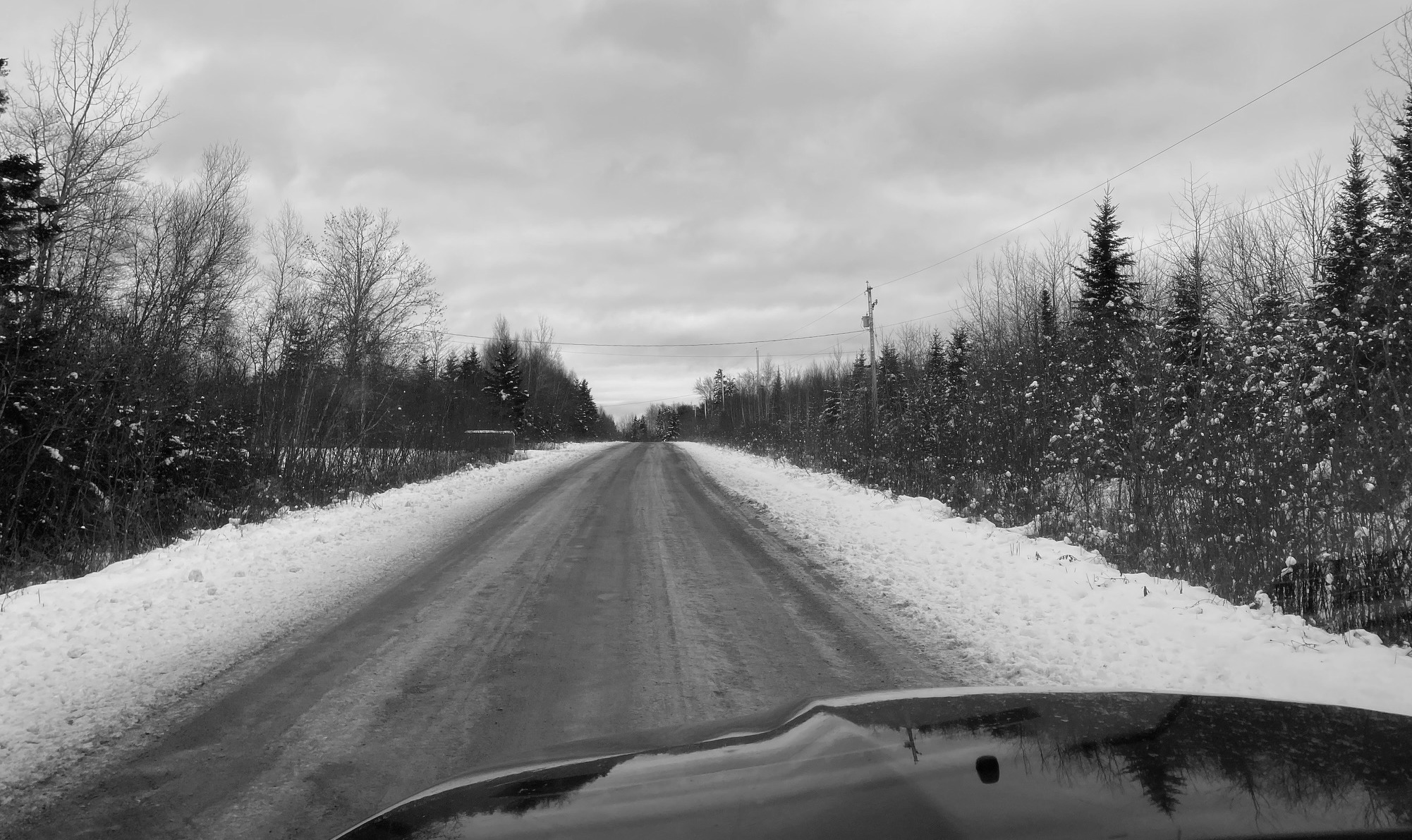
Tamta wycieczka częściowo się tylko udała, bo zachciało mi się ‘bocznych wycieczek’, gdzie w jakiś ostępach leśnych mało nie zniszczyłem swego traka.Wiec dziś pojechałem z surowym sobie danym nakazem: od A do B i wtedy do C. Żadnych bocznych atrakcji. Co prawda, tak zupełnie posłuszny i skoncentrowany na jeździe utartymi szlakami nie byłem i właziłem tam, gdzie były napisy: Halt! Verbotten! No, ale co to płotek niby metalowy, ale nie wyższy niż do klatki piersiowej? Bo niby zima wszystko nieczynne. A co ja niedźwiedź jaki, że zimą mam spać w norze?! Albo dróżka boczna przez las i wzgórza, niby żwirowa a nie asfaltowa ale porządna. No tak, był duży napis, że roboty i stała wielka kobieta w walonkach i żółtym skafandrze z dużym znakiem ‘stop’. Podchodzi do mnie i mówi: reperują most dalej, tylko dla ruchu lokalnego, wracaj do szosy i szosa do głównej trasy. A przecież ja też miałem walonki na sobie, jadę trakiem, jak farmer, więc mówię: ale ja lokalny. No to ona: a, to OK, jedź. Tylko powoli i uważaj na ciężarówy ze żwirem. I pojechałem. Za mostkiem już robót nie było i droga była dobra.
I cała drogę tej wielkiej rzeki-mułu przejechałem, zaglądałem do niej, podziwiałem potęgę natury. Spotkałem orły, choć zdjęć zrobić nie zdążyłem. Zanim kamerę ustawiłem, odleciały za drzewa. Ale wiecie, jak orły wyglądają. Klucze dzikich gęsi za to po niebie szybujące dały się, niby pięciolinie, w obiektywie złapać.
(scroll down to the English part of the article)
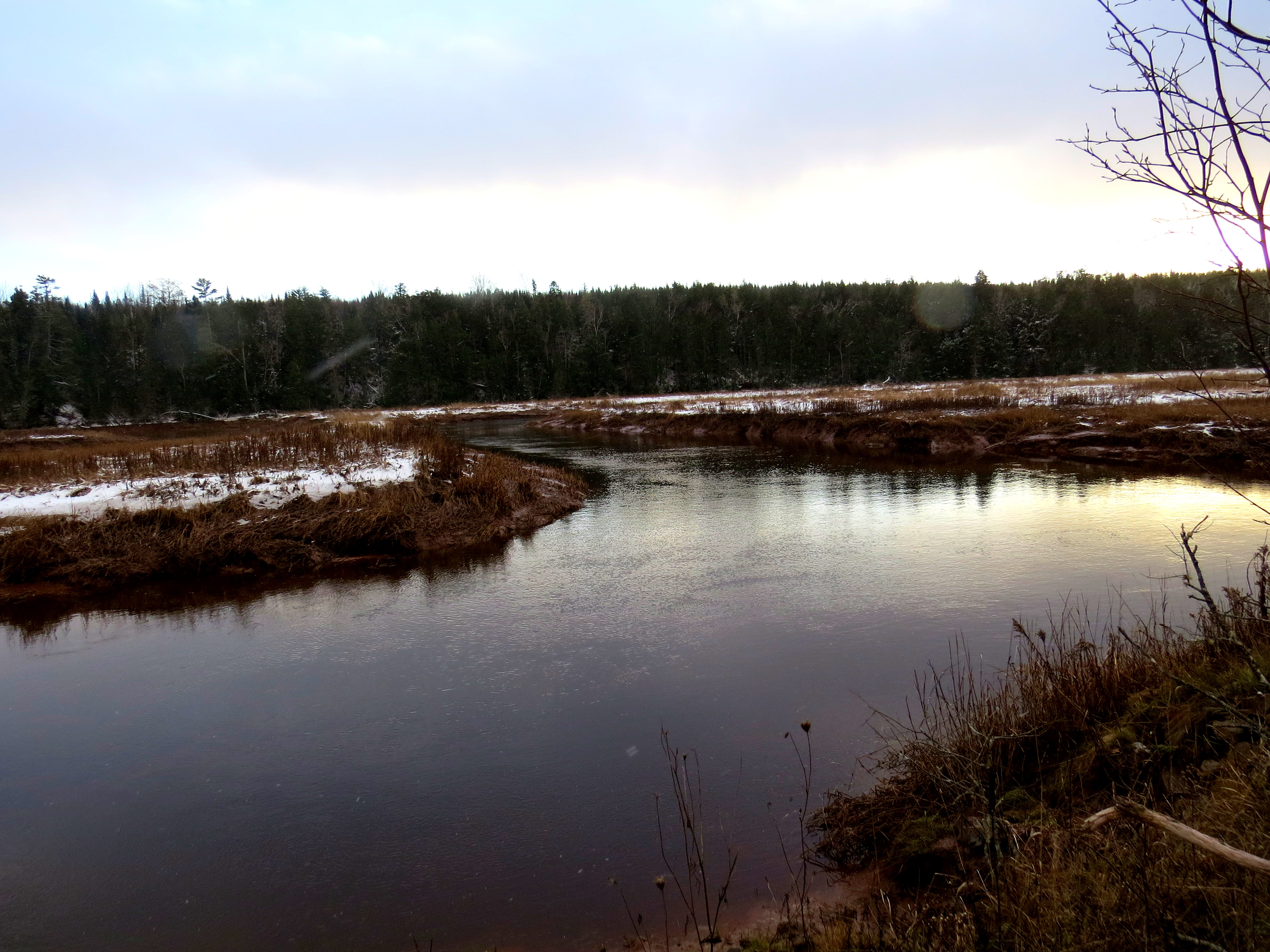
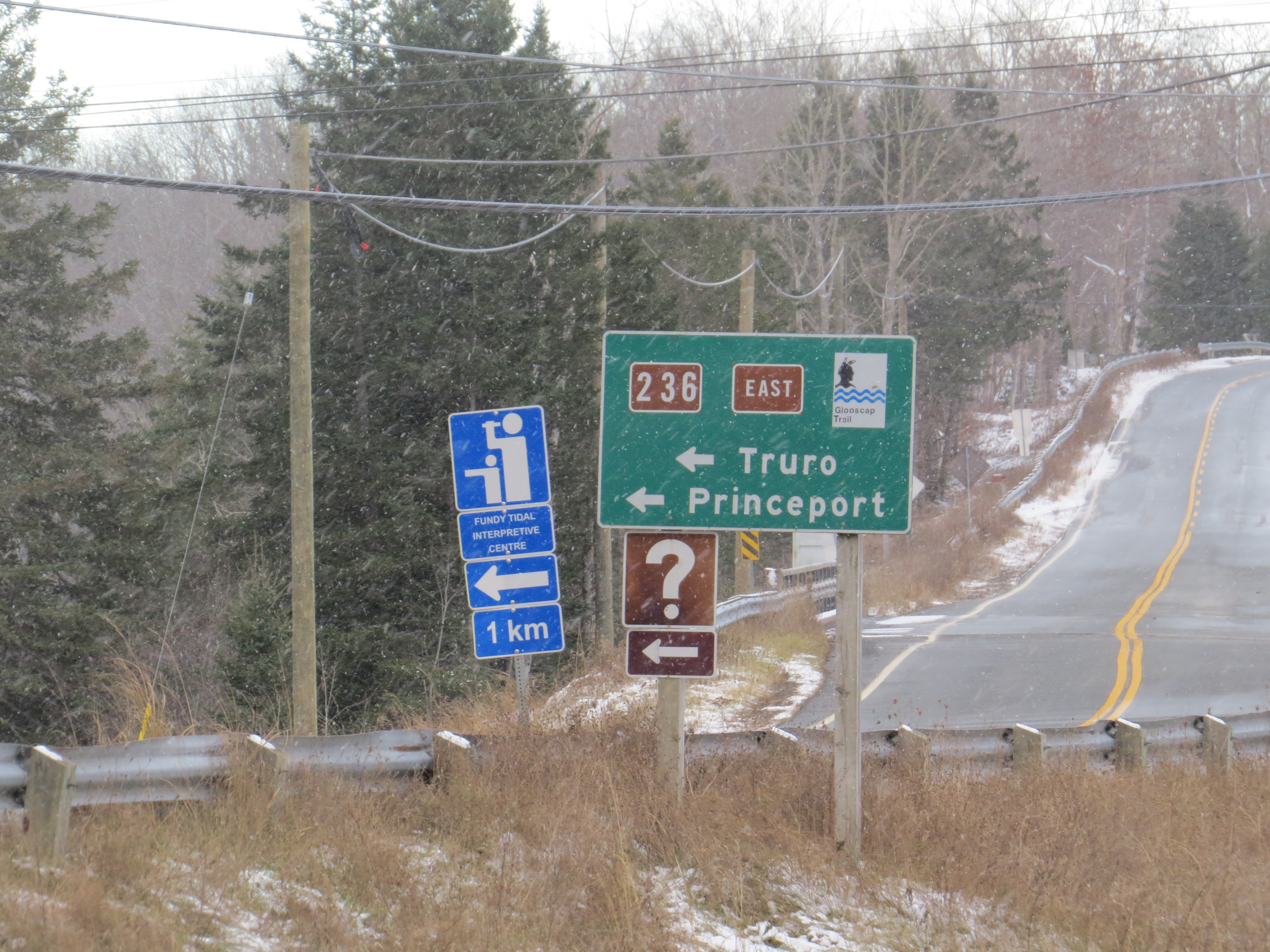
On the last day of November as you remember, I went to view the immense power of the tidal bore that starts from Minas Basin around Maitland. At that time my unfortunate side trips took so much time, that when I eventually arrived to view the brown mud-river – it was too late to properly explore it. A few days later, still not fully recovered from my bad flu, I went again. This time I took a shorter route and no ‘side trips’. Winter offers totally different views. And lack of tourists. Zero. None. Yes, some spots were gated and closed. But the gates were not really that tall and maybe I didn’t see the sign ‘closed for the season’? Who knows. I was there and the river was there and we had to meet somehow. So we did. The rest is history. The Tidal Bore is an absolute must to see. Such immense power of the ocean tides and the constant struggle of the land against it. A struggle the land will eventually lose. But observing it is something to admire. Nature has so much majesty. I took this time Highway 102 to Shubenacadie and #215 to Maintland. Came back by scenic Riverside Road that follows the flow of the Channel (called also Subenacadie River).
The other day, on the last day of November I decided to go and explore parts of Nova Scotia hinterland I have not traveled through. It wasn’t the smartest choice but – what the heck, not the first and certainly not the last time I did things I maybe shouldn’t, and a bit too late, as it was already 1 PM. Took the #101 west to Lower Sackville and turned into #354 north toward Beaver Bank. Between the little and tremendously loooong towns of Beaver Bank and Middle Beaver Bank, the traffic and road repairs stretched my patience to the limit. I was just about to turn around and go home. But past the Upper Beaver Bank the highway climbed higher and higher, the sky became bluer and bluer and the new snow was so white on passing tree branches and endless fields. I was in heaven. Around the small community of Upper Rawdon the highway reached its peak and you could enjoy endless view in front while driving. And there was almost no one else driving. Such a peace. And peace is what I went for in my driving that day.
I was aiming to go to Maitland to view the power of the Tidal bore of Minas Basin as it rips the land and goes toward Truro on one end and all the way to Shubenacadie on the other end. There is no escape – that bore and power of the Fundy Bay will in not so distant future finish its job and separate once again Nova Scotia from the mainland and we will become an island again. Little chance I will see it (although rising sea levels might accelerate even faster …) but people in their twenties most likely will. I was aiming to…. My famous words, LOL. At the footsteps of the lovely town of Kennetcook I took a sharp turn to the west. Let’s explore some more of the hinterland. Sure, why not? Especially that it started snowing and daylight became a bit greyish … It was the last day of November, after all. Around small Tom Barron Road, I thought that I should start heading back to my original destination. Turned right into the road, passed two or three ancient homes, lost my internet connection. But west is west and east is east with or without internet. The gravel and mud road instantly becomes narrow. Have a big truck, so what? Just drive to the end and turn on the first road toward the east. What’s the problem?. Passed a very small enclosure in the thick forest with one solitary bull there. Waved to him and very slowly moved further. Slowly because the road stopped being a road. It became very narrow, with deep holes tunnel. Suddenly for a moment my wifi came back and said: continue for six kilometres and turn left. I tried. But there was no chance. One could hardly walk there and no car (maybe a tank, but I doubt it) can possibly drive through that tunnel. Turning around was impossible. The only choice was driving in reverse trying not to get stuck. Took me forever, meter by meter, back and forth. Branches scratched my poor truck seriously. But I had to get out. The phone was dead again. Finally, I got back to the enclosure with the bull, and used the small clearing around it, turned around and headed back. That was interesting, LOL.
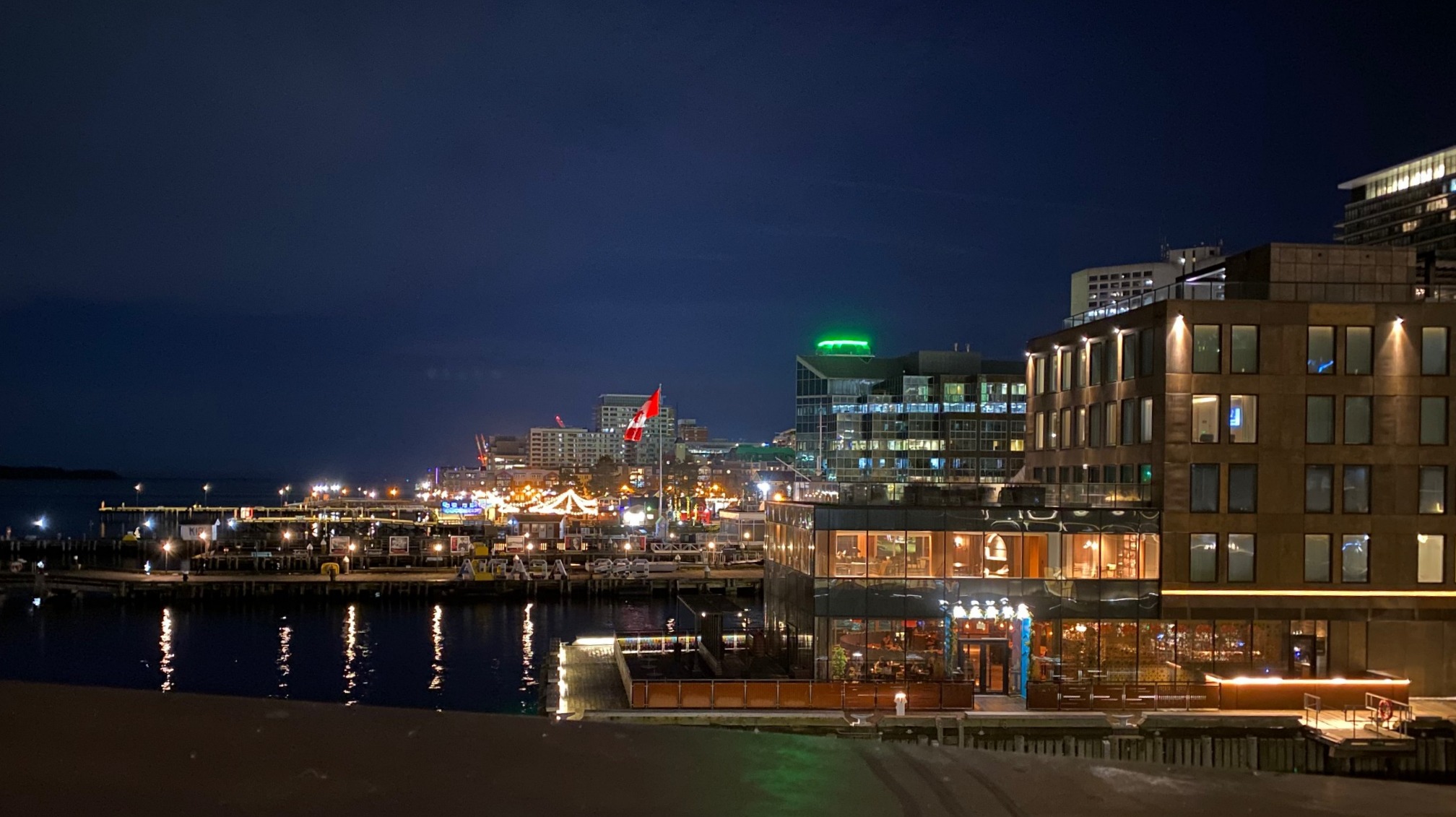
The rest was easy. Back to Kennetcook, down to Maitland. And to the power of the yellowish bore of Minas Basin. It was getting too late already to explore the view of the ‘river of mud’. Took a few pictures and took Highway 215 to Shubenacadie by #102 and back to Dartmouth. Very soon, I will have to take that drive again to observe the tidal waters coming through the land. But will not engage in doing ‘side trips to nowhere’.
Ostatniego dnia listopadowego nie mogłem więcej wytrwać w domu. Mimo ciągle męczącego kaszlu i myśli zwróconej w kierunku strasznej rocznicy – zdecydowałem pojechać w tereny nieznane jeszcze, na północ przez wzgórza, ku dolinie którą zamieniła w rwącą, żółtą rzekę potęga fali przypływu z Fundy Bay. To nie jest rzeka słodkowodna. To morska fala, potęga oceanu, który rozerwał tą dolinę, jak pługiem. Wyborował sobie drogę. Dawniej, tysiące lat temu Zatoka Fundy była po prostu cieśniną, która oddzielała Nową Szkocje od lądu stałego. Teraz, podnoszący się stale poziom morzą związany ze zmianami klimatycznymi wraca w swoje dawne koryta. Za pięćdziesiąt lat spodziewamy się, że Fundy Bay znowu będzie cieśniną i połączy się z Zatoką św. Wawrzyńca czyniąc Nową Szkocję wyspą ponownie. Być może nastąpi to szybciej. Więc pojechałem w kierunku Maitland przez rozległy płaskowyż zobaczyć gdzie ten potężny bor przypływu wyżłobił tą słoną, mulistą rzekę, której jedno ramię delty prowadzi do Truro, a drugie na południe, do Shubenacadie.
Ale, zwyczajem swoim, miast jechać wytyczoną trasa do celu, w okolicach uroczego miasteczka Kennetcook, skręciłem nie w prawo do Maintland, a w lewo. Troszkę wiejsko-sielankowego uroku tej zachodniej części Nowej Szkocji zasmakować. To trochę taka dzielnica zapomniana, nie na głównym szlaku. Zaczynało się robić lekko późno, śnieg prószył już nieźle. Po parudziesięciu kilometrach dojechałem do małej wioski przy drodze Toma Barrona. Pomyślałem, że czas wracać w kierunku Kennetcook i na trasę zaplanowaną. Nova Szkocja obszarem to nie Kolumbia Brytyjska czy Ontario. Wszędzie tu blisko, więc po co wracać ta sama drogą? Przejadę przez tą wioskę i z drugiej strony lasku w pierwszą napotkana drogę w prawo. Co za problem? Droga tylko bita, wąska, ale mam przecież trucka a nie fiacika. Wioska była malutka, osada w zasadzie , może trzy-cztery domki. Zaraz za domostwami zaczął się lasek. Potem gęstszy, droga węższa. Straciłem wifi i googla. Jechałem już wolno. W pewnym momencie była małe obejście otoczone palisadą wewnątrz którego stał samotny byk. Pomachałem ręką. Śnieg prószył bardziej i widoczność zmalała. Zaraz za obejściem droga stała się drużką, tunelem w zasadzie z głębokimi koleinami. W pewnym momencie mój gogle się odezwał! Dalej mnie prowadził mówiąc wyraźnie – za sześć kilometrów skręć w prawo i kontynuuj do szosy 236. Zawahałem się ale nie było jakiejkolwiek możliwości zawrócenia, mój truck ledwie się mieścił między drzewami. Może za kilkadziesiąt metrów ta dróżka się powiększy? Nie powiększyła się. W pewnym momencie zwężała się na dróżka dla jednego-dwóch piechurów. Nie było wyjścia. Wifi też przestał działać ponownie. Musiałem cofać się metr po metrze pilnując by nie wpaść w koleiny i nie zabuksować się lub nie uszkodzić zawieszenia kół. Na gałęzie szorujące bogi samochodu uwagi nie już nie zwracałem. W zasadzie smiac mi się chciało. W najgorszym wypadku będziesz tu w tej dzikiej gęstwinie nocować, benzyny masz sporo to będziesz mógł się ogrzewać., LOL. Ale metr po metrze jakoś udało mi się wycofać do miejsca tego zagrodzenia z bykiem. Przy zagrodzeniu była mała wycinka, gdzie udało mi się samochód przekręcić. Byłem więc ‘w domu’. Pogadałem chwilę z bykiem, który patrzył się na mnie z politowaniem.
Wróciłem do trasy i przez Kennetcook pojechałem szosą 236 do Maintland. Zaczynała się niezła szarówka, śnieg ciągle padał. Obejrzałem tylko mały fragment tej ‘żółtej rzeki’. Jej ciekawsze fragmenty były blisko ale wymagałby zjechania w inną szosę a widoki z minuty na minutę były gorsze. Obiecałem sobie tu jeszcze wrócić (bez bocznych ‘objazdów’). Szosa 215 pojechałem do głównej trasy 102 i stamtąd do Dartmouth, do domu. Było już czarno. Ale wycieczka mimo to udana.
This article is going to be bilingual: in English and in Polish. It is not just a simple translations. Both texts are geared toward slightly different situations, experiences and expectations of of Polish and English-speaking readers. Therefore some details and background of text are different. However, the idea and sense are geared toward explanation of the same phenomena in the world of politics and politicians. And ethics or lack of such.
Zeitgeist to niezbyt jasny termin niemiecki z pogranicza filozofii, psychologii, literatury i historiozofii. W późniejszym czasie również zaadoptowany przez popularną subkulturę książek i filmów horror w Ameryce Północnej.
Generalnie ‘zeitgeist’ to pewien okres czasu, gdy zachowania nieetyczne są niejako dozwolone, gdy moralność nabiera innych barw i do władzy dochodzą inni przywódcy, politycy. Rodzi się silny nacjonalizm, szowinizm. Widzenie świata w kategorii My contra Oni. Lub: Albo My Albo Oni. Lata 30-te ubiegłego wieku w Europie są tego przykładem a efektem lata 40-te tamże. Obecnie takim zeitgeist nazwałbym okres wzrastającego populizmu, który jest specyficzną odmianą faszyzmu. Czyli czas obecny. Cała ostatnia dekada na całym świecie.
W Polsce były lata PiSu i ich wodza (na kształt wodzów Włoch, Hiszpanii i początków NSDAP w Niemczech lat 20-tych), któremu udało się stworzyć taki mini-zeitgeist w Polsce. Z najbardziej zacofanymi, najbardziej konserwatywnymi elementami polskiego Kościoła. Tenże PiS, mimo zwycięstwa szerokiej koalicji partii i ruchów demokratycznych – zdobył w ostatnich wyborach najwięcej głosów oddanych na jedną partię. Tak, gdyby nie było koalicji innych partii – PiS wygrałby wybory i rząd. PO Tuska zyskała mniej głosów niż PiS Kaczyńskiego. Patrzmy, kto szedł śladami Mussoliniego we Włoszech. Kto wygrał ostatnie wybory w Holandii. Dekada obecna to dekada zeitgeistu.
The term ‘zeitgeist’ is not fully clear. It came to be prominently used by the end of the XIX century and early XX century in Europe, especially in Germany, and comes from the unclear land between philosophy and psychology, from where it leaked into literature and historiozophy ( philosophy of history).
Generally speaking, it describes a certain time in history, an epoch, when non-ethical behavior was permissible or even expected. Morality was stretched beyond its meaning or got a new meaning. New leaders are rising to power as a result of new social acceptance. Strong chauvinism and nationalism trump other norms. The world becomes dual-colored: Them or Us or Us contra Them.
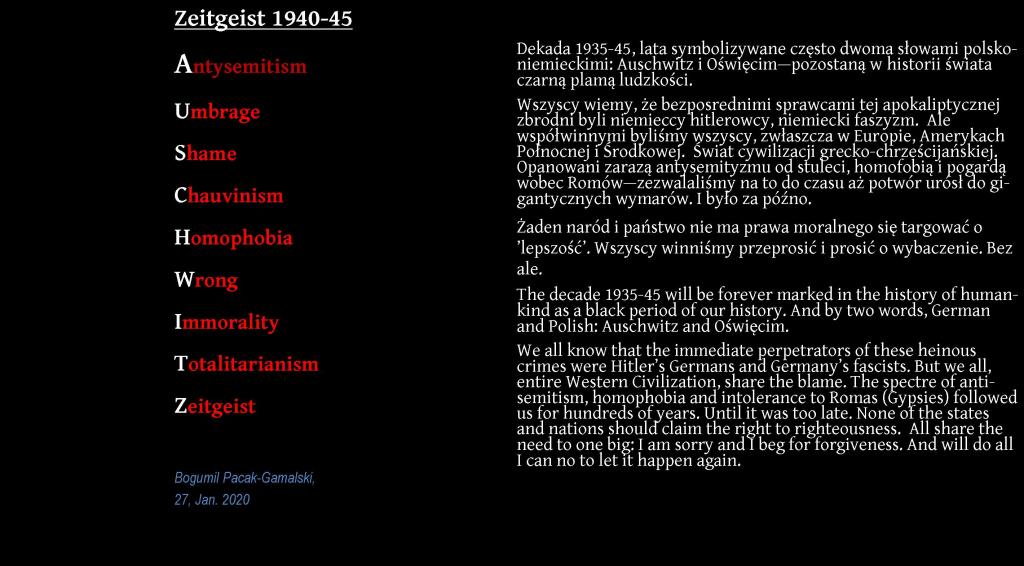
In 2020 there were some events concentrated on the most abhorrent and evil time and place in modern history: Auschwitz. The German concentration camp in the town of Oświecim in Poland. Treblinka was an extension of that ‘Factory of Death’. That’s when I constructed a literary piece called ‘Zeitgeist’. For people to build such a place, for leaders to want it to be built – it must be a zeitgeist: time and place for it.
In the last decade, I see a powerful wave of xenophobia raising its head all over the world. Growing trend of populism. And I do call it a new zeitgeist. Trump in US; new type of angry, populist conservative leaders in Canada’s politics (Poilievre in federal politics; Scott Moe in Saskatchewan; Danielle Smith in Alberta – to name a few most dangerous ones). It is not only xenophobia – with it homophobia is rising, racism (often covertly), and islamophobia, to name a few.
Nie można od tego wszystkiego wyłączyć wojny rosyjsko-ukraińskiej. Putin jest typowym wodzem doby zeigeistu. Rosyjski szowinizm z mieszaniną okrucieństwa carsko-sowieckiego, marzenia panslawistyczne i wielkoruskie. I naturalnie – Wódz. Wybraniec Historii. Zeitgeist w pełnym blasku historiozofii.
W moim oryginalnym tekście o zeitgeist z 2020 naturalnie chodziło o nieludzką, niewyobrażalną zbrodnię popełniona na Żydach w latach 30. i 40. ubiegłego wieku. Całą tą diabelską koncepcję Final Solution . Fizycznej likwidacji całej grupy etnicznej w Europie. I jak nie tylko Niemcy – ale reszta Europy i świata winni za to ich przeprosić. Że pozwoliliśmy, że dopuściliśmy. Nie w 1942 lub 1944. Że pozwoliliśmy na to po Crystal Nacht, po oświadczeniach III Rzeszy zanim padły pierwsze strzały II wojny. Że statków wypełnionych Żydami u schyłku lat 30. nie wpuszczano do portów w USA, w Kanadzie.
Pisałem kiedyś w cyklu moich artykułów o polskim antysemityzmie o tym, jak sam od wczesnych lat młodości w Polsce jeszcze odczuwałem wielki smutek i brak. Pustkę po nich. Na Nalewkach, na opuszczonych cmentarzykach, w po-żydowskich miasteczkach. I o tym, że antysemityzm polski na tle antysemityzmu we wszystkich prawie krajach europejskich nie był wyjątkowy, nie był krwawszy. Co w niczym nie umniejsza jego zła.
There is a group of people, who suffered in the last hundred years tremendously. People, who were stateless, become through centuries settlers, and nomads settling other states, mixing with their populace. But maintained to a large degree their difference. Mainly because of religious devotion and cardinal religious schism between the old one (Judaism) and the new one (Christianity). It wasn’t the language (most of them over time could not communicate in their old Hebraic language) or looks, but precisely the religious schism that laid the foundation of antisemitism, that created pogroms.
I have always had a special affinity and sentiment toward Jews. After all – Poland for centuries was a safe refuge for them compared to other countries in Europe. I was sad that being born after the 2 world war – I was robbed of their distinct presence in Polish towns, and cities. A presence that was still felt very much, was talked about by your parents, and grandparents, and was filled in entire Polish literature, and art. Detested angrily the act of violence perpetrated against them (the very few who survived) in new Poland after the fall of Hitler.
And something happened that forced me to see a different Jew. An Israeli Jew. A settler. October 7, 2023.
Hamas–led terrorist attack on Israeli kibbutzes on occupied Palestinian land resulted in the brutal murder of about 1200 Israelis and some foreign nationals. They also took about 240 (according to Israeli count) hostages back to Gaza. Everyone was shocked. Not by that attack itself – after all Palestinians have a right to fight for at least an internationally recognized part of old Palestine. The part that was internationally reserved for a Palestinian state. Every nation on Earth has a right to self-determination and a right to fight for it. What was shocking was the brutality of it, the massive failure of the Israeli army and police (one of the best-equipped army in the world) to protect the civilian Jewish population. The assault was a ghastly way of murdering civilians. Many states (unanimously in Europe and North America) condemned the attackers.
But what followed in a wake of Israel’s military response – shocked everyone even more. And harshly polarized the opinion of the majority of the world, even within one state. In a short few weeks a non-stop air, artillery, and missile attacks on the entire population and infrastructure of Gaza left Gaza City, it’s services (medical, sanitary, and everything else) were reduced to ruins. The civilian population was not spared the onslaught of bombs. Quickly, the deaths counted in thousands. Approximately 7000 kids were slaughtered. All border crossings (controlled by Israel) were shut down. Nowhere to escape. Nowhere to search for food, nowhere to ask for medical help for thousands more wounded, nowhere to search for water to drink.
And I saw the shadow of enormous Zeitgeist hovering over the entire Middle East. Black, angry, spewing ashes and flames.
I nagle przyszedł październik. Siódmy październik. Zaplanowana i dobrze zorganizowana akcja ataku zbrojnego ramienia Hamasu na graniczące ze Strefą Gazy kibuce izraelskie. Początkowy szok skali ataku i całkowitej bezradności jednej z najlepiej uzbrojonych armii na świecie – armii Izraela – która nie potrafiła powstrzymać oddziałów bojowników palestyńskich szybko zamienił się w głośnie i bezwzględne potępienie Hamasu i podkreślenie prawa Izraelitów do samoobrony i zbrojnej odpowiedzi na tą masakrę w kibucach. Atak bojowników Hamasu w brutalny sposób wymordował blisko 1200 Żydów i przebywających tam nielicznych pracowników lub gości z innych narodowości (najwięcej było wśród nich Tajlandczyków, którzy masowo pracują, jako służba domowa i najemni robotnicy w Izraelu). Izrael rozpoczął bombardowanie i całkowite oblężenie Strefy Gazy, zamknął wszelkie przejścia graniczne. Już w pierwszych dniach tego zmasowanego bombardowania lotniczo-rakietowo-artyleryjskiego strata w ludności cywilnej Gazy przerosły wielokrotnie liczbę ofiar żydowskich. Szybko sięgnęła ona tysięcy. W chwili obecnej ponad siedem tysięcy dzieci palestyńskich zostało zamordowanych w tych bombardowaniach. Tysiące rannych nie mają dostępu do szpitali, które też były obiektem bombardowań, a te które dalej funkcjonują nie maja środków medycznych, nie działają ich prądnice i wszystko to, co nazywa się współczesna medycyną. Rannych operuje się i amputuje okaleczone członki tak, jak w średniowieczu – na żywca. Uciekająca z Południowej Gazy ludność cywilna nie ma dostępu do żywności, brak pitnej wody. Określić to można bez przesady scenami dantejskimi.
Nad Gazą zawisło olbrzymie widmo ptaka-potwora ziejącego ogniem. Zeitgeist. Dokarmianego przez faszyzującego populistę Netanjahu w otoczeniu jego prawicowych, faszyzujących ultra-ortodoksyjnych rabinów. Jeden z członków tego Gabinetu (rabin) domagał się rzucenia na Gazę … bomby atomowej. Do chwili obecnej jest ministrem w rządzie Izraela. Nigdy bym się nie spodziewał, że Żydzi, których dziadowie przeżyli zeitgeist Holocaustu, których matki widziały straszne oczy Śmierci pod postacią Shoa – będą karmić zeitgeist masakry w Gazie.
Moi Żydzi to nie tylko sympatyczni i trochę śmieszni w swej egzotyce kupcy w małych sklepikach, dzieciaki w jarmułkach biegające po wąskich uliczkach a w sobotę idący z powagą na modlitwy do synagogi. Moi Żydzi to wielcy mistrzowie nauki i filozofii w Polsce i reszcie Europy, to wielcy twórcy literatury i sztuki polskiej i europejskiej, światowej. To Spinoza budujący podwaliny racjonalizmu europejskiego; to Einstein otwierający dla nas bramy kosmicznego Wszechświata; to polski Artur Rubinstein budzący ducha romantyzmu Chopina nad biało-czarną klawiaturą; to nasz Julian Tuwim – czarodziej polskiego języka na równi prawie z Leśmianem – którego wierszyki obok mickiewiczowskich służyły za mój pierwszy elementarz, zanim jeszcze poszedłem do szkoły; to Lechoń, rówieśnik Tuwima; kto Brunona Schulza może zapomnieć, jeśli jeden z jego wierszy czytał? Można bez końca, można całe stronice zapisać wymieniając tych wspaniałych humanistów świata. Nie wiem, co stało się z tą kulturą askenazyjską, piękną sefardyjską. Wiem, że nie ma jej dziś w gabinetach ministrów i generałów w Tel Awiwie ani w Jerozolimie. Bo by zadusił ich wyziew piekielny czarnego ptaszyska Zeitgeist.
above – Left panel: a kid in Warsaw in 1945; right panel: a kid in Gaza in 2023
One year. Entire year. twelve months, three hundred sixty-six days. It is hard as hell, no point in being poetic in choosing words.
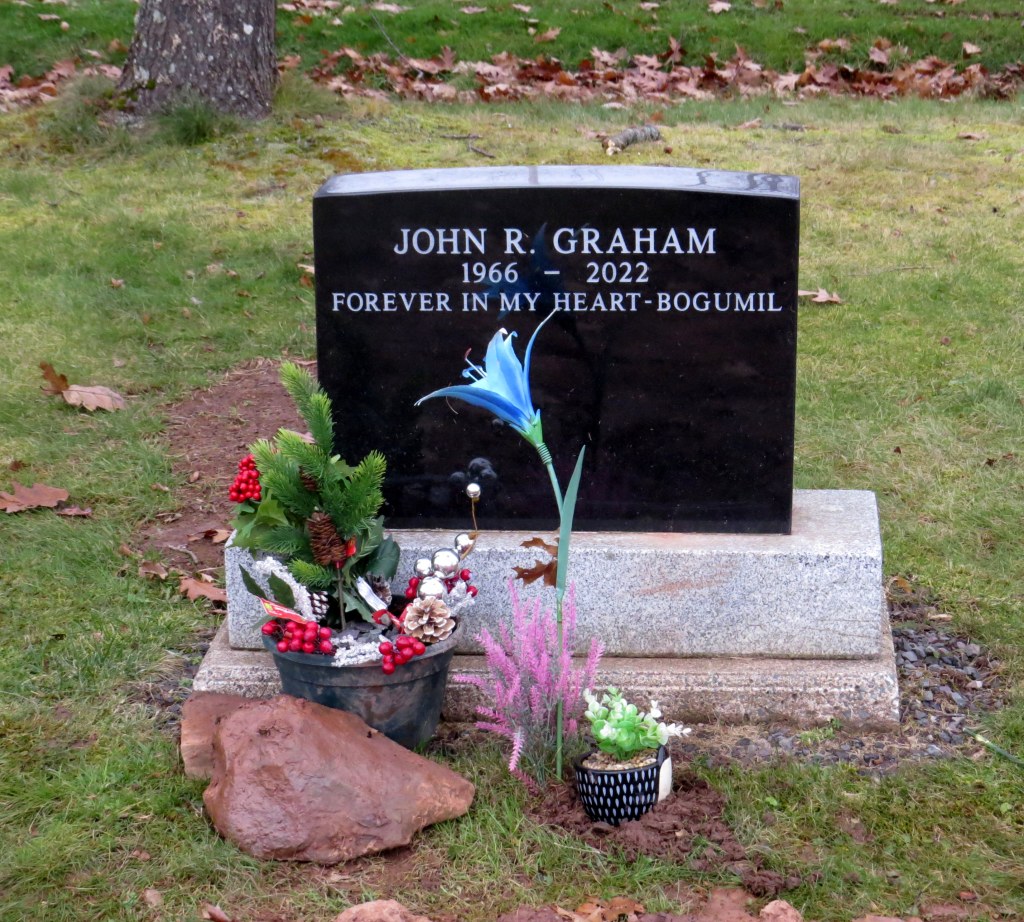
Came to Pictou today to spend time in the cemetery where we interned your ashes. Windy, very cold, and wet. Very desolate, not a single person, or visitor there. I know, it is only a stone, a typical cemetery tablet with a name, dates, sometimes a short description. Your name. Yours, your parents, your baby brother you never had a chance to know. And now also Fraser, your oldest brother, who was laid down here just a few months ago. The coldness, emptiness, the wind made a bit of a mess around the gravesite. The old flowers still from the time of the funeral, wilted, blackened, scattered around. Cleaned it all a bit, and gathered some rocks to hold the new ones and the old ones that were good. Some still from my first visits there, when it was only a place of Leona and Doug, your parents. I haven’t come here since Fraser’s funeral. Didn’t’ want to. I preferred going every opportunity I had to my wild beaches, in some secluded spots. Remember? We had so many long talks on these beaches. So many tears. Some laughter. I preferred these meetings and visits to visits to cold gravesites.
But I am glad I came today. It is no longer as desolate and as unkempt for the winter, for Christmas. For Christmas? Do the dead celebrate Christmas? I know the legend and stories of cemeteries and dead folks around November 1, the Old Souls Day. But Christmas? Never thought of that. But just in case, the stuff I brought is sort of wintery-Christmassy appropriate. You know – green branches and so on. You know that I don’t like when things like that are not taken care of. It is just the oddity how some things are done (or not done properly) on tiny local cemeteries, I suppose. So I came and fixed what I could.
Fix things? How to ‘fix things’? Nothing can be fixed when everything is broken. Yes, I know You are not there, not under this ground. You are with me. Forever. I have engraved some words on the stone that and thought it said that You are forever in my memory. And I smiled. In my memory? Really? That is all that is left, that came to be of our life? Our love? Just to remember? How silly words could be to describe emotions, feelings…. You are just part of my soul, part of me. I don’t remember fully, who I was before I met You. I think I was just in a state of waiting. Waiting and searching for You. And I have found You. No, these words were not meant for You or to remind me. They are to the strange passerby to know that You were loved by someone. To passerby, who will not know, who you were or I was. But will know that You were loved. That’s when I noticed that I wrote them correctly on the stone: in ‘my heart’, not ‘in my memory’.
In one of my previous ‘Talks with You’ I published a poem describing how difficult it is to … describe love in words. How she escapes dictionaries and vocabularies. I will repeat the last part of the poem. Just in case You forgot it. And later, some other day we will talk again.
Idea of this article came to me around November 11, Remembrance Day. I was going to write about places and people I knew, who took part in both the I and II world wars. I was lucky enough to know veterans of both wars. Either as family members or personal friends. Now they are all gone. Although I see their faces still etched in my memory. But, as I started writing, the text changed. Wars change inevitably to exoduses, expatritions, expulsions. The suffering of civilians. The Nagbases. Therefore I decided to write a series of scenes depicting the most important ones. Like in a theatre dramats. As I was writing I noticed how things often change, how oppressors become victims and vice versa.
Scene #1
It is 1914 in Galicia, on a train at railway station in Kiev, in Ukraine. Front line of Austro-Hungarian Empire and Russian Empire. Young nurse is tending to wounded and bloodied soldiers on that train. Zofia Lejmbach is that nurse. One of my great aunts. She learnt how to be a nurse in a Polish military organization called Rifle Groups (Drużyny Strzeleckie) organized by Polish independence movement few years prior to that war. Those wounded soldiers were not Polish soldiers, Poland did not exist as independent nation yet. Not until exactly 11 of November 1918. But it doesn’t matter for her what nationality are these soldiers – they needed help, that was all that matter. Later she will become one of the leading Polish pediatricians, professor and v-ce Rector of Warsaw Medical Academy. That was many years later, though. After 1945.
Scene #2
It is thirty years after her experience as a nurse in Kiev. It is 1944. Different world war, #2. August in German occupied Warsaw. Soviet armies are marching west through Poland, battling the German Nazi Empire of Evil. Polish Underground Home Army (AK) starts the tragic Warsaw Uprising, trying to liberate Warsaw from Germans before the Soviet Army enters the city. Young doctor Zofia Lejmbach is the Chief of the Underground Army Sanitary Department for the entire Warsaw District. Organizes make-shift hospitals for wounded partisans of Warsaw. The Polish Underground Home Army (AK) represents Polish Republic Government In- exile in London. The Soviets don’t want them to liberate Warsaw in the name of that democratic government. They stop their advance and allowed the Germans to smash the Uprising. And Germans did. In atrocious and merciless way. Doctor Zofia Lejmbach and her medical teams did what they could, in indescribable circumstances. In Wola district was a hospital full of wounded Polish fighters. Zofia Lejmbach was wounded herself but not seriously and turns all her attention to treating the boys of the Uprising. She got a news that Nazi units just massacred another hospital killing all medical staff and patients. Somehow was able to commandeer a large horse drawn carriage and filled it with her patients and escaped the inevitable death taking them through the ruins to her father estate outside of Warsaw, in Skorosie. By the time they have settled in that estate – the Uprising was over. The Germans ordered the rest of the entire population of Warsaw to live their burning city and long columns of of Warsovians march toward small city of Pruszkow, where the occupiers told them to settle. They could take with them only what they could carry. Behind them was burning Warsaw. When the smoked cleared somewhat – almost nothing was left of the city. Germans burnt and detonated it street by street, house by house.
Scene #3
Nakgba. Year is 1948. Nakba means in Arabic a catastrophe – to be expelled, evicted with no right of return[i]. One of the most pivotal word in describing Palestinian people situation in Palestine. It precedes any other explanations, political and military context. It seats at the very centre, at the core of this tragedy. To be precise is started in 1920 in Haifa, when the British seized Palestinian Arabs houses and property and gave it to Jewish settlers brought by them. The Arabic Palestinians did not even receive any compensation. That process continued through the 1930. But 1948, with the creation of Israel it become massive and on unprecedented scale. It wasn’t just houses, private property – it meant territory. Old Palestine as a huge territory that was home to many groups of people (majority were Palestinians but by 1948 the Jews formed the second largest group) ceased to exist. One of the most prominent symbol of Nakba is a key. Regular, ordinary old type of iron key to an old house. A key that countless of Palestinian families took with them in their long exodus. I remember meeting Palestinian refugees (the original old ones with their children and grandchildren, who were born outside of Palestine) living in Canada, who were showing me their old, rusted key to their lost house in Jerusalem.
Scene #4
Warsaw. The year is 1942. For more than a year all Jews from Warsaw and smaller towns and villages near-by are moved by German authorities to big space in central Warsaw. The infamous Warsaw Ghetto. At its height the Ghetto housed closed to 0.5 million Warsaw’s Jews. It was separated by walls and gates from the rest of Warsaw (so called ‘Aryan side’). The time comes for Germans to start in earnest their satanic ‘Final Solution’. Who didn’t die of hunger or wasn’t shot by Hitler’s henchmen at the slightest opportunity – was going to be deported to Treblinka near Auschwitz. To gas chambers. Long lines of tired and sick people formed columns and march to train station under the watchful eye of the oppressors. Those, who were too weak to march or have fallen down while marching are dealt by German soldiers and Jewish Judenrat (Jewish local administration and police formation organized forcefully by German authorities) – by a blow to the head or single shot. The end of Jewish existence in Warsaw – existence spanning hundreds of years.
Scene #5
Year is 1945. Soviet Union is in full control of huge territories of Eastern Poland (parts of today Lithuania, Belarus and Ukraine). The Yalta Conference of Roosevelt, Churchill and Stalin decided to change the borders on Central and Eastern Europe on a massive scale. None of the countries involved were consulted and none of the millions of people were asked their opinion. It was truly a march of nations. Since the end of Middle Ages Kingdom of Poland had its borders expanded through treaties, dynastical agreements and wars eastward. The new Polish Republic from 1918 to 1945 did not hold as massive eastern territories as did the Kingdom. But territories were Polish element was in majority or very close to it – were still part of Poland. The Vilnius District, western Belarus and Western Ukraine were considered as the centres of Polish science, art and culture (especially Lvov and Vilnius with its highly regarded universities). Now the old world collapsed. Millions of Poles were expatriated from lands and homes they lived in for generations. The entire immediate and extended family on my father side pack what they could, left their houses and cemeteries where generations of their grandfathers were buried. I remember them all very well. They – as the old Palestinians from Jerusalem – never forget their cities: Vilnius, Lvov, Sluck, Luck … Big part of my heart is in Vilnius, too.
Scenie #6
Year is 2023. Now. Gaza in tiny scrap of land of new Palestine. Very narrow bridgehead strip squeezed between Meditearrean Sea and Israel . One of the most populated piece of land in the world. Separated by Israel from larger piece of land govern by Palestinian Authority in Ramallah in West Bank. That separation made it practically impossible by the Authority to exercise control of Gaza (internationally the Palestinian Authority is recognized as representative political and administrative body of all Palestinian territory: West Bank and Gaza) and allowed for much more aggressive movement of Hamas to take control of Gaza. Hamas political arm become radicalized and it’s armed forces are closer today to jihadist ideas than to original goals of Palestinians struggle for independence.
On the 7 of October Hams launched an attack on Israeli town near Gaza killing hundreds of people (the number of executed Israelis in in the vicinity was 1200 victims) and taking hundreds more back to Gaza. The atrocity and extremely brutal way of conducting the operation stunned the world. It’s incomprehensible to understand how such an operation was possible to succeed given the military prowess of Israelis armed forces and once that attacked commenced that it was allowed to continue for hour on end. Basically speaking the government of Israel was totally missing in action and failed to protect its land and citizens. Once the attackers returned to Gaza, Israel Forces begun full military operation. For weeks Gaza was subject to non-stop bombardment of air forces, artillery and missiles. It was immediately clear that civilian casualties will be very high. Israel cut off all contact of Gaza with external world, cut off food, water, fuel and medicine supplies. People who were trying to leave in this tiny strip of land from north to south were subjected to air attacks. The civilian casualties were growing day by day. First by hundreds, than by thousands. Women and children. Old and sick. Non ending groups of people trying to escape bombardment and death, with meagre belongings hauled first by cars (until fuel run out), on foot, with crying children, with elderly. In search of food, fresh water. On a journey to nowhere. No escape. Some tried to look for safety in hospitals. To no avail – the hospitals become target of constant attacks. Foreign doctors from UN, Red Cross and Doctors Without Borders become victims themselves, some were murdered by Israeli strikes. Hospitals started running out of basic medicine, finally the fuel run out. Some doctors described how they were being shot by Israeli snipers. Scenes like from Dante’s Inferno . The world watches still in disbelieve. Thousands of children were being murdered and their bodies are being placed in shallow mass graves. As the world watches. Every possible law of war is broken. Crimes against civilians, hospitals and humanity are being committed daily. And the world watches. One of Netanyahu cabinet ministers publicly demanded that an atomic bomb be dropped on Gaza. I thought that the world went crazy, no stop. And that minister is still a minister in Israel’s government. More or less the Palestinians in Gaza were dehumanized the way Jews were dehumanized by Hitler’s Germany eighty years ago.
Final reflection: how strangely and sad it is that depending on circumstances a yesterday’s victor becomes an oppressor and oppressor becomes a victim.
For the past few days, I have been struggling with bad flu. You know the story, don’t you? A man and the flu do not mix well. Women over the centuries have learned that flu is but a nuisance yet the homework still needs to be done. Men on the other hand view it as a biblical plaque. They thought that it is the end of the world. I am somewhat a modern man and I do live alone – so the chores reluctantly were done. But venturing beyond home was for most of the time beyond my strength. Today was a first day much better. On the mend, so to speak. Cold but absolutely, stunningly beautiful. I knew the sunset is going to be spectacular and I ached to go and see my sea. Not only the Channel in front of my home, but the actual open ocean: to hear its song, to marvel at its might.
In 2020 I wrote poem to the Ocean. At the end of it, the ocean invites me and says:
I will offer you a lazurite scale armor,
a long shawl in dark green,
as my wedding gift.
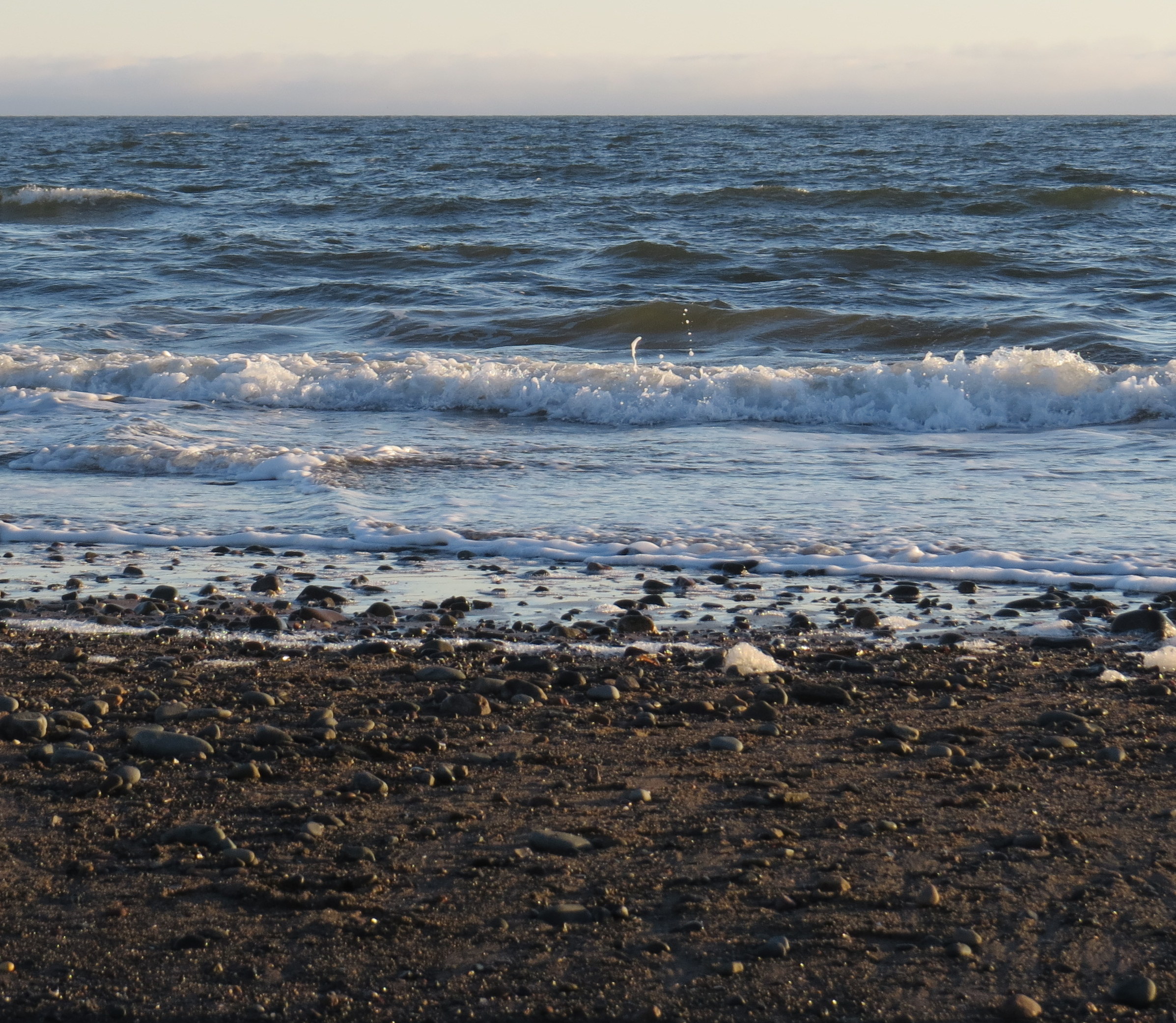
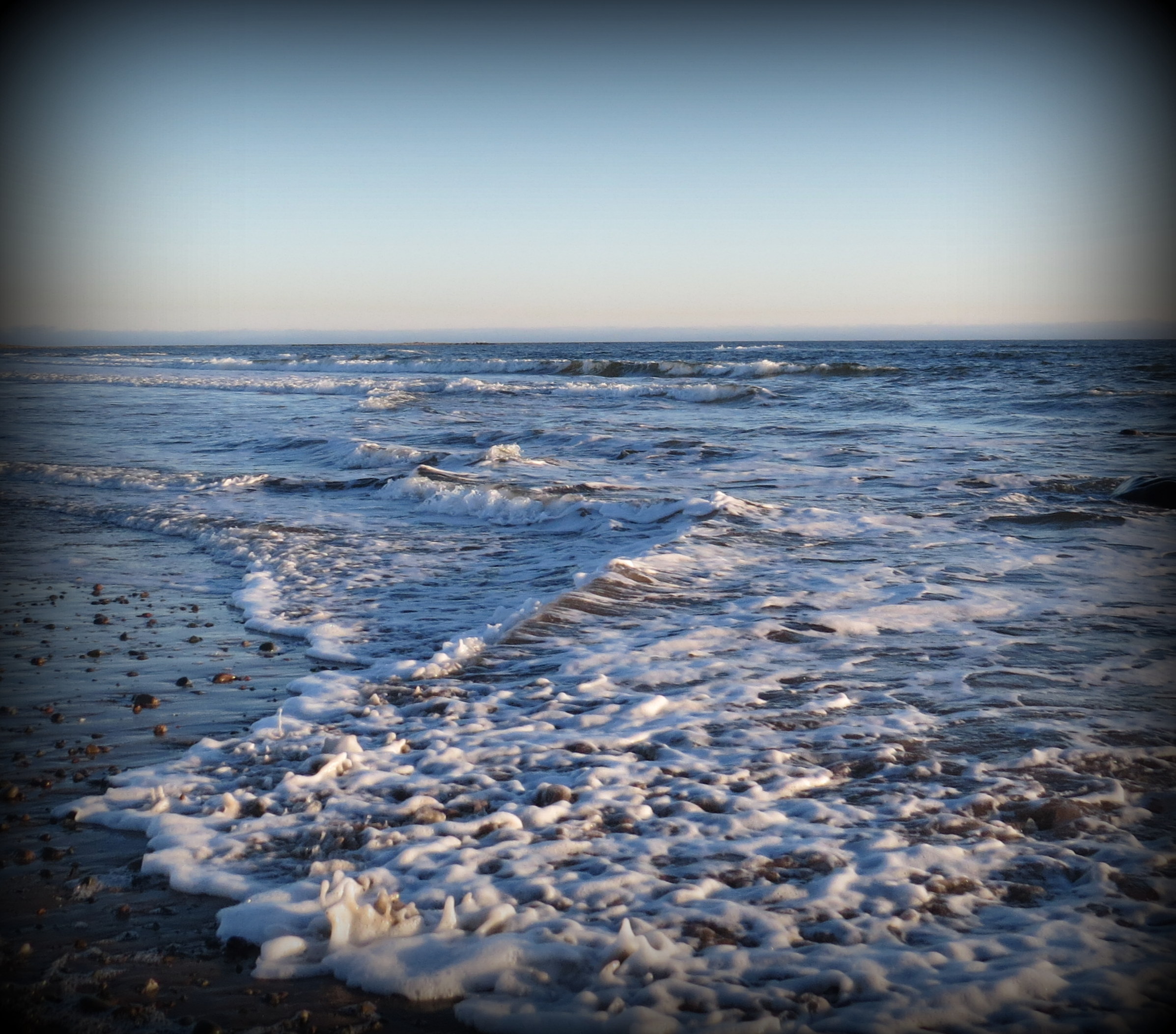
Went to the very end of the road past Fisherman’s Cove, right in front off the aptly named Devil’s Island. There is nowhere to go from there but to marvel. Last time I went there was sometime in December last year with my Damian, who came from Poland to stay with me after John’s passing. I don’t remember much about that December. If not for this good soul, who came to look after me … well, I have no idea how I would have survived. But one cold, wintery day I took him there, to that spot. We watched the furry of the ocean that tossed huge rocks like pebbles on the road.
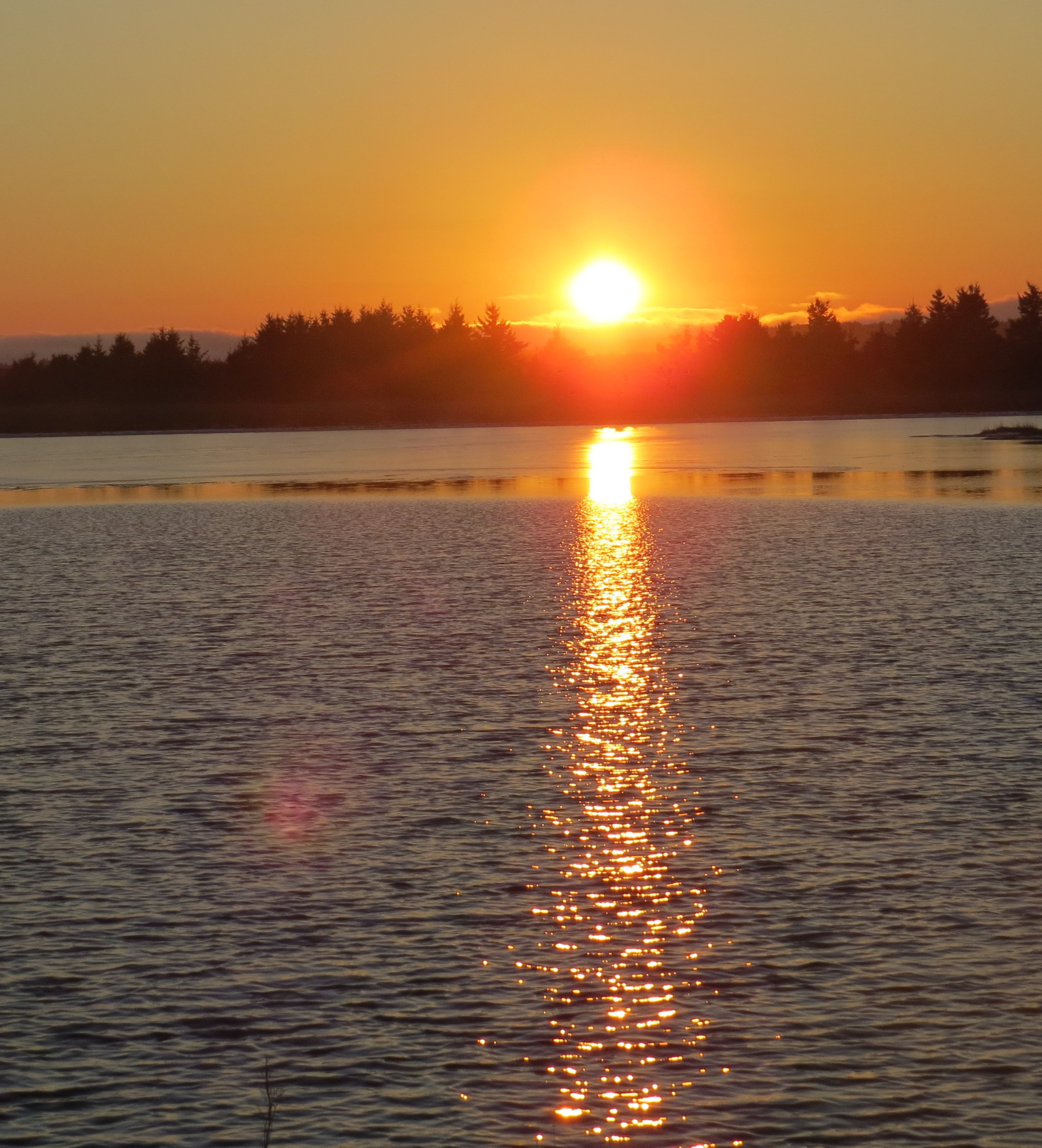
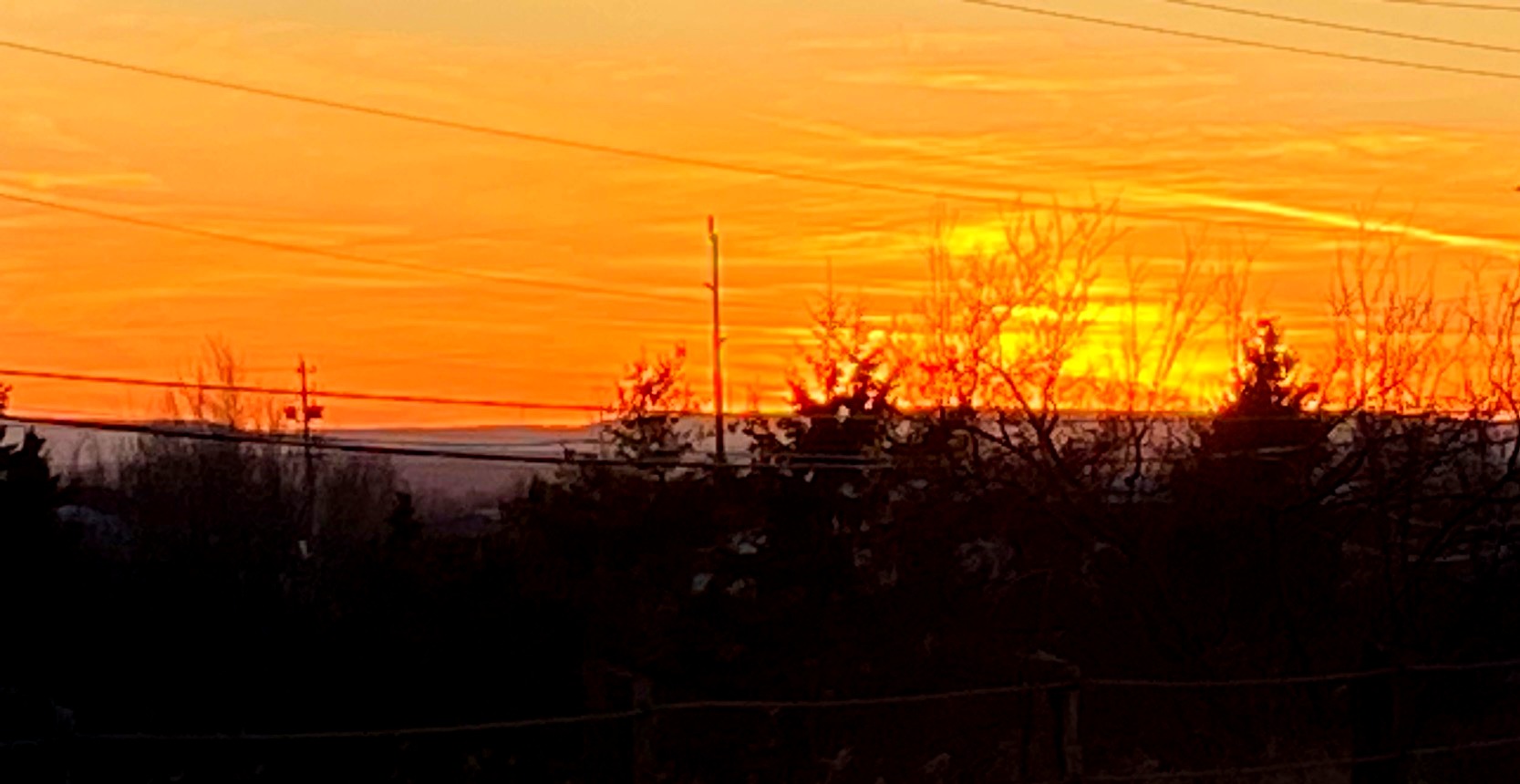
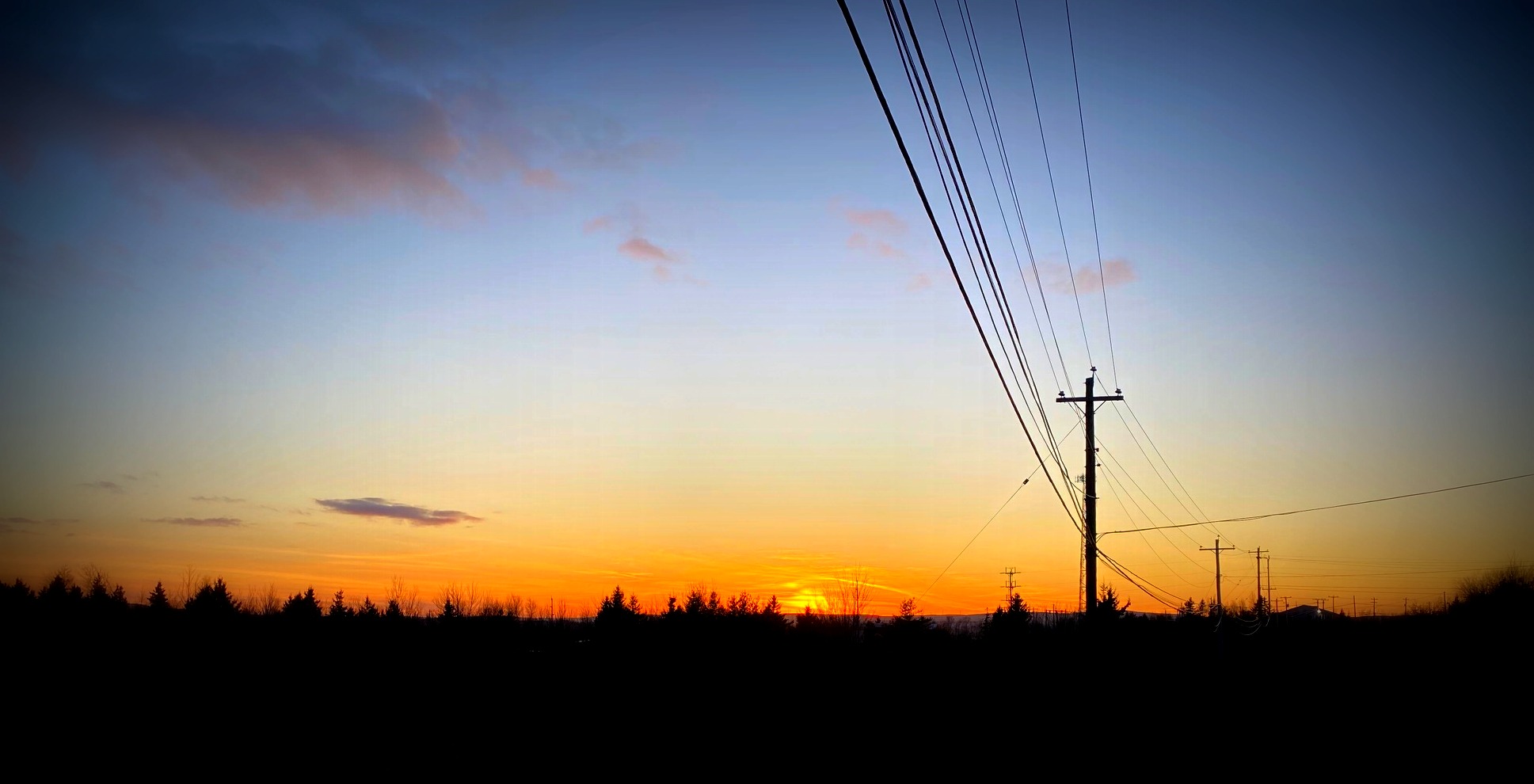
Today was the orgy of red, orange fires between the sea and the sky. Almost kitsch, almost vulgar. Almost – but Nature never cared much about our delicate bourgeois sensibilities.
Dni straszne nadchodzą. Dni zderzenia się z ciągle odrzucaną rzeczywistością odejścia, rozłąki. Niebytu. Ciebie. Mnie bez Ciebie. Czasu, który na zawsze rozdzielił moje życie na przed i po. Pojechałem tam, gdzie byłem w tych dniach niemożliwych do zrozumienia z Damianem, który przyjechał z Polski ze mną być. Młody człowiek, któremu ja miałem być opoką niewzruszoną, który nie mógł wiedzieć, co w chwilach takich robić należy. Ale był. A nikt nie wie. Ani młody, ani stary. Wiedzą tylko poeci i wariaci. Nikt wtedy też poetów nie czyta, a wariatów nie słucha. Tak nas uczono przez setki lat. Zagryź wargę i idź. Idź gdzie? Wszystkie drogi prowadzą wówczas do nikąd.
Więc pojechałem tą samą drogą, tym samym samochodem, jak tamtego dnia z moim chłopcem z Polski, w dokładnie to samo miejsce. Patrzeć na ocean. Słuchać oceanu. Przy brzegu Diabelskiej Wyspy. Ocean rozumie. Jest wszechpotężny. Wycisza wszystko. Jak w w moim wierszu napisanym wiele lat wcześniej, w 2020. Bardzo mi to dziś pomogło.
OceanPatrzę na ciebie, żywa wodo nasza
w wiecznym ruchu, nigdy nie uśpiona.
I tak czasem bywa, że ty, jak tafla
jesteś, jak wielka szyba okna Ziemi.
Jak śpiąca Afrodyta rozmarzona.
Ale ty nawet wówczas drżysz, wznosisz się,
twój oddech jest wilgotny, gdy tuli brzeg.
Gdy budzisz się w czas, muskularna, naga,
grzywacze w rydwanie gnasz przez zatoki,
cieśniny, zdobywasz fiordy, usta rzek.
Mierzysz się z czasem, chcesz go cofnąć, wrócić,
pokryć ciężkim, lepkim płaszczem doliny, góry,
które były pałacem pełnym krużganków,
obszernych komnat z tańcami, muzyką głębi,
odbijających słońce, gwiazdy, księżyc, chmury.
Zawsze gdy wchodzę w twe podwoje, zanurzam się
w tym życiodajnym płynie macierzyńskiego łona.
Otulasz mnie czule, mruczysz bezsłownie: wnijdź,
nie bój się, mam tyle przestrzeni wolnej, twojej.
Podaruję ci płaszcz z łuski niebieskiej,
utkam długi szal zielony,
jak welon weselny.
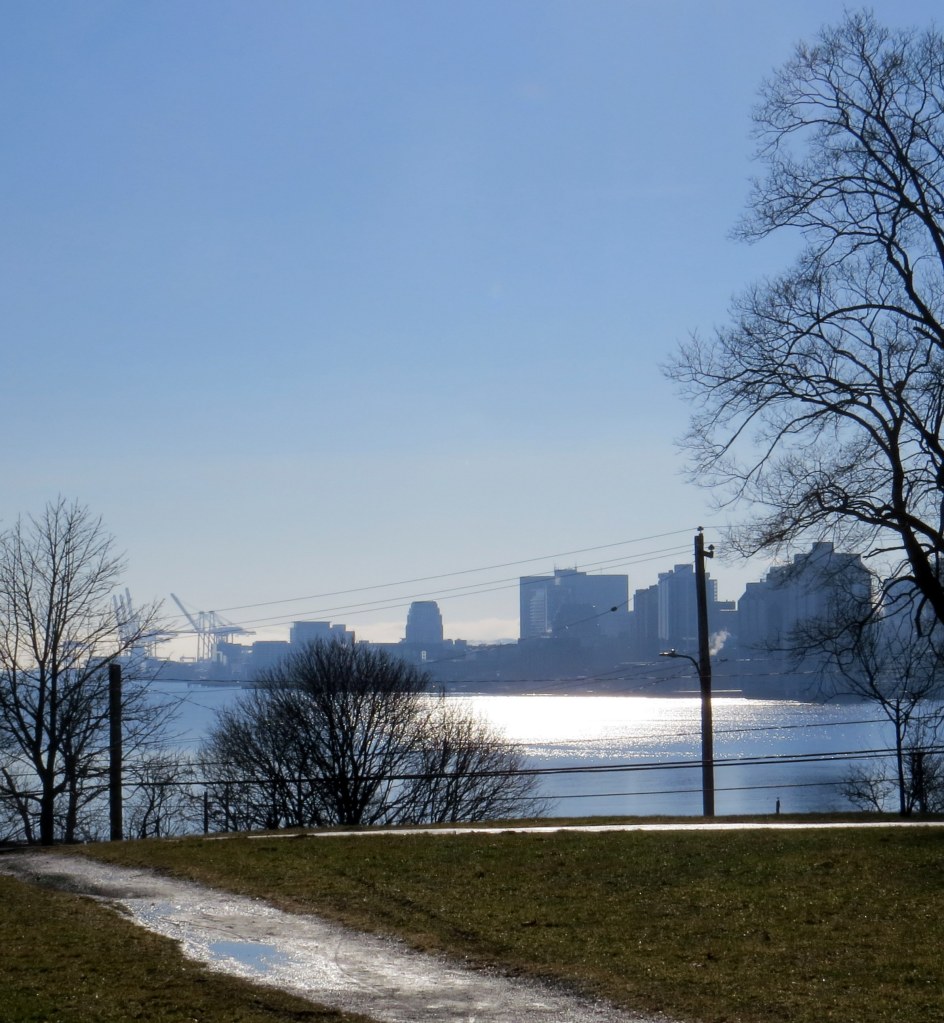
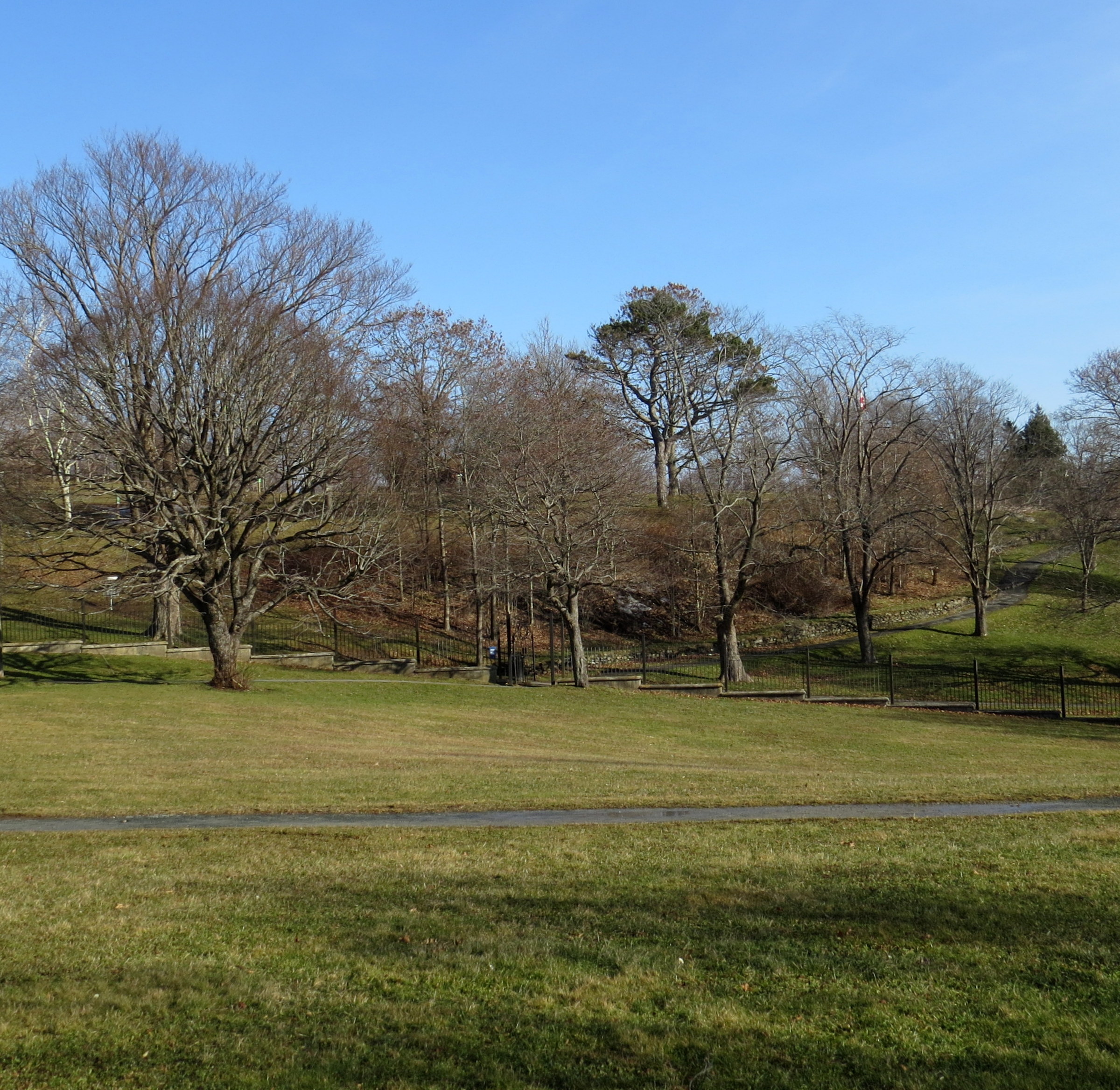
The last two days in Halifax – just before the incoming storm of a dying hurricane – were gorgeous. More like late September than the end of November. I had such plans for them! Two days of ‘Indian summer’ during my days off! Lucky me, I thought. But not so much. Having avoided probably close to three years any cold or flu – I got it now. With chills, and fever. Everybody knows that for a man a flu or cold is worse than any other plaque known to humanity. The bottomless pot of self-pity, LOL. But despite that, I gathered all the remnants of my heroism and packed my camera, and small bottle of Advil and went to a small but wonderful and little-known park between the end of Halifax and the beginning of Bedford – the Sea View Park, just above Africville. Enjoy the views.
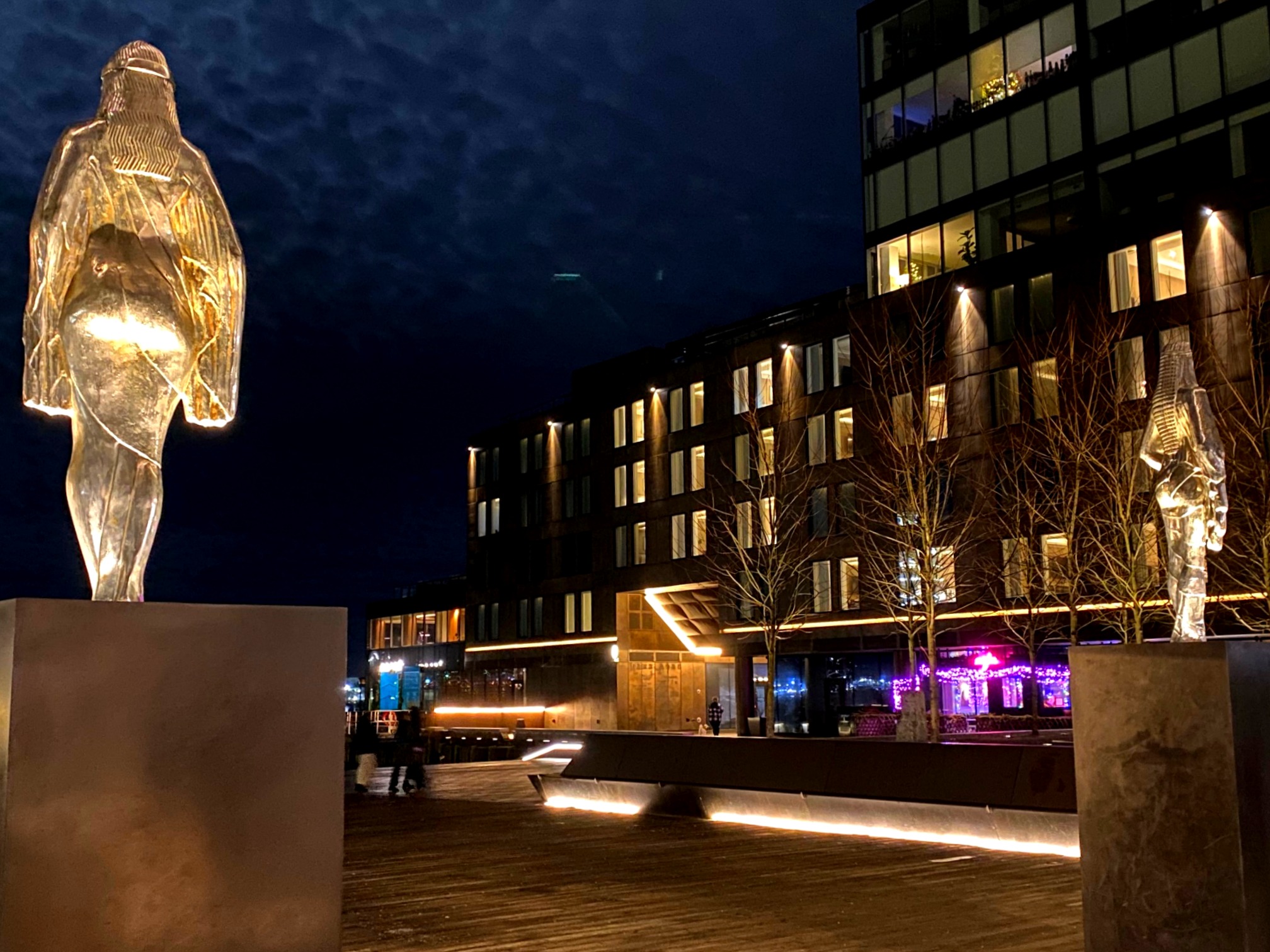
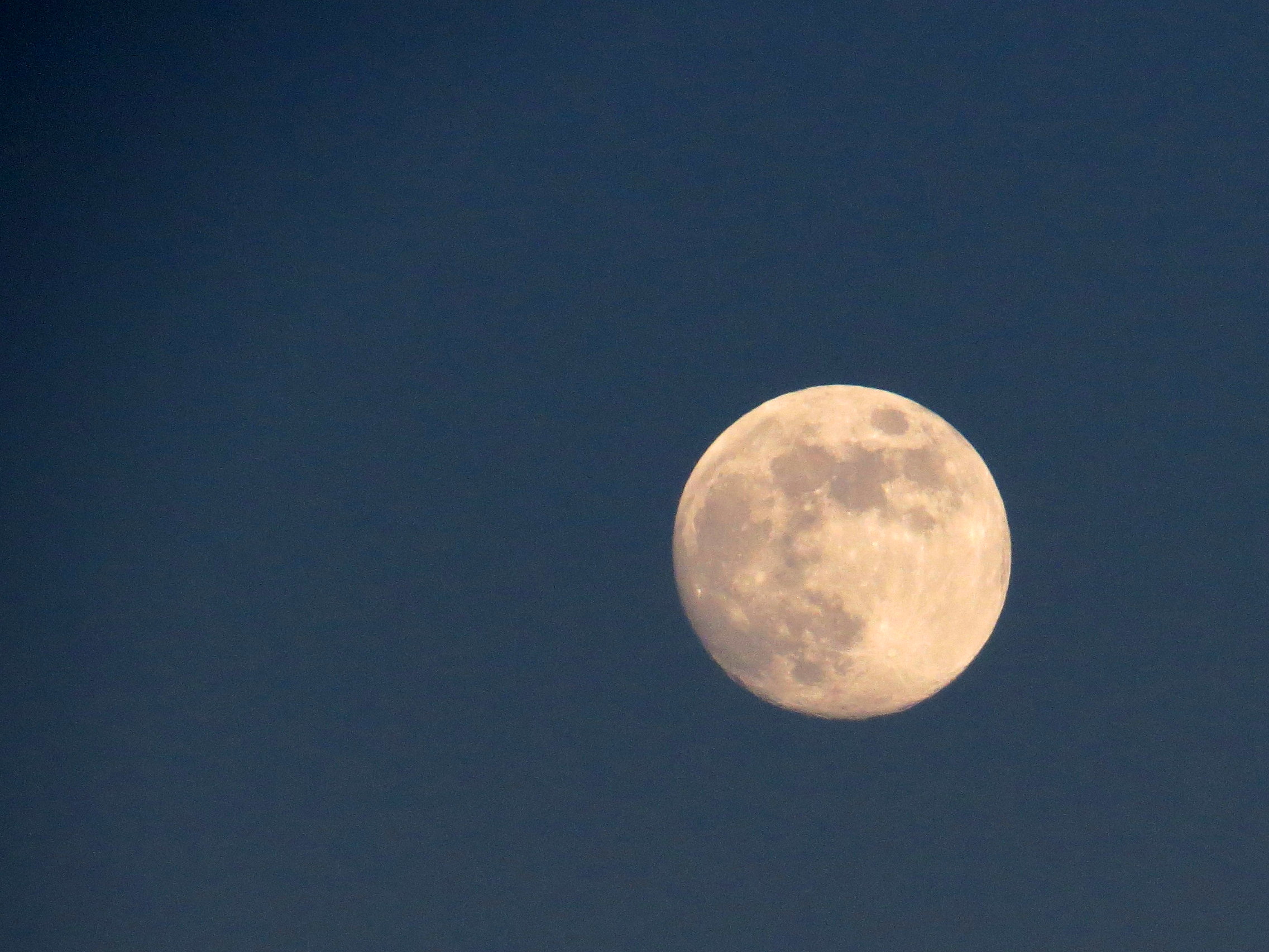
Druga połowa listopada, tuż przed nadchodzącymi z Florydy resztkami tropikalnego huraganu, przyniosła nagle cudowne dwa dni ‘babiego lata’. Dni, które miałem wolne! Ba, fatum złośliwe powaliło mnie z nóg. Spotkała mnie straszna dla każdego szanującego się bohaterskiego mężczyzny biblijna plaga przeziębienia lub grypy. Mimo to, nadludzkim wysiłkiem podobnym do dzieł greckich herosów, popołudniem zebrałem w torbę kamerę, buteleczkę aspiryny, wsiadłem na mojego czarnego uskrzydlonego pegaza i popędziłem do mało znanego zakątku w pogonii za zachodzącym słońcem i w powitaniu nadchodzącego księżyca. W małym parku na granicy między Halifaksem a Bedford.
My previous biking took me across the salt marshes from Colle Harbour toward Lawrencetown. Today I continued it starting from West Lawrenscetown. It is called Atlantic View Trail. But it is also a part of a national bikeway through the entire country, starting on Vancouver Island in BC. Having drove from one coast to the other, now I can say that I also biked through both ends of the Trail: in Vancouver Island and Lower Mainland of BC and now in Nova Scotia.
That was a very strange night. I watched some TV, and couldn’t watch any more news, as the stories from Gaza were just so depressing. Watched some Netflix movie about some Argentinian young fashion megastar. It was tiring just by the speed of the movie-documentary, him being like high on something nonstop, all the time. Somehow I started talking to You. Was sad and happy at the same time. Sad for obvious reasons, happy because we talked. Told you that life is like that now, like this movie on speed. I rush to do things, and have to be busy all the time. Just to avoid life. The reality. Sort of: not now, please. I’m busy. Will talk about it later. I have to finish this, that; have to run, have to drive somewhere.
Avoiding. Not being irrational but not willing to deal with reality, either.
Went to bed about midnight saying that I had to get up about 5 am to drive to a bike trail in the middle of a forest near West Lawrencetown to catch with my camera the sunrise over the ocean. But the night was strangely hot, couldn’t fall asleep even with a wide-open window. Then a train started going back and forth near my building with a terrible noise of the train breaking and smashing of the train cars as they moved and stopped. Went back to the living room, switched the TV back on, and watched some more of something. You were nowhere to be seen or heard and couldn’t continue our conversation. Made a decision to drive to that spot in the forest about 6 AM. Finally felt tired and sleepy. Before I knew I was asleep. And didn’t get up till 8 AM! Sunrise was gone an hour earlier. But did go for the bike ride anyway. Remembering the night I dressed warmly but very lightly. Took even a towel and an extra pair of underwear in case I decided to take a swim. Started biking at about 10 AM. And instantly knew that I wasn’t dressed as I should. It was freezing! And icy wind that went through my clothing. Swimming in the waves was out of the question when I got to the beach. If I drove by car I probably would – and warm in the car after swimming. But getting on the bike and biking back easily 10-15 km to where I parked would probably turn me into an icicle, LOL.
Rozmawiałem z Tobą cały wieczór i potem pół nocy chyba. A miałem plany wycieczki rowerowej wzdłuż jezior i brzegu oceanu wczesnym rankiem by uchwycić wschodzące słońce nad Atlantykiem. Ze wschodu wyszły nici. Gdy w końcu dwu lub trzygodzinną drzemkę złapałem – obudziłem się już o ósmej rano. Dawno po wschodzie. Mimo to pojechałem w las, do tej trasy. Noc była nadzwyczajnie ciepłą, jak na tę porę roku. Ale dzień odwrotnie – więc ubrałem się bardzo nie odpowiednio, zbyt lekko. Mimo marznięcia – trasę rowerowa, tak jak zaplanowałem, tak przejechałem. Widoki piękne, surowe, zimowe już (choć bez śniegu) mają też swój specyficzny urok surowego piękna. Lato to barok natury, a zima to styl romański północnej Europy.
Czy ta wycieczka była moją ucieczką od rozmów z Tobą? Od zajęcia się rzeczywistością? Nie wiem, Kochanie. Wydaje mi się, że tym razem nie masz racji mówiąc, że życie trwa nadal i powinienem zacząć znowu starać się żyć. Wrócić do świata realnego. Może te życie, które prowadzę, te nasze rozmowy, moje poszukiwania Ciebie na plażach oceanu, jezior – to właśnie moja nowa realność, rzeczywistość? Nie jakaś dziwna ucieczka od niej, a przeciwnie – akceptacja jej. Widzisz, kiedy jestem wśród ludzi, rozmawiam z nimi, dyskutuję – Ty w tym tłumie , pośród nich znikasz, przestajesz być. Ale gdy wędruję po plażach, nawet po ulicach ale samotnie, gdy łażę po skałach – Ty jesteś obok. Przy mnie. A ja lubię mieć Cię przy sobie. Ty chyba też lubisz, gdy jestem obok.
Pojechałem do Ciebie, do nas – na nasz ostatni przystanek ostatniej wycieczki za miasto. Do słonych bagnisk Cole Harbour. Widzę Twoją twarz, Twój zmęczony uśmiech. Twój skrywany żal. Bo Ty już wiedziałeś lepiej niż ja, jak krótki czas przed nami. Wszystko bym dał, życie z radością, by jeszcze dotknąć Twojej twarzy, jeszcze palce we włosy Twoje włożyć, przytulić na moment. Ten moment byłby warty wszystko właśnie, każdy dzień kolejny i każdy rok samotności.
The words of love
are difficult
they escape description
of dictionaries
of synonyms
of thesauruses
Her language
are smells,
touches, syllables.
They are screams
of grief,
they are exclamations
of tears.
They avoid punctuation marks,
because they lack
a moment to stop,
to rest.
Love is a movement,
a hurried run.
She is aggressive,
demanding,
or submissive impatiently.
Even when she sleeps –
Her breathing is
expecting you.
That is why when I call you –
I scream or I cry.
And most often when I call you –
I am silent.
Tak i dzisiejsza, późnym popołudniem w dzień pochmurny, wycieczka rowerowa, zabrała mnie na trasę groblą przez te bagniska hen, aż do Lawrencetown. Miałem czas na nasze bezsłowne rozmowy. Na fotograficzny zapis tych urokliwych jakimś smutnym urokiem, miejsc. Rozlewiska słonej wody oceanu mają inną florę i faunę niż jeziora słodkowodne. Mają zdecydowanie inny zapach.
I went today to meet you at our last drive outside the city boundaries. I saw your face again, your sad smile. I recognized your attempt to cover from me your sorrow. Your sorrow because you knew already better than me the shortness of time remained for us. And I screamed in silence, I cried. Wanted to touch your face, feel your hair between my fingers, caress you…. Nothing, nothing ever can be truly joyful and fully happy in my life. My future seems to be like a life wasted, effort unnecessary.
And today’s bike ride on the dyke, through the marshes to Lawrencetown was somehow close to my thoughts. The colours, smells, even the fauna and flora of salt marshes are very different from those of fresh water lakes. Everything is dimmed somehow, austere. So was the time of day – late afternoon, greyish, cool weather.