Ewangeline and Gabriel – the price of Love / Ewangelina i Gabriel – cena Miłości

Ewangeline and Gabriel – the price of Love / Ewangelina i Gabriel – cena Miłości

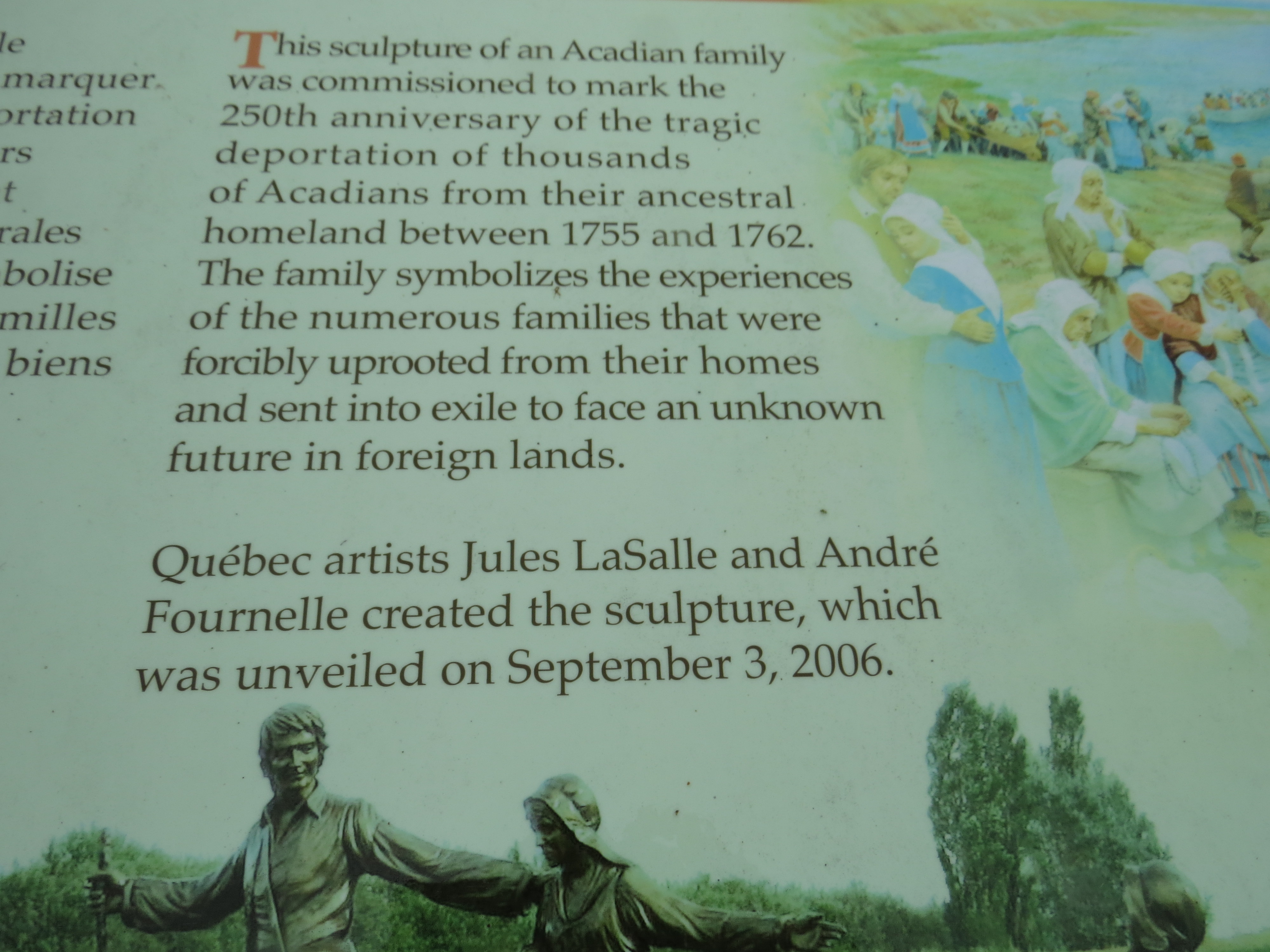
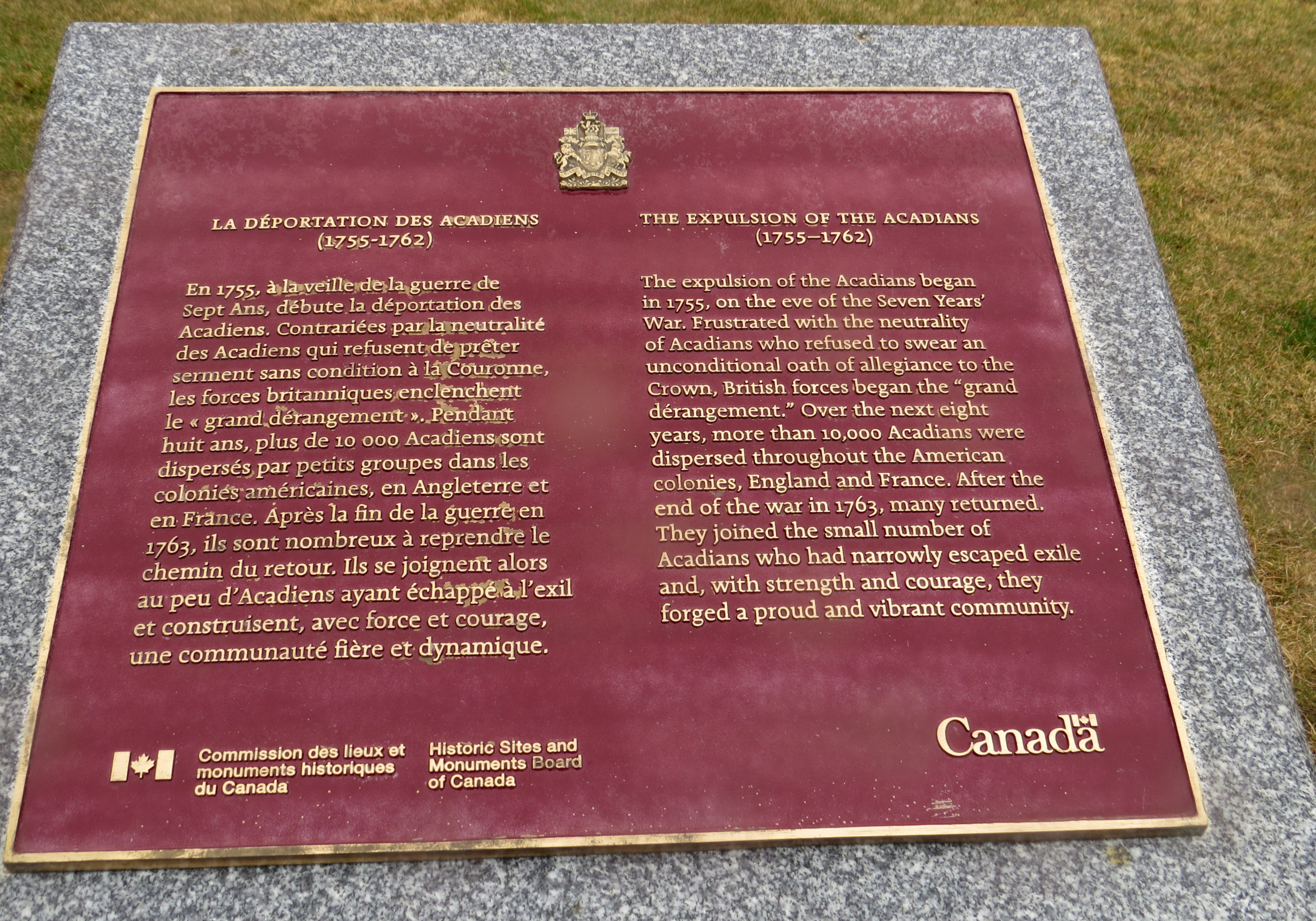
Sometime during the seven years (1755-62) of mass deportation of all Acadians from Nova Scotia to Louisiana, a girl called Evangeline was deported, too. Whether her existence was a historical fact or a result of a mythical romantic story of love and death – we will never know.  But we know that many ‘Evangelines’ must have faced that tragic fate.  A story as old in the annals of literature as any tragic love story going back to times immemorial.  When young lovers are torn apart by powerful forces of kings, gods, and generals unmoved by any cries or tears.

I have written here more extensively about the story and its background years ago.  Have traveled almost the entire length of Evangeline Trail – a route she took on her way back from her exile in the marshes of Louisiana in search of her beloved. Almost the entire Trail. Yet, there was one, pivotal one, I have not visited. We planned to go there many times with my late husband but kept postponing it for various and absolutely mundane reasons.  And a time came when my story become also a story of love lost and constant searches of memories of that love…

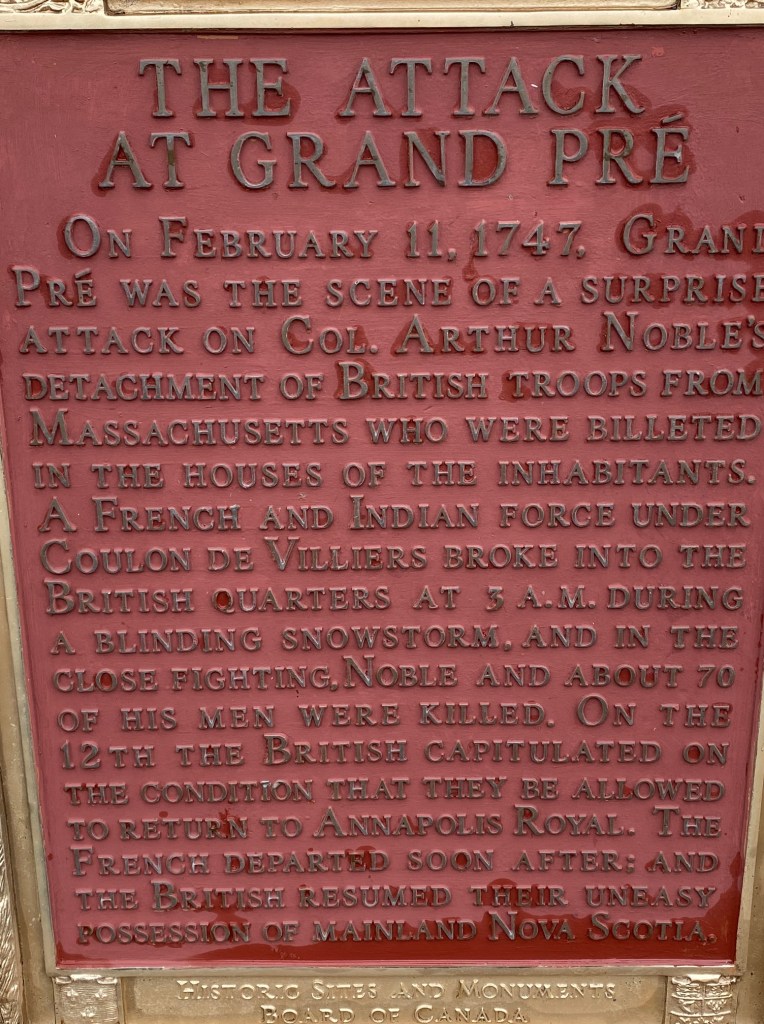
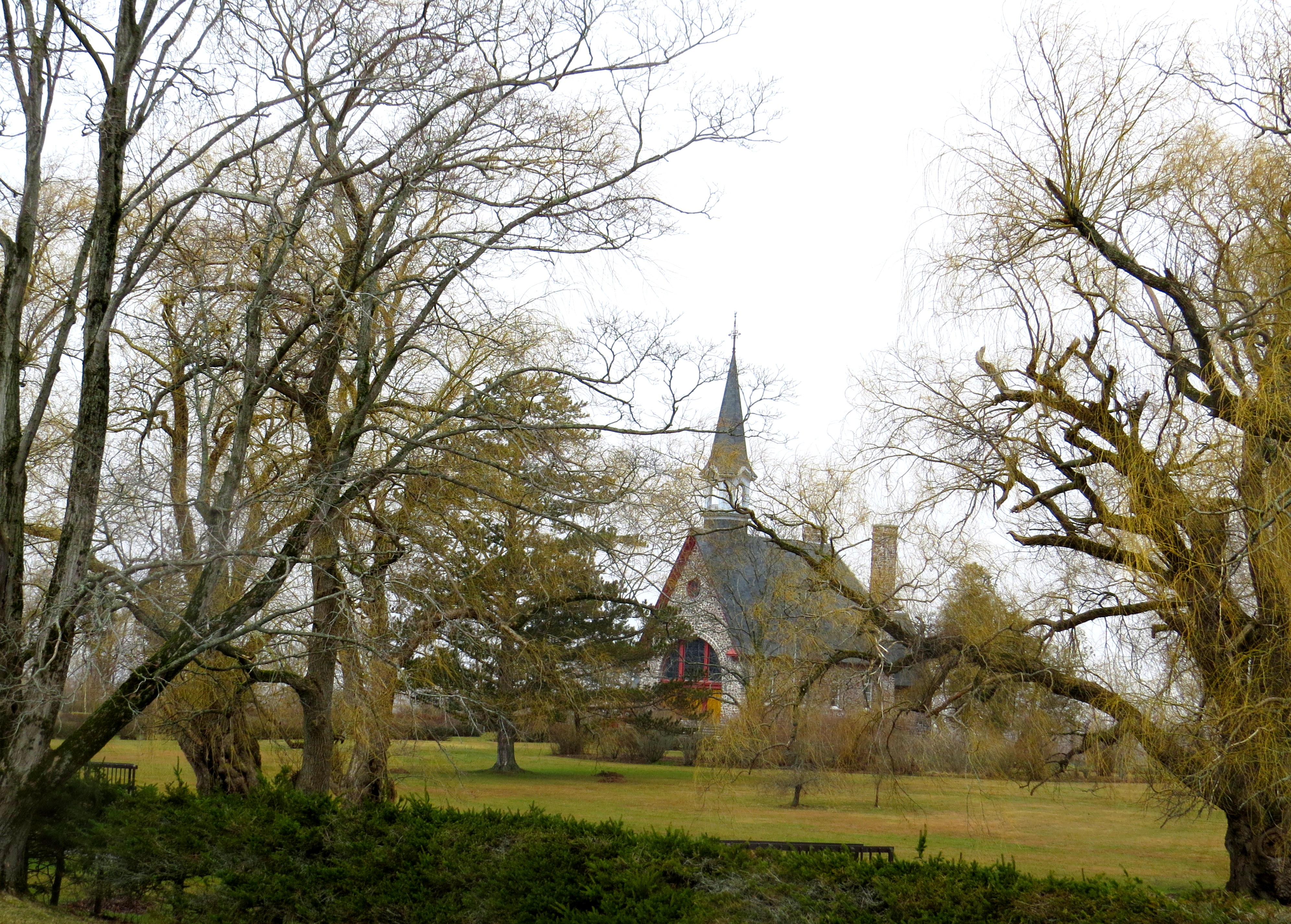
The other day, on a cold, wet, and windy Easter Saturday I went to the last spot, the pivotal spot, where Evangeline’s story began – to the little old town of French Acadian settlement of Grand Pré in Annapolis Royal Valley, close to quaint little town of Windsor.

The story was immortalized by no one other but the supposedly great American romantic era poet Henry Longfellow, who published “Evangeline. The tale of Acadie” in 1847. Never was an admirer of Longfellow’s style of writing and his literary testament. On the contrary, I see him rather as a mediocre talent.  But the story achieved great popularity in the late XIX and the first half of the XX century. At a time of no television and relative seclusion of small towns in Main, USA and Maritime Canadian provinces of New Brunswick, Nova Scotia, and Prince Edward Island. It was read by many generations. And thus literature became a fact and a legend was born. Like in ancient Greece.

I first became aware of the story more than 30 years ago, sitting in the foothills of Kananaskis Country, in my in-law’s home in Priddis, Alberta. Thousands of kilometers from the Atlantic. A wonderful great aunt Theresa Cormier was just visiting, a dame of different epoch, sister of my mother-in-law’s mom – Mimi  McDonald de domo Cormier. Mimi and her sister Theresa came to Pictou in Nova Scotia from a French-speaking Isle de Madelaine on the St. Lawrence Waterway in Quebec.  In her youth, she loved the story of Evangeline and read it many times. We talked about the romantic-era poets and as a result, I got from her the Longfellow poem and an old print of a small album of black and white photography of places and the journey of Acadians and Evangeline’s exodus. A little old printed album called “Evangeline Land”  containing no text, but a lot of very old photographs of the entire western shore on Nova Scotia associated with the history of the Great Exodus – the military expulsion of Acadians (French-speaking and mostly loyal to their French king) from their settlements in Nova Scotia. What you would call today – an ethnic and political cleansing.

The day was not pleasant. Windy, and very wet. Nonending drizzle of snow and rain. I thought it was very appropriate for the occasion – somber, sad, cold. That’s how it must have felt for the Acadians when they were first beaten down in a surprise attack of the English. And how it must felt when ‘Evangelines’, their families were being expelled by ships from their homes.

Of course, it has a truly epic ending – tragic and glorious in Evangeline’s finding of her beloved Gabriel only to give him to the Death itself.  But – to the defense of Longfellow and so many other authors of tragic love stories – love could be a bit perverted. Especially truly great love. The death of one of the lovers is followed by years, if no lifetime, of unspeakable despair and suffering. As if gods would whisper with irony – I will answer your prayer and give you great love, but be aware that the price for it is very high …

Dawno, dawno temu, za górami, za lasami (i tu należy dodać: za oceanami), żyła biedna wiejska dziewczyna, Akadyjka o imieniu Ewangelina. Akadyjczykami nazwano kolonistów francuskich  w części Nowej Francji (marzenie króla Ludwika), którą właśnie tak nazwano: Akadia. Ewangelina mówiła naturalnie tylko po francusku. I zakochała się w młodym chłopaku, też Akadyjczyku, Gabrielu.

Ale zaraz po Francuzach w Akadii znaleźli się żołnierze brytyjscy. Ich król też marzył – tyle, że nie o Nowej Francji a o Wielkim Imperium, brytyjskim naturalnie. I zaczęli wzajemnie się przepędzać, strzelać do siebie. No i Anglicy nie chcieli nazywać Akadii ‘Akadią’ a nazwali Nową Szkocją. Nowa Francja, Nowa Szkocja. Strach pomyśleć, gdyby jakiś niemiecki Wiluś zapragnął też kawałka tego Nowego Świata, bo jakby on to by nazwał? Nową Germanią? Może Walkirią? Aż strach się bać, LOL. Ale było, jak było. Więc ci brytyjscy wojacy jednak przeważyli militarnie. W dużej mierze de facto nie potęgą brytyjskiego garnizonu, co wojnami w Europie (między innymi pod Sewastopolem, tak tym krymskim).  Nic lub bardzo pewnie niewiele o tym wszystkim wiedzieć mogli młodzi kochankowie, Ewangelina i Gabriel. 

Najpierw ich osadę w Grand Pré w Annapolis Valley zaatakował oddział żołnierzy brytyjskich i wybił wielu mieszkańców. W krótkim czasie lokalny rząd Nowej Szkocji zdecydował pozbyć się kłopotu z Akadyjczykami i podjął decyzje ich deportacji  do odległej, obcej Luizjany, tysiące kilometrów na południu kontynentu. Taki los spotkał Ewangelinę i właśnie z Grand Pré ta masowa deportacja statkami się odbyła. Gabrielowi cudem jakimś deportacji udało się ominąć. Ale Ewangelina nigdy o wielkiej miłości nie zapomniała. Po latach i zapewne po heroicznej i strasznej wędrówce – wróciła do Nowej Szkocji.  Z miejsca, gdzie wyladowała odbyła bardzo długą drogę pieszo lub przygodnie spotkanymi furmankami ze wschodniego wybrzeża Nowej Szkocji na zachodnie. Dotarła w końcu do Grand Pré.  Jej ukochany dalej tam mieszkał. Ale radość była krótkotrwała. Gabriel był już ciężko chory, na śmiertelnym łożu. Miała jeszcze czas by złożyć na jego ustach gorący pocałunek.  

Czy tą historię stworzył z własnej weny artystycznej Henry Wadsworth Longfellow, czy też spisał zasłyszane od innych wydarzenia, jakie faktycznie miały miejsce – któż dziś wiedzieć może na pewno? I czy to ma znaczenie? Nie, nie ma. Fakt jest faktem, że w przeciągu kilku krótkich generacji poemat Logfellowa zyskał olbrzymią popularność. Były to czasy wszak przed telewizją, radiem nawet i masowymi gazetami. O Facebooku nie wspomnę. Ludzie długimi wieczorami czytali książki. A w Nowej Szkocji i Nowym Brunszwiku naturalnie czytano to bodaj jak Biblię. Wszak to ich historia, ta Ewangelina i Gabriel to ich dzieci, z ich osad i miasteczek! W dodatku napisana przez takiego wielkiego i znanego poetę, jak amerykański Longfellow!

Ja trochę zawsze na przekór – historia piękna zaiste, romantyczna. Longellow był bezwzględnie znanym poetą – nigdy bym go do grona wielkich romantyków nie dodał jednak. Ponoć był pod dużym wrażeniem twórczości Adama Mickiewicza  – ale Mickiewiczem ani amerykańskim ani kanadyjskim nie był w jakimkolwiek względzie. Tak, znał warsztat wersyfikacyjny dość porządnie. Więc bez wątpienia był dobrym rzemieślnikiem. Dość na ten temat.

Ja jego poemat i historię Ewangeliny znam od blisko 40 lat. Mieszkałem wówczas w Albercie, pod Calgary. Na farmie wynajmowanej przez rodziców mego męża, u podnóża pasma Kananaskis w Górach Skalistych. Siedzieliśmy bodaj na werandzie tej farmy i prowadziłem ożywioną rozmowę z uroczą damą poprzedniej epoki – ciotką Teresą. Ciotka Teresą Cormier była siostrą mamy mojej teściowej, Mimi  MacDonald de domo Cormier.  Obie siostry pochodziły z francuskojęzycznej wyspy Madelaine na rzece św. Wawrzyńca. I obie już tam, nim osiedliły się w Nowej Szkocji, rozczytywały się w poemacie o Ewangelinie. Ciotka Teresa była absolutnie zdeterminowana, że prześle mi poemat Longfellowa i że musze go przeczytać. Co zrobiła po powrocie do Nowej Szkocji. A kiedy widziałem ją po raz ostatni, podczas ciężkiej wizyty w Nowej Szkocji w roku 2000 ( ostanie tygodnie życia jej siostrzenicy, a mojej kochanej teściowej, Leony) obdarowała mnie jeszcze swoistym ‘białym krukiem’ – wydanym przez fotografa A. L. Hardego z Kenville w Nowej Szkocji, małym, czarno-białym albumem fotografii miejsc związanych z przypuszczalnymi miejscami w Nowej Szkocji i Nowym Brunszwiku, związanymi z Akadyjczykami i Ewangeliną z Gabrielem[i].  

I ten właśnie skromny album zdjęć, w dość podniszczonej okładce, towarzyszył mi ostatniej soboty w drodze do miejsca, gdzie Ewangelina spotkała się ostatni raz ze swoim ukochanym. Sobota była dniem podłej pogody. Wietrznie, padał gesty drobny śnieg z deszczem. Wszystko było szare, smutne. Mieliśmy do tego miejsca przyjechać razem, ja i mój ‘Gabriel’ – John. Objechaliśmy razem całą Trasę Ewangeliny (Evangeline Trail). Planowaliśmy pojechać naturalnie i tam, do tego Grand Pré. I zawsze jakaś rzecz zwyczajna wypadała, że odkładaliśmy na dzień następny. Aż nadszedł czas, że już tego dnia zabrakło. Już pojechać razem nie mogliśmy. Tak, jak mimo wszystko w tych romantycznych lub antycznych historiach wielkiej miłości.  Kończą się zawsze tragicznie. Im większa, im głębsza – tym ból i strata niewyobrażalne. Jakby bogowie faktycznie zazdrościli nam tego owocu, jakby szeptali uśmiechając się ironicznie:  nie proś o rzeczy wielkie, bo może cię nimi obdarujemy ale za wielką cenę, która może być zbyt dla ciebie – człowieka – wygórowana …

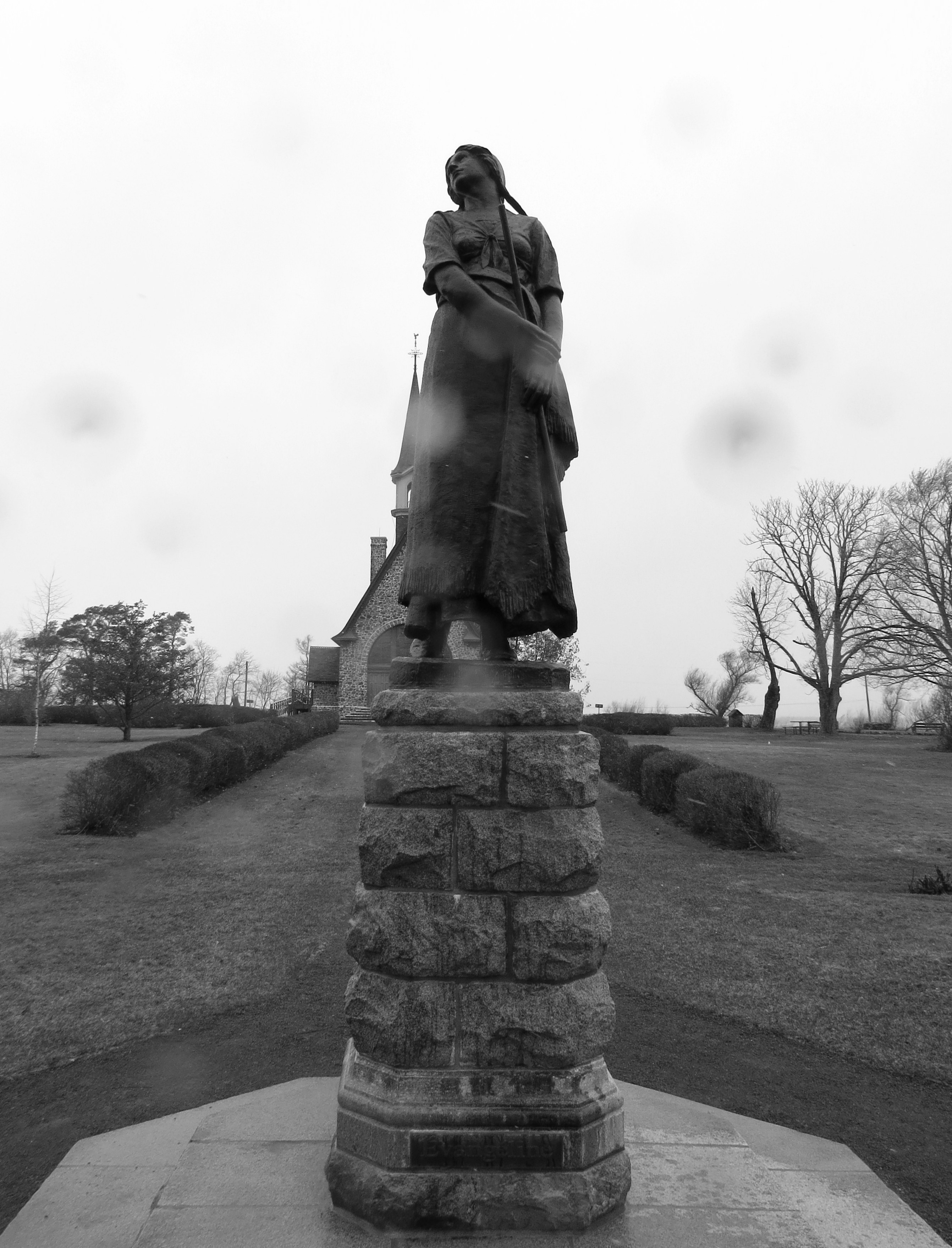
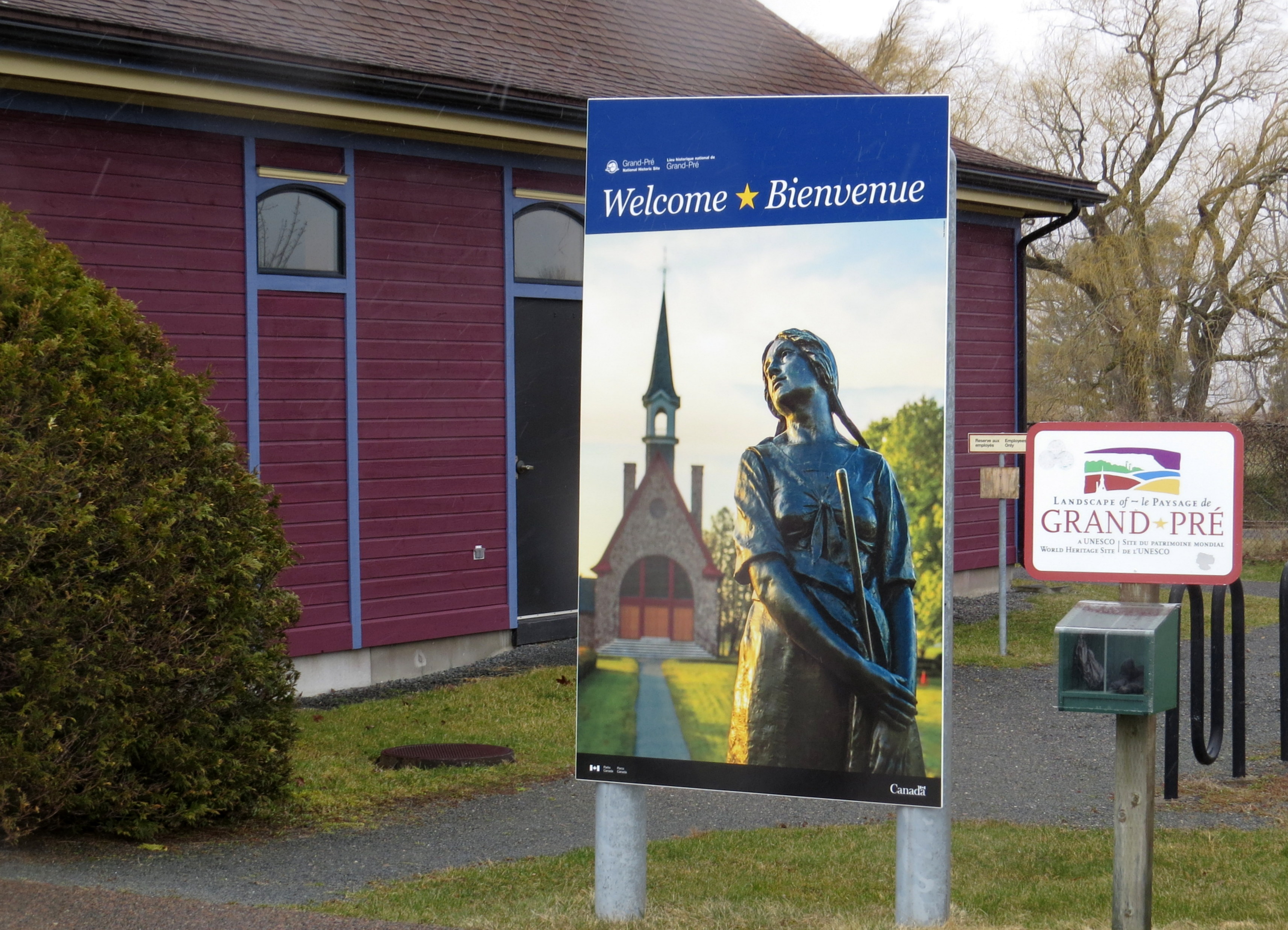
Więc byłem w tą zimną, mokrą sobotę tam. I było mi dobrze, że taka podła pogoda, że żywej duszy w parku przy tym kościółku nie spotkałem. Był tylko duży pomnik Evangeliny wypatrującej w dal. Za znajomym brzegiem? Za Gabrielem? 
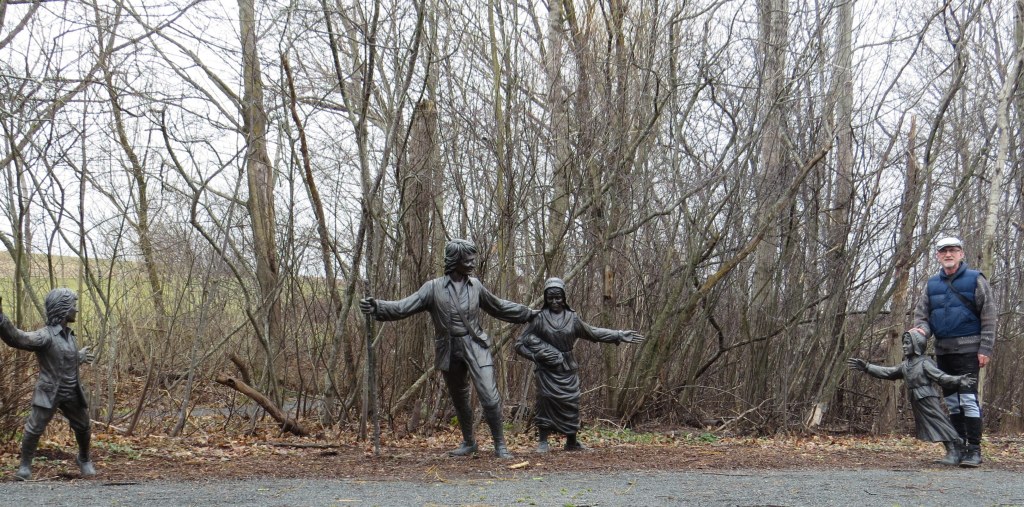
I był obok, w drugim małym parku, wiele mówiący inny pomnik: kamienna grupa, rodzina – wypędzeni ze swych domostw Akadyjczycy pospieszani do wejścia na statek, którym miał ich wywieźć w jakiś ląd odległy, nieznany …  Ostatnia w grupie była mała dziewczynka, bez zastanowienia się dlaczego i po co podszedłem i położyłem rękę na jej małej kamiennej główce.  Chciałem powiedzieć: nie martw się, wszystko będzie dobrze, poznasz tam inne fajne dzieci. Naturalnie, że kłamałem. Zawsze w takich sytuacjach kłamiemy, bo nie wiemy co powiedzieć.  A królom i prezydentom jest to kompletnie obojętne – przecież mają cały świat na głowie, więc gdzież mieliby czas by zająć się jakąś jedną małą dziewczynką?!
[i] Hardy A.L., „The Ewangeline land made famous by the expulsion of the Acadian farmers by the British Government on account of their fidelity to their French King, and afterward immortalized by Longfellow, an American poet.; oocihm.64903 (numeracja ‘oocihm’ stosowana zanim wprowadzono system ISBN), r. ok 1899; s. 76

Out of Despair – a story of a wintery trip to a snowy beach

Out of Despair – a story of a wintery trip to a snowy beach

The story is written in poetic verse, which is perhaps the easiest way to express emotions that are too intense to convey in normal language. I’m going through a difficult time as I prepare to make a monumental move, and I have to discard or abandon a lot of my belongings. Our belongings. This process has forced me to go through them all in detail, it has opened a Pandora’s box of memories. These are not just my memories: these are our memories.

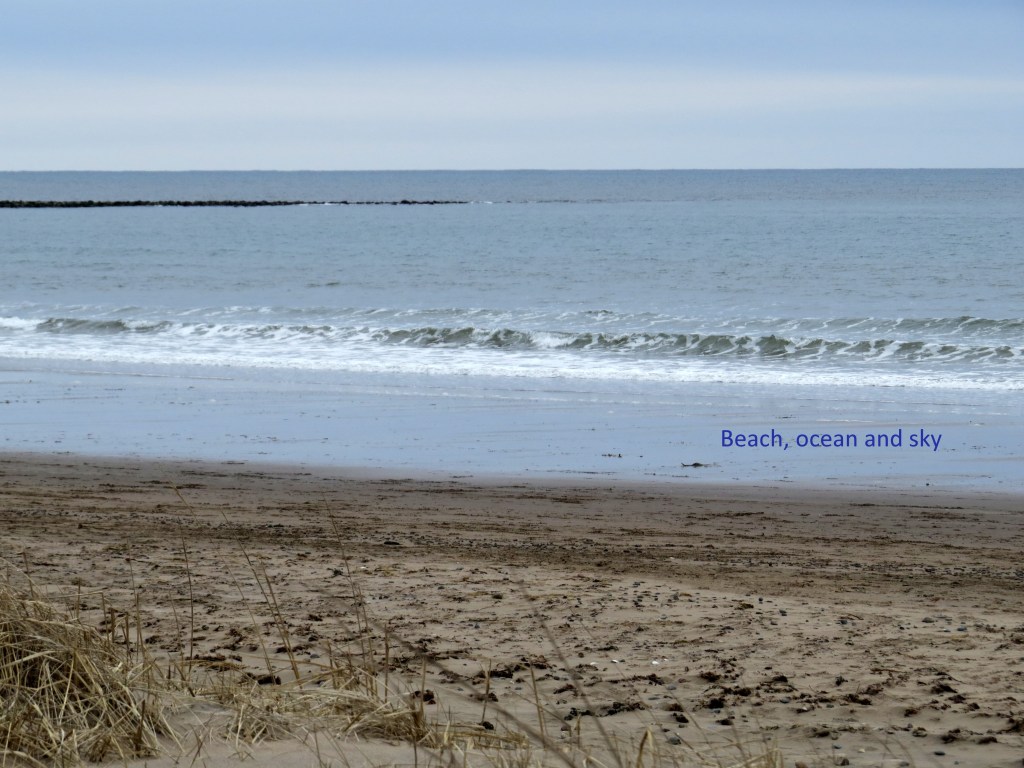
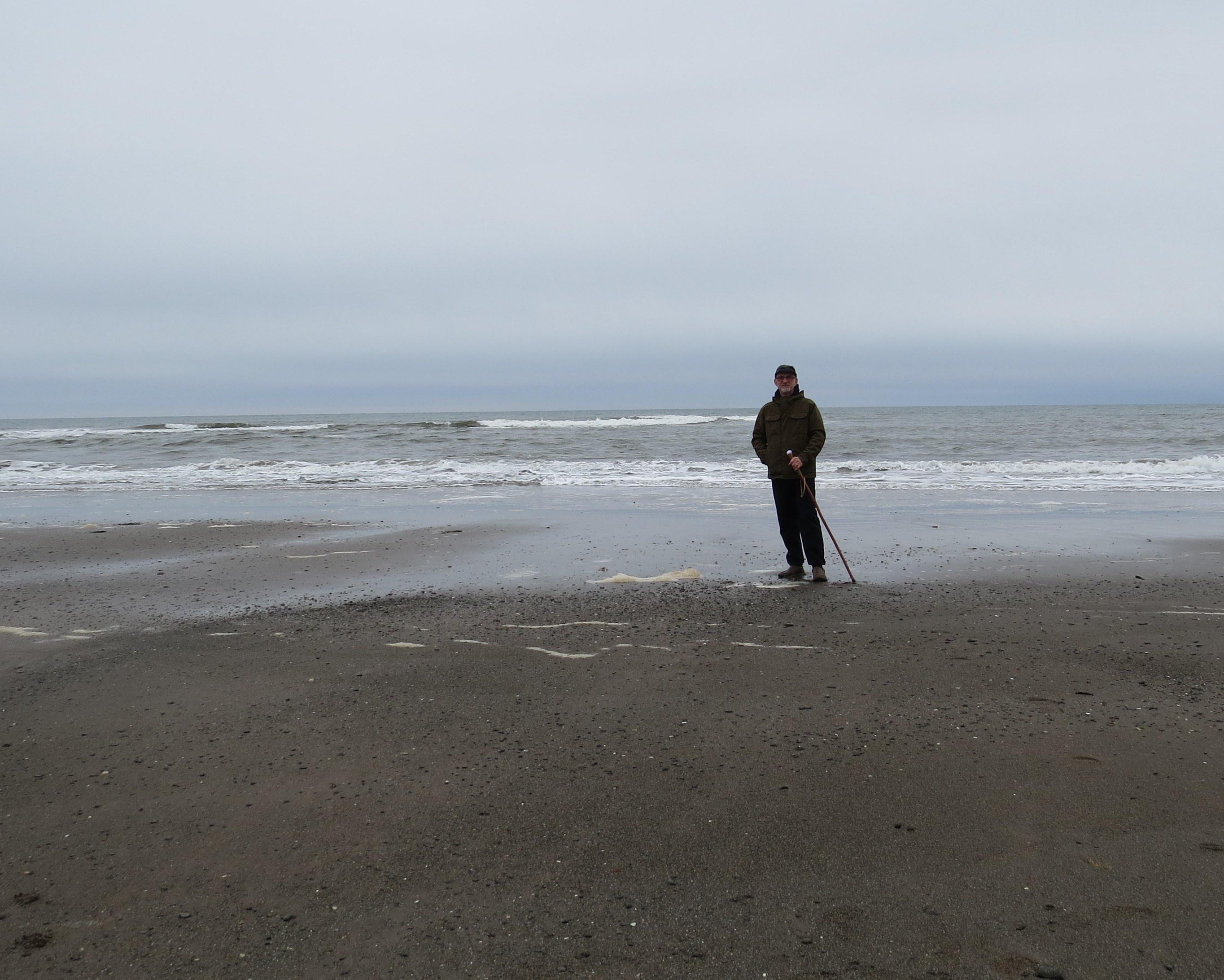
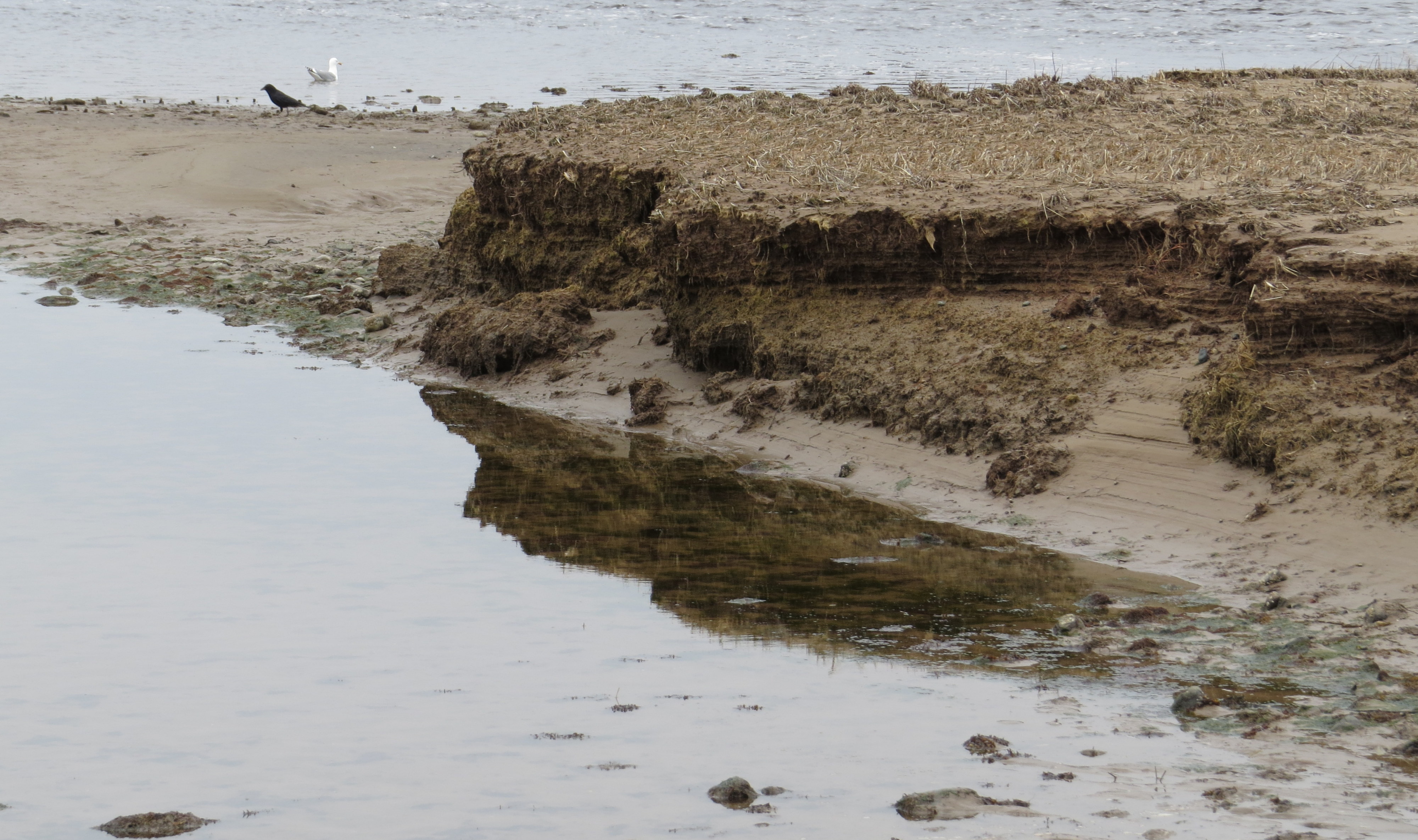
Last summer and autumn, I often escaped to the beaches for days at a time to get away from reality. But now, with the sorting of our things, that heavy feeling of despair has returned. Despite the cold wind, light snow, and rain I had to return to the beaches. I had to try to find you again for a moment, if for a moment only. It seemed that by doing that I wanted to overcome the feeling of drowning. On this trip I kept imagining a theater stage and Shakespeare’s Richard III. Richard III with his desperate plea for a horse, his bargain with the Fates.

The phantoms of despair are everywhere. 

Six, I think that I slayed. But not the one I needed.

A horse, a horse! My kingdom for a horse! I yelled, I begged!

as in a story said by English bard long time ago,

per chance, of dying Plantagenet with a blow to his head.   

My kingdom for a horse! I yelled in powerless furry

 at the ice-cold waves of roaring sea on Eastern shores.

I screamed, I raised my fists, and stomped my feet.

And words were taken by a wind

and silenced by another wall of deep.  

I cried out in pain falling to my knees,

beaten down, with no sword, no horse.

and no shield – ‘just once’ – I whispered

with no sound leaving my lips – ‘for a moment

let me see his face again, let me tell him

without words that I do and always will’.

And then, resigned I turned away from the sea

and saw in front, in a fair distance,

on the crest of the sand dunes – human shape,

familiar form, protected by warm, thick cape.

I wanted to run toward him – but couldn’t move;

wanted to scream – but no sound left my lips.

And yet – I heard his words as clear as daylight:

I know you do and I do love you, too.

I have no kingdom and no need for a horse anymore.

No need for heavy swords and glory in the battles.

That chilly day on a windy and snowy beach,

with cold stabbing your bones as battleaxes –

that instance becomes as warm as paradise.

I went back home with a smile and a head held high.

(by B. Pacak-Gamalski)

Niezakończone rozmowy z Tobą – Our Talks non-ending

Niezakończone rozmowy z Tobą – Our Talks non-ending

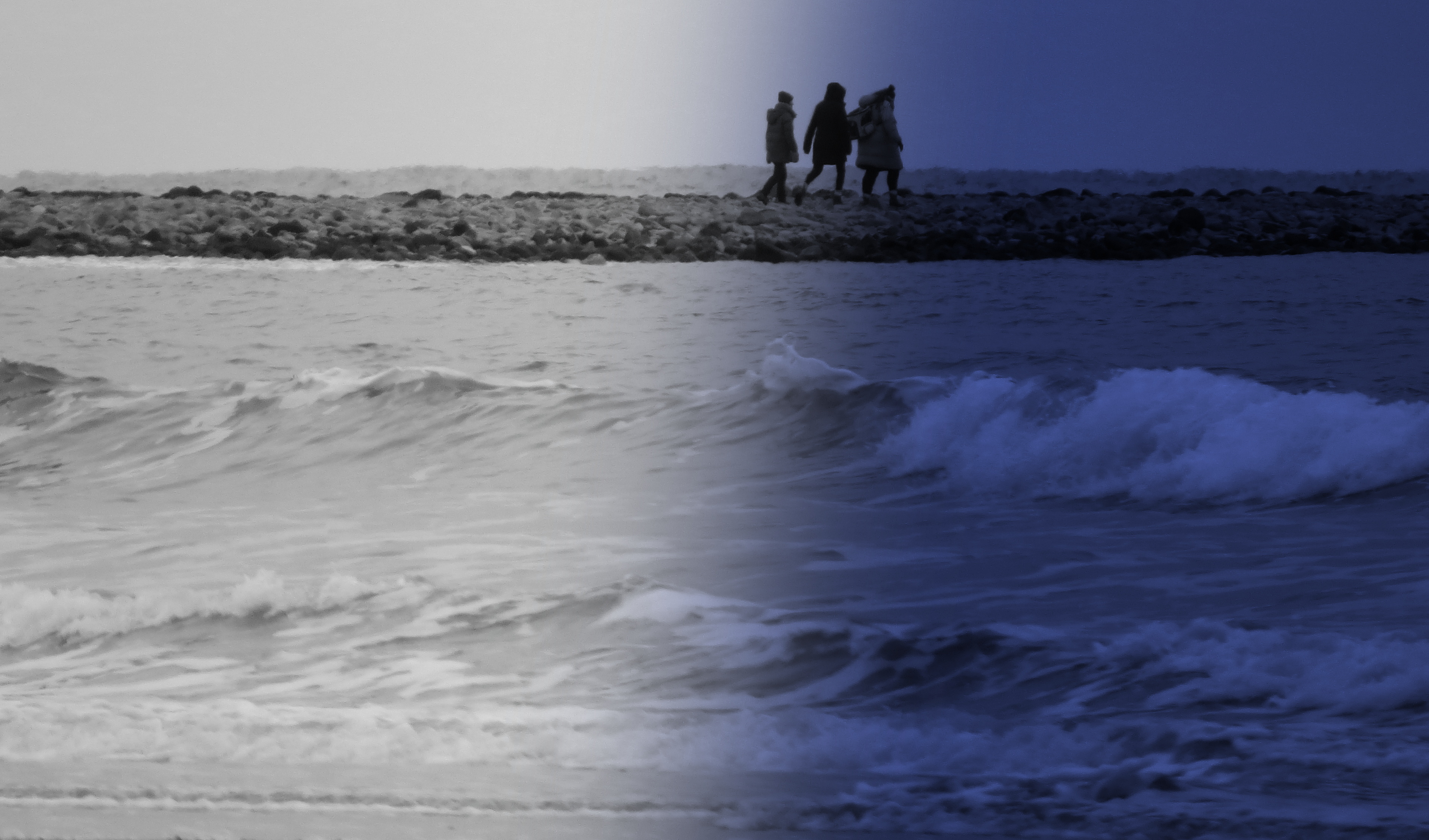
Pojechałem dziś do ciebie. Nie wiem nawet, nie pamiętam czy pierwszy raz w tym roku? Kartki z kalendarza pogubiłem już dawno. Nie wiem nawet gdzie,  czy na plaży jakiejś, do których uciekałem cały rok szukając cię? Może w tym forcie  w Lower East Chezzetcook, forcie który z uporem budowałem odgradzając go kamieniami od fal i odgrodzonym małą zatoką z silnymi prądami wody od głównej plaży. Nikt tam prawie nie docierał nigdy, bo przypływ nagły mógł powrót uczynić bardzo karkołomnym. Więc była to jakby moja pustelnia, moje królestwo, gdzie spędzałem godziny. Czasem mogłem wrócić idąc, czasem musiałem wracać płynąc, jedną ręką trzymając w górze plecak z kamerą i zeszytem w którym spisywałem nasze rozmowy.

Straciłem dom, straciłem przystań, zgubiłem kotwicę. Moja łódź błąka się rzucana w różne strony świata falami dwóch oceanów: Wielkiego, zwanego ironicznie ‘Spokojnym’ i zimnego Północnego Atlantyku. Szukam wyspy, którą mógłbym nazwać ‘Nasza’. Nasza Wyspa nie jest wielka, raczej mała. Jak ta z przygód Robinsona Cruzoe i Piętaszka ma tylko dwóch mieszkańców. Wieczorami spotykam cię siedzącego na skałach ze wzrokiem zanurzonym w głębinach oceanu. Podchodzę i kładę rękę na twoim ramieniu. Odwracasz powoli swoją twarz ku mojej. Masz w oczach i na ustach spokojny, słodki uśmiech zadowolenia. Podaje ci rękę i pomagam zejść z kamieni. Kładziemy się na ciepłym piasku dzikiej plaży i patrzymy w niebo. Leżymy tak długo, aż nadejdzie noc i niebo zapala nad nami lampy gwiazd. Wskazujesz palcem najjaśniejszą i pytasz: Widzisz? To nasz gwiazda. Nazywa się Miłość. I zawsze będzie nam świecić, do końca wszystkich dni, do czasu gdy wyparujemy atomami kosmicznego pyłu i popędzimy obracać się po jej orbicie. Czy to nie piękne?

Biorę w swoją dłoń twoją i całuję ją długo. Odpowiadam: tak, to jest piękne. I odpływam w sen czekając na ten moment. Moment odlotu z Naszej Wyspy do Naszej Gwiazdy. Do domu.

Comes the day next. It is almost as if it was yesterday, yesteryear, forever. Our stars, our Cosmos came home to the dancing light of the sun in the waters of our ocean, right at the doorway of our home. And I walk to My Rocks on the shores and see them: the light of the dark sky of night, and the stars diving to the bottom of the sea with the dawn of day.

Seating on Our Rocks, on the edge of the water, I can see them sending shots of light from the dark bottom to the surface. They are there, singing our song with the sirens. They are tending to the Gardens of Coral, of swarms of dancing little fish, of translucent figurines of ancient sea creatures: the squids, the funny shrimps, and seahorses. All following the long pathway of Eurydice and Orpheus.

Our star, our island is there, too. The sky and the ocean are the same: the stardust of nebulas.

And suddenly I know it all. I’m certain that if I get up from My Rocks now and go home – you will be there as always: sitting on the sofa. You will look at me opening the door and you will say: finally you are back from your silly stars and ocean’s bottom. Sit here, next to me, and I will make us a cup of good coffee. We will watch that movie you wanted us to see.

I’m sure that’s what will happen when I go back home. I’m certain of it but also frozen in fear that I might be wrong. That you might not be there. But I will. I will go, open the door, sit on the sofa, and wait for the cup of good coffee. No one makes such a perfect cup of coffee, as you do.  

Walk with my Eurydice

Walk with my Eurydice

Every day starts with waking, and getting up from bed. Doesn’t matter if it is noon or 5 in the morning. Time is a very subjective thing. On days I don’t have to go to work (most of the time, since I officially stopped working for any company more than six years ago) and don’t have any appointments – I don’t look at watches or clocks. I do things when it is time to do these things, without assigning any number to that time.

Besides, time has stopped for me in November 2022. On the first night (was it night?) I fell asleep after You were gone. I wish I had not woken up. Waking up after that very first sleep is a daily routine of terror. The few seconds before you are certain that it is reality, that you are awake. When I am forced again to know that You are gone. Not to the kitchen to make us a fresh morning coffee, which you did every morning religiously for more than three decades. No – You are GONE. I have to go through that terror every single day while getting up. For 467 days, as of today.

Sometimes, just before I finally drift off to sleep, I wish, I pray, that it is the last time. That I don’t have to wake up again.

When I sleep I often meet You and talk to You. I think, sometimes I make love to You. That we are watching TV or go for a drive in the countryside.

You are my Eurydice, for whom I went to Hades to plead, to argue with the God of the Underworld, that he made a mistake. I beg him, I threaten him. I offer him love and hatred, devotion and disdain. To no avail – he is unmoved. In my dream, I write a poem to You in Italian. When I get up from my sleep I remember that poem and copy it, surprised that I retained more of my old Italian than I thought.

Dove sei, Euridice?

Dove sei, Amore mio?

Mostrati e parlami d’amore.

Ricordare! Non fermata

e non guardare indietro.

Ricorda, mio caro …

ricorda, ricor… , ri…

e piango, perché so

che ti volterai.

Ogni volta.

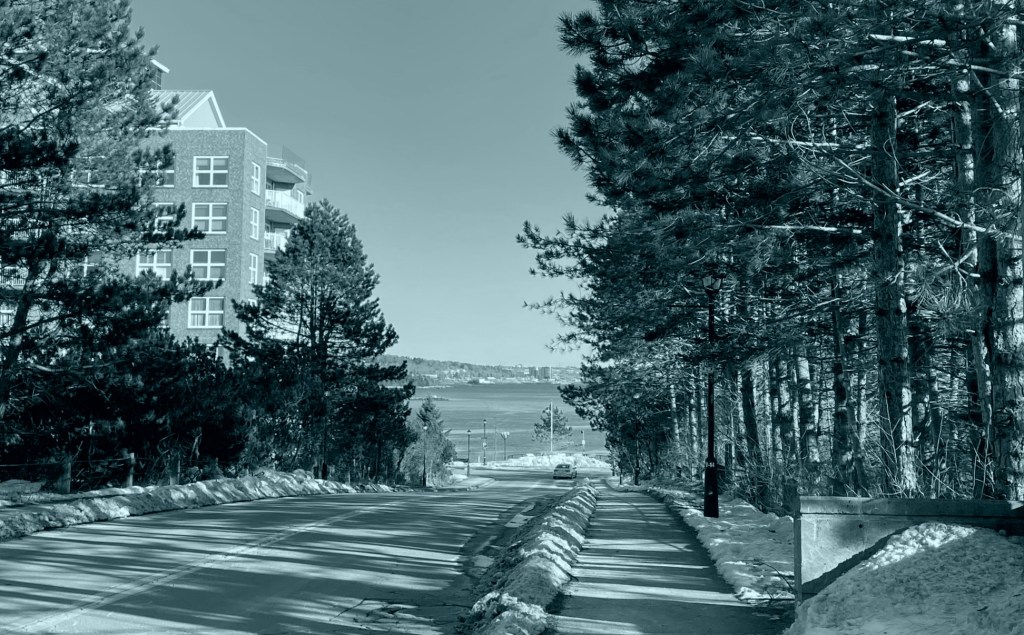
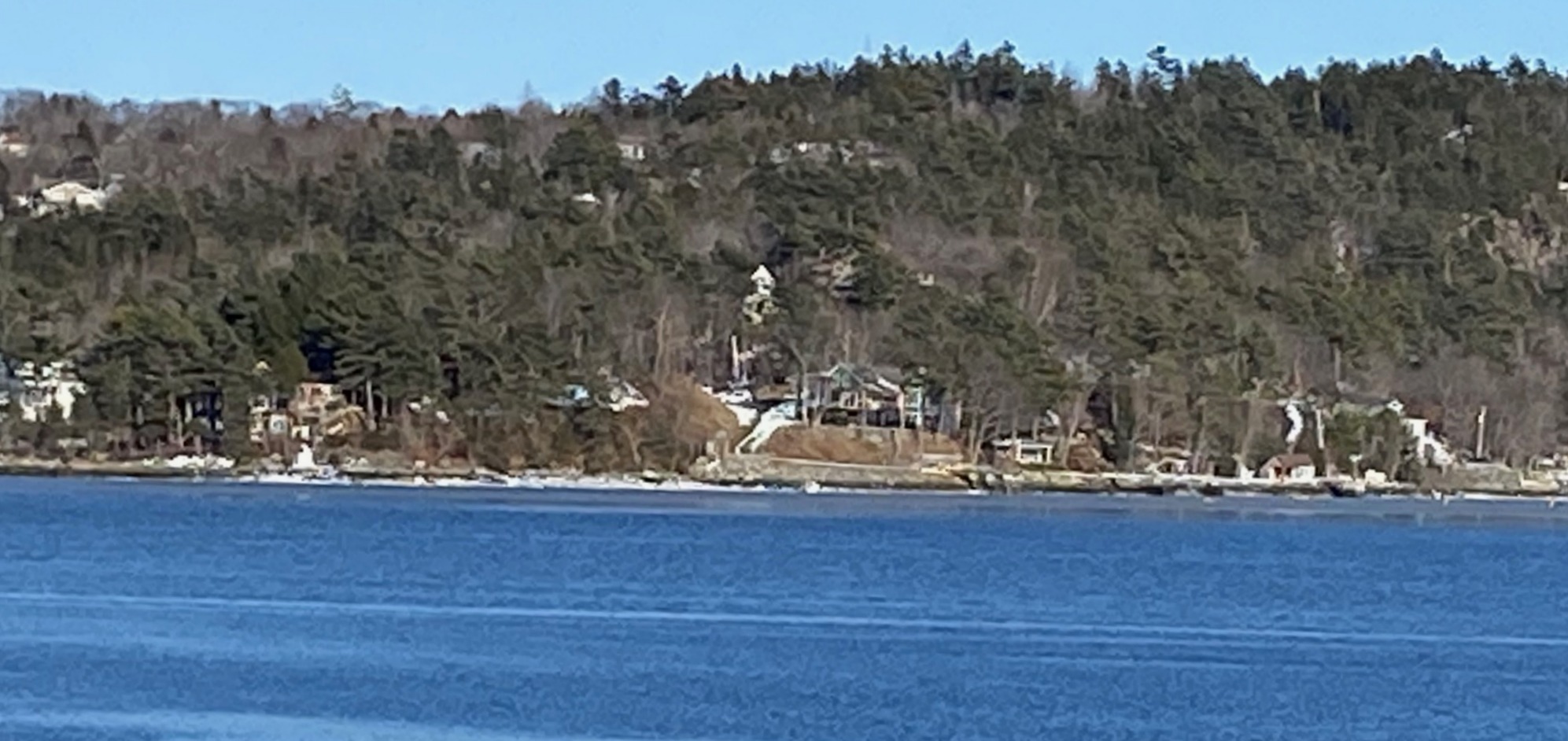
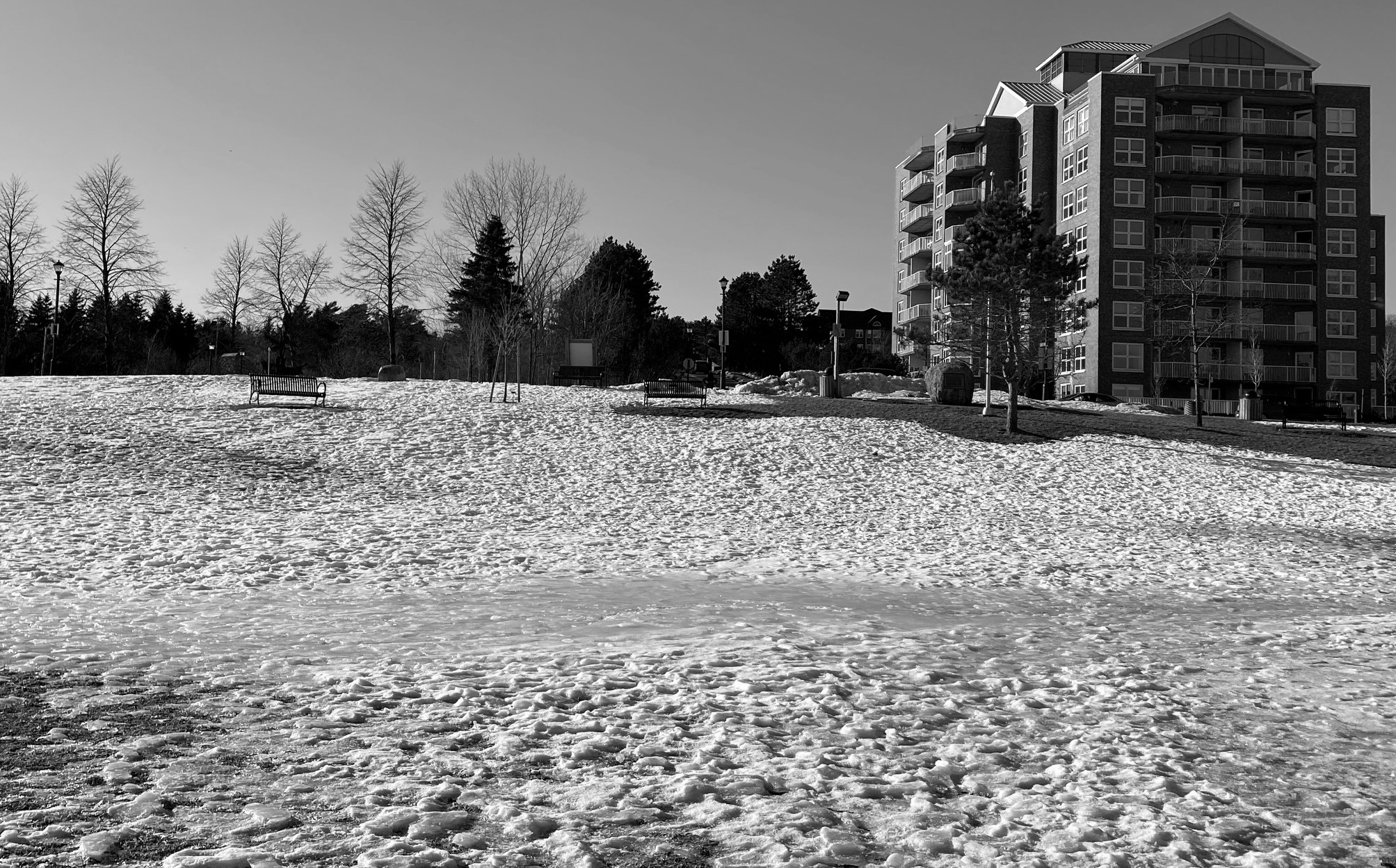
Today I stopped in a little park De Volf in Bedford. We used to go there many times and both liked it. It is a small park but there is something sweet and romantic about it. It offers a nice view of Halifax, our bridges, and Dartmouth.  Next to it is a big building of the company that you worked for – The Berkeley. You didn’t even have that much time to work for them, yet You did leave a special mark on the senior residents of that building and all the staff. Your innate goodness emanated from you as everywhere you worked before. I will never forget and still am moved to tears how they organized a special memory meeting for the residents and staff in their main hall. It was full of people. Wonderful people, who came to share their memories, and their sorrow and offer their support to me and Your siblings, who came for Your final journey.

It was a cold but amazingly sunny day. I really enjoyed the walk and reminiscing about our strolls there. For a short while You – my Eurydice – walked with me. You didn’t turn back, didn’t look back. You walked with me. Maybe I even felt Your hand in my hand.

I know that the terror of getting up will come back tomorrow. Then again, and again for the rest of my days. But the walk today was good. Thank You, Babcycake. Gracie, mia Euridice.

Anguish, the price of Love

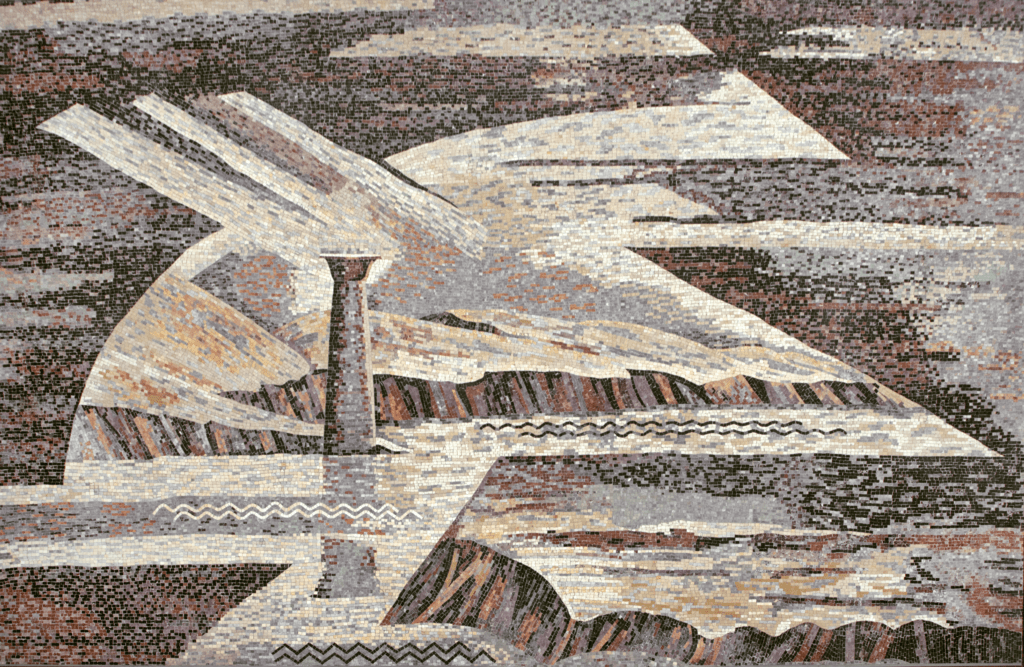
The first panel of marble triptych by Hildreth Meiere representing The Pillars of Herakles (Centre for Hellenic Studies in Washington, DC)

Love is a strange thing, and the price you pay for it is enormous. But you pay. For a dream that is priceless. The higher is the heaven, the bliss of it – the higher is the cost. Have you known – would you have asked for it?

Let me tell you a story. There was a young man, who wandered the world from the high peaks to the deep valleys, and even deeper than the valleys. He went to the abyss of the underworld, the dark caves full of desires, hunger, and thirst. Long hands and longing eyes followed him there in the caves. The caves were like a labyrinth, one leading to the other. There, he saw a silhouette of a boy crying for love not found, for a dream not fulfilled yet. That silhouette, the shadow was – he knew it instantly – his own dream. A dream that did not want to be a dream anymore. It wanted to be born. To live. The young man heard the plea of this boy and the plea of his dream. He ran after the boy, grabbed his arm, and didn’t let go.  It is a long story re-told many a time. It was said that they lived happily ever after for a long time.

Like any long story, sometimes they are too long. People heard of the ending from others and never bothered to read it to the end themselves. But re-told stories change, and people soon forget where or from whom they heard it. They stopped reading it altogether, relying on the version they had heard from others. As the others relied on those, who told them. Over time the story changed, becoming a different one.

No one truly knew what happened to the young man, when he was not young anymore or what happened to the boy rescued from the cave.

I will tell you the story of the old man, who used to be that young man.

He doesn’t go to the caves, deep valleys, or mountaintops anymore.

The boy became his. He has answered his dream and the dream of the boy. They built a house on a treetop and watched the mountains weaving long shawls of rainbows flowing slowly to the valleys. Sometimes they would climb down from the treehouse and wander in the meadows below, drinking from streams, and singing with birds.

One day, after many years of happiness, the boy went further exploring the valley. The man followed him. They came upon a place where the stream enters a big river. The boy – a man by now himself – said: I will go for a swim in this river and jumped into it. He disappeared under the water and was not coming back to the surface. The man – an old man by now – jumped after him. He has found him ensnared in the long roots of the nenufars. He frantically ripped the snarls and brought the lifeless body to the surface. He tried for a very long time to push the boy’s life back into his lungs, and he screamed to the birds to help him. They came and tried with their wings and beaks to revive the boy. But, as the old man, they couldn’t. The boy was no longer.

From then on, the old man left the valley and wandered for eternity the earth. Looking for the boy, hoping that he appears somewhere. If, by miracle, he has found himself in the caves, why wouldn’t it be possible that he will find him again? His anguish was unbearable. Even the birds couldn’t sing when they flew by him. He came to the Edge of the World and asked the Big Water: why? The Big Water thought for a while and answered him with its own question: your sorrow has moved me, old man. I am Everything, the Past, and the Future. The Present has engulfed you in anguish beyond your strength. If the price of your past is too high to carry, I can grant you a gift seldom given to anyone.

The old man raised his eyes and trembling with timid hope, asked: O, Big Water, would you return my boy to me?

The Big Water answered: there is no return from not being. But I can change the Past, I can change the event that led you to the meeting of the boy. Ever. Thus the cause of the anguish will be gone. You can’t grieve something you have never had or known. That is the price.

The old man looked in horror and screamed at the Big Water: Would you, Everything, ever accept a deal to become Nothing? Your price is too high to pay. I will keep my sorrow and will walk with it till the end of my journey.      

I saw the old man when he turned away from Everything and started walking along the shores of The Edge of The World. With time he slowed down, yet he kept going. At a certain junction, the Edge of The World separated from the Big Water and became the Edge of Non-ending Abyss. There, the cliffs of the Edge were vertical like the Pillars of Heracles.  He knew that he reached the end of his journey. The old man sat and rested a bit looking down the massive cliffs where below a thick cover of white clouds was the invisible Abyss. His arms raised a bit with a sight and he slowly got up making a step toward the Edge. Then he froze for a moment, turned his head, and looked. He saw, far from the Edge, mountain peaks towering above deep green valleys and a forest with tall trees. He thought that he could hear the song of birds flying in the forest. A happy tear rolled down his cheek and a broad smile appeared on his face. And the old man was sure that for a moment he saw a boy waving toward him from one of the tree tops. The boy was singing the song of the birds and smiling at him. He called to the old man: don’t be afraid, come to me, I’ll wait for you!  

Did the old man jump the cliffs, you asked? I do not know. But he anguished no more.   

The Woods – how You led me out of them

The Woods – how You led me out of them

There are bad days. They come. I didn’t know that my emotional construction was still so fragile. Someone said something or wrote something to me, possibly in good intention – and everything fell down as a house of old rocks tumbling down in a cloud of dust. Cloud of dust and insecurities, despair. Everything I tried so hard to put together on my ocean beaches last summer – was taken away by a wave that came and washed it to the bottom of that ocean.  

One of the very first lines I wrote after You were gone, after I tried to find traces of You, of us, on some trail we used to walk together – and I couldn’t find You anymore – felt like that exactly: insecurity, lost. Maybe even angry – why am I here if you are not?

I have simply called these short lines: ‘Woods’. The woods I ventured in and got lost. Couldn’t find my way back. Last night and today it felt like that – to be back in these woods.

The Woods

I’m in the woods, surrounded by trees. The sun filters through the leaves, creating a dance of light and shadow. The breeze caresses the branches, making them sway gently. The air is fresh and warm, but not too hot. It’s a perfect day for a walk.

But I’m not here to enjoy the scenery. I’m here to find you. You ran away from me, and I don’t know why. You didn’t say a word, just took off into the forest. I followed you as fast as I could, but you were always ahead of me. I called your name, but you didn’t answer. You didn’t even look back.

The terrain is rough and uneven. The ground is covered with dead wood, roots, and rocks. I’m not as agile as I used to be. I’m not a young buck anymore, confident in my strength and speed. I stumble and fall, scraping my hands and knees. I get up and keep going, hoping to catch a glimpse of you.

But you are nowhere to be seen. You are hiding from me, or you have already gone too far. You are out of my sight and out of my reach. I don’t know where you are, or if you are safe. I don’t know what you are thinking, or what you are feeling. I don’t know if you still love me, or if you ever did.

 Maybe it wasn’t even an actual walk in the woods? Can’t remember anymore. Maybe it was a written record of one of my many nightmares, being half awake and half-asleep? Don’t know – there are days from these early times that are gone from my memory altogether, weeks like that. I know that they were, that I was there, too. Remember every detail, every second of You collapsing in my arms, the ambulances rushing to our home, every day and night in the hospital – and not much more after that. Just pieces of existence like a broken string of pearls rolling on the floor.

That’s that dark place I crumbled to last night and this morning. And You were not lost and gone, not hiding from me. You were right here and You guided me to a memory. The memory of a trip we took in 2016 to Alberta, our last trip to Alberta (apart from the huge trip across the continent to the shores of the Atlantic). We took a different route, a longer one, the one leading up North toward Valemount and through Highway 16 toward Jasper. But first, before reaching Jasper, one has to drive with the view of the massive, majestic Mount Robson. The highest mountain in the Canadian Rockies. Many, many years earlier I did a little climbing on this giant. Never reached the top, nor did I attempt to. Just wanted to do a bit of climbing on it and remember reaching some shelf-ledge on its steep wall, sitting on that ledge, and be amazed by the panoramic view in front.  In 2016 we reversed the roles, we were the ones at the bottom in some valley, and the huge giant was looking at us from high above.  It was amazing, the day was sunny, and practically there was no traffic. Remember embracing John and we both just admired the view.  It felt good. We both liked going back on many visits to Alberta, especially John. After all, it was his home, where he grew up, where he went to school, his adolescence … and us at the end. We met there, and fell in love. That memory of that trip lifted me from that awful pit I fell into again.

Nasz świat alternatywny

Zagubienie

Dużo tego wokół.

Coś stale się dzieje,

jakieś dni mijają,

kolejne nadchodzą

w dziwnym marszu

brzasków i zachodów.


Przyzwyczaiłem się już

i do smutku i do żalu.

Ale dalej nic z tego

zrozumieć nie potrafię.

Coś kiedyś zaczęliśmy

i mieliśmy gdzieś skończyć,

dokądś dojść. A nie doszliśmy,

nie skończyliśmy. Dlaczego?


Byłeś i nie ma cię.

Brak w tym zupełnie

jakiejkolwiek logiki,

sensu lub choćby

symboliki czegokolwiek.

Po co ja zostałem?

W rozgardiaszu rzeczy ważnych

zapomniał Los o takim drobiazgu?


Jak jedna litera

może być słowem?

Jak słowo może być

zdaniem o czymkolwiek?

To obcy mi język

i niezrozumiały.

31.01.24

Świat stał się czymś spoza, jakby zaistniał obok. Widzę go przez okno, czasem wychodzę do niego jakieś sprawy załatwić, coś zrobić, pojechać na jakąś plażę, pójść na koncert lub wystawę.  Gdy wracam do domu gdzie on nie istnieje, zostawiam go za drzwiami i za oknem. Nie potrzebny mi do niczego. Tylko przeszkadza swoim tłokiem, gadatliwością i kompletną powierzchownością. Jakby tym całym i stałym ślinotokiem słów usiłował nadać pozory ich głębokości, ważkości. A w sumie to kompletna płycizna ledwie stopy łechtająca. 

Jest bardzo prawdopodobne, że ciągle są ciekawe indywidualne światy innych ludzi, ich prywatne kosmosy. Ciągle poeci publikują wiersze, malarza pracują przy sztalugach, filozofowie – tak mało tych prawdziwych się ostało – szukają sensu bytu i dotknięcia jego paradoksu, kompozytorzy komponują. To mnie trochę zajmuje jeszcze, ciekawi czasem. Bardziej z ciekawości niż autentycznej potrzeby. Dla mnie już wystarczy tych kilka tysięcy lat poprzednich badań badaczy i twórczości twórców. Kolejne niewiele nowego i odkrywczego prawdziwie już mi nie zaoferują. Po oswojeniu się w wiekach XIX i XX z myślą, że jednak wszystko jest możliwe, a nic definitywnie określonego początkiem, kształtem, formą i końcem nie ma – filozofia umarła, a sztuka jest wszystkim i niczym jednocześnie.

Pozostali jeszcze bogowie i wierzenia. Ale z tymi zerwałem wszelki kontakt już dawno.  Zbyt wiele świństw zrobili lub pozwolili na zrobienie w swoim imieniu, bym jakąkolwiek na nich uwagę zwracał. Zakładam zresztą, że ich nie ma. A jeśli są – niech się kiszą we własnym sosie samozachwytu.

Po prawdzie nie jestem zadowolony kompletnie z faktu, że żyję jeszcze. Tak, jak z tymi nowymi badaniami i nowa twórczością – do niczego mi już to niepotrzebne. Pewnie jest jakaś doza lęku egzystencjalnego. W końcu życie to najstarsze chyba tabu tego zwierzęcia zwanego homo sapiensem. Ale przede wszystkim niechęć zrobienia przykrości wielu osobom bardzo bliskim, a zwłaszcza tym, którzy w jakiś sposób fizyczno-prawny musieliby konsekwencjami się zajmować. Byłoby to poniekąd świństwo z mojej strony, taki trochę nihilizm moralny wobec nich.

Nie. John mi nie zrobił świństwa. On sobie tego nie zaplanował, przeciwnie – żal  mu strasznie było odchodzić, nie chciał. Jeszcze chciał byśmy doszli dokąd nie doszliśmy, by był pewien przedsmak dokończenia, epilogu.

Może więc zbuduję świat alternatywny. Nie ten sam który był, a już go nie ma bezpowrotnie. Ten, który mógłby być. Będzie tylko wewnątrz naszych czterech ścian. Będę wychodził po zakupy i gazetę i po powrocie będę ci opowiadał, co nowego się za oknem zdarzyło.  A wieczorami będziemy robić długie podróże do miejsc, w których kiedyś byliśmy.

Kto wie, może uda mi się cię namówić na nowe dalekie trasy. Pojedziemy do Paryża. Kocham Paryż! Oprowadzę cię po znajomych uliczkach, posiedzimy na schodach pod Sacré-Cœur i wytłumaczę ci całą panoramę w dole. Potem oczywiście na Montmartre, w kafejki, w sprzedawców obrazów, w ramiona gawroszy. Wieczorem pójdziemy na nocny długi spacer bulwarami sekwańskimi. Od Île de la Cité aż pod Łuk Triumfalny. Tylko się nie wyrywaj i nie śmiej się – będę musiał cię całować. Bez całowanie się nie ma najmniejszego sensu iść nocą tymi bulwarami. A inni? Daj spokój. Czy naprawdę nie zrozumiałeś jeszcze, że tylko my ich będziemy widzieć, a oni nas nie będą mogli? To takie proste, Babycake!

The seed of grief is love

I have watched two movies recently. Very different and very powerful on a very personal level. Stirring emotions, and memories. The Spanish “Society of the Snow” produced by Netflix and directed by J. A. Bayona, and the Canadian production of “Good Grief” directed, produced, and written by Dan Levy. Dan Levy also played the main character, Marc.

The “Society of the snow” – let me take you on a journey in time. At the time of the catastrophe, I was 14 years old. A year later a book by British writer Clay Blair “Survive” appeared. A well-known Polish writer or essayist wrote in a Polish literary weekly “Literatura” a piece about it. It might have been Jerzy Andrzejewski, an excellent writer whose weekly column I have always read – but truly I can’t recall now. Yet the story and especially the dilemma of cannibalism versus survival made me write a short piece about it. By that, I was fifteen and of course, as any fifteen-year-old ‘writer’ had a lot to say about the issues of life and death. I sent it off to the editorial desk of Jerzy Putrament, a Polish writer, who was the editor-in-chief of the weekly ‘Literatura”, a major literary and art publication. And he published it. As it was my second publication in a major Polish magazine (the first one was in “Perspektywy”) it cemented my ‘fame and prestige’ among my teachers in my school, but not as much among my classmates, LOL.

I don’t recall if I have read the book by Clay Blair. Not sure if it was translated into Polish. Most likely I never did. But I have seen years later the first movie about it based on that novel. And I wasn’t impressed. Yet the Spanish “Society of the Snow” impressed me very much. The screen-writers (Bayona, Vilaplana, and Marques), the director, and the actors were superb in their austerity of dramatization. Everything was left to the minimum: air, food, movement, and words. Years later, while visiting Mendoza in Patagonia (the ill-fated plane took off from Mendoza on its last tragic leg of the flight to Chile), I took a special bus tour to the Andes and was able to do some hiking at the base of Aconcagua (almost 7000 meters, one of the titans of the world). The outmost desolation of that place there is amazing and overpowering. As far as you can see is a frozen horizon of white peaks and valleys. Can’t imagine surviving there with hardly any provisions for longer than a few days. I felt that the movie captured that feeling very well.

“Good Grief” by Dan Levy. Who doesn’t remember and didn’t love that sweet, funny, and almost useless in practical skills young gay guy in the now iconic CBC series “Schitt’s Creek”, with his father, great Canadian actor Eugene Levy, and fantastic Catherine O’Hara? But Dan Levy playing a grief-strickened, middle-age man in serious drama, tragedy actually? Can he carry it? He did.

I shouldn’t have watch it. But I did. I had to. As I watched his grief, as I travelled with him in his yearly journey of that grief of losing the love of his life – I went through mine. Every silent moment. Every object in his and mine apartment, photographs, furniture. At times I didn’t know if it was Dan Levy or me on that screen. If it was a movie or my memories of last year. No, I didn’t go to Paris and there was no surprise in finding ‘the other lover’. But these are just details, unimportant almost didaskalia of the drama. The differences between the lives of me and John and that of Mark and Luke are just a different shade of the same colour.

As I watched that movie sitting on my (on our) sofa I felt John taking my hand into his and squeezing it gently. I heard him saying I’m sorry, and I wanted to grab his hand, to cover it with kisses. But I didn’t, I knew the hand, his voice would dissipate into the air. So I just sat quietly, didn’t even turn my head, and continued watching the movie. With him undisturbed sitting next to me. As he always did. It felt good. Sad but good. The next morning I went for a drive to a little town called Fall River. I took him there in 2019 to a little Provincial Park, with a forest, by a long, wonderful lake. This time it was wintertime, windy and cold. The gate to the park was closed for the season. I left my car and walked the long trail on foot. The sky was splendid with clouds and sun in crispy air. It was my trip ‘to Paris’. Thank you, Dan Levy, for letting me submerge myself in that grief again.  Grief is hard, is sad. But it also is beautiful, because the seed of grief is love.

After

I couldn’t sleep.
Didn’t know how to
console You.
How to tell You –
it’s all right, Babycake.
I have survived.
No, it wasn’t Your
fault.
You tried,
You tried so hard.

Do I lie, when I say:
‘it’s all right’?
Yes, I do.
It was
so fucking hard.
I knew it would be
if and when,
but had no clue
how hard it is.
Didn’t know
that grief
could be like
hot lead
slowly injected
into your veins.
Like the disappearing
bubbles of air
you have tried
to squeeze into your lungs
nailed to the heavy
cross of impossibility.
As I watched with terror.
So what was
really the weight
of my grief
compared to that?
How do you compare
the pain of life
to pain of death?
How do you?
What’s the balance ratio
of life in grief
in one hand,
and no life
in the other?
Does a man know?
Does God?

Thy Kingdom comes,o Love

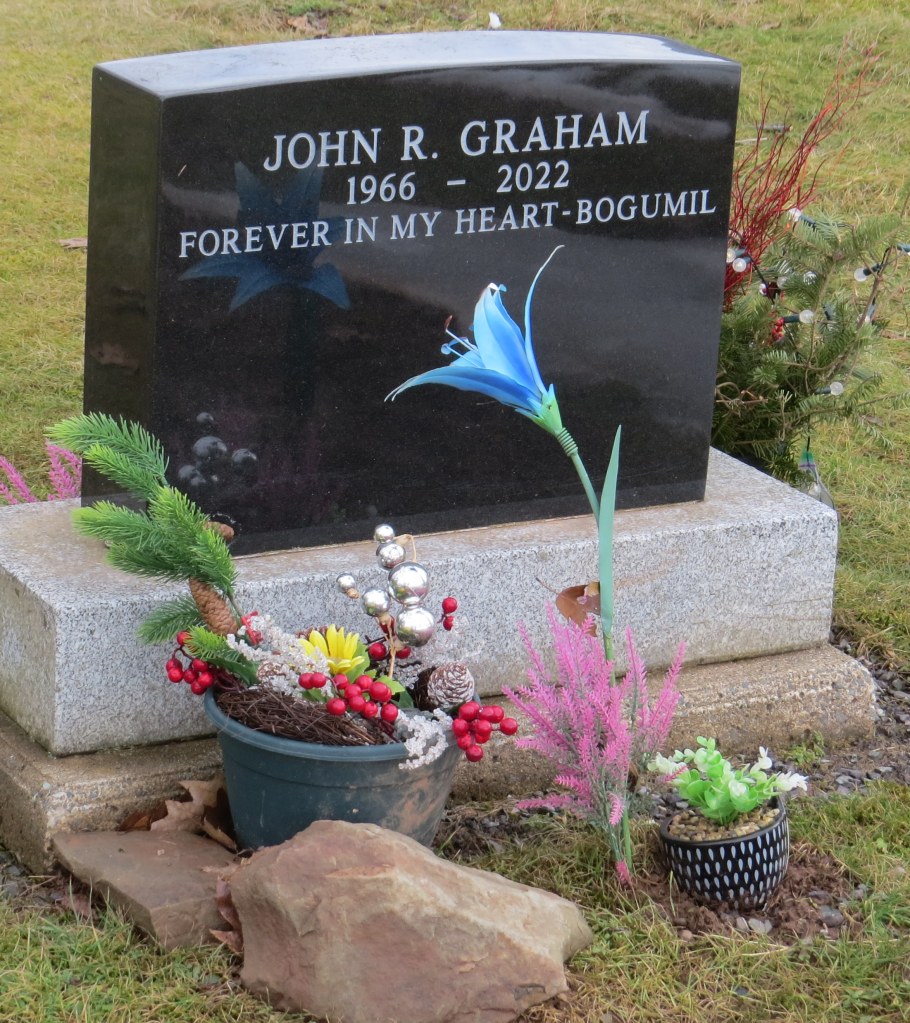
January in 2024. First time this year I have come to see your ‘home in Pictou’s cemetery, at Stella Maris.

I know you are not there –it is just a place, just a stone with your name on it. Like the stone tablets of Sumerians, and Acadians, like the stone tablet given to Moses a few thousand years later. These letters, and symbols left on them by the Old Ones are not alive anymore. No ancient gods lay claim to them, not from Ur, not from Babylon, not from Sinai. What’s left in these letters are hidden stories of love, of passion.

Under these letters, under your stone is a small container with some ashes. Gray powder in a box, nothing else. But I can’t stop coming here where I can submerge myself in my despair, wallow in my grief. Here it doesn’t bother anyone. The dead ones are dead. Silent. Sometimes a black bird looks at me from a tree branch and says something in its characteristic low and screechy voice.

It sounds like a song of the Underworld. A poem of decayed generations. Only the bird, the guardian of the cemetery knows that ancient language.

There are no other visitors here, especially this time of the year. Unless it is a funeral. Another wooden box full of bones, or smaller one with ashes, goes to the ground.

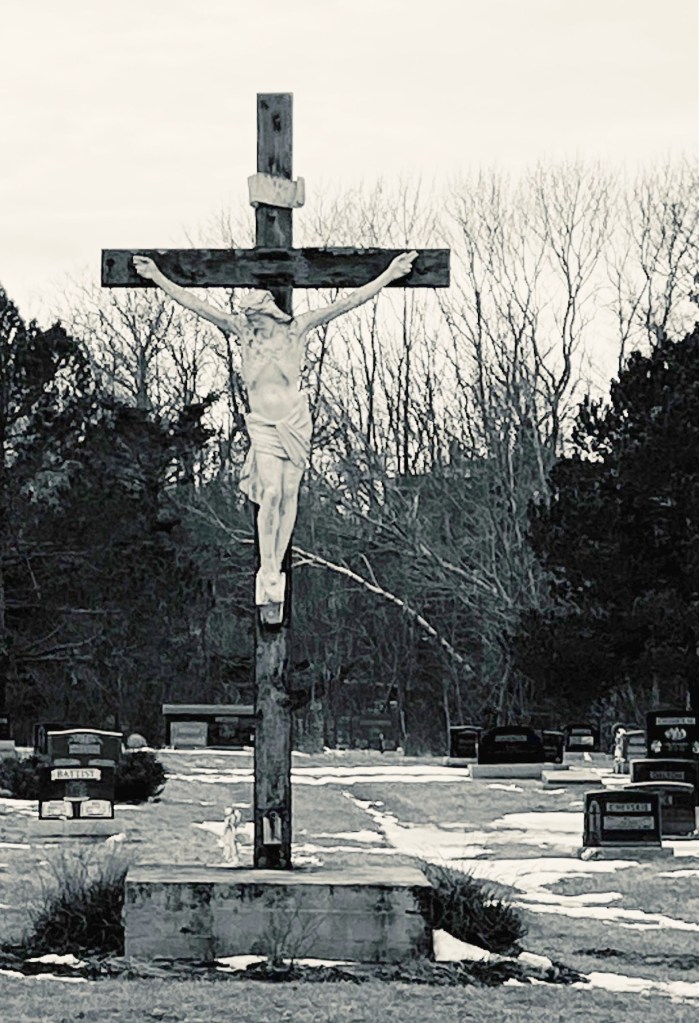
Old wooden cross with a white figure of Jesus of Joseph and Mary, who attested to prophesies of Isaiah of Kingdom coming. That cross, darkened by weather and age is strong. He does not attest to anything anymore. He is profoundly sad. Painfully sad. Sorrow emanates from his eyes and from that terrible tool of his death. Still asking: Why? Why did you lead me to this terrible, painful death, o father? What did I do to deserve such cruel punishment? Why did you forsake me, condemn me to this brutal death?

I want to talk to him, help him to quell his anguish. He was still a very young man, and did not understand. I want to tell him – don’t cry anymore. To tell him if he truly found love in Mary Magdalen or any other lovers he pursued, if he was loved and loved – it never died. Not on that cross, nor in this cemetery. That his father, his false friend Judas – they could not stop that Love, they could not erase it. It soared like an eagle, like an Angel through the Cosmos. That love, young man – if you truly were loved and loved – sang songs of Love. Eternal.

The wintery Sun came over the desolate, little cemetery. It flickered in the mud holes of the walkways, it caressed and made bright little plastic flowery arrangements on some gravestones.  Looked at your grave with my inscription: forever in my heart and smiled, too. That’s just for some passerby, maybe long after any memory of both of us would linger in anyone’s life. So he or she would have known that you were loved. And would recognize that love does conquer death. Nothing else. But She does.

Of course, you are not there, under the stone. You are in my heart, with me. All the time, everywhere. Just on that cemetery, on any cemetery, there is a special stillness of air that allows you to have these talks, these thoughts. That’s why I keep coming here. When I was very young I used to visit some special coffee shops in Warsaw, where I would write my poems on white, square, and very small paper tissues.  Now, when I am much older, I like to come to this cemetery or visit my special wild beaches I have conquered in your name and have these talks with you, and still write poems. I like it.

Before I left, went and looked at that man outstretched on this horrible cross.  I thought he wasn’t as sad as before. I hope. I hope that he got it, he understood it. That death is just that – all matter decays and dies with time. But love survives, and overcomes.  The Kingdom came through love.

Pictou