Couldn’t get to my planned walk in Shannon’s Park in Dartmouth – a big padlock on the gate with an info “no winter maintenance’. Winter maintenance? Someone at the City Hall sleeps longer than the bears, obviously. I saw far away a gay walking with a dog and a beautiful deer hopping happily. Look around and noticed some of the fences were not too high. But there were other cars parked nearby and didn’t want to give them a bad impression – which obviously is a sign that I am getting old, LOL.
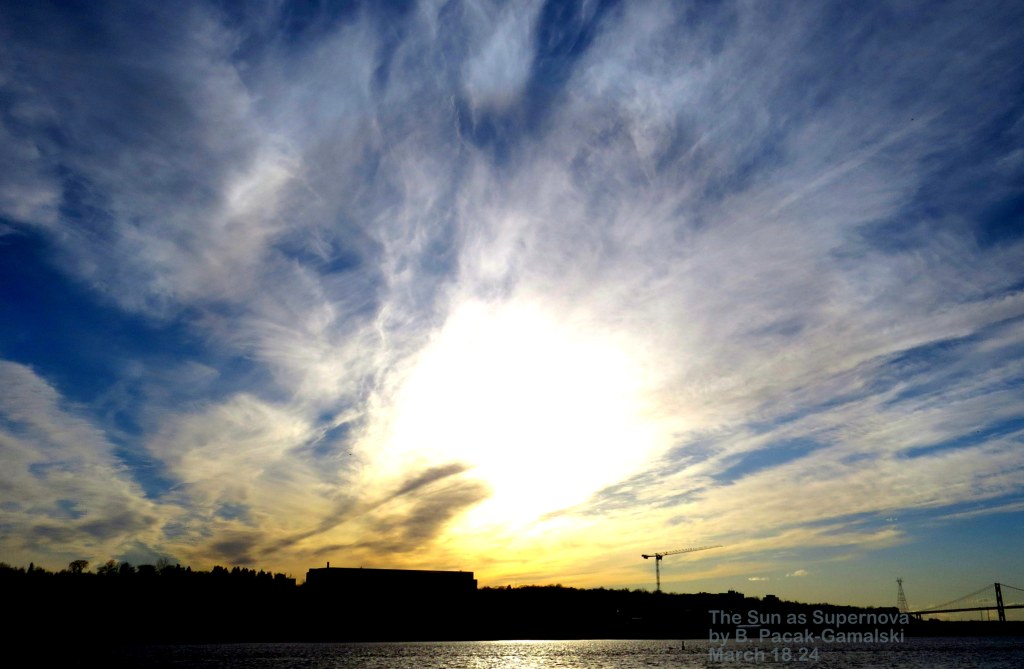
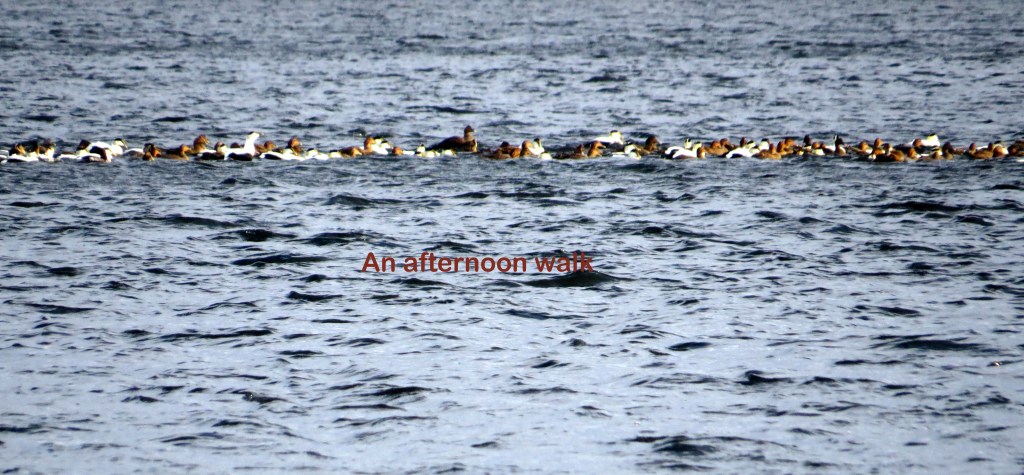
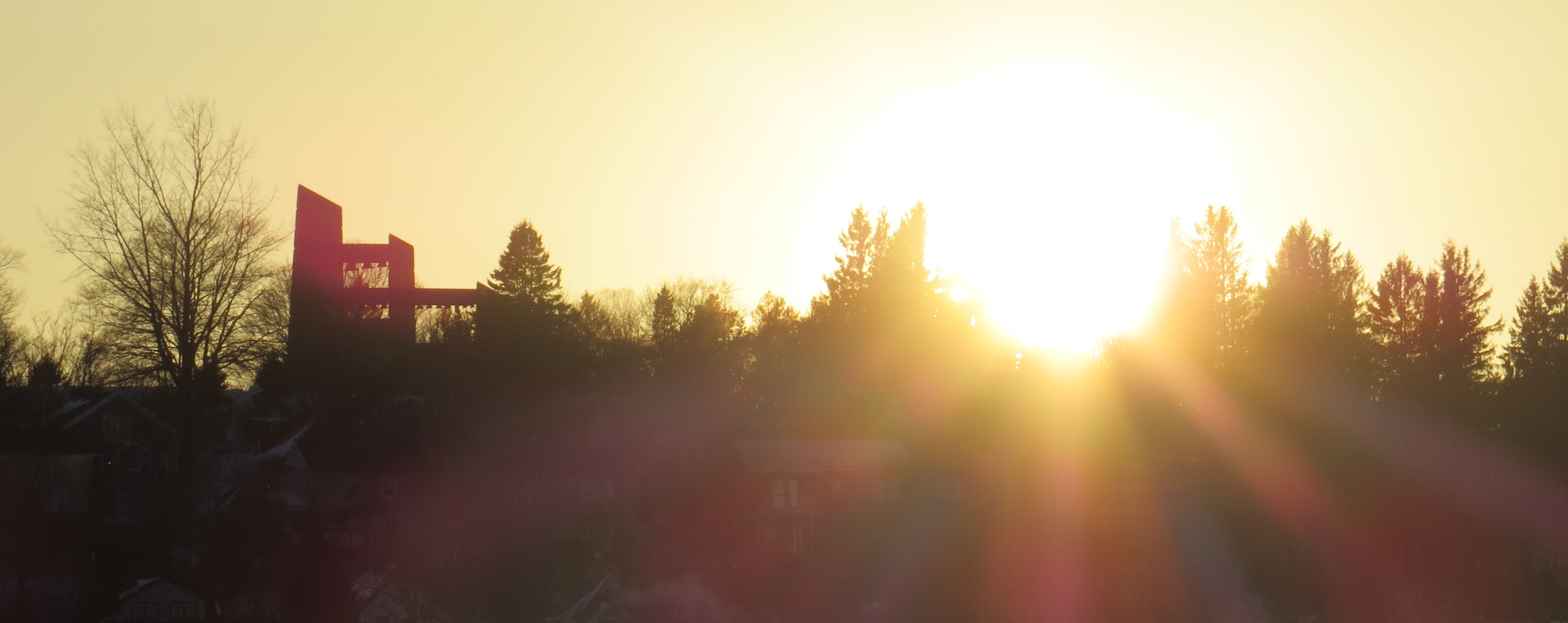
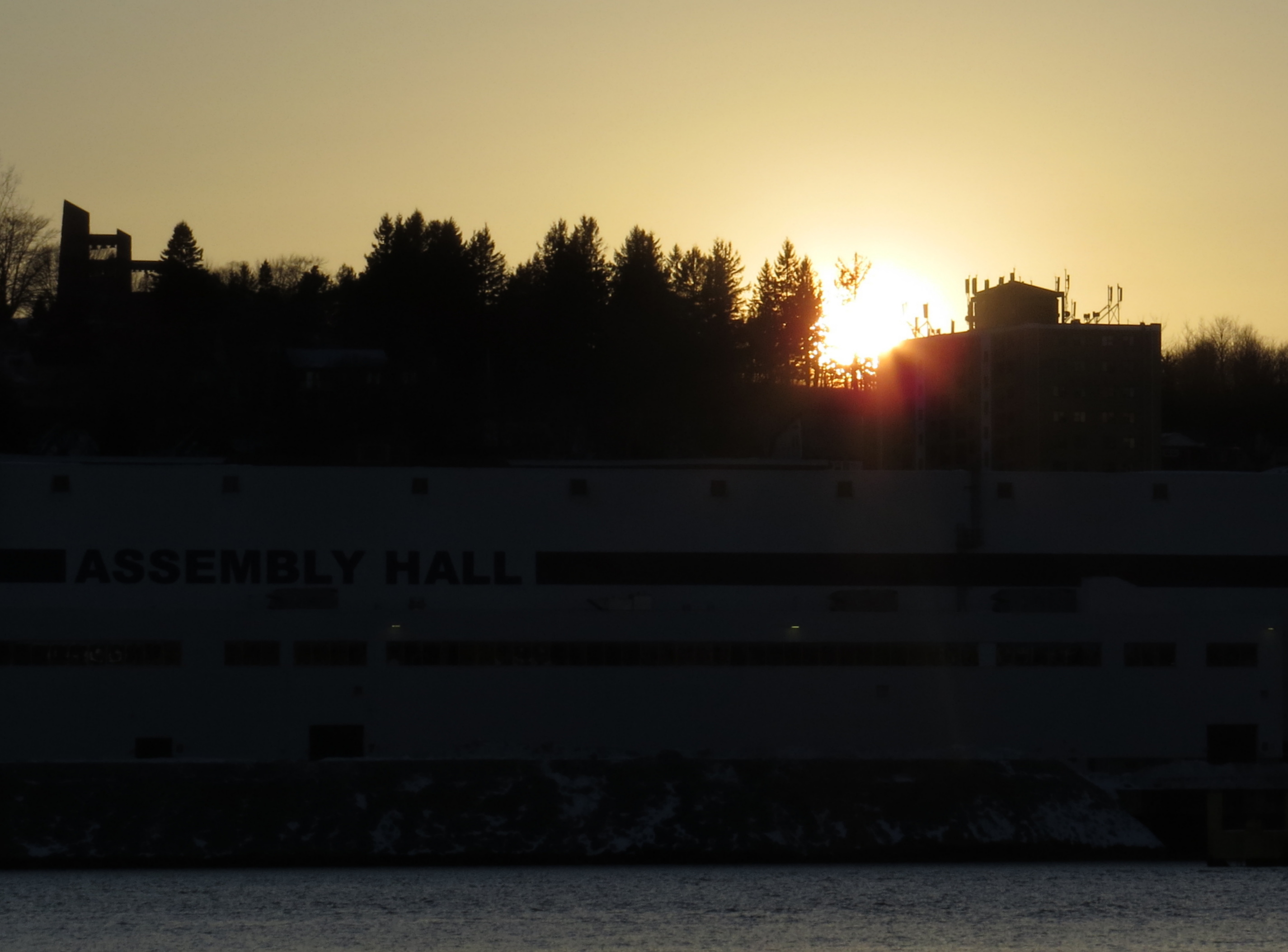
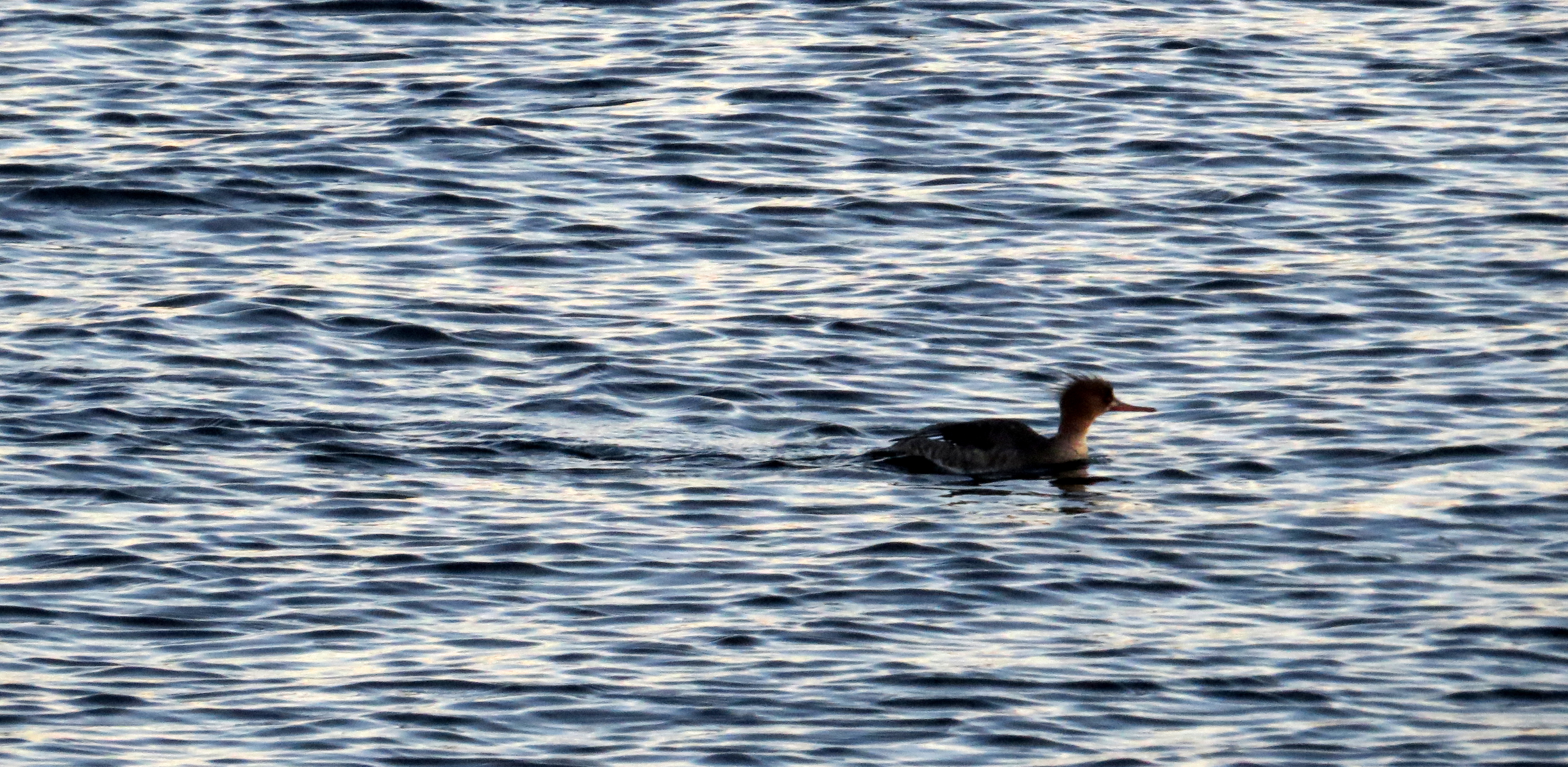
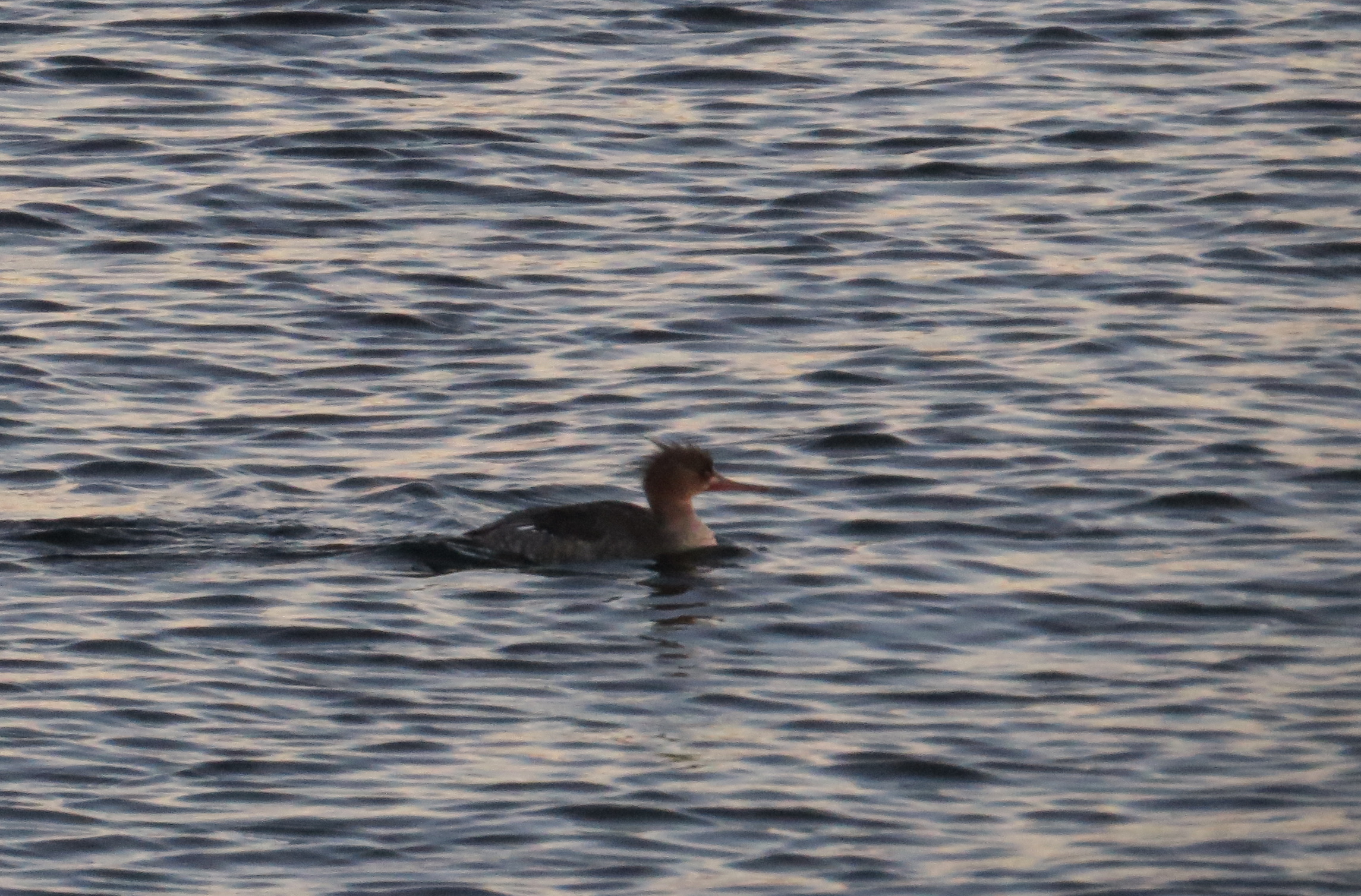
Walked around a bit and went back home. By early evening, just about as the sun started to get ready to slowly go to bed – I went on My Rocks. Thanks god no administration ever does any maintenance there – summertime or wintertime. It wasn’t a spectacular sunset. But it was very pleasant, soft. Observed a lot of waterfowl. Only once the sun get bored with his own nightshow and gave a spectacular solo. What a primadonna! LOL
What do you do, when you can’t sleep? You go outside for a walk, in the snow and wind. At ten, then at midnight, then get a short snooze and go again at 4. It is not dark anyway, for the snow makes it all one milky, eerie light. Take another snooze and — it is morning the next day, LOL. Somehow you have a strong pain in your right temples and pain in your right ear. Stroke? You speak loudly and the words appear to be coherent and proper, go to the mirror and your eyelid and mouth don’t seem to be drooping, LOL. Then it must be just an ear infection. Dosn’t matter. What is the best for a cold? A cold excursion to the countryside! Camera in hand, a quick coffee, and off we go. Was able to catch even the Moon in full sunshine!
In the late XVIII century, following the French Jean-Jacques Rousseau’s turn to feelings and emotions – the Germans introduced us to Sturm und Drang. Of course, only the Germans and German language can come up with such a militaristic-sounding term for literature and paintings reflecting deep emotions, love, romance, and tragedy, LOL. That is exactly how I felt on the North Atlantic shore for the past few days – a non-ending storm with heavy snow and a constantly overcast sky. Not even a wink from the Sun. Nada, zilch.
Skutkiem francuskiej – naturalnie – perwersji uczuciowości Rousseau, Niemcy obdarzyły nas czasami Burzy i Naporu (Sturm und Drang) Romantyzmu. Tylko język niemiecki i niemiecka mentalność tak potrafi nazwać okres rodzenia się sztuki poświęconej miłości, romansowi, legendzie i tragedii, LOL. Napór i sztorm brzmi bardziej jak rozkaz niż, jak wyznanie. Jakże biedny Werter nie mógł nie cierpieć, jeśli takimi rozkazami wyznawał swą miłość dla Lotty?!
Tak się właśnie czułem ostatnie kilka dni na brzegach Północnego Atlantyku w czasie niekończących się wichur i śnieżnych nawałnic. Ni źbła choćby słoneczka na moment. Zero.
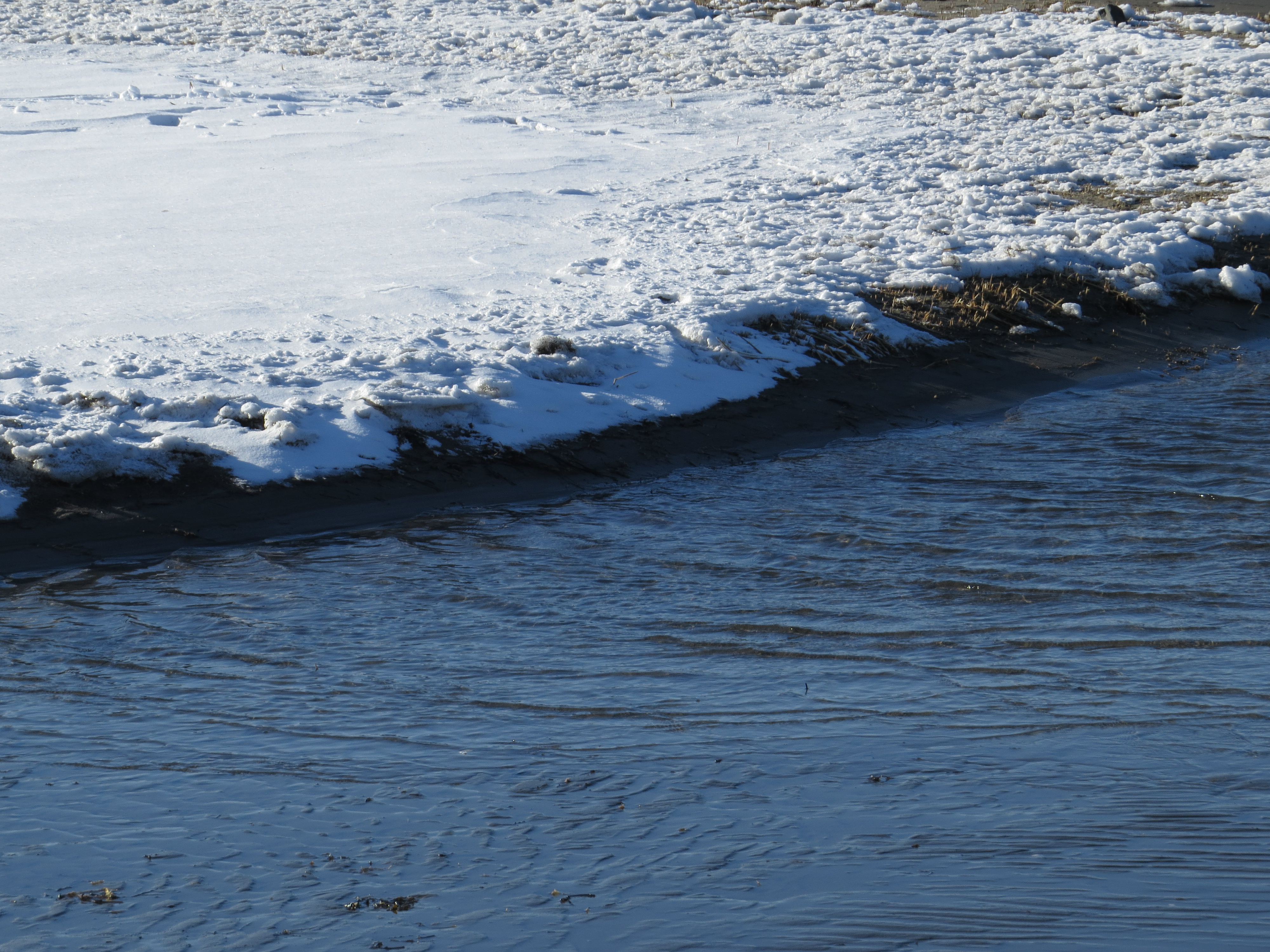
Więc gdy dzień pięknym, różowym wschodem dziś się ukazał, a karminem zachodził z wieczora – z kamerą poleciałem go gonić po Moich Kamieniach. Naturalnie, że przesadzam. Nie goniłem a potykałem się w zaspach powyżej kolan, wspomagając się swoim kosturkiem. A ten śnieg bieluśki, ta woda i stalowa, i srebrna, i różowa do zdjęć, jakby pozowały.
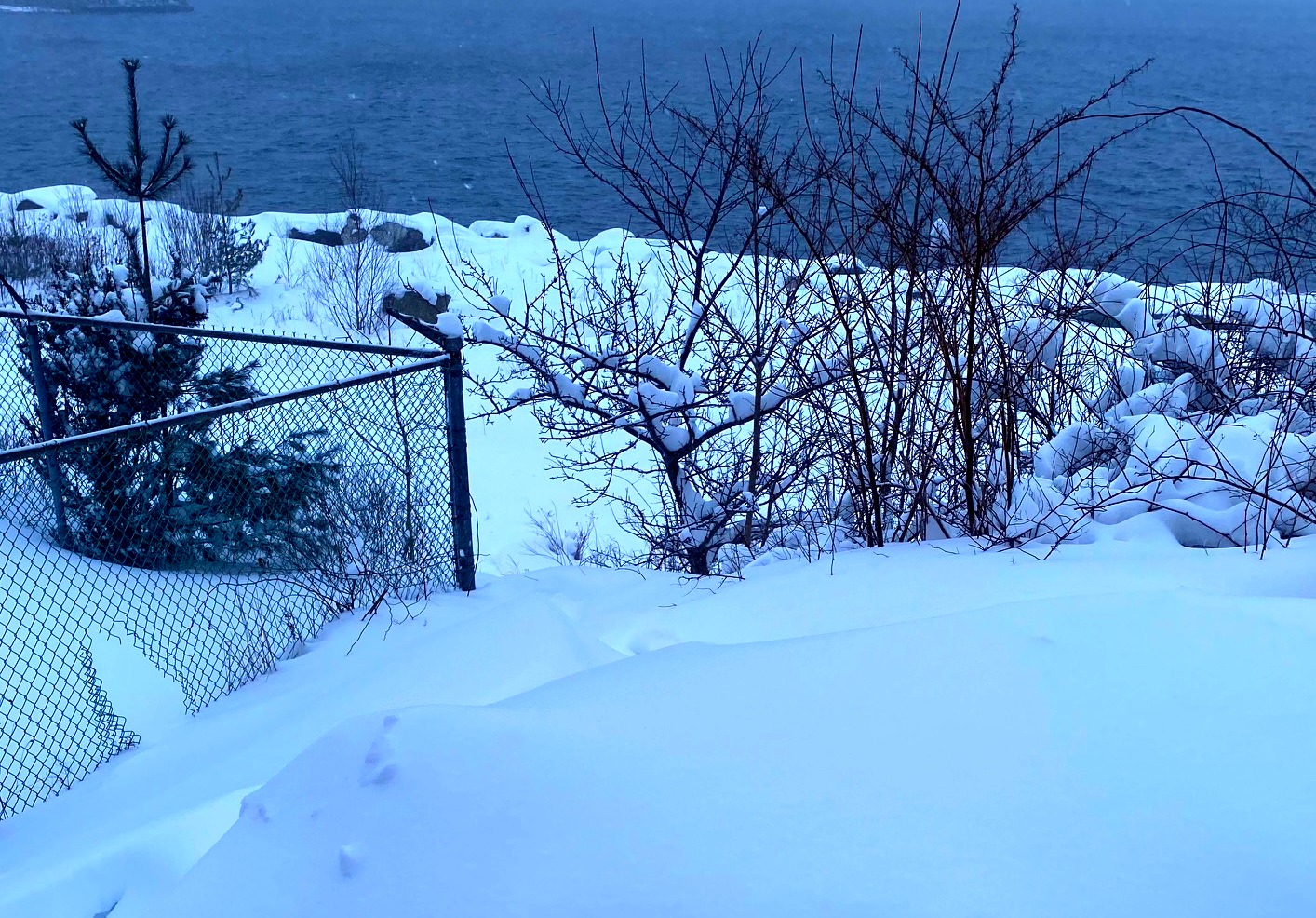
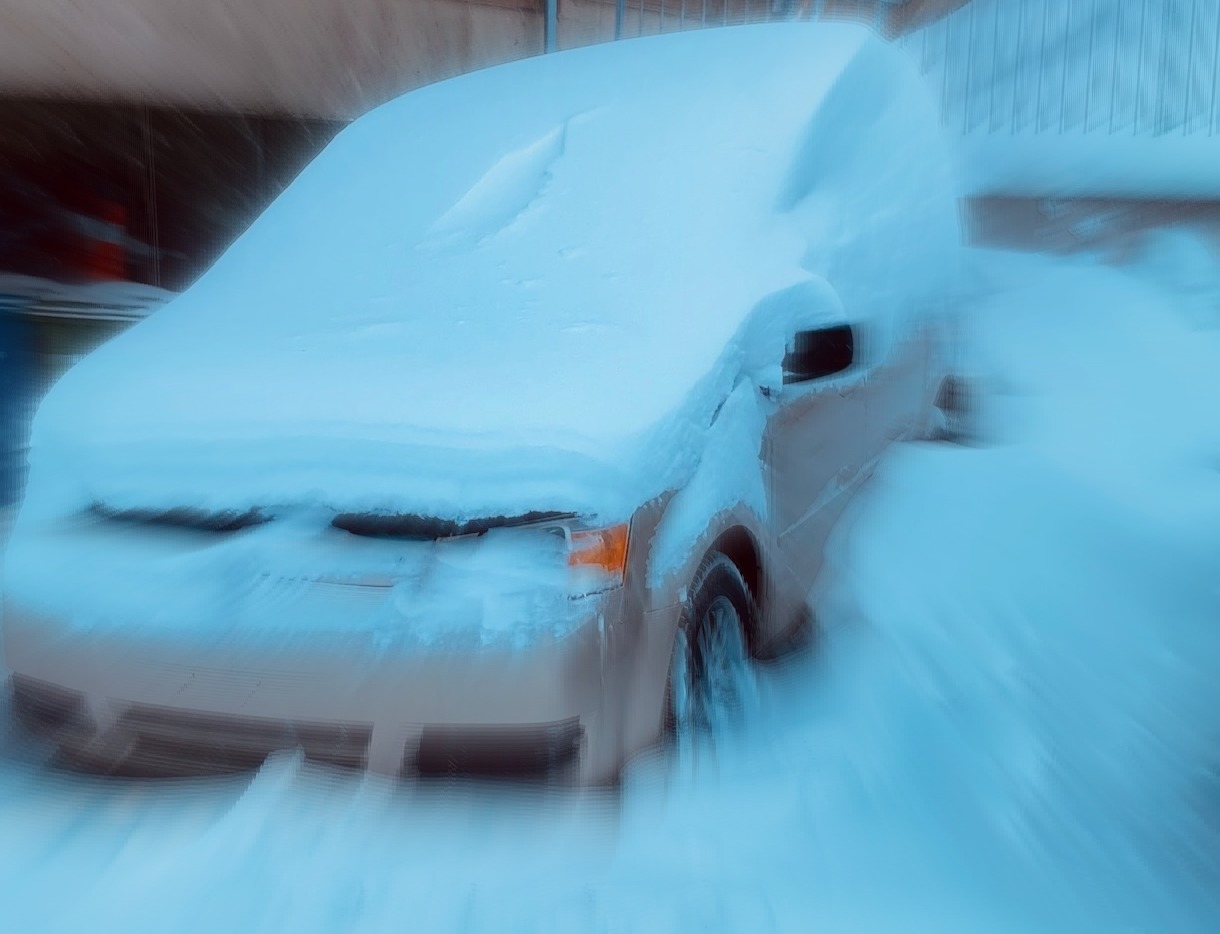
Yesterday was a lovely day. Snow abounds, beautiful, soft, and dry. Everything looked like Christmas. I dug out my carriage, drove to a few stores, and decided that the next day I would take my camera and go for some nice wintery shots on the coast or perhaps in Halifax. My carriage is a very strong vehicle and not afraid of winters.
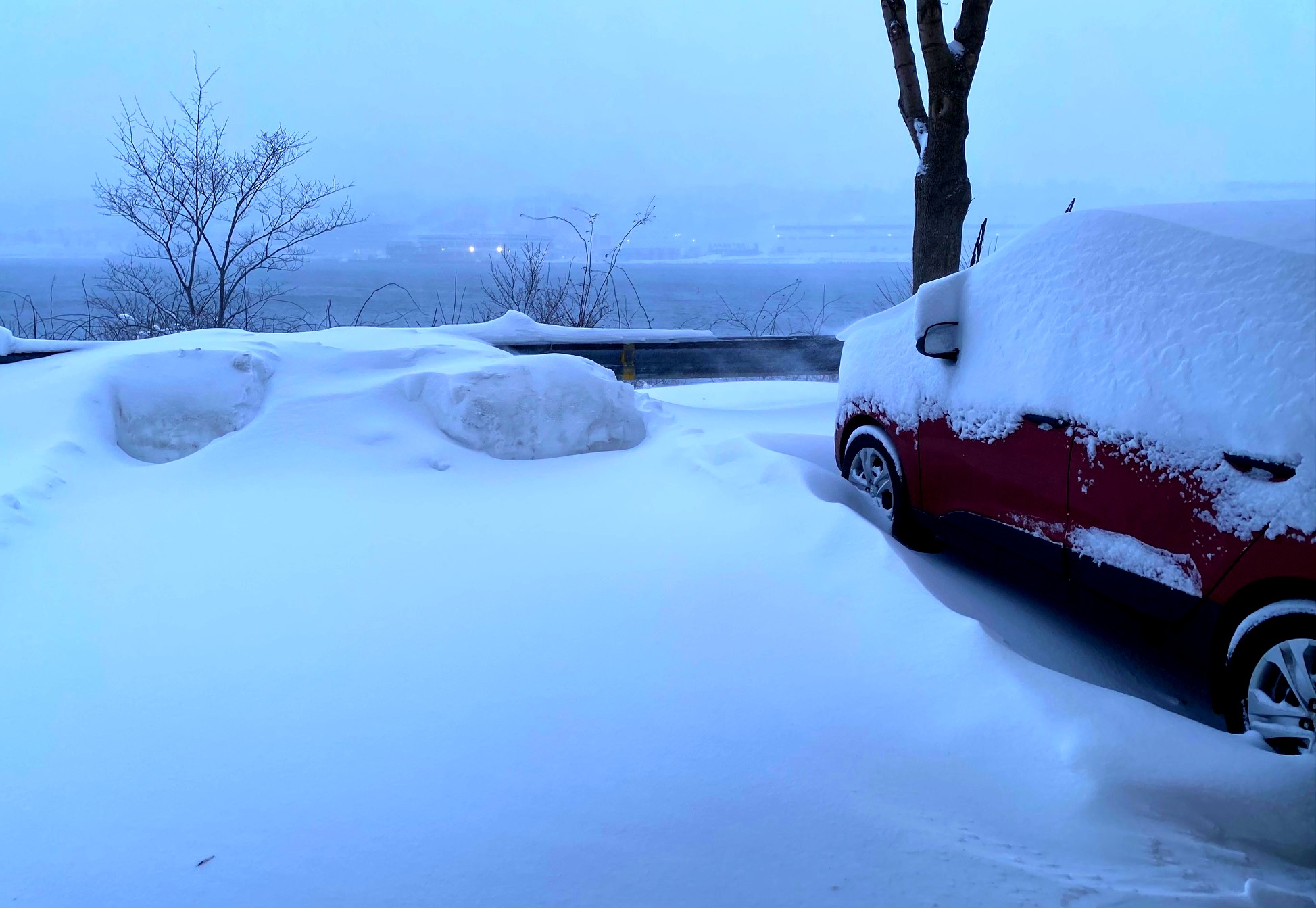
It continued to snow the entire day, then the full night, and again the rest of the day. But the temperature went up a bit, the wind became very strong and the snow changed to very nasty tiny little granules like sand. Still drove to do short shopping but the camera would not be very good in such conditions. It would get wet in a second, walking would not be nice either. Visibility was very bad, too.
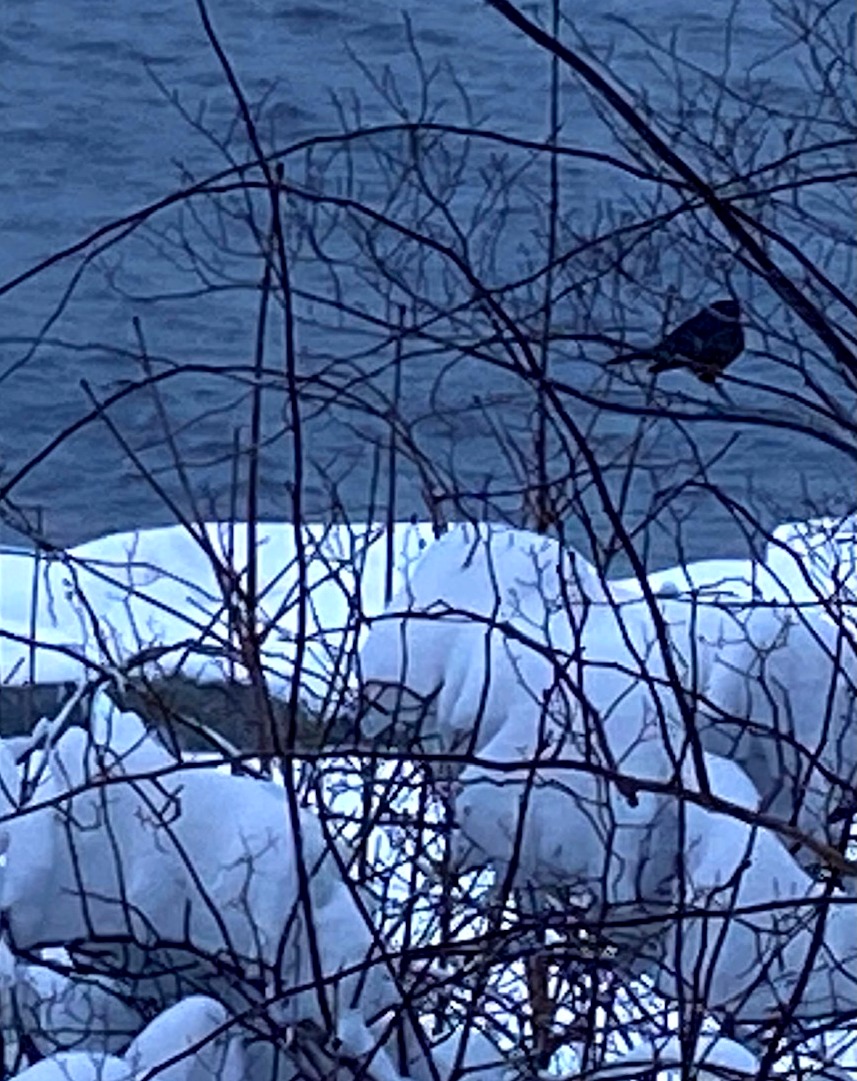
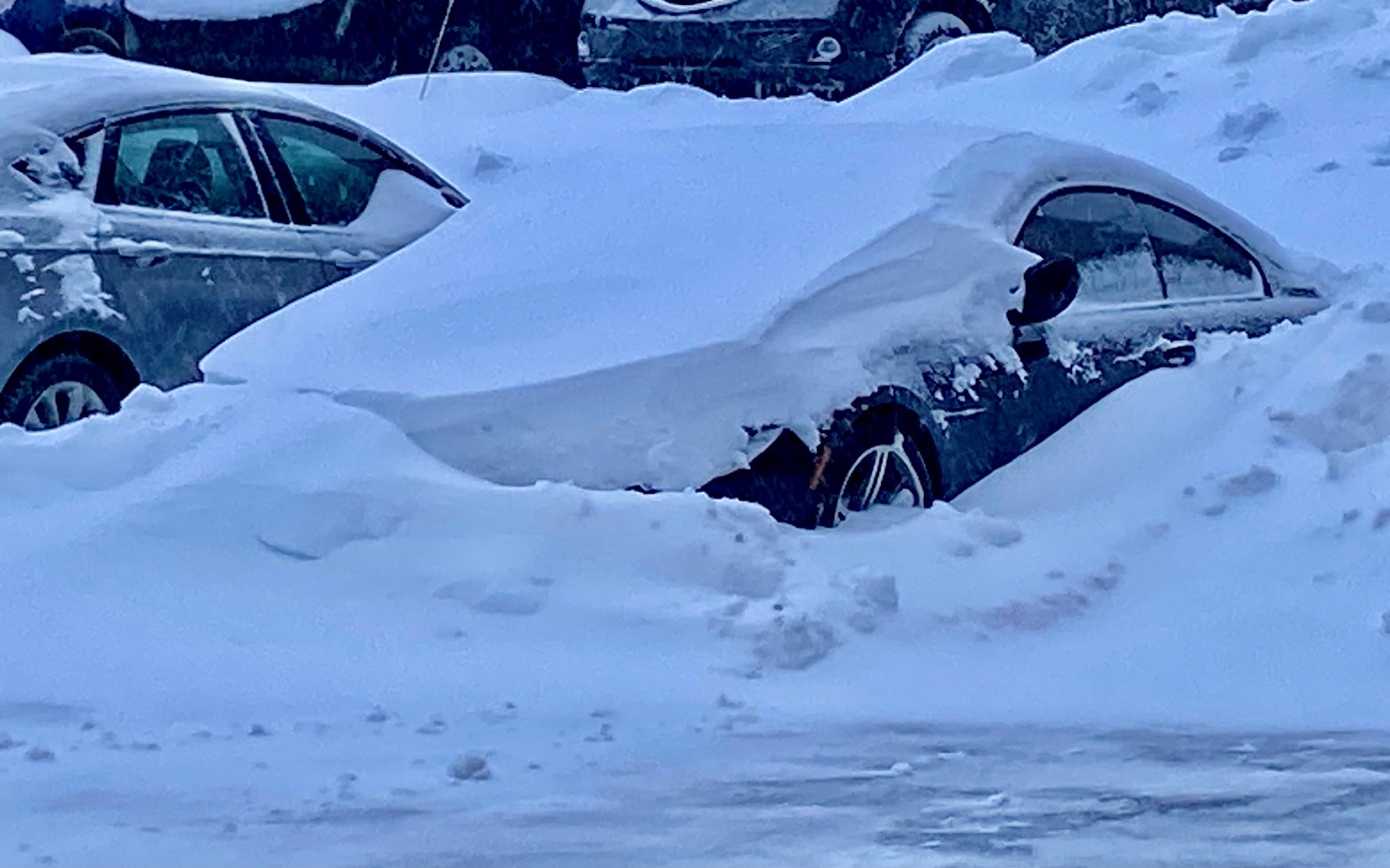
Shouldn’t complain too much, though. The Eastern and North shores were hit really badly. I think they had to proclaim a state of Emergency in Cape Breton, many roads were closed and the Government was advising everybody not to travel. But I still wanted to take some pictures, just with my I-phone and around my my home, parking lot (LOL), and of course, My Rocks.
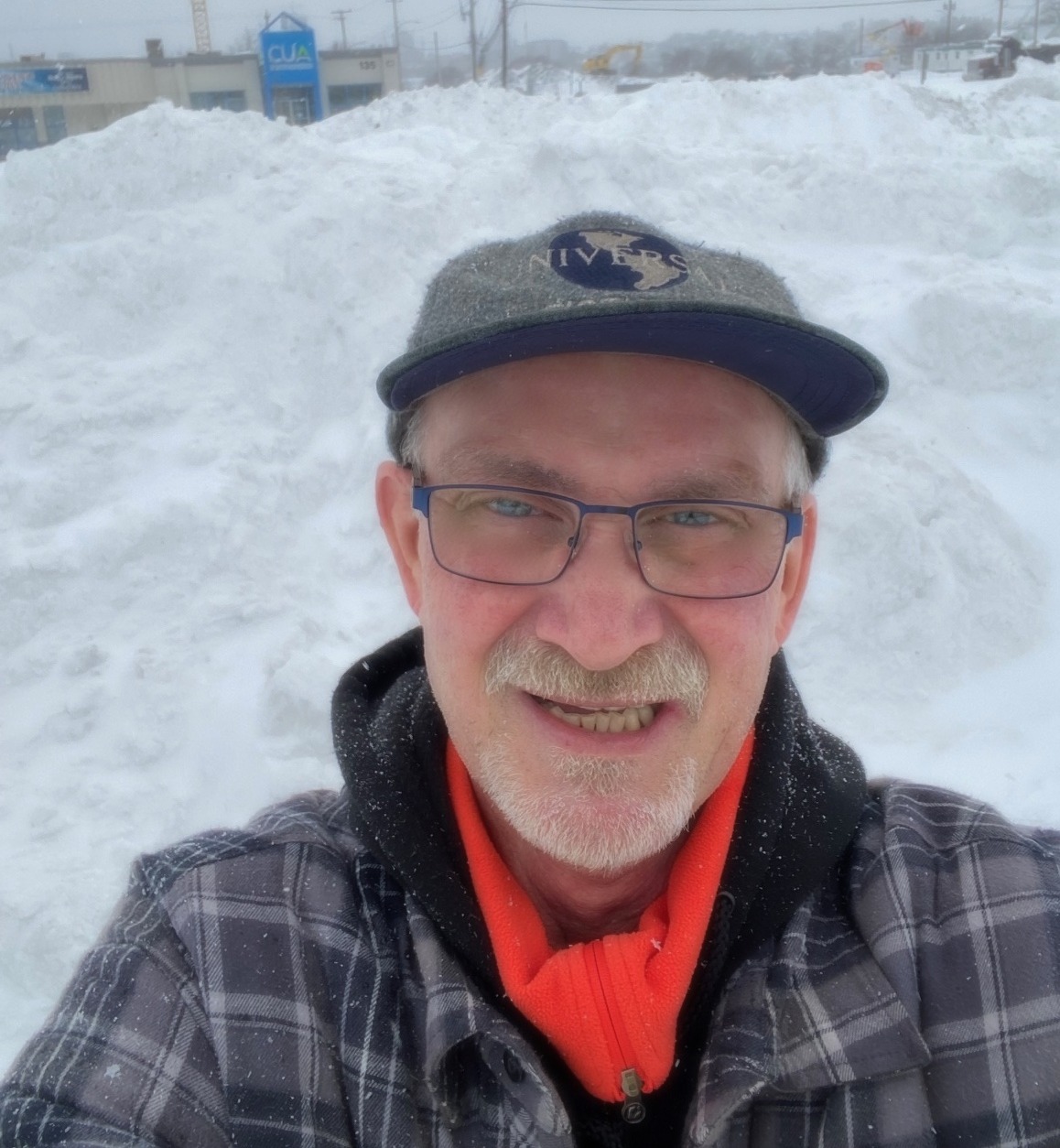
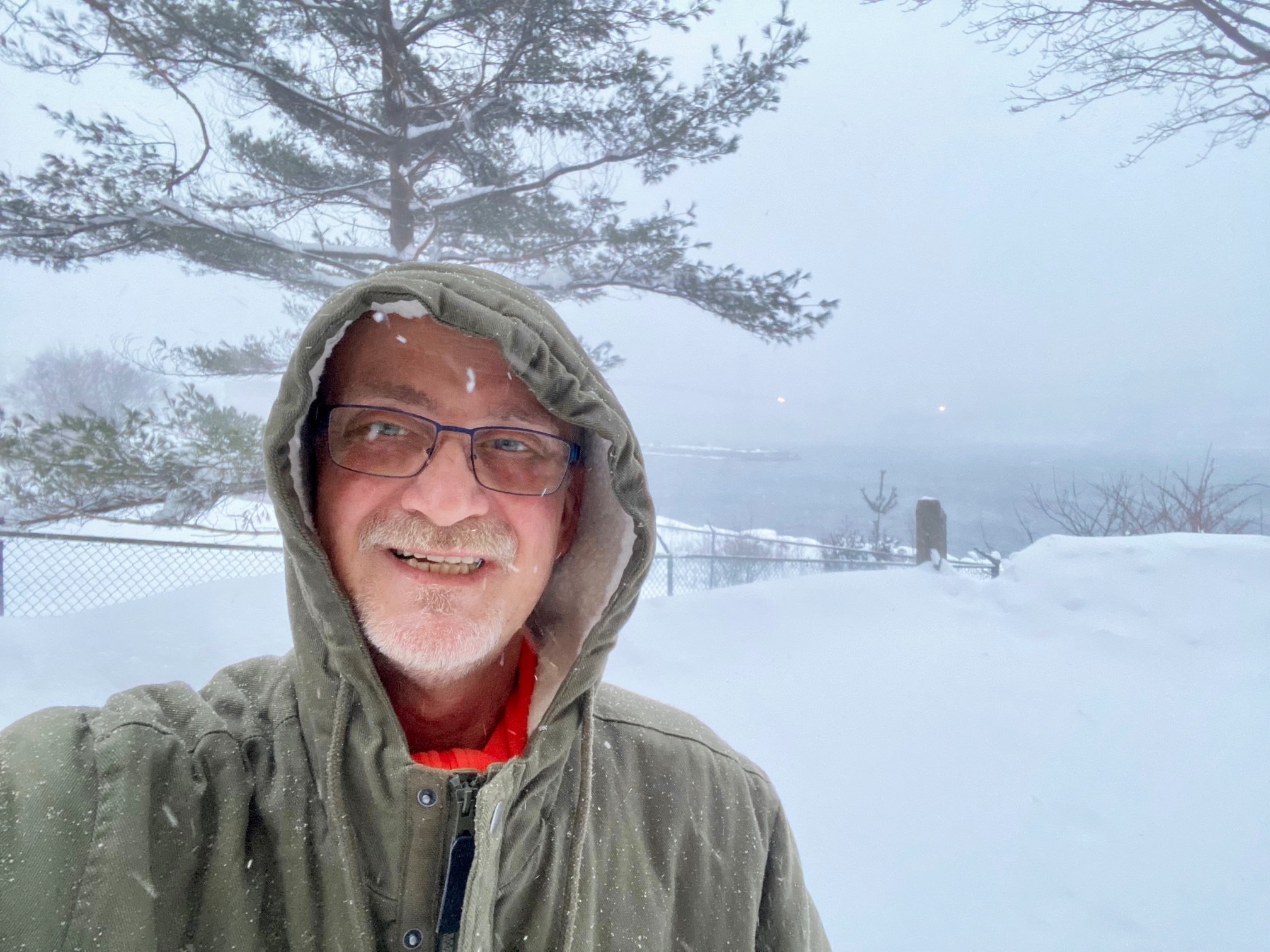
Had to dig out my truck again, just in case I would need it, and simply didn’t want to have it covered by the white craziness totally. So here it is – the mundane, silly photo chronicle from the parking lot and the vicinities. By the way – it still snows now and should not stop tomorrow, either. If you won’t hear from me in the next few days it means that my igloo lost internet connection. So yes, to no one surprise in Nova Scotia – it does snow in Nova Scotia. As it rains in BC.
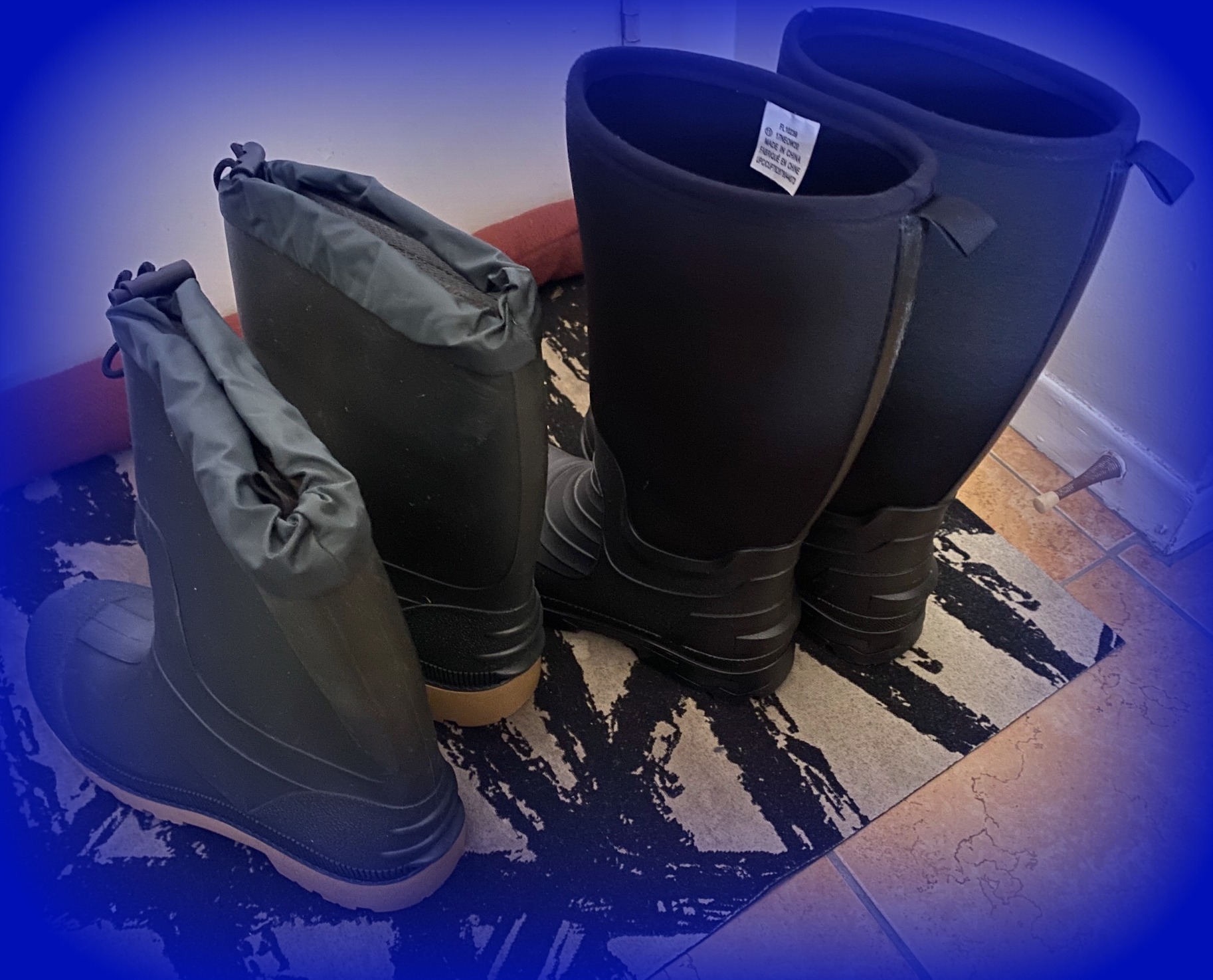
Of course – you need to have proper Sunday Church elegant shoes. As you noticed on one of my pictures I do have proper church shoes. One for Nova Scotia and one for British Columbia.
Few words of personal explanation. Of my wonderful life with my beautiful husband, lover and partner, John. Life that tragically ended with John passing a year ago. Yet life worth every moment, every second. Music, music – it has been such an important part of our life. Through music – in all forms, shapes, and styles – we understood each other deeper, fully. Like the name given by German composer Felix Mendelssohn (1809-1847) to his ‘Songs without words’. Love truly does not need words. As in any true process of creation, words – if used – are only a mere ornament, part of the mechanical structure. True creation begins and ends in a sphere of senses: sound, smell, touch, feeling. Everything else is just a noise.
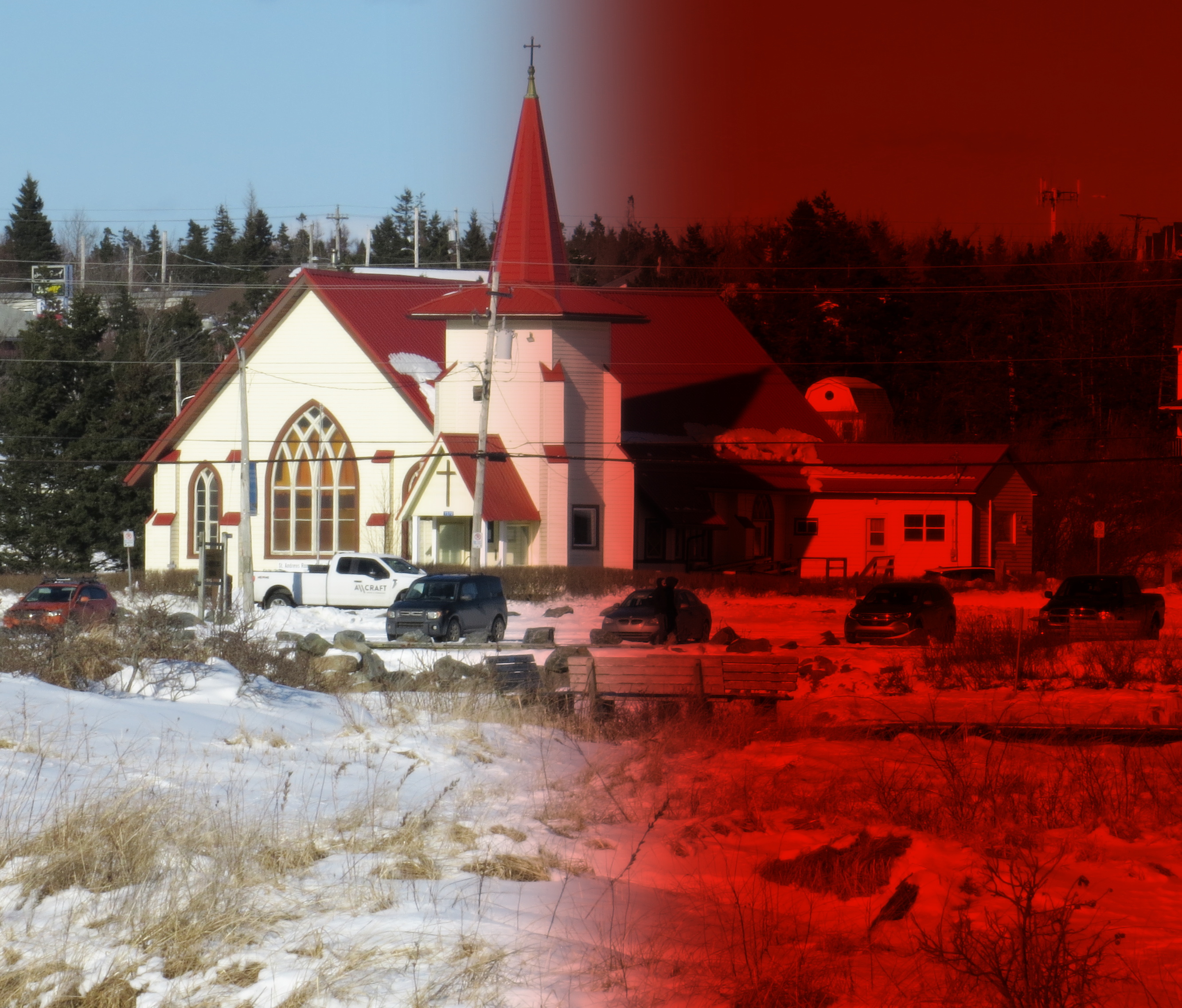
Therefore, when I walked that wintery evening from Henry Street to Coburg Street and to St. Andrew Church for my normal rendezvous avec la musique – he walked there with me.
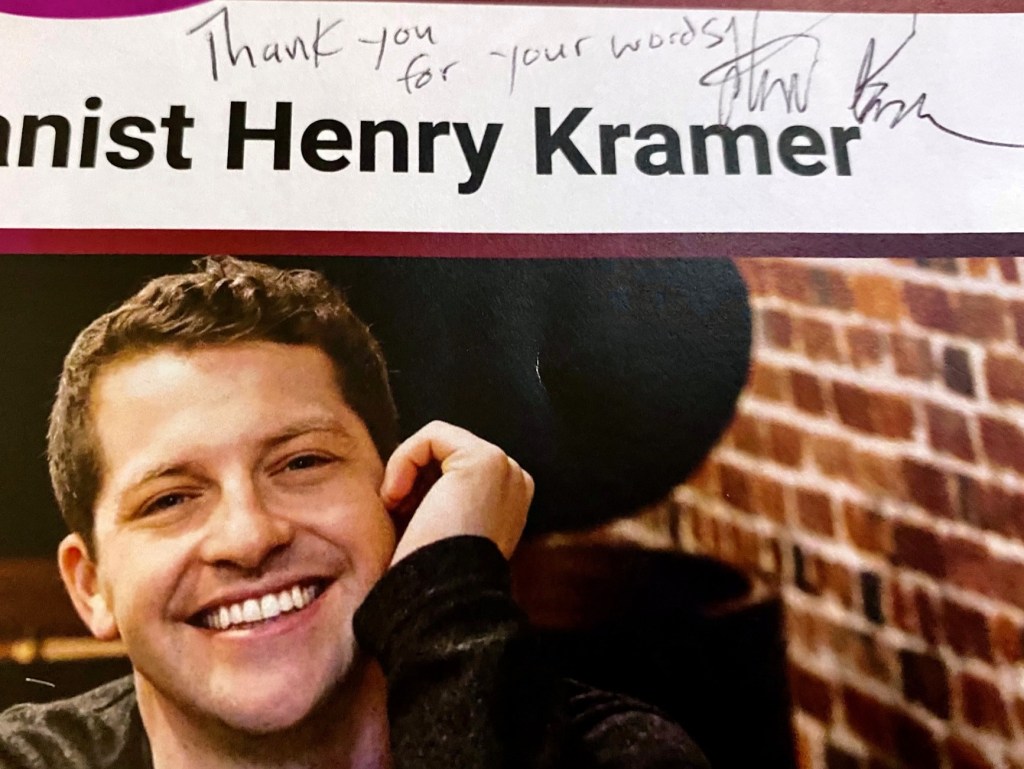
What a wonderful rendezvous it was! It was an immense pleasure to listen to the music played by the most gifted pianist, Henry Kramer. Kramer is an American musician recently being offered a teaching position in the Faculty of Music at Université de Montréal, and because of the proximity, he was able to come to Halifax and give us a taste of talent. What a treat, indeed.
One award (among many others) I have to mention is the American National Chopin Piano Competition in Miami, where he claimed the 6th spot in 2010 (the First Place automatically awards the winner a spot in the top piano competitions of the world – the Warsaw International Chopin Competition). But there was a connection to that famous Warsaw Competition: among his jurors was the former 3rd place winner of the said International Warsaw Competition, Piotr Paleczny. I was lucky enough to hear Paleczny playing many years ago during that Competition in Warsaw and to know him personally. He was, as a young fellow at that time, a very sweet guy. And truly fantastic piano player.
Henry Kramer missed that Warsaw Competition ticket – but he did not miss the 2016 prestigious and top-ranking Queen Elisabeth Competition in Brussels. And he got the Second Prize – that is a ticket to just about all concert halls in the piano world.
I was not in Miami to hear him personally there, but remember his concert in Seattle. Remember him well enough to make a note of his playing: don’t forget his name because you will hear of him.
Back to Halifax. Have a chance years later to do that. To be at his concert. How can I describe the overall feeling, reaction? I will use a term I don’t remember using before in any of my musical reviews:
Henry Kramer is a pianist of a very elegant way of playing. That it is. Elegant way of playing. You could say: bravado, astonishing, lively, emotional, technically brilliant. But after listening to him intently, paying attention to how he treats not only the music but the entire piece that makes a player, his arms and body and keyboard, pedals, and the entire massive instrument a one-piece, one symbolic union – that is the term that came to me: grace and elegance.
And what a good term, when you play music submerged in a very specific time of European chamber music of early romantics. Time of Shuberts, Mendelssonhs, and to a lesser degree even Liszts (Liszt belongs more to the next epoch – Romanticism). A time when musicians produce an extraordinary amount of compositions (almost in manufacture-like tempo) to appear in a multitude of salons of political, and Church dignitaries, aristocrats and extra-rich townsfolks. Time of Early Romantics. These were not huge concerthalls, or musical theatres (there were some in big cities – but that was a rarity, not a rule). The salon for chamber music was small, and the guests were not as plentiful. If you play the same music more than a few times – the opinion arises that you are done, finished. You emptied yourself and can’t compose anything anymore. So they did compose. A lot. Franz Schubert composed 20 sonatas (not all of them in a finished form) and a number of larger pieces: 12 (13?) symphonies; circa 10 Masses; over …. 1000 (that is one thousand, no mistake) songs with at least one instrument and many more occasional pieces in different form. No, he was not eighty years old, when died. He was … thirty-one. Show me a contemporary composer, who composed half of that volume, I dare you.
Was he a great composer? No, by any means. But he was an important composer and very talented. Had he lived decades longer, had he achieved financial independence and powerful support from powerful patrons – chances are he would have had time and space to compose a few timeless and extraordinaire pieces of music. It was also a time when music was composed in a very strict and form-fitting format. Just as poetry in classic times. The next generation started slowly to dismantle that construct. And then came Gustav Mahler, followed by Schoenberg with his Second Viennese School and music was never the same again, LOL.
The old Saint Andrew Church in Halifax was a perfect setting for Schubert’s music and for the elegant style of Henry Kramer. The main nave offers wonderful acoustic and being of Anglican (in Canadian, United Church form) type is not too ornate and void of the weight and ballast of Catholic big churches.
From the moment Kramer appeared on the stage with a short introduction to the music – he won the audience with his pleasant way of greeting and talking. There was no ‘pomp and circumstance’ – just a warm and subdued tone.
From the first keystrokes, he was very attentive to musical detail, to the phrasing. Schubert’s Piano Sonata in A Major seemed to be written for him. The Allegro Moderato at the beginning was lovely. It’s a relatively robust tempo but the two melodies and two distinctive themes lead to a lovely passage. And his brilliant way of slowing ‘things down’ in Andante is just that: have time to ponder, exclaim, and reflect. At a certain moment, a listener not familiar with this work might think – that it is, finite. Perhaps little annoyed that it happened so soon, LOL. Kramer used the intervals splendidly, they were very pronounced as the composer intended.
But forget the intervals, forget the delicacies, the sublime. Here comes the Allegro. Better check your seatbelts! This is a pianist (a good pianist) paradise: time to awe and conquer the audience. And he did. The bravura almost and brilliant style shine here with dances, and passages. The keyboard is used in its entire length and the pianist must grow two or three more fingers, LOL. But it is truly a pleasure to listen to it. Even if you are not an enthusiast of early Romantics (just like me) – I still can come and listen to the entire sonata again – just to enjoy the finale! Bravissimo for the artist!
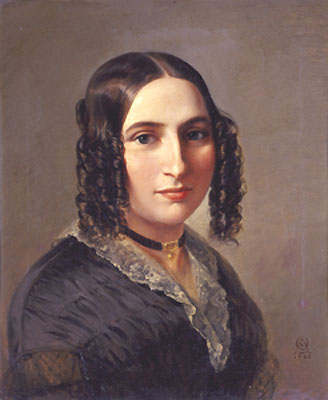
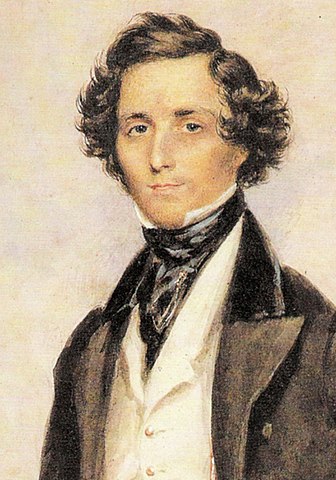
After Schubert music, Kramer opens to us the world of two siblings, contemporaries of Schubert: Fanny Mendelssohn – Hensel (1805-1847) and Felix Mendelssohn Bartholdy (1809 – 1847). Both siblings were very close to each other.
Fanny Mendelssohn
Felix was well well-known and very much accomplished composer in Berlin’s circle. His sister never (partly because of her father’s opposing views) accomplished such a fame during her lifetime but her compositions show a good measure of talent and ability. She was also very respected as a musician by her devoted brother, who often asked for her opinion and advice in his own works. As it happens from all their works the most famous ones often played even now are their songs. Or rather ‘songs without words’ (Lieder ohne Worte), as was the name Felix gave to his most famous composition. There is a story that at one-time friend of Felix offered him to write words for his ‘songs’. The composer is said to respond: “What the music I love expresses to me, is not thought too indefinite to put into words, but on the contrary, too definite.” What a lovely and indeed precise response!
Felix Mendelssohn
The pianist played Fanny’s 4 Lieder for Piano, Op. 8(no.2 Andante con espressione and No.3 Larghetto), and Felix’s Songs Without Words Op. 19 in E Major and Op. 67 in F-sharp minor. It was a pure musical pleasure. His elegant way of playing was at its best. The depth of emotions coming from the sound he was producing was truly touching. I remembered years ago when I listened to the incomparable Jan Lisiecki playing the extremely difficult and technically challenging piece of Ravel’s Gaspard de la nuit and I thought: how this very sweet and happy young man (I have known Jan Lisiecki since he was fifteen years old very sweet boy when I did my first interview with him) can evoke the atmosphere of pure horror and terror so plainly, so vividly? Talked after his play with him about my question. And his answer was as plain as it could be: it is not enough just to play – you have to feel it inside you, you have to take that symbolic journey to that place, that moment and then transfer it to the tips of your fingers. Just playing every note, in exact tempo is not always enough. And I understood that instance what he meant. Of course. It is so plain. The feeling, the emotion. Listen to famous, dramatic singers of opera! The words are almost comical often. If you just sing them – you could almost laugh, like a satire, not a tragedy. It is the emotion, the timbre of the note you play, and the spirit of the sound you produce that signifies emotions. This is exactly what Kramer achieved when he played the Songs Without Words. And I repeat: with that musical elegance.
But even the best of us must give up sometimes the comforts of elegance. When you deal with Franz Liszt’s Piano Sonata in B minor, S. 178 you really have no choice. When the Paganini of grand piano composes music that should rival Paganini’s Caprices – elegance and etiquette go away. I often compare him to Tina Turner and her singing career. Was it elegant? Heaven’s forbid, no! Was it great? Of course, it was a wonderful madness! Would Henry Kramer, that elegant musician be able to play such music, to forgo his comfort zone?
Oh, yes. He did it to my delight. That was not a summery evening stroll through the meadow. It was a full gallop! Not even of one horse – it was a herd of wild horses. What a choice for the finale and what a stamina to do it after already playing so many pieces.
Liszt’s sonata is one of his late compositions when he composed mostly for pleasure and not to gain popularity or earn money. It is in a way also a break with the established way musical forms were composed. Sonata, as a sonnet in poetry, has very strict rules. Three, sometimes four pieces. You state your musical subject in the first part, elaborate more freely on it in the middle, and finish with a recapitulation of the first statement. But Liszt decided to do away with two distinct pieces and used just one. Try writing sonnets in the form of elegies. In a way, he liberated composers from the strict and tight corset of existing musical architecture. Today everyone understands it. We have gone through modernity and postmodernity. But at that time … it received scorn from all the greatest composers. Clara Schuman (Liszt dedicated it to Robert Schuman) said it was ‘merely a blind noise’; Johannes Brahms apparently fell asleep while Liszt performed it; similar scorn was shown by Anton Rubinstein. The only exception was Richard Wagner. Yet, by the early XX century that ‘blind noise’ was recognized as the pinnacle of Liszt compositions. Times are changing.
I can’t tell how many times I heard that amazing, powerful compositions being played by many wonderful pianists. In a way, my favorite was the recording of it by Kristian Zimerman, one of the outstanding pianists of my generation in the entire world.
But the way Kramer played it was more than satisfied. I listened with full abandonment and total ecstasy of my sensory powers. No surprise that after that accomplishment the audience would not let him leave the stage. The standing ovation had no end. And fully earned. To no surprise, he had no choice but to thank the audience with two extra encores.
We finished with a nice chat and my congratulations for very well-presented program and excellent play. But I started the conversation by thanking him for transferring me that evening from Saint Andrew Church in Halifax to Carnegie Hall or to Vienna Philharmonics.
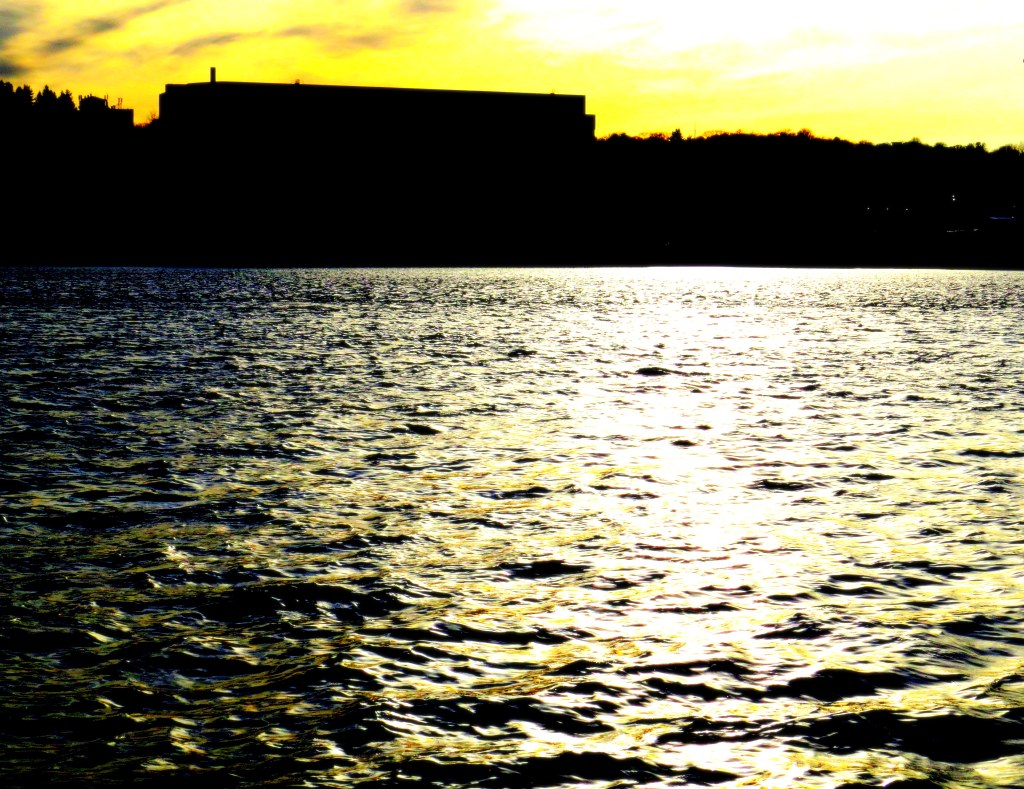
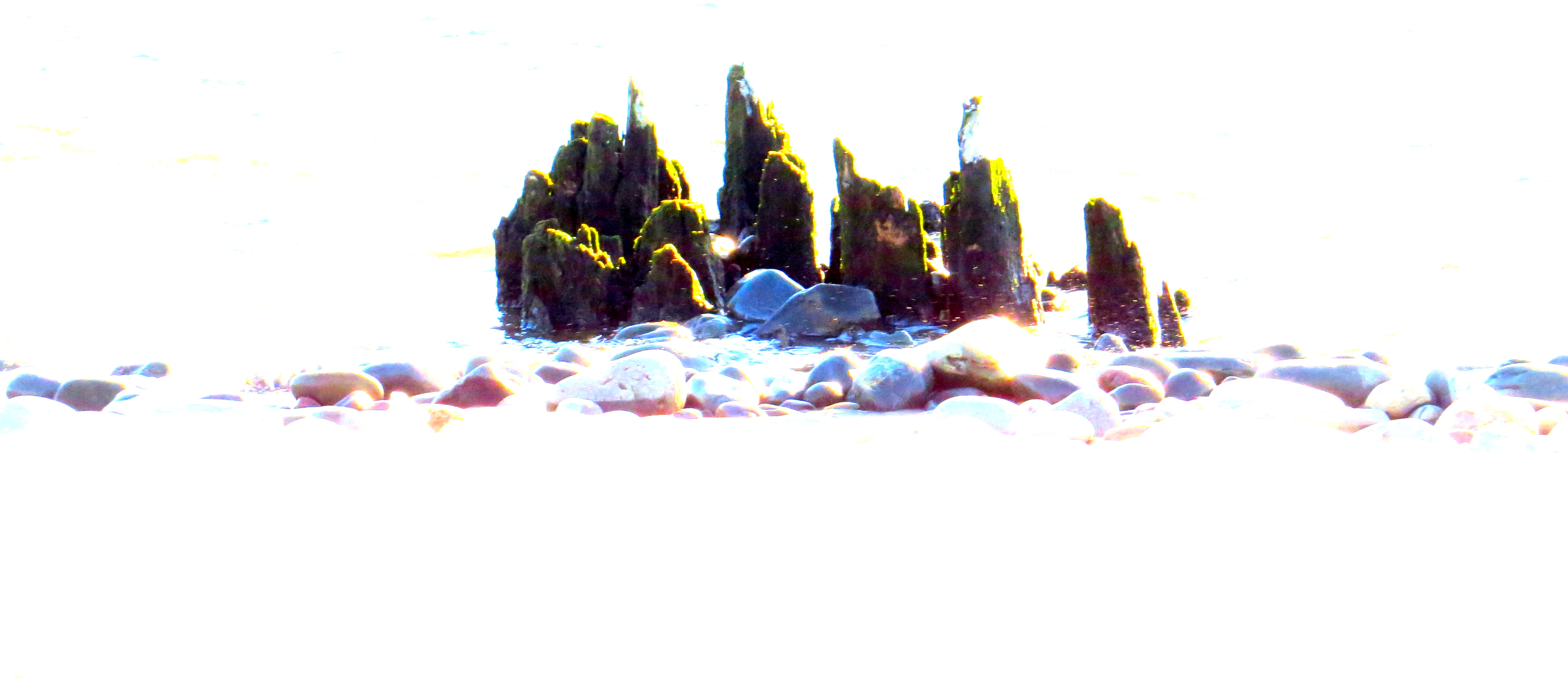
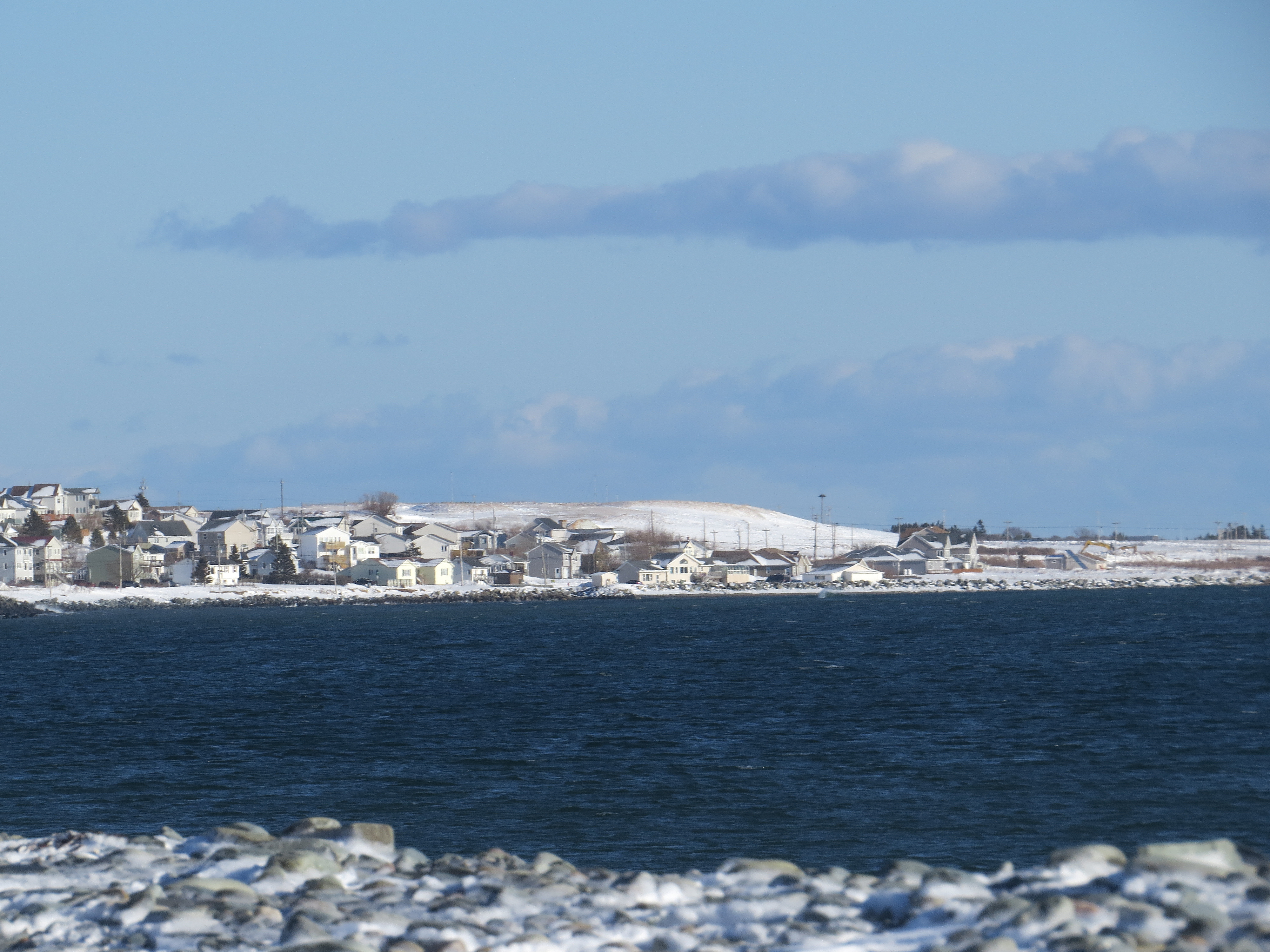
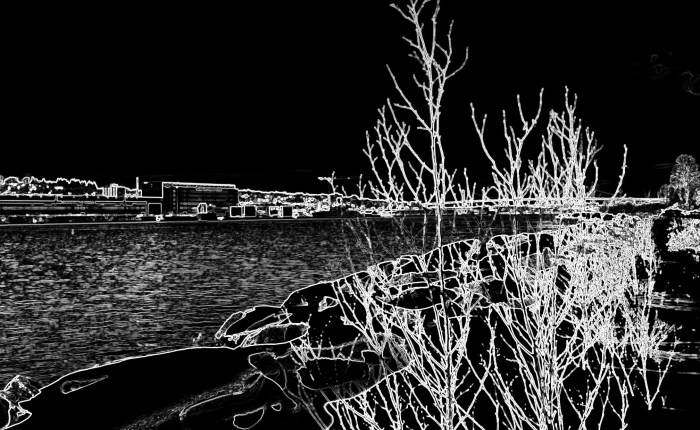
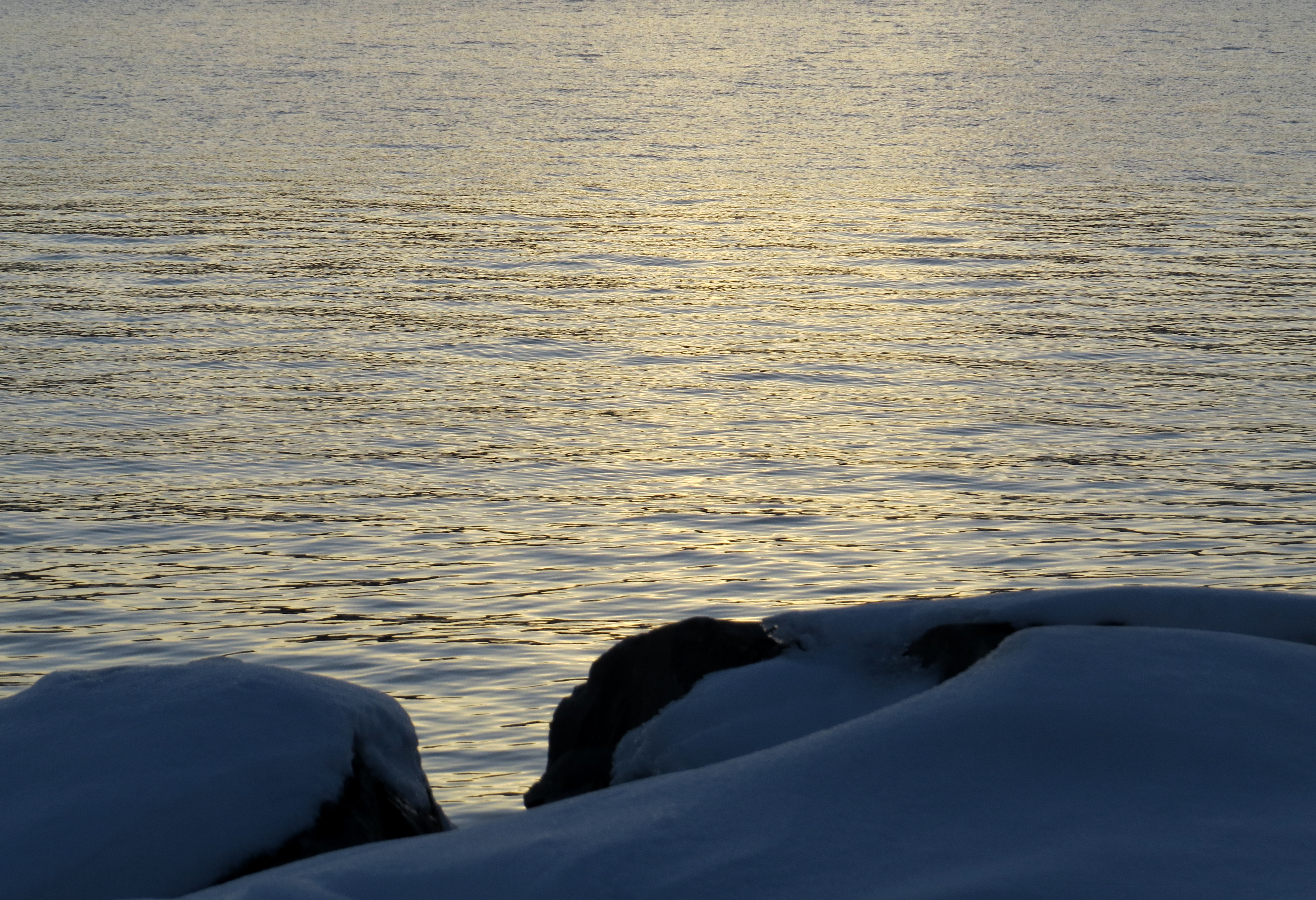
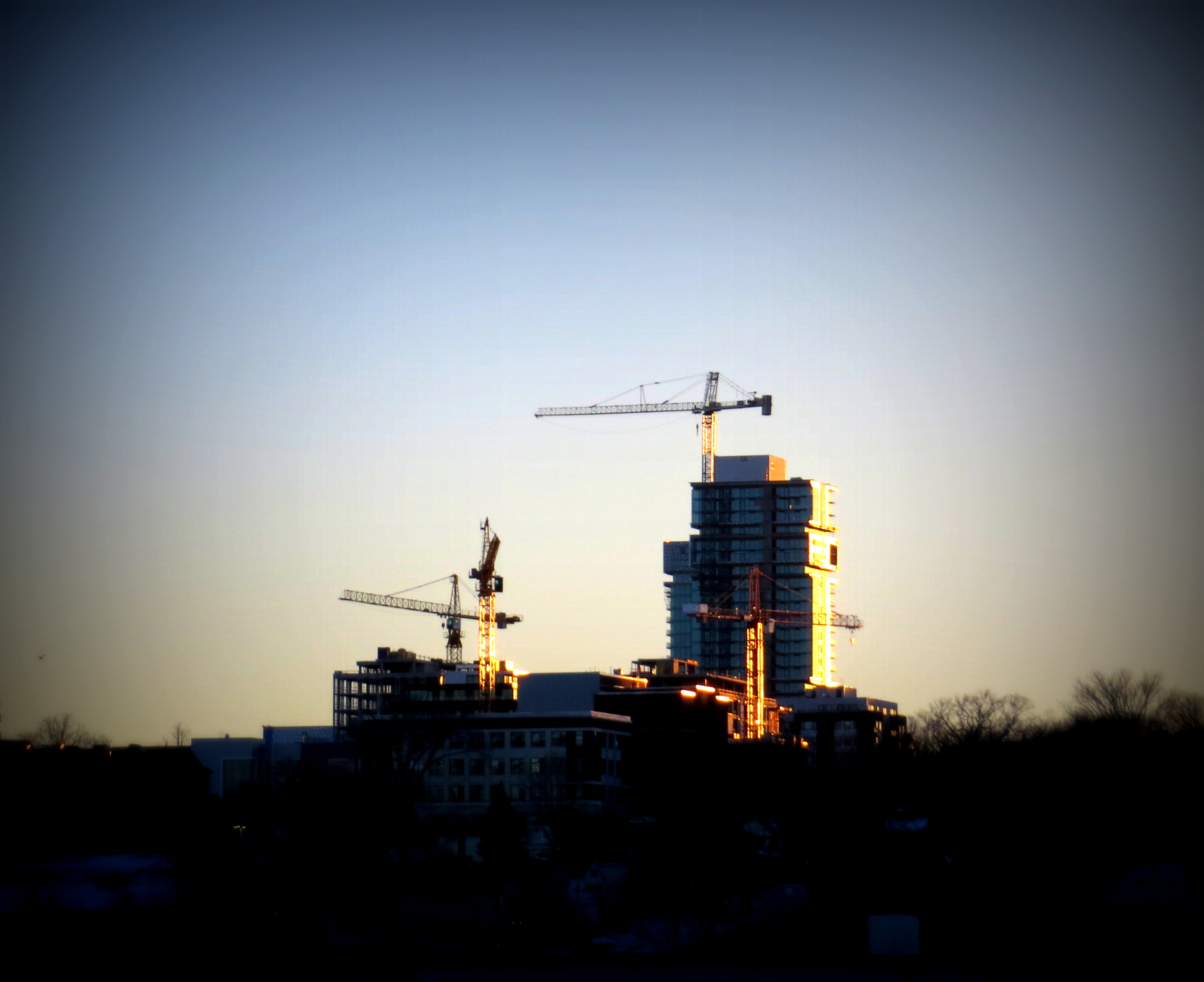
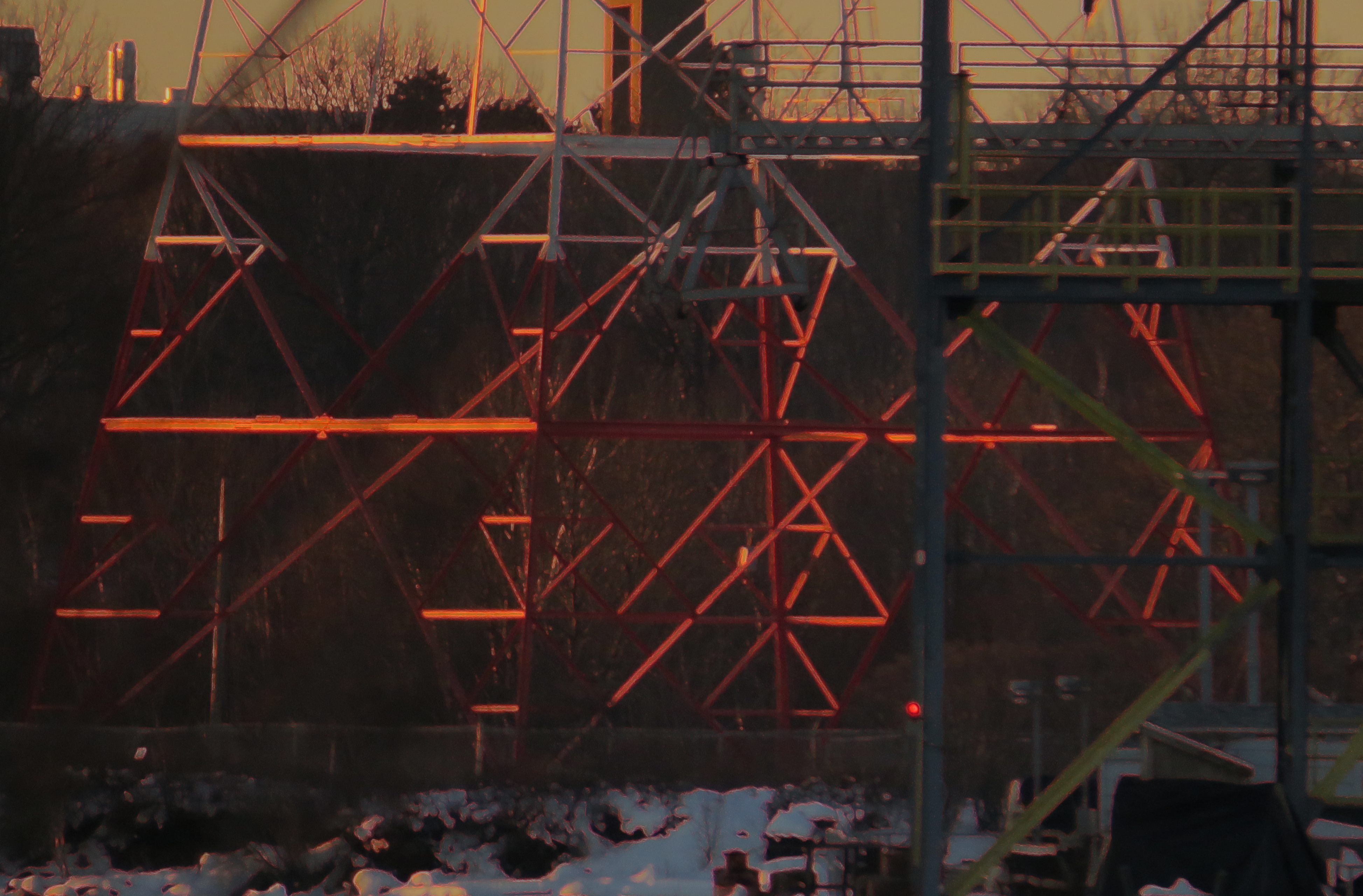
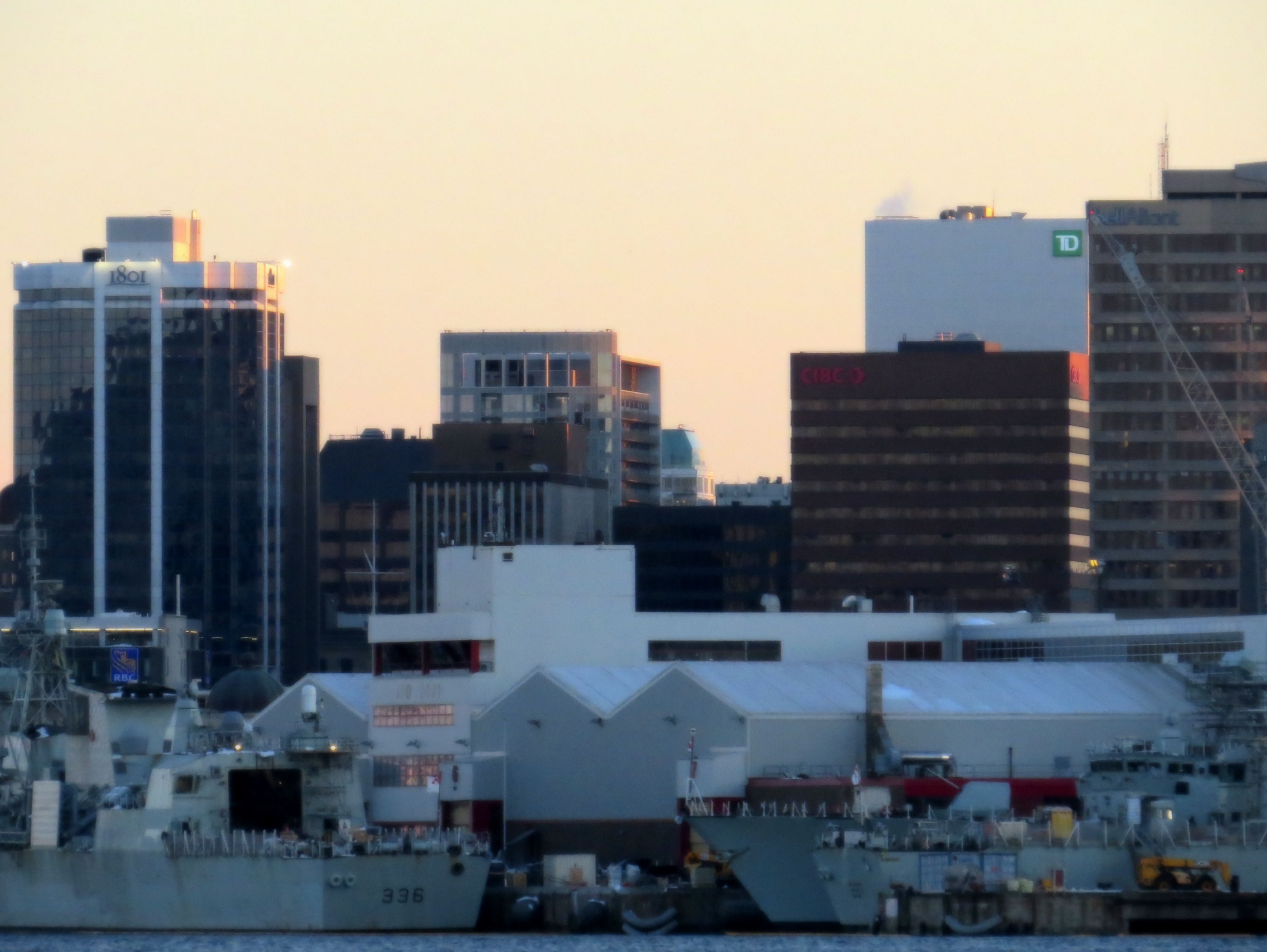
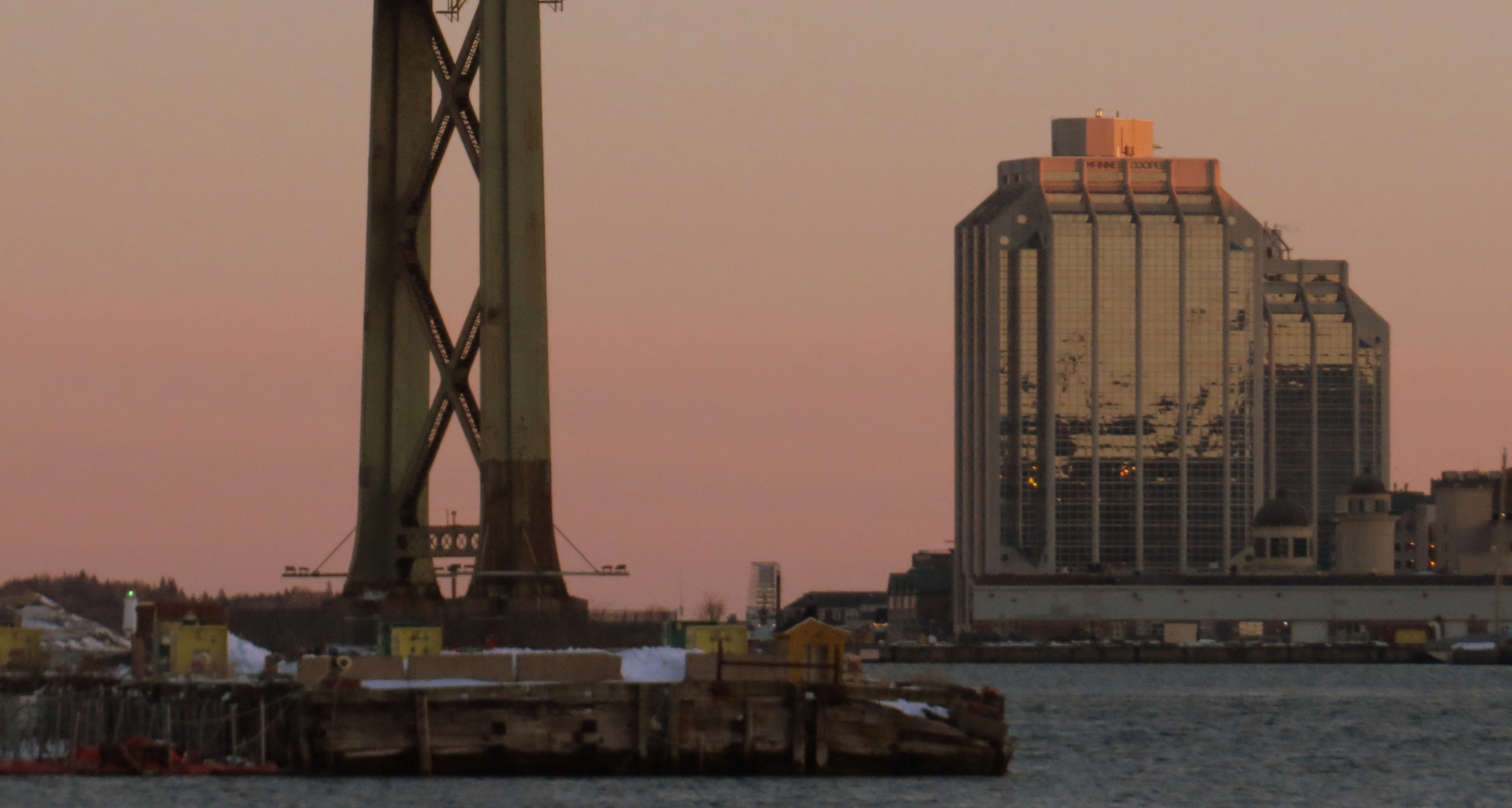
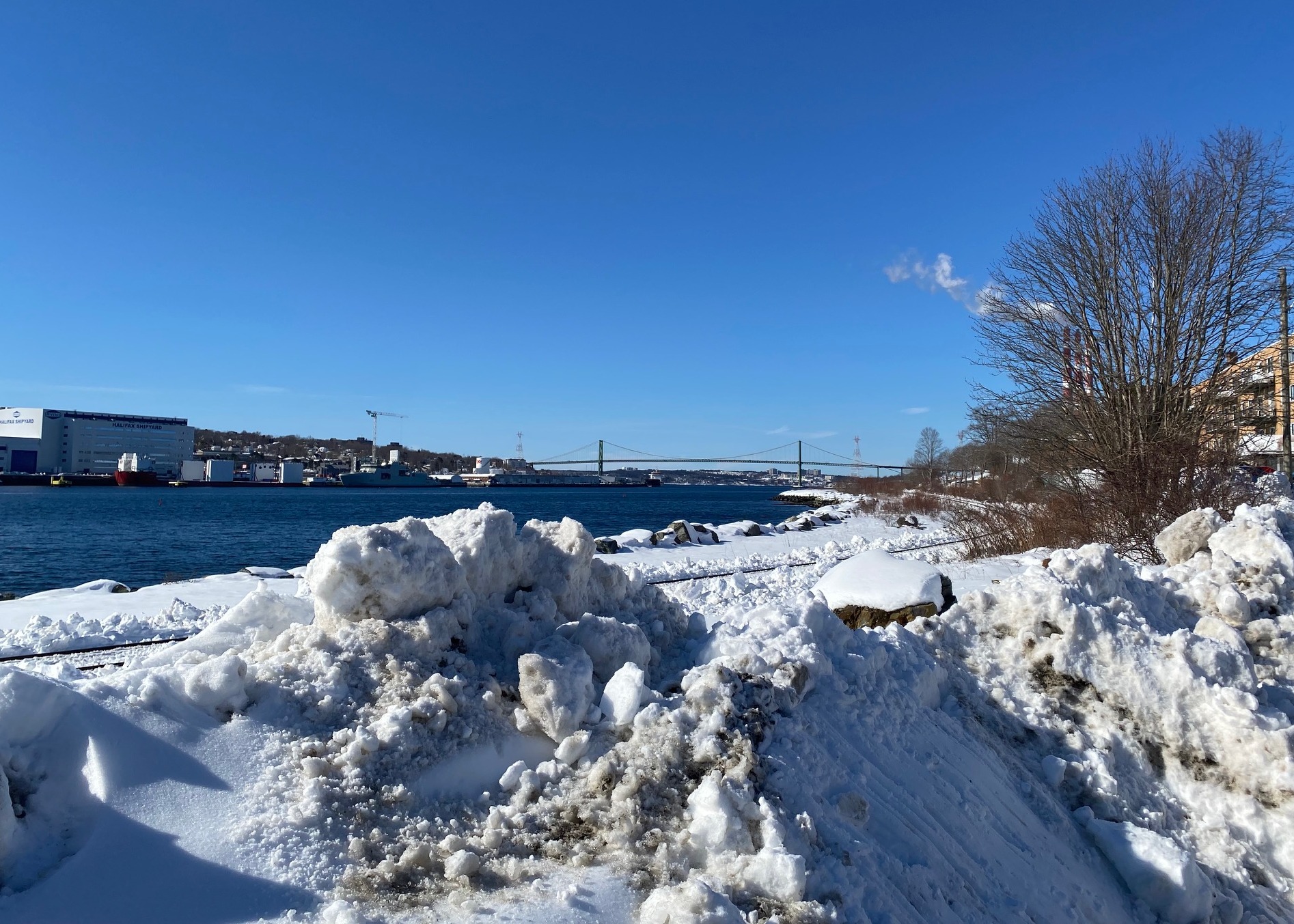
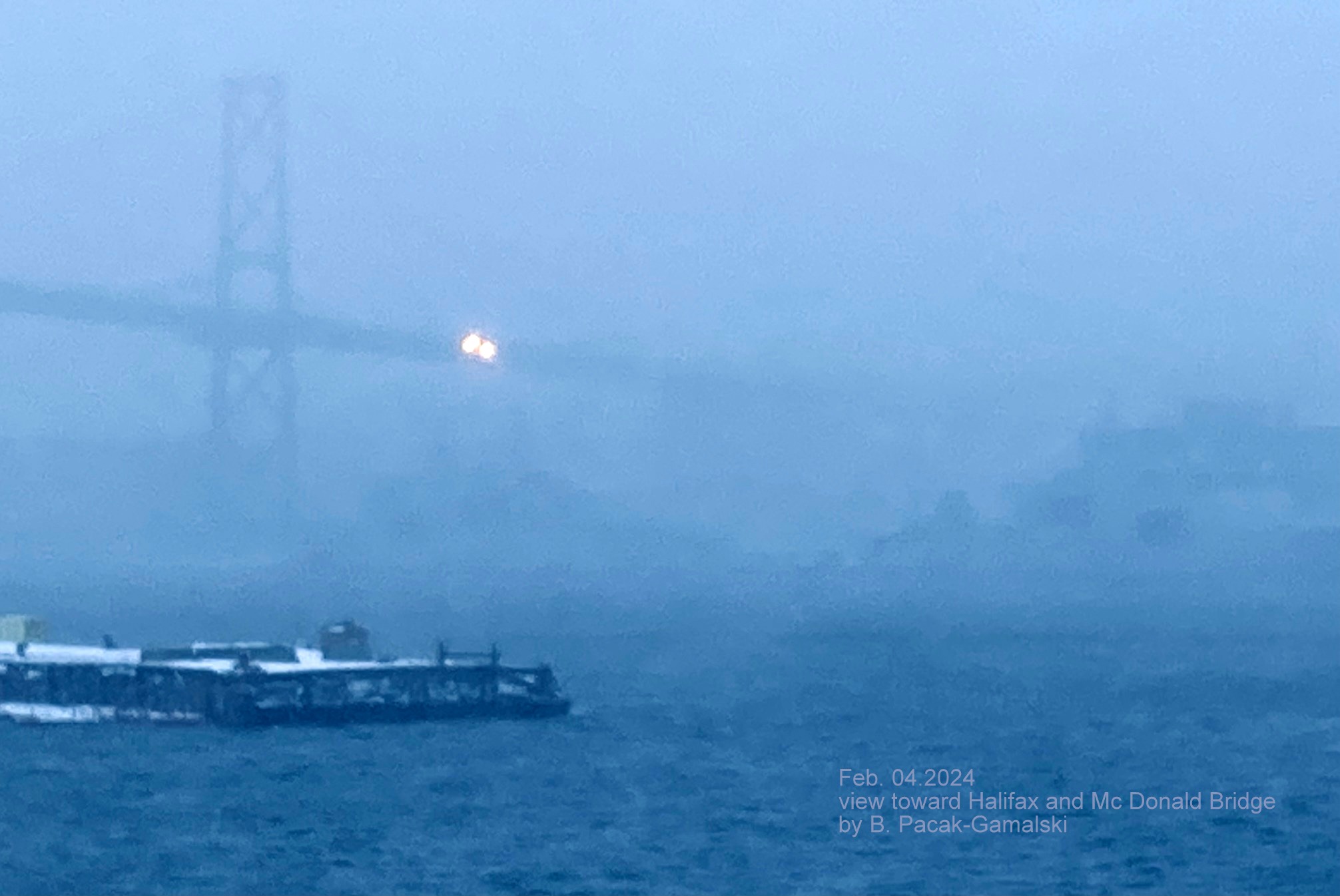
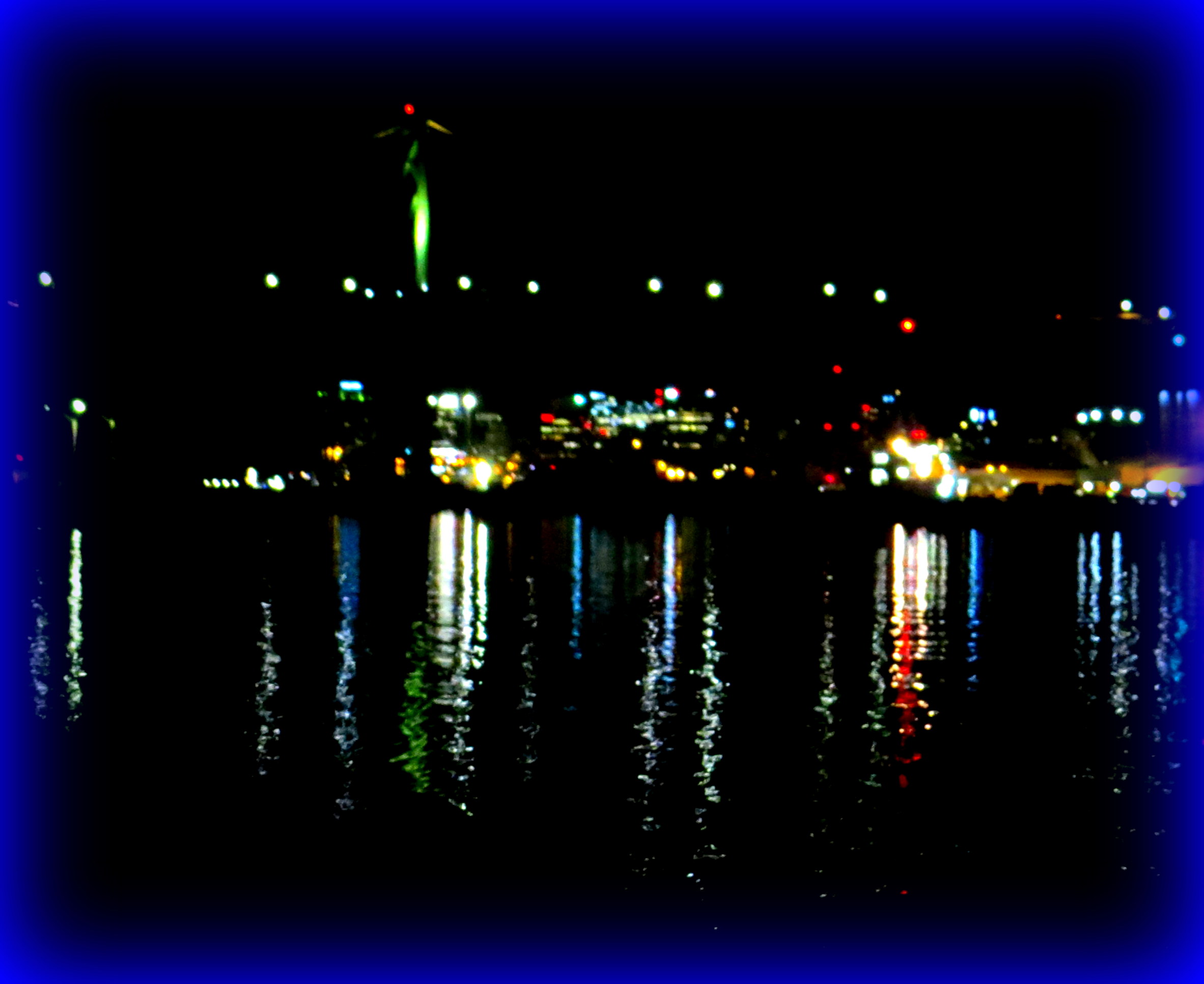
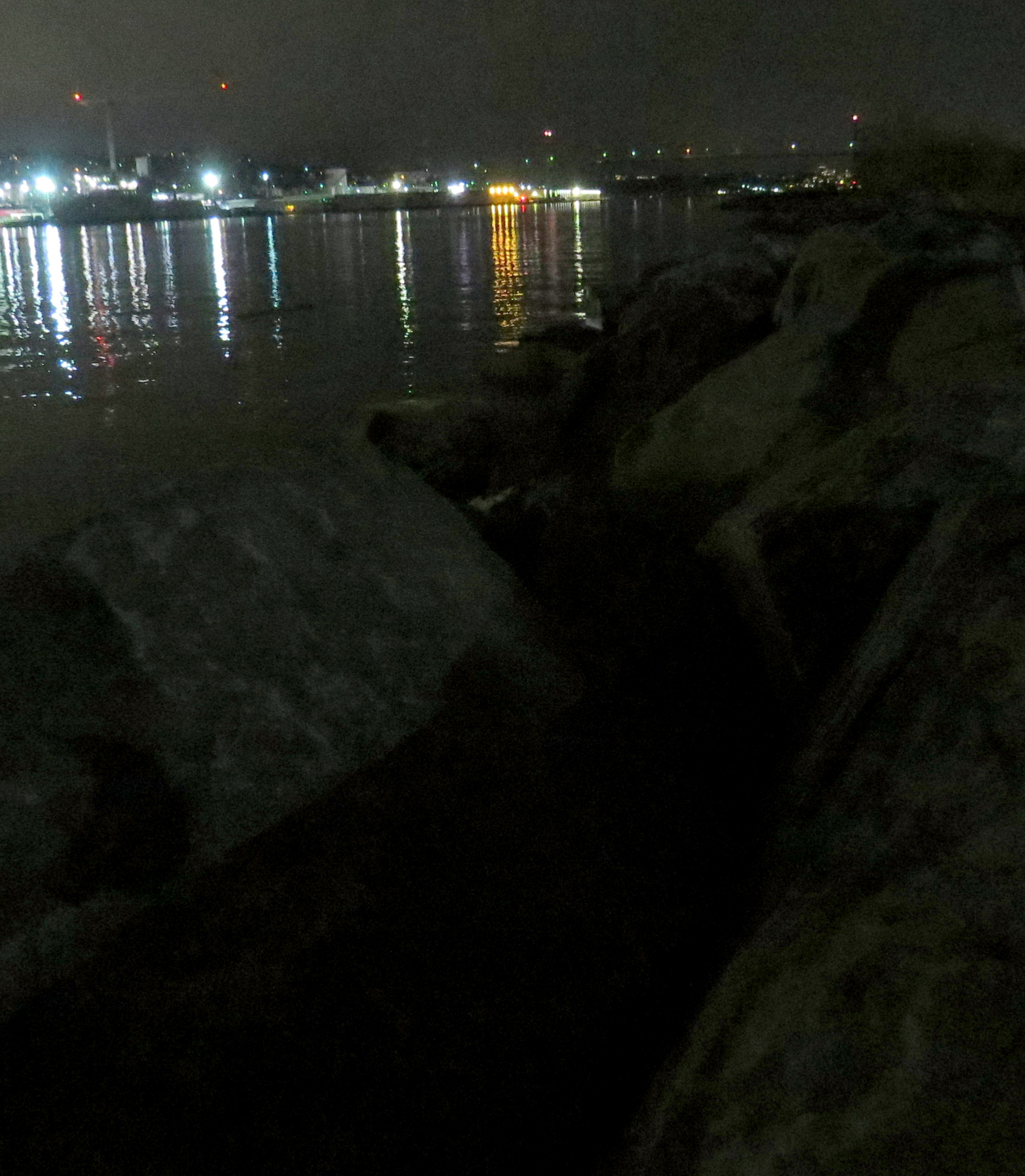
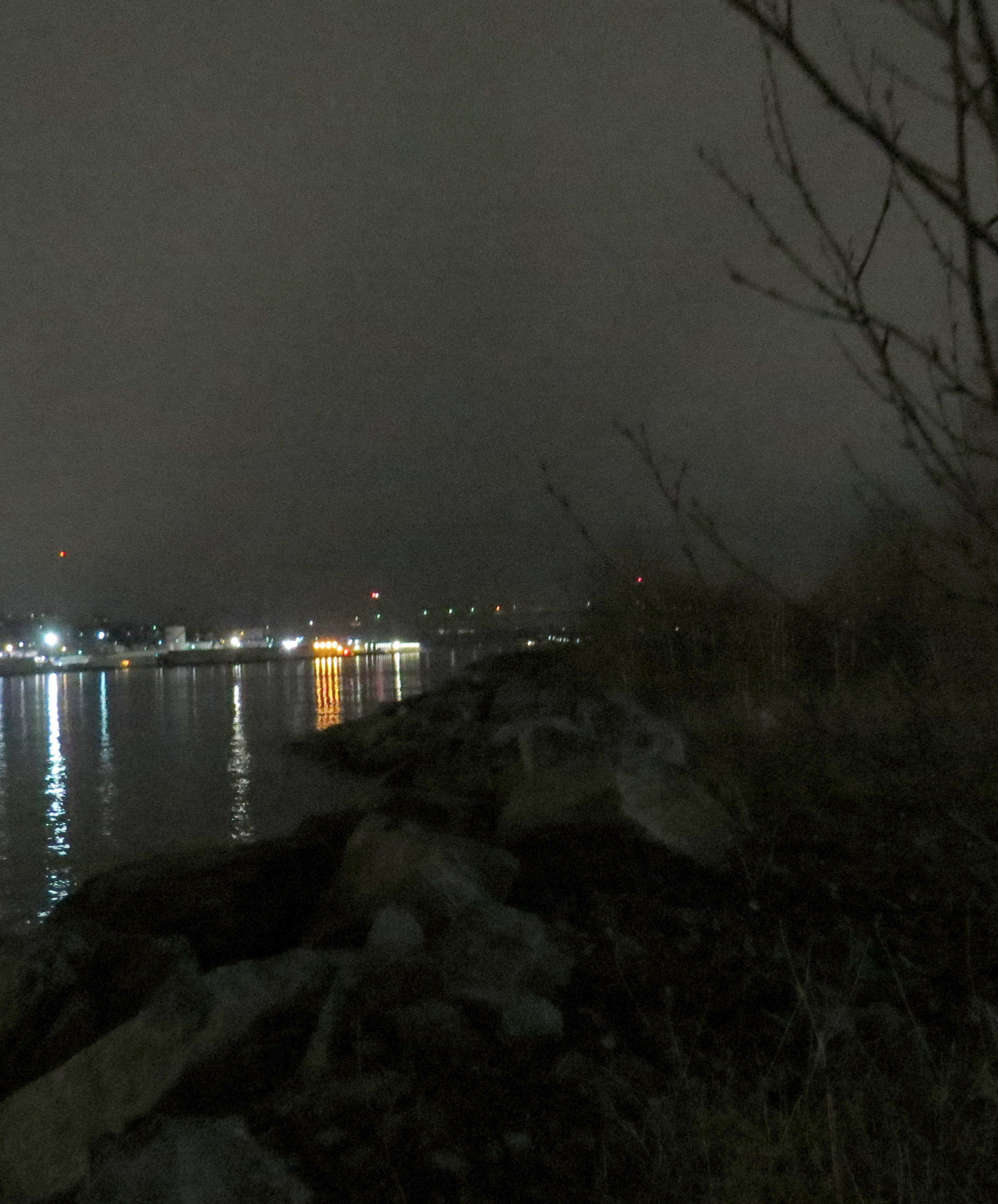
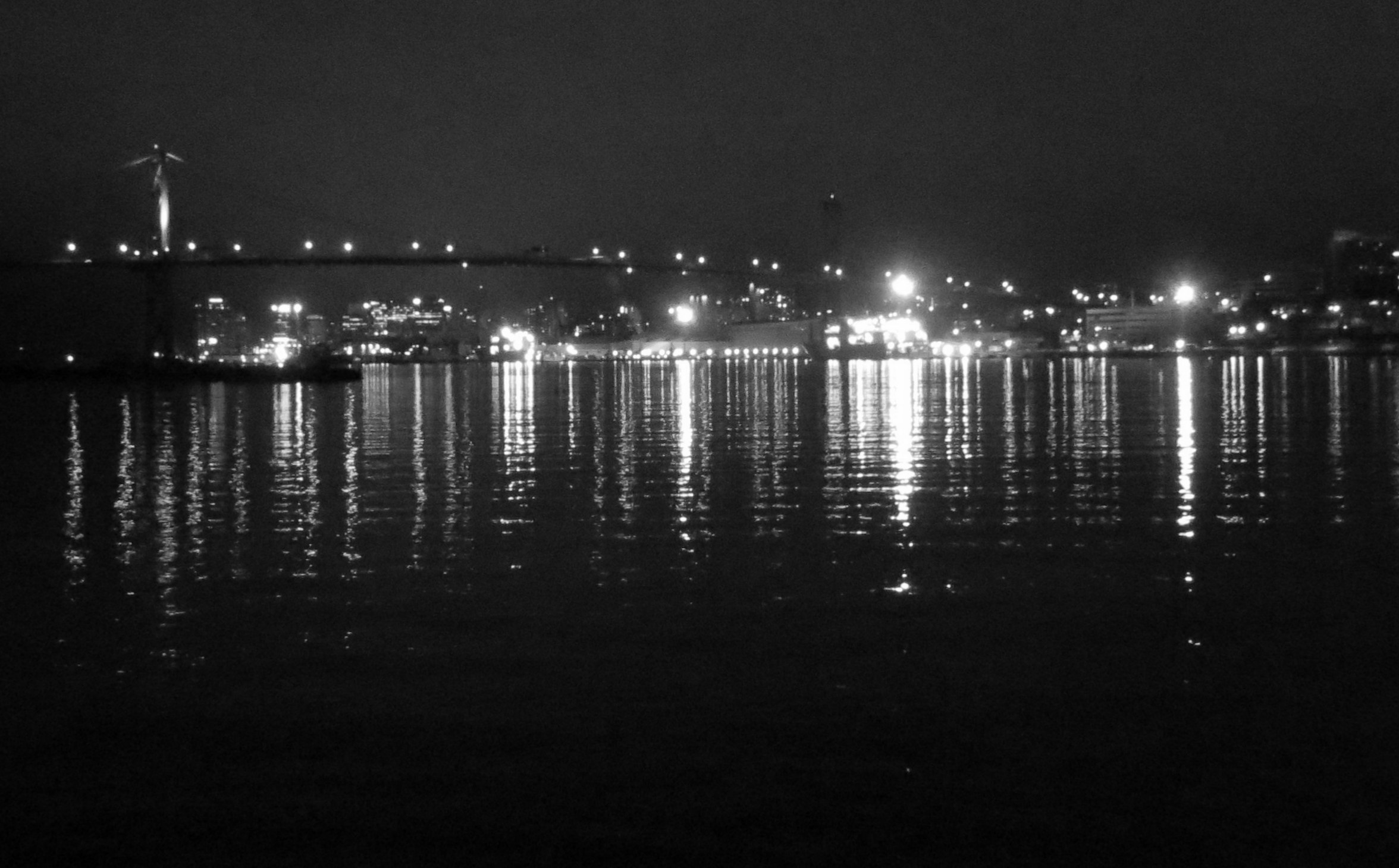
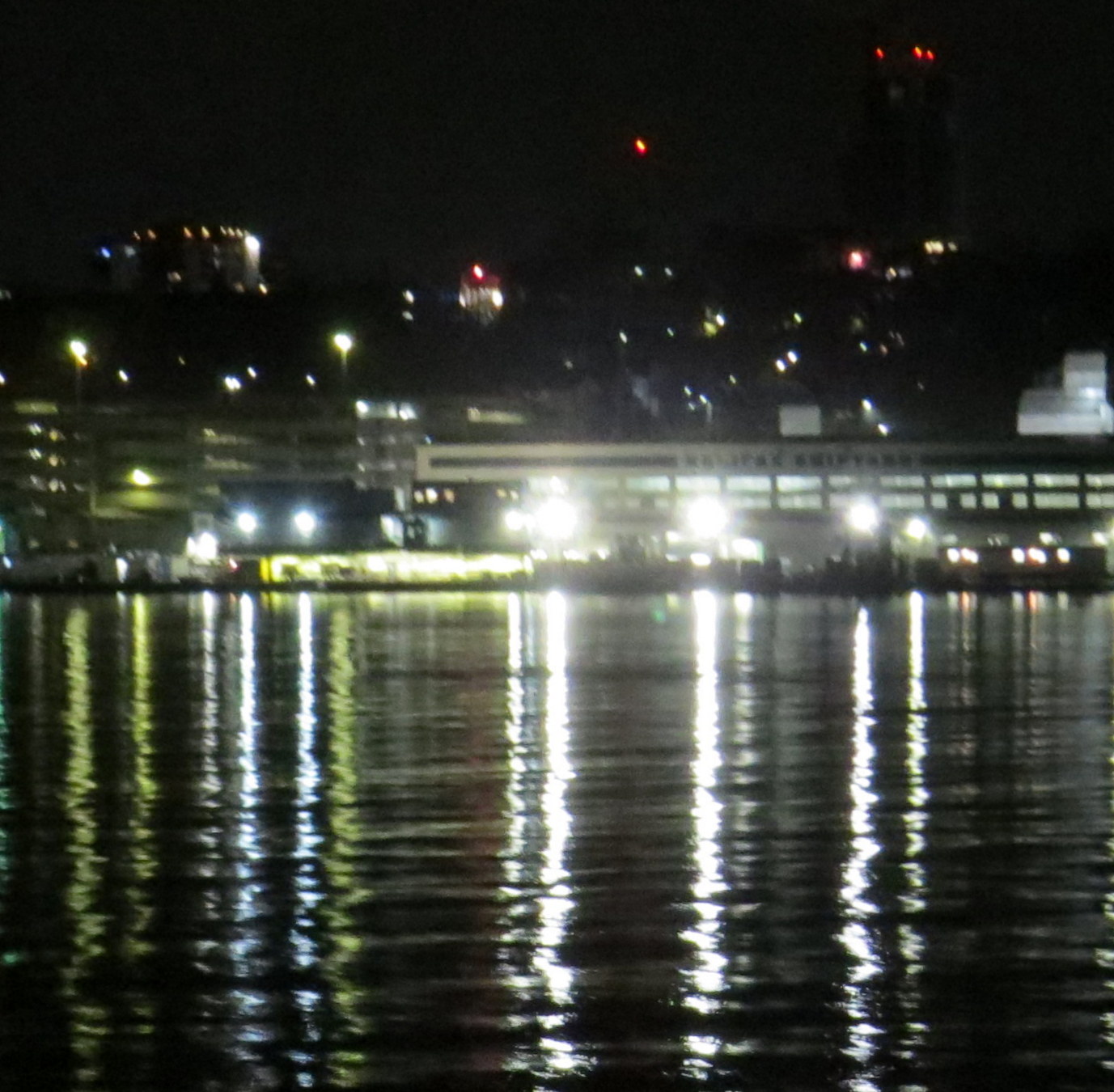
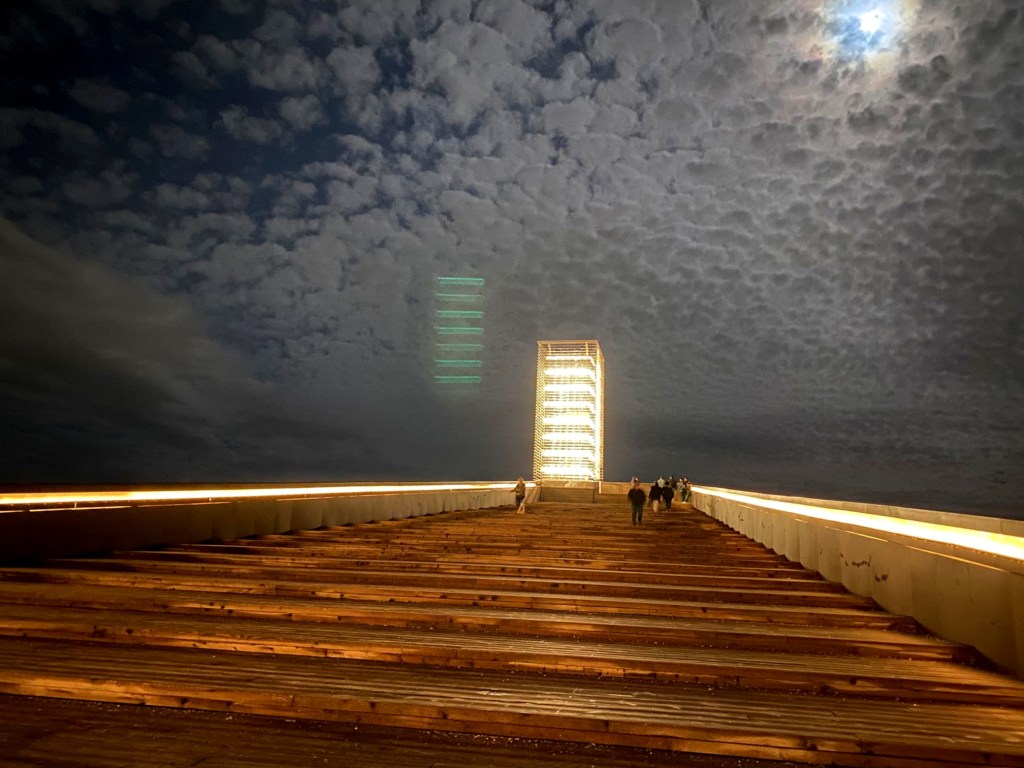
During winter it is a bit tricky and not always a pleasureable to go for a midnight stroll. The rocks are very slippery and the water below them – not very inviting, LOL. But it is also so peaceful, so empty from any distractions. And the play of night lights in the water – just a magic in itself. Here is some of the magic captured by the lense.
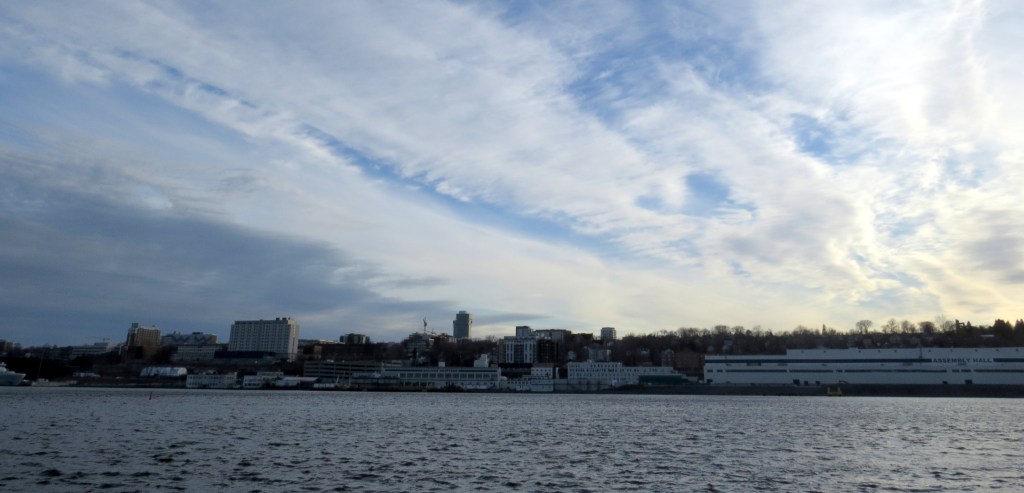
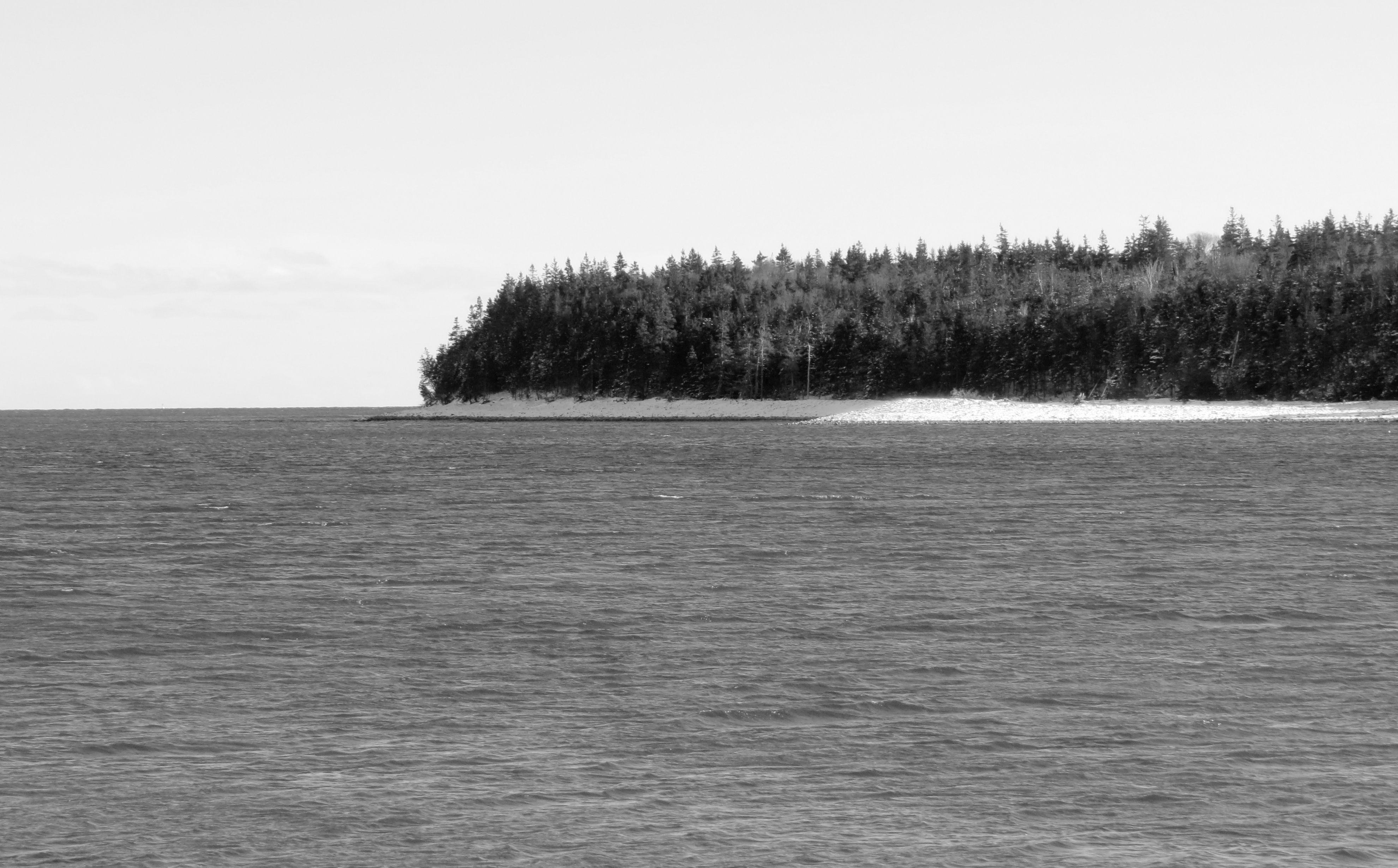
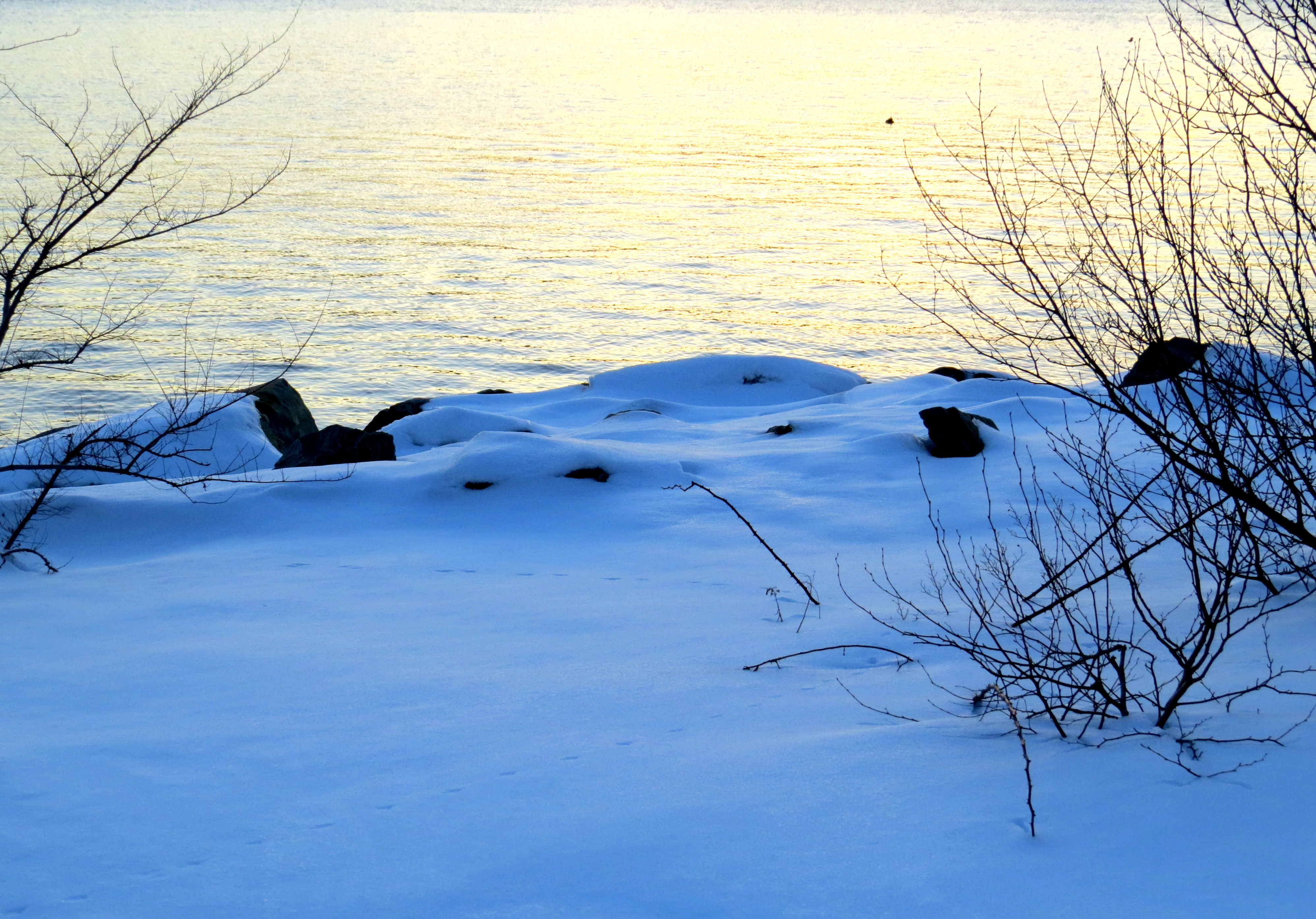
The same panorama captured a day or two earlier in an early evening. Like two different worlds.
In ancient Greece, there was a special, feared temple in Delphi, where the women serving as the foretellers of tomorrow and fate would tell you what yours would look like. Pythia was seldom very clear in her oracles. I will try my best to be less confusing and complicated. Also, unlike a proper Pythia, I am not a user and therefore I am not high, as I write the story, LOL.
But before we get to 2024, let’s look back to 2023. Normally, talking about history would seem to be very safe. Nothing could be more wrong than that wisdom. History, my dear reader is only objective about plain facts. You can say safely only one sentence: i.e. the Battle of Hastings took place in 1066. Anything else would be your opinion of the battle, not facts.
So maybe it is better to ‘use’ and be high and talk about the future. At least no one can say with a conviction that you are wrong or even a liar.
But I will try nonetheless to say a few things that I hope will be reasonable, seasoned, and not too emotional.
2023 in Canada
Eighth year of Justin Trudeau’s Liberal government. From happiness and joyful youth of hope at the beginning (that was very much needed at that time) to Covid years, social upheaval (Truck convoys, occupations of Ottawa, and border crossings), and polarization of the entire Canadian society. Not many could have survived it. He did. But badly damaged. I also think that he has become tired and not as enthusiastic about bringing a sunny future to Canadians. I doubt very much if he will be able to beat his father’s record of longest-serving PM in modern Canadian history.
2023 was a series of setbacks for our Government. On the domestic scene and international scene. Most of them were probably beyond anyone’s ability to solve or remedy. But in politics, excuses are seldom granted for those in power.
In the last two years, prices of everything just skyrocketed. And so did interest rates. But food and shelter become the biggest scare of all. That certainly was not a Canadian phenomenon – similar things happened everywhere in the developed world. In Germany, France, Poland, in the USA. Originally a lot of it stemmed from the COVID years and total breakage in world transport of goods across continents and oceans. But once that was established – the habits of raking huge profits became entrenched in the pockets of the oligarchs of domestic and world food distributions. Owners of supermarkets, car sales, oil and energy, landlords of apartments both big ones and individual ones. Almost overnight rents went up ten, twenty, and fifty percent higher. The high prices of home ownership were already habitually high putting us all at constant risk of collapse and financial crisis of the banking system (remember what happened in the US many years ago?). But it used to be in Vancouver, Toronto, and Montreal. Suddenly it happened in Halifax, St. John, and Fredericton – for no economic reason whatsoever since none of the Maritime Provinces experienced even a semblance of any economic boom – to the contrary. I guess greed is a part of human nature. Not a nice one – but it is.
Eventually, wages went up, too. Not nearly enough – but surely. All of it made the fight against inflation even more difficult – but the Bank of Canada stayed its course and no serious inflation ever occurred. It wasn’t popular – but necessary. That is the difference between politicians and high-ranking Officers of the Crown (like national banks presidents). Politicians are at the mercy of voters; appointed Officers are at the mercy of only their terms, thus often doing what is right and not what is safer for them.
The result? 2023 was very expensive for ordinary Canadians. And definitely more expensive for ordinary citizens of most countries in the world. Regardless if the governments were rightist, leftist, or centrist.
I strongly believe that we managed as well as we could thanks to the unusual partnership between Jagmeet Singh of NDP and Justin Trudeau of Liberals. It wasn’t a coalition by any means (probably smart for Singh) but a careful partnership. But when you have a minority government your position as an ally is stronger. It was also an astute choice for Singh as he built his profile and popularity among voters.
Therefore my first choice in politicians of 2023 in Canada goes to him– Jagmeet Singh. Second to Justin Trudeau – if for anything than for surviving. It was a very bad time for all politicians. Last by any margin of error – but most popular in recent polls, Pierre Poilievre. I understand that when people are angry and scared they run toward the one who is even angrier and scarier. But really? Is that what you want? The most fanatical, the one lacking on any cohesive policy for the massive challenges awaiting us in 2024? God have mercy. It is so easy to criticize existing policies and governments in times of global crisis. But to offer workable and logical, economically sound alternatives – not so much. Certainly, in the case of Poilievre, they are not forthcoming. The few that he sort of mentioned are just absurd. They have no economic or social value. On the contrary – I think that it would create a much harsher situation for most of us (very few very rich ones would absolutely gain a lot from it) in 2024.
Canada’s worst ‘enemy’ in 2023 in order of dangers:
Huge forest fires and floods as a result of climate change – stretching from ocean to ocean to ocean. There was no escape. Ecological catastrophe and financial disaster for Provincial and Federal governments.
War in Ukraine. On many fronts most difficult and terribly expensive in recent Canadian history. Our support for Ukraine extended well beyond our ability. And, of course, at the worst possible time. It is one way to be generous during ‘good times’ and a different thing to be generous in ‘bad times’. Paying for armaments, munition, training, fulfilling obligations to NATO, and sending Canadian regiment to Estonia is very expensive, too. At a time when our Forces need very badly a large amount of budget in Canada to fix years of not doing enough. By all recent federal governments, Liberal and Conservative. Yet – we did not choose that war. The war is not only in Ukraine, somewhere very far away. The war is at the borders of NATO countries to whom we have an obligation. We either support the Ukrainian army, which is much smaller than that of the Russian aggressor – or we might end up doing the fighting ourselves if Russians overcome their defenses and attack NATO country or countries. Remember a lesson from the 2 world War – if Europe (France and England) and the USA attacked Hitler when he invaded with almost all his armies Poland, maybe the war would not lasted almost six years but only a year or two. And maybe millions of people would have survived it. Just saying. Sometimes – sadly – starting a war against an evil aggressor makes the war shorter and less bloody. Now the ‘hitler’s name is Putin. (Don’t forget that Stalin’s Russia was Hitler’s ally and invaded Poland from the East two weeks after Hitler started his invasion. If not that Hitler two years later changed his mind and attacked Russia – Stalin would have stayed by Germany’s side)
The global crisis of economies, raising poverty and hunger.
Challenges in 2024
This time the one that is unavoidable. One that dwarfs every other challenge. Climate change. One that can’t be stopped because we are not able to stop or reverse cosmic forces, forces of the Universe. Earth is not a world in itself. It is part of our solar system, our galaxy, and part of the Cosmos known and unknown. Earth is a ‘living’ thing. Never stopped being one. Constantly changing its form, shape, and look. Just in a different time frame than our human perception. But from time to time it speeds up. It has been done many times before. Usually with very disastrous effects for the life forms, that exist in such times. Then life comes back, some species survive, and some new ones emerge. But one life form became so powerful in the last million or so years that affected that normal, cosmic timeframe. People. We. We can’t stop that change. But we shouldn’t speed it up, as we do. This time it is not freezing in glaciers, not gigantic volcano eruptions followed by hundreds of years of darkness and acid monsoons. This time it is simply warming. 2003 was already the warmest in kept records. According to geological archeologists, it reached the level last seen 100,000 years ago. That will affect the entire planet, all humankind. It couldn’t care less about any states, borders, or nations. By acting accordingly, wise, and understanding the truly existential nature of that change we might have a chance to adapt, to survive, maybe even flourish later. But we must. We. Everyone. Governments and international organizations can’t do that for us this time. We must elect only politicians, who are very serious about it, who accept that challenge as the most important one, who follow the plan and do not change it come every election. We can’t say: it must be China most; India most, Brazil first; Europe, Africa, and on and on. No. It must be Canada’s first in Canada. Yes, nations should develop and plan globally. But we can’t afford the time when all agree. We must do now, here. And it will cost money. Will cost us. Les if we start now, more if we start five years from now. By us, I mean us individually, not just some government in some town called Ottawa. Traditional oil-driven or coal-driven energy should be more expensive. And you can’t expect that all the costs will be covered by the government. If the government covers the full cost it means it will cut other services. You know that arithmetic very well. The National Bank doesn’t really just print money. If we fail that test and we will speed up the warming process everything else stops having any sense. Millions of people will die of starvation, hundreds of millions will become poor and desolate, and immigration will just overcome any national borders and border walls. It will be chaos on many fronts. Forest fires and floods? You have not seen anything, yet. Some nation-states are already disappearing in front of our own eyes. I mean – they are truly sinking out of the map.
Two wars that must be stopped by any means. I mean any. Russia must be punished so harshly by all allied states (Europe, North America, Australia, New Zealand, and any other true ally that we have) that would cripple their economy. That will stop the war much faster than any rockets or tanks sent to Ukraine (but we must continue to support Ukraine in the meantime before the sanctions are formed and executed). That is possible and is in our best interest. Current sanctions are just a patchwork of here and there and this and that. We can’t wait for the majority of the world to agree to that. It might never come. We must use our own strict ‘club’ of Western Powers of democratic states and do it fully, comprehensibly, and at once. It is possible and it is doable. We must demand it from our governments.
Israel – the massacre of Palestinians must stop. No ceasefire, no ‘more careful killings’. This is insanity and it serves no one. Except for one person – the disgusting malfeasant and populist Netanyahu. Now a war criminal. United States is acting in an abhorrent way aiding in the massacre of people, who already suffered unspeakable theft of land, opportunities, and basic dignity. I do understand that Israel is a linchpin of US policy in the Middle East. But it is all based on old times of rivalry between East (communism and USSR) and West. But regardless of that anachronistic policy – it is in the best long-time interest of Israel to have peace with Palestinians. It is the only solution to lasting peace there. What happened in December with the atrocious Hamas attack – happened. It has been dealt with. It cannot justify the unspeakable horror of what is happening in the ruins of Gaza City and all other cities and towns in the Gaza Strip. It is abhorrent. Our, Canadian government can’t be part of it. There is no room to be ‘a little pregnant’ in this conflict. Children and women are dying in hundreds daily, hospitals are bombed as they tend to the wounded and dying, and starvation is happening now. No medicine, no fresh water, no fuel, no food. The trickle that is coming (never sure if it is coming, and aid trucks have been already bombed, too) is only a fraction of what is needed. It is truly insanity and I can’t understand that some of us are even trying to discuss it politely that maybe this or maybe that, that it is all very complicated. No. It is not complicated at all. It kills innocent people. In thousands. People, who were already suffering. Including suffering from Hamas hands. During the history (a very short one after all) of Israel, it gathered a lot of support. People knew and remembered what was Holocaust, what were pogroms. That Jews deserve their own state. Safe state. And now a lot of it evaporates in thin air. A normal person just watches with astonishment and disbelief. For the sake of not only Palestinians (but mostly for them because they are being massacred) but also the secured and respected Israel – stop it. Kick Netanyahu to the garbage bin of history and restore peace. Both nations deserve it.
Last but not least – India. The largest democracy in the world. But is it? The USA wants it to be a counterbalance to China’s ambitions in Asia. I don’t trust this guy at all. Arrogant, populist, and ethno-religious chauvinist. I think that he is the worst that could have happened to this amazing subcontinent with thousands of years of history. How can you have a democracy if the leader is an authoritarian trumpist? Ask me, a Canadian Pole who observed from Canada for the last 10 years the democratically elected government of populists, religious fanatics, and idiots in Poland. They lost power in massive elections and popular protests in October last year. Now is January. It is absurd what is happening now in Poland. The party that lost occupies buildings in Warsaw, occupies the Public TV (equivalent to CBC in Canada), and daily emits anti-government programs. There is legal chaos as part of the Judiciary was chosen by the former chauvinistic government and wants to stop the new government from any normal governance. Democracy is not a panacea for everything. It works only if everyone respects the same rules. Not only the rules it likes.
OK, it looks like the morning is lurking in my window. Time to go to bed. Enough for today. Good night and sleep well. Hope you can after reading this, LOL.
Rok za niecałe 24 godziny się kończy. Brzemienny bardziej niż wiele przed nim. Inny w wymiarze indywidualnym, osobistym i inny w wymiarze obywatelskim.
Inny dla mnie – Kanadyjczyka i inny dla mnie – Polaka. Jeszcze inny dla mnie – osoby. Nie Kanadyjczyka i nie Polaka – mnie, indywidualnej jednostki wobec której jakiekolwiek rządy, narody czy instytucje publiczne, polityczne i religijne praw żadnych nie mają.
In less than 24 hours the year will end. Heavy with effect more than many before. Different in individual, private frame than in citizen’s feelings.
Different for me as a Canadian and different for me as a Pole. Different altogether for me as an individual, a sovereign person, a person beyond the sphere and powers of any government, any nation or institution public, private, or religious.
It might be easier to understand my opinions and reminisce about the last 12 months in two different languages: Polish and English. Emotions are complicated to translate, especially for an author. I, a Canadian – have different opinions on Polish affairs from those of ‘I’ as a Pole. And vice versa.
Perhaps it wouldn’t be an issue for a translator, who doesn’t have to carry that bag of that individual history, its’ weight of guilt, defeat, and victory alike. Baggage that makes me, who I am. And I must admit the strange duality: I do not always feel the same in Polish as in ‘Canadian’.
Over forty years ago a young guy, on the cusp of adulthood, landed in a snow-covered Montreal airport. He carried a heavy bag on his shoulders, much heavier than the material possessions he owned. Spends the first night in a hotel arranged for him by the Canadian government and in the morning changes flights and goes to Calgary. Somehow he is much older than most of his new compatriots of the same biological age. He is in fact an old man carrying a very cognisant weight of native, European history and culture. But in some other way, he is an adolescent further from adulthood than most of his Canadian peers.
He lands there in the evening in a very cold, very snowy city. A typical, normal day in Calgary – at that time of the year, Calgary was always cold and snowy (unless there was a chinook – but even chinook does not erase winter from Calgary in February). It was the beginning of 1980’ in Alberta. Nobody knew anything about climate change – including the climate. Winter was winter and summer was summer. Year after year. Until …
That was then, though. Now are the last hours of 2023. In Poland, it is already early morning of 2024. The young man, boy almost, who arrived in Calgary at the onset of 1982 is long gone. Nowhere to be seen or heard of. Nor his dreams, his hopes. Vanished with time. Who is he now? Let me think – if he could be wine, he would be either spoiled, gone bad, or the opposite: very expensive, LOL. Yet, at times, maybe, just maybe – you could notice in the corners of his eyes the same spark or the same sadness the young one had. Maybe, who knows? But first is first. I was first Polish, so of Poland than at the closing of 2023. In Polish.
English part of my ‘musings’ of things important and perhaps less important but worth mentioning will have to be published separately – the sheer volume of the text of my Polish part would make it difficult to read. The English (Canadian) part will come in a day or two.
Od PiSu(uaru) do demokracji
Polska wyszła w końcówce 2023 z okresu ustawicznej, blisko dziesięcioletniej dewastacji demokratycznego państwa prawa. Wcale nie jestem pewny czy faktycznie wszyscy, którzy głosowali za szeroką Koalicją Demokratyczną zdawali sobie sprawę jak dramatyczna i jak zmieniająca kraj i społeczeństwo ta dewastacja rzeczywiście była. Ludziom często łatwiej jest zobaczyć klikę złodziei i malwersantów, którzy przez wtyczki w PiS i z PiSem współpracujących ugrupowań dorobili się majątków niż dużo niebezpieczniejsze zapaści strukturalne państwa, murszenie jego podstaw tożsamościowych, fałszowanie jego historycznych korzeni i kulturowego dziedzictwa. Ci, co głosowali w dalszym ciągu za PiSem – już zostali oczadzeni. Czy kompletnie – czas pokaże. Mam nadzieję, że wielu obudzi się z tej śpiączki i odrętwienia hipnotycznego. Inaczej ta przyszłość kraju wygląda trudno. To tak, jak w tym starym czasie PRL-u mówił przerabiany wielokrotnie dowcip, kiedy ‘wiecznie żywy’ Lenin przebudził się faktycznie, rozejrzał wokół i rzekł ze zgrozą: trzeba zaczynać od nowa. Dowcip był głupi, bo sugerował, że Lenin ‘chciał dobrze’, a jego następcy to wypaczyli. Ale intencja dowcipu była pozytywna. Zresztą społeczeństwo PRLowskie w swej dużej proporcji do rzesz wykształconych rzetelnie i znających historię autentyczną nie należało. Ale to już też historia. A mówimy o roku 2023.
Droga nie jest prosta przed Koalicją rządową. Jak zreperować i uzdrowić najbardziej zrujnowany aparat państwa, jego trzecią konstytucyjną ‘nogę’ – wymiar sprawiedliwości: Prokuraturę i Sądownictwo? A bez sprawnie (tj. kompletnej niezawisłości i niezależności Sadów i Trybunałów wszystkich instancji) działającego wymiaru sprawiedliwości nie można mówić o sprawnej i funkcjonującej demokracji. Polska taka już nie jest. Wybory parlamentarne, a w konsekwencji tego nowy rząd jakimś magicznym zaklęciem tego zrobić nie mogą. To wymagałoby absolutnej, konstytucyjnej większości obu izb Parlamentu i współpracy Prezydenta. A Andrzej Duda (bezapelacyjnie najgorszy i najmniej się do tej funkcji nadający chyba od czasów sięgających 1918 roku) prezydentem będzie jeszcze półtora roku. To dużo. Naprawiać metodami PiS bym odradzał. Bo jak władza raz, nawet z najbardziej szlachetnych pobudek, na tą drogę wejdzie, to bardzo łatwo nawet ta szlachetna intencja ulega zepsuciu. Gangsteryzm w polityce nie popłaca. Chyba, że to wybór świadomy, jak w przypadku Kaczyńskiego, Ziobry – tyle że rezultaty tego znamy i dla kraju i na końcu dla nich samych.
Zaczęło się od spektakularnej hucpy PiSu w budynkach TVP na Woronicza,a potem na placu Powstańców Warszawy. Oglądana na gorąco relacja z tego wydarzenia w pierwszym momencie wydała mi się jakimś przezabawnym cyrkiem idiotów PiS – od tej grupki staruchów-kibiców na zewnątrz, po niewyobrażalny kabaret Kaczyńskiego, Kempy, Glińskiego i całej wierchuszki pisowskiej. Pierwszy mój odruch był: świetnie! Niech to robią jak najdłużej, bo robią z siebie niespotykane pośmiewisko. Niech Polacy, w tym miękki elektorat PiSu, zobaczy co za zgraja półgłówków nimi przez dekadę rządziła. Sytuacja jednak wcale nie była aż taka kabaretowa. Kaczor i Kurski doskonale zdawali sobie sprawę nie tylko z wagi tej Szczujni Narodowej, która była w rękach ich ludzi ale i z konstytucjonalnej niezależności Krajowej Rady Radiofonii i TV. Sytuacja zmieniała się z godziny na godzinę. Czyżby minister Sienkiewicz faktycznie przekroczył (i to poważnie) swoje uprawnienia rozwiązując gremia, których dotykać, jako minister nie miał prawa, bo decydowała o tym ta Rada – ciało konstytucyjne, a więc poza zasięgiem łapek rządu? To był argument poważny. To są sprawy dość skomplikowane ale i proste jednocześnie. Tak, minister kultury jest ‘właścicielem’ TVP, bo on ją utrzymuje finansowo. Ale jednocześnie jest ‘właścicielem’ na zasadzie Głównego Księgowego, który płaci pracownikom (w tym dyrektorowi firmy) pensje. Nie oznacza to jednak, że księgowy może zwalniać dyrektora lub zamykać firmę. Trochę byłem zaskoczony, że Tusk nie przebadał tej sprawy dokładnie. Bo bez wątpliwości o TVP musiał bardzo długo i bardzo dużo myśleć i się konsultować. To zbyt ważna i newralgiczna instytucja, by jej statusu nie rozumieć lub nie znać. W sukurs przyszedł olbrzymi błąd i przeoczenie PiSu wówczas, gdy formowali tą Radę dziesięć lat temu na ‘obraz i podobieństwo swoje’. Byli wtedy w trakcie zamachu na Trybunał Konstytucyjny, w planach już był zamach na Sąd Najwyższy, Ziobro od zaraz zaczął rozwałkę Prokuratury Krajowej (on był dużo bardziej bezwzględny i nieugięty w zdecydowanym i pozbawionym hamulców niszczenia wszelkiej niezależności sędziowskiej, prokuratorskiej i policyjnej, nie unikał w tej kwestii nawet konfliktów ani z Kaczyńskim ani z prezydentem Dudą, gdy ci chcieli – zmuszeni sytuacją wewnętrzna a przede wszystkim zewnętrzną zwolnić te tempo lub nawet czasem cofnąć zbyt radykalne zmiany) – wiązało się to z dużym zamieszaniem w orzecznictwie sądowym i trybunalskim. Prawa ręka nie wiedziała dokładnie, co robi lewa. Przyłębskie, sędziowie-dublerzy, wybitne Krysie Pawłowicz – to tylko szczyt góry lodowej galimatiasu sądowniczego ówczesnej Polski (wiec i obecnej, bo wybory powszechne nie wybierają nowych sędziów). W tym galimatiasie zapomniano, nie dopatrzono pewnej drobnostki – Ustawa o Krajowej Radzie Radiofonii i TVP … nie została formalnie i legalnie do końca przeprocesowana. I pomimo, że zakładano, że była, więc ma moc gwarancji konstytucyjnej … nie ma. Uff. Najjaśniej jak mogłem wyjaśniłem. Jeśli ktoś nie rozumie, to skąd może żądać, by rozumieli np. Kaczyński czy Duda? Ale Sienkiewicz jednak zrozumiał. I użył prostych i mało skomplikowanych narzędzi zwykłej ustawy o Spółkach Akcyjnych. Z której wynika, że ten, co posiada większość akcji danej firmy może prezesa zarządu takiej firmy wyrzucić na z… pysk i sam Radę rozwiązać i powołać nowego prezesa Zarządu. Proste. Środek tymczasowy i brzydki. I można go zaskarżyć do Sądu Powszechnego. Ale tymczasowo skuteczny. A czasami ‘tymczasowo’ wystarczy. Pisałem tyle o tej hucpie z TVP i Wiadomościami TVP, bo to było i spektakularne i pokazało, jakie wielkie przeszkody na drodze reperacji szkód w Polsce trzeba będzie pokonywać. Ale, że można będzie, choć niektóre będą dużo dłużej trwały.
Kaczyński, ze względu na swój wiek i na fakt, że jednak przegrał wybory i mimo wszystko fala brudów jego rządów nie będzie nawet tajemnicą Poliszynela – będzie publicznie i równie spektakularnie ujawniana – jest już politycznym trupem. Można swobodnie o nim mówić już w czasie przeszłym. O tym jestem przekonany. Jeszcze macha krótkimi łapkami i nóżkami, jak pajac na sznurku. Ale to już kurz historii a nie wiatr przyszłości.
Swoją drogą ciekaw jestem, co stanie się z wyznawcami religii smoleńskiej? Czy msze dalej obywać się będą przy Schodkach do Nikąd na placu Piłsudskiego, czy wrócą na stare miejsce przed Pałacem Namiestnikowskim (który też do czasu wyboru nowego prezydenta będzie u mnie tą starą, zaborczo-rosyjską nazwę nosił)? Może pan Duda nawet zgodzi się by robiono to za bramą, wewnątrz dziedzińca, by zapewnić większe bezpieczeństwo Kurdupla z Żoliborza? Ciekawe, jak ich stosunki się teraz ułożą? Mimo wszystko Kaczyński nazbyt przyjemny dla swojego prezydenta nie był, a ten nagle jest jedynym, który ma ciągle władzę w ręku. Nominalnie dość potężną władzę.
Tusk w przemówieniu noworocznym nie mówił już tym samym, tryumfalnym językiem zwycięstwa, jakiego użył w wystąpieniu w Sejmie w pierwszym expose ledwie kilka dni wcześniej.
I tamten, tryumfalny ton był potrzebny Polakom, bo był to tryumf Polaków ratowaniu ojczyzny przed czarną nocą. Najważniejszym dniu wyborów od sławnego roku 1991 pierwszych wolnych wyborów parlamentarnych po 1939.
Ale te noworoczne było już trzeźwiejsze politycznie, mniej tromtadrackie, bardziej pragmatyczne. Przy podkreśleniu nowej nadziei i zadowoleniu ze zwycięstwa o jakim tyle lat marzył, o powrocie na fotel premierowski – nie mogło w tym nie być nuty smutku. Nie tylko z zerkającej zza każdego politycznego rogu chciwości, malwersacji finansowych, moralnej miazgi politycznych klas, które zawładały Polską od jesieni 2014. Nie, z dużo poważniejszego problemu. Z problemu głębokiego podziału w kraju na ‘naszych’ i ‘tamtych’. Podziału, jakiego żadną ustawą ani żadnym rozporządzeniem czy rozdawnictwem pieniędzy państwowych zniwelować się nie da.
„Pojednanie będzie najtrudniejsze’ . Te słowa Donalda Tuska zapamiętałem najbardziej. I o tym zadaniu, wyzwaniu myślałem i pisałem tutaj najczęściej w czasie ostatnich dziesięciu lat. Wcześniej niż wybory w 2014 – od czasu katastrofy smoleńskiej, która mogła Polaków zjednoczyć. A podzieliła. To była pierwsza zbrodnia popełniona na Polsce przez Jarosława Kaczyńskiego. Której mu nigdy wybaczyć nie powinniśmy. Z latami te wszystkie teatralne, operowe niemalże ‘spektakle smoleńskie’ stały się faktycznie jakimś teatrem absurdu najpierw, a potem spektaklem kabaretowym. Ale wtedy – nastąpił wielki podział społeczny, narodowy. Który trwa do dziś, choć już nie wszyscy pamiętają, co leżało u jego źródeł. To podzieliło, jak nigdy nic przedtem, nie tylko Polaków w kraju – podzieliło równie ostro i skłóciło Polaków i polskiego organizacje, środowiska poza granicami kraju. Wyjątkowo ostro w Ameryce Północnej, w Kanadzie. Zniszczono budowaną od dziesięcioleci spójność organizacyjną Polonii. Ten podział był tym silniejszy, że wielką rolę odegrały w nim polonijne kościoły katolickie, które murem stanęły po stronie coraz bardziej fałszowanej, coraz bardziej kato-faszystowskiej polityce PiS. To też naturalne pokłosie sojuszu Kościoła Katolickiego w Polsce z PiSem i jego ultra-patriotycznym, czasem w wyraźnie szowinistycznym kolorze. Mimo podobieństw stylu rządzenia i ideologicznych zboczeń Kaczyńskiego, Szydło i Macierewicza z izraelskim Benjaminem Netanjahu – nie przeszkadzało im to wyciągnąć z lamusa historii starego, śmierdzącego naftaliną trupa antysemityzmu (nie przeszkadzało to zresztą tak silnie i Netanjahu). Pamiętacie akcje ‘obrony dobrego imienia Polski’? Napaść IPN-u sterowaną przez rząd na wszelkie niezależne badania naukowe i grzmienie o usiłowaniach rozgrabienia Polski na rzecz Żydów w USA i Izraelu? Bardzo sumienny i znany historyk polsko–amerykański, Jan Tomasz Gross stał się nagle ‘sztandarem polakożerstwa’. Żyd usiłujący rozgrabić Polskę a Polaków uczynić gorszymi od hitlerowców antysemitami. Zabawne (jeśli można takie określenie w tym ohydnym oskarżeniu użyć), że Gross z czysto talmudycznego tłumaczenia w zasadzie nie jest polskim Żydem, a jest Polakiem wyznania żydowskiego ( i nawet tego pewny nie jestem, bo nie mam informacji czy Gross jest osobą wierzącą a jeśli, to jakiego wyznania). Matka Grossa, Hanna Szumańska była polską herbową szlachcianką, wyszła za mąż za zasymilowanego Żyda polskiego Zygmunta Grossa, polskiego kompozytora i adwokata (w dobie stalinizmu był obrońcą Władysława Bartoszewskiego). Ale w propagandzie krypto-faszystowskiej nawet siedzenie w szkole w tej samej ławce z kolegą-Żydem czynić cię może … przynajmniej pół-Żydem. To tylko taki przykład atmosfery zaczadzenia, jaka nad Polską i Polonią zapanowała pod władzami PiS. Tematu ‘Jan Tomasz Gross” nie mam zamiaru tu rozwijać.
Powstanie tej przybudówki ‘Polakożerczej nagonki światowego żydostwa’ szalenie utrudniło w Ameryce Północnej polityczną akcję uświadamiania Polonii o prawdziwej twarzy PiSu. Jak powiedziałem już wyżej – tradycyjne ugrupowania i związki polonijne związane bardzo z parafiami polskimi były w najlepszym wypadku obojętne, a najczęściej wrogie wobec działalności pro-demokratycznej demaskującej prawdziwe oblicze PiSu Kaczyńskich, Terleckich, Ziobrów, Macierewiczów i Kurskich.
W takiej atmosferze działały w Kanadzie formalne grupy KOD-u (Komitet Obrony Demokracji) na mocy oficjalnej reprezentacji ZG KOD w Polsce, prowadzone przeze mnie, Annę Bocheńską i Marka Tucholskiego reprezentujące całą Kanadę (KOD-Canada). Obok KOD-Canada, niezależnie i na mocy osobnego porozumienia między ZG KOD w Warszawie i KOD-Canada istniał KOD-Ottawa. Działo się to na początku roku 2015. Nikt wówczas jeszcze nawet nie przypuszczał ogromu zniszczeń jakich dokona PiS w Polsce. KOD-Canada nigdy nie był w stanie (choć nasze grupy działały w większości dużych ośrodków miejskich w Kanadzie, a do najbardziej prężnych należały: Montreal, Toronto, Ottawa, obszar Greater Vancouver i częściowo Calgary) pobudzić masowego ruchu w Kanadzie. Mimo to był bardzo widoczny, odegrał bardzo pozytywna rolę w informowaniu o zagrożeniach demokracji w Polsce. Był jedynym w tamtym okresie znaczącym ośrodkiem informacji i protestu społecznego. W 2023 roku sytuacja świadomości społecznej (jak i olbrzymia wymiana ‘pokoleniowa’ osób zawiadujących życiem zorganizowanym Polonii) uległa diametralnej zmianie na lepsze. Miejsce KOD z dekady wcześniej zajęły grupy inne. Palma pierwszeństwa i najlepszej organizacji należy się DPACC (Democracy Poland Action Committe – Canada). Niestety, jeszcze w poprzednich wyborach w 2019 mimo tego wysiłku prawie wszystkie Komitety Wyborcze w Kanadzie (Montreal, Ottawa, Toronto, Saskatoon, Calgary, Edmonton i Vancouver) głosowały w dużej proporcji na PiS. Lista Koalicji Demokratycznej uzyskała drugie miejsce. Prawie wszystkie, poza jednym wyjątkiem: Vancouver. Tylko tam większość głosów oddano na Koalicję Demokratyczną, nie na PiS. Wiązało się to chyba jednak (bo Polacy w Vancouverze też przyjechali tu z tej samej Polski, nie z Księżyca) z uporczywą pracą wśród całej Polonii środowisk pro-demokratycznych. Z szeregu akcji jakie udało mi się tam przeprowadzić z udziałem może nie olbrzymiej grupy ludzi – ale ludzi znaczących w środowisku i szalenie oddanych. Na początku było to z ramienia KOD, potem już sami lokalnie to robiliśmy w naszym, lokalnym imieniu. Nie bez znaczenia były dobrze zorganizowane środowiska akademickie, artystyczne. Utrzymywałem dobre kontakty z Konsulatem i przy każdej okazji spotkań prywatnych podkreślałem, że placówki dyplomatyczne, a zwłaszcza już konsularne nie reprezentują de facto rządu i partii politycznej a Państwo i przestrzegałem przed agitacją polityczną, która i Konsulatowi i Rządowi tylko zaszkodzi. W zasadzie wszystkie i gazety polskie (było ich początkowo kilka w Vancouverze) i polonijne stacje radiowe były pro-demokratyczne, a jeśli jedna czasem starała się być (powiedzmy tak) ‘obiektywna’ była to pozycja bardzo umiarkowana. Nie unikałem udziału w silnych sporach, gdy zaszła potrzeba. Przede wszystkim widoczni byliśmy w newralgicznych i ‘nie polonijnych’ miejscach miasta: w popularnym parku miejskim, przy zniczu olimpijskim, raz przed Konsulatem i tylko krótko. Naturalnie, na samym końcu efekty z całej Kanady razem zebrane dały to, co dały. Przestrzegał zresztą o tym podczas jednej z konferencji video sam Donald Tusk (konferencja środowisk pro-demokratycznych z całego świata), aby nie wojować za silnie nad np. wyborami korespondencyjnymi i większą liczbą okręgów wyborczych w Kanadzie, bo … zalejemy PiSem kanadyjskim wszystkie miejsca sejmowe. Rozsądny i świadomy rzeczywistości polityk.
Nie ulega najmniejszej jednak wątpliwości, że ziarno wolności, że tłumaczenie zagrożenia jakie niesie PiS to praca żmudna. Najtrudniejsze było to, by odrzucić groźny hurra-patriotyzm PiSu i IPNu w tandemie z polonijnymi parafiami katolickimi. Patriotyzm, w którym wszystko było szyte grubymi, tradycyjnymi nićmi nacjonalizmu, szowinizmu, ‘obrony dobrego imienia Polski’ przed napadami lewactwa, syjonizmu i LGBTQ. A tradycyjna, starsza Polonia była bardzo podatna na te ‘sztandary ojczyźniane’. Teraz gwałtownie następuje wymiana generacyjna Polonii. Tysiące nowych kanadyjskich Polaków te głupie straszaki ‘trupów PRL i komuchów’ zbywa śmiechem i wzruszeniem ramion.
Za niezłomność, upór i konsekwencje w rzetelnym informowaniu Polonii w Kanadzie w ostatnich latach, za umiejętność stworzenia silnej platformy prasowo-podcastowo-radiowej w sieciach nowych social-mediów i organizowaniu w ostatnich latach Democracy Poland Action Committe – Canada olbrzymie słowa uznania należą się Małgorzacie Bonikowskiej z Toronto, redaktor naczelnej popularnej „Gazety – Dziennika Polonii” i autorce popularnego “Polcastu”. Aktywnymi do dziś w rozpowszechnianiu tego dzieła demokratyczno-informacyjnego pozostali moi serdeczni przyjaciele Anna Bocheńska z Toronto i Marek Tucholski z Montrealu. Pojawiły się nazwiska nowe, Polek i Polaków, którzy tu się osiedlili w ostatnich latach. Innej, nowoczesnej generacji. Bardziej kosmopolitycznych niż zaściankowi mojej i poprzedniej generacji. Nie obarczeni nie tylko bagażem PRL, ale nawet bagażem „Solidarności”, która dla mnie jest tym, czym AK była dla mojego ojca: mitem młodości, działalności, niezłomności, idealizmu. I bardzo mnie to cieszy. Bo mity potrafią być bardzo groźne. Mity powinno się zostawić na gruzach Herkulanum i Ateneum. Im dalej od współczesności – tym zdrowiej.
Co więc zostawiliśmy, z polskiego punktu widzenia, za sobą w 2023?
Dewastację i rozpadanie się polskiej demokracji. Najgroźniejsze w obszarze sądownictwa i wymiaru sprawiedliwości, podporządkowania służb policyjnych i szeregu agencji służb bezpieczeństwa partyjnym interesom rządzących (PiS) – a to prosta droga do dyktatury. Niszczenie przynależności Polski do Unii Europejskiej, faszyzację polityki międzynarodowej poprzez silną współpracę z faszyzującymi Węgrami i innymi rządami i ruchami ultra-prawicowymi, co jest zresztą nie tylko polskim fenomenem. Jest szokujące dla mnie, że taką siłę polityczną (a wiec poparcie w społeczeństwie) zyskały grupy faszystów Konfederacji. Jest to zresztą fenomen pierwszej ćwierci nowego wieku w całej Europie i nie tylko (faszyzacja np. Izraela pod rządami Netanjahu wydaje się być szokiem nad szokami). Pewnie jest to tym razem negatywny objaw odejścia z życia publicznego generacji, która tą gehennę przeżyła. A jednocześnie odzwierciedleniem niepewności i lęku ludzkości generalnie wobec wielkich zmian i zagrożeń wynikających z bardzo już widocznych i przyspieszających swój marsz zmian klimatycznych Ziemi. Przyspieszanych karygodną polityką całego świata.
Główne osoby bardzo ważne w Polsce, które otwierają nowy, 2024 rok wedle mojej oceny to:
Donald Tusk bezwzględnie. Niezbyt przeze mnie lubiany polityk. Ale polityk na te czasy chyba najwłaściwszy.
Niespodziewanie – nowy Marszałek Sejmu, Szymon Hołownia. Też niechętnie mu się przyglądałem. I byłem kompletnie zakochany w nim, gdy prowadził, jako Marszałek obrady Sejmu w tych gorących dniach upadku PiSu. To był taniec baletmistrza i filipiki godne Demostenesa. Symbolem jego marszałkowania pozostanie na zawsze natychmiastowe usunięcie barier ulicznych przed Parlamentem RP na Wiejskiej – Polski Parlament wrócił w ręce Polaków, pracodawców posłów i senatorów.
Rafał Trzaskowski – Prezydent Warszawy, który nigdy stolicy na pastwę PiSu nie oddał. Jedyny, który w poprzednich wyborach prezydenckich w Polsce minimalną tylko ilością głosów nie wygrał ich. To zapaliło pierwsza lampkę w ciemnościach tamtej Polski i pokazało, że niemożliwe jest możliwe. Ryzykowałbym stwierdzenie, że bez tamtej walki prezydenckiej i bez jego prezydentury w Stolicy kraju być może nie doszłoby do wygranej Koalicji Demokratycznej w październiku 2023. Nie mam pojęcia, czy Tusk formując Koalicje nie uczynił pewnych obietnic wobec Hołowni w sprawie kolejnych wyborów prezydenckich i nie obiecał, że Trzaskowski nie stanie w szranki. Wątpię, by Tusk i Hołownia tego typu niehonorowy pakt zawarli. Ale lękam się. Trzaskowski jest człowiekiem nowej Polski, świeckiej, pro-europejskiej, światowej. Pokładam w nim wielkie nadzieje. I liczę bardzo, że za półtora roku stanie w szranki i wygra wybory prezydenckie w Polsce.
A teraz szok dla czytelnika – Andrzej Duda. Nie, nie pokładam w nim jakichkolwiek nadziei. Jako Głowa państwa jest i był i zawsze będzie beznadziejny. Kompletnie się do tej funkcji nie nadaje. Pierwszy w historii Polski od czasów republikańskich Prezydent-niedorajda. Pod każdym względem. Nawet wliczając w to początki PRL-u, bo i Bierut (okrutna postać i okrutnie zapisana w tej historii) nie był niedorajdą. Ale Andrzej Duda JEST prezydentem RP. I może jeszcze wiele szkody Polsce wyrządzić. Jedyną szansą jest, że jego własny lęk przed konsekwencjami obstrukcjonizmu może okazać się dla niego za wysoki. Oczywiście jest też możliwe niestety, że ulegnie typowym dla takich charakterów ciągotom – zawierzy swej mocy i swym umiejętnościom. Których nie posiada, ale w zdaniu poprzednim wyjaśniłem, że może być tego nieświadom. A polska Konstytucja daje prezydentowi sporo uprawnień i władzy.
Ze świata kultury: Agnieszka Holland, która przyniosła tyle światowego rozgłosu dla polskiej kinematografii; Olga Tokarczuk za użycie swego nimbu literackiego Nobla nie tylko jako rozgłosu polskiej literatury, ale generalnie za stawanie w obronie wolności kultury i twórczości polskiej, wolności twórcy w dobrze tematów i ich realizacji. Teatr Och_Teatr (w dawnym kinie ‘Ochota’) i jego dyrektorka Krystyna Janda za niezłomność programową i kreacje teatralne w najlepszych tradycjach polskiej sztuki teatralnej. Generalnie przytłaczającej ilości polskich twórców kultury w obronie wolności słowa, wolności artystycznej i zaangażowania politycznego po stronie ruchów demokratycznych. Więcej nazwisk wymieniać nie będę, bo by zajęło bardzo dużo miejsca.
Największe zagrożenia dla Polski:
Kryzys klimatyczno-ekologiczny. To najniebezpieczniejsze zagrożenie całego świata, globalny kryzys egzystencjalny ludzkości. Dla samej Polski szczególnie niebezpieczny, ponieważ jest nie tylko zapóźniona w skutecznej działalności na tym polu ale i w wyjątkowo rabunkowej gospodarce zarządzania środowiskiem naturalnym. Dogonienie czołówki państw europejskich będzie się wiązało z bardzo wysokimi kosztami finansowymi dla Skarbu państwa, a więc też dla ludności Polski. I do tej pory nikt tego obywatelom tego kraju jasno i bez politycznych kłamstw nie powiedział. Dotacje Unii Europejskiej nie mogą zastąpić nakładów Polski, czyli jej obywateli.
Wojna rosyjsko-ukraińska. Tu rozwodzić się nie trzeba. Chyba wszyscy te zagrożenie rozumiemy. Kolosalne na wielu płaszczyznach z racji obecnych granic Polski, ze względów historycznych połączeń sięgających prawie zarania polskiej państwowości, z ryzyka wojny nuklearnej lub katastrofy nuklearnej, z obciążeń związanych ze wspieraniem państwa ukraińskiego, z masowej emigracji. Z konieczności wielkich wydatków na własne uzbrojenie i wielkość wojska. Liczenie tylko na ‘Hamerykę’ jest olbrzymim błędem. A zaciągnięte bankowe kredyty wojskowe ktoś kiedyś będzie musiał zwracać. Za mało się o tym mówi Polakom. Nawet Donald Tusk nie pojedzie (tak jak pojechał do Brukseli po zamrożone fundusze europejskie) na Biegun Północny prosić Mikołaja o specjalny lot saniami wypełnionymi po brzegi dolarami … .
Nie wszystko wyczerpałem. Ale starałem się najważniejsze zarysować. Z tymi zagrożeniami opisanymi w ostatnim paragrafie wiąże się jednak jeszcze jedno. Być może niewiadoma największa. Olbrzymim udziałem w wyborach Polacy pokazali światu piękny przykład masowego zaangażowania obywateli w odpowiedzialność obywateli w obronie demokracji. Pytanie ciągle bez odpowiedzi, to czy ta piękna akcja była kolejną polską piękną szarżą husarską czy przebudzeniem narodu do świadomej, mądrej obywatelskości na co dzień? Na samym końcu żaden rząd nie rządzi całkowicie (poza rządami autokratyczno-dyktatorskimi) w próżni. Rząd musi być ‘rządzony’ przez obywateli. Na co dzień. Tylko wtedy i nasze własne oczekiwania będą bliższe rzeczywistości i możliwości skarbowych państwa na ich zaspokojenie. Bo kupowanie przez rząd poparcia wyborcy – jak się gorzko przekonaliśmy – bywa często na lichwiarskich warunkach. 6+6=12. Nie 13 ani 14, jak ilość rocznych emerytur w Polsce.
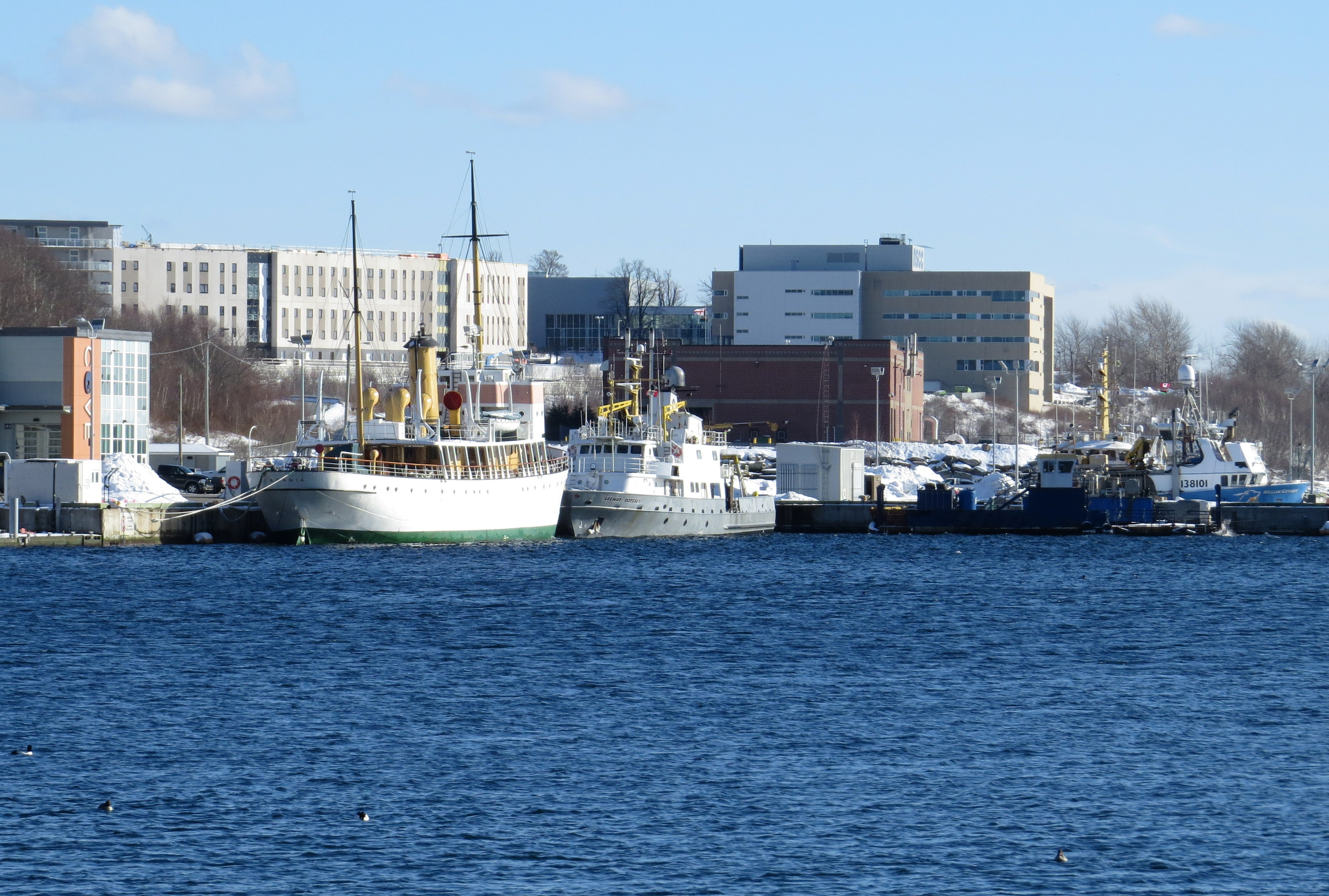
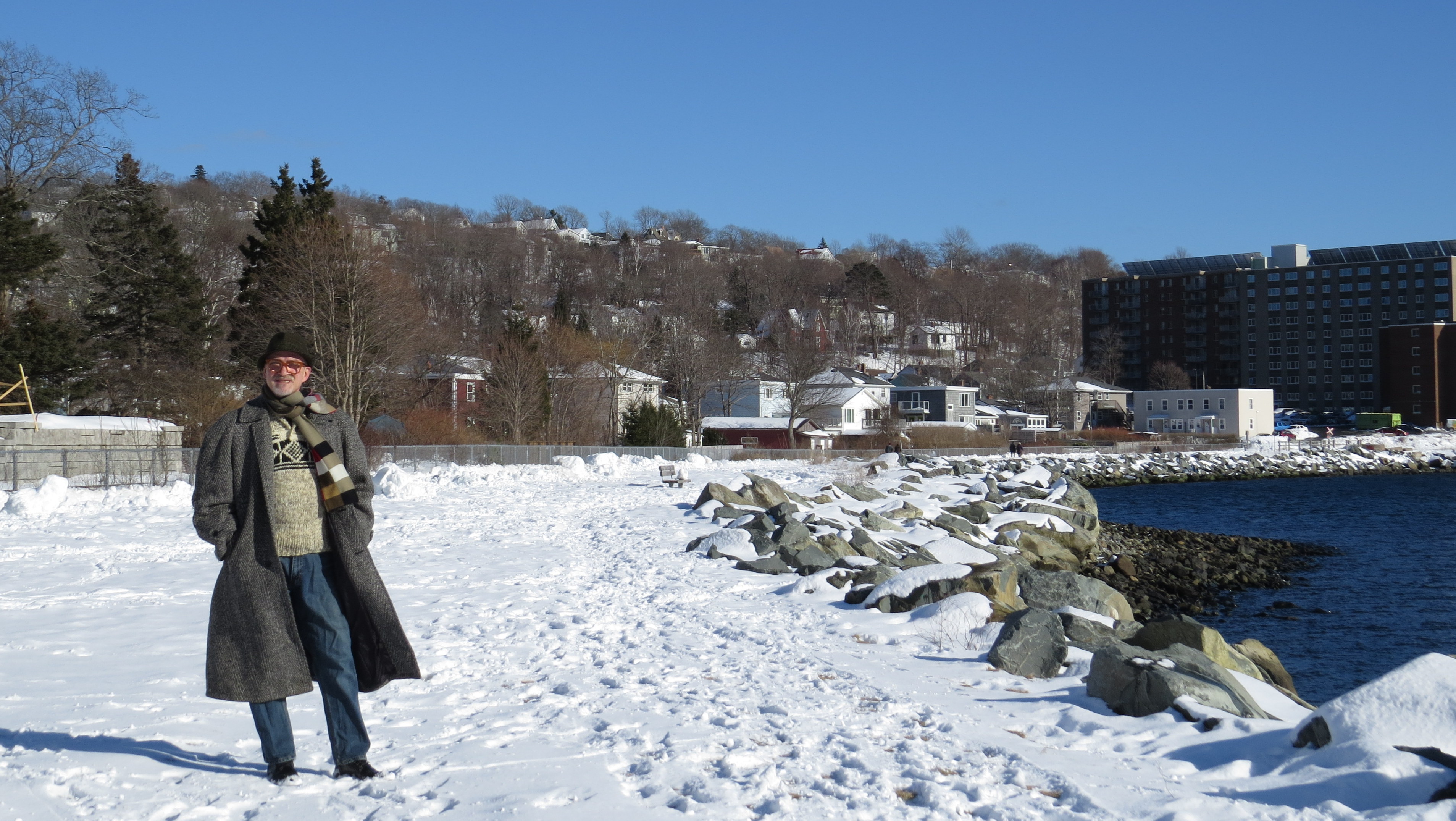
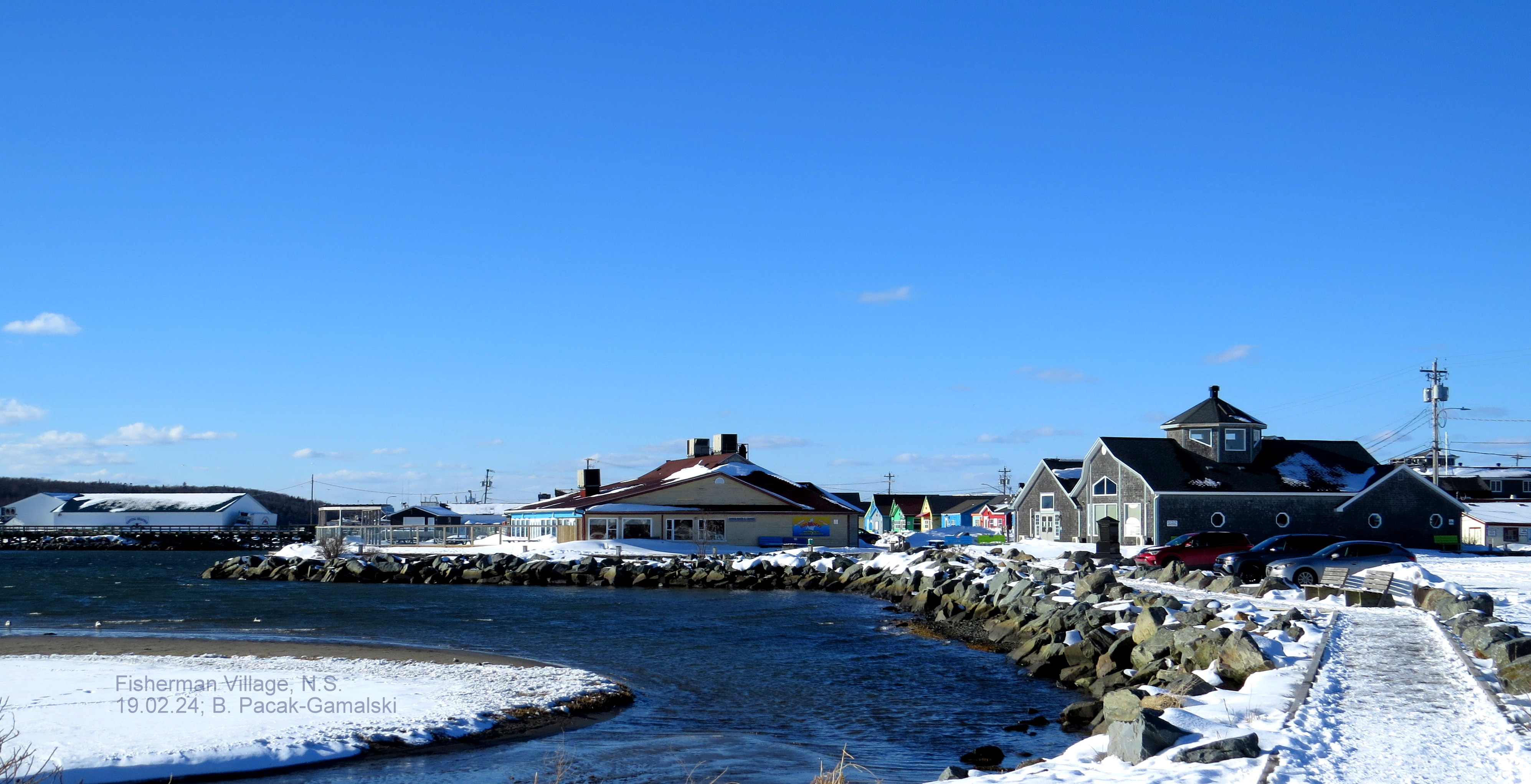
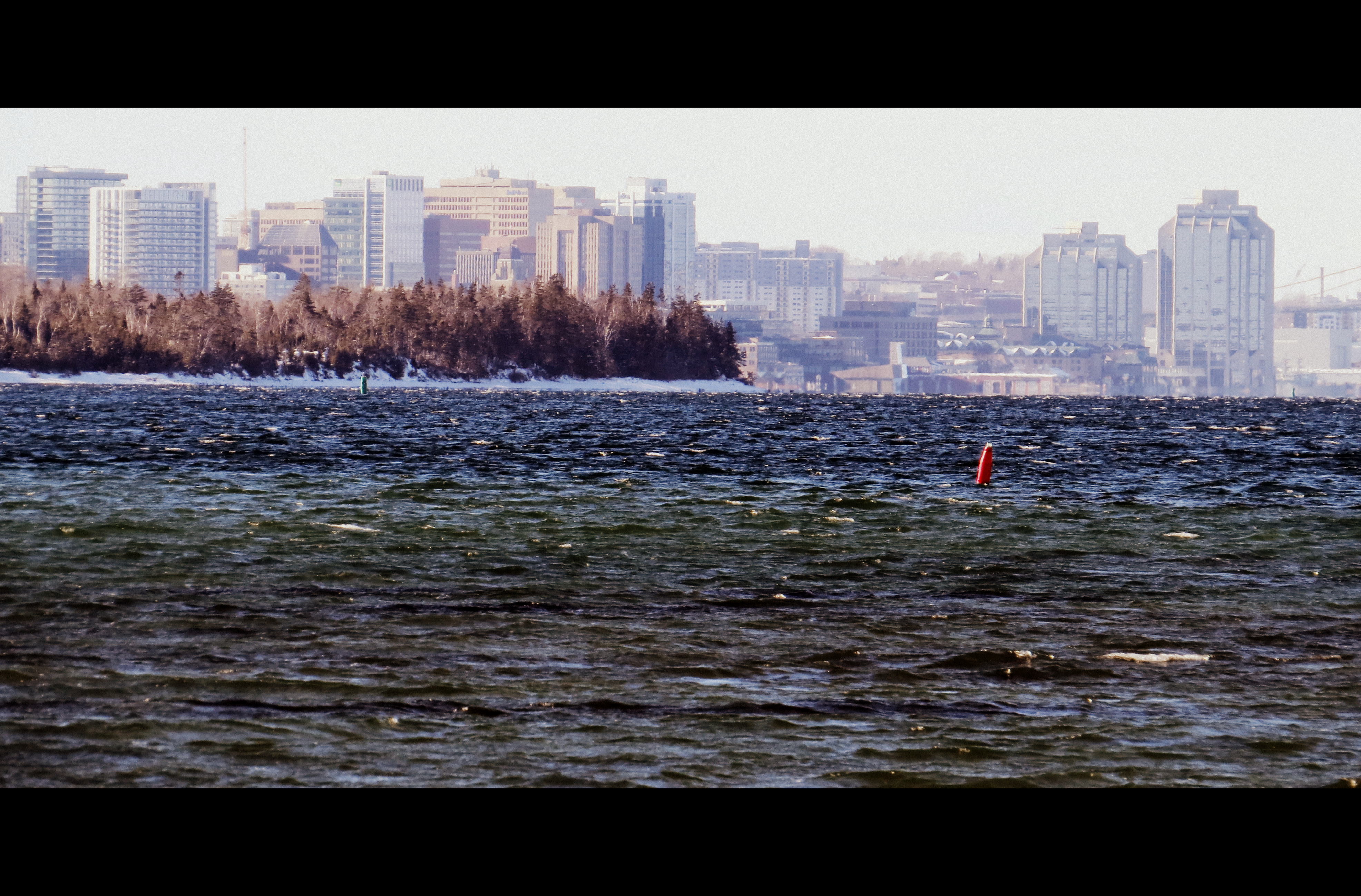
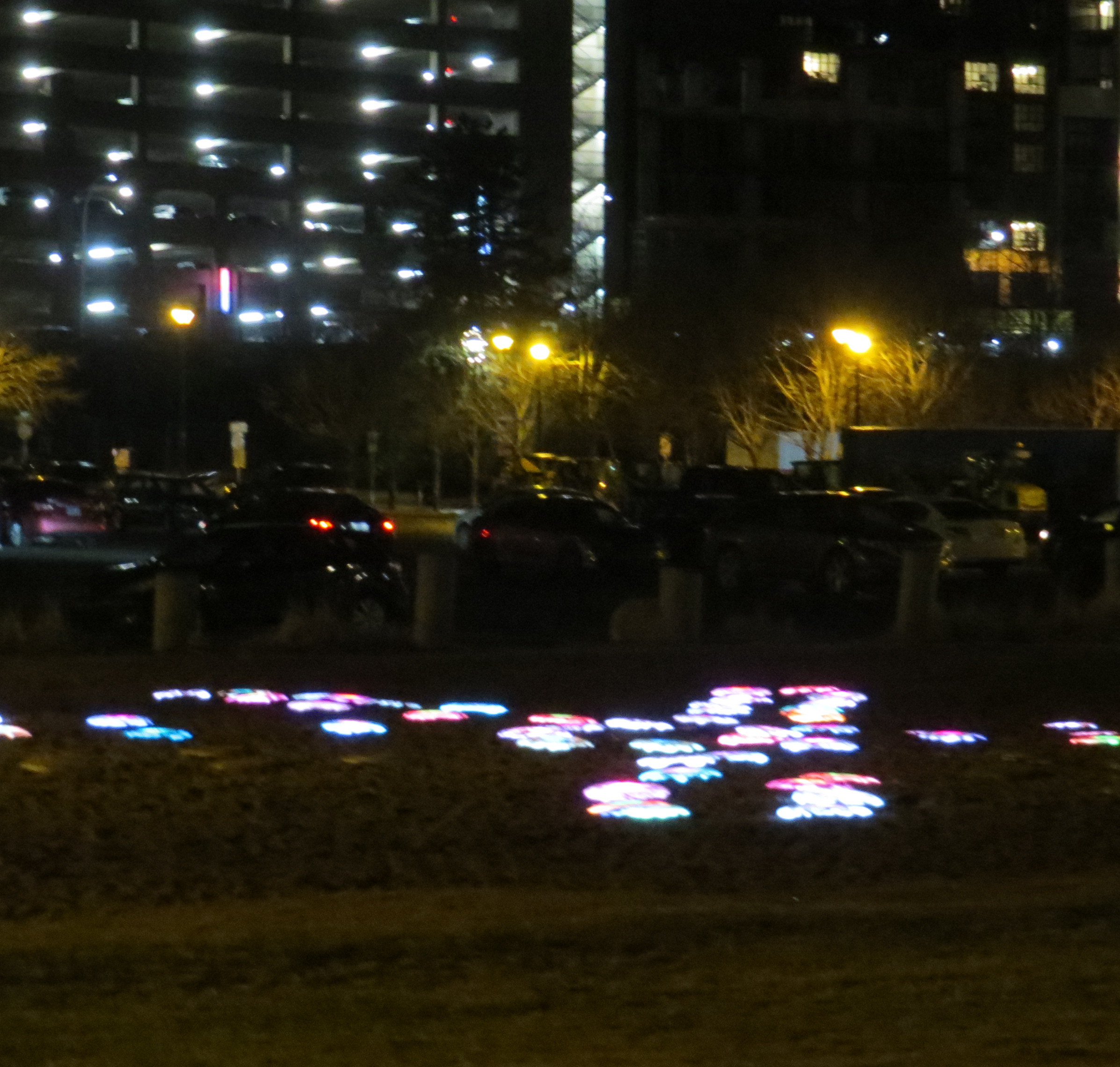
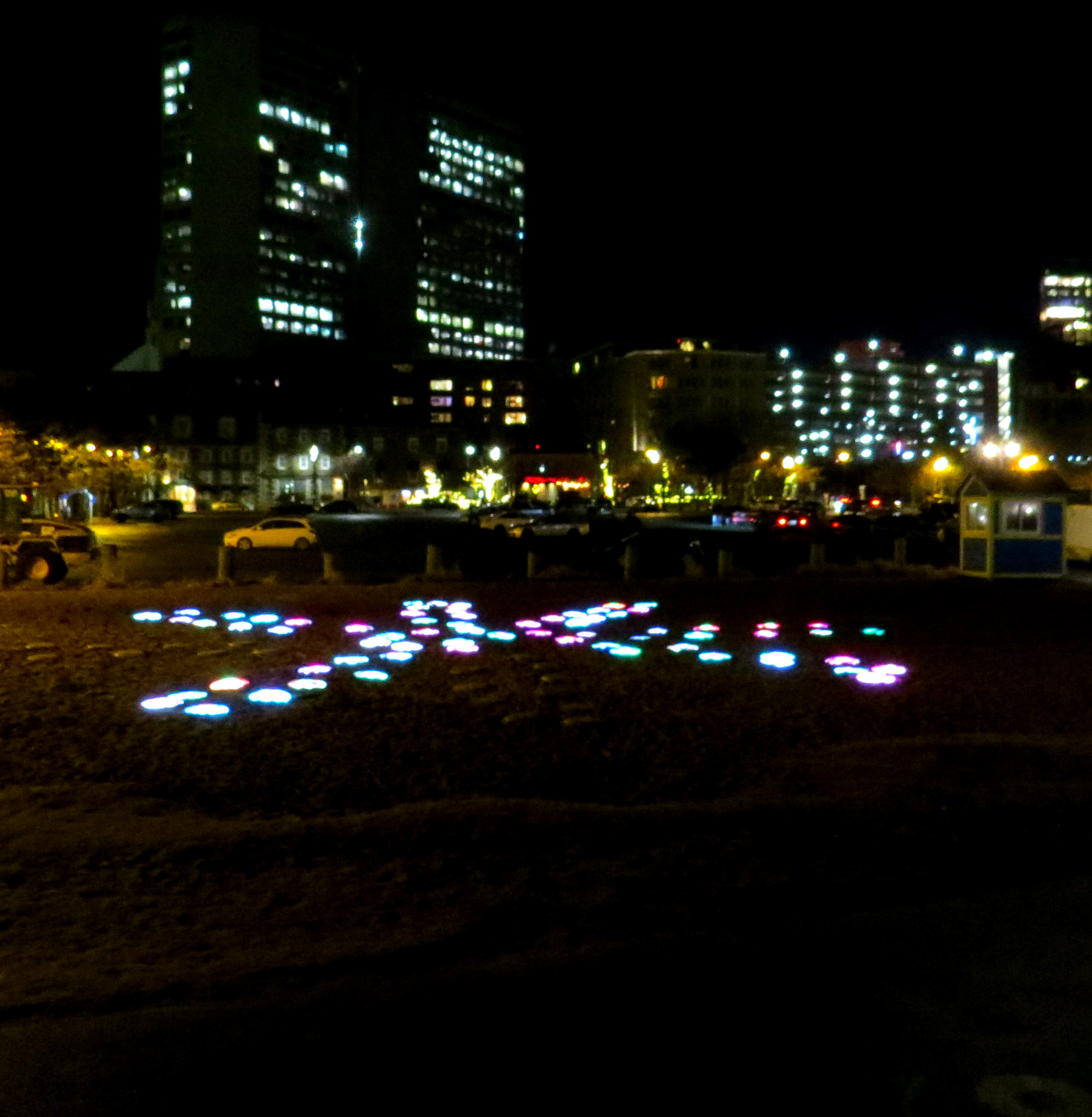
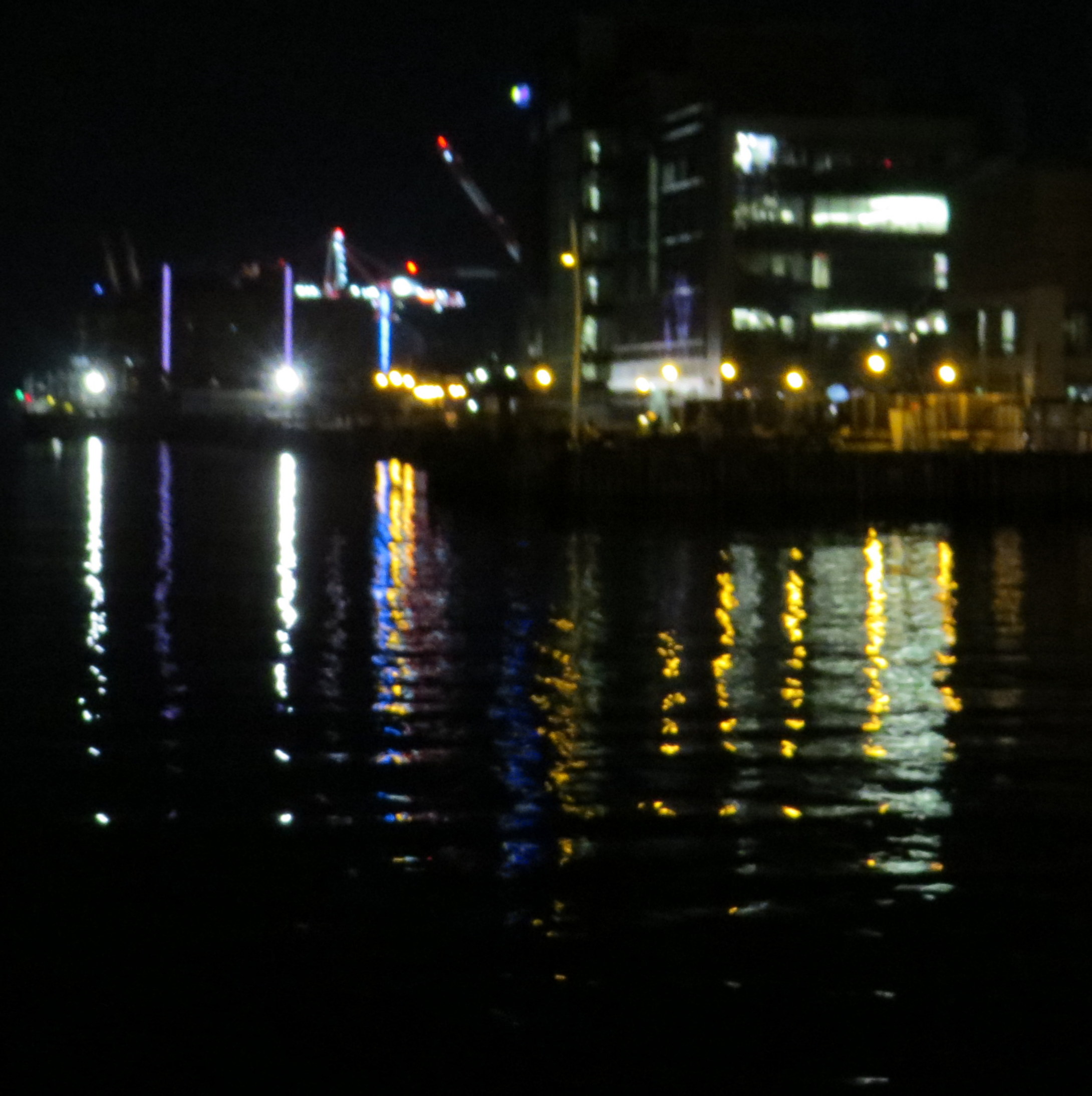
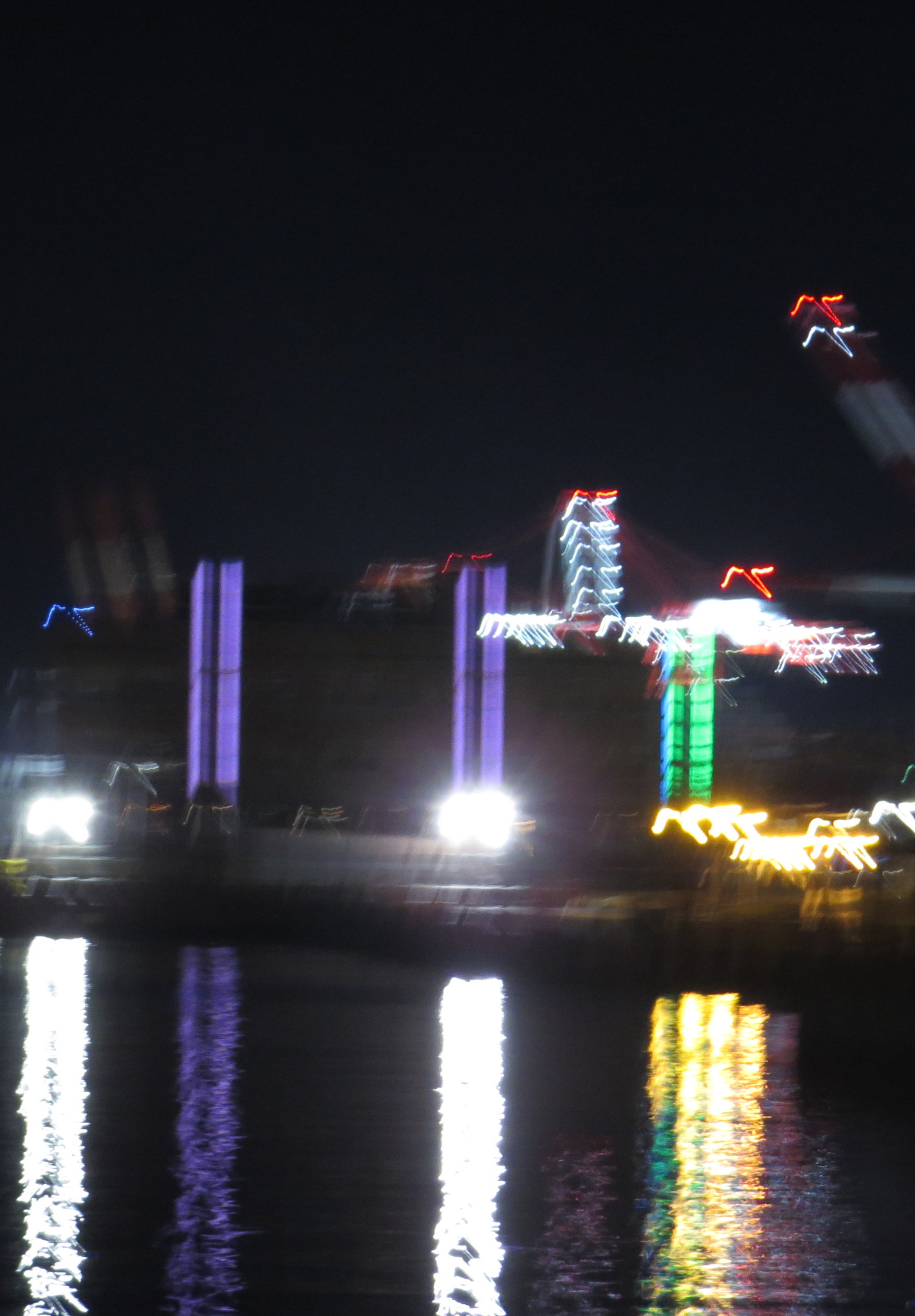
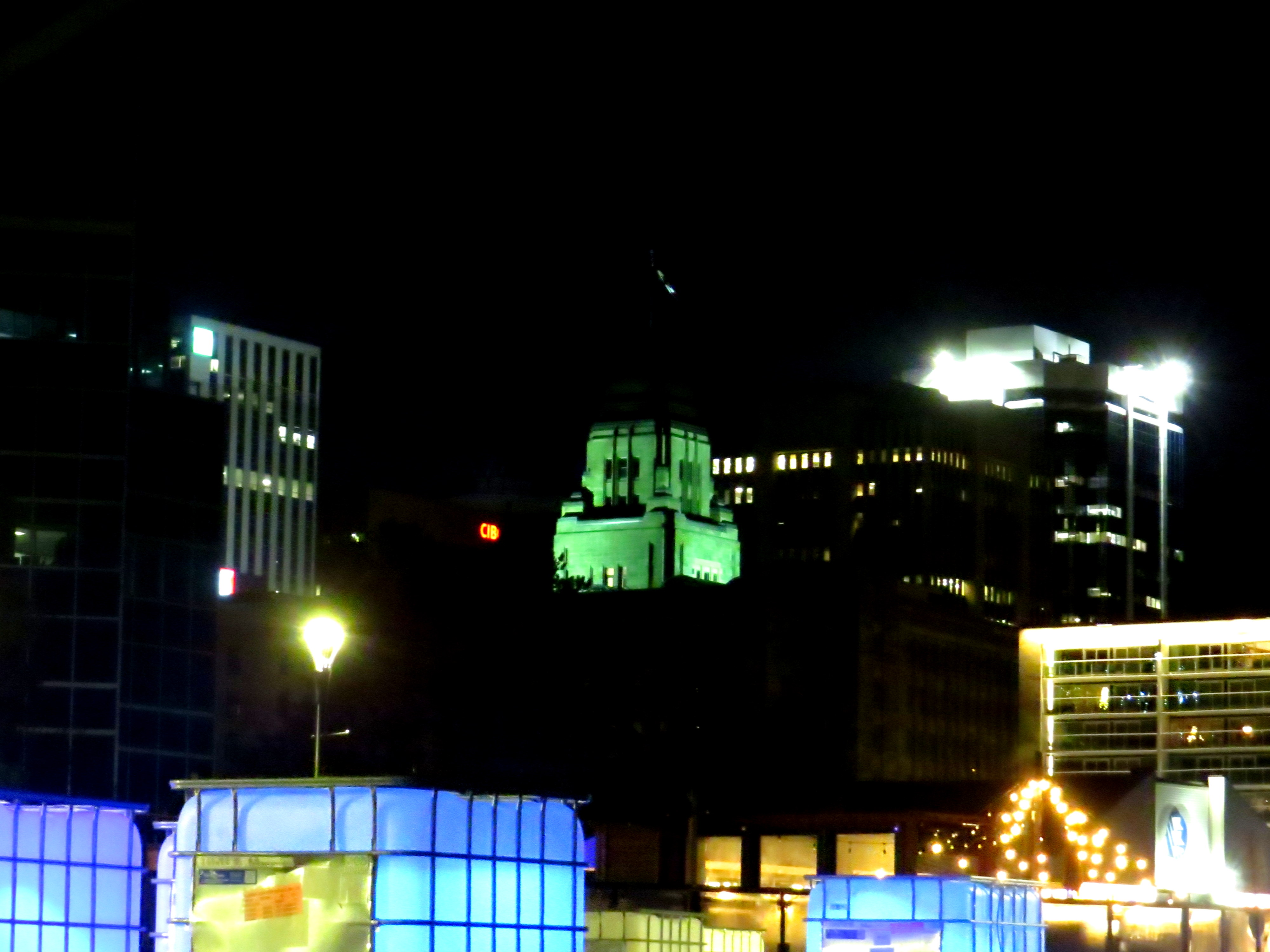
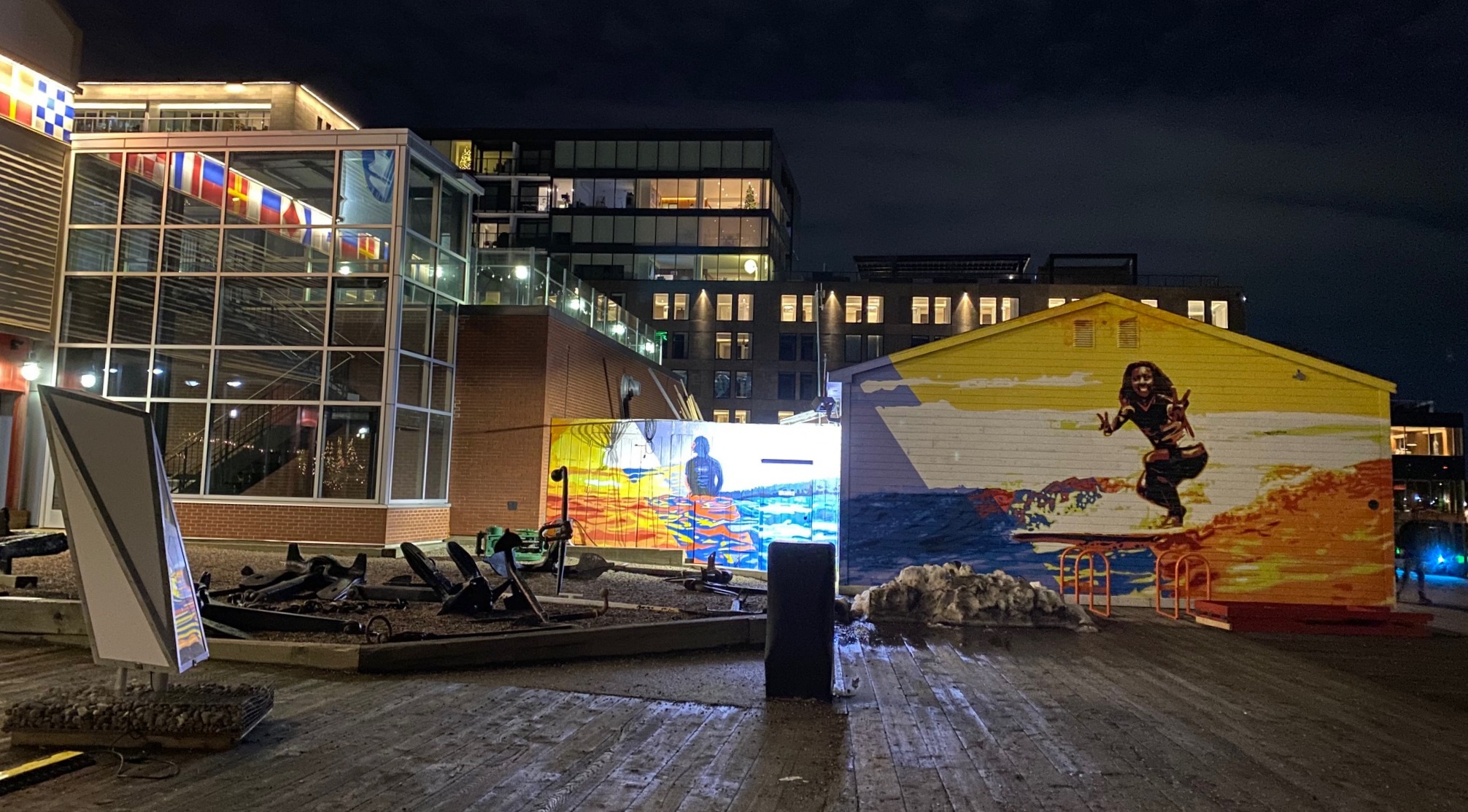
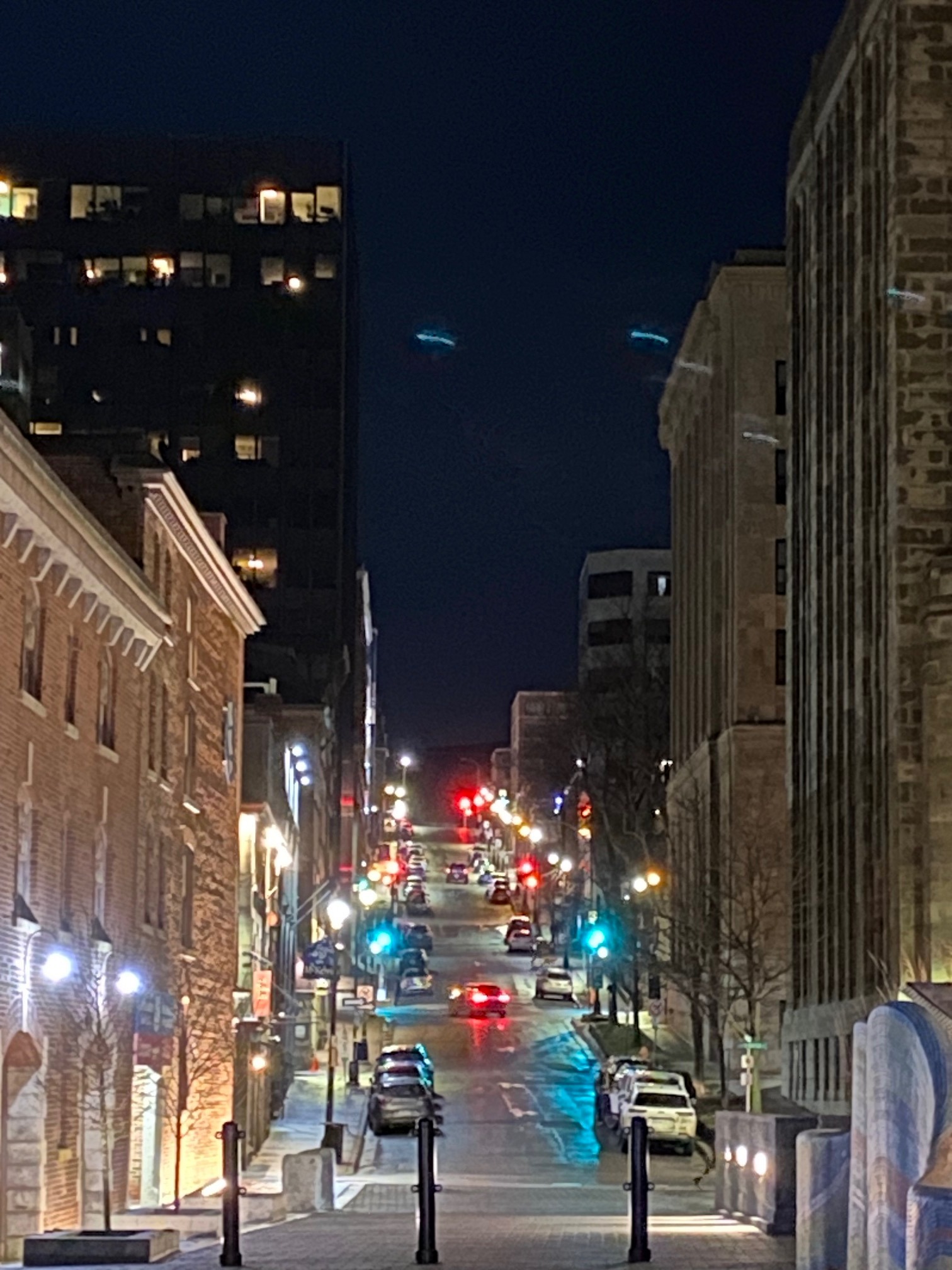
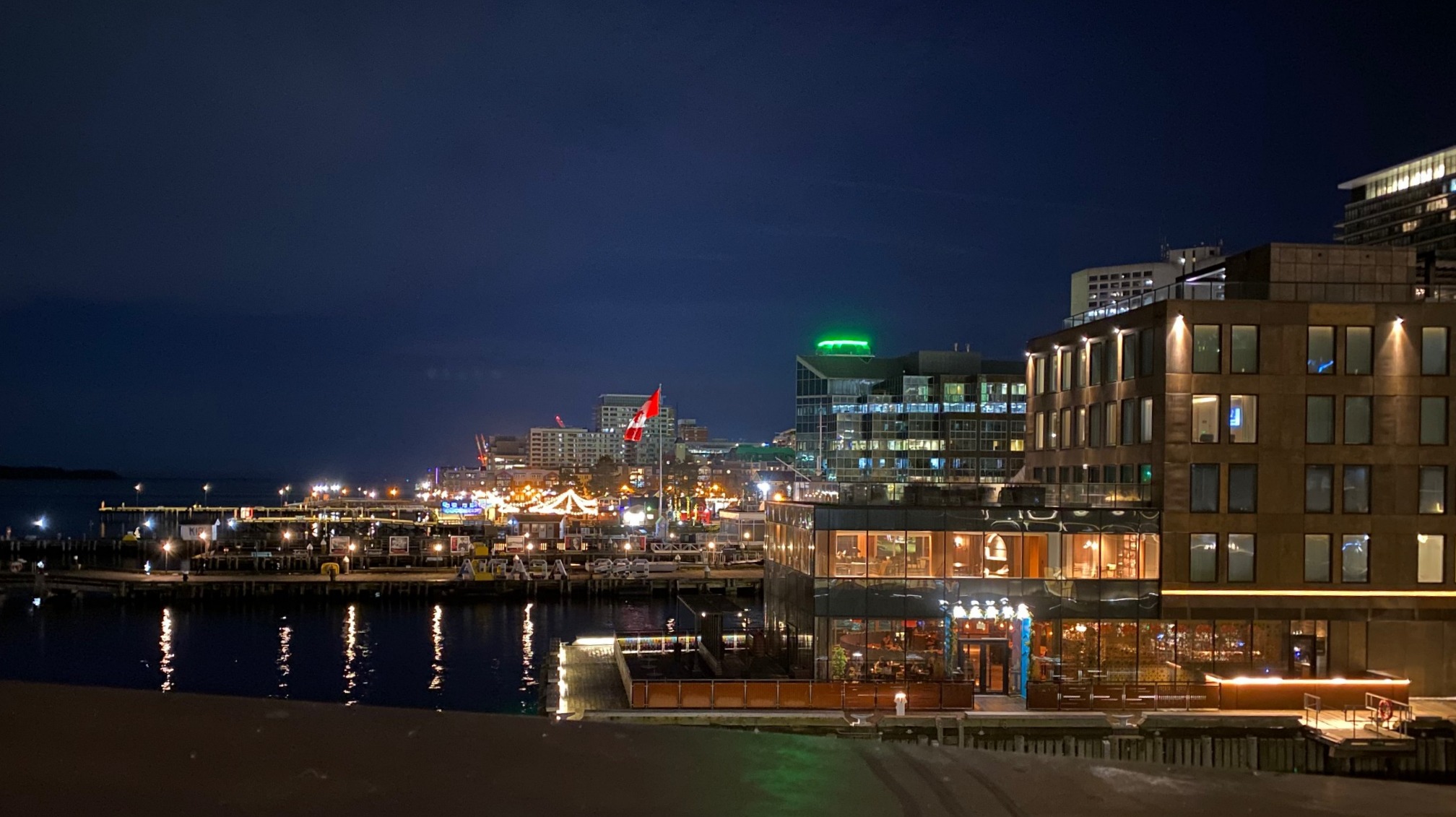
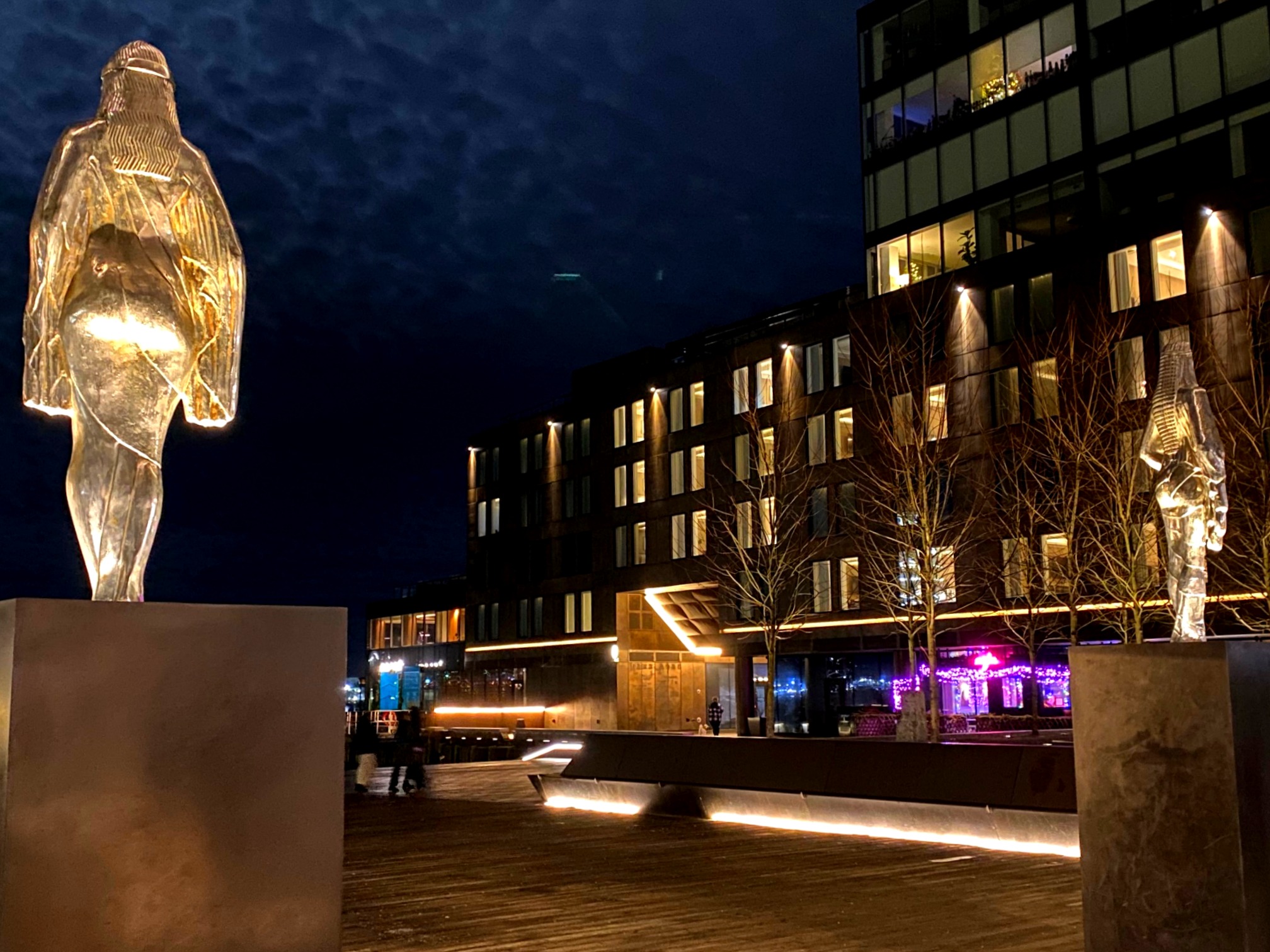
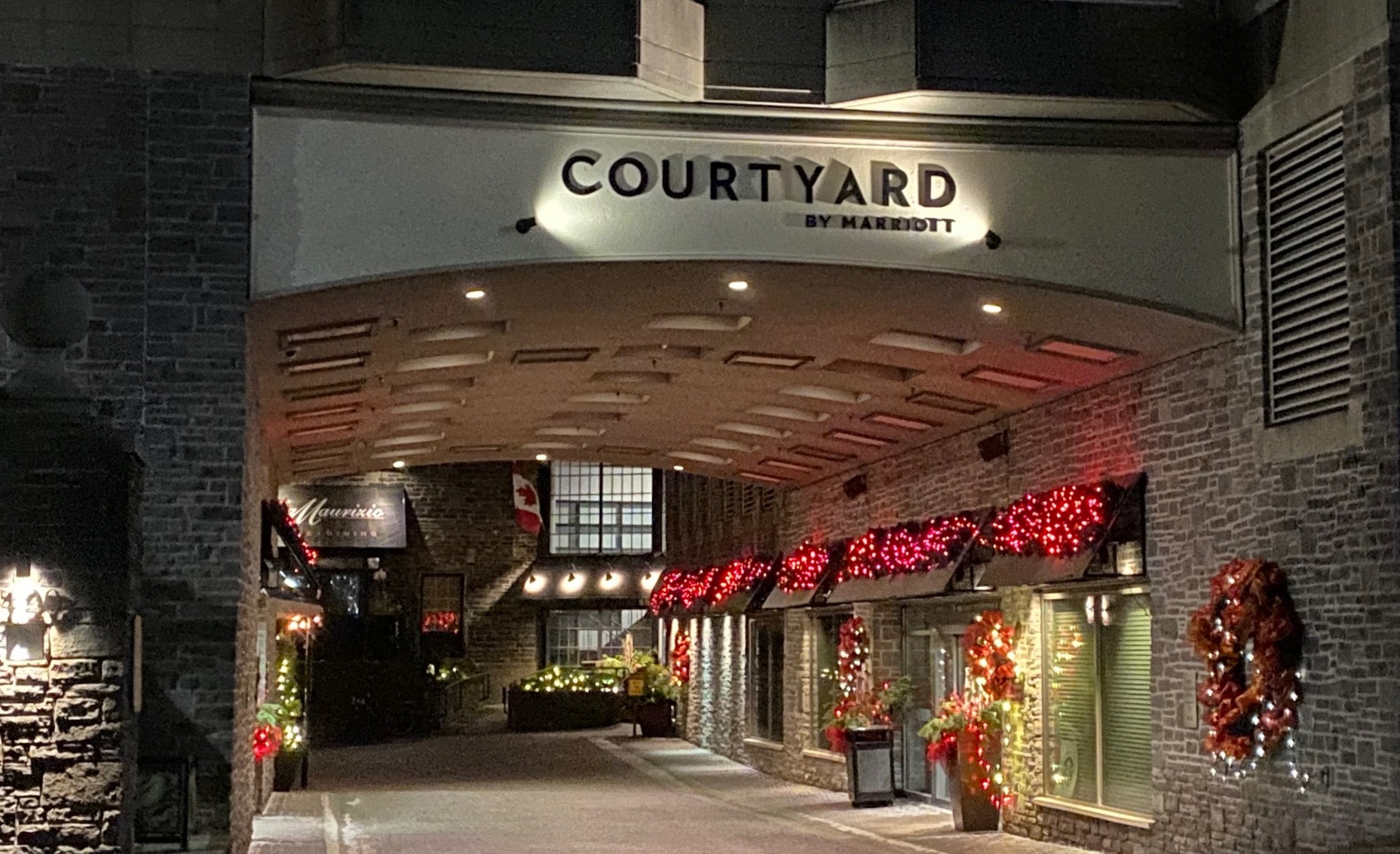
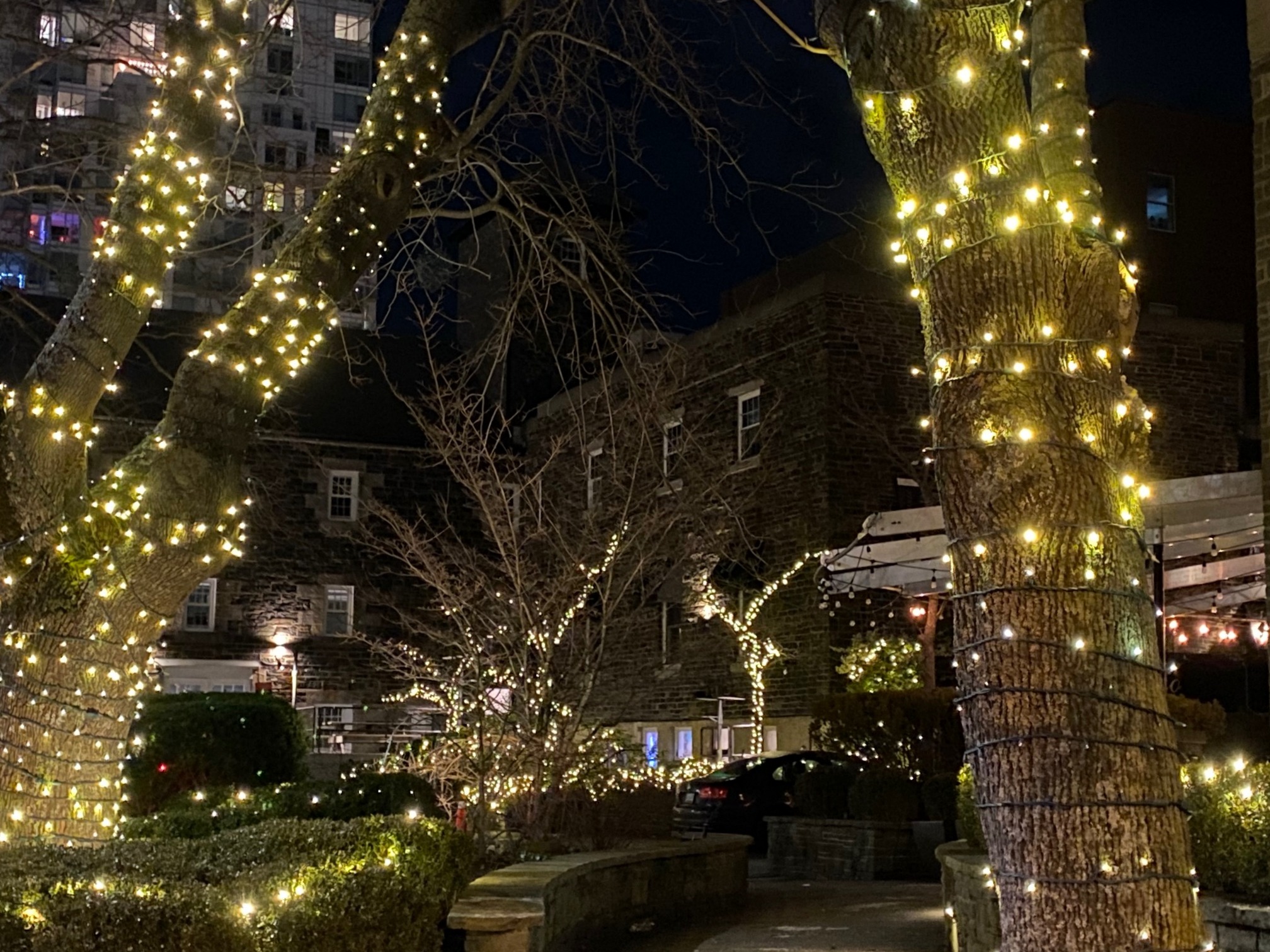
Yule is an old Solitice holiday in Norse and Anglo-Saxon tradition. I was going to visit my husband burial place today. But been there a short time ago. Dont really like going there, especially this time of the year, when it is wet, gray, desolate and sad. Entire summer and autumn I spent almost entirely on wild beaches, secluded spots, where I could be just with him. Talked to him, built forts of stones and sticks to our love and passion. wrote poems to him. And I said today – no more cemeteries. You are here with me, and we are going to do some damage at night time in Halifax. And we went and did.
Yule in Halifax
Do you still notice the odd things
and the normal things, expected?
Did you hear the song of the waves
yesterday – when it came to our feet,
caressing, enveloping them in a soft
foamy embrace like a kiss?
Do you still follow me on these walks,
my walks of our talks, our love and pain?
Forlorn shores of foreign land that
separated us. But it failed, it failed, I say.
I scream – it failed!
The land on the edge of Canada,
precipitously looking at the abyss
of cold North Atlantic waters.
But we walked on these edges
holding hands, touching limbs and lips.
I still pull you, like a fisherman dragging his net























































 > > Pogwarki < <