How do you write a poem? Where is it borne? I mean – how the simple act of poetic writing occurs, how is it borne?
Of course, there are poets, who simply give themselves a task of writing a poem or three per day, or per week. When you do have a career as a poet, you are expected to keep writing. You need to publish here and there in a literary paper, every so often to publish a full new book of poetry. It is a job after all to maintain a name in circulation.
On the other hand, there are these impossible poets, who simply don’t give a damn about the business of being a poet. They just write when they feel like. Maybe once a day, or once a week, a month per chance? And some might even get silent for extended period of time. Free spirits.
What interest me in the original question is not how often or how rarely they write, but how the poem, the words are borne. Do you say them aloud? Is it possible that you think: I will write a poem about this or that? Do you seat yourself and start saying that poem aloud and copy it on paper (keyboard)? To be precise – is a poem borne in your soul or in your brain? Is it possible to use a verbatim form of recording a poem?
The other day I used a microphone that ‘types’ the words into a computer by itself (what will they think of next, LOL!). Therefore the poem was deliberately born in the brain. It had no form or ‘sketch’ that I ‘copy’ on paper. It was becoming as I was saying it to the mike. I knew therefore what I was saying but had no idea what the next stanza will be. In a way it turned out to be …a discourse with the microphone. And the microphone was trying to correct my trail of thought, LOL, which I resisted angrily. It became almost a battle of wills. Very amusing. Decided to keep it, as a reminder that it definitely is not my way of writing poetry. It felt almost Kantor-esque, if I can use the workings of great Polish and international theater stages by Tadeusz Kantor.
Here it is, cacophonic, almost angry, but somehow makes (maybe only to myself?) sense.
My walks with John are changing, far from any routine. I like it because we have not become an odd pair of aging gentlemen. Far from it. Not that people would really notice since they can’t see John, of course. They would just look at me, perhaps with a shake of their heads. Which really wouldn’t bother me at all. Not out of my arrogance and dismissiveness of their opinion. Honestly not. People see what they want to see, hear what they want to hear and they do have a right to their opinions. God knows I have mine.
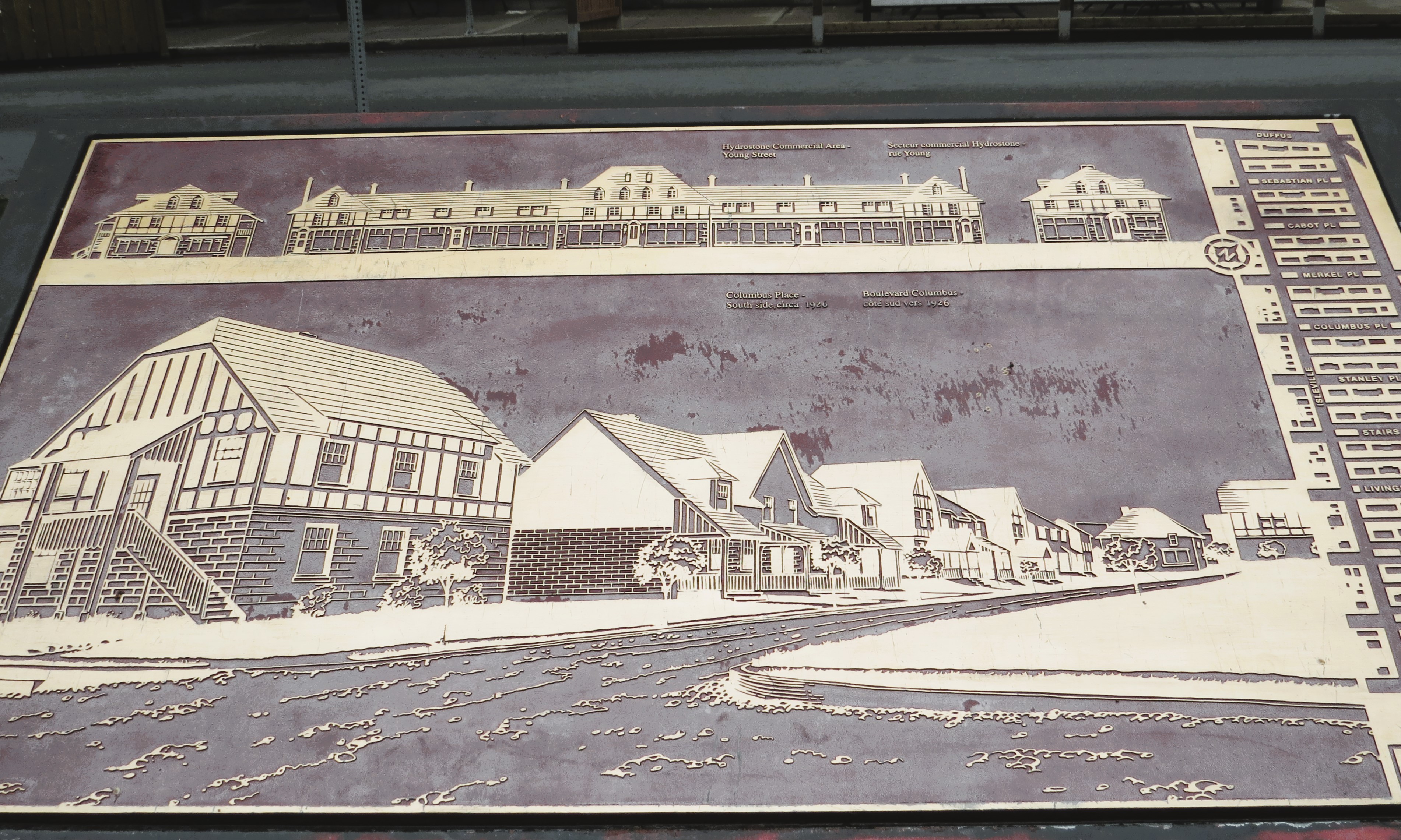
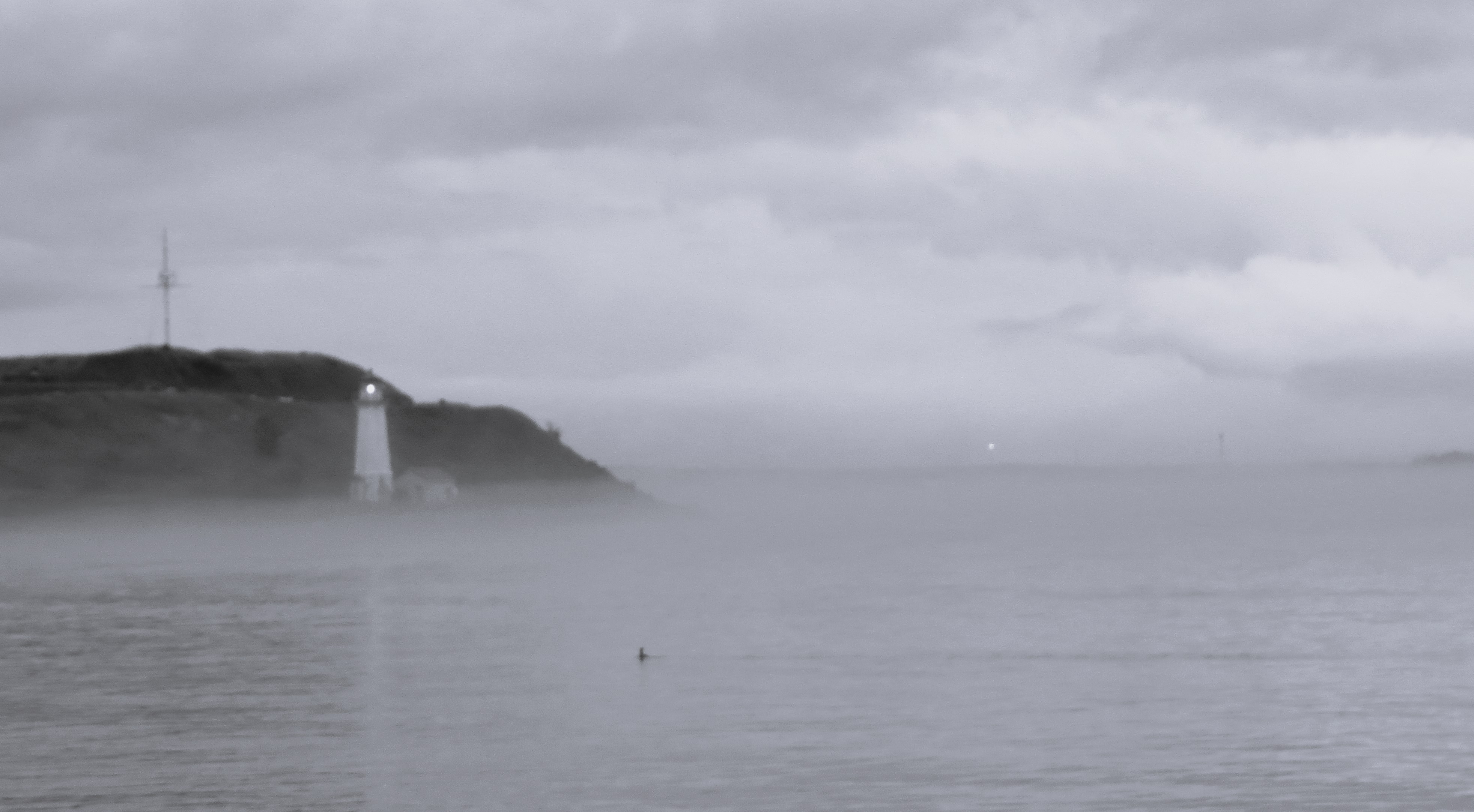
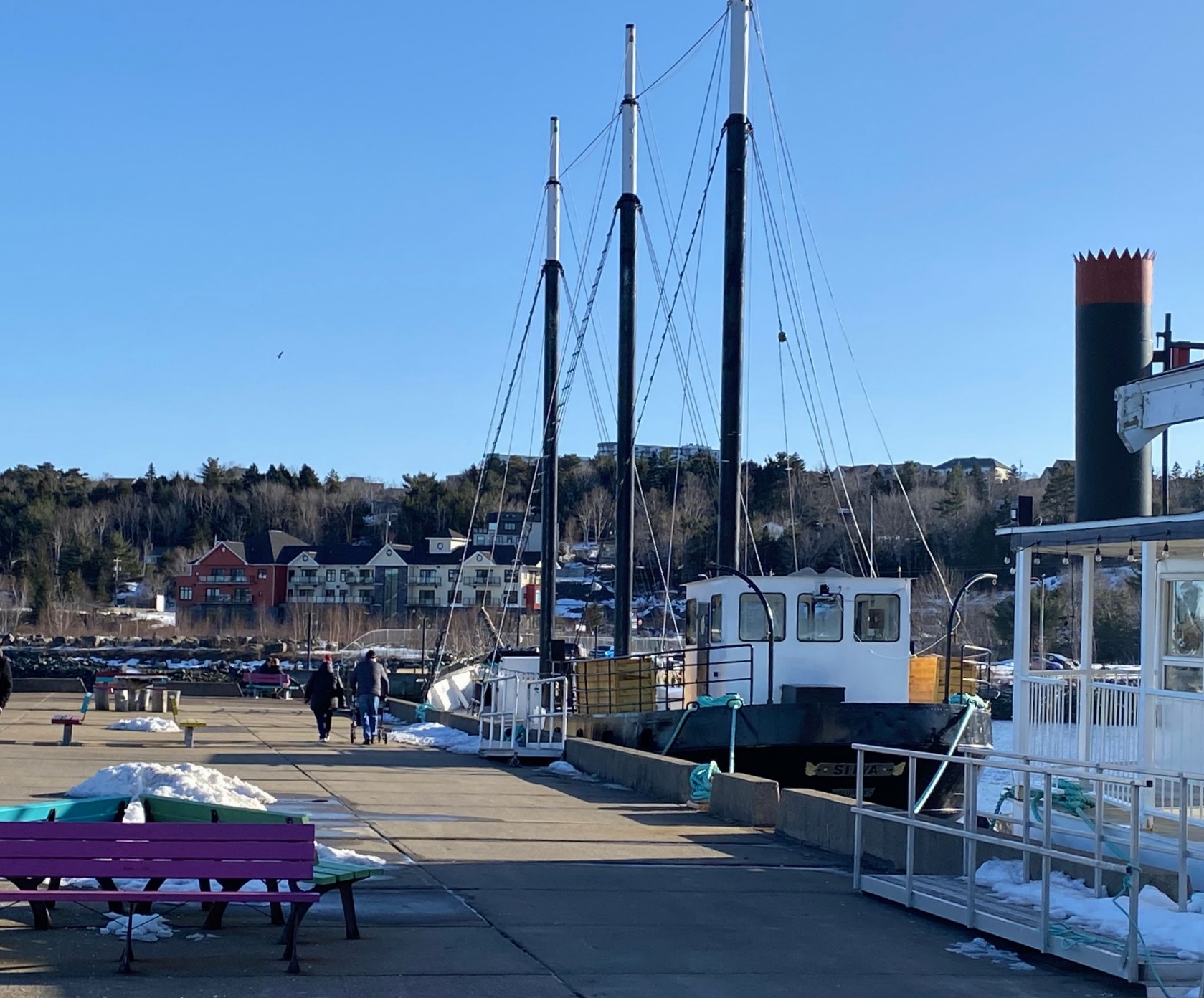
So I was walking on Canada Day with John in Halifax through spots we liked to visit together. Like the little square on Novalea, just before the Hydrostone district. And I started to write some stanzas about these walks with him. Later I went to the Waterfront. It was sunny day but with a heavy fog and mist covering the Channel. It really was coming right out of my unfinished poem.
The world of shadows
The shadows are everywhere:
the silhouette of your body,
          the taste of your lips,
          the gaze of your eyes,
          the touch of your arms.

On the corners of the streets,
on benches in the squares,
trails in parks, and in hills.
They are lurking behind trees,
passing us on the walkways.

Every time a green car
of certain make that you drove
                             passes me by,
                             I stop
                             and follow it
                             with my stare:
do I see your shadow behind the wheel?

The world has become bi-dimensional:
real physical presence of shapes,
and shapes of shadows
mingling between us –
invisible to some,
real to others.

Our talks in the crowds
          of these shadows,
your invisible hand
reaches out to touch
                   my arm.
I can’t see your hand –
                  yet, I feel it
when it touches my skin.

I feel the other shadows,
when they pass me by
               on the streets.

Some walk painfully bearing
	      heavy bag of sorrow,
others are light, they float
	                        in the air
without care or foreboding.

We don’t know their stories,
so, I just accept their behavior
as it is, without question.
They too have a right
to be joyful, and your insistence
that the shadows should be sad
is just an arrogance
born of our ignorance.
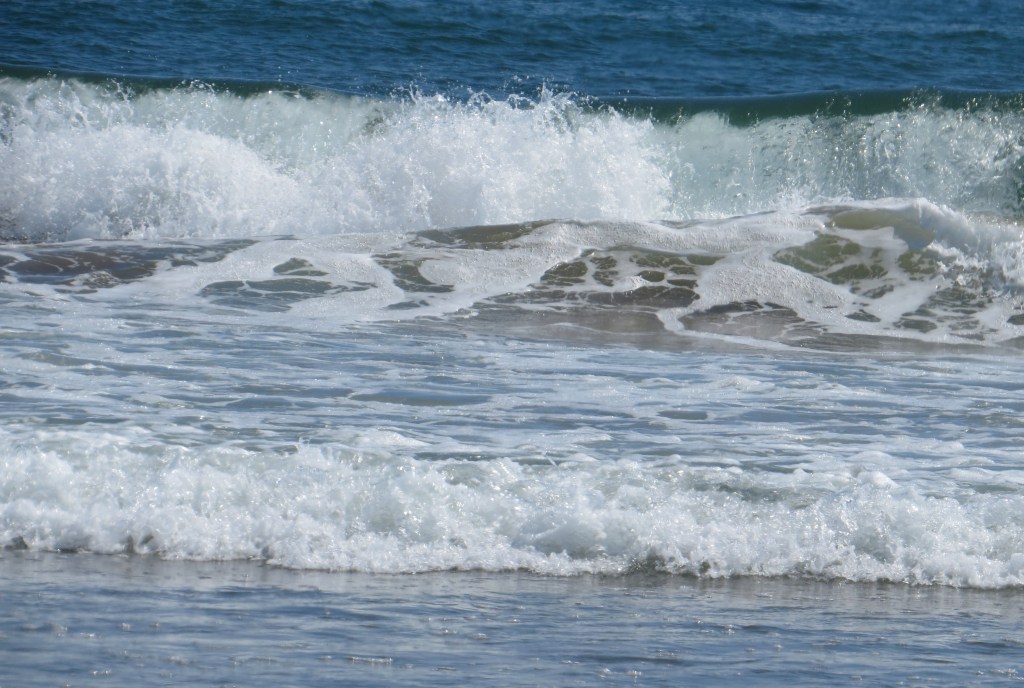
Today I went to the beach to finish the poem. Well, I have no idea if I did really finished it. I might actually add later another section to it for the idea of the ‘shadows’ among us (you can read to it whatever you want but my personal perspective does not come from religious point of view, but I always promoted the idea that a poem belongs to the author only as long as it has not been read by any other person. The moment it finds another reader – the poet no longer has any control of it, it belongs to that reader). But for now it is what it is. There was no fog on the beach, au contraire – it was sunny. But the crushing waves created beautiful mist on the edges of the beach, just where it meets the ocean. I liked it.
Every day starts with waking, and getting up from bed. Doesn’t matter if it is noon or 5 in the morning. Time is a very subjective thing. On days I don’t have to go to work (most of the time, since I officially stopped working for any company more than six years ago) and don’t have any appointments – I don’t look at watches or clocks. I do things when it is time to do these things, without assigning any number to that time.
Besides, time has stopped for me in November 2022. On the first night (was it night?) I fell asleep after You were gone. I wish I had not woken up. Waking up after that very first sleep is a daily routine of terror. The few seconds before you are certain that it is reality, that you are awake. When I am forced again to know that You are gone. Not to the kitchen to make us a fresh morning coffee, which you did every morning religiously for more than three decades. No – You are GONE. I have to go through that terror every single day while getting up. For 467 days, as of today.
Sometimes, just before I finally drift off to sleep, I wish, I pray, that it is the last time. That I don’t have to wake up again.
When I sleep I often meet You and talk to You. I think, sometimes I make love to You. That we are watching TV or go for a drive in the countryside.
You are my Eurydice, for whom I went to Hades to plead, to argue with the God of the Underworld, that he made a mistake. I beg him, I threaten him. I offer him love and hatred, devotion and disdain. To no avail – he is unmoved. In my dream, I write a poem to You in Italian. When I get up from my sleep I remember that poem and copy it, surprised that I retained more of my old Italian than I thought.
Dove sei, Euridice?
Dove sei, Amore mio?
Mostrati e parlami d’amore.
Ricordare! Non fermata
e non guardare indietro.
Ricorda, mio caro …
ricorda, ricor… , ri…
e piango, perché so
che ti volterai.
Ogni volta.
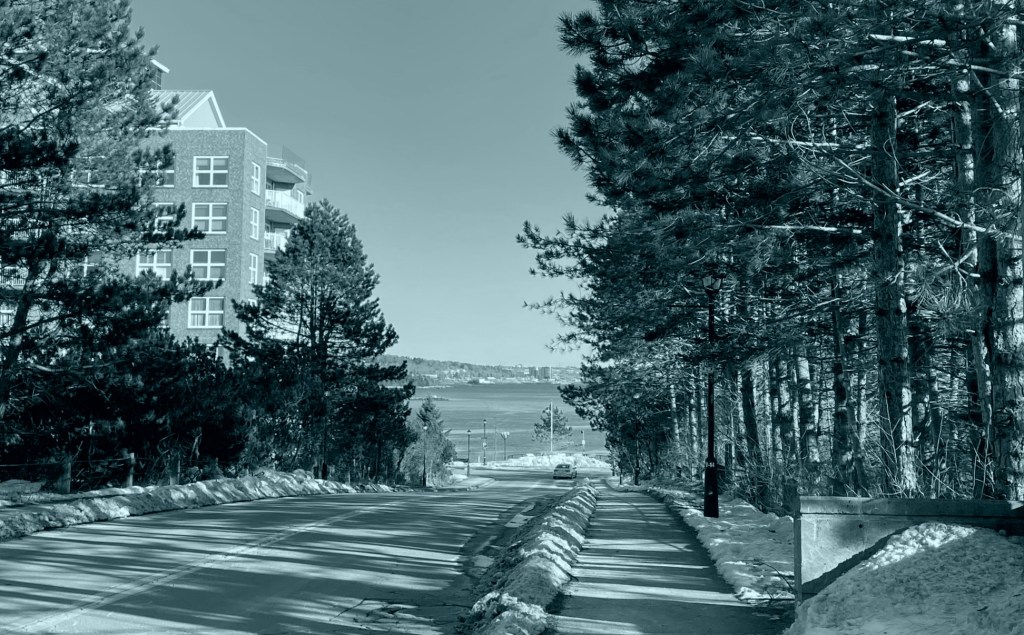
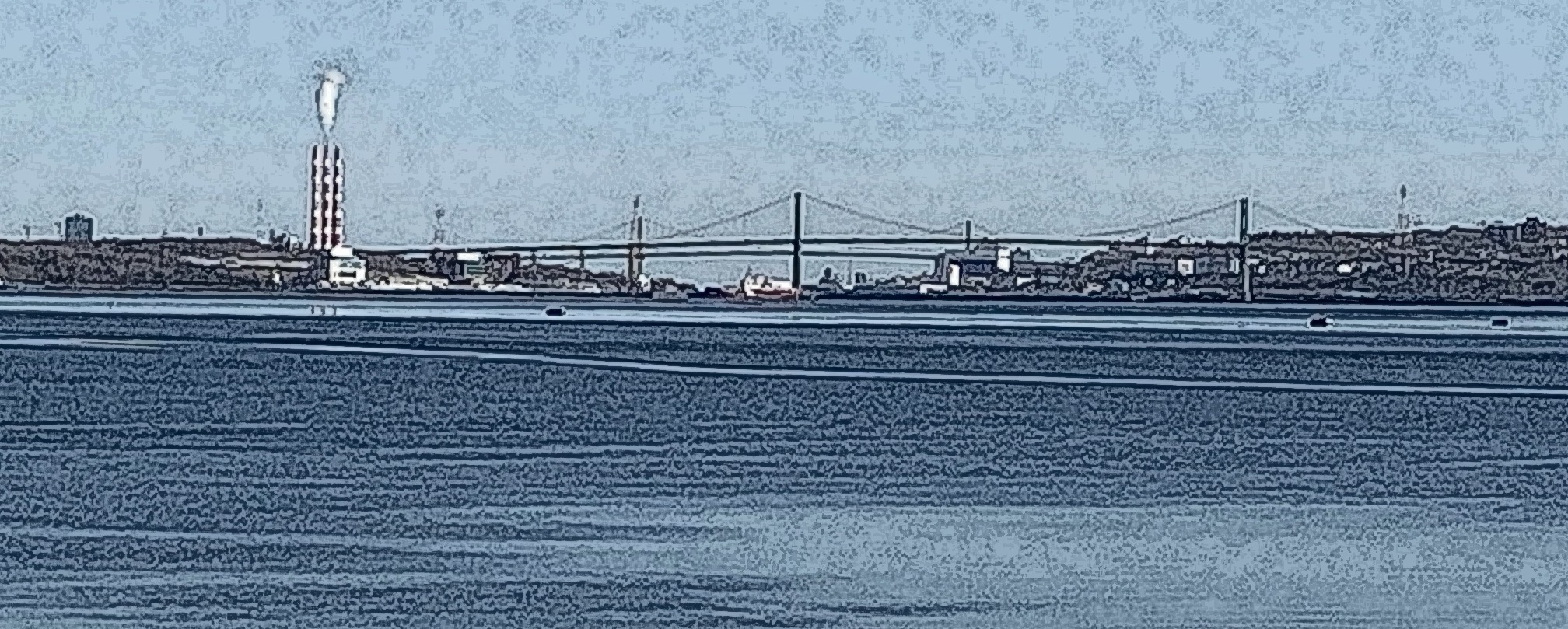
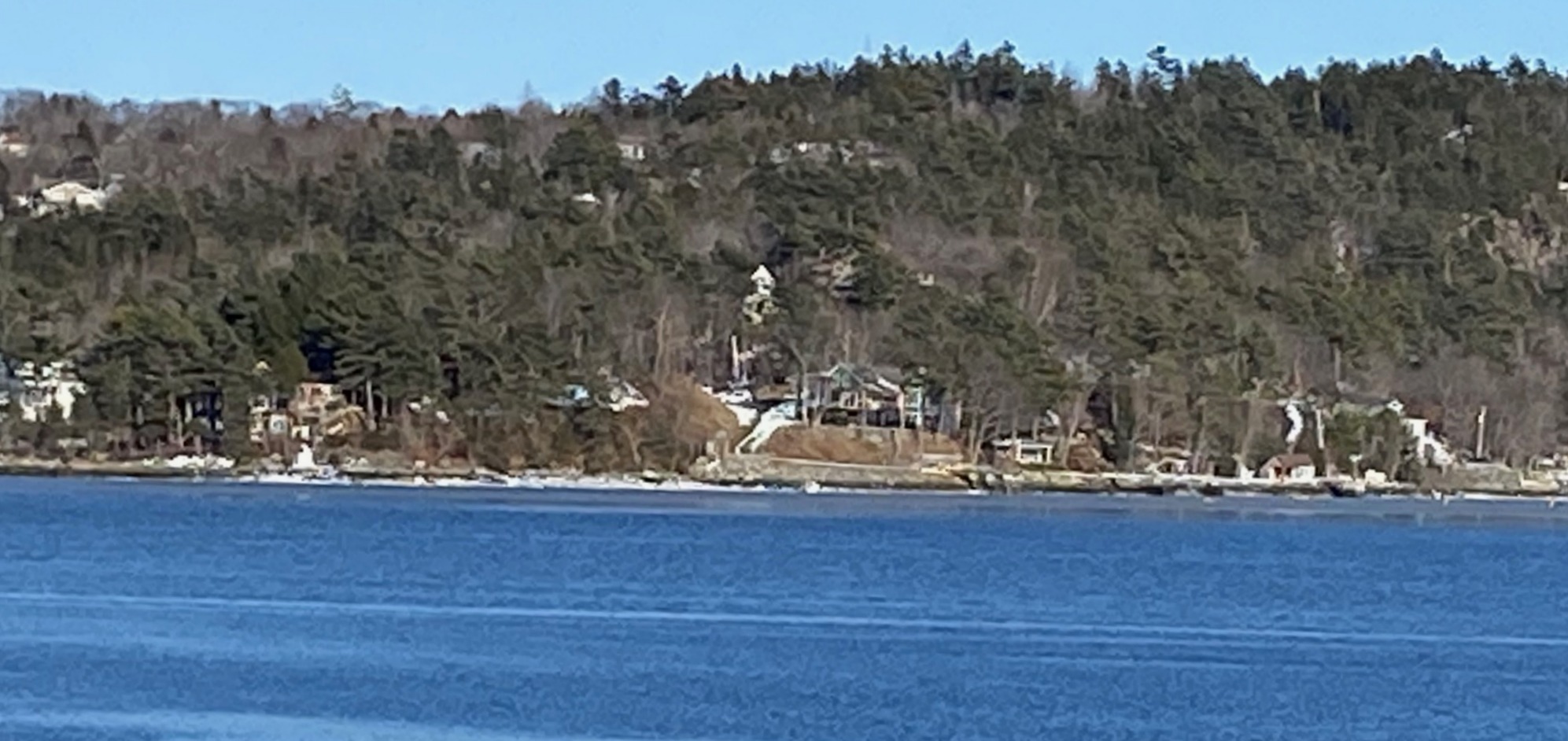
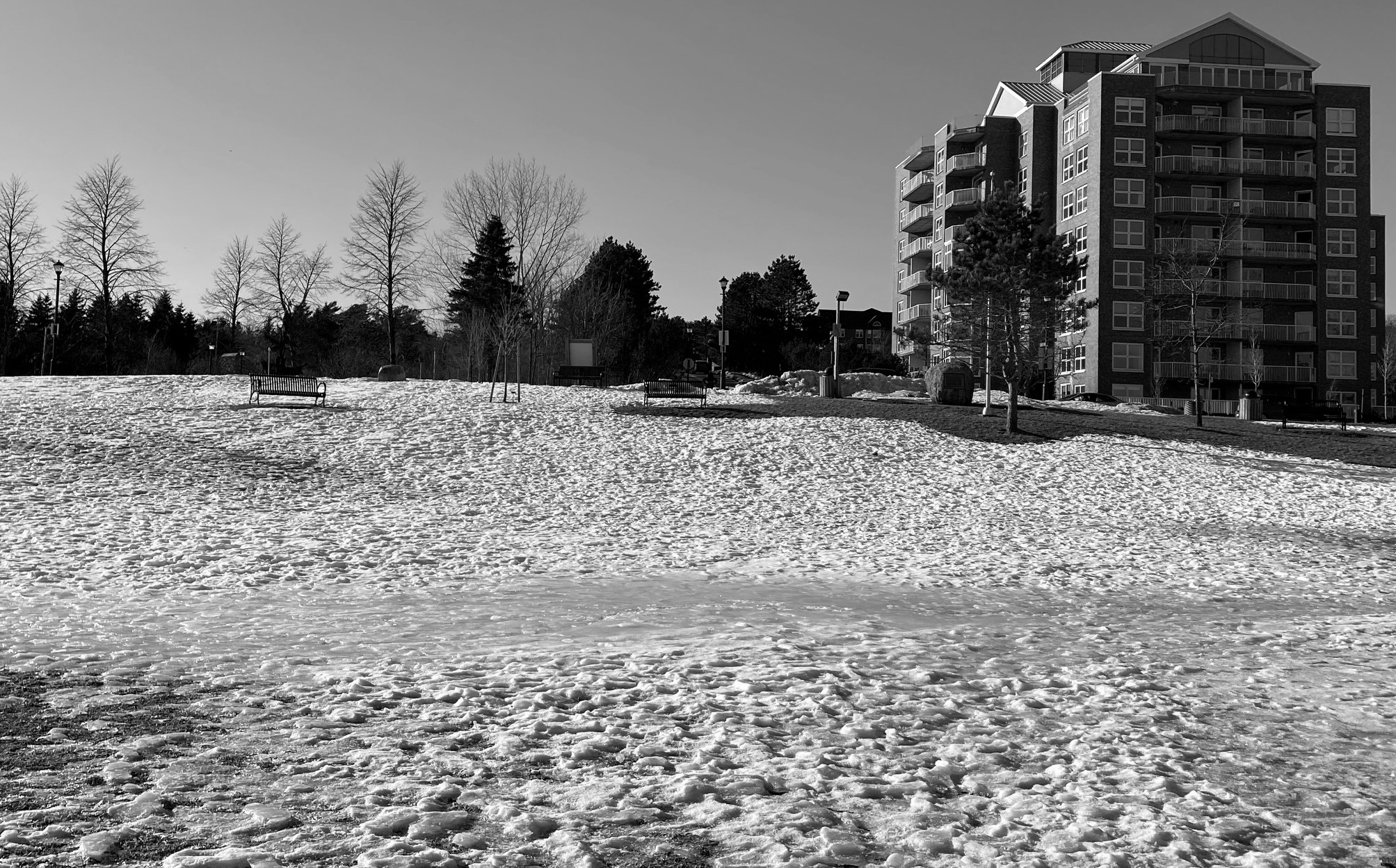
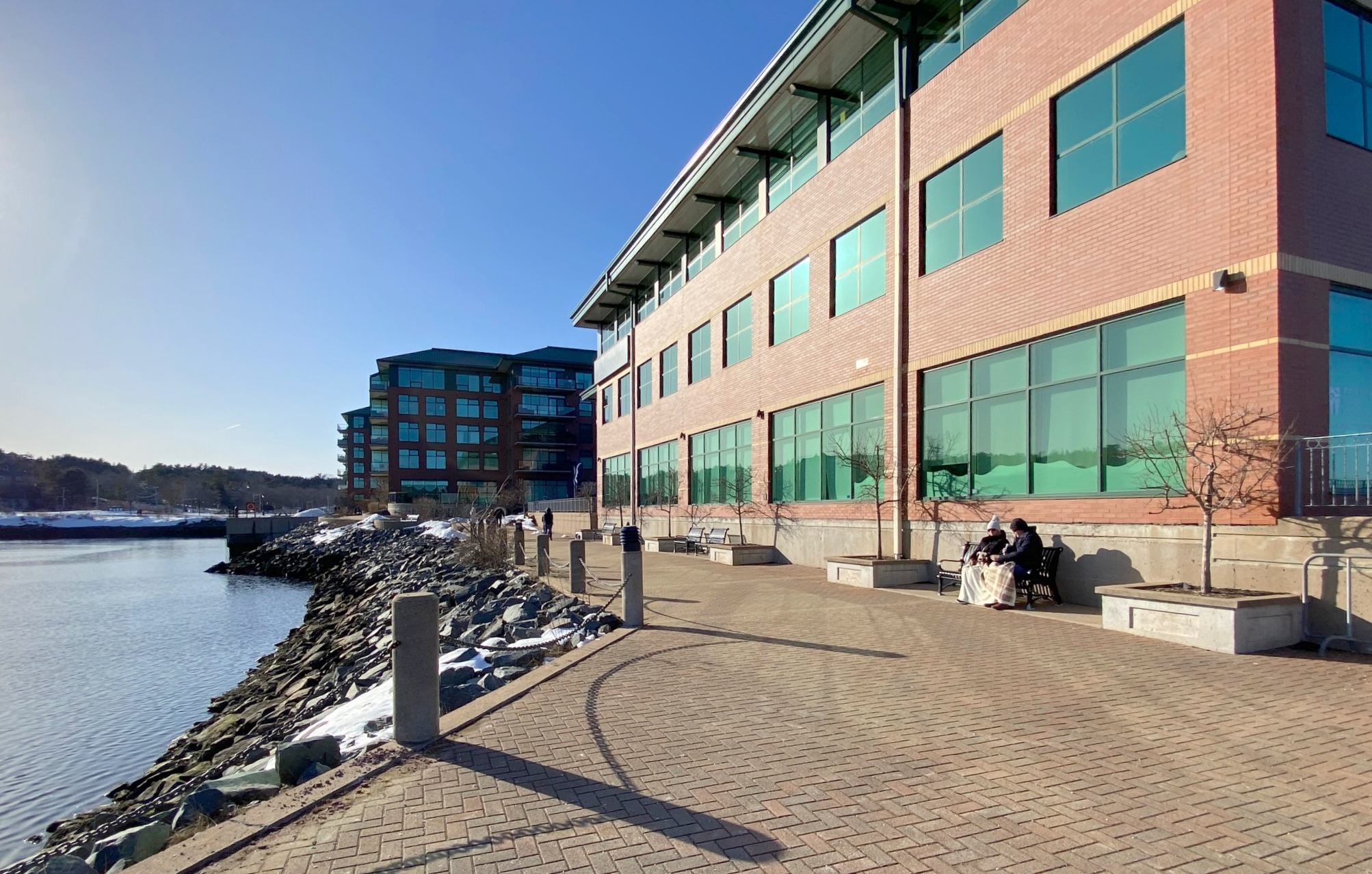
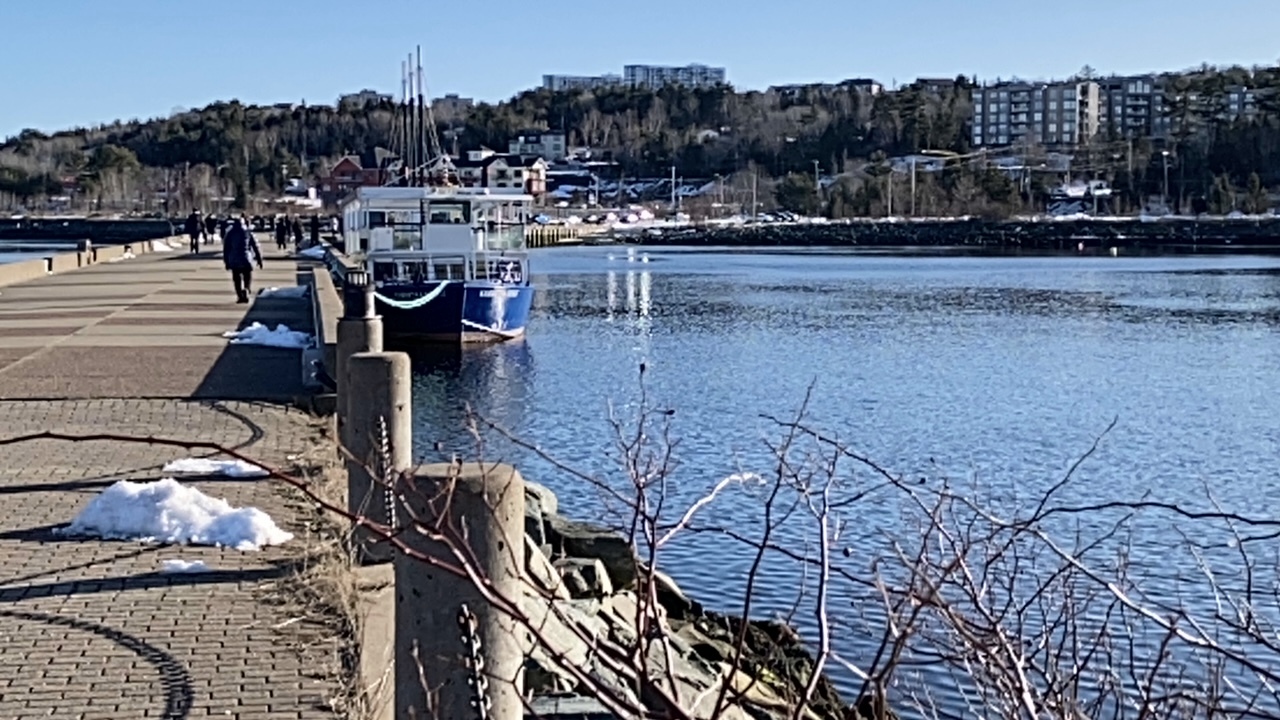
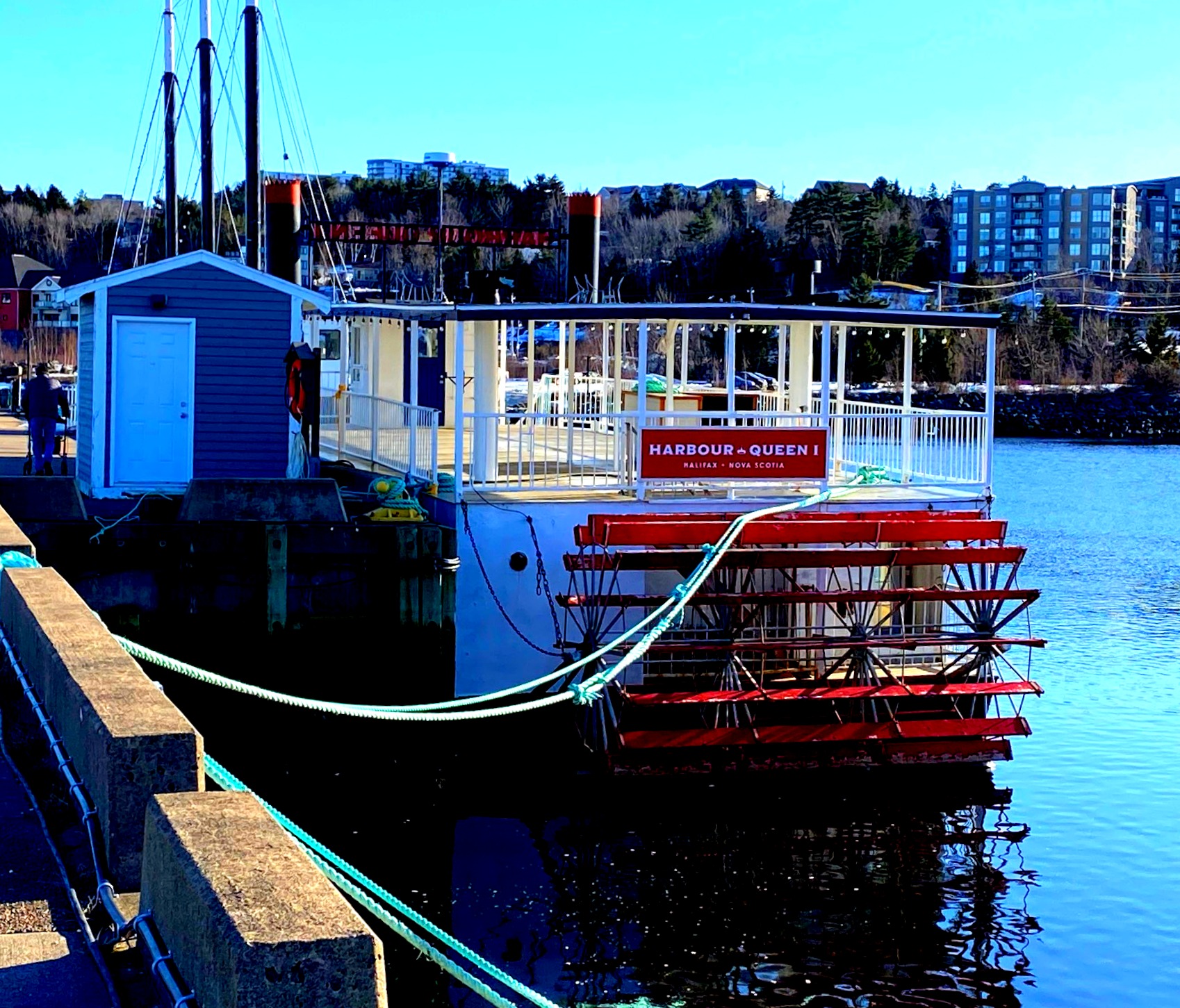
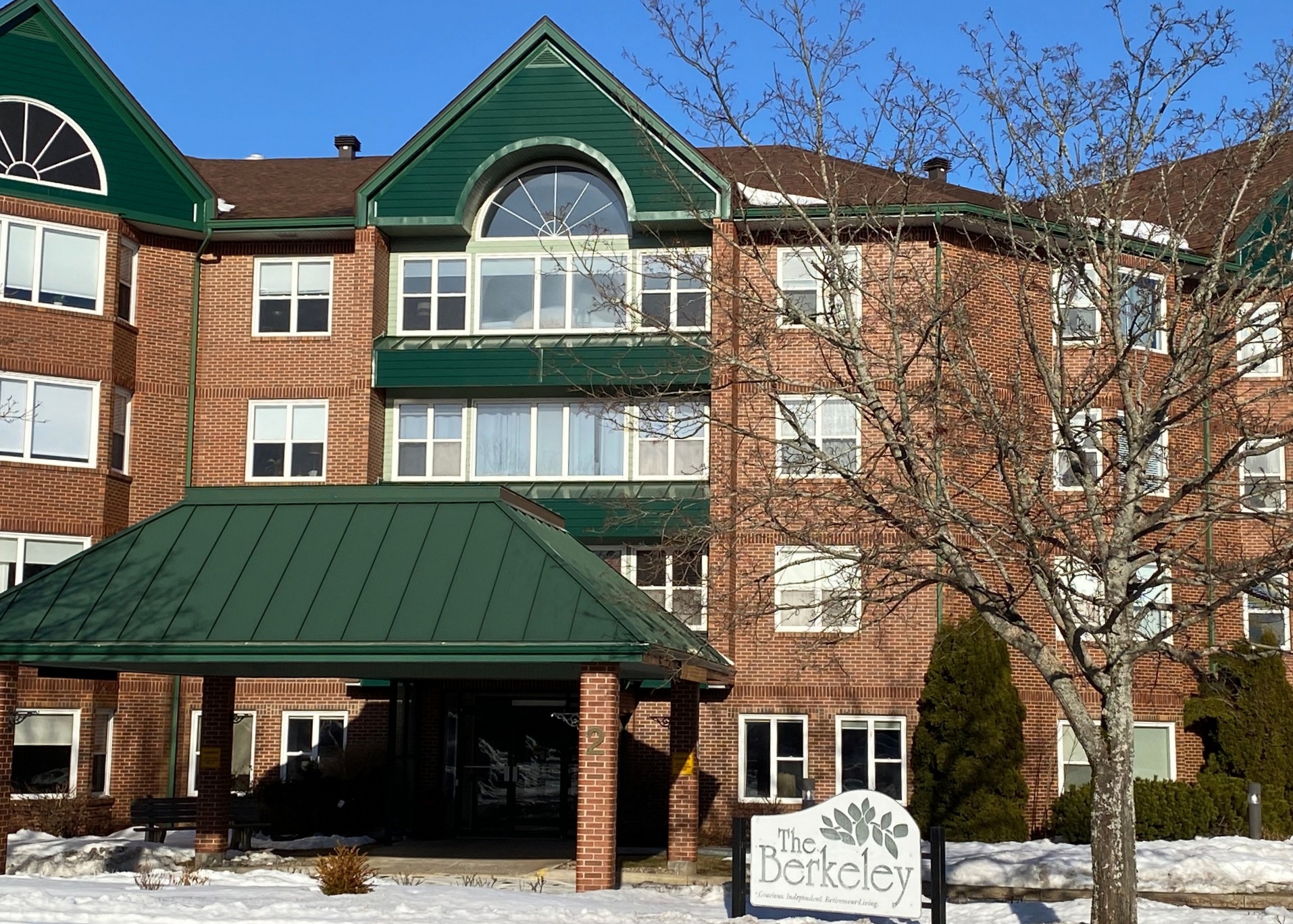
Today I stopped in a little park De Volf in Bedford. We used to go there many times and both liked it. It is a small park but there is something sweet and romantic about it. It offers a nice view of Halifax, our bridges, and Dartmouth. Next to it is a big building of the company that you worked for – The Berkeley. You didn’t even have that much time to work for them, yet You did leave a special mark on the senior residents of that building and all the staff. Your innate goodness emanated from you as everywhere you worked before. I will never forget and still am moved to tears how they organized a special memory meeting for the residents and staff in their main hall. It was full of people. Wonderful people, who came to share their memories, and their sorrow and offer their support to me and Your siblings, who came for Your final journey.
It was a cold but amazingly sunny day. I really enjoyed the walk and reminiscing about our strolls there. For a short while You – my Eurydice – walked with me. You didn’t turn back, didn’t look back. You walked with me. Maybe I even felt Your hand in my hand.
I know that the terror of getting up will come back tomorrow. Then again, and again for the rest of my days. But the walk today was good. Thank You, Babcycake. Gracie, mia Euridice.
Przyglądam się z coraz większym niepokojem polskim szosą prowadzącym do przejść granicznych z Ukrainą. Tym kilometrowym wystawom sprzętu rolniczego, zwłaszcza ciągników i traktorów. Bardzo zresztą ładnym i nowoczesnym, tutaj furmanek czy zdezelowanych Ursusów nie uwidzisz. Polska wieś zasobna, gospodarna. Mam nadzieję, że gospodarna i że ktoś tym krówkom w stajniach i świnkom w kojcach siana i innej strawy na czas daje. Słowem, że gospodarstwa pilnuje. Wszak od dziesięcioleci słyszeliśmy, że chłop urlopu nie ma, bo w oborze i na zagonie ni zwierzę ni rola urlopu nie biorą – świątek, piątek czy niedziela. Pewnie panie Gospodynie wiejskie i dzieciaki chłopskie chłopa-męża dzielnie w tej pracy znojnej zastępują.
Ach, łza się w oku kręci, gdy taki obraz wsi polskiej maluję. Tyle, że jest to obraz, tak jak od Chełmońskiego, a nie rzeczywistość. Mamy de facto dziś producentów żywności. Chłopa z małego gospodarstwa na tych szosach nie obaczysz przypuszczalnie – na samą benzynę (lub ropę) by go stać nie było. Więc ci polscy przedsiębiorcy żywnościowi idą blokować granicę ukraińską by produkty rolne od obszarników ukraińskich nie zalewały polskiego i europejskiego rynku.
A co polskiemu klientowi w sklepach spożywczych za różnica, czy kupuje drogie jajka od obszarnika ukraińskiego czy od kułaka polskiego? Bo kurze to kompletnie obojętne, kto jej te jajka podbiera. A te ciągniki wysiewające stale zbędne i groźne, trujące otoczenie wyziewy spalinowe to na granicy ukraińskiej stać mogą – tylko pomyliliście na której granicy. Powinny być tam dalej na wschód, na rosyjsko-ukraińskiej. Jak tabor Żółkiewskiego pod Cecorą. I nie pozwalać dziczy rosyjskiej wchodzić na dawne ziemie Rzeczypospolitej. Ale – tak, jak klęska Żółkiewskiego była w dużej mierze spowodowana zdradami i ucieczkami podwładnych Żółkiewskiego – tak i ci ‘ciągnikowi bohaterzy’ innemu panu dziś służyć się zdają. Nie sułtanowi tureckiemu, z którym mierzył się Żółkiewski. Nie – carowi rosyjskiemu.
Wstyd i hańba polscy producenci żywności (chłopami was nie chce nazywać więcej, bo jesteście faktycznie przedsiębiorcami i w dodatku wielu z was pewnie zatrudnia za psie pieniądze właśnie ukraińskich robotników rolnych), że własna chciwość i łasość na mamonę zastąpiła wszelkie poczucie odpowiedzialności za kraj, wszelką obywatelskość zgubiła. Ach , i jeszcze ta po-pisowska nienawiść do Unii Europejskiej, która chce narzucić wam przepisy nowego ‘zielonego ładu’! Krzyczycie, że wy sami najlepiej wiecie, jak środowisko naturalne ratować.
Ot, to wam powiem – …no wiecie i tyle. Zaśmiecaliście od dziesięcioleci te środowisko, zatruwaliście je bez końca. Za czasów komuny i po 1990. Kiedy tam mieszkałem i później, gdy często odwiedzałem, widziałem to często i gęsto. Nie wszyscy naturalnie. Ale podejrzewam, że większość tych, co tymi ciągnikami blokują te szosy. Są piękne cechy chłopskie. Ale są i obrzydliwe – przysłowiową jest pazerność i upór. Znam i takich tu, w Kanadzie, gdzie mieszkam. Gdy trzeba wyciągać od rządu dotacje i daniny – to naturalnie identyczne hasła: my farmerzy, sól tej ziemi! My żywimy Kanadę i świat od świtu do nocy harując na rodzinnych gospodarstwach! Tyle, że przeciętny mieszczuch ciągle romantycznymi oczami widzi tą wizję domowego gospodarstwa: stara chata-rancho drewniana, kury w obejściu, sad za oknem i paręnaście-parędziesiąt hektarów ziemi ornej. Podczas, gdy w rzeczywistości to latyfundia na miarę tych polskich magnackich na starej Ukrainie. I tysiące letnich robotników rolnych sprowadzanych za grosze z Meksyku i trzymanych na ‘gospodarstwie’ w urągających warunkach po 3-6 osób na izbę.
Gdybym był Donaldem Tuskiem, to bym nie jechał do Brukseli odblokować jakieś fundusze dla was rolnicy-putinowcy na szosach. Wysłałbym siły policyjne i odpowiednie wozy do ściągnięcia tych ciągników z szosy, was ukarał grzywną za blokowanie infrastruktury przygranicznej i obarczył kosztami tej operacji policyjnej. I pożegnał pozdrowieniem, jakim za mojego dzieciństwa na polach się chłopi witali i żegnali – szczęść Boże!
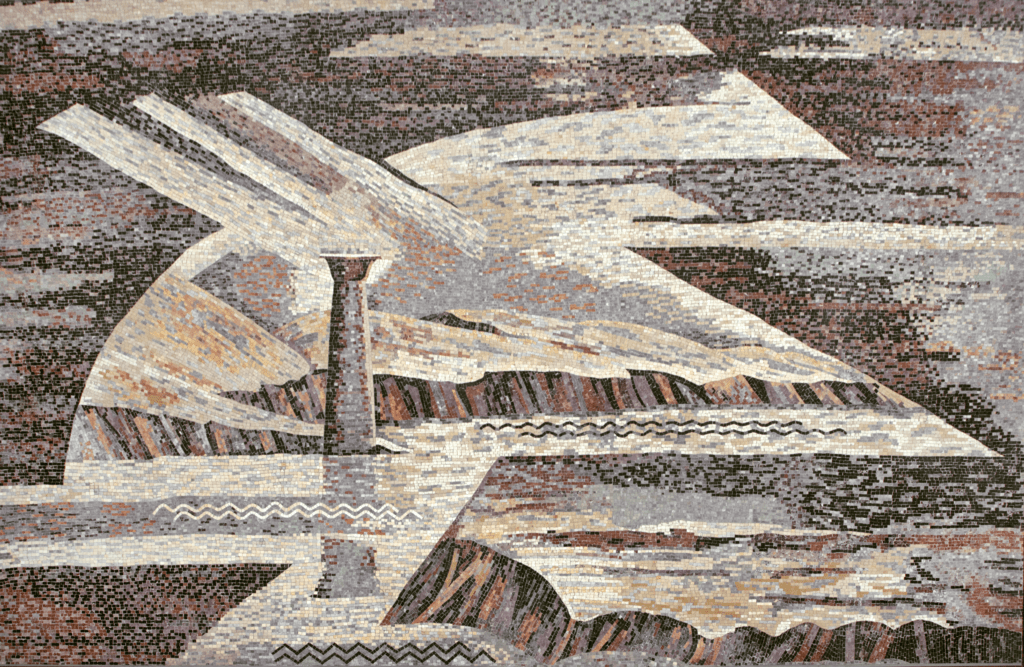
The first panel of marble triptych by Hildreth Meiere representing The Pillars of Herakles (Centre for Hellenic Studies in Washington, DC)
Love is a strange thing, and the price you pay for it is enormous. But you pay. For a dream that is priceless. The higher is the heaven, the bliss of it – the higher is the cost. Have you known – would you have asked for it?
Let me tell you a story. There was a young man, who wandered the world from the high peaks to the deep valleys, and even deeper than the valleys. He went to the abyss of the underworld, the dark caves full of desires, hunger, and thirst. Long hands and longing eyes followed him there in the caves. The caves were like a labyrinth, one leading to the other. There, he saw a silhouette of a boy crying for love not found, for a dream not fulfilled yet. That silhouette, the shadow was – he knew it instantly – his own dream. A dream that did not want to be a dream anymore. It wanted to be born. To live. The young man heard the plea of this boy and the plea of his dream. He ran after the boy, grabbed his arm, and didn’t let go. It is a long story re-told many a time. It was said that they lived happily ever after for a long time.
Like any long story, sometimes they are too long. People heard of the ending from others and never bothered to read it to the end themselves. But re-told stories change, and people soon forget where or from whom they heard it. They stopped reading it altogether, relying on the version they had heard from others. As the others relied on those, who told them. Over time the story changed, becoming a different one.
No one truly knew what happened to the young man, when he was not young anymore or what happened to the boy rescued from the cave.
I will tell you the story of the old man, who used to be that young man.
He doesn’t go to the caves, deep valleys, or mountaintops anymore.
The boy became his. He has answered his dream and the dream of the boy. They built a house on a treetop and watched the mountains weaving long shawls of rainbows flowing slowly to the valleys. Sometimes they would climb down from the treehouse and wander in the meadows below, drinking from streams, and singing with birds.
One day, after many years of happiness, the boy went further exploring the valley. The man followed him. They came upon a place where the stream enters a big river. The boy – a man by now himself – said: I will go for a swim in this river and jumped into it. He disappeared under the water and was not coming back to the surface. The man – an old man by now – jumped after him. He has found him ensnared in the long roots of the nenufars. He frantically ripped the snarls and brought the lifeless body to the surface. He tried for a very long time to push the boy’s life back into his lungs, and he screamed to the birds to help him. They came and tried with their wings and beaks to revive the boy. But, as the old man, they couldn’t. The boy was no longer.
From then on, the old man left the valley and wandered for eternity the earth. Looking for the boy, hoping that he appears somewhere. If, by miracle, he has found himself in the caves, why wouldn’t it be possible that he will find him again? His anguish was unbearable. Even the birds couldn’t sing when they flew by him. He came to the Edge of the World and asked the Big Water: why? The Big Water thought for a while and answered him with its own question: your sorrow has moved me, old man. I am Everything, the Past, and the Future. The Present has engulfed you in anguish beyond your strength. If the price of your past is too high to carry, I can grant you a gift seldom given to anyone.
The old man raised his eyes and trembling with timid hope, asked: O, Big Water, would you return my boy to me?
The Big Water answered: there is no return from not being. But I can change the Past, I can change the event that led you to the meeting of the boy. Ever. Thus the cause of the anguish will be gone. You can’t grieve something you have never had or known. That is the price.
The old man looked in horror and screamed at the Big Water: Would you, Everything, ever accept a deal to become Nothing? Your price is too high to pay. I will keep my sorrow and will walk with it till the end of my journey.
I saw the old man when he turned away from Everything and started walking along the shores of The Edge of The World. With time he slowed down, yet he kept going. At a certain junction, the Edge of The World separated from the Big Water and became the Edge of Non-ending Abyss. There, the cliffs of the Edge were vertical like the Pillars of Heracles. He knew that he reached the end of his journey. The old man sat and rested a bit looking down the massive cliffs where below a thick cover of white clouds was the invisible Abyss. His arms raised a bit with a sight and he slowly got up making a step toward the Edge. Then he froze for a moment, turned his head, and looked. He saw, far from the Edge, mountain peaks towering above deep green valleys and a forest with tall trees. He thought that he could hear the song of birds flying in the forest. A happy tear rolled down his cheek and a broad smile appeared on his face. And the old man was sure that for a moment he saw a boy waving toward him from one of the tree tops. The boy was singing the song of the birds and smiling at him. He called to the old man: don’t be afraid, come to me, I’ll wait for you!
Did the old man jump the cliffs, you asked? I do not know. But he anguished no more.
















 > > Pogwarki < <