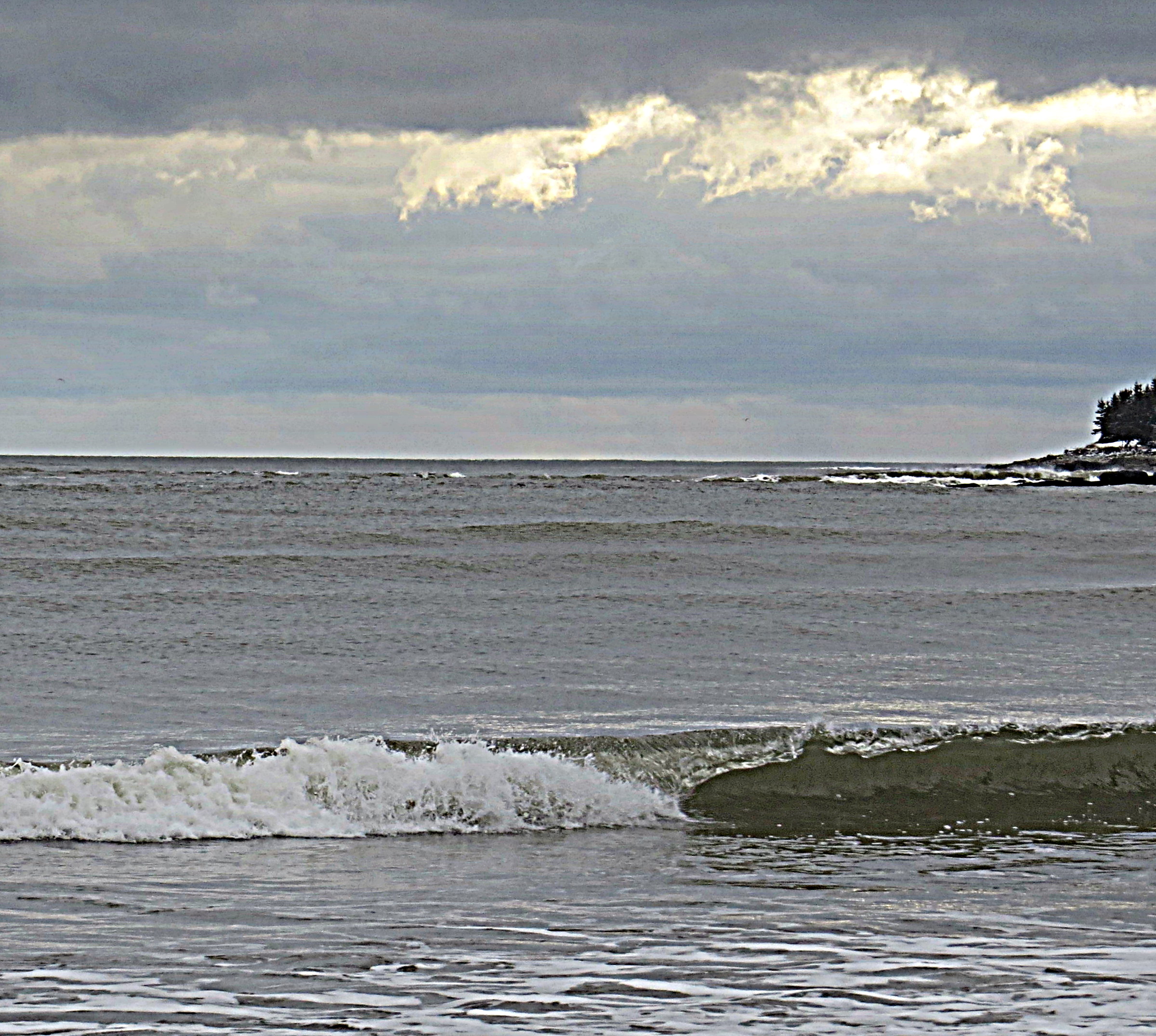
In the late XVIII century, following the French Jean-Jacques Rousseau’s turn to feelings and emotions – the Germans introduced us to Sturm und Drang. Of course, only the Germans and German language can come up with such a militaristic-sounding term for literature and paintings reflecting deep emotions, love, romance, and tragedy, LOL. That is exactly how I felt on the North Atlantic shore for the past few days – a non-ending storm with heavy snow and a constantly overcast sky. Not even a wink from the Sun. Nada, zilch.
Skutkiem francuskiej – naturalnie – perwersji uczuciowości Rousseau, Niemcy obdarzyły nas czasami Burzy i Naporu (Sturm und Drang) Romantyzmu. Tylko język niemiecki i niemiecka mentalność tak potrafi nazwać okres rodzenia się sztuki poświęconej miłości, romansowi, legendzie i tragedii, LOL. Napór i sztorm brzmi bardziej jak rozkaz niż, jak wyznanie. Jakże biedny Werter nie mógł nie cierpieć, jeśli takimi rozkazami wyznawał swą miłość dla Lotty?!
Tak się właśnie czułem ostatnie kilka dni na brzegach Północnego Atlantyku w czasie niekończących się wichur i śnieżnych nawałnic. Ni źbła choćby słoneczka na moment. Zero.
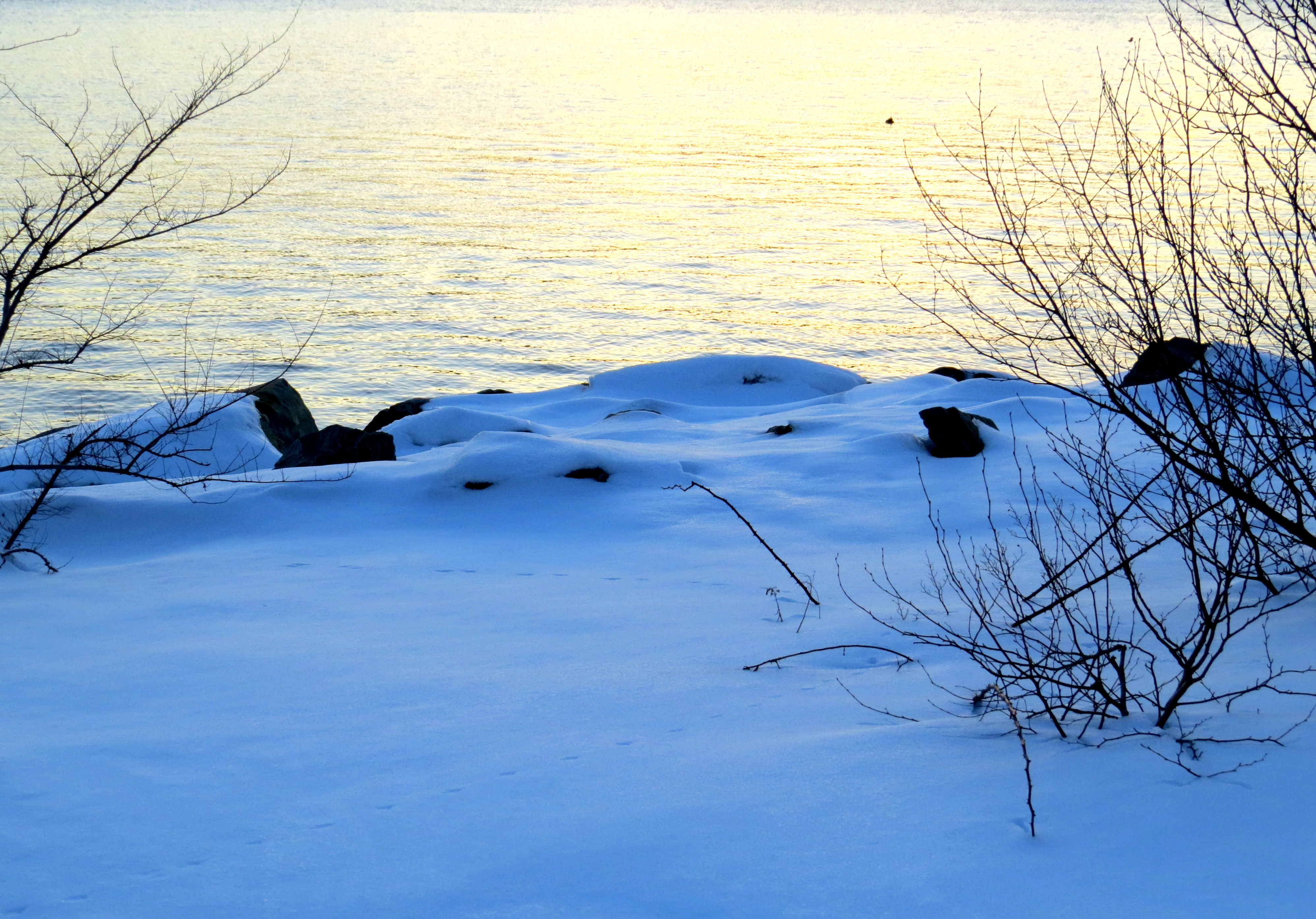
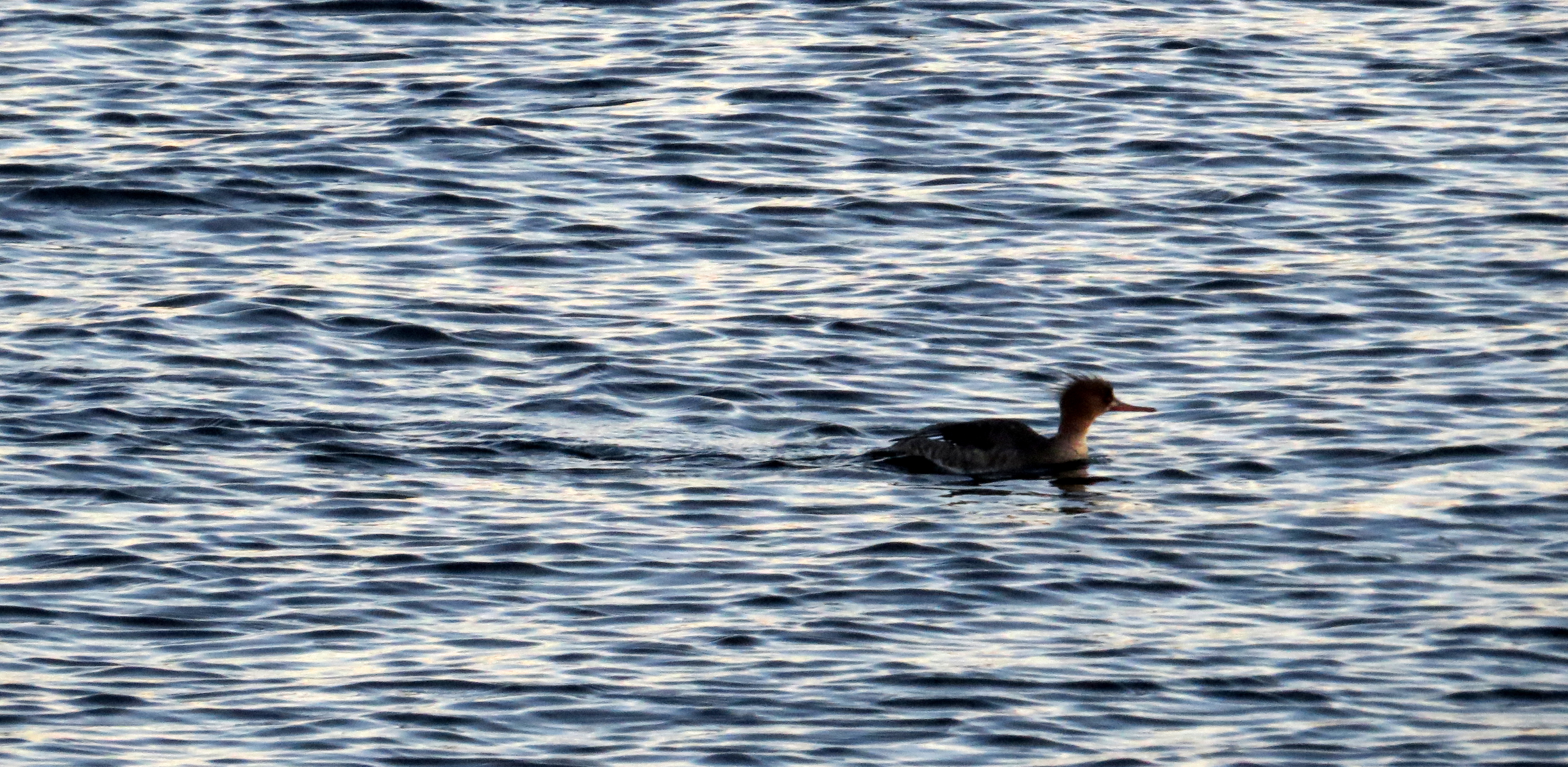
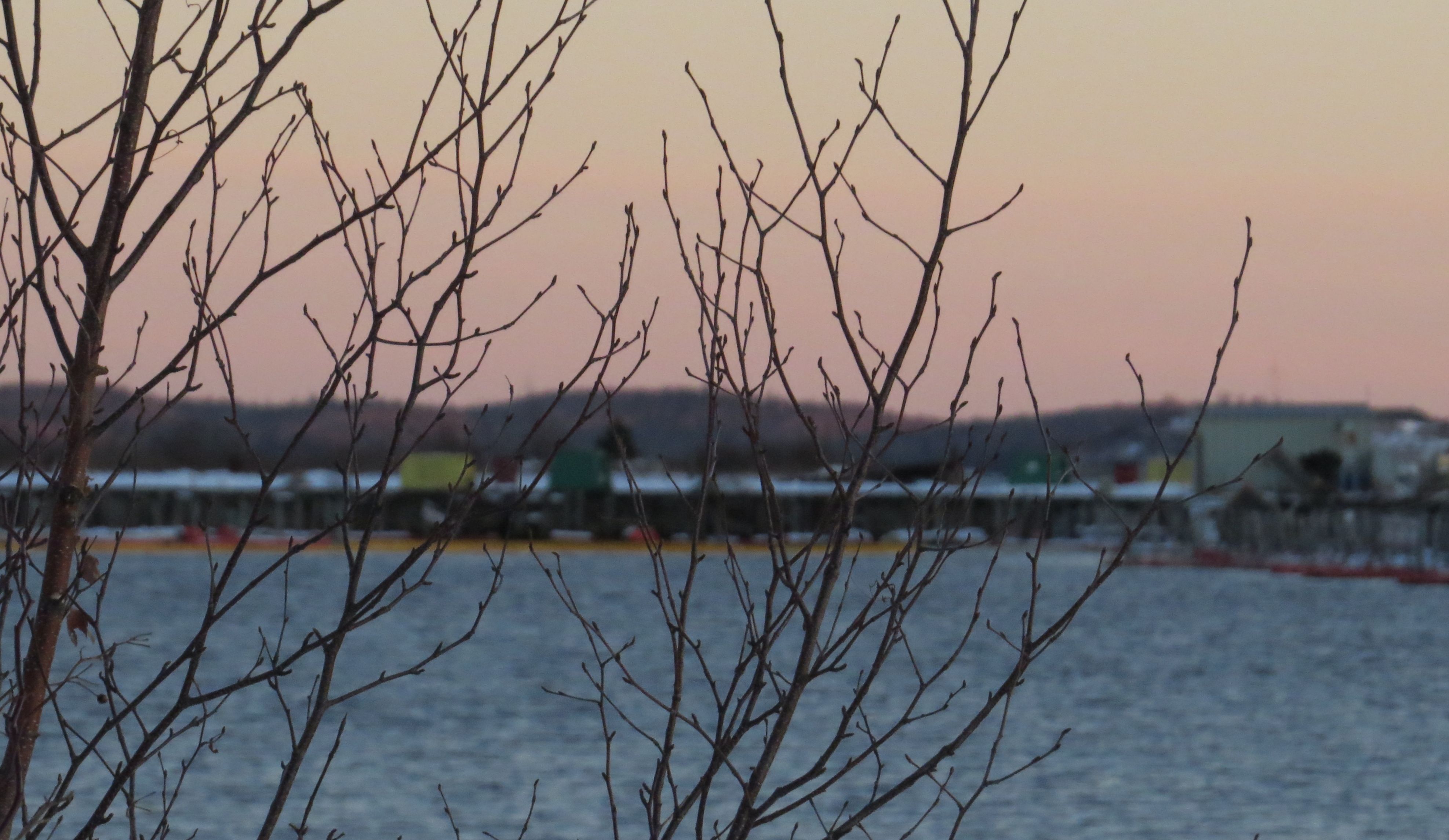
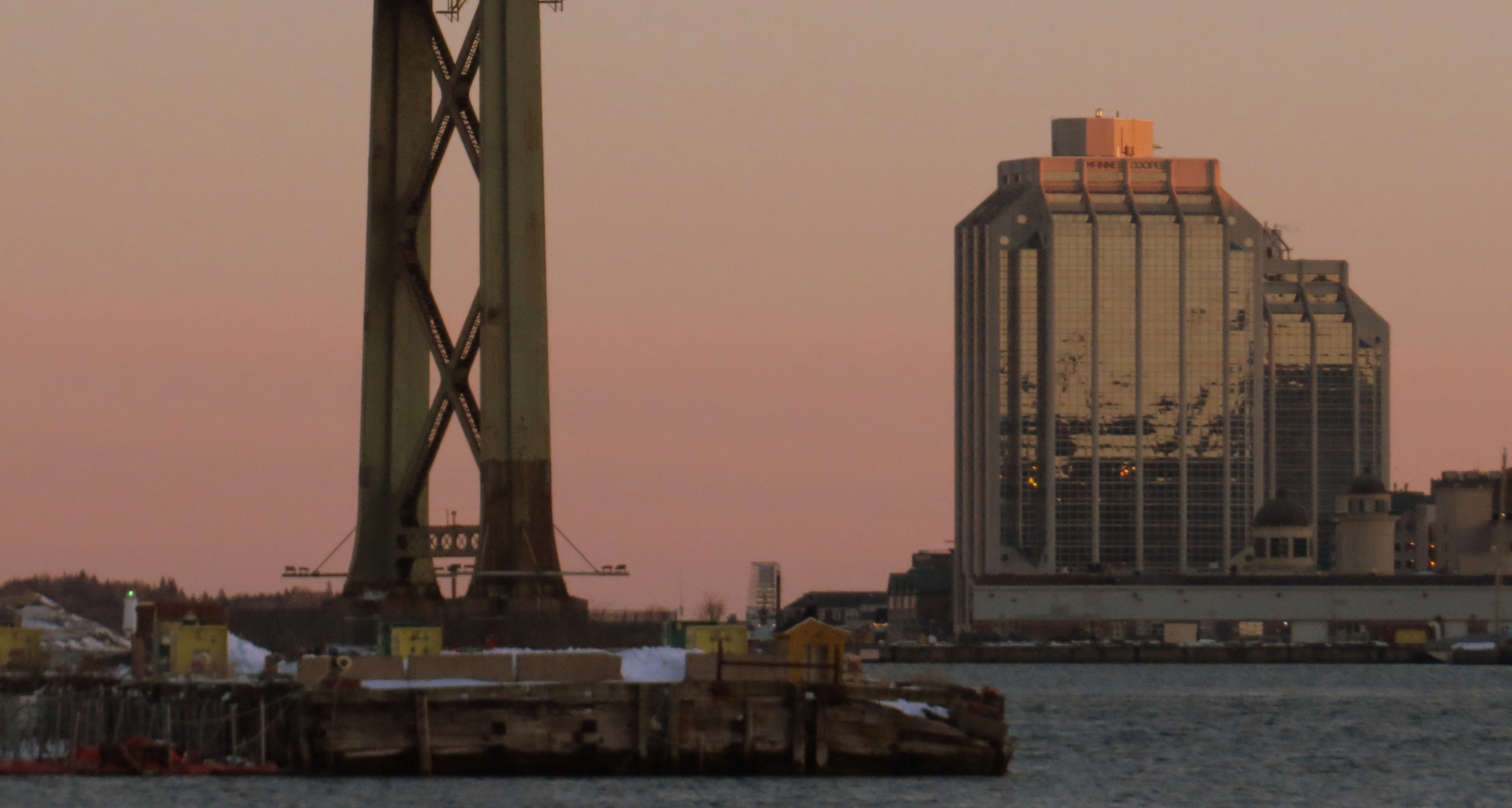
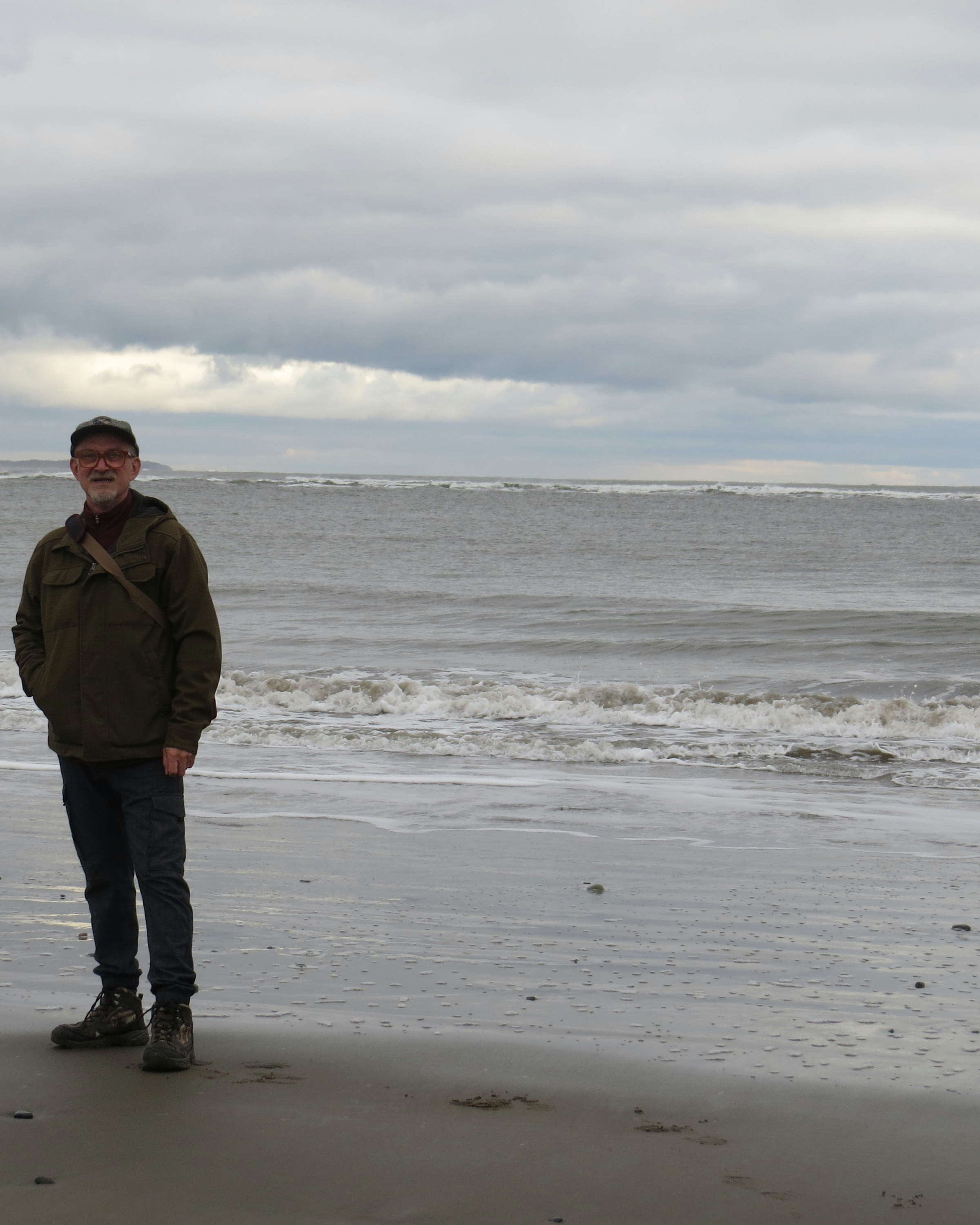
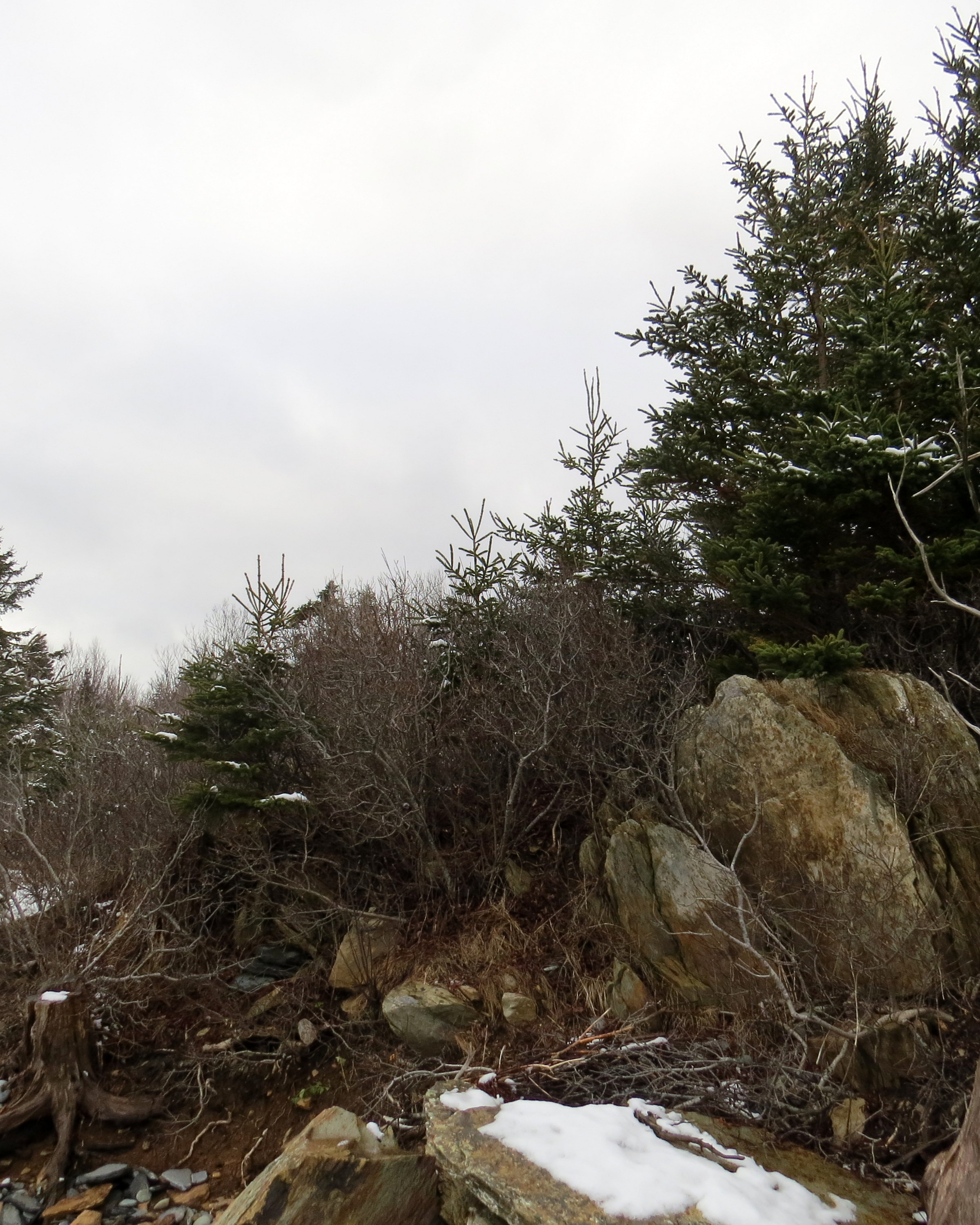
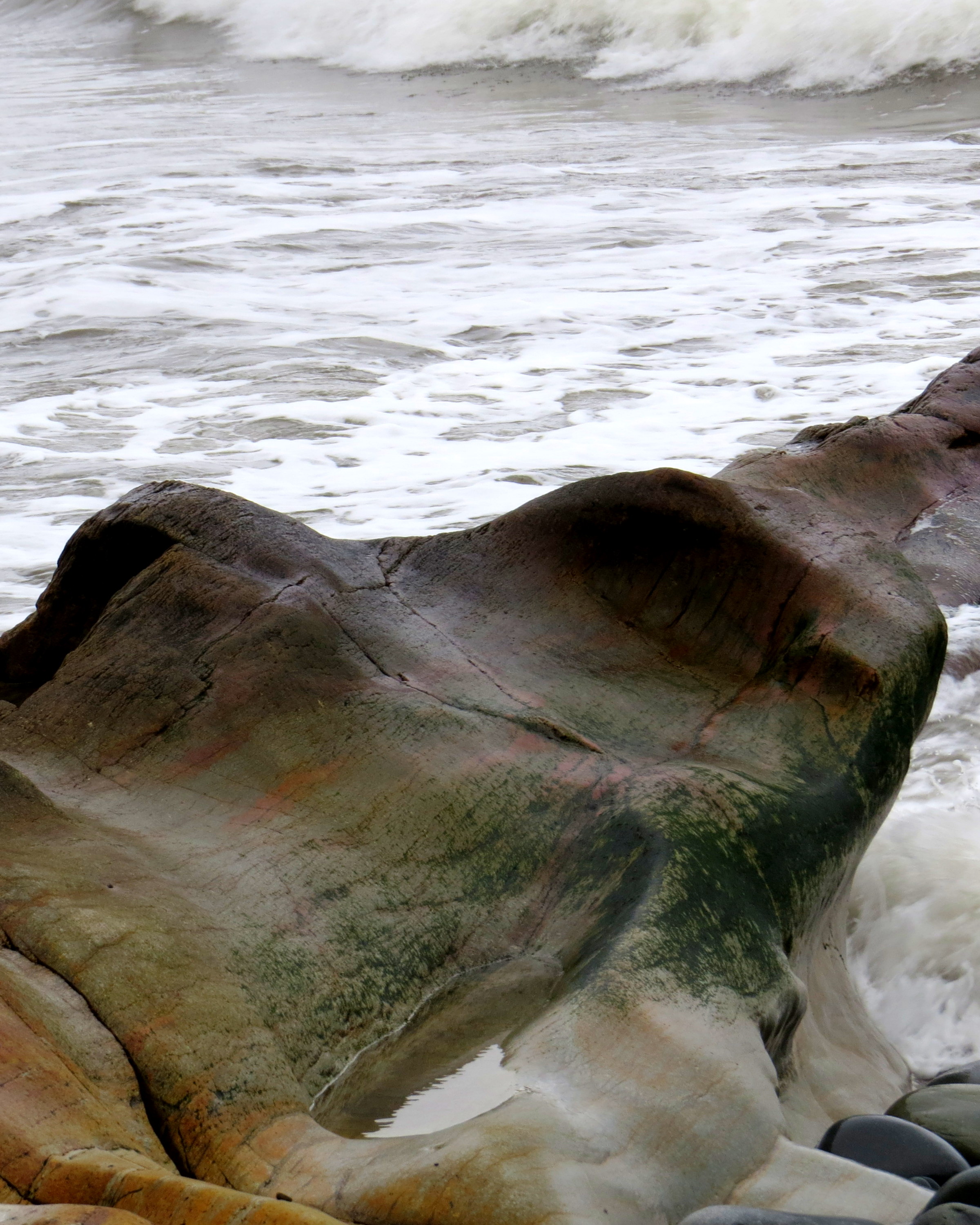
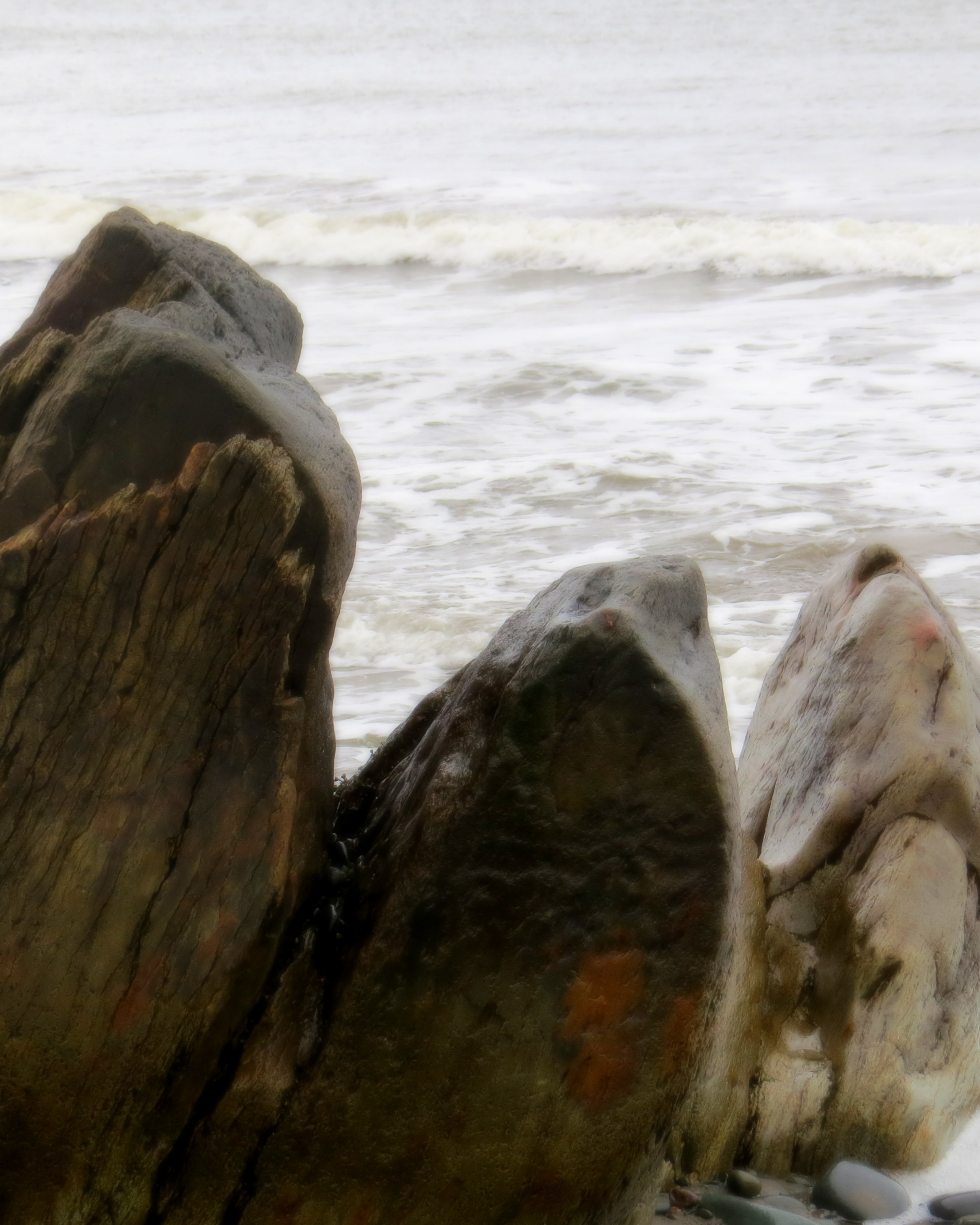
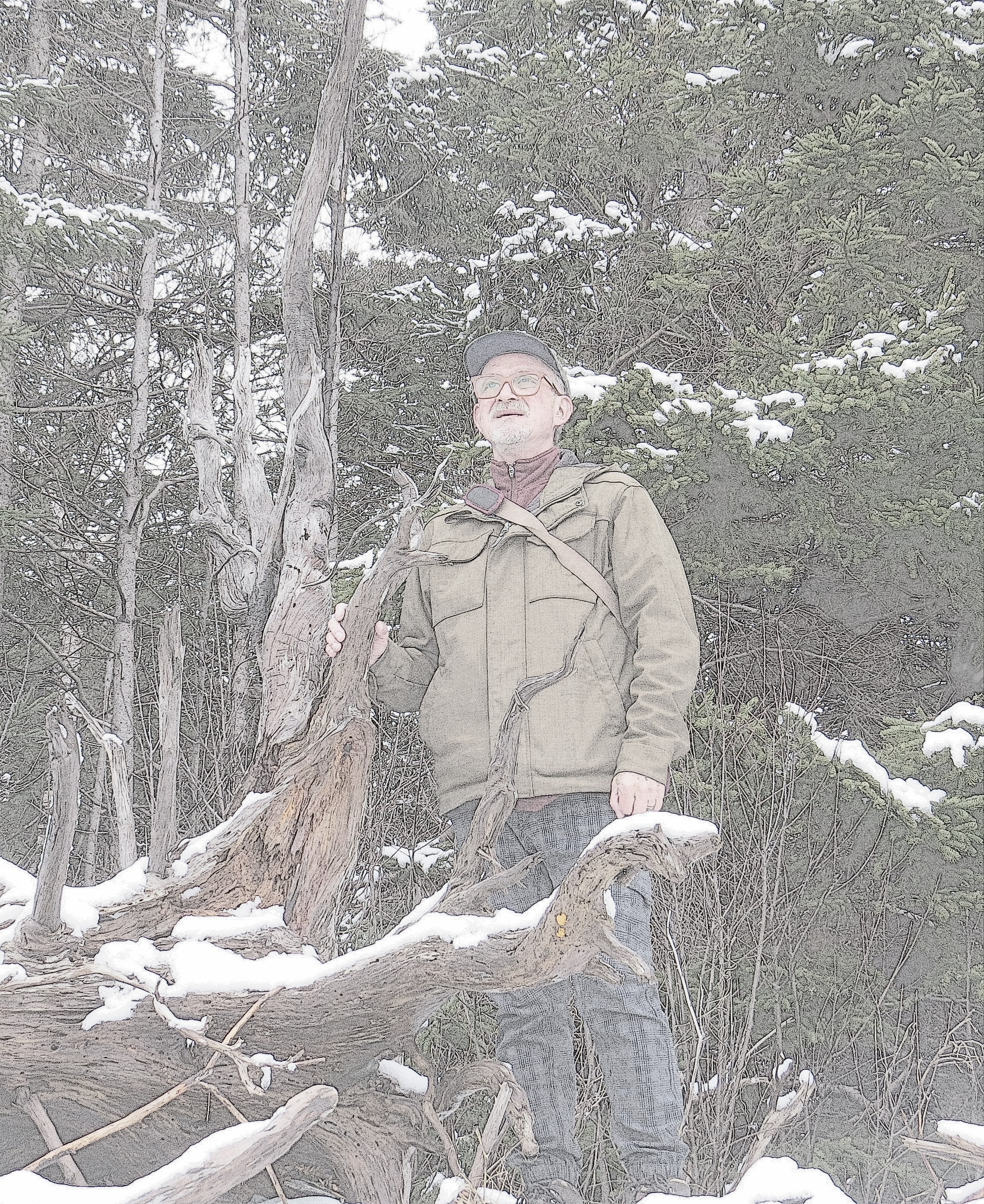
Więc gdy dzień pięknym, różowym wschodem dziś się ukazał, a karminem zachodził z wieczora – z kamerą poleciałem go gonić po Moich Kamieniach. Naturalnie, że przesadzam. Nie goniłem a potykałem się w zaspach powyżej kolan, wspomagając się swoim kosturkiem. A ten śnieg bieluśki, ta woda i stalowa, i srebrna, i różowa do zdjęć, jakby pozowały.
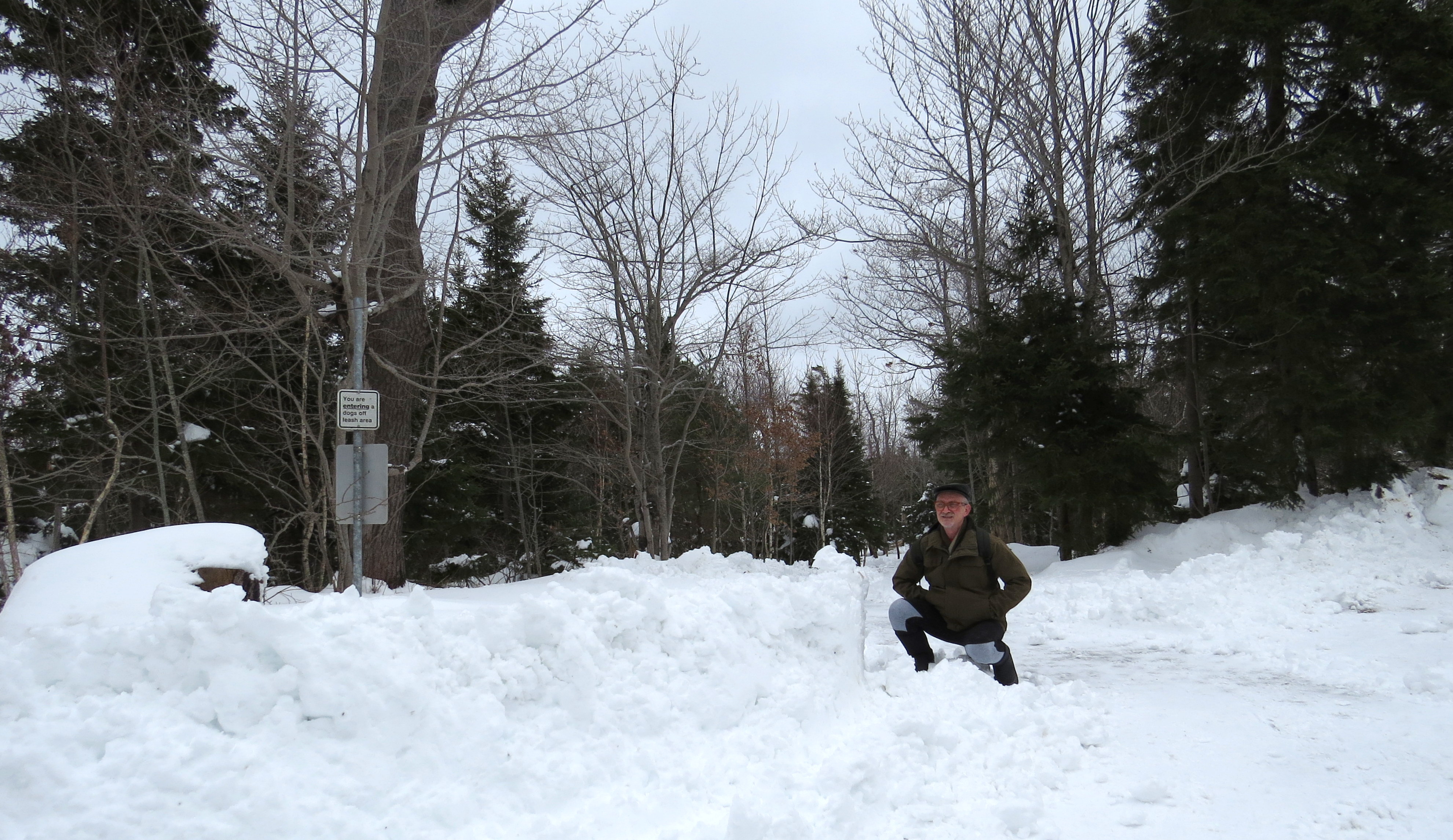
A day after the big winter storm that brought Nova Scotia the biggest snowfall in twenty years, I went with my camera to the edge of Halifax – Mount Pleasant Park. A lovely wooded enclave, in a way reminiscent of Stanley Park in Vancouver, but slightly smaller in size.
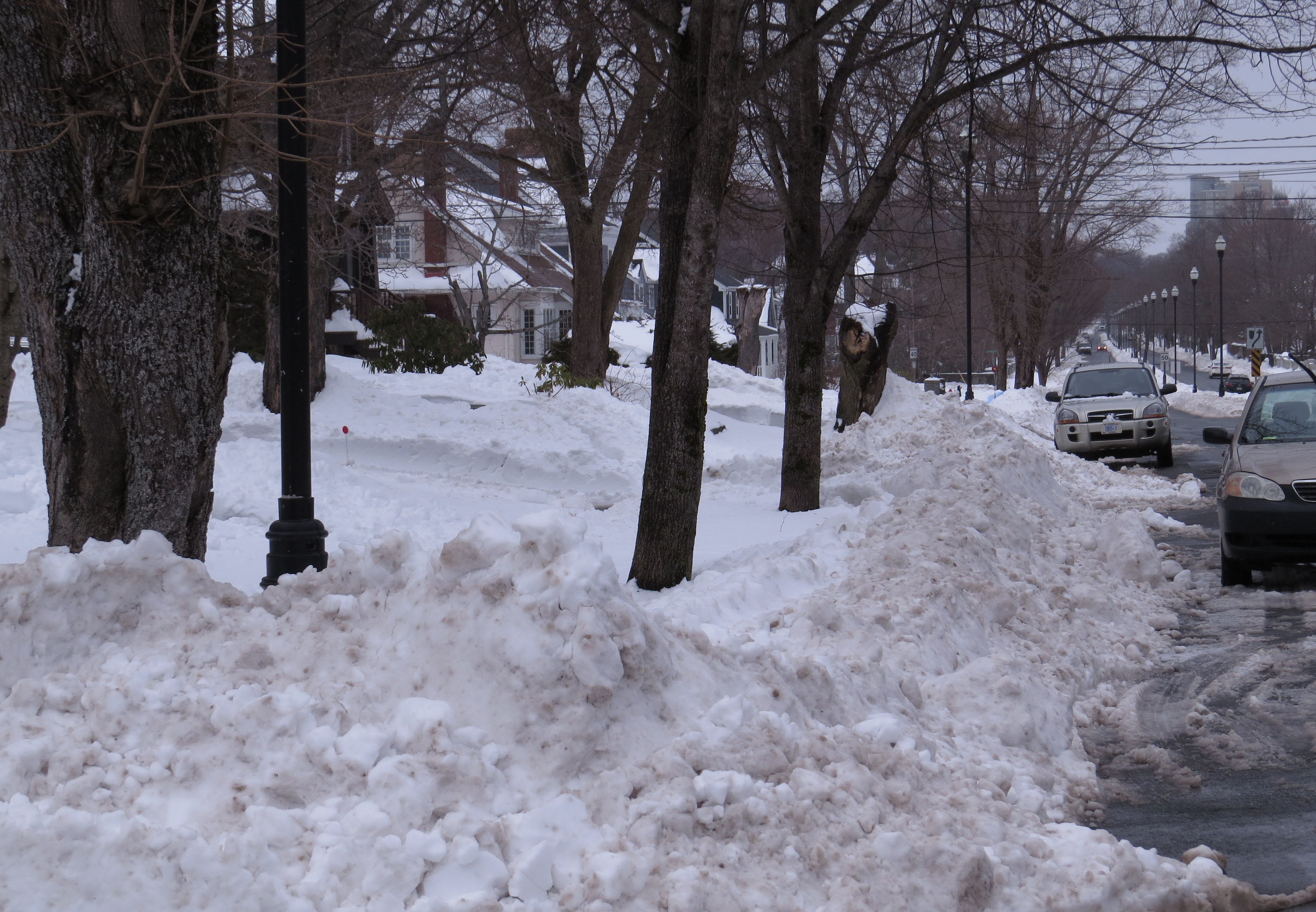
Old Halifax has very narrow streets that look today like a tunnel dug out of high snow embankments. Finding a parking spot is next to impossible and people are forced at places to walk on the street, as the sidewalks are just covered with mountains of snow. Planned to visit also the lovely Public Gardens downtown – but all gates were closed. Why? Because no one showed the walkways? It is a park for Heaen’s sake! Not a highway. If people want to walk knee-high in snow – why can’t they? Homeless people live in tents right in parks and on the streets and you worry about ‘the elegance’ of Patrician’s Park?! Sometimes (most of the time, LOL) I can’t understand the politicians …
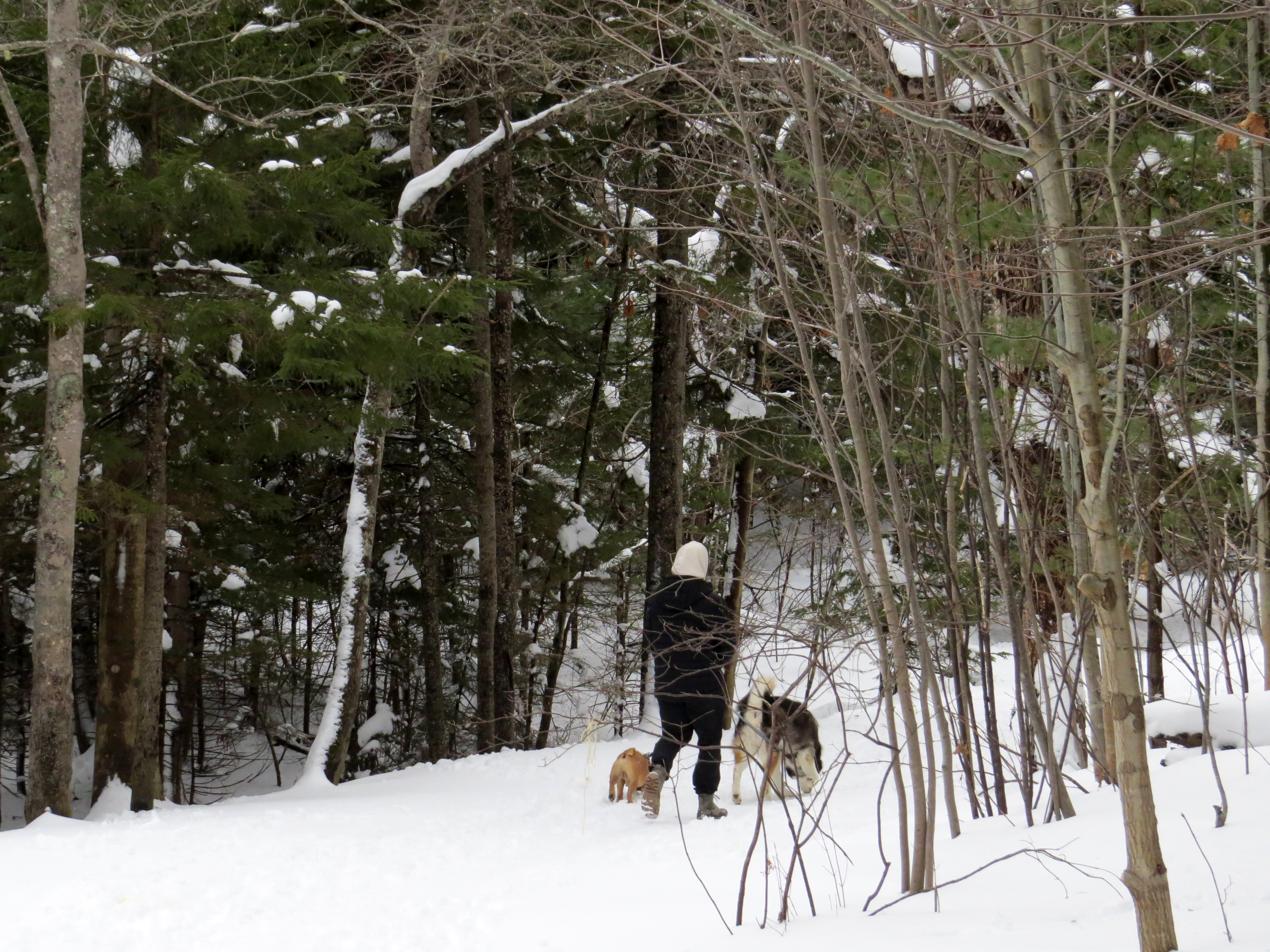
In Mount Pleasant Park the main trails were plowed. Most of the people that I met there were walking their dogs. It looked like the wonderful furry friends were in paradise! Jumping into the woods and snow that sometimes cover them totally, wagging their tails, running back and forth – a pure joy. I had the pleasure to play with some of them. What a bunch of happy creatures, if you let them be happy. No aggression, just joy that someone wants to play with them.
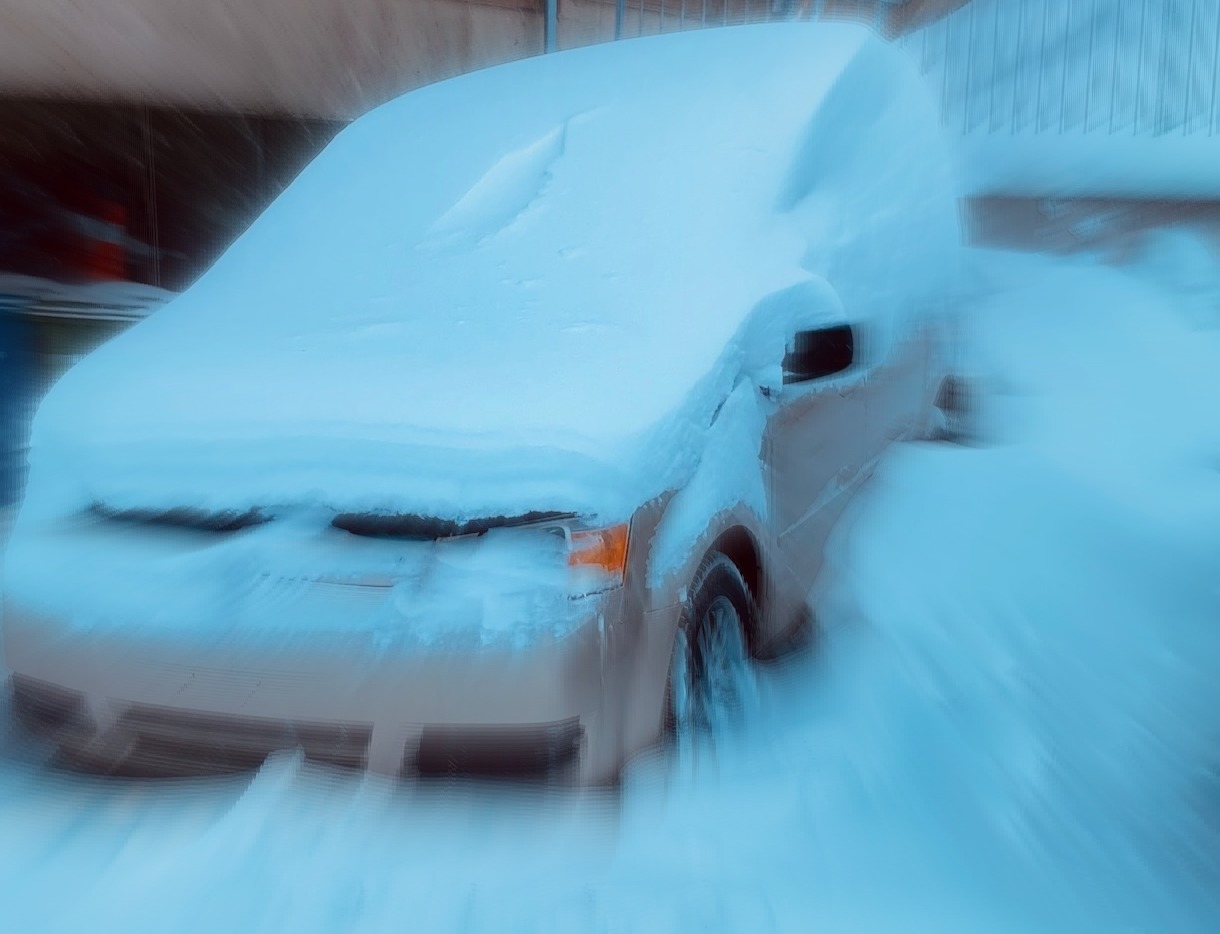
Yesterday was a lovely day. Snow abounds, beautiful, soft, and dry. Everything looked like Christmas. I dug out my carriage, drove to a few stores, and decided that the next day I would take my camera and go for some nice wintery shots on the coast or perhaps in Halifax. My carriage is a very strong vehicle and not afraid of winters.
It continued to snow the entire day, then the full night, and again the rest of the day. But the temperature went up a bit, the wind became very strong and the snow changed to very nasty tiny little granules like sand. Still drove to do short shopping but the camera would not be very good in such conditions. It would get wet in a second, walking would not be nice either. Visibility was very bad, too.
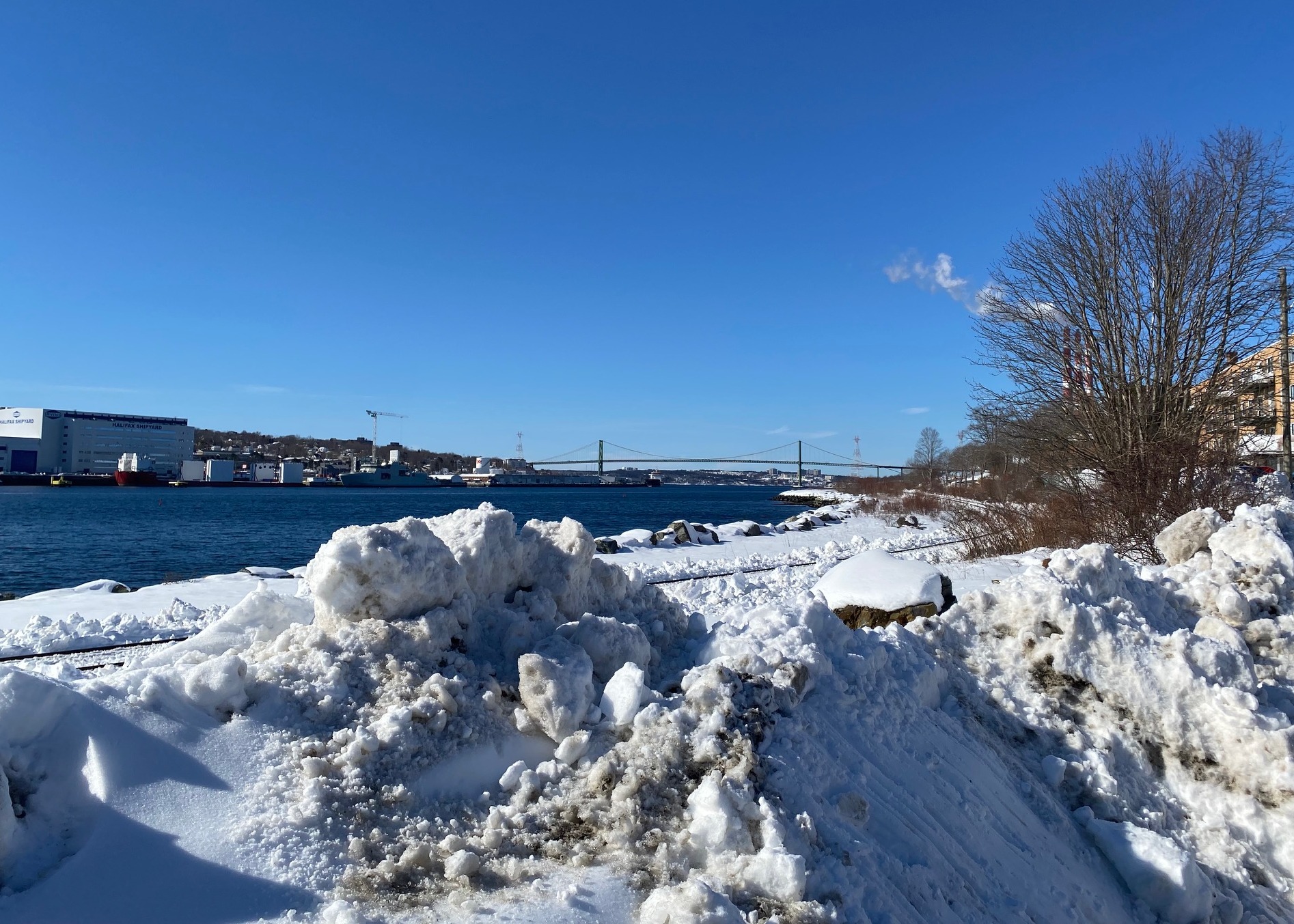
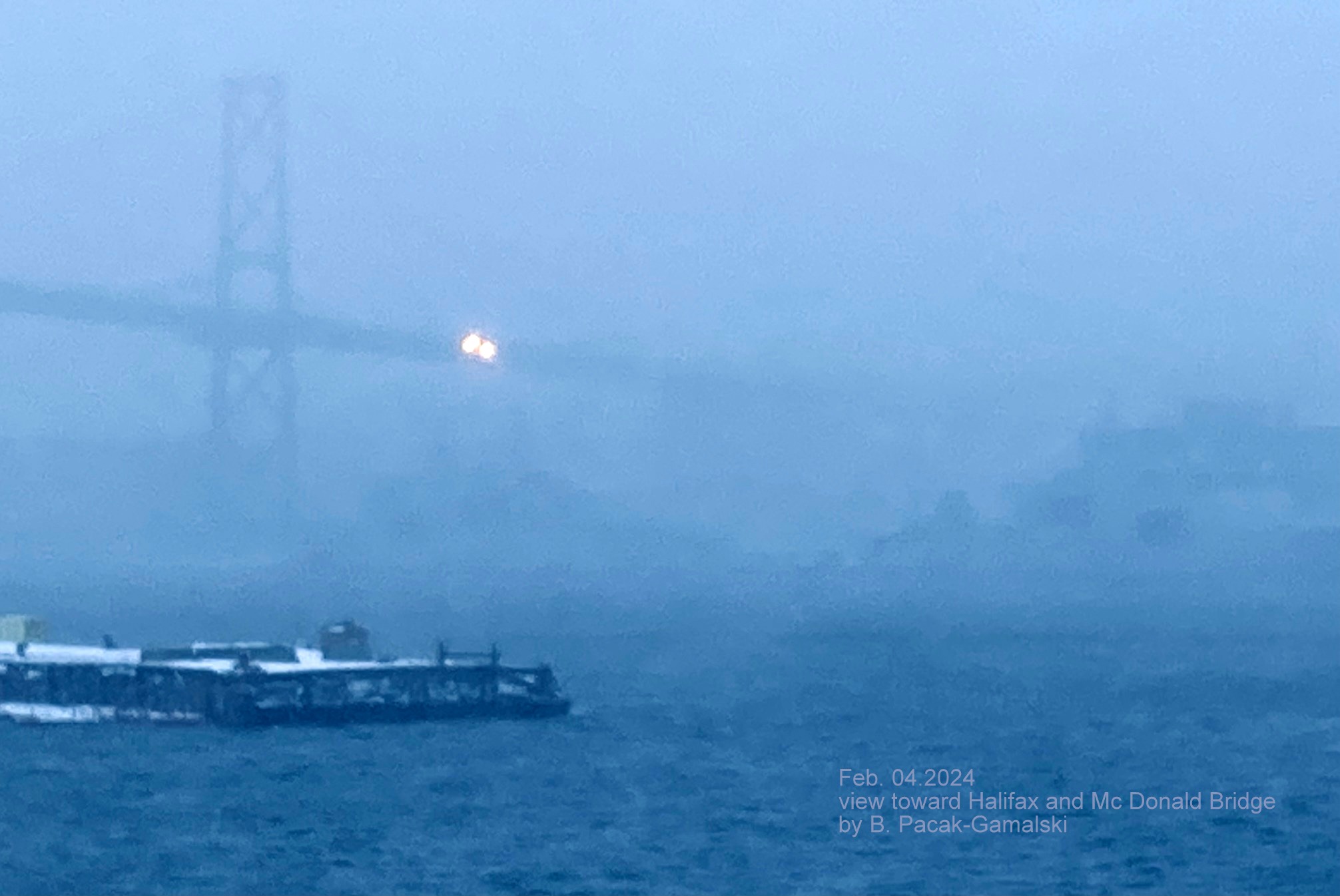
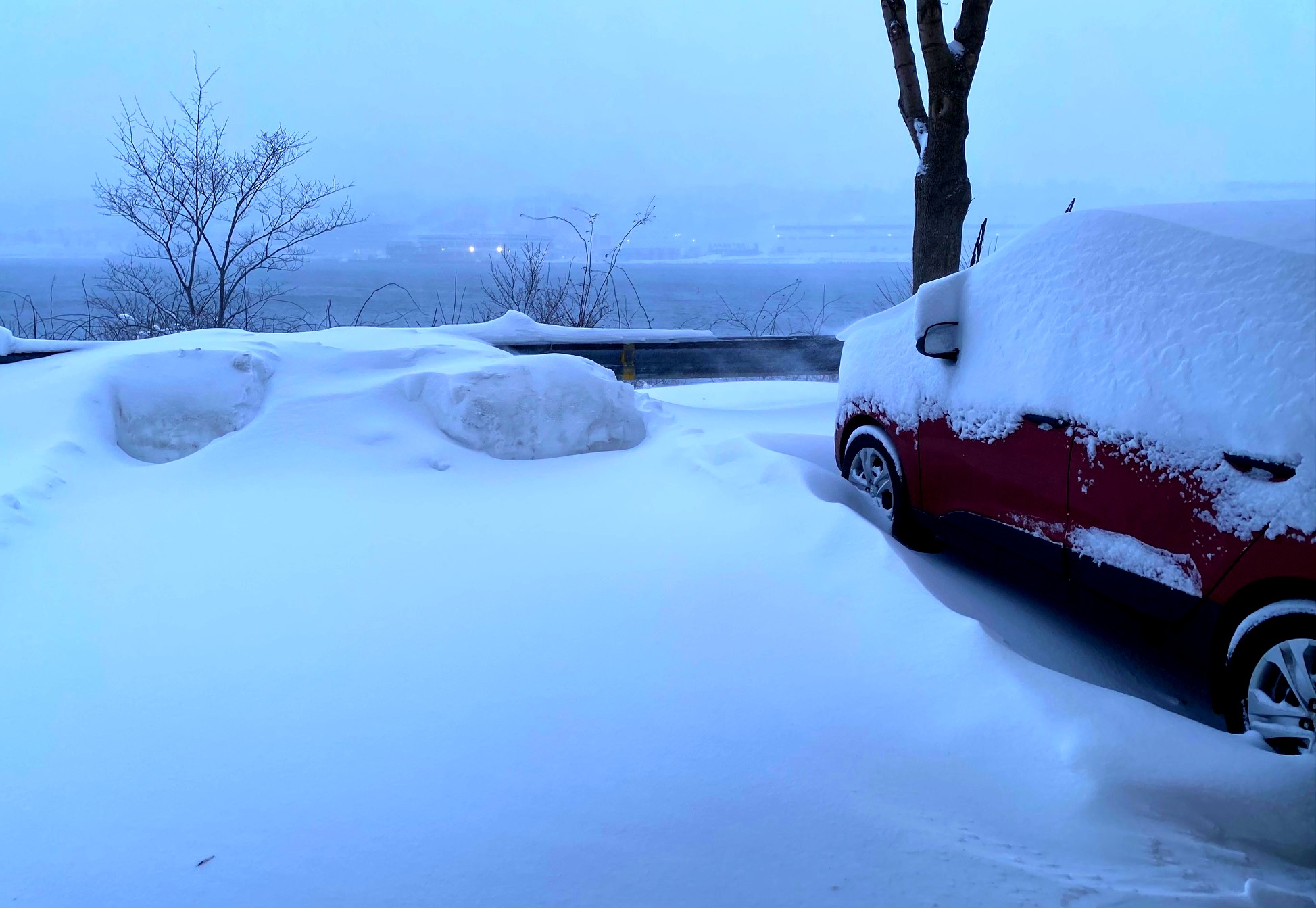
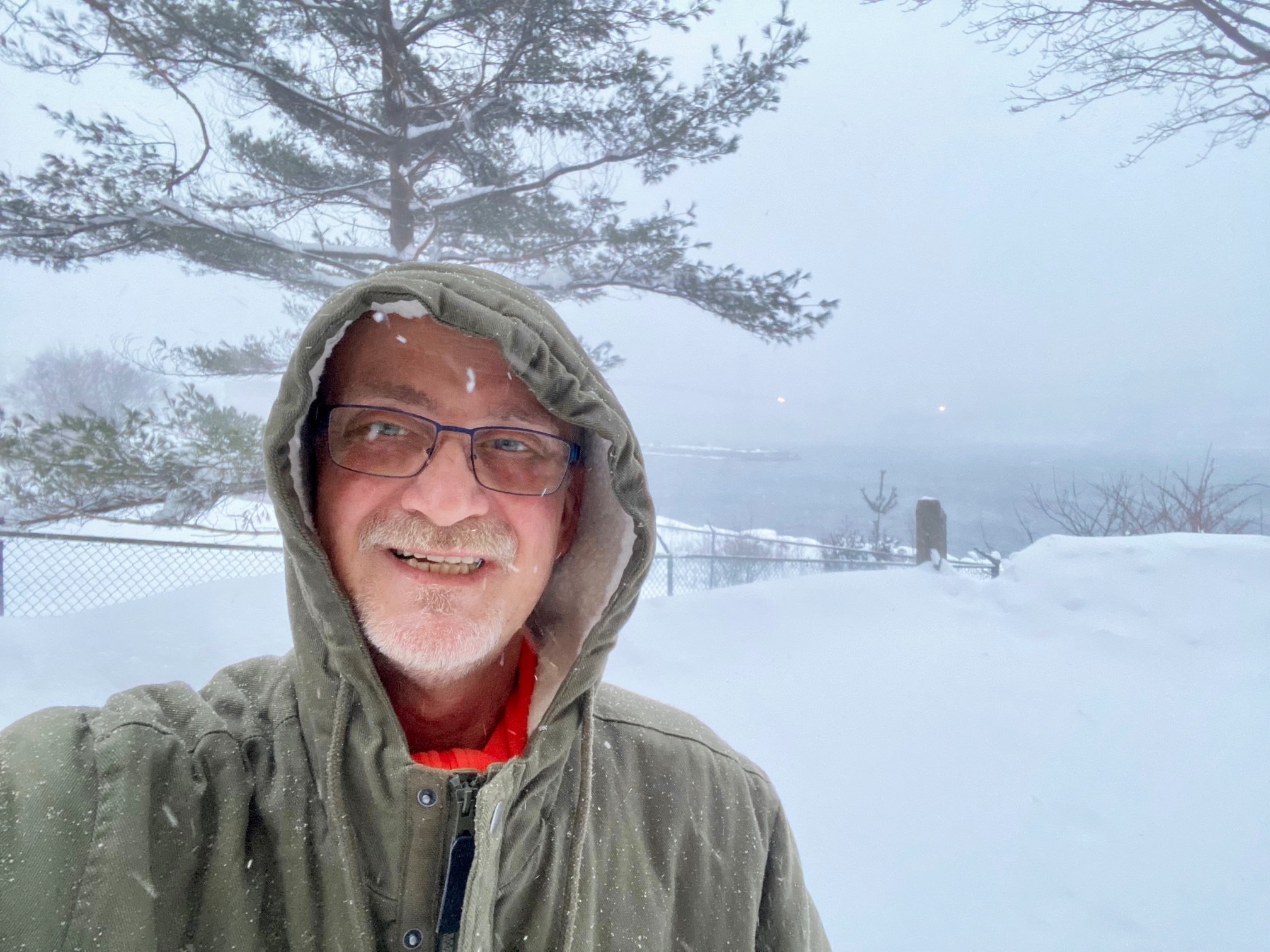
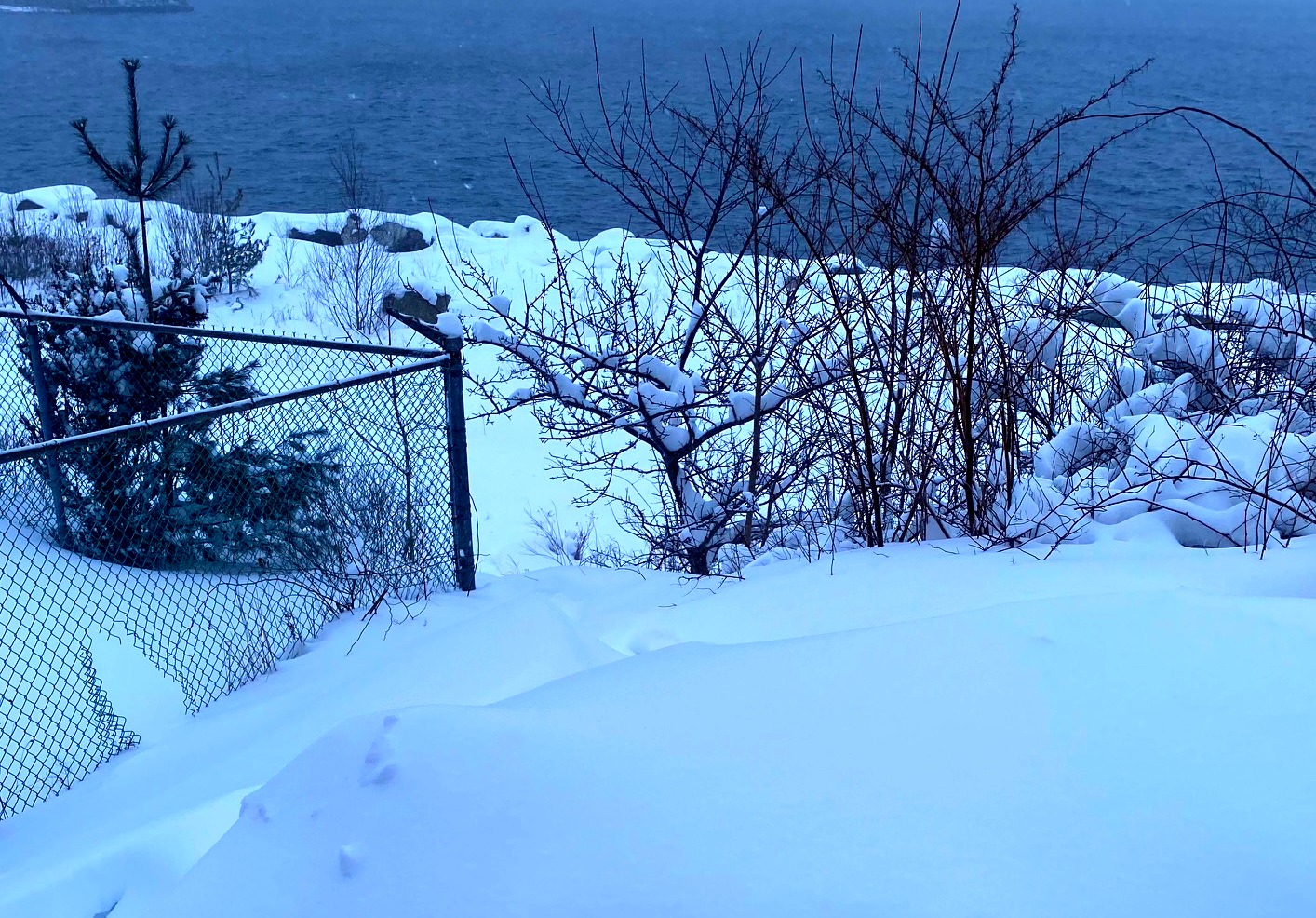
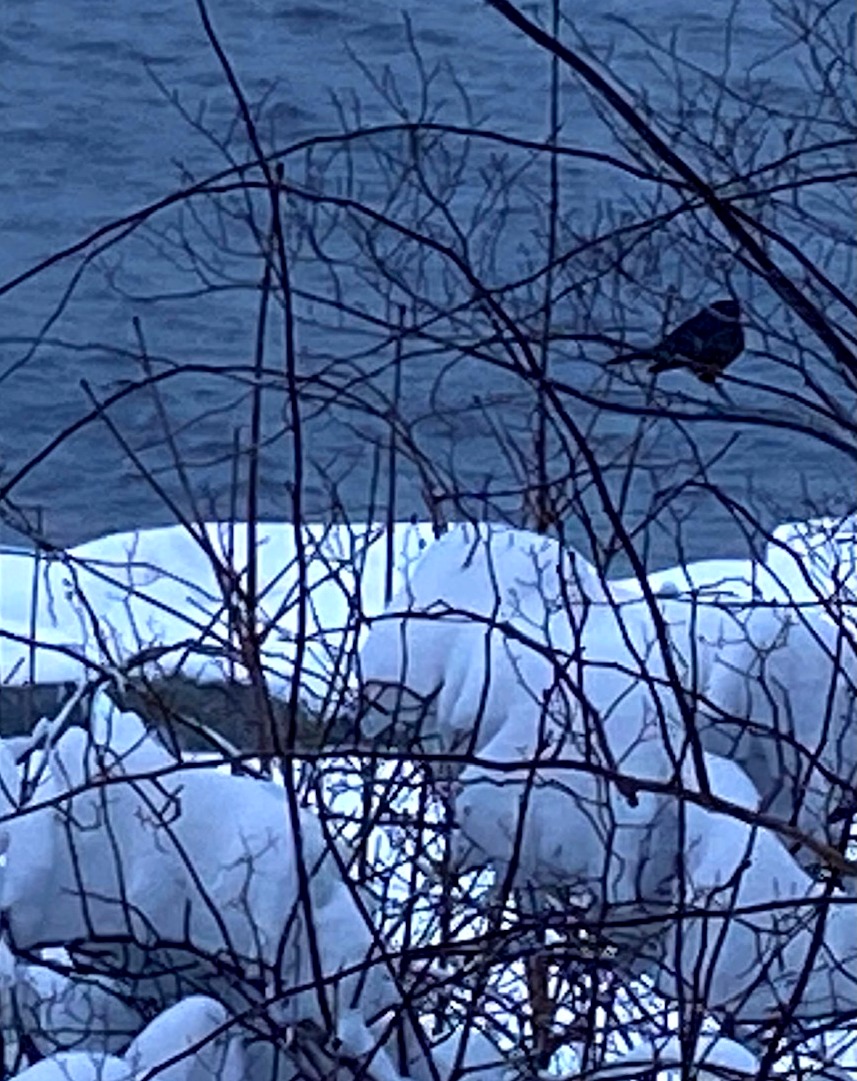
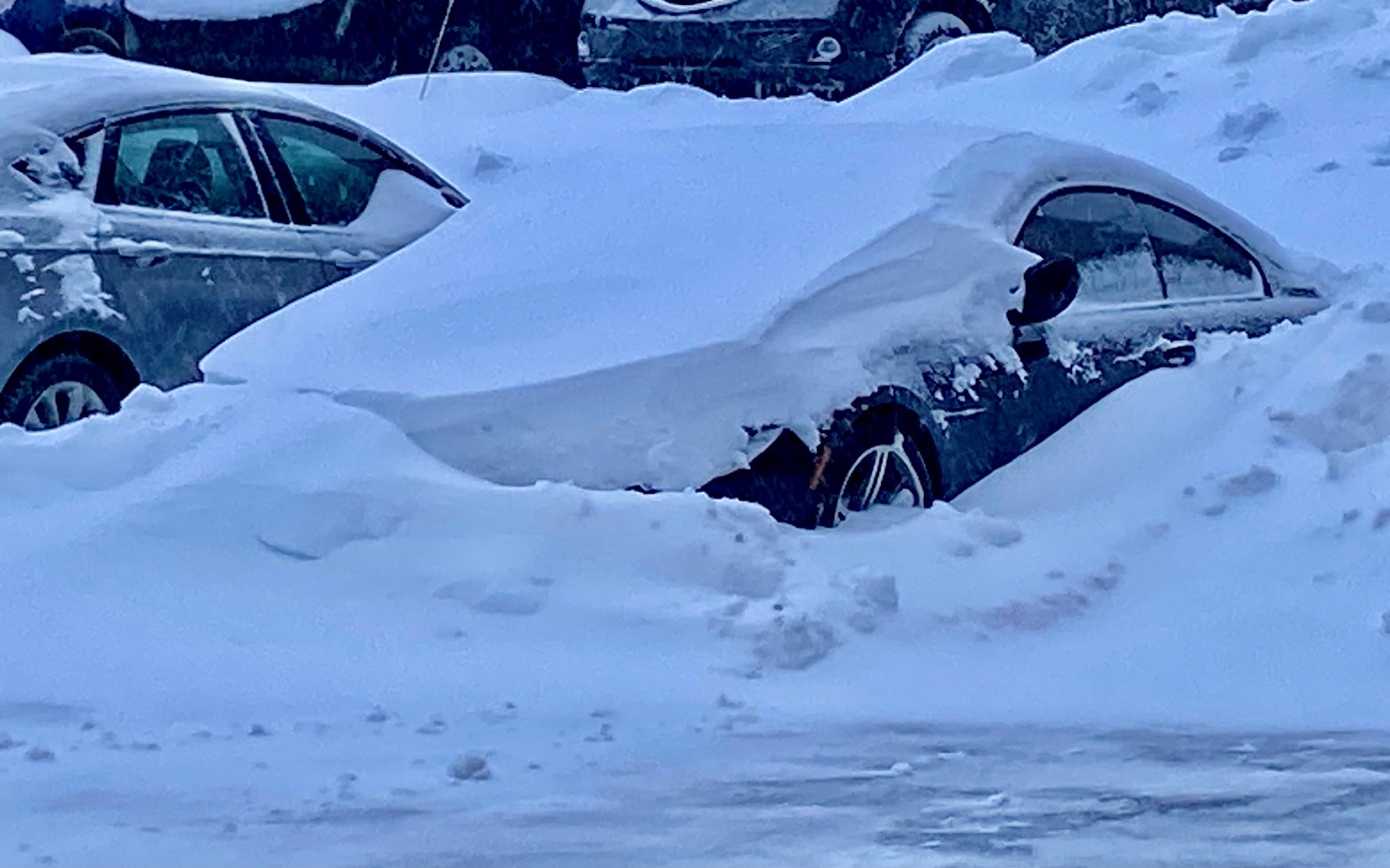
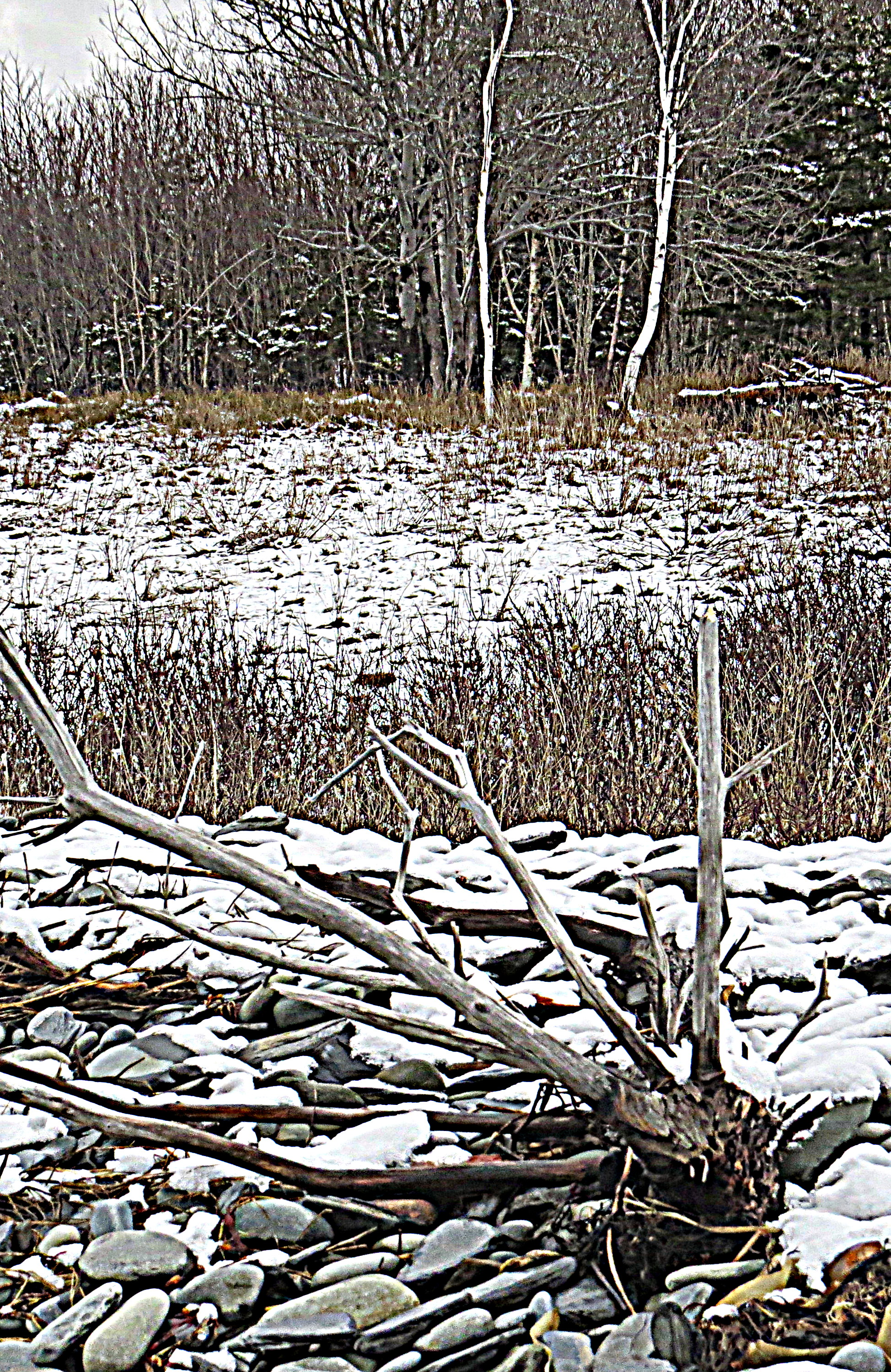
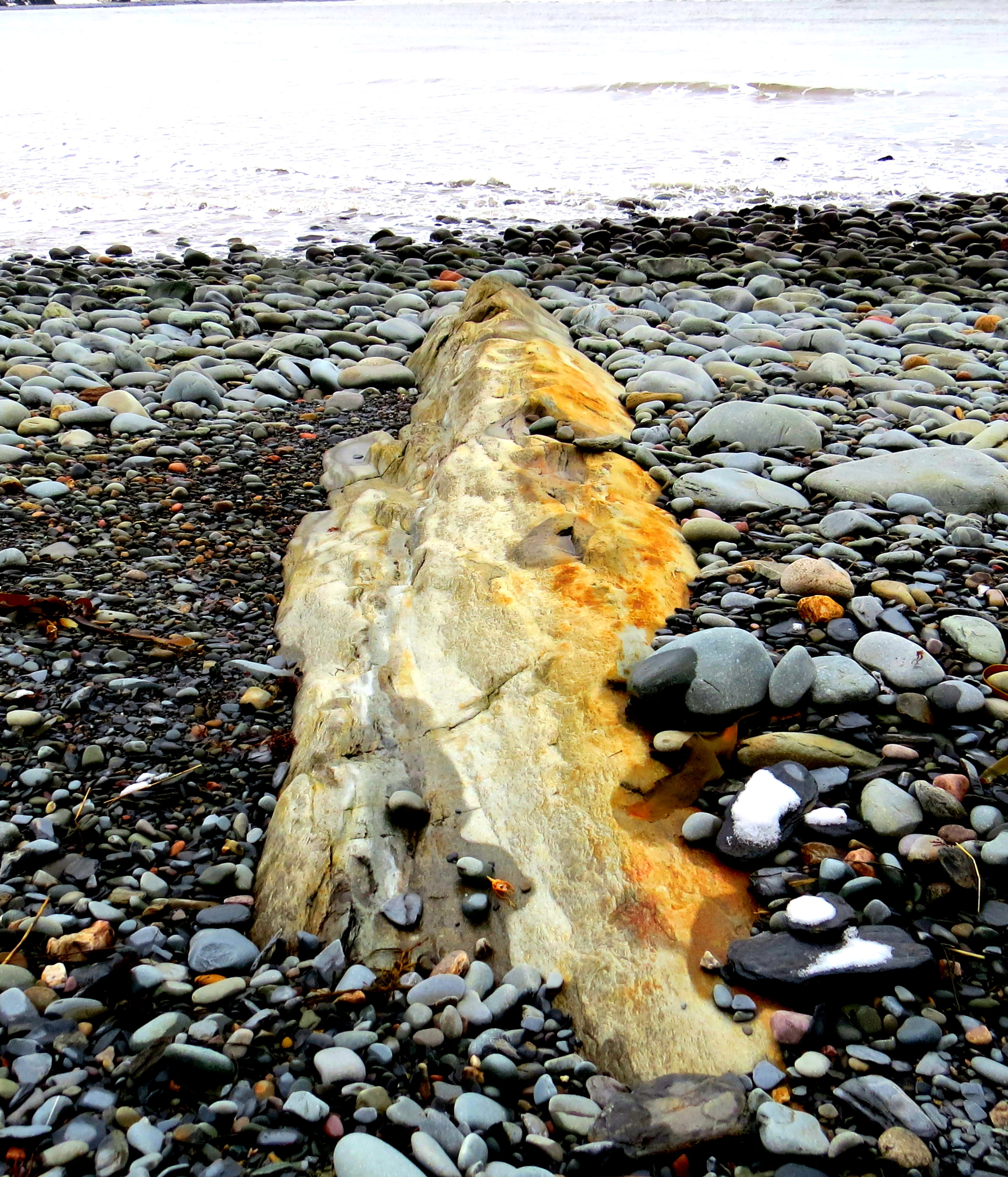
Shouldn’t complain too much, though. The Eastern and North shores were hit really badly. I think they had to proclaim a state of Emergency in Cape Breton, many roads were closed and the Government was advising everybody not to travel. But I still wanted to take some pictures, just with my I-phone and around my my home, parking lot (LOL), and of course, My Rocks.
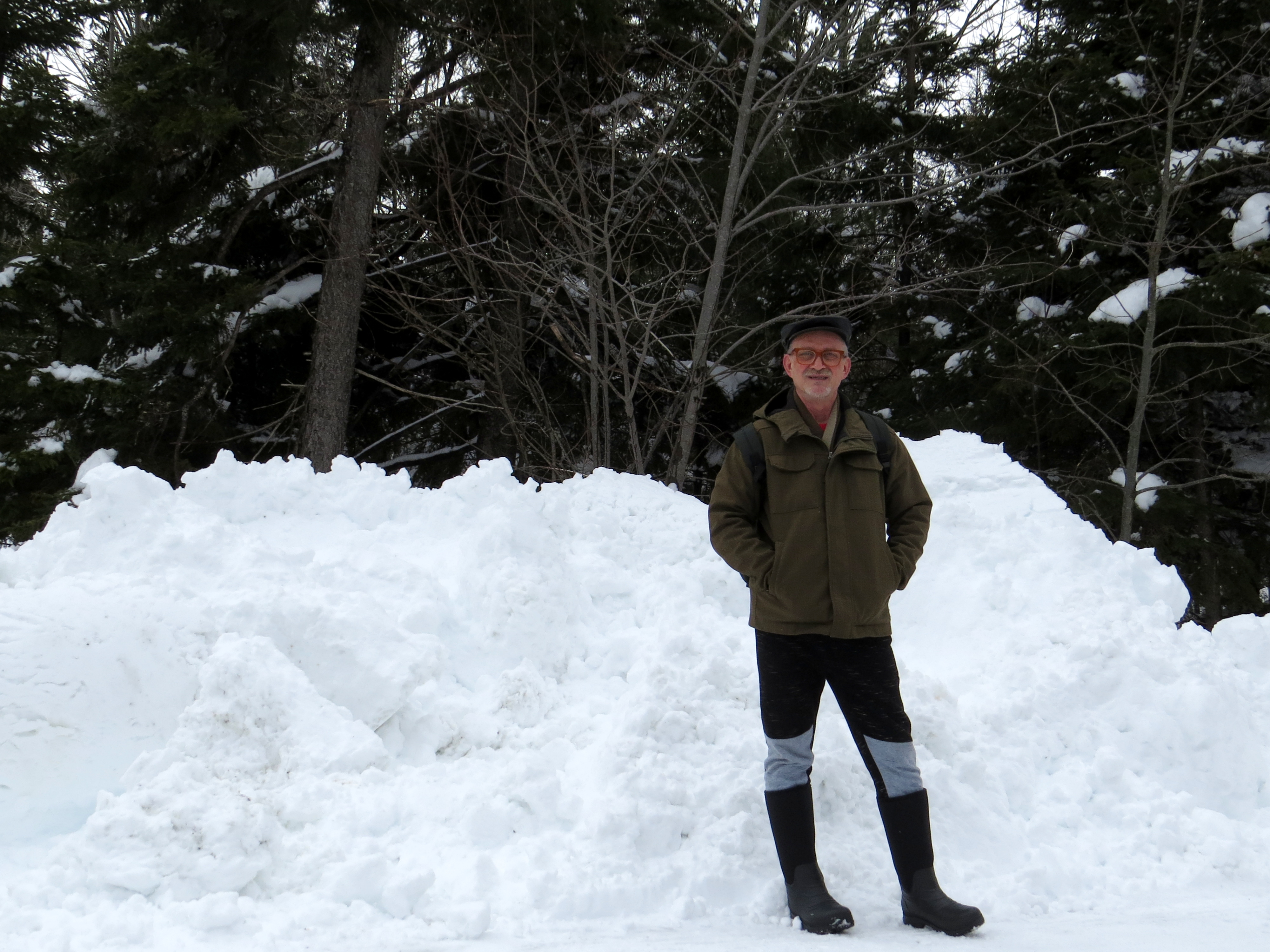
Had to dig out my truck again, just in case I would need it, and simply didn’t want to have it covered by the white craziness totally. So here it is – the mundane, silly photo chronicle from the parking lot and the vicinities. By the way – it still snows now and should not stop tomorrow, either. If you won’t hear from me in the next few days it means that my igloo lost internet connection. So yes, to no one surprise in Nova Scotia – it does snow in Nova Scotia. As it rains in BC.
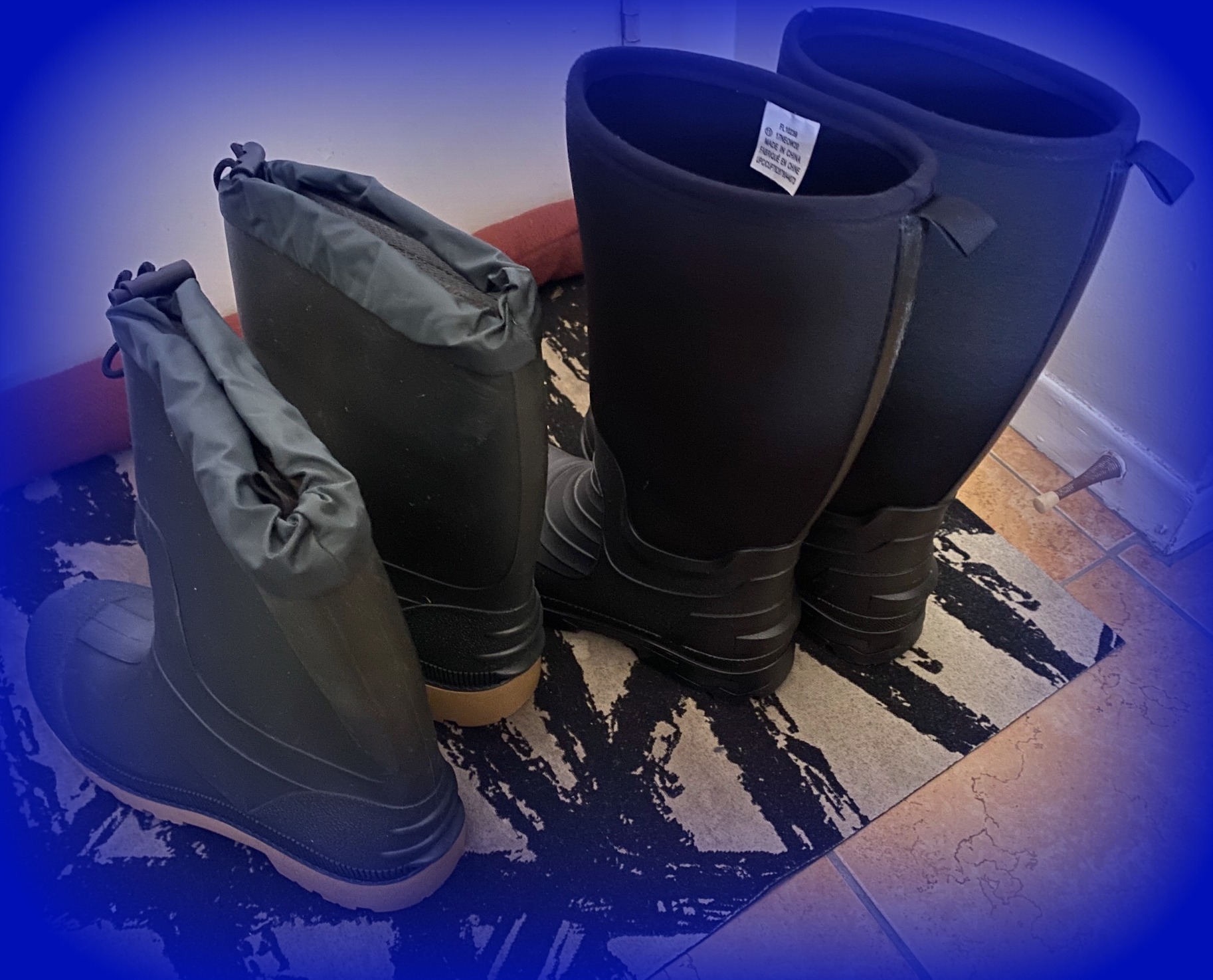
Of course – you need to have proper Sunday Church elegant shoes. As you noticed on one of my pictures I do have proper church shoes. One for Nova Scotia and one for British Columbia.
Have not skied since I left Vancouver. But my last season was probably a year before that. In a dramatic way. Drama and I seem to go in pairs, LOL. My skis and boots were – to say it politely – a bit out of style and advanced in age. Last time I wanted them to be professionally sharpened they said there is not much more steel to sharpen. So I did it myself. The boots needed replacement, too. But didn’t change them. My last skiing was on Mount Seymour overlooking the entire Greater Vancouver. Just the views were spectacular: the entire Indian Arm fiord, Burrard Inlet, Burnaby, Fraser River, Surrey, Vancouver, and the Salish Sea. Breathtaking. That day was foggy, though. Some lifts were closed due to poor visibility. I suppose, because of that the parking lot was almost empty. But the lift going to the peak with the wonderful Black Diamond (advanced) trail downhill was open. I was the only one ‘in the line’ to the lift! I knew the vistas by heart anyway, so I was happy. Went down once and ran quickly for another ride after they warned me that they would shut it down soon due to the poor visibility. Right from the top of the lift, I took a slightly different route, more steep but under the lifts – that way I could just follow the lift and not get lost in the vast terrain covered with fog. Smart. But the trail was narrow and bumpy. After hitting one of the moguls … I went down and one of my skis went the other way, not far though. Once I retrieved it, strangely the boot would not fit into the bindings. What the …, I thought, and pushed it stronger… that is when the boot actually disintegrated, and fell apart in two separate pieces, LOL. A ski boot is not something you can tie or put together, no Jose, LOL. When I finally got back to the lift base with just one boot, the other foot in socks only – the operators couldn’t believe my story. They told me that were starting to worry and were just going to send a patrol to look for me, LOL. That was my last skiing … seven years ago.
I never bothered to buy new equipment in Nova Scotia – it is a gorgeous province for hiking and swimming. But skiing – really? There are two ski hills/resorts. And they are – hills. Not mountains. Went to one once during the summer, near Windsor. And decided not to spend a lot of money on new equipment to use on these … ‘elevated terrain’ resorts. I am not any sort of expert skier, high achiever and show off. But c’mon – for the past almost 50 years I have skied in the high Polish Tatra Mountains (on Kasprowy Wierch resort, 2000 m elevation), and later in the high Rocky Mountains (Banff, Sunshine Valley, Lake Louise, 2600 m elevation) almost all other smaller resorts in BC, and of course Olympic Whistler Resort. Out of all of them (that would include wonderful and definitely overpriced Whistler) the Lake Louise Ski Resort and Sunshine Village in Banff National Park are without any doubt the best. It is just ski paradise there.
Yet, yesterday I felt so down with the neither winter nor fall weather in Halifax recently. Look at the map for the other resort in Nova Scotia – Wentworth. I know this northern part of our province because of my regular drives to Pictou. These hills there are actually mountains, not high mountains by any stretch of the imagination but mountains nonetheless. Checked the prices of tickets for afternoon/evening skiing and voila – I could buy a senior pass! Sixty-five bucks – with full equipment rental. The same pleasure would cost me over three hundred dollars in Whistler! That is insanity.
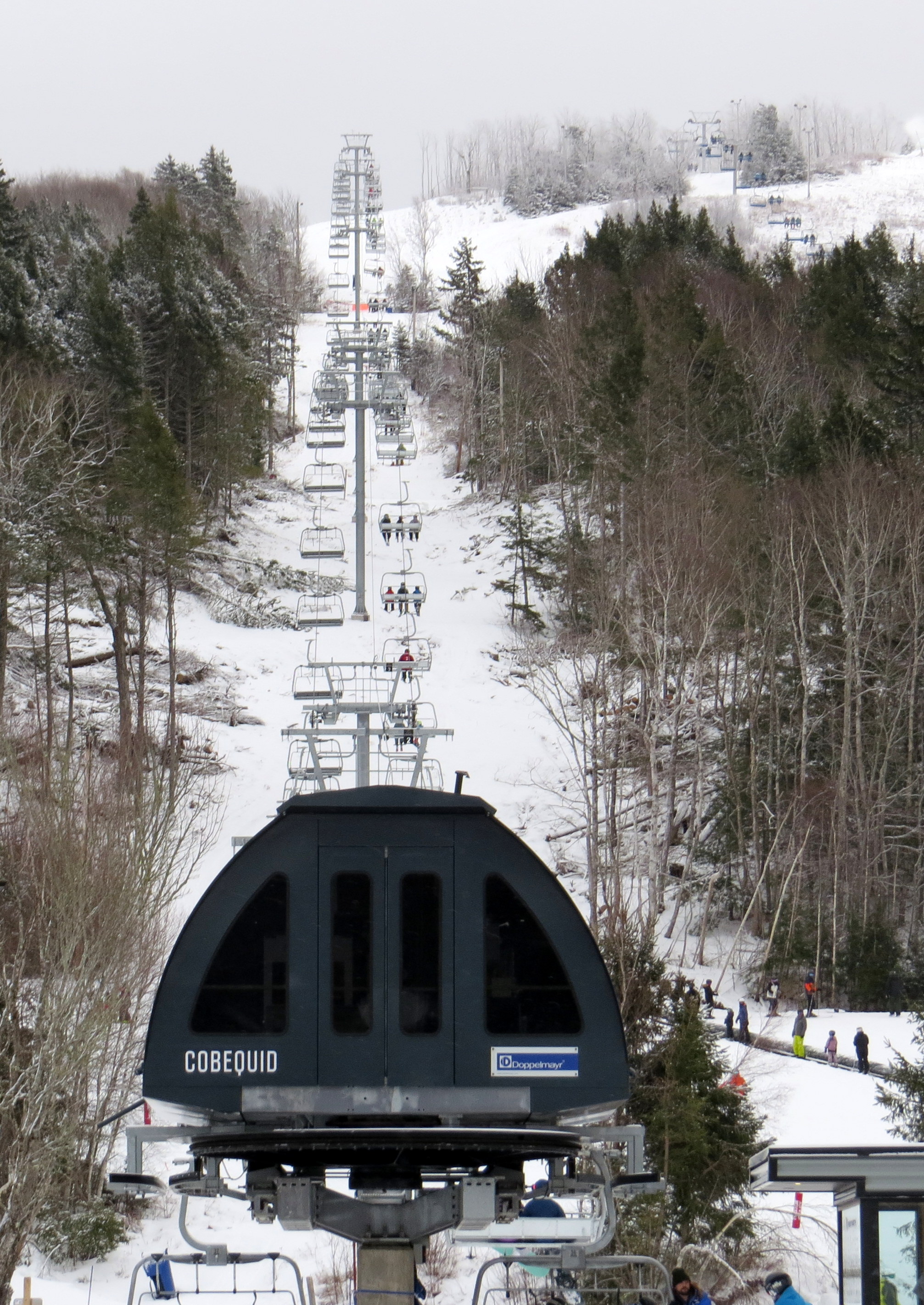
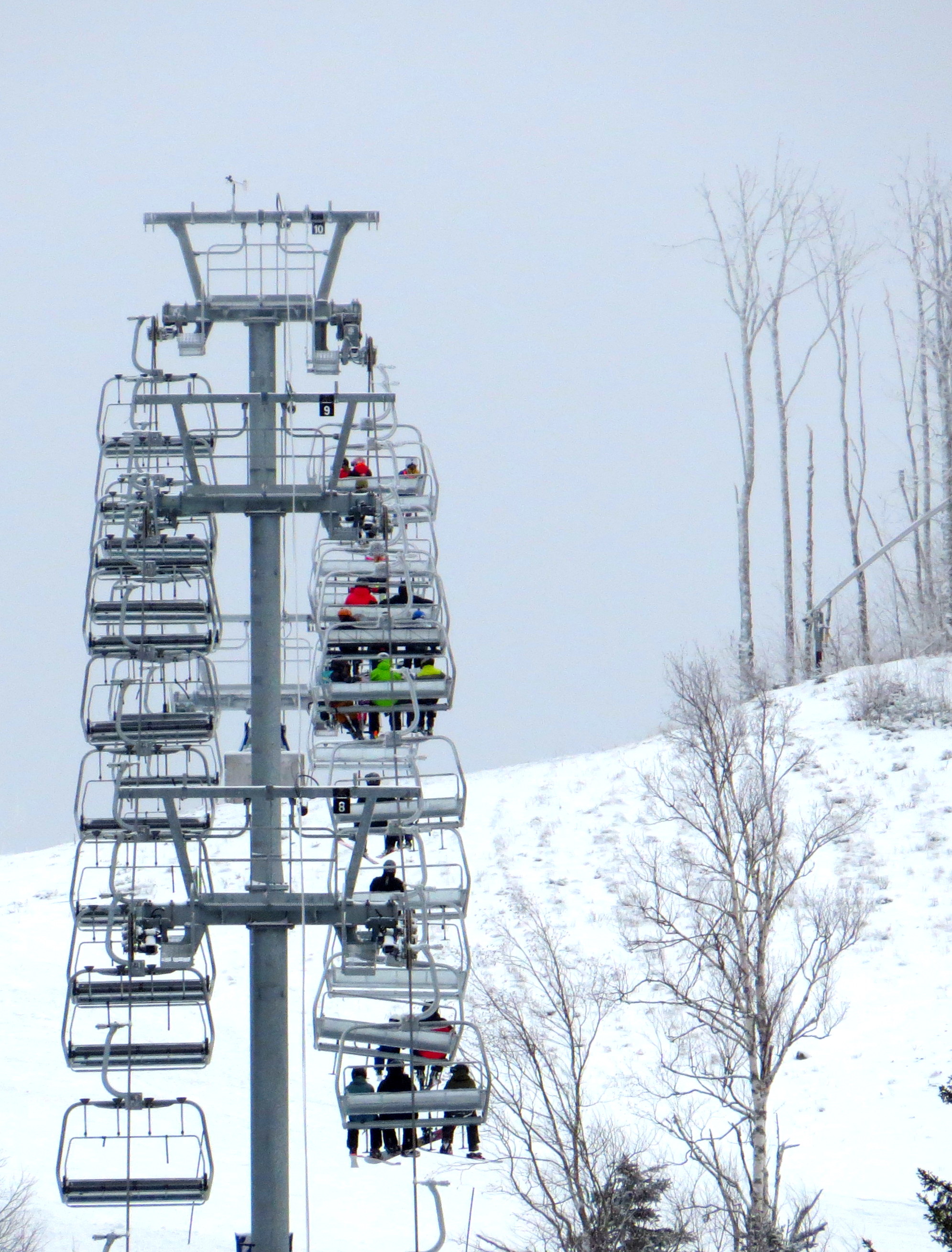
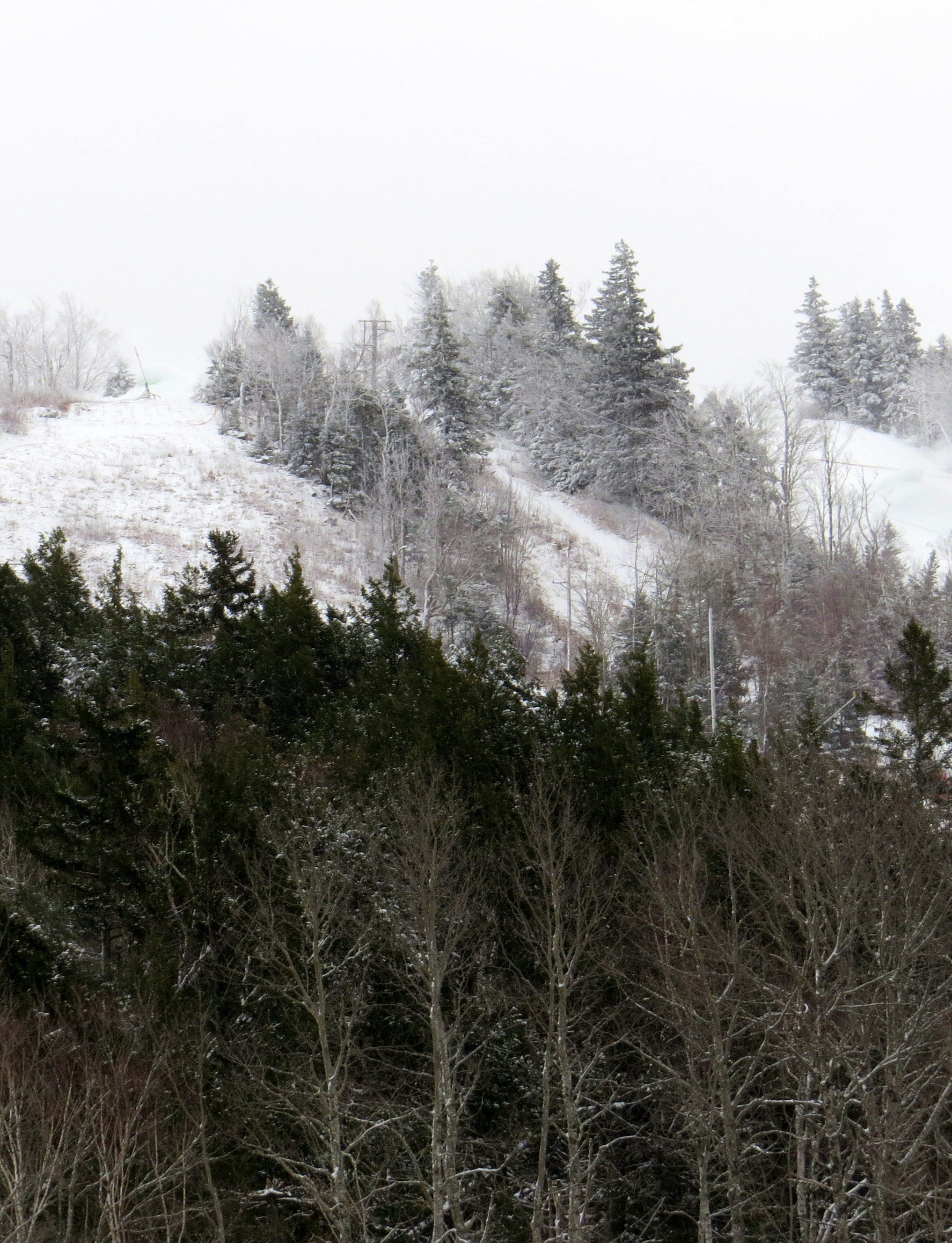
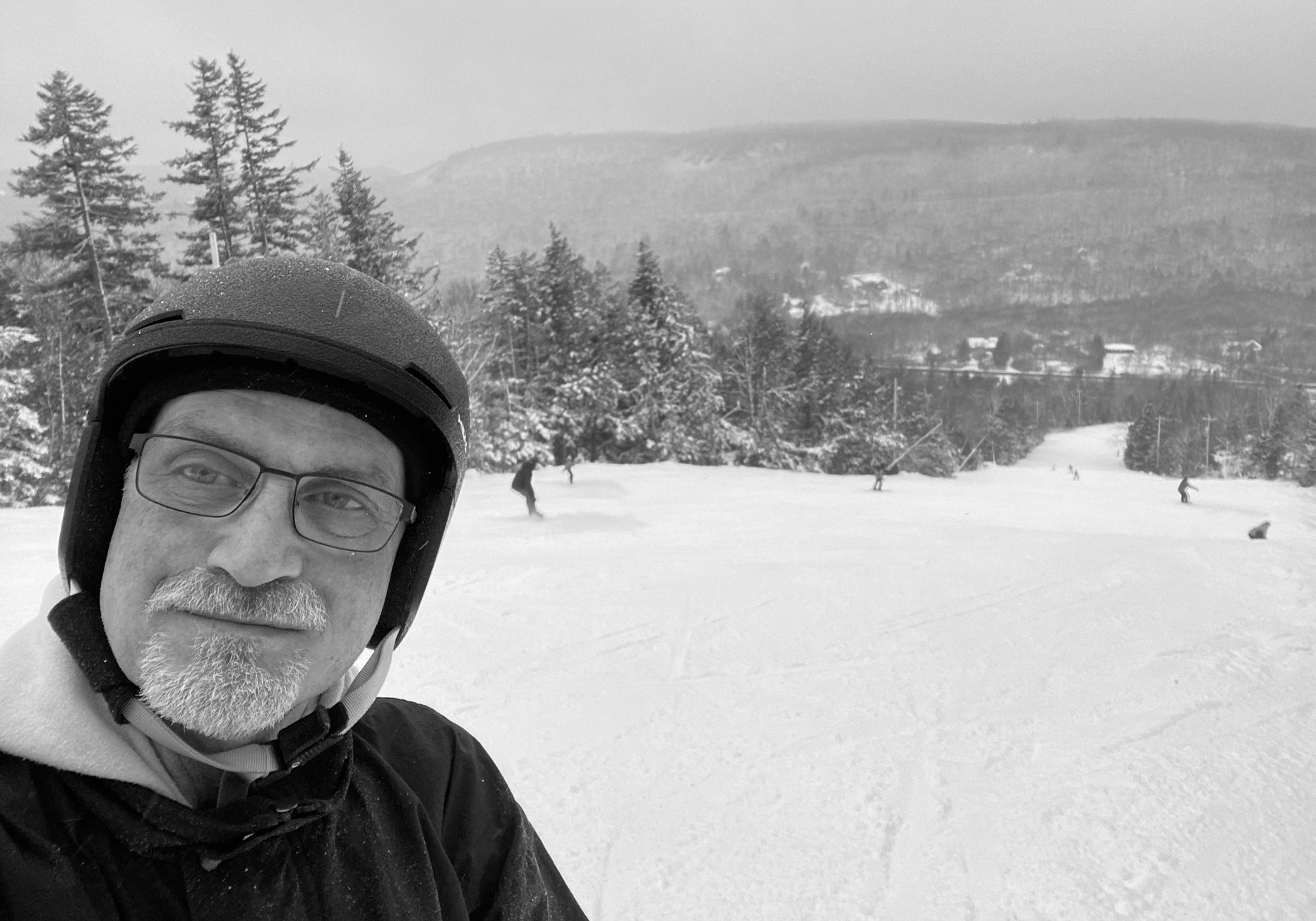
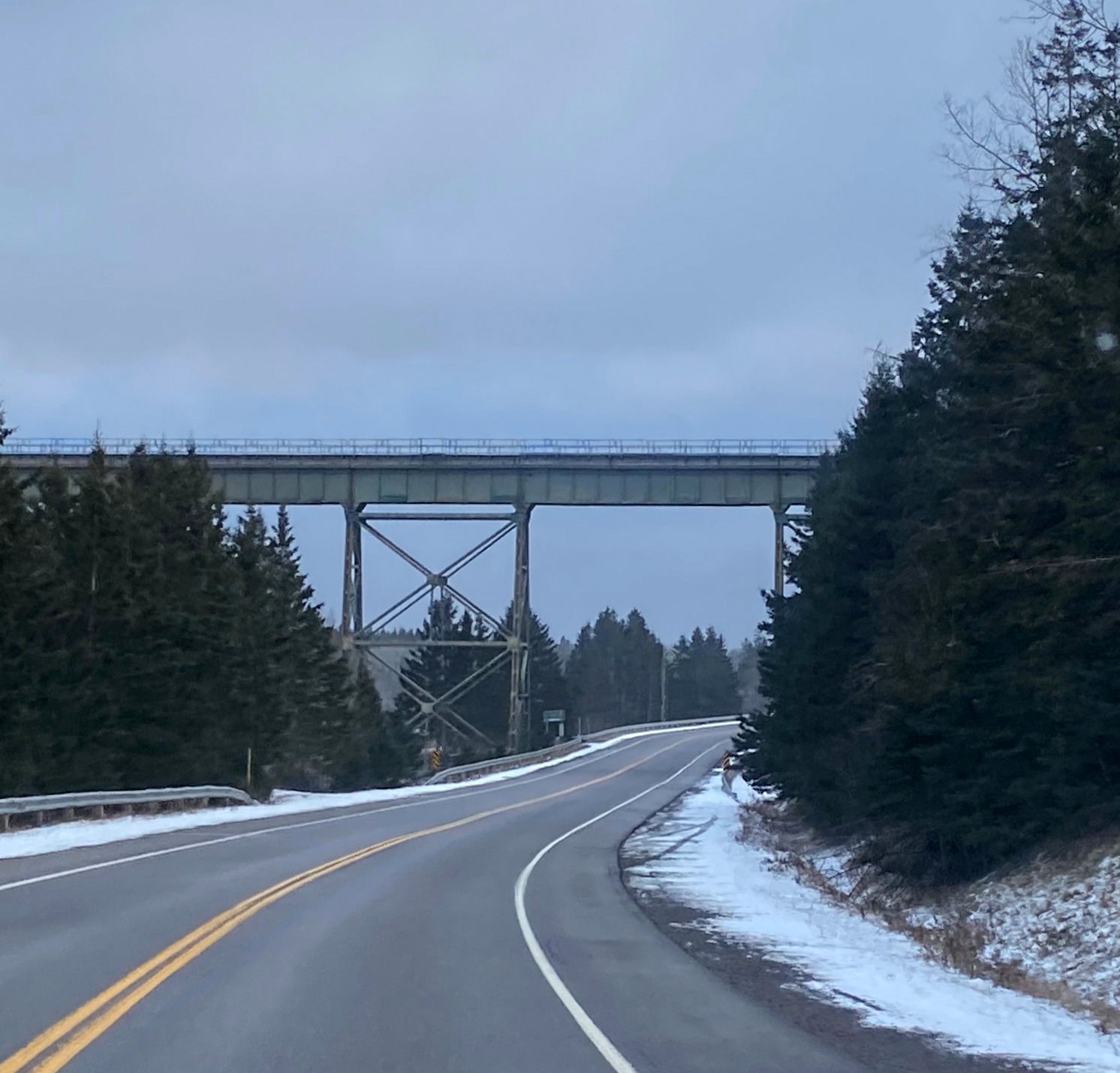
I bought my tickets online and off I went today. And what a wonderful drive past Truro. Just before the New Brunswick border, take Highway#o4. Very scenic this time of the year, with snow-covered forests and hills to the north. Probably beautiful during late summer and autumn. Traffic was less than light and I could enjoy the scenery. To my surprise, the ski area was not bad at all. No comparison between BC and Alberta – but it was actually a ski area not bad at all. I really enjoyed it. Had to be careful because the snow really was not coming there, either. Yes, a bit – but not nearly enough for skiing. Therefore all trails use mechanical snow-making which is very different and produces a fine texture and depth coverage. Watch out for plentiful icy spots. But you definitely can ski. Also, it was the first time I used the new type of short skies (no one uses the old long ones anymore, LOL). Mind you, in my time the measure of skis was simple: stand straight, raise your arm straight u,p and make sure the ski tips reach your palm. When the attendant asked me if I wanted shorter or longer skis, I naturally said: longer. And she gave me a pair, I looked at them and said: but longer in adult sizes, not a child. She looked at me and replied: they are the longer adult ski. I almost laugh. It is actually easier to make turns in the short ski but still felt funny. Old habits die slow I guess, and welcome to the XXI century, LOL. The Black Diamond trails were closed due to the lack of snow, but the advanced ones were very nice, and fast if you wanted. Couldn’t bring myself to use the Easy ones. I had to have some pride, for Heaven’s sake! Skiing in these child-length skis was bad enough for this old dinosaur.
It was a good day. I will probably do it again, maybe when some good natural snow will finally come in good quantity. It truly makes a difference for skiing. If someone asks me again if you can ski in Nova Scotia, I can finally say: yes. I wouldn’t drive for this experience from Boston or Montreal, but if you happen to visit here in wintertime – yes, you definitely can.
I have watched two movies recently. Very different and very powerful on a very personal level. Stirring emotions, and memories. The Spanish “Society of the Snow” produced by Netflix and directed by J. A. Bayona, and the Canadian production of “Good Grief” directed, produced, and written by Dan Levy. Dan Levy also played the main character, Marc.
The “Society of the snow” – let me take you on a journey in time. At the time of the catastrophe, I was 14 years old. A year later a book by British writer Clay Blair “Survive” appeared. A well-known Polish writer or essayist wrote in a Polish literary weekly “Literatura” a piece about it. It might have been Jerzy Andrzejewski, an excellent writer whose weekly column I have always read – but truly I can’t recall now. Yet the story and especially the dilemma of cannibalism versus survival made me write a short piece about it. By that, I was fifteen and of course, as any fifteen-year-old ‘writer’ had a lot to say about the issues of life and death. I sent it off to the editorial desk of Jerzy Putrament, a Polish writer, who was the editor-in-chief of the weekly ‘Literatura”, a major literary and art publication. And he published it. As it was my second publication in a major Polish magazine (the first one was in “Perspektywy”) it cemented my ‘fame and prestige’ among my teachers in my school, but not as much among my classmates, LOL.
I don’t recall if I have read the book by Clay Blair. Not sure if it was translated into Polish. Most likely I never did. But I have seen years later the first movie about it based on that novel. And I wasn’t impressed. Yet the Spanish “Society of the Snow” impressed me very much. The screen-writers (Bayona, Vilaplana, and Marques), the director, and the actors were superb in their austerity of dramatization. Everything was left to the minimum: air, food, movement, and words. Years later, while visiting Mendoza in Patagonia (the ill-fated plane took off from Mendoza on its last tragic leg of the flight to Chile), I took a special bus tour to the Andes and was able to do some hiking at the base of Aconcagua (almost 7000 meters, one of the titans of the world). The outmost desolation of that place there is amazing and overpowering. As far as you can see is a frozen horizon of white peaks and valleys. Can’t imagine surviving there with hardly any provisions for longer than a few days. I felt that the movie captured that feeling very well.
“Good Grief” by Dan Levy. Who doesn’t remember and didn’t love that sweet, funny, and almost useless in practical skills young gay guy in the now iconic CBC series “Schitt’s Creek”, with his father, great Canadian actor Eugene Levy, and fantastic Catherine O’Hara? But Dan Levy playing a grief-strickened, middle-age man in serious drama, tragedy actually? Can he carry it? He did.
I shouldn’t have watch it. But I did. I had to. As I watched his grief, as I travelled with him in his yearly journey of that grief of losing the love of his life – I went through mine. Every silent moment. Every object in his and mine apartment, photographs, furniture. At times I didn’t know if it was Dan Levy or me on that screen. If it was a movie or my memories of last year. No, I didn’t go to Paris and there was no surprise in finding ‘the other lover’. But these are just details, unimportant almost didaskalia of the drama. The differences between the lives of me and John and that of Mark and Luke are just a different shade of the same colour.
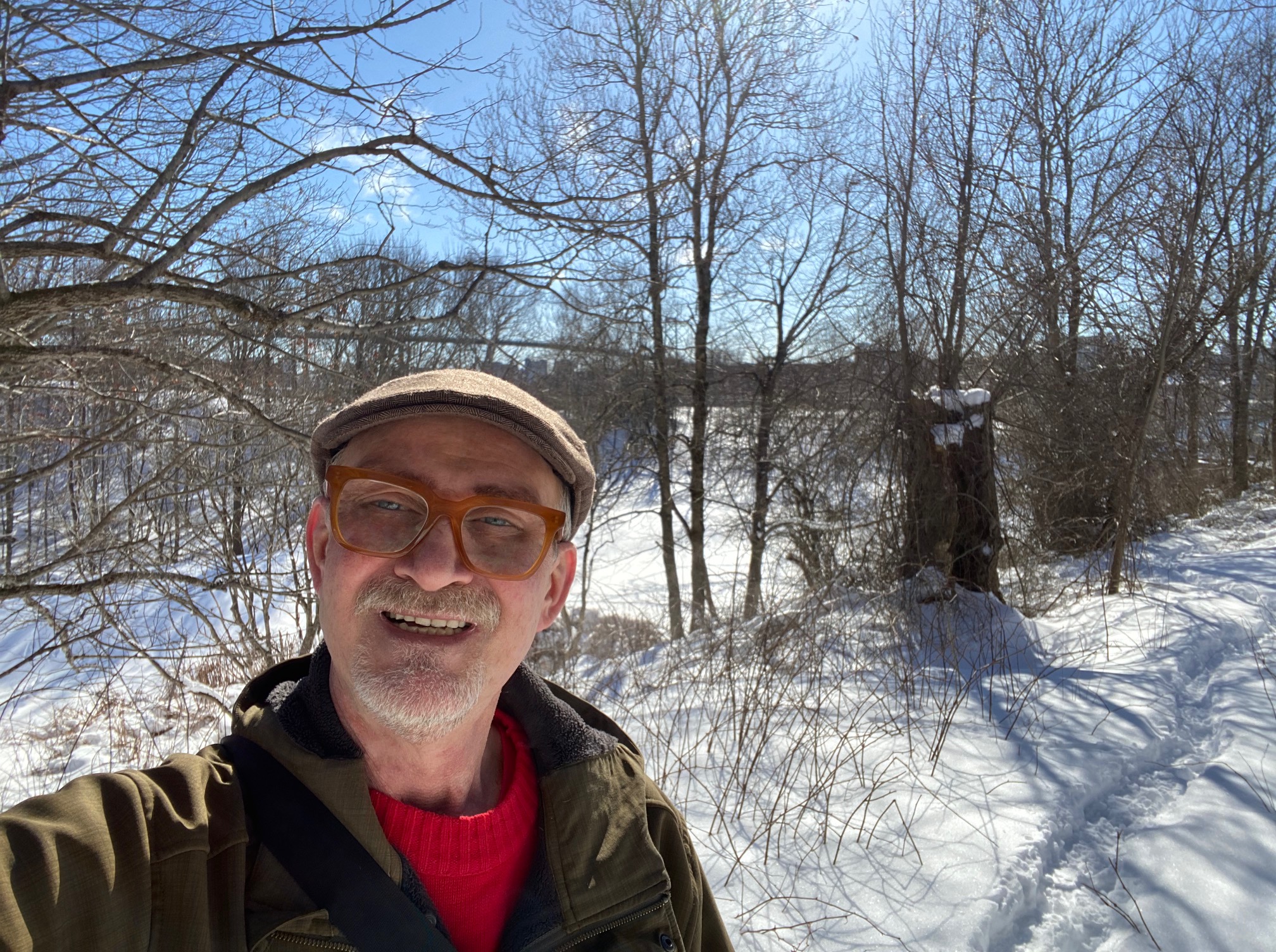
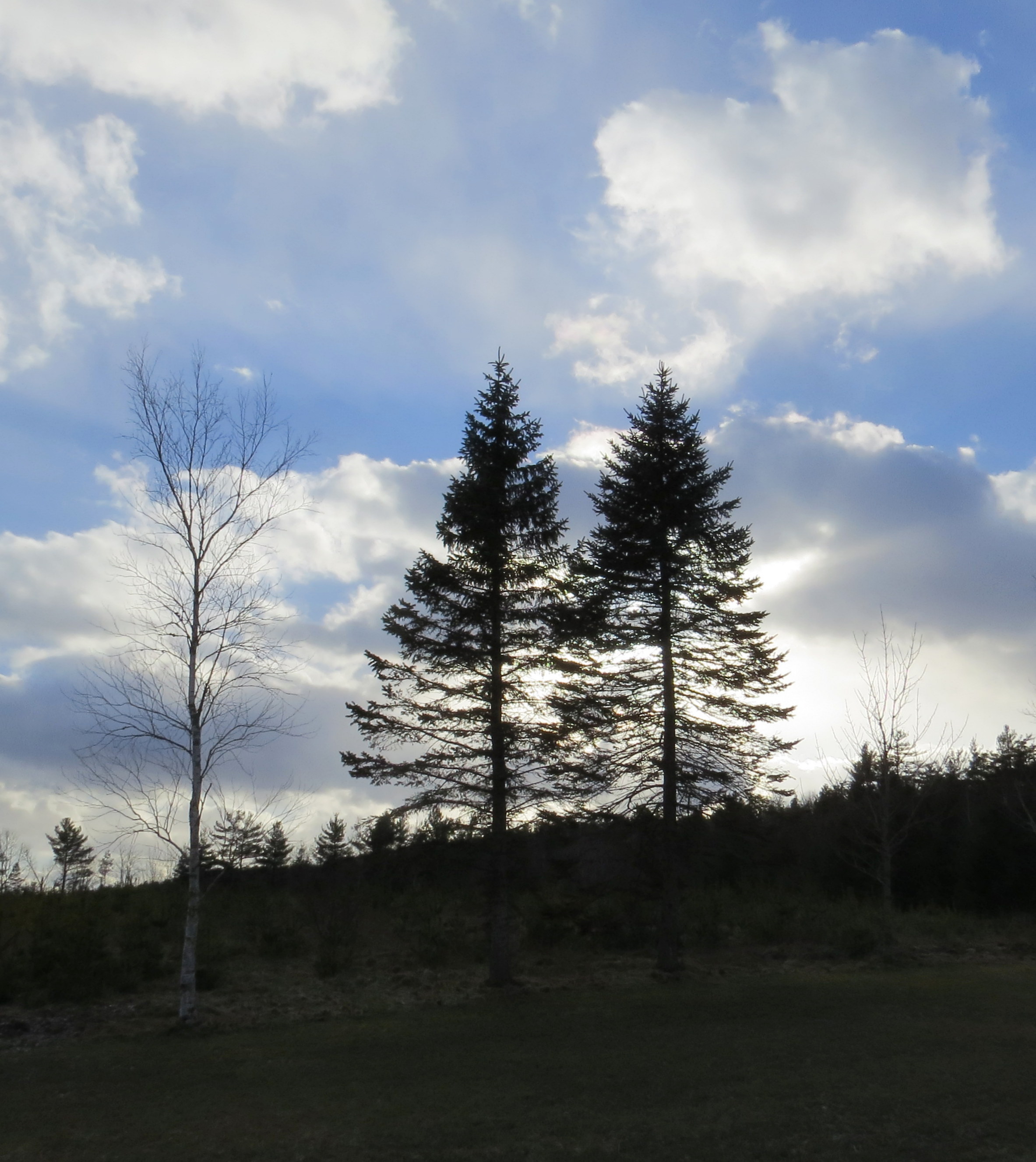
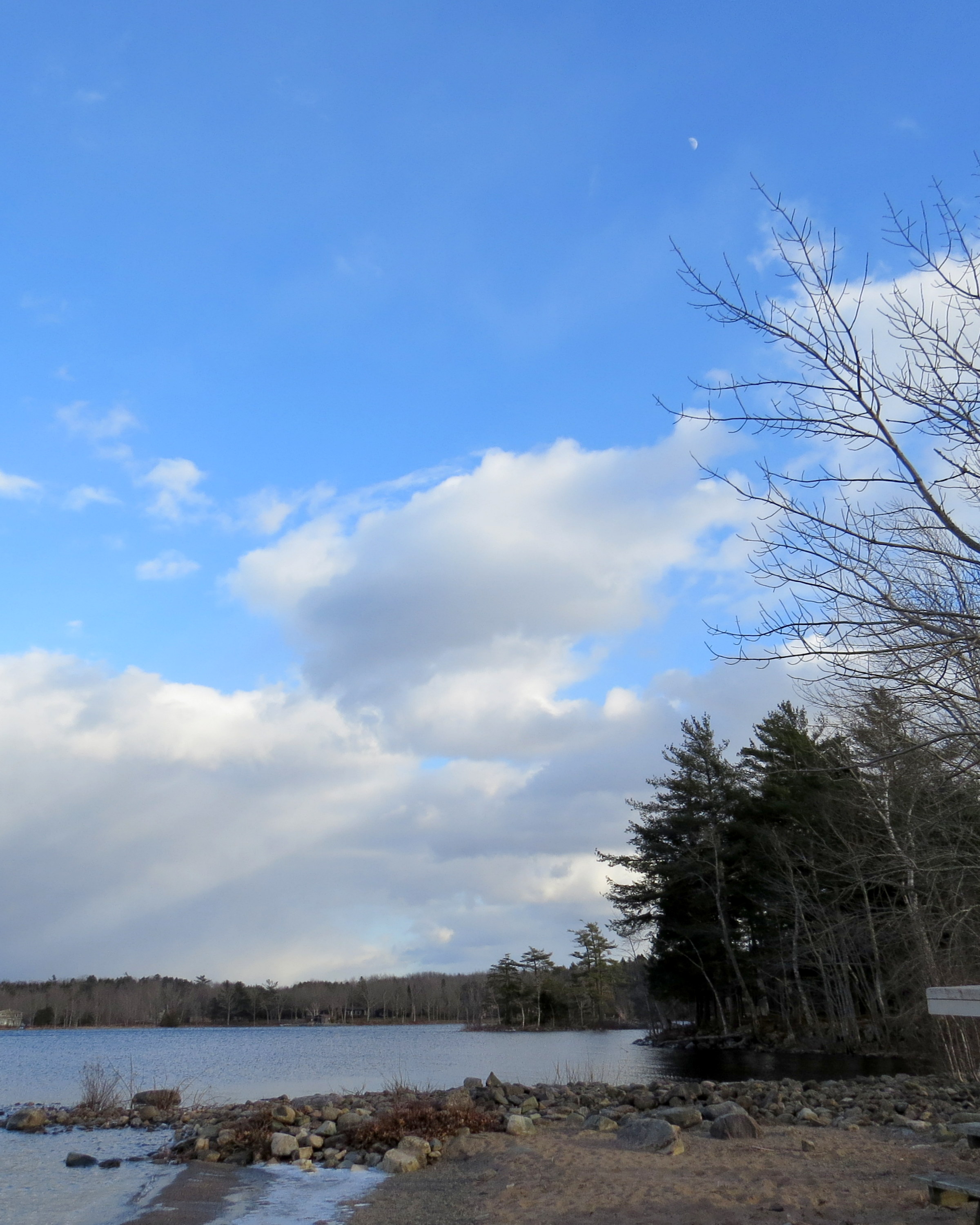
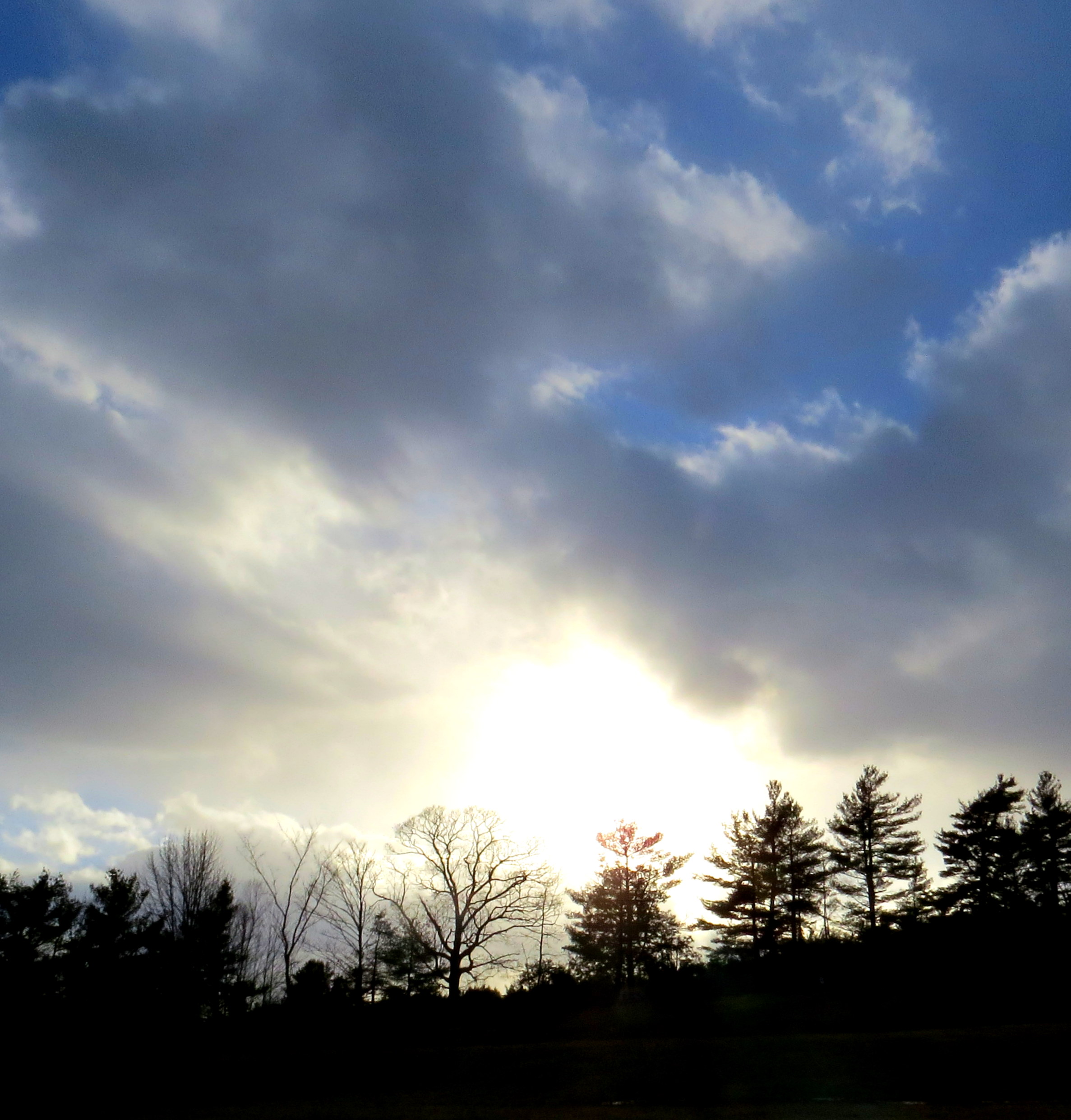
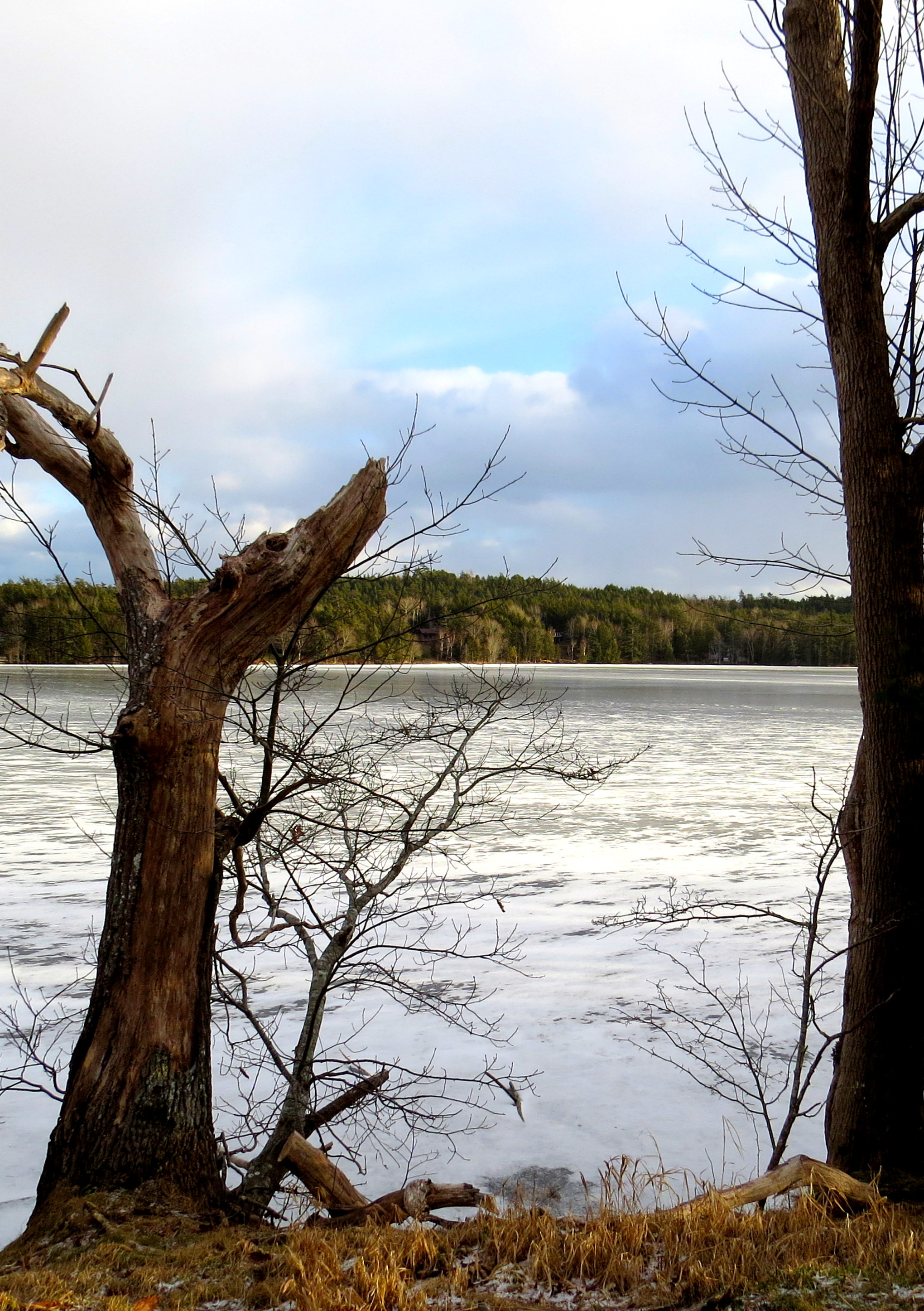
As I watched that movie sitting on my (on our) sofa I felt John taking my hand into his and squeezing it gently. I heard him saying I’m sorry, and I wanted to grab his hand, to cover it with kisses. But I didn’t, I knew the hand, his voice would dissipate into the air. So I just sat quietly, didn’t even turn my head, and continued watching the movie. With him undisturbed sitting next to me. As he always did. It felt good. Sad but good. The next morning I went for a drive to a little town called Fall River. I took him there in 2019 to a little Provincial Park, with a forest, by a long, wonderful lake. This time it was wintertime, windy and cold. The gate to the park was closed for the season. I left my car and walked the long trail on foot. The sky was splendid with clouds and sun in crispy air. It was my trip ‘to Paris’. Thank you, Dan Levy, for letting me submerge myself in that grief again. Grief is hard, is sad. But it also is beautiful, because the seed of grief is love.
After

I couldn’t sleep.

Didn’t know how to

console You.

How to tell You –

it’s all right, Babycake.

I have survived.

No, it wasn’t Your

fault.

You tried,

You tried so hard.


Do I lie, when I say:

‘it’s all right’?

Yes, I do.

It was

so fucking hard.

I knew it would be

if and when,

but had no clue

how hard it is.

Didn’t know

that grief

could be like

hot lead

slowly injected

into your veins.

Like the disappearing

bubbles of air

you have tried

to squeeze into your lungs

nailed to the heavy

cross of impossibility.

As I watched with terror.

So what was

really the weight

of my grief

compared to that?

How do you compare

the pain of life

to pain of death?

How do you?

What’s the balance ratio

of life in grief

in one hand,

and no life

in the other?

Does a man know?

Does God?
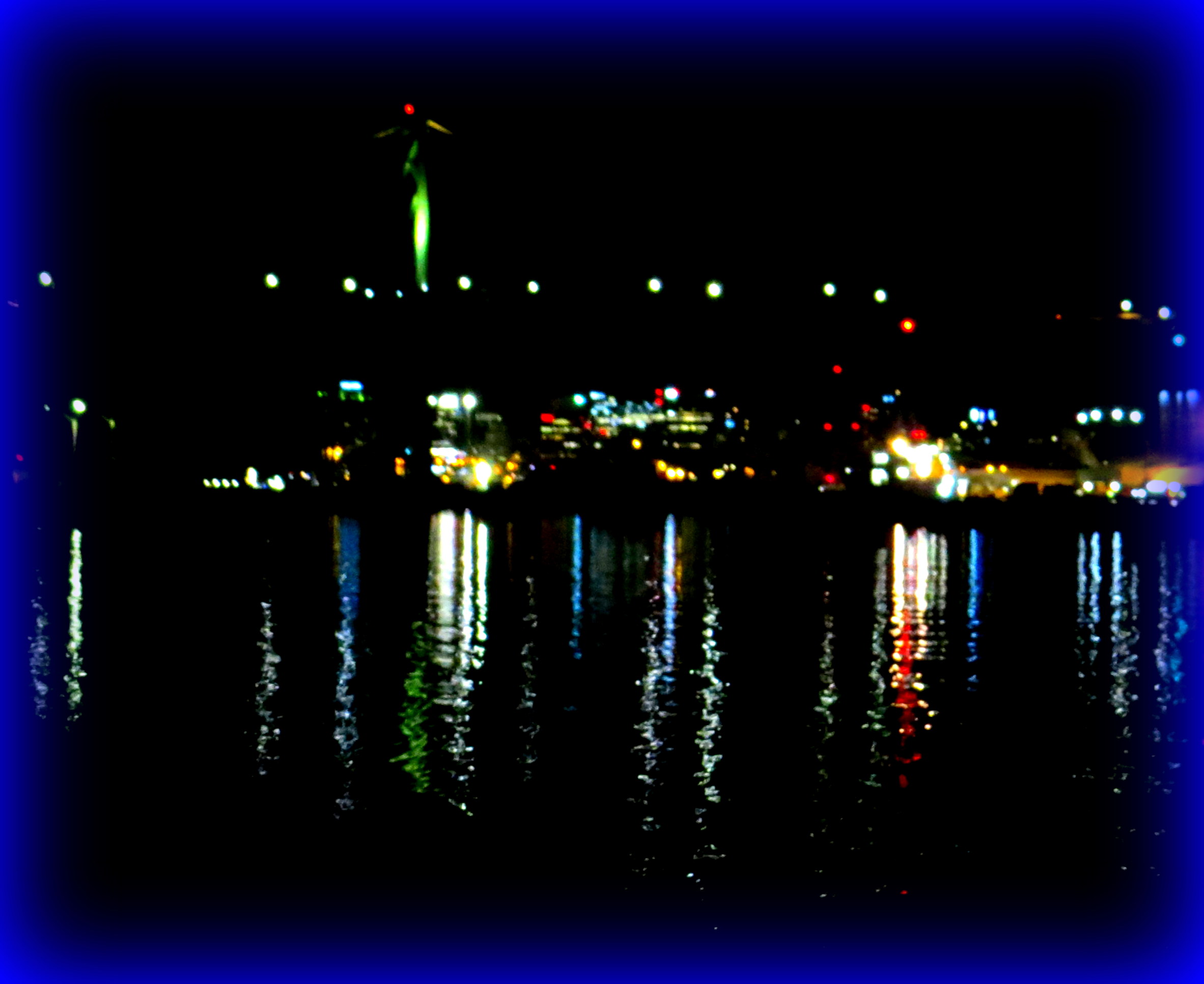
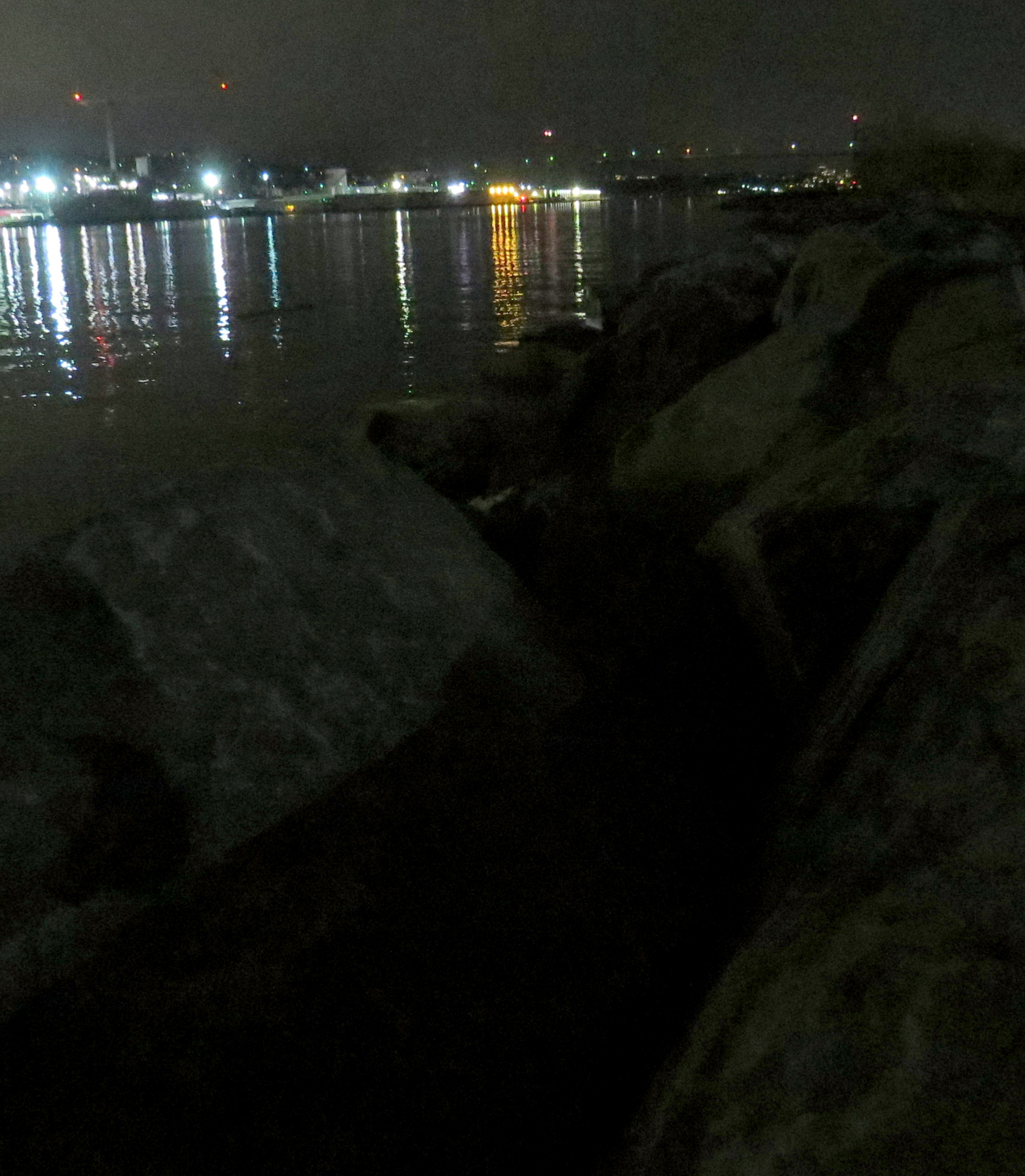
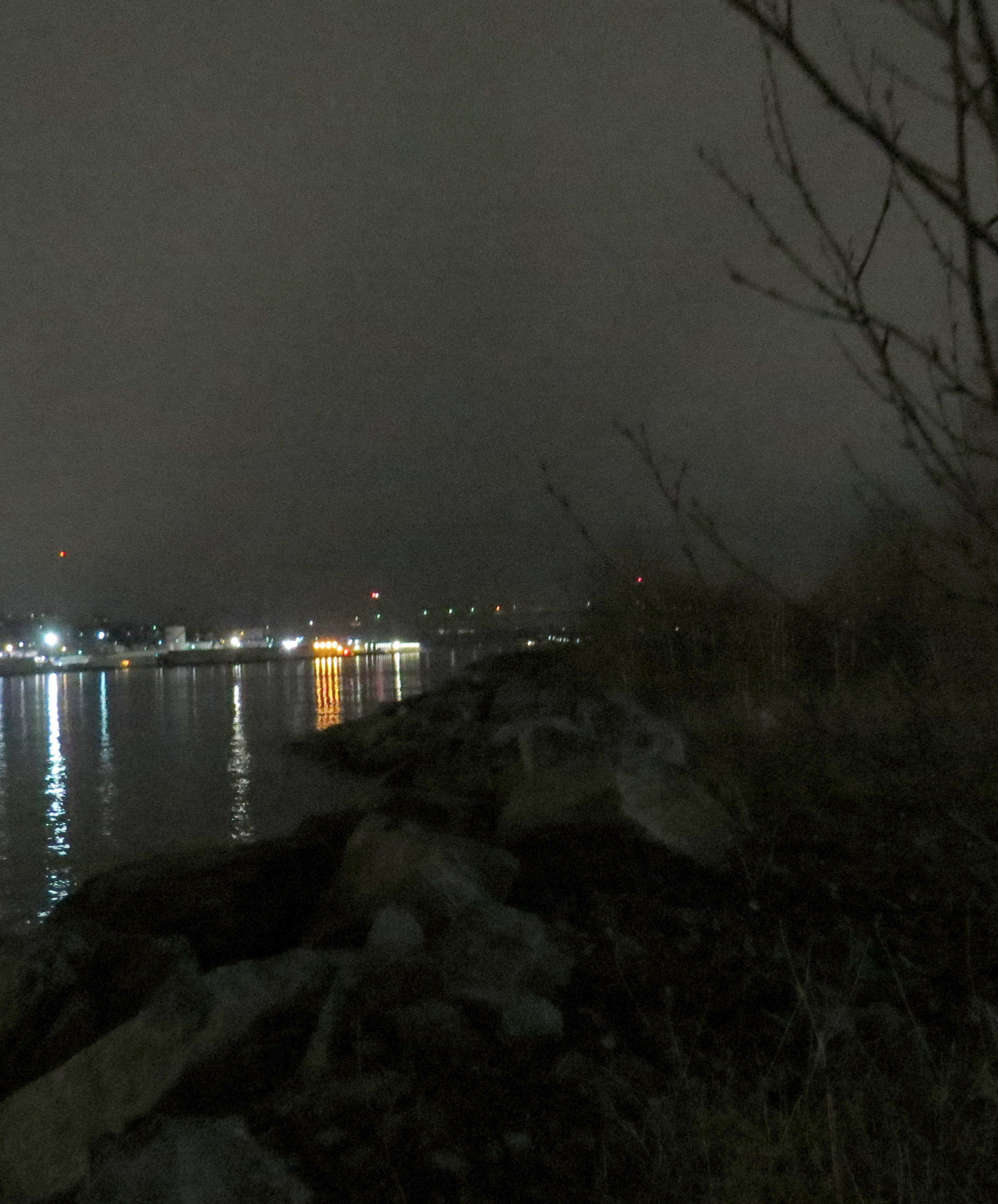
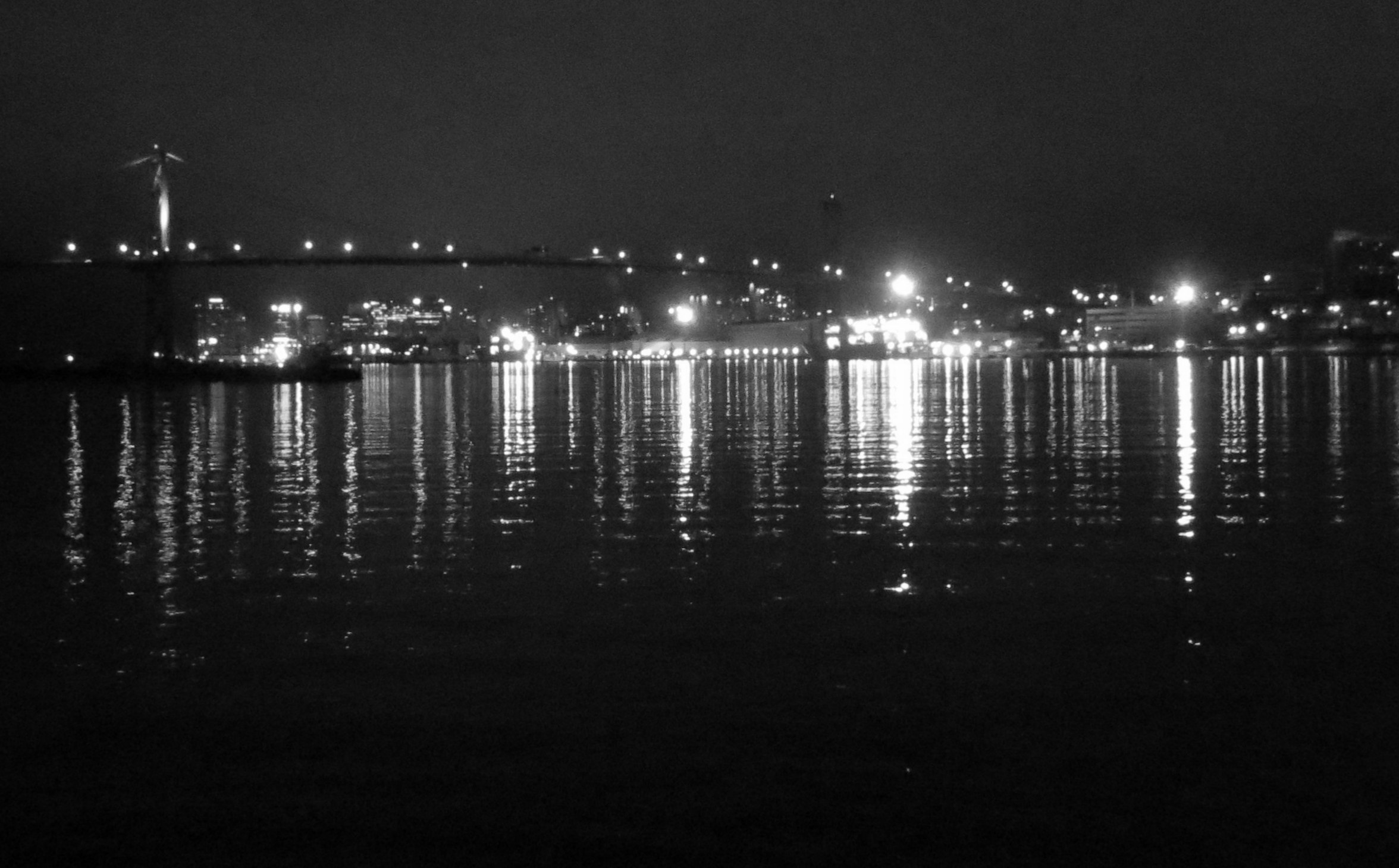
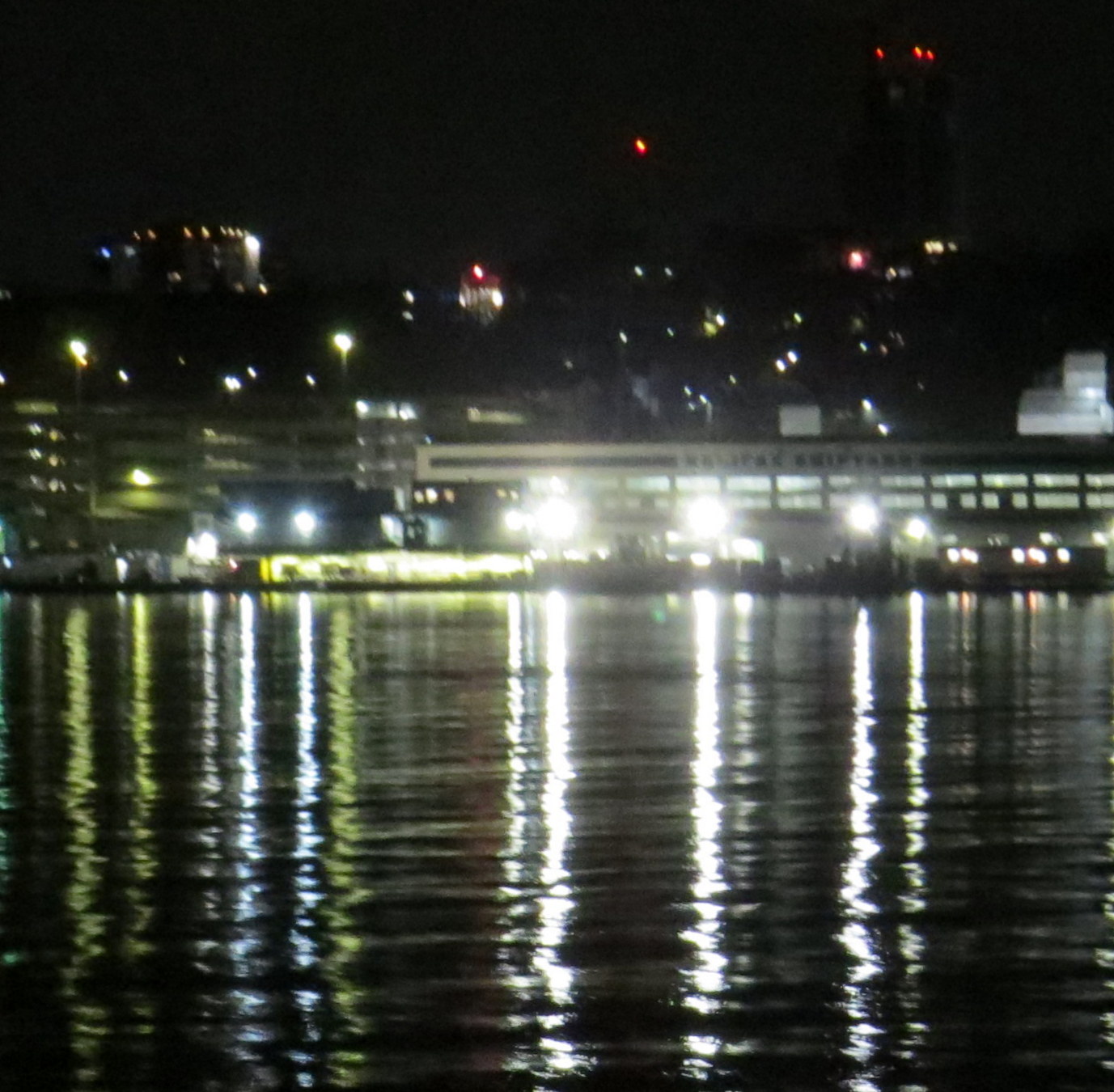
During winter it is a bit tricky and not always a pleasureable to go for a midnight stroll. The rocks are very slippery and the water below them – not very inviting, LOL. But it is also so peaceful, so empty from any distractions. And the play of night lights in the water – just a magic in itself. Here is some of the magic captured by the lense.
The same panorama captured a day or two earlier in an early evening. Like two different worlds.
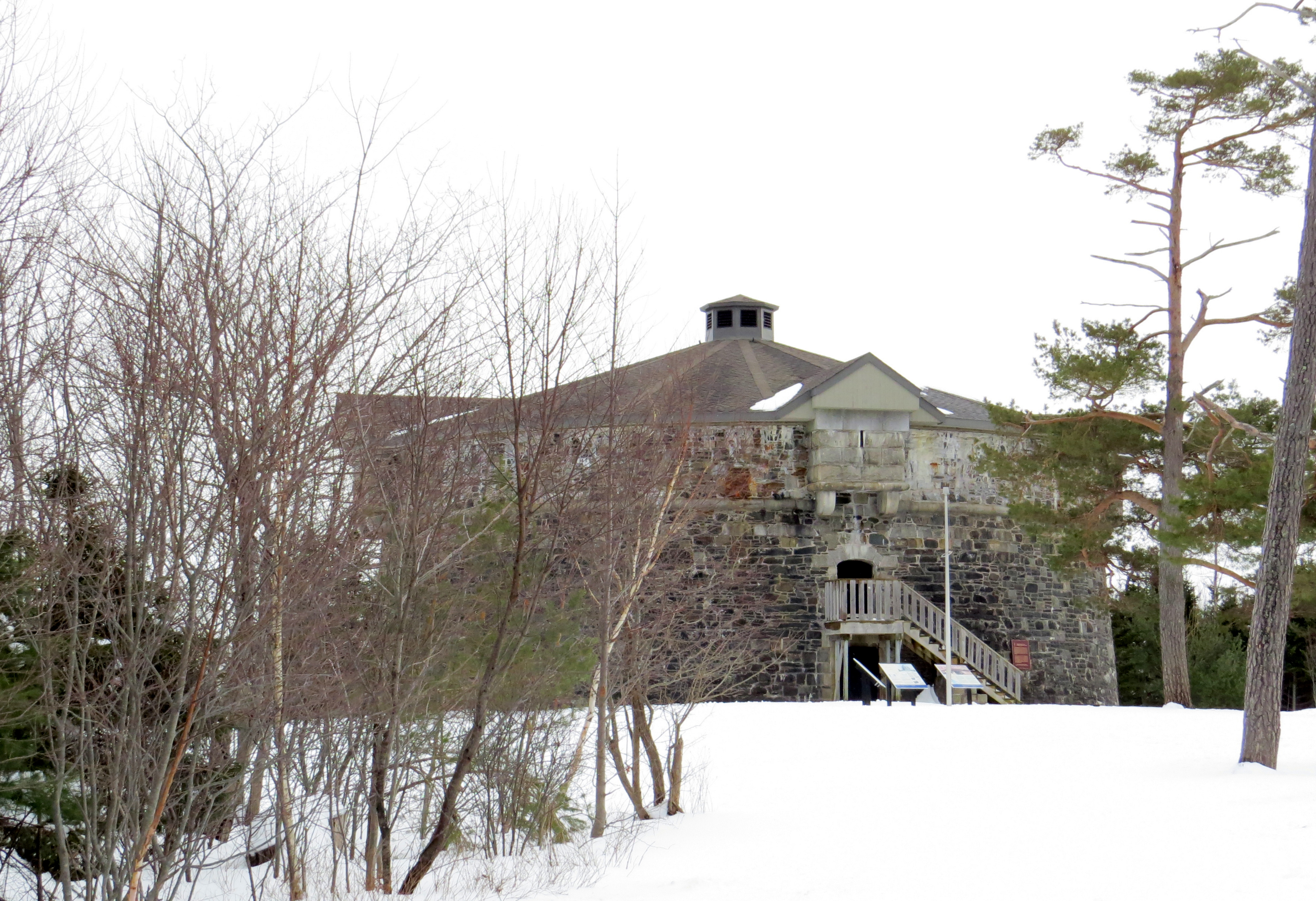
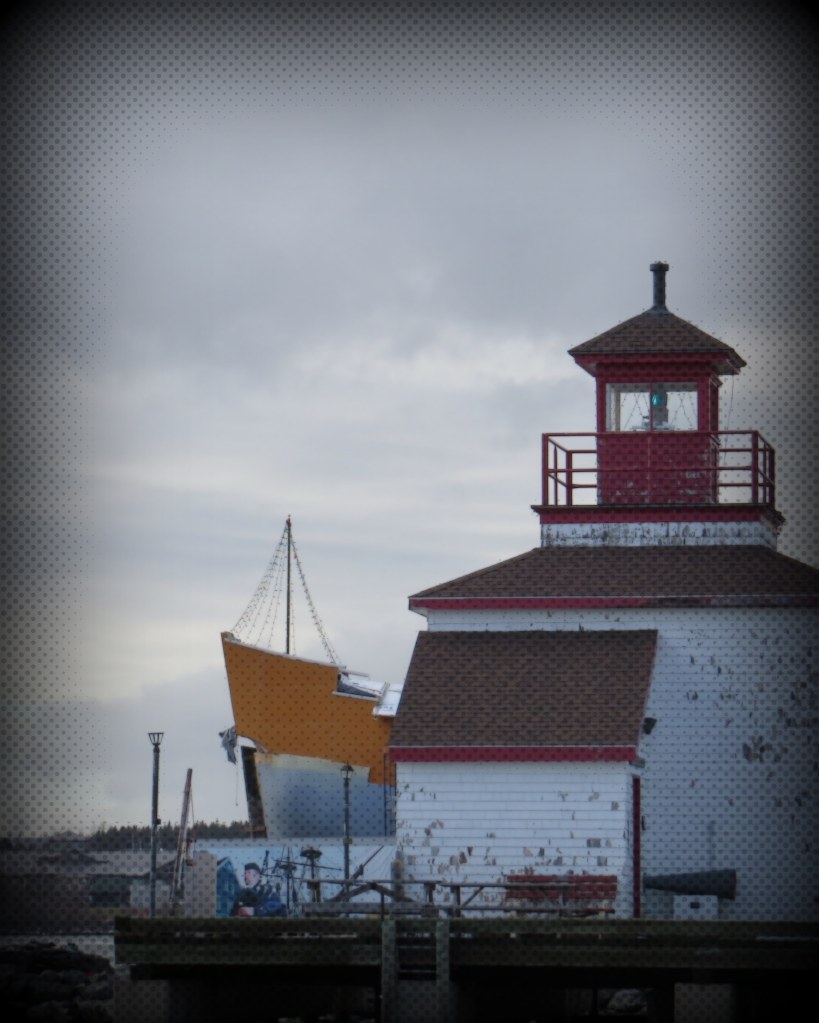
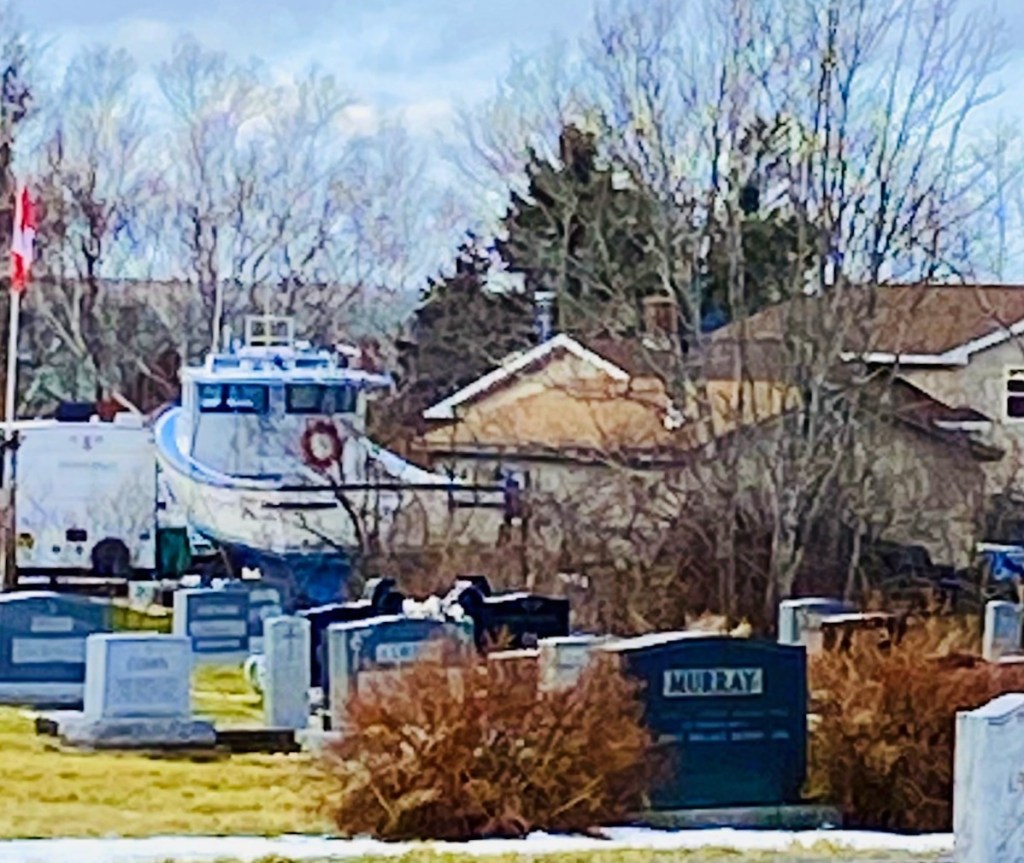
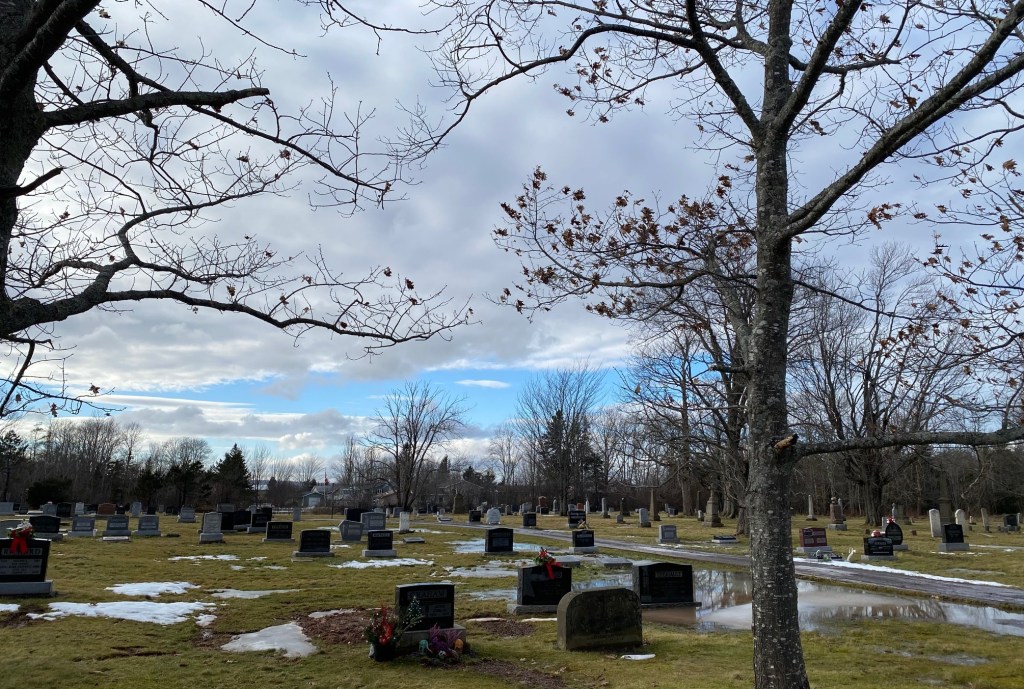
There is a certain charm of old, half-forgotten towns in rural Nova Scotia. They used to be important, even powerful – they had regular shipping lines for sailships and steamships; a railway. But the world slowly changed, passed them by. They deteriorated, lost a lot of young people in search of better opportunities. Grand buildings decayed, many churches emptied. Now they try to regain some of the old glory. Mostly through tourism. But the charm never left.






































































 > > Pogwarki < <