W centrum starego New Westminster jest, od wielu już lat, bardzo modernistyczny i nowoczesny budynek Convention Centre, zwany Anvil[i]. Miejsce spotkań: z lokalną sztuką, lokalnym rękodziełem, lokalnymi aktywistami socjalnymi. Reasumując – miejsce spotkań sąsiadów, taki a’la ratusz minus cywilna i polityczna siatka biurokracji. Tam (City Hall) spotykają się politycy i biurokraci na niekończących się zebraniach, nasiadówkach i dyskutują, jak wydać nasze pieniądze; tu, w Anvil, spotykamy się my: mieszkańcy i robimy wystawy, potańcówki, prelekcje, przedstawienia teatralne, muzyczne. A jak Święta, to wiadomo – musi być coś wesołego, radosnego w kontraście do tej bieganiny zabójczej za jakimś beznadziejnymi i na ogół mało pożytecznymi prezentami, blichtrem, który nikomu żadnej autentycznej radości nie daje.
Kto, do takiej bezpretensjonalnej, lub może odwrotnie: pretensjonalnie tak nadętej do granic możliwości, że przez ten absurd staje się bezpretensjonalną zabawą, nadaje się najlepiej?
Tak, naturalnie – drag queens! Rzeczywistość jest dla nich absurdem pozbawionym sensu istnienia; normalność, to takie nudy, że na mdłości zbiera. Drag Queen, to de facto wolne ptaki w społeczeństwie, któremu odcięto skrzydła fantazji i wolności.
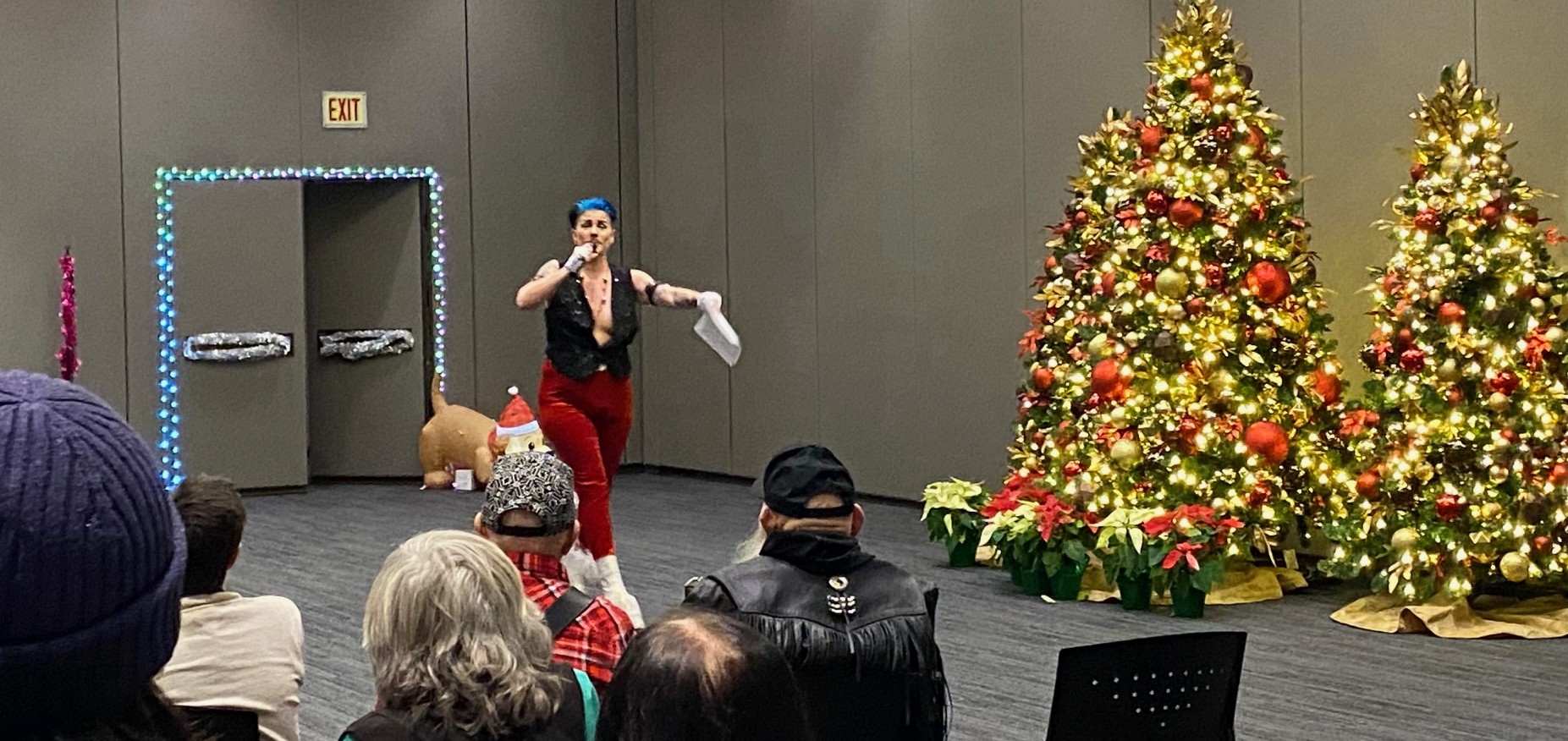
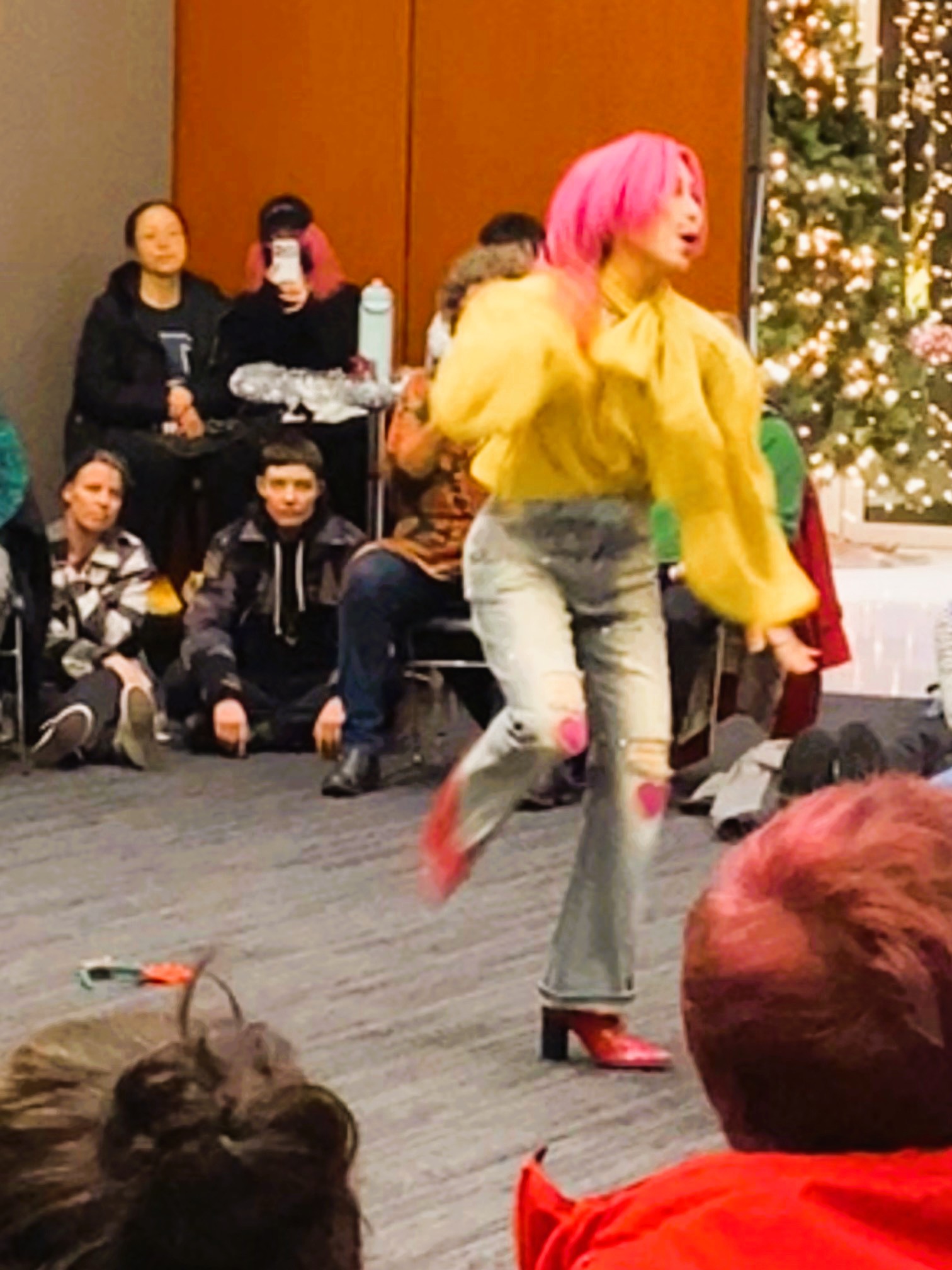
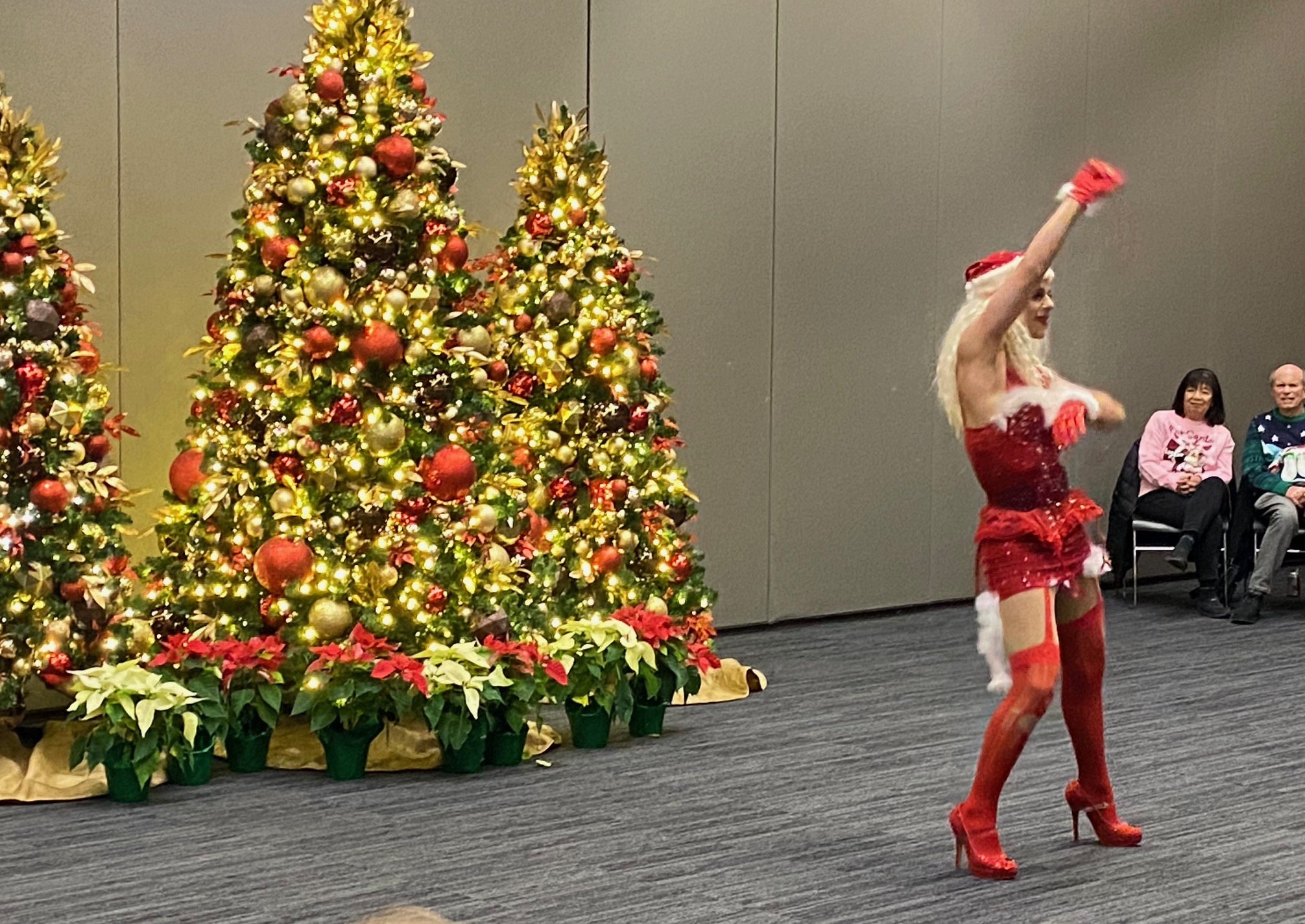
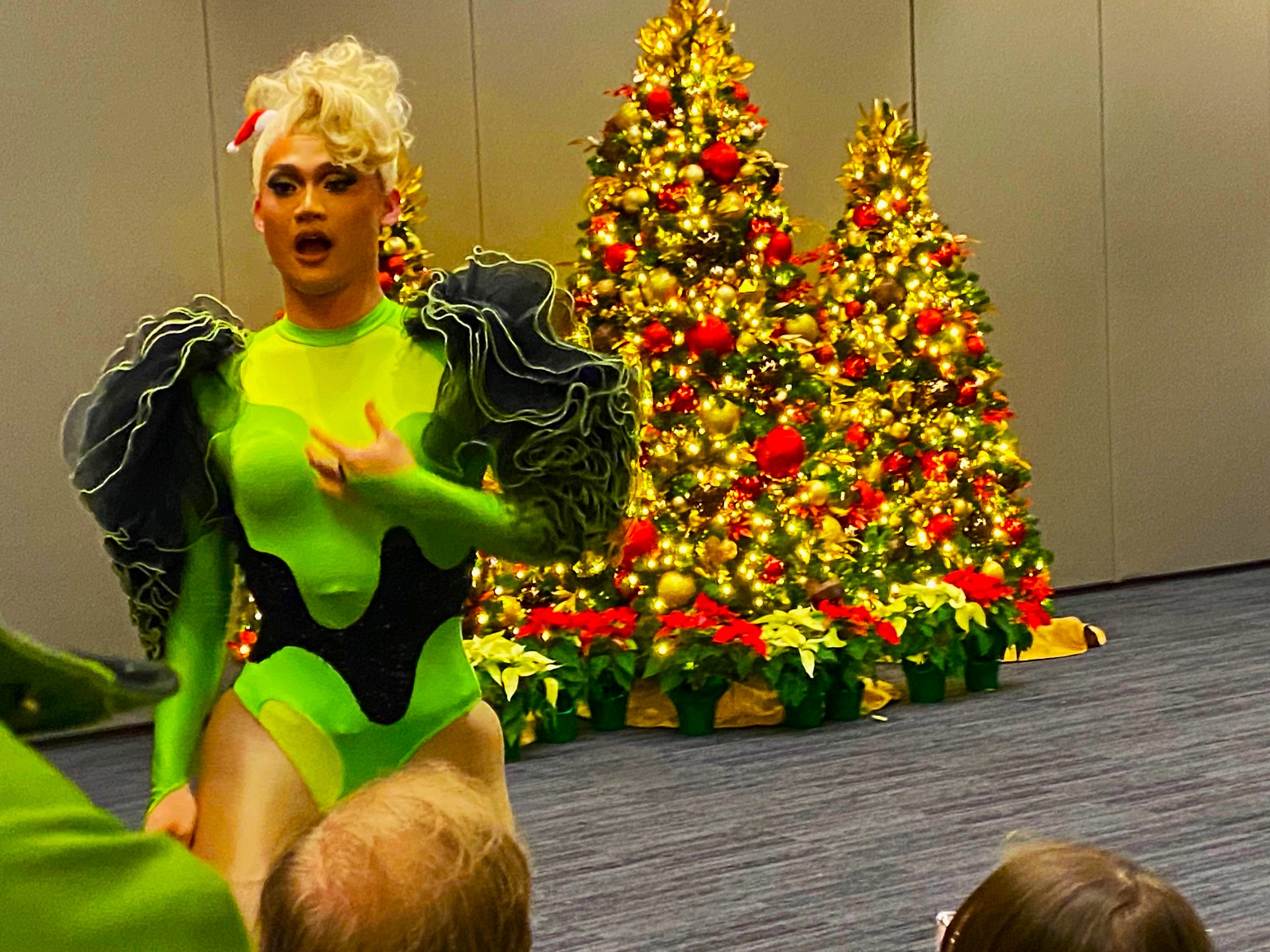
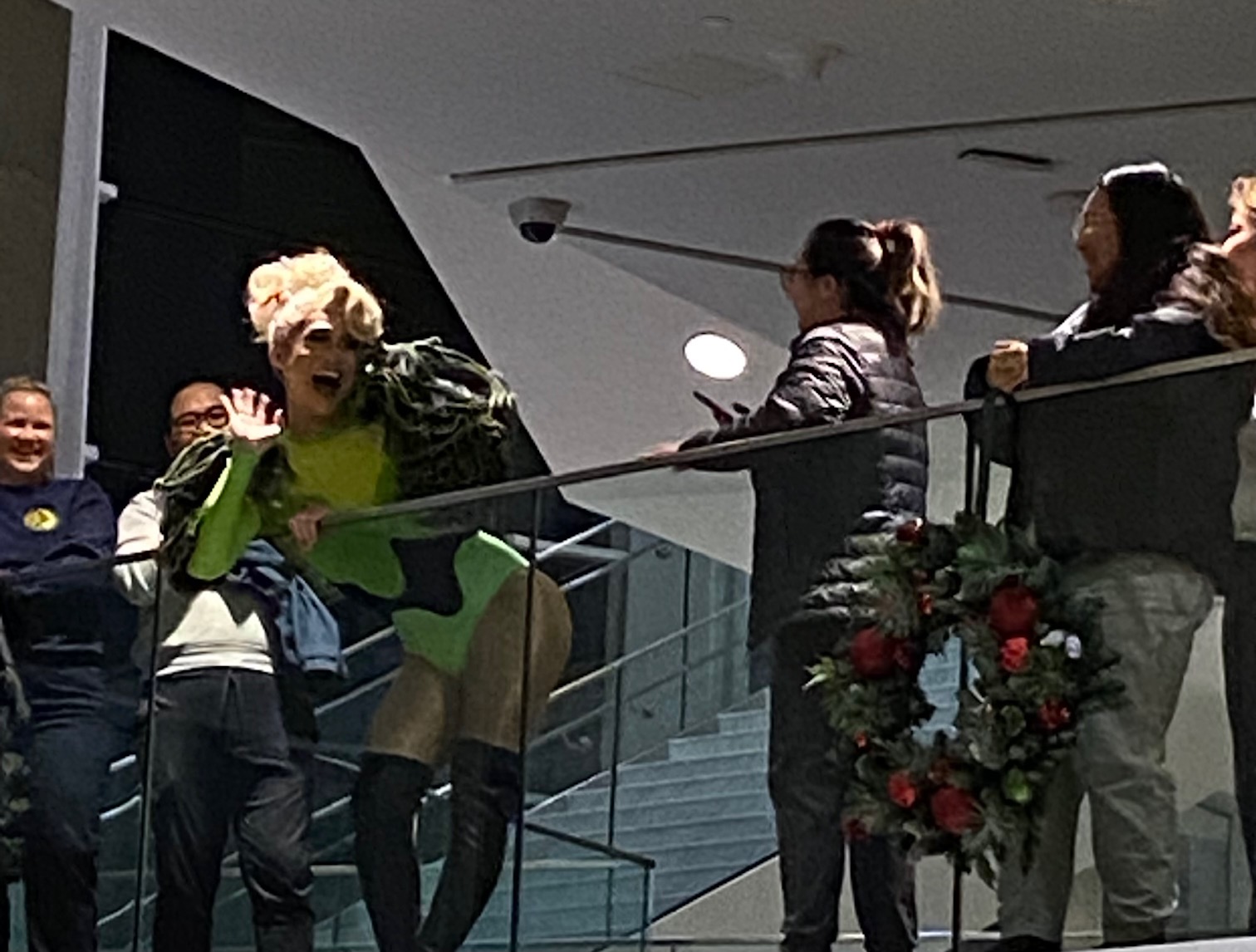
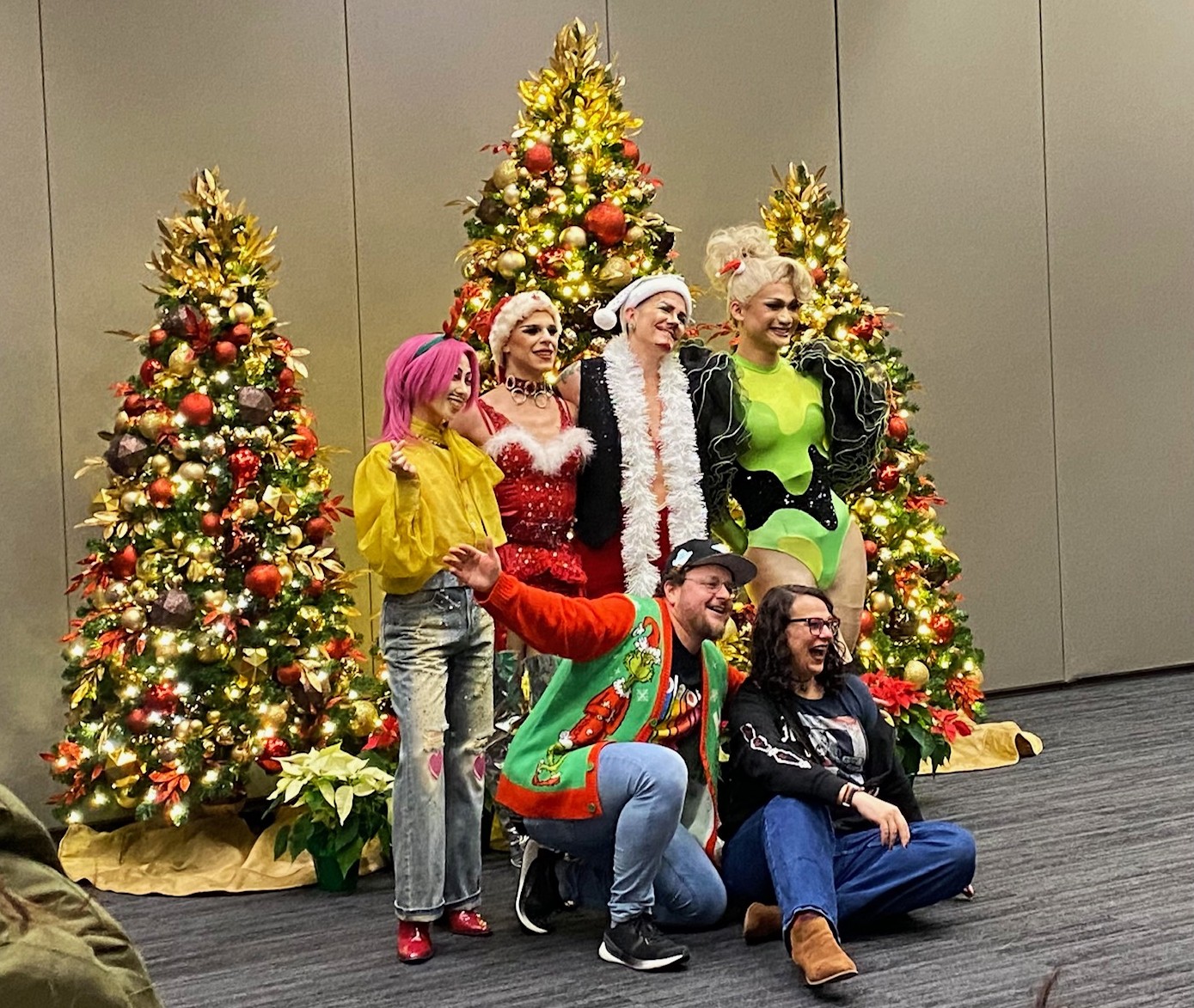
Więc wczoraj w tymże Anvil Centre Draqq Queens z New Westminster pofruwały nad nami swymi surrealistycznymi skrzydełkami, poskakały, pośpiewały i zagrały nam palcami na nosach-fujarkach.
Widziałem w swym życiu dużo lepsze drag show – ostatecznie to jest forma wysokiej sztuki scenicznej, wymaga talentu i ciężkiej pracy – ale te było, jakby ad hoc zorganizowane, nie po to by olśnić skomplikowaną choreografią i treściami a po to, by wywołać uśmiech na twarzach znużonych świąteczną bieganiną. Trochę beztroski, po prostu, zwyczajnie. Trochę dziecka w nas obudzić.
No i z radością patrzyłem właśnie na twarze stosunkowo licznej grupy dzieci, które też przyszły to widowisko oglądać – te były najszczęśliwsze i oklaski dawały najgorętsze! Być może z całego showu – to właśnie rozbawiło i rozczuliło mnie najbardziej. Ta reakcja radosna tych dzieci.
Christmas, for some, could be difficult. It is now for me. But for most it is also very tiring end of weeks of shopping and running after the best deals for presents and trying to remember about others. Sadly, most of the gifts is not really what our dear ones need. They just need us – not our wallets and boxes of more ‘stuff’. But, be as it is – we are a bit cranky and tire of it all. Time for some simple laughter, joy unpretentious, simple. Child-like perhaps?
That is exactly what the small sow of drag queens in Anvil Centre in New West offered yesterday. Not feeling particularly joyful these days – I listened to suggestion of my friend and almost forced myself to go. What a simple and very modest yet natural drag queen performance it was! Laughter, joy. Screaming to the onlookers and the world – allow yourself for some magic, for being free for few hours. By what you perhaps wanted to but were too timid, be perhaps a child again with abundance of imagination a none of the barriers we erected later as adults.
That’s what they are – the drag queens. A possibility of ‘what if?’ or ‘why not?’. And it is wonderful, liberating emotionally. But the most joy I have received from the show, was not watching the talented performers – it was the laughter and the smiles of the children, who came with their families to watch the show! So seldom they can see their adult families and friends, to be brave enough to become someone else for a moment. To imagine.
In Old French ‘granville’ means simply an old village. Were to be more than just one Granville – it must be than – obviously, LOL – ‘granvilles. Simple. Therefore I walked through and through three of them. Started from the bottom of an old, yet sadly no so much venerable anymore, Granville Street in Downtown Vancouver. It truly used to be a pleasure to walk that street in my younger years. There was everything in there: places to eat, drink, dance, and pick up fellow or girl for an evening of fun, an old opera, and symphony building. It offered entertainment for high prices, and for very moderate pockets alike. It truly was the main thoroughfare of Downtown, for girls and boys, for gay and straight.
It still is interesting, still offers a little bit of everything to everyone. But it lost its grandeur, certain elegance (mind you – not haute couture, but elegance nonetheless). If Davie is paradise for LGBTQ people, Robson for shoppers and Burrard for expensive shopping – Granville was everyone and everyone liked strolling through it. I did. Still do, but with a bit of sadness and … anger at the City Hall for allowing it to reach such a state. We already lost the section of old Hasting Street with the vicinity of Carnegie Library and Granville is not far behind.
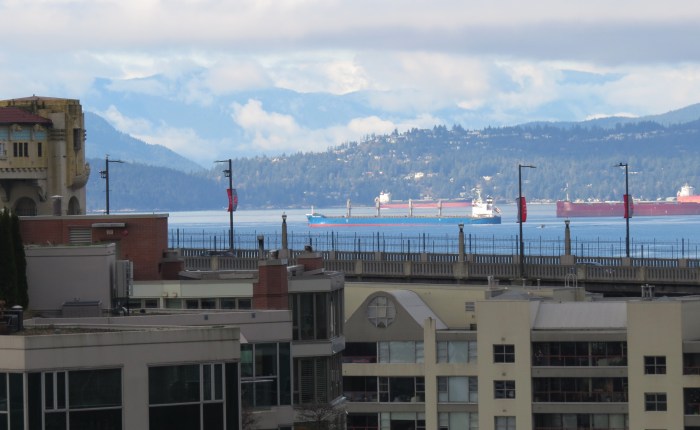
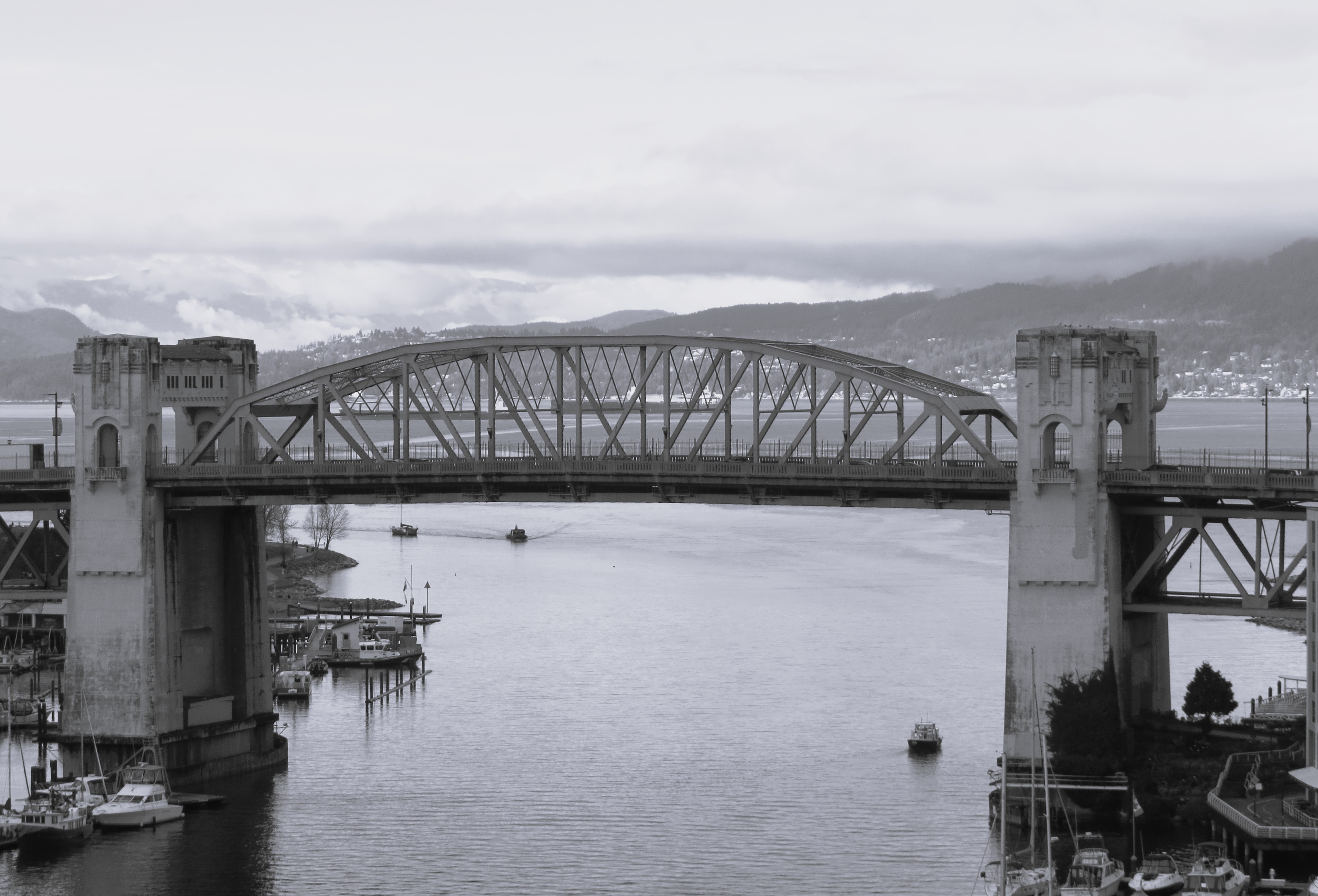
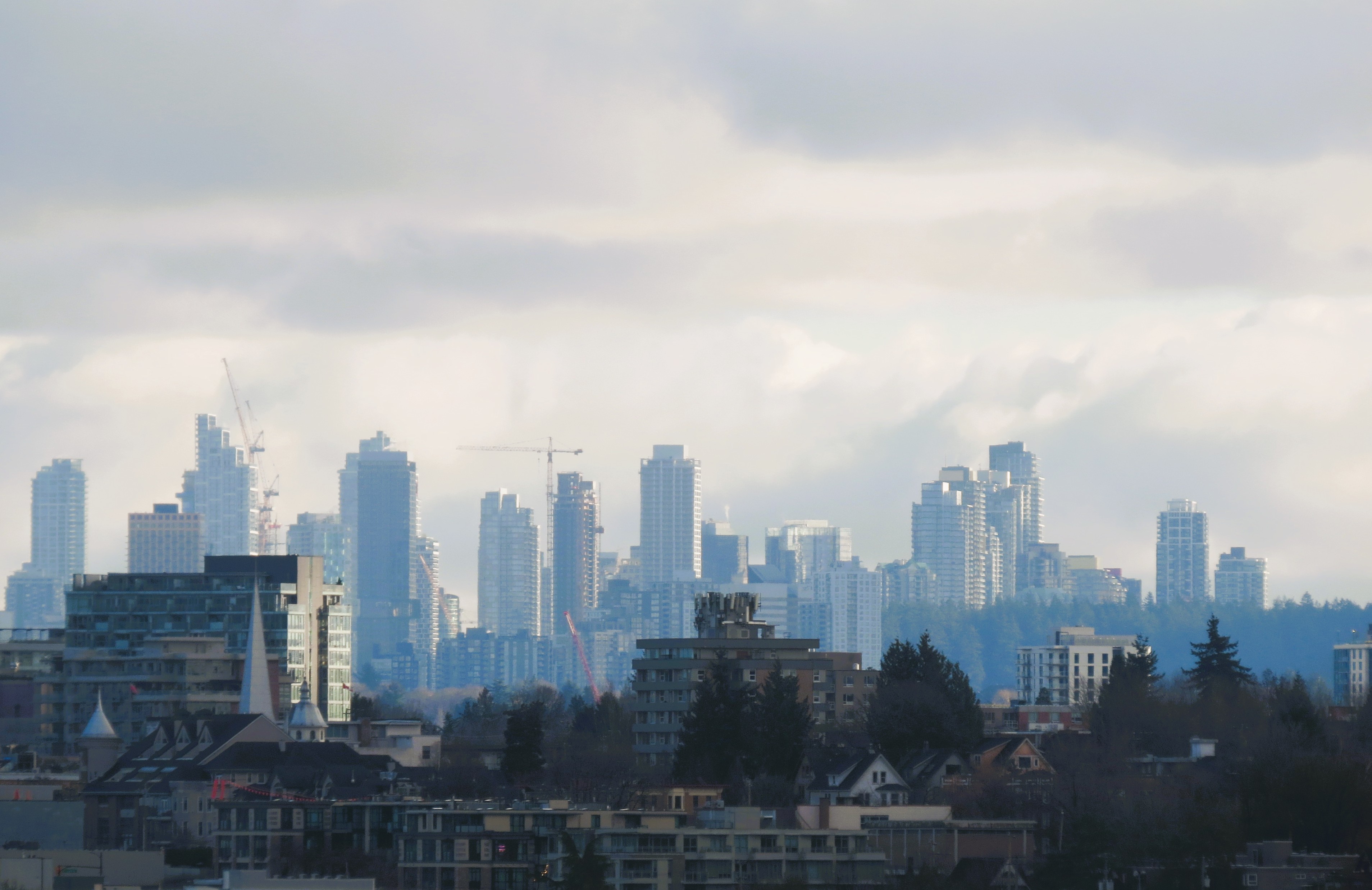
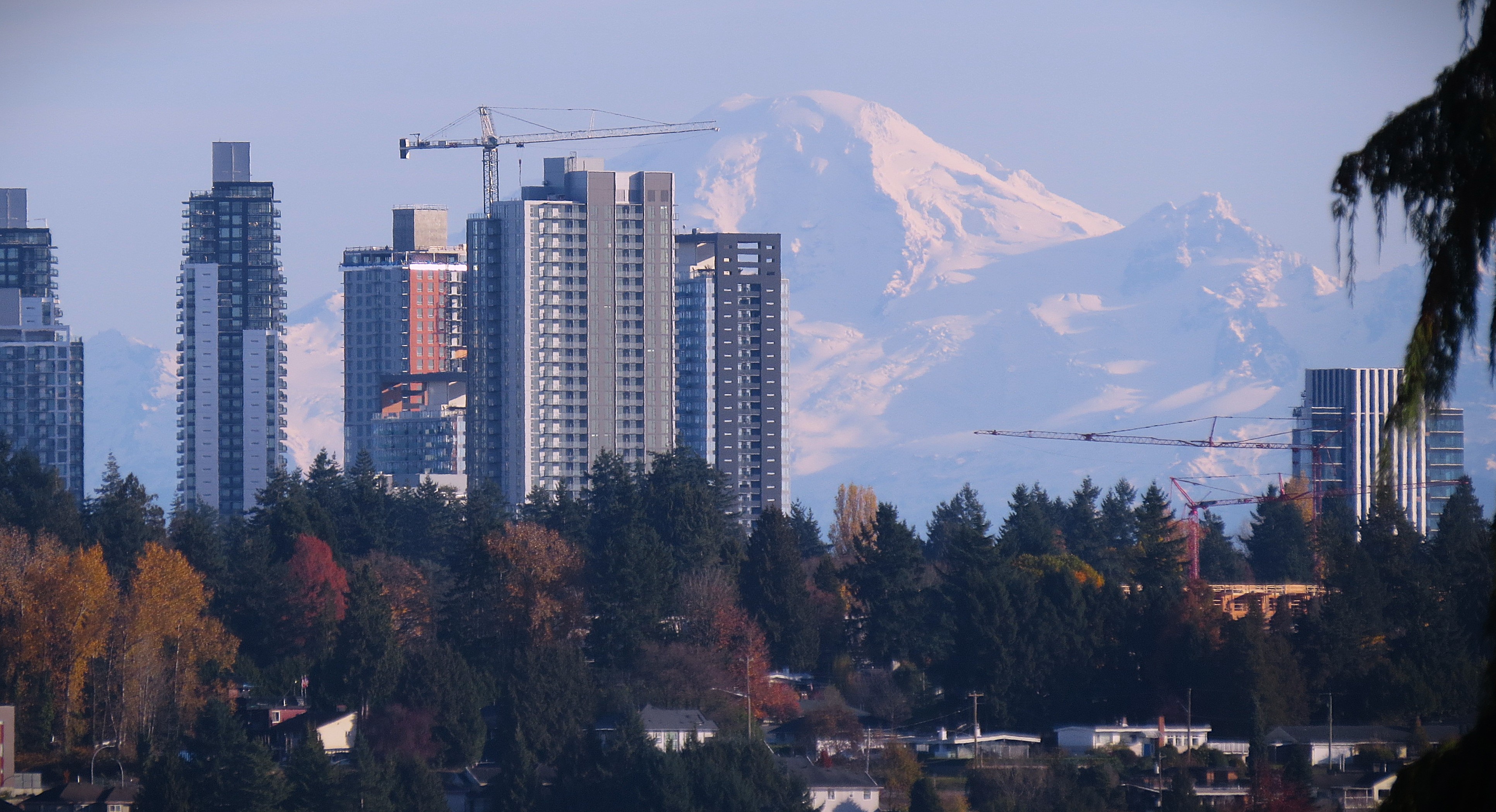
Next ‘granville’ on my walking escapade was the Granville Bridge. Everyone should do it once a year! It is such beautiful old bridge and very well maintained for walkers. The views of Waterfront Vancouver, the skyscrapers off the horizon of Metrotown and Brentwood are truly something to behold, similarly as the vistas of the sister Burrard Bridge, and of the English Bay and Bowen Island. From that perspective you are reminded that Vancouver is still dear and beautiful city, regardless of all the shortcomings in the last decade.
Warszawa ma Aleje Jerozolimskie biegnące od Centrum ku Wiśłe i na most Poniatowskiego do Ronda Waszyngtona – Vancouver ma Ulicę Granville biegnąca od Centrum Vancouveru (Waterfornt przy fiordzie Burrard) na most Granville, a po drugiej stronie mostu – wysepkę Granville. Czyli są trzy Granville. Każdy ze swoim specyficznym charakterem i kolorytem. Od mostu poczynając otwierają się przepiękne widoki na zatokę Angielską (English Bay), uroczą architekturę Zachodniego Przedmieścia (West End), Stanley Park, a wszystko zamyka dość wysoka wyspa Bowen.
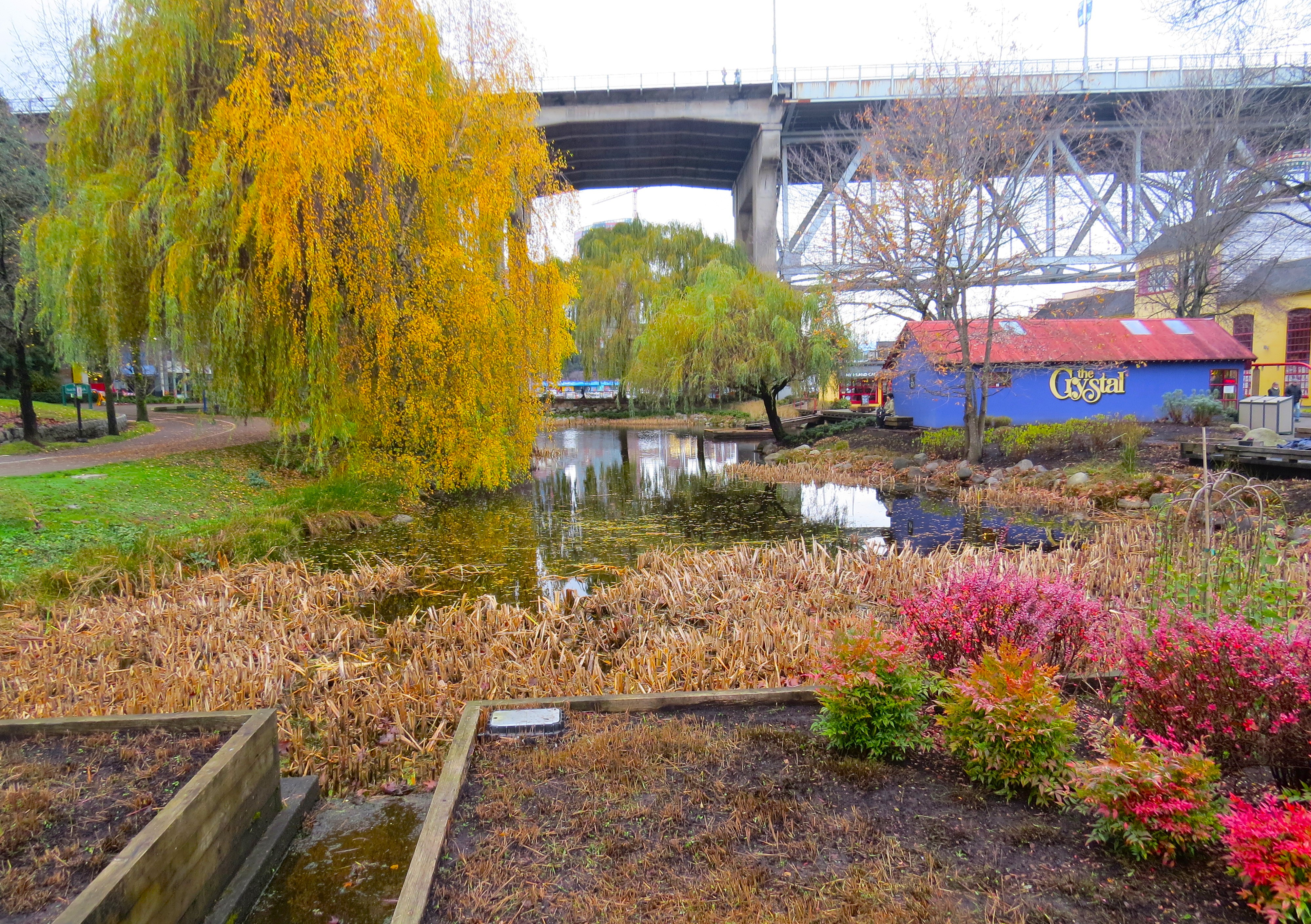
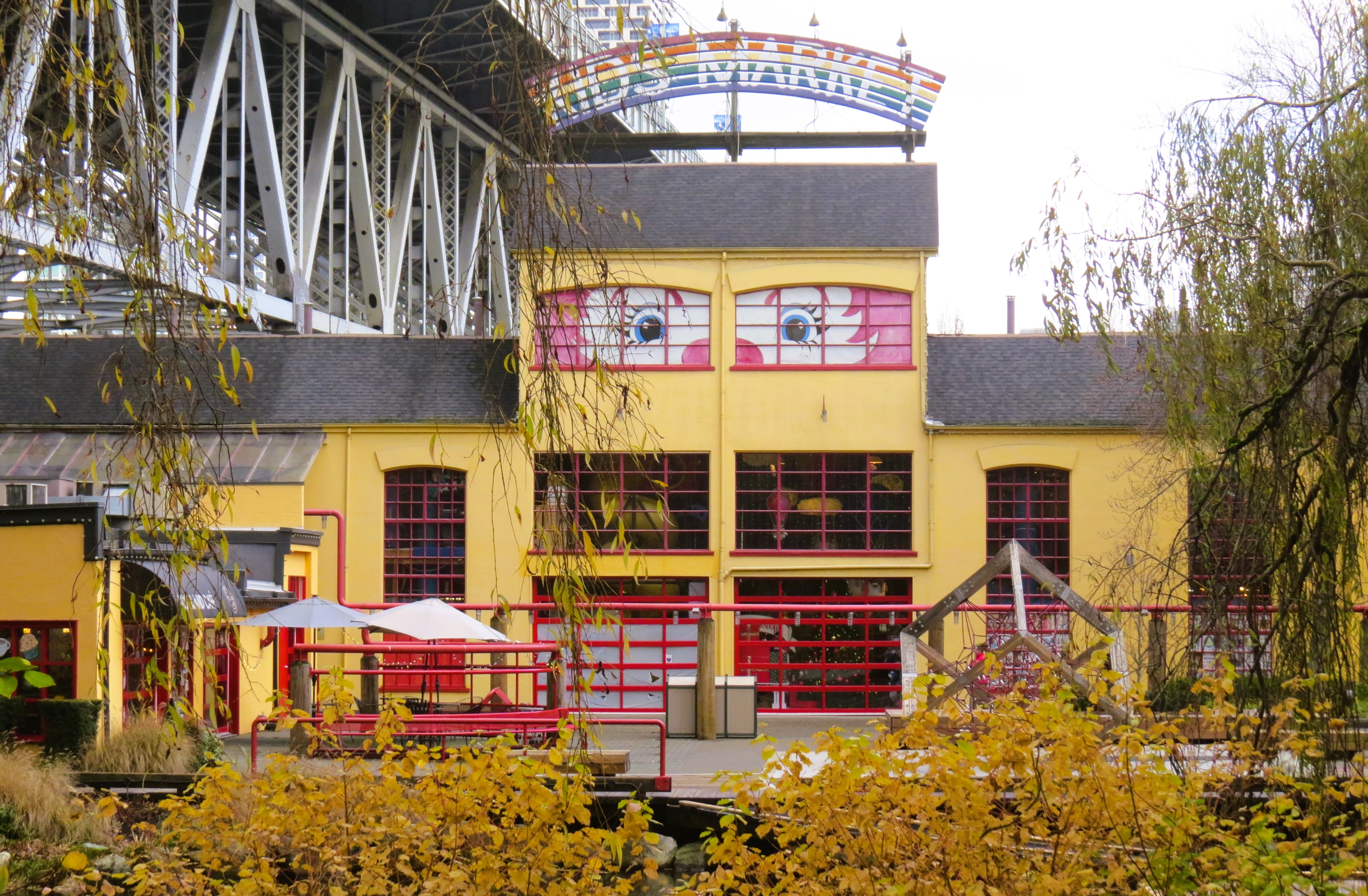
Po drugiej stronie mostu otwiera się widok na mała wysepkę Granville w dole. Dawniej czysto przemysłowy i mało ciekawy teren dla różnych warsztatów i fabryczek – dziś zaczarowany świat sklepików, galerii sztuk, teatrów, strumieni, hoteliku, kafejek, restauracji i świetnego targu, gdzie znajdziesz każdy towar. Cóż dziwnego, że tą właśnie nazwę wybrano – granville, czyli w starofrancuskim: gościniec. Bo gościniec musi podróżnego kolaską dowieźć i do gospody z noclegiem i pożywieniem, i do straganów przekupek lokalnych. A zawsze gdzieś na targu znajdzie się skrzypek, śpiewak, jaką trupa cyrkowo-teatralna.
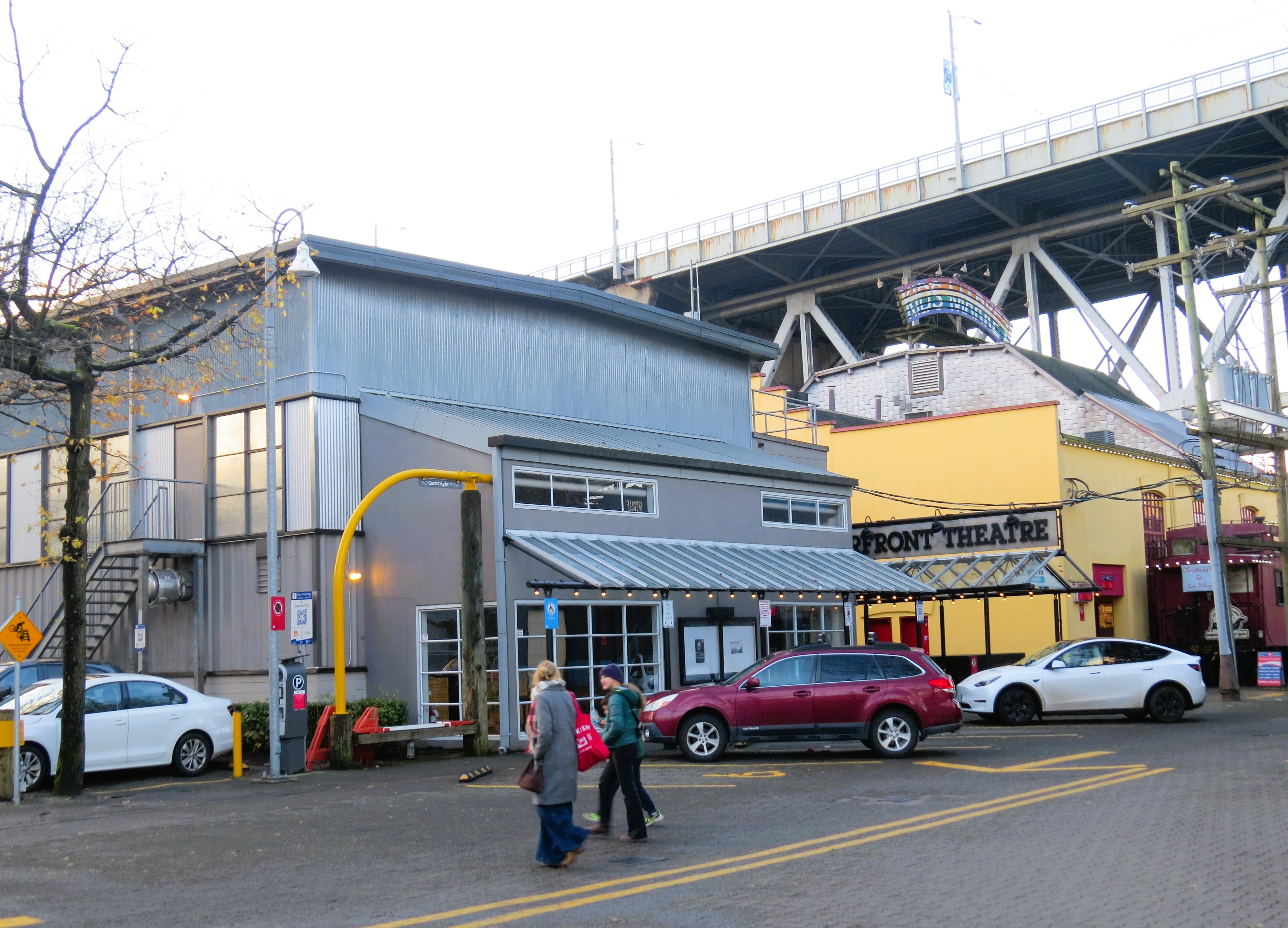
Przechodząc koło Front Theater przypomniałem występy tam samej wspaniałej warszawskiej gwiazdy teatru – Magdy Zawadzkiej. Grała tam z naszym, z Vancouveru rodem, amatorskim Teatrem Popularnym. W 2011 występował tu Teatr im. Stefana Żeromskiego w Kielcach z niesamowitą inscenizacją „Samotności pól bawełnianych” Bernarda Coltesa, o czym pisałem na łamach Instytutu Teatralnego im. Raszewskiego[i]. Szerzej o teatrze polskim w Kanadzie pisałem w szkicu historycznym w nr 5 w 2009 Rocznika Twórczości „Strumień”[ii].
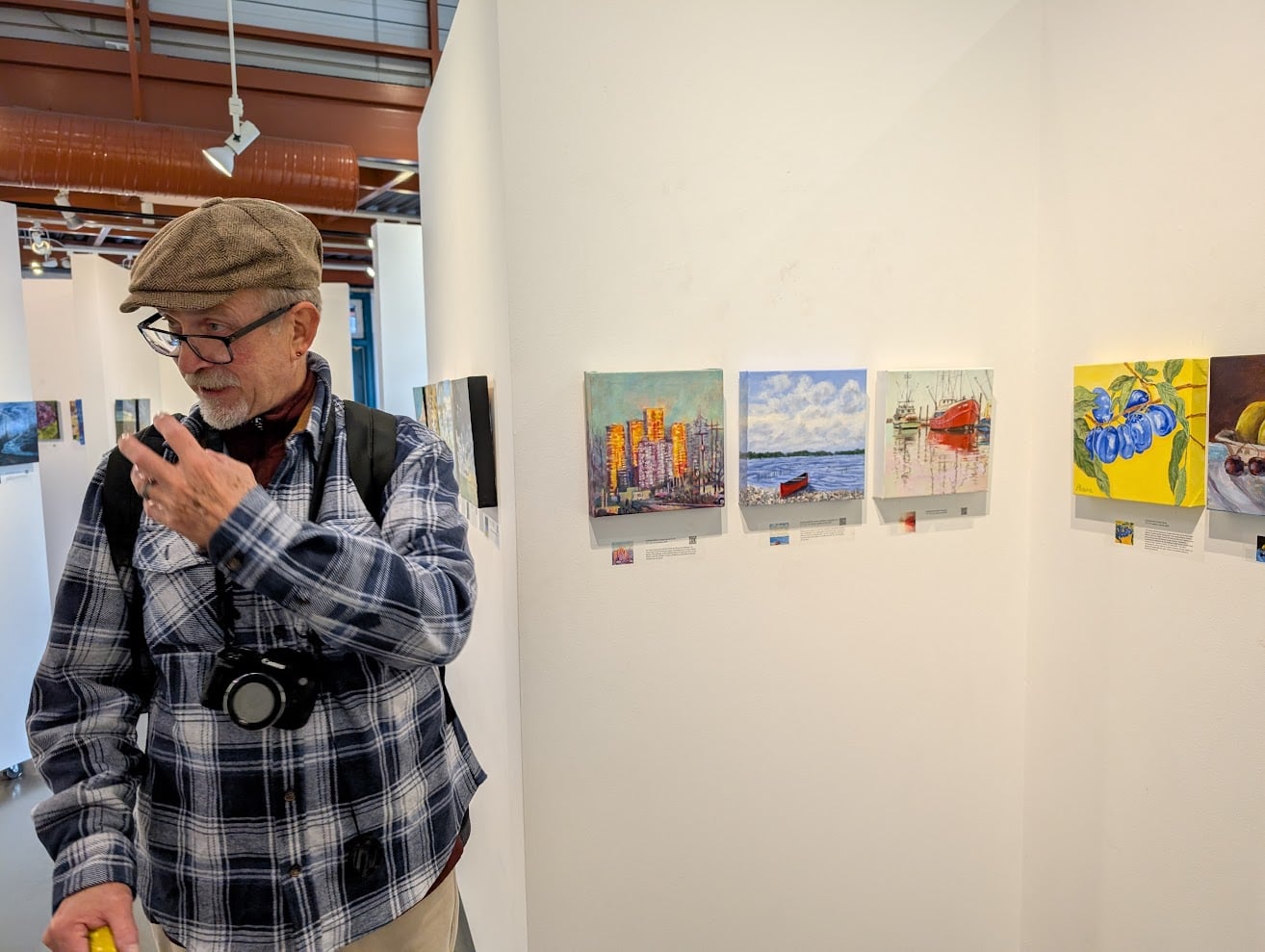
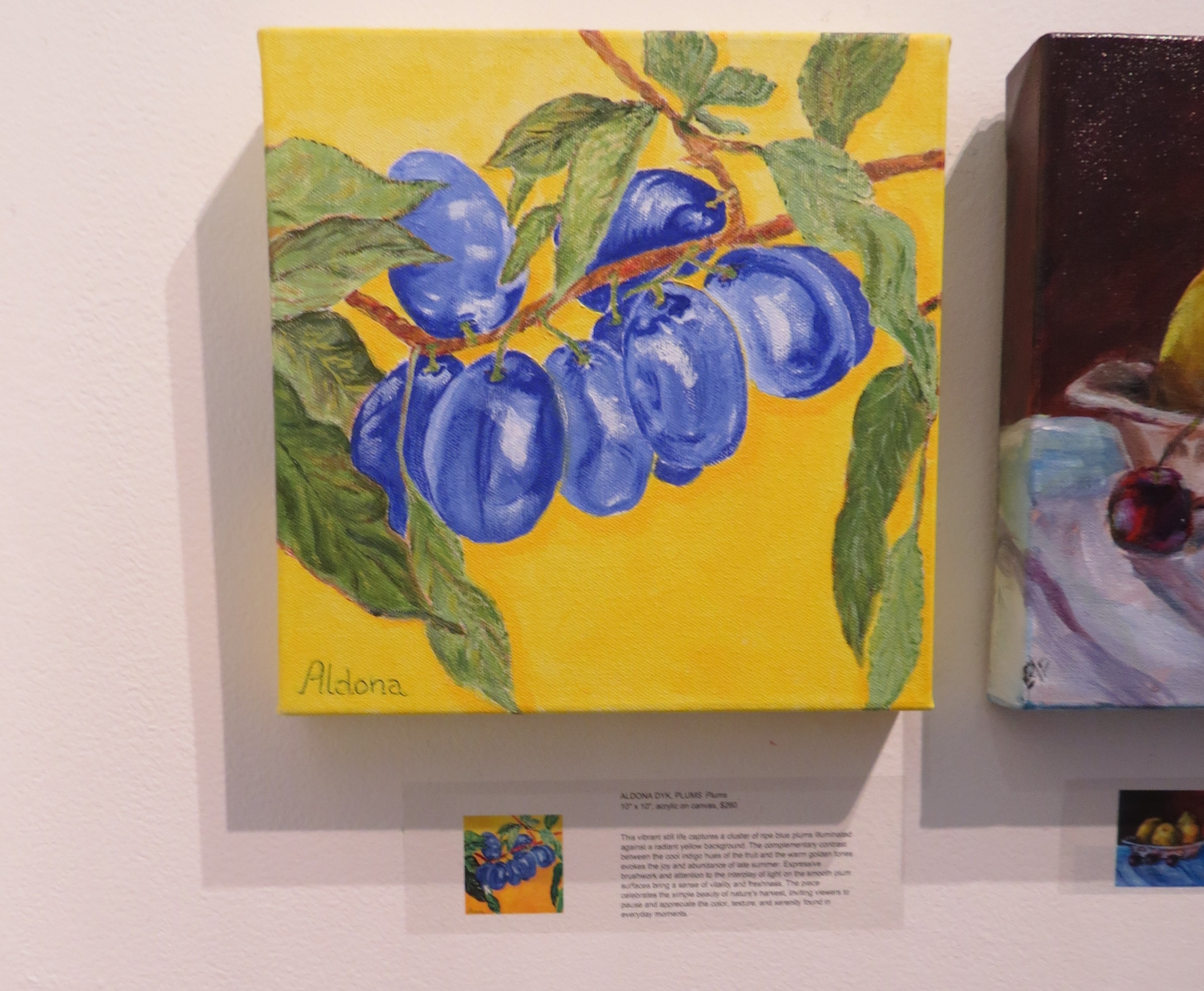
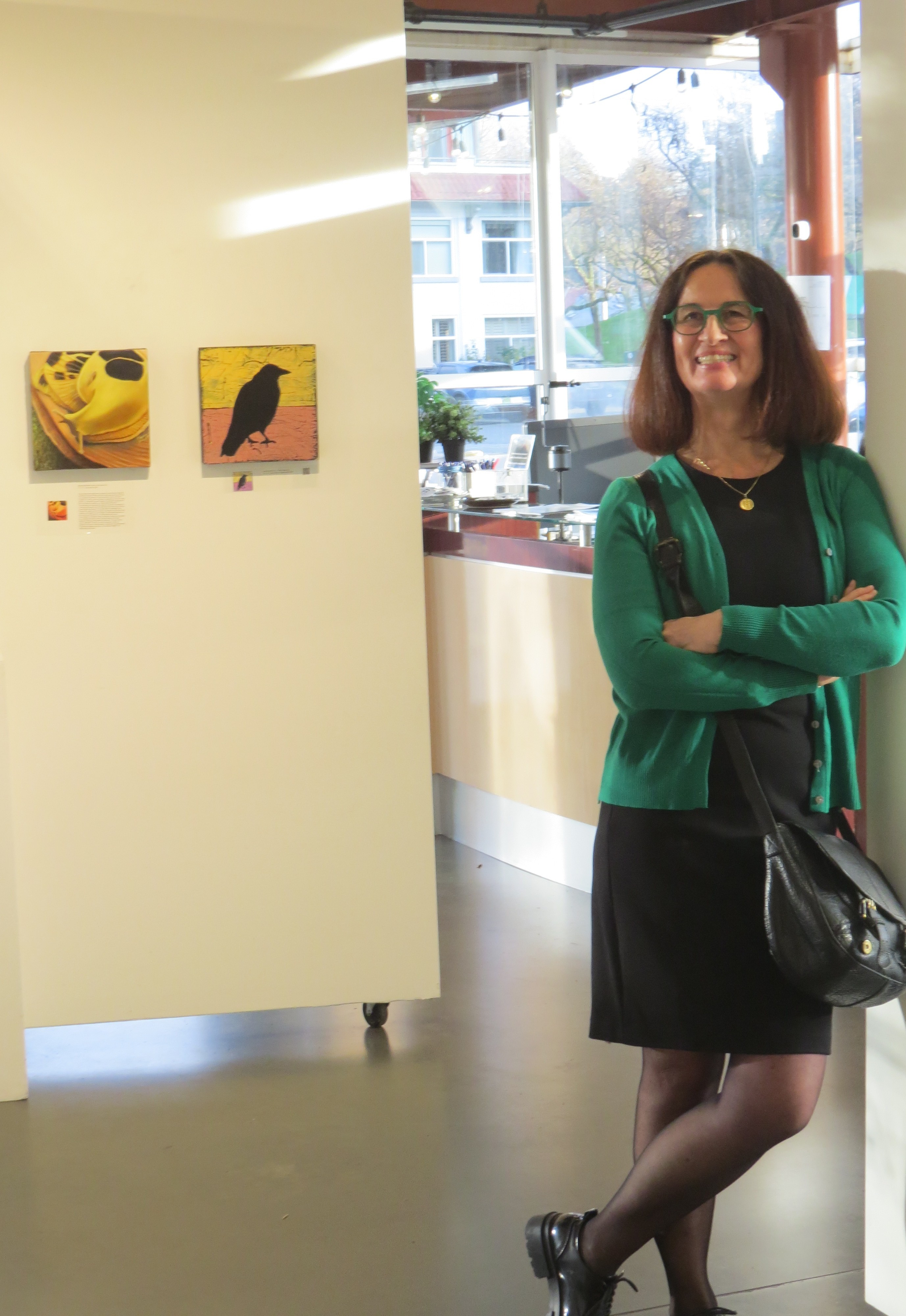
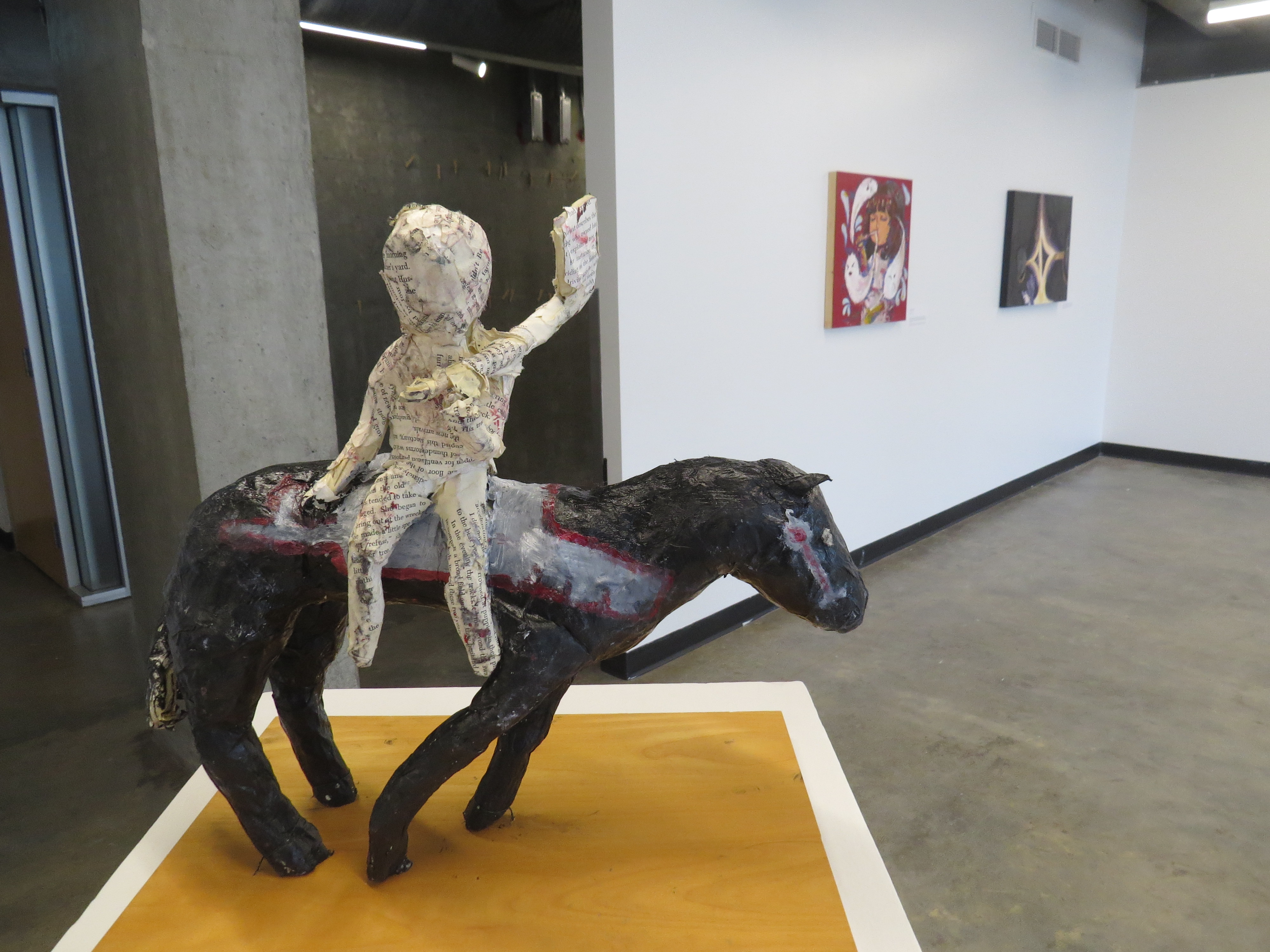
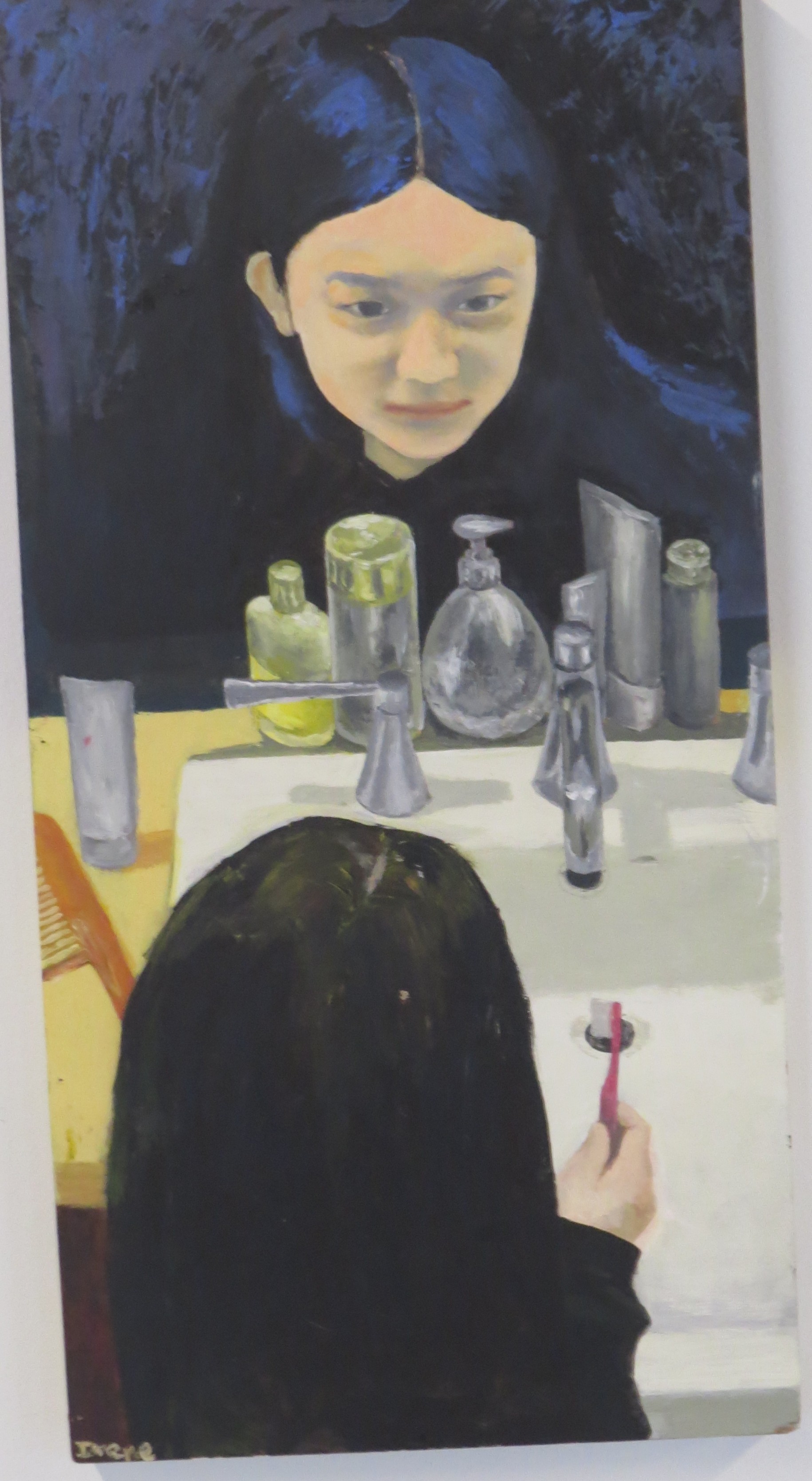
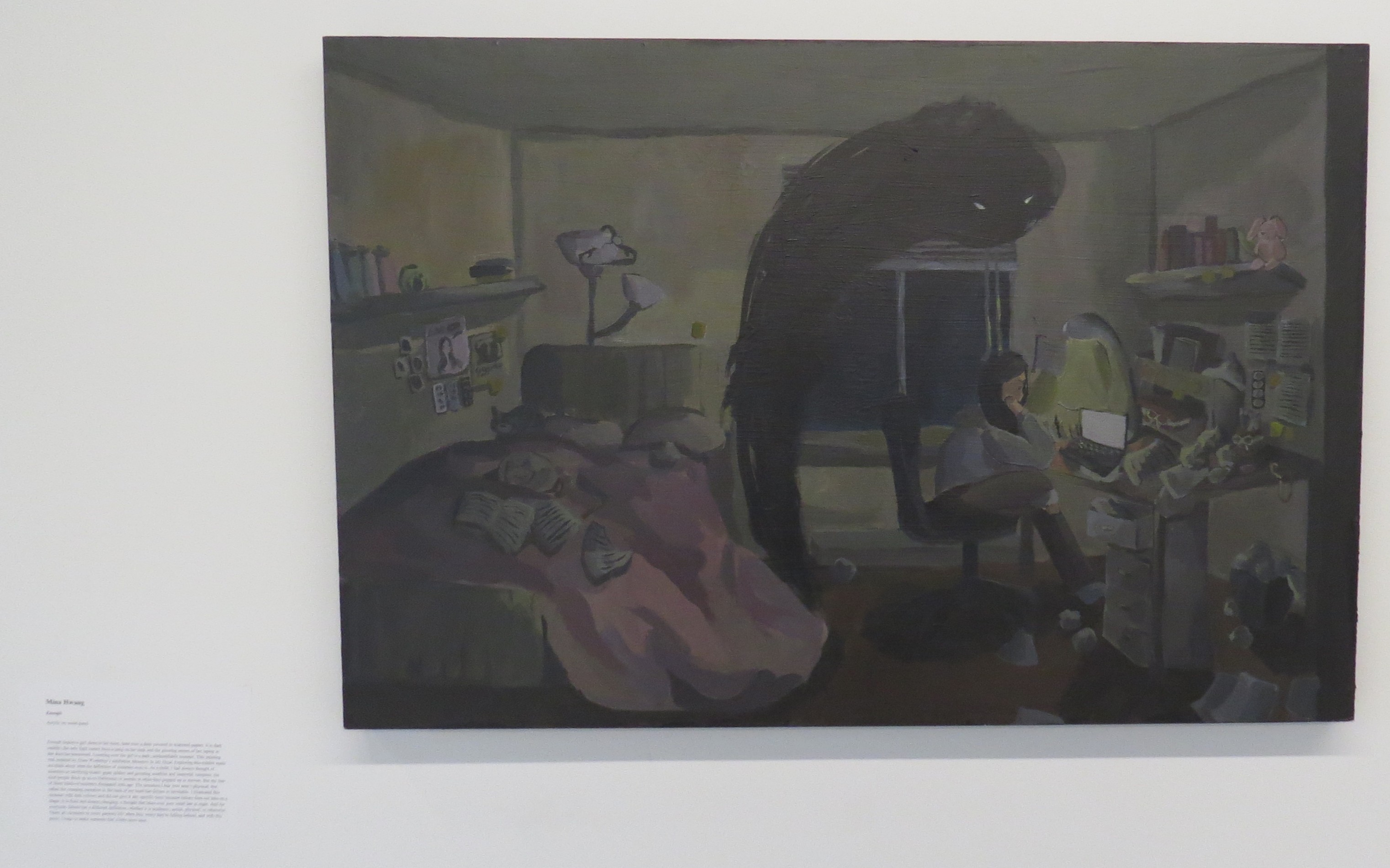
A te galeryjki sztuk wizualnych, ach! Co za urocze miejsca i chwile w nich spędzone nie do zapomnienia. Tego dnia spotkałem się tam w Galerii Federacji Artystów Kanadyjskich z Aldoną Dyk, która miała tam jedną ze swoich prac w aktualnej serii wystawienniczej. Długa i świetna rozmowa z nia i jej przyjaciółka, kanadyjska malarką o malarstwie, która szybko popłynęła od warsztatu malarskiego ku teorii sztuki, i dalej na szerokie wody filozoficzno-estetyczne o jej roli w poznawaniu świata i człowieka. Wcześniej nieco wprost fantastyczna wizyta w następnej, bardzo specjalnej, galerii i warsztatach artystycznych „Arts Umbrella”[iii]. Ta galeria i programy, które oferuje, jest całkowicie poświęcona dzieciom i młodzieży artystycznej, zwłaszcza tej, która być może nie miałaby dostępu do tego rodzaju twórczego rozwoju swej osobowości i talentów. Ja byłem zaszokowany dojrzałością, głębią i szalenie silna emocjonalnością oglądanych na ich wystawie prac.
You did talk to me last night, first time in a while. Yes, it was a strange night, followed by strange day. Or was it the other way around? When you are alone, without a set schedule or watch, things do get mixed up easily. Dates especially: Mondays become Fridays, Fridays Tuesdays. So what happened to Wednesday, you ask? Who cares what happened to Wedneday, perhaps I left it on a beach, or on a bench in some park? Maybe it is still in the shower when I saw it last time I was taking a shower? What? Do I not take a shower every day? Maybe not, maybe sometime I take a bath, who cares? You really are asking way too many questions and it is my story anyway. Be quite, just listen.
No, not you, Babycake – I’m talking to my alter ego. You wouldn’t ask such stupid, mundane questions.
But the day or the night when I was still in bed, when I was sleeping, I dreamt of you, I talked to you. Have not done it in a while. I thought that you just let it go, these talks of ours across the boundaries of life and death. Thought maybe there is some allotted time that you can do that and maybe you have used it up? I don’t know. Remember? I am the one still left alive, never been consciously to the other side.
None of it is important really, anyway. I have dreamt of you in my sleep. It woke me up and there you were, next to me. No, I couldn’t see you, but you were there talking to me, you were saying something important. You said that I have to understand that I am alone. That adjective ‘alone’ stood up as a mountain, a wall impregnable, forest too dense to walk out of it. I was getting used to be ‘alone’ in an adverb form.
Since I came back to our home, our former life here, in this city, this province, I have become very busy in many aspects: walks, friends, beaches, concerts, plans. It was just hard to go back to our home, our street. So I did it very seldom, hoping that it will allow me to function as normal as possible. And it did. Had evenings in bars, laughter, maybe a flirt or two. It seemed normal, I was spared any regrets. It was almost as I would finally get across that invisible line of Doctor Time, who heals old wounds; whose grief becomes first bearable, then transforms itself into a memory. Memory that is sad, but also happy that we did have our time, we found each other among the millions of people. As I was told many times, that it will get easier.
You think that was an expectation too easy, perhaps? I am not, after all, just a single guy ready for the picking and ready for harvesting. Is there anything wrong with it, isn’t it logical, practical?
I have reached to my writings of the early days after you were gone, to the first winter after you were gone and my constant visits to the gravesite in Pictou. Yes, that old ancestral town, where we were going to build our home, and spent the rest of our lives in that home. We did not.
(notes from my writings after John’s passing by the end of November 2022)
Pictou
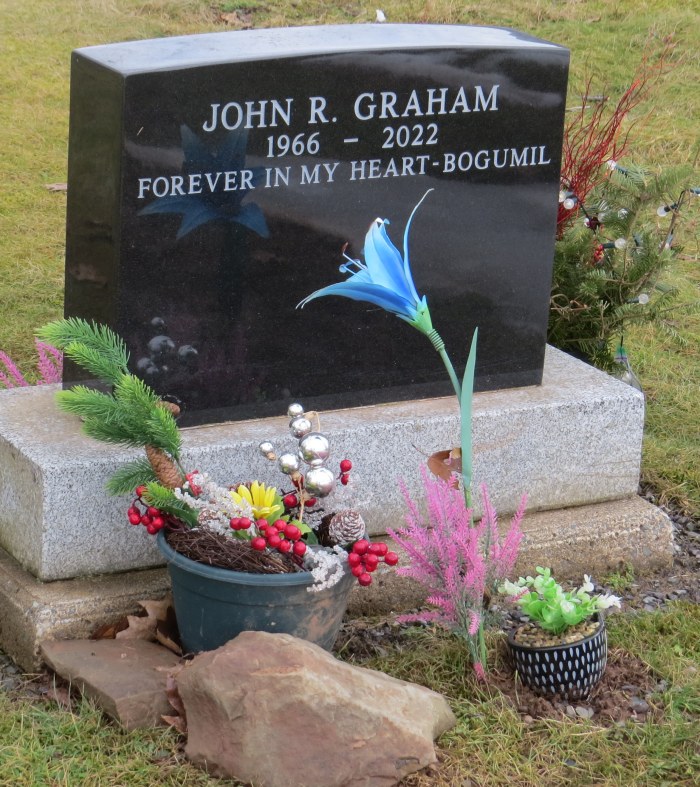
One year. It is hard as hell. Came to Pictou to spent time on the cemetery where we put your ashes. It’s windy, very cold. Desolate place. There was no one else there, on the cemetery. I know – it is only a stone with your name on it. Yours, your parents, and your baby brother you never had a chance to know. And now, there is also your oldest brother Fraser, who was laid there just few months ago.
Cleaned around a bit, threw away old winter flowers, and fixed things. Fixed things? How to ‘fix things’? Nothing can be fixed, when everything is broken.
Yes, I know that you are not there, not under the ground. You are with me. Forever. I have engraved on that stone myself that you are forever in my memory. I looked at the letters and smiled. In my memory, really? That’s what it all came to? Our Love, our life: to be remembered? How silly words could be, when they try to describe emotions, feelings. But still hoped that many years from now, when all of us, who knew you and me, would be gone – a stranger would wander to that gravesite and he would think, that the guy who is buried there was indeed ‘non omnis moriar’, that part of him lived in that other guy’s heart. Nice thought.
You and that Love of ours are engraved not on the stone, but in my soul.
Me? I don’t remember who I was before I met you. I was just waiting. Waiting and searching for you – and I have found you.
Now, now it is almost three years later. I am here, back to our good life on the shores of the other ocean. Were we had home, a nest, were we had dozens of friends, people we cherished and who cherished us. Some were ours; others were exclusively yours or mine. The two halves of Us were surprisingly very independent and strong, if only by the constant knowledge that the other half is there to make it whole.
I don’t have that knowledge anymore. The other half is gone, it is just me left. Those many people I have known, and who sought my presence are still here. Not all of them, granted. Some have left either this life (as you), or this city. But some are still here. None seem to really need me. I am not sure I need them. Of course there is some curiosity, some friendly waving of a hand: how nice to see you again, you are looking good … and so on. I thought that I would need to search for them myself, that I would want it very much. But if I’m always finding excuses and ‘important things’ that prevent me from doing it – am I really?
I have one important friend and, strangely enough, one with the shortest amount of time we spent in this city before we left for Nova Scotia. Less than a year, I think. After my dearest nephew had to go back to Poland, but still this young and very mature nephew was my angel in the first month after John was gone. Then my niece with her husband and son came to stay with me. But he, that younger friend of mine from Vancouver, somehow helped me in the dark months after I was left alone in Halifax. The rest seemed like eternity. Eternity of being in hell, or waiting for the hell’s gates to be opened, to swallow my world. At these dark times that younger friend kept me connected to the world and people by phone. Our long conversations were instrumental of me getting the skeleton of myself back into me.
That is how I did return. To the place of Our home, our happiness. These places somehow were the strongest magnet for me. I submerged myself in going alone, for days on end, on long walks through parks, streets, squares, building were we lived, were my mom lived, were I was with my sisters, my nephew and niece. Places that were calling me. Yes, places, much more than people.
I think that we all have these special places, sometime in many countries, on different continents. Special places that act as an anchor on a ship of life. Where we can drop that anchor and stay safely in some magical Bay of Memories.
It is also a time to untie that line across the sides of our two separate boats: mine and the one belonging to my younger dear friend. He has journeys to make across the sea himself, his journey, not ours. That is also a part of me being alone. My boat is rusted a bit, engines are old. It will still make it though, the last long sailing, perhaps passing the Cape of Hope (not the Cape of Horn), back to original shipyard of its maiden voyage. Then I will rest.
After that rest, I will go alone on many walks to many places (some might not exist materially anymore, but will in my world) that will call me. Solitary walks. It will be like existing in two different dimensions.
One day (no, not in my sleep) perhaps suddenly, out of the blue, I will see you taking the same trail or road and walking toward me, and I will stop being alone. I do hope so. Even in a faint split second before the big Nothingness.
It is what it is. Could be silent, but even than it is not nameless.
Yet, we will not call that name today. We know what it is. Sad but proud; weeping but not hysterical. Sad but understanding; resigned but not broken.
Thinking – strangely enough – about two old movies, that made an enormous effect on me as a very young boy. One with Lamberto Maggiorani in “Bicycle Thief” [i] and incomparable Gulietta Masina in “La Strada”[ii]. Dreams and loves. Devotion and standing by your loves no matter what. Beyond the beyond.
Words. Many words.
The soft and the tense.
Words that can pierce,
be sharp but still true.
They are an umbrella
on a rainy day:
it does not bring sunshine,
does not clear the sky,
but it saves you from being wet.
Perhaps there is even a chance
that such an umbrella
will take a flight with you
to the clouds, to the skies.
It is better to be silent
than to use the thread of words
for making a garment
of lies and half-truths.
Walk silently through
the park filled with good words
where leafs whisper
the promise of a kiss and
touch of fingertips and eyelashes.
Words should never be
like grains of sand in a desert
or they will lose their meaning.
It is good to thread them
on strands of necklaces,
make earrings of them –
it makes them easily accessible,
without the need to always
use a coin for new ones.
Words, you see, are like
years and days: they are
on very limited number.
The story lives
in your heart and soul,
not in thesauruses.
Words are the keys
to books unwritten, yet.
(Polish vrsion – both were written simultaneously, not a translation)
The day we wear the red poppies attached to our other clothing. Why? Because on Flanders fields in Europe the red blood form thousands of young Canadian and Commonwealth countries soldiers saturated the fields so much, that a carpet of red poppies covered the dead ones mercifully and gave them peace. The final peace.
Did you know that the last soldier killed in that awful war was a Canadian boy from Saskatchewan? He was shot few seconds before the clock on the town’s square struck the 11 th hour. The armistice was signed already, the big guns were silent. That boy just went from his trenches to that little village/town to look around. Near by, stood a German soldier, a sharpshooter. He saw the allied soldier from far away, check the clock on the town’s tower and seeing that the large needle did not reach ’11’ yet – he aimed, pulled the trigger. The Canadian boy fell down instantly. Nothing was gain by it, not a single inch of land moved hands. By the time he gave his last breath – the war was over. The German soldier stopped being his mortal enemy, he stopped being the enemy of the German soldier.
The impossible stupidity of all wars. I remember I wrote a poem about that Saskatchewan boy many, many years ago. Now, every November 11 I remember some of the names of some of the great commanders of the massive armies, remember some of the huge battlefields on the Maginot Line, the gases used to kill silently hundreds of them, the awful swamps red-brown from the blood of the soldiers, who were ordered to climb over the trenches and mount another useless attack on foot and being instantly cut down by first submachine guns. Being cut like flowers by stroke of scythe. Later, after the guns stopped, the war ended – the fields were red not from blood, but from the poppies.
And I remember that lonely boy from Saskatchewan, who never really knew why they were fighting, probably knew from some small school near his town the name of the British king, the one he was going to die for. But why? He ever saw any big town or city in Canada – until he was on the train and saw the stations of Winnipeg, Toronto, finally Montreal, where he boarded a huge ship with hundreds of other boys and went across the huge and cold ocean. I’m sure he become seasick many times.
A boy from the prairies on a ship in the middle of Atlantic! He would have many stories to tell family and friends for many years to come! But he didn’t. He died, in that strange village. After being told by his officer or sergeant that the war is over. He did not tell stories his parents or grandparents. By now his parents are dead, his grandparents are dead, too. If he had any siblings and his siblings had children – they are dead, too. Many years, more than a hundred have passed.
But I remember him, more than any other king, general or Prime Minister from that time in the Commonwealth and Great Britain. Just by now, I am myself so much older than he is. I suppose by now, I am his grandfather?
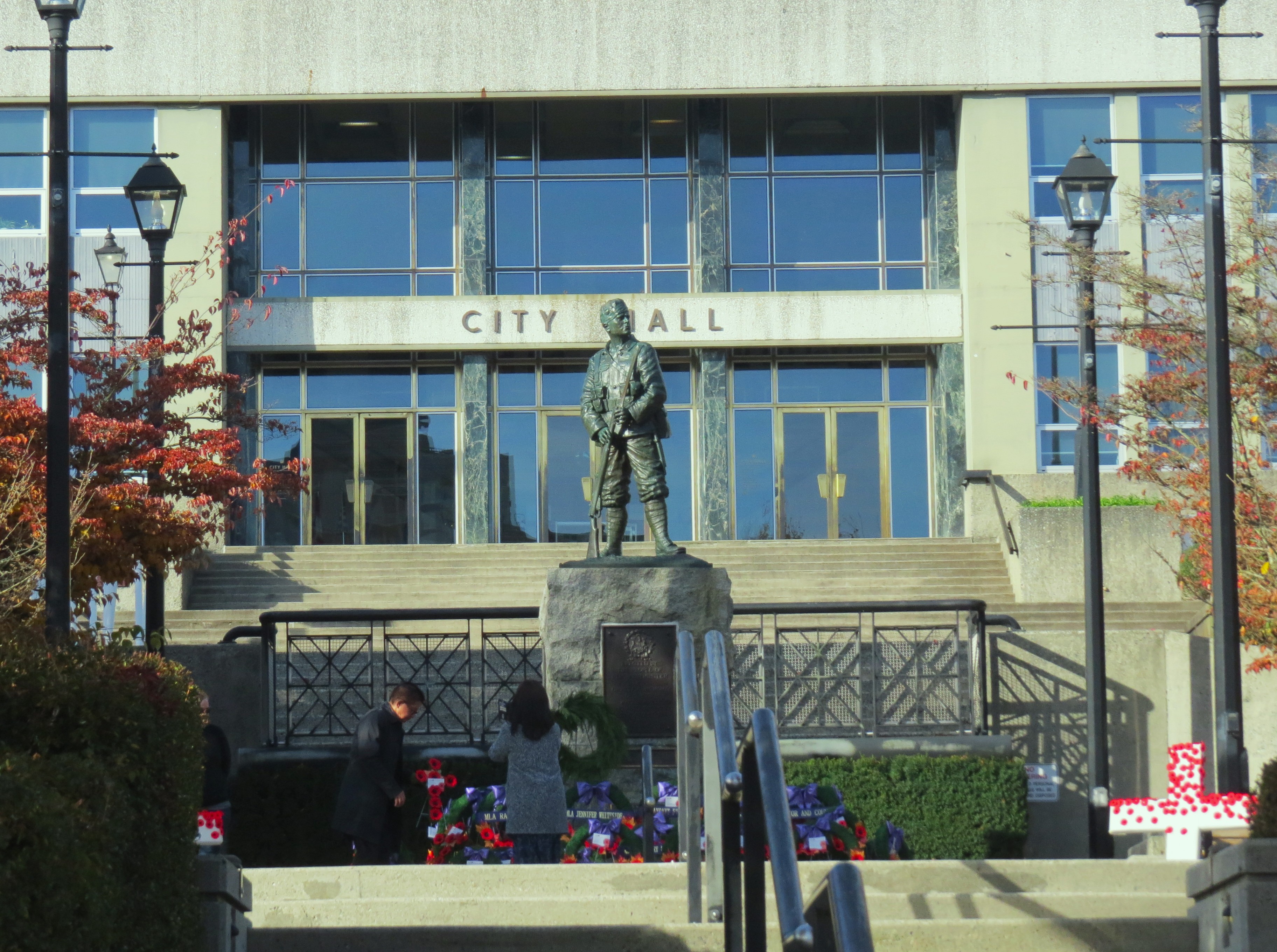
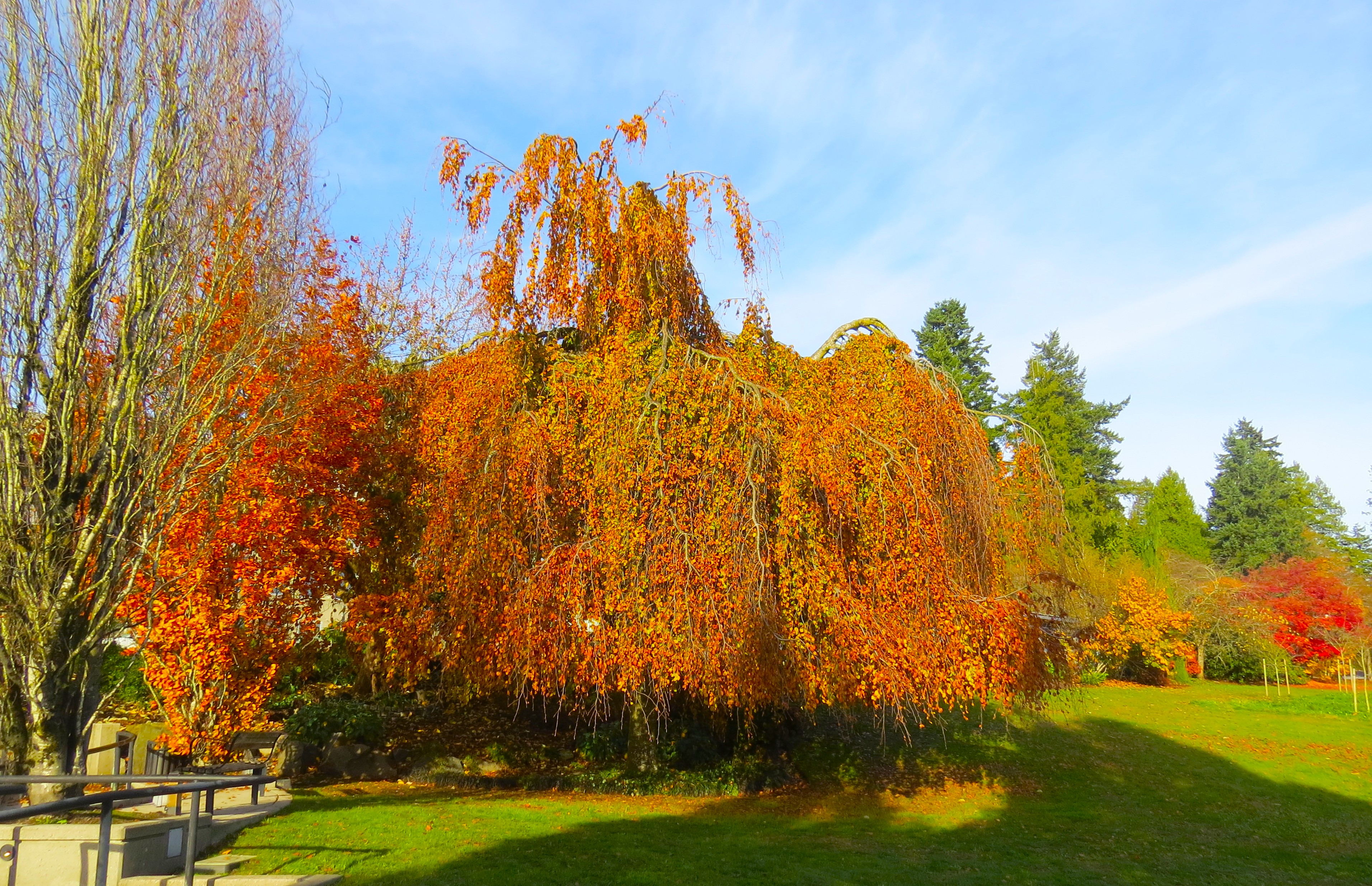
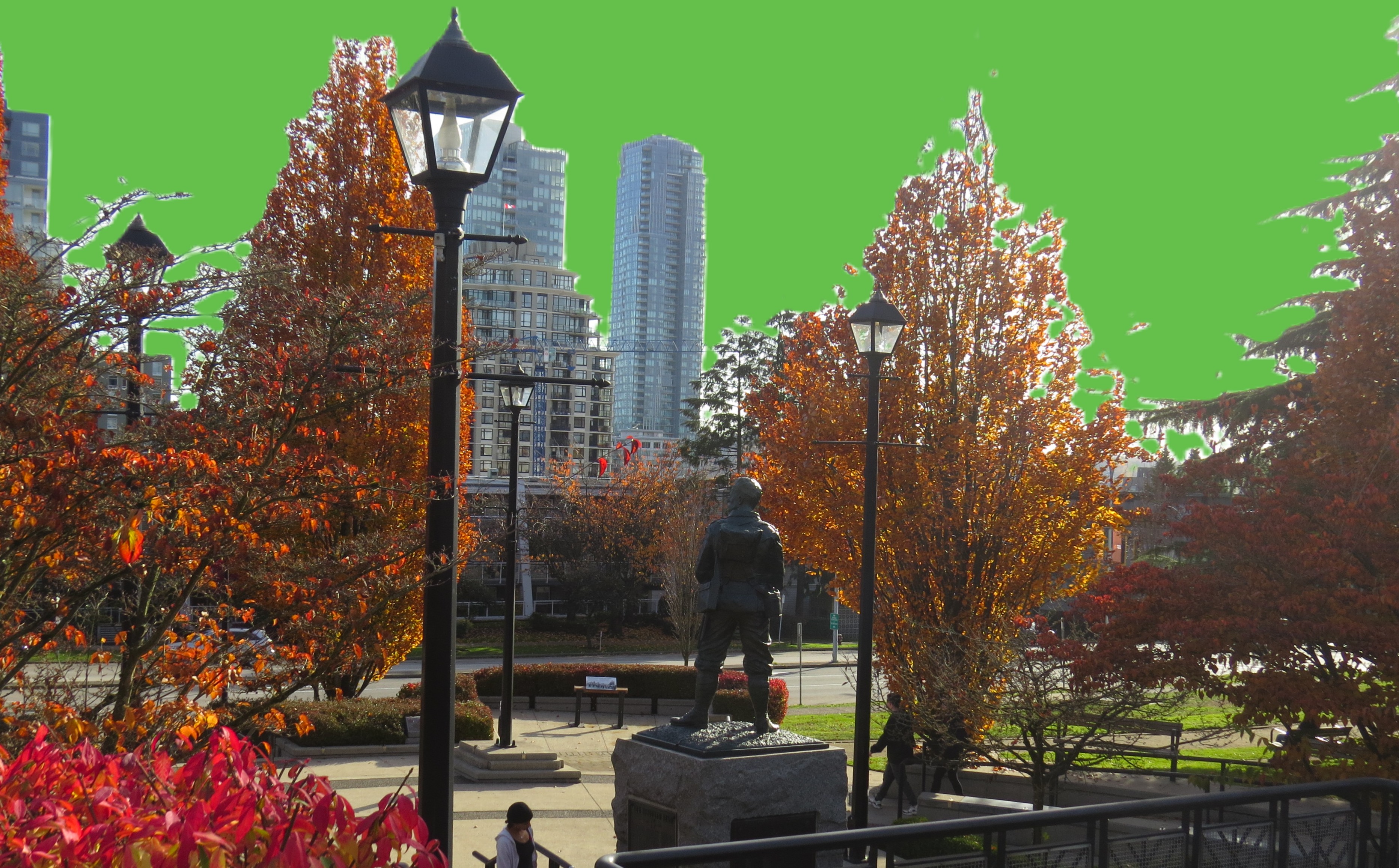
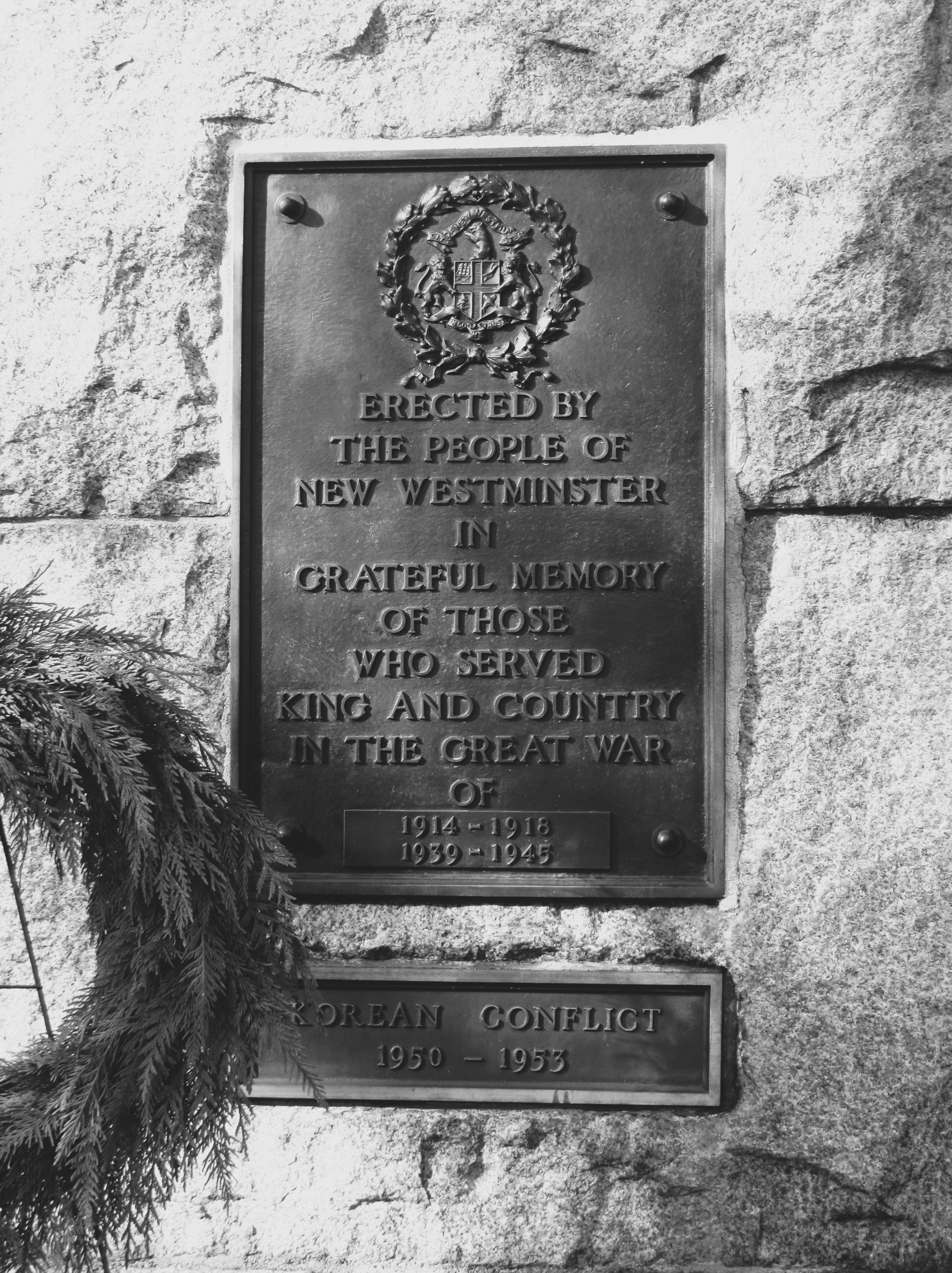
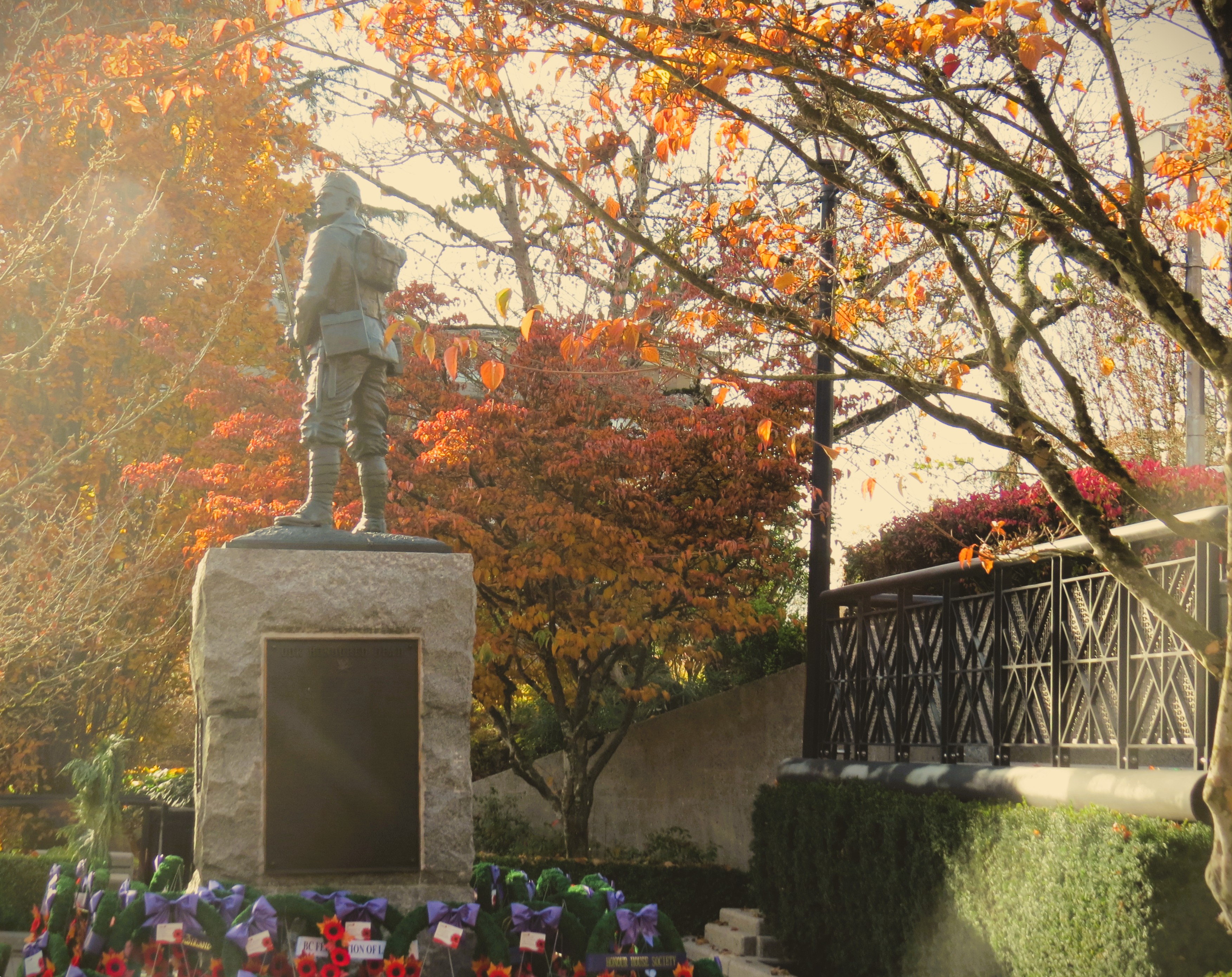
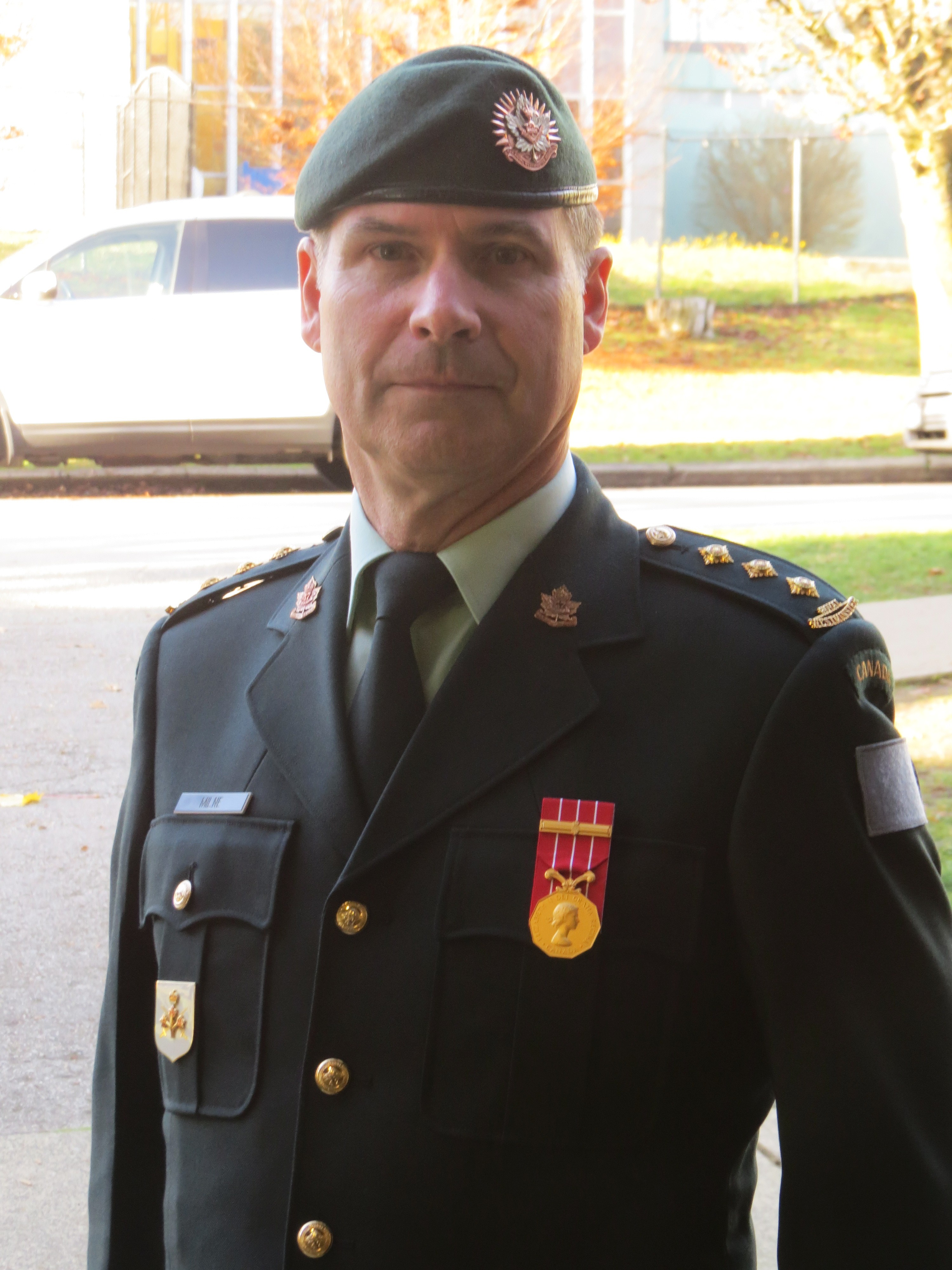
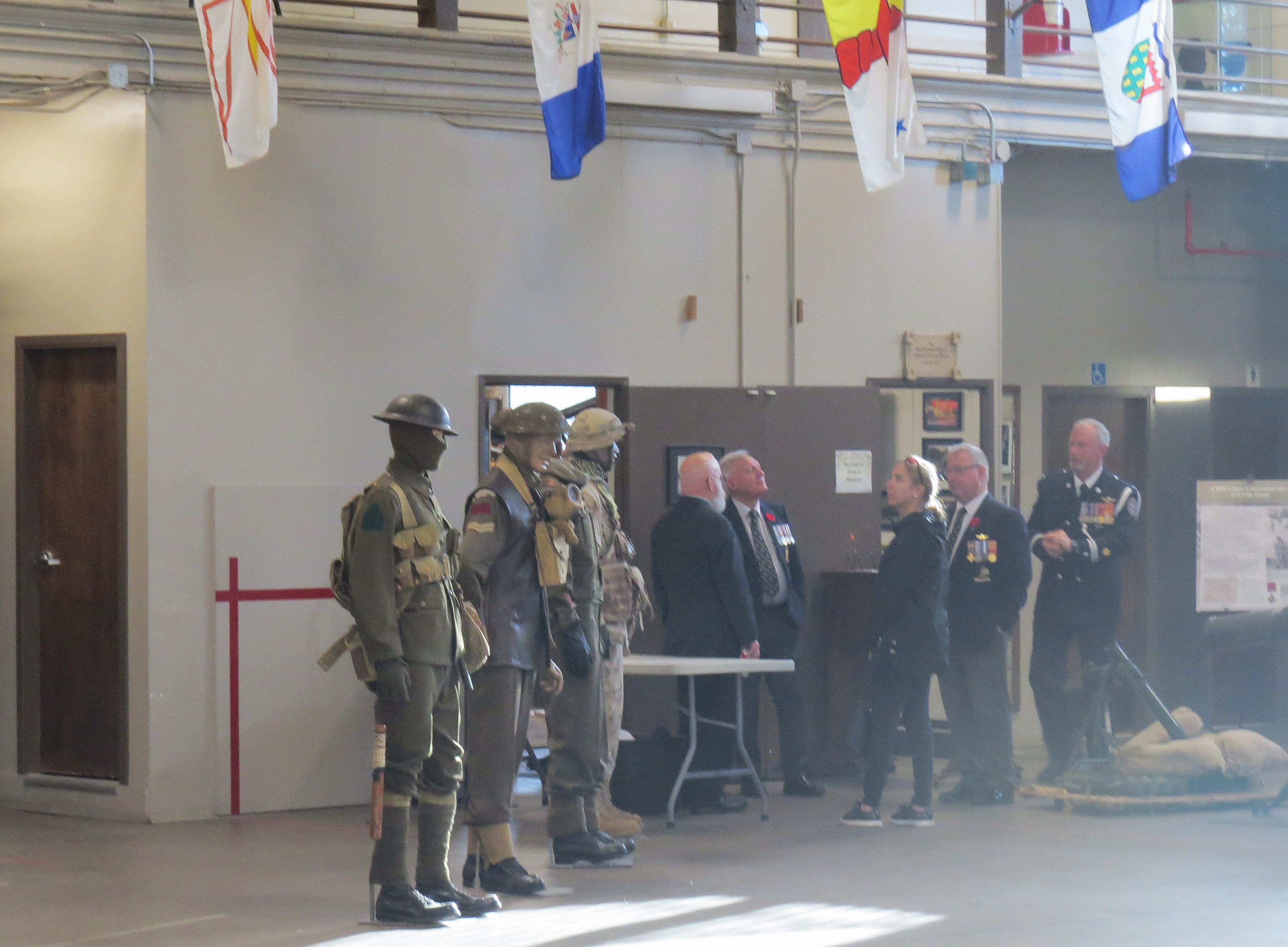
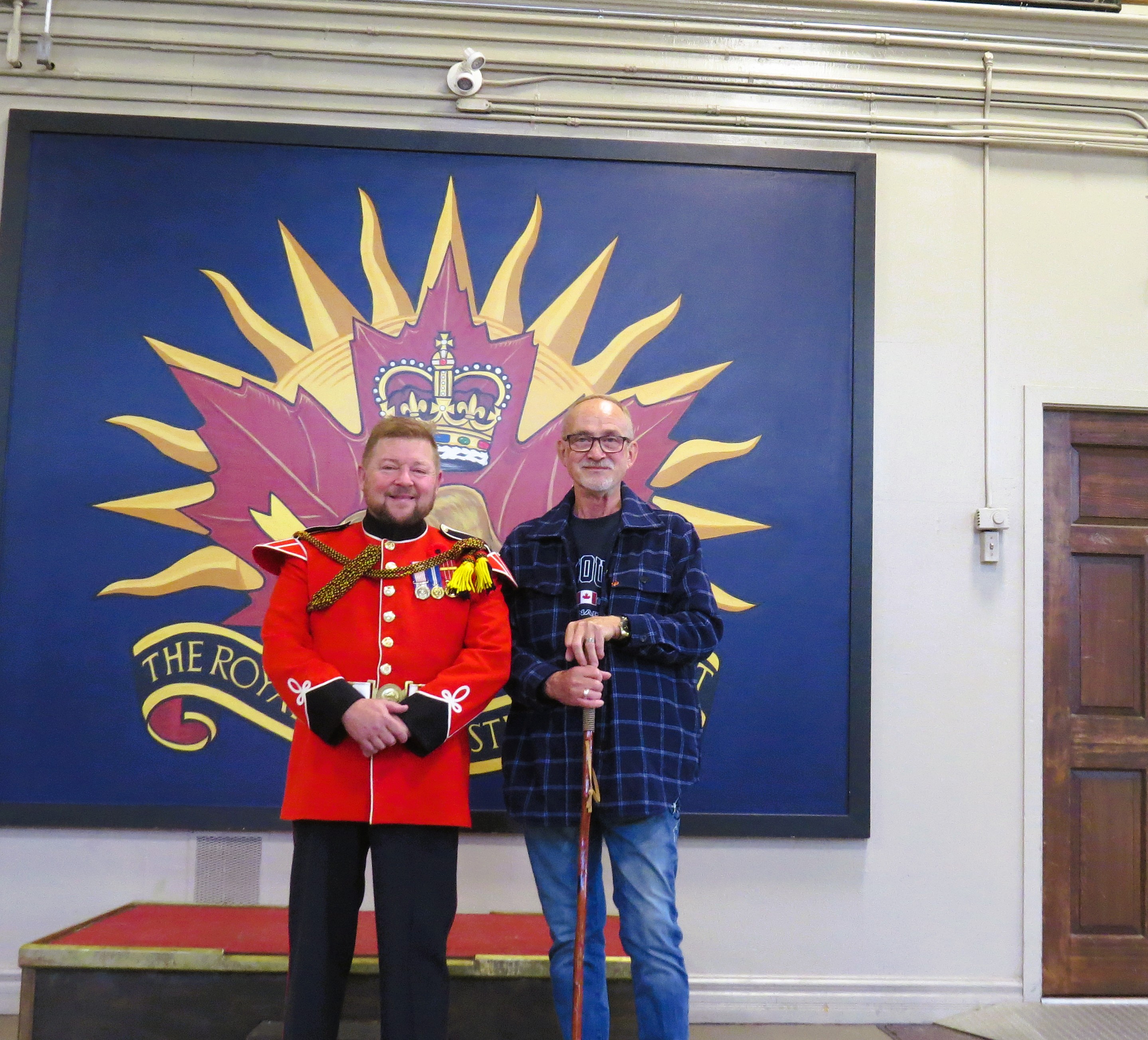
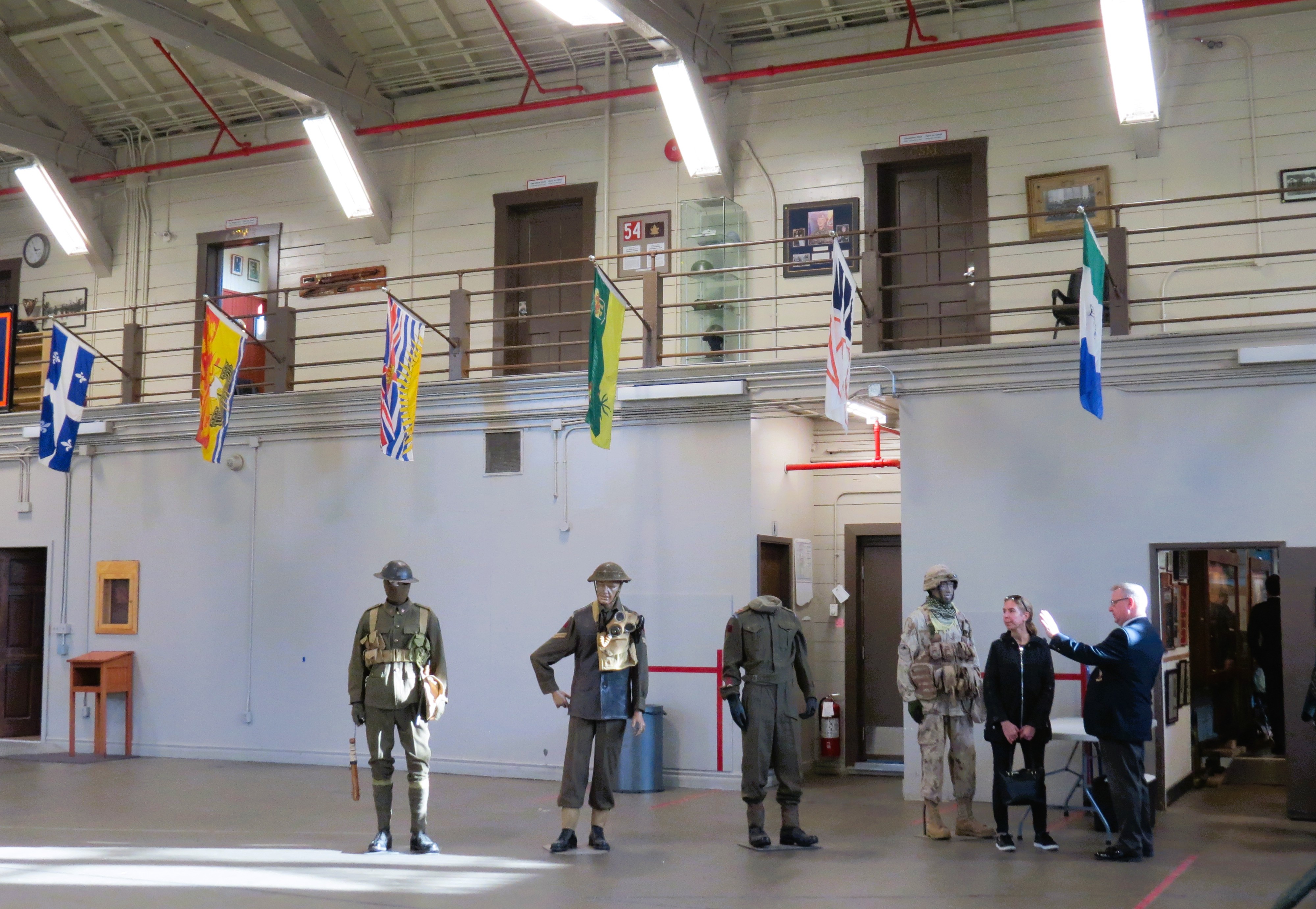
These were my thoughts on a sunny, colourful Fall’s day, as I walked to the City Hall and our Cenotaph in New Westminster. Later, a short walk through the park to the Armory, a chat with a Captain, who was in command of the troops, who organized the short parade and laying of wreaths. His father (or was it grandfather?) served in the 2nd world war and took part in landing across the Ardens, near Falaise Pocket. I told the captain that my personal friend, Ted Kaminski was a parachuter in the 1st Polish Airborne Division and was dropped along his many friends to support the advance of a tank divisions of allied forces (among them the Canadian 1st Army of general Harry Crerar and the Polish Tank Division of general Stanislav Maczek). The Polish paratroopers were able to encircle major German forces in a Falaise Pocked, thus definitely eliminating a great many casualties of the marching allied tank formations. And I was able many years after the war to meet personally that Polish general of the Armored Division in that battle. I met him In London, I think must have been in 1982. We had nice chat. Therefore the young captain of the Canadian soldiers, whose father fought during the last world war near Falaise, had an invisible connection with my life and people I knew. Through events eighty years ago. Indeed a strange chance encounter.
But most of all, I thought of you, my young boy from Saskatchewan, who died when the clock in some village in Europe struck the 11th hour. When the guns went silent and when you took your last breath.
post scriptum:
just as a side note: over the last forty odd years I observed Remembrance Day every year. Sometime by just solitary or with my husband, individual visit to many Cenotaphs. Once in Calgary, in the late 1980s very officially: in the company of Mayor of Calgary, Canadian general, Commander of the large garrison in Calgary and the President of Polish Combatants Association in front of the Cenotaph, by the 3rd Street, in front of the old Library.
This year is the very first year that, to my shock I must admit, a majority of passers bye on the street did not wear a poppy. It was so noticeable. It shows a tremendous lack of respect to the memory of the people, who gave their life for us to be free in our country. I actually felt angry that these people showed such a cowardly indifference to my boy from Saskatchewan. No more on that subject, but just so you know what I think of you. And it is not much.
How do you begin to write your notes about a concert that three days later you still can’t shake off the emotions you were subjected to? Almost physical blows and assaults of the music onto your soul. A music you know so well and heard numerous times! At least you thought you did … Blows delivered not by some enormous pianist, internationally acclaimed, for many years on best stages of the universe … but by a … boy pianist (of course he is an adult, but only just by a thickness of the paper a musical score is printed on)?! I still struggle to find the right ones to describe to you the experience.
Sufficient to say, it proves that there is no musical score or concert that you can just take your seat among the audience and wait for familiar, soothing experience. For bourgeoisie vanity and eloquence. And thank gods for that.
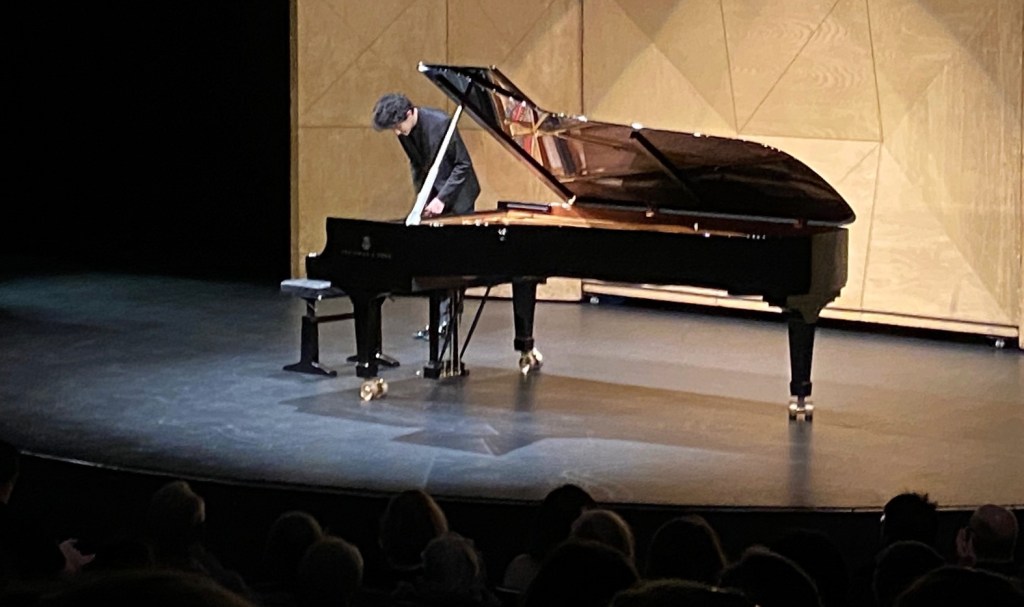
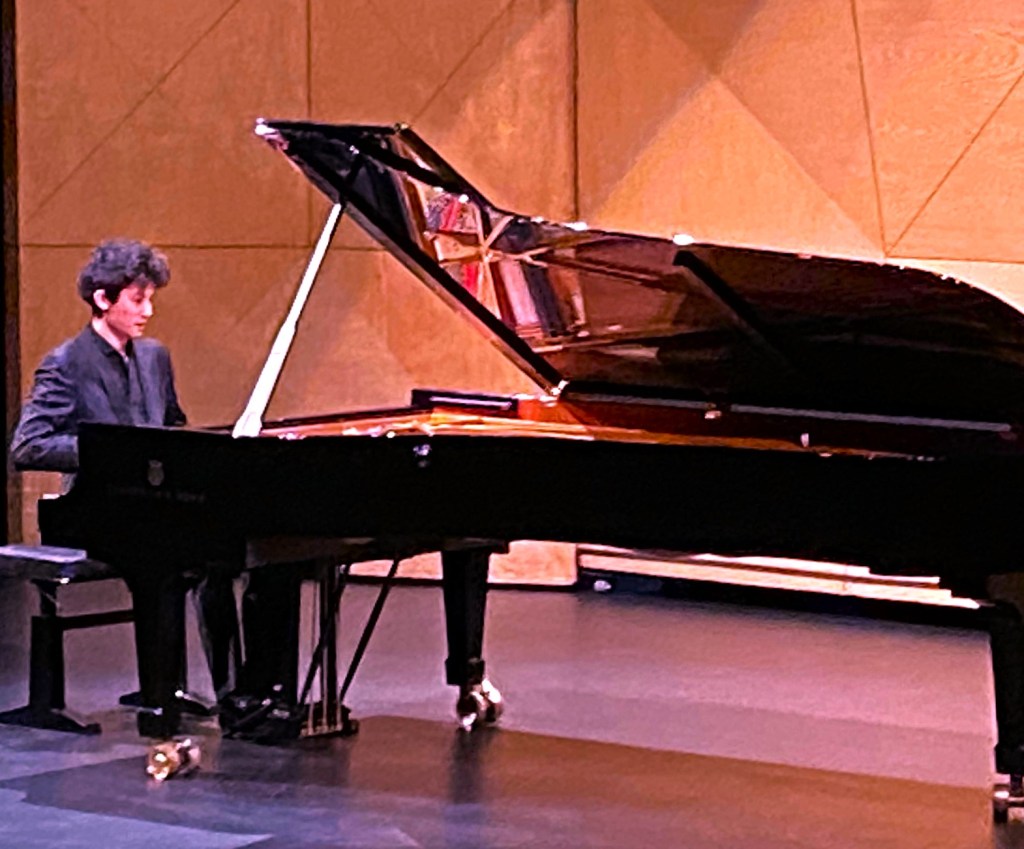
Sunday, 26 of October in Vancouver Playhouse (Queen Elizabeth Theater) concert of Tony Siqi Yun with music of Johannes Brahms (Theme and Variations in D minor, Op.18b); Robert Schumann (Theme and Variations in E-flat major, Wo0 24 or Ghost Variations); by same composer Symphonic Etudes Op.13; Ludwig van Beethoven (Sonata “Appassionata” No.23 in F minor Op. 57); and Ferruccio Busoni (Berceuse from Elegies BV 249) – of the last composer and music I will not write beyond that point. Because … in was beyond the point to have this music played in that concert, sufficient to say in my arrogant opinion. Obviously not shared by the enormously talented pianist, Tony Siqi Yun.
Thanks to YouTube portal I was able to find Tony playing exactly the same Schumann’s Etudes Op.13. That was recorded from earlier concert elsewhere. You can see the physicality and the energy – trust me, but in in Vancouver it erupted like a volcano.
Did he made any mistakes, omissions? How would I know?! There was not a single second one could pay attention to the score – the pianist consumed you wholly, not letting go for a second.
I remember only once such a wonderful confusion while listening to a pianist. That was very, very long time ago. The year 1980, X International Chopin Festival, biggest piano competition in the world. The pianist was Ivo Pogorelić from Yugoslavia (today Serbia). He was so different than other pianista that the (at that time to the extreme) very conservative Jury did not awarded him any prize (the public did). I remember being taken by Pogorelić very much. Of course a bit jealous, too, LOL – he was exactly my age! But was very glad that great pianist (former finalist of that Competition) Martha Argerich felt the same. To the chagrin of the ultra-orthodox Jan Ekiert, who like many of his generation, saw Chopin more as a monument and Polish patriotic antiquity than the true romantic boy and young man, who had nothing to do with the official portrait/gorset assigned to him.
Nie często się zdarza, że Twoje własne wyobrażenia o muzyce, którą znasz i słyszałeś wielokroć wala się w gruzy. Nie gruzy zniszczenia i pożogi – w gruzy z których, jak Feniks wytryska nowymi barwami i wysokościami. A zdarzyło mi się to ledwie kilka dni temu idąc do Queen Elizabeth Theatre na koncert bardzo młodego pianisty Tony Siqi Yun.
Brahms, Beethoven i Schuman, niemieccy kompozytorzy wczesnego Romantyzmu. I tu świetna pomoc nazwy tego kierunku i sztuki – okres Burzy i Naporu. To, co zaczął nieco wcześniej ich wielki literacki kolega, Johann Wolfgang Goethe w Hesji.
To by w zasadzie wystarczyło na mój cały opis koncertu: młodziutki Tony Yu wpadł za klawiaturę fortepianu z pełnym naporem i zaczął grać. Nie! On nie grał – to była wirująca burza dźwięków, tonów, fal oceanicznych niemal. Za sprawą tego drobniutkiego chłopca, który wyrywał ze skrzyni tego piana dźwięki o natężeniu i rezonansie niespotykane. Czasem wydać się mogło, że biedny instrument wydawał też jęki …
W Sonacie na fortepian e-moll Beethovena (no. 23 , opus 57) wykazał jednocześnie wielkie wyczucie (i czułość istotnie) w szybkich a jakże miękkich i delikatnych pasażach. To Schumann dopiero budził w nim emocje ciemne, straszne prawie w jego – Schumana – przedśmiertnych kompozycjach. Gdy choroba i wizje szatańskie zmuszały go do komponowania szybkiego, nerwowego. Zlęknionego ale i pełnego gwałtownych uczuć. Nie bez przyczyny w początkowym okresie był pod silnym wrażeniem gry Paganiniego – szatana skrzypiec. Jego życie prywatne pełne było perturbacji wynikających nie tylko z trudności finansowych, ale wyraźnego nastawienia neurastyczno-nerwowego. Komponował w ostatnich latach bardzo dużo. Aż do fatalnej nocy targnięcia się na własne życie w nurtach Renu. Uratowano go z topieli, ale resztę życia spędził w sanatorium dla nerwowo chorych.
Video poniżej to utwór, którego Tony nie wykonywał na koncercie W Vancouverze. Być może jednak najlepiej odda styl jego interpretacji muzycznych tego młodego pianisty. Mówię naturalnie o “Ognistym Ptaku” Strawińskiego. Tu najbardziej widać fizyczna stronę jego stylu, ten młody pianista gra całym ciałem. To nie tylko dłonie lub głowa czy stopy. On staje się przedłużeniem poniekąd instrumentu, sam się staje instrumentem. Dźwięki nie wychodzą z wielkiego pudła rezonansowego, a przechodzą poprzez palce pianisty do jego ciała i unoszą się, jak stado ptaków w powietrze, nad scenę i lecą ku widowni.
Dwie fotki z tego koncertu/ two pictures from this concert
What do I have to be thankful for? The anger that still exist wants to scream: the hell with you and your thankfulness: Go away, you – rober of my Love, my life.
But anger is not truly my companion, my alter ego. Even, when at times, we exchange expletives. These moments are rare and short-lived, for what I have left of my life is not worth to be wasted on anger and easy expiative words. I still hold people and places dear to my heart. Mews, parks, rivers, mountains. I know I won’t see some of them anymore, some are non-existent anymore outside of my memory. But … what is truly more real: material world or world contained within ourselves? They used to co-exist within me in equal parts. It seems now, there is less of the outer and more of the inner.
I am almost afraid to go back to my old country, to my cherished and loved family, for I know that I will cheat them a bit – instead of becoming part of them, I will exist in a different space paralleled to their reality. Not outside their world, just paralleled. Like shadows that exist only in certain light, certain angle of your eyesight.
There is more now of what wasn’t as visible before THAT happened: my attachment to poetic verse, to good literature, to musical note. Something that consumes you, troubles you, moves you. Otherwise it is just noise of sounds or noise of words. Yes, there is a lot of just noise in so called art – let’s be honest – even great writers and composers produce a lot of noisy garbage.
Why then, there might be invisible wall between me and my loved ones? Because now it is much more pronounced, much more important to me, and I’m much less willing to hide it from visibility. It became me stronger than before. It filled that empty space left by THAT.
There is always a chance – let me be a clairvoyant about my future – that things will change, that someone will claim that space. Yet, I doubt it very much (and the accent is pronounced strongly on the ‘very much’); first, it is true without any doubt , that is is simply much harder at certain age to offer oneself to someone; second – if I am willing to get involved in a flirt, I am almost shut off from willingness to romantic attachment.
Odysseus
Love was always a mythical and mystical idea living in my soul since very early youth. Not just romance – a love overwhelming, all-powerfull. Many people did dream of it, many are and many will. Few will be successful. Such love is not easy, to a point that, at times, it could be overwhelming, too encompassing and like powerful boa-constrictor. You constantly travel between Elysium and Hades. You are on a boat on Aegean Sea, the starry skies at nighttime are pure joy and awe, but that sea could and will become stormy beyond your endurance and you are pleading with gods to let you return to land and never sail again. Odysseus will be my witness to the truth of this story. (image to the left from Wikimedia Commons under a licence: By Aison – Marie-Lan Nguyen (User:Jastrow), 2008-05-02, CC BY 2.5, https://commons.wikimedia.org/w/index.php?curid=4019222
Where were we? Ach, Thanksgiving on sunny and crisp day in Vancouver in 2025. Couldn’t just sit at home and didn’t want to impose on someone’s genuine thanksgiving atmosphere.
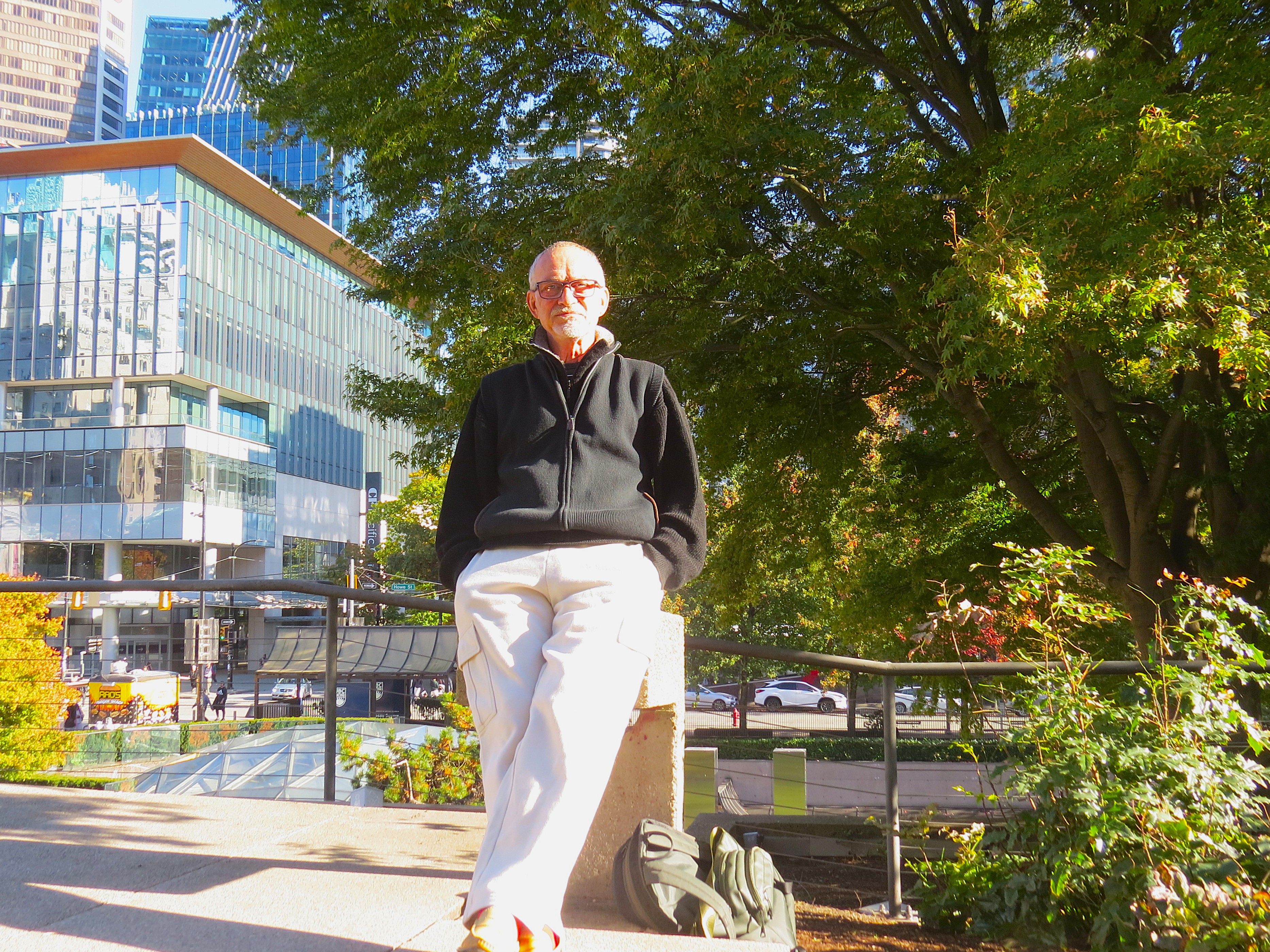
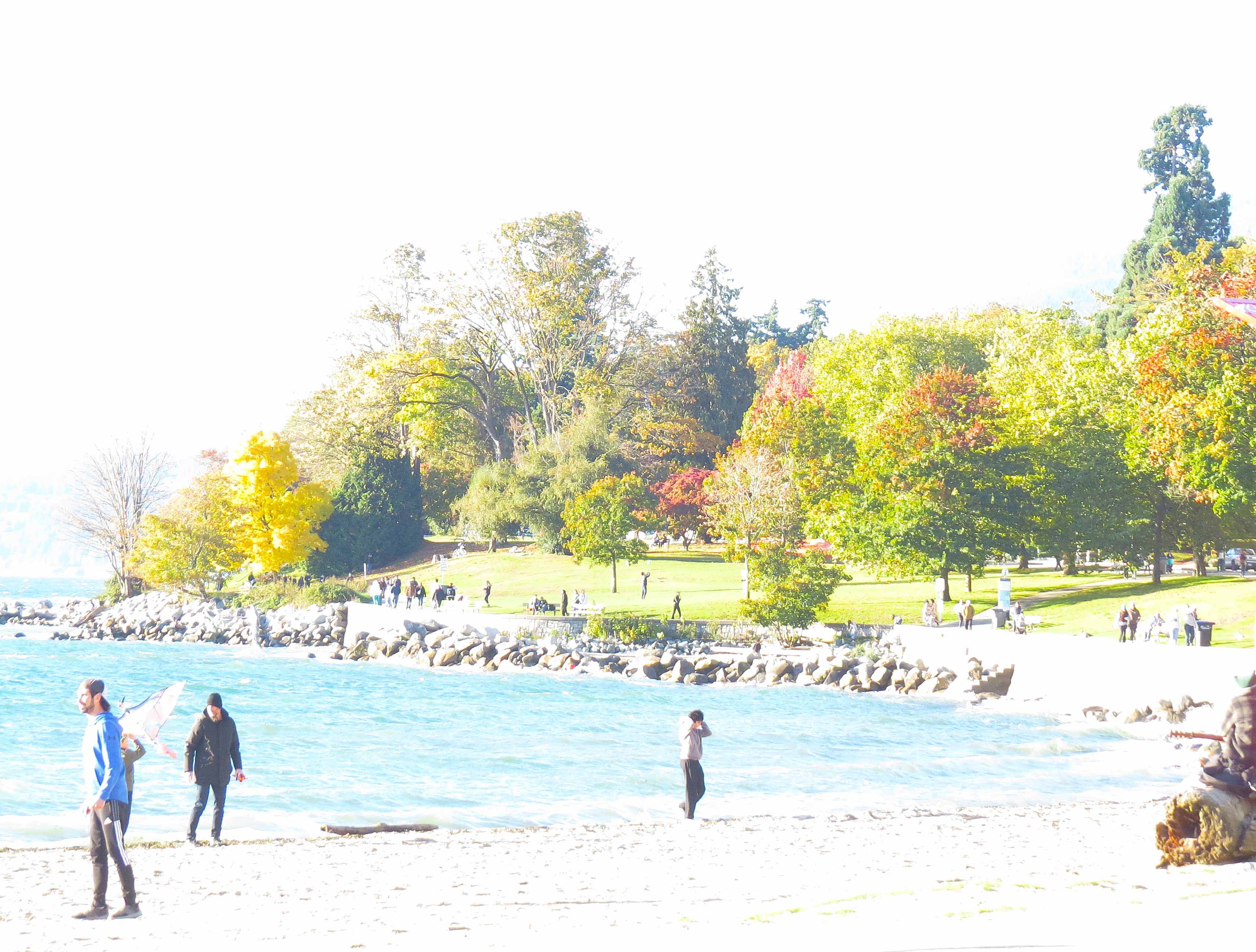
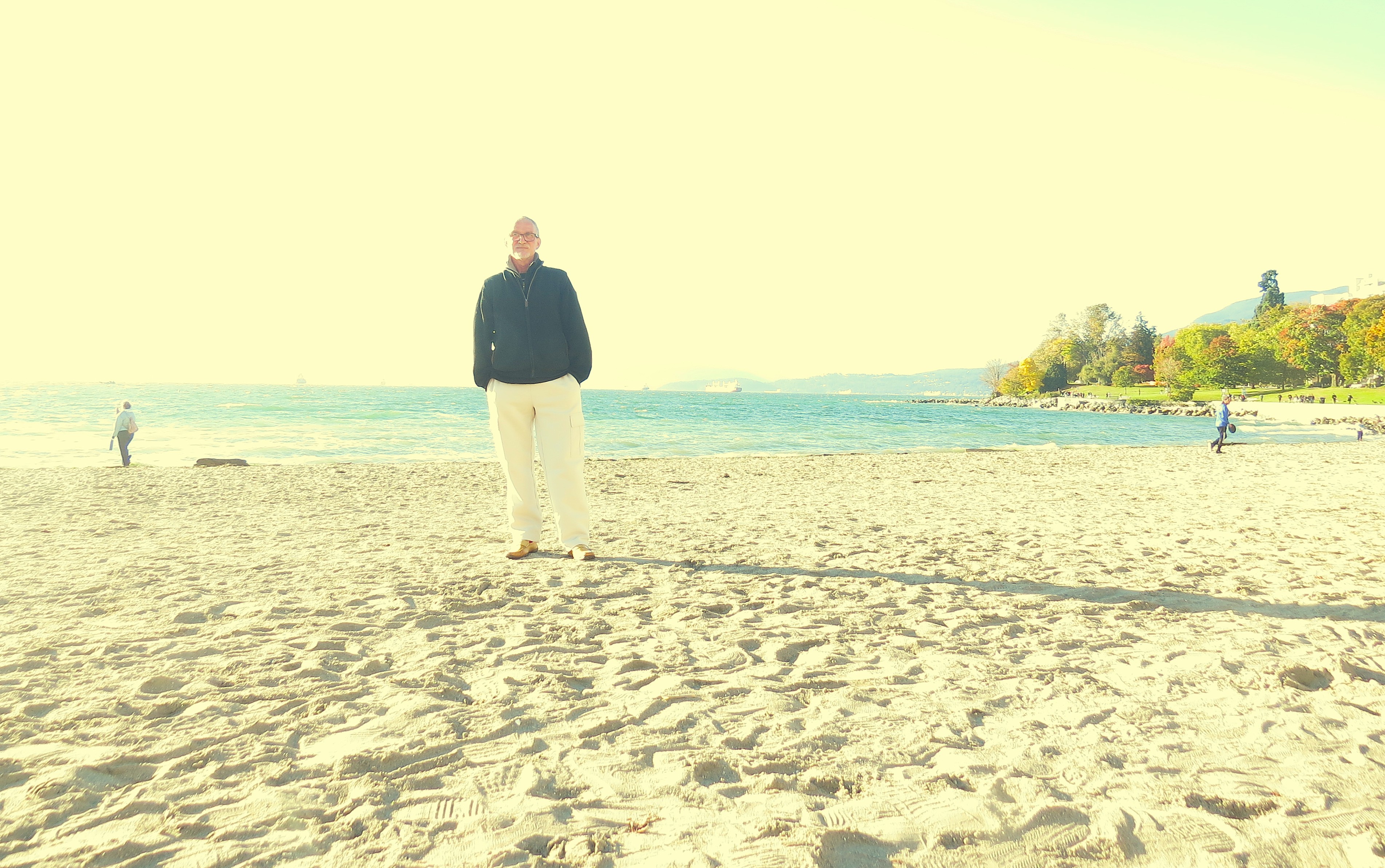
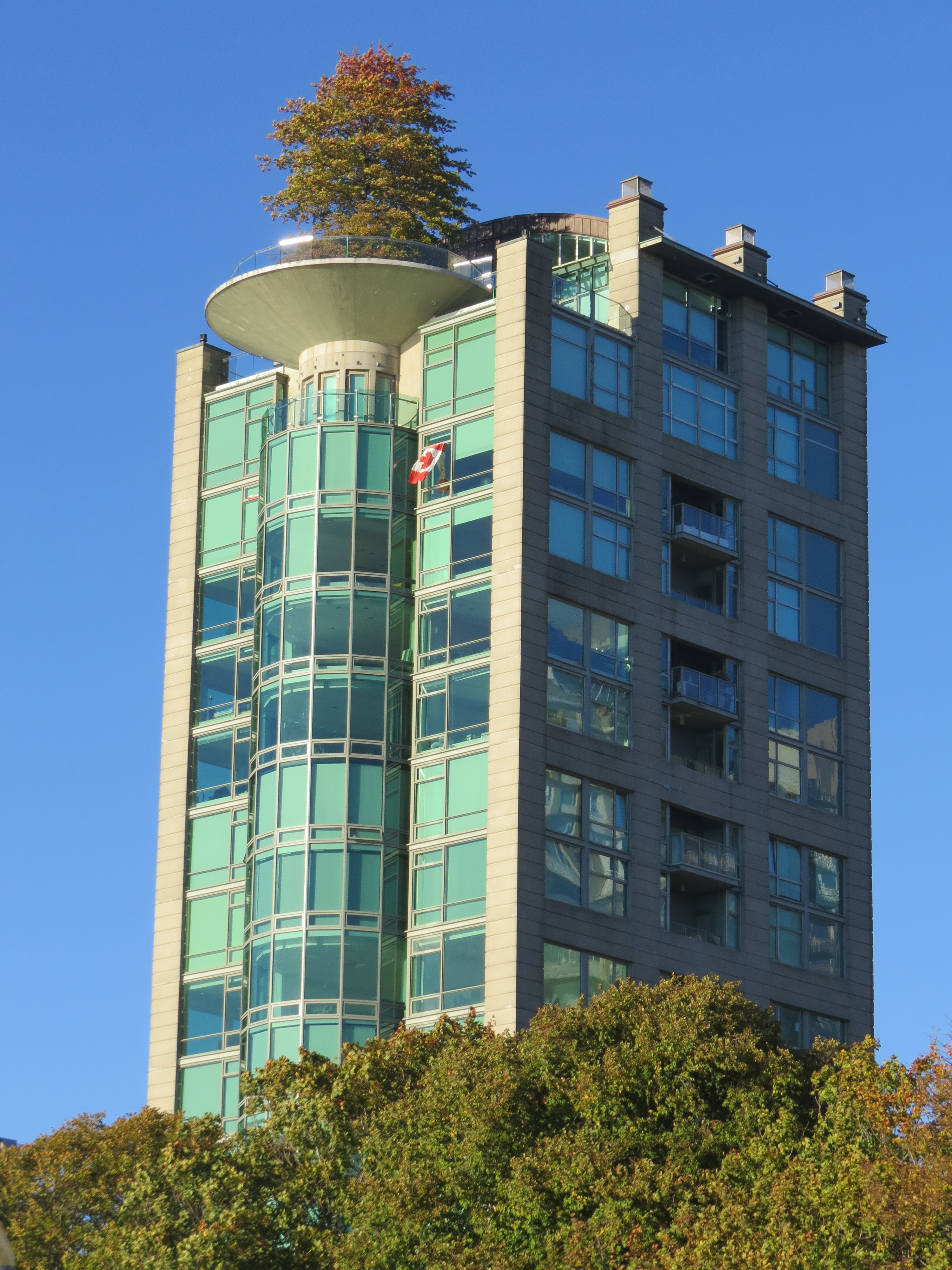
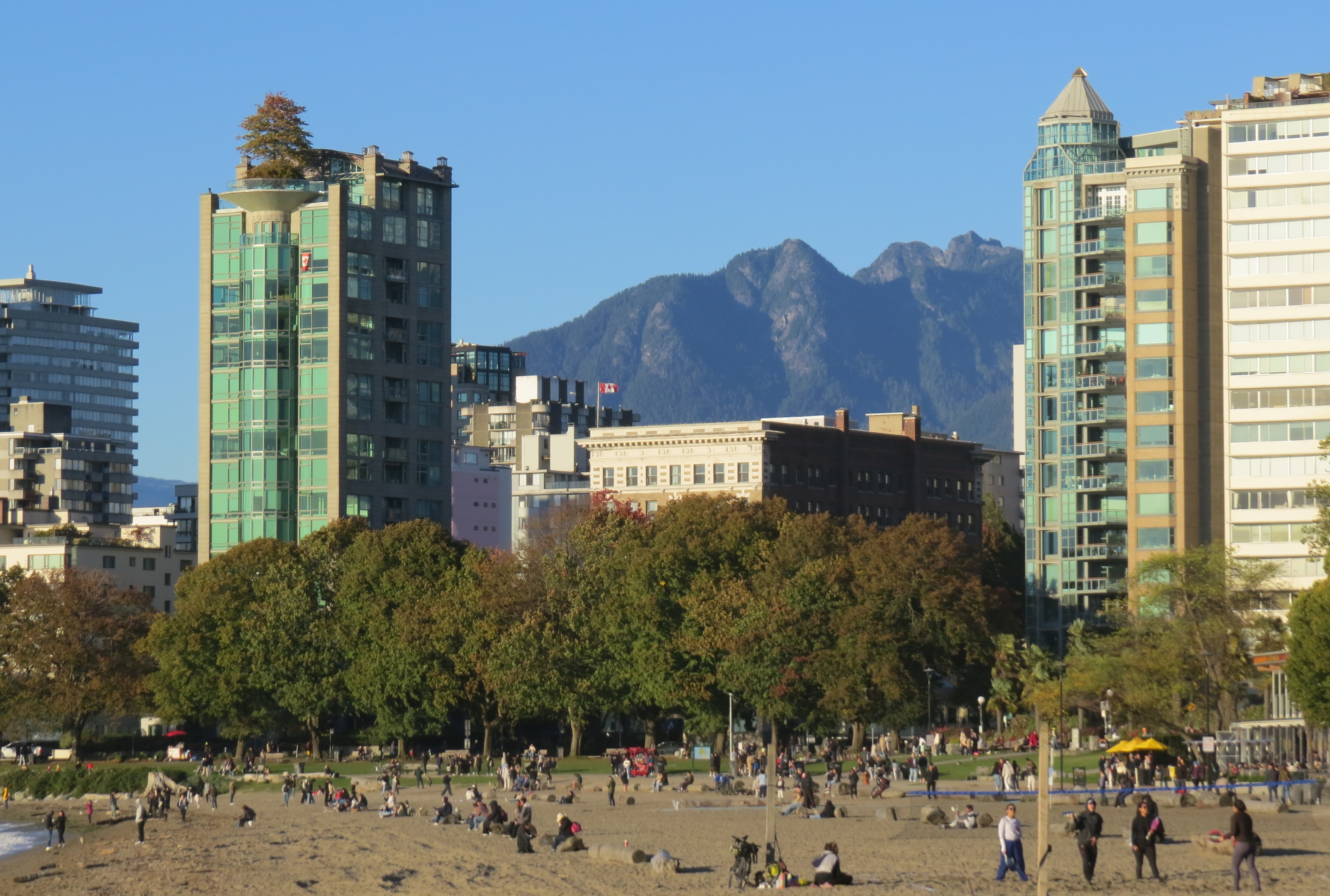
Took my camera, my notebook and went to OUR city, city of OUR love. A long walk through streets and places we used to walk together. Reminiscing how it was before THAT. Getting ready to say again ‘goodbye to that city, this time my own, singular goodbye? Perhaps. And perhaps it will be the final goodbye. One more love locked forever in my memory, my soul. Another album in a chest full of other pictures albums… .
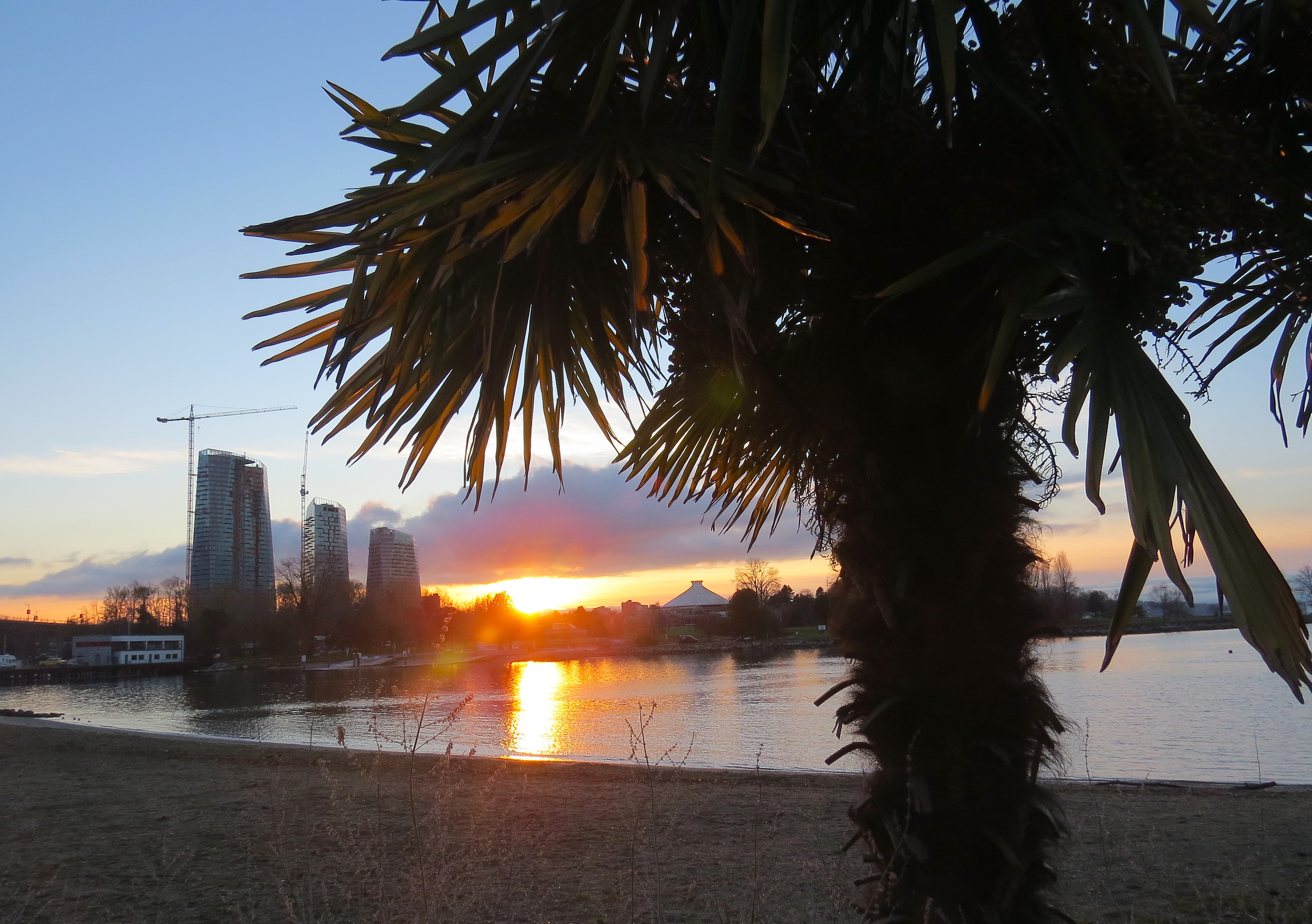
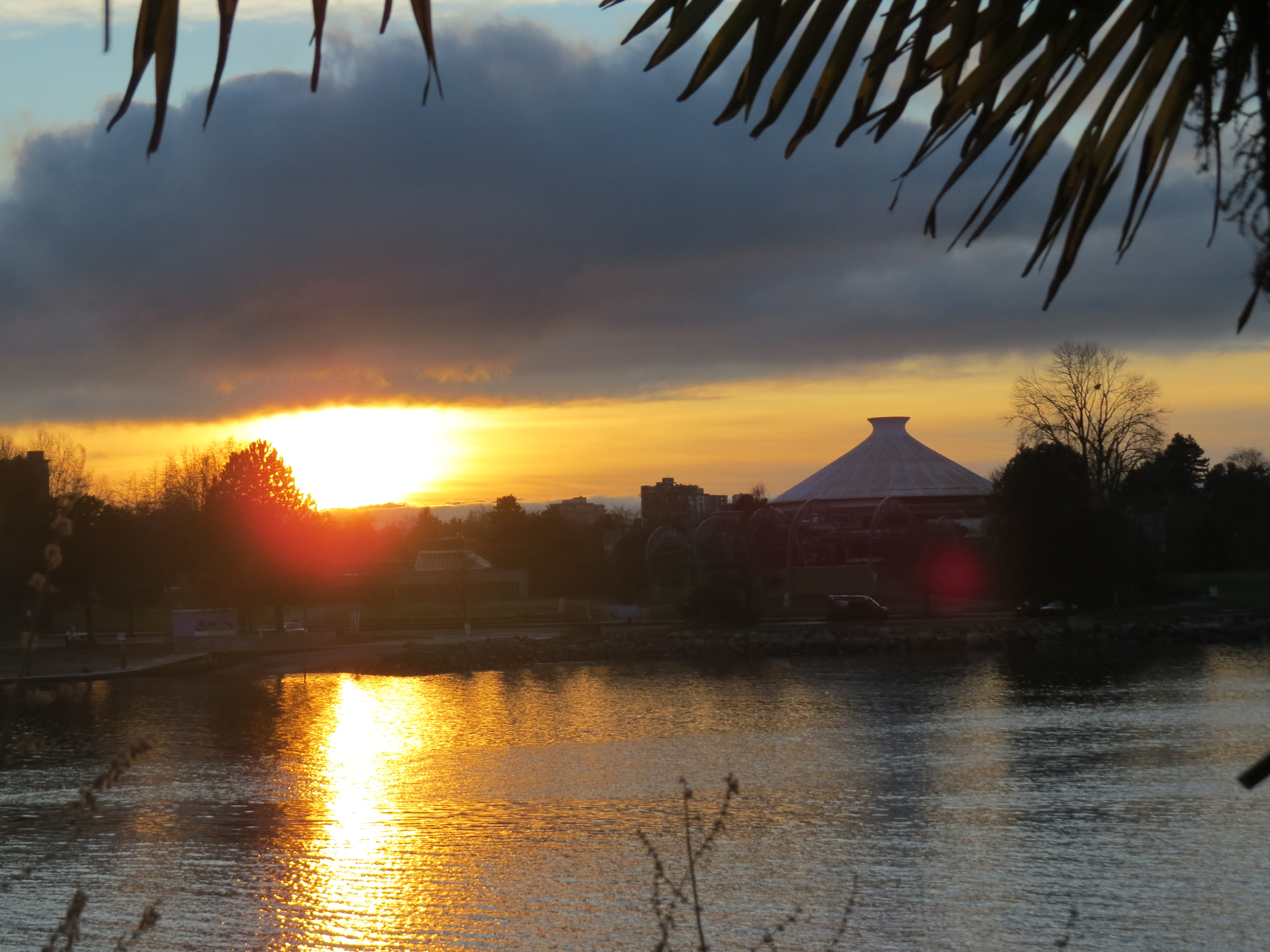
Here is the story of that day as seen through the camera lens. My, our streets, parks, cafes, beaches.
Of course, I did have my little dinner at my Melriches Cafe on Davie Street. It was a Thanksgiving Day, after all. And I took out my notebook from the backpack and I scribbled these words. Looked at the other chair at my table. It was empty.
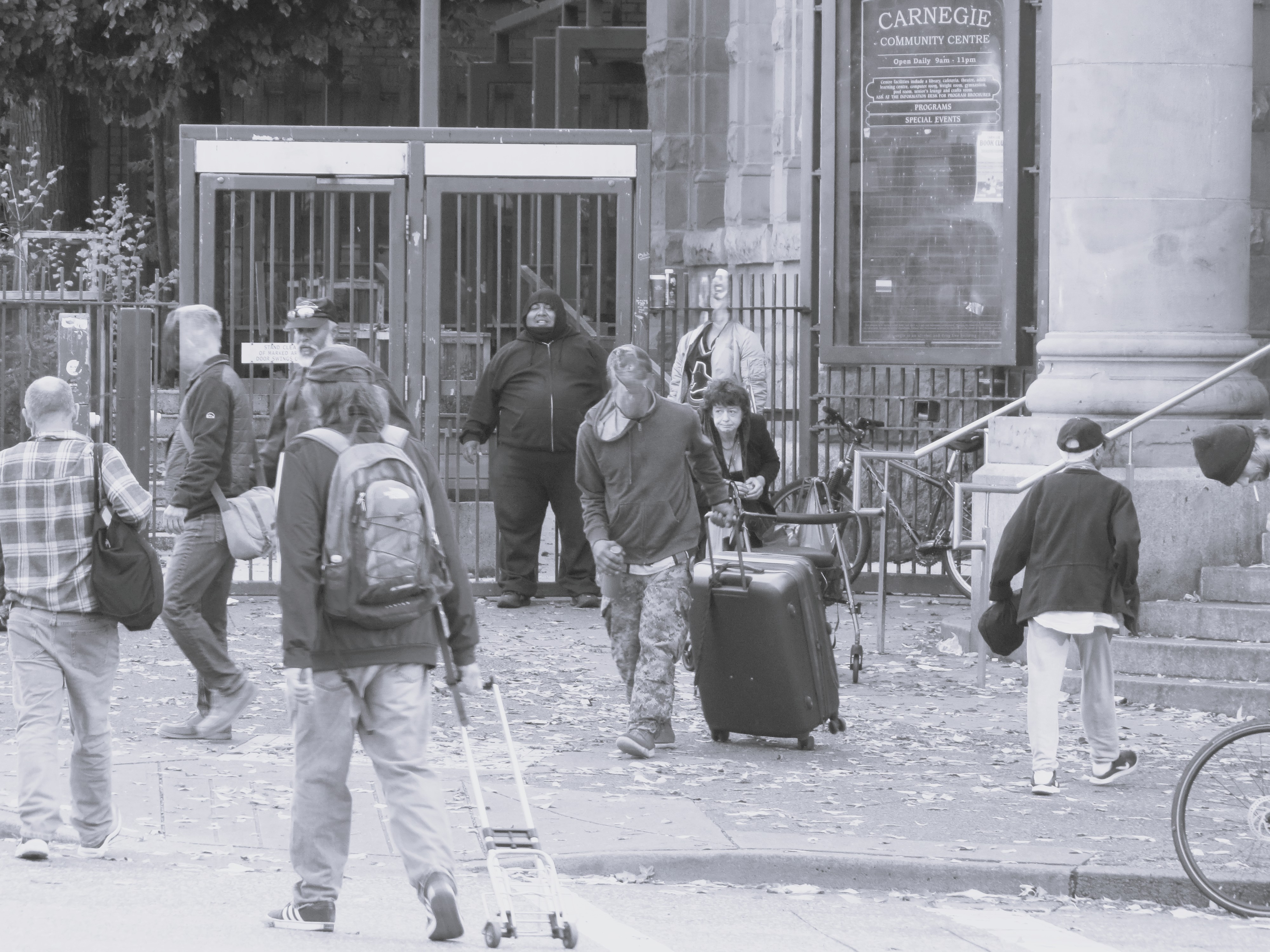
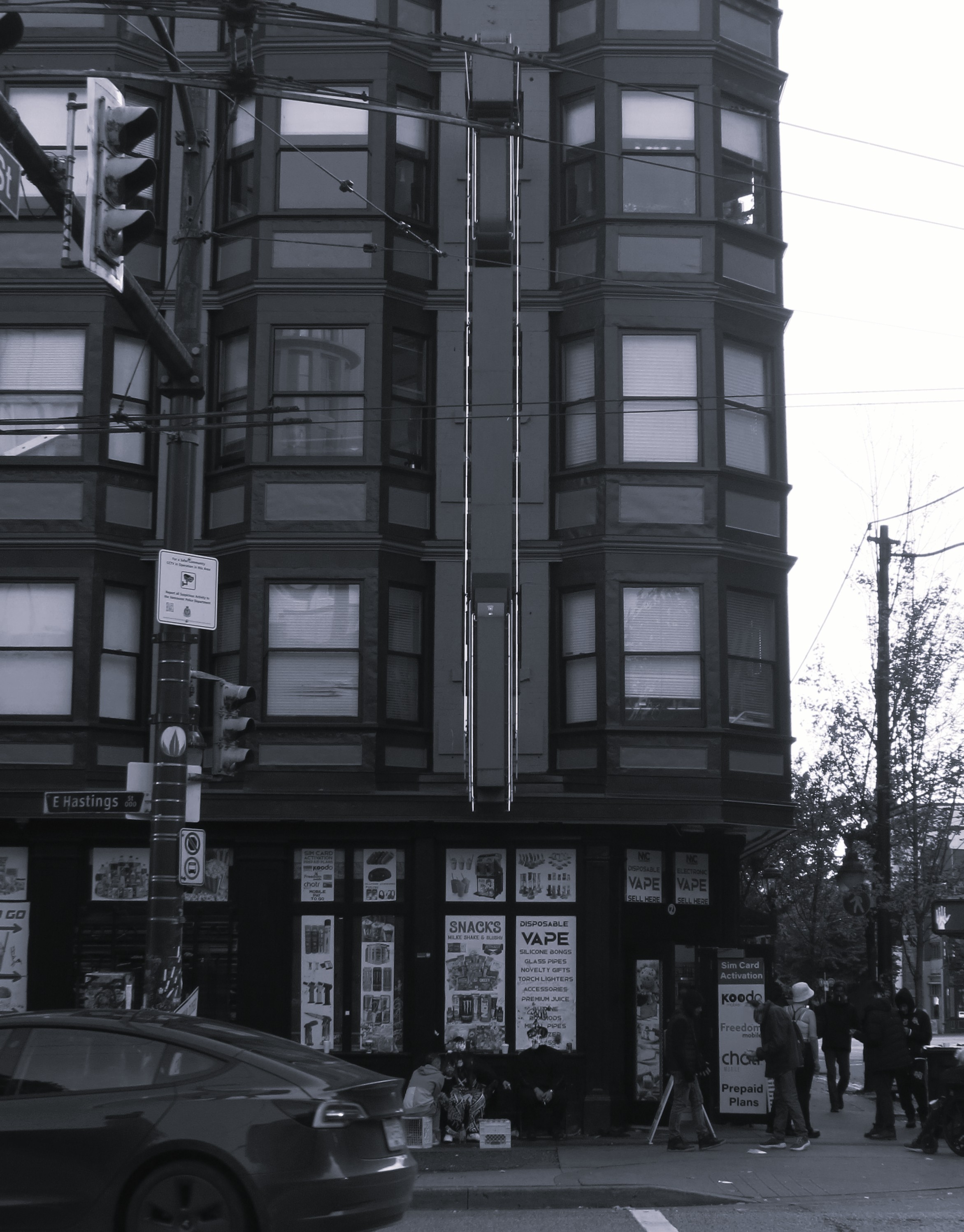
Dolina Śmierci – tak można nazwać samo stare centrum Vancouveru. Nie, nie te przy pięknym nadbrzeżu Convention Centre, gdzie milionowe jachty lśnią hebanem i kolorowymi żaglami; nie te wokół cudownego, majestatycznego Stanley Park; nie te na urokliwym, jakże przyjacielskim Westendzie; nie te nad 1, 2 i 3-cią plażą, nawet nie te przy ruchliwej, zwariowanej i uroczej Commercial Drive.
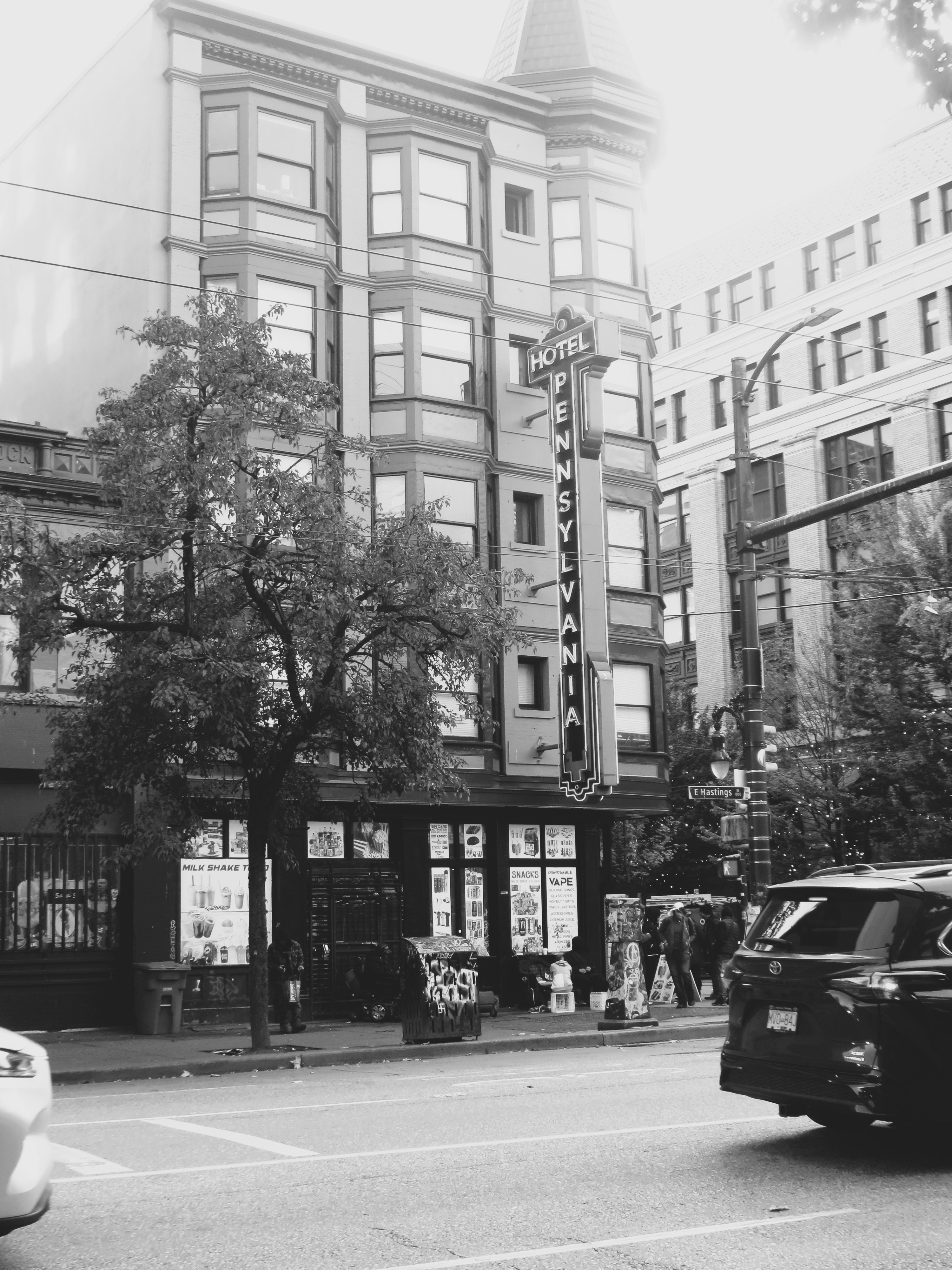
Te w starym centrum handlowo-komercjalnym, u zbiegu poważnych i statecznych arterii z licznymi hotelami z solidnej cegły i kamienia, przy starej, rodem jak z Manhattanu lub Londynu, Bibliotece Carnegie. Zaraz za Pomnikiem Nieznanego Żołnierza, dwa kroki od uroczego Miasteczka Chińskiego (China Town), dwa kroki do spacerów i alejek wokół False Creek i Planetarium (Science Centre).
The Valley of Death – how else can you call the old commercial centre of Vancouver? No, not the modern one alongside the Convention Centre, with the view of North Vancouver, with streets and elegant passages leading to majestic Stanley Park. Not even the slightly abandoned but still full of nice attractions Granville Street. Certainly not the most livable in entire centre of the city West End, the three beaches, Davie Street.
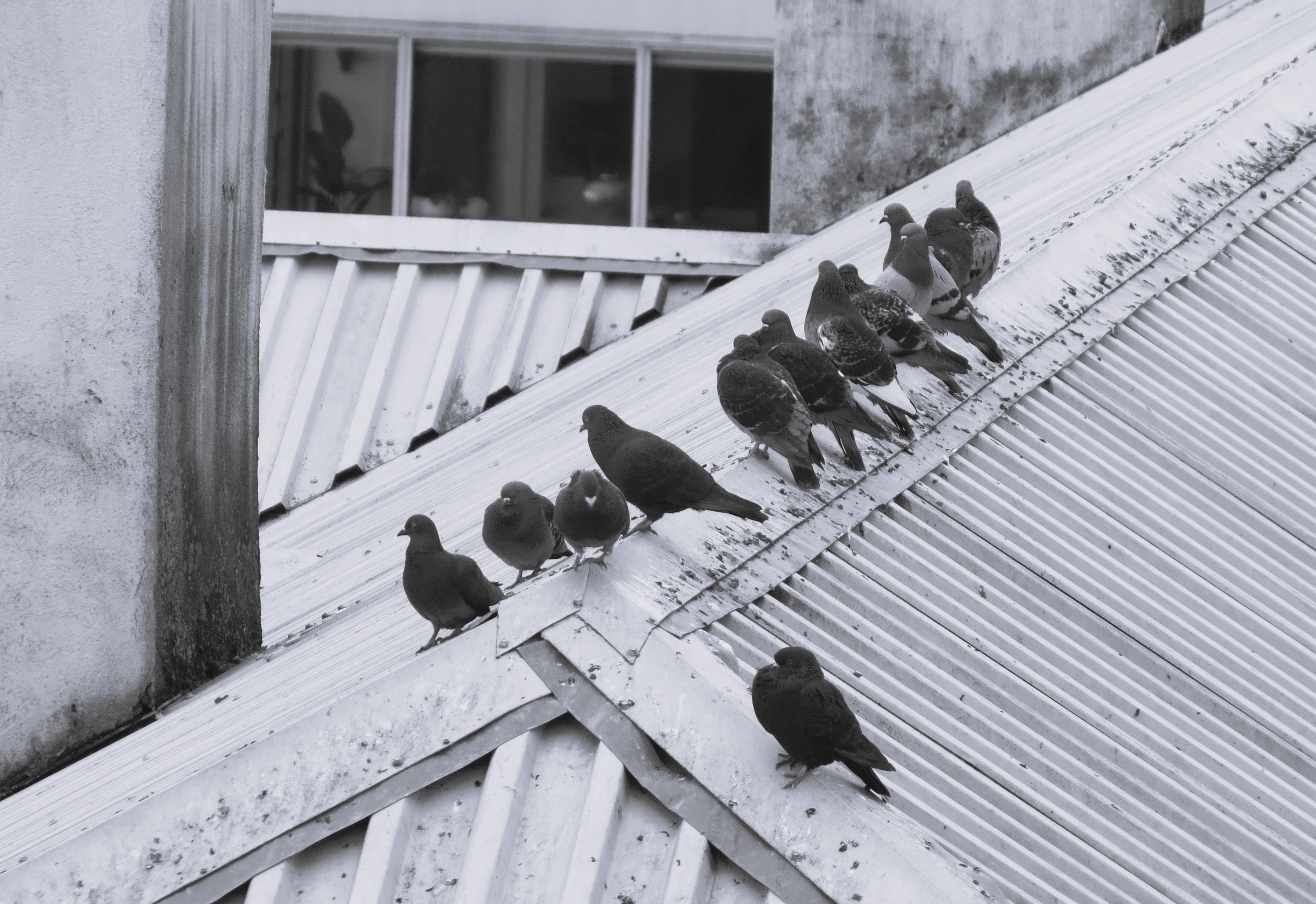
No, not these neighborhoods. I’m talking about the old commercial part of Downtown. The one, where the old main arteries meet together: Hasting, Powell, Cambie, Main. One around the massive Carnegie Library and Pigeon Park with the Cenotaph. Cenotaph – a place we remember those, who died in defense of Canada.
But people still die in that neighborhood, in very big numbers, every day, fighting the losing battle to stay alive for one more day. Most likely, while I am writing these words, someone dropped dead on the pavement there, likely someone I have passed on the street few hours ago. Statistics tell that five of them every day, one hundred fifty five every month. It is like Covid-in-perpetuity, like AIDS in the 1980’ in New York, in San Francisco.
One can say with an uncomfortable sadness: they brought it upon themselves, their lifestyle choices brought it upon them. But the truth is none of them wanted to die, when they took their first morphine, heroin, fentanyl. There is so many more ways to kill oneself faster, cheaper and without prolonged suffering.
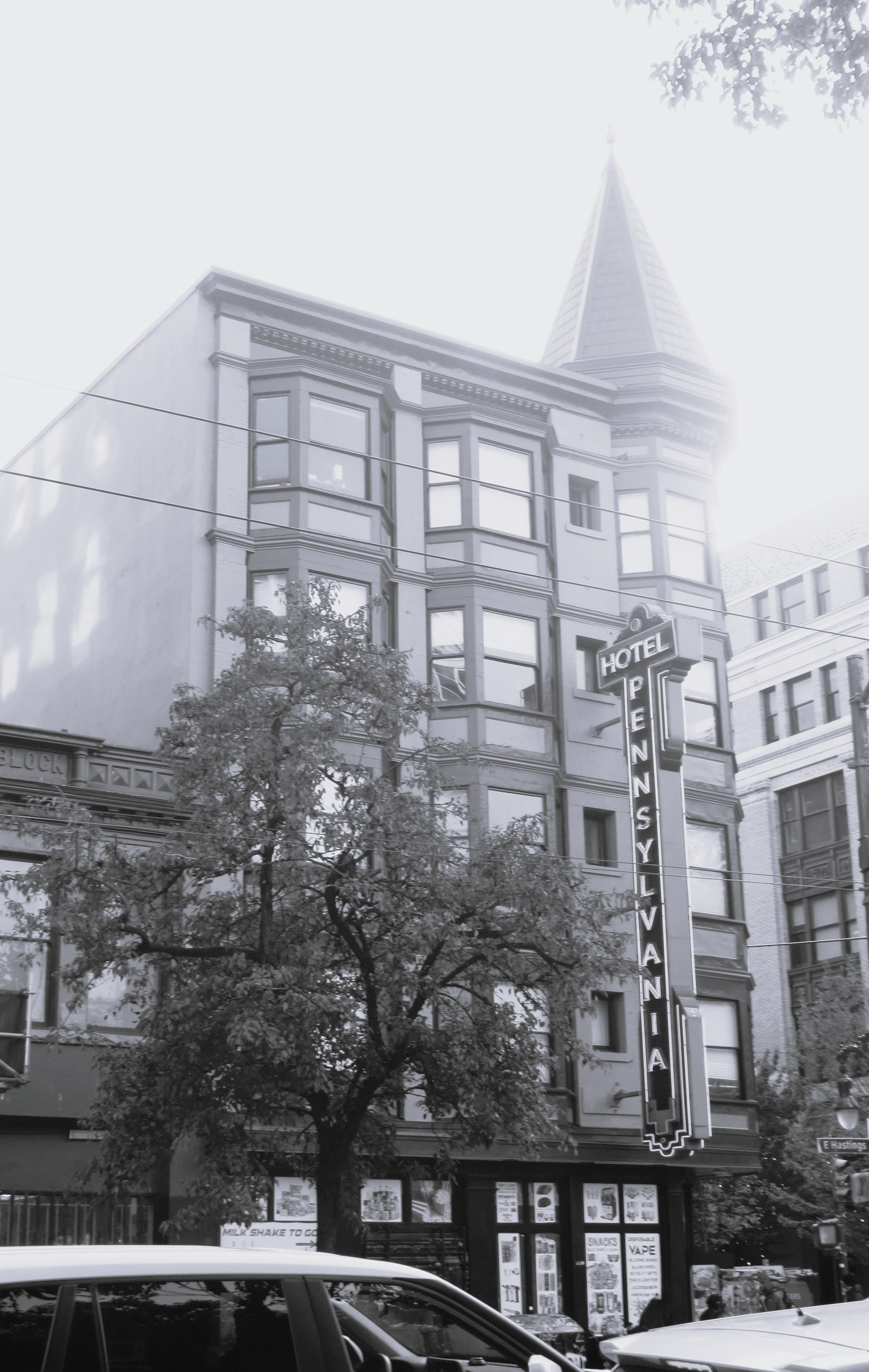
Stoją tam potężne stare gmachy hoteli niegdyś pełne przyjezdnych, marynarzy, turystów; każde z popularnymi – niegdyś – barami, pubami, po drugiej stronie ulicy (jednej z najdłuższych i najbardziej używanej) równie solidne kamienice mieszkalne, na parterach oferujące sklepiki, zakłady rzemieślnicze. Sam niegdyś coś tam kupowałem. Dziś to wszystko jest martwe lub tak żywe, jak staruszek, który właśnie otrzymał od kapłana ostatnie namaszczenie …. Jeszcze żywy … formalnie.
Nigdy nie była to łatwa dzielnica. Pewnie nie była łatwa zanim ja tu się pojawiłem w 1994. Ale była mimo to funkcjonująca. Dziś jedyne, co tam funkcjonuje, to oczekiwanie na śmierć. Wpół zgarbioną, ze spojrzeniem gdzieś poza światem realnym, na krawężniku w zaśmieconym przejściu między budynkami. Ona jedna pamięta o nich, przyjdzie po nich. Mają po dwadzieścia lat, maja po dużo więcej, ale trudno to kreślić. Starsi użytkownicy tych narkotyków wyglądają inaczej, nie mają normalnej kadencji wieku. Może ten mężczyzna, który siedząc pod ścianą na chodniku i właśnie siusia pod siebie ma lat sześćdziesiąt, może tylko czterdzieści? Zgięta wpół kobieta może być kogoś starą babcią, lub kobietą pod czterdziestką. Poza tymi właśnie najmłodszymi, niektórymi atrakcyjnymi i ładnymi – wszyscy mają tu jeden wiek: wiek śmierci.
I didn’t go there looking for answers, or to offer, one of thousands offered before, simple solution. But I needed to see it. That is Vancouver, too. My Vancouver, my city that I love dearly. I wanted to bear witness to that Greek tragedy. To these lives. You need to see it, you need to envelope yourself in that very uncomfortable fabric of decay, grief and sadness.
In the last ten years 58000 people died of it. Currently, every month about fifty five That is a fair size town. A town that just disappeared – with all its inhabitants.
Dolina Śmierci otoczona zielonymi wzgórzami życia w jednym z najpiękniejszych i jednym z najbogatszych miast na świecie. Być może to jest najsmutniejsze, najtragiczniejsze.
The Valley of Death surrounded by affluence of one of the most beautiful cities in the world. A city I love. And it hurts deeply.
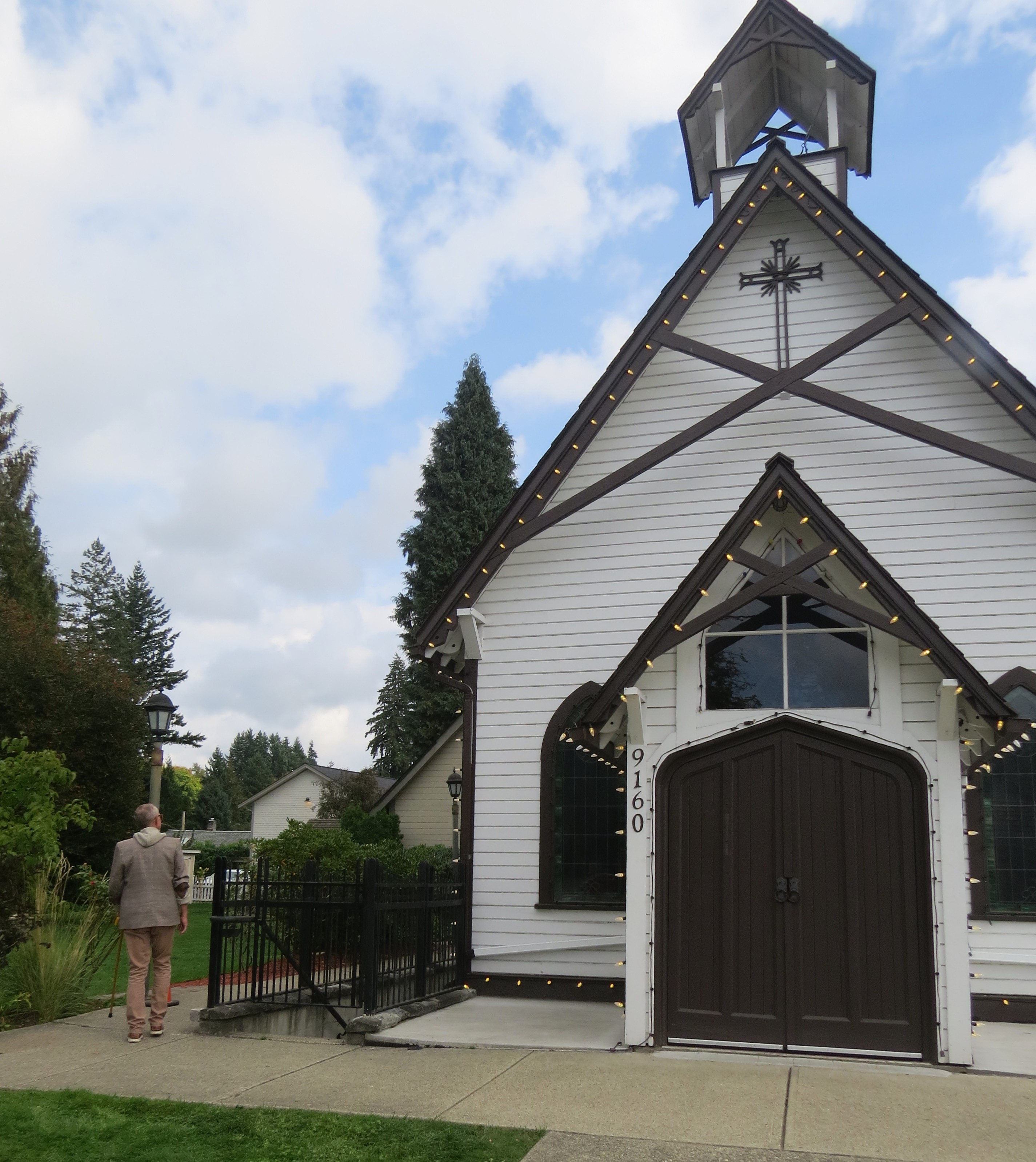
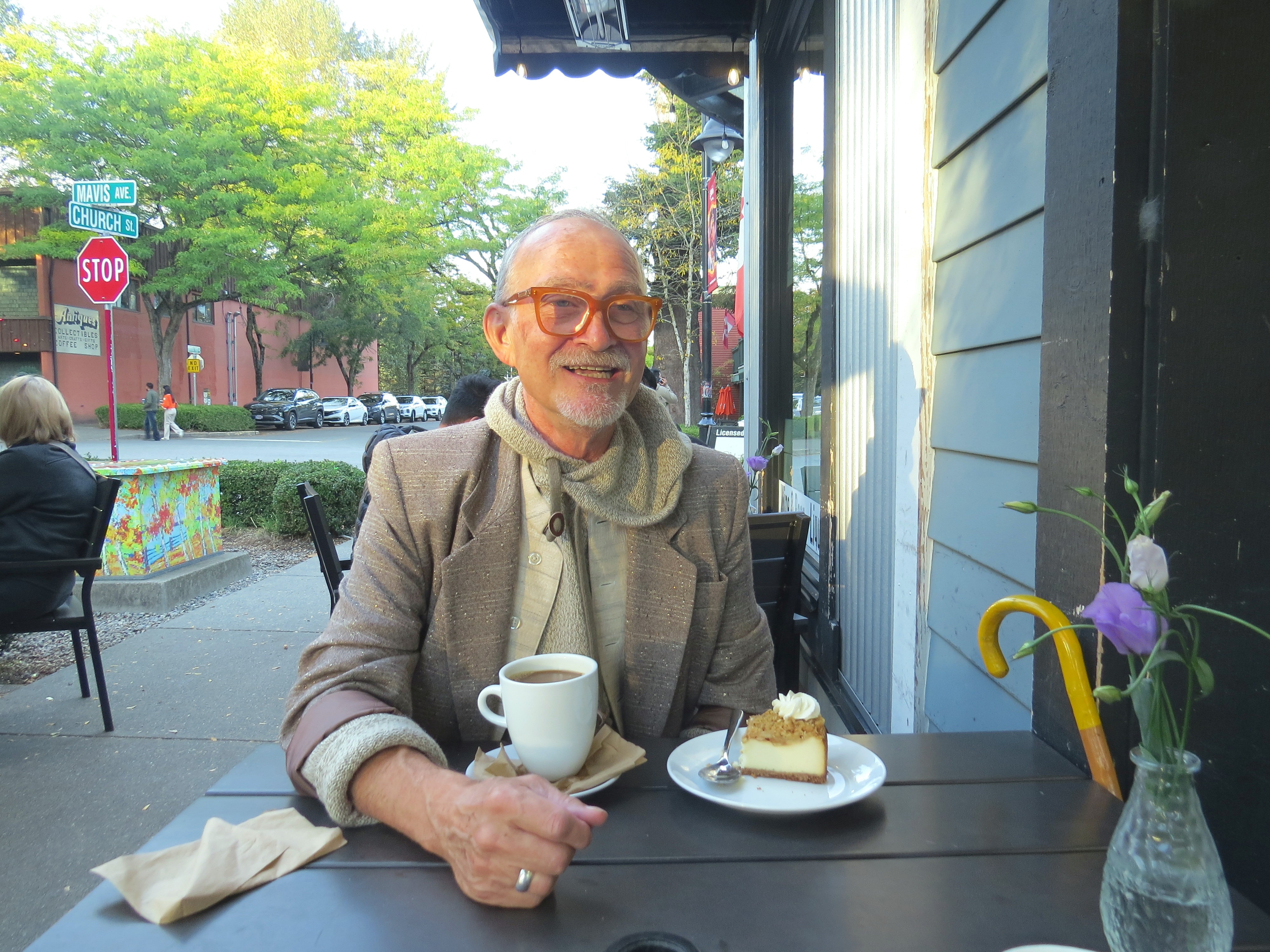
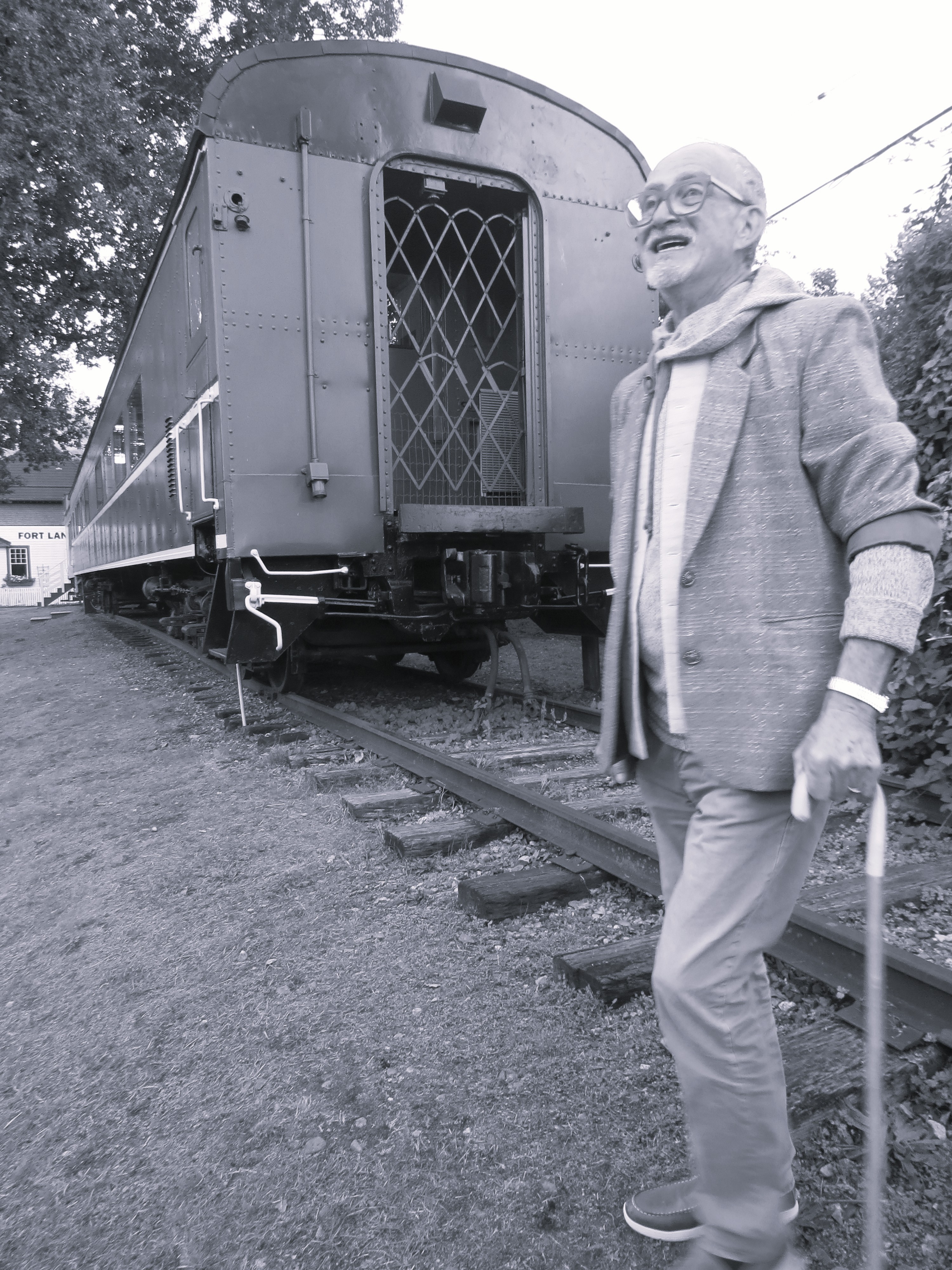
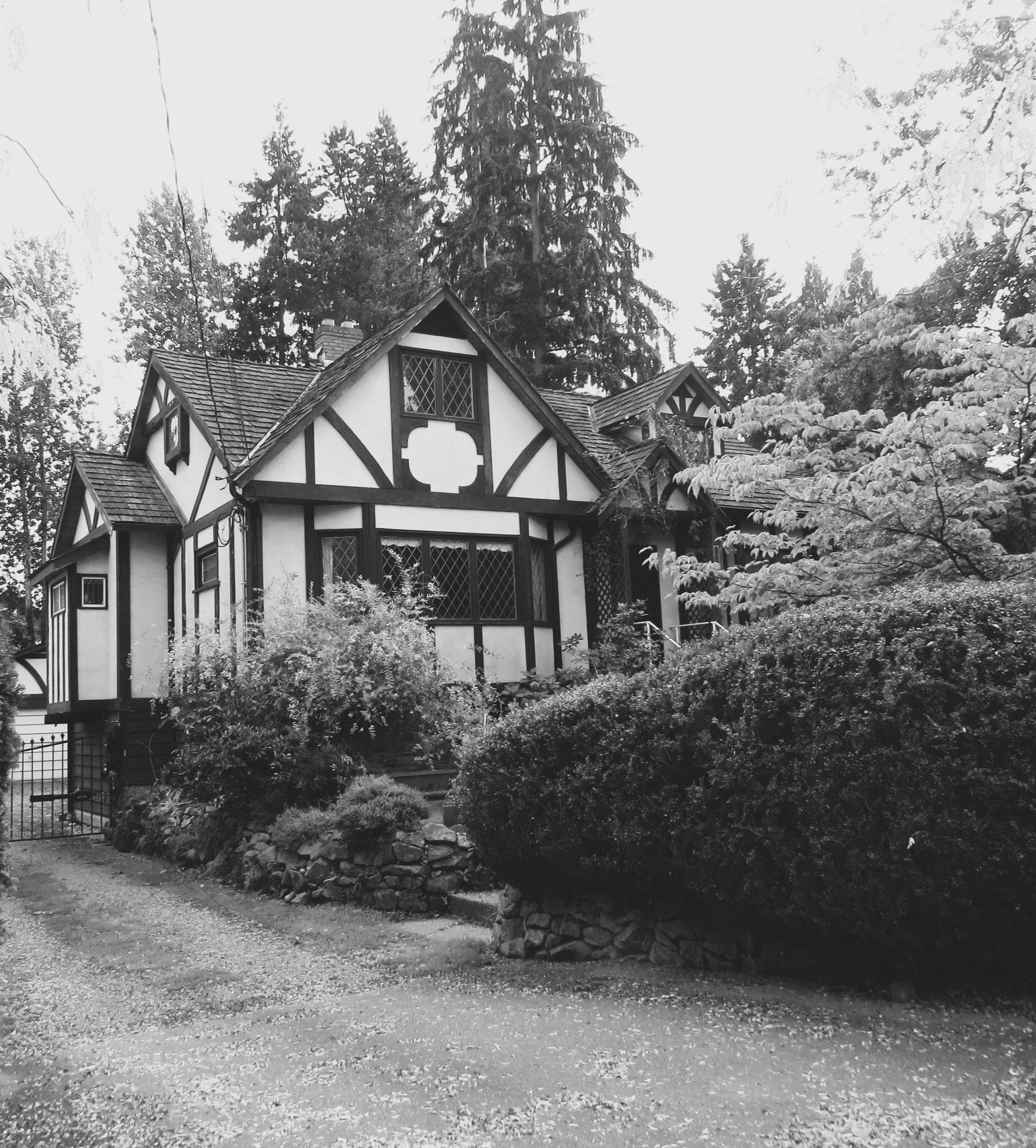
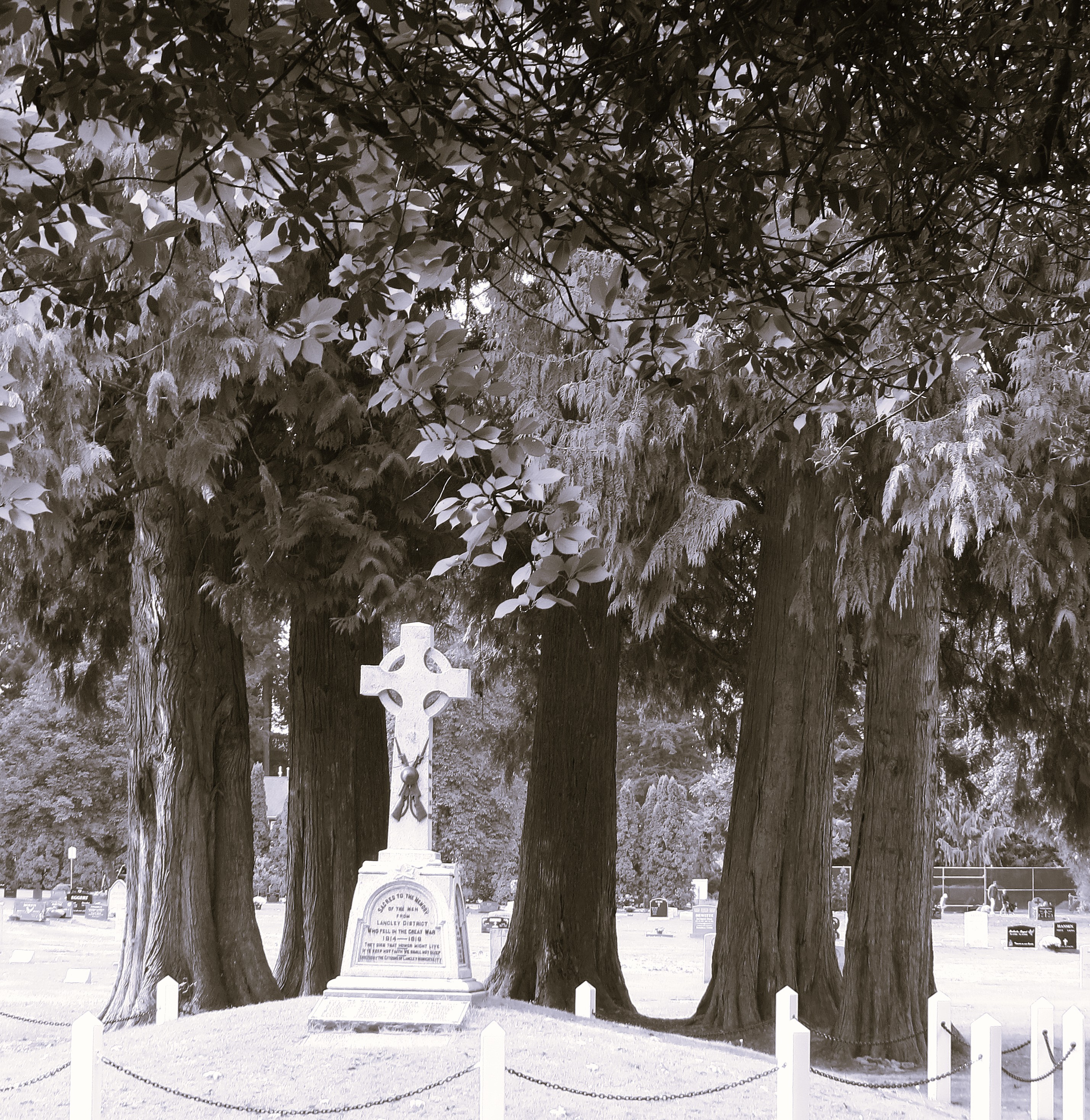
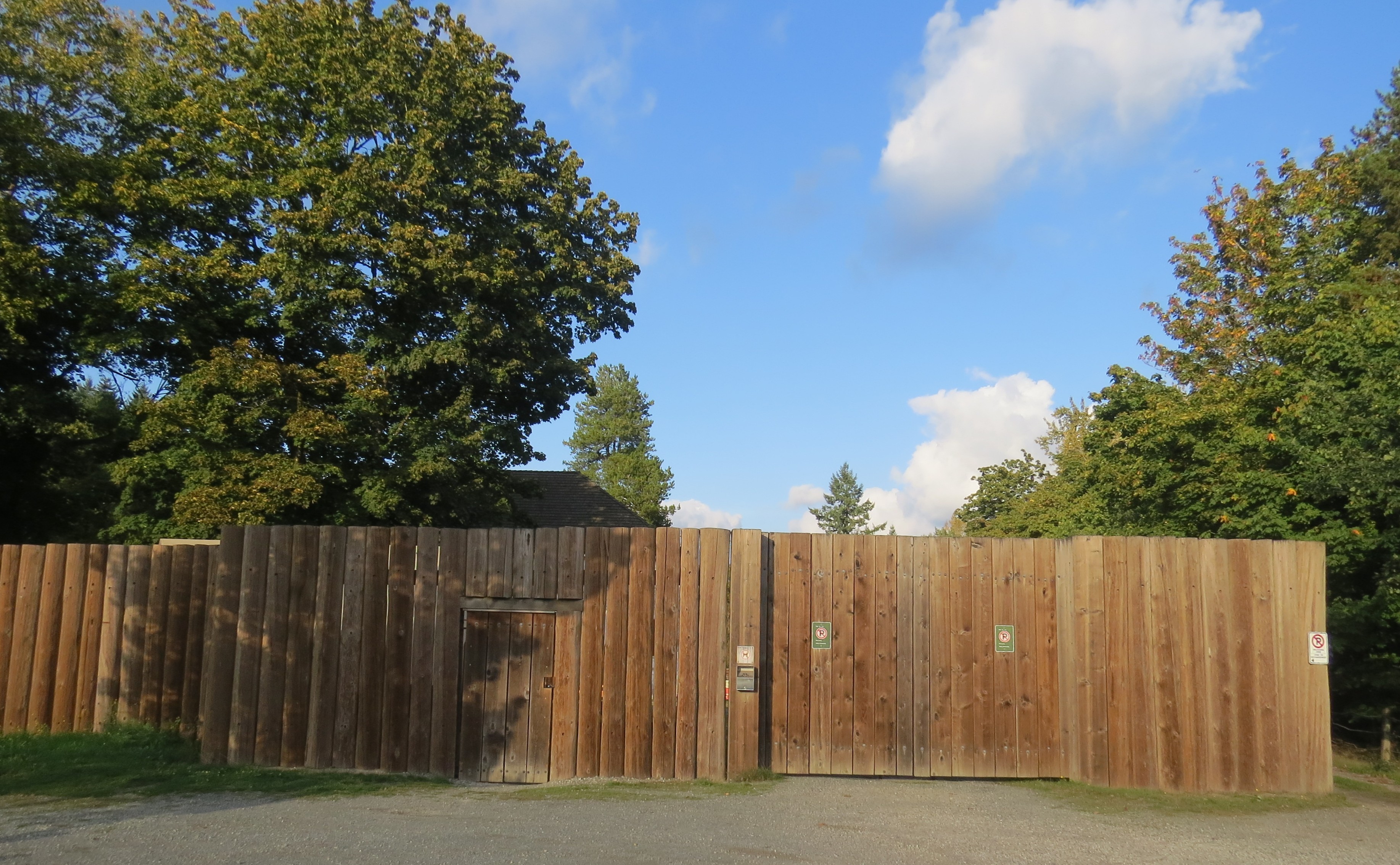
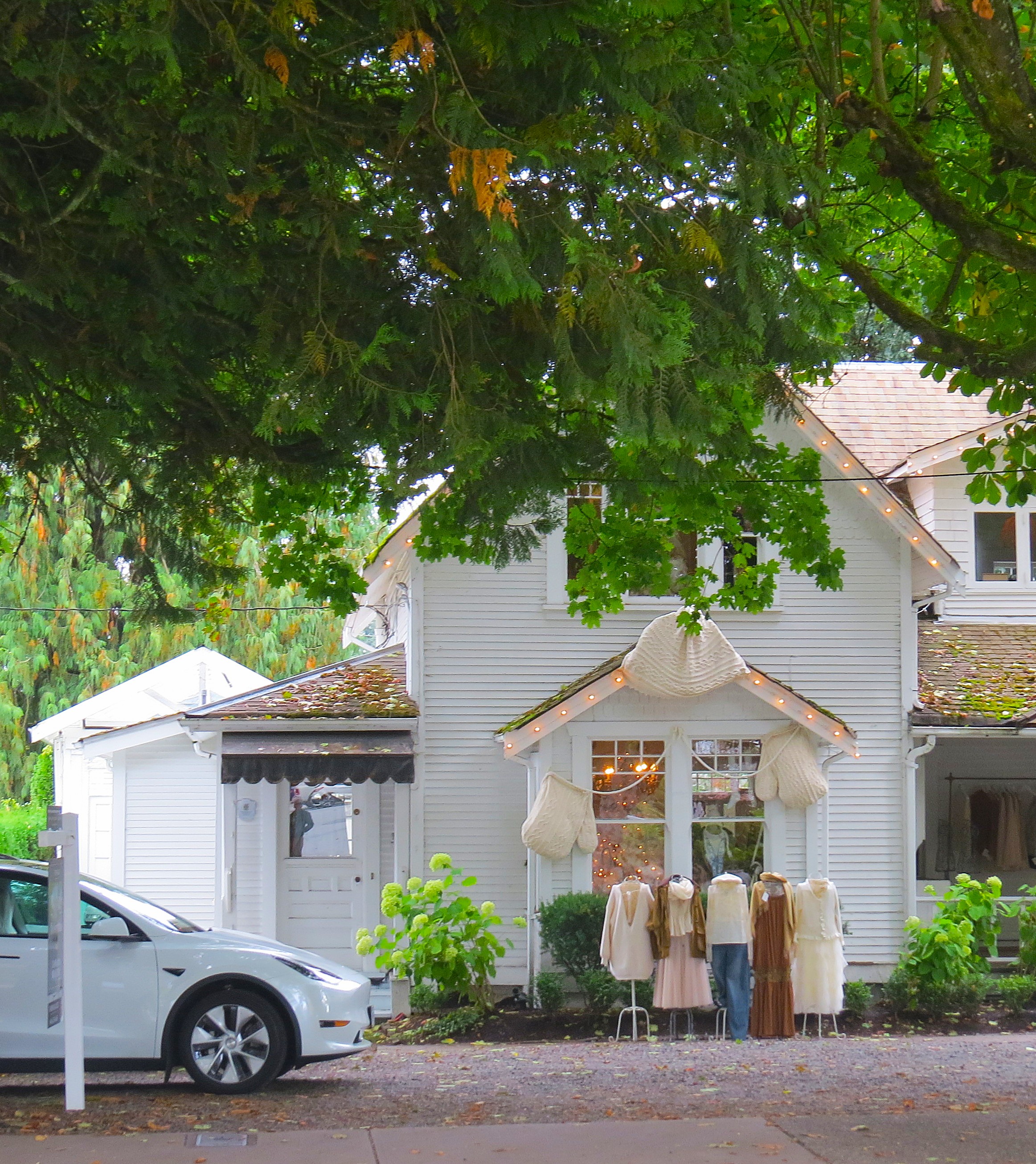
With a friend in his blue carriage – as mine lived out his days after crossing the entire continent twice, mountain ranges, lakes, wild forests, huge cities and small towns – we went to another sentimental journey in time. The time of the beginning of this province, the first wooden Fort surrounded by tall palisade. And tiny, wonderful Anglican Church, were many years ago I had a lovely chat with Bishop Michael Ingham from New West Diocese.
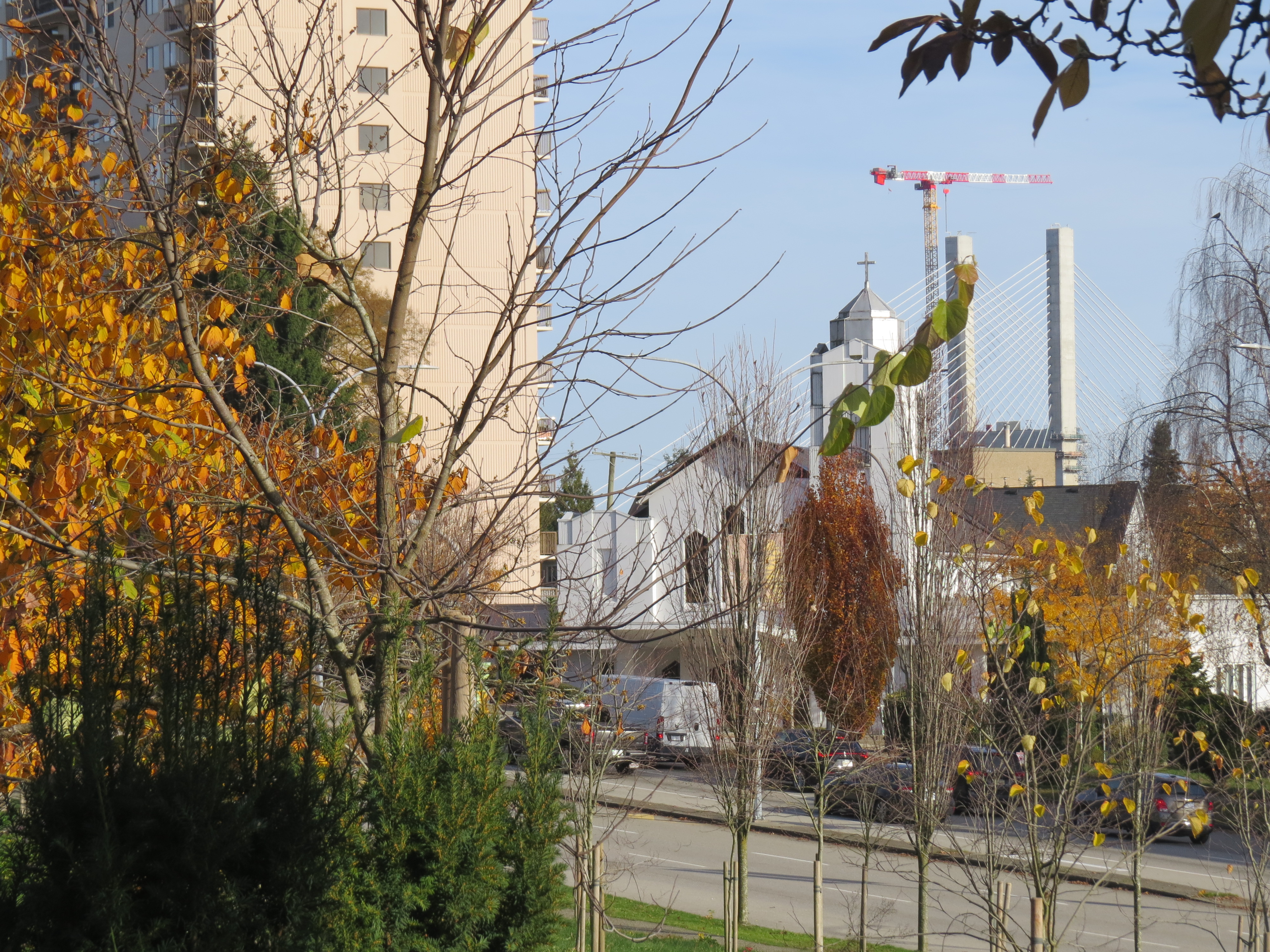
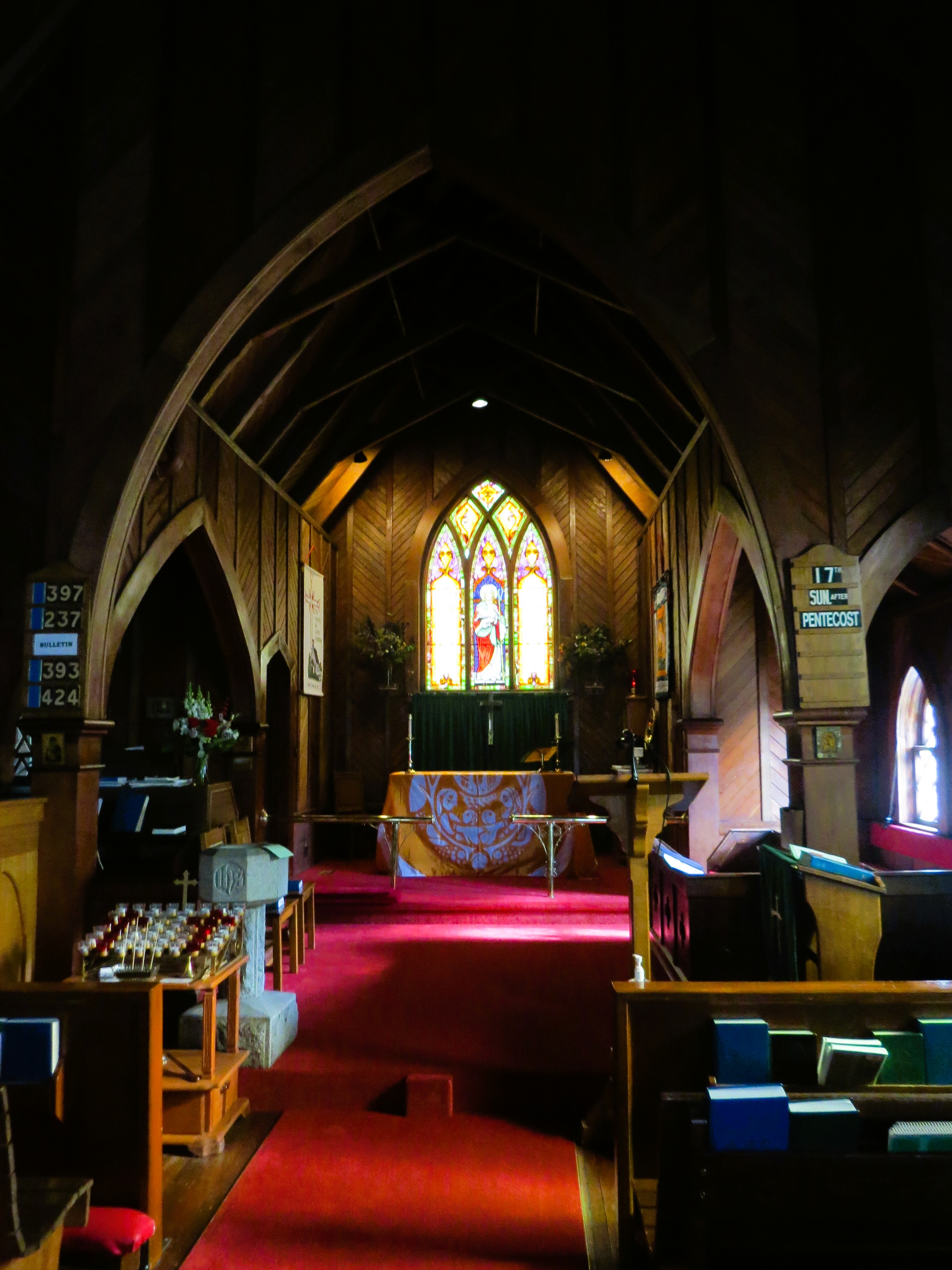
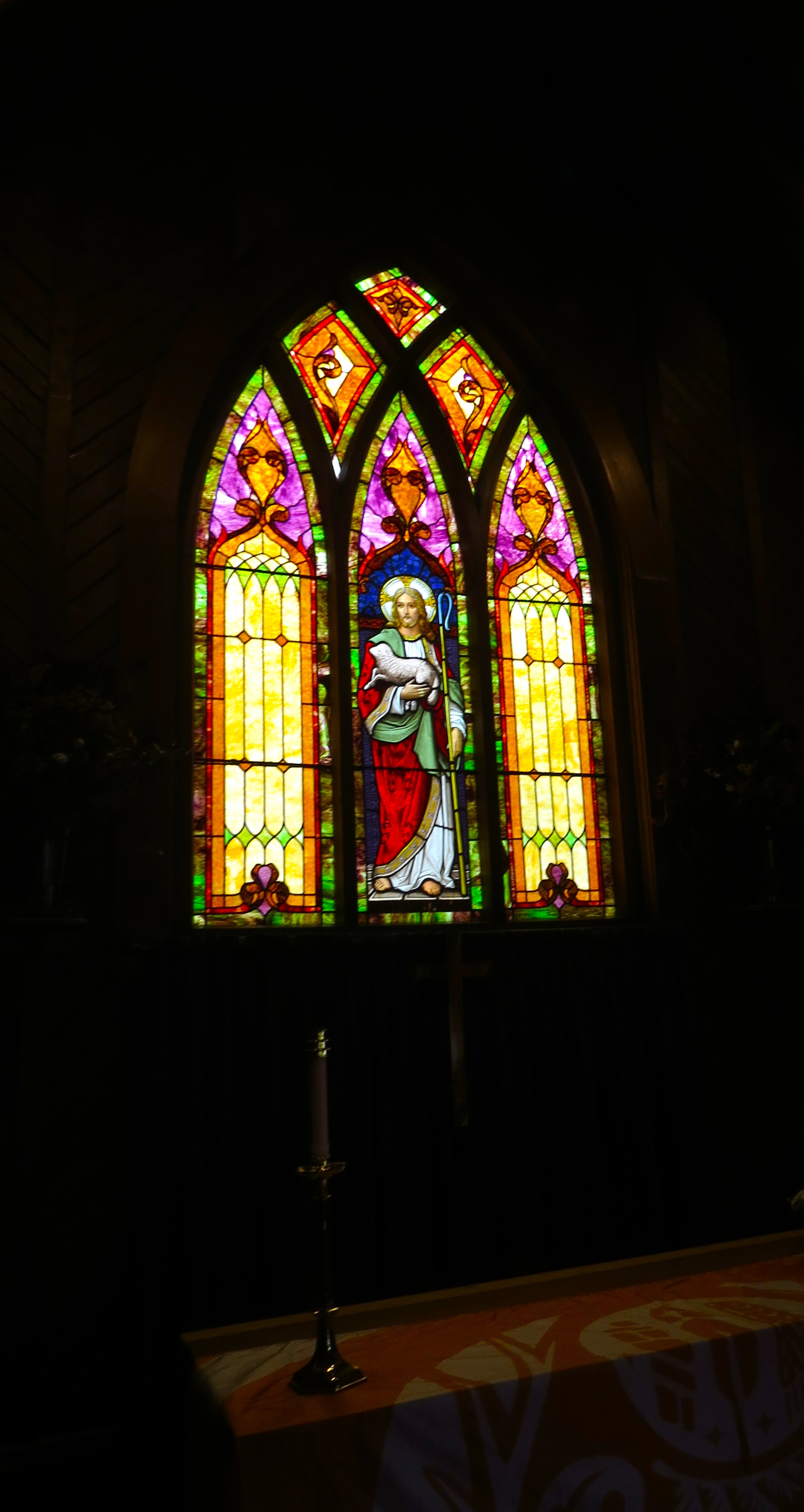
To my great sadness that tiny church was closed. Wawa, my friend was ready to give up. But what a problem could it be for me? Just a lock on the door. For sure it could be opened! And it was – just for us, for two strange travelers. Two lovely church ladies opened the door wide for us with a smile and lots of stories. We had wonderful time with them. They pointed to the one new stain glass window with an obvious distaste: a stain glass of St. Peter, and I understood and shared their disapproval of that new window: it was a very different and foreign to all the older windows scenes and character. Did not belonged in the old company. They used the old wooden Pastoral bishop’s cane to point to other interesting and perhaps new details in the tiny one nave. I loved their agitation and somehow respectful disrespect to sacral items, LOL. They obviously loved their church very much.
Lata temu uwielbiałem tam jeździć na krótkie wycieczki z Mamą, byliśmy tam też razem z Damiankiem. Teraz z przyjacielem. Pogoda nagle zrobiła się, jak na zamówienie: a niech tam wam będzie słonecznie i raźnie, aniołki z góry śpiewały. Tośmy też wycieczkę od kościółka cudownego, maleńkiego zaczęli. Niby był na cztery spusty zamknięty, ale co tam dla chcącego! Urocze dwie starsze (no, powiedzmy w okolicach mojego wieku, LOL) panie kościelne wrota nam otworzyły i dzieliły się chętnie szczegółami, zwłaszcza nowymi, mi nieznanymi od czasów ostatniej wizyty jakieś 10-13 lat temu. A miałem tu kiedyś przemiłą i ważną rozmowę z ówczesnym biskupem diecezji anglikańskiej na New Westminster, Michałem Inghamem. Opowiadały z niesmakiem o jedynym nowym witrażu przedstawiającym św. Piotra, który pasował tak do starych, znanych mi witraży, jak pięść do oka. Kompletnie ich uczucia podzielałem. Uwielbiałem z Wawą, jak panie bezceremonialnie, ale z uczuciem, używały prostego drewnianego pastorału biskupiego do wskazywania różnych mało widocznych a ważnych detali, LOL. Dodano też jeden więcej rząd siedzeń, bo mieli wielki problem niedzielami jak pomieścić wiernych. Nie zmieniło to jednak uroczego charakteru tego pięknego kościółka.
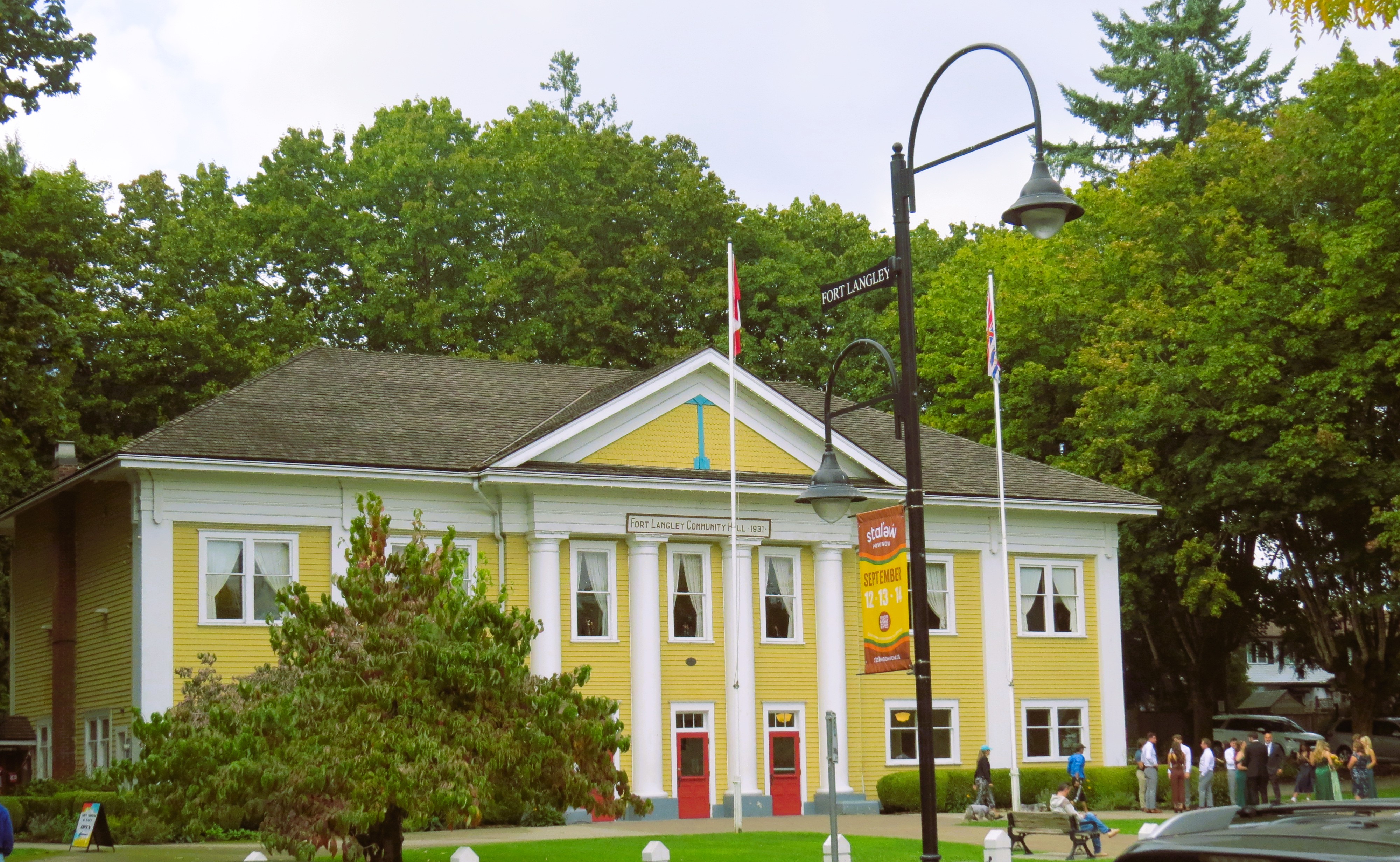
A potem, potem naturalnie w uliczki urocze prowadzące przez sklepiki pamiątkarskie, galeryjki, kafejki i targ farmerski pod drugim kościołem – aż do torów ze stacyjką i mostu prowadzącego na wyspę na Fraser River.
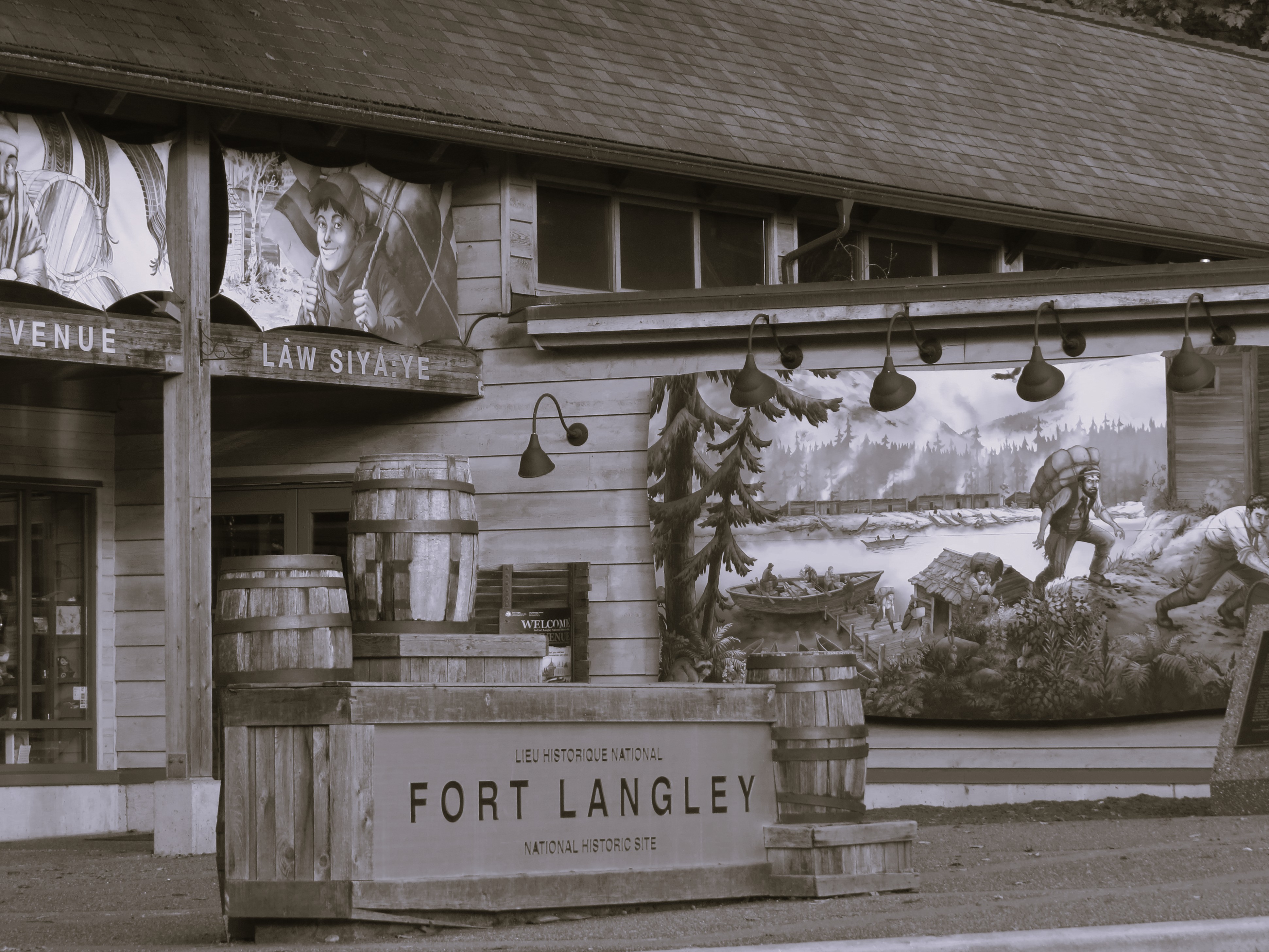
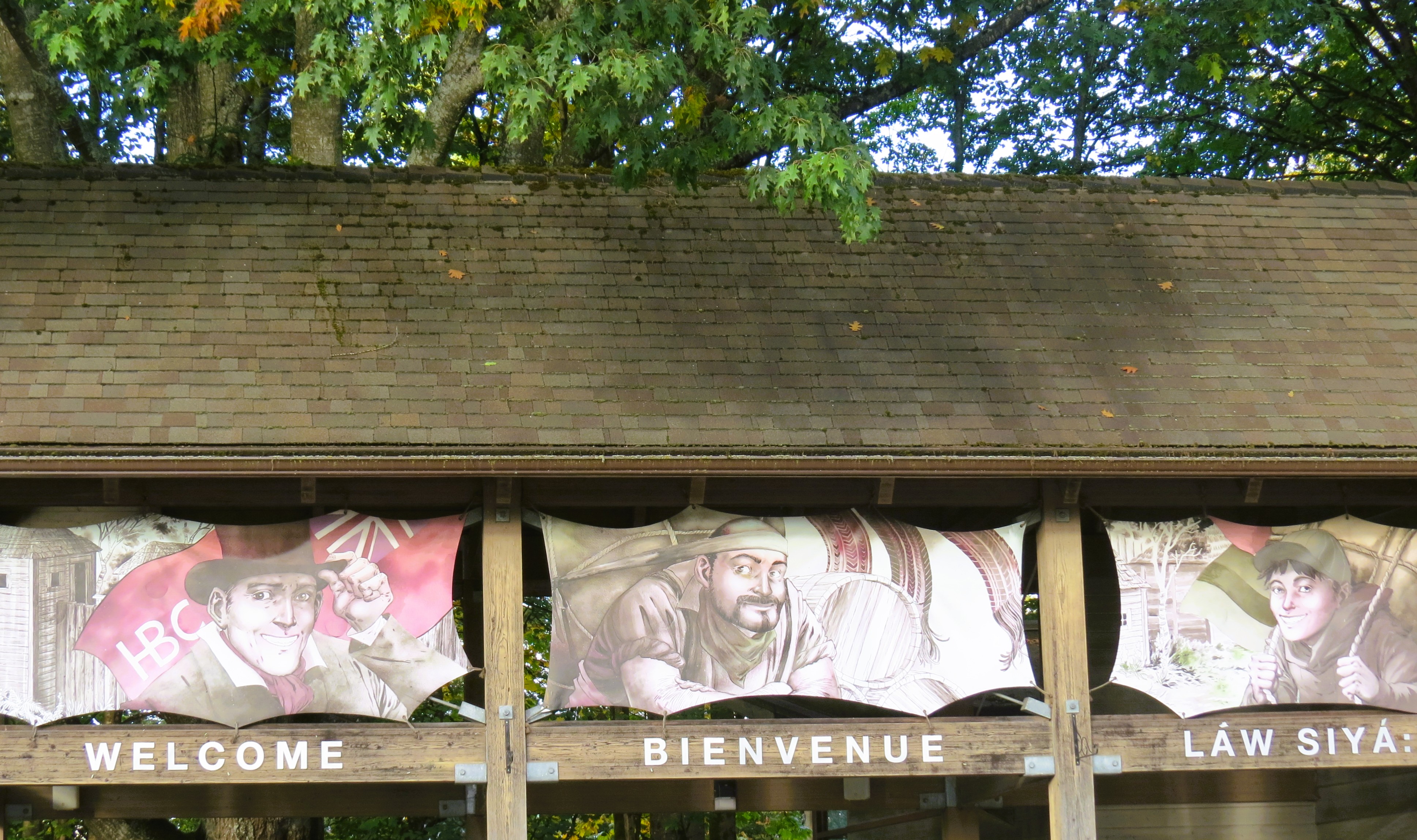
Fort Langley był faktycznie pierwszą osadą brytyjską na dobre parę lat przed powstaniem prowincji Kolumbii Brytyjskiej i pierwszym portem rzecznym Hudson Bay Company po tej stronie Gór Skalistych. Jeszcze przed Vancouverem i przed New Westminster, Założono go w 1827, początkowo ok. trzy kilometry powyżej obecnej lokalizacji. Pierwszą osadą brytyjską na zachodnim brzegu kontynentu. Sama prowincja i jej pierwsza stolica (New Westminster) zostały proklamowane i powstały w latach 1846-68, czyli dwadzieścia lat później.
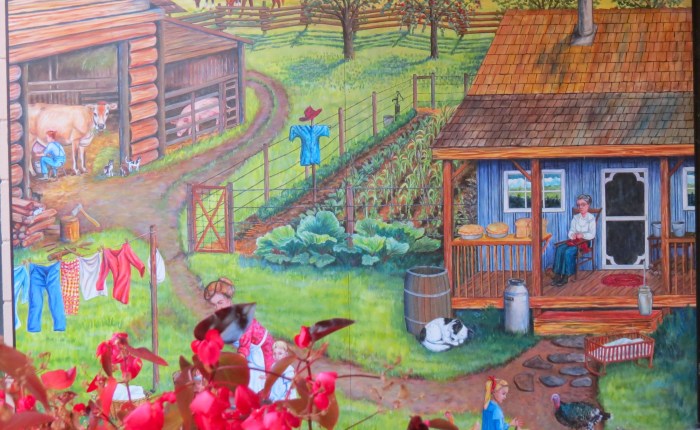
Całe okolice Fort Langley, drogi doń prowadzące z Vancouveru, są też przeurocze i bardzo malownicze, zwłaszcza o tej porze roku i w dzień słoneczny. Rozległe łąki, laski, pastwiska i pola uprawne wyglądają, jak urocza, bukoliczna akwarelka gdzieś z Prowansji.
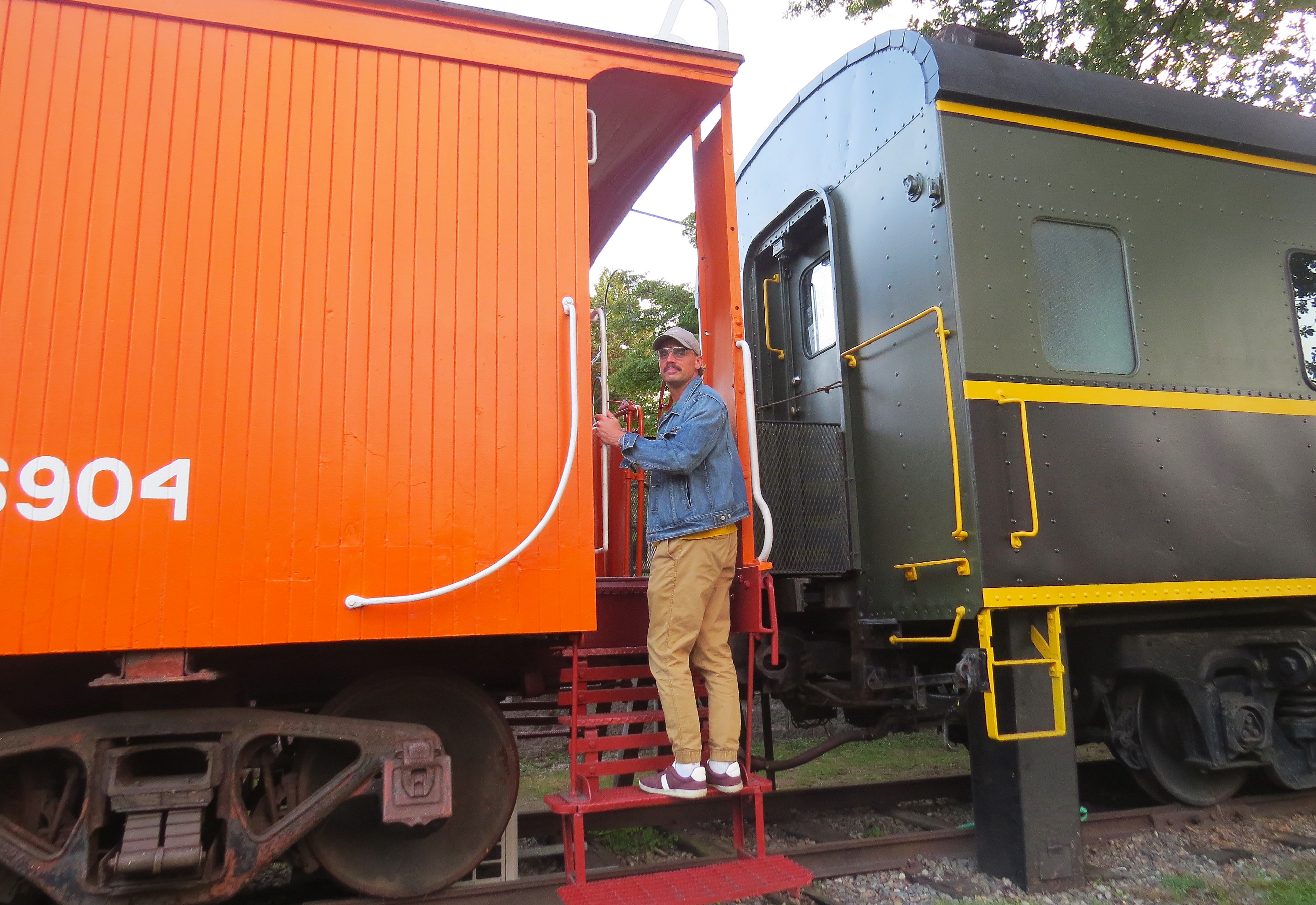
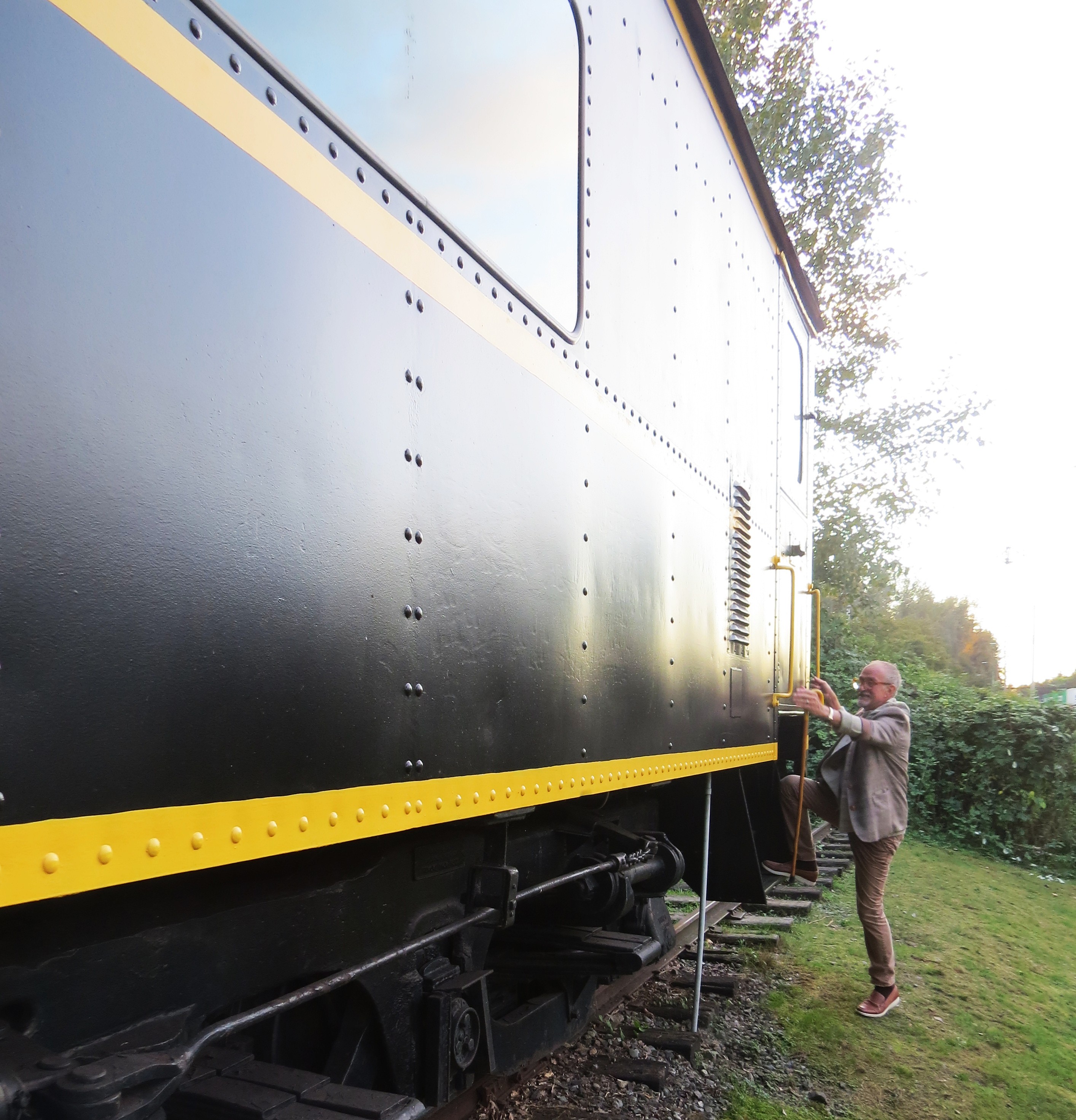
A nasze wspólne zamiłowania do podróżowania łodzią, statkami, samolotami – i zdecydowanie najbardziej ludzką i najprzyjemniejszą podróżą – pociagami dało nam upust do chłopięcej zabawy w konduktora i maszynisty na lokalnej (nieczynnej już też, niestety – lokalnej stacyjce kolejowej.
Bardzo polecam na kilkugodzinną wycieczkę z dala od hałasu i zapełnionych ulic metropolii vankuverskiej.
Wczorajszego dnia zgubiłem wiersz. W samym centrum starego Vancouveru, na Westendzie. Siedziałem z przyjacielem przy otwartym oknie swojej ulubionej kawiarni na ulicy Davie i przyszedł do mnie sam. Na papierowej serwetce zaczął się zapisywać. Ktoś jednak do nas podszedł, zaczął rozmowę. Znajomy sprzed kilku miesięcy. Właśnie wybiera się w podróż do Europy i zaczyna ją od Polski. Widać, że nie jest obieżyświatem, jak ja, boi się tej podróży, tego jak tam się znajdzie, czy podoła, czy porozumie się po angielsku.
Nudzi mnie ta rozmowa, bom ją już z nim właśnie w tej kawiarni przed paroma miesiącami miałem. Przyjaciel jest dużo bardziej rozmowny, zadowolony wręcz i udziela szerokich wyjaśnień na wątpliwości i lęki stroskanego podróżnika. Nie brał udziału w naszym pierwszym przypadkowym spotkaniu i nie nuży go to. Ja nie lubię przeżuwać, niczym krowa, dwukrotnie tej samej trawy. No i ten wiersz zaczęty, który w ogóle na naszą rozmowę nie zwraca uwagi. Znudzony tymi tłumaczeniami wyskoczył zwyczajnie przez okno na ulice i tyle go widziałem! Za nic miał gadanie baedekerowskie, przewodnikiem nie mógłby być.
Żal mi trochę tego wiersza-nicponia było i szepnąłem dwa słowa żalu na fejsbuku o tym i lęku czy gdzieś nie sczezł w śmietniku lub nie zdziczał na gałęziach starych świerków w pobliskim Stanley Parku. Znajoma odpisała, że była tam też, że widziała jeden wiersz zaczepiony o gałązkę, dmuchnęła z nadzieją, że przyleci na mój balkon w mieszkaniu. Rano sprawdziłem – nie przyleciał ladaco, zresztą to spory kawałek i pewnie by nie dał rady.
Jadę więc dziś tam ponownie. Może siedzi tam gdzie nie bądź, czeka i jest mu trochę głupio, że jak szczeniak wyskoczył na ulicę.
Zachciało ci się przygody, ladaco! Jakby ta, którą ja ci oferowałem dając ci życie nie była wystarczająco ciekawa. Może i nie była. Ale wiersz młody, nieznający ni świata ni ludzi małolat, cóż może o tym świecie ogromnym wiedzieć? Pewnie nawet jednej choćby książki nie przeczytał, nie spotkał jeszcze choćby jednego innego wiersza! Ach, młodość jest tak nierozważna …
Więc wrócić chciałem, znaleźć go, bo com zaczął, skończyć muszę.
Wiersz, jak cała ulica i jej mieszkańcy, po polsku nie mówi, tylko po angielsku. Więc tak go też i zapisałem, bo sam nie byłby w stanie inaczej siebie odczytać. A nie przystoi, by wiersz sam siebie nie rozumiał.
Melriches on Davie Street
Red is a very bold colour.
Independence is a very sweet feeling.
Davie in West End
has a human air to breath.
*
Grocery store in the middle:
a place of business, of exchange
money for food. Our daily bread.
Bold ref sign starring at me
sitting by the window in Melriches Café.
That sign announces at Urbi:
“Davie Street Independent”.
**
It is a busy street, few steps
from the beaches of the ocean.
People move by on the sidewalks.
Some hurry to somewhere,
others saunter about without aim.
They offer a smile, they talk
to each other, greet you with a nod.
Men dress like a woman nonchalantly;
women avoid covering themselves
with expensive jewellery gimmicks.
***
Their roles are interchangeable –
some men fancy macho style.
They scream with wardrobes:
I am butch and strong,
your dream fruit hanging from
low tree branches, ready to be picked.
But they scream like that
not to passing women,
but to the passing men.
And women understand their language
without a hint of animosity or jealousy.
****
A black crow hurriedly looks
around the cafè’s tables placed
on the side of pavement in search
of tasty morsels that fell to the ground.
They do not leave any tips for the waitress.
*****
On a bench next to my café
a girl kisses a boy,
just when another glamorous boy
walks for his date with another boy,
and an elderly couple slowly strolls
holding trembling from age hands.
She is grey and her hips are not swaying,
he uses a cane to overcome the typical
aged hips constrictions – the price of experience.





































































 > > Pogwarki < <