Droga do Banff. Droga z Vancouveru do serca Gór Skalistych; droga z Calgary z sercem pełnym pasji i miłości. Dwie drogi w dwóch bardzo różnych czasach i epokach.
Około czterdziestu lat temu jechaliśmy (ja i Mój Chłopak) pierwszy raz razem na Wigilię do hotelu w Panoramie koło Radium, mijaliśmy Banff po drodze. Długa, ale bardzo wygodna szosa #1 prowadziła prostą nitką do skrzyżowania z szosą 93 do tegoż hotelu. No właśnie – długa. Bardzo długa, gdy prowadzący i pasażer to dwóch młodych, zakochanych w sobie po uszy chłopaków. Trudno się przecież całować, gdy się prowadzi samochód na trasie szybkiego ruchu! Więc postojów było dużo. Oj …
Jakiś czas później, już porą letnią, jedziemy do Banff na dwa lub trzy dni łazikowania po okolicznych górach w uroczym wówczas małym Banff. Ba – jest ciepło na zewnątrz … a gorąco w samochodzie. No tak, też tych samych dwóch młodych, zakochanych po uszy chłopaków. W połowie drogi zjeżdżam w boczną, leśna drogę #64 do Sibbald Flats. Znajdujemy cichy zakątek otulony młodym lasem świerkowym. Oczywiście, że się całujemy. I oczywiście, że na całowaniu się nie kończy. To tylko uwertura do całego Koncertu Pasji Młodości i Miłości. Do Banff zajeżdżamy o zmroku, mimo, że normalnie jazda z Calgary, to nie dłużej niż godzina. Co zrobić – młodość i miłość to inne niż zwyczajne czasy. Inne zegary, inne doby.
Prawie cztery dekady później niespodzianie jadę do Banff z drugiej strony, znad Pacyfiku. Mój Chłopiec nie jest ani za kierownicą, ani na siedzeniu pasażera. Któregoś dnia, kiedy byliśmy na drugiej stronie kontynentu, nad Atlantykiem, uleciał mi w chmury. Zanim odleciał przypomniał mi jeszcze, że mnie kocha, ja wiedziałem, że jego kocham. No, ale uleciał. Jego czas się skończył. Też nie zupełnie jednak, bo po czarnych nocach rozpaczy zrozumiałem, że część jego została, zamieszkała we mnie. Tak długo, gdy mój czas odjazdu ostatecznego nie nastąpi. Może się wtedy spotkamy znowu, może nie. We snach, kiedy ze mną po odlocie rozmawiał, nie chciał mi tego jednoznacznie wyjaśnić. Więc nie wiem na pewno. Zobaczymy, lub właśnie może nie zobaczymy. Póki jestem – to mam go stale w sobie. To mi wystarcza.
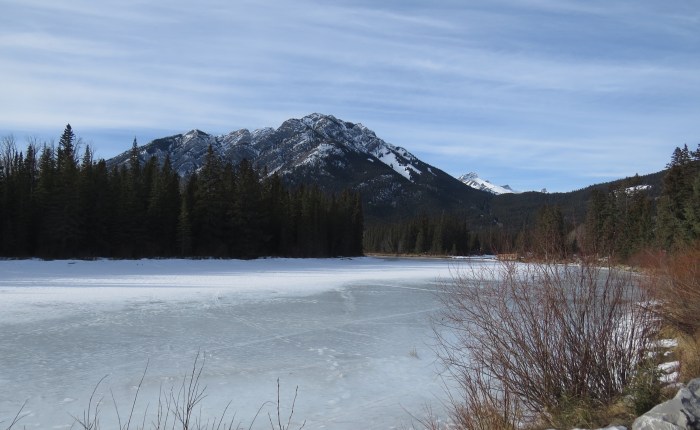
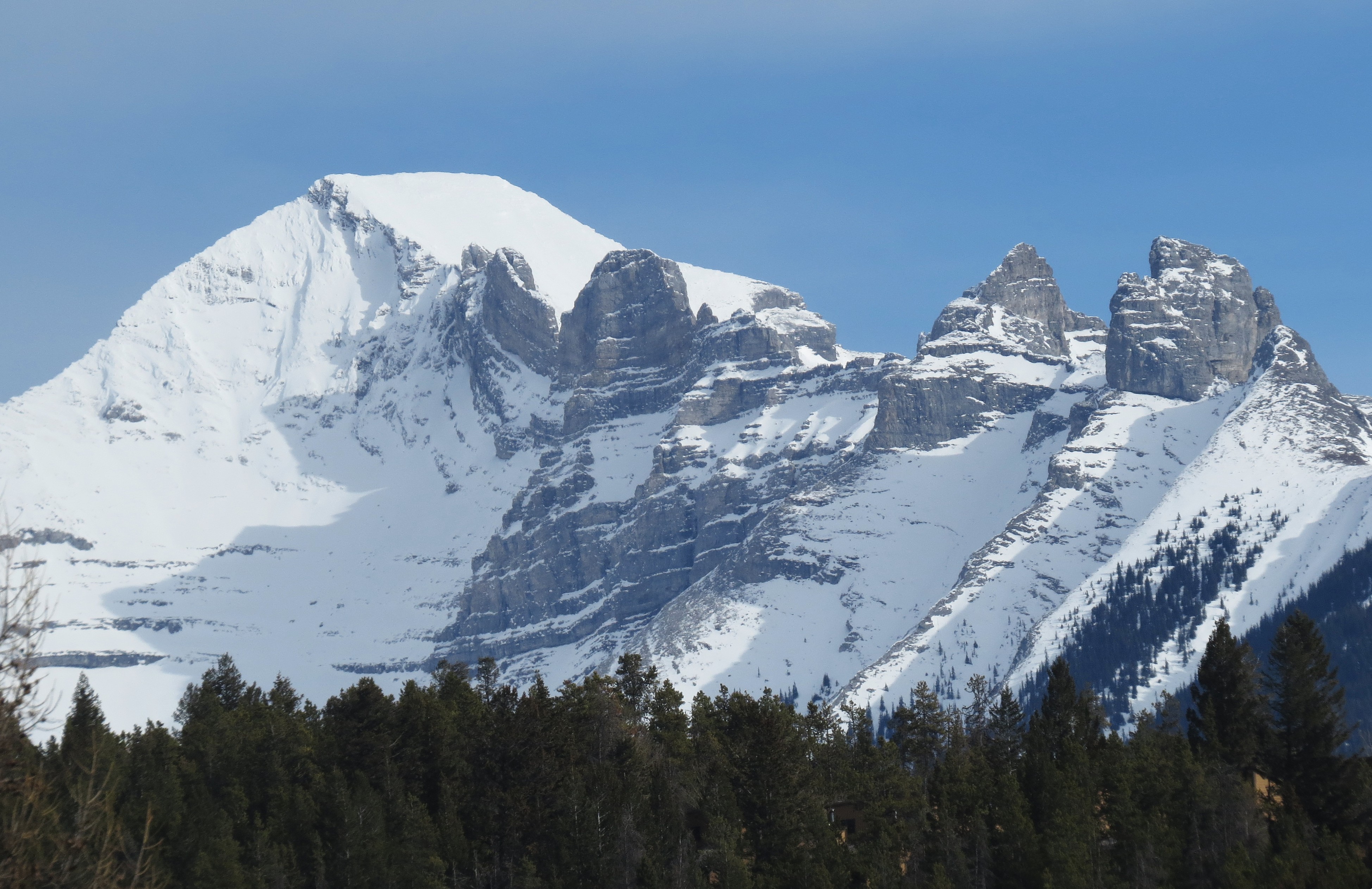
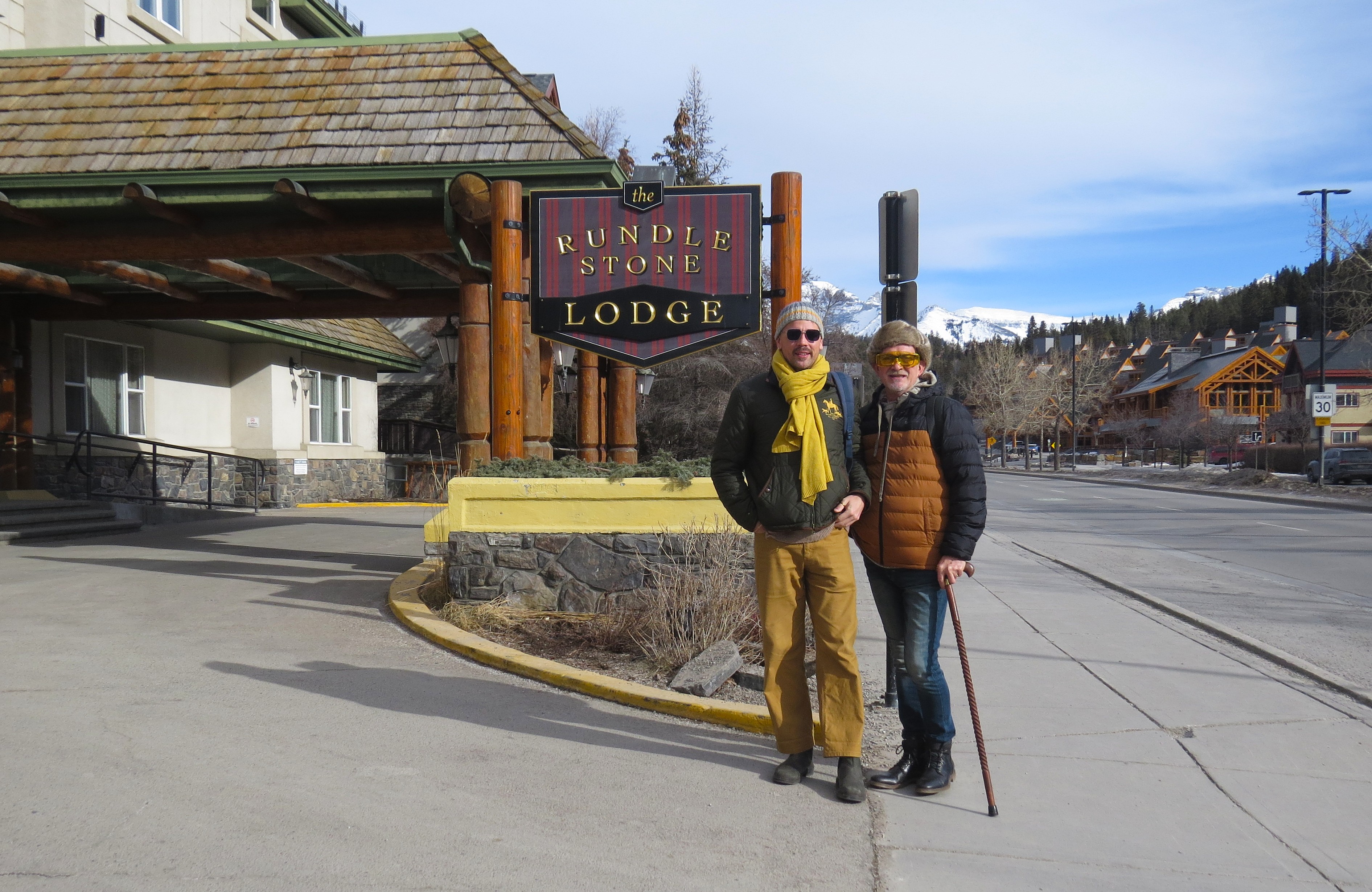
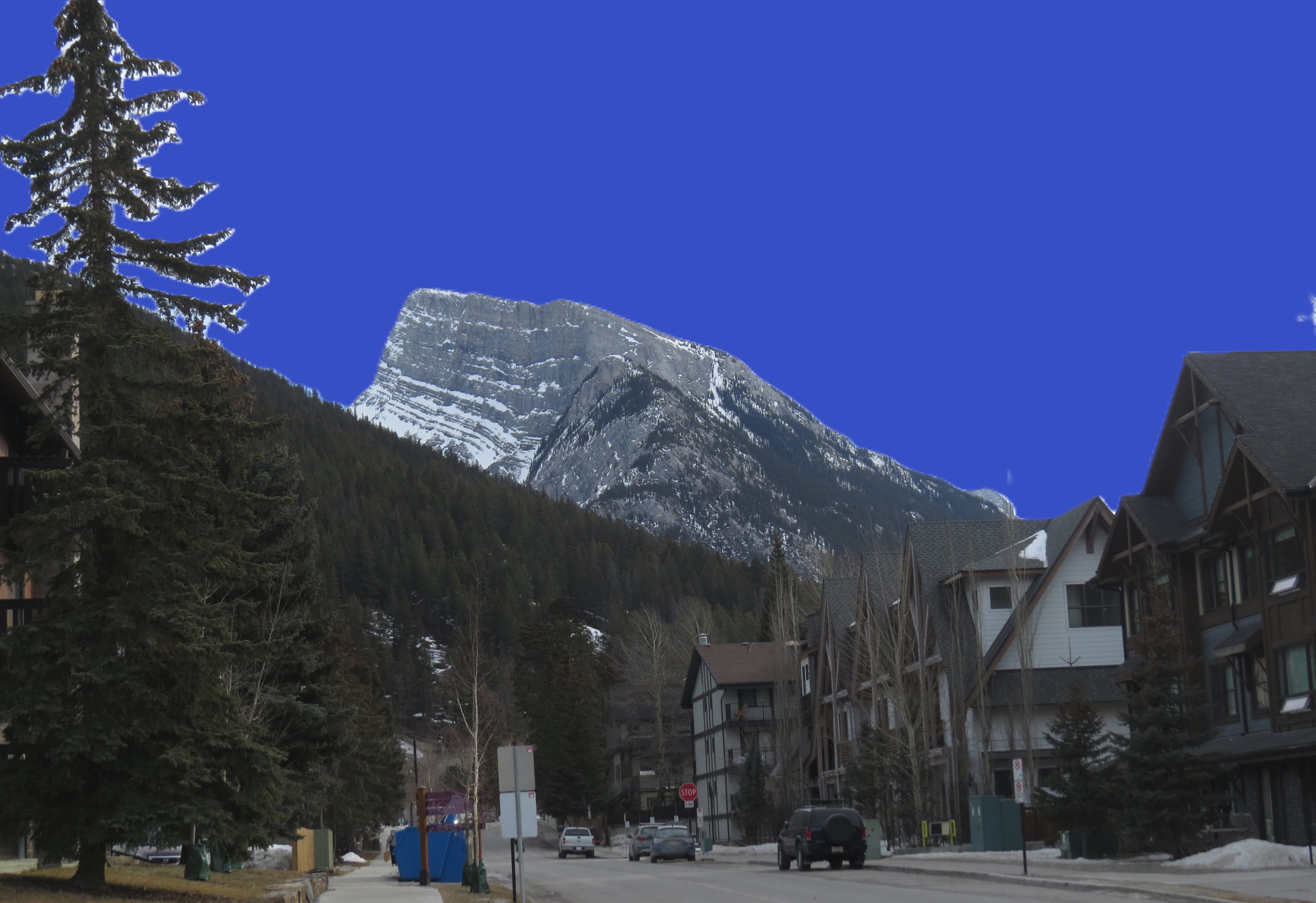
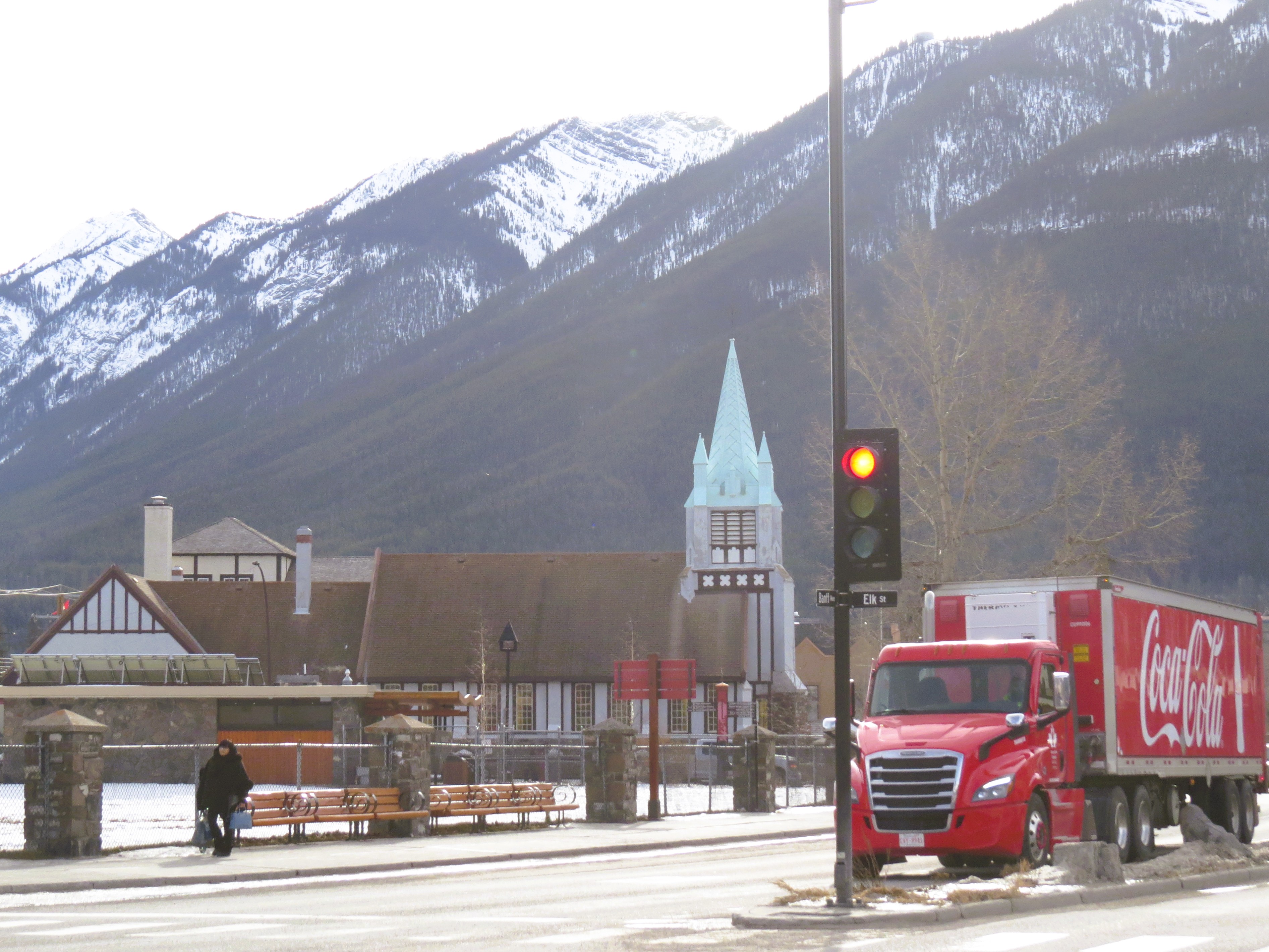
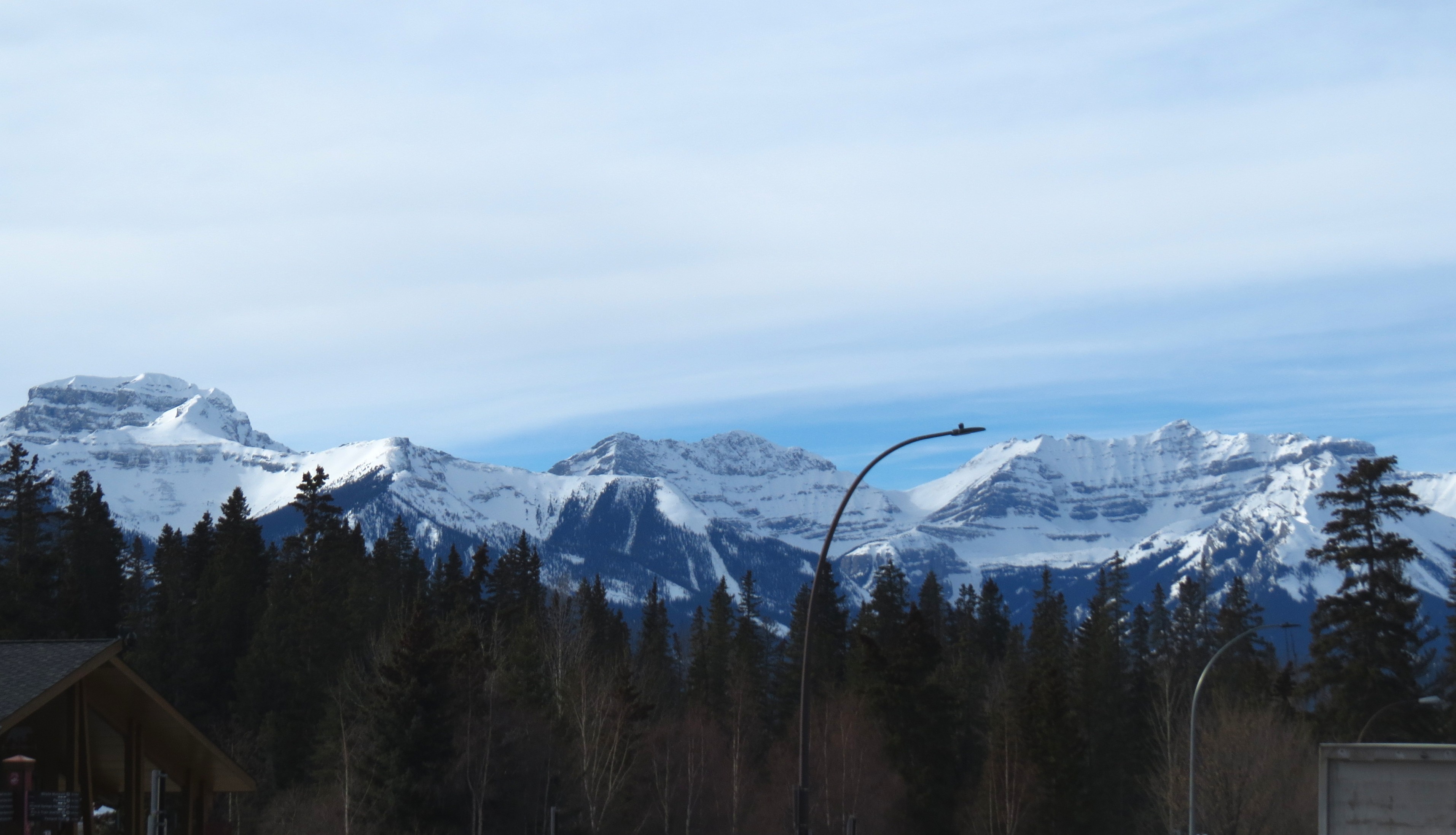
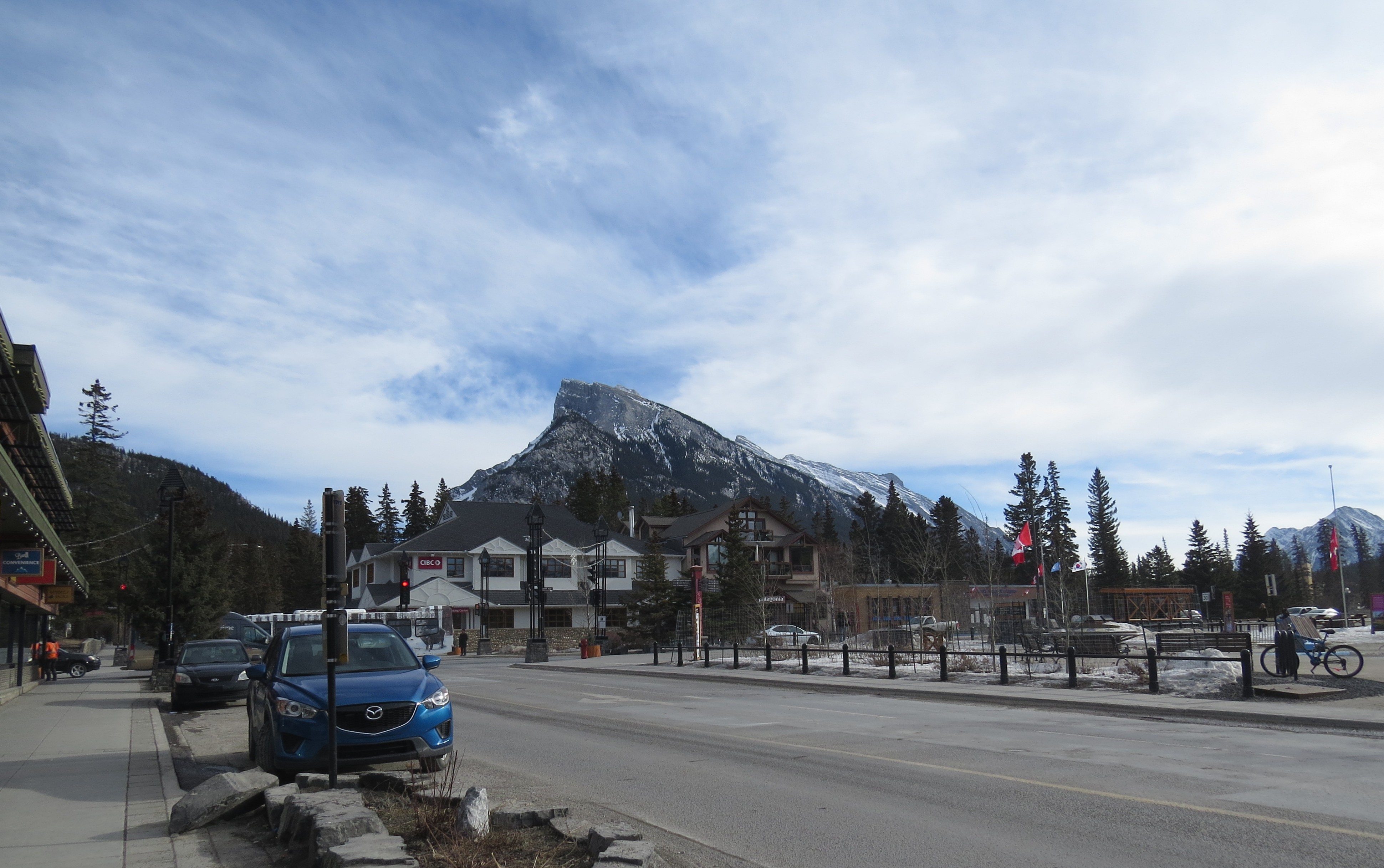
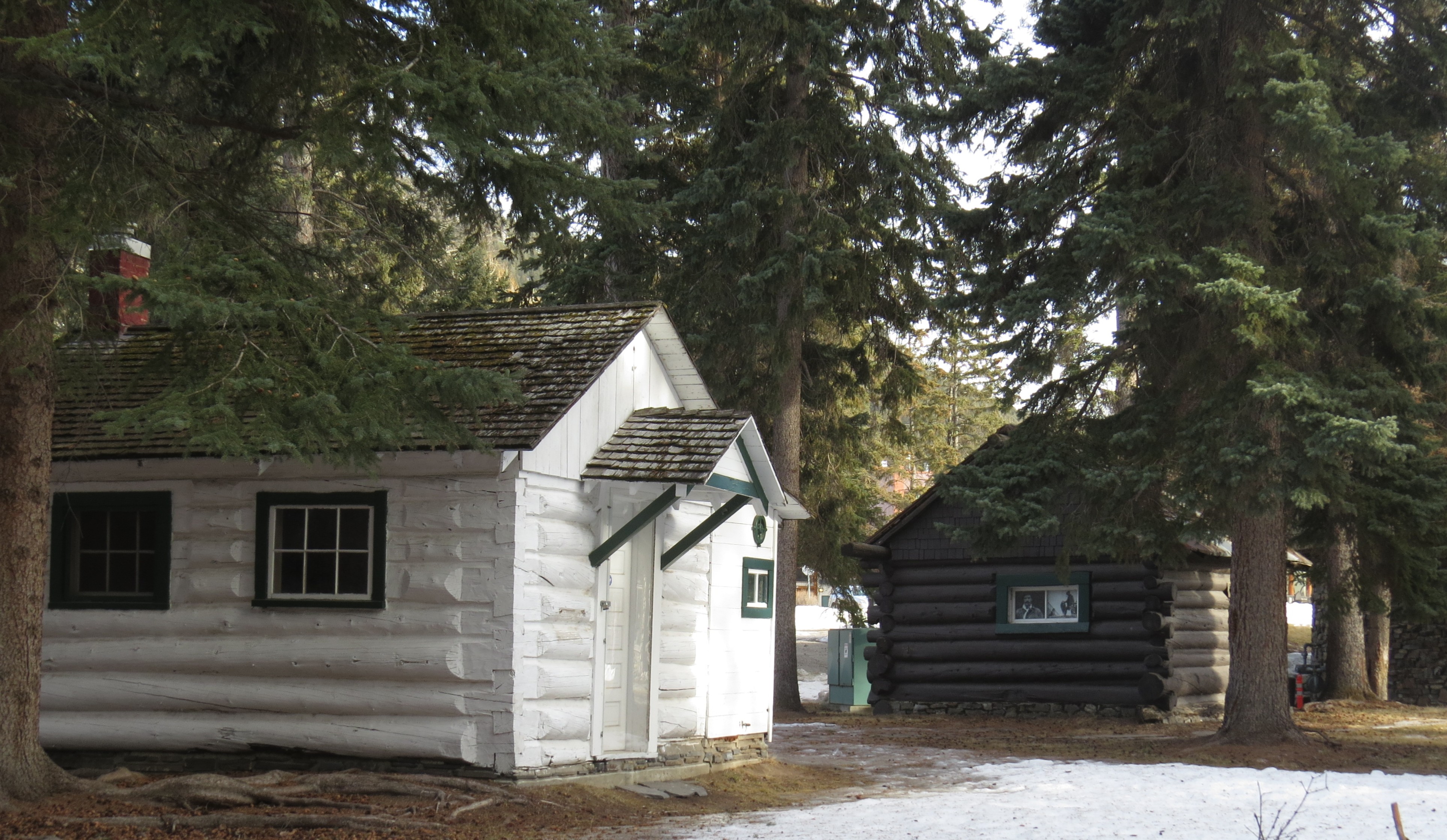
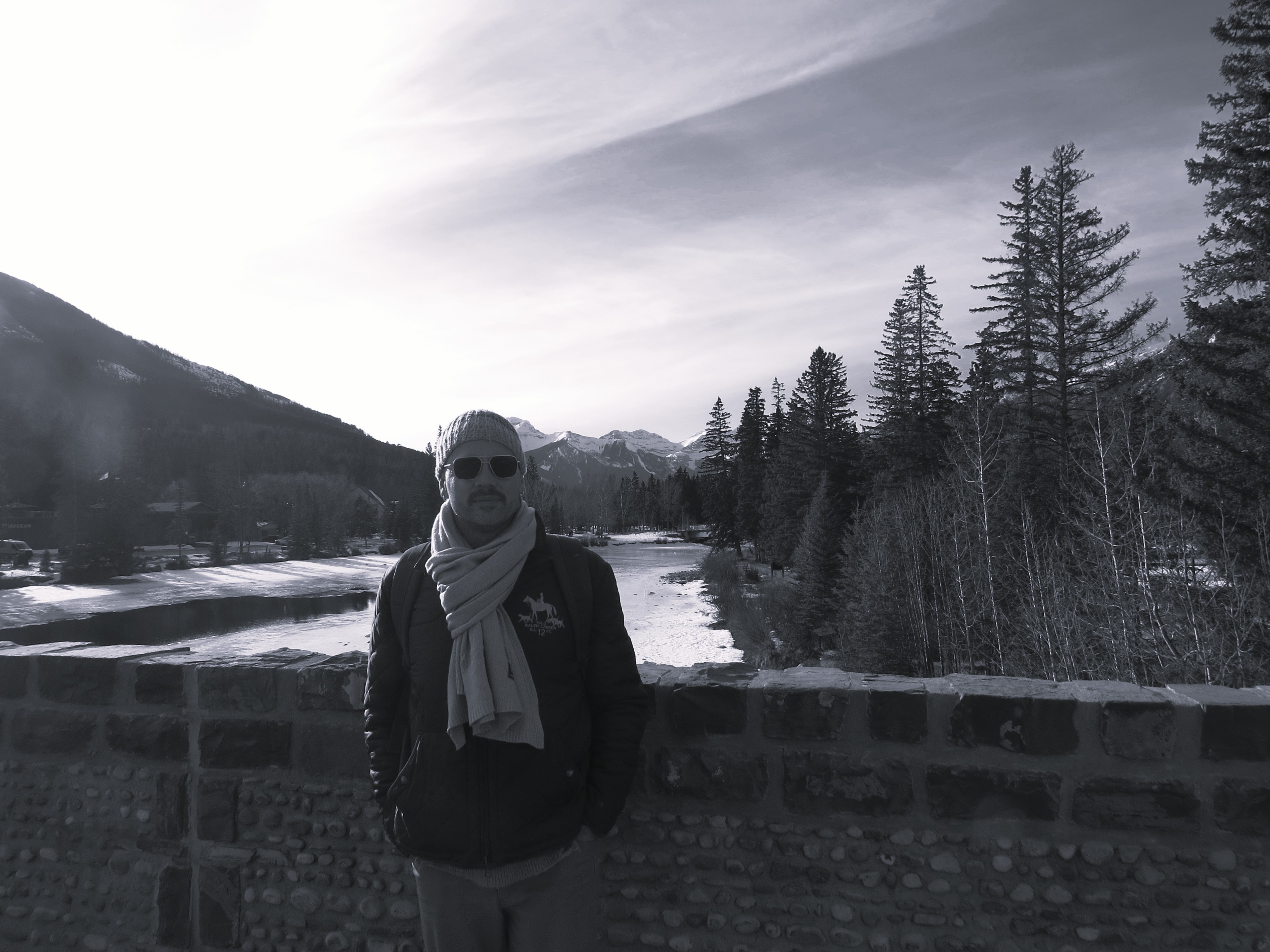
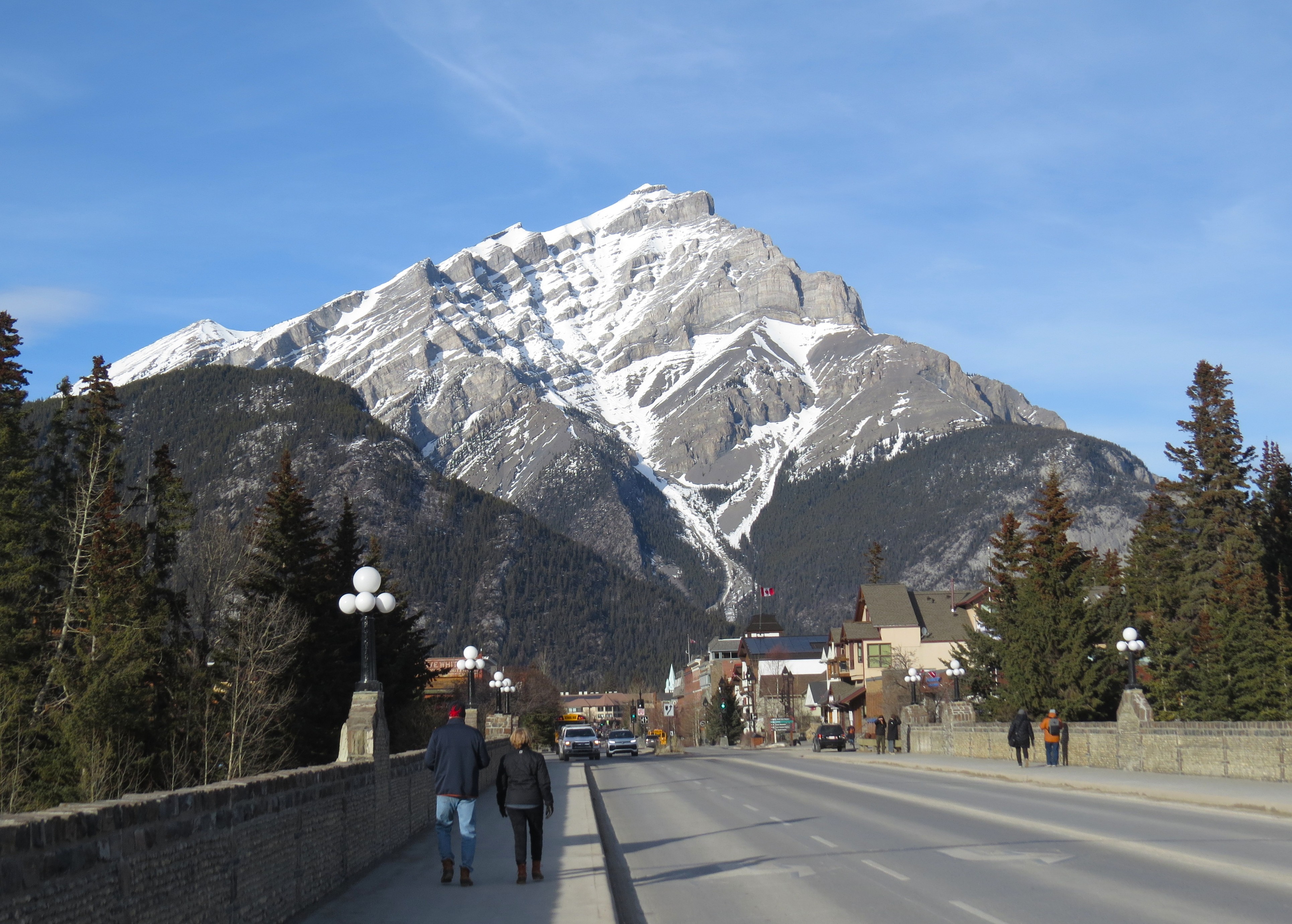
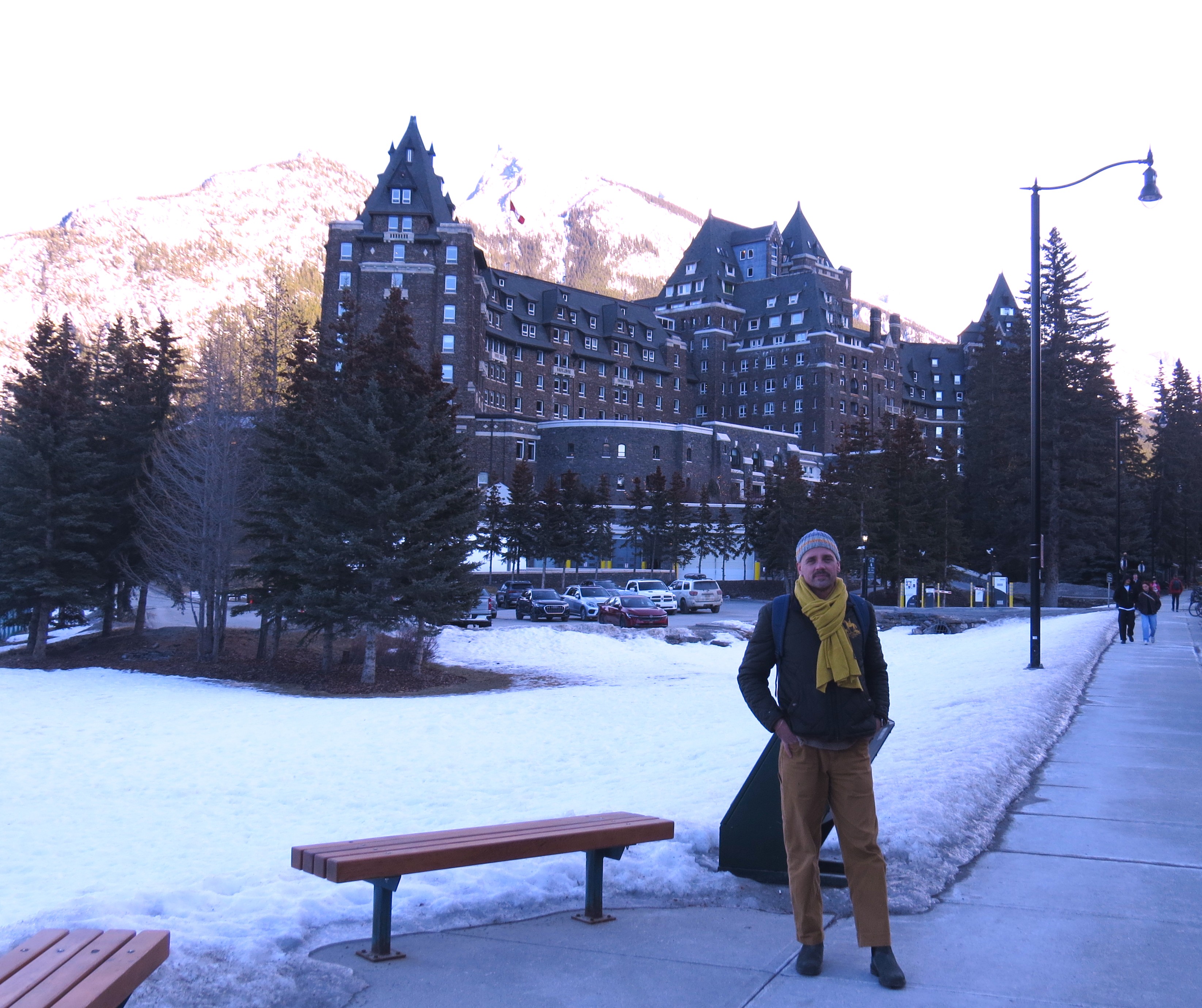
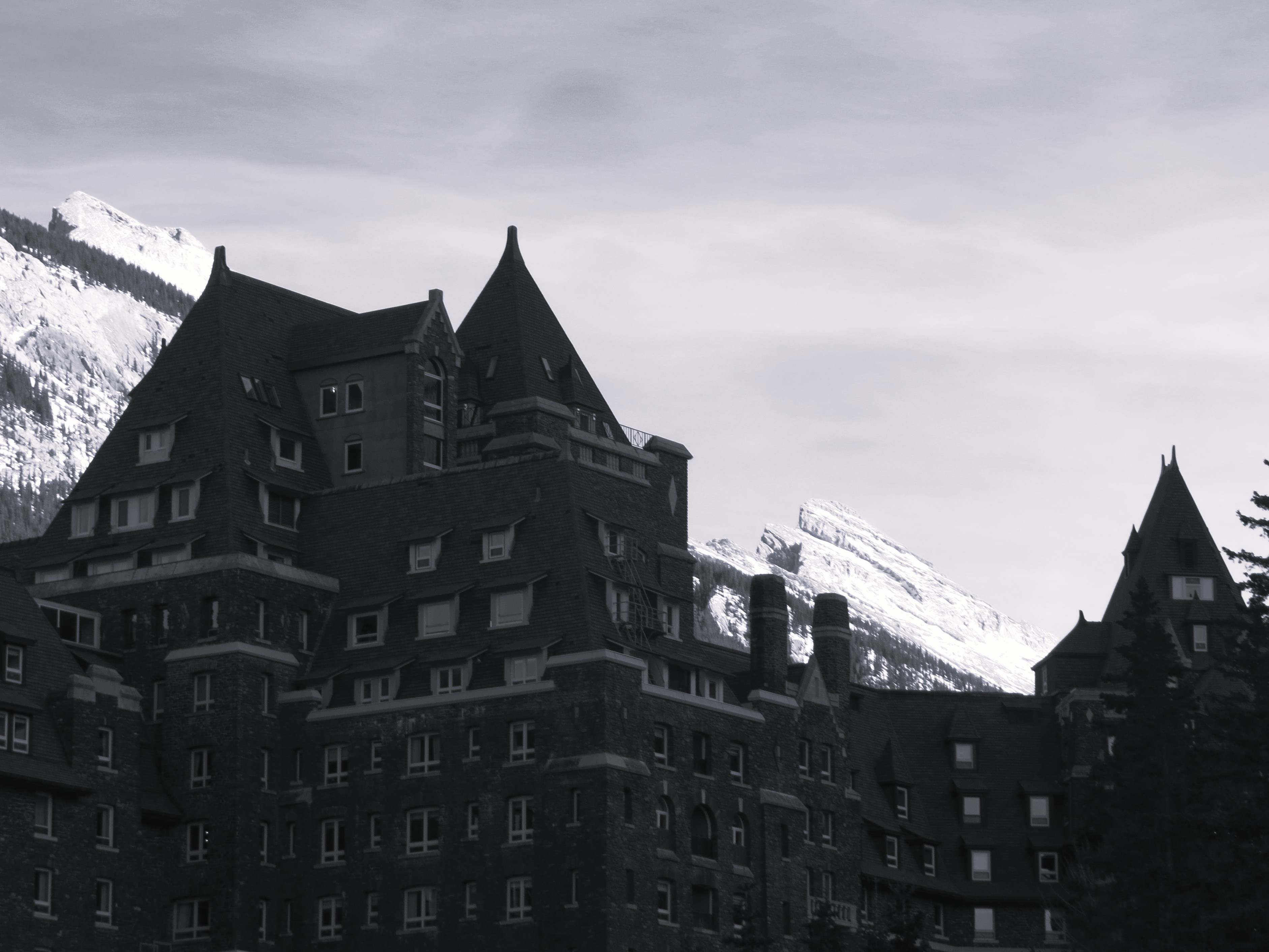
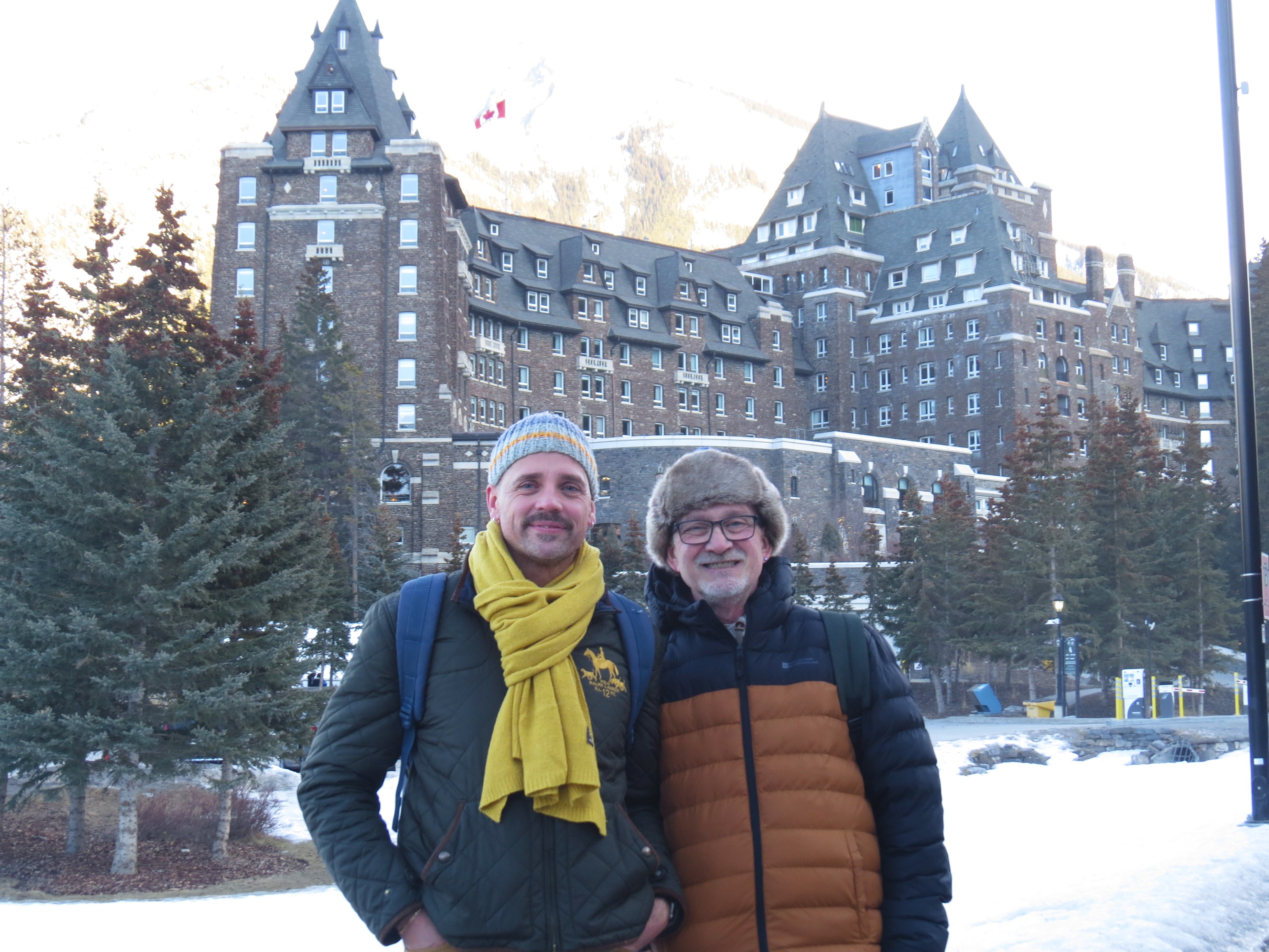
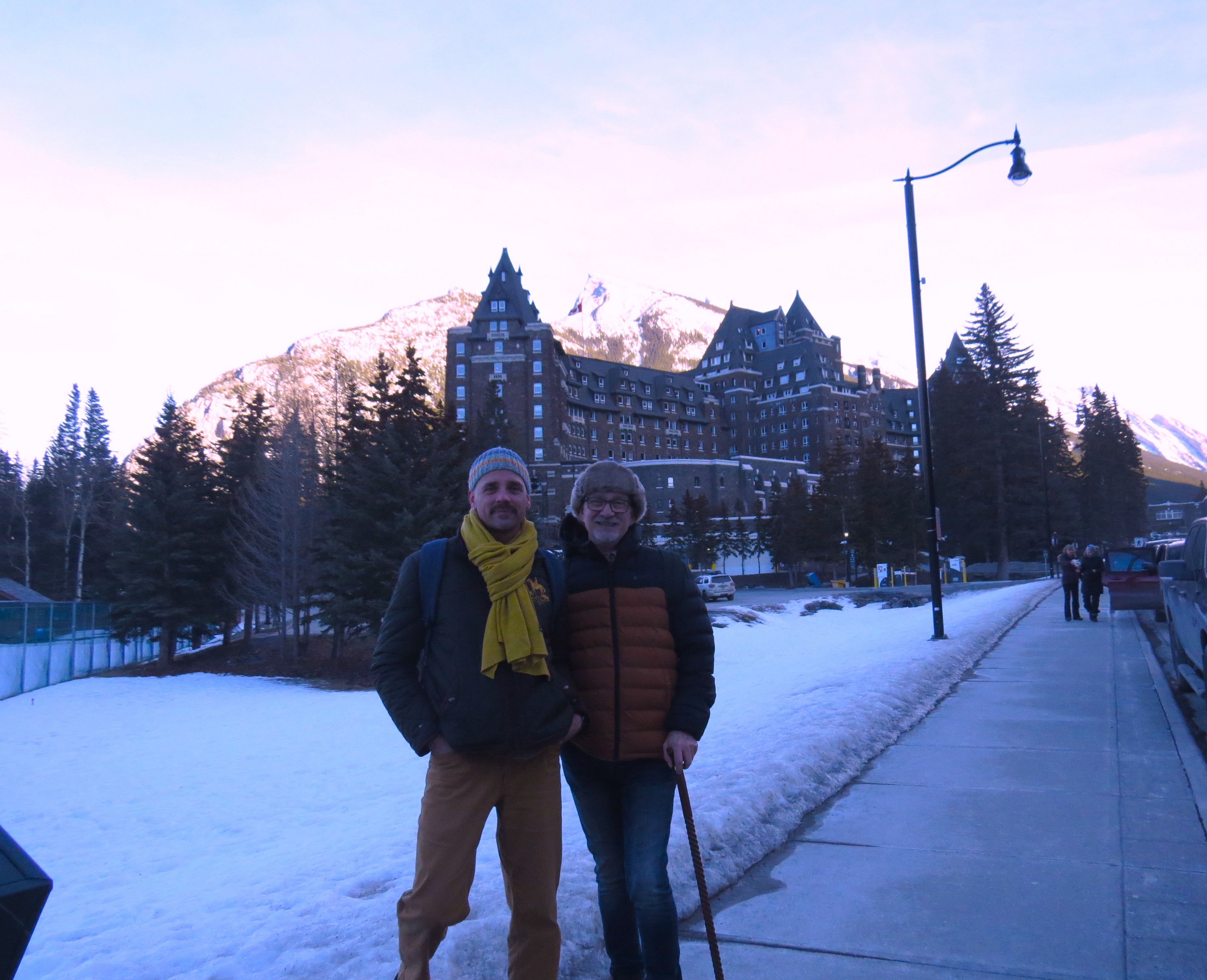
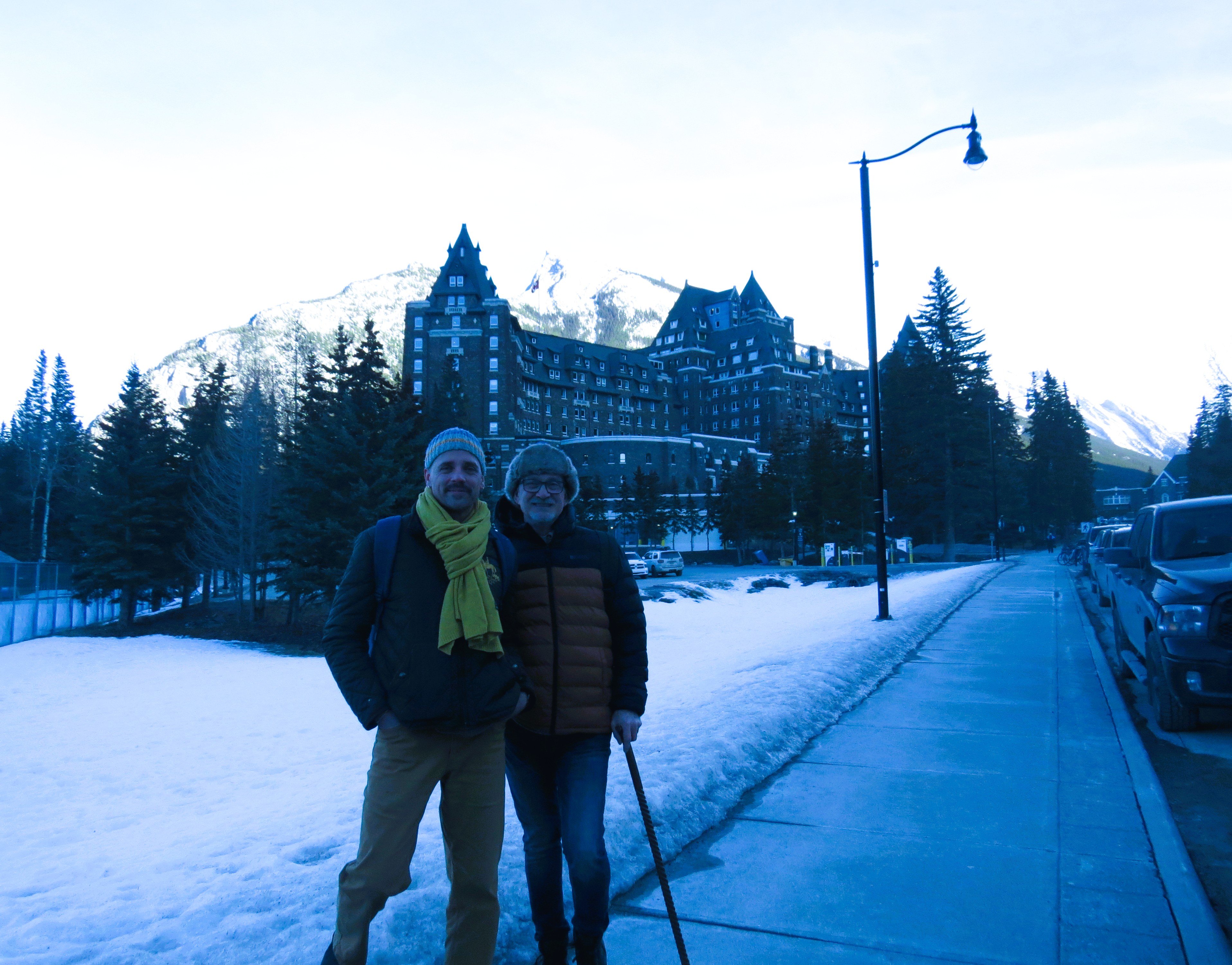
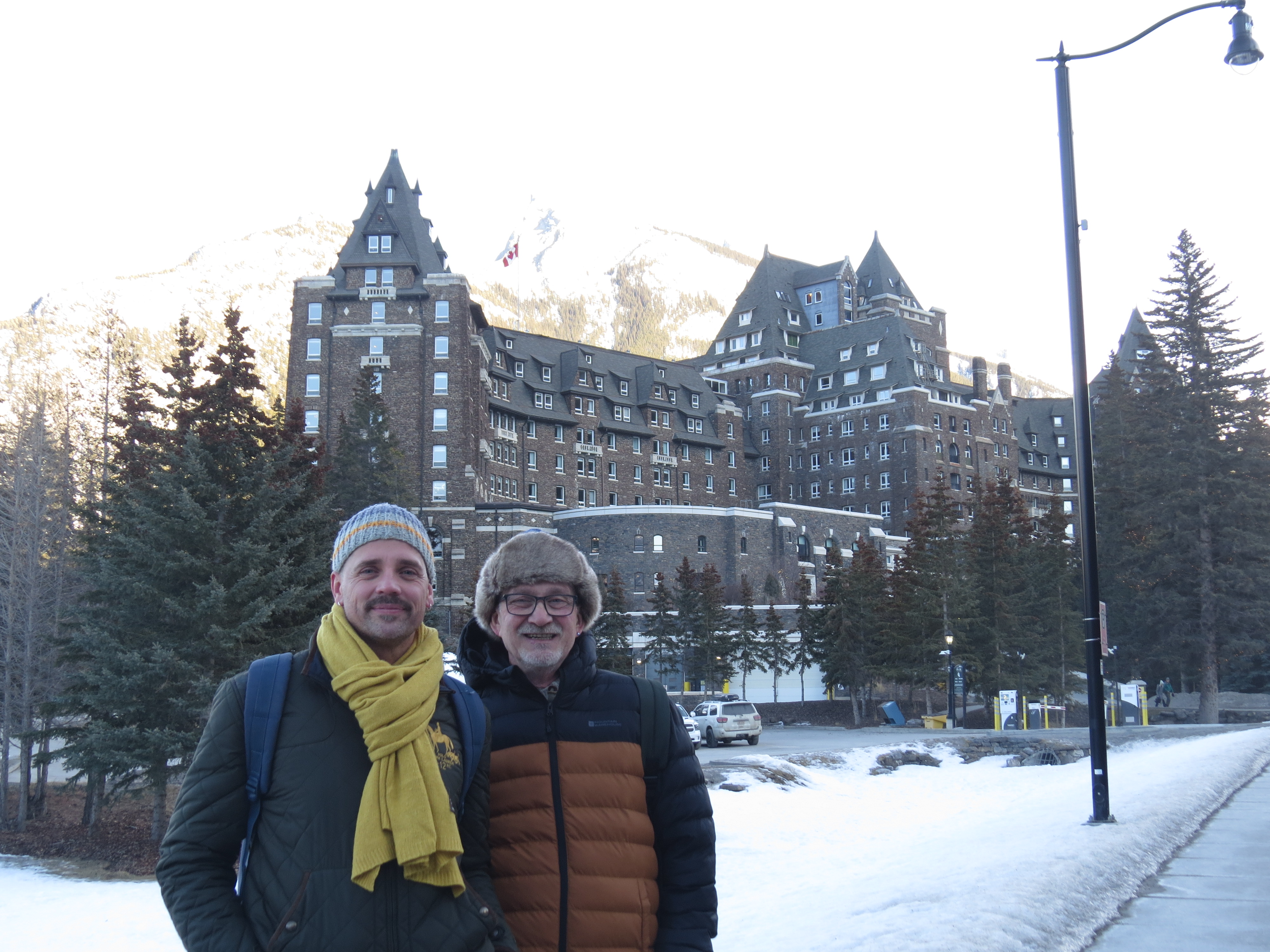
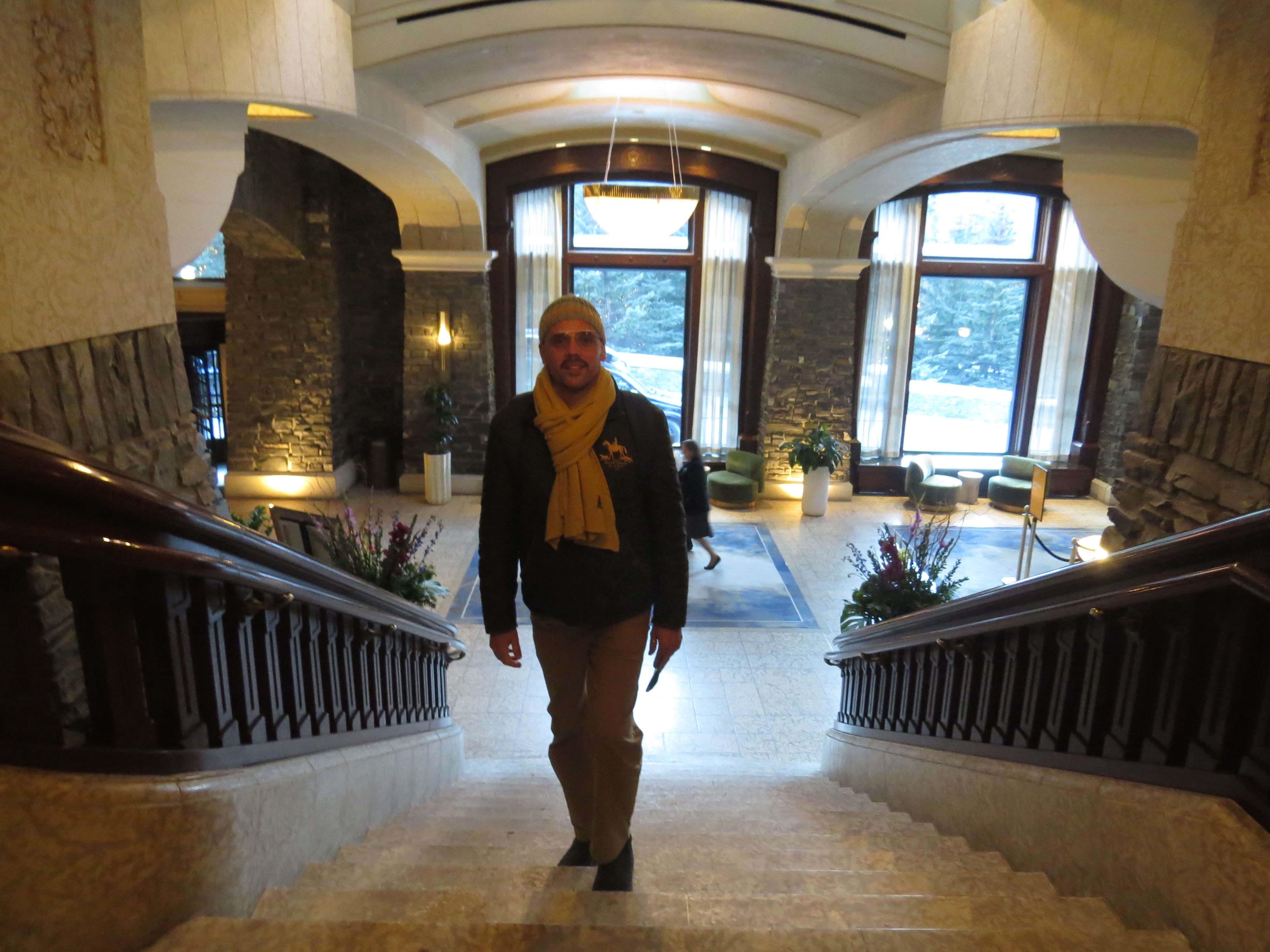
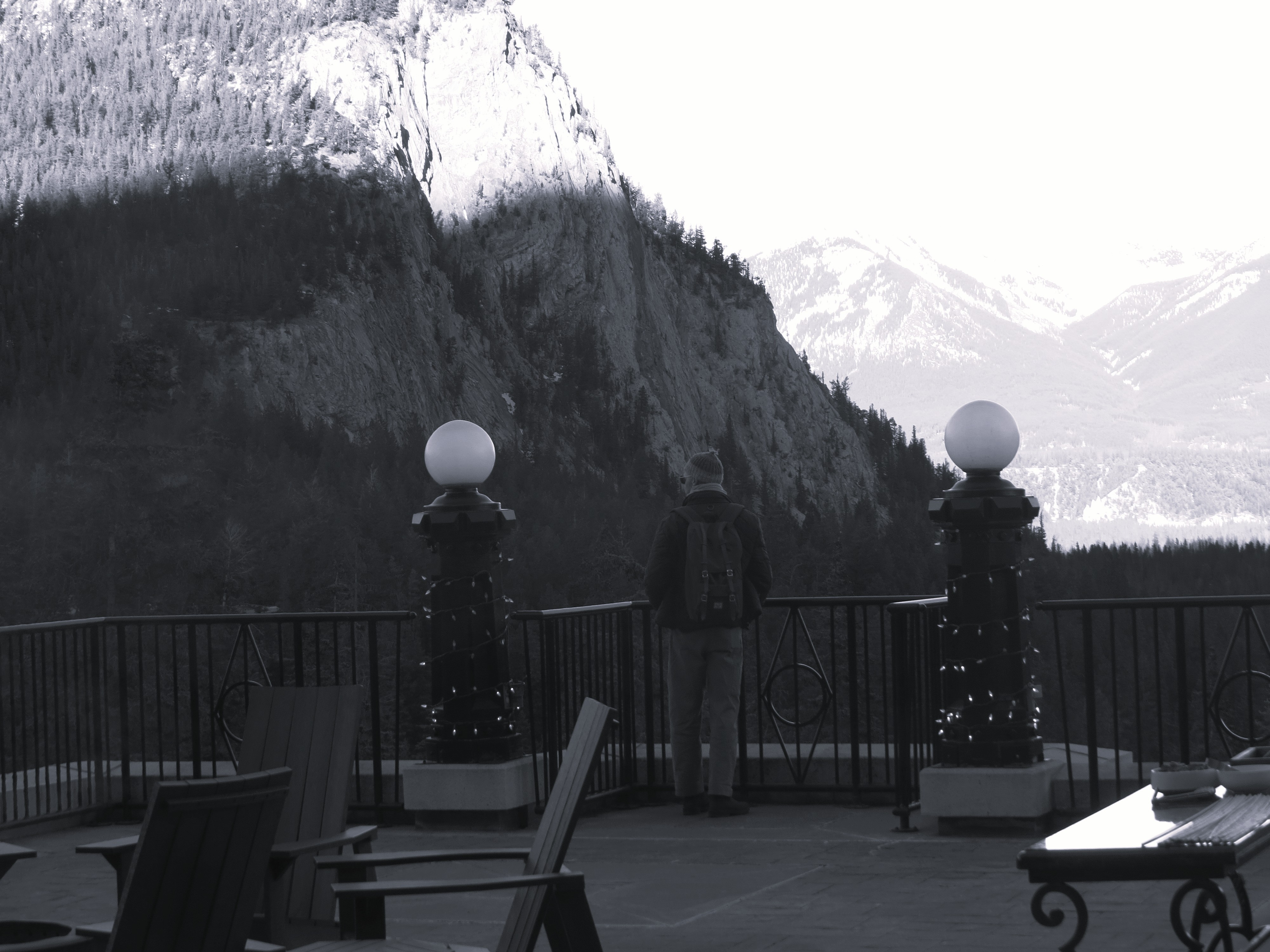
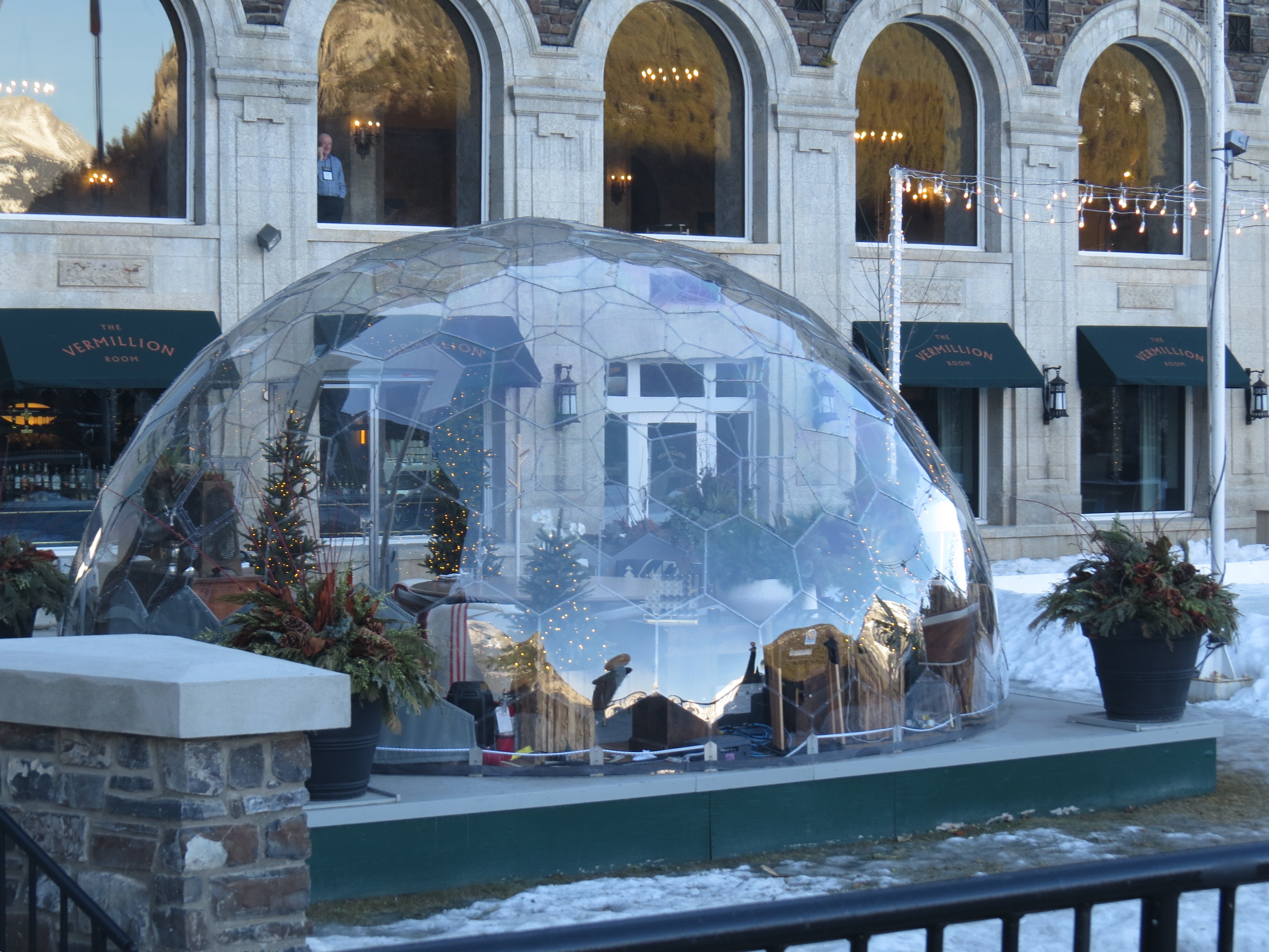
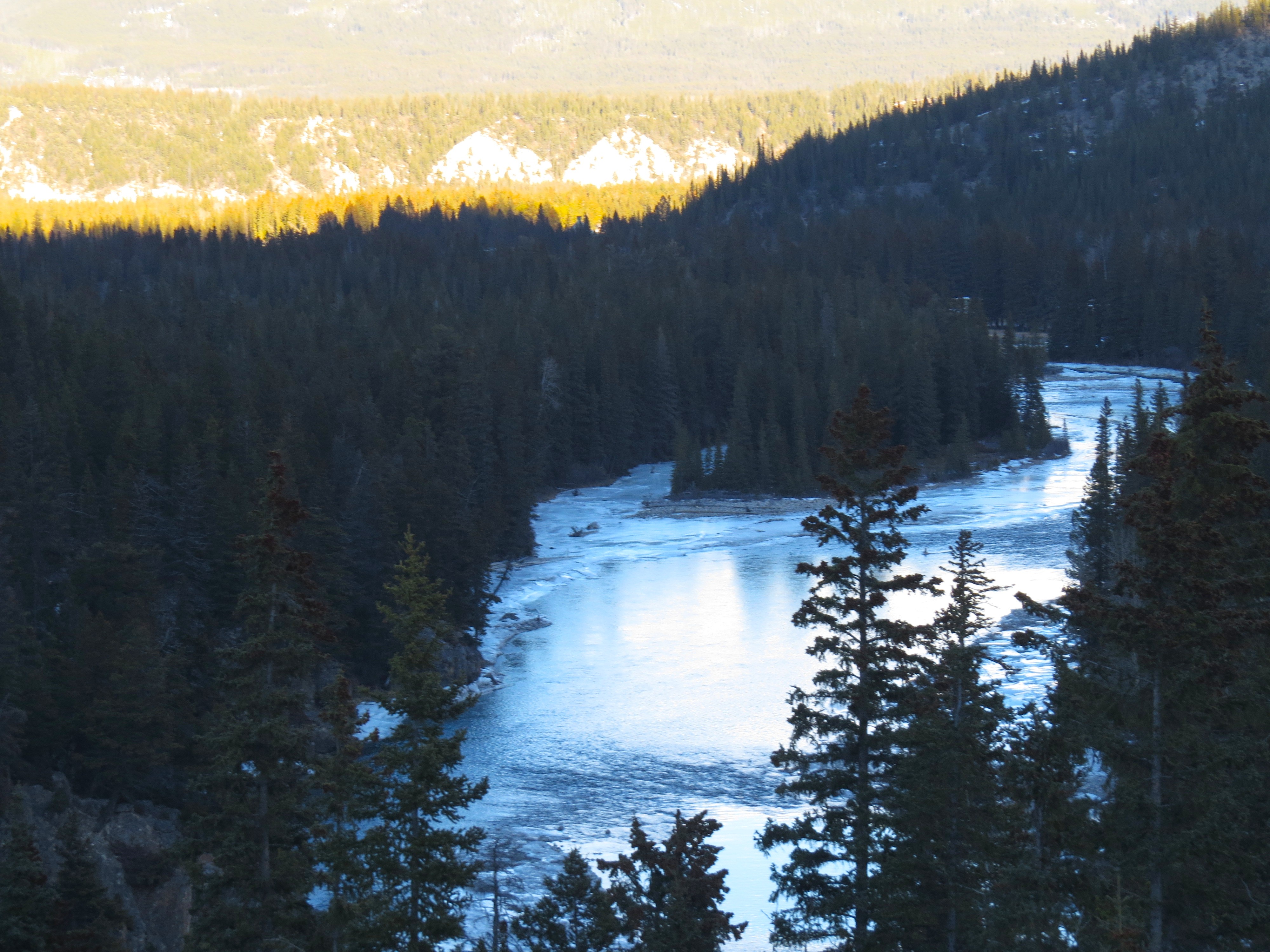
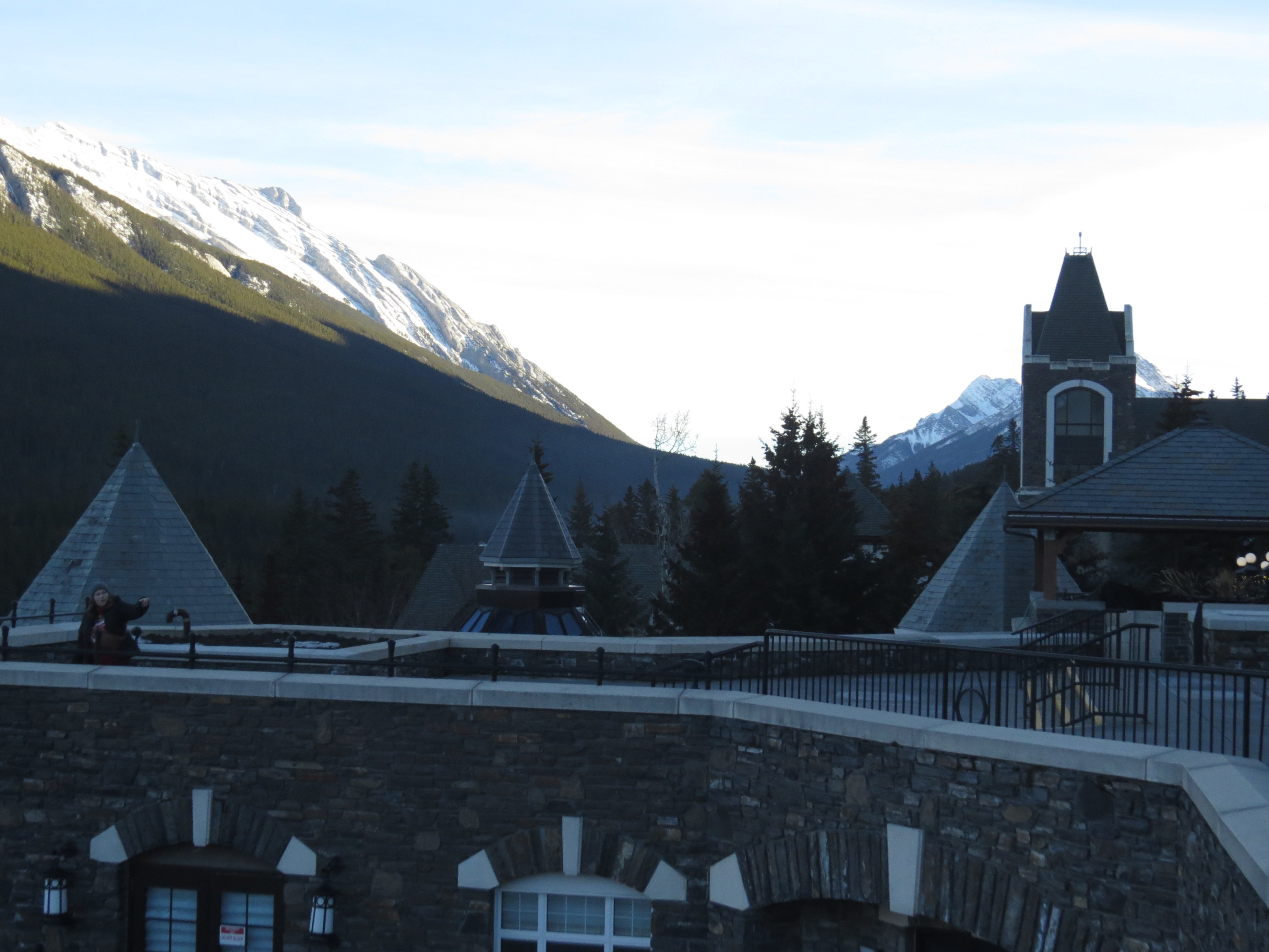
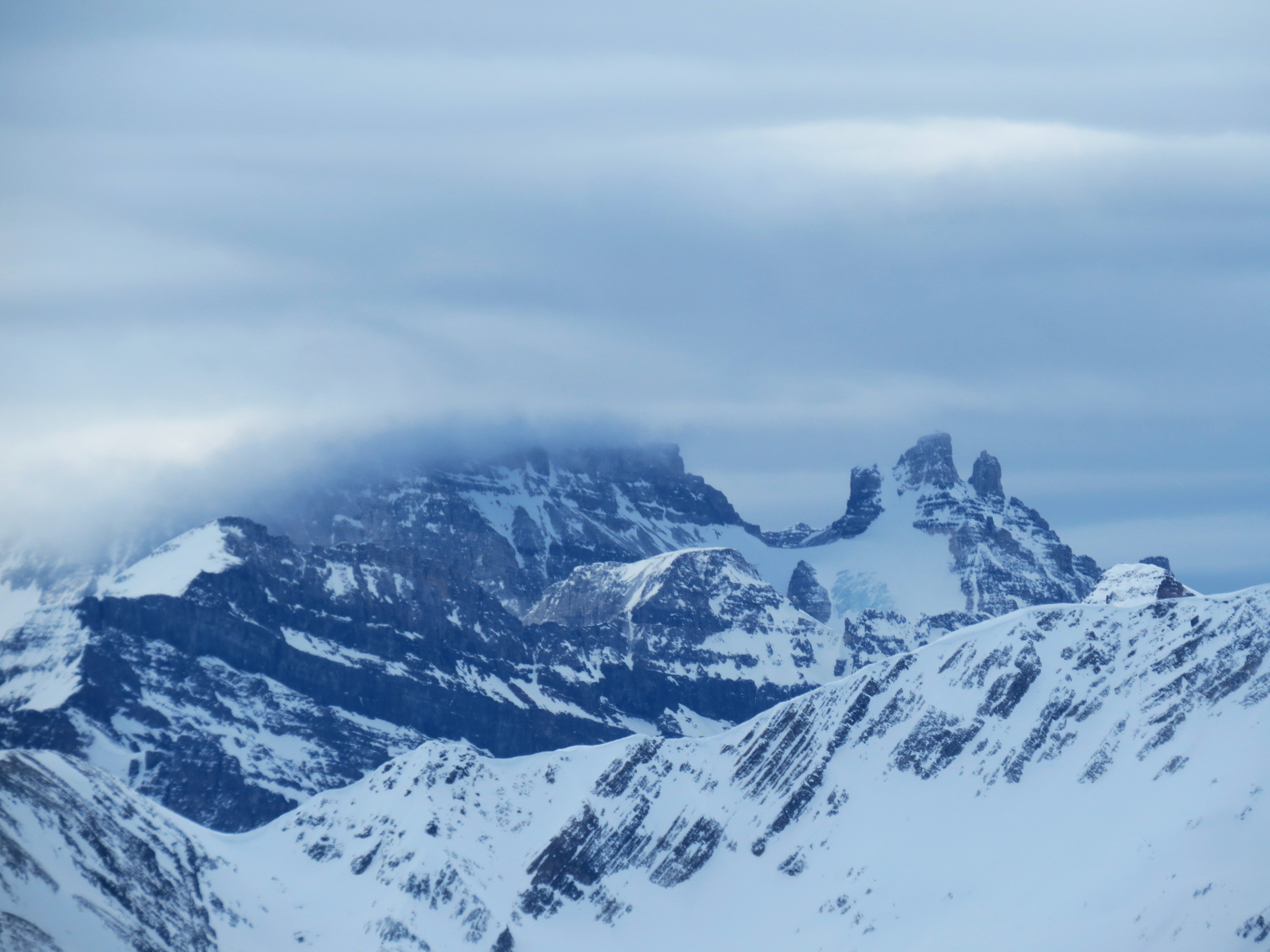
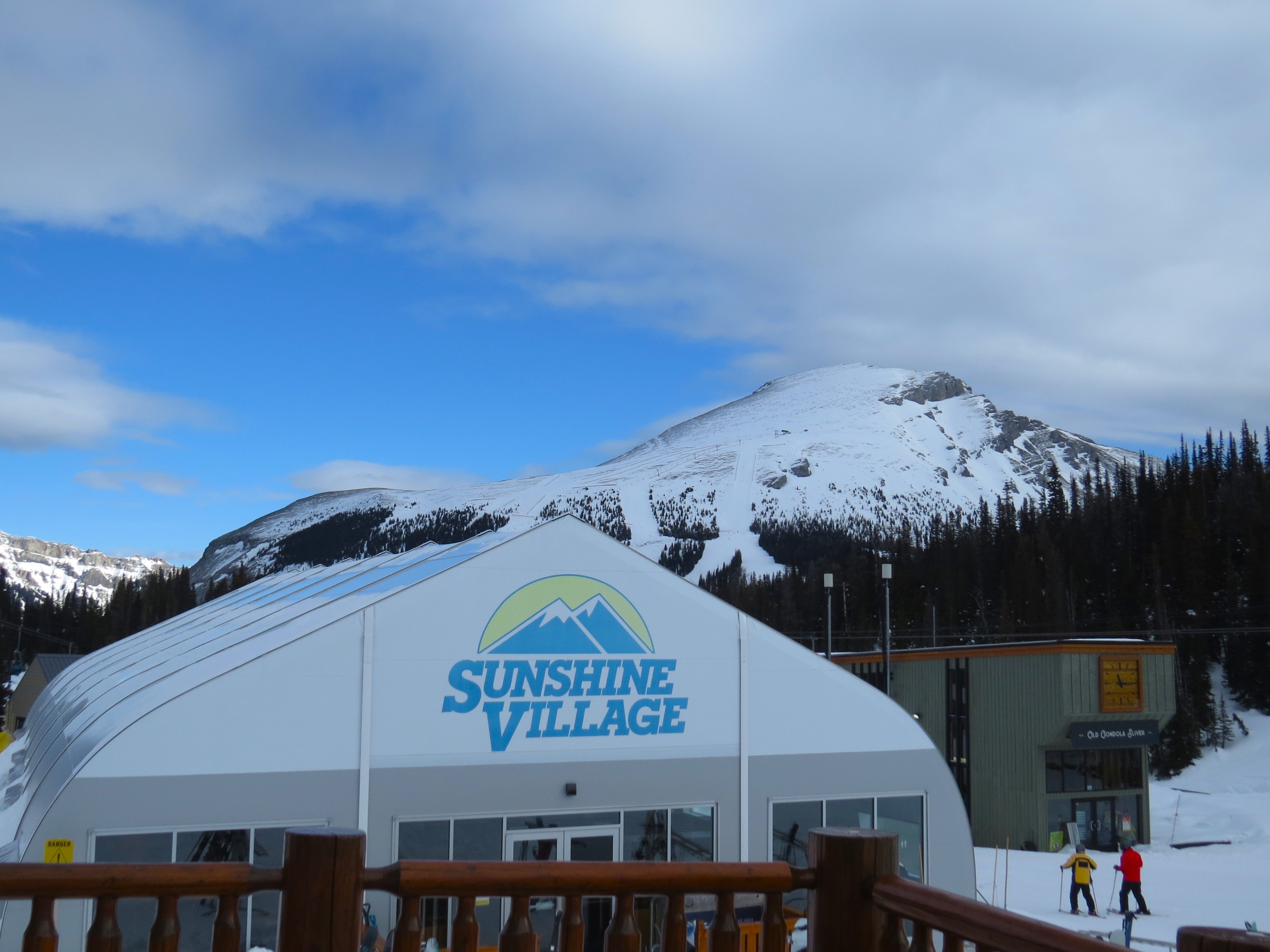
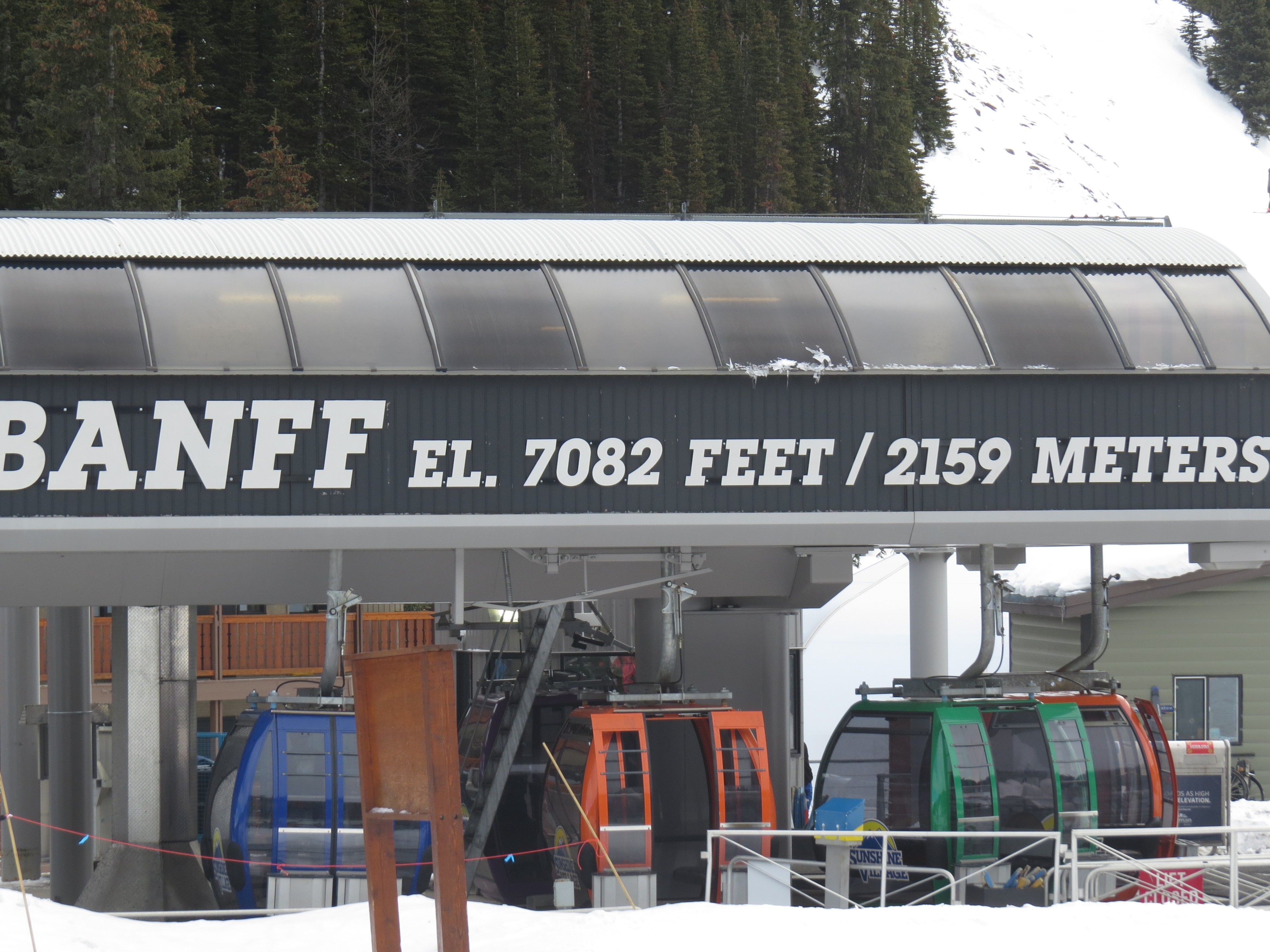
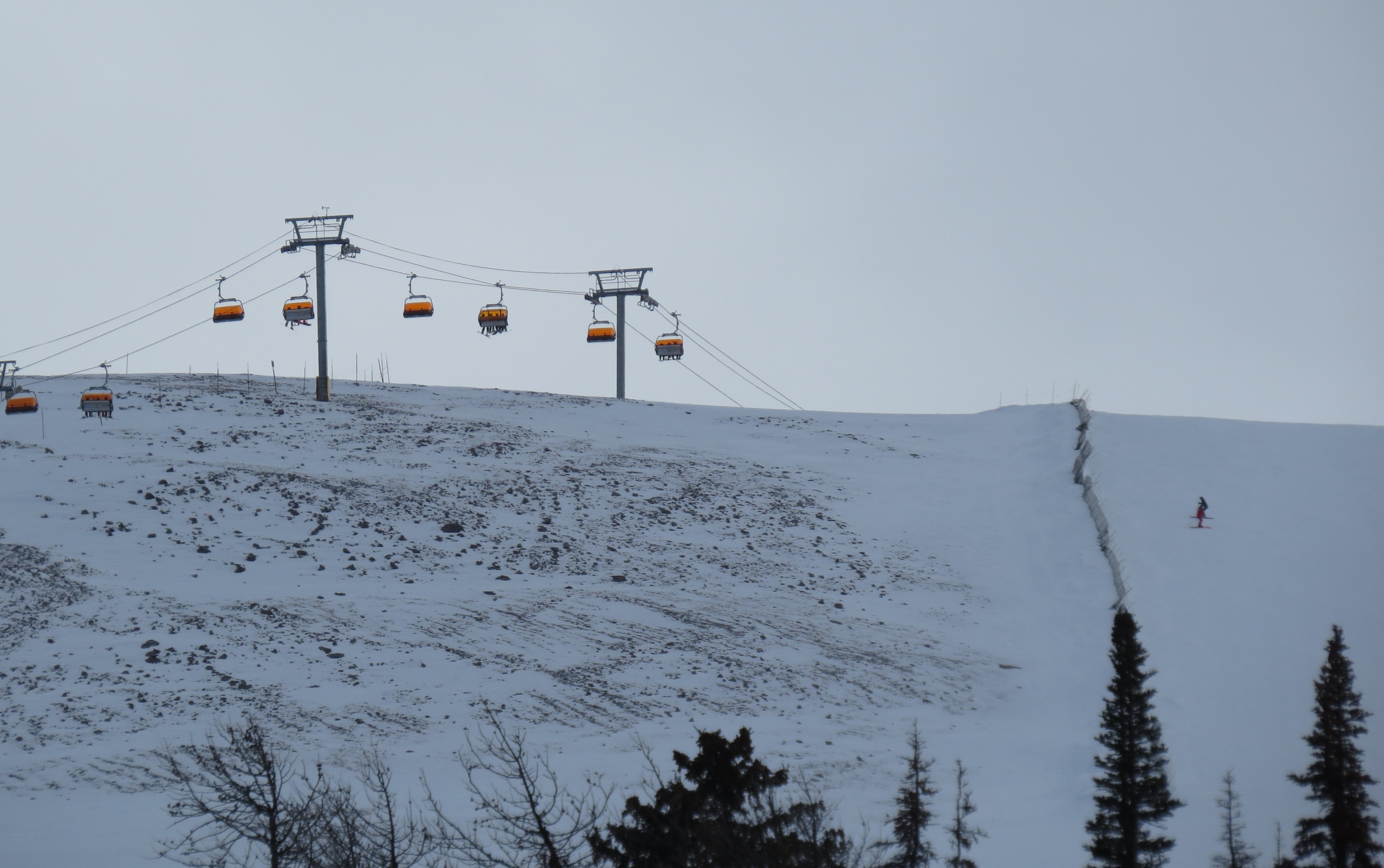
Jadę z przyjacielem, który ma się spotkać w Banff ze swoim przyjacielem z lat młodości jeszcze warszawskiej. Kiedyś był w Banff ale nie zna go aż tak dobrze, jak ja. Łazimy więc długimi kilometrami wokół zamarzniętej Bow River, wokół starego, monumentalnego Fairmont Hotel, gdzie kiedyś przed laty spotkałem i rozmawiałem z wielką gwiazdą Hollywood Jamesem Stewartem[i]. Idziemy do Banff School of Arts, gdzie kiedyś chodziłem na koncerty i gdzie bliski znajomy flecista Krzysztof Kaczka miał stypendium, gdzie kiedyś ja miałem dostać też swoje na pisanie – musiałem zrezygnować, bo inne wydarzenia w życiu nie pozwoliły na takie sabbatical. Następnego dnia jedziemy do fantastycznego, mojego ulubionego w dawnych czasach, raju narciarskiego w Sunshine Village. Od czasu mojego wypadku samochodowego blisko rok temu moja lewa noga nie pracuje jak trzeba. W zasadzie spodziewałem się, że narty, zwłaszcza wysokogórskie, już nie są dla mnie. Aliści … nie ma lasu bez liści. Więc założyłem deski i … wio! Skłamałbym pisząc, że szusowałem, jakbym mógł rok temu. Ale radość jazdy mi zrobiły, mimo, ze chwilami bolesne i trudne. A potem kilka kilometrów do bazy już nie kolejka linową a droga w dół. Pierwszy i jedyny upadek miałem już przy parkingu, gdy się zatrzymałem by już odpiąć narty, źle chyba stanąłem i poleciałem na plecy, LOL. Następnego dnia pojechaliśmy nad Lake Louise i zamarzniętym na amen jeziorze złaziliśmy kilka dobrych kilometrów. Spoglądałem z ciepłym rozrzewnieniem na szczyty Mitry i Abberdeen, na lodowiec Victorii przy Lake Louise, hen po prawej ku Lake Agnes i przełęczy, którą kiedyś przechodziłem do Lake O’Hara i starego schroniska, gdzie przebywał kiedyś Jackson, jeden z malarzy słynnej Grupy Siedmiu; na moją ukochaną Mount Temple z bogami mieszkającymi na jej szczycie. Tym razem chyba naprawdę ostatni raz. Wiem, tyle już razy mówiłem, że gdzieś jestem ostatni raz … i nagle do tych miejsc wracałem. Ale tam już chyba faktycznie więcej nie pojadę. Ale jestem szczęśliwy, że pojechałem teraz. I w kompani serdecznej, dobrej.
A wracając zatrzymaliśmy się w Revelstoke na obiad w tym samym hoteliku, gdzie zawsze zatrzymywałem się z Moim Chłopcem, gdy jeździliśmy bardzo często z Vancouveru (mieszkaliśmy tu najdłużej) do Calgary odwiedzić jego rodzeństwo.
I to była historia moich podróży do Banff w Górach Skalistych.
[i]James Stewart – Wikipedia – w Fairmont Hotel w Banff odbywają się od wielu lat Festiwale Filmów Telewizyjnych i na jednym z nich w latach 90tych Stewart zasiadał w jury festiwalowym.
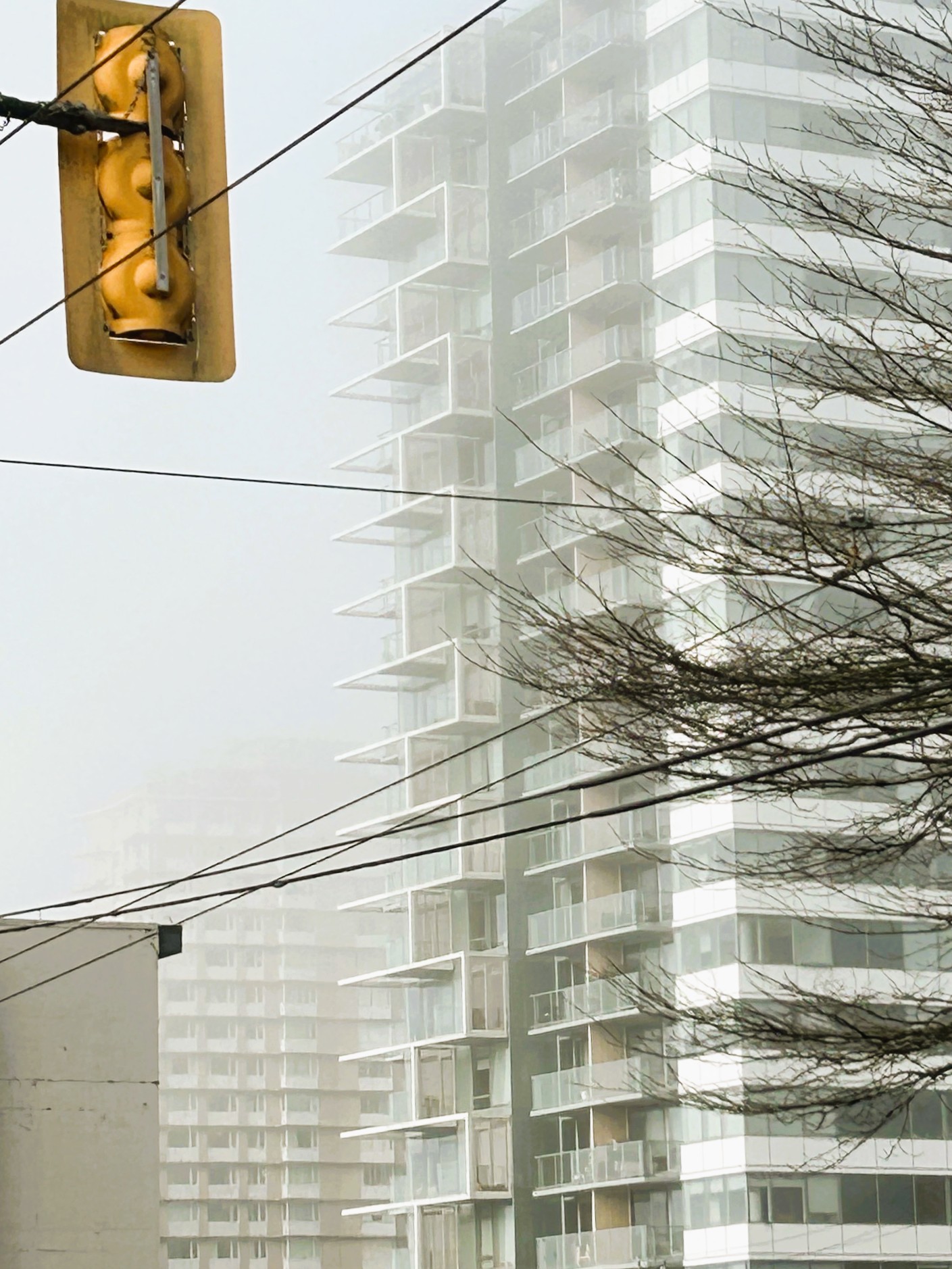
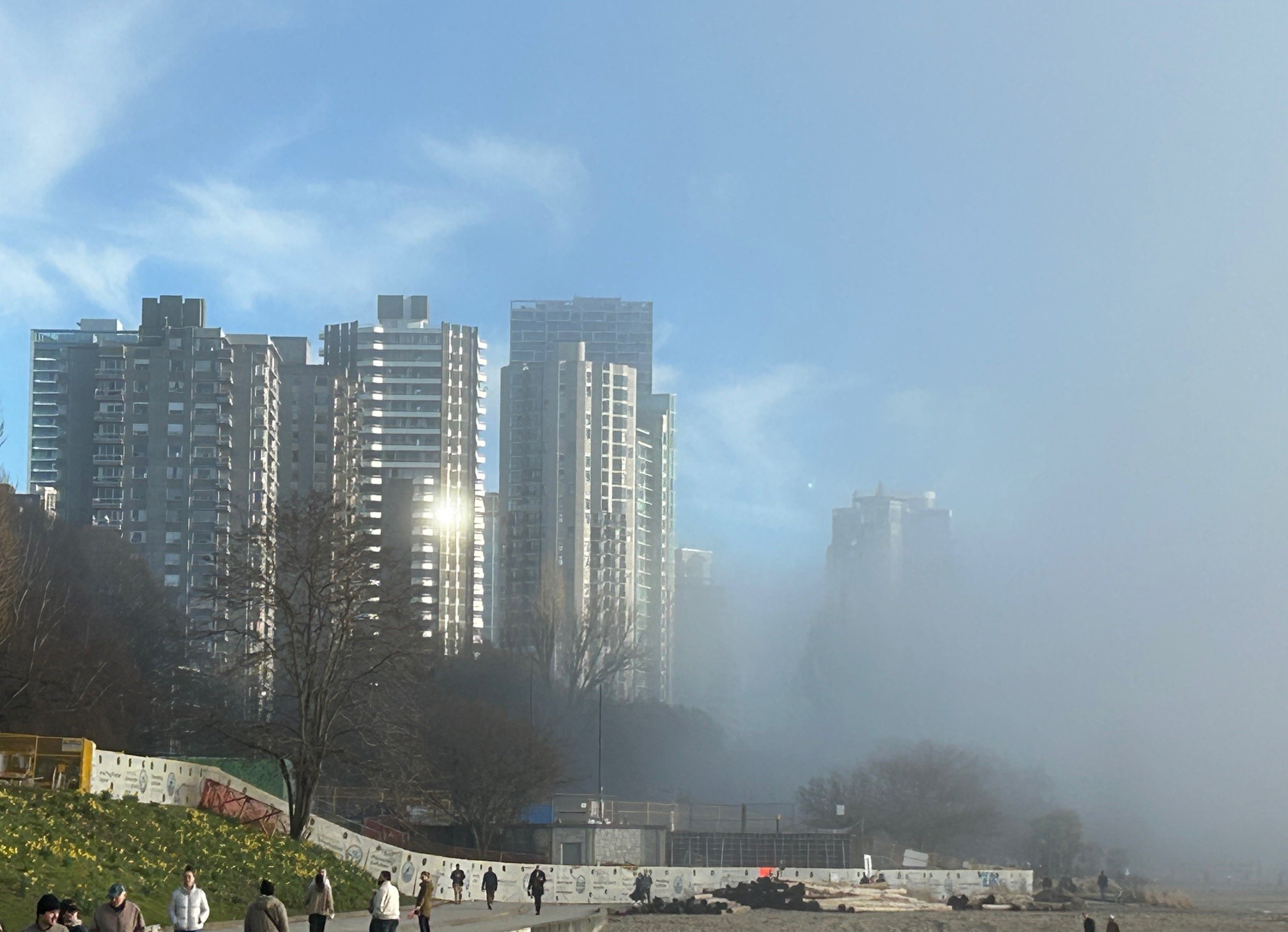
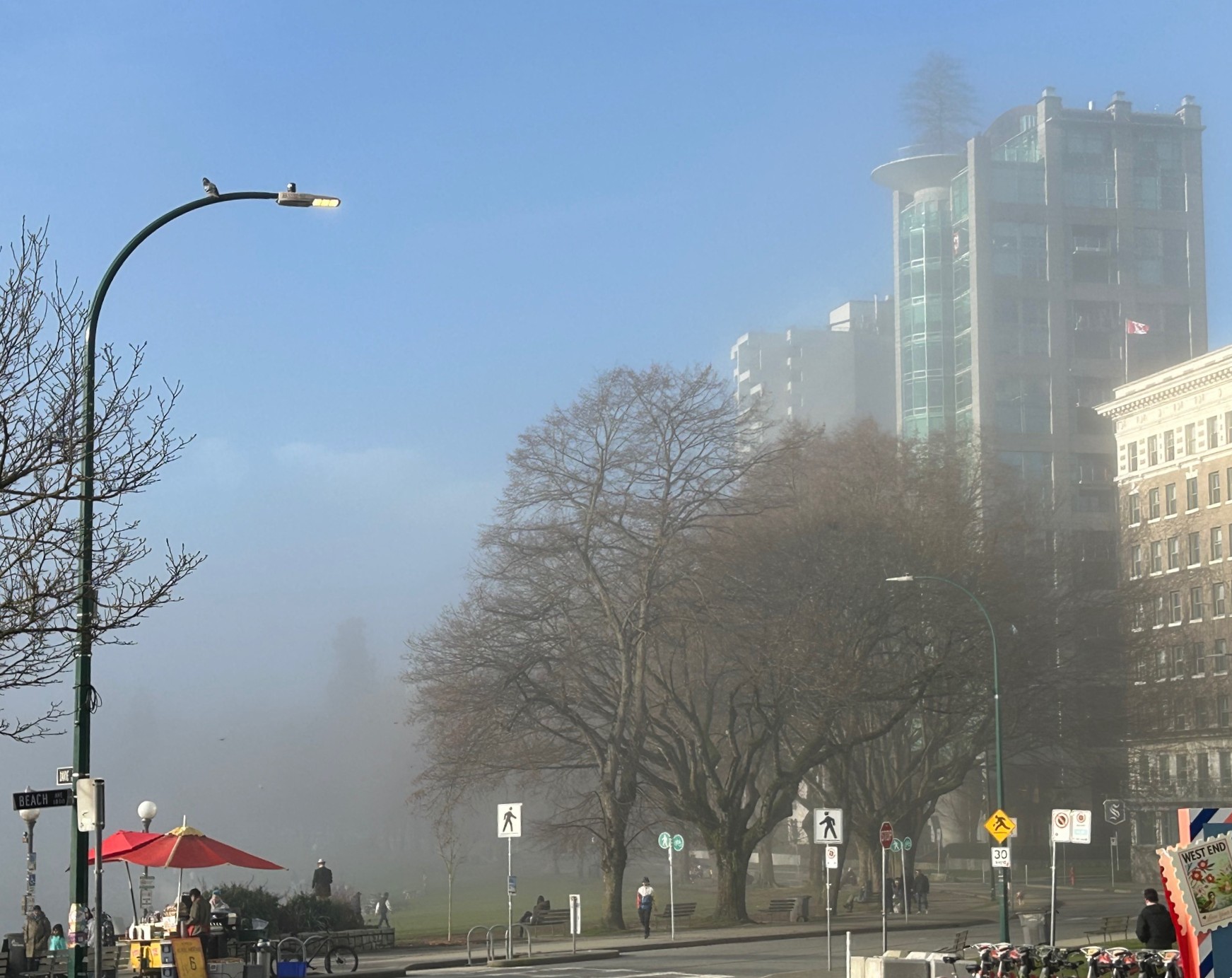
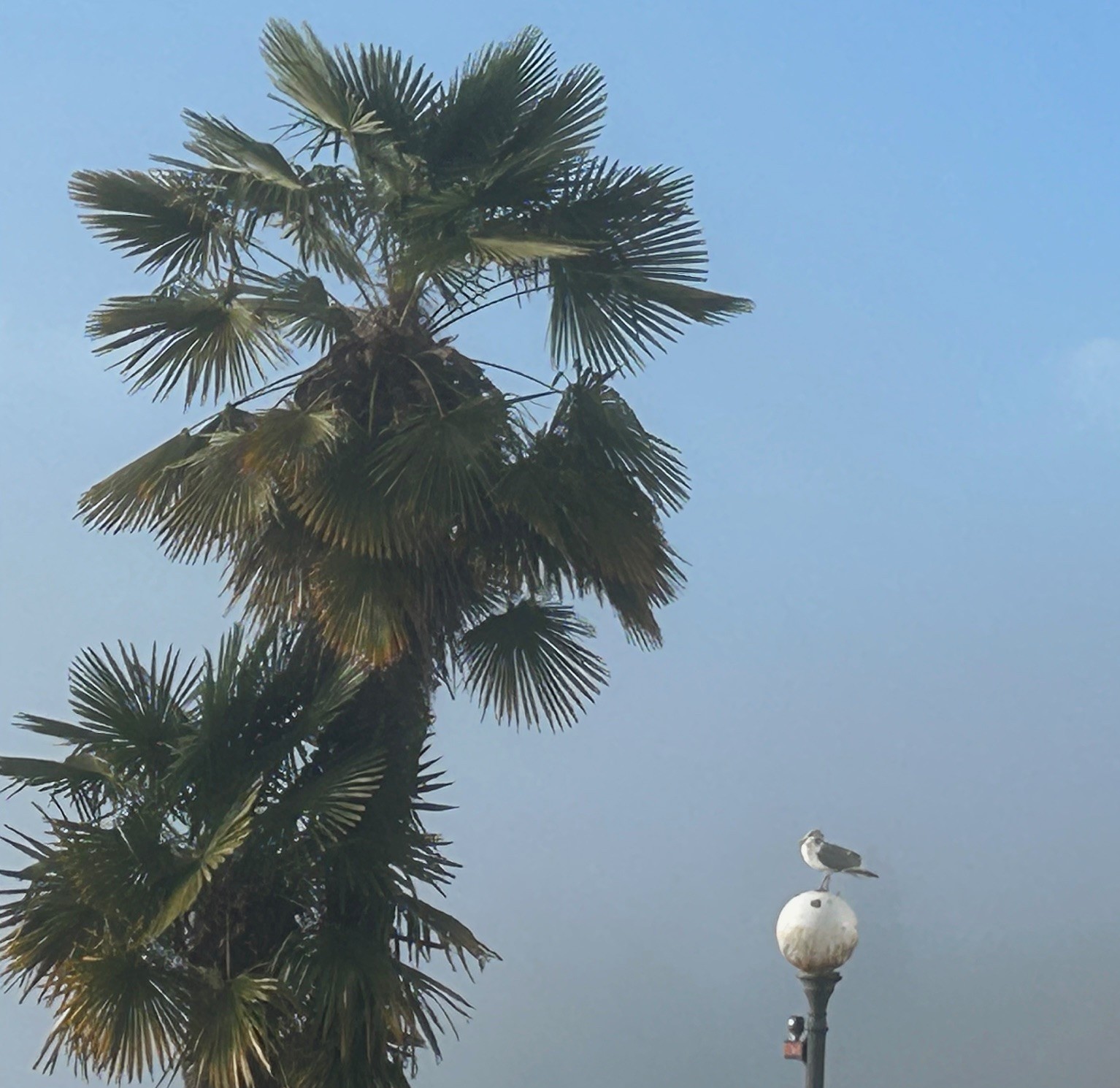
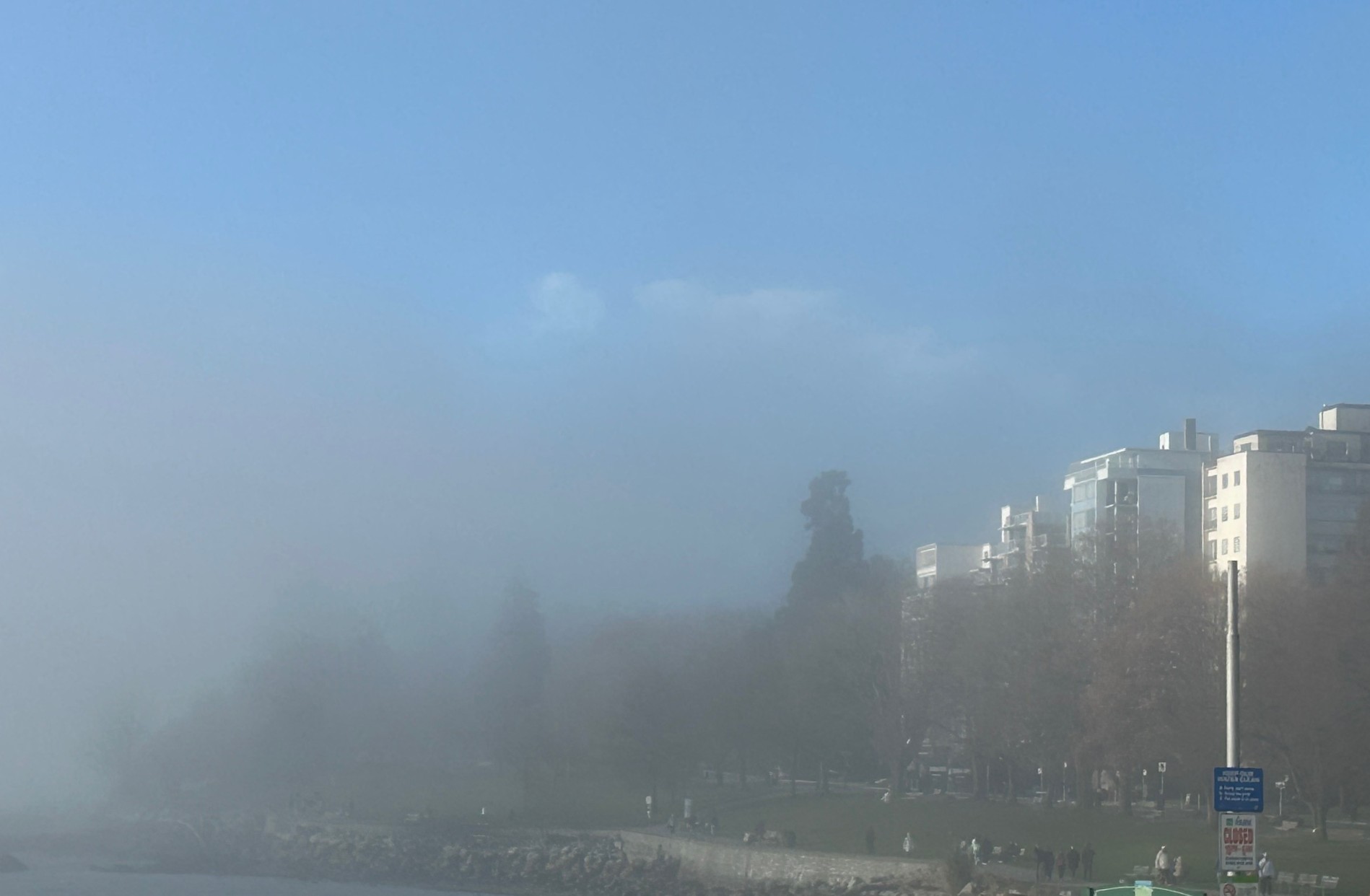
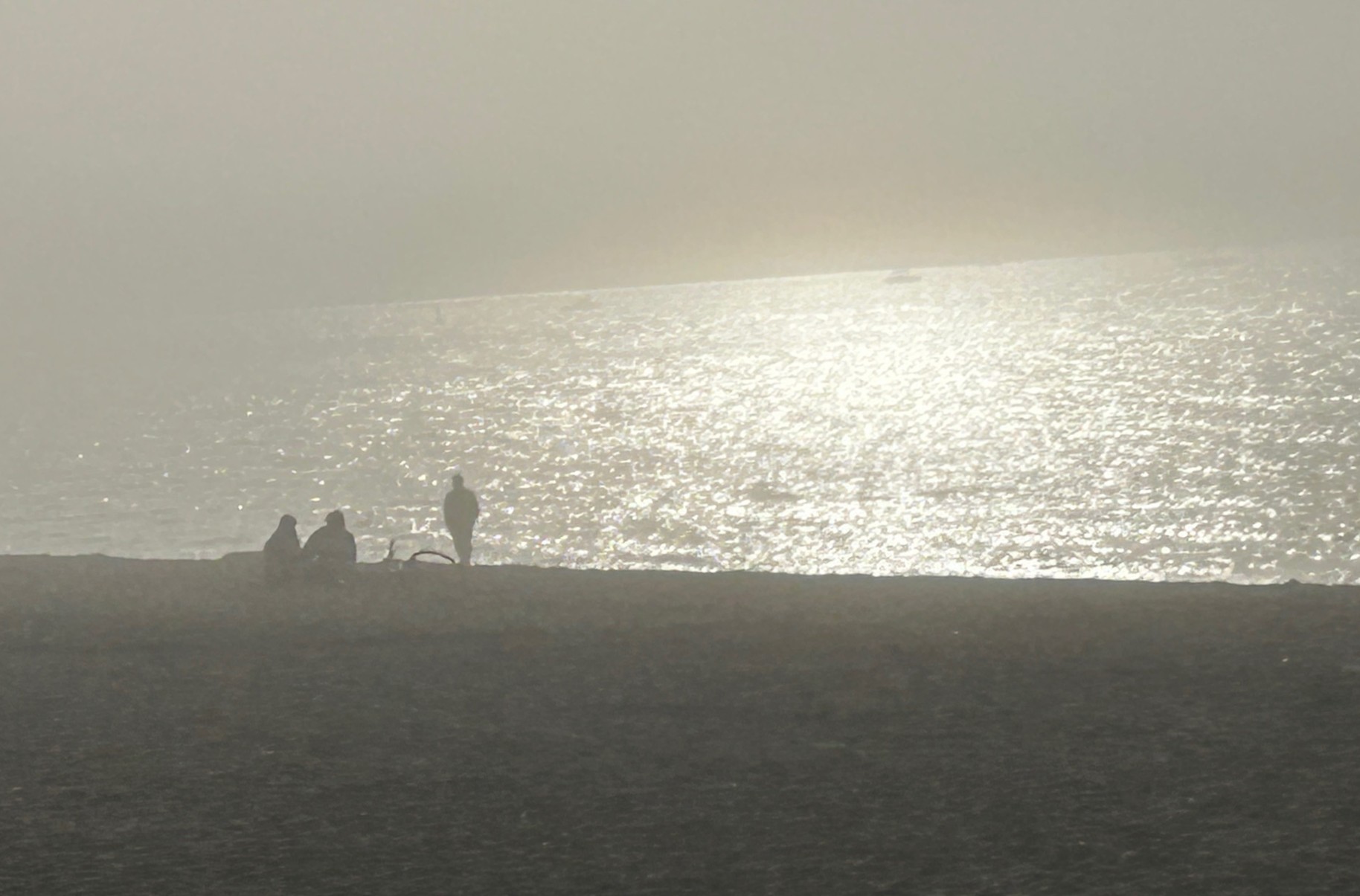
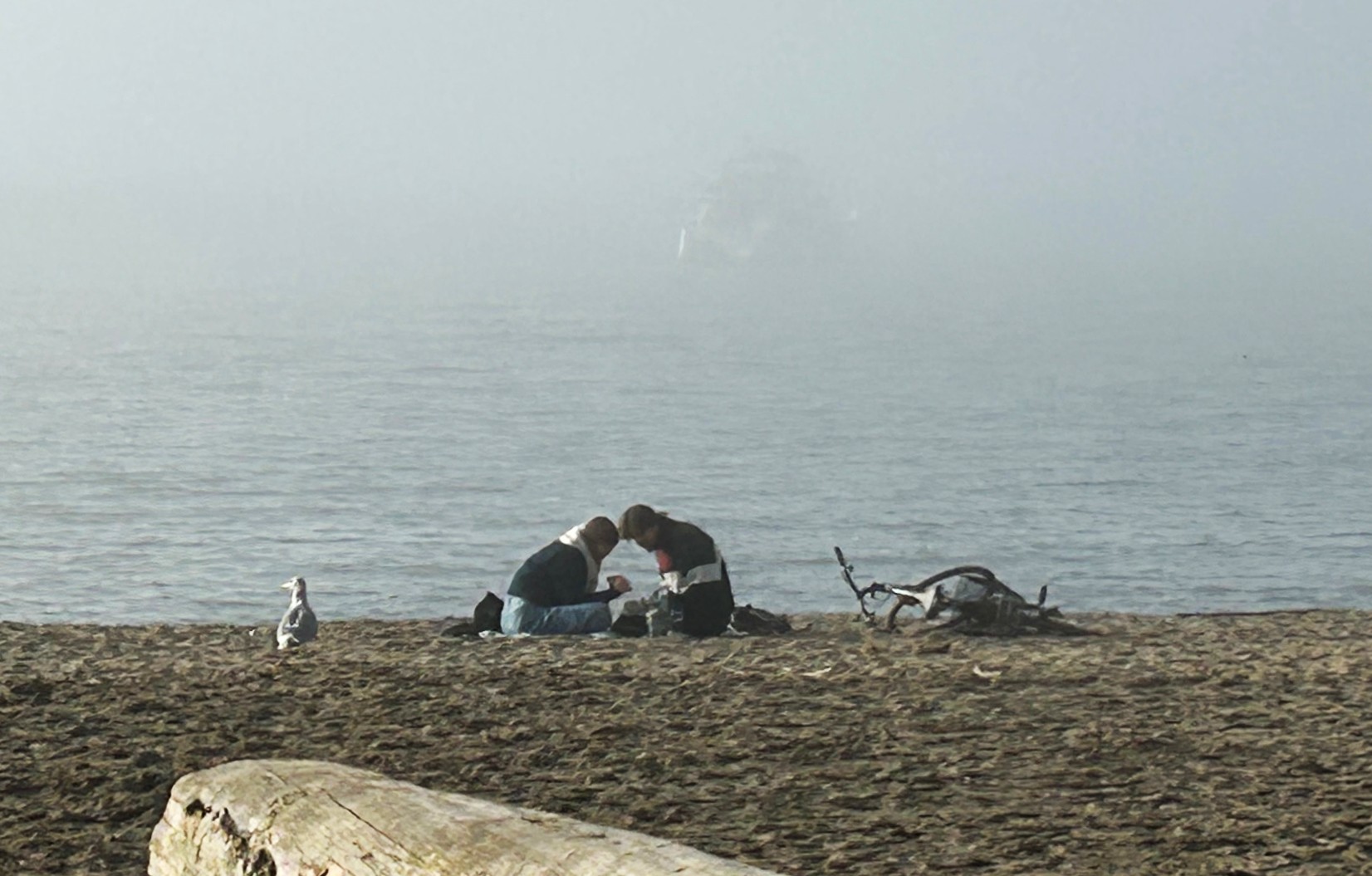
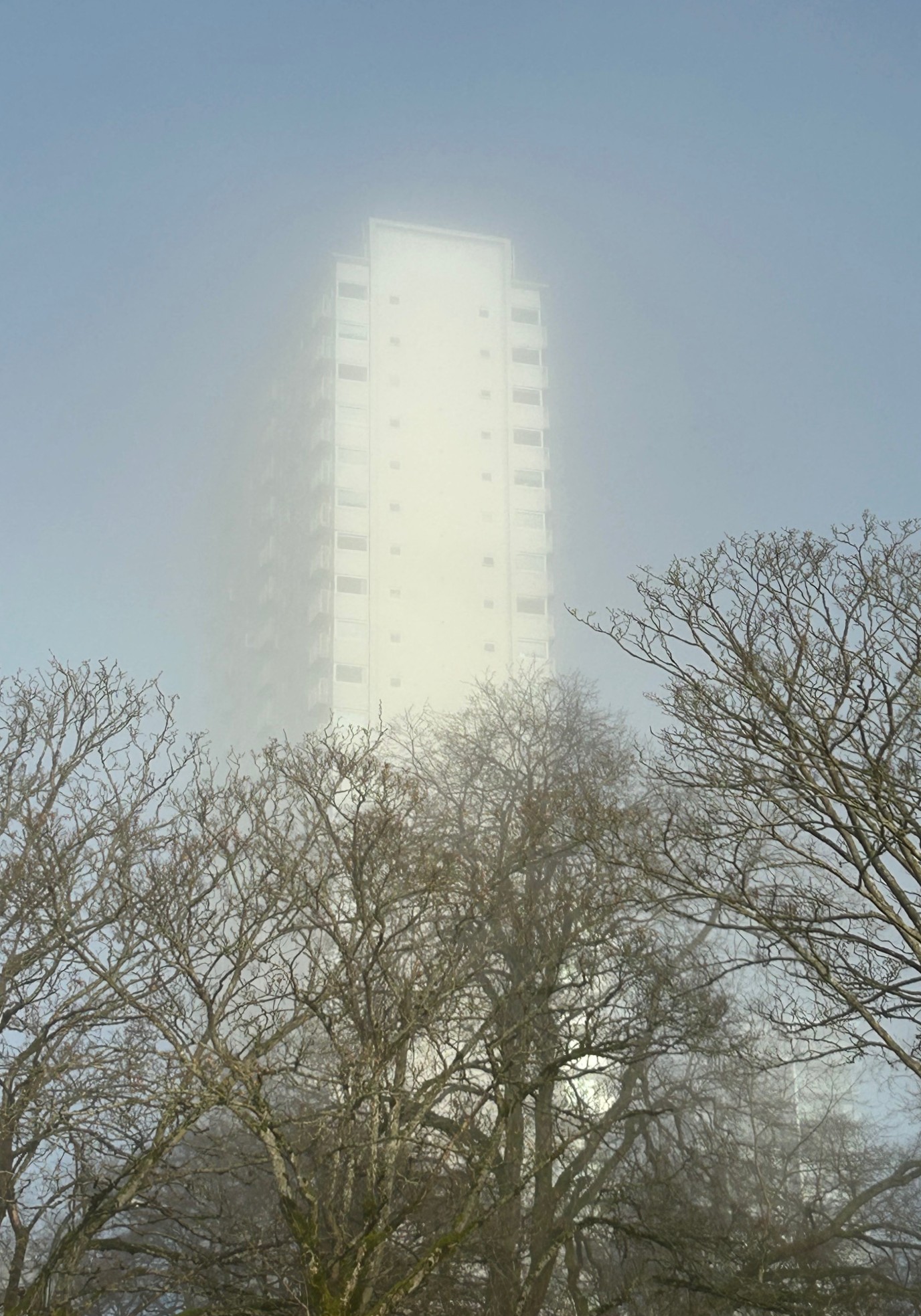
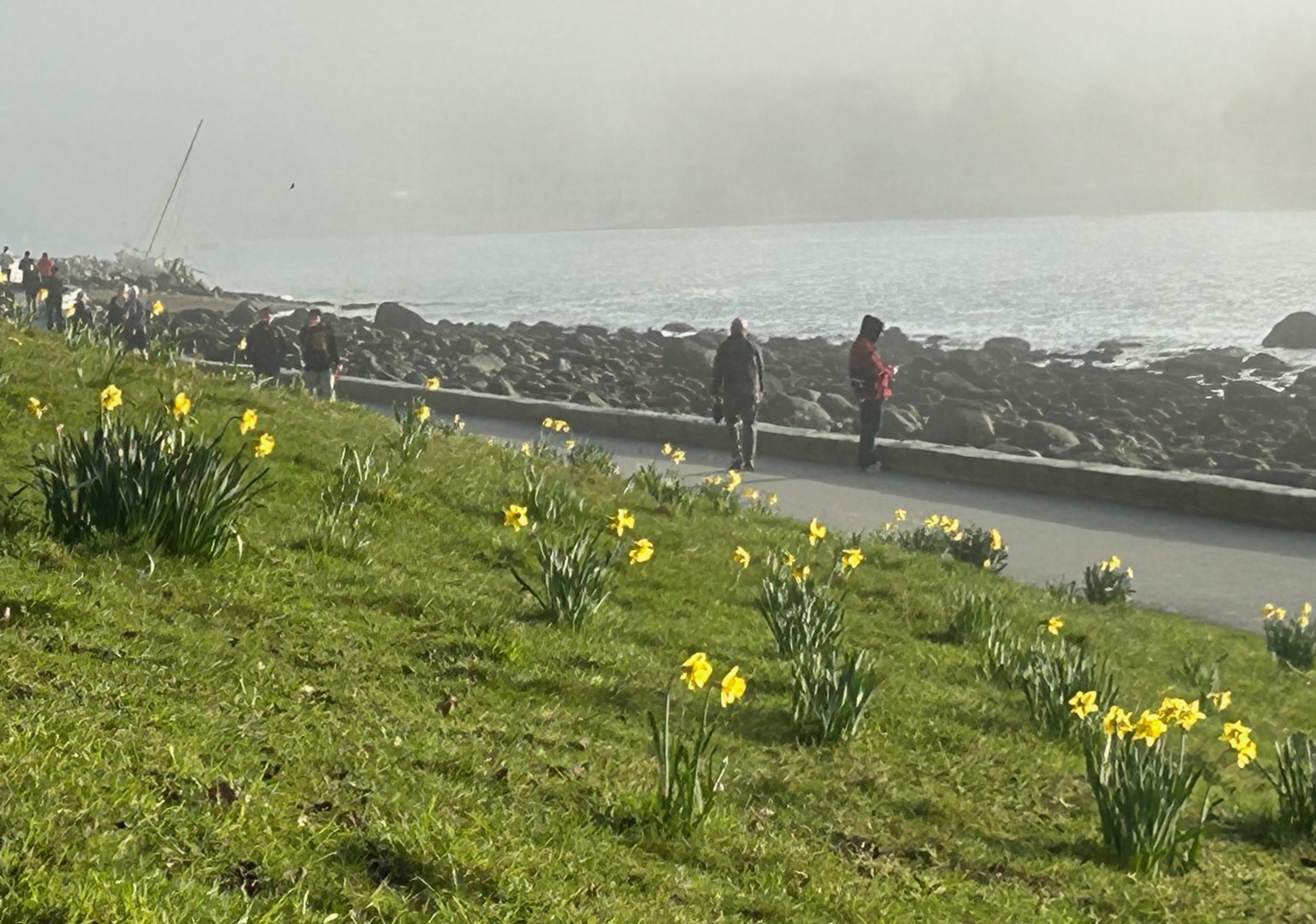
A walk with glorious sun locked in a deathly battle with thick fog coming from English Bay over the beautiful little streets in Vancouver’s West End.
Battle of Light and Darkness? No, no, no! Nothing of that sort. Fog has nothing of darkness. Au contraire, mon ami. You see, fog is full of light, light that is powerfully condensed, weaved very tightly onto amazing arrases, where you can see all the shadows of shapes, a promise of something that might become. Reality not fully realized, not fully described. A poem, from which some of the ink evaporated, bleached out and you can see only some of the words – the rest of the lines, the stanzas are left to the reader’s imagination. Ha! You are being allowed to finish someone else’s poem; composing anew a song you remember only faintly, fleetingly, few cords perhaps? Painting a picture that another painter only sketched with just few strokes of a pencil?
That is fog: a promise of shapes, colours. It asks you to be brave in your own creation, your own enormous palette of colours, sounds, and visions. To be a god! Creator! From dust to form. Not a mere believer, follower. Take the steering wheel in your own hands, follow your chart to navigate to lands and islands unspoiled, with birds made from rainbows, beaches with sand made of pure white pearls and fruits, that taste like lips of someone that you love.
Fog – the master of deception or Demiurge of Land of Dreams?!
Me? I will take my walk through my Mole Hill by Nelson Park in West End. But remember: a Mole Hill could easily be someone’s Mont Blanc. In a fog, of course.
“Tristana” Tomasza Manna było mi trudno czytać. Więlokroć po jednej-dwóch kartkach odkładałem zmęczony tym, znużony. W zasadzie zły, że pisze tym mieszczańskim językiem Weimaru. Gorzej – rzekłbym językiem drobnomieszczańskim z pretensjami do mieszczańskiego. Prowincjusze udający berlińczyków. Pytałem sam siebie, po co on to pisał, co gorsze: po co opublikował? On, Mann – pisarz extraordinaire.
Nudne, jak flaki w oleju, jedno z setek pisanych wówczas, a dziś niepamiętanych przez nikogo opowiadań drobnomieszczańskich. Taki pseudo-literacki bidermajerek: kanapa niby wygodna, ale pachnąca kurzem i upudrowanym potem i herbata koloru żółtej słomki (brrrr…) w filiżankach ustawionych na wylakierowanym stoliku a’la Ludwik XIV (kiepska kopia). Wiecie, taka wizyta, gdy bierze się udział w rozmowie tylko po to, by nie zasnąć ze znudzenia. Dlatego chyba czytałem tak po dwie kartki, z cichą jednak nadzieją, że gdzieś Manna-pisarza odnajdę.
I nie pomyliłem się, nie zawiodłem, choć w niczym nie zmienia to mojej opinii o wstępie i sporej części opowiadania. Otóż nadchodzi (w końcu!) moment, gdy wysuszona z pragnień, marzeń i zdrowia (choć nie jest kobietą starą) pani Kloterjahnowa, za namową osoby bardziej jeszcze przegranej życiowo (nieudany pisarz i dość odpychający fizycznie), pana Spinella, zasiada za fortepianem. Po raz pierwszy od czasów dzieciństwa i wczesnej młodości.
Fortepian, Chopin, wizja Schillera – zmienia wszystko w okamgnieniu. Wraca za sprawą muzyki do tejże młodości i szczęśliwego dzieciństwa przy boku troskliwego ojca. Ich domu rodzinnego, który był oazą dobroci i bezpieczeństwa. Czasu, gdy była szczęśliwa, radosna; do Wagnera i jego pieśni o Tristanie i Izoldzie – arturiańskiego eposu z czasów Rycerzy Okrągłego Stołu.
Wie, że nie może, nie ma prawa ni podstaw narzekać na swoje małżeństwo, na statecznego i zamożnego męża mającego mir w otoczeniu. Ale tu, teraz w tym sanatorium za namową biednego pana Spinella zasiada do swojej muzyku, którą pamiętała ze świata tamtej młodości, gdy nie nazywała się Panią Klotherjahnową. Nie, wtedy była sobą, miała swoje własne nazwisko, miała swoje własne marzenia. /…/
Więc jednak Tristan i Izolda, jednak powrót do tęsknoty, do marzeń o szczęściu, do schillerowskiego sehnsucht[i].
W dobrej literaturze na ogół zawsze gdzieś snuje się cień pytania, bez względu na zasadniczy nurt powieści lub poematu, o poszukiwanie siebie. O powrocie do dzieciństwa, do młodości i pytanie: co we mnie zostało dziś z tamtego mnie? Czy ‘zdradziłem’ siebie, czy pozostałem sobie wierny? Pamiętam tamtego, ale czy tamten by mnie dziś poznał? I nie chodzi wszak o osobę, raczej o osobowość.
Historia Frau Klotherjahn z „Tristana”[ii] Manna te pytania postawiła i przede mną. Nie tylko ta historia i nie po raz pierwszy. Nigdy nie jestem w stu procentach pewny, czy znalezione odpowiedzi były prawdziwe, lub czy były autentycznie szczere. Zakładałem, że były. Wydaje się, że kłamać sobie samemu jest bezsensowne. Ale może odpowiedzi były sentymentalnym chciejstwem, a nie logiczną i racjonalną analizą? I czy bycie jest istotne, potrzebne?
Czasem zmęczony jestem próbowaniem bycia. Znudziło mnie bycie sobą. Tyle lat już to robię. A bycie sobą wcale nie jest ani proste ani łatwe, ani niewymagające czasu. Wydaje mi się, że dla wielu to brzmi dziwnie: cóż jest prostszego od bycia sobą?! Przecież wystarczy rano wstać i już nic więcej. Nikogo nie musisz udawać, grać jakiejkolwiek roli, po prostu bądź sobą!
I zaraz wątpliwość się wślizguje w ten tok myślenia: a skąd wiesz kim jesteś? Czy jeszcze pamiętasz? Od dziecka pakują ci w głowę formułki, konwenanse, zasady, normy. Człowiekowi bardzo młodemu łatwo wpaść w tą rolę, ten algorytm. Ale czy to ty? Czy jesteś?
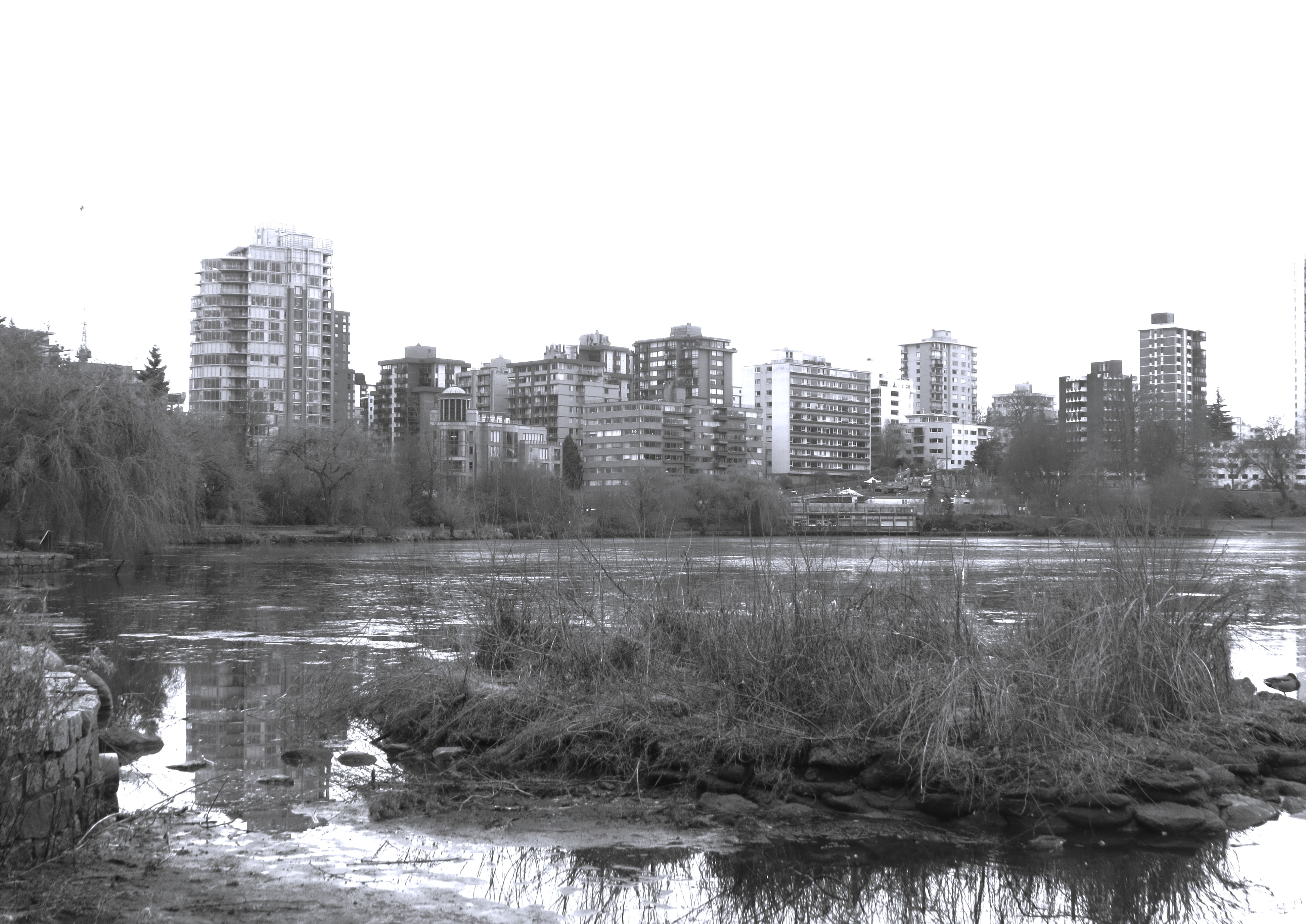
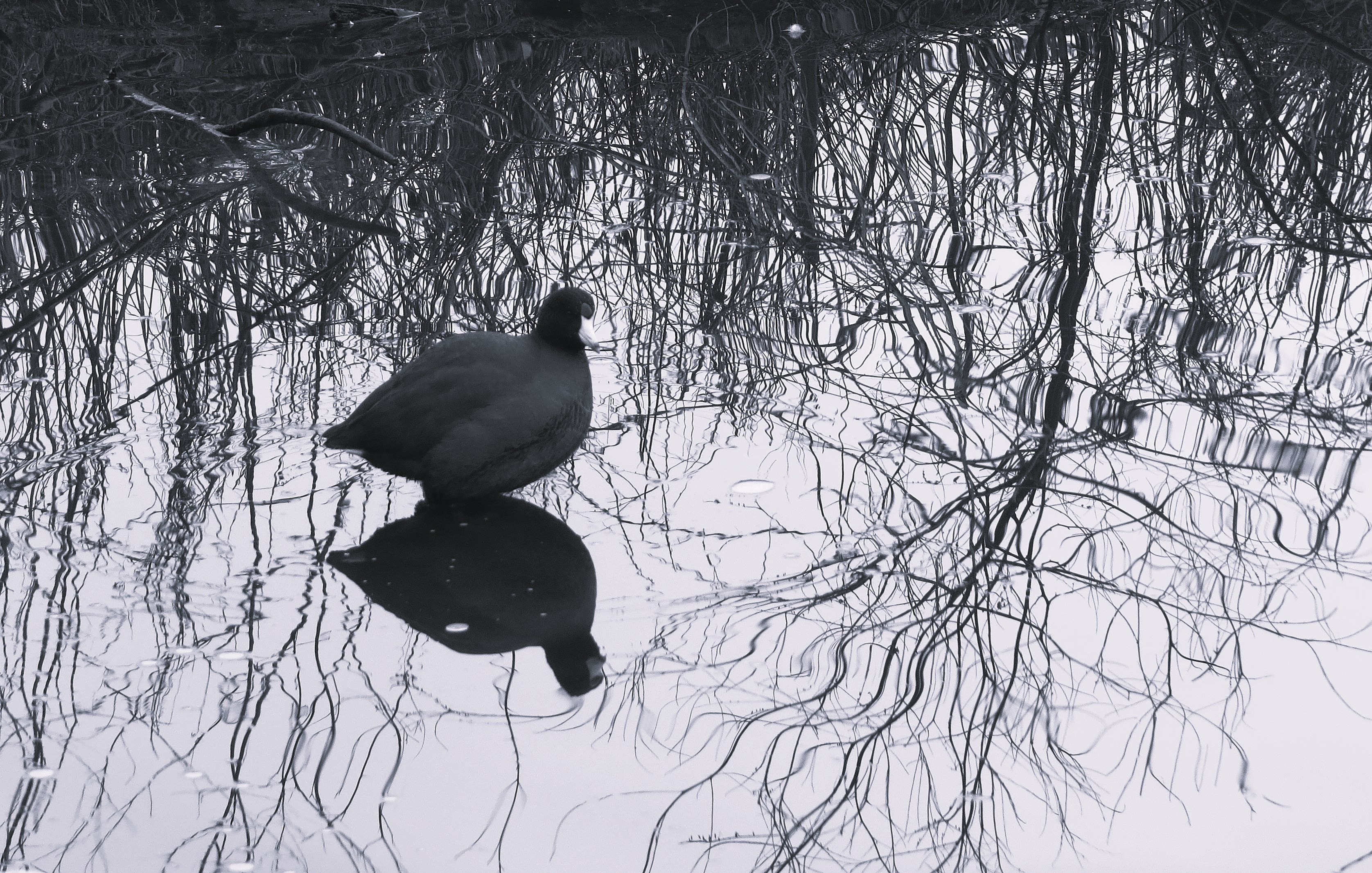
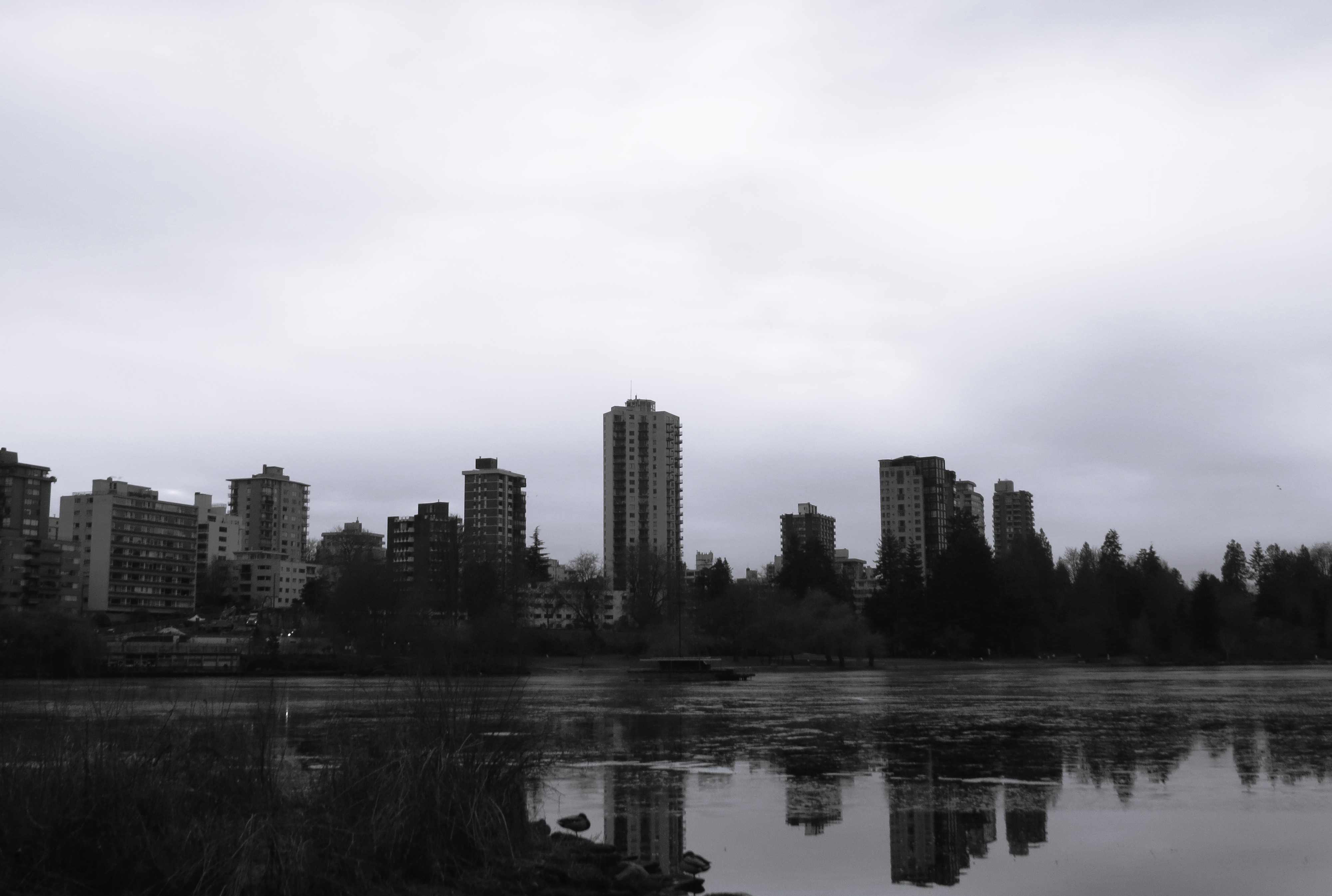
Moja Lost Lagoon w moim Stanley Park. Czy jesteś zagubiona, tak jak ja? Dlaczego? Co lub kogo zgubiłaś, kto cię zostawił, lub opuścił?
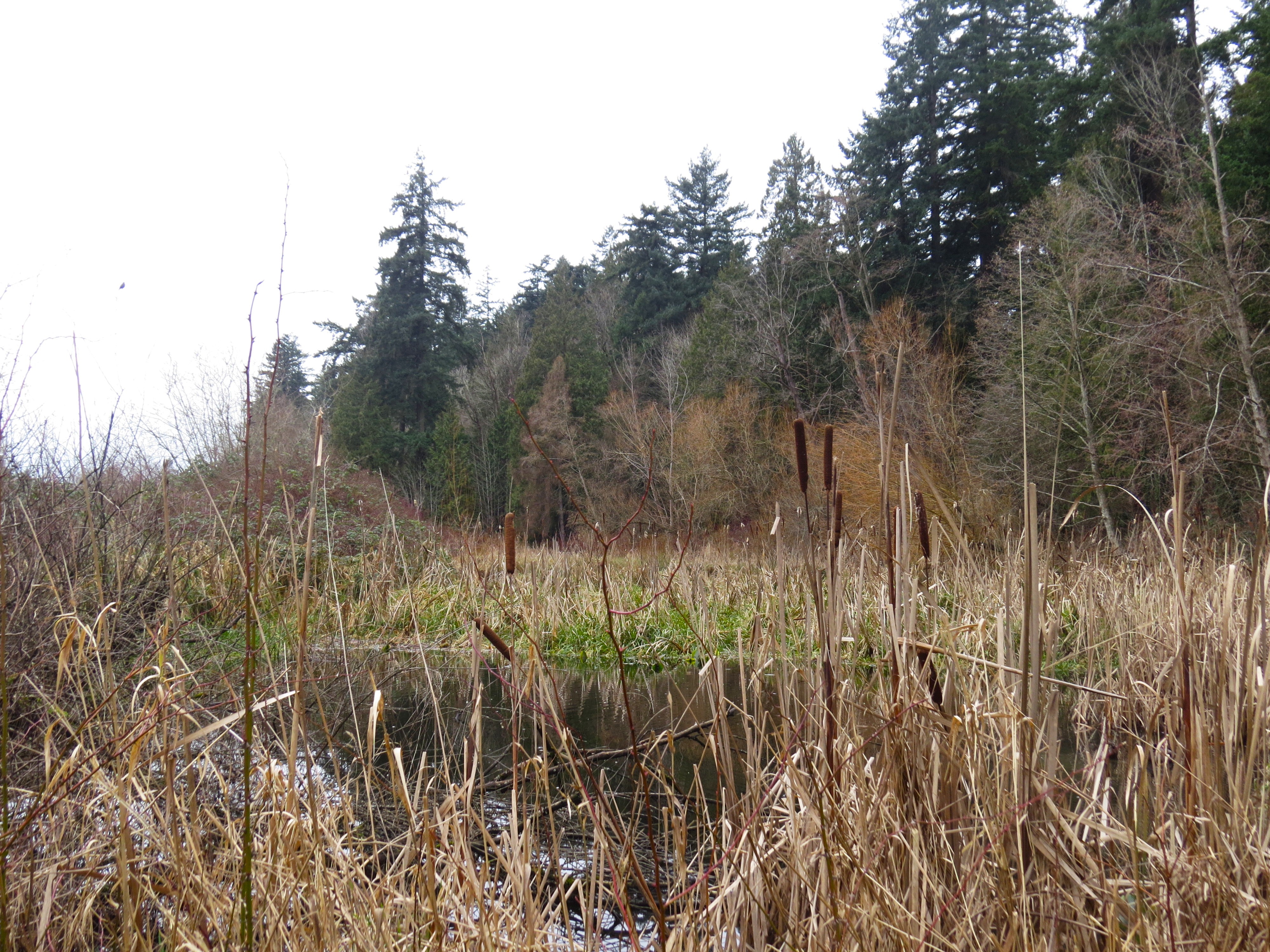
Ach, wiem – tęsknisz do swojego morza, do spotkania ze skałą Siwasha. Tęsknisz do swojego odwiecznego Salish Sea[i]. Teraz jesteś wodą słodką, a byłaś zawsze słoną. A ja, pytasz? Ja ide w moje, popłatane ścieżki mojego starego parku. Nie sięgam swoja ludzką pamięcią dni, gdy ty byłaś słona i szczęśliwa. Ale pamiętam i poznaje Twoje szuwary i trzciny z pięknymi brązowymi pałkami, pamiętam wyspy pływające kwitnących nenufarów. Pamiętam głodny dotyk ust i rąk młodych kochanków parna nocą lata w dzikich alejach parku otaczającego ciebie. Potem kąpiel nocną nagich ciał na Trzeciej Plaży[ii]. Potem … .
Potem, już nie było potem. Potężne fale Atlantyku, po drugiej stronie mego kanadyjskiego świata, rozbiły, rozmyły ścieżki do potem. Wymyły ze stron słownika słowo ‘potem’. Potem jest pustką, a nie oczekiwaniem. Potem jest tym samym każdego dnia, każdej nocy. Każdego roku. Dni, noce i lata podobne do siebie, jak dwie krople wody, przemijają beż śladu, następują po sobie trochę niechciane, niepożądane. Czas nie jest ani złośliwy, ani bezwzględny. On po prostu jest, płynie nie zatrzymując się. Czas nie ma czasu dla rzeczy tak mało użytecznych, jak człowiek.
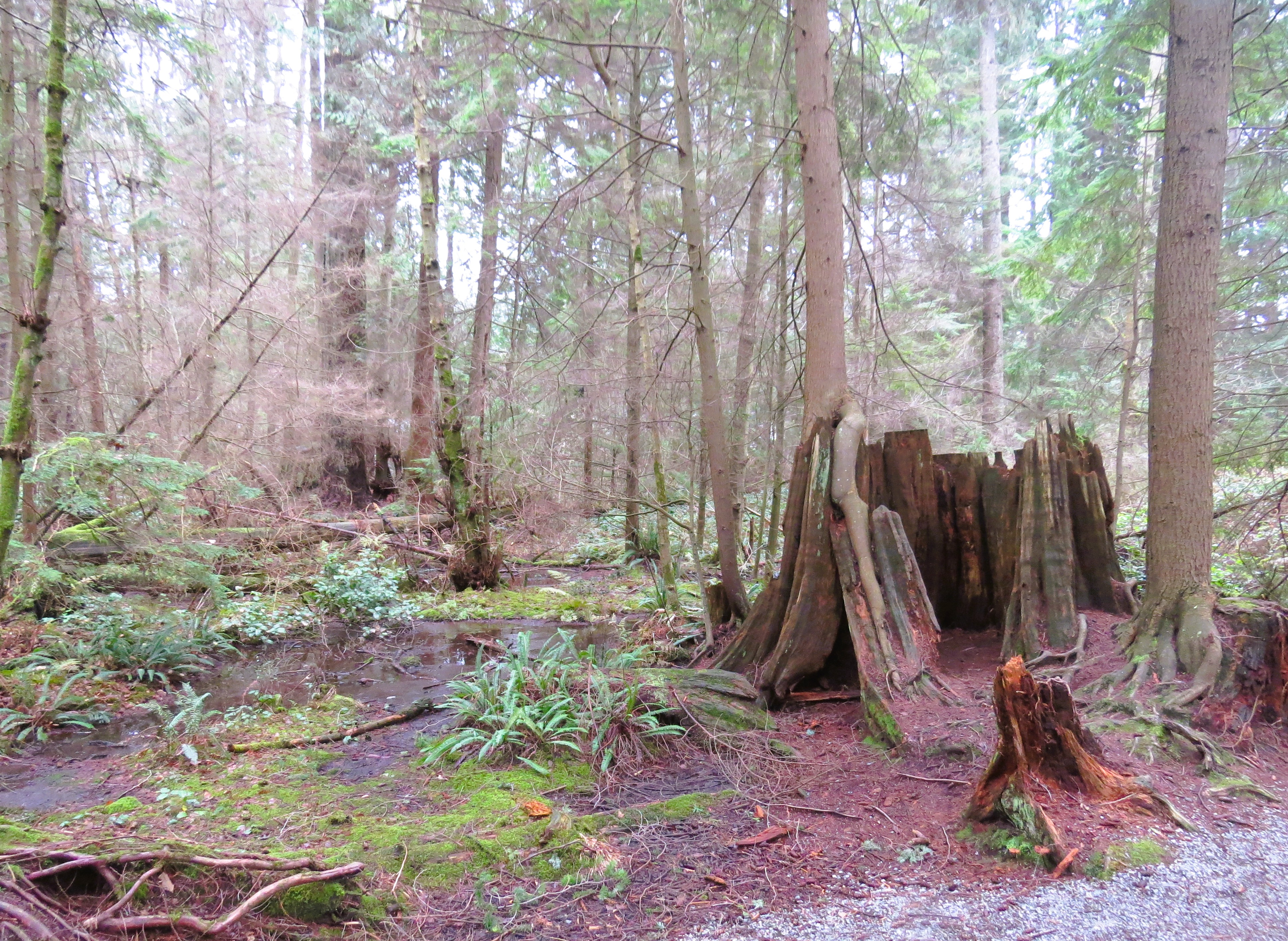
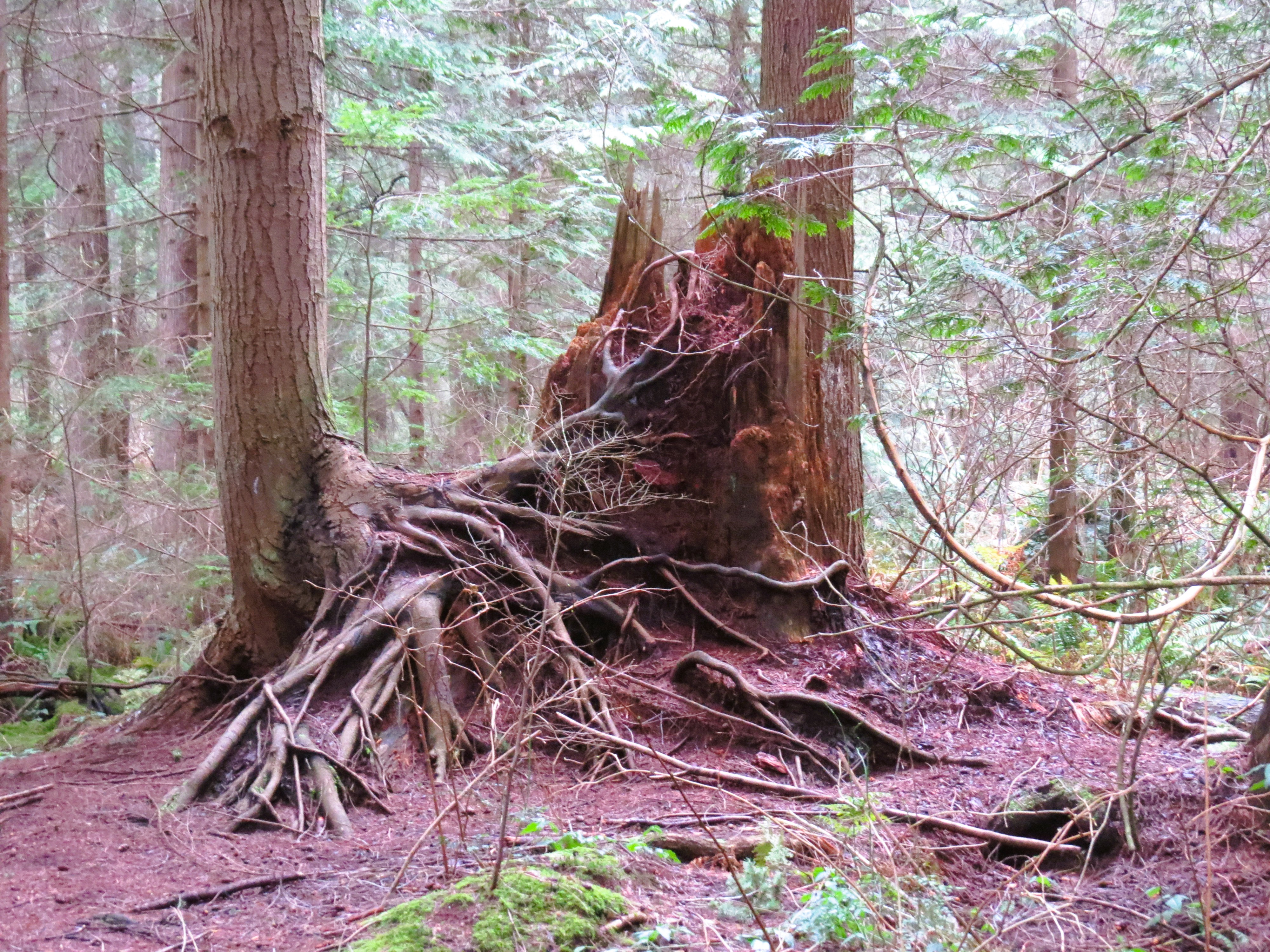
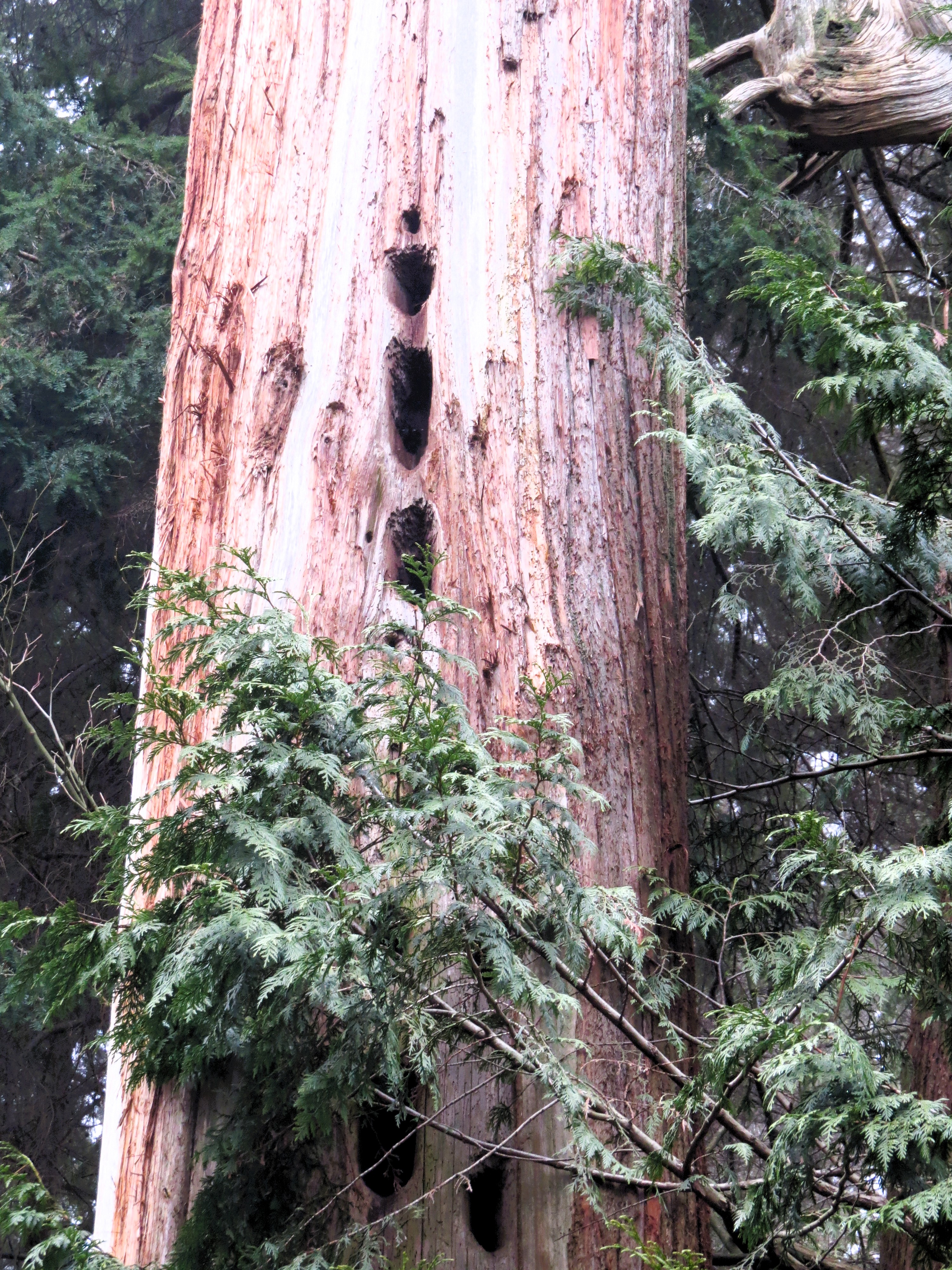
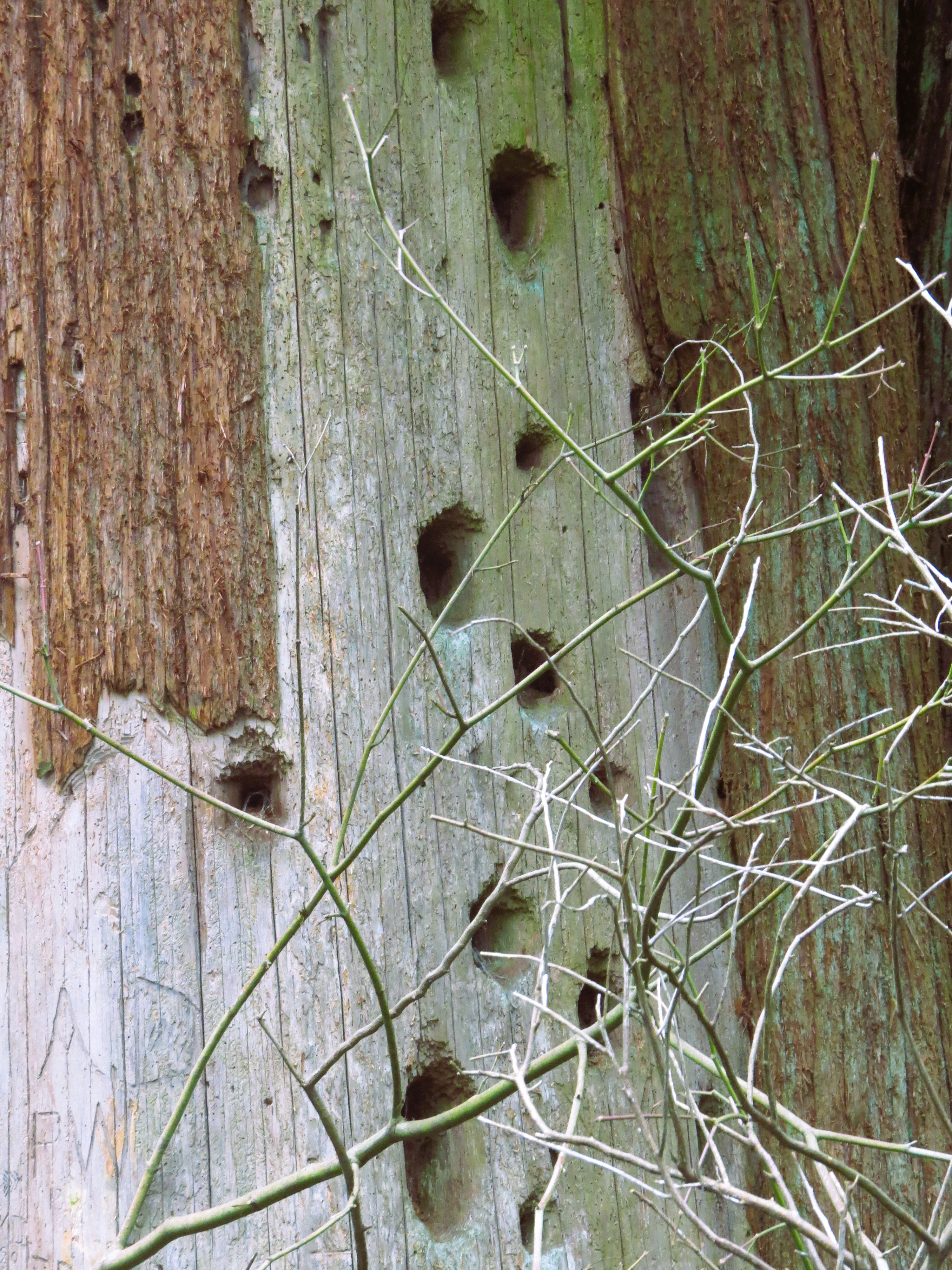
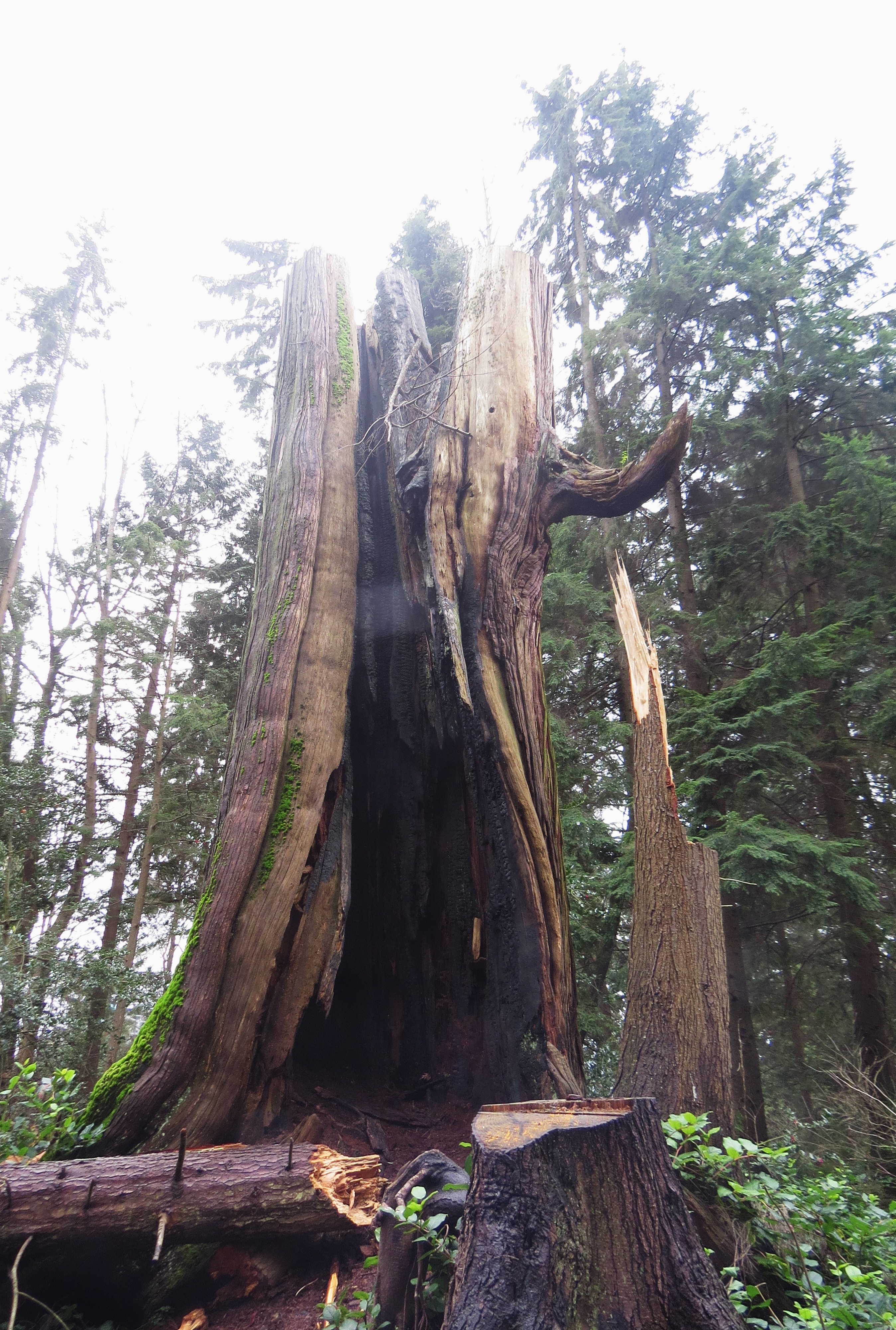
Cedry w moim parku w Vancouverze trwają prawie wiecznie, nigdy po prostu być nie przestają. Nim skruszy je śmierć dbają, by z ich korzeni, pni zmurszałych wyrastały już nowe, młode cedry. Swoisty rodzaj reinkarnacji botanicznej. Z prochu, próchnicy człowieka nie wyrasta nic, na pewno nie wyrasta nowy człowiek.
Więc śpiewaj puszczo dumna hymn życia. Niech cieszą się strumyki żywej wody płynące pośród twych korzeni. Spłyną do Zagubionej Laguny i opowiedzą o katharsis, o odradzaniu się, o trwaniu.
Wszak i ty, laguno powrócisz do morza, lub morze przyjdzie po ciebie, przytuli, przygarnie, jak macierz pamiętająca, trwająca wiernie.
Ja tylko jeszcze parę wierszy napiszę, kilka wierszy innych poetów przeczytam. I to wszystko. Wiersze to też tylko słowa, nic więcej. Przyjdzie wiatr i je porwie. Może rozsypie te słowa, jak nasionka, w jakimś starym parku i może drzewa je posłyszą w poszumie swych liści nim pofruną podmuchem i upadną – niepotrzebne – na bruki miasta, które też już dawno temu umarło. Miasta, którego ulice i domy będą kruszeć i zacznie powoli je zarastać trawa, krzewy i młode drzewa.
[i] wody oblegające Vancouver, to część tego morza; cieśninę między Vancouverem a Wyspą Vancouver koloniści brytyjscy nazwali Georgia Straight na cześć panującego wówczas króla Jerzego III.
[ii] plaże morskie w Centrum Vancouveru nazywane są liczbami: od Pierwszej tuż przy moście Burrard, przez Drugą na wysokości Lost Lagoon, po najdalej wysuniętą Trzecią.
Reading again the masterwork of Thomas Mann titled “Death in Venice”[i] took me to the edges of my agony of Love and Desire impossible. Of dreams and fears realized intellectually, but holding you emotionally as a powerless prisoner nonetheless.
Where is the line, the edge beyond which we are too weak to venture – and yet, we are crossing the borders all the time, becoming the papier-mâché dolls, whose strings are pulled by the demons and angels alike? Love and desire are narcotics, and we are the addicts. It is an ageless addiction, timeless struggle.
Mann’s writing is his Shakespeare’s “Romeo and Juliet”, his Dante’s ‘Divine Comedy’. But don’t be fooled by it as the only cornerstones of the emotional battles for they are also rooted in “Tristan and Isolde” of Wagnerian genes (through the musically insane “The Ring of Nibelung”). What is interesting is the fact that Wagner, due to his own romantic upheavals and problems, had to escape to … Venice to finish composing ‘Tristan and Isolde’. If Wagnerian music is added to the old Germanic mix (certainly known to Mann), than we can’t escape the influences of Valhalla! You imagination easily conjures the terrifying images of heavy hooves of heavy horses crossing the Alps, steam and foam escaping their nostrils, as they are marching to plunder and murder Greco-Italian vestiges of elegance and order. They are not galloping to discuss the politics and laws on Capitol nor the philosophical counterpoints on Agora in Athens. They are galloping to wash Rome and Athens with Roman and Grecian blood! The horses of Apocalypse at the end of times[ii].
Let us go back to temporary time. Here and now, to Moodswing Café in New Westminster[iii]. Pandemonium in my café, where I go on almost daily routine to write and to have my coffee. Always the same coffee – almost boring – but also a small sign of some order in my chaotic life, some ordinary habit. I came for that coffee and to finish reading Mann’s short story from Venice.
And I encountered pandemonium in that regularly quiet café: hardly a standing spot anywhere. Throngs of bodies, all sitting places taken. Gathering of folks from Rainbow Coalition.
By my table just a solitary fellow. I push few standing gatherers aside and sat by that table next to him. I placed my coffee there, ordered a snifter of wonderful Hennessy, took out my notebook, a pen and put it all on that little table. There was certainly very little place left for this fellow and his drink. He looked perplexed and asked me (without a hint of malice or any anger) very simple question: are you going to write in all that noise and crowd? I gave him a perplexed look and answered without any malice neither: Why wouldn’t I? I am w writer and writing is what I do, I’m not a mingler or joiner of crowds. I write here, by exactly this table. He seemed almost amused by my answer and continued slightly ironically: I didn’t realize it was your table (with the accent on the word ‘your’), should I move somewhere else? I completely disregarded the ironic tone of his question and turned my eyes to his face answering in matter-of-fact tone: Why? That is very kind and very understanding of you. Thank you very much. For a second or two he was speechless and shocked by my candor, than stood up, looked down at me and asked tersely: are you satisfied now? To which I promptly and honestly replied: But of course! And once again – thanks for your understanding. And I returned to scribbling my notes, as he walked away with a shrug of his arms. You can’t blame me for being honest.
Mann conjures all the mastery of Spanish painters in a Goya’sque[iv] style of the turn of XVII and XIX century: the elongated faces, the eyes full of mysticism or terror as in his famous painting ‘Saturn devouring his son’. He sees and feels Albrecht Dürer[v] depictions of Hell few hundred years prior to Goya.The writer is an opposite – one would assume – of terror or chaos. He is from elegant and very bourgeois Munich – just stone throw away to majestic and also stately Austrian Alps. Yet … yes, there is always an ‘alas’!
Suddenly the elegant world of Herr Aschenbah[vi] collapses. From the stately Bavarian city, the elegant slopes of Austrian Alps, from the elegant hotel in Venice, he takes us to the rocks of Tartarus[vii]. Ang[viii], an ungodly proto-Germanic god dons the mask of hoofed Pan[ix] leading a dancing caravan to the edge of desire, of want unfettered by ethics constructed over millennia to constrain lust and primordial instincts. Greed to posses the ‘other’ – his or her body. Almost like today in my café: noisy, talkative, music pulsating, vibrating, desires shielded from being recognized, yet existing, breathing, sweating.
Mann-writer dons the coat of suitor-painter. Hoofed Pan leads Bests and human folk to dance macabre, bodies twisted by primordial instincts of need and warm mist.
Gustav von Aschenbach watches with fascination, yet with terror, as the body count in diseased Venice climbs. Bu so does the throngs of strange animalistic crowd descending from the slopes of the mountains.
I am myself getting tired of Venice, of the sound of hoofs, strange creatures and I leave my café and go to my apartment shielded from all the pandemonium. Leave Tadzio, leave Venice and Valhalla, leave Thomas Mann and his desires. Adieu to all, I am off to bed.
Next day. I left and slept. But gods, the hoofs, the desires beautifully-innocent and the animalistic – they stayed up, waiting for me to finish their story.
Went again to Moodswing Café. All the creatures and characters from the book waited for me. Why should I write your stories? Because the reader?! What more does the reader need to know? An orgy in Elysian Fields[x]? Eurydice turning her back to Orpheus? The River of Forgetting?
No! I have much darker future to foretell you. On my own will, not forced by powers untold.
I wish upon you a march, a cavalcade if you will through the boring meadows of mundane, fields of ordinary days and nights without dreams. Maybe even worse – memories of youth vanishing bit by tiny bit until the Etruscan vases from red clay will dry up. You will no longer remember Alexander and his lover, whom he made himself a living god; you will not recognize young Tadzio sitting on Lido in Venice. But you will survive. You will not die there. You will live a long life somewhere in boring Bavaria forever regretting your cowardice and asking why did you not taste the sweetness of Tadzio’s lips? Never.
Trust me – that torment is hundredfold more terrifying than sudden death in Venice. Thus spoke Zarathustra[xi]. And who would dare to challenge god?
[i] T. Mann, “Death in Venice”, trans. by J. Neugroschel; pub. by VIKING in 1998
My Three Loves never left me. I have never left them, nor have I forgotten them. Through all my early years as a teenager, in an old country on the old continent, country that was greyer than the buildings sorrowing people, who lived there.
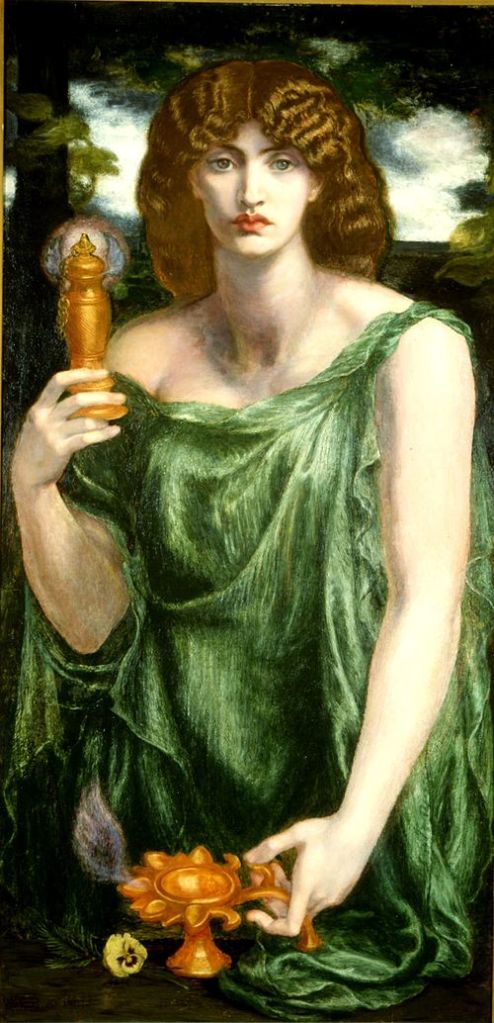
Mnemosyne
(by Dante Rossetti)
But my first love that had sprouted in my heart made it flowering, singing above the roofs of these grey buildings. The city of grey buildings, that rose from the ashes of the worst war that fell upon humankind. Yet – my first love gave it a warm embrace that belongs to the titanic Mnemosyne, mother of all the muses, daughter of Uranus and Gaia[i]. She was not the most sympathetic and meek of Titans with a slightly twisted taste in romantic escapades, after all she also bedded Zeus himself, who was logically speaking … her brother. But who’s blaming anyone? Not the Greek gods (or any gods, god forbid!) for their erotic (diss)behavior. I am merely a human, nothing more. For me then, in the grey city of my grey youth, Mnemosyne was the mother of Muses. That cleared her of any other crimes or indiscretions. Who would anyway, any other way? Surely, not when you are fifteen, seventeen or twenty! Love disregards all and any boundaries. And I was in love! Purely platonic, but fearless and furious; intellectually and emotionally on equal basis. And that love, otherwise called ‘friendship’, stayed with me my entire long life. I have never left her, she stayed with me in my traveling luggage all these decades.
My two other loves happened years after the first one. The next one happened almost unknowingly to my senses. It happened in that old country, still very much grey and poor, but on a threshold of new-found freedom, with dreams and appetites for brighter and greener fields ahead. A boy was borne of familial spring, just like the nymphs chasing after the image of Hyacinthus immortalized by songs of his Olympian lover – the God of Love Itself. But beware of love offered by gods, my dear boy! They never end well for lesser lovers. I’ll tell you a story here, later on, in the last chapter, of the price I paid for asking for, and being granted the Love Immortal. The grief is as deadly, as the disk of Apollion that killed his lover – Hyacinthus. But wait, I take back these warnings and the words of sorrow and grief. For Love Eternal outlasts grief and sorrow. Each time and every time. Lament is temporary and is a sign of temporarily losing your perspective. If you grief losing a lover – the lover’s love will come back to you in time, for love can’t be solitary. It will seek and enter the other lover’s soul, because Love needs a nest.
Alas, we went too far in this true fable, the allegoric story of my ordinary life and my Loves Immortal.
Boy was born in the Old Country, as I said. We all rejoiced. Remember walking with my parents, his older sister (a child herself), and the little boy in a walking stroller, a long walk through the countryside near Warsaw, through fields and meadows, to an old palace of some aristocratic imminence and a beautiful stream running through the meadows. Of course, we all loved the new boy. But I had no idea how important, how encompassing, and not always easy at all, that love would be. Didn’t have to wait very long, though, just few more years, few more of my returns to that old familial country and I knew. It was unspoken, unexplained, but very clear. She sprung not suddenly and unexpectedly, didn’t come from ‘the bolt in the sky’ (as it did happen in my last Love Eternal).
It was warmly growing inside me, flowering with tenderness. He was still a child, whom I could carry on my shoulders, as we walked through the streets of that old city that used to be so grey in my youth. But now the city was truly beautiful, transformed by modernity and embracing Western Europe. With that, it embraced the traditions of old Greece, of Zeus and Plato, and Plato’s talks with the boy Phaidros. The sweet youth, who desired his teacher, the old Socrato, and a thought that there must be something wrong with him, since his beloved teacher would not accept the gift of his pupil’s young body. But Socrates was wiser than simple desire. He knew that the boy deserves better than a tired body of not very attractive nor a rich old teacher. That in itself, without any further arguments, proves that Socrat was perhaps in love with that youth and choose of his own will a chanced possibility of better future for Phaidros. A sacrifice, if you will.
Not unlike relationship between Herr Aschenbach and sweet adolescent Tadzio, in “Death in Venice”[ii]. Sweet, tender and innocent – until one afternoon Aschenbach runs away from Tadzio to a park, exhausted and ashamed of himself collapses on a bench and hears himself saying aloud the dreaded proclamation: I love you. But once you say it aloud there is no escape, no turning time back. Ha! That ‘thing’: your desire, your dream could be the abyss of torment. Bliss and condemnation eternal.
What happened in that novella, if it happened and why, is totally irrelevant to our discourse on Love Immortal. If you want to – buy or borrow that booklet from a library. It is not very long, but definitely it is master class of literature.
Hence – back to our story, my Second Love eternal to that boy from an old capital in Central Europe. Years (not that many in my calendar, but must have felt like an eternity in a teenager’s life of that boy) have passed and that boy, in a pivotal time of transformation into adulthood, comes to me in the New World, across the vast ocean and entire continent in search of his destiny(?), his ways through life. In short: in search of himself. At that time I was already well established, secured and totally committed and enthralled with my lifetime Love Eternal, one that consumed me happily, engulfed, and enthralled me without any hesitation. The one that was romantic and erotic. That boy from the Old Country came here exactly for these reasons, too. Firstly, he knew that I love him dearly and sincerely and I would not offer him anything that would be false, or based on pretense or judgment; would protect him, in as much as I could, from any harm that a sudden freedom can bring too.
That was the time, when my Love for that boy transformed to my Love Eternal: when he stopped being a boy from an Old Country, a nephew, for whom you care enormously – he became my Prodigal Son. Without any too strict connotation to the biblical story (of course, if needed, mistakes and transgressions would be forgiven – what proper father would not?). With another number of years the boy become a mature, well established, and educated man. For any parent, biological or emotional, it sounds like a solid reason to be proud. I am.
My Third Love
How should I name you, how should I call you, by what name? Who you are, who you were, where are you?
I can call you by my name for you are me. I can call you by your name for I am you. I can call you Love for you are My Love. Encompassing all my days and nights. Quivering like a blade of grass on summery meadow. Quivering and fluttering like my heart, when I call your name. I won’t be scared whispering to you: I love you – I will be brimming with pride, when I say it. You, who crossed the continent with me, to be with me. When I asked you, where we should settle for our sunset years, you answered: anywhere where you are going to be, because you are my Home.
When we met at the foothills of majestic Cordillera, bellow the amazing peak of Assiniboine Mountain, on the meadows flowing from the enormous Mount Temple, when we walked in the shadow of Mount Robson I wanted to hold your hand in mine. Wanted to show you how beautiful you look in the glory of these peaks surrounding you. Wanted to ask the angels floating around these peaks to come down and embrace you in their warm, godly wings. Just as I would, if I was a god. Maybe we were the gods? Didn’t we possess the most important attribute of deity: Love Eternal? Love that is everlasting. The Black Angel of Mercy in Hyde Park on Manhattan told us so, when we went on sunny October day to visit him.
When we walked the beaches of Northern Pacific in Tofino telling the anemones the story of our love – they danced in waves of happiness; when we walked the white beaches of Eastern Shore on Atlantic coast of Nova Scotia – the eagles danced above our heads and parasailors smiled seeing us traversing the beach.
You – my Third Love were the epitome of love, the Mount Everest of being alive. If I ever would lose the sense of smell – I would still remember the smell of your skin. If I ever lose my sight – I would still clearly see your eyes. If I ever lose my memory – I would want to not know who I am at all, because I would be nothing without the memory of Our Love.
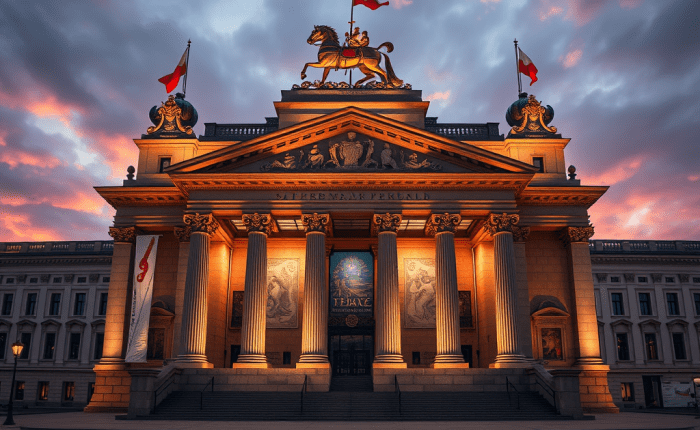
29 listopada w Warszawie. Gdzie? No jakże gdzie? Senatorską dojdziecie od Ujazdowskich lub z drugiej strony od placu Bankowego. Taki wielki gmach z kolumnadą podwójną i rozszalałą kwadrygą na szczycie. Pędzą te konie, aż piana spada im płatami po bokach! Jak to czemu pędzą? No przecież nie mogą się spóźnić na własne podwójne urodziny! Dwieście lat i sześćdziesiąt. Te pierwsze to od narodzenia, a drugie od odrodzenia.
Melomani i muzycy pewnie już wiedzą, o czym piszę, a ściślej, o jakim budynku, o jakiej instytucji. Innym podpowiem – o Wielkiej Instytucji, tak w wymiarze materialnym, jak i emocjonalnym, duchowym.
Teatr Wielki i Opera Narodowa.
Może nie jest w powszechnej świadomości z tego znany – a jest raczej zdecydowanie wśród muzyków i melomanów – ale warto wiedzieć, że to największy na świecie budynek/kompleks operowy. Ilość podziemnych pracowni, maszynowni i dziesiątki (pewnie setki!) pracowników przekracza normalne wyobrażenie instytucji teatralnej.
Ani wspaniała stara La Scala, ani przecudny budynek Opery Paryskiej, ikoniczna bryła Opery w Sydney, ani marzenie solistów- Metropolitan Opera w Nowym Jorku nie mogą się z warszawską Operą kubaturą mierzyć.
To tu śpiewała Ada Sara, legendarna primadonna przedwojennej Warszawki. Tu spędził swoją całą karierę, a to ewenement wśród solistów operowych i baletowych, którzy zawsze szukają nowego engagemount po całym świecie, by zwiększyć międzynarodową sławę, wielbicieli i … apanaże. A ten, choć znany i uznawany za jednego z najlepszych basów świata – uparł się, że tylko tam. Naturalnie mówię o Bernardzie Ładyszu. Jedyny polski śpiewak, który nagrał płytę z primadonną wszechczasów, Marią Callas[i]. Tutaj dyrygowali bodaj najlepsi dyrygenci naszego globu, kompozytorzy. Z tą sceną związani byli wybitni polscy kompozytorzy – gwiazdy pierwszej wielkości na muzycznym firmamencie świata: Szymanowski i Penderecki. Tu śpiewała wspaniała sopranistka Wanda Wermińska, która we wczesnej młodości scenicznej występowała w Budapeszcie u boku legendarnego Szalapina. Maria Fołtyn, w 1953 odegrała na tej scenie wielką interpretację Haliny w produkcji „Halki” Moniuszki pod dyrekcja samego Leona Schillera (1953) – lata później obwiozła tą „Halkę” po całym świecie, by ten klejnot polskiej muzyki operowej rozsławić.
Tych kilka słów, to wszak jedynie muśnięcie warstwy operowej – Opery Narodowej. Wszak ten kompleks, ta Instytucja Kultury to też Balet Narodowy, to Teatr Narodowy (teatr w tradycyjnym, nie muzycznym wymiarze literackim).
I znowu najsłynniejsze nazwiska sceny teatralnej się sypią, a wśród nich bardzo kontrowersyjna, ale i niepospolitego talentu – Adam Hanuszkiewicz. Uczył nas przez kilka dekad, że dramat narodowy (ale i dramat światowy) można interpretować zupełnie inaczej. Pokazywał ostentacyjnie ‘figę z makiem’ krytykom i publiczności stołecznej. Czasem wydaje mi się, że tak się do tej roli kontestatora przyzwyczaił, iż robił to nie zawsze z potrzeby artystycznej, a ze zwykłej przekory: mam was w …, nie chcecie to nie musicie oglądać, zostańcie zastygłymi w czasie durniami-szlabonami. Przykładem bodaj najgłośniejszym była inscenizacja narodowej ikony Romantyzmu „Balladyny” Słowackiego. Balladyna na motorze na scenie Teatru Narodowego – obrazoburcze (jak na tamte czasy)![ii]
A Balet Narodowy? No a gdzie zacząć? Od kogo? Jerzy Gruca, Stanisław Szymański, Gerard Wilk, Waldemar Wołk-Karaczewski … nazwiska się sypią z szuflad pamięci tancerzy i tancerek wspaniałych. Wielką szkodą było nie pozyskanie dla pierwszej narodowej sceny baletowej wielkiego reformatora baletu Conrada Drzewieckiego, światowej sławy choreografa. Ale lata PRL to były czasy, gdy ludzie ze sztuką nie wiele mający wspólnego często podejmowali decyzje personalne z powodów tylko dla nich zrozumiałych[iii].
Na tej zaczarowanej scenie tańczyła moja ciotka, Bożena Gadzińska-Pacak. Wiele lat później jednym z czołowych koordynatorów Baletu Teatru Wielkiego został mój znajomy z lat mojej młodości Paweł Chynowski. Kiedy się poznaliśmy był najbardziej szanowanym krytykiem muzycznym z regularną szpaltą w popularny dzienniku „Życie Warszawy” i wielu pism specjalistycznych w tym temacie w kraju i licznych publikacjach zagranicznych. Wespół z Satanowskim doprowadzili do nadania baletowi Teatru Wielkiego samodzielnej pozycji Baletu Narodowego, niezależnej od Opery i Teatru. Nie przypuszczałem wówczas, że karierę zawodową zakończy na samym szczycie choinki narodowej kultury. Z tych wspomnień wyłuskuję też poznanie w Ciechocinku legendarnej Wandy Wermińskiej (wówczas już po zakończeniu kariery śpiewaczki). Spacerowałem z babcią po ciechocińskim Parku Zdrojowym, a tu nagle jakaś korpulentna pani krzyczy: Pani Wandziu, jak miło panią zobaczyć! Okazało się, że sopranistka znała babcię od lat bardzo dawnych. A mnie udało się wówczas poprowadzić z nią bardzo długą rozmowę. Z innych znajomych związanych z tym Teatrem był znany polski kompozytor i dyrygent Henryk Czyż, który na oczątku lat 60. ubiegłego wieku dyrygował w Operze Narodowej[iv].
Ostatni raz byłem w naszej cudownej Operze Narodowej w 2018. Wybrałem się tam z mim siostrzeńcem Damianem na fascynującą operę Verdiego „Nabucco”[v]. Grana jest tam non-stop w każdym sezonie od 1992 roku. Nie wiem jakie sceny światowe tak „Nabucco” jeszcze wstawiają – z rozmachem, przepychem godnym splendoru Babilonii Nabuchodonozora. Na scenie pojawiają się żywe konie … ze własnej stajni Teatru Wielkiego, który jest ich domem! I w specjalnej windzie tam zbudowanej, która wwozi je prosto na scenę. Cóż więcej powiedzieć można? Która opera na świecie ma własne stajnie?
You did talk to me last night, first time in a while. Yes, it was a strange night, followed by strange day. Or was it the other way around? When you are alone, without a set schedule or watch, things do get mixed up easily. Dates especially: Mondays become Fridays, Fridays Tuesdays. So what happened to Wednesday, you ask? Who cares what happened to Wedneday, perhaps I left it on a beach, or on a bench in some park? Maybe it is still in the shower when I saw it last time I was taking a shower? What? Do I not take a shower every day? Maybe not, maybe sometime I take a bath, who cares? You really are asking way too many questions and it is my story anyway. Be quite, just listen.
No, not you, Babycake – I’m talking to my alter ego. You wouldn’t ask such stupid, mundane questions.
But the day or the night when I was still in bed, when I was sleeping, I dreamt of you, I talked to you. Have not done it in a while. I thought that you just let it go, these talks of ours across the boundaries of life and death. Thought maybe there is some allotted time that you can do that and maybe you have used it up? I don’t know. Remember? I am the one still left alive, never been consciously to the other side.
None of it is important really, anyway. I have dreamt of you in my sleep. It woke me up and there you were, next to me. No, I couldn’t see you, but you were there talking to me, you were saying something important. You said that I have to understand that I am alone. That adjective ‘alone’ stood up as a mountain, a wall impregnable, forest too dense to walk out of it. I was getting used to be ‘alone’ in an adverb form.
Since I came back to our home, our former life here, in this city, this province, I have become very busy in many aspects: walks, friends, beaches, concerts, plans. It was just hard to go back to our home, our street. So I did it very seldom, hoping that it will allow me to function as normal as possible. And it did. Had evenings in bars, laughter, maybe a flirt or two. It seemed normal, I was spared any regrets. It was almost as I would finally get across that invisible line of Doctor Time, who heals old wounds; whose grief becomes first bearable, then transforms itself into a memory. Memory that is sad, but also happy that we did have our time, we found each other among the millions of people. As I was told many times, that it will get easier.
You think that was an expectation too easy, perhaps? I am not, after all, just a single guy ready for the picking and ready for harvesting. Is there anything wrong with it, isn’t it logical, practical?
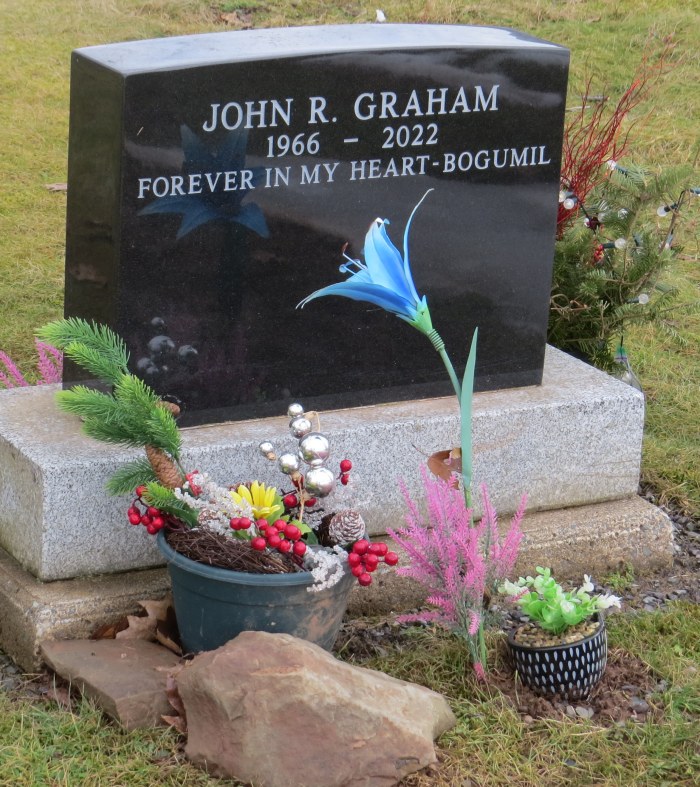
I have reached to my writings of the early days after you were gone, to the first winter after you were gone and my constant visits to the gravesite in Pictou. Yes, that old ancestral town, where we were going to build our home, and spent the rest of our lives in that home. We did not.
(notes from my writings after John’s passing by the end of November 2022)
Pictou
One year. It is hard as hell. Came to Pictou to spent time on the cemetery where we put your ashes. It’s windy, very cold. Desolate place. There was no one else there, on the cemetery. I know – it is only a stone with your name on it. Yours, your parents, and your baby brother you never had a chance to know. And now, there is also your oldest brother Fraser, who was laid there just few months ago.
Cleaned around a bit, threw away old winter flowers, and fixed things. Fixed things? How to ‘fix things’? Nothing can be fixed, when everything is broken.
Yes, I know that you are not there, not under the ground. You are with me. Forever. I have engraved on that stone myself that you are forever in my memory. I looked at the letters and smiled. In my memory, really? That’s what it all came to? Our Love, our life: to be remembered? How silly words could be, when they try to describe emotions, feelings. But still hoped that many years from now, when all of us, who knew you and me, would be gone – a stranger would wander to that gravesite and he would think, that the guy who is buried there was indeed ‘non omnis moriar’, that part of him lived in that other guy’s heart. Nice thought.
You and that Love of ours are engraved not on the stone, but in my soul.
Me? I don’t remember who I was before I met you. I was just waiting. Waiting and searching for you – and I have found you.
Now, now it is almost three years later. I am here, back to our good life on the shores of the other ocean. Were we had home, a nest, were we had dozens of friends, people we cherished and who cherished us. Some were ours; others were exclusively yours or mine. The two halves of Us were surprisingly very independent and strong, if only by the constant knowledge that the other half is there to make it whole.
I don’t have that knowledge anymore. The other half is gone, it is just me left. Those many people I have known, and who sought my presence are still here. Not all of them, granted. Some have left either this life (as you), or this city. But some are still here. None seem to really need me. I am not sure I need them. Of course there is some curiosity, some friendly waving of a hand: how nice to see you again, you are looking good … and so on. I thought that I would need to search for them myself, that I would want it very much. But if I’m always finding excuses and ‘important things’ that prevent me from doing it – am I really?
I have one important friend and, strangely enough, one with the shortest amount of time we spent in this city before we left for Nova Scotia. Less than a year, I think. After my dearest nephew had to go back to Poland, but still this young and very mature nephew was my angel in the first month after John was gone. Then my niece with her husband and son came to stay with me. But he, that younger friend of mine from Vancouver, somehow helped me in the dark months after I was left alone in Halifax. The rest seemed like eternity. Eternity of being in hell, or waiting for the hell’s gates to be opened, to swallow my world. At these dark times that younger friend kept me connected to the world and people by phone. Our long conversations were instrumental of me getting the skeleton of myself back into me.
That is how I did return. To the place of Our home, our happiness. These places somehow were the strongest magnet for me. I submerged myself in going alone, for days on end, on long walks through parks, streets, squares, building were we lived, were my mom lived, were I was with my sisters, my nephew and niece. Places that were calling me. Yes, places, much more than people.
I think that we all have these special places, sometime in many countries, on different continents. Special places that act as an anchor on a ship of life. Where we can drop that anchor and stay safely in some magical Bay of Memories.
It is also a time to untie that line across the sides of our two separate boats: mine and the one belonging to my younger dear friend. He has journeys to make across the sea himself, his journey, not ours. That is also a part of me being alone. My boat is rusted a bit, engines are old. It will still make it though, the last long sailing, perhaps passing the Cape of Hope (not the Cape of Horn), back to original shipyard of its maiden voyage. Then I will rest.
After that rest, I will go alone on many walks to many places (some might not exist materially anymore, but will in my world) that will call me. Solitary walks. It will be like existing in two different dimensions.
One day (no, not in my sleep) perhaps suddenly, out of the blue, I will see you taking the same trail or road and walking toward me, and I will stop being alone. I do hope so. Even in a faint split second before the big Nothingness.
It is what it is. Could be silent, but even than it is not nameless.
Yet, we will not call that name today. We know what it is. Sad but proud; weeping but not hysterical. Sad but understanding; resigned but not broken.
Thinking – strangely enough – about two old movies, that made an enormous effect on me as a very young boy. One with Lamberto Maggiorani in “Bicycle Thief” [i] and incomparable Gulietta Masina in “La Strada”[ii]. Dreams and loves. Devotion and standing by your loves no matter what. Beyond the beyond.
Words. Many words.
The soft and the tense.
Words that can pierce,
be sharp but still true.
They are an umbrella
on a rainy day:
it does not bring sunshine,
does not clear the sky,
but it saves you from being wet.
Perhaps there is even a chance
that such an umbrella
will take a flight with you
to the clouds, to the skies.
It is better to be silent
than to use the thread of words
for making a garment
of lies and half-truths.
Walk silently through
the park filled with good words
where leafs whisper
the promise of a kiss and
touch of fingertips and eyelashes.
Words should never be
like grains of sand in a desert
or they will lose their meaning.
It is good to thread them
on strands of necklaces,
make earrings of them –
it makes them easily accessible,
without the need to always
use a coin for new ones.
Words, you see, are like
years and days: they are
on very limited number.
The story lives
in your heart and soul,
not in thesauruses.
Words are the keys
to books unwritten, yet.
(Polish vrsion – both were written simultaneously, not a translation)
(pisane w kafejce Melriches na Davie, w Vancouverze, 18 listopada 2025)
Bogumił Pacak-Gamalski-Graham
Dziś byłem zły na Ciebie. Jeszcze jestem.
Wróciłem tu, na rzut kamieniem do naszego domu. I mogę iść tam, mogę walić w okna, krzyczeć, a nikt mi nie otworzy, nikt nie spyta, czy potrzebuję pomocy.
Z okien mojej pustej sypialni patrzę na mosty łączące brzegi wielkiej rzeki. Równie szerokiej i prawie równie ruchliwej, jak ten kanał atlantycki łączący dwa miasta w Nowej Szkocji. Tam też, po tym listopadzie okrutnym, nieludzkim, z okien naszej ostatniej wspólnej sypialni widziałem most łączący dwa brzegi: ten z naszą sypialnią, na drugim szpital, gdzie Cię żegnałem zaklęciami i łzami.
Dzień wcześniej, na kamiennej podłodze korytarza łączącego naszą sypialnię z moją pracownią-biblioteką klęczałem nad Tobą leżącym na tej podłodze. Krzyczałem też, zaklinałem usiłując ustami wepchnąć życie w Twoje ulatujące życie. Nie miałem czasu na płacz, bo każda sekunda była droga, trzeba było być uważnym, czujnym, chciałem być demiurgiem, który tchnął w Ciebie te życie odlatujące, powstrzymać je w Tobie. A tyle jeno zyskałem, żem bicie serca utrzymał nim przyjechały te karetki. I przez to mogli Cię potem do tych maszyn okrutnych podłączyć.
A Ciebie już w tym ciele zmęczonym nie było. Już byłeś wolny. Już Cię życie nie szarpało, nie gryzło, nie zadawało bólu.
Nigdy nie byłeś samolubny, myślący głównie o sobie. Nigdy – prócz tego dnia, na tej kamiennej podłodze przy naszej sypialni. A tego właśnie dnia powinieneś myśleć o mnie, nie o sobie. Tego dnia, tam, w ostatnim momencie powinieneś zdobyć się na ten wysiłek i zabrać mnie ze sobą. Musiałeś, a nie zrobiłeś tego!
Tak – byłem silny. Ale byłem silny, bo miałem być silnym dla kogoś. A na cóż mi dziś moja siła? Zbędna, jak te powietrze, którym oddycham. I dlatego jestem zły. Nie dlatego, że Cię nie ma, skoro być przecież nie możesz. Jestem zły, że ja jestem.
∞∞∞
Po miesiącach wielu, gdy wróciłem tu, do naszego domu, naszej prowincji, zjawiłeś się kilkakroć nocą w moich snach, szeptałeś zatroskany, że nadszedł czas, że mam żyć, że dajesz mi prawo do życia znowu, że chcesz mnie widzieć korzystającym z niego, żyjącym. Sądziłem, że masz wiedzę szerszą niż moja, bo ‘stamtąd’ pochodzącą, tą wszechwiedzącą. I poszedłem za tą radą. By obudzić się którejś nocy i zreflektować, że nie, nie masz racji. Że tej wiedzy tam, gdzieś w kosmosie, nie ma. W każdym razie nie więcej niż jest tu. Bo na cóż mi twarze i dotyk kochanków młodszych o generację? Nie jestem wszak wampirem, któremu do życia potrzebna ich krew. Mnie życie po prostu nie potrzebne. Nie potrzebni mi kochankowie, którym nic prócz fizycznego momentu nie mam do zaoferowania. Nie chcę być tym dzbanem z fatamorgany, z którego nikt nie może się napić. Nie chce być ni tym dzbanem, ni tą wodą dla spragnionych. Nie chce po prostu. To takie proste.
Nigdy, w żadnych dokumentach, w żadnych szeptach, przysięgach i pocałunkach nie wyrażałem zgody, że sobie gdzieś po prostu ulecisz, przestaniesz być sam, beze mnie. I o to jestem zły. Bogów i szatanów się nie lękam. Śmieszą mnie swym wabieniem i przestrogami.
Tylko … widzisz i ten dzień dzisiejszy, ten zły dzień, dobiega właśnie końca. I z nim odchodzi moja złość egoistyczna, żeś mnie wówczas nie zabrał ku tej drugiej krawędzi świata. Tamten dzień okrutny i ten dzisiejszy pełen złości na Ciebie pewnie wrócą jeszcze nie raz. Ale nic, żaden kataklizm, żadne zaćmienie słońca i gwiazd nie zaćmi szczęścia z dnia, w którym znalazłem Ciebie. A szukałem przez wiele długich lat, w wielu krajach na kilku kontynentach. Za bardzo drogie klejnoty płaci się bardzo wysoką cenę.








 > > Pogwarki < <