Moja Kosmologia

Moja Kosmologia

Bogumił Pacak-Gamalski

Prośba

Nie przychodź tylko w odwiedziny

w dniu rocznic ślubów, spotkań.

Okrutne chłopcze księżycowy

by to było i zaiste banalne.

Nie chcę byś był gościem

najbardziej nawet oczekiwanym.

Mówiłeś: jesteś moim domem.

Więc bądź codziennie,

bądź rano, za dnia, nocą.

Nie chcę być bezdomnym,

nie chcę byś był moim

lamentem, bólem, krzykiem.

Chcę byś był radością i hymnem.

Nie chce zamknąć cię w sonecie,

elegii płaczu i westchnień.

Chcę byś był, jak śpiew ptaków

na spacerze, jak pocałunek

zakochanych na łące traw i kwiatów.

B. Pacak-Gamalski, Moodswing Cafe, 15.10.26, New Westminster

Dziwny jest mój świat. Ne, nie ten świat ze słynnej i pięknej piosenki Czesława Niemena, piosenki o nadziei, że … no, że będzie lepiej ze względu na ludzi z dobrą wolą. Może i będzie, może i są. Przyznaję jednak, że chwilami to czekanie już mi się wydłuża. Tu jednak o tym moim dziwnym świecie.  Świecie zwichrzonym, zawieszonym pomiędzy bytem i niebytem.

Świat Niebytu niekoniecznie jest gdzieś w komnatach Tartaru, Hadesu. Tam, po tej Drugiej Stronie. Czyżbym szykował się do tej ostatniej podróży? Mój Niebyt ostatecznie nie jest śmiercią. Jest wyłączaniem się, byciem poza lub obok. Ja jeszcze jestem, tylko nie zawsze jestem widoczny, słyszalny.

To jest jak szkoła: moja klasa jest na parterze, jest lato i okna otwarte szeroko. Nauczycielka odwrócona plecami do klasy pisze coś białą kredą na czarnej tablicy. Więc ja – siup! I przez okna wyskakuję. Ona może nawet nie spostrzeże mego nagłego braku. Listę Obecności już sprawdzała i inwentarz się zgadza, jestem zaksięgowany.  To nie są też wagary, bo do szkoły przyszedłem. Po prostu, bez hałasu wyskoczyłem z budynku, na przerwie może nawet wrócę. A może nie.

Więc tu, w tym życiu czasem wyskakuję ‘przez okno’. Robię sobie pauzę.
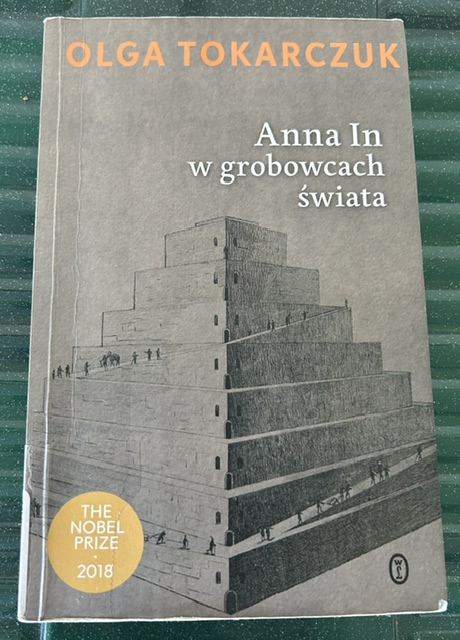
Czytam „Anna In w grobowcach świata” Tokarczuk[i] – na szczęście nie jest objętością „Ksiąg Jakubowych”, którego to arcydzieła nigdy w całości nie przeczytałem. Napisała to w latach, kiedy już przestałem czytać wielgachne powieści w całości. Przeczytałem więc sporo początku, dużo środka i zakończenie. Wystarczyło. To dobra powieść, polecam. Gdyby nie to, że wydać się może zarozumiałe, to bym był napisał: mądrej głowie dość po słowie. Ale zarozumiały nie jestem, więc nie napiszę. Po prostu czasem mnie nie ma. I nie chcę trwonić tego czasu, jak pan Proust. Wszak jeśli pierwej z roztargnienia lub ordynarnej dezynwoltury nie zgubisz i nie stracisz, to nie ma czego szukać. Lub można wyskoczyć przez okno na chwilę…

Okno się zawsze znajdzie, nawet w parku miejskim lub na plaży. Wszechświat składa się z okien. Trzeba je tylko umieć otwierać i broń boże nie wybijać szyb, bo to świętokradztwo! Raz wybite okno przestaje być oknem. Staje się po prostu dziurą. Dziurą w jaką wpadła na przykład Anna In. Z dziury można nie umieć wyjść, a wtedy staje się grobowcem.

Malraux w swoim traktacie o sztuce pisze o świecie nierzeczywistym i nadprzyrodzonym[ii]. O obeliskach bogów, którzy zmarli. Czy zmarli?

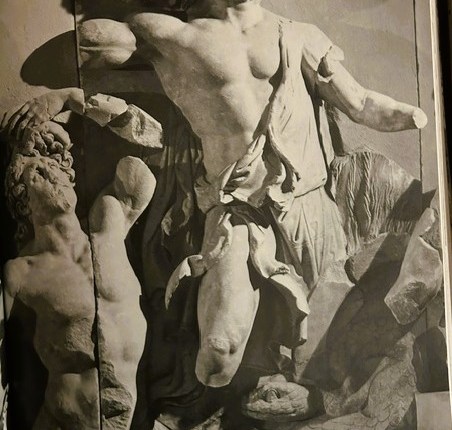
Bogowie ożywają w każdej sekundzie, gdy wymawiamy ich imiona. Ozyrys, Horus, Izyda, Jahwe, Pele, Śiwa, Apollo … Nie, Apollo chyba jednak nie, bo bogowie helleńscy są nieco śmieszni. Byli raczej zwykłymi mocarzami, herosami żagli, żądz. A że żyli na długo przed homerami i skrybami, to uczyniono ich bogami. Ale to zwykłe oszustwo dla podniesienia własnego dobrego samopoczucia. To tacy ‘bogowie’ z rodzaju chciałaby a się boi. Nie mam pewności co do ich dziadów, rodziców Zeusa (kwestie nazewnictwa: syn, ojciec, dziad, matka, kochanka w mitologii greckiej to rzecz nader skomplikowana – wszyscy oni mieli ze sobą wzajem jakieś dzieci. Bardzo byli kochliwi i brat bywał jednocześnie ojcem i synem), więc gwoli ostrożności przyznaję, że Uran i Gaja bogami być mogli. Głowy bym nie dał, ale załóżmy dla świętego spokoju.

Moi bogowie żyją na ogół nie dłużej niż kilka chwil. Ci wyjątkowo potężni i mocarni może kilka godzin. Więcej czasu nie mogę im dać, bo mój też się bardzo skurczył. Została z niego taka mała kruszynka, kuleczka, która toczy się po trotuarach warszawskich w kierunku Wisły. Gdy wpadnie w nią, zatoczy na moment tylko kilka kręgów i zniknie.

Może wtedy starzy bogowie będą znowu mogli żyć wiecznie. Może. Ja już tego nie zobaczę. I tak chyba lepiej, bo pewnie strasznie by się na mnie gniewali i mieli pretensje, że ich uśmierciłem. A w takim towarzystwie człowiek nawet nie pogada sobie spokojnie przy jakiejś małej czarnej w ulubionej kawiarence.

dedykuję Oldze Tokarczuk

Czytam w kawiarni książkę i myślę

między linijkami tekstu o tobie.

Nie, nie przeszkadza mi to

w czytaniu – przeciwnie: układa się

jak osnowa i wątek w barwną

tkaninę czasu i życia.

Pisarka jest znana, dobra.

Opisuje drogę do miasta, które

było i królestwa którego nie ma.

A było tylko dla niewidzących,

a nie było dla niepotrzebujących.

Inna mapa, zna ją w innym wymiarze.

Kawa w kawiarni mi stygła.

Ale pamiętałem jej pierwszy łyk:

była wtedy gorąca. Przez tą pamięć,

w dalszym ciagu jest gorąca.

Tylko czasy krzyżujące się, nakładające

się na siebie, przenikające się istnieją

w prawdzie, w nocy i dniu trwającymi.

Na dwóch wargah jednocześnie.

Obserwowane tylko w jednym wymiarze

momentu kruchego jednej rzeczywistości

są niewidome, potłuczone jak ostry sztylet

rozbitego na drobne kawałki zwierciadła.

Przestaję czytać książkę – wchodzę pomiędzy

jej strony i idę jej korytarzami w otwarte

komnaty, gdzie okna są drzwiami, jest

jedna tylko ściana, a podłoga zwija się

jak dywan i siada u boku sufitu.

Wtedy wiem, że jestem w domu

B. Pacak-Gamalski, 21.10.26, kawiarnia Melriches, Vancouver


[i] Powieść polskiej noblistki Olgi Tokarczuk osnuta na micie bogini Isztar cywilizacji mezopotamskiej

[ii] 3-tomowe dzieło Andre Malraux (‘Nadprzyrodzone’, ‘Nierzeczywiste’ i ‘Ponadczasowe’); wyd. KAW, Warszawa. ISBN83-03-00750-5
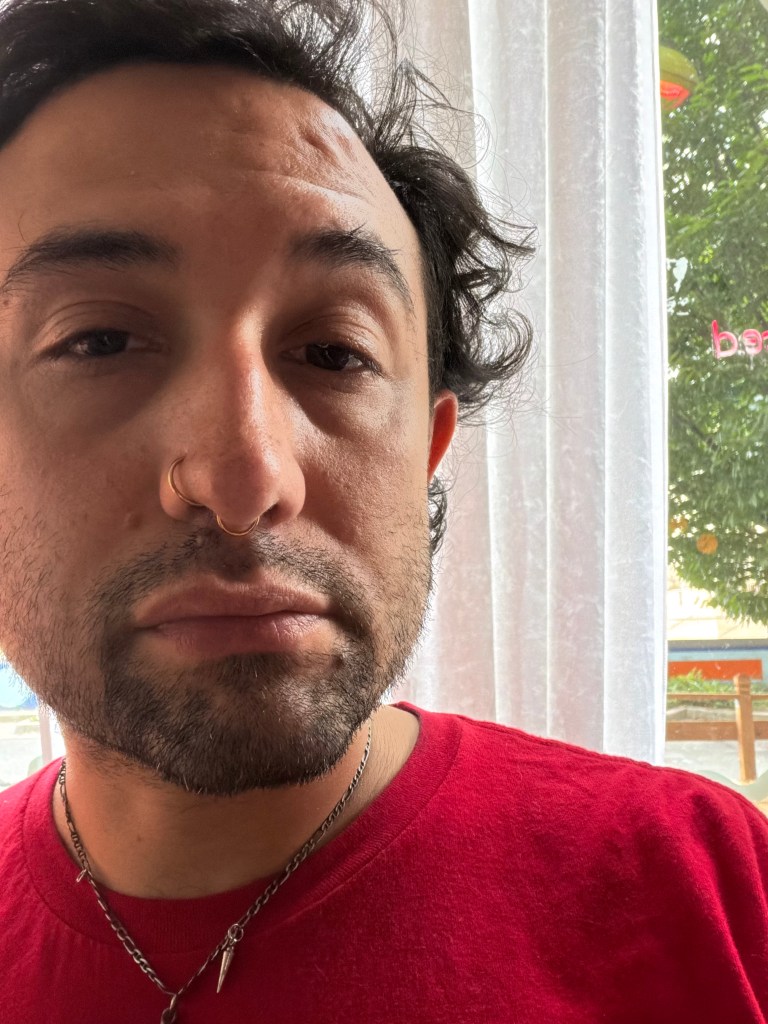
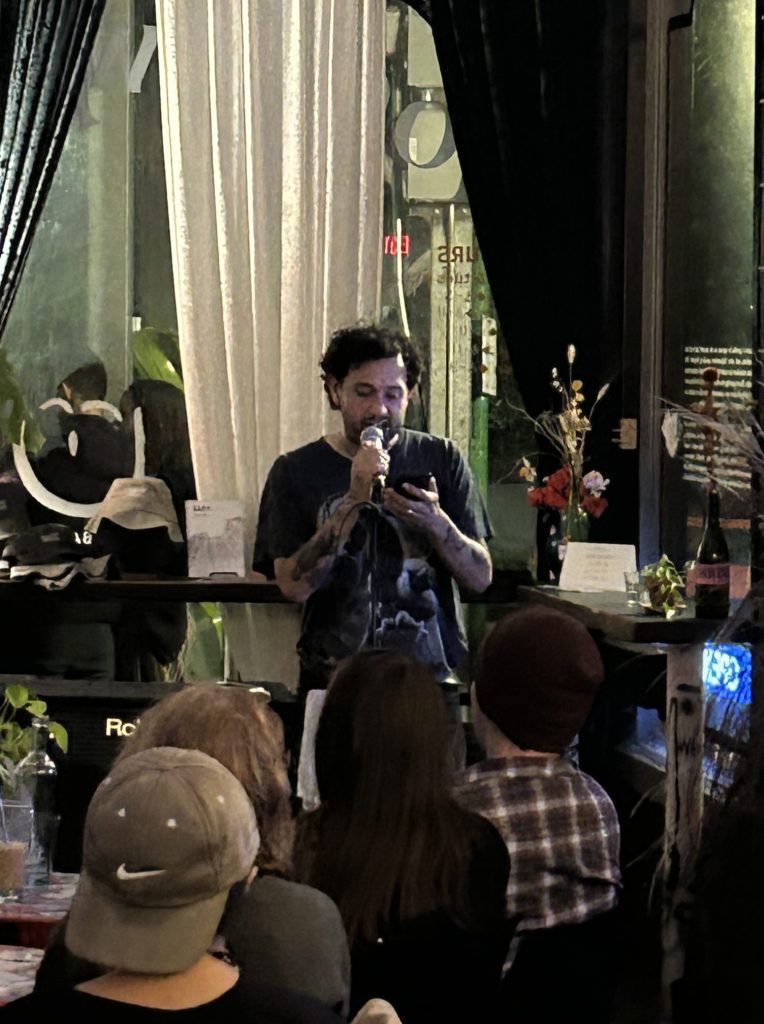
A poet from my cafe – Ricky Castanedo Laredo

Bogumil Pacak-Gamalski

You all know that a lot of my own poetry a lot of times starts life in one of my notebooks in one of my favored cafes: in Vancouver’s “Melriches”, in New Westminster’s in “Moodswing”, In Halifax in “Trident Bookstore Cafe”, in Warsaw in “Miedzy nami” Cafe on Bracka Street. Sometime in cafes in Frankfurt, Berlin, Hamburg.

Of course between coffees and cakes I get to to know all my baristas and waitresses from these cafes. We talk about things. Sometime we talk about literature or just about life. After all – life is literature, that was not written in a book yet. Not entire life anyway, just a little tidbits of it.

But I have not known yet any barista from such cafe, who was a poet. I mean – I do understand that a lot of people sometime write a short poem here and there – that does not make them a poet, though, just the same as someone, who plays guitar or piano is not neccessarily a composer.

Ricky is my barista in the “Moodswing” cafe on the Front Street in New West. (clik for a link https://www.moodswingbar.com/)

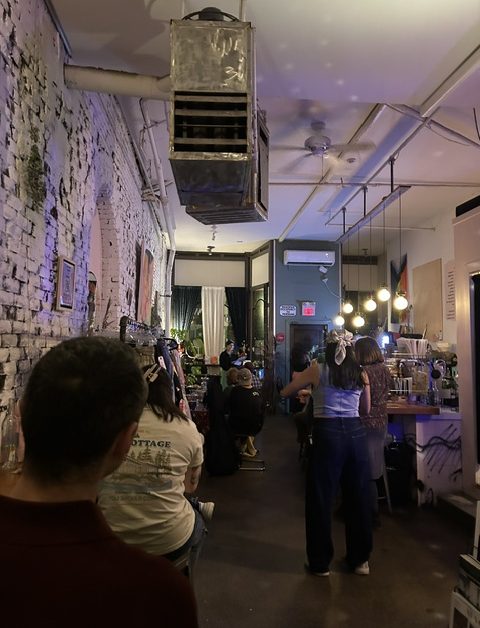
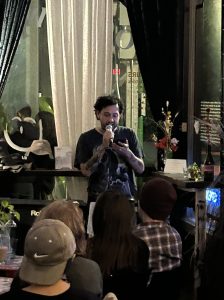
Sometime in these cafe some poets gather and have their poetry slam. Sometimes I partake. Well, the last one was a surprise for me since I didn’t expect it, just came for my daily coffee. At the end I did find on my phone one of my poems and recited it. But … the surprise came later. Ricky Castanedo Laredo, my barista, came to the mike and recited his. I liked it very much. I knew that he is a co-editor in one of local artistic magazines but never suspected that he also publishes his own poetry.

Therefore, ladies and gentlemen, without further ado, welcome to the poetry of Ricky Laredo

turn the world upside down

turn the world upside down
press your hands through the pane
the pain, unforgiving in it’s weight
both in breath and titanic
we must be afraid all of the time

unease, real as the slam of car doors in the woods
the slice of metal against blood
the ache of earthlings looking for a place to die
a heaven, a place by the sea
a place where I am not afraid all of the time

remembers your grandmothers hands
and her last words
pressure wash the memory
turn the world upside down
as the engine outside bellows
the keys live in the cupboard should you
ever need them

I can’t hold this all in mind
like the light you emit that only invites
the moths inside
I want to erase the path that leads you back
to me, and scuffs the traces
of my exoskeleton

turn the world upside down
I hope I don’t have enough time to do that for you
to stabilize the illusion
before they wipe the footage

shelf

I wanted a shelf for perdition
for all the lint from my pocket
a resting place from transition
like keys and debt and death
who’s lumbering outside?
who peers through the window?
we are surrounded every day
you leave through the back door
you bend out of frame
wired like wind through the house
at night I see you galloping
proving me wrong for the last time
yearning under darkness

shade grown

speak of faith in distant moments

necking shrines pouring

the umbre out

underneath the bells

underneath the pain

underneath the heavy

of death’s

aching jowl

repeat and return

throw shade and

bear witness because

you shouldn’t lose this

but what if I’m better off without

the world

respite if just for a day

fingernails on the bend

of my arm

envious of your youth

and

I cast a long shadow across the bed

I’m flowering

turbulent

shade grown

keep the fan on

even when it’s cold outside

Ważna historia Greater Vancouver – Pattullo Bridge. I zamknięcie tej karty historii.

Ważna historia Greater Vancouver – Pattullo Bridge. I zamknięcie tej karty historii.

Bogumił Pacak-Gamalski

Nocą jacyś tacy (pewnie cwaniacy) przylecieli i most ukradli. Był i ni ma. Koniec, kropka.

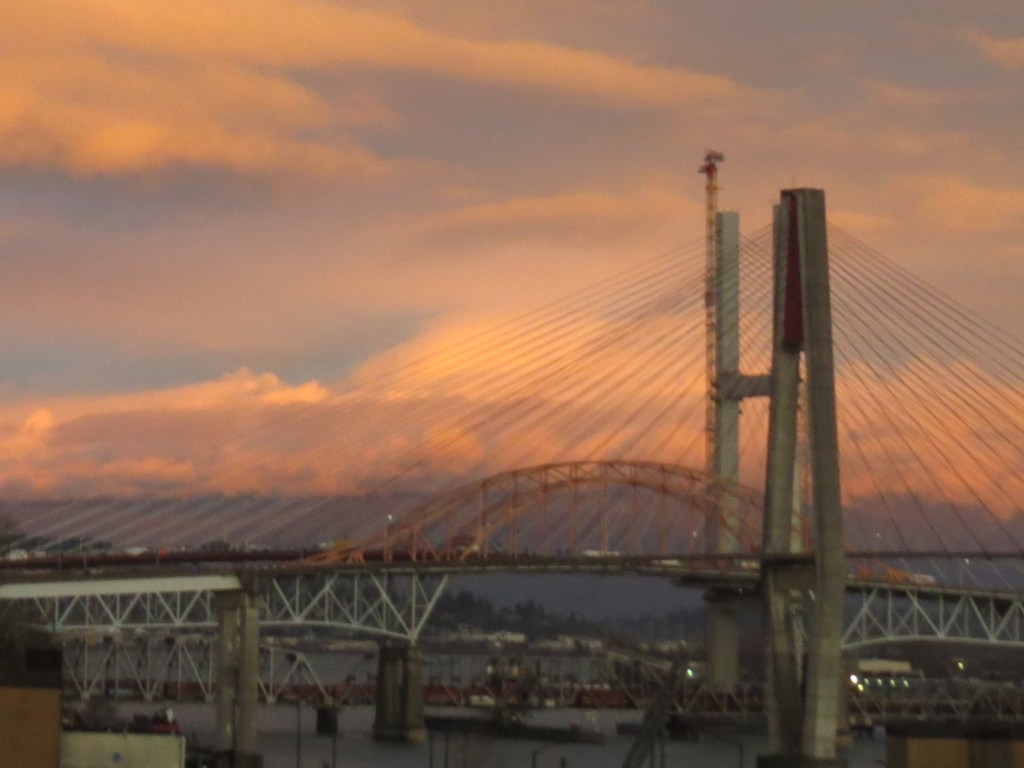
Tak, można by zacząć żartobliwie. Ale to nie żart (choć nikt nie ‘ukradł’) – charakterystyczny, półkolisty kształt czerwono-rdzawego łuku mostu był od prawie wieku najbardziej bodaj znanym widokiem dla milionów ludzi. I miliony nim codziennie lub czasami przejeżdżało samochodami.  Ci z wielkiego Surrey jadący do pracy lub na zakupy na prawy brzeg, czy ci jadący z New West, Vancouveru i wszystkich miast prawobrzeżnych jadący na lewy brzeg: do Surrey, na spacery do White Rock lub do Doliny (Langley, Abbotsford, Hope i reszty Kanady). A było to siedmnaście lat zanim zbudowao Most Granville w Vancuoverze.

Nic dziwnego – to najstarsze (jeśli pominąć krótka bardzo historię mostu dla samochodów na moście kolejowym –o tym poniżej dwa słowa) połączenie nie tylko Surrey i Vancouveru. W tym miescu właśnie istniała przeprawa od początków osadnictwa białego człowieka  w Lower Mainland. Stąd, przy lewym brzegu Fraser w osadzie Brownsville było połączenie czółnem na brzeg prawy, do New Westminster, jego stacji kolejowej i do portu morskiego. Przyjeżdżali tu wozami z towarem nie tylko farmerzy z dzisiejszego Surrey i Doliny, ale i farmerzy z USA trasą dilżansową (Coach Road), resztki tej trasy to dzisiejsza Old Yale Road. I właśnie tą osadę Brownsville wybrano na miejsce, gdzie rozpoczęo konstrukcję nowego mostu, w sąsiedztwie starszego mostu kolejowego (ciekawostką jest, że ten do dziś istniejący most kolejowy przez pierwsze kilka lat miał dwa pokłady – na dolnym była droga dla samochodów, czyli był pierwszym historycznie rzecz ujmując. Ale Pattullo był pierwszym całkowicie zaprojektowanym z myślą o ruchu samochodowym.

Most otworzono w roku 1937. Trudno by znależć kogokolwiek dzisiaj, kto widziałby lewy lub prawy brzeg bez tej charakterystycznej, półkolistej czerwonej konstrukcji zawiaszonej nad rzeką. Choć jacyś 96-100 latkowie mogliby. Jeśli wczesne dzieciństwo spędzili w New Westminster lub w Brownsville – jest to możliwe.

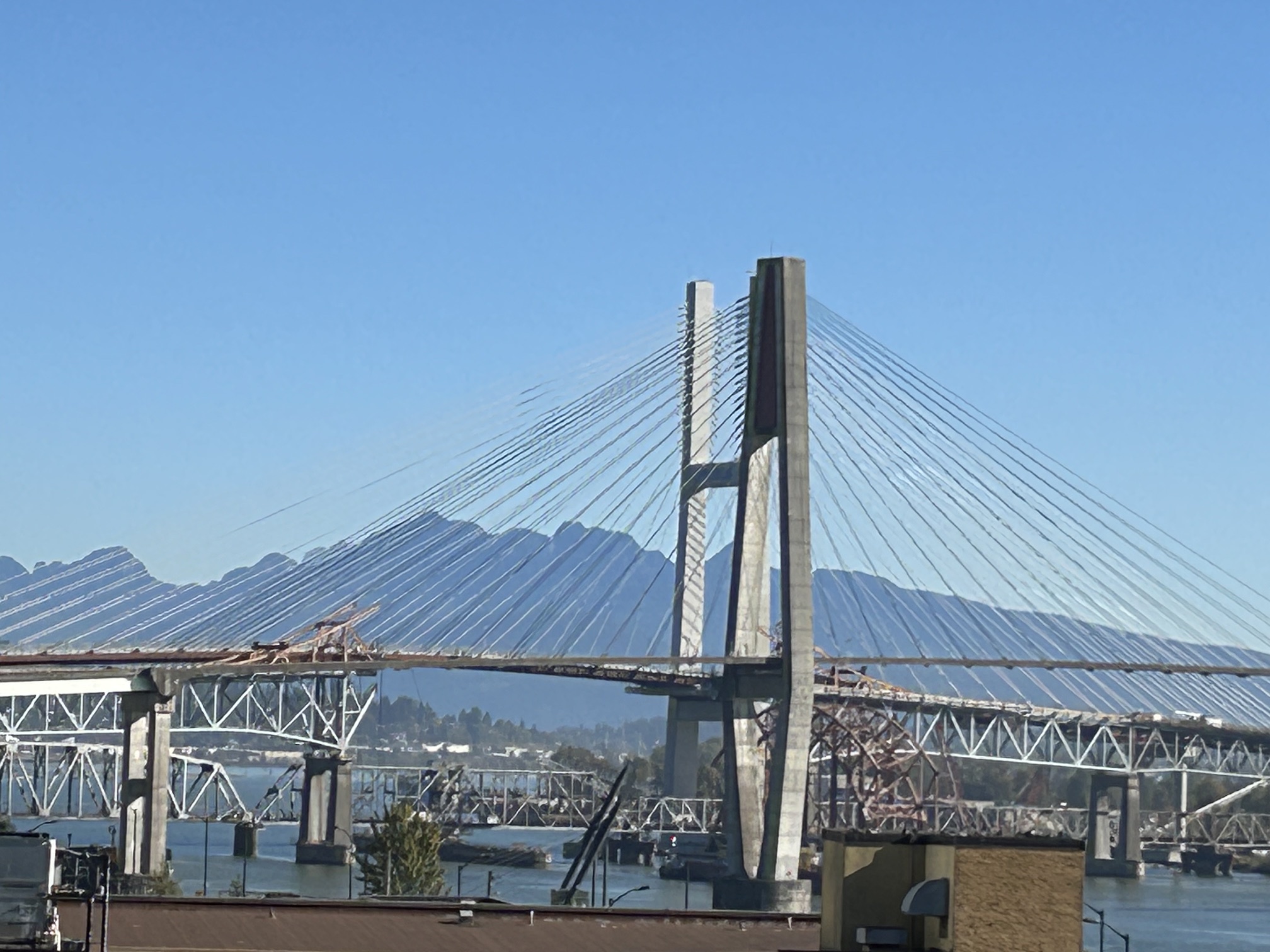
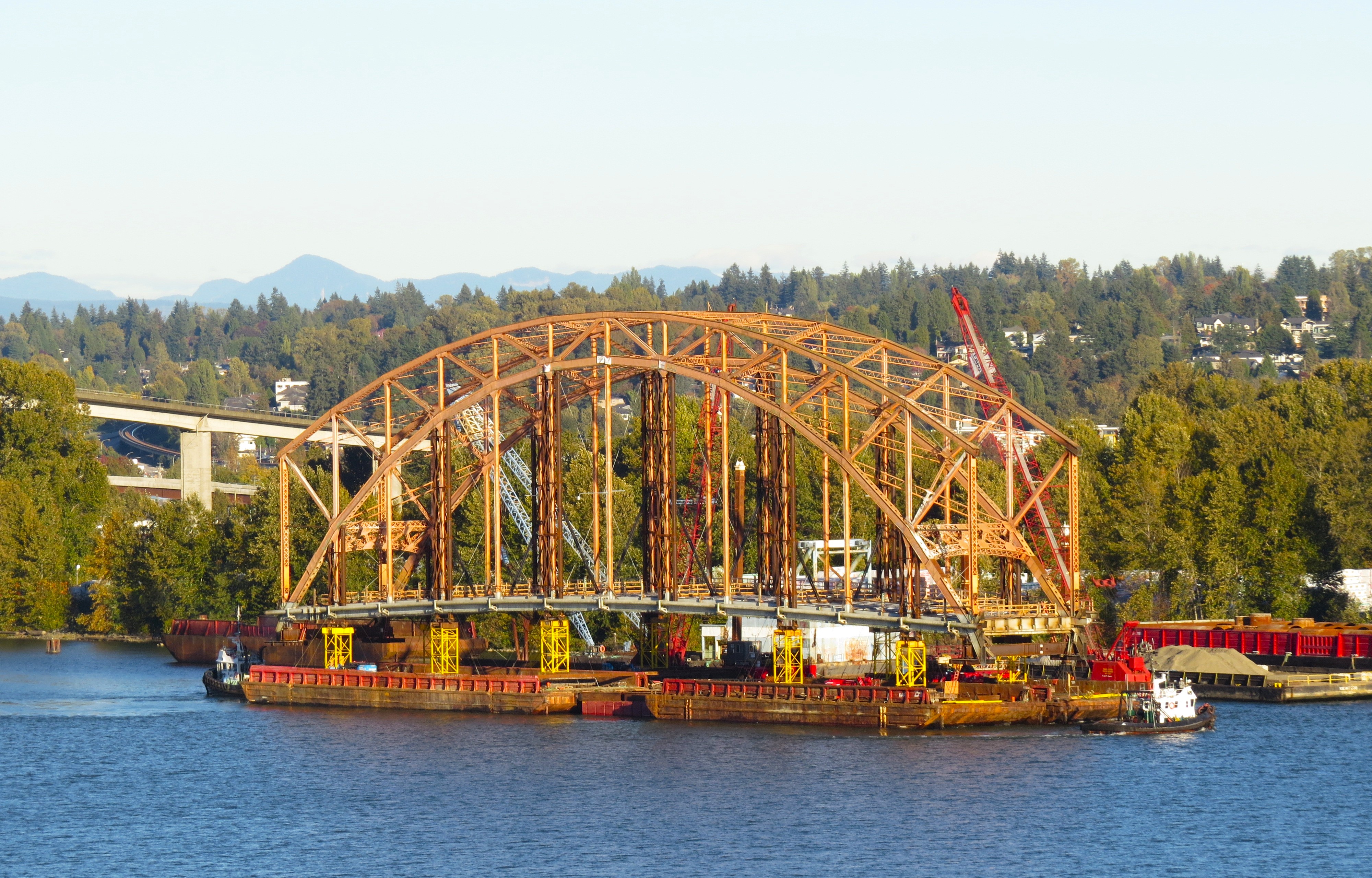
Ja osobiście pamiętam go od ponad trzydziestu lat, czyli od mojej przeprowadzki z Alberty do Lower Mainland. Sam pokład mostu ciągle jest, choć systematycznie rozmontowywany, ale bez tego z daleka widącego wielkiego przęsła i jego charaktrystycznego koloru – przestał być mostem, tak jak samochód bez podwozia nie jest samochodem. Został zwykłą kladką, która lada moment zniknie.

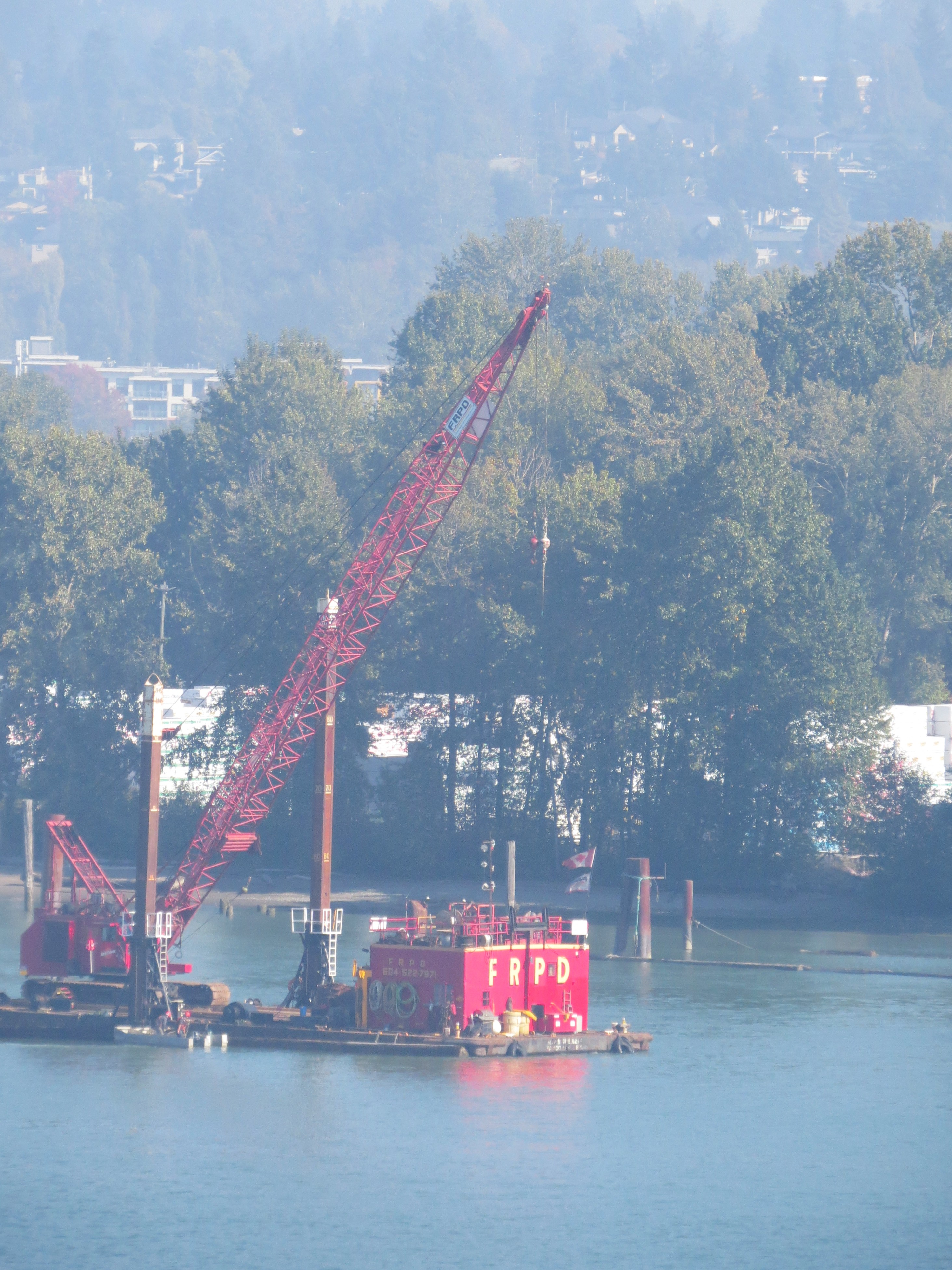
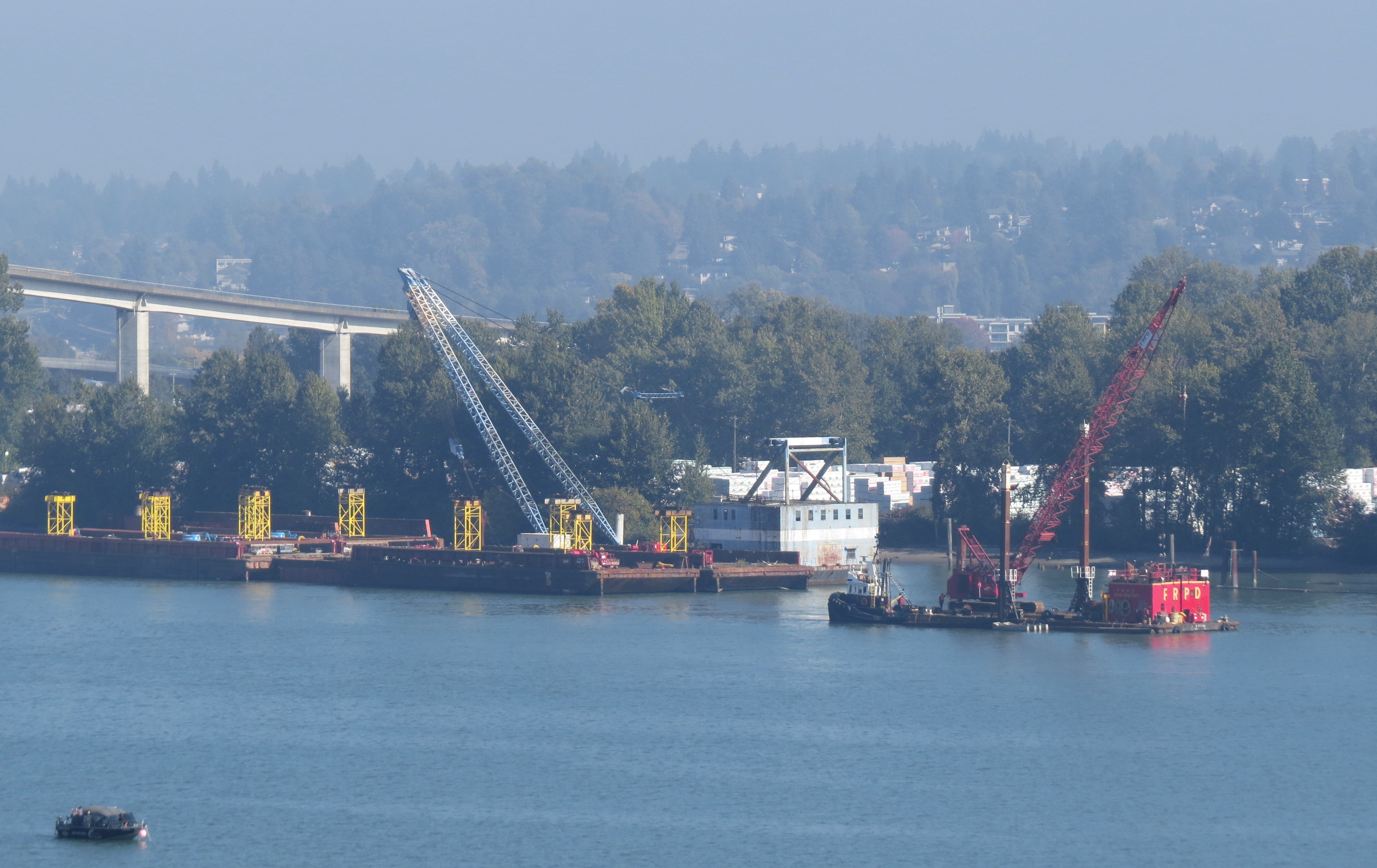
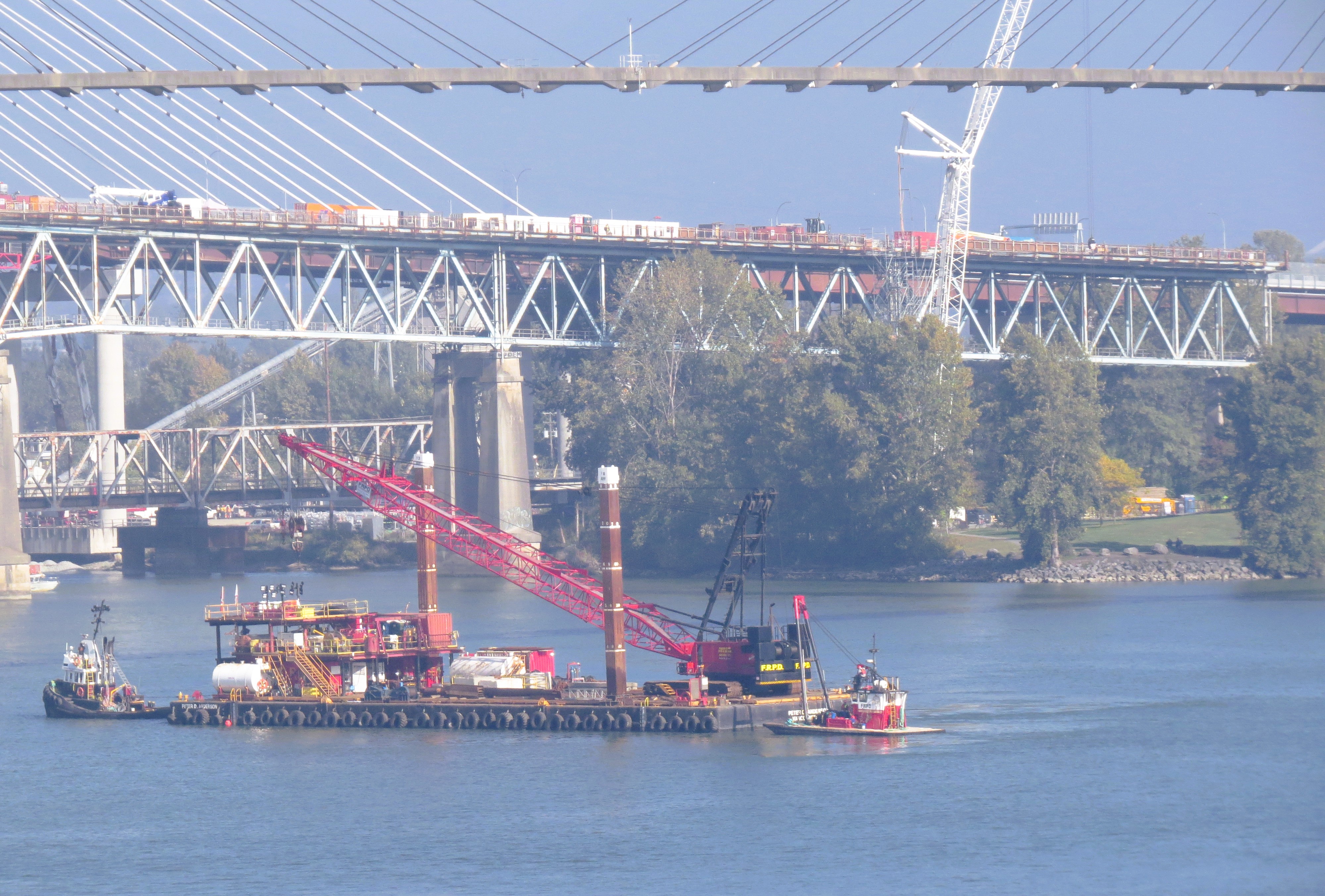
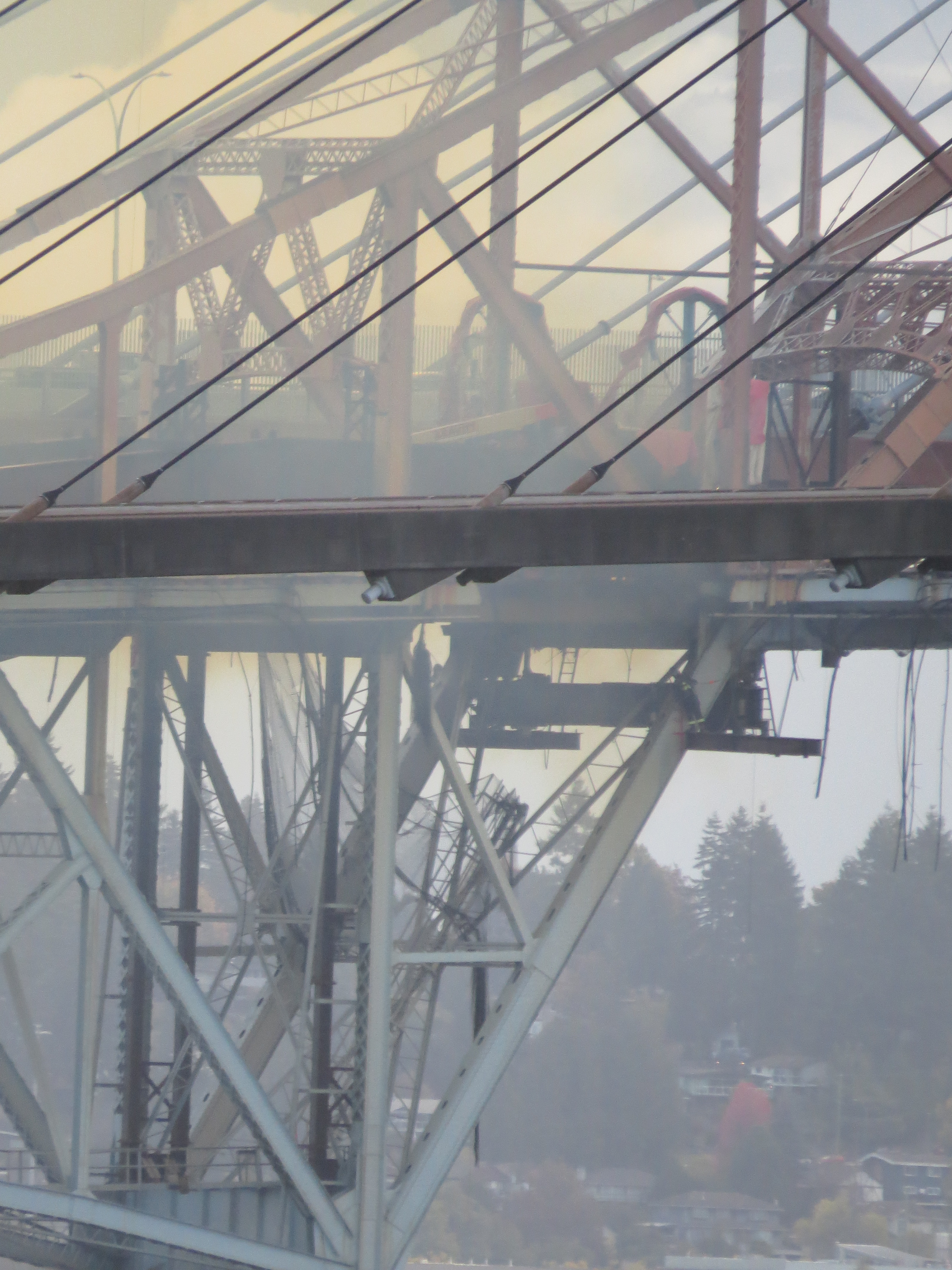
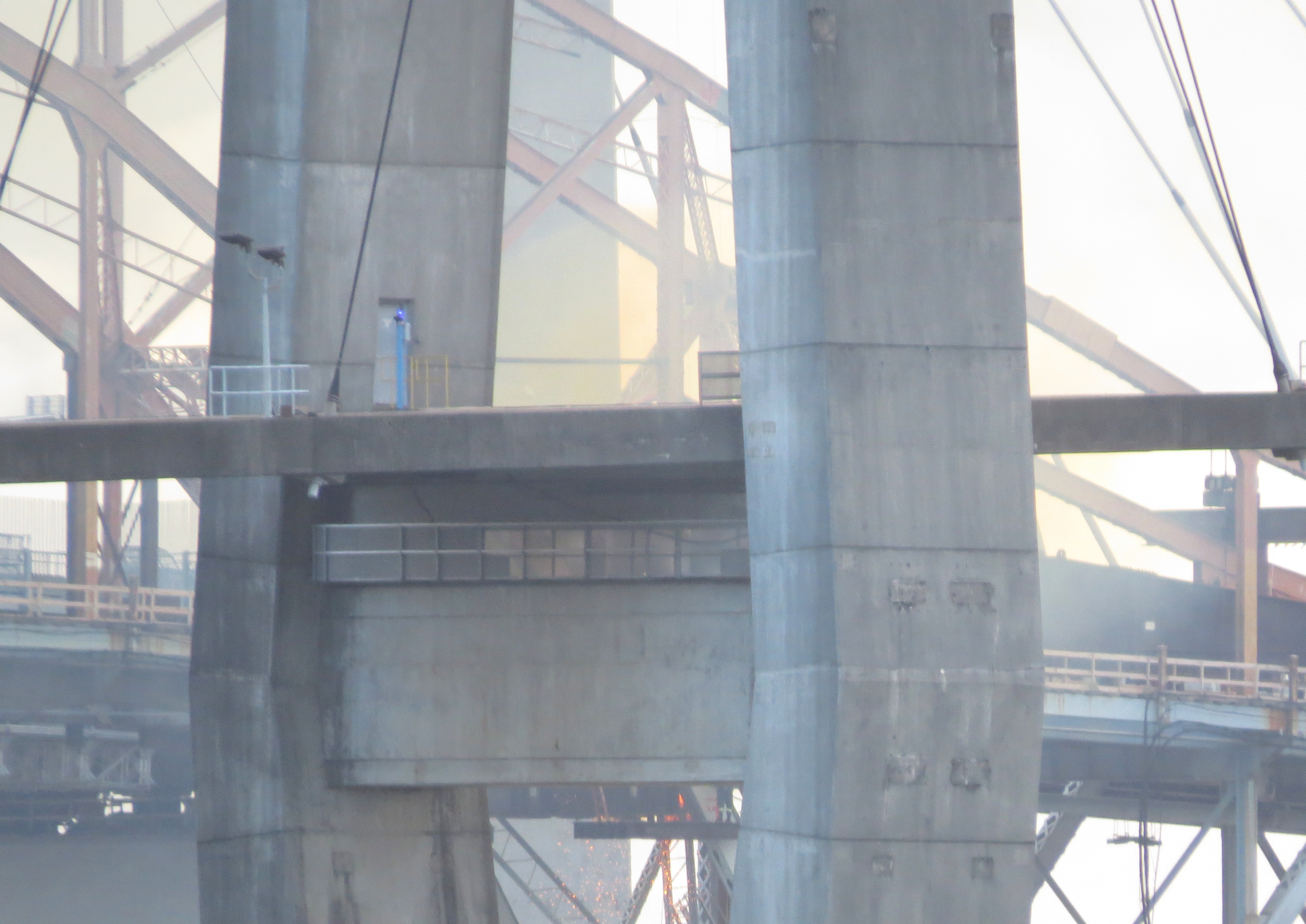
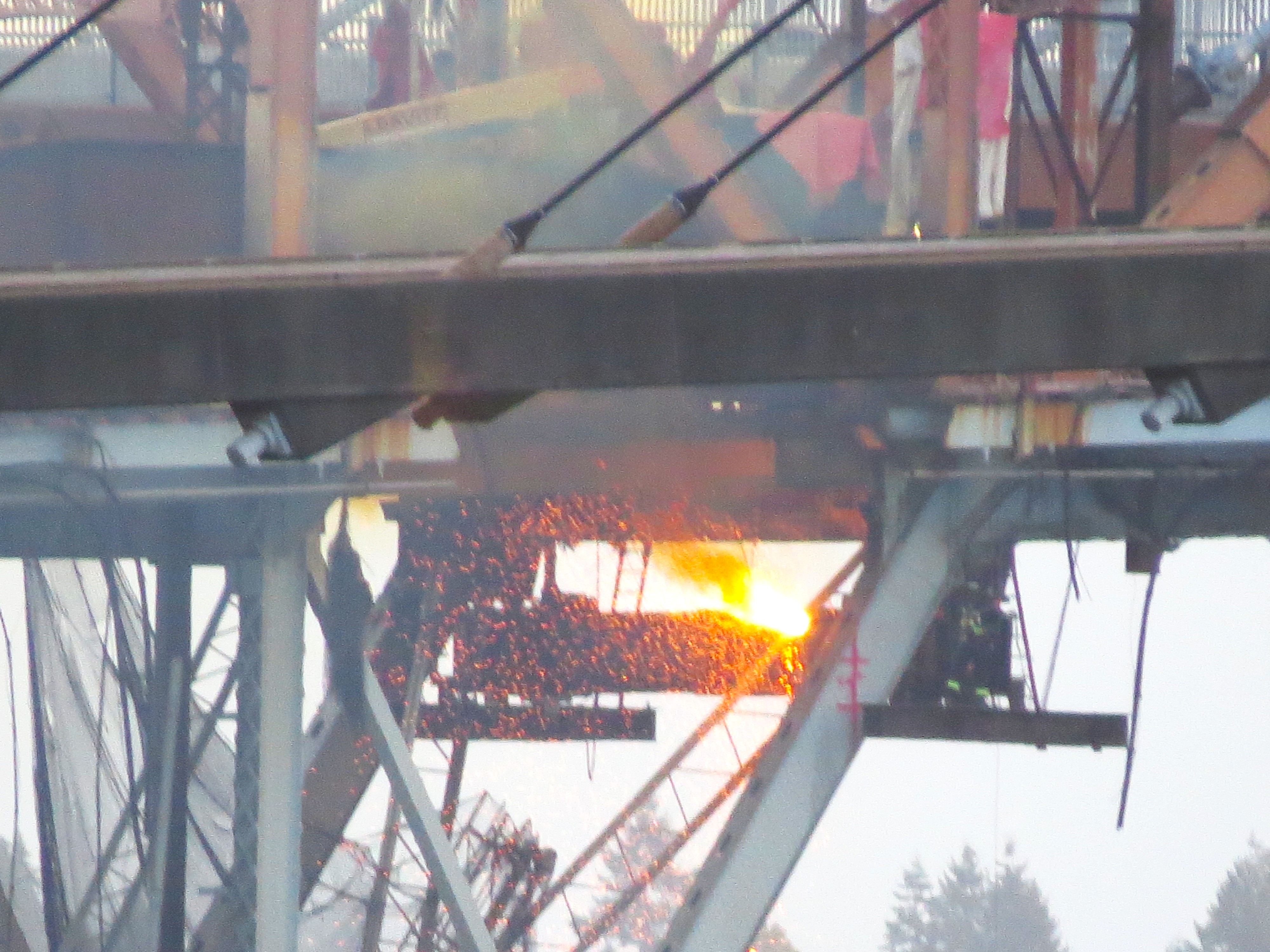
Poniżej fotoreportaż z zamknięcia tej ciekawej historii rzeki, jej dwóch brzegów. I raz jeszcze przypomnienia wagi tej rzeki dla powstania, rozwoju i istnienia tej olbrzymiej, tętniącej życiem aglomeracji Greater Vancouver. Rzeki, która ciągle jest bardzo pracowitym szlakiem handlowym, przemysłowym. I żywym – jeszcze dziś wczesnym popołudniem chodząc wzdłuż jej brzegu zauważyłem rzucające się w jej nucie dwa jesiotry. Bo to też dom dla tych prawdziwie prehistorycznych ryb.

Chciałoby się przypomnieć słowa wielokroć zapisywane w ulubionych przeze mnie „Dziennikach” Zofii Nałkowskiej: I znów zaszła zmiana w polu mojego widzenia…

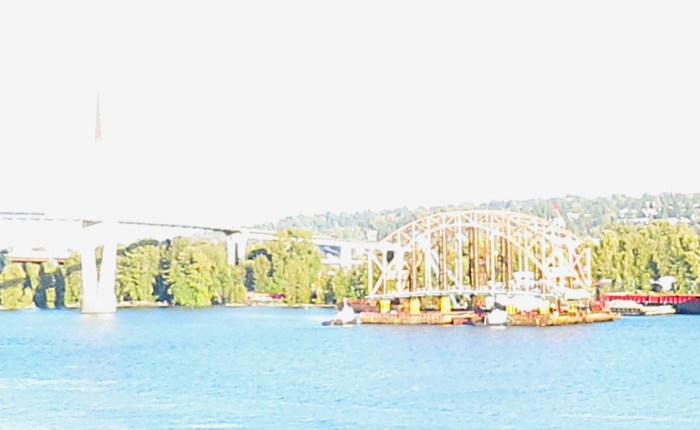
… a tak wyglądał w dniach glorii

Yesterday, yesteryear and eons ago

Bogumil Pacak-Gamalski

Walks into yesterdays. Most of my walks lead to trails of the past. Truly, these are the only remnants of familiar vistas, touches, smells and shapes. I go through city parks and kick rotten molds of brown and yellow leafs. Maybe some zephyr will still rise them up – once in the air they will start again whirling round and round: let them feel the fresh air so different from the decayed air of autumn, be full of promise. Just yesterday they were still green, vibrating on the tiny branches of the trunks of their home tree. They rustled in unison with the flutes and clarinets of birds, sojourning on tree branches.

The autumn wind chased me from home, too. It led me to funny memories of my second happiest day of my life: the day of our wedding.  The second, because the first one happened years earlier, when I saw you the very first time. A little gay pub, right by the bridge on 14 Street in Calgary. It was a slow evening. I sat on one end by the bar and two guys were sitting at the other end. No one else. I was overtaken by his face and kept looking at him. The other guy finally spoke to me: let me introduce you to my brother, his name is John. That was it. Never let him off my sight until he died in my arms decades later. It truly is just magical how you can recognize a soul mate right away, when you are lucky enough to meet him.

Years later we got formally married in Surrey. I wasn’t particularly excited about that ceremony. Was a bit angry at society that we couldn’t do it in the 80ties, although Canada truly was the first country to introduce (Holland, for procedural reasons, was able to beat us with their first official marriage license – ours didn’t pass the parliamentary procedures in time to be officially first, and took the formal second place in the world) marriage equality. Therefore I didn’t want the ceremony to overshadow our union that existed for many years already. But truth to be told: I was overtaken with emotions, when I had to say ‘yes’ to the City Clerk in front of my family, John’s family and so many friends. That was magical. 

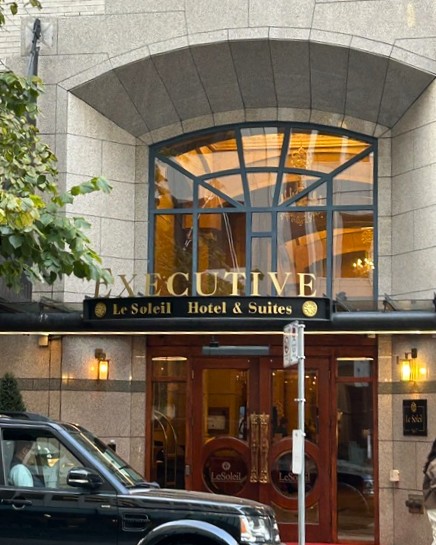
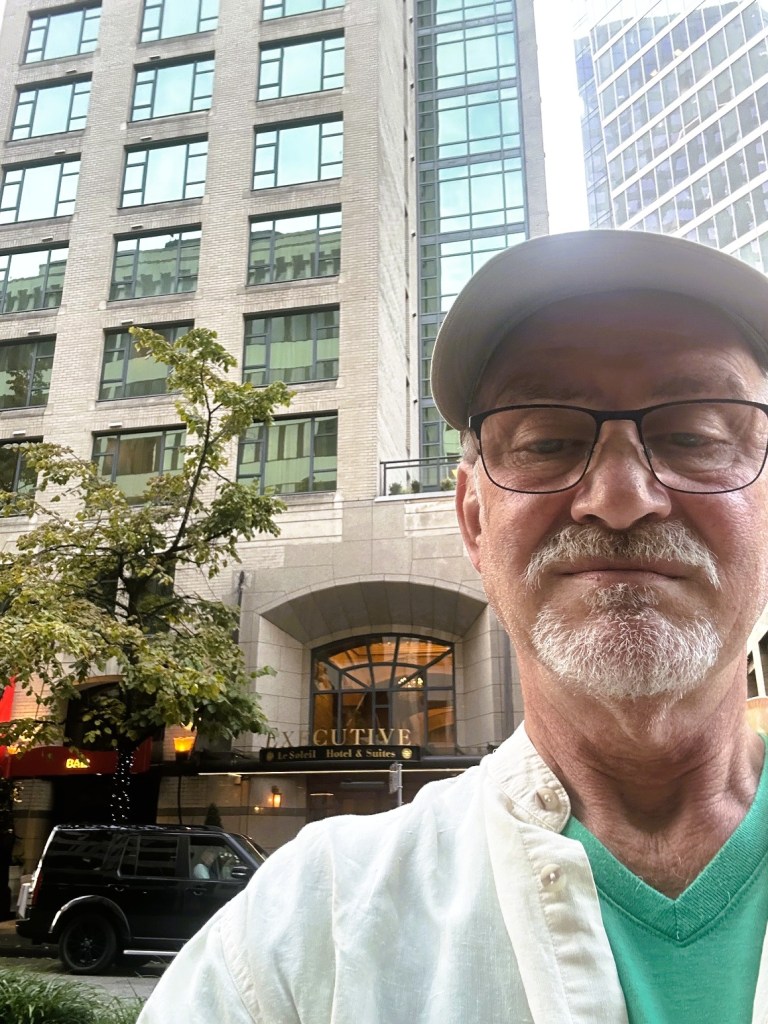
Right after our wedding we were send off by our families to special, beautiful boutique hotel right in centre of Downtown Vancouver, steps from Art Gallery on Robson.

So the autumn wind chased me today to that hotel. Our formal first night as a formally married couple happened there. It didn’t dampen or made less important our first meeting and years of being together. It made it somehow stronger, if possible.

After that I walked to our Davie Street through the Nelson Park and the little enchanted walkway on Mole Hill. Was I sad at times? I am sad and happy all the time. It is just the way it is. It took me a while to get to the point of not being just sad all the time, of actually despising being alive. I don’t cling to it, to that life of mine, but I don’t detest it anymore. I have learnt to love Love. From songs, from poems, movies, from observing couples walking together holding hands.

We walk through galleries of life:

a picture on the wall here,

a bust of lovely youth there.

We enter concert halls of life:

a longing cry of violin here,

bravado of mature pianist there.

What do we do at night,

between long lonely hours

from crimson dusk to pinky dawn?

We dream of kiss, of love.

We wait in our nightly sleep

for a white dove to sit on our pillow.

A dove that brings a song

of upheavals and song of peace.

Song dreamt of by cosmic

choir of see-trough angels,

who cry and rejoice in unison

For such is Cosmos: a star is born

                               when a star dies.

            On y way back home I have stopped for my cup of Americano in ‘my’ café ‘Moodswing’ on Front Street in New Westminster. My second home, so to speak. A places where many my poems were written, many books read.

I was at first a bit disappointed: the narrow room was full of people. After searching a little bit, I have found a spot to sit right by the wall, by narrow shelf that can hold a cup. As I was sitting and looking through my back for my wallet, so I can go and order at least my coffee, Ricky the co-owner arrived with my hot coffee the way I like. Nice gesture, since I didn’t have to go through the throng to the ordering spot (there is no table service in there if you order just the coffee, which suits me fine) for it. A kind gesture, knowing that he must be very busy.

I thought it was some sort of meeting that happens there from time to time. But next thing I see there is a woman reciting poetry, than a young fellow goes to the mike and does the same. Than Ricky goes there himself and recites his poem! For all these months I was sitting there writing my things and our typical talks – he never mentioned that he writes poetry, too! Later I gave him a verbal lashing for hiding it from me, LOL.  He promised me to show me more and I probably will publish it here, on my blog.

So, as it happens it was a poetry slam. I just never noticed any info about it – I hardly ever read the board with announcements. Just like to have small chats, drink my coffee and write in my notebook He asked me if I will read something mine. Didn’t have any with me, but than remember that I can search on my phone my blog and found something there. It was probably the very first time I read publicly my poem from … my phone screen, LOL.  How modern, ha ha ha. Of course the first in English that I found and the one I read was rather long and difficult one, full of historical parables to of Hannibal and Alexander the Great, all dedicated to French genius Andre Gide. Hopefully it didn’t look like I was a pompous ass.

Below is the poem dedicated to Andre Gide.

Winter time in a small village in Pyrenees.

Night comes quickly and darkness covers

the valleys and peaks. Suddenly, the windows

off a small stony church lights up in delicate

orange glow. From the top of the church steeple

comes the song of its bells: big bam! Big bam!

big!, big! big! Bam! Bam! Bam! Baaaam-mmm!

The air vibrates with each tone of the big bell

and sends  bronze-coloured sounds to the valleys.

Archangel Michael blows into long, golden trumpet.

The music envelopes the meadows, climbs up the hills.

The call of God, the call of the Shepherd: 

come and be enlighten in the mystery of life

 and promise of death merciful that claims us all.

They run – the tired travelers, the herds of goats.

They cry and hope, as the trumpet sounds again

and dies suddenly like the last drop of now empty goblet.

The church becomes a masjid and archangel becomes muezzin,

that intones to all: Allāhu ʾAkbar. In Pyrenees Hannibal’s army

stop their march and rise their tusks and trunks: they sense the pitch

of the hymn and the psalm as the far flung peaks of Alps slowly

cover the church, the mosque and streams in the valleys.

The curtain call of History. Birth and death of Love.

Moodswing Café, 29. 05.26

B. Pacak-Gamalski